As expected, Winter Storm Fern brought in ice and snow, but so far the power grid in Austin has stayed up. Austin Energy is reporting 99.99% of customers have power, which is probably slightly more than usual. That’s a sharp and welcome contrast from the Picasso painting of outages they showed during Snowpocalypse 2021:
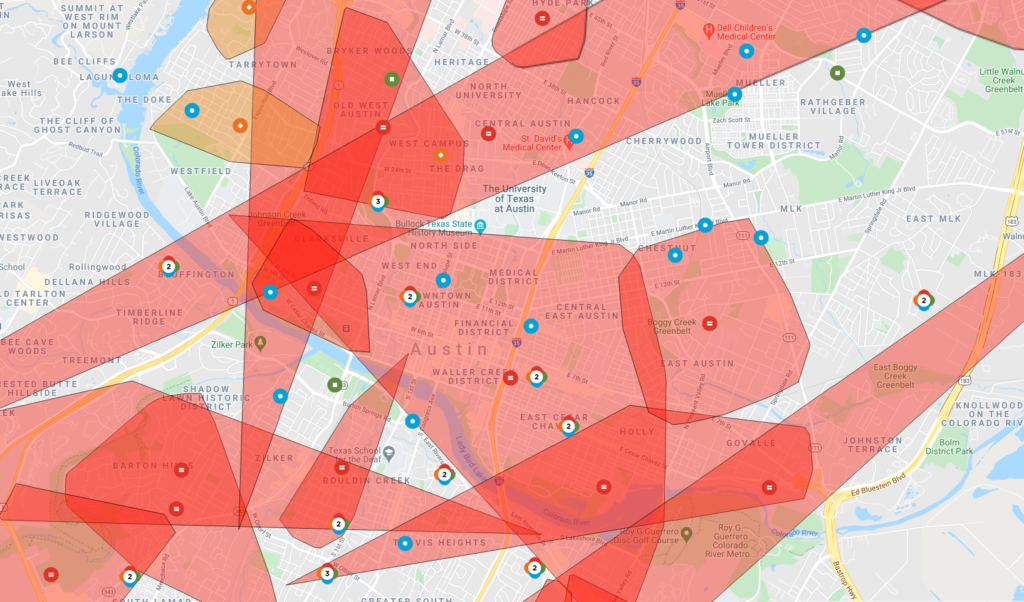
Or Arborgeddon in 2023. While I hope Austin Energy learned their lesson about trimming trees near power lines, I think a lot of the improvement comes down to the different profiles of the storms. Yesterday brought lots of rain in the morning, but it cleared for several hours before freezing temperatures hit, giving trees a chance to dry out rather than accrete limb-killing layers of ice. Then we got a couple of hours of sleet, then snow, and right now I don’t see any accumulation on the limbs outside my windows.
Despite snow and ice on the road, HEB says Austin stores are open from 9 AM to 5 PM, but traffic cameras show almost no vehicles on the roads, so I’d take that with a grain of salt. Likewise, TxDOt cameras show essentially no traffic on 183 or I-35.
And speaking of salt, it’s going to take several days to clear Austin roads of snow and ice, as it doesn’t look like it’s going to get above freezing until Tuesday, with freezing temperatures at night throughout the week.
There’s more problems further north in Texas with Oncor showing some 45,000 people without power in the greater DFW Metroplex, but ERCOT is showing supply meeting demand. Further south, Centerpoint Energy shows just over 2,000 customers without power.
Things can always change, but right now it looks like Austin will come out of Winter Storm Fern just fine.
Tags: Austin, Austin Energy, ERCOT, HEB, ice storm, Metroplex, Texas, weather, Winter Storm Fern
Mr. Person:
It sometimes amazes me that most people in Southern states don’t seem to bother to buy all-season tires for their vehicles. Winter storms, ice storms, and even the occasional snow storm hit often enough that I’d have thought the marginal improvement in driving performance wouldn’t be worth not having any traction in bad weather.
My wife’s ’97 Miata came with Dunlop performance tires. Man, those were incredible for traction and performance on dry pavement. I found a huge parking lot shaped sort of like an enormous funnel with a storm drain in center; right around the drain was some sand that hadn’t gone down in the last storm. I started circling it, doing about 20 MPH, and just tightening the circle as I went to see when I’d lose traction. That thing kept going in smaller and smaller circles until I hit the sand, and then spun out.
But the first time it rained we were on a short day trip, and those tires had almost ZERO traction on wet pavement. We got home, and I called a tire store and ordered some all-season tires for that thing. Just slightly less cornering performance, but it didn’t matter if it was wet or not.
I just put new tires on my 2020 Tundra, and chose the best all-season, semi-all-terrain tires I could find from Nokian. If you ever talk to somebody who does snow- or ice-racing you’ll find that they ALL use Nokians, since those Finlanders know about driving on ice and snow.
Here in NW Wyoming I’m always surprised that people delay replacing their tires even when they’re down to zero tread and basically riding on bologna-skins. Given that 100% of your driving capability comes from 4 tiny little contact patches, usually about the size of your hand, it makes sense to put the best tires on your vehicle that you can.
All season pass car tires usually rely on hydrophilic rubber tread compounds which experience severe dry wear at elevated temperatures. They might not be the best choice for summer pavement temperatures in Texas. You can reduce their running temperatures by frequent four wheel alignment and tire pressure adjustments. Dry nitrogen fill also reduces tread temperatures.