Everyone in the Democratic Media Complex wants us to know that electric vans are THE FUTURE of delivery. That remains to be seen, but they sure seem to have a lot of trouble being the present of delivery.
In the fall, Jeff Bezos tweeted praise for Rivian, a start-up under contract to make 100,000 electric delivery vans for Amazon, and its founder, R.J. Scaringe, calling him “one of the greatest entrepreneurs I’ve ever met.”
Then, Mr. Bezos worked in a jab: “Now, RJ, where are our vans?!”
The comment may have been in jest, but the problem he raised is a serious one.
Amazon has an insatiable appetite for electric vans, thanks to a ballooning logistics operation and a pledge that half of its deliveries will be carbon-neutral by 2030. But that hunger is running into the reality that the auto industry barely produces any of the vehicles yet.
While consumer electric cars are finally hitting their stride — Tesla delivered almost a million cars last year — the market for commercial electric vehicles is still nascent, with their heavier loads multiplying the technology challenges. Amazon would not say if Rivian delivered the first 10 production vans in December, as was expected, and other automakers are not manufacturing at scale yet, either.
Even though Amazon owns nearly 20 percent of Rivian, it has also put in orders with other automakers, to lay claim to as many vans as it can before they are even under production.
This month Amazon said it would buy “thousands” of electric Ram vans from Stellantis, the company formed last year after the merger of Fiat Chrysler and the French automaker Peugeot.
I too stumbled over “Stellantis” the first time I saw it, a company formed from the merger of three car companies, none of whose quality screamed “reliable.” (Or, indeed, even whispered it.) But I digress.
It has also ordered 1,800 electric vans from Daimler in Europe. And it has formed a partnership with Mahindra, the Indian automaker, as part of its goal to have 10,000 electric three-wheeled vehicles on the road by 2025.
“The scale and speed at which we’re trying to do this requires a lot of invention, testing and learning, and a completely new playbook,” Ross Rachey, who oversees Amazon’s global fleet, said in a statement.
Amazon expected to have roughly 175,000 of its vans on the road by the end of 2021, according to an internal document from late 2020, nearly all of which burned fossil fuels.
That number is growing quickly. Amazon is several years — and tens of billions of dollars — into a huge push to deliver packages, shifting away from relying on large carriers like UPS. To begin the expansion, Amazon ordered 20,000 diesel Sprinter vans from Mercedes-Benz.
You saw very few of those Mercedes vans on the road before Amazon started buying them, but now they’re everywhere. But, again: gas-powered.
Through its network of contractors, Amazon now delivers more than half of its orders globally, and far more in the United States. Amazon has six times as many delivery depots now as it did in 2017, with at least 50 percent more new facilities set to open this year, according to data from MWPVL, a logistics consultancy.
That logistics boom, accelerated by the pandemic’s shift to online shopping, multiplies the challenges the company faces in meeting its pledge to reduce its climate impact. Its vow to make half of its deliveries carbon-neutral by 2030 is part of the company’s broader pledge to be net-carbon-neutral by 2040.
Conveniently far in the future that deadlines can slip long after the people making such promises are retired.
“Electrification of their delivery fleet is a really important part of that strategy,” said Anne Goodchild, who leads the University of Washington’s work on supply chain, logistics and freight transportation.
Delivery vans are well suited to electric propulsion because they usually travel 100 miles or under in a day, which means they don’t need large battery packs that add to the cost of electric cars. Delivery trucks are often used during the day and can be recharged overnight, and usually require less maintenance than gasoline trucks. Electric vehicles don’t have transmissions and certain other mechanical components that wear out quickly in the heavy stop-and-go typical in delivery routes.
This isn’t strictly true. Some electric vehicles have two-speed transmission, and they still need gears to change drive-speed ratio.
In September 2019, when Mr. Bezos announced Amazon’s huge Rivian order — the largest ever order of electric vehicles — he positioned it as central to Amazon’s commitment to reduce its carbon footprint. At the time, he said he expected the 100,000 vans to be on the road “by 2024.”
Amazon invested at least $1.3 billion in Rivian, which Amazon says is supposed to make 10,000 vans as early as this year. Amazon also locked up exclusive rights to Rivian’s commercial vans for four years, with the right of first refusal for two years after that. The companies have been testing the vans for almost a year.
In regulatory disclosures in November, Rivian said it would make the full delivery to Amazon “by 2025.” Last week, Mr. Rachey said Amazon expected to have the vehicles on the road “no later than 2030.”
Rivian declined to comment.
Yeah, I bet.
There’s nothing impossible about making an all-electric fleet. With enough money (and assuming certain Biden-era supply chain disruptions don’t get worse), it could be done by the end of next year. But whether it could be done cost-effectively is another question. Battery capacity is constantly improving, but not by Moore’s Law-esque leaps and bounds. Lots more can go wrong on a gasoline-powered car, but the technology is mature and many individual engine parts are relatively affordable. By contrast, as the man who blew up his Tesla showed, replacing current lithium ion batteries for an entire car is hideously expensive right now. That will probably come down, but no one knows by how much or how quickly. There’s a case to be made that those batteries are so expensive that electric cars are actually worse for the environment than modern gas-powered automobiles. But pointing that out commits heresy against The Holy Global Warming Narrative.
After the USPS was criticized on Capitol Hill for its $9.3 billion plan to replace 165,000 trucks—specifically because 90 percent of them would be powered by gas combustion engines—the government-operated service went back and crunched the numbers again. In its recently released Final Environmental Impact Statement, the USPS estimates that the cost of an all-electric fleet would be $11.6B. That’s an additional $3.3B.
If that price tag seems a bit steep, the USPS estimates that it could electrify 75,000 of its vehicles—less than half of the proposed total—for an additional $2.3B ($10.3B total). Still too high? That figure is a mere fraction of the financial losses the USPS has experienced in the last 15 years. According to a report published by the Government Accountability Office in September 2021, the USPS has lost more than $87 billion since 2007 as the volume of mail it delivers has dropped.
A billion here, a billion, and pretty soon you’re talking real money…
Supply chain problems have gotten so bad that Derek Thompson at The Atlanticdeigns to notice them:
The coronavirus pandemic has snarled global supply chains in several ways. Pandemic checks sent hundreds of billions of dollars to cabin-fevered Americans during a fallow period in the service sector. A lot of that cash has flowed to hard goods, especially home goods such as furniture and home-improvement materials. Many of these materials have to be imported from or travel through East Asia. But that region is dealing with the Delta variant, which has been considerably more deadly than previous iterations of the virus. Delta has caused several shutdowns at semiconductor factories across Asia just as demand for cars and electronics has started to pick up. As a result, these stops along the supply chain are slowing down at the very moment when Americans are demanding that they work in overdrive.
The most dramatic expression of this snarl is the purgatory of loaded cargo containers stacked on ships bobbing off the coast of Los Angeles and Long Beach. Just as a normal traffic jam consists of too many drivers trying to use too few lanes, the traffic jam at California ports has been exacerbated by extravagant consumer demand slamming into a shortage of trucks, truckers, and port workers. Because ships can’t be unloaded, not enough empty containers are in transit to carry all of the stuff that consumers are trying to buy. So the world is getting a lesson in Econ 101: High demand plus limited supply equals prices spiraling to the moon. Before the pandemic, reserving a container that holds roughly 35,000 books cost $2,500. Now it costs $25,000.
The container situation is even weirder than it looks. With demand surging in the United States, shipping a parcel from Shanghai to Los Angeles is currently six times more expensive than shipping one from L.A. to Shanghai. J.P. Morgan’s Michael Cembalest wrote that this has created strong incentives for container owners to ship containers to China—even if they are mostly empty—to expedite the packing and shipping of freights in Shanghai to travel east. But when containers leave Los Angeles and Long Beach empty, American-made goods that were supposed to be sent across the Pacific Ocean end up sitting around in railcars parked at West Coast ports. Since the packed railcars can’t unload their goods, they can’t go back and collect more stuff from filled warehouses in the American interior.
And what about the truckers who are needed to drive materials between warehouses, ports, stores, and houses? They’re dealing with a multidimensional shortage too. Supply-chain woes have backed up orders for parts, such as resin for roof caps and vinyl for seats. But there’s also a crucial lack of people to actually drive the rigs. The Minnesota Trucking Association estimates that the country has a shortage of about 60,000 drivers, due to longtime recruitment issues, early retirements, and COVID-canceled driving-school classes.
In short, supply chains depend on containers, ports, railroads, warehouses, and trucks. Every stage of this international assembly line is breaking down in its own unique way. When the global supply chain works, it’s like a beautifully invisible system of dominoes clicking forward. Today’s omnishambles is a reminder that dominoes can fall backwards too.
However, there are two important words missing from Thompson’s analysis: “vaccine” and “mandate.”
Like other manufacturers, petrochemical companies have been shaken by the pandemic and by how consumers and businesses responded to it. Yet petrochemicals, which are made from oil, have also run into problems all their own, one after another: A freak winter freeze in Texas. A lightning strike in Louisiana. Hurricanes along the Gulf Coast.
All have conspired to disrupt production and raise prices.
“There isn’t one thing wrong,” said Jeremy Pafford, managing editor for the Americas at Independent Commodity Intelligence Services (ICIS), which analyzes energy and chemical markets. “It’s kind of whack-a-mole — something goes wrong, it gets sorted out, then something else happens. And it’s been that way since the pandemic began.’’
The price of polyvinyl chloride or PVC, used for pipes, medical devices, credit cards, vinyl records and more, has rocketed 70%. The price of epoxy resins, used for coatings, adhesives and paints, has soared 170%. Ethylene — arguably the world’s most important chemical, used in everything from food packaging to antifreeze to polyester — has surged 43%, according to ICIS figures.
The root of the problem has become a familiar one in the 18 months since the pandemic ignited a brief but brutal recession: As the economy sank into near-paralysis, petrochemical producers, like manufacturers of all types, slashed production. So they were caught flat-footed when the unexpected happened: The economy swiftly bounced back, and consumers, flush with cash from government relief aid and stockpiles of savings, resumed spending with astonishing speed and vigor.
Suddenly, companies were scrambling to acquire raw materials and parts to meet surging orders. Panic buying worsened the shortages as companies rushed to stock up while they could.
Expecting these problems to be transitory? Dubai’s largest port operator says to expect supply chain problems to extend in 2023.
A global energy crunch caused by weather and a resurgence in demand is getting worse, stirring alarm ahead of the winter, when more energy is needed to light and heat homes. Governments around the world are trying to limit the impact on consumers, but acknowledge they may not be able to prevent bills spiking.
Further complicating the picture is mounting pressure on governments to accelerate the transition to cleaner energy as world leaders prepare for a critical climate summit in November.
Translation: Green energy mandates = blackouts.
In China, rolling blackouts for residents have already begun, while in India power stations are scrambling for coal. Consumer advocates in Europe are calling for a ban on disconnections if customers can’t promptly settle what they owe.
“This price shock is an unexpected crisis at a critical juncture,” EU energy chief Kadri Simson said Wednesday, confirming the bloc will outline its longer-term policy response next week. “The immediate priority should be to mitigate social impacts and protect vulnerable households.”
In Europe, natural gas is now trading at the equivalent of $230 per barrel, in oil terms — up more than 130% since the beginning of September and more than eight times higher than the same point last year, according to data from Independent Commodity Intelligence Services.
In East Asia, the cost of natural gas is up 85% since the start of September, hitting roughly $204 per barrel in oil terms. Prices remain much lower in the United States, a net exporter of natural gas, but still have shot up to their highest levels in 13 years.
Wait, you mean relying on Russian benevolence wasn’t an optimal strategy? Do tell.
There’s also panic buying to secure winter supplies, especially in China, where “the central government there has given state-owned energy companies a directive to secure winter energy supplies at any and all costs.”
Steel, roofing and insulation materials are some of the most difficult products to get right now, said Ken Simonson, chief economist at the Associated General Contractors of America. Bar joists, which are used to frame roofs, can have lead times of anywhere from 10 months to 14 months.
Costs have also soared, with the index for steel mill products rising 123% YoY in August, according to the Bureau of Labor Statistics’ Producer Price Index. Copper and brass mill shapes jumped 45.3% YoY, while plastic construction products saw increases of just under 30% YoY.
A few weeks ago I spoke with several people intimately involved with large companies in my industry and they all agree that we have probably another year of supply chain disruptions and problems. That wasn’t exactly music to my ears as the last year and a half has been an intense marathon trying to keep my buildings full of product that my dealers need. The reasons are everything that you have heard before here and on other media outlets – labor shortages, raw material issues and now, chip problems.
The chip problem could be a really big issue as those chips go into printed circuit boards that control furnaces – and we need furnaces now for Fall.
My one large exception mentioned above is that my inventory levels are absolutely enormous and we are setting new records daily. This is killing my turns and as a result cash, but this is the new model. We simply can’t predict when things will come in so we have to pile in sometimes a full years worth of a widget. We are absolutely bursting at the seams and it is extremely stressful trying to keep everyone happy. We don’t dare cancel any orders as we would go to the back of the line, so it is what it is.
Freight is a major issue right now. We get damage all the time and the LTL lines are all extremely slow and sloppy. Hardly a day goes by where we don’t have a freight problem.
Parts don’t really seem to be an issue. Sure, there are certain things that we have problems with, but in general the parts world is OK so there is that silver lining.
This year, a devastating drought in North American oat fields has resulted in the lowest harvest for the cereal grain in years, pushing prices to record highs, a warning sign that breakfast inflation is imminent.
Scorching heat waves in Candian oat fields slashed production to an 11-year low. Canada, the world’s biggest exporter, ships most of its oats to the US, its largest consumer.
The result so far has been a new record high in oats futures trading on the CME. The sudden spike in prices has yet to ripple through supply chains to affect consumers, though that will be coming.
According to Bloomberg, “the situation for North American farmers was so dire in the summer that many cut their losses and harvested damaged plants to be sold as feed for animals.”
What this means for consumers is that dwindling supplies and record-high prices will soon affect foods like cereals, oatmeal, and granola bars, all popular breakfast items.
Randy Strychar, president of Ag Commodity Research and Oatinformation.com, said Cheerios, the US’ most popular cereal, is made entirely of oats. He said there’s no substitute for the ingredient: “You can’t make a Cheerio out of barley.”
General Mills, the maker of Cheerios and Nature Valley granola bars, nor Quaker Oats Company, the maker of oatmeal, among others, have yet to announce price increase of their oat products, but that could be imminent or at least create an illusion of stable prices through shrinkflation.
Before retailers can make their sales, they need stuff to sell. That’s where the trouble is this year. Container ships are packed, ports are clogged, contracts with carriers are falling to the wayside. And the rush to ship goods for the holidays is only adding traffic to what was already intense congestion.
“There aren’t enough containers. There aren’t enough ships. There aren’t enough trucks or trains. There is more volume now than any part of the supply chain pipe can adequately handle,” Burlington Stores Chief Financial Officer John Crimmins told analysts in late August. Trying to accelerate and pull forward orders “even further increased the pressure on the supply chain, helping to drive even higher rates,” the executive added.
So not only are retailers competing with each other for sales, they are competing just to get cargo space to ship goods into the country. Freight has skyrocketed as a result, and shipments still lag or even fail to materialize. Many of the bottlenecks are tied to the unexpectedly swift surge in consumer demand in the U.S. this year, combined with capacity shortfalls at numerous points along the supply chain.
Greetings, and welcome to the Halloween season! Manchin and Sinema are the only thing that stands in the way of a giant, economy-destroying meteor of leftwing pandering, energy crises ramp up in China and Europe, Biden nominates a commie, and more Flu Manchu shenanigans.
Inflation hits a 30 year high, yet Democrats are furious two of their own party aren’t letting them run even bigger deficits.
West Virginia Democratic Senator Joe Manchin calls the giant runway Porkulus fiscal insanity.
“What I have made clear to the President and Democratic leaders is that spending trillions more on new and expanded government programs, when we can’t even pay for the essential social programs, like Social Security and Medicare, is the definition of fiscal insanity,” Manchin said in a statement Wednesday.
Manchin says that any reconciliation bill must include a Hyde Amendment to bar federal taxpayer funding of abortion. I’m pretty sure Democrats would prefer kicking Manchin out of the party than give compromise on their holy of holies.
‘What if — and hear me out here,” writes Robert Reich, “we stopped letting two corporate Democrats singlehandedly block every single progressive policy we elected Democrats to pass?”
Okay, Robert. But how, exactly? The Democrats have 50 seats in the Senate. To pass a bill through reconciliation, the Democrats need 50 votes in the Senate. Two of the people who hold those 50 seats do not agree with the rest of the party on “every single progressive policy.” If the other 48 senators do agree — which is far from clear — the Democratic Party will have 48 votes for its agenda, two short of what it needs. Those two, not the Robert Reichs of the world, are the ones with the power to “stop” things.
“Should all of this just hinge on those two?” Representative Cori Bush (D., Mo.) asked yesterday. “Absolutely not.” But should doesn’t enter into it. The question is does “all of this” hinge on Sinema and Manchin? The answer is yes. Yes it does. And why? Because, again, “all of this” requires 50 votes in the Senate, and two of those votes aren’t on-board.
Underneath the complaints that Reich and Bush have leveled sits the erroneous implication that, come election time, American voters are obliged to press a button marked “Republican” or “Democrat,” and that, having done so, they are shipped a drone-like representative of the winning team from a central repository in Washington, D.C. Reich complains that “we elected Democrats.” But this is correct only in the aggregate. In fact, 50 different “we”s elected one hundred senators and 435 Representatives, who between them make up our majority and minority parties. There is nothing in this deal that obliges those emissaries to agree with one another.
Senators Manchin and Sinema are not a pair of uninvited interlopers who are unexpectedly gumming up the gears; they, themselves, are among the gears. This being so, the duo cannot be said to be “blocking” the Democrats’ de facto Senate majority so much as they are sustaining the Democrats’ de facto Senate majority. Why? Because their decision to caucus with the Democrats rather than the Republicans is the only reason that majority exists in the first place. To hear progressives talk, one would assume that in order to take one’s place within the firmament one must first swear a blood oath to Dick Durbin. Shockingly enough, one is obliged to do no such thing.
If there’s one thing we know about the looming debt limit crunch and the warnings about the dire consequences of default, it’s this: The government is not going to default.
The recurring brinksmanship over the debt limit and the partisan refusal to get Republican fingerprints on the increase don’t say much for our political class. But the U.S. Treasury isn’t full of stupid people, and they’ve been through this drill before. Back in July 2011, when the debt ceiling of $14.3 trillion was about to be reached, the Washington Post reported:
The Treasury has already decided to save enough cash to cover $29 billion in interest to bondholders, a bill that comes due Aug. 15, according to people familiar with the matter.
You can bet they’re making similar plans today. The difference is that 10 years later the debt ceiling is $28.4 trillion, just about doubled, and we’re about to bump into it again.
Back in that summer of discontent I talked to a journalist who was very concerned about the “dysfunction” in Washington. So am I. But I told her then what’s still true today: that the real problem is not the dysfunctional process that’s getting all the headlines, but the dysfunctional substance of governance. Congress and the president will work out the debt ceiling issue, probably just in the nick of time. The real dysfunction is a federal budget that doubled in 10 years, unprecedented deficits as far as the eye can see, and a national debt (more accurately, gross federal debt) yet again bursting through its statutory limit of $28.4 trillion and soaring past 120 percent of GDP, a level previously reached only during World War II.
The Cornell University law school professor [Saule Omarova]’s radical ideas might make even Bernie Sanders blush. She graduated from Moscow State University in 1989 on the Lenin Personal Academic Scholarship. Thirty years later, she still believes the Soviet economic system was superior, and that U.S. banking should be remade in the Gosbank’s image.
Snip.
Ms. Omarova thinks asset prices, pay scales, capital and credit should be dictated by the federal government. In two papers, she has advocated expanding the Federal Reserve’s mandate to include the price levels of “systemically important financial assets” as well as worker wages. As they like to say at the modern university, from each according to her ability to each according to her needs.
In a recent paper “The People’s Ledger,” she proposed that the Federal Reserve take over consumer bank deposits, “effectively ‘end banking,’ as we know it,” and become “the ultimate public platform for generating, modulating, and allocating financial resources in a modern economy.” She’d also like the U.S. to create a central bank digital currency—as Venezuela and China are doing—to “redesign our financial system & turn Fed’s balance sheet into a true ‘People’s Ledger,’” she tweeted this summer. What could possibly go wrong?
The FBI’s annual report Monday made official what most unfortunately presumed: The United States in 2020 experienced the biggest rise in murders since the start of national record-keeping 60 years ago.
The Uniform Crime Report detailed a murder increase of nearly 30 percent.
The previous largest one-year change was a 12.7 percent increase back in 1968. The national rate of murders per 100,000, however, still remains about one-third below the rate in the early 1990s.
The FBI data show around 21,500 total murders last year, which is 5,000 more murders than in 2019. More than three-fourths of reported murders in 2020 were committed with a firearm, the highest rate ever reported.
Now before you start jumping to conclusions about a correlation between the leftist fever to defund the police and a huge jump in the nation’s murder rate, you should probably be aware of the fact that the Democrats want you to know that there’s no problem at all.
That’s right, the same people who want us all to live in mortal fear of being breathed on by a stranger at Kroeger are trying to poof away a pile of bodies.
Speaking of Flu Manchu, here’s NBA player Jonathan Isaac calmly explaining why he doesn’t feel he needs the vaccine:
This is a calm, intelligent, respectful statement as to why @JJudahIsaac is hesitant about getting the Covid vaccine. Instead of screaming at those who are still figuring it out, listen to his response. pic.twitter.com/Q1xMLw8boX
The Lancet just gives up on trying to determine the origins of Flu Manchu, much like OJ has given up on finding the real killers.
China is trying the classic idiot price controls strategy for its self-inflicted energy crisis:
China is officially panicking.
Now that the global energy crisis has slammed China’s economy, leading to the first contractionary PMI since March 2020 as a result of widespread shutdowns of factory and manufacturing, not to mention hundreds of millions of Chinese residents suffering from periodic blackouts, Bloomberg reports that China’s central government officials “ordered the country’s top state-owned energy companies to secure supplies for this winter at all costs.”
Translation: Beijing is no longer willing to risk social anger and going forward China will be subsidizing coil and nat gas, which will lead to even higher prices, which will lead to even higher prices for other “substitute” commodities such as oil, which is why oil surged on the news.
The news follows a report on Wednesday that China will allow soaring coal prices to be passed on to factories in electricity prices. But prepare for a surge in PPI, which will likely not be allowed to be passed on to CPI due to ‘common prosperity’. Which logically means margin collapse, and shutting down – so even more structural shortages. Unless we get state subsidies of some sort, or differential pricing for the foreign and domestic market. There used to be a name for that kind of economy. Wall Street used to pretend it didn’t like it.
“We don’t want normal,” said activist Earnest Greer. “We want radical change. What if everything goes back to the way it was without us completely dismantling and rebuilding the system?”
Liberals saw the pandemic as an opportunity to get people less clingy to individual freedom and more accepting of government planning significant parts of everyone’s lives. Normal would mean relinquishing that power, which is anathema to the Left.
Residents in three north-east Chinese provinces experienced unannounced power cuts as the electricity shortage which initially hit factories spreads to homes.
People living in Liaoning, Jilin and Heilongjiang provinces complained on social media about the lack of heating, and lifts and traffic lights not working.
Local media in China – which is highly dependent on coal for power – said the cause was a surge in coal prices leading to short supply. As shown in the chart below, Chinese thermal coal futures have more than doubled in price in the past year.
There are several reasons for the surge in thermal coal, among them already extremely tight energy supply globally (that’s already seen chaos engulf markets in Europe); the sharp economic rebound from COVID lockdowns that has boosted demand from households and businesses; a warm summer which led to extreme air condition consumption across China; the escalating trade spat with Australia which had depressed the coal trade and Chinese power companies ramping up power purchases to ensure winter coal supply.
Then there is Beijing’s pursuit of curbing carbon emissions – Xi Jinping wants to ensure blue skies at the Winter Olympics in Beijing next February, showing the international community that he’s serious about de-carbonizing the economy – that has led to artificial bottlenecks in the coal supply chain.
There are over 60 container ships full of import cargo stuck offshore of Los Angeles and Long Beach, but there are more than double that — 154 as of Friday — waiting to load export cargo off Shanghai and Ningbo in China, according to eeSea, a company that analyzes carrier schedules.
The number of container ships anchored off Shanghai and Ningbo has surged over recent weeks. There are now 242 container ships waiting for berths countrywide. Whether it’s due to heavy export volumes, Typhoon Chanthu or COVID, rising congestion in China is yet another wild card for the trans-Pacific trade.
Snip.
A major driver of congestion on both sides of the Pacific Ocean: Landside capacity (terminals, trucking, rail, warehousing) is limited, but the vessel capacity of a single ocean trade lane is highly flexible.
While the number of ships in the world is finite, operators can shift ships to wherever they make the most money. And the trans-Pacific is now a particularly lucrative trade: Spot rates including premiums can top $20,000 per forty-foot equivalent unit (FEU).
“These assets [ships] are super-mobile,” said Sundboell. “What’s happening now is the opposite of what dogged the industry for the past 20 years. Five years ago, people were asking: How can the trans-Pacific rate drop from $2,000 to $1,500 [per FEU] in the space of just six days? It was because you could take a vessel from one place and sail it someplace else, and suddenly there were more ships and a price war and rates dropped.
“Now we’re seeing the opposite,” he said. As ship operators pile more capacity into the trans-Pacific, congestion rises, delays mount, the incentive for shippers to pay premiums is supported, and all-in rates remain at record highs.
Despite the backlog, the busiest U.S. port still shuts down for hours on most days and is closed on Sundays, the Wall Street Journal reports. “Tens of thousands” of containers remain stuck at the ports of Los Angeles and Long Beach. More than 60 ships are lined up to dock, the report says.
More than 25% of all American imports pass through one of the two ports. LA and Long Beach collectively manage 13 private container terminals. Long Beach officials finally said last week they would try operating 24 hours a day between Monday and Thursday. LA says it’s going to keep existing hours and wait for the rest of the supply chain to extend their hours first.
More data points:
The Global Supply Chain is a &#$*ing Mess—in 4 JPM graphs
1. Dozens of containerships stacked up outside LA 2. Shipping rates to the moon 3. Global delivery times at 25-yr highs 4. Our surging demand for WFH and home improvements imports —> wild surge in eastbound freight rates pic.twitter.com/feeEzZKz7U
Finally, the Biden’s Administration’s vaccine mandate is about to make things much worse. “The looming federal mandate on COVID-19 vaccines for large employers could make hiring goals more difficult to reach for warehousing and distribution operations, which are already short on employees, some supply chain experts say.”
Keep in mind: None of the supply chain issues are the result of Flu Manchu, but almost all are the result of government overreaction to it.
Texas Public Policy Foundation’s Jason Isaac has a Prager U video analysis of the reasons behind the great Texas ice storm blackouts.
The analysis will be familiar to regular readers: Over-investment in unreliable, subsidized renewable energy meant under-investment in reliable fossil fuel and nuclear necessary for base load reliability.
I finally had time to finish this postmortem post on the Texas winter storm energy grid crisis. I’ve got a ton of pieces to get through, so let’s dig in.
Here were two problems, one short term and one long term—which exacerbated the short-term one.
The short-term failure came at about 1 a.m. Monday when ERCOT should have seen the loads soaring due to plummeting temperatures, and arranged for more generation.
Texas came very close to having a system-wide outage for the whole state (in the ERCOT area, about 85% of the state) due to not arranging for more generation.
This tripped the grid, knocking some reliable thermal plants (gas and coal) offline. This was a failure of the grid operator (ERCOT) not the power plants.
In the last four to five years, Texas lost a net of 3,000 megawatts of thermal out of a total installed capacity 73,000 megawatts today.
We lost the thermal power because operators couldn’t see a return on investment due to be undercut by wind and solar, which is cheap for two reasons—it’s subsidized and it doesn’t have to pay for the costs of grid reliability by purchasing battery farms or contracting with gas peaker plants to produce power when needed, not when they can.
Meanwhile, Texas has seen a growth of 20,000 megawatts of wind and solar over the same period to a total of 34,000 megawatts of installed capacity statewide, though they rarely perform anywhere close to capacity.
Wind and solar, with state and federal subsidies, have pushed reliable thermal operators out of business or prevented new generation from being built as operators can’t make money off of the market.
Equipment failure turned out to be a big part of the problem.
“Beginning around 11:00 p.m. [Sunday night], multiple generating units began tripping off-line in rapid progression due to the severe cold weather,” said Dan Woodfin, senior director of system operations at ERCOT, the organization that manages the state’s electric grid.
What does that mean? Equipment literally froze in the single digit temperatures and stopped working.
Then, as reserves diminished, ERCOT asked transmission providers to turn off large industrial users that had previously agreed to be shut down. But the situation deteriorated quickly, requiring rotating outages that have lasted hours for many Texans.
Electric generating plants did not properly winterize their equipment, said Dr. David Tuttle in the latest episode of the Y’all-itics political podcast. Tuttle is a research associate with the Energy Institute at the University of Texas at Austin.
“There are things that can be done, but it will cost some money,” he added. “About every decade we have these long-sustained periods. And then, you know weatherization is supposed to happen, and then, it doesn’t because it costs money.”
As Texans reel from ongoing blackouts at the worst possible time, during a nationwide cold snap that has sent temperatures plummeting to single digits, the news has left people in other states wondering: How could this happen in Texas, the nation’s energy powerhouse?
But policy experts have seen this moment coming for years. The only surprise is that the house of cards collapsed in the dead of winter, not the toasty Texas summers that usually shatter peak electricity demand records.
The blackouts, which have left as many as 4 million Texans trapped in the cold, show the numerous chilling consequences of putting too many eggs in the renewable basket.
Snip.
On the whole, Texas is losing reliable generation and counting solely on wind and solar to keep up with its growing electricity demand. I wrote last summer about how ERCOT was failing to account for the increasing likelihood that an event combining record demand with low wind and solar generation would lead to blackouts. The only surprise was that such a situation occurred during a rare winter freeze and not during the predictable Texas summer heat waves.
Yet ERCOT still should not have been surprised by this event, as its own long-term forecasts indicated it was possible, even in the winter. Although many wind turbines did freeze and total wind generation was at 2 percent of installed capacity Monday night, overall wind production at the time the blackouts began was roughly in line with ERCOT forecasts from the previous week.
We knew solar would not produce anything during the night, when demand was peaking. Intermittency is not a technical problem but a fundamental reality when trying to generate electricity from wind and solar. This is a known and predictable problem, but Texas regulators fooled themselves into thinking that the risk of such low wind and solar production at the time it was needed most was not significant.
“By Monday morning, half of Texas’ wind turbines were frozen solid, and wind generation bottomed out at 2 [percent] of installed capacity by Monday night,” said Jason Isaac, director of Life:Powered, a project of Texas Public Policy Foundation and a former state lawmaker.
“Because of this massive gap in wind production and ERCOT’s delay, what should have been a series of brief rolling blackouts—inconvenient but manageable—instead turned into 4 million Texans left in the cold and without answers,” he continued. “To make matters worse, ERCOT shut down power at natural gas substations in the Permian, leading to further shortages.”
Agricultural Commissioner Sid Miller has since said Texas should stop building wind turbines; focus on gas, coal, and oil; and called for the firing of Gov. Greg Abbott’s appointees to the Public Utility Commission—the government body that oversees ERCOT.
But was this crisis foreseeable? Isaac says yes.
“We’ve known for years that a weather event combining low wind and solar production and record demand could lead to blackouts,” he told Texas Scorecard. “This week, that event became a reality as new wind and solar generation failed to produce when it was needed the most, and it appears ERCOT fell asleep at the wheel.”
For years, Texas’ grid operator (ERCOT) has overestimated the ability to maintain a reliable grid without a sufficient supply buffer, known as a “reserve margin.” That margin is the difference between demand for electricity and what the grid can produce. When demand exceeds production, you get blackouts. That buffer has been shrinking because reliable sources of energy have been retired, few reliable plants have been constructed, and the grid is depending more and more on weather-dependent renewable energy that repeatedly fails to perform when we need it most.
When wind and solar production predictably dropped as the winter storm hit, the buffer collapsed. ERCOT needed to execute a series of balancing measures that would have protected the grid. But it did not act soon enough, which caused many more gas and some coal power plants in the system to “trip.” (Think of it as a circuit breaker that triggers to prevent a fire or other emergency at your house when there is a system imbalance.) Other weather-related issues caused problems too but ERCOT’s failure to act sooner was a major factor.
Usually, a system trip wouldn’t last long and we’d have power back in a few hours. But this time, many of the units that were tripped off the system had difficulty coming back online for a variety of reasons, including the fact that some were not designed to be taken off and put back on the system quickly, as well as other cold weather issues that exacerbated the problem.
So when people blame ERCOT for not acting quickly, they’re right. And so are the people who say that both renewable energy and fossil energy plants are not generating what they should. But it doesn’t begin there. Our overdependence on unreliable energy that caused the razor thin reserve margins started the ball rolling years ago.
Here’s the long story.
Keeping the power on is a bit of a guessing game played out every day by the grid operator to make sure we have the right mix of energy getting on to the grid. There’s that buffer, the reserve margin, which ERCOT uses to give it some leeway in making moves. As with anything, the more reliable and predictable the source of energy, the better moves ERCOT can make.
However, the race to add in renewables pushed out more reliable forms of energy and kept new reliable energy from being built. That resulted in the buffer in our electric grid being stripped out—going from more than a 20% surplus years ago to single digits in the last couple of years.
Without that buffer, our system has become much more vulnerable to outages when we see extreme heat or extreme cold. The problem is made worse by the fact that renewables have grown to become a significant percentage of our fleet, making our power grid much more susceptible to weather-related shortages. That is because renewables do not show up when we need power the most (high heat, freezing cold, big storms, etc.)
Here’s an informative thread on how the Texas energy market is set up and how some of the system was offline when the worst hit:
The ERCOT grid is a very complex beast. It can’t call on other grids for support (but that is a bit overrated as typically when you need power so does your adjacent region, but that’s later).
ERCOT is a 501c3 nonprofit that is charged with managing the market, but above all, reliability (keeping the lights on). In my experience some of the smartest people I’ve ever met work there. Wish I could name some of them because they’re absolutely brilliant.
Retail guys, municipalities, and cooperatives are the guys who buy power wholesale and sell it to the end user (residentials, commercials, industrials).
Retail outside of municipal or cooperative areas can shop for a retail provider. 8/
This year, ~20,000MW of (gas and coal) Power plants requested an outage. ERCOT runs an outage study looking at demand and other available resources, and then says yes. (They make sure all the plants in Houston aren’t out for example because that would jack up Houston rates). 12/
If those plants could be back up they would’ve because they want to make big money. So, Feb 11th, we go to bed, wake up to a coating of ice. This ice is thick and persistent. Next day, sun is out, roads are good. Maybe we’re through the worst?
On the night of the 15th, between midnight and 3 am, 8000MW of gas, 1200MW of Nukes, and 2000MW of coal trip off the grid. Culprits are frozen gas pipelines and water for steam. (Note the Big gas drops)
I think here he’s conflating a few different things; it’s unclear how much capacity was taken off line due to insufficient weatherization and how much was caused by ERCOT foolishly inducing blackouts in the gas-producing Permian Basin.
So no water through the pipe, no steam. No gas no gas to heat that water.
That trip caused a lot of the outages and most of the outrage.
So ERCOT’s only options in these situations is: 1) cut off a big chunk of the customers. 2) let the whole system trip and take months to get back to normal.
Last thing. In 2011. We had a bad winter but it was followed by a drought and the worst summer ever. Power plants didn’t have water in their lakes to run the plant. 100 days over 100°. The grid focused on that issue instead of the cold.
Nationally, retail electric sales generated $117 billion in 3Q2022, $10.9 billion in Texas (of which $6.3 billion was residential) and $14.5 billion in California. 2/12
If Texans paid what Californians did for electricity, Texans would have paid $13.2 billion more, or about $508 more per person in the state for those three months in 2020. 4/12
One aspect of Texas’ failure has been the rapid grown of unreliables (wind and solar) subsidized by federal and state policy concurrent with the shedding of reliable power (coal and natural gas). 6/12
We suggest making all electricity producers guarantee dispatchable power for Texas’ grid—this means that the unreliables would have to secure agreements… 8/12
Mitchell Rolling explains: “As you can see, the top three performing energy sources during the energy crisis in Texas were all fuel-based energy sources: nuclear, coal, and natural gas. On average, these three energy sources alone provided over 91 percent of all electricity generated throughout the energy emergency, as the graph below shows. Without these energy sources on the grid providing the bulk of electricity, the situation in Texas would have gone from bad to worse.”
The massive blast of Siberia-like cold that is wreaking havoc across North America is proving that if we humans want to keep surviving frigid winters, we are going to have to keep burning natural gas — and lots of it — for decades to come.
That cold reality contradicts the “electrify everything” scenario that’s being promoted by climate change activists, politicians, and academics. They claim that to avert the possibility of catastrophic climate change, we must stop burning hydrocarbons and convert all of our transportation, residential, commercial, and industrial systems so that they are powered solely on electricity, with most of that juice coming, of course, from forests of wind turbines and oceans of solar panels.
But attempting to electrify everything would concentrate our energy risks on an electricity grid that is already breaking under the surge in demand caused by the crazy cold weather. Across America, countless people don’t have electricity. I’m one of them. Our power here in central Austin went out at about 3 am. I am writing this under a blanket, have multiple layers of clothes on, and am nervously watching my laptop’s battery indicator.
This blizzard proves that attempting to electrify everything would be the opposite of anti-fragile. Rather than make our networks and critical systems more resilient and less vulnerable to disruptions caused by extreme weather, bad actors, falling trees, or simple negligence, electrifying everything would concentrate our dependence on a single network, the electric grid, and in doing so make nearly every aspect of our society prone to catastrophic failure if — or rather, when — a widespread or extended blackout occurs.
One of the most contested issues is the role wind generation has played. Prior to the onset of the storm last week, Texas led the nation in wind power generation and depended on the wind turbines in West-Central and Western Texas, along with a smaller number of turbines along the Gulf Coast, for about 25% of its electricity. As wind power has increased, coal-powered generation plants have been taken offline around the state. Texas has abundant coal, oil, and natural gas, and also has nuclear plants near Dallas and near Houston.
Real-time data from the U.S. Energy Information Administration shows that wind power collapsed as the winter storm swept across the state.
Snip.
As the graph plainly shows, wind generation choked down but natural gas compensated. Coal and even nuclear power generation dipped. Solar generation has been negligible due to cloud cover and several inches of snow and ice.
The cold has created extreme demand across the state. During most winter storms, the Panhandle, West Texas, and even North Texas around Dallas and above toward Paris may get cold but Central and South Texas could remain well above freezing. This has not happened during the current series of storms. The entire state is in a deep freeze, with snow appearing even on Galveston Island’s beach. Galveston averages lows of about 50 degrees and highs in the mid-60s during a typical February. It’s 37 degrees in Galveston as I write this, well below average. Austin has seen single-digit temperatures at night.
To put all of this into some perspective, the storm that dumped more than six inches of ice and snow on Austin Sunday night would, by itself, have been a historic storm. It dropped more snow on the capital than any other storm since 1949. It was preceded by a major cold snap and has been followed by more extreme cold and then another ice and snow storm Tuesday night. Texas has not suffered a single historic winter storm over the past several days, but a series of them without any warming in between…
Add to all of this, when Texas gets winter storms it usually doesn’t just get snow. Snow is fairly easy to deal with. Texas also gets ice, which can snap electric lines and break trees and tree branches, which also can fall on and break power lines. A tree in my yard is bent over by ice to the point that it looks like an invisible hand is holding it down. We can expect the ice to kill off millions of trees around the state. The ice layers also render most roads impassable. All of this is very unusual for Texas, but not unprecedented. The winter of 1836 was notably harsh; Santa Anna reportedly encountered deep snow as he marched his army toward San Antonio.
Most winters, Austin will have a few cold days but no snow. Central Texas is known to go entire winters without anyone having to so much as scrape any frost off their car windshield. Austin has had two significant snowstorms in 2021, with the current one being historic by any measure.
Piecing known information together, the wind turbines in Western Texas froze up starting Friday before the icy snowstorm hit, on Sunday night to Monday morning. This destabilized the Texas grid ahead of the worst of the storm. The storm produced the temperatures and precipitation the forecasts expected, but with weakened power generation and demand skyrocketing to heat millions of homes, homes which for the most part are not insulated against the current level of cold temperatures, the grid was set up to suffer mightily as it’s not hardened against extreme cold such as this once-in-a-century storm series is delivering.
In chart form:
This sums up what you want to know about power shortages in #Texas! Timeline matters. Researchers must start from Feb 9. Have solar & wind failed? YES, starting Feb 9.
Have backup #natgas plants failed? Yes, starting Feb 14. Yet, Natgas generation still way higher than before pic.twitter.com/AKa6M0neZw
Wind’s share has tripled to about 25% since 2010 and accounted for 42% of power last week before the freeze set in. About half of Texans rely on electric pumps for heating, which liberals want to mandate everywhere. But the pumps use a lot of power in frigid weather. So while wind turbines were freezing, demand for power was surging.
California progressives long ago banished coal. But a heat wave last summer strained the state’s power grid as wind flagged and solar ebbed in the evenings. After imposing rolling blackouts, grid regulators resorted to importing coal power from Utah and running diesel emergency generators.
Liberals claim that prices of renewables and fossil fuels are now comparable, which may be true due to subsidies, but they are no free lunch, as this week’s energy emergency shows. The Biden Administration’s plan to banish fossil fuels is a greater existential threat to Americans than climate change.
Decades of taxpayer-funded subsidies that favor unreliable wind power are crowding reliable energy sources out of the market, weakening the grid, and leading directly to the blackouts we experienced last week.
It’s no surprise — in fact, Texas came close to seeing widespread blackouts in August 2019. Our reserve margin, the buffer of extra electricity between what Texans are using and what we can produce, has become steadily smaller in recent years. And without quick action by state leaders, it will only get worse.
We should eliminate subsidies and tax breaks for energy companies — especially unreliable wind— to allow the free market to function smoothly. We must prioritize reliability and affordability in our electricity choices. Unfortunately, that’s not politically popular. But these are steps we can and must take for our state’s future.
Austin’s useless City Council being their usual useless selves: “Austin Energy’s biomass power plant in East Texas, which the city purchased in 2019 for $460 million, sat idle and produced no power during one of the worst winter energy crises in state history.” Well, at least it was providing Austinites jobs? Nope. It’s near Nacogdoches.
Scholars at the University of Pennsylvania’s Wharton School of Business analyzed the plan and found that the massive spending splurge—which costs roughly $13,260 per federal taxpayer—would only cause a “slight uptick” in economic growth in 2021. The analysts warned that this minor boost would just be “instant gratification,” and that the skyrocketing government debt caused by the blowout legislation would undermine any gains in the medium-to-long term.
“The existence of the debt saps the rest of the economy,” Wharton analyst Efraim Berkovich said. “When the government is running budget deficits, the money that could have gone to productive investment is redirected.”
“Effectively, what we’re doing is taking money from [some] people and giving it to other people for consumption purposes,” he continued. “That has value for social safety nets and redistributive benefits, but longer-term, you’re taking away from the capital that we need to grow our economy in the future.”
Biden’s costly plan would explode the national debt. This, per Wharton, would lead to a “crowding out” effect over the coming years as more loan money is taken away from productive business/private sector investments and instead consumed by government debt.
So the Biden Administration hit an Iranian-backed militia stronghold in Syria in retaliation for attacks on Americans. I know we’re supposed to compare Warmonger Biden to Peacemaker Trump for the cognitive dissonance luls, but this is similar to President Trump’s missile strike on a Syrian chemical weapon faculty in April of his first year in office. I’m sure there’s plenty of Biden foreign policy stupidity ahead to rail against, but in this case it’s not significantly different from Trump policy.
A surprising body of research links increases in the minimum wage to increases in criminal offending by those most likely to lose jobs as a result of the wage hike. One analysis concluded that raising the federal minimum to $15 could create crime costs of up to $2.5 billion—a bill that would be borne disproportionately by the very people whom the wage hike is meant to help.
The minimum wage’s economic trade-offs are well known. It raises the take-home pay of some, while causing others—particularly teens, young adults, and less-skilled workers—to lose their jobs. The Congressional Budget Office has estimated that a $15 minimum would boost 17 million workers’ earnings by 11.8 percent, on average, but would also cost from 1 million to 3 million jobs.
Higher wages could make working more appealing than illegal activity for some. For others, put out of work by the hike, losing a job heightens the risk that they will go on to commit both property and violent crimes. After all, the people most likely to feel the economic downsides of a minimum-wage hike, in the form of lost jobs—the young—are also among those most likely to commit such crimes. Youths aged 16 to 24 make up just 12 percent of the population but were 23 percent of those arrested as of 2019; they account for a full third of those making less than $15 an hour. The CBO estimated that 16- to 19-year-olds alone would account for half of the job lost if the minimum wage reaches $15.
In one paper from last year, researchers evaluated decades of data to consider the relationship between minimum-wage hikes and crime among 16- to 24-year-olds, finding that the wage hikes tend to correlate with increased property crimes, particularly larcenies—a sign that some unemployed people decide to earn their keep through theft rather than finding another job. Minimum-wage hikes also lead to increases in disorderly-conduct arrests, indicating an increase in loitering and other idleness among teens and young adults. Based on this data, the researchers estimate that hiking the minimum to $15 would lead to an additional 423,000 property crimes, creating the aforementioned $2.5 billion in damages.
Along with price increases, employers may reduce hours, and Belman and Wolfson note that “[i]t has long been suggested that employers may respond to minimum wage increases by reducing spending on training, fringe benefits and working conditions valued by employees.”
Another important finding is that employers often respond to higher mandated wages by replacing low wage workers with those who have more education, skills and experience which make them more productive. This adjustment may have little effect on the observable employment numbers, but the effect is devastating for those who are replaced. Employers can be forced to pay higher wages, but they can’t be forced to hire or retain employees whose contributions don’t match the higher wage.
Some studies (see Clemens 2019) suggest that the pace of job creation slows when mandated wages rise. The increases also accelerate automation, which reduces the number of entry-level jobs and further penalizes those whom the increases are meant to help. In coming years, the combined effect of substitution, slower job creation, and accelerated automation is likely to be a growing core of workers, many of whom are young and poorly educated, who are unemployed and unemployable.
Social activists and progressive editorial boards now regard the minimum wage as another welfare program that can reduce the costs of programs like Medicaid and food stamps, and can reduce inequality. But the minimum wage is very poorly targeted for these purposes. The Congressional Budget Office estimates that “roughly 40 percent of workers directly affected by the $15 option in 2025 would be members of families with incomes more than three times the federal poverty level.” If the goal is to aid low-wage households, rather than teenagers and other part-time workers in middle-income and affluent families, expanding the Earned Income Tax Credit would be far more effective, because it is designed to aid the working poor.
History will record Covid-induced lockdowns as the product of pseudoscientific ideology, manifestations of an unprecedented mass hysteria and drummed-up fear.
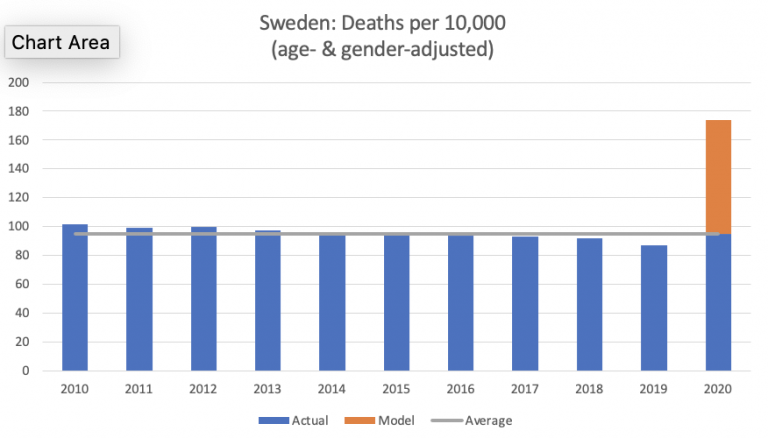
When Sweden strayed from the herd of nations hellbent on lockdown, it suffered intense vilification. The modellers who agitated for lockdown as a profoundly necessary step opined that veering from the mainstream playbook would see Sweden suffer some 100,000 excess deaths, double its normal annual death toll. Daily articles, notably in The Guardian, berated the country or the murder that would surely ensue if it didn’t rejoin the herd.
A lot was riding on this. In taking up the lockdown baton from China, the world was conducting a dangerous experiment. That experiment involved tearing up the public health policy guidelines for respiratory virus epidemics of the World Health Organisation (WHO), the US’s Centres for Disease Control and Prevention (CDC) and many others.
These guidelines were the results of a century of evidence and deliberation that was summarily ignored when the virus arrived. Detailed statements of principle governed the evidential processes required to revise them. These too were ignored.
The basis for all of this was the assurance of the WHO’s Bruce Aylward that China’s lockdown had contained its epidemic. This in turn was based on speculation that everyone was susceptible to Covid-19 and that, without lockdown, exponential growth of disease and death was inevitable.
Snip.
But Sweden did not lock down, becoming the one of the most alluring control experiments the world has ever seen. And it did not suffer 100,000 excess deaths. Not even close. Instead, this is what happened:
Whether you are a lockdown fan drawing trend lines that suggest Sweden had 8000 excess deaths or a skeptic concluding there were none because of a build-up of very susceptible people from an abnormally low death rate in 2019, this reality dealt a devastating blow to the lockdown theory and the models used to justify lockdown.
Covid-19, it turned out, was not only far less deadly than modellers had predicted, but they couldn’t credit this to the lockdowns they’d promoted. Sweden clearly showed that failure to lock down did not constitute genocide.
The favorite hobby of California Attorney General Xavier Becerra, Joe Biden’s pick for Health and Human Services secretary, is targeting Little Sisters of the Poor. He “chose to pursue this litigation even though it is completely meritless; even though it would, if successful, punish nuns who simply want to carry out their calling to care for the indigent elderly; and even though only ideological zealots intolerant of moral views different from their own can take any pleasure in its continuation.” Every knee must bend.
Massive explosion rocks Cameron, Texas (about 75 miles northeast of Austin) after a train collided with 18-wheeler. Fortunately there were no injuries.
Biden’s energy plans are bad for our national security, economy, public health, and overall quality of life. But the American people’s ingenuity and creativity — and the very nature of how our planet and energy systems work — mean all is not lost.
Under Biden’s attempts to “phase out” natural gas, petroleum, and coal, the prices we pay for energy will go up.
This should be no surprise to Biden and his political allies, since costs have soared everywhere “going green” has been tried. Californians are paying 30% more for electricity than they did 10 years ago. In Denmark, where wind energy became a priority in the mid-1990s, prices have more than doubled.
Because everything we do, from the moment our alarms go off every morning to when we turn off the lights at night, depends on energy, these higher prices will be a heavy burden for American families. Expensive energy means producing, marketing, transporting, and selling goods and services will also become more expensive, creating less a ripple effect than a tidal wave.
The rising cost of living will hurt the poor the most. Low-income Americans already spend a higher percentage of their paychecks on electricity and gas, and they have less disposable income to afford higher prices for necessities.
Coupled with the tax increases that would be needed to further subsidize unreliable wind and solar energy, Biden’s plans would cripple the poor and even put their health in jeopardy.
An equally critical consequence of moving away from fossil fuels is the destabilization of our national security. Since becoming the world’s dominant energy producer and a net energy exporter, America has a stronger influence in global negotiations and advancing the cause of freedom.
Thanks in large part to America’s growing influence over OPEC and Russia, multiple Middle Eastern nations have committed to normalizing relations with Israel, an unprecedented development National Review described as “something suspiciously resembling peace.” It’s the reason President Trump has been nominated for the Nobel Peace Prize four times.
America used to go to war over energy, but now we’re actively loosening the grip of unstable, totalitarian countries not just on oil markets, but on the global balance of power. This is good news for Americans, who benefit from a safe and peaceful nation, and also for the entire world.
Sounds like the entire union should be fired, then.
"Teacher's Unions: We won't let your kids go back to school, but we will make sure the guy jacking off in front of Middle Schoolers can't be fired!" pic.twitter.com/Fkbqlv7bG5
If you wanted to get your hands on Gwyenth Paltrow’s $95 vibrator, you’re too late; it’s sold out. The way that woman creates ridiculous overpriced crap that gets everyone talking about what ridiculous overpriced crap it is, which then makes said ridiculous overpriced crap sell out almost immediately, makes me think she’s actually some sort of marketing genius…
“We just wanted to give our viewers a heads-up that the show contains jokes, comedy, laughter, and free speech,” said a Disney spokesperson. “It feels very dated nowadays, since the show is packed full of problematic things like jokes, innovation, and quality. It’s like, come on, people, this is 2021, not the Dark Ages!”
If you or I can’t sleep at night, we might read a book or waste time on the Internet. When Colin Furze can’t sleep at night, he makes a hydraulic powered shark head.
Truth:
While I don’t know how to be “less white,” I do know how to drink less coke
Hard left TV host and well-known all-around dick Cenk Uyger said Texas had the ice storm coming because…Joe Rogan moved here from California:
Only upside of Texas power outages is people like @joerogan, who were so proud to leave CA and move to TX, freezing their asses off. They said they wanted less government. Congrats, mission accomplished! I hope you're not asking the government to come help you. #Freedom
Today the Texas grid is back up and running normally and it’s getting up into the 50s today as the once-a-century Texas winter storm recedes. But I bet that come summer, California has to close down parts of its grid yet again because high winds took out another power line.
All that’s a handy hook to hang this amusing “Californian moves to Texas” video on:
And yes, it mentions Joe Rogan…
(Though if Calidude had moved to Austin rather than Houston, the homeless people would have been much easier to find…)
Regular readers know that Austin has been climbing out of a once in a century winter storm that froze our roads and wrecked our power grid. Right now it’s still 19°F, but it’s supposed to warm up to a balmy 39°F this afternoon…
Could be worse: ERCOT says that their quick thinking to impose rotating blackouts prevented the physical destruction of the Texas Interconnect Grid. That may even be true, but it’s sort of like a teenager saying “Thanks to my quick thinking, I only managed to burn down the garage and not the entire house!”
Passage of this bill this year would lead to job losses and higher use of labor-reducing equipment and technology,” said Sean Kennedy, executive vice president for public affairs for the National Restaurant Association. “Nearly all restaurant operators say they will increase menu prices. But what is clear is that raising prices for consumers will not be enough for restaurants to absorb higher labor costs.”
But for the fact that he’s president — given his track record of having been wrong on every defense and foreign policy issue for almost five decades — it would be easy to ignore his assessment of China. This is a man who said in 2019, “China is going to eat our lunch? Come on, man.” He added, “I mean, you know, they’re not bad folks, folks. But guess what? They’re not competition for us.” Despite the difficulty of being wrong on both occasions Biden managed it.
Focus for a moment on what he said about the conversation with Xi. It is natural that China would be spending billions on transportation given the size of the country and the billions who inhabit it. Whether it is true that China is spending billions on climate change is another matter. It has, for decades, been spending billions on coal-fired electricity generation plants and has only recently made noises about reducing pollution.
But “climate change” is probably the last priority for China while it is spending far greater sums on its military and cyberwar capabilities. Xi was clearly trying to gull Biden into some sort of race to reduce greenhouse gas emissions so that we could strangle our economy while China doesn’t do the same to its own. China may well be trying to reduce pollution — Beijing is infamous for its barely breathable brown air — but how much it is really doing remains to be seen.
Biden apparently wants to be known as the “climate change president.” If Xi can increase Biden’s desire to make climate change his top priority for legislation and regulation (which seems altogether likely in any event) China will be greatly advantaged by Biden’s concomitant reductions in spending on the U.S. military and intelligence communities.
To say that Biden is soft on China only proves the speaker’s command of the obvious.
What Tenev did not say, or explain, is why his company – which is merely a client-facing front of Citadel, which buys the bulk of Robinhood’s orderflow to use it perfectly legally in any way it sees fit – was so massively undercapitalized that the DTCC required several billion more in collateral to protect Robinhood’s own investors against the company’s predatory ways of seeking to capitalize on the gamification of investing making it nothing more (or less) than a trivial pursuit to millions of GenZ and millennial investors, a point which Michael Burry made so vividly.
The #mainstreetrevolution is a myth. Zero commissions and gamified apps were designed to feed flows to the two most influential WS trading houses. A few HFs got hurt, but if retail is moving toward more trading and away from fundamentals, WS owns that game. #Stonks by design. https://t.co/Y4raF0jiM3
— Cassandra (@michaeljburry) February 9, 2021
Incidentally we know why Tenev did not mention it: it’s because Robinhood’s back office is a shambles of a shoestring operation, one which never anticipated either such a surge in trading not a multi-billion collateral requirement; had Robinhood been a true brokerage instead of pretending to be one, and run merely to open as many retail accounts as it could in the shortest amount of time, thus generating the most profit in the quickest amount of time to allow its sponsors a quick and profitable exit, it would actually have been on top of this.
SpaceX wants to bring fast satellite broadband internet to the world — and in particular, to internet users in far-flung, rural locations, where download speeds are low and prices are high.
One of the first places in America to get SpaceX Starlink service was Alaska, the state with the lowest population density in the country — just one person per square mile. The company next extended service into Canada (population density: three people per square mile), followed last month by service in the UK — a big jump in concentration, with 650 people per square mile. (Even in the UK, there are plenty of isolated locations where internet service is expensive, slow — or both).
SpaceX’s globe-spanning satellite constellation should be capable of providing 100 megabit-per-second internet service to anywhere by the end of this year. You can expect that a lot of countries, no matter how urbanized they are (or not), will be lining up to sign up for Starlink service. And the more countries Starlink signs up as customers, the better the prospects for the SpaceX subsidiary’s promised IPO.
One country that most definitely does not want Starlink, however, is Russia.
Snip.
As Ars points out, “Russia is planning its own satellite Internet constellation, known as ‘Sphere.'” And in contrast to SpaceX’s Starlink, which is a privately funded and privately built communications system, the 600-satellite Sphere constellation will be a project built and run by the Russian state under the aegis of its Roscosmos space agency. And that could be a problem.
Sphere, you see, is rumored to cost $20 billion to build, may not begin launching until 2024, and won’t be completed before 2030.
Those numbers alone tell you Sphere will never be built, Starlink or no Starlink. Russia is a profoundly broke and profoundly broken country. Sphere is just the sort of prestige project Putin loves to announce to much fanfare, national greatness vaporware that either never gets built or else creeps out into the real world years (or even decades) late and in much-reduced form, like only ordering 100 T-14 Armata tanks.
Iranian fuel tanker convoy to Afghanistan goes boom.
The media want you to know that it’s Trump’s fault they couldn’t investigate such trivial scandals as Lincoln Project pedophiles, because how would they have time when Orange Man Bad?
Speaking of the Lincoln Project, founder Rick Wilson managed to pay off his mortgage early just as the John Weaver pedophilia scandal was breaking. How fortuitous!
Back in The Before Time, The Long Long Ago, newspapers actually defended free speech.
Back in 1977, the New York Times maintained that as long as Nazis did not engage in any illegality, they were “entitled” to the protection of the law, and then put the onus of maintaining peace on the Skokie residents:
The argument that they will provoke violence simply by appearing on the streets of Skokie only emphasizes the obligation of the police to keep the peace—and gives an opportunity the people of Skokie to demonstrate their respect for the law.
These days, the Times board will chase you out of the building for allowing anyone to voice an opinion that chafes against the brittle sensitivities of its writers. The paper employs full-time speech monitors to vet wrongthink.
The cancel mob comes for Baen Books. Book editors and writers kindly tell them to get stuffed.
Special for Black History Month:
Here are the names of the 200+ slaves owned by Kamala Harris’ ancestor Hamilton Brown in Jamaica in 1817. One of the largest planters in Jamaica, Brown now has a town named after him, Brown’s Town pic.twitter.com/6QnBpEQyez
Facebook head Mark Zuckerberg told employees they need to “inflict pain” on Apple because Apple won’t let Facebook steal every single bit of personal data from Apple devices.
“Bill Gates Bankrolling Educational Organization That Says Math is Racist.” “A conglomerate of 25 educational organizations called A Pathway to Equitable Math Instruction asserts that asking students to find the correct answer is an ‘inherently racist practice.’ The organization’s website lists the Bill & Melinda Gates Foundation as its only donor.” How many fingers, Winston?
A helicopter running on fossil fuel spraying a chemical made from fossil fuels onto a wind turbine made with fossils fuels during an ice storm is awesome. pic.twitter.com/3HInc2qKb9
“Man Asks That You Respect His Preferred Adjectives.” “‘Here are the adjectives I identify with,’ Becker put on social media. ‘Cool, witty, handsome, innovative, fun.’ Please use one of these adjectives when describing me. It distresses me when people use adjectives I don’t identify as,’ Becker later explained. ‘Like “creepy,” “weird,” or “off-putting.” That’s basically denying my existence and trying to genocide me.'”
I reached out to the Texas Public Policy Foundation’s energy expert Katie Tahuahua about the dire energy problems brought about by the huge winter storm, here are her answers:
1. The Texas Interconnect Grid is a separate grid from the U.S. Eastern and Western Interconnect grids. What advantages and disadvantages does this provide for Texas energy consumers?
KT: The advantage of Texas having its own electric grid is that our communities aren’t affected by poor policy choices in other states we have no control or accountability over. However, it also means we must bear the full costs of our choices and feel the full brunt of crises like the blackouts across the state this week.
2. What role does ERCOT serve in managing the Texas Interconnect grid?
KT: The Electric Reliability Council of Texas (ERCOT) manages the Texas Interconnection Grid — although, unfortunately, the “Reliability” in its name has now been called into question.
3. The current wave of extreme cold was forecast in advance. Why were so many electricity-producing entities caught off-guard?
KT: There are two problems here. The first is that ERCOT waited too long to initiate conservation measures to meet increased demand as the weather turned colder. However, this delay wouldn’t have been a problem at all had Texas not put so many eggs in the renewable basket. Instead of adding more reliable fossil fuel generation to the grid over the last few years to keep up with our growing population and electricity demand, we’ve closed over 3,000MW in natural gas and clean coal and instead added 20,000MW of unreliable wind and solar to the grid. Unfortunately, all that wind and solar was barely generating when Texans needed it most. By Monday morning, half of Texas’ wind turbines were frozen solid and total wind generation bottomed out at 2% capacity by Monday night. Because of this massive gap in wind production and ERCOT’s delay, what should have been a series of brief rolling blackouts — inconvenient but manageable — instead turned into millions of Texans left in the cold and without answers.
4. What, if any, role has ERCOT’s demand pricing policies played in helping create the current crisis?
KT: ERCOT does not currently have demand pricing policies. While voluntary demand pricing programs could help prevent situations like this, any regulatory solution should place the cost of ensuring reliable electricity on the generators where it belongs, not on the customers.
5. A great number of Austin households are without power right now. Has Austin energy performed notably worse than other government power entities, and what policies have contributed to making the situation worse?
KT: Anecdotally, we know that there are communities in several areas of the state still without power. It does not appear that the blackouts are worse in Austin than anywhere else. However, Austin’s boisterous promotion of unreliable renewable energy — and their expensive failed efforts to use it — have reduced reliability for their customers and for the broader Texas grid. Unfortunately, San Antonio and CPS Energy are going down the same path that will put their ratepayers on the hook for $1 billion and further jeopardize the security of our grid.
6. How much, if any, has the push for “renewable” energy courses like wind and solar contributed to the current energy difficulties in Texas?
KT: It’s clear that policy decisions favoring unreliable wind and solar energy made blackouts such as this inevitable at some point. The severity of this blackout could have been reduced had ERCOT acted more swiftly — but it never would have been an issue had our grid not been so deeply penetrated by unreliable energy sources that contribute the least when they are needed the most, yet are propped up by billions in taxpayer-funded subsidies every year.
The Texas Legislature should end these subsidies and require all electric generators to guarantee a certain amount of “dispatchable,” or readily available, power to the grid at all times. The Texas Public Policy Foundation and our Life:Powered initiative will be working closely with the legislature to preserve Texans’ access to affordable, reliable electricity no matter the weather.
Thanks to Katie Tahuahua for taking the time to answer these questions.
Today is the first time in almost a week that the temperature is going to get above freezing…