Archive for the ‘Republicans’ Category

We Have A New Winner In “Most Ludicrous Sample Bias In A Texas Senate Race Poll!”

Thursday, September 20th, 2018

After months of “Beto O’Rourke is within striking distance of Ted Cruz!” polls with biased samples, the media polling complex have finally been able to manufacture a “Beto O’Rourke is leading Ted Cruz!” headline.

And they only had to take oversampling Democrats to ludicrous extremes to do so.

Their poll sample had 47% Democrats vs. 43% Republicans among likely voters. (You can find it in question six, after you’ve cranked magnification up to 400% or so.) That’s a pretty accurate breakdown…for 1990. However, here in the real world of 2018, that oversamples Democrats by 16 to 20 points. That’s also why the same poll only has Texas Governor Greg Abbott up by only 9 points over the invisible Lupe Valdez campaign when he walloped Wendy Davis by 20 points in 2014.

“Ipsos online poll released Wednesday in conjunction with Reuters and the University of Virginia.” Note the “online poll” part. As inaccurate as telephone landline polling is, online polling is worse.

This isn’t a poll that should be taken with several grains of salt, it’s a poll that shouldn’t taken seriously at all.

Democrats: Beto’s Tied! New Quinnipiac Poll: Not So Much

Wednesday, September 19th, 2018

Remember when earlier polls show Robert “Beto” O’Rourke within the margin of error against Ted Cruz?

Well, a new Quinnipiac poll of likely (rather than merely registered voters) says “Not so much.” The poll shows Cruz with a 9 point lead over his Democratic rival.

As always, let’s look at the crosstabs. The sample was 35% Republicans, 26% Democrats and 33% Independents. That compares to 38% Republicans, 29% Democrats at 33% Independents in 2016 exit polling. Given that we see roughly the same 3% reduction for both parties, this probably the closest sample replicating actual election conditions, the caveat, of course, being that off-year election numbers tend to be more Republican still.

Any concerns? Yes, the number of voters queried (807) is still small.

A nine point loss strikes me as closer to a ceiling of O’Rourke’s chances than a floor. A 12-15 point loss seems far more likely. (On the bright side, that will still be significant improvement on Wendy Davis’ 20 point wipeout in 2014.) Baring some sort of black swan event, like another economic meltdown or Ted Cruz ripping off his face to reveal he’s actually a Zerg Hydralisk, I don’t expect the fundamentals of the race to change appreciably.

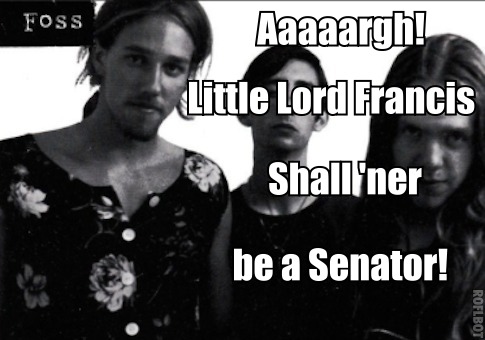
Edited to add: I just noticed that today is Talk Like a Pirate Day, so let’s add another meme:

Republican Pete Flores Pulls Out Victory In Texas SD19

Tuesday, September 18th, 2018

A funny thing happened to that “blue wave” in Texas on the way to November: Republican Pete Flores pulled out a win in the Texas Senate District 19 runoff election over Democrat Pete Gallego, who Twitter reports has conceded the race.

Keep in mind that former Democratic State Senator (and now convicted felon) Carlos Uresti won the seat by 15 points in 2016.

A few possible causes for the seat flipping red beyond the obvious low turnout for a special election:

  • The unpopularity in Texas of the Democratic Party’s lurch farther left
  • Strong economy under President Donald Trump
  • A sleaze hangover from Uresti’s conviction
  • 2018 Texas Democratic ballot headliner Beto O’Rourke’s under-performing among Hispanics and/or South Texas.
  • Key support for Flores from Lt. Governor Dan Patrick.
  • Concerns over Gallego not actually living in the district
  • Some reactions from Twitter:

    Texas SD19 Special Election Runoff Today

    Tuesday, September 18th, 2018

    If you live in Texas Senate District 19, today is the day to vote in the runoff election if you haven’t already:

    Three months after convicted felon Carlos Uresti vacated his state Senate seat, voters will choose his successor Tuesday in a race that could have important consequences for next year’s legislative session.

    Republican Pete Flores, a retired game warden, and Democrat Pete Gallego, a former U.S. and state representative, emerged from July’s special election in first and second place, respectively, from a field of 11, resulting in Tuesday’s runoff.

    Snip.

    Polls will be open from 7 a.m. to 7 p.m. Tuesday. The sprawling district encompasses all or parts of 17 counties, including a portion of San Antonio, large swaths of West Texas and 400 miles of the U.S.-Mexico border.

    The winner of the runoff will serve the rest of Uresti’s term, which runs through 2020. The longtime lawmaker was sentenced in June to 12 years in prison for his involvement in a Ponzi scheme.

    Previously.

    The Texas Senate Race and the Case of the Ever-Shrinking Poll Sample

    Wednesday, August 29th, 2018

    Another week, another poll that shows Beto O’Rourke within striking distance of Ted Cruz. The entire sample size on the Emerson poll was only 550 registered voters. It seems that O’Rourke’s numbers go up as the size of the sample goes down.

    Let’s look at the crosstabs, shall we?

    First, this is among registered voters, not likely voters, as other polls have screened. That matters, because off-year elections have lower turnout than Presidential elections.

    Second, did they oversample Democrats? Why yes they did, albeit not as grossly as as some previous polls. Republicans checked in at 41%, Democrats at 35%, a six point difference as opposed to the nine point difference in party identification in 2016, much less the 16 points win Cruz enjoyed over Paul Sadler in 2012, or the 20 points Greg Abbott beat Wendy Davis by in 2014.

    Third, they’ve oversampled women 52.3% to 47.7% men. The last non-Presidential election poll show closer to a 51% women/49% men split.

    I’m guessing that the “closeness” of the race is heavily dependent on those factors.

    In other Texas senate race news:

  • O’Rourke blows off a debate with Cruz.
  • How to write the perfect fawning profile of Beto O’Rourke without having to do any of that annoying research.
  • Dinesh D’Souza Demolishes The Myth of the Southern Strategy

    Sunday, August 26th, 2018

    The “Southern Strategy” myth refuses to die, mainly because it’s so useful for the political and media wings of the Democratic Party. In his new book, Death of a Nation: Plantation Politics and the Making of the Democratic Party, Dinesh D’Souza takes another whack at demolishing the myth:

    What dividends this explanation pays for progressive Democrats! In effect, it erases most of their history and gives them a Get Out of Jail Free Card. Democrats have never publicly admitted their role over nearly two centuries of being the party of slavery, segregation, Jim Crow, racial terrorism, the Ku Klux Klan, and also fascism and Nazism. Yet when pushed up against the wall with the mountain of evidence I provide in my book, how can they deny it?

    They cannot deny it. Therefore, their ultimate fallback—their only fallback—is to insist that they changed. The bad guys became the good guys. The biggest payoff for them is the corollary to this. Supposedly the Republicans also changed, in the opposite direction. The good guys became the bad guys. So now the Democratic Left not only gets to accuse Trump, conservatives, and Republicans of being the party of racism; they also get to take their own history of white supremacy—with all its horrid images of slavery, lynching and concentration camps—and foist it on the political Right.

    But is it true? Or is the whole doctrine of the Southern strategy and the big switch yet another piece of progressive humbug?

    Snip.

    We turn to Nixon’s Southern Strategy and the reasons for the other switch: the switch of the South from being the political base of the Democratic Party to now being that of the GOP. Here the progressive narrative is that Nixon was convinced by his malevolent advisers—notably Kevin Phillips, author of the bible of the Southern Strategy—to make a racist appeal to the Deep South, winning over Dixiecrats and segregationists to the GOP and firmly establishing the Republican Party as the part of white supremacy, a mantle that has now been inherited by Trump.

    The first problem with this Southern Strategy tale is that progressives have never been able to provide a single example of an explicitly racist pitch by Richard Nixon at any time in his long career. One might expect that a racist appeal to Deep South racists would actually have to be made and to be understood as such. Yet quite evidently none was.

    The two biggest issues in the 1968 campaign were the war in Vietnam and, closely related, the antiwar movement in the United States. Nixon campaigned on a strong anti-Communist, law-and-order platform. While embracing the welfare state—Nixon was no conservative on domestic issues—he also railed against what he termed the “excesses of bleeding heart liberalism.” Some progressives contend that while not explicitly racist, Nixon’s campaign themes reflected a covert or hidden racism. Nixon was supposedly sending “coded” messages to Deep South racists, speaking as if through a political “dog whistle.”

    Now I have to say I consider this “dog whistle” argument to be somewhat strange. Is it really plausible that Deep South bigots, like dogs, have some kind of a heightened awareness of racial messages—messages that are somehow indecipherable to the rest of the country? Not really. Even so, let’s consider the possibility. I concede of course that most public policy issues, from taxes to crime to welfare, are entangled with race. A tax cut, for instance, will have a disproportionate impact on some groups as compared to other groups.

    Precisely for this reason, however, it’s incumbent on progressives to have some basis of distinguishing “dog whistle” tactics from ordinary political appeals. Yet never have I seen anyone make this distinction. Progressive rhetoric almost inevitably assumes that Nixon is speaking in racial code. How can this be established, however, without looking at Nixon’s intention or, absent knowledge of his intention, of the particular context in which Nixon said what he did? Context, in other words, is critical here.

    Consider Nixon’s famous law and order platform which is routinely treated as a racist dog whistle. Now a call for law and order is not inherently racist, and this theme from Nixon resonated not merely in the South but throughout the country. It should be noted that Nixon’s law and order argument was directly not merely at black rioters but also at mostly white violent antiwar protesters. Nixon condemned the Black Panthers but also the Weather Underground, led by a man whom I’ve subsequently debated, Bill Ayers, and his wife Bernardine Dohrn. Last time I checked, both of them were white.

    What of Nixon’s supporters? Were they stereotypical segregationist bigots? The left-wing historian Kevin Kruse thinks so. Kruse portrays as racist the phenomenon of “white flight,” which refers to middle-class whites moving out of the crime-ridden inner cities to move to the suburbs. Kruse terms this the politics of “suburban secession,” a deliberate invocation of the Confederacy itself, as if whites were “seceding” from the cities and establishing their own white nation in the suburbs.

    Yet Kruse conveniently omits the equivalent phenomenon of “black flight,” which refers to middle-class blacks doing the same thing as soon as they acquired the means to move to safer neighborhoods. Witness today the prosperous black suburbs of Washington D.C., heavily populated with both whites and blacks who got out of the city. Does it make any sense to call all these people bigots? No. Wouldn’t Kruse himself do the same thing for the safety of his family? Of course he would.

    Kruse’s portrait of Nixon’s base of white middle-class Republicans as a reincarnation of the old South racists is contradicted by Norman Mailer, who reported on the Republican Convention in Miami Beach in 1968. He found “a parade of wives and children and men who owned hardware stores or were druggists, or first teller in the bank, proprietor of a haberdashery or principal of a small-town high school, local lawyer, retired doctor, a widow on a tidy income, her minister and fellow-delegate, minor executives from minor corporations, men who owned their farms.”

    As Mailer recognized, this was not a rally of Ku Klux Klansmen of the type that attended, say, the Democratic Convention of 1924. In fact, this was not a Southern-dominated group at all. Most of the attendees were from the Northeast, the Midwest, and the West. This was Nixon’s “silent majority,” the ordinary Americans whom Nixon said worked hard and played by the rules and didn’t complain or set fire to anything and, precisely for this reason, had been ignored and even reviled by the Democratic Party.

    Nixon had an excellent record on civil rights. Unlike Barry Goldwater, who opposed the Civil Rights Act of 1964, Nixon supported it. He also supported the Voting Rights Act the following year. When Nixon was elected in 1968, nearly 70 percent of African-American children attended all-black schools. When he left, in 1974, that figure was down to 8 percent.

    Tom Wicker, the progressive columnist for the New York Times, gave his appraisal of Nixon’s desegregation efforts. “There’s no doubt about it—the Nixon administration accomplished more in 1970 to desegregate Southern school systems than had been done in the 16 previous years or probably since. There’s no doubt either that it was Richard Nixon personally who conceived, orchestrated and led the administration’s desegregation effort . . . .That effort resulted in probably the outstanding domestic achievement of his administration.”

    Snip.

    If it wasn’t because of white supremacy, how did the South—not just the Upper or Peripheral South, but also the Deep South—finally end up in the Republican camp? This question is taken up in political scientists Byron Shafer and Richard Johnston’s important study, The End of Southern Exceptionalism. This work, relatively unknown and with an admittedly strange title, provides a decisive refutation of the whole progressive theory of the Southern Strategy and the big switch.

    The key to Shafer and Johnston’s approach is to ask when the South moved into the GOP camp, and which voters actually moved from Democratic to Republican. Shafer and Johnston show, first, that the South began its political shift in the Eisenhower era. Eisenhower, who won five Peripheral South states in 1956, was the first Republican to break the lock that the FDR Democrats had established in the South. Obviously, this early shift preceded the civil rights movement and cannot be attributed to it.

    Shafer and Johnston, like Kevin Phillips, contend that after the postwar economic boom of the late 1940s and 1950s, the increasingly industrial “new South” was very receptive to the free market philosophy of the Republican Party. Thus Shafer and Johnston introduce class as a rival explanation to race for why the South became Republican. In the 1960s, however, they cannot ignore the race factor. Shafer and Johnson’s ingenuity is to find a way to test the two explanations—race and class—against each other, in order to figure out which one is more important.

    Shafer and Johnston do this by dividing the South into two camps, the first made up of the wealthier, more industrial, more racially integrated South—this is the New South—and the second made up of the rural, agricultural, racially homogeneous South; this is the Old South that provided the historical base of the Democratic Party. Shafer and Johnson sensibly posit that if white Southerners are becoming Republican because of hostility to blacks, one would expect the Old South to move over first.

    But, in fact, Shafer and Johnson find, through a detailed examination of the demographic data, this is not the case. The wealthier, more industrial, more integrated New South moves first into the Republican Party. This happens in the 1950s and 1960s. By contrast, the rural, agricultural, racially homogenous Old South resists this movement. In other words, during the civil rights period, the least racist white Southerners become Republicans and the most racist white Southerners stay recalcitrantly in the Democratic Party.

    Eventually, the Old South also transitions into the GOP camp. But this is not until the late 1970s and through the 1980s, in response to the Reaganite appeal to free-market capitalism, patriotism, pro-life, school prayer, family values. These economic and social issues were far more central to Reagan’s message than race, and they struck a chord beyond—no less than within—the South. In 1980, Reagan lost just six states; in 1984 he lost only Walter Mondale’s home state of Minnesota. Obviously, Reagan didn’t need a specific Southern Strategy; he had an American strategy that proved wildly successful.

    Reagan’s success, however, was made possible by the sharp leftward move by the Democratic Party starting with the nomination of George McGovern in 1972 and continuing through the 1970s. This swing to the left, especially on social and cultural issues like school prayer, pornography, recreational drugs and abortion, receives virtually no mention by progressive scholars because it disrupts their thesis that the trend in the South to the GOP was motivated primarily by race.

    As far as congressional House and Senate seats are concerned, the South didn’t become solidly Republican until 1994. Again, this was due to the Newt Gingrich agenda that closely mirrored the Reagan agenda. Leftist historian Kevin Kruse lists the Gingrich agenda—reducing taxes, ending the “marriage penalty,” and more generally reducing the size of government—and then darkly implies that “this sort of appeal” also had a hidden racial component. But everyone who voted for the Contract for America, and one suspects, Kruse also, knows that this is not the case. Small-government conservatism is not racism.

    Finally, we can figure out the meaning of the title of Shafer and Johnston’s book. We are at “the end of Southern exceptionalism” because the South is no longer the racist preserve of the Democratic Party. The South has now become like the rest of the country. Southerners are Republican for the same reason that other Americans are Republican. And black Southerners vote Democratic for the same reason that blacks everywhere else vote Democratic. For whites no less than blacks, economic issues are predominant, foreign policy and social issues count too, and race has relatively little to do with it.

    See also this Prager University video from last year.

    Sen. John McCain, RIP

    Saturday, August 25th, 2018

    Republican Senator John McCain has died at age 81 just days after ending treatment for brain cancer. McCain served his country honorably as a pilot before spending five years in a POW camp where he was regularly tortured by the Viet Cong. He became a Senator in 1987 and lost the 2008 Presidential race to Barack Obama.

    Condolences to his family.

    LinkSwarm for August 10, 2018

    Friday, August 10th, 2018

    This week has been saner but still busy:

  • Israel and Hamas have essentially been going at it all week.
  • “Illegal Immigrant Released by ‘Sanctuary City’ of Philadelphia Convicted of Child Rape.”
  • Why Dianne Feinstein was an easy mark for Chinese spys:

    In June 1996 — after the staffer had begun working for Feinstein — the FBI detected that the Chinese government was attempting to seek favor with the senator, who at the time sat on the East Asian and Pacific affairs subcommittee of the Foreign Relations Committee, which oversees US-China relations. Investigators warned her in a classified briefing that Beijing might try to influence her through illegal campaign contributions laundered through front corporations and other cutouts.

    The warning proved prescient.

    One Chinese bagman, Nanping-born John Huang, showed up at Feinstein’s San Francisco home for a fundraising dinner with a Beijing official tied to the People’s Bank of China and the Communist Party Committee. As a foreign national, the official wasn’t legally qualified to make the $50,000-a-plate donation to dine at the banquet.

    After a Justice Department task force investigated widespread illegal fundraising during the 1996 Clinton re-election campaign, Feinstein returned more than $12,000 in contributions from donors associated with Huang, who was later convicted of campaign-finance fraud along with other Beijing bagmen. The DNC and the Clinton campaign had to return millions in ill-gotten cash.

    Still, Beijing got its favored trade status extended — thanks in part to Feinstein. In speeches on the Senate floor and newspaper op-eds, she shamelessly spun China’s human-rights violations, as when in 1997 she compared Beijing’s 1989 massacre of hundreds of young demonstrators to the 1970 Kent State shootings, calling for the presidents of China and America to appoint a human-rights commission “charting the evolution of human rights in both countries over the last 20 to 30 years,” that “would point out the successes and failures — both Tiananmen Square and Kent State — and make recommendations for goals for the future.”

    Feinstein also led efforts to bring China into the World Trade Organization in 1999, which gave Beijing permanent normal trade relations status and removed the annual congressional review of its human-rights and weapons-proliferation records.

    Feinstein, still among the Senate’s most influential China doves, travels to China each year. Joining her on those trips is her mega-millionaire investor husband, Richard C. Blum, who has seemingly benefited greatly from the relationship.

    Starting in 1996, as China was aggressively currying favor with his wife, Blum was able to take large stakes in Chinese state-run steel and food companies, and has brokered over $100 million in deals in China since then — with the help of partners who sit on the boards of Chinese military front companies like COSCO and CITIC.

    China investments have helped make Feinstein, who lives in a $17 million mansion in San Francisco and keeps a $5 million vacation home in Hawaii, one of the richest members in Congress.​

  • “Of all Donald Trump’s many sins against the Great Church of the Transnational Leftist Establishment, his greatest may be his stubborn refusal to subordinate the needs of the normal citizens of the United States to the dogmas of our alleged betters.”
  • Good guy with a gun stops a bad guy with a gun in Florida.
  • Elites vs. the Deplorables:

    Academic dogma postulates that white people cannot be the victims of racism, and such banal white demonization has now seeped into the larger liberal commentariat. With that bias comes the notion that one can smear the white working classes with impunity. Caputo, however, was not brave or stupid enough to visit a Trump rally and to suggest to the crowd around him to get to a Clear Smile clinic.

    If you are a non-white purveyor of such prejudice, venom like Jeong’s is contextualized through the lens of compensatory historical grievances. Someone’s grandfather mistreated your grandmother, so you can invert and then replay the roles with impunity. Or less charitably, life’s disappointments are always due to past cosmic injustice, not one’s own perceived tragic shortcomings or bad luck or just cruel fate.

    If you are an elite white liberal, you are a twofer: virtue signaling your identity politics bona fides, while psychologically squaring the circle of your own privilege. Those who ridicule less fortunate white others for their supposed racial privilege—themselves often the products of old boy networks, elite upbringings, inherited perks, prep schools and parental leveraging—end up as the privileged smearing the non-privileged for their privilege.

    Jeong is a Harvard Law graduate. Strzok has a master’s degree from Georgetown. The ridicule of the white working class by NeverTrump conservative pundits is read on the pages of the nation’s premier newspapers or voiced in hallowed symposia.

    Is such ignorance of an entire class because of, or in spite of such, elite training?

    Snip.

    “In answer to the now hackneyed question, who or what created Trump? All these purveyors of class and racial prejudice need only look in the mirror.”

  • “It has become apparent that the Democratic Party and its media supporters seem to have a problem with representative democracy and how it works. They lost an election they thought they’d handily win, and their reaction to it has been to have a long, screeching public tantrum.” (HT AoSHQ)
  • That “Democratic Socialist wave” crested and broke-up before it ever hit the shore: Just about all Bernie bros go down in Democratic primary defeats. “Rather than demonstrate that his movement has a broad reach across the electorate, Sanders has instead demonstrated that’s a fringe movement even within the Democratic Party.” (Hat tip: Director Blue.)
  • Why the left are afraid of Jordan Petersen.

    It is because the left, while it currently seems ascendant in our houses of culture and art, has in fact entered its decadent late phase, and it is deeply vulnerable. The left is afraid not of Peterson, but of the ideas he promotes, which are completely inconsistent with identity politics of any kind. When the poetry editors of The Nation virtuously publish an amateurish but super-woke poem, only to discover that the poem stumbled across several trip wires of political correctness; when these editors (one of them a full professor in the Harvard English department) then jointly write a letter oozing bathos and career anxiety and begging forgiveness from their critics; when the poet himself publishes a statement of his own—a missive falling somewhere between an apology, a Hail Mary pass, and a suicide note; and when all of this is accepted in the houses of the holy as one of the regrettable but minor incidents that take place along the path toward greater justice, something is dying.

    When the top man at The New York Times publishes a sober statement about a meeting he had with the president in which he describes instructing Trump about the problem of his “deeply troubling anti-press rhetoric,” and then three days later the paper announces that it has hired a writer who has tweeted about her hatred of white people, of Republicans, of cops, of the president, of the need to stop certain female writers and journalists from “existing,” and when this new hire will not be a beat reporter, but will sit on the paper’s editorial board—having a hand in shaping the opinions the paper presents to the world—then it is no mystery that a parallel culture of ideas has emerged to replace a corrupted system. When even Barack Obama, the poet laureate of identity politics, is moved to issue a message to the faithful, hinting that that they could be tipping their hand on all of this—saying during a speech he delivered in South Africa that a culture is at a dead end when it decides someone has no “standing to speak” if he is a white man—and when even this mayday is ignored, the doomsday clock ticks ever closer to the end.

    In the midst of this death rattle has come a group of thinkers, Peterson foremost among them, offering an alternative means of understanding the world to a very large group of people who have been starved for one. His audience is huge and ever more diverse, but a significant number of his fans are white men. The automatic assumption of the left is that this is therefore a red-pilled army, but the opposite is true. The alt-right venerates identity politics just as fervently as the left, as the title of a recent essay reproduced on the alt-right website Counter-Currents reveals: “Jordan Peterson’s Rejection of Identity Politics Allows White Ethnocide.”

    If you think that a backlash to the kind of philosophy that resulted in The Nation’s poetry implosion; the Times’ hire; and Obama’s distress call isn’t at least partly responsible for the election of Donald Trump, you’re dreaming. And if you think the only kind of people who would reject such madness are Republicans, you are similarly deluded. All across the country, there are people as repelled by the current White House as they are by the countless and increasingly baroque expressions of identity politics that dominate so much of the culture. These are people who aren’t looking for an ideology; they are looking for ideas. And many of them are getting much better at discerning the good from the bad. The Democratic Party reviles them at its peril; the Republican Party takes them for granted in folly.

    Though it must be said that only a small fraction of the amorphously named “alt-right” embraces identity politics. (Hat tip: Will Shetterly on Twitter.)

  • Syrian chemical weapons scientist blows up real good.
  • Social Justice Warriors want biological women to never win another women’s sporting ever again.
  • Why Europe is drafting away from America.

    The global influence of Europe continues to wane, at least as defined by demographic robustness, technological innovation, the quality of higher education, and the ability to defend its interests. Its aristocratic elite classes are currently under constant challenge from populist reformers. And 73 years of peace have been hard on Europe, in the sense that the postmodern European cultural ideal is to avoid childbearing, most religion, and national defense.

    Snip.

    Europe continues to believe that the “Palestinian issue” is key to “peace” in the Middle East — a euphemism for distancing itself from Israel. In truth, the Middle East is undergoing the greatest revolution since the end of colonialism. The worries about Arab security are not the tardiness of Palestinian statehood but the existential threats emanating from theocratic Shiite Iran and the neo-Ottomanism of Recep Tayyip Erdogan’s Turkey. In that sense, a conventionally strong and nuclear Israel is for now allied with an Arab world at odds with both Tehran and Ankara, and is likely in any major war to be on the side of an Egypt or Saudi Arabia. Yet for Europe, the Palestinians are the rusty key to peace, even as the latter are increasingly under suspicion by Arab nations as pro-Hezbollah and pro-Iranian.

    Europe for now is on the wrong side of the energy revolution, perhaps best epitomized by the near-suicidal green policies of Germany. As it dismantles coal and nuclear plants, Angela Merkel’s government finds its subsidized wind and solar projects utterly incapable of meeting Germany’s competitive industrial needs. The result will likely be a continual and massive importation of natural gas, increasingly from NATO’s supposed archenemy, Vladimir Putin’s Russia. The dream of hydraulic fracturing of shale gas throughout Europe is now largely dead and buried by opposition from radical environmental groups. The result is not a self-sufficient Europe enjoying renewable energy but a continent increasingly dependent for its mounting conventional energy needs on costly imports, with resulting energy costs that are making it uncompetitive with North American industries. Again, the contrast with the United States is telling: The latter went from foreordained, “peak oil” fossil-fuel dependence to becoming the largest oil, gas, and coal producer in the world.

    One symptom of European demographic decline, multiculturalism, and military impotence is massive illegal immigration from the Middle East and North Africa. The ensuing crisis of large unassimilated populations is said to be analogous to the influxes of illegal immigrants into the United States from Central America and Mexico. But there are key differences. As an immigrant nation without a hereditary aristocracy, the melting pot of the United States even in postmodern times has far better integrated, assimilated, and intermarried newcomers. Illegal immigrants to the United States are largely Catholic; challenges to assimilation are national, ethnic, and linguistic but not additionally religious as in Europe. Congressional and presidential policy reflects a majority opinion in the United States that now supports secure borders and measured, legal, meritocratic immigration. In Europe, official immigration policy is still at odds with voters.

    (Hat tip: Gregory Benford’s Facebook page.)

  • Is an upset brewing in Rhode Island?
  • Woman who was the daughter and granddaughter of women who used men simply as sperm donors wonders why men are suspicious of her. Also, from the comments: “What the writer only lets on, deep into the article, is that she was raised in a lesbian commune.”
  • Not even Democrats are wild about an abortion mill parking lot comedy tour. (Hat tip: Stephen Green at Instapundit.)
  • Austin’s CodeNext planning process dies a very justifiable death.
  • Austin American Statesman kills weekly Spanish-language newspaper, offers all Statesman staffers voluntary severance package. (Hat tip: Dwight.)
  • DIY Pancreas. (Hat tip: Dwight.)
  • “Ocasio-Cortez Severely Burned After Accidentally Touching Book On Basic Economics.”
  • Ten honest plumbing tips. (Hat tip: Daddy Warpig.)
  • A tweet:

  • LinkSwarm for August 3, 2018

    Friday, August 3rd, 2018

    I’m hoping that this week is Peak Busy for me. Enjoy a Friday LinkSwarm:

  • Rasmussen: “Today’s [President Donald Trump] approval ratings among black voters: 29% This time last year: 15%.” Overall Trump approval rating at 50%.
  • Related: “President Donald Trump was lauded by inner-city pastors, including one who said he may go down as the ‘most pro-black president’ in recent history, during a White House roundtable on Wednesday that was focused on efforts to reform the prison system.” (Hat tip: Da Tech Guy via The Other McCain.)
  • ObamaCare is now optional:

    At long last, the Trump administration has created a “freedom option” for people suffering under Obamacare. A final rulemaking issued Wednesday reverses an Obama-era regulation that exposed the sick to medical underwriting. The new rule will expand consumer protections for the sick, cover up to two million uninsured people, reduce premiums for millions more, protect conscience rights, and make Obamacare’s costs more transparent. And unlike President Barack Obama’s implementation of his signature healthcare legislation, it works within the confines of the law.

    Federal law exempts “short-term, limited duration” health insurance from having to carry the unwanted coverage and hidden taxes Obamacare requires. Many consumers have understandably taken refuge from soaring Obamacare premiums in short-term plans.

    Hoping to force those consumers into Obamacare plans, the Obama administration sabotaged short-term plans by stripping them of crucial consumer protections. It cut the maximum plan term from 12 months to three months, and forbade issuers from offering “renewal guarantees” that allow the sick to continue purchasing short-term policies at healthy-person rates. State insurance regulators protested that these restrictions literally stripped sick patients of their coverage.

    Wednesday’s rule reinstates and even expands the consumer protections Obama curtailed. It allows short-term plans to last 12 months, and allows insurers to offer them with renewal guarantees.

    You read that right. Democrats curtailed consumer protections; Republicans are expanding them.

    (Hat tip: Stephen Green at Instapundit.)

  • Yesterday’s controversy de jour: “Sarah Jeong: NY Times stands by racist tweets reporter.”
  • Andrew Sullivan on the same topic:

    Is the newest member of the New York Times editorial board, Sarah Jeong, a racist?

    From one perspective — that commonly held by people outside the confines of the political left — she obviously is. A series of tweets from 2013 to 2015 reveal a vicious hatred of an entire group of people based only on their skin color. If that sounds harsh, let’s review a few, shall we? “White men are bullshit,” is one. A succinct vent, at least. But notice she’s not in any way attacking specific white men for some particular failing, just all white men for, well, existing. Or this series of ruminations: “have you ever tried to figure out all the things that white people are allowed to do that aren’t cultural appropriation. there’s literally nothing. like skiing, maybe, and also golf. white people aren’t even allowed to have polo. did you know that. like don’t you just feel bad? why can’t we give white people a break. lacrosse isn’t for white people either. it must be so boring to be white.” Or this: “basically i’m just imagining waking up white every morning with a terrible existential dread that i have no culture.” I can’t say I’m offended by this — it’s even mildly amusing, if a little bonkers. (Has she read, say, any Shakespeare or Emily Dickinson?) But it does reveal a worldview in which white people — all of them — are cultural parasites and contemptibly dull.

    A little more disturbing is what you might call “eliminationist” rhetoric — language that wishes an entire race could be wiped off the face of the earth: “#cancelwhitepeople.” Or: “White people have stopped breeding. you’ll all go extinct soon. that was my plan all along.” One simple rule I have about describing groups of human beings is that I try not to use a term that equates them with animals. Jeong apparently has no problem doing so. Speaking of animals, here’s another gem: “Dumbass fucking white people marking up the internet with their opinions like dogs pissing on fire hydrants.” Or you could describe an entire race as subhuman: “Are white people genetically disposed to burn faster in the sun, thus logically being only fit to live underground like groveling goblins.” And then there’s this simple expression of the pleasure that comes with hatred: “oh man it’s kind of sick how much joy I get out of being cruel to old white men.” I love that completely meretricious “old” to demean them still further. And that actual feeling: joy at cruelty!

    Another indicator that these statements might be racist comes from replacing the word “white” with any other racial group. #cancelblackpeople probably wouldn’t fly at the New York Times, would it? Or imagine someone tweeting that Jews were only “fit to live underground like groveling goblins” or that she enjoyed “being cruel to old Latina women,” and then being welcomed and celebrated by a liberal newsroom. Not exactly in the cards.

  • Venezuela’s socialist President Nicolas Maduro admits that socialism doesn’t work. Just think how much pain could be avoided if he had admitted this before people had to eat their dogs…
  • California Democratic Senator Dianne Feinstein had a Chinese spy on her staff for nearly 20 years. (Hat tip: Director Blue.)
  • Mistaken police call for an active shooter at a McAllen mall turns out to be an illegal alien robbery gang. Result? Seven illegal alien criminal suspects arrested.
  • Fort Myers, Florida: “Police Officer Dies After Being Shot By Illegal Alien.” (Hat tip: Ace of Spades HQ.)
  • “Noncitizens across U.S. find it easy to register to vote, cast ballots.” And some have even had other people do it for them without their knowledge… (Hat tip: Ace of Spades HQ.)
  • Sheldon Silver Sentenced: Seven in Sing Sing. (Actually, it’s not clear the former New York Assembly speaker will be serving his sentence in Sing Sing, but we can only hope, for the sake of the alliteration…)
  • Maryland forces 90-year old woman to tear down wheelchair ramp she built for he own home.
  • Kane bodyslams Democratic opponent in Mayor of Knox County race.
  • Tommy Robinson freed in the UK.
  • Related tweet:

  • Woman rams car for having a Trump bumper sticker.
  • China cracks down on illegal coffins. Which is to say, any coffins, since cremation is now mandated. Including seizing and destroying coffins old people have spent their entire lives saving for.
  • He Made the Most Beautiful Films of All Time and They Put Him in Prison For It.” He being Sergei Parajanov and they being the Soviet Union. (Hat tip: Don Webb on Facebook.)
  • Liberal NYC lawyer who worked under both Bloomberg and De Blasio talks about just how bad De Blasio sucks:

    When Bill de Blasio became mayor of New York in 2014, things changed drastically. I started to hear rumblings early on. My former colleagues who were dedicated public servants were concerned by a large-scale rollback of Bloomberg’s strategic initiatives. These seemed to be based on partisan politics and black-and-white thinking as opposed to critical analysis. It was very disappointing for me since I had also voted for de Blasio.

    Although I was still working in the same social-services agency where I had remained at the end of Bloomberg’s term, my job changed radically. I had no contact with the new commissioner who appeared to be disengaged from substantive discussions about social-services programs for an extremely vulnerable population. In fact, she was much more preoccupied with renovating her office — I heard her new desk alone cost thousands of dollars. She even requested that a private bathroom be built for her. She had the attitude of an oligarch and was disturbed that she had to vet invitations to galas through legal and City Hall. She wanted carte blanche to attend expensive events.

    She also refused to meet with the lawyers in her department and she kept the door to her office closed and didn’t know the names of the people who worked in her agency.

    Under my commissioner, there were no benchmarks, no goals and she did not hold regular meetings with her general counsel. Under her tenure, the legal unit was gutted. And there were no consequences for failing to meet performance goals because there were no performance goals.

  • Comics video blogger Jeremy Hambly attacked at GenCon. “The Quartering also provided another update claiming five eyewitness have identified the attacker as Matt Loter, the owner of Elm City Games.” GenCon promptly expelled Loter. Ha! Just kidding!

  • Liberal Chicago Sun-Times reporter: “Donald Trump is going to be re-elected in 2020. The Democrats don’t have anyone who can touch him. Bank on it.”
  • “Millennial Drops Support For Socialism After Learning How Hard It Is To Get Avocado Toast In Venezuela.” The Babylon Bee has just been tearing it up recently. I probably need to add them to the blog roll.
  • Flores, Gallego Head For Runoff In SD19

    Tuesday, July 31st, 2018

    It’s a runoff to replace convicted felon Democrat Carlos Uresti in Senate District 19:

    Republican Pete Flores and Democrat Pete Gallego are headed to a runoff in the special election to replace convicted former state Sen. Carlos Uresti, D-San Antonio.

    With 97 percent of precincts reporting Tuesday night, Flores was leading Gallego by 3 percentage points, 33 percent to 30 percent, according to unofficial returns. At 25 percent, state Rep. Roland Gutierrez of San Antonio was coming in third in the eight-way race. The five other candidates were in single digits, including Uresti’s brother, outgoing state Rep. Tomas Uresti of San Antonio.

    The first-place finish by Flores, who unsuccessfully challenged Carlos Uresti in 2016, is a boon to Republicans in the Democratic-leaning district. In the home stretch of the race, he benefited from a raft of endorsements from Texas’ top elected officials including Gov. Greg Abbott, Lt. Gov. Dan Patrick and U.S. Sens. John Cornyn and Ted Cruz.

    The special election was triggered in June after Carlos Uresti was found guilty of 11 felonies, including securities fraud and money laundering, tied to his work with a now-defunct oilfield services company. He was sentenced to 12 years in prison days after he stepped down.