This piece by Dan McLaughlin encapsulates why the Tea Party exists, and why it has to fight a willfully heedless Republican establishment, so well that I’m going to quote whopping great chunks from it:
As anyone with a passing familiarity with Republican politics over the past four or five decades knows, conservative magazines and think tanks have been making detailed entitlement reform proposals for most of those years, and Republicans running for offices high and low have been running on platforms of reducing the size and cost of government for just as long. And then nothing happens.
That’s why Congress’ battles over the debt ceiling and related issues provide such a potent example. Basically all Republican Senators profess to be in favor of smaller government, and yet so few are willing to go to the barricades to make it a reality. Now, I’m a realist – there are limits to how much we could expect even a completely united GOP to bring home as long as Obama is the President and Harry Reid the Senate Majority Leader. But the repeated spectacle of leading pundits and Beltway Republicans tut-tutting Boehner and company for even trying to use their leverage to exact real concessions is a sign that the message Republican voters have been sending is not getting through to everyone.
(snip)
The related point here – and one that says much about why RedState has put so much energy into intra-party primary battles rather than the production of white papers – is that personnel is policy. The ideas are already there; what is lacking is the necessary corps of people with the will to fight for them.
(snip)
The point of my essay was not to denounce anyone, but to explain the history and depth of the current popular distrust on the Right of leaders who seem unwilling to lead. The battle to restrain runaway government spending is so much smoke and mirrors unless the people who profess to support it in word are dedicated to it in deed. No wealth of position papers, endorsements and Power Point presentations can demonstrate that. Voters and activists who have figured this out are rightly skeptical of those who don’t seem to “get it”. And they are more than willing to embrace flawed champions – even such a creature of the Beltway as Newt Gingrich – if they demonstrate the willingness to actually do something to stop the runaway train of federal spending. Every time some Beltway figure calls Newt or some Tea Party candidate crazy, voters think again, “he might actually be crazy enough to upset some applecarts to get things done.”
Since that piece came out December 19, it’s hardly cutting edge news. But I’ve been ruminating on it for a while to try and figure out if I have anything more to add. I think I do. And with the Iowa Caucuses looming, I probably should.
I haven’t covered much of the 2012 Presidential race, mainly because I’ve been focusing on the Texas Senate Race and everyone and their dog was blogging every twist in the POTUSA race.
OMG! Ron Paul is up 3 points!
Plus I don’t have cable, so I wouldn’t be able to watch the interminable numerous debates.
Finally, a baseball team the Astros can beat
Which is why I didn’t see Perry commit his brain freezes, of which there were many. (My theory is that he was still hopped up on goofballs from his back operation.)
Percocet makes me see tiny little Jim Hightowers, and I have to grab and crush each and every one of them
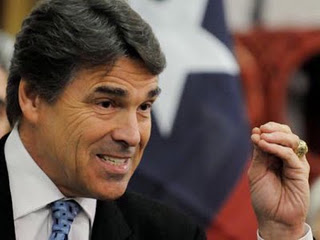
Having lived in Texas for the entirety of Rick Perry’s tenure as governor, I can attest that he is not a perfect candidate. There have been times (Gardasil, the Trans-Texas Corridor) when he’s strayed from conservative principles. And he’s not as polished as Mitt Romney or as articulate as Newt Gingrich.
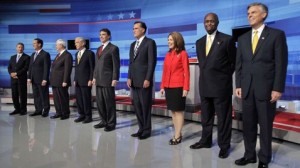
But Perry isn’t running against the second coming of Ronald Reagan, or even Sarah Palin. Every other major Republican contender is not only at least as flawed, they’re considerably more so.
Despite cheer-leading from the likes of Kathryn Jean Lopez and Jennifer Rubin, Mitt Romney has always struck me as a phony without any real core convictions except that he should be in charge; sort of the Republican answer to Bill Clinton, without the charm or adultery. Pick an issue and Romney’s been on both sides of it at one time or another. He seems the most likely of all the major candidates to be praised by The New York Times and The Washington Post for “growing” in office. Romney is most likely to disappoint me in caving in to D.C.’s usual free-spending, pork-barrel log-rolling.
I could get behind voting for the Newt Gingrich of 1994, the one whose laser-like focus on the holding the Democrats accountable for their misdeed and promoting the Contract With America helped Republicans take the House and Senate, set the stage for a welfare reform and helped (temporarily) balance the budget. Sadly, that Gingrich is not up on offer. We have to deal with the idea-a-minute-and-many-of-them-bad, ex-lobbyist, “Big Government Conservative” Newt Gingrich of 2012, the one so devastatingly and accurately skewered by Mark Steyn in this week’s National Review. (As Bruce Sterling once said at a Turkey City Writer’s Workshop, “Cruel, but fair!”) No matter how many times he tries to sound like Reagan, there are all those other times when he sounds like everyone from Al Gore to Faith Popcorn. I imagine that I would be disappointed many times in a Gingrich Presidency. Unlike Romney, I’m sure Gingrich would find entirely new and innovative ways to disappoint me.
I could almost get behind Ron Paul, based on his absolute, rock-steady position on the biggest problem facing America: out-of-control government spending and ever-increasing size and power of the federal government. The debt bomb is an existential threat to American prosperity, and If we don’t shrink government and get the deficit under control, none of the other issues really matter. And I lean heavily on the libertarian side of the spectrum. But even given that, there’s just too much weirdness (what Kevin Williamson called “his Ronness”) about the rest of Paul’s policies: the newsletters, the footsie with racism, the conspiracy theories, the weirdness about gays and wishing Israel didn’t exist, the running against Reagan. Being just one of 435 House members was a great place for Paul to be, since he could bring up conservative and Libertarian issues without any chance that his wackier ideas would ever end up in legislation, but the Presidency is a different kettle of fish. Plus there’s the problem of his electability, or rather lack thereof. With all his diverse baggage, I believe that Paul is the GOP candidate Obama would have the best chance of defeating. Ignore all the hard-left liberals talking up Paul as a better choice than Obama; it’s just a smokescreen that would evaporate at the first excuse to jump back on the Obama bandwagon. William F. Buckley always said conservative should support the right-most viable candidate. I don’t think Paul is a viable candidate.
Michelle Bachmann’s star has faded even more than Perry’s, and she doesn’t have Perry’s executive experience or record on job creation. The fact she’s neither dumb nor crazy doesn’t mean the MSM won’t pull the Full Sarah Palin Treatment on her (Andrew Sullivan womb-diving optional) were she to get the nod.
Rick Santorum: Too little, too late, he lost his last election, and his strengths don’t lie in the economy and job creation.
Jon Huntsman: Which part of “Republican” was unclear?
By process of elimination, that leaves Perry. As I said before, Perry isn’t perfect, but he has a record on holding the line on government spending and enabling job creation that puts Romney to shame. One again, let’s go to the charts that the indispensable Will Franklin of Willisms has provided on Texas job creation:
And the case for Perry over Romney (again thanks to WILLisms) is even more stark:
While I have criticized Perry’s campaign budget proposals for being too timid, Perry insisted on balancing the Texas budget without tax hikes. I assure you that California would love to have Texas’ budget. Indeed, adjusted for inflation, population growth, and federally-mandated spending, the Texas state budget has actually gone down under Perry. His guiding principle has been “don’t spend all the money,” and it’s one that Washington desperately needs.
One final, very big reason to support Perry: He can win. Perry’s never lost a race, because he’s a tough and tenacious campaigner who’s not afraid to hit his opponents hard. Everyone thought Kay Bailey Hutchison was going to cream Perry in the 2010 governor’s race, and he beat her like a rented mule.
Or maybe a rented donkey.
In the general election against Bill White, he ran an ad featuring a police widow talking about how her husband had been killed by a multi-arrested illegal alien while White was touting Houston as a “sanctuary city.”
Even professional MSM Perry hater Paul Burka says that Perry is a hard man. “He is the kind of politician who would rather be feared than loved.” Perry will have absolutely no fear of taking the fight to Obama and going negative early and often, and he won’t let political correctness cow him into treating Obama with kid gloves.
Will the media savage Rick Perry for his flubs? Of course they will. But, as Ace noted, they’ll always find a way to crucify any Republican candidate to make Obama look better. They’ll use the same “he’s an idiot” line of attack they used on Reagan and Bush43…and you saw how far that got them.
If you’re still undecided on Perry, this video should at least give you a more rounded picture of him:
For those who think Perry is already out of the race, remember that at this point in 2004, the consensus was that Howard Dean was going to be the nominee. There’s a reason Americans actually get to vote, and they frequently prove the pundits wrong.
So Rick Perry unveiled his tax and spending reform plan. (His Wall Street Journal piece provides a brief overview.) It’s a serious compilation of a variety of solid conservative ideas for reforming the federal government. Serious, that is, in every area except spending.
But before we get to the sour let’s look at the sweet. There is a great deal to like in Perry’s proposals:
Repealing ObamaCare (though this is pretty much a requirement for every Republican office-seeker these days)
Repealing Dodd-Frank (which has held down the economy in many ways great and small)
A 20% flat tax is a vast improvement over the labyrinth complexities of our special-interest-group-carve-out-ridden Swiss cheese of a tax code. Also, you have to admire this graphic, which should have liberal knees jerking:
Eliminating the tax on dividends and long term capital gains is a big win that will help revive the economy and restore global competitiveness.
As is eliminating the death tax (although if it were possible to entirely fund the government from an estate tax rather than an income tax, that would be preferable, but it isn’t).
Eliminating corporate loopholes and tax breaks is also a great idea, but at this point it’s just a vague notion. Just about any candidate of any party could say the same thing, and without a list of the actual loopholes to be eliminated it’s fairly meaningless. This is also an area where few proposals survive contact with congress.
Reducing the corporate tax rate to 20% is a great idea, and one long championed by many free market economists.
The Perry plan has a lot of good ideas for reducing the regulatory burden on American business. A moratorium on all pending legislation, automatic sunset provisions, and a full audit of all regulations enacted since 2008 should go a long way toward undoing the Obama regulatory burden and getting American business and hiring back on track.
So outside of the budget provisions, there is an awful lot for conservatives to like about the Perry plan.
Even when it comes to the budget section, there’s a lot of conservative red meat: a non-tax hike balanced budget amendment, an end to baseline budgeting and concurrent resolutions (which bake bigger government into the process), and an end to earmarks. All solid initiatives, though the problem here is less presidential will than getting them through congress.
So, given all that, what am I complaining about?
What makes the Perry budget timid and unserious is his proposal to “balance the budget by 2020.” Given the way Washington works, a promise to balance the budget eight years from now is a promise to never balance the budget. It’s tea so weak it might as well be water. A balanced budget target that far out means that Congress can keep putting off difficult decisions by passing bills that place imaginary savings in out years where they will soon be rendered moot by the next congress. It’s once again a chance to sell out budget discipline for a handful of magic beans.
It’s, yet again, kicking the can down the road.
It’s also a big step back from the Ryan plan, which demanded a balanced budget in the 2015 timeframe. This was the plan seen by conservative Republicans and Tea Party activists as the minimum necessary for a serious reduction in the federal budget deficit. Given serious action wasn’t taken for it this year, it’s reasonable to push it that deadline out one more year to 2016, but pushing the target out beyond that amounts to preemptive surrender.
While Perry’s $100 billion first year down-payment would be an improvement over the weak, phony-baloney deficit reduction enacted as part of the debt limit deal, it’s a ridiculously small cut for the $1 trillion+ Obama deficits being racked up each fiscal year.
Bad as it is as policy, the Perry 2020 date is utterly disasterous as an opening position for negotiations with congress. Perry is going to have to set hard, early deficit targets to have any chance of taming the Leviathan, and then use his veto pen early and often if he doesn’t get them. The truth is that Democrats will scream bloody murder at any attempt at deficit reduction, so the next President might as well (to use the classic Ronald Reagan analogy) “throw long.” Every debt ceiling vote will have to come with both serious budget cuts and the other budget-taming proposals in the Perry plan. Democrats may still filibuster, but then they’ll have to deal with the crushing realities of living under a budget that actual matches spending to revenues. Even with a Republican House and Senate, to actually balance the budget the next President will need to push relentlessly to pass the most stringent budget that can muster 51 senator votes via reconciliation. Setting a 2020 date does nothing to prepare the media and ideological battlespaces for those difficult choices.
Out-of-control federal spending is at the heart of almost all our economic problems, and the single biggest factor behind Tea Party discontent. Thus it has to be at the top of the next President’s agenda. Despite many other solid economic idea, the Perry plan doesn’t meet the test for serious deficit reduction. The shame is that Perry accomplished real spending reform in Texas. To impose such discipline on the out-of-control federal budge will be an order of magnitude more difficult. But to achieve real spending reform, you first have to campaign for it. Setting a goal for a balanced budget at the end of a theoretical Perry presidency’s second term rather than the first actually hampers that goal.
Actually, less rumblings than the roar of an approaching train. And since I temporarily seem to be ahead of the latest Ace of Spades Doom roundup, I’m going to try and give you a nice clear view of the coming crash.
“No longer a question of if, but when – that is the tone of discussions over Greece which has dominated the summit of finance ministers in Washington over the weekend.” Former Britain’s former finance minister Alistair Darling agrees, calling default “only a matter of time.”
The talk now is of how to put in a “firewall” to prevent the contagion of an inevitable Greek default from spreading throughout the European banking system.
Very rarely in political history has any faction or movement enjoyed such a complete and crushing victory as the Conservative Eurosceptics. The field is theirs. They were not merely right about the single currency, the greatest economic issue of our age — they were right for the right reasons. They foresaw with lucid, prophetic accuracy exactly how and why the euro would bring with it financial devastation and social collapse.
I think at this point UK residents should be feeling vrey glad indeed that they didn’t abandon the Pound for the Euro.
Bret Stephens talks about the long line of deceit and fraud that lead Europe to the current crises. “What is now happening in Europe isn’t so much a crisis as it is an exposure: a Madoff-type event rather than a Lehman one.”
Mark Steyn, using the ever popular music and political metaphor gambit, compares the breakup of the Eurozone with the breakup of R.E.M. while bringing the usual Steyn goodness: “Attempting to postpone the Club Med welfare junkies’ rendezvous with self-extinction will destabilize internal German politics (which always adds to the gaiety of nations).” And this:
As its own contribution to the end of the world as we know it, the Obama administration has just released a document called “Living Within Our Means and Investing in the Future: The President’s Plan for Economic Growth and Deficit Reduction.” If you’re curious about the first part of the title — “Living Within Our Means” — Veronique de Rugy pointed out at National Review that under this plan debt held by the public will grow from just over $10 trillion to $17.7 trillion by 2021. In other words, the president’s definition of “Living Within Our Means” is to burn through the equivalent of the entire German, French, and British economies in new debt between now and the end of the decade. You can try this yourself next time your bank manager politely suggests you should try “living within your means”: Tell him you’ve got an ingenious plan to get your spending under control by near doubling your present debt in the course of a mere decade. He’s sure to be impressed.
And if the other PIIGS are doing better than Greece, it is only a matter of degrees: “Italy is the new Lebanon, Portugal the new Venezuela, Spain the new Vietnam, Ireland the new Argentina and nothing is more risky than Greece, according to today’s credit default swap market.”
But it’s not just Greece and Europe that are hitting the wall. China’s housing bubble may finally be bursting. Worse still: “growth in China may be zero [and] China has ‘European kind of numbers’ when it comes to debt.”
And at least one observer has drawn parallels to a certain hopemonger currently residing in the White House:
Obama has no intention of really solving the debt crisis. And that brings us back to Greece. That government has been doing the same thing for a decade and the chickens have now come home to roost. Greece’s debt is 150 percent of its Gross Domestic Product. Our debt has just reached 100 percent of GDP and the debt is accumulating faster than it ever has. If we were looking out the windshield down the road, we could see the crash that’s just up around the bend.
But rather than put on the brakes, the president has chosen to pick a fight with the other passengers in the car he is driving. Talk about distracted driving! He is gambling that this fight will convince the passengers to let him stay behind the wheel for another four years. But we certainly can’t wait that long. He’s turned up the radio in hopes we won’t hear the ambulance sirens.
It looks like its going to be another rough week for world markets…
Since leaving the Reagan Administration, Patrick Buchanan has been, at best, an erratic conservative, on any number of issues (Israel, Iraq, Free Trade, etc.), flogging a philosophy (“paleoconservatism”) that failed to catch on with any but a tiny fringe, and carried out political adventures ill-advised at best and amazingly stupid a good portion of the time. (I mean, why would you even want to take over the Reform Party? That’s like stealing a half-chewed bone from a blind dog; even if you succeed, you’ve disgraced yourself for a worthless prize.)
But on the debt limit debate, Buchanan has penned an essay that is coolly rational in articulating why House Republican must stand firm aginst Democratic promises of future spending cuts in exchange for tax hikes now.
Behind the GOP opposition to tax hikes is the party’s word given to the country that elected it in 2010, its political principles, its traditional view of what not to do when the nation is in a slump, and party history.
Fully 235 Republican House members signed a 2010 pledge not to raise taxes. And by giving their word they were rewarded with victory.
Should they now dishonor that pledge, what would differentiate them from George H.W. Bush, who famously promised in 1988: “Read my lips! No new taxes!” then went back on his word and took the party down to defeat with him?
It also does a fine job dissecting David Brooks’ panicked appeal for them to take Obama’s handful of magic beans in exchange for their good word:
In 1982, President Reagan agreed to the same deal being offered the party today: three dollars in spending cuts for every dollar in tax increases to which he assented. As he ruefully told this writer more than once, he was lied to. He got one dollar in spending cuts for every three in tax increases.
Buchanan at least has learned the lesson Brooks hasn’t: Future budget cuts are non-existent budget cuts, and only a sucker believes they’re real. The only budget cuts that count are the ones to this year’s budget. Democrat promises of future spending cuts are always lies to be taken back in the next budget session. Even ironclad budgetary mechanisms to limit spending (i.e. Gramm-Rudman) will be jettisoned at the first opportunity.
No one should mistake Buchanan for a reliable mainline conservative these days, but he’s dead right on this issue. But given David Brooks’ swooning over Obama and his heresy on tax hikes, perhaps we should stop mistaking him for a conservative at all.
While hardly a disinterested observer, Karl Rove is far from an untutored one, and he offers up some compelling reasons why Obama will lose in 2012. Four, to be precise:
The economy is very weak and unlikely to experience a robust recovery by Election Day.
Key voter groups have soured on him.
He’s defending unpopular policies.
And he’s made bad strategic decisions.
The second point is the one he offers the most meat in terms of polling analysis. And the fourth is Obama’s decision to abandon Presidential distance and starting campaiging for reelection early.
Thomas Sowell sees TSA policies as part and parcel of this administrations contempt for average Americans: “This administration is so hung up on political correctness that they have turned ‘profiling’ into a bugaboo. They would rather have electronic scanners look under the clothes of nuns than to detain a Jihadist imam for some questioning.”