Archive for the ‘Military’ Category

More Russian Bases In Crimea Go Boom

Tuesday, August 16th, 2022

Looks like more Russian bases in Crimea are blowing up despite being hundreds of miles from the front lines.

First up: France 24 reports explosions on a base in NE Crimea:

Caveat: The video map calls the location Mayskoye, which isn’t in Crimea, but across the Kerch strait in Russia proper. Later, they show a tweet with the location as Dzhankoi, which matches up with the location shown on the map.

More video, where you can see subsequent munitions explosions, and which says that Mayskoye is 14 miles from Dzhankoi:

I assume that the Crimean Mayskoye is a local town or subdivision too small to show up in Google Maps.

There are also reports of explosions on the Russian-occupied airfield near Simferopol.

The Russian mass media report of clouds of black smoke over the military airfield in the village of Hvardiiske, Simferopol district of Russian-occupied Crimea.

Source: Kommersant publication with reference to local residents, Christo Grozev, head of Bellingcat on Twitter

Details: Local residents also confirm that clouds of black smoke are seen above the airbase in Hvardiiske.

According to them, several explosions were heard earlier on the territory of the military base.

According to the source, local military departments and law enforcement agencies assume it could be an attack by a small unmanned aerial vehicle that hit an ammunition storage.

Supposedly this is video of the explosion. Usual caveats apply.

And this is supposedly video of Russians lining up to leave Simferopol following the strikes:

A few takeaways:

  • The size of the explosions suggest that Ukraine continues to receive good location intelligence about Russian military infrastructure and ammo dumps.
  • From the beginning of Russia’s invasion to last week, reports of major Ukrainian strike on Crimea were all but non-existent. Since then we’ve had several. Clearly Ukraine sees a new need and/or ability to strike these farther targets.
  • This may be an attempt to cripple Russian supply lines and air support in support of Ukraine’s slow-developing Kherson counteroffensive.
  • Russians Fleeing Crimea

    Thursday, August 11th, 2022

    I suppose I should clarify that the Russian fleeing Crimea are not Russian soldiers but civilians.

    Videos posted to social media show Russian vacationers fleeing Crimea following blasts at a military air base in the region that Moscow seized from Ukraine in 2014.

    Black smoke from the Saki air base located in the west of the peninsula was visible from the nearby packed beaches after the attack on Tuesday which the Russian-appointed head of Crimea, Sergei Aksyonov, said had left one person dead and 14 injured.

    The explosion sparked an exodus from the area which has been a popular holiday resort for years with videos showing people driving over the Kerch Bridge that links Crimea with the Russian territory of Krasnodar.

    In one video, a woman expressed gratitude that her car was at least moving in the traffic jam, although she tearfully lamented how she had to leave Crimea.

    “Special operation. Everything goes according to plan. Russians are fleeing Crimea, there are huge traffic jams on the roads,” Twitter user Lieutenant Kizhe captioned the clip, which by Thursday morning had been viewed more than half a million times.

    The news outlet Live Kuban described how Krasnodar residents faced inspections from law enforcement and cars were snarled up in an “incredible” traffic jam. One driver said he had been stuck for almost half an hour just before the bridge.

    “The traffic jams toward the Kerch Strait Bridge connecting Crimea with Russia are now dozens of kilometers long.”

    For all the talk of how Crimea is “inseparable” from Russia, it seems like an awful lot of actual Russians are separating from it as quickly as they possibly can. And all this after one missile strike. That would suggest that the locales know something that all the online trolls confidently and bombastically predicting inevitable Russian victory don’t. It’s also a far cry from the tenacious defense the Soviets put up in places like Leningrad and Stalingrad against actual (not pretend) Nazis, where every foot of advance was paid for in blood.

    There are also reports of Russian military families living near occupied Kherson leaving.

    An accurate picture of who’s winning the Russo-Ukranian War is hard to come by, but right now it sure seems like the Russians are spooked.

    Is China Buying Texas Land?

    Wednesday, August 10th, 2022

    The issue of Chinese interests buying up Texas land is one of those stories that has been flitting around the edges of my peripheral awareness for a while. Now Robert Montoya, Jessie Conner and Emily Wilkerson of Texas Scorecard has done a handy deep-dive on the subject.

    Many Americans assume incorrectly that American soil is reserved for our citizens and businesses.

    The sobering fact, however, is that foreign nationals—both individuals and corporations—own a lot of land in America.

    Particularly troubling are incursions by the Chinese Communist Party (CCP) absorbing Texas soil for its strategic geopolitical ends.

    Texas Scorecard recently launched a four-part investigative series exposing CCP infiltration of our state’s education apparatus. During our months-long investigation on the CCP’s activities, it became clear that education was merely one part of a multi-prong incursion into the United States of America.

    The second prong we will explore here is their infiltration of our agricultural land.

    There are some who wave a hand at concerns about foreign entities and individuals owning land stateside, dismissing them as conspiratorial or xenophobic. However, a review of adversarial countries’ actions suggests land holdings are strategic and could undermine national and resource security.

    Furthermore, concern over CCP ownership of U.S. land isn’t a partisan issue. During our investigation, we found multiple instances of Republicans and Democrats making public statements, authoring legislation, and warning of the national security implications of such ownership of U.S.-based assets.

    Snip.

    For the past decade, the number of purchases of agricultural resources by foreign actors has dramatically increased across the nation, with Texas being No. 1 according to a review of USDA documents. Currently, at least 4.7 million acres of Texas’ agricultural land is owned by a foreign entity or individual.

    What is even more troubling is the intended uses of the land and the actors involved in development.

    In theory, the U.S. federal government should be keeping track of foreign agricultural land ownership. But time and again, it’s not until the last moment that disclosures are made and concerns are publicly raised. Texas Scorecard’s research on these holdings shows that on more than one occasion, foreign acquisitions that should have been stopped immediately were allowed to progress and only ultimately stymied with great effort.

    Overview of the widely ignored Agricultural Foreign Investment Disclosure Act (AFIDA) snipped.

    For instance, take China’s land holdings overall. 2020 figures from the USDA put total foreign-owned agricultural land holdings for China at 352,140 acres, up from 191,652 acres in the prior years report. Because of high-profile purchases starting in 2015, a single company owned up to 140,000 acres in South Texas alone.

    Instead of comprehensive reporting from the USDA or state agricultural departments, Americans are left with what amounts to—at best—a (self-reported) guess and a steady stream of stories about foreign entanglements that spring up from time to time.

    Also, it’s a poorly guarded secret that foreign land ownership is hidden.

    One way some foreign farmland owners circumvent disclosure or state-level laws barring foreign ownership of farmland is shifting property into majority U.S.-owned subsidiaries—not to mention that land holdings by foreign owners are often a moving target. For instance, a particular parcel’s inclusion as foreign-owned land can fluctuate annually if it’s owned by a publicly traded corporation. The threshold of stock ownership is relatively low at 10 percent.

    This is the national component of foreign land ownership and the limits of what we can know at that level.

    When it comes to Texas, the state does not prohibit the ownership of agricultural land by foreign individuals or entities. There are multiple states that have total bans, while others at least have limits.

    While this complacency has been the status quo for the better part of the past two decades, lawmakers appear to be more proactive about keeping tabs on foreign actors.

    Global supply chain disruptions in 2020 due to the Chinese coronavirus, followed quickly by the war in Ukraine and growing tensions between the U.S. and China over Taiwan, have lawmakers critically examining foreign infiltrations at home.

    A recently concluded comment period on AFIDA disclosed that foreign interest required to make disclosures increased by 2,250, as more foreign persons acquired or transferred an interest in U.S. agricultural land than in prior years and must comply with AFIDA reporting requirements.

    According to the latest AFIDA annual report, foreign holdings of U.S. agricultural land increased modestly from 2009 through 2015, increasing by an average of 0.8 million per year. Since 2015, foreign holdings have increased by an average of nearly 2.2 million acres, ranging from 0.8 million acres to 3.3 million acres per year.

    Of this increase, most of the purchases are of forest, crop, and pasture lands. Changes in crop and pasture land are “due to foreign-owned wind companies signing, as well as terminating, long-term leases on a large number of acres.”

    Indeed, the largest wind farm in the state of Texas, the Roscoe Wind Farm outside of Abilene, is owned by RWE, a German multinational corporation. The project spans multiple counties and sits atop leased farmland.

    While the American public’s attention has been seemingly fixated on Russia since 2016, the CCP’s activities in the U.S. are just as troubling, if not more. Their ruthless oppression of Chinese citizens, hostile stance towards America, and methodical plan for domination all touch the issue of agricultural land ownership in the U.S. and Texas.

    The latest available data from the USDA reported China holding just 352,140 acres of agricultural land, which is slightly less than 1 percent of foreign-held acres. But, as is the case with foreign funds flowing to higher education, the tracking of these transactions is imperfect.

    It’s likely that China’s ownership of land in the U.S. is understated in USDA’s annual reports.

    They describe the “Blue Hill Fiasco”:

    Beginning in 2015, Sun Guangxin, a Chinese billionaire, began acquiring land to develop a wind turbine farm in South Texas. Eventually, Guangxin snatched up around 140,000 acres in Val Verde, roughly 7 percent of all land in the county.

    In 2019, five years after acquisitions began, the proposed development of a wind farm on the land led to an uproar in Texas and at the national level.

    A member of the People’s Liberation Army, Guangxin reportedly built his fortune by establishing close ties to Communist party officials, and leveraged these connections to cheaply acquire and redevelop government property to become a real estate tycoon.

    Wang Lequan, who was re-elected as secretary of the Xinjiang Party Committee of the Communist Party of China for three consecutive terms since 1995, is the backer behind Guangxin; the forces behind Wang Lequan are Zhou Yongkang and former President of China Jiang Zemin. Supported by Wang Lequan, Sun Guangxin, chairman of the board of directors of Guanghui Group, is one of the few private oil field owners in China.

    His base of operations in China deserves special attention too.

    The Xinjiang province is where the widely reported oppression of the Uyghur population is taking place. In part, the Uyghur population is used as forced labor. According to Irina Bukharin, two of the goods produced in this region, in disproportionately high figures, include polysilicon (used in solar panels) and wind turbines.

    Sun’s plans for the wind farm in South Texas were covered by state and national media outlets. A billionaire, Guangxin is the chairman of Xinjiang Guanghui Industry Investment, which is the parent company of GH America, the company spearheading the wind farm project.

    But there’s more to this story.

    “The acquisition by General Sun out near Del Rio was done by them forming a Delaware Corp called GH America,” J. Kyle Bass, chief investment officer of Hayman Capital and founding member of the Committee on the Present Danger: China, told Texas Scorecard. “They funded the Delaware Corp with dollars from a CCP-owned institution in America. You basically had a U.S. corporation, funded with U.S. dollars, buying U.S. property. It was really difficult to understand who the actual owner was and what kind of sovereignty was represented there.”

    GH America also positioned itself to influence the legislative process. According to Texas Ethics Commission records, Stephen Lindsey is registered to lobby for the company. He’s widely reported as the vice president of government and regulatory affairs for GH America. According to Transparency USA, from January to September 2021, during the regular and special state legislative sessions that year, Lindsey’s contract was anywhere from $93,150 to more than $186,000.

    There’s also a national security risk. Sun’s planned wind farm at Blue Hill was not far (70 miles) from Laughlin Air Force Base. This proximity alarmed many. There are also liquified natural gas deposits in the area.

    Bass says the CCP’s aim here is surveillance.

    “Basically, they call it ‘over the horizon’ mapping. If you get the point higher and higher, you can map more and more, i.e. you can increase the linear distance that you can map,” he explained. “With their new ability … they can map things within one inch of specificity and clarity of things that are 50 miles away from 700 feet. What’s interesting about that is Laughlin Air Force Base is 30 miles away, and the restricted airspace is 10 miles away from the main ranch.”

    Texas Agriculture Commissioner Sid Miller told Texas Scorecard the CCP bought farm land near another Air Force base in North Dakota. “We don’t need to give them listening capabilities to our aircraft coming in out of those [military installations] and other communications coming out,” he said. “It’s crazy enough just to allow our biggest enemy to be purchasing our own soil.”

    Bass discussed how the South Texas purchase was allowed to take place. “Steve Mnuchin at [U.S.] Treasury gave a quick Friday-night special OFAC [Office of Foreign Assets] approval without [U.S. Dept. of Defense] being in the room, which is pretty crazy,” he said. “If Treasury is the nexus of [the Committee on Foreign Investment in the United States], and all of the other departments chime in when they can, there should not be an ability for a unilateral approval or approval by the U.S. Treasury secretary, who might be corrupted by the Chinese government.”

    When asked, Bass said we don’t know how much land the CCP or its connected entities have in Texas. He explained the Lone Star Infrastructure Protection Act (Texas Senate Bill 2116 passed in 2021), “encouraged” the U.S. Dept. of Defense to assign task forces to examine CCP land holdings near DOD installations. “I know they found some more in Texas, but I don’t know how much more.”

    Sen. Ted Cruz (R–TX) was a vocal opponent of the Blue Hills wind farm development, issuing a letter in 2020 to then-Treasury Secretary Mnuchin seeking a private briefing on the project. The junior senator from Texas also proposed legislation that would trigger the review of wind projects within a certain distance of a military installation.

    This isn’t the first time a Chinese company has tried to install a wind farm near a U.S. military installation.

    In 2012, Ralls, an American company owned by two Chinese nationals, purchased multiple American-owned wind farm companies with several project sites. Four of these sites were within restricted U.S. Navy airspace in the Pacific Northwest.

    This part of the purchase raised national security concerns, and Ralls was told to divest and destroy the cement pads they’d poured for construction of its mills near the base. The company sued the government and, troublingly, was successful at first.

    Eventually, the company was defeated in its efforts and had to divest. The fact that this episode did not dissuade future attempts speaks to the persistence of the CCP to take part in the production of energy stateside.

    There is also a connection between Ralls and Texas. The blades spinning at many wind farm sites in Texas are produced by SANY, the parent company of Ralls, which is owned by the richest man in mainland China, Liang Wengen.

    According to a Forbes profile, Wengen worked as a top manager at a state arms plant before getting into heavy construction equipment. He joined the ruling elite in 2011, becoming a member of the CCP.

    At the very least, Chinese nationals and the corporations owned by them should have to abide by the same limits China itself places on foreign ownership of land in China. Fundamentally, foreigners cannot own land in China without actually living there, and are further limited to one property per location. Plus there are a wide number of complex rules on foreign ownership of Chinese businesses.

    It seems, at the very least, that a survey of land within 10 miles of military bases in Texas to determine if any have hostile foreign ownership may be in order…

    Russian Airbase In Crimea Goes Boom

    Tuesday, August 9th, 2022

    Multiple loud explosions have rocked a Russian military airfield in occupied Crimea:

    Evidently the explosions shattered windows for a kilometer around.

    Russian military assets blowing up in Ukraine isn’t news, especially now that they’ve fielded HIMARS. What is news is these strikes are a good 200 kilometers from the front line.

    As images of large explosions in Russian-occupied Crimea flashed across social media, the Russian Ministry of Defense on Tuesday claimed they were the result of “several aviation munitions destroyed” at the Russian Navy’s Saki Air Base near the village of Novofedorivka.

    The incident occured [sic] about 3:20 p.m. local time, according to an official Ministry of Defense (MOD) statement.

    Snip.

    A senior Ukrainian military official with knowledge of the situation told The New York Times that Ukrainian forces were behind the explosion.

    “This was an air base from which planes regularly took off for attacks against our forces in the southern theater,” the official said, speaking on the condition of anonymity to discuss sensitive military matters. The official would not tell the Times what type of weapon used in the attack, saying only that “a device exclusively of Ukrainian manufacture was used.”

    A top Crimean official earlier on Tuesday confirmed there were several explosions in Novofedorivka.

    “So far, I can only confirm the very fact of several explosions in the Novofedorivka area. I ask everyone to wait for official messages and not to produce versions. Oleg Kryuchkov, adviser to the head of Crimea, said on Tuesday on his Telegram channel.

    Viktoria Kazmirova, deputy head of the administration of the Saki district, also reported explosions at the airfield, according to Russian state-run media outlet TASS.

    “Our airfield is exploding. Explosions at the airfield. Here all the windows were broken,” Kazmirova said.

    The regional health ministry “reported that ambulances and medical aviation were sent to the site of the explosions, information about the victims is being specified.”

    Saki Air Base, which Russia occupied when it took over Crimea in 2014, is home to the Russian Navy’s 43rd Independent Naval Attack Aviation Regiment (43 OMShAP). This regiment flies 12 Su-30SMs, six Su-24Ms, and six Su-24MRs, and came to prominence during several encounters with NATO forces in the Black Sea in 2021.

    U.S. officials have told The War Zone in the recent past that targets in Crimea are fair game for Ukrainian forces using advanced U.S. weapons. The U.S. sees Crimea as illegally occupied by Russia and no different than the territory it holds in eastern Ukraine. As such, all military targets are fair game, as well as critical infrastructure it relies on to keep its war machine and occupation efforts running.

    While some Ukrainian officials claim their military carried out an attack on the base, it is not unheard of for major accidents at Russian ammunition supply depots to occur, although the chances of that being the case are relatively slim in this instance.

    However, Novofedorovka is about 124 miles (200 kilometers) from the front lines.

    The Saki Air Base seems to be well beyond the range of Ukraine’s long-range fires.

    Ukraine has 16 M142 High Mobility Artillery Rocket Systems, or HIMARS, provided by the U.S. as well as three M270 systems provided by the United Kingdom.

    Both can fire a variety of 227mm rockets, including Guided Multiple Launch Rocket System (GMLRS) types made by Lockheed Martin, as well as the Army Tactical Missile System (ATACMS) short-range ballistic missiles. So far, the U.S. has only provided Ukraine with an unpublicized amount of M31 rockets with 200-pound class unitary warheads, which are GPS/INS guided and can hit targets at a distance of around 43 miles (70 kilometers.) The Biden administration is reluctant to provide longer-range and harder-hitting ATACMS out of concern that it might rile the Russians. In particular, it could provide a means for Ukraine to execute precision strikes on a large variety of targets well into Russia.

    200km is well beyond the range of the missiles we’ve publicly given Ukraine (and of the UK-supplied MLRS system, but within the range of the ATACMS missiles we haven’t announced we’re supplying.

    It’s possible this was a long-range drone strike, as 200km is well within the range of the Turkish TB2 Bayraktar drones that Ukraine is known to possess. It’s also possible that Ukraine has developed their own long-range missile system. After all, Germany had V1s and V2s that could attacked at that range all the way back in 1944. And it’s also possible that this was a ship-launched attached fired from closer in.

    Whatever the actual weapon used, there seem to be very few locations in Russian-occupied Ukraine safe from further such attacks.

    LinkSwarm for August 5, 2022

    Friday, August 5th, 2022

    Ron DeSantis drives more enemies before him, the Biden Administration keeps doubling down on tranny madness, Batgirl dies for DC’s sins, and the most “Ewww” inducing headline of the year. It’s the Friday LinkSwarm!


  • Why America can’t build.

    Construction projects are undertaken within a legal and regulatory system that presents persistent, costly obstacles, while projects are being overseen by agencies who lack the resources and in some cases even the expertise to manage them.

    Sepulveda’s numerous lawsuits and stakeholder conflicts are an example of a phenomenon that can be traced back to the passage of the National Environmental Policy Act (NEPA) in 1969. NEPA mandates developers to provide environmental impact statements before they can obtain the permits necessary for construction on huge swathes of infrastructure.

    Shortly following the passage of NEPA, California’s then-governor Ronald Reagan signed the California Environmental Quality Act (CEQA) into law, which required additional environmental impact analysis. Unlike NEPA, it requires adopting all feasible measures to mitigate these impacts. Interest groups wield CEQA and NEPA like weapons. One study found that 85 percent of CEQA lawsuits were filed by groups with no history of environmental advocacy. The NIMBY attitude of these groups has crippled the ability of California to build anything. As California Governor Gavin Newsom succinctly put it, “NIMBYism is destroying the state.”

    It is also destroying the U.S.’s ability to build nationally. The economist Eli Dourado reported in The New York Times that “per-mile spending on the Interstate System of Highways tripled between the 1960’s and 1980’s.” This directly correlates with the passage of NEPA. If anything, the problem has gotten worse over time. Projects receiving funding through the $837 billion stimulus plan passed by Congress in the aftermath of the financial crises were subject to over 192,000 NEPA reviews.

    The NEPA/CEQA process incentivizes the public agencies to seek what is often termed a “bulletproof” environmental compliance document to head off future legal challenges. This takes time, with the average EIS taking 4.5 years to complete. Some have taken longer than a decade. A cottage industry of consultants is devoted to completing these documents, earning themselves millions in fees.

    The NEPA consultants are just one of the numerous types of consultants that benefit from the way we build. Most infrastructure in the U.S. is built through a huge number of state and local agencies: for example, there are 51,000 community water systems alone in the U.S. This decentralized structure makes it much more difficult to develop the depth of expertise needed to manage the complexities posed by megaprojects. Often, the multiple public agencies that are involved with projects also have overlapping authorities, creating bureaucratic delays and slowing decision making.

    The expertise problem is compounded by the fact that agencies are often staffed with a workforce of people either just at the beginning of their careers or near the end of them. Those at the beginning tend to leave if they are ambitious, which leaves senior positions in the hands of agency lifers. Because of this dynamic, and the fact that it is not economically feasible to have the wide range of expertise needed in-house, public agencies employ engineering consulting firms. These firms fill a valuable niche. If you are building a complex project—say, a long-span bridge or a desalination plant—you want advice from someone who has designed and built dozens of them. The problem arises when you become too dependent on such advice.

    The High-Speed Rail project was undermined by such a failure. At its peak, the agency responsible for the project, the California High-Speed Rail Authority, had fewer than 30 permanent employees managing the $105 billion project. Instead of hiring staff, the Authority relied heavily on outside consultants. These consultants were well paid, with the primary consultant compensation for HSR at $427,000 per engineer, compared with the Authority’s in-house cost of $131,000 per engineer. This structure creates a principal-agent problem where they are incentivized to maximize their billable hours. As a California State Auditor assessment of the project noted, consultants “may not always have the state’s best interest as their primary motivation.”

    This lack of in-house institutional expertise leads to bad decision-making. Bent Flyvbjerg, a professor at Oxford University who has written extensively about megaprojects summarized the problem when asked about California’s HSR project: “If you depend on consultants to know what you are doing then you are in real trouble…a good balance is where the owners are not outsourcing all the knowledge. A bad balance guarantees a bad outcome.”

    The pitfalls of this lack of balance appeared before large parts of the project began. In 2014, Dragados, the contractor for a 63-mile section of the HSR, proposed radical design changes that they projected could save $300 million. The fact that Dragados’s bid was $500 million lower than its competitors and that it rested upon a design concept that had not been thoroughly vetted should have caused alarm. As a senior engineer who worked on the original environmental compliance document for HSR and reviewed the concepts told the Los Angeles Times, “it is mind-boggling they would entertain some of the things that Dragados proposed.”

    Dragados’s approach may have been driven by the fact it didn’t have the experience of its competitors; it had never built a rail project in the U.S. before and needed an edge to be selected. It was a measured risk because it knew there were ways to limit its financial exposure if its design ideas didn’t work. A Los Angeles Times investigation of the project in 2021 found Dragados had issued 273 change orders for additional payment and had completed less than 50 percent of its planned work four years after its section was supposed to be complete. Its design ideas had been almost completely abandoned as unworkable and Dragados’s section of the work was $800 million over budget.

    The principal-agent problem arises with union construction labor as well. Skilled union workers, such as electricians and carpenters, make solid hourly wages, but their pay really explodes with overtime. A 2011 study by the Real Estate Board of New York found that some union crane operators made up to $500,000 a year in pay. Union contracts mandate unnecessary positions as well, to the benefit of its members. The same study found 50 workers in unnecessary positions such as relief crane operators on the World Trade Center Project, including 14 unproductive employees making $400,000 a year at the project.

    Similar statistics can be found on other projects; an investigation into the costs of the East Side Access rail project in New York, which cost nearly $3.5 billion for each new mile of track, found that only 700 of the 900 workers being paid on the project were needed. A TBM, which is largely run automatically and typically staffed with under 10 people, ostensibly had 25 or 26 people working on it. Because you can’t drill without a TBM, and you can’t build a high-rise without a crane operator, these union workers have inordinate power.

    A common retort to the claim that union labor drives up costs is that other countries, especially in Europe, have both high union participation and lower project costs. But it is widely recognized in the industry that unions increase project labor costs by 20 to 25 percent on average in the U.S.

    The fundamental problem isn’t unions per se, but rather the way that unions operate within parts of the U.S. system. The Netherlands has strong unions, but the Port of Rotterdam has been automated to an extent that has proven impossible in the U.S. due to union resistance. As the president of the International Longshoremen’s Association, Harold Dagget, recently put it, his union will “fight tooth and nail” against further automation in the U.S. Any attempt at real construction innovation runs into similar barriers at every level of the system. There are too many layers of permission needed to innovate, including groups whose interests run counter to innovation.

    Innovation in physical work ultimately means substituting or complementing labor through technology to improve productivity. If your pay depends on overtime, you want inefficiency. The average dockworker at the Port of Los Angeles makes over $100,000 a year, largely due to overtime. The majority of foremen and managers earn more than $200,000, and the mariners who guide ships in and out of the port average nearly $450,000.

    The result is that innovation is inhibited by both labor resistance and a decentralized government bureaucracy that has neither the incentives nor the capability of driving real change. Perhaps it should not be shocking that U.S. construction productivity has fallen by half since the 1960s according to research conducted by the consulting firm McKinsey.

    Rent-seeking Uber Alles.

  • Soros slammed for America’s crime wave. Including this handy chart:

    In San Francisco, Soros-funded DA Chesa Boudin has seen a flood of departures from his office due to his criminal justice reform policies.

    Boudin campaigned on a platform to end mass incarceration, eliminate cash bail, and vowed to create a panel to review sentencing and potential wrongful convictions. Following his election in November 2019, Boudin announced he would deemphasize the prosecution of drug cases, so-called quality-of-life cases, and property offenses.

    Under his watch, vehicle break-ins increased 100-750% in parts of the city between 2020 and 2021, with the number of reported vehicle thefts reaching 1,891 in May 2021—more than double the 923 reported in May 2020.

    San Francisco also recorded one of the largest increases in burglaries among major cities last year, with a jump of 47 percent—a trend that has continued this year. Fatal and nonfatal shootings in the first six months of this year were up more than 100 percent from the year-earlier period, increasing to 119 from 58, the city’s police chief said at a July press conference.

    More than 700 people died of drug overdoses in 2021 in the city, a record that is likely to be surpassed this year, according to the chief medical examiner.

    Rudy Giuliani – the former Mayor of New York City whose claim to fame was a massive reduction in crime (and who’s traded barbs with Soros in the past), isn’t letting the billionaire off the hook.

    “If there is one single person responsible for the record increases in murder and violence in America’s cities it’s George Soros,” Giuliani said in a Monday tweet.

    “Major contributor to BLM, Antifa, Democrat Party, Biden, Harris and 40 or so pro Criminal DAs. The blood is on his hands,” he added.

  • Speaking of Soros, a resigning Chicago prosecutor slammed Soros-backed Illinois Attorney General Kim Foxx on his way out the door.

    Assistant State’s Attorney James Murphy described an understaffed office in turmoil in his email to colleagues, saying, “I cannot continue to work for an Administration I no longer respect.”

    “I would love to continue to fight for the victims of crime and to continue to stand with each of you, especially in the face of the overwhelming crime that is crippling our communities,” Murphy wrote. “However, I can no longer work for this Administration. I have zero confidence in their leadership.”

    Murphy, who could not be reached directly for comment, zeroed in on many of the issues that have made Foxx a target of opponents who argue she’s gone easy on some accused of violent crimes, as carjackings and gun violence have risen in the Chicago area.

    Murphy wrote that he first started thinking about leaving the office early in 2021 with Foxx’s involvement in the passage of the SAFE-T Act, a wide-ranging law that aims to reform the state’s approach to criminal justice, including by narrowing the definition of who can be charged with first-degree murder.

  • Florida Governor Ron DeSantis shows he plays for keeps by sending state police to physically remove a guy from his office for refusing to follow the law.

    DeSantis has suspended State Attorney Andrew Warren for ‘picking and choosing which laws to enforce based on his personal agenda,’ and has appointed Susan Lopez as his replacement during the suspension.

    Warren, who had served the Thirteenth Judicial Circuit, has most recently refused to follow state policy criminalizing abortion in the wake of the Supreme Court’s decision to overturn Roe v. Wade – and repeatedly refused to enforce laws cracking down on child sex-change surgeries, according to DeSantis.

    The liberal state attorney also declined to prosecute 67 protesters arrested in George Floyd demonstrations, and said in 2017 that he would only pursue the death penalty “in the very worst cases,” and not where “mental illness played a role.”

    “We are suspending Soros-backed 13th circuit state attorney Andrew Warren for neglecting his duties as he pledges not to uphold the laws of the state,” DeSantis’ office said in a statement, per Fox News.

    Update: DeSantis sent state police to physically remove Warren from his office, “with access only to retrieve his personal belongings, and (ii) to ensure that no files, papers, documents, notes, records, computers, or removable storage media are removed from the Office of the State Attorney…”

  • But that’s not the end of DeSantiss bad-assery this week. He also got PayPal to unfreeze Moms For Liberty’s account.

    PayPal has reportedly unfrozen Moms for Liberty’s account funds after Florida Gov. Ron DeSantis announced his state would crack down on woke banking.

    Payment platform PayPal allowed grassroots, anti-woke education group Moms for Liberty to access its funds after DeSantis’s new initiative against woke banking, Florida’s Voice reported. Moms for Liberty co-founder Tina Descovich reportedly told Florida’s Voice that her organization had been using PayPal for more than a year before the platform censored the group.

    Descovich reportedly said that many Moms for Liberty donors give monthly and automatically through PayPal. The payment processor not only stopped these donor payments but froze $4,500 belonging to Moms for Liberty, and prohibited any transfer of the money out of the account, according to Florida’s Voice. PayPal subsequently reversed its block by unfreezing the funds.

    PayPal notified Descovich that Moms for Liberty’s accounts were initially frozen during DeSantis’s July 15 speech at the Moms for Liberty National Summit, according to Florida’s Voice. The funds were unfrozen after DeSantis announced his initiative against woke banking.

    (Hat tip: Stephen Green at Instapundit.)

  • Biden’s Department of Agriculture is trying to destroy corn farming in America.

    The world is facing serious food and energy shortages as an outgrowth of the war in Ukraine and supply-chain shortages. Farmers are working to solve these problems, but we need help from the federal government if we are going to have any chance of success.

    That’s why national corn grower leaders recently called on the Biden administration to address regulatory overreach.

    That call comes after the U.S. Environmental Protection Agency recently revised its atrazine registration, a move that could restrict access to a critical crop protection tool that has been well tested and shown to be safe for use. Farmers fear that new requirements will impose arduous new restrictions and mitigation measures on the herbicide, limiting how much of the product they use.

    The atrazine decision comes on the heels of a development involving the herbicide glyphosate. In June, the U.S. Supreme Court refused to hear a case decided by a lower court from California, leaving in place a ruling that supports the claim that glyphosate use causes cancer – even as the EPA has repeatedly affirmed that the widely sold and well-studied herbicide is not carcinogenic.

    The Supreme Court’s decision came after the solicitor general in the Biden administration submitted an amicus brief advising the court against hearing the case.

    As a result, the door is now open for states to create a patchwork of regulations governing herbicide use, which will increase costs as manufacturers must now jump through hoops in every state, on top of making compliance difficult for the users of these products.

    Farmers in Iowa and across the country have also experienced major fertilizer price hikes and shortages over the last year, thanks in part to steps taken by the U.S. International Trade Commission to impose tariffs on fertilizers. Thankfully, ITC recently voted against adding tariffs on nitrogen fertilizers. But tariffs on phosphorous fertilizers from Morocco remain in place, driving up input prices for growers.

  • Speaking of foolish regulations that can contribute to famine, new “debarbonization” shipping rules could do just that.

    A new report found that more than 75% of ships will not meet the International Maritime Organization’s (IMO) new Environmental social and corporate governance (ESG) index aimed at decarbonizing the industry. This means that many ship owners will be forced to slow ships down to reduce emissions but doing so could deepen the global food and energy crisis by reducing available ship capacity.

    “IMO decarbonization targets will cause ships to slow down delaying food shipments and people will starve,” a global security analyst told gCaptain. “How many people will die as a result of the IMO’s ESG efforts is unknown at this time. I don’t think most shipowners even understand the severity of the EEXI threat but it could be millions of lives.”

    “Ships have to attain EEXI approval once in a lifetime, by the first periodical survey in 2023 at the latest.” The certification is currently voluntary, but banks and insurers may force ships to comply or be cut off. (Hat tip: Sarah Hoyt at Instapundit.)

  • Hanky panky in government jobs numbers?
  • Things the media doesn’t want to talk about: The leftwing whack-job who tried to assassinate Supreme Court Justice Brett Kavanaugh thinks he’s a woman. Which I guess makes him a slightly different type of leftwing whack-job.
  • Russo-Ukrainian War update: “Ukraine takes out Russian ammunition railway connecting Kherson to Crimea.” I keep seeing rumors of a big Ukranian counteroffensive to retake Kherson, but it seems like it’s slow to make much headway.
  • “Chuck Schumer’s son-in-law lands lucrative gig at private equity giant Blackstone.” Of course he has.
  • The Biden Administration wants to force religious hospitals to embrace tranny madness.

    In 2016, the Obama administration’s Department of Health and Human Services issued a rule that would have forced doctors across the country to assist in transitioning patients out of their biological sex, regardless of a provider’s medical opinion or conscience objections.

    “A provider specializing in gynecological services that previously declined to provide a medically necessary hysterectomy for a transgender man,” for example, “would have to revise its policy to provide the procedure for transgender individuals in the same manner it provides the procedure for other individuals.”

    The rule left no room for religious physicians or institutions to breathe, instead menacing them with draconian fines, were they not to toe the controversial new line.

    In stepped the Becket Fund for Religious Liberty, which swiftly secured a preliminary injunction in federal court that stopped the rule from going into effect, on the grounds that it violated the Administrative Procedure Act, and likely violated the Religious Freedom Restoration Act. It was a decision later confirmed in 2019, and made permanent by a 2021 ruling.

    On August 4, however, Becket attorney Luke Goodrich, who has been working on the case since the Obama-era rule was first issued, will march back into the courtroom, having been dragged back in by the Biden administration and Secretary of Health and Human Services Xavier Becerra.

    “They say that our lawsuit was only about the 2016 rule. . . . They say, ‘well, all you were challenging was the 2016 rule, and you won that, but now we’re using a different rule or a different rationale for imposing the same requirement on you, and so you have to file a new lawsuit,’” explained Goodrich.

    Under the Biden administration’s theory, the Affordable Care Act provides the administration with “all the authority” it needs “to punish groups that don’t perform gender transitions and abortions,” Goodrich told National Review. The 2016 rule also included language that Becket alleges would force religious institutions to perform abortions.

    Remember how Republicans said ObamaCare would endanger religious liberty and the MSM dismissed their concerns? Just like “If you like your doctor, you can keep your doctor.”

    According to Goodrich, “the merits are completely resolved and haven’t been appealed; the fight on appeal is about the scope of relief.” He described an effort to work around a losing legal argument by burdening religious objectors and opening up new fronts of battle.

    “They want religious organizations to have to play Whac-A-Mole every time the government violates the Religious Freedom Restoration Act, and they want a ruling that will leave them free to keep violating religious liberty every time they shuffle the same legal requirement from one volume of the Federal Register to another,” he said.

    That strategy is observable in the proposal of yet another, even broader rule — modeled after the 2016 one — issued by Becerra, who has made his political brand on waging one ruthless culture war after another.

    As attorney general of California, Becerra sought to punish independent journalists who exposed Planned Parenthood’s sale of fetal remains harvested during abortions. The Los Angeles Times editorial board described his decision to charge those involved with felonies “disturbing,” and the progressive Mother Jones called it “chilling.”

    He also happily enforced a plainly unconstitutional California statute requiring pro-life crisis pregnancy centers to provide pro-abortion materials to patrons, and, as a member of the U.S. House of Representatives, voted against legislation that would allow providers not to perform abortions without fear of government reprisal.

  • Has Tranny Madness peaked in the UK? There, the Rugby Football Union and Rugby Football League just banned men from playing women’s rugby. In other news, there’s evidently women’s rugby.
  • More signs of sanity in the UK: “UK Police Chief Says Investigating Offensive Speech Is ‘Waste Of Time.'”
  • “What’s the worst performing stock in the Dow Jones Industrial Average so far this year? Disney.”

    The Mickey Mouse company, headquartered in Burbank, has lost about 35% of its value this year versus a nearly 15% loss for the broader index. As a result, tens of millions of Americans who hold Disney stock either directly or indirectly as part of passive index funds have seen their finances take a hit at the worst possible time as inflation spirals out of control.

    Disney’s poor financial performance is a product of its own making. In recent months, the company has aggressively waded into controversial cultural issues such as gender identity, making it clear it is putting politics over its shareholders and customers. Disney is a prime example of the threat posed to shareholders and the broader economy of “woke” capitalism. Its story should serve as a cautionary tale for other companies looking to follow in its footsteps.

    Disney has all but admitted it’s leveraging its prized position as a top children’s content creator to push a divisive cultural agenda. In March, Disney’s president of content told employees the company plans to have at least 50% of its regular characters come from “underrepresented groups.” Another top producer boasted about Disney’s “not-at-all-secret gay agenda,” including “adding queerness” to children’s programming. Yet another senior executive promised that Disney would implement a “tracker” to ensure programs contain enough “canonical trans characters.”

    We’re getting a look at what this woke agenda looks like in practice. An upcoming episode of Disney’s new children’s show “Baymax!” features a transgender man buying menstrual pads. “I always get the ones with wings,” says the “man” wearing a shirt with the transgender flag. Disney is also abolishing the words “boys” and “girls” at its theme parks.

  • “BLM Activist Shaun King Used Donor Funds To Buy $40k Thoroughbred Show Dog.” That’s infuriating. Not that premagrifter Talcum X siphoned BLM money into his own pockets. That part’s hilarious and predictable. No, that he spent forty grand on a dog when they are so many shelter dogs who need a home.
  • Heads up! It’s a tax-free back-to-school weekend in Texas on clothes and schools supplies under $100.
  • “GEICO closes all California offices, lays off workers.” California regulation just keeps paying dividends…
  • Crazy story: U.S. Bank caught opening fake accounts and credit cards with customer money. Fine are not enough. People need go to jail for this.
  • Amazon flashlight lumen ratings are bunk.
  • A pretty good list of the 95 Best Action Movies Ever. Has all the stuff you would expect to be on there (Die Hard, Hard-Boiled, The French Connection, etc.), plus a good bit of Jackie Chan, Sorcerer, Safety Last, Hot Fuzz, and even Andy Sedaris’ hilarious low-budget breastsplotation “classic” Hard Ticket To Hawaii.
  • Test screens for Batgirl were so bad that DC simply isn’t going to release the film. “They think an unspeakable ‘Batgirl’ is going to be irredeemable.”
  • And, oh yeah, the Critical Drinker is there. “Warner Brothers may be the first domino to fall, but something tells me they won’t be the last. And when other companies realize that you can safely drop THE MESSAGE and the people peddling it…well, the next year or two could turn out to be very interesting.”
  • Charming or terrifying? You make the call.
  • We have a winner for for Most “Eww” Inducing Headline: “Morgue Assistant Uses Testicles From Corpses To Help Win Annual Spaghetti Cook-Off.”
  • “Government That Shut Down Businesses, Parks, Schools, Beaches, And Churches For 2 Years Says There’s Nothing We Can Do To Stop A Disease Spread By Gay Sex.”
  • Is Russia’s Economy Collapsing?

    Tuesday, August 2nd, 2022

    Given the cutoff from SWIFT, the widespread economic sanctions, and the huge pullout of Western firms from Russia in the wake of their invasion of Ukraine, I would have expected more signs of the widely predicted economic decline on the part of Russia than we’ve been seeing.

    However, this report from the Yale Chief Executive Leadership Institute (CELI) says that the sanctions are indeed crippling Russia’s economy.

    Some skepticism is probably in order, as CELI’s head, Jeffrey A. Sonnenfeld, for all his talk of advising both Trump and Biden, is a Biden donor, and we all know the great lengths our political elites to lie in order to cover up the Biden Administration’s many manifest failures. But reading through the report there seems to be a substantial amount of evidence to support the thesis.

    The summary:

    As the Russian invasion of Ukraine enters into its fifth month, a common narrative has emerged that the unity of the world in standing up to Russia has somehow devolved into a “war of economic attrition which is taking its toll on the west”, given the supposed “resilience” and even “prosperity” of the Russian economy. This is simply untrue – and a reflection of widely held but factually incorrect misunderstandings over how the Russian economy is actually holding up amidst the exodus of over 1,000 global companies and international sanctions.

    That these misunderstandings persist is not surprising. Since the invasion, the Kremlin’s economic releases have become increasingly cherry-picked, selectively tossing out unfavorable metrics while releasing only those that are more favorable. These Putin-selected statistics are then carelessly trumpeted across media and used by reams of well-meaning but careless experts in building out forecasts which are excessively, unrealistically favorable to the Kremlin…

    Our team of experts, using Russian language and unconventional data sources including high frequency consumer data, cross-channel checks, releases from Russia’s international trade partners, and data mining of complex shipping data, have released one of the first comprehensive economic analyses measuring Russian current economic activity five months into the invasion, and assessing Russia’s economic outlook.

    From our analysis, it becomes clear: business retreats and sanctions are crippling the Russian economy, in the short-term, and the long-term. We tackle a wide range of common misperceptions – and shed light on what is actually going on inside Russia.

    Here are their main points (generic paper reference verbiage elided):

  • Russia’s strategic positioning as a commodities exporter has irrevocably deteriorated, as it now deals from a position of weakness with the loss of its erstwhile main markets, and faces steep challenges executing a “pivot to Asia” with non-fungible exports such as piped gas…
  • Despite some lingering supply chain leakiness, Russian imports have largely collapsed, and the country faces stark challenges securing crucial inputs, parts, and technology from hesitant trade partners, leading to widespread supply shortages within its domestic economy…
  • Despite Putin’s delusions of self-sufficiency and import substitution, Russian domestic production has come to a complete standstill with no capacity to replace lost businesses, products and talent; the hollowing out of Russia’s domestic innovation and production base has led to soaring prices and consumer angst…
  • As a result of the business retreat, Russia has lost companies representing ~40% of its GDP, reversing nearly all of three decades’ worth of foreign investment and buttressing unprecedented simultaneous capital and population flight in a mass exodus of Russia’s economic base…
  • Putin is resorting to patently unsustainable, dramatic fiscal and monetary intervention to smooth over these structural economic weaknesses, which has already sent his government budget into deficit for the first time in years and drained his foreign reserves even with high energy prices – and Kremlin finances are in much, much more dire straits than conventionally understood…
  • Russian domestic financial markets, as an indicator of both present conditions and future outlook, are the worst performing markets in the entire world this year despite strict capital controls, and have priced in sustained, persistent weakness within the economy with liquidity and credit contracting – in addition to Russia being substantively cut off from international financial markets, limiting its ability to tap into pools of capital needed for the revitalization of its crippled economy…
  • Looking ahead, there is no path out of economic oblivion for Russia as long as the allied countries remain unified in maintaining and increasing sanctions pressure against Russia…
  • I believe the first part of the first point is too speculative (“Rising Prices Mask Irreversible Deterioration in Long-Term Strategic Positioning”) and forward-looking to be worth examining. Russia isn’t worried about long-term positioning if it can use its gas pipeline leverage to crack the sanctions regime against it this year. The second “pivot to Asia difficulties” part is something I’ve covered here.

    First they cover why you can’t trust Russian statistics (duh):

    The Kremlin’s economic releases are becoming increasingly cherry-picked; partial, and incomplete, selectively tossing out unfavorable statistics while keeping favorable statistics. The Russian government is no longer disclosing certain economic indicators which prior to the war were updated on a monthly basis, including all foreign trade data, including those relating to exports and imports, particularly with Europe; oil and gas monthly output data; commodity export quantities; capital inflows and outflows; financial statements of major companies, which used to be released on a mandatory basis by companies themselves; central bank monetary base data; foreign direct investment data; and lending and loan origination data, and other data related to the availability of credit.

    The fact the data is so bad they’re not even trying to alter or spin it suggests things are pretty bad.

    Even Rosaviatsiya, the federal air transport agency, abruptly ceased publishing data on airline and airport passenger volumes. As a measure of comparison, prior to the war, the only economic data which have historically been classified and quarantined by the Russian government are sensitive metrics related to the trade of military goods, aircraft, and nuclear materials.

    Although the Kremlin explains away its newfound desperate obfuscation of its revenue and spending data and other macroeconomic indicators of overall economic health under the guise of “minimizing the risk of the imposition of additional sanctions”, what little data has trickled out from the Kremlin suggests the real reason may lie in the fact these statistics are unlikely to be positive for the Kremlin, and getting worse by the day. For example, total oil and gas revenues dropped by more than half in May from the month before, by the Kremlin’s own numbers. As one economist wrote, “it’s likely that the Kremlin is afraid of publishing data that reveal the full scale of the economy’s collapse”.

    Second, even those favorable statistics which are released are questionable if not downright dubious when measured against cross-channel checks, verification against alternative benchmarks and given the political pressure the Kremlin has exerted to corrupt statistical integrity. Indeed, the Kremlin has a long history of fudging official economic statistics, even prior to the invasion. Putin has on several occasions shunted aside heads of Rosstat who produced economic statistics which were not to his liking, and he personally transferred control of the agency to political appointees at the Economic Ministry, depriving the agency of its prior status as an independent branch of government free from political influence. Outside observers ranging from international organizations to foreign investors regularly sound alarm bells over “concerns about the reliability and consistency” of the Kremlin’s economic releases, especially given the propensity of Kremlin economists for “switching to new methodologies” with alarming frequency – many instances of which are not even disclosed. Concerns over meddlesome political interference must be given even more weight now that Putin appointed Sergei Galkin, the former Deputy Economic Minister and the most blatantly political pick in recent history as head of Rosstat in May.

    Third, and as mentioned briefly previously, almost all rosy projections and forecasts are irrationally extrapolating economic releases from the early days of the post-invasion period, when sanctions and the business retreat had not taken full effect, rather than the most recent, up-to-date numbers from recent weeks and months – partially due to the fact the Kremlin stopped releasing updated numbers, constraining the availability of datasets for economic researchers to draw upon. For example, many alarming forecasts projecting strong revenue from energy exports were based on the last available official export data from March, even though many business withdrawals and sanctions on energy had not yet taken effect, with orders placed prior to the invasion still being delivered.

    Take, as one instance of many, one widely cited study by Bloomberg decrying Russia’s surge in revenue from energy exports. The authors wrote: “even with some countries halting or phasing out energy purchases, Russia’s oil-and-gas revenue will be about $285 billion this year, according to estimates from Bloomberg Economics based on Economy Ministry projections. That would exceed the 2021 figure by more than one-fifth”. No doubt, Russia has continued to draw significant revenue from energy exports – a complex topic which we analyze in-depth in the sections below.

    But this specific Bloomberg analysis projected Russia’s 2022 energy export revenues based on its revenue through March of 2022 as disclosed by the Kremlin, even though the Kremlin has belatedly acknowledged that energy export revenues in May and June have diminished significantly. In fact, only after a long and unexplained delay did the Kremlin finally disclose that total oil and gas revenues dropped by more than half in May from prior months, by the Kremlin’s own numbers – along with the declaration that the Kremlin would cease releasing any new oil and gas revenues from that point on. Nevertheless, the misleading Bloomberg forecast carelessly extrapolating out initial energy export volumes into the rest of the year was then repeated by leading voices including Fareed Zakaria and others in proving the supposed “resilience” and even “prosperity” of the Russian economy.

    On the collapse of Russian imports:

    Imports consist of ~20% of Russian GDP, and the domestic economy is largely reliant on imports across industries and across the value chain with few exceptions, despite Putin’s bellicose delusions of total self-sufficiency.

    Snip.

    By far and large, the flow of imports into Russia has drastically slowed in the months since the invasion. A review of trade data from Russia’s top trade partners – since, again, the Kremlin is no longer releasing its own import data – suggests that Russian imports fell by upwards of ~50% in the initial months following the invasion.

    And China isn’t replacing western countries as a source of imports.

    In the initial days of the Russian Business Retreat, when hundreds of western businesses rushed to exit Russia, the authors – who were deluged with media inquiries given the prominence of the Yale CELI List of Companies curtailing operations in Russia – were frequently asked whether Chinese companies would rush to fill the spots vacated by western businesses. Many naïve observers cynically remarked that the Business Retreat would be futile, as Chinese companies would relish the opportunity to do more business in Russia, and the Russian economy would barely miss a beat. This is not at all what has played out – and quite to the contrary.

    In fact, according to recent monthly releases from the Customs General Administration of China, which maintains detailed Chinese trade data with detailed breakdowns of exports to individual trade partners, Chinese exports to Russia plummeted by 50% from the start of the year to April, falling from over $8 billion monthly at the end of 2021 to under $4 billion in April. This aligns with our anecdotal observations of several Chinese banks withdrawing all credit and financing from Russia following the start of the invasion, including ICBC, the New Development Bank, and the Asian Infrastructure Investment Bank, in addition to energy giants such as Sinochem suspending all Russian investments and joint ventures.

    The explanation for China’s reticence, once again, lies in the asymmetric nature of Russia’s relationships with its trading partners. Even on imports, it is clear that Russia needs its trade partners far more than its trade partners need Russia – and the power dynamic is not even close to being balanced.

    This imbalance is put into stark relief when the proportion of imports Russia draws from China is compared to the proportion of exports China sends to Russia. Russia is not even in the top ten destinations for Chinese exports; in 2021 alone, China exported over $500 billion in goods and services to its largest trade partner, the United States, representing ten times the amount of goods it sent to Russia ($72 billion). On the other hand, China represents Russia’s largest source of imports by far; in fact, the $72 billion in imports Russia draws from China is nearly three times the amount of imports Russia draws from its second largest partner, Germany ($27 billion), and five times the amount of imports Russia draws from its third largest partner, the United States.

    Given the extremely minor proportion of Chinese exports going to Russia vis-à-vis China’s trading relationship with the United States and Europe, clearly most Chinese companies are much more wary of losing access to US and European markets by running afoul of US sanctions and crossing US companies than they are of losing whatever erstwhile market share they had in Russia. The dangers of losing access to US technology are already readily apparent from China’s point of view. When the US imposed export restrictions on Chinese telecom companies Huawei and ZTE in 2020, they were unable to source advanced microchips and saw a massive reduction in their chip-dependent smartphone businesses – a fate which no Chinese company wants to suffer by running afoul of US sanctions related to Russia.

    China is the most prominent example, but other trade partners have been just as reticent to export to Russia. In fact, it appears that exports to Russia from sanctioning and non-sanctioning countries have collapsed at a roughly comparable rate in the months following the invasion. One analysis found that non-sanctioning countries saw exports to Russia fall by an average of 40%, while sanctioning countries saw exports fall an average of 60%, reflecting the disadvantaged economic position Russia finds itself vis-à-vis practically all its trade partners regardless of political rhetoric

    Snip.

    One survey done by the Central Bank of Russia found that well over two-thirds of surveyed companies experienced import problems, and manufacturers, in particular, reported a shortage of raw materials, parts, and components. Unsurprisingly, the focus has shifted towards import substitution – a topic analyzed in closer detail in Section IV. But in short, this has not been fruitful. Despite Russian companies’ desperate efforts to find alternative production and re-orient supply chains towards domestic substitutes, according to a survey by Russia’s Gaidar Institute for Economic Policy, a whopping 81% of manufacturers said they could not find any Russian versions of imported products they need, and more than half were “highly dissatisfied” with the quality of homegrown production even when domestic substitutes could be sourced.

    On to the failure to find adequate domestic substitutes. I’m going to skip over a lot of the stuff I don’t really give a rat’s ass about (radical declines in new car sales) as it’s not particularly important except as evidence of aggregate demand destruction. Others are much more surprising: Fruits and vegetables and fish production are down as well, despite Russia supposedly being the country that can supply all its own fertilizer needs. (And pesticides and fertilizers are also down.)

    When domestic industrial production is measured by volume rather than value added, cross- filtered against a more granular breakdown by sub-industry, the picture becomes even bleaker suggesting large-scale shutdowns of the Russian industrial base, which is evidently operating at a fraction of its usual capacity. Industrial production volume in crucial industries such as appliances, railways, steel, textiles, batteries, apparel, and rubber fell by well over 20%, while other sub-industries such as electronics, sports, furniture, jewelry, fertilizers, and fishing fell in excess of 10%.

    And despite Putin’s rallying cries of self-sufficiency, all of these industries share a crucial similarity: they simply cannot replace imported parts and components that Russia lacks the technological prowess to make, and illicit, shadowy parallel imports can only go so far. For example, the Russian tank producer Uralvagonzavod has furloughed workers based on input shortages.

    So much for the Russian trolls that claim Uralvagonzavod’s is still cranking out tanks unimpeded!

    Russian production of tanks, missiles and other equipment relies on imported microchips and precision components that simply cannot be sourced right now. Likewise, Russia’s Caspian pipeline has had challenges finding spare parts related to the US and EU’s ban on exports related to gas liquefaction. Each of these supply disruptions – which cannot be replaced by import substitution or parallel imports – leads to production shutdowns which then ripple across the entire supply chain, bringing various ancillary products and services into a simultaneous standstill.

    The breadth of this industrial production slowdown across the Russian economy is further worsened by a rapidly deteriorating outlook for new purchases and orders. A reading of the Russian Purchasing Managers’ Index (PMI) – which captures how purchasing managers are viewing the economy – shows that new orders have plunged across the board, both in terms of domestic Russian orders as well as Russian orders for foreign products and foreign orders of Russian products. Clearly, purchasing managers want nothing to do with placing new orders until the geopolitical environment stabilizes. Likewise, PMIs highlight that inventories have dropped and delivery times have increased in the context of widespread supply-chain problems, so even if new orders were to be placed, the fulfillment of those orders would continue to pose steep challenges to Russian domestic production.

    Also hurting Russia is the fact that over 1,000 global companies have curtailed operations there. (Though some still remain; why the hell is Cloudflare, Carl’s Jr. and Sbarro still doing business there?)

    When the list was first published the week of February 28, only several dozen companies had announced their departure from Russia. In the two months since, this list of companies staying/leaving Russia has already garnered significant attention for its role in helping catalyze the mass corporate exodus from Russia, with widespread media coverage and circulation across company boardrooms, policymaker circles, and other communities of concerned citizens across the world.

    Based on the authors’ proprietary database tracking the retreats of over 1,000 companies, our researchers found that across all these 1,000 companies aggregated together, the value of the Russian revenue represented by these companies and the value of these companies’ investments in Russia together exceed $600 billion – a startling figure representing approximately 40% of Russia’s GDP. We further found that these companies, in total, employ Russian local staff of well over 1 million individuals. The value of these companies’ investment in Russia represents the lion’s share of all accumulated, active foreign investment in Russia since the fall of the Soviet Union – meaning the retreat of well over 1,000 companies in the span of three months has almost single-handedly reversed three decades’ worth of Russian economic integration with the rest of the world, while undoing years of progress made by Russian business and political leaders in attracting greater foreign investment into Russia.

    To be sure, this is not to say that the GDP of Russia will contract 40% overnight. Many of the 1,000+ businesses who have curtailed operations in Russia are still in the process of winding down their operation, meaning it will take months if not even years to feel the full impact of their withdrawal. Other companies from this list of 1,000+ have already divested or sold their Russian businesses to local Russian operators, which means that even though these businesses will lack western technical and financial support and know-how and deteriorate in the long-run, in the short-term, they will still continue to operate to some extent and thus cannot be written off from Russian GDP immediately. There are also some companies which continue some operations in Russia while pulling out of other operations, so any hit to Russian GDP from these companies would be partial rather than total. It is impossible to capture the full economic impact of the Russian business retreat as many of the most devastating consequences will be felt years from now -with long-term structural losses to the Russian economy beyond any single dollar figure of lost revenue or lost investment. Nevertheless, the fact that the 1,000+ companies that have curtailed operations represent such a high proportion of Russia’s GDP – 40% – signifies the importance of these economies to the Russian economy prior to the war, and how the Russian economy must now undergo dramatic, forced transformations with these companies pulling out, as amplified throughout this paper.

    Some might argue that the companies that curtailed operations in Russia were forced to incur a short-term loss in Russian revenue and investment – despite the fact the impact on Russia is more painful in both the short-term and the long-term – but it is not even true to say that the companies leaving Russia incurred any losses. In fact, rather than penalizing companies for leaving Russia, in a separate study, we found that foreign investors by far and large rewarded companies for removing the risk overhang associated with exposure to Russia – that the value of aggregate stock market gained since the start of the invasion for companies that have left Russia far outweigh the value of Russian asset divestitures and lost Russian revenue, which for most multinational corporations, represented a small fraction of total revenue to start with – no more than 1-2% in most cases. Thus, clearly the loss of 1,000+ companies has been borne solely by Russia – in both the short-term and the long-term – while leaving Russia actually benefited companies.

    Not to mention the brain drain and capital flight:

    Unsurprisingly, the Russian business retreat has coincided with rapid “brain-drain” as talented, educated Russians flee the country in droves. It is impossible to assess the exact number of Russians who have left Russia permanently since the outset of the invasion, but most estimates peg the number as no less than five hundred thousand – with the vast majority being highly-educated and highly-skilled workers in competitive industries such as technology. The mass exodus of skilled Russian natives is further amplified by the forcible expulsion of a not-insignificant population of western expatriates working in Russia. These workers – who understand the structural challenges facing the Russian economy and technical hurdles obstructing Putin’s vows of self-sufficiency and import substitution – are joined by many of Russia’s few remaining high-net-worth and ultra-high-net-worth individuals, who understand that capital controls, taxes, the business and investment climate, and government restrictions are only likely to become worse in the years ahead, particularly for those holding financial capital. By one measure, 15,000 ultra-high-net-worth individuals have fled Russia since the invasion began, which would represent 20% of the population of Russia’s ultra-high-net-worth individuals at the outset of the war. These Russians, as the holders of significant capital, seek the safety, security, and stability of western financial markets, especially as Russia’s access to those markets shrinks.

    These high net worth individuals are bringing their wealth with them when they flee, contributing to soaring private capital outflows, even by the Central Bank of Russia’s own admission. The official level of capital outflows indicated by the Bank of Russia in Q1, nearly $70 billion USD, is likely to be a gross underestimate of the actual level of capital outflows, given strict capital controls implemented by the Kremlin restricting the amount of wealth Russian citizens can transfer out of the country, particularly foreign-currency denominated wealth. Any additional capital outflows which have skirted these capital controls are unlikely to have been captured by the Central Bank of Russia’s gauge, and indeed, by all anecdotal reports, wealthy Russians are flocking for safe havens in droves.

    Next up, just why we haven’t yet seen an actual collapse: unsustainable fiscal stimulus and capital controls.

    As global businesses swarmed for the exits and after the implementation of devastating sanctions by the US and EU in the early weeks following the invasion, many western economists and policymakers had unrealistic expectations that the Russian economy may collapse or that a financial crisis might take hold. Sanction regimes very rarely cause instantaneous financial crises or economic collapses; rather, they tend to be longer-duration tools designed to structurally weaken a nation’s economy while isolating it from global markets. Indeed, as this paper has shown, the impact of business retreats and sanctions on the Russian economy has been nothing short of catastrophic, eroding the Russian economy’s competitiveness while exacerbating internal structural weaknesses.

    But for those who expected a more rapid collapse in the Russian economy, and who were shocked this did not occur – much of the reason the Russian economy proved marginally more resilient than initially expected has to do with the unprecedented and unsustainable fiscal and monetary response initiated by the Kremlin. A little-understood but critically important component of Russia’s economic journey since the outset of the invasion, the Kremlin’s fiscal and monetary response has largely averted a credit/liquidity squeeze, which could have induced a financial panic, while propping up the economic livelihoods of many core constituencies of the Putin regime, ranging from state owned enterprises to pensioners and retirees – rescuing them from sudden economic catastrophe.

    One of the best case studies for how, through massive and unsustainable government intervention, the Kremlin has been able to temporarily prop up the Russian economy also happens to be one of Putin’s favorite propaganda talking points: the appreciation of the ruble, which is now the strongest-performing currency this year by some measures. Overnight, as soon as the invasion commenced, the exchange rate for the ruble relative to the dollar jumped from ~75 to ~110 – but the Kremlin immediately announced a rigorous set of capital controls on the ruble including a blanket ban on citizens sending money to bank accounts abroad and foreign money transfers; a suspension on cash withdrawals from dollar banking accounts beyond $10,000 per person; a mandate for all exporters to exchange 80% of foreign currency earnings for rubles; a suspension of direct dollar conversions for individuals with ruble-denominated banking accounts; a suspension of domestic lending in foreign currencies; a suspension of dollar sales across domestic banks; a mandate that companies pay foreign-denominated debt in rubles; and encouragement of individuals to redeem dollars for rubles out of patriotic duty. These restrictive capital controls – which rank amongst the most restrictive of any government in the world – immediately made it effectively impossible for domestic Russians to purchase dollars legally or even access a majority of their dollar deposits, while artificially inflating demand for rubles through forced purchases by major exporters. These capital controls, which have only weakened slightly in the four months since the outset of the invasion, continue to prop up the ruble’s official exchange rate with artificial strength across onshore and offshore markets.

    However, the official exchange rate given the presence of such draconian capital controls can be misleading – as the ruble is, unsurprisingly, trading at dramatically diminished volumes compared to pre-invasion on low liquidity. By many reports, much of this erstwhile trading has migrated to unofficial ruble black markets, where the spread between the official exchange rate and the actual exchange rate is equally dramatic – upwards of 20% to 100% higher than the official exchange rate, in some cases, given a shortage of obtainable, liquid dollars within Russia. Even the Bank of Russia has admitted that the exchange rate is a reflection more of government policies and a blunt expression of the country’s trade balance rather than freely tradeable liquid FX markets.

    The Kremlin’s implementation of capital controls pales in comparison to the unsustainable full-scale fiscal and monetary stimulus launched over the last few months, stretching to every corner of the Russian economy. That the Kremlin would flood the Russian economy with such a deluge of Kremlin-initiated spending was far from certain in the initial days of the war. Initial attempts by the Kremlin to intervene in the economy when the invasion started were marked by relative restraint, defined by measures such as shutting down trading on the Moscow Stock Exchange and suspending measures intended to be largely transitory in nature. But when it became apparent that western sanctions were not being lifted and that the Russian economy would not go back to “normal” anytime soon, Putin announced escalating waves of fiscal and monetary stimulus targeted at easing the economic pain faced by individuals and companies. These measures included subsidized loans and loan payment assistance to companies; transfer payments to affected industries; subsidized mortgages and mortgage payment assistance; increases in direct payments to individuals including families, pregnant women, government employees, pensioners, military, low-income; recapitalization of companies by the National Wealth Fund, the sovereign wealth fund of Russia; nationalization and recapitalization of certain companies and assets; subsidized credit forgiveness approaching a debt jubilee; subsidized protection from bankruptcy and foreclosure; drawdowns from the National Wealth Fund for state expenditures; and subsidized infrastructure development – to name only a few.

    The ultimate scale of these relief expenditures is still unclear as they are currently ongoing, but initial signs point towards a massive, unprecedented magnitude of spending. By the Central Bank of Russia’s own data releases, the Russian money supply – M2, which includes cash, checking deposits, and cash-convertible proxies of store-holders of value – ballooned by nearly two times from the start of the year through June.

    A good thing that doubling your money supply almost overnight can’t possibly have any negative repercussions!

    Putin’s remaining FX reserves are decreasing at an alarming pace, as Russian FX reserves have declined by $75 billion since the start of the war – a rate which, if annualized, suggests these reserves may be spent down within a few years’ time. Critics point out that official FX reserves of the central bank technically can only decrease, not increase, due to international sanctions placed on the central bank, and suggest that non-sanctioned financial institutions such as Gazprombank can still accumulate FX reserves in place of the central bank. While this may be true technically, there is simultaneously no evidence to suggest that Gazprombank is actually accumulating any sizable reserves, considering the distress facing its own loan book, pressure to fund increasing amounts of infrastructure loans and the fact that Gazprombank has been accused of being the conduit through which the Kremlin indirectly transfers the regular military pay and combat bonuses of Russian soldiers fighting in Ukraine. These signs point toward Gazprombank simply channeling massive government expenditures outward with the government spending down immediately rather than stashing away government revenues for later.

    Snip.

    The challenges facing Russia’s sovereign financing are exacerbated by Russia’s newfound lack of access to international capital markets. With Russia’s first default since 1917 on its sovereign debt, Russia is now frozen out of international debt issuances for years to come and unable to tap into traditional sovereign financing across international capital pools. Russia can continue to issue its version of domestic bonds, known as OFZs, but the total capital pool available within Russia domestically is a fraction of the financing needed to sustain these levels of spending by the Russian government over an entire economic cycle. And indeed, the Finance Minister has confirmed that Russia is not raising debt to pay for its fiscal program and has no plans to do so in the near-term.

    “Financial Markets Pricing In Sustained Weakness In Real Economy with Liquidity and Credit Contracting.” Yeah, I’m just going to skip over all that. Just note that not even Russians want to buy Russian real estate or stock.

    Let’s jump to the conclusion. After reiterating the main points:

    Looking ahead, there is no path out of economic oblivion for Russia as long as the allied countries remain unified in maintaining and increasing sanctions pressure against Russia.

    Is Russia’s economy collapsing? Not quite yet. Actual economic collapse is what we’re seeing in Sri Lanka: You can’t buy food, you can’t buy fuel, and you can’t keep the lights on. Russia isn’t there yet. However, the authors do present compelling evidence that Russia’s economy is contracting quite dramatically, and will continue to get worse as long as the war and sanctions continue.
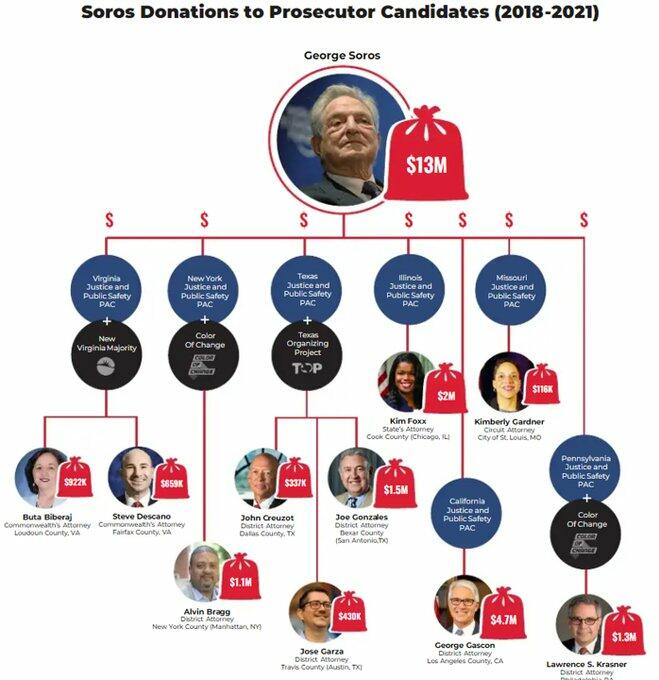

    Lebanon Seizes Ship Loaded With Stolen Ukrainian Grain

    Sunday, July 31st, 2022

    A small story with possibly big implications:

    Lebanon has seized a ship loaded with barley and wheat flour while it determines whether the cargo may have been stolen from Ukraine, said Public Prosecutor Ghassan Oueidat.

    The Ukrainian Embassy in Beirut said the vessel was loaded at Feodosia in the Russian-occupied peninsula of Crimea, and that the commodities originated from Zaporizhzhia, Mykolaiv and Kherson in southeastern Ukraine.

    The embassy accused Russia of stealing more than 500,000 tons during its occupation of the three regions. While Russia denies stealing grain, it has publicly touted the resumption of grain shipments from occupied ports.

    Grain shipments from Crimea have surged since Russia’s invasion of Ukraine in February, which analysts say indicates Ukrainian grain is being exported. Exports from Crimea are sanctioned by the European Union and the U.S..

    The cargo ship Laodicea arrived at Tripoli in northern Lebanon on July 27, according to ship-tracking data monitored by Bloomberg. It will be held while Lebanon carries out an investigation into the cargo’s origin, Oueidat told Bloomberg.

    Supposedly the seizure is limited to 72 hours. We’ll see.

    The ship’s registered owner is Syria Mar Shipping Ltd., according to European database Equasis. Syria Mar Shipping Ltd. wasn’t immediately available to comment. Both the company and the ship were sanctioned by the U.S. in 2015 for their association with the Syrian government of President Bashar Assad.

    Syria, of course, is a neighbor that has repeatedly interfered with Lebanon through its terrorist proxy/political party Hezbollah, though current Lebanese President Michel Aoun usually counts Hezbollah as a parliamentary ally. (Summarizing the weird twists and turns of Lebanon’s ever-shifting multi-confessional political landscape is way beyond the scope of this article, though if you’re really interested, reading Michael Totten’s The Road to Fatima Gate might help.) The fact that Lebanon, a small and broke country, is willing to defy both Russia and Syria, speaks to how unified much of the world is against Russia’s invasion of Ukraine, and how little such countries fear Russia’s wrath these days.

    Indeed, the “broke” part may be the deciding factor here, as Lebanon is seeking a $3 billion bailout from the IMF (which is demanding enactment of serious reforms before handing the money over), and the big backers of the IMF are all firmly on Ukraine’s side.

    Russia was already having trouble shipping oil and other commodities due to refusal of insurance companies to underwrite marine policies on Russian ships, an issue that locks them out of most ports.

    If counties like Lebanon (somewhere around the 100th largest economy in the world) are willing to seize illicit Russian cargo, then the opportunities for Russia to financial benefit from its illegal occupation of Ukraine would seem to be thin.

    LinkSwarm for July 29, 2022

    Friday, July 29th, 2022

    The Biden Recession picks up downhill speed, liberals are spending $160 million to seize control of elections, Biden wants to starve your children until you accept transgenderism, and another Soros-backed DA gets the heave-ho from voters. It’s the Friday LinkSwarm!


  • GDP shrunk by .9% in Q2, making the Biden recession official, no matter how much Biden Administration officials and their Democratic Media Complex toadies attempt to spin it otherwise.
  • Another sign of the Biden recession: car repos are soaring.
  • Manchin caves, helps pass bloated spending bill. Because there’s nothing so good for fighting inflation as deficit spending…
  • The FBI sabotaged the Hunter Biden probe in 2020. This is my shocked face.
  • Estimates that over 75,000 Russian soldiers have been killed or wounded in the invasion of the Ukraine.
    

  • “How the Left Hopes to Seize Control of Local Election Offices.

    Two big money liberal operations, ready to spend $80 million each, are trying to determine who controls elections and how in the years ahead.

    “The overall objective of the political left is to change the way you conduct overall elections,” Jason Snead, executive director of the Honest Elections Project, which advocates clean elections, told The Daily Signal.

    One of the two liberal groups, Run for Something, is a political action committee founded by a former Hillary Clinton campaign staffer. In the spring, Run for Something established its Clerk Work project with the goal of electing clerks, election supervisors, registrars, recorders, and other local officials charged with running elections.

    The PAC says it will promote thousands of election administrators in the years ahead. But for 2022, it reports endorsing 11 candidates competing in races in California, Colorado, Illinois, Missouri, Nevada, North Carolina, and Tennessee.

    Local election clerks generally are empowered to interpret and enforce state election regulations. They often have discretion on matters such as whether to count absentee ballots that come in after Election Day, how strictly to enforce voter ID or signature-matching requirements, and how closely poll watchers may monitor the ballot counting on Election Day.

    According to the National Conference of State Legislatures, county-level election officials are elected in 22 states. In 10 states, elected officials appoint members to a local board of elections. Another 18 states divide election administration duties between two or more offices.

    In any case, donating to specific candidates to oversee elections could directly or indirectly affect who holds these positions.

    Some practices of local election administrators also could be guided by another $80 million effort by the U.S. Alliance for Election Excellence, a coalition of mostly left-leaning organizations financed in part by Big Tech executives to train local officials in running elections.

    Snead and other critics say they see parallels between Run for Something and efforts to elect liberal prosecutors financed by liberal hedge fund manager George Soros. They also see strong similarities between the U.S. Alliance for Election Excellence and Facebook founder and CEO Mark Zuckerberg’s election administration grants in the 2020 election cycle.

    “What we shouldn’t lose track of is they are playing the long game,” Snead said. “They are going to look for every possible way to impact elections, and they can make substantial changes in the long run through this kind of program that they wouldn’t have been able to make in 2020.”

  • Good news! Indicted, Soros-backed Baltimore DA Marilyn Mosby lost her reelection bid.

    When Soros-backed socialist son of convicted terrorists Chesa Boudin was recalled as San Francisco DA, the writing was on the wall. “Decarceration” is a disaster for everyone . . . except criminals.

    Now another Soros-backed “decarceration” state’s attorney has lost her reelection bid. It’s not clear if the multiple crimes for which Marilyn Mosby has been charged are the impetus for Baltimore’s voters deciding it’s time to move on or if it’s the shocking crime rates in the city as a result of her radical anti-law and order agenda. Maybe both.

    Mosby rose to national attention in the wake of the Freddie Gray riots and for her hyper-politicized botching of the prosecution in those cases.

    Fox News reports:

    Baltimore State’s Attorney Marilyn Mosby lost her reelection bid to defense attorney Ivan Bates in the Democratic primary after she was indicted by a grand jury on federal charges alleging that she used coronavirus hardship as a reason to take money out of her city retirement account.

    The Associated Press called the race in favor of Ivan Bates, a defense attorney, on Friday night. Bates is a former prosecutor in Baltimore who served from 1996 to 2002 before becoming a defense attorney.

    Mosby, a Democrat, directed her office to stop prosecuting offenses such as drug possession, prostitution, urinating in public, and more during the coronavirus pandemic in an attempt to stop the virus from spreading in jails and prisons.

  • Object to tranny madness? No school lunches for you!

    In May, the Biden administration announced that any school that participates in the federal school lunch program (which is run by the U.S. Department of Agriculture’s Food and Nutrition Service) must allow students to use bathrooms, locker rooms, and showers and play on the sports teams aligning with their gender identity if they want access to funds for the program — effectively holding money meant for ensuring student nutrition in exchange for compliance on radical leftist gender ideology.

    Now, twenty-two Republican attorneys general are fighting back by suing the U.S. Department of Agriculture over that new guidance.

    “We all know the Biden administration is dead-set on imposing an extreme left-wing agenda on Americans nationwide,” Indiana Attorney General Todd Rokita said. “But they’ve reached a new level of shamelessness with this ploy of holding up food assistance for low-income kids unless schools do the Left’s bidding.”

    According to the Washington Times, nearly 30 million students take advantage of the National School Lunch Program at about 100,000 public and non-profit private schools and residential childcare institutions. The Biden administration policy was seen as a direct assault on the 18 states with existing laws barring male athletes from participating in female sports.

    The lawsuit argues that the Biden administration (again) violated the Administrative Procedures Act by issuing regulations without going through the rulemaking process and that Bostock v. Clayton, the 2020 Supreme Court’s 2020 decision on employment discrimination, doesn’t apply to Title IX as the Biden administration claimed when they announced the guidance.

    “This case is, yet again, about a federal agency trying to change law, which is Congress’ exclusive prerogative,” Tennessee Attorney General Herbert H. Slatery III said. “The USDA simply does not have that authority. We have successfully challenged the Biden Administration’s other attempts to rewrite law and we will challenge this as well.”

  • Beto O’Rourke Campaign Staffers Vote to Unionize.” I can hardly wait for the first strike…
  • Things that make you go “Hmmmm.” Russian missile system being transported by rail…in the US.
  • Samantha Bee’s show gets cancelled by TBS.

    In other news, Samantha Bee was evidently still on the air somewhere.

  • Buzz Aldrin’s Apollo 11 jacket went for $2.8 million at auction.
  • “10 Biggest Adjustments Fleeing Californians Have To Make In Their New States.” One of my favs: “Man-buns are unacceptable in a professional setting. Or any setting.”
  • “CDC Declares Gay Orgies An ‘Essential Activity.'”
  • The Chieftain Reviews Movie Tank Scenes

    Wednesday, July 27th, 2022

    Why yes, this is relevant to my interests!

    Nicholas Moran, AKA The Chieftain, reviews various movie tank scenes for technical accuracy. Fury and Saving Private Ryan both rank pretty high.

    He also has good things to say about The Beast and Kelly’s Heroes, both of which are on our Saturday Night Movie Group to-watch list.

    Scenes From China’s Slow-Motion Collapse

    Tuesday, July 26th, 2022

    Remember the bank runs in China story after all those bank accounts in Hunan were frozen? I’ve been looking for signs of wider contagion amidst the Chinese banking sector, and mostly haven’t seen it. But I have seen a lot of other cracks appear in China’s overall economic system, so here’s a roundup.

  • One reaction to the frozen accounts: “Chinese Bank Run Turns Violent After Angry Crowd Storms Bank of China Branch Over Frozen Deposits.”

    A large crowd of angry Chinese bank depositors faced off with police Sunday in the city of Zhengzhou, and many were injured as they were taken away, amid the freezing of their deposits by some rural-based banks.

    The banks froze millions of dollars worth of deposits in April, telling customers they were upgrading their internal systems. The banks have not issued any communication on the matter since, depositors said.

    According to Chinese media the frozen deposits across the various local banks could be worth up to $1.5 billion and authorities are investigating the three banks.

    On Sunday, about 1,000 people gathered outside the Zhengzhou branch of China’s central bank on Sunday to demand action; they held up banners and chanted slogans on the wide steps of the entrance to a branch of China’s central bank in the city of Zhengzhou in Henan province, about 620 kilometers (380 miles) southwest of Beijing.

  • China’s communist government reacted to the protests with their usual tact and understanding:

  • Also, it looks like the province suddenly had an outbreak of Flu Manchu, forcing protestors to stay at home. What are the odds?
  • But it looks like some of them will finally get some money back:

    (Plus more on the property slump.)

  • The official line on the Hunan account freeze: “Henan police said in a statement on July 10 that further investigations showed that, since 2011, a criminal group led by a suspect named Lu Yi had gradually taken control of several rural banks, through companies including the Henan New Wealth Group, to illegally transfer out funds. The police said they had arrested more suspects and seized more assets involved in the case.” I have no doubt the aforementioned were probably guilty, but I bet a whole lot more bank officials, regulators, and CCP officials (to the extent that those are separate groups and not mostly-overlapping Venn circles) were in on the scheme, plus a whole bunch more in dozens of other schemes that siphoned off depositor money into various pockets and a host of entirely different schemes. As I’ve said before, it’s smoke and mirrors all the way down.
  • Another thing driving unrest: “Rotten tail buildings,” that is residential buildings on which all construction is stopped, but for which those with mortgages for individual units are still expected to pay for:
    

  • The Result? Disgruntled homebuyers are refusing to pay their mortgages.

    A rapidly increasing number of “disgruntled Chinese homebuyers” are refusing to pay mortgages for unfinished construction projects, exacerbating the country’s real estate woes and stoking fears that the crisis will spread to the wider financial system as countless mortgages default.

    According to researcher China Real Estate Information, homebuyers have stopped mortgage payments on at least 100 projects in more than 50 cities as of Wednesday, up from 58 projects on Tuesday and only 28 on Monday, according to Jefferies Financial Group Inc. analysts including Shujin Chen.

    And that was over a week ago.

    According to Citi analysts, average selling prices of properties in nearby projects in 2022 were on average 15% lower than purchase costs in the past three years. Meanwhile, it’s only getting worse as China’s home prices fell for a ninth month in May, with June figures set for release Friday.

    The crisis engulfing Chinese developers is reaching a new phase, with a debt selloff expanding to firms once deemed safe from the cash crunch, including investment-grade names such as Country Garden Holdings, the largest builder by sales.

    The payment refusals, which come at a time when China’s economy is set to post what may be a negative GDP print due to the latest economic shutdown over Xi’s catastrophic zero covid policies, underscore how the storm engulfing China’s property sector is now affecting hundreds of thousands of average citizens, posing a threat to social stability ahead of a Communist Party Congress later this year. Chinese banks already grappling with challenges from liquidity stress among developers now also have to brace for homebuyer defaults.

    As a result of the unprecedented push for a debt jubilee, shares of China’s banks extended their recent decline Thursday, with the CSI 300 Banks Index falling as much as 3.3% before closing down 2.2%. A Bloomberg Intelligence index of Chinese developer stocks slid as much as 2.7%, even though Chinese lenders were quick to try and dispel fears that the movement could crash the economy: according to Bank of Communications, its outstanding balance of overdue mortgage loans linked to housing projects with risks of delayed delivery is 99.8 million yuan, accounting for 0.0067% of its domestic housing mortgage balance. The bank added that its housing mortgage loan quality is stable and risks are controllable, the Shanghai-based lender says in an exchange filing. At the same time, Postal Savings Bank of China says its overdue mortgage loans linked to halted housing projects is 127m yuan, and risks are controllable. Of course, it’s not like Chinese banks would ever lie, now is it?

  • There are some signs that the cracks are spreading.

    The Great Debt Jubilee is picking up speed: China’s homebuyer mortgage boycott, which prompted Beijing to scramble to avoid a potentially devastating crash in what is the world’s biggest asset is spreading, and according to Bloomberg, some suppliers to Chinese real estate developers are now also refusing to repay bank loans because of unpaid bills owed to them, a sign that the loan boycott that started with homebuyers is starting to spread.

    In a jarring case study of what happens when a ponzi scheme goes into reverse, hundreds of contractors to the property industry complained that they can no longer afford to pay their own bills because developers including China Evergrande Group still owe them money, Caixin reported, citing a statement it received from a supplier Tuesday.

    Similar to homebuyers who have taken a stand and refuse to pay for properties that remain uncompleted, one group of small businesses and suppliers circulated a letter online saying they will stop repaying debts after Evergrande’s cash crisis left them out of pocket.

    “We decided to stop paying all loans and arrears, and advise our peers to decline any requests to be paid on credit or commercial bill,” the group said in the letter dated July 15, which was sent to the developer’s Hubei office. “Evergrande should be held responsible for any consequence that follows because of the chain reaction of the supply-chain crisis.”

    As Bloomberg oh so perceptively puts it, “the payments protest is the latest sign of how a movement by homebuyers to boycott mortgages on unfinished homes in China is spreading to affect other sectors in the economy.”

    Yes it is, and it’s also why Beijing should be freaking out (if it isn’t), because what is taking place in China is far worse than what took place in March 2020 when the global credit machinery ground to a halt, only back then it’s because there was no other option, now it’s a voluntary development and not even fears of reprisals from China’s ruthless, authoritarian, Lebron-beloved dictatorship is stopping millions of people from calling for a systemic boycott, one which can topple China’s entire $60 trillion financial system in moments.

    Probably an overstatement, just because it takes a whole lot to overcome the inertia of the average Chinese citizen just wanting to keep their head down and not be the nail that sticks up.

  • Speaking of Evergrande, the rats there continue to flee the sinking ship.

    Embattled Chinese real estate giant Evergrande is expected to deliver a preliminary restructuring plan this week, following the exit of two bosses.

    The firm says its chief executive and finance head have resigned, after an internal probe found that they misused around $2bn (£1.7bn) in loans.

    Chinese businessmen misusing funds? Try to contain your shock.

    Evergrande has more than $300bn in liabilities and defaulted on its debts late last year.

    The crisis has spooked traders who fear contagion in China’s property sector.

    On Friday, Evergrande said it found that chief executive Xia Haijun and chief financial officer Pan Darong were involved in diverting 13.4bn yuan ($2bn; £1.7bn) in loans secured by its property services unit to the wider group.

    The firm said in a filing to the Hong Kong Stock Exchange that Mr Xia and Mr Pan had resigned because of their “involvement in the arrangement of the pledges”.

    Getting caught trying to cook the books even after it’s hit the fan. Classic Chinese management.

  • “Some big-name Chinese stocks including Alibaba Group Holding Ltd. and Baidu Inc. face the prospect of getting kicked off the New York Stock Exchange and Nasdaq if they refuse to let U.S. regulators see their financial audits.”

    The U.S. Securities and Exchange Commission has started the process, compelled by a 2020 law, and investors have started to pay attention. So has China, which moved to potentially clear a big hurdle that stymied U.S. regulators for years.

    1. Why does the U.S. want access to audits?

    The 2002 Sarbanes-Oxley Act, enacted in the wake of the Enron Corp. accounting scandal, required that all public companies have their audits inspected by the U.S. Public Company Accounting Oversight Board. According to the SEC, more than 50 jurisdictions work with the board to allow the required inspections, while two historically have not: China and Hong Kong. The long-simmering issue morphed into a political one as tensions between Washington and Beijing ratcheted up during the administration of President Donald Trump. The Chinese chain Luckin Coffee Inc., which was listed on Nasdaq, was found to have intentionally fabricated a chunk of its 2019 revenue. The following year, in a rare bipartisan move, Congress moved to force action.

    2. Where does it stand?

    As required by the law, known as the Holding Foreign Companies Accountable Act or HFCAA, the SEC in March started publishing its “provisional list” of companies identified as running afoul of the requirements. While the move had long been telegraphed, the first batch of names fueled a sharp decline in U.S. shares of companies based in China and Hong Kong as it dashed hopes for some kind of compromise. In all, the PCAOB has said it’s blocked from reviewing the audits of more than 200 of those businesses. The companies say Chinese national security law prohibits them from turning over audit papers to U.S. regulators. SEC Chair Gary Gensler said in late March that the Chinese authorities faced “a hard set of choices.” Days later, China announced it would modify a 2009 rule that restricted the sharing of financial data by offshore-listed firms, potentially clearing one obstacle.

    3. What is China changing?

    The China Securities Regulatory Commission said the requirement that on-site inspections should be mainly conducted by Chinese regulatory agencies or rely on their inspection results would be removed. It said it would provide assistance for cooperation with foreign regulators. The CSRC said it’s rare in practice that companies need to provide documents containing confidential and sensitive information. However, if required during the auditing process, they must obtain approvals in accordance with related laws and regulations.

    4. What’s the broader issue?

    Critics say Chinese companies enjoy the trading privileges of a market economy — including access to U.S. stock exchanges — while receiving government support and operating in an opaque system. In addition to inspecting audits, the HFCAA requires foreign companies to disclose if they’re controlled by a government. The SEC is also demanding that investors receive more information about the structure and risks associated with shell companies — known as variable interest entities, or VIEs — that Chinese companies use to list shares in New York. Since July 2021, the SEC has refused to greenlight new listings. Gensler has said more than 250 companies already trading will face similar requirements.

    5. How soon could Chinese companies be delisted?

    Nothing is going to happen this year or even in 2023, which explains why markets initially took the possibility in their stride. Under the HFCAA, a company would be delisted only after three consecutive years of non-compliance with audit inspections. It could return by certifying that it had retained a registered public accounting firm approved by the SEC.

    6. How many companies will be affected?

    There’s not much discretion. If a company from China or Hong Kong trades in the U.S. and files an annual report, it will soon find itself on the SEC’s list simply because those have been identified as non-compliant jurisdictions. In the March interview, Gensler pointed out that the law focuses on non-compliant countries, rather than specific companies.

  • Up to 10,000+ rich Chinese are looking for a way to flee the country.
  • For that and other reasons, Beijing is looking to impose more controls to prevent capital flight.
  • What would a “China is screwed” roundup be like without a Peter Zeihan video?

    “Demographically they’re in collapse…China’s not even going to survive this decade. They don’t even have the numbers to try…China doesn’t have the naval capacity to secure markets and resources….Xi Jinping has enacted a cult of personality that is tighter than anything that has existed through Chinese history. It’s gotten so tight that no one wants to bring him information about anything…This is how countries die.” Plus: China doesn’t know how to store grain.

  • Some more Zeihanian deglobalization thoughts from Stephen S. Roach.

    The widely acclaimed globalization of the post-Cold War era is now running in reverse. A protracted slowdown in global trade has been reinforced by persistent pandemic-related supply-chain disruptions, ongoing pressures of the US-China trade war, and efforts to align cross-border economic ties with geostrategic alliances (“friend-shoring”). These developments tighten the noose on China, arguably the country that has been the greatest beneficiary of modern globalization.

    Of the many metrics of globalization, including financial, information, and labor flows, the cross-border exchange of goods and services is most closely tied to economic growth. Largely for that reason, the slowdown in global trade, which commenced in the aftermath of the 2008-09 global financial crisis and intensified in the COVID-19 era, points to a sea change in globalization. While global exports went from 19% of world GDP in 1990 to a peak of 31% in 2008, in the thirteen years that followed (2009-21), global exports have averaged just 28.7% of world GDP. Had world exports expanded on a 6.4% trajectory – halfway between the blistering 9.4% pace of 1990-2008 and the subdued post-2008 rate of 3.3% – the export share of global GDP would have soared to 46% by 2021, far above the actual share of 29%.

    China’s gains from the globalization of trade have been extraordinary. In the decade prior to China’s 2001 accession to the World Trade Organization, Chinese exports averaged just 2% of total world exports. By 2008, that share had risen nearly fourfold, to 7.5%. China had timed its WTO membership bid perfectly, just when the global trade cycle was on a major upswing. While the financial crisis took a brief toll on Chinese export momentum, the interruption was short-lived. By 2021, Chinese exports had surged to 12.7% of world exports, well above the pre-2008 peak.

    China is unlikely to maintain this performance. Overall growth of global trade is slowing, and China’s slice of the trade pie is under mounting pressure.

    The ongoing trade war with the United States is especially problematic. During the first phase of China’s export-led growth surge in the aftermath of WTO accession, the US was consistently China’s largest source of external demand. Largely due to former US President Donald Trump’s tariffs, that is no longer the case. By 2020, US imports of Chinese goods and services had fallen 19% below the peak levels of 2018. Despite rebounding sharply on the heels of the US economy’s post-pandemic snapback, in 2021, US imports from China remained 5% below the 2018 peak. Partial tariff rollbacks for selected consumer products, which President Joe Biden’s administration is apparently considering as an anti-inflation gambit, are unlikely to jump-start bilateral trade.

    At the same time, enduring pandemic-related supply-chain disruptions are likely to take a sharp toll on China and the rest of the world.Over the six months ending in April, a “global supply chain pressures index” constructed by researchers at the Federal Reserve Bank of New York averaged 3.6, well above the 2.3 reading in the first 21 months following the February 2020 onset of pandemic-related lockdowns, and sharply higher than the “zero” reading associated with the absence of supply-chain disruptions.

    This is a big deal for a world connected by supply chains. Global value chains accounted for more than 70% of the cumulative growth in overall global trade from 1993 to 2013, and China has enjoyed an outsize share of this GVC-enabled expansion. As supply-chain disruptions persist, exacerbated by China’s zero-COVID policies, pressures on Chinese and global economic activity are likely to remain intense.

    Mounting geostrategic tensions are the wild card in deglobalization, especially their implications for China. “Friend-shoring” in effect turns Ricardo’s efficiency calculus of cross-border trade into an assessment of the security benefits that come from strategic alliances with like-minded countries. China’s new unlimited partnership with Russia looms especially relevant in this regard. With China edging closer to crossing the line by providing support to Russian military efforts in Ukraine, the US has recently moved to impose sanctions on five more Chinese companies through its so-called Entity List.

  • You’ve heard about the ghost cities. Did you hear about the failed ghost developments that were built as weird, cheap imitations of western structures?

  • Is Xi Jinping in danger from a coup?

  • No doubt I’ve missed many other examples of cracks in China’s economic edifice. Feel free to share them in the comments below.