I held off on analysis of the FBI non-indictment of Hillary Clinton because I knew there would be many piquant opinions to be harvested from around the Internet, and indeed there are:
In other Clinton Corruption news:
I held off on analysis of the FBI non-indictment of Hillary Clinton because I knew there would be many piquant opinions to be harvested from around the Internet, and indeed there are:
In other Clinton Corruption news:
Among the more interesting storylines to emerge after the Brexit vote was how Labour blew it. Despite having a leadership far more Europhilic and in favor of transnational statist government than even Tory insiders, Labour’s support of Remain was markedly tepid, starting right at the top with Labour leader Jeremy Corbyn:
Less than a month before the historic EU referendum, the team assembled by Cameron to keep Britain in the European Union was worried about wavering Labour voters and frustrated by the opposition leader’s lukewarm support. Remain campaign operatives floated a plan to convince Corbyn to make a public gesture of cross-party unity by appearing in public with the prime minister. Polling showed this would be the “number one” play to reach Labour voters.
Senior staff from the campaign “begged” Corbyn to do a rally with the prime minister, according to a senior source who was close to the Remain campaign. Corbyn wanted nothing to do with the Tory leader, no matter what was at stake. Gordon Brown, the Labour prime minister whom Cameron vanquished in 2010, was sent to plead with Corbyn to change his mind. Corbyn wouldn’t. Senior figures in the Remain camp, who included Cameron’s trusted communications chief Craig Oliver and Jim Messina, President Obama’s campaign guru, were furious.
So to Corbyn, a vote many in Labour leadership regarded as the most important in their lifetime took a backseat to his bitter hatred of even appearing with the Tories. “An old school socialist, the Labour leader had in the past attacked the EU as an undemocratic, corporatist conspiracy that threatened workers’ rights. He never looked the part to save Cameron in a referendum the Conservative leader brought on himself.”
From the same piece:
Hardened by close-run contests in the 2014 Scottish independence referendum and last year’s general election, the strategists running Stronger In decided to follow the playbook that worked in those campaigns, particularly the 2015 Conservative sweep, and focus mainly on economic security.
It failed spectacularly. The depth of public anger over the influx of workers from other EU countries, and more broadly the rejection of political and business elites, was more significant than they had anticipated.
Also this:
Internal polling found just weeks before June 23 one in five Labour voters did not know the party’s position in the referendum. As party aides canvassed voters around the country, they discovered a deep well of concern about immigration.
Labour leadership no doubt found it quite shocking that so many traditional Labour strongholds voted in favor of Brexit. There were also a small but notable number of Labour MPs who supported Brexit. Some hail from those same hinterland locales that voted for Brexit, and thus could be said to actually represent the wishes of their constituents (try to contain your shock).
But Labour MP Kate Hoey represents a constituency smack dab against the south bank of the Themes in central London, an area that voted heavily to Remain. Yet Hoey was an early and notable voice for Brexit:
I’m tired of people thinking that only those on the right of politics are Eurosceptic. This is far from true.
The reputation of the EU has fallen sharply among many on the Left. The sight of the EU establishment imposing unprecedented levels of austerity on Greece was a real wake-up call. This was not a benign political institution guaranteeing social protection and international solidarity, but an unaccountable force bringing crippling pain on a people who cannot hope to repay the loans that are recapitalising their banks.
Meanwhile, the EU is willing to require ever-greater sacrifice to living standards in order to keep the Euro and the wider European “Project” moving forwards. Ever closer Union is what is on the tin – and even if the words are removed to satisfy the Prime Minister, the contents will still be the same.
The Labour Party has traditionally had a sceptical view of the European institutions. From Attlee to Foot, and until the late 1980s, Labour was predominantly Eurosceptic – but then, following three Thatcher victories, many on the Left looked desperately to Europe to block her policies. Wise Labour voices like Peter Shore and Tony Benn, however, argued that democratic faith in the wisdom of the public was a better guarantor than the benevolence of transitory political elites. They have been proved right as the EU is no longer motivated by Jacques Delors’ ‘Social Europe’, but is increasingly out of touch with the needs of its people.
Familiar voices try to scare us into believing that leaving the EU would ruin the UK, but these are the same people who told us that we had to join the Euro or face disaster. We stayed out of the Euro and have therefore been spared much of the chaos of that unsustainable currency – but we still give £7.3 billion net a year of our money to the EU.
How can we protect civil liberties when the EU forces on us unaccountable extraditions through the European Arrest Warrant? How can we ensure the jobs and growth that we need when vital contracts for work go to preferred bidders on the continent and not to British firms? How can we preserve and improve our public services when the Services Directives help force the privatisation of the Royal Mail and EU rules against state aid will make it almost impossible to renationalise the railways? TTIP is a gift to the multi-national corporations. I don’t trust the EU to negotiate on our behalf, and I certainly don’t trust it to be on the side of small businesses or Trade Unions.
The Labour Party is looking at radical policies to tackle the problems in our country. We need to take back real control from the unelected and unaccountable European Commission if we are to have a chance of implementing any of these.
My politics are very far indeed from those of Hoey, but she’s not wrong. Greece’s government may have brought upon the crisis by spending radically more money than they took in even after it became apparent they were going broke, but the EU responded in exactly the way described. It was born as an undemocratic organization, a fact the Euro crisis finally made apparent even to the those on the left, with the decisions of democratically elected officials overruled by unelected bureaucratic elites. And the self-serving agendas of those elites tend to be at odds with the goals of both left and right.
The question isn’t why Hoey supported Brexit, but why so many Labour MPs didn’t.
Other Brexit News:
The inability of those elites to grapple with the rich world’s populist moment was in full display on social media last night. Journalists and academics seemed to feel that they had not made it sufficiently clear that people who oppose open borders are a bunch of racist rubes who couldn’t count to 20 with their shoes on, and hence will believe any daft thing they’re told. Given how badly this strategy had just failed, this seemed a strange time to be doubling down. But perhaps, like the fellow I once saw lose a packet by betting on 17 for 20 straight turns of the roulette wheel, they reasoned that the recent loss actually makes a subsequent victory more likely, since the number has to come up sometime.
Or perhaps they were just unable to grasp what I noted in a column last week: that nationalism and place still matter, and that elites forget this at their peril. A lot people do not view their country the way some elites do: as though the nation were something like a rental apartment — a nice place to live, but if there are problems, or you just fancy a change, you’ll happily swap it for a new one.
In many ways, members of the global professional class have started to identify more with each other than they have with the fellow residents of their own countries. Witness the emotional meltdown many American journalists have been having over Brexit….
A lot of my professional colleagues seemed to, and the dominant tone framed this as a blow against the enlightened “us” and the beautiful world we are building, struck by a plague of morlocks who had crawled out of their hellish subterranean world to attack our impending utopia.
I’m always up for a good Morlock reference. And if you haven’t read H. G. Wells’ The Time Machine (which you should, because it’s a great novel), that analogy is more apt than you know. In Wells’ novel, the Morlocks were the underground race that actually ran things, the ones that maintain the machinery the Eloi depended on to live. Just like those inbred redneck freaks from JesusLand (or, to use a UK analogy, those Northern monkeys), the Morlocks are the essential population that keep things running, not the beautiful, useless Eloi.
The reactions to the unexpected death of Supreme Court Justice Antonin Scalia are still coming in. Conservatives (and some liberals) hailed him as a great justice, a keen mind, and one of the court’s finest writers. Other liberals…
Eh. Let’s get to the sweet before the bitter.
Today our Nation mourns the loss of one of the greatest Justices in history – Justice Antonin Scalia. A champion of our liberties and a stalwart defender of the Constitution, he will go down as one of the few Justices who single-handedly changed the course of legal history.
As liberals and conservatives alike would agree, through his powerful and persuasive opinions, Justice Scalia fundamentally changed how courts interpret the Constitution and statutes, returning the focus to the original meaning of the text after decades of judicial activism. And he authored some of the most important decisions ever, including District of Columbia v. Heller, which recognized our fundamental right under the Second Amendment to keep and bear arms. He was an unrelenting defender of religious liberty, free speech, federalism, the constitutional separation of powers, and private property rights. All liberty-loving Americans should be in mourning.
Justice Scalia’s three decades on the Court was one of President Reagan’s most consequential legacies. Our prayers are with his beloved wife Maureen, their nine children, and their precious grandchildren.”
Justice Antonin Scalia was a man of God, a patriot, and an unwavering defender of the written Constitution and the Rule of Law. He was the solid rock who turned away so many attempts to depart from and distort the Constitution. His fierce loyalty to the Constitution set an unmatched example, not just for judges and lawyers, but for all Americans. We mourn his passing, and we pray that his successor on the Supreme Court will take his place as a champion for the written Constitution and the Rule of Law. Cecilia and I extend our deepest condolences to his family, and we will keep them in our thoughts and prayers.
He was important because of his intellectual influence. There were and are many legal theories and schools of constitutional interpretation within the world of American conservatism. But Scalia’s combination of brilliance, eloquence and good timing — he was appointed to the court in 1986, a handful of years after the Federalist Society was founded, and with it the conservative legal movement as we know it — ensured that his ideas, originalism in constitutional law and textualism in statutory interpretation, would set the agenda for a serious judicial conservatism and define the worldview that any “living Constitution” liberal needed to wrestle with in order to justify his own position.
This intellectual importance was compounded by the way he strained to be consistent, to rule based on principle rather than on his partisan biases — which made him stand out in an age when justices often seem as purely partisan as any other office holder. Of course there were plenty of cases (“Bush v. Gore!” a liberal might interject here) in which those biases probably did shape the way he ruled. But from flag burning to the rights of the accused to wartime detention, Scalia had a long record of putting originalist principle above a partisan conservatism. And this, too, set an example for his fellow conservatives: The fact that today the court’s right-leaning bloc has far more interesting internal disagreements than the often lock-step-voting liberal wing is itself a testament to the premium its leading intellectual light placed on philosophical rigor and integrity.
Even honest liberals who disagree with Scalia’s politics praised the keenness of his mind and prose:
In his most significant decision for the court’s majority, District of Columbia v. Heller, in 2008, Scalia transformed the understanding of the Second Amendment. Reversing a century of interpretation of the right to bear arms, he announced that individuals have a constitutional right to possess handguns for personal protection. The Heller decision was so influential that even President Obama, whose politics differ deeply from Scalia’s, has embraced the view that the Second Amendment gives individuals a constitutional right to bear arms.
Meanwhile, other liberals have reacted with unbridled joy:
Here's the now-deleted tweet where a @BuzzFeedNews employee seemingly celebrates Scalia's death pic.twitter.com/twzBIr8A4M
— Oliver Darcy (@oliverdarcy) February 13, 2016
(Hat tip: Breitbart.)
A reminder, yet again, that conservatives regard liberals as wrong, but many liberals regard conservatives as not just wrong but evil, and feel no absolutely no remorse in openly celebrating the death of a great man for the crime of daring to hold non-liberal thoughts.
This is the time of year when the political world is awash in polls. Some otherwise sensible Republicans take a look at those polls and go “Oh my God! Obama is up by 2! Or 5! He got a big convention bounce!”
I could wade into the murky swamps of different polling companies, different methodologies, different biases, the problem with cell phone vs. landline samples, partisan weighting screens, the comparison between citizens, registered voters and likely voters, or a dozen other variables. But I’m not going to.
Instead, one piece of advice, and one explanation.
The advice: Chill.
The explanation: Barack Obama was elected in 2008 with 52.9% of the popular vote to 45.7% for John McCain, the best popular vote margin of any Democratic Presidential contender since Lyndon Baines Johnson captured 61.1% of the vote in 1964. (People forget that Bill Clinton, for all his retrospective popularity, never broke 50% of the popular vote; Al Gore got 48.4% of the vote while losing in the electoral college in 2000.) Ignoring (for now) the electoral college and minor changes in the composition of voters, that means only 4% of the people who voted for Barack Obama in 2008 need to switch their vote for Mitt Romney to win.
Do you think Obama might be 4% less popular than he was four years ago? Perhaps among those who have lost their jobs? There is plenty of anecdotal evidence that Obama is less popular than he was four years ago, his inability to fill campaign events the way he used to being one, and numerous elected Democrats in tough reelection fights avoiding the DNC being another. So who are you going to believe: MSM polls or your lying eyes?
The media is desperately trying to pretend that 2010 never happened, or that it was an aberration.
The polls are part of the media trying desperately to maintain what Instapundit Glenn Reynolds calls “preference falsification,” a willingness on the part of the political and media establishment to manufacture a false consensus that (in this case) liberal policies and politicians are popular. When it comes to the current election, the question might be most crassly boiled down to “Do you support Obama, or are you a racist?” In 2010 and now we’re finally seeing a “preference cascade” of people unwilling to buy that liberal narrative. The walls are finally coming down.
Which is not to say the election is in the bag for Romney. There’s still a lot of hard work to be done, and a lot of work to make sure Republicans and anti-Obama independents get to the polls, especially in swing states. But there’s no reason to get worked up over each and every little poll. Time is not on Obama’s side.
Instapundit Glenn Reynolds notes that he’s “not going to reward lies with traffic.”
Well there goes my plans for reporting his sordid love triangle with Scarlett Johansson and Megan Fox…
Instapundit Glenn Reynolds was forced to get a new campus ID, so he showed his readers the 20-year “before and after pics.” Actually, he looks older but pretty much the same, almost as if he has a painting of himself hidden away in his attic that ages instead of him.
However, my sources at the University of Tennessee have uncovered the shocking fact that the “after” picture up on his blog is in fact a shameless lie. Thanks to their efforts, I can now reveal the horrifying truth.
Here’s the before picture:

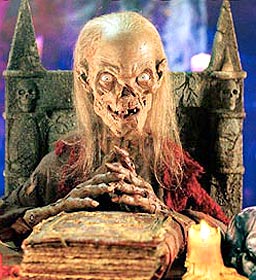
And here’s the real portrait of what you look like after teaching law school for 20 years:
Several commentators on yesterday’s post and video about a man being assaulted by liberal thugs for the crime of videotaping Democratic gubernatorial candidate John Kitzhaber at an event open to the public at Emmanuel Temple Church in Portland, Oregon, opined that no crime had been committed, since the videographer was on private property, and thus should have complied with a request demand to stop filming.
I’m not a lawyer, so I am not clear on the issue, namely: Does a political event open to the public, but set in a private space, count, for the sake of the law, as occurring in a public space or a private space? I can see how both might apply, depending on the circumstances and on individual state law.
To clarify the issue, I asked two of the leading legal lights of the blogosphere, Eugene Volokh of the Volokh Conspiracy and Instapundit Glenn Reynolds for their opinion on the issue.
Volokh’s response:
Neither the press nor other speakers have a right to stay in a church when the owners or the agents tell them to leave. The same is true for other private property, except in a few states as to large shopping malls. Moreover, the owner of property has the right to use reasonable, nondeadly force to eject trespassers. But if the event is billed as open to the public, then trespassers wouldn’t be trespassers until they’re told to leave and refuse. I haven’t seen the video, so I can’t speak to the facts in this case.
Reynolds’ response:
I agree with Eugene. As a practical matter, if I were the filmer in question I would probably sue for assault, etc. on general principles. Fear of lawsuits causes people to do all sorts of things; it might as well make them more reluctant to hassle photographers. But that’s just me following the “punch back twice has hard” philosophy propounded by a great man.
Thanks for both gentlemen for clarifying some of the legal issues involved.
A few points: