For most of the 21st century, Texas had a pretty welcoming attitude toward data center construction: Come on down! Like every other type of economic investment, from factory to fab to corporate HQ, if you had just about any need for a facility that would generate money and jobs, officials at all levels of Texas government would bend over backwards to provide you with some mix of incentives, subsidies and tax abatements, along with the state’s famous low tax and low regulation environment, to get you to build in the Lone Star State.
The massive AI data center build-out is changing those sentiments. A whole lot of people are starting to view AI as a job destroyer rather than creator, data centers are seen (rightly or wrongly) as too water- and power-hungry, and too much of a hassle for the relatively small number of local jobs they create.
And Texas politicians seem to be listening to the complaints.
Texas Governor Greg Abbott has laid out rules “to make massive data centers pay for their own grid upgrades and curb their impact on residential power bills.”
Gov. Greg Abbott is praising new moves by Texas regulators that he says will prevent residential ratepayers from subsidizing the state’s data center boom.
In a filing sent to the governor this week, the Public Utility Commission of Texas (PUCT) and the Electric Reliability Council of Texas (ERCOT) outline steps to make “large computational loads” pay more of their own costs and to tighten reliability rules for massive new projects.
This comes as polling has shown Texans are concerned that the energy-intensive projects will strain the power grid and water supply.
On June 10, Abbott ordered regulators to ensure data centers pay for the transmission and other infrastructure they require instead of shifting those costs onto Texas families. He also directed PUCT and ERCOT to structure interconnections so data center growth helps lower residential electric bills and to develop additional protections for ratepayers.
PUCT Chairman Thomas Gleeson’s July 17 response embraces that framing, saying Texas should welcome economic development “but it must do so in a manner that prioritizes affordability, reliability, and the interests of the residents who depend on the grid.” He stressed that Texans “will not be negatively impacted by the interconnection of these large electric consumers.”
The commission’s filing describes new rules and rulemakings aimed squarely at large loads. A February rule standardizes how utilities report proposed big loads into ERCOT’s forecasting, which regulators say will help avoid overbuilding transmission that would otherwise flow into customer rates.
Another change goes to who pays for new steel in the ground.
After a May review found that rapidly growing demand from large computational loads is driving costly grid upgrades, PUCT opened a rulemaking to require big loads to shoulder those costs. The proposal would make large customers post financial security for interconnection, use any forfeited security to offset transmission rates, and start paying transmission charges as soon as capacity to serve them is available—even if the data center hasn’t energized yet.
Regulators are also trying to keep existing megawatts from quietly disappearing into private deals.
A March rule says generation that was available to Texans before September 1, 2025 must remain available, even if it will primarily serve a new large load going forward. Any such arrangement must be vetted by ERCOT, and PUCT can impose conditions to protect reliability.
Meanwhile, ERCOT is moving to a “Batch Zero” study of all qualifying large loads of 75 megawatts or more, designed to evaluate their combined impact and identify needed upgrades through 2032. Future batch studies and a new interconnection‑screening process are meant to prevent clusters of data centers from overburdening the grid.
Beyond current authority, PUCT and ERCOT are asking lawmakers to give them clearer power over big end‑users.
They want explicit authority to set reliability requirements for large computational loads, the ability for ERCOT to order those loads to curtail directly, mandatory registration of large data centers with both agencies, and an expansion of the Lone Star Infrastructure Protection Act to cover owners of big load facilities, not just generators and transmission owners.
Texas legislators are rethinking a tax break for data center equipment that sailed easily through the Capitol 13 years ago.
The Finance Committee of the Texas Senate convened on Monday morning to hear testimony on House Bill (HB) 1223, a state law passed during the 83rd Legislature in 2013 that created a sales tax exemption for tangible personal property purchased for essential use in qualifying data centers.
Analysts from the Texas Comptroller of Public Accounts, an industry spokesman, and a local activist all testified before a committee that was largely critical of the law, revealing a growing distaste in both parties for data center development — and highlighting the obstacles to repealing a law that was just as bipartisan.
“What we thought we were voting for back in 2013, it’s a much different animal these days,” said Finance Committee Chair Joan Huffman (R-Houston).
HB 1223 passed the House unanimously and the Senate by a vote of 23 to eight.
In the first biennium after it passed, Texas ceded $14.6 million in sales tax revenue due to the exemption, according to the committee meeting notice.
The amount of forgone revenue has since ballooned to $3.3 billion for the upcoming biennium, said Brad Reynolds, an analyst from the comptroller’s office.
That’s quite a bit of cheddar.
Before.
Much of the growth took place recently, Reynolds told the committee. From 2014 through 2020, just 10 facilities successfully sought the exemption. In this fiscal year alone, the state has already certified 59 new data centers and is considering five more.
When asked by state Sen. Paul Bettencourt (R-Houston) when the “hockey stick hit,” Reynolds said applications for certification shot up starting in 2021 as remote work trends took hold and the demand for remote data storage grew.
“It had a lot to do with the increasing digitization of the economy,” Reynolds said.
Data centers devoted to artificial intelligence account for about a quarter of the industry today, according to Dan Diorio, executive vice president of state policy and government affairs for Data Center Coalition, who also testified.
“Cloud [computing] and the basic digital infrastructure that we all depend on continues to be the dominant reason for data center development,” Diorio said.
Members often revisited the question of whether data centers would have clustered in Texas without the tax break.
Thirty-five other states offer a sales tax exemption for data centers in some form, Reynolds told Bettencourt, who called the exemption “one of the drivers of where they bring their location, their equipment.”
HB 1223 only applies to single-user data centers. Multi-tenant data centers cannot make use of the benefit, according to the statute.
“Do you think these data centers would stop coming to Texas or proliferate regardless of whether they’re exempt or not?” state Sen. Pete Flores (R-Llano) asked Reynolds.
Reynolds said that “Texas is the second-largest colocation, multitenant data center market in the country.”
“That all happened without any sales tax exemption,” Reynolds said.
Colocation (where different companies have their own servers inside a data center side-by-side with those of other companies) looked like it was going to be big for a while, but then hypervisor-based systems like AWS (where massive CPU, RAM, and storage pools are split into dozens or hundreds of virtual machines) came to dominate the remote server service market.
Democrats and Republicans alike took turns at the microscope, scrutinizing data centers’ purported benefits to the state.
Bettencourt pointed to the “national security imperative” of having a well-supplied set of American-developed data centers.
State Sen. Juan “Chuy” Hinojosa (D-McAllen) and Carol Alvarado (D-Houston) both questioned how many permanent jobs the industry creates.
“Data centers, from May 2023 to May 2024, were responsible for a 69 percent year-over-year increase in construction activity. That far outpaces any other sector,” Diorio responded to Hinojosa, adding that even temporary jobs such as construction tend to stretch out over several projects in a full pipeline of development.
Members frequently referred to the results of a comptroller’s audit of 20 of the 138 data centers currently benefiting from the exemption in the state. According to the audit, six of the 20 facilities failed to meet the law’s qualification requirements.
“It’s really shocking to me that you would say, in your 20 audits of 138 — again, everybody can do the percentages there — that six of the 20 you audited don’t meet the certification,”
If you’re gonna take Big Tex’s taxpayer money, you have to abide by Big Tex’s rules.
Lawmakers are questioning whether Texas’ generous tax breaks for data centers are working as intended after state officials confirmed several facilities failed to meet eligibility requirements.
During a Monday meeting of the Texas Senate Committee on Finance, senators discussed the future of section 151.359 of the Texas Tax Code, which allows qualifying data center developments that meet a certain threshold of commerce to be exempt from the state sales tax. In order to qualify, a data center must be a minimum of 100,000 square feet, commit to investing an additional $200 million within five years, and create at least 20 qualifying jobs.
Brad Reynolds, the chief revenue estimator in the comptroller’s office, stated that his audit division has been in the process of doing compliance checks on data centers using the exemption.
“[T]o date we have 20 of such audits that are either in process or already have been completed. One of those six came forward voluntarily [and] asked to have their certification removed [because they] lost their electricity supplier via ERCOT. The other five missed the 100,000 square-foot requirement. The others have missed the job creation requirement, which tells you really how little employment is stemming from this,” said Reynolds.
Reynolds admitted that in 2013 when House Bill 1223 was passed, which exempted data centers from the sales tax, the legislature estimated only one new facility per year.
However, the comptroller’s office saw an additional two to three facilities put up per year initially.
“I would say the early estimates are significantly too low to begin with because, as I say, the first few years we had about twice as many centers come in than we anticipated; and with spending at a higher level than those minimums, so they were too low to begin with, and of course never anticipated the kind of rapid development [in] numbers and scale that we see today,” stated Reynolds when asked about the extra capital investments.
He offered the committee a simplified version of the estimation that the comptroller’s office does. As more hyperscale data centers are developed in Texas, the cost of extra electricity consumption, as well as sales-taxable IT equipment, totals $107 million in forgone taxes and rises to $246 million by the third year of the facility’s operation.
Meta Platforms and the world’s largest asset manager BlackRock on Tuesday announced a venture to develop and operate a data center campus in El Paso, Texas, a project that would cost about $14 billion in development.
The race to build out AI infrastructure has prompted tech giants to turn to debt sales worth tens of billions of dollars and seek external capital from fund managers such as BlackRock due to an unprecedented scale of investment.
Meta said BlackRock-managed funds will take an 80% ownership stake in the venture, with Meta retaining the remaining 20%. A portion of BlackRock’s investment will be financed through $12.5 billion in debt. Meta will also receive a $1 billion distribution to align ownership.
Meta will contribute land and in-progress construction assets worth about $2.3 billion, while BlackRock will make a cash contribution of about $4.9 billion, the company said.
The Facebook-parent will enter into lease agreements with the venture, allowing it to secure computing capacity without directly funding and owning the campus itself, at a time when investors are concerned if data center investments will pay off.
Borrowing by tech companies has hit a fever pitch, with BofA Global Research saying that AI-related bond issuance reached $270 billion by early July this year, nearly doubling what was raised in all of 2025.
“Meta has said it plans to invest $600 billion in AI infrastructure, including data centers and new jobs in the U.S. by 2028, with an aim to fast-track work on personal superintelligence, which could help spin up new cash flows from the Meta AI app, ad tools and smart glasses.” I assume Meta’s AI push will be as laughably unsuccessful as its money losing virtual reality efforts.
Hey, I get to use the after part of the meme as well!
Also, given concerns over excessive water use, El Paso is not the place I would choose for a data center.
America and the world need data centers, but after the initial construction phase, they create a lot less local jobs than a fab or factory. The electricity and water-use concerns are real, but using closed-loop rather than evaporative cooling methods should greatly minimize the latter. A big step should be making sure big data pays market rates for their water and electricity rather than receiving state and local subsidies for them.
I’m pretty sure Texas will still let data centers get built in the state, but the days when Big Tech could expect a free ride to do so are coming to an end.
People have asked me to do some election roundup/endorsements, since early voting starts on Tuesday. I’m going to try, but, to quote Calvin & Hobbes, the days are just packed.
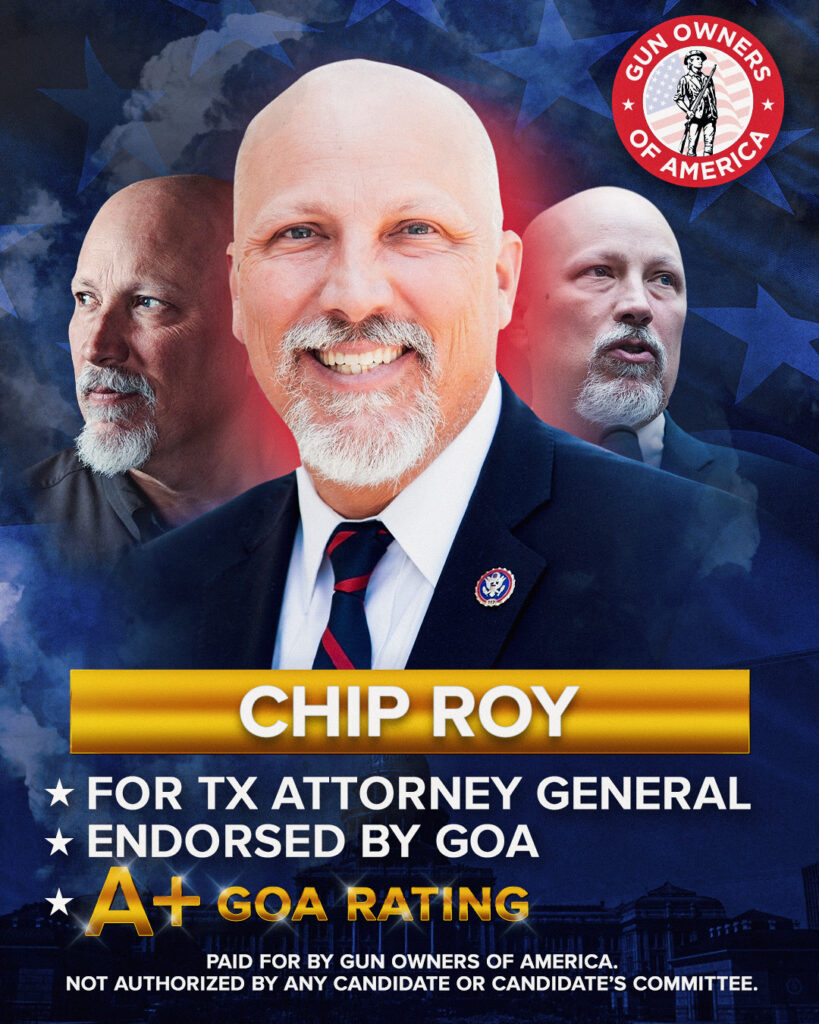
So let’s start with a race that’s most interesting because there are two good choices in it: The Texas Attorney General race, where conservatives have a tough choice between State Senator Mayes Middleton and U.S. Congressman Chip Roy. The most recent polls show Roy leading by about ten points, but both at well under 50%. I don’t consider Joan Huffman or Aaron Reitz to be competitive in the race.
Both Middleton and Roy have conservative voting records in their respective legislatures, and both have firmly conservative positions on a wide range of issues. Indeed, the choice is so tough that Young Conservatives of Texas issued an endorsement of both.
Both have extensive lineups of conservative endorsements. For Middleton that includes True Texas Project, Texas Eagle Forum, and Railroad Commissioner Wayne Christian. Middleton’s direct mail flyers also include a great Trump quote (“voting record on conservative issues is second to none”), but are also careful to include the date issued (December 28, 2021, so not this race). Chip Roy’s endorsements starts off with a trio of heavy hitters (Senators Ted Cruz (who Roy was chief of staff for), Mike Lee and Rand Paul), several fellow U.S. congressman, Gun Owners of America and also Texas Eagle Forum (presumably another dual endorsement). And just today Roy sent out an email celebrating his endorsement by Turning Point USA. So I think Roy is winning the endorsement race right now.
On issues, both Middleton and Roy have firmly conservative beliefs on a wide range of issues. (Including Second Amendment rights. While Roy picked up the GOA endorsement, Middleton’s been very active walking point on gun rights bills in the Texas legislature.) But here, I have to give Middleton the edge, as Roy’s answers tend to be a bit vaguer. Roy talks about “defeating the woke agenda,” but Middleton drills further down, calling out not only the left’s “radical gender agenda” but also calling out his opposition to Soros-backed DAs and judges in his direct mail flyers, which wins points in my book
I think I was already leaning slightly toward Middleton over Roy, but what seals the deal for me is Roy condemning President Trump’s actions on January 6 as impeachable. It was obvious to me that, however inadvisable the January 6th rally may have been, buying even slightly into the Democratic Media Complex BS that this half-assed riot was an “insurrection” displays a disturbing susceptibility to inside-the-beltway thinking.
If Roy wins, I think he’ll be fine as Attorney General. But I see Middleton as the candidate most likely to carry on Ken Paxton’s tenacious fight against the Democrat’s radical left-wing agenda, which is why I recommend voting for him in the Republican primary.
Following redistricting, a whole lot of 2026 races are heating up, so let’s do a Texas election news roundup.
Following Rep. Chip Roy’s entry into the Attorney General’s race, Sen. Ted Cruz and current AG Ken Paxton have issued dueling endorsements.
The early favorite for the most interesting 2026 race in Texas is the campaign for the state’s attorney general, and two new endorsements have ramped the intrigue up to 11.
Four candidates are vying for the spot: state Sens. Joan Huffman (R-Houston) and Mayes Middleton (R-Galveston), former Department of Justice appointee Aaron Reitz, and Congressman Chip Roy (R-TX-21).
Last week, Roy jumped into the race after a couple months of speculation — the same day that polling showed 73 percent undecided in the then-three person field.
Middleton remains far and away the frontrunner on the money front, being able to self-fund with an initial $10 million investment — and the intent to put another $10 million in if need be. He also has the backing of a large number of Republicans in the Texas House, where he served two terms before winning his Senate seat.
But each of the candidates has their own competitive advantages, making the race one of the most interesting to watch in the state so far.
Over the weekend, two established GOP figures broke their impartiality in the race and endorsed competing candidates. First, Sen. Ted Cruz (R-TX) backed Roy, his former chief of staff, saying, “There are several excellent candidates right now in the race for Texas Attorney General. All of them are friends of mine, and all of them have been strong supporters of mine for many, many years. Texas is blessed to have an abundance of strong conservatives stepping forward to lead, in such a time as this.”
“I am proud to endorse Chip Roy for Attorney General of Texas. As my very first chief of staff, Chip has been a close friend and ally of mine for over 12 years. We have been in more fights together than I can count, and I know Chip will always, always, always fight for conservative values.”
Reitz, whose campaign had picked up serious momentum since he launched in June, had served as Cruz’s chief of staff before taking a job in the Department of Justice under the second Trump administration earlier this year. The former Cruz staffer had also been seriously considering running for Roy’s congressional seat in light of the congressman’s entry into the attorney general race.
But Reitz decided to stay in, and unloaded his own top shelf endorsement on Monday. “One of the most frequent questions Texans ask me is: ‘Ken, who should succeed you as Attorney General?’ My answer is now definitive: Aaron Reitz,” Paxton said in a press release.
“Aaron Reitz is the only candidate who is fully vetted, battle-tested, proven, and ready to be Attorney General. He is loyal, fearless, trusted, and relentlessly committed to the Rule of Law. He has already proven himself as a defender of Texas, of Texans’ rights, and of the Constitution. That’s why President Trump called him a ‘true MAGA attorney’ and a ‘warrior for our Constitution’ — and I could not agree more.”
Cruz isn’t the only one who endorsed Roy in the race, as Gun Owners of America sent out out an email endorsement that I’m not seeing on their website yet:
As a member of Congress, Chip Roy has been a steadfast ally for gun owners: he has opposed federal gun control, fought executive overreach, and stood shoulder-to-shoulder with GOA to defend your freedoms.
Chip’s record on the Second Amendment is rock solid. As a member of the powerful House Rules Committee, responsible for deciding which bills are sent to the House floor, Chip has been a brick wall to anti-gunners who aim to infringe on the Second Amendment. Chip will call out RINOs who compromise on the Second Amendment or empower the unconstitutional ATF.
Not only does Chip talk the talk, he shows it with sponsoring and cosponsoring pro-gun legislation!
Since January alone, he:
Sponsored H.R. 962 — Defending Veterans’ Second Amendment Rights Act (Prohibits VA from disarming veterans with fiduciaries)
Cosponsored H.R. 3228 — Constitutional Hearing Protection Act (Removes suppressors from the definition of firearms)
Cosponsored H.R. 1643 — SAFER Voter Act (Reduces the age to buy a handgun from an FFL from 21 to 18)
Cosponsored H.R. 1041 — Veterans 2nd Amendment Protection Act (Prohibits VA from disarming veterans with fiduciaries)
Cosponsored H.R. 563 — No REGISTRY Rights Act (Directs ATF to delete their illegal gun owner registry and certify to Congress that they have complied with the law)
In 2021, when Democrats attempted to insert unconstitutional red flag laws for our service members, it was Chip Roy along with key allies in Congress who prevented that from being signed into law.
The gap between Texas Attorney General Ken Paxton and Sen. John Cornyn (R-TX) in the 2026 U.S. Senate race is narrowing, according to new polling from Texas Southern University.
Cornyn trails five points behind Paxton in the GOP primary, according to a poll conducted by the Barbara Jordan Public Policy Research and Survey Center at Texas Southern University — the same survey which had the senator nine points behind Paxton three months prior.
The survey polled 1,500 likely 2026 Republican primary voters and 1,500 likely 2026 Democratic primary voters, with a margin of error of plus or minus 2.53 percent.
Various polls in the field have gauged Cornyn and Paxton in a head-to-head primary scenario, generally showing the latter to be in a comfortable lead. The Senate Leadership Fund estimates it to be about a 17-point gap, after averaging 13 polls taken over the past six months.
However, data from an Emerson College poll on Friday, alongside this most recent Texas Southern poll, paint a different picture for Cornyn’s odds. Emerson had Cornyn in the lead by one point with 30 percent, Paxton at 29 percent, “someone else” at five percent, and “undecided” at 37 percent.
Congressman Wesley Hunt (R-TX-38), who’s been flirting with a bid against Paxton and Cornyn through a number of campaign-style ads running across the state, was also measured in the poll. In a three-way matchup, Hunt collected 22 percent of the votes, contrasted with Paxton’s 35 percent and Cornyn’s 30 percent.
Congressman Ronny Jackson (R-TX-13), Hunt’s colleague who’s also lightly tested the waters, was also thrown into a three-way mix alongside Paxton and Cornyn. He garnered 15 percent of the vote, behind Cornyn’s 33 percent and Paxton’s 38 percent.
When faced against one another, Cornyn collected 43 percent of the vote against Jackson’s 35 percent. When placed against Paxton, Jackson got 33 percent while the attorney general led with 44 percent.
Hunt received 36 percent when faced against Paxton, who led with 43 percent — while 21 percent voted as “unsure.” Cornyn led with 43 percent against Hunt, while the latter received 36 percent. A similar 22 percent marked themselves as “unsure.”
Taking the usual poll caveats and triple them for a poll this far out. The caveat to the caveat is that the sample size is bigger than some previous polls, and Cornyn has been dropping media ad spends (an unusual move this early), so I can well imagine that he’s been able to close some of the gap. But all the polls have shown Paxton leading, which can’t be comforting for a four term incumbent. Remember, when Cornyn was first elected to the senate, Barack Obama was still an Illinois state senator…
Democratic Congressman Al Green, the current incumbent in the recently redistricted 9th U.S. Congressional District, is waiting for the 18th Congressional District Special Election to declare he’s running for the 18th in 2026.
Congressman Al Green (D-TX-09) has all but officially declared his candidacy for Congressional District (CD) 18, which largely holds his prior constituency following Texas’ mid-decade redistricting.
Green stated during a press conference on Tuesday afternoon that if he “made an announcement today, then there would be mass confusion about where I am. I’m serving the people of the 9th Congressional District,” after outlining how the “new” CD 18 more closely resembles his current CD 9.
“I live in the new 18 — I’m not moving into the new 18. I’ve lived in this house for more than 30 years. This is my home,” Green stated.
“So to those who say I am moving into the 18th Congressional District to run for office, not so. All I’m doing is staying where my constituents are.”
The Texas Legislature passed its new Republican-favored congressional map on August 20, following a two-week quorum break by members of the Texas House Democratic Caucus to prevent the vote. While Green’s CD 9 isn’t one of the five districts expected to flip from blue to red, as requested by President Donald Trump, a majority of CD 9 is now folded into the existing Democratic stronghold CD 18 — a move Green categorized as intentionally racist, as local Democratic lawmakers have also stated. Republicans argue that they are instead reworking the districts due to and in order to increase partisan performance.
“I have no relationships politically with the people in the new 9th Congressional District. The new 18th Congressional District is where I have my home and my constituents,” Green said.
He noted the passing of first Congresswoman Sheila Jackson Lee in 2024, then Lee’s successor, Congressman Sylvester Turner, this March, as well as referencing the special election which will be held in November to determine the candidate to represent CD 18.
“It’s important for people to know I’m not going to be in that special election,” Green continued.
“I’m not going to be in that special election for a multiplicity of reasons, but here is one: because if I chose to get in it, and should I win it, I would have to then vacate the 9th Congressional District.”
Finally, down in fringe candidate territory, Valentina Gomez, who is running against incumbent John Carter for the Texas 31st Congressional district, made headlines by burning a Quran, giving a whole new meaning to “hot Latinas.” Sorry, I’m just not down with book burning (not that I want her to be charged with blasphemy laws either). Democrats should be asked: Which is worse, burning a flag or burning a Quran…
President Trump (and parents) rack up Supreme Court wins, more Iran nuke damage assessments, a whole lot of Democrats want to die on the hill of taxpayer subsidies for mutilating your children, and some fast cars. Plus a weird assortment of violent lunatics.
The Supreme Court on Friday handed the Trump administration a win by limiting the ability of federal judges to issue nationwide injunctions blocking the president’s agenda.
The justices ruled 6-3 along ideological lines in Trump v. Casa, siding with the Trump administration’s challenge to the scope of nationwide injunctions issued against Trump’s birthright citizenship executive order. The Court did not, however, weigh-in on the legality of the birthright-citizenship order itself.
Justice Amy Coney Barrett wrote the majority opinion, finding that universal injunctions exceed the authority Congress has given to federal courts. Barrett was joined by the Court’s five other conservative justices.
The High Court ruled that lower courts cannot prevent the federal government from enforcing its policies against nonparties to the specific case they’re ruling on. For the time being, the justices have partially halted the nationwide injunctions against Trump’s executive order. They halted the injunctions in areas where their authority is too broad and prevent the executive branch from developing public guidance related to Trump’s executive order.
They punted on birthright citizenship, but a win is a win, and hopefully lower courts will now stop trying to reimport convicted and deported illegal alien felons.
Suchomimus has clear satellite images of the damage Operation Midnight Hammer did to the Isfahan and Natanz nuclear complexes.
UN Nuclear Watchdog Chief: ‘Night and Day’ Difference Between Iran’s Nuclear Capabilities Before and After US Strikes. ‘It is clear that there is one Iran—before June 13, nuclear Iran—and one now,’ says IAEA’s Rafael Grossi.
The U.S. and Israeli strikes on Iran’s nuclear facilities set back the Islamic Republic’s program “significantly,” the head of the United Nations’ nuclear watchdog organization said Tuesday.
“I think the Iranian nuclear program has been set back significantly, significantly,” International Atomic Energy Agency (IAEA) director general Rafael Grossi said in a Fox News interview. He noted that “it is clear that there is one Iran—before June 13, nuclear Iran—and one now,” describing the difference as “night and day.”
Just before the Tuesday afternoon interview, the IAEA revealed that it detected “extensive damage at several nuclear sites in Iran, including its uranium conversion and enrichment facilities.” That damage caused a radioactive release, according to the organization.
“Our assessment is that there has been some localized radioactive as well as chemical release inside the affected facilities that contained nuclear material—mainly uranium enriched to varying degrees—but there has been no report of increased off-site radiation levels,” Grossi said in the IAEA statement. The organization observed “two impact holes from the U.S. strikes” at Iran’s Natanz enrichment site above “the underground halls that had been used for enrichment as well as for storage,” according to the statement, in which Grossi also said he saw “extensive damage at several nuclear sites in Iran, including its uranium conversion and enrichment facilities.”
After a week’s worth of pounding from the Israel Defense Forces, the Iranian regime was disoriented and defenseless, helplessly exposed to Israeli and American air superiority, like a turtle flipped on its shell and baking underneath the pitiless desert sun. Now was the time to finish the job, not two weeks from now, after (what was left of) the Islamic Revolutionary Guard Corps command structure had time to regroup.
So we finished the job. It was the right thing to do. In fact, I will go further than that: If Donald Trump’s finest moment as a politician is forever destined to be that dark day when he arose bleeding from an assassin’s bullet to throw a reassuringly defiant fist to a terrified crowd, then there is good reason to think that Saturday will ultimately rank second. Not because of any one image or moment from the day’s events — although Trump’s charmingly direct invocation of the Creator at the end of his press conference (“I just want to say, we love you, God,”) has immediately entered my bedtime prayer rotation — but because of the foreign policy legacy it has the potential to represent.
I operate by rather simple logic, myself. The Iranian regime — whose unofficial motto is “Death to America,” and which openly calls for the destruction of Israel, our sole true ally in the region — seeks a nuclear weapon to achieve this goal. I have yet to see anyone other than Ben Rhodes, or those quietly receiving funding from Qatar, argue that Iran should be allowed to acquire or build one. That point having been settled, the question then turns to what cost would be worth paying in order to prevent such a thing from happening.
If the price is merely a few bombs from a B-2, then the question is easily answered. Iran’s nuclear program has either been destroyed permanently or set back decades. The mullahs are very upset, as one imagines murderous religious fanatics tend to be, but also seemingly powerless to do much more than cause a temporary economic ruction by laying mines across the Strait of Hormuz. (Note: In a late-breaking development after this piece had gone to press, Trump announced last night that he had in fact brokered a cease-fire between Iran and Israel.)
This is an unalloyed victory for the forces of sanity and civilization. To those who point to the inevitability of unforeseen “blowback,” I will remind you that Iran and its proxies have been engaging in low-level conflict with America for well over a decade now — who do you think was funding and training the people killing our boys in Iraq and Afghanistan all those years? — and now it is free to try its hand at more of the same, if it wishes, this time without a looming nuclear threat to back it up. America has come out ahead on this in concrete, measurable, and hugely valuable geostrategic ways.
Most importantly of all, none of this would have happened if Kamala Harris were president. Think about that for a moment; think about the road not taken. One can only speculate about hypotheticals, but . . . c’mon now. Look into your heart, you know it to be true. Imagine a President Harris, sitting uneasily atop a Democratic coalition barely held together at the seams: Would she have encouraged Netanyahu in his initial campaign against Iranian military and nuclear assets? Would she have provided the final air support and ordnance necessary to get the job done? With people such as Alexandria Ocasio-Cortez, David Hogg, and Zohran Mamdani calling the shots among large segments of her base?
To ask the question out loud is to answer it: no. For that reason alone, it is no exaggeration to say that the shape of the world perceptibly turned for the better on the outcome of last November’s election. You can draw a straight line between Donald Trump’s winning the 2024 race and Iran’s nuclear weapons program now being best described as a series of variably sized craters. If you supported Donald Trump and voted for him in 2024, you should feel proud of it today: Saturday is the most obvious evidence yet of why your vote mattered.
It is hard even to digest the incredible train of events of the last few days in the Middle East.
Iran had been reduced to an anemic, performance-art missile attack on our base in Qatar—the last Parthian shot from a terrified regime, desperate for an out—and a ceasefire.
Iran would have been better off not launching such a ceremonial but ultimately humiliating proof of impotence.
Even worse for the theocracy, Iran’s temporary reprieve came from the now magnanimous but still hated Donald Trump.
So ends the creepy mystique of the supposedly indomitable terror state of Iran, the bane of the last seven American presidents over half a century.
For Supreme Leader Khamenei, it was hard to swallow that U.S. bombers got their permission to fly into Iranian airspace from the Israeli air force.
A good simile is that Trump put a pot of water on the stove, told Iran to jump in, put the lid over them, then smiled, turned up the heat—and will now let them stew.
As postbellum realities now simmer in Iran, the theocracy is left explaining the inexplicable to its humiliated military and shocked but soon-to-be-furious populace. All the regime’s blood-curdling rhetoric, apocalyptic threats against Israel, goose-stepping thugs, and shiny new missiles ended in less than nothing.
A trillion dollars and five decades’ worth of missiles and centrifuges are now up in smoke. That money might have otherwise saved Iranians from the impoverishment of the last fifty years.
How about the little Satan Israel, to which Iran for nearly 50 years promised extinction?
Israel had destroyed Iran’s expeditionary terrorists, Iran’s defenses, its nuclear viability, and the absurd mythology of Iranian military competence. And worse, Israel showed it could repeat all that destruction when and if it is necessary.
So, the most hated regime in the world crawled into the boiling pot because it looked around in vain for someone to void Trump’s ultimatum for a cease and desist.
But there were no last-minute saviors to rescue them.
The dreaded decades-long Iranian nuclear threat?
It is either gone for now, or if it resurfaces, it will be again far easier to vaporize at will than to rebuild a lost trillion-dollar investment.
Russia? Its former Obama-Kerry re-invitation back into the Middle East lasted only a decade.
It will now cut its losses like it did with the vanished Assad kleptocracy in Syria. Putin exits the Middle East not entirely displeased that his lunatic Iranian client did not get a bomb—but did get its just desserts. A tense Middle East tends to prop up Russian export oil prices.
Did China come to the mullahs’ aid?
No, they were not shy about ordering their Iranian lackey to keep the Strait of Hormuz open, through which 50 percent of Chinese-purchased oil passes.
For President Xi, the Iranians are treated as little more than Uyghurs with oil.
The world decided that it was tired of a half-century of crybully terrorism, empty nuke threats, mindless mobs screaming scripted banalities, cowardly murdering, and medieval theocrats threatening the general peace.
So, the world turned its back on Iran. And with a wink and nod, it let Israel and the U.S. do what they must.
We recently learned of a previously concealed tranche of documents likely to shed new light on the past decade of American political controversies. This potentially earth-shaking information is known as “Prohibited Access.”
It was only recently discovered that the FBI’s information system, called Sentinel, had a level of access previously unknown to anyone outside the Bureau and known only to a select few inside. In essence, this was a concealed cache used to hide documents the FBI wanted hidden from discovery.
There is one part of the Sentinel system that is devoted to classified and confidential information, termed “Restricted Access.”
It turns out there is a higher, more secretive level called “Prohibited Access.” To any outside observer or investigator, it would appear that there was no record of Prohibited Access information, even though the existence of Restricted Access documents would be shown.
Accordingly, when prosecutors like John Durham or investigators such as Congressman James Comer were investigating various potential misdeeds, they would not have learned of the existence of documents relevant to their investigation that were kept in Prohibited Access.
Although it remains unclear, there is reasonable suspicion that even FBI Inspector General Michael Horowitz was not aware of this document cache. Alternatively, Horowitz may have known about it but also may have agreed to keep its existence secret, a dismaying possibility for one charged with enlightening Congress and the public.
Logic tells us that, broadly, there could be only two related purposes for this concealed tranche because it prevents those investigating the FBI or its favored parties from even knowing about the existence of the documents; such suggests concealment of information inculpatory to the senior levels of the FBI and/or its favored politicians, as well as exculpatory information about the targets of its biased investigations.
If, by way of a wild hypothetical example, James Comey and Andrew McCabe broke laws to make an innocent Donald Trump appear guilty of “Russian Collusion,” they would not wish a trail of their ugly misconduct to see the light of day, nor reveal proof of Trump’s innocence.
Pam Bondi and Kash Patel should shine a lot of disinfecting sunlight here.
Winning: “Supreme Court Allows States to Cut Off Medicaid Funding to Planned Parenthood.”
The Supreme Court is allowing South Carolina to cut off Medicaid funding to Planned Parenthood, a win for pro-lifers that will likely clear the way for red states across the country to stop taxpayer dollars from funding abortion.
The justices ruled 6-3 along ideological lines Thursday to permit South Carolina to cut off Medicaid funding for Planned Parenthood. Justice Neil Gorsuch wrote the majority opinion for the Court, siding with the state against a private challenge brought by the abortion provider and a patient.
The plaintiffs in Medina v. Planned Parenthood South Atlantic argued that Medicaid patients should be free to sue in order to choose their own health-care providers, while the state claimed they lacked the right to sue.
“By rejecting Planned Parenthood’s lawfare, the Court not only saves countless unborn babies from a violent death and their mothers from dangerously shoddy ‘care,’ it also protects Medicaid from exposure to thousands of lawsuits from unqualified providers that would jeopardize the entire program,” said Katie Daniel, director of legal affairs at Susan B. Anthony Pro-Life America.
The 1965 Medicaid Act grants patients the ability to choose a willing and qualified provider. Medina dealt with whether patients have the right to sue to go to their preferred provider and whether Planned Parenthood qualified as a provider. Planned Parenthood operates two clinics in the state and argued the case was about healthcare access, not abortion.
South Carolina stopped allowing Planned Parenthood to participate in its Medicaid program in 2018 because of state law barring the public funding of abortion. The move was immediately blocked in court in response to a challenge brought by Julie Edwards, a South Carolina woman who claimed she preferred Planned Parenthood for gynecological care and needed Medicaid coverage.
“States should be free to fund real, comprehensive care and exclude organizations like Planned Parenthood that profit off abortion and distribute dangerous gender-transition drugs to minors,” said Alliance Defending Freedom senior counsel John Bursch. The Alliance Defending Freedom represented the South Carolina Department of Health in the case.
Abortion is not “woman’s health care” and should not be treated as such.
SB 12 includes a prohibition on schools assisting in the “social transitioning” of students and also restricts the instruction of “sexual orientation or gender identity,” while providing that it does not “limit a student’s ability to engage in speech or expressive conduct protected by the First Amendment … that does not result in material disruption to school activities.”
In a press release Monday, the ACLU of Texas, along with Students Engaged in Advancing Texas (SEAT), called SB 12 “one of the most extreme education bans in the country.”
“This ban on education harms Texas schools by shutting down important discussions and programs that mention race, ethnicity, gender identity, and sexual orientation,” Brian Klosterboer, senior staff attorney for ACLU Texas, stated in the press release.
“Students should be free to learn about themselves and the world around them, but S.B. 12 aims to punish kids for being who they are and ban teachers from supporting them.”
Another Supreme Court win: “Supreme Court Rules in Favor of Maryland Parents in Challenge to Mandatory LGBTQ Curriculum.” Which part of “Get your groomer hands off children” was unclear?
Immigrations and Customs Enforcement recently carried out a multi-state operation targeting eleven Iranian nationals in the U.S. illegally as the threat of Iranian terror cells attacking the U.S. intensifies.
Over the last 48 hours, federal agents arrested the eleven Iranians and a U.S. citizen who harbored an illegal immigrant from Iran, a Department of Homeland Security official told NR.
“Under Secretary Noem, DHS has been full throttle on identifying and arresting known or suspected terrorists and violent extremists that illegally entered this country, came in through Biden’s fraudulent parole programs or otherwise,” DHS assistant secretary Tricia McLaughlin said in a statement.
“We have been saying we are getting the worst of the worst out—and we are. We don’t wait until a military operation to execute; we proactively deliver on President Trump’s mandate to secure the homeland.”
ICE agents arrested former Iranian army sniper Ribvar Karimi in Alabama on June 22. Karimi possessed an Iran army identification card upon his arrest and is currently being held in ICE custody. He entered the U.S. in October 2024 under a K-1 marriage visa but never updated his immigration status.
In Houston, ICE agents arrested Behzad Sepehrian Bahary Nejad, an illegal alien who was armed with a loaded pistol at the time of his arrest. Nejad was previously arrested in August 2017 for assaulting a family member and had a final order of removal prior to his latest arrest. Also in Houston, ICE arrested Hamid Reza Bayat, who a judge had ordered removed from the U.S. 20 years ago. Bayat was convicted twice on drug charges and again for driving with a suspended license.
In Tempe, Arizona, where they nabbed Mehrzad Asadi Eidivand, an Iranian convicted of threatening a law enforcement officer and possessing a firearm as an illegal alien, and U.S. citizen Linet Vartaniann for threatening law enforcement and harboring Eidvand. The pair were arrested after ICE obtained a search warrant and they now face federal charges.
Likewise, ICE arrested two Iranian nationals living together in Colorado Springs, Mahmoud Shafiei and Mehrdad Mehdipour. Shafiei was ordered removed decades ago and has criminal convictions related to drug crimes, and arrests for assault and child abuse. Border patrol encountered Mehdipour in June 2023 and processed him for expedited removal. Both are now in ICE custody as they undergo removal proceedings.
Another Iranian national ICE nabbed is Mehran Makari Saheli, a former member of the Iranian Revolutionary Guard Corps who was located in St. Paul, Minnesota. Sahei was previously convicted for being a felon in possession of the firearm and was illegally staying in the U.S. after a judge ordered him removed in 2022.
ICE agents arrested several other Iranian nationals in numerous other states and localities, almost all of whom had criminal convictions for various offenses and are now in federal custody.
How many Democrat district judges had decisions half-written forbidding deportations when the Supreme Court decision came down?
Moderate Democrats, business leaders, and Republicans — concerned about the prospect of a Mayor Zohran Mamdani — are plotting ways to keep the Democratic Socialist out of Gracie Mansion.
Shocked by the 33-year-old state assemblyman’s upset win in the Democratic mayoral primary last night against a former New York governor, Andrew Cuomo, these Cuomo backers, reluctant Cuomo backers, independents, and Republicans say the only way to beat Mr. Mamdani is to all back one candidate.
“The horse they’re going to back is Eric Adams,” a grocery store magnate and former Republican candidate for New York City mayor, Jon Catsimatidis, tells The New York Sun. “He is backed by the White House, by Washington, and he’ll make sure crime is cleaned up.”
When asked what that means for the Republican nominee for mayor, Curtis Sliwa, whom Mr. Catsimatidis employed at his radio station, the billionaire replied, “He’ll clean up the crime.”
Mr. Catsimatidis ended the call. He didn’t respond to a text asking if he is personally planning to back Mr. Adams. He said to tune into his radio show this evening.
Mr. Catsimatidis told the press earlier this month that he may sell his grocery store empire or move his business out of the city if Mr. Mamdani becomes mayor.
Always with the trannies: “Zohran Mamdani Wants To Spend $65 Million on Medical Gender Treatments for Minors and Adults.”
Zohran Mamdani, the Democratic Socialist candidate for New York City mayor, has quietly proposed channeling tens of millions of dollars in taxpayer funds to pay for medical gender-transition treatments for residents of all ages – including for minors. This city spending would counteract the sustained assault on these medical interventions – coming from the Trump administration and Congressional Republicans – which threatens treatment programs even within blue cities and states.
The controversial method of providing puberty blockers, cross-sex hormones, and sometimes gender-transition surgeries — such as breast removal — to minors in particular is now at the apex of the culture wars. It has also become a flashpoint in Democrats’ battle to redefine themselves in the wake of their brutal losses in the November election.
Authorities in Austin, Texas, have arrested Brian Johnson, known online as the social media influencer “Liver King,” according to jail records.
He faces one charge of terroristic threat, a Class B misdemeanor.
Snip.
The so-called Liver King rose to viral fame with social media posts depicting a barbarian-like “ancestral lifestyle,” including the consumption of raw animal organs, as depicted in the recent Netflix documentary “Untold: The Liver King.”
His persona and the story behind the physique fell apart in December 2022, however, when he admitted in a YouTube video to using steroids.
Speaking of crazy, violent lunatics: “51-year-old Adam Christopher Sheafe has now confessed to crucifying and killing Pastor William Schonemann in Phoenix in the early hours of Easter Sunday, 2025.”
“U.S. Department of Justice Closes Investigation into Muslim-Centric EPIC City, No Charges Filed.” As I’ve mentioned before, while investigation was certainly warranted, right now EPIC City looks more like a failed speculative real estate venture than an actual Muslim city in the offing, especially now that the developers have sworn up and down that they won’t discriminate against buyers based on religion. Awful nice of them to agree to obey the law…
This is breach of contract action against Mr. Biden for unpaid legal fees,” reads the complaint filed in the Superior Court of the District of Columbia by Winston & Strawn LLP – which notes that the 55-year-old bagman-in-chief hired the firm “to represent him in several complex matters, including criminal trial in the United States District Court for the District of Delaware,” and that the firm provided him “with extensive legal services in those matters which generated a substantial amount of fees.”
According to the law firm, Hunter has dodged “repeated” efforts to collect those fees.
“Morrissey cancels Stockholm show, saying he and band are ‘travel-weary beyond belief’, citing “’bsolutely zero music industry support’ for full Scandinavia tour.”
“No label will release our music, no radio will play our music … and yet our ticket sales are sensational. What does this tell us about the state of Art in 2025?”
Last year, he said he had bought back the rights back to the album, as well as his 2014 record ‘World Peace Is None Of Your Business’. He later told Medium that “there are two albums” that he has completed but is unable to release, the other being ‘Without Music, The World Dies’.
“The second one was re-recorded in France in late 2023, and given a new title. We scrapped half of the tracks and we recorded six new ones, and so it is not the album from the beginning of 2023.”
He added: “Labels say that they are both fantastic high-quality pop albums but they say that they can’t release them because they don’t want the wrath of The Guardian making their lives hell. The harassment campaign against me by The Guardian is worldwide knowledge now, and it is effective in the sense that labels do not want to become involved with this Gotcha! Journalism.”
Evidently Morrissey figured out that unlimited, unassimilated Muslim immigration to the UK was a bad idea way back in 2019. Obviously The Guardian must punish him for his #wrongthink.
I’m not a Morrissey fan, and a significant percentage of my impression of him is everyone from MST3K to Mojo Nixon making fun of him. I can certainly see a musician cancelling a show due to exhaustion, and Morrissey is no spring chicken. But as for “zero music industry support,” dude, it’s 2025. Major labels don’t support anyone unless they can own your entire output, or at least get their sticky fingers into every possible revenue stream. Just pay to have your own CDs pressed and sell them at your (evidently successful) shows.
A capital murder suspect charged in the killing of a Harris County sheriff’s deputy was released on bond Tuesday even though prosecutors had requested that he be held without bond last year.
According to records from the Harris County District Clerk’s Office, Judge Hilary Unger of the 248th District Criminal Court set bonds for Dremone Eugene Francis, age 27, at $500,000 for Capital Murder and $500,000 for Tampering with Evidence.
I know you’ll be shocked to learn that Unger is a Democrat.
Francis is one of two suspects in the murder of Harris County Sheriff’s Deputy Fernando Esqueda that took place in July 2024. Esqueda and several other officers responded to an incident at a pizzeria where suspect Ronnie Palmer was reportedly angered that his food did not look like its advertisement and had allegedly pistol-whipped an employee before fleeing.
Police tracked Palmer using Flock cameras, but as Esqueda sat in an unmarked vehicle observing Palmer and another suspect, he was ambushed and killed. Investigators found 41 spent casings at the scene. Both Palmer and Frances were charged with Capital Murder.
Palmer is being held without bond.
Records indicate Francis had been given “unsatisfactory termination of probation” in 2022 for charges related to the manufacture and delivery of a controlled substance. Unsatisfactory terminations have at times been awarded to suspects in Harris County even if they have not complied with the terms of their probation.
So not only was the accused cop-killer walking around as free as a bird, he had done so despite not meeting the terms of his parole. He was out there drinking or drugging or whatever, the Harris County criminal system just went “Nah, it’ll be fine.”
The Harris County Deputies Organization lambasted Unger in a social media statement and said, “We are outraged that Dremone Francis, a man charged with Capital Murder in the death of Deputy Fernando Esqueda, has been given bond.”
“He has a criminal history of breaking parole conditions and is free.”
Rafael LeMaitre, a spokesperson for new Harris County District Attorney Sean Teare and formerly employed by Harris County Judge Lina Hidalgo, blamed former District Attorney Kim Ogg. He said that prosecutors had failed to follow through on a request for no bond with a hearing, “so the court could not lawfully hold him at no bond.”
Huffman cited research indicating that since 2021 there had been 162 homicide cases filed in the county for which the defendant was out on bond at the time of the murder.
So 162 people are dead because Harris County’s SJW-infected court system feels more sympathy for criminals that check the right “diversity” boxes than it does law-abiding citizens or policemen.
Back in The Bad Old Times, accused cop killers rarely even made it to court to get bonded out, just about all coming down with terminal cases of He Reached For A Gun. (In Homicide, David Simon talks about a police officer being ostracized by fellow cops for letting a cop-killer surrender.) In the Not Quite So Bad Times before social justice, a normal judge would never even think about bonding out an accused cop killer absent some pretty extreme circumstances.
Then again, up until the last decade or so, “Defund the Police” would have been as an insane idea outside the fever marches of the far left. But the social justice fever marches now control the Democratic Party (thanks to George Soros and Barack Obama), so a Harris County judge feels no compunction about letting an accused cop killer bond out.