Archive for the ‘ObamaCare’ Category

Interview With Mario Loyola on the Constitutionality of ObamaCare

Tuesday, March 27th, 2012

Given his background as both Solicitor General and a former fellow at the Texas Public Policy Foundation‘s Center for Tenth Amendment Studies, I was hoping to provide a mini-interview with Ted Cruz on the constitutional issues surrounding ObamaCare, but so far he has been too busy on the campaign trail to get back with answers. Fortunately, the current TPPF Center for Tenth Amendment Studies Director (and frequent National Review contributor) Mario Loyola was able to step up and answer some of the same questions.

My questions are in italics.


1. In the ObamaCare case the Supreme Court agreed to review, Florida vs. U.S. Health Department, Judge Roger Vinson ruled both that the individual mandate was not constitutional, and that ObamaCare was not severable, i.e. if any part of the law was ruled unconstitutional, all of it was unconstitutional. The 11th Circuit agreed that the individual mandate was unconstitutional but partially reversed Vinson by saying that it was severable from the rest of ObamaCare. Are the various clauses of ObamaCare severable, and have the courts previously ruled on the severability of law where no such severability was enumerated in the original statute?

The chief modern Supreme Court case on severability is Alaska Airlines v. Brock (1987), which held that when one part of a law is found to be unconstitutional, the remainder will be upheld if (1) it will be “fully operative” as a law, unless (2) it is evident that Congress would not have enacted the remainder without the invalid part. In our Supreme Court amicus curiae brief on this issue, we argue that the Court should conduct a thorough analysis of statutory interactions, in order to understand how the insurance “reforms,” Medicaid expansion, and premium subsidies (essentially, Titles I and II of the ACA) were all interrelated with the individual mandate in the original legislative bargain. Without the mandate, these other provisions will not function as Congress intended and would never have passed.

For example, at the heart of the ACA is its provision for “guaranteed issue” of health insurance, which requires health insurance companies to provide insurance for all applicants regardless of health status. In a pure “guaranteed issue” scenario, healthy people have an overwhelming incentive to drop their health insurance and wait until they are sick to get it. As healthy people leave the rolls, the per-unit cost of insuring the remaining pool of (riskier) insured rises, which pushes premiums up, which in turn drives more healthy people off the rolls. In the end, the only people who enroll are those who are actually sick, such that premiums approach the actual cost of health care. Under such a scenario, the insurance industry eventually collapses. The mandate is designed to prevent this adverse selection spiral by forcing everyone to have health insurance. Without the mandate, the insurance reforms won’t function as intended, and the resulting law is one that Congress never would have passed.

2. Do recent cases like U.S. vs. Lopez and Seminole Tribe vs. Florida indicate that the Roberts Supreme Court has retreated from the high water mark of expansive interpretation of the Commerce Claus in Wickard vs. Filburn?

Lopez punctured the common perception after Wickard that Congress could regulate whatever it wanted. But Lopez unfortunately embraced the logic of Wickard, and thus did little to restore the pre-New Deal balance. Lopez stands for little more than the nearly naked assertion that the commerce power must have some limit, and even that modest proposition is almost impossible to square with Wickard.

The difficulty for the Court here is that Wickard’s central doctrine – that Congress can regulate purely intrastate or non-commercial activity so long as it has “substantial effects” on interstate commerce – has no logical stopping point. If the federal government can regulate any class of activity with a “substantial effect” on interstate commerce, it can regulate virtually all activity. The Supreme Court is unlikely to use this case as an opportunity to overturn Wickard, but it shouldn’t extend such a flawed precedent into the wholly unprecedented arena of forcing individuals to engage in certain activities in order to conscript them into the service of a federal regulatory scheme.

3. From at least Lopez onward, Justice Clarence Thomas has been one of the leading voice for both constitutional originalism in general, and of a less expansive reading of the Commerce Claus in specific. Do you think his arguments have influenced judicial thinking in general, and his fellow Supreme Court justices specifically?

Justice Thomas has been the most consistent of the justices in adhering to originalism as a method of interpreting the Constitution. If you look at Jan Crawford Greenberg’s book Supreme Conflict, it’s clear that Thomas’ convictions have affected the other justices, particularly the other justices among the Court’s so-called conservative block.

4. Justice Anthony Kennedy is often considered the “swing vote” on the Supreme Court. Do you think Kennedy is receptive to constitutional originalism in general or a less expansive interpretation of the Commerce Claus specifically?

The important thing to understand about Justice Kennedy here is that he is at heart a federalist. He is very concerned about maintaining the Constitution’s system of dual sovereignty and is skeptical of federal actions that encroach on traditional state prerogatives. You can see this in his concurrence in Lopez, as well as in his other writings. As Justice Kennedy notes in Lopez, democracy can only function if elected representatives are accountable to the people. When the federal government impinges upon areas that have been traditionally left to the states, this undermines democratic accountability by clouding the issue of who is ultimately responsible for a given law.


Thanks to Mr. Loyola (and to TPPF) for taking the time out of his busy schedule to answer these questions. Yesterday I linked to his primer on the issues. Here’s Loyola, Richard Epstein, and Ilya Shapiro (talk about your legal power trios!) on why the individual mandate is not severable from the rest of ObamaCare.
LinkSwarm for March 27, 2012

Tuesday, March 27th, 2012

News! in tiny, bite-sized portions!

  • Kay Bailey Hutchison tries to walk back her comments, unsuccessfully. She says she opposes abortion, but supports taxpayer funding of Planned Parenthood. That’s like saying you support the Second Amendment, but also support the Coalition to Stop Gun Violence. You can believe one or the other, but not both at the same time.
  • Hey, how about sending some of that military surplus to the Mexican border?
  • Even The New York Times has noticed the absurdity of the Obama Administration’s position on ObamaCare: “The Justice Department is essentially arguing that the penalty is not a tax, except when the government says it is one.”
  • “Europe will never forgive the Jews for Auschwitz.” The new Europe will be Judenfrei.
  • Escape from North Korea.
  • Thanks to Muslim pressure, SUNY Stony Brook will no longer celebrate Good Friday, Rosh Hashanah, Yom Kippur, or Passover.
  • Speaking of New York, here’s another case of insider looting at a Brooklyn hospital. (Hat tip: Dwight.)
  • Still no signs of Global Warming.
  • First Day of ObamaCare Arguments Roundup

    Monday, March 26th, 2012

    Today was the first day of oral arguments over ObamaCare at the Supreme Court. Here’s a roundup of some of the coverage:

  • TPFF offers up a nice primer on the issues involved.
  • Speaking of TPFF, here’s newly hired Senior Fellow Richard Epstein on why ObamaCare is unconstitutional. (And more on the same theme.)
  • NPR offers a transcript of the hearings. Unless you are well versed in the intricacies of the Anti-Injunction Act (I am not), it’s like reading a brief on the finer points of an angel’s pin-leasing agreement.
  • In light of that, here’s a lay summary.
  • The Wall Street Journal‘s writeup.
  • Avik Roy offers a preview of arguments.
  • Ann Althouse notices the amazing flexibility of ObamaCare: sometimes it’s a tax, and sometimes it’s not!
  • Even Howard Dean thinks the individual mandate will be ruled unconstitutional.
  • Savingourhealthcare.org on why ObamaCare is a bad idea.
  • The giant C-SPAN ObamaCare archive.
  • NRO’s Condition Critical put up a live blog.
  • Blogroll Addition: The Texas Public Policy Foundation

    Monday, March 26th, 2012

    Today I added The Texas Public Policy Foundation to the blogroll. TPPF is the leading Texas think tank on both state and national issues, including the budget, education, and ObamaCare. Take, for example, this piece by Mario Loyola explaining why the individual mandate cannot be separated from the rest of ObamaCare.

    In addition to Loyola, TPPF has snagged an impressive array of fellows, including Richard Epstein, Arthur Laffer, and William Murchison, among many others. (Current Texas Senate candidate Ted Cruz also worked at their Center for Tenth Amendment Studies.)

    If you care about the deeper implications of today’s policy controversies, the work TPPF is producing is well worth your time and attention.

    The Two Year Anniversary of ObamaCare

    Wednesday, March 21st, 2012

    Today is the two year anniversary of the passage of ObamaCare. Note that Republicans are marking the anniversary of Obama’s signature achievement, while the White House is not. Even Democratic Whip Steny Hoyer admits that it’s an electoral liability for Democrats.

    That might have something to do with its stupendous unpopularity, not only among Republicans, but also among Democrats. Obama says that’s because of attack ads against it. Charles Krauthammer says that’s bunk:

    There’s a widespread understanding that ObamaCare isn’t good for anyone, especially young people, and it’s a budgetary disaster.

    And next week the Supreme Court will hear arguments on its constitutionality. Many are suggesting that a decision in ObamaCare’s favor will actually damage Obama’s reelection chances.

    It wasn’t supposed to work out this way. Liberals thought ObamaCare would get more popular after passage. Instead, it was one of the biggest factors in the historic wipe-out Democratic House members experienced in 2010.

    More specifically, eight out of the eleven “Stupak Block Flippers” (i.e., the theoretically staunch pro-life Democrats who swore up and down they would never, ever, ever vote for ObamaCare if it included taxpayer funding for abortion, right up until they voted for taxpayer-funded abortion) went down in electoral defeat. At the time, the insistence for public funding for abortion seemed like a tactical error on the part of liberals. After all, why bother with that tiny sop to feminists when you’re busy nationalizing one-sixth of the economy?

    But since then, the fervor with which Democrats have pursued imposing this mandate on Catholics (part and parcel of their contempt for religion), their white hot fury at Rush Limbaugh’s (admittedly foolish) remarks, and the continuing overheated, drama queen “war on women” rhetoric coming from the left side of the blogsphere suggests that yes, that was what ObamaCare was really about, and they’re willing to remain a permanent political minority to maintain it.

    So be it. If forcing taxpayers to pay for abortions is the hill they want to die on*, I suppose we should let them. (Though not at the cost of failing to mention Obama’s failure on the economy, on creating the conditions for private industry to create jobs, Fast & Furious, or his naked cronyism.) As Mickey Kaus has noted, this issue is a serious political loser for Obama, and we should keep hammering away on it, not despite the shrieks of outrage from liberalism’s feminist amen corner, but because of them.


    *”Violent, eliminationist” military metaphor offered up as free rhetorical bonus!

    Answering Instapundit’s Rhetorical Question on Mitt Romney

    Sunday, February 19th, 2012

    Today Instapundit Glenn Reynolds asks: “Back in 2008, the social-cons were all-in for Romney, to the point where Hugh Hewitt’s take became a running tagline (“You know who this is good for? Mitt Romney!”) that’s still used by by bloggers from time to time. Now, not so much. So what changed about Romney since 2008 to make him un-conservative?”

    A good question, even though I wasn’t a Romney guy back in 2008. But three obvious answers occur to me:

    1. The Tea Party Happened: The election of Obama and Obama’s extreme big-spending, big-government ways have “radicalized” Republican voters to the point that it’s no longer acceptable to campaign like a conservative and vote like a liberal. As the 2010 primary defeats of Charlie Crist and Mike Castle proved, Republican primary voters are no longer willing to give establishment Republicans a pass on their own free-spending, big government ways, and Mitt Romney is as Establishment as they come.
    2. ObamaCare Happened: Before ObamaCare, Republicans might have been willing to downplay the socialistic, anti-freedom aspects of RomneyCare and its own individual mandate under the guise of state rights and the 10th Amendment. But after the passage of ObamaCare, RomneyCare has become a far greater political and ideological liability to Romney, and one that largely negates one of Republicans’ greatest attack issues against Obama, thus making it a much greater problem than it was in 2008.
    3. Romney Isn’t Running Against john McCain: Despite John McCain’s many personal virtues, his voting record is far more that of an establishment Republican than a rock-ribbed conservative. Be it McCain-Feingold or the Gang of 14, McCain has constantly flirted with RINO-hood in his Senate career, making himself a media darling and infuriating the base. In 2008, there was a solid case to make that Mitt Romney was more conservative than McCain. It’s much harder to make the case that Romney is more conservative than Rick Santorum.

    Bottom Line: Romney had flaws that were easier to overlook in 2008. You know whose conservative reputation the last four years have been bad for? Mitt Romney!

    Liberal Contempt for Religious Believers

    Tuesday, February 14th, 2012

    (This piece originally appeared on December 20, 2010. Given the Obama Administration’s recent decision to force Catholics to fund contraception against their religious beliefs, I thought I would repost this, as it remains all too timely.)

    Yesterday I read this piece on how Democrats gave up trying to reach out to people of religious faith. I didn’t know that Democrats had seven people working on the faith-based outreach efforts in the 2008 election cycle, or that they made small but measurable inroads among evangelical voters (to go along with their inroads among theoretically conservative pundits with a fetish for well-creased pants legs). In the 2010 election cycles, those seven staffers were down to one.

    But missing from the article is the most obvious reason for the decline of religious voters in the Democratic Party: the naked contempt liberals exhibit for religious believers. This contempt can be found in pretty much every online forum where liberals gather.

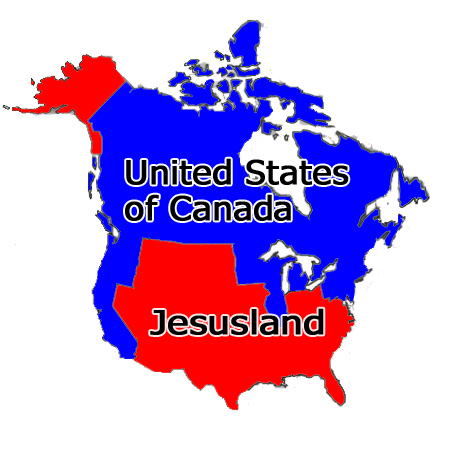
    In the liberal worldview, believers are bitter people clinging to guns and religion. They’re rubes and dupes who believe in an invisible sky wizard, and are to be made fun of at every chance with the Flying Spaghetti Monster. They just can’t help but feeling contempt for those inbred redneck freaks of Jesusland.

    There’s a double-standard liberals seem to apply when judging professions of faith: When they come from Republicans like George W. Bush or Sarah Palin, they’re a sign that they’re morons, when they come from Democrats like John Kerry or Barack Obama, they’re a sign they’re canny politicians. Democratic insiders just naturally assume than any expression of faith on behalf of a Democratic office-seeker is just for show, and they don’t really believe any of that God nonsense.

    Not all liberals have this contempt, but I suspect that it is the default attitude of those staffing liberal organizations and congressional offices: We, the enlightened few, must somehow find a way to dumb down our message about the wonders of Big Government enough so even those ignorant religious hicks can understand it. It’s hard to make your case to people who fill you with contempt. But more and more, contempt for people who don’t believe in the virtues of big government seem to be the only thing holding the left together. Well, that and divying up the spoils.

    Of course, not all believers are considered equal. Though the urban secular atheists who make up the core of modern liberalism theoretically have the same attitude toward all religious faiths, their true animosity is generally reserved for Christianity in general, and evangelicals and Catholics in particular. (Muslims are exempt for this contempt, due to the Religion of Peace™ now being at apex of Identity Politics Victimhood, and their tendency to decapitate critics seems to provide a powerful deterrent to liberal criticism.) After all, they’re the ones clinging so bitterly to guns and religion, and therefore thwarting liberal dreams election after election.

    Keep in mind that I myself am not a religious believer; as an agnostic, I have no God in this fight. But I’m a great believer in the social utility of religion.

    If liberals actually wanted to reach out to religious believers, they might want to start by substituting respect for naked contempt. How likely is that? Well, for an answer, you might look to the fable of the frog and the scorpion…

    Fast and Furious Update for December 8, 2011

    Thursday, December 8th, 2011

    Some cleaning-up after yesterday’s bombshell:

  • Holder stonewalls today on both fast and Furious and Elena Kagan’s role in ObamaCare.
  • Wisconsin Republican Rep. Jim Sensenbrenner suggests impeachment of administration officials involved with Fast and Furious. he’s right. Breaking the law in a way that results in the deaths of innocent Americas solely to justify a cynical political ploy is indeed an impeachable offense.
  • Say Uncle pointed out that the U.S. House of Representatives now has a Fast and Furious webpage. Including this handy PDF listing all the fast and Furious players, and this one listing the victims. A very good start, though this scandal begs for some sort of interactive web widget to follow all the threads of evidence…
  • Obama gives Holder the dreaded vote of confidence.
  • Sipsey Street also provides an email thread between former ATF head Kenneth Melson and former United States Attorney for the District of Arizona Dennis Burke on getting their Fast and Furious stories straight.
  • Also from Sipsey Street (really, if you’re only going to follow one source for Fast and Furious, it should be them) comes further news of Obama’s war on the ATF whistle-blowers.
  • Republicans House members to Holder: Heads must roll.
  • Update on the Coming Euro Collapse (and Our Own)

    Monday, June 6th, 2011

    Andrew Lilico in the Telegraph (via McArdle, via Insta) has a sobering look at what will happen when Greece defaults (“It is when, not if”). It starts out:

  • Every bank in Greece will instantly go insolvent.
  • The Greek government will nationalise every bank in Greece.
  • The Greek government will forbid withdrawals from Greek banks.

  • And then gets even less pleasant, including martial law and the European Central Bank going insolvent. The real European crisis hasn’t happened yet, and when it does, it will probably be much worse than the current U.S. recession.

    Meanwhile, Greeks continue to protest long-overdue austerity measures. I am doubtful Greece is willing to actually implement real austerity. After all, the Greek government only recently decided that it might want to stop paying pensions to the dead. instead of solving the problem of an out-of-control welfare state, the ECB and the IMF have decided to let Greek slip even further into debt in exchange for implementing reforms and austerity they’ve shown no signs at all of being willing to implement; in other words, to kick the can down the road and hope that gives the other PIGS time to get their respective houses in order before the Euro collapses.

    Meanwhile, Ireland’s crisis is so severe that not only are they going to start taxing private pension funds, they’re actually going to start fining trustees that don’t hand over pensioner’s money. “Threatening scheme trustees with huge fines that are not covered by trustee indemnity insurance if they refuse to or cannot collect the levy, is a guaranteed way to stop anyone coming forward to be a trustee. I expect the other consequence of the Finance Bill (no 2) 2011 will be the resignation, post-haste of hundreds of scheme trustees.”

    The chances that various transnational and euro bureaucrats will succeed in rescuing all the PIGS (and thus the Euro) is slim to none: “The ‘troika’ [ECB, IMF, EU] is doubling down on its losing bet in Greece and is playing with the dice loaded against them.”

    How bad is it going to get?

    Austerity is going to mean hellishly bad deflation, high and rising employment, and depression in the indebted countries.

    There is $600 trillion in derivatives now loose in the world. Who knows which banks have written them and to whom? Who are the counterparties? We did not fix this with the last political fix. The next crisis has the potential to be just as bad or worse than 2008, which is why I think Europe’s leaders are so dead set on avoiding a day of reckoning. If you look under the hood, as they most assuredly have, it must be frightening. And with pushback from voters?

    Contagion, thy name is Europe. And with the US economy slowing down, it might not take much to push us over the edge

    And that’s the best case scenario, the one where the PIGS actually bite the bullet and implement austerity. It’s entirely possible that one or more of them will reject austerity measures and, in doing so, set off a run on the Euro.

    Also via Insta comes news that China has divested itself of 97% of its holdings in Treasury Bills. As Mark Steyn has pointed out, where Greece is now is where Obama wants to take us, with ObamaCare as just the down-payment on a full-blown European welfare state. We’re not nearly as far along as Greece is to financial collapse, but our debt is already starting to look like a bad bet.

    Certainly we’re not so far along that we can’t turn back, but the Paul Ryan Roadmap is probably the minimum we need to be doing to get our debt under control. Less than that and we’re asking for serious trouble. It’s already looking like Carter era stagflation is here.

    As the recent Texas legislative session showed, it is in fact possible to actually shrink the size of government, not just slow the rate of increase. Or at least it’s possible when you have Republican Supermajorities in the House, Senate, and Executive branch. By contrast, the Obama administration and Harry Reid’s Senate have shown no sign of being willing to address the problem, or even to admit it exists. They too want to kick the can down the road and keep piling blocks of debt onto the backs of your children. But, as the Euro crises shows, such actions have a way of catching up with you sooner rather than later.

    You can only kick the can down the road so far before you run out of road.

    LinkSwarm for Wednesday, March 9, 2011

    Wednesday, March 9th, 2011

    It’s a busy week for me, so here are a few links to tide you over:

  • Wonder what a serious attempt at reducing the deficit looks like? It looks like this.
  • Thomas Sowell on Unions: “The biggest myth about labor unions is that unions are for the workers. Unions are for unions.”
  • The city of Bell, California, goes to the polls. Dwight has been all over the Bell corruption story.
  • ObamaCare’s vital signs start to fade.
  • “If NPR weren’t substantially left-leaning, Democrats wouldn’t be such huge fans of federal funding.”
  • California’s High Speed rail is a train wreck waiting to happen.
  • While you weren’t looking, the Utah legislature tried to sneak an illegal alien amnesty into law in the dead of night.