Here’s a short video on why the ruling Vietnamese Communist Party gave up on Communism. Short answer: It didn’t work.
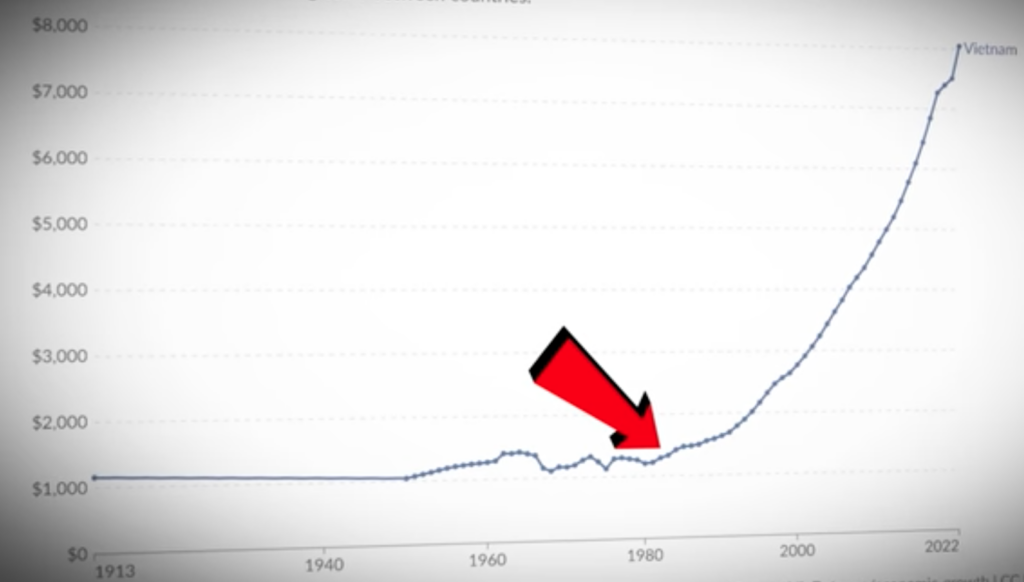
Capitalism works. Communism doesn’t.
It’s really that simple.

Lawrence Person's BattleSwarm Blog
Attacking so fast they won't know what hit them…
Here’s a short video on why the ruling Vietnamese Communist Party gave up on Communism. Short answer: It didn’t work.
Capitalism works. Communism doesn’t.
It’s really that simple.

It makes more sense when you look farther back and realize that the war in Vietnam started as a war of independence against the French. Ho Chie Minh first approached the United States for assistance and I’m not sure why we did not make France abandon their colonies while we were making England and the rest of Europe do so after WW2. The North Vietnamese were “Communist” because that was who was supporting them, they didn’t give a rip about International Socialism, they were Nationalists.
The opposite of communism isn’t capitalism. The opposite of communism is math.
Being in charge unopposed is the only non-negotiable platform plank of The Party.
So now they are a fascist state (I mean that with the true definition of the word, not the Democrat’s fascism-is-anything-I-don’t-like definition).
US feeling before, during and after WW2 was strongly anti-imperial, though we never get credit for it. We encouraged the Brits and the Dutch to grant independence to their colonies, and in general they did. But our policymakers feared that similar pressure applied to France might turn over the whole country to the Communists, especially given the peculiar circumstances of Algeria.
While Ho Chi Minh repeatedly approached the U.S. for diplomatic support in his efforts to gain Vietnamese independence from French colonial rule from 1919 through 1945, there is nothing I can find to indicate he suddenly had a revelation and only embraced Marxist ideology after his final 1945 appeal was met with dismissal.
Without that evidence, it is just as valid to view his appeals as similar to Castro’s false flag efforts to woo U.S. support against the Bautista regime in Cuba, which led to various “plucky freedom fighters” pieces in U.S. media until he decloaked as a full on Marxist dictatorship guy. It seems more likely Uncle Ho was a commie all along, but U.S. support sure would have been handy against the French, so he asked.
The war in Vietnam is more than 2,000 years old. Uncle Ho met members of the OSS Deer Team as nothing more than a courtesy. He was totally controlled by the Vietnam Communist Party, which was formed in 1920 by the Comintern. Ho Chi Minh (not his real name but I digress) wasn’t tricked into being a Stalinist; he was a Stalinist. And today’s VCP is headed 80-plus years later by a true Stalinist, name of To Lam.
I know you people hate to look things up, but you should try it.
73