Hunter Biden’s laptop takes another turn in the news cycle, Democrat-connected sex offenders are popping up everywhere, a killer camel, and the return of Florida Man. It’s the Friday LinkSwarm!
And virtual no Russo-Ukrainian War news, since I did that yesterday.
I would say that everyone outside of the Democratic Media Complex knew that two years ago, but of course, more than half the Democratic Media Complex knew that as well and simply lied about it to get Biden elected.
Got to say this treat aged pretty well.
1. The Hunter Biden laptop story was true. 2. The story implicated Joe Biden in global pay-for-play graft from countries like Russia, China and Ukraine. 3. The #DemocraticMediaComplex suppressed the story because they wanted Biden to win.
The Mexican border city of Nuevo Laredo has been transformed into a warzone after the arrest of a top cartel boss. Burning vehicles littered the streets, and heavy gunfighting was reported causing the U.S. consulate to go on lockdown and the U.S. border crossing to be temporarily shut down on Monday.
The chaos erupted late Sunday when Juan Gerardo Trevino, or “El Huevo,” the leader of one faction of the Northeast Cartel, the successor group to the Zetas Cartel, was arrested. He is also a U.S. citizen, a Mexican government official told Reuters. Trevino is on the U.S. Customs and Border Protection’s (CBP) list of most wanted cartel members.
Trevino faces a U.S. extradition order for drug trafficking and money laundering.
In response to the arrest, cartel members hijacked and burned vehicles and attacked law enforcement and military personnel.
“During the night of Sunday, there were shootings, burning of trucks, and a grenade attack on the U.S. consulate,” Mexican newspaper El Occidental said.
On Monday, Nuevo Laredo Mayor Carmen Lilia Canturosas warned citizens in the border town to take cover.
The woke want to destroy science. “The giant plan to track diversity in research journals. Efforts to chart and reduce bias in scholarly publishing will ask authors, reviewers and editors to disclose their race or ethnicity.” Translation: Science is not sufficiently biased in favor of our political goals.
According to the latest Winston Group poll, voters still believe Democrats want to defund the police by a 48%-34% margin.
“In terms of what is the position of the Democratic Party, voters tend to believe that Democrats want to defund the police, ” pollsters David Winston and Myra Miller explain. “Among groups outside the Democratic Party, Hispanics believe this is what Democrats want (49%-32%), as do suburban voters (45%-36%). Independents believe this slightly at 41%-33%, but especially conservative independents (61%-20%).”
Despite the efforts to distance themselves from the movement, some in the Democratic Party still openly support defunding the police, which means that the public will continue to believe Democrats still embrace the radical Black Lives Matter. movement, not police.
Federal Reserve raises interest rates .25%, bringing it to .5%. Remember, in order to kill the last bout of inflation, Paul Volker hiked rates up to 20%. There’s a lot more pain ahead…and given the huge amount of quantitative easing centrals banks have done, and the extensive budget deficits most of the governments in the developed world are running, 20% may not be enough.
Researcher Kyle Becker produced in-depth, acclaimed portrait of just how much money Anthony Fauci was making. Result: Forbes fired him. (Hat tip: 357 Magnum.)
The electorate is increasingly pessimistic about the direction in which President Biden and Democrats are steering the country and feel that the party’s priorities do not align with their own.”
What’s the solution?
The pollsters advise that if Democrats want to have “a fighting chance in the midterms – as well as a shot at holding on to the presidency in 2024,” that they need to embark on a “broader course correction back to the center,” and show voters that they are focused on solving quality-of-life issues.
In short, Democrats need to reject their progressive wing and its embrace of big government spending and identity politics.
Indeed, a majority of voters (54 percent) — including 56 percent of independents — explicitly say that they want Biden and Democrats to move closer to the center and embrace more moderate policies versus embracing more liberal policies (18 percent) or staying where they are politically (13 percent).
Most voters (61 percent) also agree that Biden and Democrats are “out of touch with hardworking Americans” and “have been so focused on catering to the far-left wing of the party that they’re ignoring Americans’ day to day concerns” such as “rising prices” and “combatting violent crime.” -The Hill
The top issue for voters is inflation – which sits at its highest level in 40 years – according to 51% of respondents, followed by the economy and job creation (32%). Yet, just 16% of voters believe the economy is Biden’s main focus, and trust Republicans over Democrats to manage it (47% vs. 41%) and control inflation (48% vs. 36%).
Voters also see Biden and Democrats as weak on crime (56%) – perhaps due to four years of Democrats pushing ‘defund the police’ under Trump, while our sitting Vice President raised bail money for BLM rioters.
Speaking of groomers: “Clinton-Connected Haiti Pastor Indicted For Child Sexual Abuse & Assault…The United States is charging pastor Corrigan Clay with child sex abuse after “engaging in illicit sexual conduct” with a Haitian orphan he adopted…Corrigan is the co-founder of the non-profit charity “Apparent Project”, which is a Clinton-connected group selling jewelry, clothing and art made by Haitian orphans.”
Speaking of Democrats being soft on sex offenders, Missouri Republican Senator Josh Hawley uncovers why Biden Supreme Court nominee Judge Ketanji Brown Jackson deserves to be rejected:
Judge Jackson has a pattern of letting child porn offenders off the hook for their appalling crimes, both as a judge and as a policymaker. She’s been advocating for it since law school. This goes beyond “soft on crime.” I’m concerned that this a record that endangers our children
With the Nickel market shuttered after a Chinese stainless steel tycoon was caught with a historic, potentially fatal $8 billion margin call hanging over its head, today the London Metal Exchange announced that it will reopen its nickel market on Wednesday, more than a week after it was closed last Monday, after the Chinese company at the center of the epic short squeeze was bailed out by a consortium of banks led by JPMorgan which is also the largest counterparty to the short (for a detailed breakdown read “The 18 Minutes of Trading Chaos That Broke the Nickel Market”) .
Trading in nickel will resume after Xiang Guangda, whose massive short position equivalent to approximately 150,000 tons of nickel, sent shockwaves across the commodity market last week, announced a standstill with his banks to avoid further margin calls as Bloomberg first reported earlier. Xiang’s Tsingshan Group had been in discussions with banks led by JPMorgan about a loan facility to backstop his short position and said Monday that talks on the funding would continue during the standstill period. As a reminder, Xiang is JPMorgan’s largest counterparty, and owes Jamie Dimon several billion, money which the largest US bank would not receive unless it bailed out the Chinese firm.
If you owe the bank $100,000, you have a problem. If you owe the bank $8 billion, the bank has a problem…
Category: Extremely unexpected horrifying headlines: Petting zoo camel kills two. Not in the zoo, fortunately, as Humpy had busted out of the joint and was on the lam… (Hat tip: Dwight.)
Joe Manchin, controlling the border, and Soros-backed DA’s doing their best to bring back the high crime rates of the 1970s top this Friday’s LinkSwarm:
Seems like this should be a bigger story than it is: Mexico just had it’s midterm elections. But that’s not the big part: “97 politicians had been assassinated. Along with almost a thousand being attacked in some way, shape, or form. Just in this election cycle!”
West Virginia Democratic Senator Joe Manchin says that he will refuse to vote for the Democratic Voter Fraud Enablement Act of 2021. “I believe that partisan voting legislation will destroy the already weakening binds of our democracy, and for that reason, I will vote against the For The People Act.”
Senator Joe Manchin (D-W.V.) will oppose the Democratic Party’s legislation that would federalize elections, the For the People Act, citing the bill’s overtly partisan nature.
Manchin declared his position in an op-ed in the Charleston Gazette-Mail. According to Manchin, “voting and election reform that is done in a partisan manner will all but ensure partisan divisions continue to deepen.”
“I believe that partisan voting legislation will destroy the already weakening binds of our democracy, and for that reason, I will vote against the For the People Act,” Manchin wrote.
Manchin also laid to rest the possibility he would ever support ending the filibuster.
“Furthermore, I will not vote to weaken or eliminate the filibuster,” he said. “For as long as I have the privilege of being your U.S. senator, I will fight to represent the people of West Virginia, to seek bipartisan compromise no matter how difficult and to develop the political bonds that end divisions and help unite the country we love.”
Manchin is thwarting The Will of The Party, so naturally Jemele Hill is calling him a racist.
Remember how Democrats were sure Hispanics would usher them into permanent majority status? Not in Texas:
Republicans swept key races for mayor in Texas on Saturday, setting back Democratic hopes that the state’s urban areas will deliver statewide majorities for them in the future. Most shocking: In McAllen, Texas, a border city of 150,000 people of which 85 percent are Hispanic, Republicans elected their first mayor since 1997.
Other cities with strong Hispanic populations also elected Republicans to replace retiring mayors. Fort Worth is the twelfth-largest city in the country and has more than 1 million people. Only a third of them are Anglo. But 37-year-old Republican Mattie Parker easily defeated Democrat Deborah Peoples, becoming the youngest mayor of a major Texas city.
The race was ostensibly nonpartisan, but the divisions were clear.
“We’ve never had a race that was this partisan,” Kenneth Barr, the former Democratic mayor of Fort Worth, told Politico. “This particular election has moved as far in the partisan direction as any we’ve ever had.”
Voters also elected Republican Jim Ross as mayor of Arlington, a suburb of 400,000 people that borders Fort Worth and is only 39 percent Anglo. Ross, a former Arlington police officer, was endorsed by several police associations who liked his anti-crime platform. He defeated Michael Glaspie, a former city-council member who was endorsed by the Dallas Morning News and leading Democratic politicians.
But it was the victory of Javier Villalobos in the overwhelmingly Democratic Rio Grande Valley bordering Mexico that shook political observers.
Villalobos, a former chairman of the Hidalgo County Republican Party, defeated Democrat Veronica Vega Whitacre, a fellow McAllen city council member, to become mayor. He campaigned as a conservative and said he wanted to cut water and sewage fees. He called for compassion for undocumented migrants but said the safety of local citizens had to be the first concern. His supporters questioned Whitacre’s wooly-headed claim that if migrants were flowing the other way, toward Mexico, they would be treated with as much compassion by Mexican authorities.
Whitacre’s loss was only the latest sign for Democrats that the Rio Grande Valley is slipping away from them. Biden won the region by 15 points last November, a far cry from Hillary Clinton’s 39-point margin in 2016. At the same time, Congressman Vicente Gonzalez won reelection by only 51 percent to 48 percent over Republican Monica De La Cruz-Hernandez in a district Democrats always carry.
“Democrats have a big problem in Texas,” Rio Grande Valley congressman Filemon Vela told the Texas Tribune in January, shortly after he became vice chairman of the Democratic National Committee. “For the first time in generations, or maybe ever, we lost . . . South Texas counties with significant Hispanic populations,” he said. “And we are going to have to . . . wrap our arms around exactly why that happened. It may be a difficult issue to reconcile.”
It’s not at all difficult to reconcile: The modern Democratic Party’s core policies of racist social justice, anti-police, soft-on-crime and pro-illegal alien are anathema to ordinary middle class Hispanic American citizens. Your ideas are unpopular and you’ll continue to lose as long as you let the radical social justice warriors set the agenda for the party.
Speaking of illegal aliens, the Supreme Court issued a unanimous decision that those who entered the country illegally and were allowed to stay for humanitarian reasons are not allowed to apply for a green card. Also note the Justice Elana Kagan-penned decision makes no mention whatsoever of the “undocumented.” She refers to them, using the standard statutory language, as “aliens.”
The city of Los Angeles saw a sharp 36 percent increase in homicides in 2020—but the L.A. County sheriff said this year is looking even more grim, and he’s blaming the widespread uptick in crime on District Attorney George Gascón.
“In 2021, that 36 percent has now become 92 percent, which is a huge statistical jump,” Sheriff Alex Villanueva told The Epoch Times.
“We’re seeing increases in all the categories – assault with a deadly weapon, arson, rape… these things are continuing upward unabated.”
The widespread uptick in crime is the direct result of Gascón’s election as DA of L.A. County and his failure to prosecute offenses, according to Villanueva. Since Gascón took office, 2,690 cases—about 30 percent—“that normally would have gone through were rejected,” he said.
While Gascón has defended his reform policies, criminals in prison are toasting the DA to celebrate their early release, according to officials—and the sheriff said the DA’s policies are making it more difficult for him to do his job.
“You’re supposed to have a district attorney who represents the people … but [he’s] acting like a public defender,” Villanueva said.
“There’s no one left representing the people. I need to work in partnership with the person who’s representing the people. I don’t have that right now.”
Speaking of Gascón: “Double murderer approved for parole at third hearing; prosecutors barred from attending under Gascón’s reform.” “Howard Elwin Jones has been imprisoned at San Quentin state prison since 1991 for the December 1988 shooting and killing of 18-year-old Chris Baker and another boy at a party in Rowland Heights.” It appears that there’s nothing Soros-backed DAs enjoy more than putting violent, dangerous felons back on the street.
It comes as no surprise to readers that dozens of Baltimore City businesses, located in the Inner Harbor, in a stretch called “Fells Point,” are threatening the new city government, run by Mayor Brandon Scott, with not paying their taxes because they’re “fed up and frustrated” with the outburst of violence.
In a letter titled “Letter to City Leaders From Fells Point Business Leaders,” addressed to Mayor Brandon Scott, Council President Nick Mosby, Councilman Zeke Cohen, Madam State’s Attorney Marilyn Mosby, and Commissioner Michael Harrison, the 37 restaurants and small businesses are threatening to stop paying city taxes and other fees until “basic and essential municipal services are restored.”
What’s happening in Fells Point, known for its hipster pubs and taverns, as well as delicious seafood from the Chesapeake Bay, is experiencing an overflow of violent crime from other troubled areas.
The letter comes after three men were shot in Fells Point over the weekend.
“What is happening in our front yard — the chaos and lawlessness that escalated this weekend into another night of tragic, unspeakable gun violence — has been going on for far too long,” said the letter.
The 37 businesses are planning to place their city taxes in an “escrow account” and released them until these demands are satisfied:
Pick up the trash
Enforce traffic and parking laws through tickets and towing
Stop illegal open-air alcohol and drug sales
Empower police to responsibly do their job
The letter continued to say that minor crime that police “ignore” is what is contributing to more violent crime. So Marilyn Mosby’s halt on prosecuting petty crimes appears to be backfiring.
You don’t say. Baltimore has had a problem with open-air drug markets for over three decades. And the last Republican mayor left office in 1967…
“DeSantis Signs Bills Combatting Chinese Communist Party’s Influence In US.””The first bill is intended to safeguard public institutions from ‘undue foreign influence,’ DeSantis said at a press conference, noting that the bill will prohibit ‘agreements between public entities and the Communist Party of China or Cuba or any of these malignant forces.’ The second bill criminalizes theft and trafficking trade secrets under Florida state law.” If Trump doesn’t run again in 2024, right now DeSantis would be the early favorite for the GOP nomination.
More words from the man in question:
The reasons are clear ― Florida is successful because we are OPEN and let Floridians make decisions that are best for them. Florida’s budget has $10 billion in reserve because Florida chose Freedom over Faucism. pic.twitter.com/tEzMRH6U6k
Own any of the estimated 40 million guns in America with a pistol brace? Congratulations! The Biden Administration wants to make you a felon.
“Today’s proposed rulemaking on pistol-braced firearms represents a gross abuse of executive authority,” said Aidan Johnston, Director of Federal Affairs for Gun Owners of America, in a statement.
[Pistol brace inventor Alex] Bosco said the rule would outlaw the vast majority of braces on the market and read like it was “reverse-engineered to make braces illegal.” He called it “arbitrary and capricious.”
How’s that socialized medicine working out for you, UK? “Hospital waiting list tops 5m in England.”
Old and busted: Young families buying homes. The new hotness: Pension funds buying homes. “The consulting firm found Houston to be a favorite haunt of investors who have lately accounted for 24% of home purchases there.”
The Kung Flu lockdowns were a war on the working class:
They are lying to you b/c they think you're too stupid to notice what is happening right in front of you pic.twitter.com/PoeTw1tXaE
Andrew Cuomo’s little brother is a continuous embarrassment to the cable-news network that employs him. So why does he still have a job?
At this point in the proceedings, one is tempted to conclude that Chris Cuomo must have laced CNN’s corporate offices with dynamite and informed the powers that be that, if he goes, they go, too. What else could explain the network’s eternal tolerance for being embarrassed and degraded by the man? Here, at the tail end of his long experiment in deficiency, Cuomo resembles nothing more keenly than the inadequate tee-baller who gets to stay in past eight or nine strikes because his uncle coaches the team. His ratings are poor. His insights are vacuous. His conduct is a permanent source of ignominy. All the perfumes of Albany could not sweeten this little man. “What’s in a name?” inquired Shakespeare. Little did he know.
It is unclear why Cuomo was selected by CNN to begin with. He’s a lawyer who knows nothing of the law; a journalist who knows nothing of journalism; an American who knows nothing of America. His temper is third-rate, his interests are bewilderingly narrow, he possesses no discernible sense of shame or self-knowledge, and the opinions he proffers are so ruthlessly subordinated to expedience that hypocrisy is his default mode. Ralph Waldo Emerson’s maxim that “a foolish consistency is the hobgoblin of little minds” was meant as an extolment of the virtues of personal growth. Cuomo seems to have taken it literally.
On no single topic has the man’s unique set of professional and personal shortcomings been more obvious than COVID-19. In April of last year, Cuomo’s attempt to fake a two-week quarantine was ruined by his failure to remember that, just a week earlier, he had admitted on the radio that he had left the house to visit a property he owns in East Hampton and gotten into an argument with a stranger. And yet, rather than demote him for telling such a galling and obvious lie, CNN encouraged him to inject his peculiar brand of mendacity into a series of interviews with his own brother. Thus it was that while Governor Andrew Cuomo of New York was making the single worst mistake of the entire coronavirus crisis — herding the elderly into nursing homes and then covering up the death toll — Television Host Chris Cuomo of New York was using America’s most famous cable-news channel to portray him as a national hero. What America needed last year was a dispassionate examination of Andrew Cuomo’s official messaging. What America got was a smirking nepotist brandishing a comedy-sized nasal swab and tweeting obsequious fluff about his sibling. New York, Chris Cuomo concluded, was “doing way better than what we see elsewhere & no way that happens without the Luv Guv dishing the real 24/7.” In exchange, the “Luv Guv” dealt Chris in on a series of private, government-funded COVID tests that were unavailable to everybody else.
Watching Chris Cuomo work is a little like watching a man jump out of an airplane without a parachute and then become irrationally angry at those who tell him he’s going to die.
Speaking of CNN, they also brought back Jeffrey “lubin his” Toobin. Proving yet again that the the Democratic Media Complex will alwaqys refuse to apply its rules to their own.
The snowflakes at Worldcon are having a very bad weekend. On Friday, the San Francisco chapter of Worldcon settled a lawsuit and agreed to pay restitution and to issue a public apology for banning conservative author Jon Del Arroz from their convention in 2018 and for besmirching him as a “racist.” Del Arroz is the most dangerous Hispanic voice in science fiction because he refuses to back down in the face of political bullies. He has also written an amazing series, The Saga of the Nano Templar, that my teen daughter is reading for the second time—that’s how good it is—and I don’t have to worry about garbage culture or leftist politics sullying her mind. The Adventures of Baron Von Monacle, a steampunk series, is also highly entertaining. (Always support freedom-loving artists!)
At the time of the banning, Del Arroz was under serious mob attack from social justice warriors trying to drive him out of the sci-fi community. SJWs even sent a spring-loaded exploding can of penis-shaped glitter to his home, which scared his wife and children. The ban came about when Del Arroz asked Worldcon for security measures because he feared for his safety due to the mob-like attacks on him and his family from industry insiders. Instead of helping him, Worldcon banned him and made public statements claiming the author was a “racist” and a “bully,” with no substantiated evidence to back those statements up. I’ve known Del Arroz personally for many years. He is a devout and kind man with a good sense of humor and a love of the art of the troll. He is not vicious, but provocative in a way that is necessary for freedom of speech to be preserved. He’s the one brave enough to exercise the First Amendment in ways that ensure we will keep it. We all need people like Del Arroz in the fight to preserve liberty.
Now we only need about a hundred such lawsuits to force institutional science fiction to regain its sanity… (Hat tip: Stephen Green at Instapundit.)
Not-so-much news: Gun control bill fails. News: In California.
For all the disappointments of the Texas 87th legislature’s regular session, a number of pro Second Amendment bills were passed.
Texas Supreme Court Justice Eva Guzman resigns, said to be interested in running for Attorney General against incumbent Ken Paxton and George P. Bush.
This is probably the wrong Eva to use as clip art here.
French France’s Emmanuel Macron Urges G-7 To Sell Gold Reserves To Fund Bailout For Africa. I imagine that the other G-7 members responses to this proposal ranged from “Are you high?” to “Die in a fire.” (Plus an “Is Matlock on yet?” from Biden.)
Demolition Ranch’s Matt Carriker has his truck broken into while he was in San Antonio. The Democratic Party’s soft-on-crime stances just keep reaping their rewards…
“How to Protect Your Shopping Trolley From Improvised Explosives.” However, I feel compelled to point out a technical error: The Trophy active protection system is not yet available on the British Challenger tank, making it deeply unlikely that the system would be made available for a Tesco shopping cart.
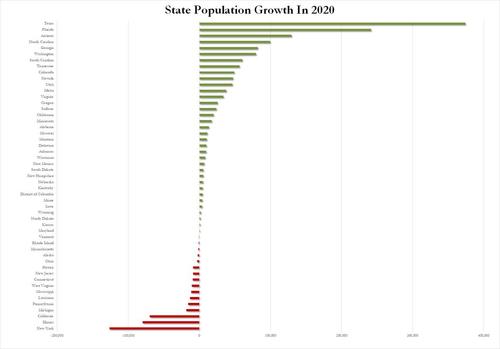
Florida and Texas gained House seats while California and New York lost one seat each as a result of population shifts, according to the 2020 census results announced on Monday.
Texas gained two House seats in the census apportionment for a new total of 38 congressional districts, while Florida gained one House seat, bringing its total number of districts to 28. California lost one House seat and will decline to 52 congressional districts, while New York also lost one House seat and will now have 26 congressional districts. Those four states are the nation’s most populous and together provide one-third of the House’s total seats.
A census official noted that if New York had counted 89 more people, the state would not have lost a House seat.
Too bad Andrew Cuomo killed off all those old people before they could be counted.
The population of California stopped growing several years before the coronavirus pandemic, and in 2020 the state lost more residents to outmigration than it gained. Residents have migrated to Texas as well as to neighboring states such as Arizona, Nevada, and Oregon.
Once again, blue states lost population and red states gained population. People flee Democratic governance and its symptomatic poverty, high taxes, crime and disorder. It’s also the first time California has lost a congressional seat ever.
With two new congressional seats to play with, how will Texas Republicans approach redistricting? I am very far indeed from a redistricting guru, but I have a few educated guesses about how they’ll approach things:
Obviously, they’ll try to carve out two more Republican districts, but that may prove difficult. Expect a new Metroplex-area suburban/exurban Republican majority district, but don’t be surprised if they have to create another Hispanic majority district for Democrats somewhere.
The next-highest priority has to be taking back the two seats lost in 2018, AKA The Year of Beto. Both the 7th (John Culberson losing to Lizzie Fletcher) and the 32nd (Pete Sessions losing to Collin Allred) were typical sleepwalking incumbents caught by end of election cycle demographic shifts, but there’s no reason those districts can’t be redrawn to make them Republican majority districts again. Republican challenger Wesley Hunt only lost by 3% in the 7th in 2020. (Sessions carpetbagged his way into the Waco-based 17th.)
Next up would be protecting Republican incumbents whose current districts are starting to get purple. To that end, I would guess that the 2nd District, with Dan Crenshaw, a rising national star regarded as a solid team player (as newly minted congressmen Beth Van Duyne and August Pfluger can attest) in a district that’s only R+5, would be the top candidate for shoring up. Van Duyne’s 24th (R+2) and Chip Roy’s 21st (R+5) would be next. John Carter’s 31st (R+6) is starting to get purple as well, but since he’s 79, he may not get as much consideration as other incumbents. Michael McCaul’s 10th (R+5) would be another candidate, but as one of the richest incumbents, there might be sentiment that he can stand fast without much additional help. Van Taylor’s 3rd (R+6) looks like a candidate on paper, but neither he nor previous Republican incumbent Sam Johnson ever won by less than 10 points.
A separate issue than the above, due to different dynamics, is what to do about the 23rd. The only true swing district in Texas over the last decade is currently held by Republican Tony Gonzalez, who defeated Democrat Gina Ortiz Jones by 4% in 2020. Despite having a giant target on his back every time, Republican Will Hurd held the seat for three cycles before retiring despite never breaking 50%. The fate of the 23rd is highly dependent on whether they decide to carve out another majority Hispanic Democratic district for San Antonio, or whether they want to…
Make a play for the Rio Grande Valley? One of the more surprising results of 2020 was that Republicans made significant inroads into the Valley, including President Donald Trump winning Democrat Henry Cueller’s 28th outright. Part of this is due to Trump’s increasing popularity among Hispanics, but the Texas Republican Party has been pouring significant resources into the Valley. Combined with Biden’s border crisis, all this adds up to an opportunity to pick up one or more seats through redistricting. Michael Cloud’s adjacent 27th is looking pretty safe, so the temptation will be to turn one or more of the 28th, Vicente Gonzalez’s 15th (D+3) and/or Filemon Vela Jr.’s 34th (D+5) into competitive swing districts.
Another issue will be what the hell to do with Austin, the blue tumor in the heart of red Texas. One driving rationale for the shape of the 35th district (running from Austin down I-35 to San Antonio) was trying to knock off Democratic incumbent Lloyd Doggett by forcing him to face off against a San Antonio-based Hispanic Democrat. That failed, and Doggett won handily. It’s going to be mighty tempting for Republicans to throw in the towel and fashion a liberal urban core district for Austin to free up redder suburban areas to shore up Republican incumbents.
I can see one approach solution that solves a lot of those problems: an urban Austin district, a new majority Hispanic district near San Antonio, and a new majority Hispanic district huddling the Rio Grande Valley, reinforcing the 23rd and turning two of the 15th, 28th and 34th into majority Republican districts. But the fact it is obvious means that it probably won’t come to pass, with the likely result a more sophisticated (i.e., gerrymandered) solution.
After a long hiatus, the Texas vs. California update is back!
The update, focusing on news about the two biggest states in the union, and contrasting the the red and blue state models of governance for each, was a regular staple of the blog a few years ago, but as I got busy I fell behind, and the links kept piling up. As a result, this update is extra huge and some of the news here is very old indeed, with some links dating back to 2017. Recently I’ve been updating and triaging so I can finally publish this. I’ve tried to put the newest and most important stories at the top, but there is stil some old news of note further down.
According to a new U.S. Census Bureau report, of the 15 fastest-growing cities larger than 50,000 people, seven are in Texas including the top three: Frisco, New Braunfels, and Pflugerville. Frisco’s growth rate was 8.2 percent, some 11 times faster than the national rate of 0.7 percent.
Of the cities with the greatest population gain from July 1, 2016 to July 1, 2017, San Antonio, Texas, took the prize, adding some 66 people every day. Texas had the most cities in the top 15 of this category as well with five making the list and three of the top five overall in addition to San Antonio: Dallas, Fort Worth, Frisco, and Austin.
San Antonio now has more than 1.5 million people and ranks as the nation’s seventh-largest city, just behind Philadelphia. Fort Worth, meanwhile, knocked Indianapolis, Ind., out of the top-15 with a population of 874,168. Houston is America’s fourth-largest city and is also the most diverse large city in the nation.
In a stunning procession in December, California lost the leadership of three iconic firms — Hewlett Packard Enterprise, Oracle and Tesla — all to Texas, which this year even took the Rose Bowl’s place in hosting the college football playoff. In addition, many California tech firms, including Uber and Lyft, as well as Apple, have been shifting jobs outside the state.
This has been widely described as California’s “tech exodus.” Though it’s still less than a torrent and more a steady, long-term drip, it augurs some very bad trends. In recent years, California has been losing market share of innovative industries compared with 11 states with high concentrations of innovation-oriented firms, according to research by Ken Murphy, a professor at UC Irvine’s business school.
Since 2005, California’s share of the number of firms in the innovation sector (composed of 13 of the nation’s highest-tech, highest R&D advanced industries) has shrunk while competitors like Florida, Oregon, Arizona and Utah have expanded their share slightly.
The pandemic-induced push to move work online could hasten this shift. With 2 out of 3 tech workers willing to leave the Bay Area if they could work remotely, Big Tech could readily spread talent and wealth to other states.
Increasingly, California’s cities must compete with metro areas in Texas, Tennessee and even parts of the Midwest. Housing prices are a particularly critical concern: California has all three of the most unaffordable metro regions for first-time home buyers, according to a recent AEI survey, and six of the top 10. The flow of tech workers during the pandemic has gone to places like Phoenix, Dallas-Fort Worth and Raleigh, N.C., and away from big coastal cities with higher living costs.
Software-based tech companies can access knowledge workers outside California, and often at lower costs. At the same time, states like Texas and Arizona have been sought to replicate the California formula for tech industry growth — public university expansion, more suburban housing and public investment in downtowns, all meant to appeal to workers and their bosses.
Snip.
But more recently, as the tech industry becomes more virtual and services-based, the companies’ workforces have less of a need to all be in one place. While these companies create vast wealth for a relatively small group of people, this is not a formula for broad-based economic prosperity.
In contrast to the old Silicon Valley, the Bay Area has become “a region of segregated innovation,” as described by CityLab, where the upper class waxes, the middle class wanes, and the poor live in poverty that is unshakable.
The state leadership’s cavalier response when major employers depart is to assume that California will continue to create new businesses to replace the high-paying jobs lost.
Yes, venture capital is piling into tech startups, driven by the low cost of money and pandemic disruption, and the state is expecting $26 billion more in revenue this year in part because of the roaring initial public offering market. But brushing off recent departures as part of a routine industrial cycle is naive and allows politicians to avoid making choices that would keep entrepreneurs, their businesses and good jobs in California.
California already has the nation’s highest income tax, with the top marginal tax rate at 13.3%. A new proposal, Assembly Bill 1253, would add three new tiers of surcharges on people earning $1 million a year and above. Lawmakers also introduced Assembly Bill 2088, which would apply a 0.4% wealth tax on net worth above $30 million. Neither bill passed the Legislature last month, but both may come back in the new legislative session.
Tech companies may be adept at avoiding taxes, but their top managers, investors and most skilled employees could see these measures as more reasons to leave — particularly when competing states like Texas, Tennessee, Nevada and Florida have zero state income taxes.
Another law, Assembly Bill 5, which limits contract employees, could prove damaging to small startup business that cannot afford many full-time workers. And for some industries, particularly those involved in energy-intensive industries like cloud computing and advanced manufacturing, California’s energy prices — one of the highest in the continental U.S. and double the cost in places like Texas — are another incentive to move commercial activities elsewhere.
As the catastrophic state of California’s finances finally begins to set in among politicians, anti-tech media personalities, and far left cultural influencers, the narrative on California’s techxodus — that is, the migration of California’s technology industry out of the state — has shifted from mockery, and “we’ll be better off without you,” to a far more sober, and increasingly-desperate “leaving California is immoral.”
As it is simply too embarrassing for politicians to admit the state needs the technology industry after more than a decade of antagonizing the men and women who built it, and as it is political suicide for incumbent politicians in a one-party state to admit that every one of the problems we’re facing has been created by our elected leaders, a moral argument for tech’s responsibility to California, and specifically the Bay Area, has recently been produced. It goes something like this: young ambitious people moved to the state, and struck gold. But rather than “give back” to the land, they’re leaving with resources they “took” from the region. Like the milkshake guy from There Will Be Blood, sucking oil from the earth. Like the evil army people from Avatar, and their unquenchable thirst for unobtanium.
Snip.
The thing I like least about the folks who leave SF + Silicon Valley for Texas and Miami and wherever else is the crapping on the place they left *after* they've extracted all they can from it.
The Bay Area helped you build your immense wealth and that's the thanks it gets. smh.
“Extracted,” she says. Smh. A week or so later, in the psychotic San Francisco Board meeting where our local representatives voted 10 to 1 to officially condemn Mark Zuckerberg for donating 75 million dollars to a hospital (really, this happened), the word came up again. When the floor was opened to the public, an activist downplayed what was, as Teddy Schleifer reports, “the largest single private gift to a public hospital ever,” and accused Zuckerberg of “extraction.” Our local politicians did not think this strange.
Snip.
I take extreme issue with the notion that industry leaders have taken something from the “community,” defined here as the “talent,” the “incubators,” and the “mentors.” This is precisely the opposite of reality. The men and women leaving are the talent, they have started the incubators, they have built the companies, they have funded the startup ecosystem, and they have mentored countless young people. This is the “network.” They are the network. Technology workers do not “extract” value from the region, they are what makes the region valuable.
California is beautiful — San Francisco is truly, I think, one of the most beautiful cities in the world — but the soil isn’t made of magic, there’s no such thing as digging for microcode, and the Bay Area’s nativist, anti-immigration political climate has certainly not created the tech community, which is populated largely by immigrants, be they from out of the state or out of the country.
Among many things, including talent, opportunity, and soft power, the technology industry has brought tremendous tax revenue to the Bay Area. The budget of San Francisco literally doubled this decade, from around six billion to over twelve billion dollars. With our government’s incredible, historic abundance of wealth, the Board of Supervisors has presided over: a dramatic increase in homelessness, drug abuse, crime — now including home invasion — and a crippling cost of living that can be directly ascribed to the local landed gentry’s obsession with blocking new construction. This latter piece is important, as it appears to be the only thing our Board cares about. This is because significantly increasing the local housing supply would decrease the value of the multi-million dollar homes almost every single one of our Supervisors owns, and we could never have that.
These past ten years I often wondered where the city’s money went. Could the leadership really be this stupid, or was there corruption? Turns out both. We’ve recently discovered our politicians are literally criminals, but they’re also bad at crime.
Snip.
The Bay Area housing, homeless, and drug crises are all exacerbated by the state government, which is as incapable of managing its finances as it is incapable of managing its public land; we are now teetering on the edge of true financial ruin in a state of endemic, constant wildfire. But let’s take a closer look at this issue of money. On one hand we have insane, nativist property tax codes, which punish new homeowners at the expense of longtime landlords, and on the other our income taxes have skyrocketed. Since income taxes are structured progressively, the state has backed itself into a position of extreme uncertainty, as the top one percent of earners pay half the state’s taxes — while politicians argue the state’s wealthiest men and women, who already pay more in taxes than the wealthiest men and women of any other state and most free countries in the world, are not paying their “fair share.” As if rudimentary economic threats were not enough, politicians have made cultural platforms of their anti-technology, anti-industry attitudes, and have done everything in their power to drive our top one percent of earners out of the state. In this, our politicians are succeeding.
Such success in driving top earners from the state only further exacerbates the state’s political disasters, with our government of bloated, corrupt services now starving for income. This has in turn increased the political appetite for all manner of draconian, anti-business practices among politicians with no apparent ability to conceive of the second order effects of their legislation, a deficiency in basic intelligence that led, for example, to the unmitigated disaster that was AB5. In other words, everything is structured to further deteriorate.
Beleaguered San Francisco restaurants are struggling with a recent citywide rise in burglaries, including a slew of brazen break-ins at popular restaurants between the Thanksgiving and Christmas holidays. It’s a situation many restaurant owners say is exacerbating an already bleak outlook for the local food scene.
San Francisco Police Department data shows burglaries in the city climbed from 4,918 reported incidents a year ago to 7,248 as of Dec. 27. The data does not specifically show how many restaurants have been affected, but the rise in burglaries is reflected in the stories being told by business owners in interviews and on social media. It’s a hard reality for local restaurants that have now gone almost 10 months with diminished revenue, forced hibernation periods, and only occasional approval for indoor and outdoor dining service.
In mid-December alone, San Francisco’s nostalgic Toy Boat Dessert Cafe posted on Instagram about having had its door kicked in during an attempted burglary. Also in the Richmond District, Cassava took to social media to post about losing roughly $3,000 worth of equipment, including iPads, after a break-in. And Epic Steak and Waterbar on the Embarcadero each lost a similar amount when thieves stole alcohol and damaged property.
Owners say the shelter-in-place order provides thieves with opportunities to break into businesses. Streets are empty because people are staying home. The ghost-town effect is increased as a growing number of restaurants and other businesses are either permanently or temporarily closed. The break-ins are all the more painful when restaurants aren’t even bringing in income to cover the cost to repair or replace stolen or damaged items.
Speaking of government officials being stupid crooks: “SF City Administrator Naomi Kelly Resigns Over Bribery Allegations. Husband Harlan Kelly, SF PUC Manager, had been arrested after accepting international trips, vacation to China, meals, jewelry, and personal car services.” As with the Biden clan, graft, corruption and shady links to China all seem to be part of the family trade for Democratic power families…
How California’s catch and release approach to crime kills.
Jerry Lyons, 31, had spent his entire adult life committing crimes. He had dozens of arrests in California — attempted robbery, burglary, evading police, driving a stolen vehicle, weapons charges, drug charges, shoplifting, trespassing, etc. — but kept getting turned loose until Thursday, when he finally killed somebody. Sheria Musyoka, 26, was an immigrant from Kenya who had graduated from Dartmouth and moved to San Francisco with his wife and three-year-old son. Lyons was behind the wheel of a stolen car when he killed Musyoka.
Despite improvements, the official poverty rate remains high.
According to official poverty statistics, 14.3% of Californians lacked enough resources—about $24,300 per year for a family of four—to meet basic needs in 2016. The rate has declined significantly from 15.3% in 2015, but it is well above the most recent low of 12.4% in 2007. Moreover, the official poverty line does not account for California’s housing costs or other critical family expenses and resources.
Poverty in California is even higher when factoring in key family needs and resources.
The California Poverty Measure (CPM), a joint research effort by PPIC and the Stanford Center on Poverty and Inequality, is a more comprehensive approach to gauging poverty in California. It accounts for the cost of living and a range of family needs and resources, including social safety net benefits. According to the CPM, 19.4% of Californians (about 7.4 million) lacked enough resources to meet basic needs in 2016—about $31,000 per year for a family of four, nearly $7,000 higher than the official poverty line. Poverty was highest among children (21.3%) and lower among adults age 18–64 (18.8%) and those age 65 and older (18.7%). The overall poverty rate went unchanged between 2015 and 2016, following two years of decreases.
About four in ten Californians are living in or near poverty.
Nearly one in five (18.9%) Californians were not in poverty but lived fairly close to the poverty line (up to one and a half times above it). All told, two-fifths (38.2%) of state residents were poor or near poor in 2016. But the share of Californians in families with less than half the resources needed to meet basic needs was 5.6%, a deep poverty rate that is smaller than official poverty statistics indicate.
2018: “LA Doubled Homeless Budget, Doubled Homeless Crime.” Bonus: Homeless people were behind many of the big California fires.
Los Angeles is seeking a $3.9 billion coronavirus bailout. “Last year, roughly 20,000 city employees’ average pay exceeded $147,000, costing taxpayers $3 billion, Open the Books auditors found. Nearly 2,000 employees out-earned California Gov. Gavin Newsom’s salary of $202,000.” (Hat tip: Pension Tsunami.)
“2 out of 3 tech workers would leave SF permanently if they could work remotely.”
The number of homeless Californians in the Los Angeles county has reached 58,936, New York Times reported this weekend.
But Californians don’t seem to be the priority of democratic governor Gavin Newsom.
Under an agreement between Gov. Newsom and Democrats in the state legislature, low-income adults between the ages of 19 and 25 living in California illegally would be eligible for California’s Medicaid program, known as Medi-Cal.
State officials estimate that will be about 90,000 people at a cost of $98m a year.
This decision will make California the first state in the US to pay for illegal immigrants to have full health benefits.
For the 2018-2019 tax year, the bill was sent to the Newsoms on September 28, 2018. The two installments were due in December 2018 and April 2019, and the bill became delinquent on July 1, 2019. They finally paid their second installment, along with about $3,000 in penalties, on September 3, 2019. This is significant because the Newsoms’ Fair Oaks mansion was purchased for $3.7 million cash in November 2018. Newsom’s spokesman claims it was the Newsoms’ cash even though there is no documentation of that; the home was purchased in the name of Gavin Newsom’s cousin and longtime PlumpJack business partner, Jeremy Scherer.
If the Newsoms had $3.7 million in cash lying around, why wait to pay $22,000 in property taxes until the next year and incur a $3,000 penalty? Wealthy people aren’t in the habit of paying thousands of dollars in penalties.
In 2018 the Newsoms were sent a supplemental property tax bill on May 15, covering a revaluation and some school and health bonds. That bill was due in two installments; the installments became delinquent June 30 and October 31, respectively.
He finally paid them on December 10, 2018, along with $750 in penalties.
The last time their property tax bill was paid on time was when they received the “sweetheart” cashout refinancing deal in December 2017 ($3,225,000 cashout on a home worth $3,500,000) – presumably because the bank would only close the loan if the property taxes were paid at the same time.
“Many people are moving from California to Texas. The cost of living, as well as high taxes and red tape, are precipitating the push.”
“EVERYONE IS FROM California. Are they kicking y’all out?” asks a curious bureaucrat at the Department of Public Safety in Plano, a city near Dallas. In the previous week she had helped 20 people from California apply for a Texas driving licence. Those keeping score in the contest between the two states do not have to look far to notch up points for Texas. On the way to the state Capitol building in Austin to interview Greg Abbott, the governor, your correspondent discovered that her driver had recently relocated from southern California to start a family in a more affordable city.
Between 2007 and 2016 a net 1m American residents, or 2.5% of the state’s population, left California for another state. Texas was the most popular destination, attracting more than a quarter of them. More Americans have left California than moved there every year since 1990, though immigrants still arrive from abroad.
Companies are also moving. Last year McKesson, a medical-supplies company, and Core-Mark, a supplier to convenience stores, shifted their headquarters from California to Texas, as did Jamba Juice, a smoothie company. Many Californian firms are also adding jobs outside the Golden State. Charles Schwab, a financial-brokerage firm based in San Francisco, received more than $6m in incentives from Texas, and by the end of this year will have more employees there than in California.
What explains the one-way traffic? There are four reasons for California’s weaker position. First, it has become very expensive, especially for housing. “If there’s one risk factor in this state, it’s affordability,” says Gavin Newsom, California’s governor. “The thing we most pride ourselves on—the California dream, a notion of social mobility that we export around the world—is in peril.” A third of Californians are thinking of moving out of state because of the high cost of housing, according to a recent survey by the Public Policy Institute of California, a non-profit research firm. Most of those leaving California for Texas earn less than $50,000 a year and have only a high-school education…
The middle class is also struggling. In California home-ownership rates are at their lowest level since the 1940s and among the lowest in America, with black and Hispanic families particularly hard hit. In the past ten years around 75,000 new housing units received permits annually, only 40% of the projected need. “From the perspective of a young, upwardly mobile family, California is nearly impossible, unless you have rich parents, rob a bank, or get money from your firm going public,” says Joel Kotkin, a professor at Chapman University, who believes that the state is experiencing a new kind of “feudalism”, where the ultra-rich thrive and others suffer.
As a symbol of how out-of-reach the once accessible state has become, last year the small house that was the setting for “The Brady Bunch”, a television show in the 1970s about a middle-class Californian family, sold for a whopping $3.5m, nearly double its asking price. Companies expanding elsewhere find that many employees are happy to give it a go in a state where they can afford to buy a house and raise a family.
The states also have wildly different tax regimes, which is a second reason for Texas gaining favour as a destination. With a top rate of 13.3%, California has the highest state income-tax rate for top earners. Texas does not charge residents a state income tax. Instead, they pay higher property taxes to local governments, and the state gets most of its money from a sales tax. Because of recent changes to the tax code, residents of California and other high-tax states will no longer be able to deduct all of their state and local taxes from federal payments, which could further dampen people’s willingness to remain in the state.
Taxes on businesses are increasing, too. In the past six elections California voters have approved more than 800 local taxes on businesses and residents, according to Larry Kosmont of Kosmont Companies, an economic advisory firm. (This does not include voters’ decision to raise the income-tax rate on the state’s highest earners.) For example, last year voters in San Francisco approved the controversial Proposition C, which taxes businesses with more than $50m in gross revenues to fund services for the homeless. Companies with fat profit margins can afford higher taxes, but lower-margin businesses cannot, and these are the ones most likely to consider an alternative location.
Third, Texas has pursued a concerted strategy of wooing and cultivating businesses, whereas California has not. This began with Rick Perry, who served as Texas’s governor from 2000 to 2015. He travelled to California and other states on “hunting trips” to poach businesses, ran ads on radio encouraging people and companies to move, and offered large incentives to create jobs in Texas. Mr Abbott has continued with these pro-business policies and still operates a “deal-closing fund” to incentivise businesses to come. He is a cheerleader for his state’s advantages, including low costs, a central location with good airports and a convenient time zone for doing business with both coasts. He describes Texas as “the quintessential free-enterprise state”.
Here’s what the “liberal Californians, go home” crowd misses: The vast majority of West Coast dwellers who make up Bailey’s more than 11,500 Facebook followers lean conservative.
And after spending a few days perusing Bailey’s page, I’d say this comment best sums up its audience: “We fell in love with Texas immediately … we’re conservative Christians who love God, country, freedom, family, gun rights and barbeque.”
Bailey said cost of living and taxes are hot buttons for commenters, but so are gridlocked roads, the homeless and illegal immigration.
The Realtor welcomes people of all political stripes onto her page — after all, she’s in this to make money. And she and her husband, Scott, identify as libertarian.
Our state debt is over $1.5t. We have the highest gasoline prices in the nation. Oh, and we are a sanctuary state that protects all manner of illegal immigrants, no matter how serious the crimes they’ve committed. Think Jose Garcia Zanate who killed Kate Steinle. He had been deported seven times but was out and about on the streets of San Francisco with the blessings of SF law enforcement; they aim to protect the criminals at the expense of the law-abiding. ICE is the enemy in sanctuary cities and states, the thugs are victims.
State taxes in California are the highest in the nation, as are our sales taxes. We fall nearly last in education. We have the most homeless, the most illegal migrants. The state spends $30.b on illegal immigration per year. Like all cities run by progressives, our entire state is a disaster of Democratic making. San Francisco, Los Angeles, and San Diego have been overrun by homeless people, most of them drug addicted and/or mentally ill. Entire areas of these cities are befouled by used needles, feces, trash, garbage, rats and now diseases long-thought to be extinct in the West. Persons who work in downtown Los Angeles have contracted typhus! As true in other cites long run by Democrats (Chicago, Baltimore, Seattle, Detroit, Flint) it is the implementation of ridiculous utopian Marxist policies so beloved by progressives that has destroyed these once grand cities. Socialist strategies always fail. Democrats cheat, (ballot harvesting) are re-elected, and the state continues to decline. Venezuela is the current example of the massive failure of socialism on the world stage. What is happening there is beyond tragic; the people are starving in every sense of the word. But will our own Alexandria Ocasio-Cortez condemn socialism? Absolutely not. She, Bernie Sanders and their fellow travelers mean to take this country the way of Venezuela, the road California has already been on for too long; possibly too long to ever recover. This state is slowly becoming a third-world nation. But, as in Venezuela, the rich and politically powerful stay rich, keep their mansions and their private planes unperturbed by the devastation they generate.
First, the problem of corruption must be addressed. It’s no secret that public unions rule the legislative process in this state. They’re even funding the redecorating of the Lieutenant Governor’s office, using money confiscated from the state’s lowest-paid workers. De-funding the unions through an “Uncheck the Box” campaign aimed informing union workers that they can opt out of union dues (opt-outs made possible by the Janus decision) should be a top priority for activist groups in the state. De-funding the unions will have a positive domino effect on everything in California.
Corruption in the regulatory process, at the state and local levels, is rampant and an open secret. Lately the Los Angeles Times has done a great job of investigating the problems with homelessness and trash piles, but their investigations stop short of fully placing blame where it belongs. People who are truly fed up with the condition of our state need to put their money where their mouth is and fund true investigative reporting (because you know Silicon Valley won’t be capitalizing any non-socialist journalistic startups).
Next, laws which prioritize criminals, homeless bums (as opposed to those who are homeless because of mental illness), and illegal immigrants over the state’s children and families must be revised or abolished. Did you know that a homeless bum’s shopping cart (which they stole from some business somewhere) is considered their “home” or “property” and cannot be taken away from them? Homeless people with true mental illness should be treated with the dignity they deserve (as Kurt Schlichter said on KABC today), and not left on the streets to fend for themselves.
The true causes of the third-world conditions in Los Angeles and San Francisco must be addressed. Some well-meaning laws or programs relating to homelessness are causing negative unintended consequences. In Los Angeles, some of the blame for the massive trash piles can be placed directly on City Hall – their RecycLA program resulted in massive increases in sanitation costs for businesses and missed pickups.
The state’s ballot harvesting law must be amended. Currently anyone – without ID or training – can pick up a ballot from any voter and turn it in to elections officials. The harvester has to sign their name to the outside of the ballot, but there is no process for elections officials to verify that the person turning in the ballot is the person who signed the outside, or that the name they used is actually their real name. The process is ripe for fraud.
These are all from 2019, and we’re no closer to any of them being implemented…
Lion Real Estate Group LLC, which has about 150 employees and $1 billion in assets under management, is moving its headquarters into office space at 3811 Turtle Creek Blvd., the company’s co-founders said in an exclusive interview with the Dallas Business Journal in January. The fast-growing real estate firm focuses on multifamily investment and is relocating its corporate headquarters to Dallas from Los Angeles.
The company will keep its Los Angeles office to support West Coast operations.
Lion Real Estate Group’s decision to relocate its headquarters to Dallas aligns with Lion’s strategy of acquiring multifamily assets outside of the urban core, both in Texas and in other high-growth cities across the Sunbelt and Southeast, said Jeff Weller, co-founder and managing principal of the firm…
The National Rifle Association, meanwhile, has retained Colliers International to help it scout space for a new corporate headquarters in DFW or elsewhere in Texas in the event it opts to pull the trigger on a prospective relocation from Northern Virginia.
The nonprofit intends to restructure as a Texas-based organization and has formed a committee to explore the prospect, which could include a headquarters move.
In court documents, the NRA asked the U.S. Bankruptcy Court in Dallas, the venue for its Chapter 11 reorganization, for permission to retain Colliers to help it find office space for rent or purchase. The search will mostly likely be focused on the “Dallas-Fort Worth region,” the court documents say.
The first few months of 2021 has sustained the momentum the area saw in 2020 when several companies decided to relocate to North Texas. Last year, one of the biggest corporate relocations to DFW was CBRE Group Inc. (NYSE: CBRE), the world’s largest commercial real estate services and investment firm, which moved its headquarters from Los Angeles to Dallas.
Financial services giant Charles Schwab moved its San Francisco headquarters to the North Texas community of Westlake at the start of this year, in a relocation announced in 2020.
Hundreds of small and midsize firms like Lion Real Estate and Wiley X have relocated to DFW over the last few years.
According to Dallas Regional Chamber, there are 102 major corporations considering headquarters relocation or expansion to North Texas currently.
“Jim Breyer, CEO of venture capital and private equity investor Breyer Capital, announced in August 2020 that Breyer Capital would be opening a second office in Austin. While Breyer Capital’s original office and interest in Silicon Valley remain, Breyer himself has also moved to Austin and is investing in what he sees as the city’s potential as an emerging tech hub.”
after lots of planning and due diligence, I decided that Austin was the best place for the next era of my venture capital and venture philanthropy career. With early, but compelling, signals that Austin is emerging as the next great tech hub, I couldn’t be more excited to play a role in helping another part of the country reach its potential. I believe there is an opportunity to get in near the ground floor and build something truly enduring.
Other friends from the Bay Area, like Palantir co-founder Joe Lonsdale, Dropbox CEO Drew Houston and Tesla’s Elon Musk, have made similar moves, along with many other tech industry leaders, so I’m not surprised that a so-called “Bay Area exodus” has become a widely reported trend.
But instead of focusing on the positives of Austin, many exodus narratives have focused on problems with the Bay Area. While critics make some fair points about rising living costs and government overreach, I would argue that Silicon Valley and Austin both have bright futures ahead. The things that made Silicon Valley special are not going anywhere. The Bay Area will continue to be a global hub of innovation that attracts courageous entrepreneurs, benefits from world-class institutions and nurtures talent from leading tech companies — even as Austin offers a remarkable new frontier of opportunity.
New Austinites all have different reasons for why they moved here, of course. My decision to start Breyer Capital Austin, for example, has more to do with Austin’s strengths than any of the Bay Area’s flaws.
For starters, Austin, more than any other city in the country, encourages a culture of interdisciplinary collaboration. Because the city has catered to so many types of professionals, and not just technologists, the depth of talent here is unique. Artists, entrepreneurs, doctors and professors, all at the top of their trade, frequently choose to build things together. By breaking down silos and embracing novel approaches to company-building, Austin’s diverse entrepreneurs will usher in a new era of growth for the city, state and country. I couldn’t be more excited to be investing in health care AI companies and fin-tech companies that have a consumer media backbone. The best founding teams are multifaceted and versatile, and Austin has every type of entrepreneur that a great company needs. This kind of interdisciplinary entrepreneurship will help Austin companies flourish.
Austin has attracted and will continue to attract young, brilliant talent because of its comparative affordability, outdoor culture and professional development opportunities. This vast pool of expertise is contributing to a remarkably robust climate of innovation. With Tesla, Facebook, Apple, Google, Oracle and other leading companies moving to or expanding in Austin, the entrepreneurial ecosystem will be bolstered when talent from these companies breaks away to start new ventures. Some of my best investments have been in entrepreneurs who gained valuable experience at an outstanding established company before starting their own. Five years from now, Austin will benefit from many tech company alums eager to leverage their expertise to tackle some of the world’s most pressing problems.
While it may be an overstatement to say California is hemorrhaging people, some of the state’s major companies and wealthiest residents are leaving for states like Texas, Arizona and Florida. In 2020, Oracle, Palantir and Hewlett-Packard Enterprise were among the companies that announced they’re relocating their headquarters out of the Golden State. Wealthy individuals from the tech industry moving recently include Larry Ellison, Drew Houston, Joe Lonsdale and Elon Musk, currently the world’s richest man.
California’s population and job growth have both slowed to a trickle, with many citing concerns about high taxes, cost of living and heavy regulations. With the rise of remote work in 2020, over 135,000 more people left California than moved in — the third largest net migration loss ever recorded for the state. Although some big names have committed to stay, one recent survey found that two of every three Bay Area workers would leave the area permanently if they could continue to work from home indefinitely.
It’s not just businesses that are moving out of California. Retirees are leaving in growing numbers.
For whatever reason they move, the retiree exodus is taking knowledge, wealth, patrons of the arts and potential philanthropy out of communities in the Golden State to the benefit of other places.
The trend dovetails with larger concerns about California’s affordability, business climate and economic disparities.
“It’s not just retirees moving. It’s companies. It’s rich people and poor people,” said Sanjay Varshney, professor of finance at California State University Sacramento and founder of Goldenstone Wealth Management LLC in El Dorado Hills.
Poorer people are leaving the state because “they can’t make ends meet” with the high cost of living and housing, he said. “And extremely wealthy people are moving because they are fed up.”
Varshney said a migration of wealthy people are leaving the Bay Area in particular, and “you are seeing that with people like Elon Musk and corporations like Oracle, Tesla and Hewlett Packard Enterprise.”
Retirees can easily leave California, as they are no longer tied to jobs in the state. “Retirees are a very mobile part of the population,” Varshney said
The trend appears to be growing. The California Public Employees’ Retirement System tracks where it sends benefits, and more of its members no longer call California home. Some 85% of CalPERS retirees lived in the state 2013. That dropped to 84% in 2018 and to 82.3% in 2020, according to the pension system.
The Greater Sacramento Economic Council’s mission is to attract companies to relocate to the Sacramento area. By the time companies decide to move out of the Bay Area, they are often soured on California taxes and regulations, and they tend to move out of the state completely, said Barry Broome, Greater Sacramento’s CEO.
The same can be said for individuals, he said.
“A lot of this is tax,” Broome said. California has higher business taxes and higher individual tax rates than most other states.
To live in California at this time is to experience every day the cryptic phrase that George W. Bush once used to describe the invasion of Iraq: “Catastrophic success.” The economy here is booming, but no one feels especially good about it. When the cost of living is taken into account, billionaire-brimming California ranks as the most poverty-stricken state, with a fifth of the population struggling to get by. Since 2010, migration out of California has surged.
The basic problem is the steady collapse of livability. Across my home state, traffic and transportation is a developing-world nightmare. Child care and education seem impossible for all but the wealthiest. The problems of affordable housing and homelessness have surpassed all superlatives — what was a crisis is now an emergency that feels like a dystopian showcase of American inequality.
And yet, it’s not really American inequality. It’s the kind of inequality produced by failed leftist policies. Picture today’s San Francisco:
Yet the streets there are a plague of garbage and needles and feces, and every morning brings fresh horror stories from a “Black Mirror” hellscape: Homeless veterans are surviving on an economy of trash from billionaires’ mansions. Wealthy homeowners are crowdfunding a legal effort arguing that a proposed homeless shelter is an environmental hazard. A public-school teacher suffering from cancer is forced to pay for her own substitute.
Manjoo emphasizes that San Francisco is run entirely by Democrats. It has become difficult to blame it on Republicans when there are no Republicans.
“Rats at the police station, filth on L.A. streets — scenes from the collapse of a city that’s lost control.”
The good news is that two trash-strewn downtown Los Angeles streets I wrote about last week were cleaned up by city work crews and have been kept that way, as of this writing.
The bad news is that I didn’t have to travel far to find more streets just as badly fouled by filthy mounds of junk and stinking, rotting food.
Then there was the news that the LAPD station on skid row was cited by the state for a rodent infestation and other unsanitary conditions, and that one employee there was infected with the strain of bacteria that causes typhoid fever.
What century is this?
Is it the 21st century in the largest city of a state that ranks among the world’s most robust economies, or did someone turn back the calendar a few hundred years?
We’ve got thousands of people huddled on the streets, many of them withering away with physical and mental disease. Sidewalks have disappeared, hidden by tents and the kinds of makeshift shanties you see in Third World places. Typhoid and typhus are in the news and an army of rodents is on the move.
On Thursday I saw a county health inspector on rat patrol between 7th and 8th streets on skid row. He was carrying a clipboard and said he had found droppings and other evidence of rodents, and I asked where:
“Everywhere,” he said.
Well, it’s nice to know somebody is doing something, but you don’t need a clipboard. I’ve seen so many rats the last two weeks in downtown Los Angeles, I have to suspect they’re plotting a takeover of City Hall, which vermin infiltrated last year.
The city of Los Angeles has become a giant trash receptacle. It used to be that illegal dumpers were a little more discreet, tossing their refuse in fields and gullies and remote outposts.
Now city streets are treated like dumpsters, or even toilets — on Thursday, the 1600 block of Santee Street was cordoned off after someone dumped a fat load of poop in the street. I’m not sure when any of this became the norm, but it must have something to do with the knowledge that you can get away with it. Every time sanitation crews knock down one mess, another dumpsite springs up nearby.
California is the great role model for America, particularly if you read the Eastern press. Yet few boosters have yet to confront the fact that the state is continuing to hemorrhage people at a higher rate, with particular losses among the family-formation age demographic critical to California’s future.
Since the recovery began in 2010, California’s net domestic out-migration, according to the American community survey, has almost tripled to 140,000 annually. Over that time, the state has lost half a million net migrants with the bulk of that coming from the Los Angeles-Orange County area.
In contrast, during the first years of the decade the Bay Area, particularly San Francisco, enjoyed a renaissance of in-migration, something not seen since before 2000. But that is changing. A recent Redfin report suggests that the Bay Area, the focal point of California’s boom, now leads the country in outbound home searches, which could suggest a further worsening of the trend.
One of the perennial debates about migration, particularly in California, is the nature of the outmigration. The state’s boosters, and the administration itself, like to talk as if California is simply giving itself an enema — expelling its waste — while making itself an irresistible beacon to the “best and brightest.”
The reality, however, is more complicated than that. An analysis of IRS data from 2015-16, the latest available, shows that while roughly half those leaving the state made under $50,000 annually, half made above that. Roughly one in four made over $100,000 and another quarter earned a middle-class paycheck between $50,000 and $100,000. We also lose among the wealthiest segment, the people best able to withstand California’s costs, but by much smaller percentages.
The key issue for California, however, lies with the exodus of people around child-bearing years. The largest group leaving the state — some 28 percent — is 35 to 44, the prime ages for families. Another third come from those 26 to 34 and 45 to 54, also often the age of parents.
Every day, Texans are reminded why letting liberal democrats take over this state would be a terrible idea.
In a new report released by S&P Global Ratings, Texas has been ranked among the most recession-proof states in the country, according to a variety of factors.
Texas’ fiscal strength stems from conservative state legislators’ insistence against implementing a personal income tax or increasing other taxes. Also important has been the push by Gov. Abbott and Lt. Gov. Dan Patrick to slow the rate of spending growth and refusal to dip into the state’s “rainy day fund” for non-emergency spending.
Magnificent in the distance, San Francisco is now shockingly ugly up close. In the decade I have lived here, the city has achieved the seemingly impossible: It has combined the expensive and the bland and the appalling into a new form of decadence. To the untrained eye, it looks magical: a city of the future, a city of gasps. Then, slowly, it reveals itself to be a city of lies, one that dismisses the idea of city living.
Snip.
Running a venture-capital fund that invests as early as possible in startups, I now see fewer and fewer companies choosing to come launch here. When we opened our doors in 2015, maybe 80 percent of our investments were in Bay Area companies. Last year [2018], half of them were, and we expect to see that number decrease even more in the years ahead. Andreessen-Horowitz, the famed Silicon Valley VC firm, has announced that it’s becoming more or less a hedge fund, presumably to focus on later-stage opportunities. Peter Thiel, who had lived here since the mid 90s, has now decamped to Los Angeles, and says there is a less than 50 percent chance the next great tech company will arise in an increasingly expensive, conformist Silicon Valley.
“Silicon Valley is now more fashion than opportunity,” Thiel told the Swiss newspaper Neue Zürcher Zeitung. “The heads are the same.”
Lack of independent thought aside, the Economist has identified the source of the problem: You can’t build a successful startup from a garage if a garage costs a million bucks. The flow of new creations is being choked off first and foremost because there are fewer cheap places for new things to start.
The median rent for a one-bedroom apartment in San Francisco recently hit $3690 per month, 30 percent greater than in New York City. Over the last decade, the Bay Area has added 722,000 jobs but built only 106,000 new homes. Proposition M, passed in the 1980s to avoid “Manhattanization,” limits the supply of office space. The city’s average Class A asking rent has risen 124 percent since 2010 to over $80 per square foot.
The legendary urbanist Jane Jacobs once remarked that new ideas come from old buildings, the types of places you can alter without permission because no one cares about them. This is one reason why so many garage startups and garage bands and artists spilling paint in discarded warehouse lofts have left their mark on the world. The true creative class can’t afford to rent expensive new studios.
But in San Francisco, the true creative class can’t afford to rent any space anymore.
Snip.
Up and down the city’s disorienting hills, you notice homeless men and women — junkies, winos, the dispossessed — passed out in the vestibules of empty storefronts on otherwise busy streets. Encampments of tents sprout in every shadowy corner: under highway overpasses, down alleys. Streets are peppered with used syringes. Strolling the sidewalks, you smell the faint malodorous traces of human excrement and soiled clothing. Crowded thoroughfares such as Market Street, even in the light of midday, stage a carnival of indecipherable outbursts and drug-induced thrashings about which the police seem to do nothing.
The confused mumble, the incoherent finger-pointing tirade, the twitch, the cold daemonic stare, the drunken stumble and drool — these are the rhythms of a city on the edge of a schizophrenic explosion.
1) Assume that a state with among the highest income, sales and gas taxes has commensurately among the nation’s worst roads. Therefore, do not become depressed by blood alleys, potholes, bullet-holed and graffiti stained road signs, or roads unchanged from a half-century ago when the population was less than half of what it is today. You are an adventurer on the frontier, not a complacent commuter or traveler. Approach the next few hours as a challenge rather than a nightmare. Envision a California road trip like Odysseus did his on voyage on the Aegean.
2) It is wiser not to use the restrooms on any California cross-country drive. Excrement can be many places other than in the toilet. Also, fill up before starting. Don’t count on finding gas stations that are not overcrowded or have all their pumps working—even the ones with national affiliations that look as inviting from the off-ramp as Circe’s smile.
My favorite is one where all the tiny glass windows at the pumps where the electronic instructions guide you are either broken or scratched out. My second favorite one was where the pump had no hose and no sign saying it had no hose. In California, you often fill up by holding the pump handle down nonstop, given the automatic levers are broken or missing. A state law requires emergency free air and water services for all gas station customers; perhaps because it’s mandatory, the air and water dispensers usually do not work.
3) Assume “Mad Max” conditions at any time. Contraptions can pose as vehicles in the most regulated vehicle state in the nation (there is a reason why the California DMV is dysfunctional). Cars can still tow each other, 1950s-style, with sagging rope. Expect a piece of lumber or a mattress to go Frisbee on every other trip. Anticipate that a quarter of the drivers have bad brakes, worse tires, and ignore or cannot read signs and posted warnings. The person who passes you at 90 miles per hour likely does not have a license, or registration, or insurance—or, perhaps, any of the three.
One reason companies are abandoning California in droves: “A Mountain View tech CEO is beyond frustrated after he says his vehicles have been broken into four times in the past 18 months while parked in the same city lot.” That was from 2019. I doubt it’s gotten any better.
2018: California wants to run the world’s most expensive bullet train, but can’t even run a competent DMV.
In April 2016, California Gov. Jerry Brown signed the state’s $15-an-hour minimum wage law into effect.
As a consequence, the minimum wage went from $10 an hour to $10.50 an hour for businesses with 26 or more employees on January 1, 2017. On January 1 of this year, the minimum wage was hiked again to $11.00 an hour for larger employers and $10.50 for businesses with 25 or fewer employees.
Federal jobs data for 2018 suggests that California’s rural manufacturing base might be getting hammered by the higher mandated minimum wage.
Unless a future governor waives the scheduled increases due to economic weakness, the government mandated hourly wage hikes will keep coming—$1 per hour every year—until they reach $15 an hour four years from now for large employers with smaller employers hitting $15 in 2023. After that, future increases are pegged to national consumer price index for urban wage earners and clerical workers.
Many factors affect regional job creation and wage growth. Availability of suitable labor, energy and land costs, infrastructure, including access to clean water and well-maintained roads, as well as state and local taxes, the regulatory burden and the lawsuit environment. Measured against these factors, California has significant challenges.
Snip.
California’s 2017 retail electric prices were 89 percent higher than in its peer competitor, Texas. California’s gasoline prices remain the highest in the contiguous 48 states, at $3.619 per gallon of unleaded, some 26 percent higher than the national average of $2.865.
California’s once-vaunted water storage and conveyance system has been essentially frozen in time for decades, as the state’s politicians spend billions on environmental programs and studies and precious little on expending and securing California’s water supply.
California’s highway system, once the envy of the world, has similarly been put at the bottom of the priority list, regularly being ranked at the tail end of national surveys. Further, the state’s union labor agreements and environmental approval maze contribute to the state’s road maintenance costs being almost 40 percent higher than the national average.
As for state and local taxes, Forbes ranked California as 45th-worst in 2016.
The U.S. Chamber of Commerce meanwhile rated California as having the 47th-worst lawsuit climate in the nation last year.
The regulatory burden on small business was studied in a report authorized by the California legislature 10 years ago which found that small businesses faced a complex puzzle of state and local rules that cost about $134,000 per year in compliance costs.
Voters approved retroactive pension increases 10 times between 1996 and 2008, thus leaving the San Francisco Retirement System underfunded and a drain on the operating budget.
The city and county of San Francisco owes the retirement system a massive $5.8 billion – more than half the city’s entire general-fund budget.
“Californians fed up with housing costs and taxes are fleeing state in big numbers.” “Census Bureau data show California lost just over 138,000 people to domestic migration in the 12 months ended in July 2017.”
2017: “Thanks to the declaration of being a Sanctuary City, San Fran L.A. and other criminal cities have done what is not possible. ICE has announced it is sending hundreds of agents to these cities—that means illegal aliens are now in greater danger of being deported, thanks to the policies of the Democrats. Yup, now the illegal aliens in these cities have a reason to fear deportation—De Leon, Mayors Lee and Garcetti have put a target on their backs.”
The heroin needles, the pile of excrement between parked cars, the yellow soup oozing out of a large plastic bag by the curb and the stained, faux Persian carpet dumped on the corner.
It is a scene of detritus that might bring to mind any variety of developing-world squalor. But this is San Francisco, the capital of the nation’s technology industry, where a single span of Hyde Street hosts an open-air narcotics market by day and at night is occupied by the unsheltered and drug-addled slumped on the sidewalk.
There are many other streets like it, but by one measure it is the dirtiest block in the city.
Just a 15-minute walk away are the offices of Twitter and Uber, two companies that along with other nameplate technology giants have helped push the median price of a home in San Francisco well beyond a million dollars.
Snip.
According to city statisticians, the 300 block of Hyde Street, a span about the length of a football field in the heart of the Tenderloin neighborhood, received 2,227 complaints about street and sidewalk cleanliness over the past decade, more than any other. It is an imperfect measurement — some blocks might be dirtier but have fewer calls — but residents on the 300 block say that they are not surprised by their ranking. The San Francisco bureau photographer, Jim Wilson, and I set out to measure the depth of deprivation on a single block. We returned a number of times, including a 12-hour visit, from 2 p.m. to 2 a.m. on a recent weekday. Walking around the neighborhood we saw the desperation of the mentally ill, the drug dependent and homeless, and heard from embittered residents who say it will take much more than a broom to clean up the city, long considered one of the United States’ beacons of urban beauty.
San Francisco is now so filthy that “a major medical association is pulling its annual convention out of the city — saying its members no longer feel safe.” From 2018, back when people still had conventions. (Hat tip: Ann Althouse.)
The latest “benefit” of California’s “high speed rail” boondoggle: Longer traffic delays for “blended” traffic that isn’t high speed at all. (Hat tip: Ace of Spades HQ.)
In 2019, the Texas Permian Basin became the world’s largest oil-producing region, pumping out more oil than Saudi oil fields. Who knows if that will change under Biden…
“If everyone in the middle class is leaving, that’s actually a good thing. We need these spots opened up for the new wave of immigrants to come up. It’s what we do. We export our middle class to the United States. You guys should be thanking us for that,” Singam said to a stunned Carlson.
Of course, he also says that “Soon enough Texas will be a blue state,” so there’s an unusually high degree of “talking out your ass” going on here… (Hat tip: Ed Driscoll at Instapundit.)
The SpaceX South Texas launch site, which first broke ground in September 2014, is a rocket production facility, test site, and spaceport located at Boca Chica approximately 20 miles east of Brownsville, Texas, on the Gulf Coast. The South Texas Launch Site is SpaceX’s fourth active suborbital launch facility, and first private facility.
By March of last year, SpaceX had over 500 employees working at the Boca Chica site, Ars Technica reported. Four shifts work 24/7 — in 12-hour shifts with four days on and three days off followed by three days on and four off — enabling the continuous manufacturing of his Starship flight rocket with workers and equipment specialized to each task of serial Starship production.
According to a 2014 Brownsville Economic Development Council report, the facility was projected to generate $85 million worth of economic activity in Brownsville and eventually generate roughly $51 million in annual salaries from new jobs created by 2024.
Part of this money is coming directly from Musk. Musk tweeted that he is donating $20 million to schools in Cameron County and $10 million to the city of Brownsville for revitalization efforts, both of which are near SpaceX.
“Please consider moving to Starbase or greater Brownsville/South Padre area in Texas & encourage friends to do so! SpaceX’s hiring needs for engineers, technicians, builders & essential support personnel of all kinds are growing rapidly,” Musk tweeted on Tuesday. “Starbase will grow by several thousand people over the next year or two.”
Amid raging wildfires, rolling blackouts and a worsening coronavirus outbreak, it has not been a great year for California. Unfortunately, the state is also reeling from a manmade disaster: an exodus of thriving companies to other states. In just the past few months, Hewlett Packard Enterprise said it was leaving for Houston. Oracle said it would decamp for Austin. Palantir, Charles Schwab and McKesson are all bound for greener pastures. No less an information-age avatar than Elon Musk has had enough. He thinks regulators have grown “complacent” and “entitled” about the state’s world-class tech companies. No doubt, he has a point. Silicon Valley’s high-tech cluster has been the envy of the world for decades, but there’s nothing inevitable about its success. As many cities have found in recent years, building such agglomerations is exceedingly hard, as much art as science. Low taxes, modest regulation, sound infrastructure and good education systems all help, but aren’t always sufficient. Once squandered, moreover, such dynamism can’t easily be revived. With competition rising across the U.S., the area’s policy makers need to recognize the dangers ahead.
In recent years, San Francisco has seemed to be begging for companies to leave. In addition to familiar failures of governance — widespread homelessness, inadequate transit, soaring property crime — it has also imposed more idiosyncratic hindrances. Far from welcoming experimentation, it has sought to undermine or stamp out home-rental services, food-delivery apps, ride-hailing firms, electric-scooter companies, facial-recognition technology, delivery robots and more, even as the pioneers in each of those fields attempted to set up shop in the city. It tried to ban corporate cafeterias — a major tech-industry perk — on the not-so-sound theory that this would protect local restaurants. It created an “Office of Emerging Technology” that will only grant permission to test new products if they’re deemed, in a city bureaucrat’s view, to provide a “net common good.” Whatever the merits of such meddling, it’s hardly a formula for unbounded inventiveness.
These two traits — poor governance and animosity toward business — have collided calamitously with respect to the city’s housing market. Even as officials offered tax breaks for tech companies to headquarter themselves downtown, they mostly refused to lift residential height limits, modify zoning rules or allow significant new construction to accommodate the influx of new workers. They then expressed shock that rents and home prices were soaring — and blamed the tech companies. California’s legislature has only made matters worse. A bill it enacted in 2019, ostensibly intended to protect gig workers, threatened to undo the business models of some of the state’s biggest tech companies until voters granted them a reprieve in a November referendum. A new privacy law has imposed immense compliance burdens — amounting to as much as 1.8% of state output in 2018 — while conferring almost no consumer benefits. An 8.8% state corporate tax rate and 13.3% top income-tax rate (the nation’s highest) haven’t helped.
The third and most ignored reason California doesn’t use much electricity is that their tax and regulatory policies and high costs of doing business have steadily driven out industries that use a lot of energy to manufacture things such as steel and cement.
There’s irony in this, of course, and it’s this: California’s environmentally-minded leaders like to tout the virtue of their post-industrial policies, but in deindustrializing wide swaths of their economy, they have merely outsourced the energy use—and pollution—to other places and then, to add insult to injury, pay to have it shipped to California in carbon-emitting ships, planes, trains, and trucks.
In terms of electric production, California is the nation’s biggest importer of electricity. In the past, this meant a lot of coal-fired power from places such as Arizona and Utah.
But a law passed in 2006 alongside the state’s more famous AB 32, the Global Warming Solutions Act, effectively banned the renewal of power contracts from traditional out-of-state coal-powered generators.
As a result, “electron laundering” has arisen to fill the gap. This occurs when Californians, in the quest for green electrons to power their grid, pay British Columbians for hydropower, which the Canadians are happy sell, as they backfill their own power needs with coal power from Washington State and Alberta. It works out for everyone: California gets higher-priced power that they can claim is green, while the Canadians get American greenbacks to fund their national health care system.
To cover their tracks and keep the green mirage intact, California authorities invented a new category of imported power called “Unspecified Sources of Power” that magically provided 9.25% of California’s electric needs last year. Prior to becoming politically incorrect, these power imports were simply labeled “coal.”
In the meantime, Californians paid an average of 18.41 cents per kilowatt hour for their electricity in July 2018, 67% higher than the national average and more than double the cost of electricity in Texas. In August, California’s rates jumped to 19.08 per kWh, 110% higher than Texas’ rates. In fact, Californians’ July and August electric rates were the highest in the contiguous 48 states.
Snip.
In contrast, Texas pursued a market-based electric policy through deregulation. While liberal consumer advocates were quick to claim failure in the first couple of years after the 2002 electric competition law passed as higher prices signaled more producers to enter the market, in the years since, Texans have seen their retail inflation-adjusted electricity prices decline by 32 percent from 2008 to 2017.
California has hooked up a grid battery system that is almost ten times bigger than the previous world record holder, but when it comes to making renewables reliable it is so small it might as well not exist.
The new battery array is rated at a storage capacity of 1,200 megawatt hours (MWh); easily eclipsing the record holding 129 MWh Australian system built by Tesla a few years ago. However, California peaks at a whopping 42,000 MW. If that happened on a hot, low wind night this supposedly big battery would keep the lights on for just 1.7 minutes (that’s 103 seconds). This is truly a trivial amount of storage.
Mind you this system is being built to serve just Pacific Gas & Electric. But they by coincidence peak at about half of California, or 21,000 MWh, so they get a magnificent 206 seconds of peak juice. Barely time to find the flashlight, right?
There is no word on what this trivial giant cost, since PG&E does not own it. That honor goes to an outfit called Vistra that does a lot of different things with electricity and gas. But these complex battery systems are not cheap.
This one reportedly utilizes more than 4,500 stacked battery racks, each of which contains 22 individual battery modules. That is 99,000 separate modules that have to be made to work well together. Imagine hooking up 99,000 electric cars and you begin to get the picture.
The US Energy Information Administration reports that grid scale battery systems have averaged around $1.5 million a MWh over100% renewable deception the last few years. At that price this trivial piece of storage cost just under TWO BILLION DOLLARS. At 103 seconds of peak storage that is about $18,000,000 a second. Money for nothing.
Mind you the PG&E engineers are not that stupid. They know perfectly well that this billion dollar battery is not there to provide backup power when wind and solar do not produce. In fact the truth is just the opposite. The battery’s job is to prevent wind and solar power from crashing the grid when they do produce.
It is called grid stabilization. Wind and solar are so erratic that it is very hard to maintain the constant 60 cycle AC frequency that all our wonderful electronic devices require. If the frequency gets more than just a tiny bit off the grid blacks out. Preventing these crashes requires active stabilization.
Grid instability due to erratic wind and solar used to not be a problem, because the huge spinning metal rotors in the coal, gas and nuclear power plant generators simply absorbed the fluctuations. But most of those plants have been shut down, so we need billion dollar batteries to do what those plants did for free. Nor is this monster battery the only one being built in California to try to make wind and solar power work. Many more are in the pipeline and not just in California. Many states are struggling with instability as baseline generators are switched off.
There is even an insane irony here, one that is perfect for Crazy California. This billion dollar battery occupies the old generator room of a shut down gas fired power plant. Those generators used to make the grid stable. Now we are struggling to do it.
The drugstore, which serves many older people who live in the Opera Plaza area, is the seventh Walgreens to close in the city since 2019.
“All of us knew it was coming. Whenever we go in there, they always have problems with shoplifters, ” said longtime customer Sebastian Luke, who lives a block away and is a frequent customer who has been posting photos of the thefts for months. The other day, Luke photographed a man casually clearing a couple of shelves and placing the goods into a backpack…
Snip.
he Walgreens clerks can’t do anything about the theft because the company has a policy preventing them from interfering in shoplifting. Allegedly this is for their safety but I suspect it’s really because if they didn’t have this policy and anyone got hurt, they would be sued.
And trying to stop this wave of thieves would be like throwing a pebble in a stream. It wouldn’t make any real difference anyway. A theft of less than $950 is a misdemeanor in California and even if the shoplifters get arrested they would likely be back on the streets almost immediately.
Cal State system to drop remedial English classes, even though “nearly 40 percent of freshmen arrive each fall unprepared to do college work in English, math, or both.” Maybe they plan to move to entirely Emoji-based classes…
Texas places six cities among the top 20 fastest growing in the U.S. between 2000 and 2016. But they’re probably not the ones you’d think: Odessa, Pearland, Brownville and Midland all make the top 10.
California employee suing GrubHub for wrongful termination and to be reclassified as an employee rather than an independent contractor, isn’t exactly the ideal plaintiff, admitting he didn’t read the entire employment contract and lied on his application.
The myth that America suffers a scarcity of teachers is promulgated by the teachers’ unions and their supporters in the education establishment. On the California Teachers Association website, we read that “California will need an additional 100,000 teachers over the next decade.” But this statistic simply means that CTA expects about a 2.8 percent yearly attrition rate, and will need to hire 10,000 teachers per annum over a ten-year period to maintain current staffing levels—more of an actuarial projection than an alarming call for action. (The union adds that California must hire even more teachers to “reduce class size so teachers can devote more time to each student.” The claim that small class size benefits all students—another union promulgated myth—means more teachers, which translates to more dues money for the union.) In reality, California is following the national trend in overstaffing. According to the Legislative Analyst’s Office, California had 332,640 teachers in 2010. By 2015, there were 352,000. But the student population has been virtually flat, moving from 6.22 million in 2010 to 6.23 million in 2016.
True, legitimate general shortages exist in some school districts, while other districts may lack teachers in certain areas of expertise, like science and technology. Workers in these fields can earn higher salaries in the private sector; one solution would be to pay experts in these subjects more than other teachers as a way to lure them into teaching. Unfortunately, that’s not possible: throughout much of the country, and certainly in California, salaries are rigorously defined by a teacher union-orchestrated step-and-column pay regimen, which allows no room for flexibility in teacher salaries.
What’s necessary is to break up the unaccountable Big Government-Big Union education duopoly. More school choice, from privatization to charter schools, could go a long way toward solving the teacher glut. The government-education complex will always try to squeeze more money from the taxpayers, irrespective of student enrollment. Its greed has nothing to do with teacher shortages, small class sizes, educational equity, or any other rationale it can come up with: paramount to the interest of the educational bureaucracy is more jobs for administrators, and more dues money for the unions, which they use to buy and hold sway over school boards and legislators. While there is a surfeit of teachers and administrative staff, clarity and transparency regarding the reality of union control of the schools are scarce indeed.
From Santa Rosa to San Jose, more and more residents are making the bittersweet decision to leave the Bay Area, abandoning its near-perfect weather, booming economy and thriving arts, culture and food scenes in favor of less-glamorous destinations like Austin, Boise and Knoxville.
Some are fleeing the Bay Area’s sky-high housing and rent prices, both among the most expensive in the nation. Others are cashing out, selling their homes to get more for their money in a less expensive city. Nearly all of them are fed up with miserable, hours-long commutes on snarled freeways.
More people are leaving the Bay Area than are moving in, according to a 2018 report by the Silicon Valley Leadership Group and Silicon Valley Community Foundation. An average of 42 people left San Francisco, San Mateo and Santa Clara counties each month in 2016, the most recent year for which data was available. That’s a sharp uptick from the year before, when the region gained an average of 1,962 residents per month.
Snip.
The couple will miss the church and community they’re leaving behind. But Pullen and Preuss, who describe themselves as politically moderate, won’t miss the Bay Area’s “super progressive politics.”
Kieran Blubaugh dreamed of living in California when he was growing up in Indiana. He played the Tony Hawk Pro Skater video game and envisioned himself skateboarding down San Francisco’s crazy hills.
After paying off his student loans four years ago, he landed a job with a tech company and moved to San Francisco. At first, life was heavenly. He had a seven-minute commute on his motorcycle. He could pay $30 to see Incubus, one of his favorite bands, a short walk from his apartment.
Soon, however, his California dream soured. Thieves broke into his locked garage and did $8,000 worth of damage to his motorcycle, doubling his insurance rates. His dog nearly died after eating human feces on the sidewalk. Seeing people either getting arrested or being treated for an overdose outside a nearby building was a regular occurrence.
“And I live in a nice part of town,” said Blubaugh, 33.
Not anymore. On Saturday, Blubaugh moved out of the $4,000-a-month two-bedroom apartment he shared on Russian Hill and moved to Dallas, where he will pay $1,300 a month for a place the same size.
It’s not that he set out to ditch San Francisco for Dallas. “But it was the financially responsible thing to do,” he said.
Also: “We need more police. There’s a general lawlessness that’s just scary.”
2018: California’s Democratic Party goes hard left: “The rejection of Feinstein reveals the eclipse of the moderate, mainstream Democratic Party, and the rise of Green and identity-oriented politics, appealing to the coastal gentry . It offers little to traditional middle-class Democrats and even less to those further afield, in places like the industrial Midwest or the South.”
2017: “San Diego is awash with ‘fecal matter’ due to lack of public toilets and surging rates of homeless people, health officials warn as they try to control the hepatitis A outbreak.”
Everybody wants to leave California: “The taxes are higher here, the services are worse, educations worse, the roads are poor. You go to Texas – they have no personal income tax, they have great roads, they have a free government encouraging innovation.”
2017: “Security robots are being used to ward off San Francisco’s homeless population.”
2018: “Cost for California bullet train system rises to $77.3 billion.” Also this: “The rail authority also said the earliest trains could operate on a partial system between San Francisco and Bakersfield would be 2029 — four years later than the previous projection. The full system would not begin operating until 2033.”
At some point I stopped collecting links for the doomed high speed rail project, but guess what? It still clings to undead life:
California’s bullet train has become a nearly forgotten source of trouble, eclipsed in the public eye by Covid-19, a gubernatorial recall, and out-migration from the Golden State. But it’s still out there, sucking up time and money, and as empty as it ever was.
The California High Speed Rail, its formal name, was a hobby-ego project for former governor Jerry Brown that was supposed to move passengers between Los Angeles and San Francisco at 220 mph by 2020. Instead, the project is moving at the speed of the museum piece it sometimes appears destined to be. Not a single train has run, with train testing still six to seven years away, amid seemingly never-ending delays.
The news regarding the project is, as usual, dismal. As the Los Angeles Times reported in January, Ghassan Ariqat, vice president of operations at bullet-train contractor Tutor Perini, sent a “scorching” letter to California officials criticizing persistent construction delays, “contradicting state claims that the line’s construction pace is on target,” and warning that the project could miss “a key 2022 federal deadline.” “It is beyond comprehension that as of this day, more than two thousand and six hundred calendar days after [official approval to start construction], the authority has not obtained all of the right of way,” Ariqat wrote. Because of the sluggish construction pace, he added, his company “will have to lay off a significant number of its field workers in the very near future” after already letting 73 walk.
Ariqat has good reason to be agitated. If there’s been a more poorly run public works project in California history, nobody can remember it. Two years ago, a senior fellow at the Eno Center for Transportation, a nonpartisan think tank, called California’s high-speed rail an outright “failure” that has “suffered from at least seven identifiable ‘worst practices,’” causing it “to be indefinitely delayed.”
“California Rep. Tony Cardenas (D-San Fernando). The chair of the Congressional Hispanic Caucus’ Bold PAC since 2014, who took fundraising from $1 million to $6 million in just one year, is accused of drugging and molesting a 16-year-old girl in 2007.” (Hat tip: Director Blue.) Evidently the lawsuit was dropped in 2019.
The USC Medical School Dean who was also a drug addict.
The Round Rock Chamber announced Friday that Ametrine, Inc. has selected Round Rock as the company’s new U.S. headquarters in a move that will create some 140 good-paying jobs.
Founded in 2011, Ametrine is a manufacturer of unique, advanced multispectral camouflage systems with its current headquarters in Rockville, Maryland. Ametrine produces patented nano-technology materials and is consistently awarded research and development projects through the U.S. Department of Defense.
“We started the search for our new U.S. headquarters almost a year ago,” Ametrine CEO Brandon Cates said in a prepared statement. “We compared thirteen cities in five states using twelve evaluation criteria and came to the conclusion that Round Rock would be the best fit for the future of our business. Round Rock has been very forward-thinking when it comes to supporting the defense industry, and we anticipate future collaboration with the city, the chamber, and the other innovative companies that Round Rock attracts.”
Back in the Grapes of Wrath days, people fleeing the Dust Bowl for California were derisively called "Okies." I think we should derisively mock people arriving from California as "Fornies"
Another voter fraud scandal right here in Texas, uncovered by Project Veritas.
We keep hearing voter fraud is a myth and anyone who challenges that notion is simply creating hysteria,” said James O’Keefe, the founder and CEO of Project Veritas.
“I went to Texas to be part of the Project Veritas investigation into election fraud and to be on the ground here with our undercover journalists,” O’Keefe said.
“Our journalists discovered a voter fraud system positioned to swing Texas in 2020,”
he said.
“These so-called ‘ballot chasers’ use a mix of gifts and coercion to work down their list of targeted voters and make sure they vote for their paymasters,” he said. “The actions violate both federal and state law and constitute a direct threat to the integrity of our election-based republic.”
One of the capos in this ballot racketeering operation is Raquel Rodriguez, nominally a political consultant for GOP House candidate Mauro E. Garza, the owner of the San Antonio’s Pegasus Nightclub, which is located on the Main Avenue Strip, he said.
Raquel Rodriguez: “I can honestly say I’m bringing at least at least 7,000 votes to the polls.”
Journalist: “Seven thousand—and that’s for San Antonio for this area too. It’s a lot.”
Rodriguez: “That’s a lot. It’s a lot, period. Just so you know–have an idea–so this is what I do.”
Rodriguez pressures voter to change her vote from Cornyn to Hegar
Rodriguez said she develops personal relationships with senior citizens when she harvests their ballots and then uses different post offices, so that the bundles do not draw suspicion.
“So, if ya’ll are my seniors, I’m literally picking you up. I’m going to your house, you’re doing your ballot,” she said. “I go throughout the entire city. If I have a bunch of them, what I do if I have a bunch of them, I’ll take 20 [ballots] here, 30 [ballots] here, 40 [ballots] here.”
At one point during the investigation, one Project Veritas journalist paid $500 to accompany Rodriguez on her rounds to collect ballots.
In an exchange recorded with a hidden camera by a Project Veritas journalist, Rodriguez literally examined a woman’s ballot and convinced her to change her vote from Cornyn to Hegar.
Raquel Rodriguez: “You can do, you can vote for whoever you want, but our conversation that we had, you said you were voting for Hegar, ‘cause you were going straight Democrat. You said you’re voting straight Democrat per our conversation, so that when you’re voting for the straight Dem – ‘cause that’s what you want to do, correct?”
In the video, Rodriguez shows the woman how to correct the ballot so it looks like an accident, by crossing out the line for Cornyn and putting her initials next to the line. “You’re going to, you’re going to dot that in—and the line goes like this, and then your initials are going to be right there, so, that way they know it was done accidentally.”
Journalist: “So, John Cornyn, she voted for John Cornyn and then you made her—”
Raquel Rodriguez: “That’s my job.”
After the voter “corrected” her ballot, Rodriguez presented her with a shawl as a gift.
Rodriguez said Garza gave her a gift budget of $2,500 for his campaign, and in addition to the shawls, she gives voters rosaries, diabetic socks and wallets.
Not only is bribing voters to change their votes in a U.S. Senate election illegal, it’s a federal felony, and Uncle Sam don’t play.
And here’s O’Keefe confronting her:
Since she also worked for a Republican, does this mean we have a voting fraud case the news media will finally report on?
I finally got my ducks in a row to carry out a roadtrip to the Saxet San Antonio Gun Show, the largest in central Texas, along with Dwight and Mike. (With two large dogs to board, the logistics can be daunting.) My last trip to a gun show was a few years ago, so I wanted to see how The Great Gun Buying Panic of 2020 has changed things. Here are some observations that people of the gun may find of interest.
We got there at about 11 AM, and while sales seemed brisk, they weren’t “if you see it you better buy it or it’s gone forever” brisk. At a glance all regular rifle and pistol manufacturers and makes in the usual calibers seemed to be there, with the possible exception of Glocks. Usually they seem to be plentiful, but I don’t recall seeing the usual arrays of new Glock cases. Then again, I wasn’t looking for a Glock, so I might just not have seen them, or the dealer mix was Glock-lite.
I was looking for a Smith & Wesson M&P15 in 5.56 NATO/.223, and boy prices have gone up on those. Used to be you could find them in the $550 to $600 range. You could find them in stock boxes at the show, but they started at $998. Supply and demand has driven this one through the roof.
My less scientific survey of pistol prices suggests they’re up as well, but not as much, and I got the impression that quality name-brand models were generally up some $100 to $150 over a few years ago.
Ammunition prices were also up, and business also seemed brisk, but didn’t suffer from the “put it out and it’s gone” condition people seem to be finding at their local sporting goods shops. I bought 50 rounds of .45 ACP ammo for $25 (and brass, not steel). That’s up from the 33 cents a round I used to pay, but not up as much as I expected.
Again, I wasn’t looking for them, but reloading supplies seemed nearly non-existent. The Great Primer Shortage of 2020 continues apace.
The San Antonio Gun Show was a whole hell of a lot more diverse than the average antifa riot, with Hispanic, black and Asian attendees. It also seems to skew younger and with more women (maybe 25%) than in previous years.
Out: The weirdo Nazi memorabilia dealers you used to find at gun shows last century. In: People selling quilts, water softeners and beard oil (two different vendors for the last).
While we were in San Antonio, we tried to hit various Half Price Books locations. Two trips were successful, but two others stores (including the Broadway location) were inexplicably closed, with locked doors and “closed to foot traffic” signs on the windows.
On the way to the show, we had some excellent breakfast tacos at Lucy’s Tacos in San Marcos, which is just a trailer next to a convenience store with three picnic tables under a vine-covered gazebo.
Police are searching for a 12-year-old girl who went missing late Tuesday night and is believed to be in grave or immediate danger.
Amisty Monrreal is described as standing 5 foot tall, weighing 90 pounds with brown hair and brown eyes.
She was last seen wearing a black shirt with the number 45 on the front, blue jeans and black/gray Jordan shoes.
She was last seen around 10 p.m. at a location on Barrett Place, near Hwy. 90 and Nogalitos and police are calling this an abduction. Investigators say she has a medical condition that requires a doctor’s care.
If you’ve seen Amisty, call the San Antonio Police Department’s Missing Persons Unit at (210) 207-7660.
Issued about an hour ago. Something for Texas readers who actually leave their house to be on the lookout for…
Everyone and their dog is doing a Wuhan coronavirus roundup, so let’s make this update Texas-specific (which may make it easier to get into the other roundups).
This New York Times map says 33 cases, which presumably includes foreign and cruise ship evacuees in quarantine at Lackland Air Force Base in San Antonio.
There are a bunch of people on Twitter saying they’ll just attend the Greenpoint carnival instead of the rodeo. Which is like saying that, instead of seeing Avengers: Endgame in IMAX, you’re going to go home and watch a VHS of the Roger Corman Fantastic Four on your 13″ tube TV.
Austin Independent School District has banned travel to hard-hit states, including “California, Florida, Kentucky, Maryland, New York, Oregon, Washington and Utah.”
Ah, the good ol’ days of . . . April, or so, when conservative critics of the Democratic party could still count on being lectured to about the enduring moderation of Team Blue and chastised for paying so much attention to such figures as Representative Alexandria Ocasio-Cortez (a member of the Democratic Socialists of America) and Senator Bernie Sanders (a member of the Democratic Socialists of America) and claiming that these self-described socialists are the socialists they describe themselves as being, who want to “abolish capitalism” (the stated mission of the Democratic Socialists of America) and the traditional family to boot (“democratizing the family to get rid of patriarchal relations,” in the words of the Democratic Socialists of America), all of which, the usual media scolds tut-tutted, was unfair. “The Democratic party is the party of moderates,” as Politico magazine editor Bill Scher argued.
Somebody must have slipped some psilocybin into the Democrats’ potato salad at this year’s May Day picnic. Open borders? Check! Eviscerating the Bill of Rights? Absolutely, with one of those weird barbed Uncle Henry gut-hook knives! What else? I hope that whichever debate moderator finally presses this crew about the limits of late-term abortion is over 35, because Elizabeth Warren was pretty clearly ready to roll up her sleeves and perform an impromptu D&E right there underneath the Art Deco adornments and heavy brocade curtains of the Fox Theater in beautiful downtown Detroit.
Speaking of the Democratic Socialists of America, Stephen Green looks in on those lunatics. “No perfume in the quiet room, no misusing doors, no talking to cops, no talking to the press, always display your credentials, beware of right wing infiltrators.” Plus the usual lunacy about pronouns, and triggering, and singing “The Internationale.”
Monthly apprehensions of migrants in Mexico have begun to slow down, indicating that its government’s recent border crackdown is yielding results.
Authorities in Mexico apprehended 18,758 migrants in July, according to preliminary data from Mexico’s immigration agency, reported by The Wall Street Journal. While this number is more than double the amount detained in the same month last year, it is a decline from the record-setting 31,573 apprehensions in Mexico in June.
“China Wants to Hit Back at Trump. Its Own Economy Stands in the Way.”
China’s imports from the United States only a fraction of the trade going the other way, so it cannot match Washington tariff for tariff. Much of that trade consists of agriculture goods like soybeans, as well as specialized products like Boeing jetliners or the American-made chips for the smartphones China makes.
There are several things China could do. It could call for a boycott of American goods or stop buying Boeing planes. It could devalue its currency, which would in effect partially nullify American tariffs. It could make life much harder for American business and executives in China, or it could exercise its power over key parts of the global supply chain, like its dominance over key manufacturing minerals called rare earths.
Some investors on Friday signaled they expect at least one of those moves. China’s currency, the renminbi, fell to its weakest point so far this year. Shares of rare earths companies rose, while Boeing’s shares fell more than the broader market on Thursday.
But each of these measures has drawbacks. Perhaps the biggest among them is that China’s economy is growing at its slowest pace in 27 years. Many of the arrows Beijing has in its quiver could ricochet and hit its own factories and workers.
Plus the perils of weakening the renminbi. Also: “As they consider their moves, Chinese officials will also try to parse Mr. Trump’s negotiating strategy. Experts said his capricious style had flummoxed Beijing.”
The manifesto is insane. Part of it discussed commonly debated issues such as the environment and the economy in ways that are well within the boundaries of political conversation going on today — indeed, that might have come out of the New York Times or many other outlets. Other parts of it mixed in theories on immigration from far right circles in Europe and the U.S. Then it threw in beliefs on “race-mixing” straight from the fever swamps. And then it concluded that the solution is to murder Hispanic immigrants, going on to debate whether an AK-47 or an AR-15 would best do the job. By that point, Crusius had veered far from both reality and basic humanity.
But the question is, was he inspired by President Trump? It is hard to make that case looking at the manifesto in its entirety.
Crusius worried about many things, if the manifesto is any indication. He certainly worried about immigration, but also about automation. About job losses. About a universal basic income. Oil drilling. Urban sprawl. Watersheds. Plastic waste. Paper waste. A blue Texas. College debt. Recycling. Healthcare. Sustainability. And more. Large portions of the manifesto simply could not be more un-Trumpian.
This is a colossal fraud, and it won’t work. The public doesn’t buy it; the candidates aren’t talking about it; when Congress returns in September, Lindsey Graham’s Senate Judiciary Committee will grill the authors of the politicization of the intelligence agencies, the FBI, and other parts of the Obama Justice Department as well as the propagators of the false Steele dossier and the fraudulent FISA warrant applications. Graham (R-S.C.), will get the publicity, and the bare-faced liars who chair the House Judiciary and Intelligence committees, Jerry Nadler (D-N.Y.) and Adam Schiff (D-Calif.), will be talking to themselves about their “solid evidence” of the president’s crimes. Weissman and the lesser Democratic Torquemadas couldn’t find them; Nadler and Schiff can’t declare what their evidence is (because there is none).
This is the last echo of this attempted rape of the Constitution and no one will be listening when the Congress returns in September. They will listen to the Graham committee’s exposés of the Democrats who acted corruptly, and they will notice the indictments when the special counsel, (John Durham, who unlike Mueller does have full retention of his faculties), starts bringing them down.
The president deliberately has escalated the controversy by attempting to make the four extremist freshman Democratic congresswomen the real face of the Democrats, and by pointing out, in the case of Rep. Elijah Cummings (D-Md.), the inappropriateness of Cummings’ assault on the integrity of the acting secretary of the Department of Homeland Security.
The president undoubtedly knows that he is playing with fire assaulting the most holy of the taboos of political correctness so explicitly, though his grasp of the political arithmetic is almost certainly correct. I assume he can reassure his own followers and whatever independent voters may be left in this fierce partisan crossfire that he is not racist. In sober times, it would be clear that no case whatever exists that he is a racist. But these are not sober times and he has contributed something to their insobriety, though—one must remember—in reaction to immense provocations.
Last year, cops in MD serving a red flag removal order, killed a 61 year old man who got upset when they came for his guns. He was flagged because his sister called after they had a political disagreement. These “laws” will continue to be abused like this. https://t.co/rc09rEAuh0
Active shooters are a rounding error. “If you feel the need to take training to protect your life and the lives of your loved ones, take a Defensive Driving Course.” (Hat tip: Karl Rehn.)
“AT&T employees took bribes to plant malware on the company’s network. DOJ charges Pakistani man with bribing AT&T employees more than $1 million to install malware on the company’s network, unlock more than 2 million devices.”
But here’s the part that blew my mind: I started to lose weight. Before the detox I weighed 166 pounds. Twelve weeks later, I hit a new low adult weight: 155. I’ve cinched in my belt a notch. My bloodwork looks much better (my triglycerides dropped by half in six weeks). And as my belly fat has reduced, I do feel better and more energetic.
The weight-loss and triglyceride reduction mirrors my own experience when I first went on Atkins.
New York Times revenues continue to decline. I’m sure that somehow this is all Russia’s fault…
Leftwing protestors call for the murder of Senate Majority Leader Mitch McConnell. Naturally Twitter suspended the account…of his reelection campaign, for showing videos of leftwing protestors calling for his murder:
Here are the messages that McConnell's re-election campaign received from Twitter telling them that they could not expose the hatred coming from the Democrat Party directed at McConnell pic.twitter.com/sECCRXRYYd
Rep. Cummings, while being very obsessed with Russia, seems utterly bewildered with the idea that anyone could dare question why so many billions of federal dollars flow to places like West Baltimore when they are obviously doing no good.
Look at other cities in similar dilapidation and there holds a unique truth: Democrats run them all.
How long will sewage run down the streets of San Francisco? How long will St. Louis, Detroit, and Baltimore, continue to rotate as the nation’s most dangerous crime infested metros? And how long will federal dollars keep chasing bad money with new?
Snip.
According to the FBI Uniform Crime Report and as reported in the USA Today (from Feb 19, 2019), the top 10 most dangerous cities in America are run by Democrats.
The overwhelming majority of them are also all governed by Democratic Governors. And the Congressional districts represented are also majority Democratic.
Did I mention that each of them also has higher unemployment rates than the national average?
In Baltimore, Democrats have run everything for more than four decades. Federal dollars have flowed in, and yet the stench, sight, and symbolism of it all—stinks.
In the end, the forces that are driving these trends in Mexico are larger and more powerful than any individual, and there is very little that any one person can do to counter or control them. It is true that individuals such as Gulf cartel founder Juan Garcia Abrego and Miguel Angel Felix Gallardo, the “godfather” of the Guadalajara cartel, were instrumental in altering the relationship between Mexican cartels and their Colombian counterparts. They succeeded in boosting the role of Mexican cartels from mere errand boys, who received a small cut of the Colombian cartels’ profits on cocaine smuggled through Mexico, to full partners that received an equal share of the profits. The vast profits that the cocaine trade brought to the Mexican cartels was a game changer. They provided the Mexican groups with vast quantities of cash to hire armies of hit men, arm them with military-grade weapons and bribe officials at every level of government. This vast wealth also allowed them to challenge — and in some places usurp — the government’s monopoly on force and governance as they pursued their campaign of “plata o plomo” (silver or lead) to either bribe or kill people in authority.
Mexican cartels multiplied their profits by embracing the heroin trade, eventually coming to dominate the North American heroin market. They also ventured into the synthetic drug trade, as drugs like methamphetamine and fentanyl brought them even larger profits than cocaine or heroin. Literally awash in money, many Mexican cartels struggled to launder and spend all the money they were making.
Naturally, however, this vast fortune has come with consequences beyond just coming to the attention of authorities. Given the huge sums at stake, business partners and even family members have turned into sworn enemies as they fight over a greater share of the profits. And in addition to fighting over smuggling routes to external markets — which have grown to include Australia and Europe, in addition to the United States — they are also fighting bitterly for control of the sizable domestic Mexican retail drug market in places like Mexico City, Cancun, Tijuana and Juarez. Moreover, they are struggling to grab control of the lucrative petroleum theft racket, while also engaging in extortion, kidnapping, prostitution, human smuggling and other criminal activities.
In the end, I believe that Balkanization will continue to impact even the larger and stronger cartels such as Sinaloa and the CJNG [Cartel de Jalisco Nueva Generacion, or just New Generation]. I anticipate additional rounds of Sinaloa infighting and while the CJNG had been largely immune from the trend, the emergence of the Nueva Plaza cartel, which is composed mostly of former CJNG members under the direction of Carlos “El Cholo” Enrique Sanchez Martinez and Erick “El 85” Valencia Salazar, has showed that it, too, is vulnerable to greed and infighting.
Indeed, Gulf cartel leader Cardenas Guillen earned the nickname “El Mata Amigos” (the friend killer) for, unsurprisingly, turning on those close to him amid the greed-driven infighting. The amount of internecine conflict, however, has only grown since Cardenas Guillen’s 2003 arrest, as evidenced by recent murder trends, much of which stems from intracartel fighting, as well as battles among different groups.
Democratic Congressional Campaign Committee Chairwoman Cheri Bustos (D-Ill.) was set to make an unplanned trip to Washington from her district Monday amid an outcry from top black and Latino lawmakers over a lack of diversity in the campaign arm’s senior management ranks.
Bustos’ sudden return to D.C., just days after Congress left for a six-week-long August recess, comes as aides and lawmakers are calling for systematic changes to the DCCC, the party’s main election organ.
POLITICO reported last week that black and Hispanic lawmakers are furious with Bustos’ stewardship of the campaign arm. They say the upper echelon of the DCCC is bereft of diversity, and it is not doing enough to reach Latino voters and hire consultants of color. In addition, several of Bustos’ senior aides have left in the first six months of her tenure, including her chief of staff — a black woman — and her director of mail and polling director, both women.
In the most dramatic move so far, Texas Reps. Vicente Gonzalez and Filemon Vela told POLITICO Sunday that Bustos should fire her top aide, DCCC executive director Allison Jaslow.
“The DCCC is now in complete chaos,” the pair said in a statement to POLITICO. “The single most immediate action that Cheri Bustos can take to restore confidence in the organization and to promote diversity is to appoint a qualified person of color, of which there are many, as executive director at once. We find the silence of the Congressional Hispanic Caucus on this issue to be deafening.”
It’s lovely to see Democrats inflict the same “diversity” pain on themselves as they’ve tried to inflict on the rest of the country. The DCCC was already lagging badly behind Republican efforts, and a “diversity” witch hunt will only add to its problems.
The Democratic Congressional Campaign Committee, the House Democrats’ powerful campaign arm, has just abruptly purged half a dozen staffers. Why? Because they are white.
It appears that no one had anything against these particular staffers … except for the color of their skin. Although roughly half the committee’s full-time staff (13 of 27) were nonwhite, this was not enough for some Democratic members of Congress. They complained DCCC Chairwoman Cheri Bustos of Illinois had brought in too many white staffers when she won the position. And they put enough pressure on her that she sacrificed her loyal staffers to the god of diversity.
Even if all these staffers ended up with cushy lobbying jobs as a reward for their loyalty, this is still a lot more shocking than people perhaps realize.
There are two possible interpretations of this mass-purge at the DCCC. Either a few Democrats are making a racial issue out of a patronage question, once again knifing each other under the cover of intersectionality, or Democrats are genuinely angry that half the staff at the DCCC are white. As often happens with the Democratic Left, it is difficult to tell just where the insincerity ends and the fanaticism begins.
But either interpretation implies that this is not a party fit to govern.
“The biggest loser in Wednesday’s Detroit debate was sanity.”
Here’s a quick cheat sheet. All the Democrats support policies that would raise taxes. They all support policies that would make the country poorer because less energy independent. Some want to give free college tuition to illegal immigrants, all want many more immigrants, legal or illegal. Most think Trump should be impeached. Some want to abolish private insurance, most want ‘Medicare for all.’ Gov. Inslee insisted that ‘it is time to give people adequate mental health care,’ a statement that won a round of applause. Judging from what was said from the platform tonight, I think he may be right.
The United States has officially withdrawn from the INF treaty. “The Russians have been flagrantly violating the treaty for years, and it doesn’t apply to China, which has massively built up its missile program, including intermediate-range systems.”
Speaking of China, don’t look now, but it looks like they’re about to Tiananmen Hong Kong.
Get woke, go broke: Remember Gillette’s “toxic masculinity” social justice warrior pandering commercial? “P&G reported a net loss of about $5.24 billion, or $2.12 per share, for the quarter ended June 30, due to an $8 billion non-cash writedown of Gillette.” Nothing says “woke” quite like destroying eight BILLION dollars of shareholder value…
Long, long, longarticle on Alan Deshowitz and his relationship to Jeffrey Epstein. I remain pro-civil liberties and anti-kid-diddling. Most interesting tidbit: The raid on Epstein’s home produced “an expired passport that contained Epstein’s photograph alongside an assumed name, with the country of residency listed as Saudi Arabia.”
Texas’ largest law enforcement agency is moving away from arresting people for low-level marijuana offenses. It’s the latest development in the chaos that has surrounded pot prosecution after state lawmakers legalized hemp this year.
As of July 10, all Texas Department of Public Safety officers have been instructed to issue a citation for people with a misdemeanor amount of the suspected drug — less than 4 ounces in possession cases — when possible, according to an interoffice memo obtained by The Texas Tribune. The citation requires a person to appear in court and face their criminal charges.
Those issued a citation for misdemeanor charges still face the same penalties if convicted — up to a year in jail and fine of $4,000.
I’d like to see actual decriminalization rather than selective enforcement, but you can argue that of all the laws DPS is required to enforce, enforcing marijuana prohibition (at least on adults) is a waste of time unless the driver is impaired.
Australian expedition sent to Antarctica to celebrate the golden age of Australian antarctic exploration. Like many golden age Antarctic expeditions, it was filled with disaster. (Hat tip: Dwight.)