I’ve long thought that, based on the fragmentary evidence we have (the huge debt load, the ghost cities, the known mismanagement and calculation problem of planned communist economies, etc.), the size of China’s economy is overstated by 40%. Now, according to the measurements of one pretty good proxy for economic activity, it appears that I was too trusting and optimistic about the size of China’s economy, in that it’s probably overstated by 60%.
Takeaways:
Building on the work (caveat: paywalled) of University of Chicago economist Luis R. Martinez, economist and YouTuber Joeri Schasfoort (guest lecturer at Vrije Universiteit Amsterdam) calculates that China’s economy is overstated by 60%.
Martinez’s original paper calculates the visible difference between official stated GDP growth in 184 different countries between 1992 and 2008, and compared those numbers to the visible nighttime light from satellite imagery, and mapped the correlation. You know that South Korea/North Korea image comparison? That, but for the entire world, and mapped over time.
“Autocratic countries typically reported a whopping 35% higher GDP growth numbers compared to nighttime lights growth. And for China specifically, Martinez states that, based on his analysis, China’s GDP growth between 1992 and 2008 was likely 4.9% per year, rather than its average reported growth of 6.3%.”
“This would mean that instead of soon becoming the second largest economy in the world, China’s economy is only about a third of the size of the mighty US economy. And it also means that predictions such as those made by billionaire investor Ray Dalio that China is soon to overtake the US as the world’s next superpower are way overblown.”
“For China specifically, Martinez states that, based on his analysis, China’s GDP growth between 1992 and 2008 was likely 4.9% per year, rather than its average reported growth of 6.3%.”
“Based on how much authoritarian countries overstate in GDP growth compared to night light growth, Martinez produced what he calls a GDP deflator. This GDP deflator is basically a number by which to reduce official GDP numbers each year based on how authoritarian a country is using his deflator. We extend Martinez’s analysis to the year 2021, and while between in 1992 and 2021, China reported a sky high GDP growth between 14% and 8%, Martinez’s analysis suggests that China actually only grew between 6% and 2%.”
Still impressive growth by world standards.
“You should take these adjusted numbers with a big grain of salt. But that being said, I do actually think that the adjusted numbers are closer to the truth than the official numbers.”
“China is quite unique in that the central government used to set GDP growth targets for provincial governors. And if any of you ever worked in a company with a growth target, you probably know that while they can be effective, they typically also produce a lot of unwanted side effects.”
“Research has already shown that China’s GDP growth targets led to both wasteful investment projects and, more importantly, to us manipulated GDP numbers. Similarly to Martinez’s study, another economist uncovered that in the years that Chinese provincial governments needed to be selected, there were huge differences between the reported GDP figures for that province and data that could not be manipulated such as electricity consumption.”
“When I myself looked into the nightlife data of a paper published in Nature and compared that to the World Bank GDP data, I found that indeed China has reported much higher GDP growth compared to nightlight growth. And for example, its more democratic also rapidly growing and larger neighbor India. So yeah, there is a lot of evidence that China is manipulating its GDP data just as much, if not more, than other autocratic countries.”
“And this is why, with the caveat that this is an extremely rough calculation, in my opinion, China’s GDP is likely 40% of its official figure.”
(Note: Normally I say “Watch the whole thing.” However, there’s some unrelated tragic news at the very end, so if you’re prone to I Haz A Sadz, you might want to stop at 13:08.)
Here is a moderately in-depth look at China’s current generation of artillery, and how it stacks up to American artillery.
A lot of this is a fairly detailed order-of-battle breakdown of what and how many artillery pieces are assigned to each level of Chinese military organization, which I’m not going to try to summarize here. But here are some of the more interesting takeaways:
China’s artillery mix seems to be between Russia’s “more is more” giant units of towed artillery and America’s largely mobile, increasingly high tech approach.
There are different mixes of self-propelled artillery deployed to north Chinese units than south Chinese units. The north emphasizes larger systems, while the south features smaller, more mobile systems for more rugged terrain. (Remember, China got its ass kicked in the Sino-Vietnamese War in 1979.)
Like the U.S., China supports infantry companies and battalions with mortars.
Towed artillery is on its way out of the PLA. They’re even using self-propelled artillery in light units that look like six-wheeled technicals, so they can shoot-and-scoot. These look like they could be pretty cost-effective.
Like the Russians, China has also gone heavy into unguided rockets.
“The Chinese have also adopted a modular pod-based rocket artillery similar to a larger HIMARS, capable of taking different sizes of GPS guided missiles.”
U.S. artillery tends to be longer-ranged than equivalent Chinese, especially when it comes to guided shells.
Old, big Soviet 152mm and 130mm weapons are being replaced with self-propelled 155mm platforms (PLZ-05, PCL-181).
The PHL-03 is an MLRS firing unguided rockets up to 300km.
The newer PJL-16 fires unguided 300mm, guided 370mm, and 750mm guided missiles using a pod system. The accuracy range on the guided munitions are reportedly 30m, as opposed to the HIMARS 8m.
China has a loading crane system for their advanced MLSR which is better than the Russian system (still loading each tube manually), but not as good as HIMARS self-loading pod system.
The high tech Chinese system isn’t as good as the best U.S. systems yet, but they seem to be catching up. However, I wonder how well they can continue to build high tech weapons guidance system under the new semiconductor sanctions. GPS is an old technology, so presumably China build guidance systems in their older fabs guided missiles using their own GPS-like BeiDou system. But the question is whether they can keep even the older fabs running without U.S. support and inputs, and if they can, how high a priority such munitions will be under the new constraints. There are only so many wafer starts to go around…
The Biden administration’s new technology restrictions are already causing disruptions in China as US semiconductor equipment suppliers are telling staff based in the country’s top memory chip maker to leave, according to WSJ, citing sources familiar with the matter.
State-owned Yangtze Memory Technologies Co. has seen US chip semiconductor equipment companies, including KLA Corp. and Lam Research Corp., halt business activities at the facility. This includes installing new equipment to make advanced chips and overseeing highly technical chip production.
The US suppliers have paused support of already installed equipment at YMTC in recent days and temporarily halted installation of new tools, the people said. The suppliers are also temporarily pulling out their staff based at YMTC, the people said. –WSJ
It’s hard to overemphasize how badly fucked China’s chip industry is with this latest move. Semiconductor equipment not only needs regular maintenance, but extremely specialized expertise when something goes wrong and your yields crash, wizards who can look at a wafer defect chart and determine by experience what’s gone wrong with which tool. Without support and spare parts from the western semiconductor equipment giants, expect yields to start crashing in a matter of months, if not weeks, especially if Applied Materials and Tokyo Electron join the pullout.
I just put in a call to the Applied Materials press office to ask them about this. I’ll let you know if I hear back.
As Peter Zeihan notes, these sanctions screw not only China’s semiconductor industry, but every segment of the high tech assembly chain that depends on them.
Takeaways:
Not only is China now unable to import the equipment to make semiconductors, or the tools to maintain and operate the equipment, or the software that’s necessary to operate the equipment, or any mid or high level chips at all. Now any Americans who want to assist with the Chinese semiconductor industry have to make a choice: you can have your job with China or you can have your citizenship.
I’ve read this elsewhere: “One of the provisions of President Joe Biden’s executive order is that any U.S. citizen or green card holder working in China cannot work in the Chinese semiconductor industry or risk of losing American citizenship.” The thing is, I don’t think such sanctions are constitutional, and I’m pretty sure stripping citizenship over trade regulations with a country we’re not at war with would fail the Ninth Amendment “necessary and proper” test.
Back to Ziehan:
“Within about 48 Hours of the policy being adopted last Friday, every single American citizen who was working in China in the industry either quit, or their companies relocated their entire division so they wouldn’t have to lose their staff.”
“For all practical purposes the Chinese semiconductor industry of everything over Internet of Things level of quality is now dead, and that has a lot more implications than it sounds.”
“Chinese have proven incapable over the last 25 years of advancing sufficiently [to run the technology required] to operate this industry, beyond being able to simply operate the facilities that make the low end chips, and even that had to be managed by foreigners. So there is no indigenous capacity here to pick this up and move on.”
“In terms of industrial follow-on, this doesn’t just mean that the Chinese are never going to be able to make the chips that go into cars or computers, it also means that any industry that is dependent upon the hardware dies.”
China can’t do anything remotely high tech (hypersonic missiles, AI, Great firewall, etc.) without buying chips on the gray market.
“This is a deal killer not just for the industry, but for a modern technocratic system from a technological point of view. China is done.”
What’s China going to do about it? “I would expect this kind of ‘bag of dicks’ diplomacy that has evolved in China to get this hard, and loud, which will probably only encourage the Americans to act more harshly.”
In many ways, the Biden Administration’s approach to China has been a continuation and escalation of the Trump approach: No More Mister Nice Guy, with sanctions and reshoring of American industry.
Short of actual military action, it’s hard to see how China can effectively retaliate against America over these moves. American companies are already leaving, and China has built up so much ill will in various international trade organizations that it’s difficult to see how they could lodge a complaint with one of those and prevail.
Sometimes you have both pieces of the puzzle right in front of your face and never twig to it.
For months I’ve been watching videos of Ukrainian forces dropping RPGs and grenades from hovering drones onto Russian vehicles. Like these:
I’ve written about the Russian tank cope cages before, and how they were probably ineffective against top-attack antitank weapons like Javelin. But only today, after several months of watching Ukrainian drones drop grenades on tanks and armored vehicles, did the blinding flash of the obvious occur to me that maybe this is the attack the cope cages were designed to thwart. Maybe Russia ran into this tactic and Syria and it was enough of a concern to have the cope cages installed before rolling into Ukraine. Focused on anti-tank weapons and tank-on-tank engagements, maybe we missed the possible effectiveness of the new drone-drop tactic.
Arguing against the effectiveness of this tactic, we saw a lot more cope cages at the beginning of the conflict than we’re seeing now. Maybe it’s an ineffective countermeasure. Or maybe Russia just doesn’t have the time or resources to put it on older replacement tanks being sent to the front.
Between inflation, the Russo-Ukrainian War, drought, etc., there’s a lot of worry about food insecurity around the world. While I think America will do the best of just about anyone, I’ve long been a cheap prepper, spending around $20 a year on various prep items, but recently I’ve stepped up my food buying, trying to pick up just one extra shelf-stable item a week, just in case. And I’ve been thinking about growing more food beyond the pepper plant I already have.
Here’s a couple of videos on what to grow for food crops given limited areas.
Both mention beans, but dried pinto beans are still pretty darn cheap, and if you like those (I don’t), you’ll want to lay in a lot of dried beans. If the emergency lasts long enough, you can grow them when you start to run low.
I’m not wild about cabbage or kale, but I like potatoes well enough, and I think I could grow those pretty well in a tub or two, as well as sweet potatoes. And I might as well get a pumpkin for Halloween and try spreading the seeds out next spring.
What are you doing to lay in an extra supply of food?
[ays_poll id=4]
If you have any other food tips for the apocalypse (or even just temporary economic disruption, like a possible rail strike), feel free to share them down below.
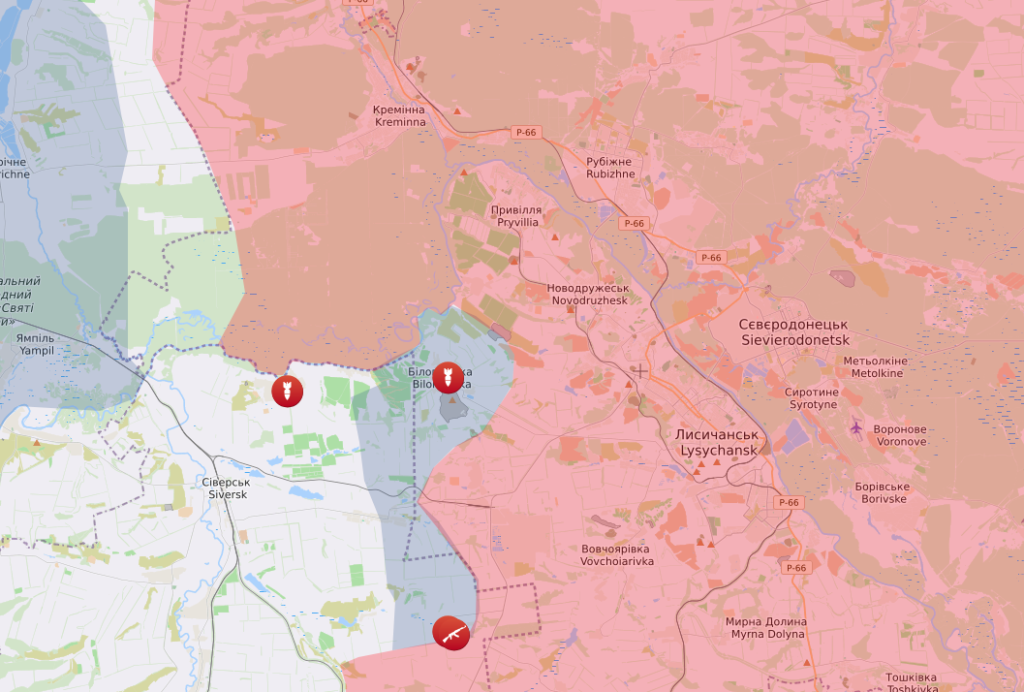
Weeb Union (not my favorite Ukraine war mapper channel) is reporting a huge Ukrainian offensive just got underway in Luhansk:
Takeaways:
“The reported numbers in this offensive is between 35,000 and 40,000 Ukrainian soldiers over a length of about 50 kilometers.”
Goal seems to be full control of the P-66 highway running from Troitske to Kreminna.
“They are trying to attack and capture Svatova.”
“Svatova is the supply hub of the Russian army here in the Luhansk border.”
He postulates this is the last Ukrainian offensive before Russian mobilization reinforcements reach the area. I think he greatly overestimates the effect Russia’s hastily mobilized, ill-equipped and ill-trained new recruits might have on the battlefield.
Not seeing any confirmation elsewhere yet. Developing…
Update: Reporting From Ukraine (which I generally trust more than Weeb Union) also reports a lot of activity in Luhansk, but with a different overall thrust and timeline.
Takeaways:
Russia launched a spoiling attack to prevent Ukraine from advancing on their defensive lines before they were fully repaired, and has some success.
Ukraine launched a counterattack south and north of the main Russian spoiling attack, also with some success.
They also launched a counter-attack in the center of the line, but with more limited success.
He also reports that new Russian conscripts are being put to work building the defensive position, which I can well imagine; any able-bodied adult human should be able to dig a trench. (Unless it’s Texas clay, then all bets are off…)
How to reconcile these reports? Both could be right, just looking at different slices of time.
A series of deadly blasts rocked central Kyiv Monday morning, shattering months of relative calm in the Ukrainian capital a day after Russia’s leader blamed Ukraine for an explosion on a key Crimea bridge.
At least eight people were killed and 24 were injured in just one of the Kyiv strikes, according to preliminary information, said Rostyslav Smirnov, an adviser to the Ukrainian ministry of internal affairs.
The Kyiv explosions marked the start of an intensive wave of attacks on targets across Ukraine, with conflicting reports suggesting the blasts were caused by missiles or suicide drones.
Kyiv mayor, Vitali Klitschko, said in a statement on Telegram that there were “several explosions in the Shevchenkiv district — in the center of the capital.”
He later said there were “several hits on objects of the city’s critical infrastructure,” adding that there were casualties.
Lesia Vasylenko, a member of Ukraine’s parliament, posted a photo on Twitter showing that at least one explosion occurred near the main building of the Kyiv National University in central Kyiv.
Ukraine managed to hit a strategically important bridge. Russia managed to hit a pedestrian bridge.
Take that, power walkers!
Indiscriminate attacks on civilians are not only wrong and a potential war crime, but worse for Russia, they’re also counterproductive and ineffective. We’ve know since The Blitz in World War II that wanton destruction of civilian buildings and infrastructure only hardens the resolve of the targeted populace. Using up missile in pointless displays of impotent fury only makes Putin’s Russia look like even bigger losers.
The rail bridge has two tracks going each way, and they ran a test 15-car train on the other span. I have a civil engineer/bridge inspector friend who thinks it’s probably unwise to use the rail bridge at all, as the fire has almost certainly weakened the structure through spalling. But Russia doesn’t have a lot of options.
The destroyed train hasn’t been cleared yet.
They’ve opened up the surviving lane for traffic. “It’s been said that the road span can handle 20 cars an hour and has a weight capacity of 3.5 tons.” That’s rural mail route capacity, not “support a major front in a war” capacity.
Russia is trying to repair the bridge.
They’re using passenger-only ferries to cross, but the run rate is so low they may only have one ferry in service.
Peter Zeihan says it’s potentially a turning point in the war:
“By far the most significant development of the war to date.” I would say that the failure to take Hostomel Airport in the opening phases of the war was bigger, as that meant Russia’s high risk/high reward decapitation strike had failed.
“The Kerch bridge is the only large-scale rail connection between mainland Russia and the Crimean peninsula, which is home to about two and a half million people.”
All other rail lines are under threat of Ukrainian artillery.
He reiterates that everything in Russia runs on rail, as they never built a modern road network in most of the country.
“With Kerch being the only real connection, it is the primary primary way that the Russians Supply Crimea in the southwestern front with not just troops and equipment, but with food and fuel.”
He estimates the bridge spans couldn’t be repaired without several months of work.
“Now that the Ukrainians know it can be done, you can bet they’re going to try to hit other parts of it to make sure the thing stays offline.”
“For the first time we have a path forward for the Ukrainians here to win that is not long and windy.”
Russia finally has a problem it can’t just shove bodies at. “You don’t throw a half a million people at logistics. This is something where either you have the connections or you don’t.”
Russian troops in Zaporizhzhia, Kherson and Crimea are “suddenly on their own.”
They can now only supply those regions in two ways. “One is by truck, and we know that because of all the Javelins that have been put into Ukraine, and all the RPGs, that the Russians are almost out of their entire military tactical truck fleet, and they’ve started using city buses and Scooby-Doo vans, and those just can’t take the volume of stuff that an active frontline needs.”
The second way is by ship, and if they can’t supply anti-ship missiles, then Ukrainians can Muscova “every single cargo ship that the Russians try to bring in.”
“Losing cargo ships in that volume, losing trucks and buses in that volume, is hollowing out the entirety of the Russian internal transport system. This is the sort of thing that if you bleed this fast, it takes a decade to recover from, and in a war zone that is not going to happen.”
And sanctions make everything harder.
There still seems to be some confusion over just what blew up the bridge. While truck bomb is still the most widely accepted theory, supposedly Russia scans all trucks before the enter the bridge. And Suchomimus has a video up showing something in the water just before the blast (what isn’t clear).
Finally, there are persistent reports of arrests of military personnel in Moscow. But the primary source for these reports seems to be Ukrainian, so several grains of salt are probably in order.
A massive fire is burning on the Kirch Strait Bridge that connects Russia to Crimea Saturday morning, with images showing multiple train cars fully engulfed and two spans of the road bridge in the water.
Traffic on the bridge, a critical strategic artery for Russian forces in Crimea amid its war in Ukraine, has reportedly been halted as heavy flames and black smoke spew from a train carrying unknown cargo. Photos also show spans of both east and westbound lanes have collapsed into the water near the burning train.
Those collapsed spans are potentially a huge blow to Russia’s entire war effort, as they were already having difficulties keeping all of their field units adequately supplied. With the Kerch Strait Bridge out of commission, the job of resupplying the southern front goes from being difficult to being an absolute nightmare, and makes Melitopol even more vital to keeping troops on the southern flank supplied.
The bridge cost billions to build after Russia seized Crimea in 2014 and has been one of Ukraine’s top targets, although it lacked traditional weaponry capable of striking it from far away. Even the Pentagon has openly stated that it sees the bridge as a viable target for Ukrainian forces. Russia has deployed air defenses and decoy barges in an attempt to protect it from some kind of attack in recent months.
It’s hard for even a competent military to have effective air defense all along possible logistics routes, and Russia has been far from a competent military in this war.
Suchomimus is on it:
He maps it as too far for HIMARS, and thinks it was likely a drone attack.
Russia has a 30,000 man strong rail organization. If it hasn’t suffered the same rot as the rest of the Russian armed forces (a big if), and if they can scrounge up the proper equipment (such as a crane barge; another big if), it could conceivably have the bridge repaired and usable again, possibly in as little as two to four weeks. It’s not easy, but it’s doable, and I imagine this is going to automatically jump to the top priority on the Russian logistics list. And, unlike the Antonovsky Bridge, it’s not currently in HIMARS range.
But given the gross incompetence Russia’s military has shown in so many areas, it’s no sure bet that it can be repaired that quickly (or even at all) with assets in or near the theater.
The clock is ticking…
Update: Now reading that it was a truck bomb that took it out, timed to hit a passing fuel train, and that certainly seems plausible from fiercely the train was burning.
Ukraine continues to liberate territory from its Russian occupiers, not only in the Kharkiv/northeast front, but also on the Kherson/southwest front, where the last few days have seen a rapid collapse in Russian lines.
Ukrainian forces continued to make significant gains in Kherson Oblast while simultaneously continuing advances in Kharkiv and Luhansk oblasts on October 4. Ukrainian forces liberated several settlements on the eastern bank of the Inhulets River along the T2207 highway, forcing Russian forces to retreat to the south toward Kherson City. Ukrainian forces also continued to push south along the Dnipro River and the T0403 highway, severing two Russian ground lines of communication (GLOCs) in northern Kherson Oblast and forcing Russians south of the Kherson-Dnipropetrovsk Oblast border toward the Beryslav area. Ukrainian military officials noted that the Ukrainian interdiction campaign is crippling Russian attempts to transfer additional ammunition, reserves, mobilized men, and means of defense to frontline positions. Ukrainian forces also continued to advance east of the Oskil River in Kharkiv Oblast, and Russian sources claimed that battles are ongoing near the R66 Svatove-Kreminna highway.
Kreminna seems to be the next big target for Ukrainian forces to take in Luhansk, allowing them to cut a major supply line and directly threaten Severodonetsk and Lysychansk.
Here’s a detailed description of the collapse of the northern portion of the Kherson front.
For another idea how rapid that advance have been, here are snapshots of the Deep State war map on 10/1 and 10/4.
Since most of the bridges over both the Inhulets and Dnipro rivers have been blown up, Russian forces are at significant risk of being cutoff and unable to retreat.
And just as I was working on this, a Peter Zeihan video on the topic dropped:
Takeaways:
Kherson: “The entire Russian line has crumbled.”
“Kherson is the only major city Russia has captured in seven months.”
“This is the greatest concentration of Russian forces, and it is the best troops Russia has.”
They also have the best equipment. If the Ukrainians capture it, it would be even better than Kharkiv.
“I still believe this is Russia’s war to lose. The first year of all Russia’s wars look a lot like this. Bad training, bad coordination, poorly maintained equipment.” Modern warfare seldom gives you an entire year to sort your problems out.
“Watch Kherson closely. This could be where the war is decided.”
Russia seems to be retreating everywhere save the central front in Donetsk, where they seem to be eking out tiny, meaningless gains of a square kilometer or two a day. That’s not a recipe for success.