Posts Tagged ‘Zul Mohamed’
Friday, June 12th, 2026
More California fraud! More Minnesota fraud! Ukraine continues pounding Russia! Murder still illegal!
Personally, this week has been an exercise in frustration, mainly due to trying to replace an old, cracked car keyfob where the results were my car refusing to turn on. Which means I’m behind on all my errands. Solved now, but it was a pain. Also, for some reason Bluehost has crapped out 429 errors more than usual today.
It’s the Friday LinkSwarm!
“New House Oversight Report Claims Walz, Ellison Were Aware of Fraud in 2019. “These fraudulently obtained funds likely funded international terrorist networks among other bad actors, while vulnerable populations were harmed and whistleblowers were ignored, sidelined, and retaliated against.”
Following a months-long investigation, the House Oversight Committee released a report Monday accusing Minnesota Gov. Tim Walz and Attorney General Keith Ellison of knowing about rampant fraud in the state’s federally funded social services programs as far back as 2019, and turning a blind eye.
The investigation also draws on testimony Walz and Ellison provided during a March hearing before the committee.
The 205-page report, titled “The Cost of Doing Nothing: How Tim Walz and Keith Ellison Fueled Minnesota’s Fraud Explosion,” states that Walz and Ellison:
Possessed the legal and procedural authority to stop payments and ban fraudulent providers from participating in these programs, but repeatedly failed to act. As a result, billions of American taxpayer dollars were potentially paid to fraudulent actors. These fraudulently obtained funds likely funded international terrorist networks among other bad actors, while vulnerable populations were harmed and whistleblowers were ignored, sidelined, and retaliated against.
Testimony and documents obtained to date establish a consistent pattern: fraud warnings were elevated to the most senior levels of the Minnesota state government, meaningful corrective action was delayed or avoided, and payments continued long after credible signs of fraud emerged.
Senior officials in Governor Walz’s office and Attorney General Ellison’s office were aware of credible, systemic fraud concerns in social services programs as early as 2019 within the Minnesota Department of Human Services (DHS) and by April 2020 within the state Department of Education (MDE), despite later public statements by Governor Walz suggesting otherwise.
The committee concluded that Minnesota officials had ample authority to suspend payments to providers suspected of fraud but repeatedly failed to do so. Investigators found that state agencies continued funding Feeding Our Future even after identifying serious deficiencies, allowing hundreds of millions of taxpayer dollars to flow to fraudsters until federal authorities intervened.
Of course they were aware. It was a major conduit for lining the pockets of the left!
“California Gets 80% Of All Federal Cash For Illegal Immigrant Families.”
California is home to the lion’s share of illegal immigrant families in the United States with children who received federal welfare assistance in 2024, according to a federal report published on June 10.
More than 80 percent of all nationwide cash assistance allocated to such households was spent in California. The report tracked $759 million in Temporary Assistance for Needy Families (TANF) spent in 2024 on families headed by a parent living in the country illegally.
In those cases, the child qualified for federal welfare, even though the parent was excluded from the federal program because of immigration status.
“These cases receive relatively little public attention, yet … data show that they are far from a negligible part of the program,” wrote authors David Swegle, director of the Office of Family Assistance at the Administration for Children and Families under the U.S. Department of Health and Human Services, and Alex J. Adams, assistant secretary at the Administration for Children and Families, in the report.
Nationally, the federal government paid 85,000 households with qualifying children receiving assistance who were living with their illegal immigrant parents in the U.S. in 2024.
“Although the benefit is formally paid on behalf of the child, it still supports a household that includes an immigration-status-ineligible parent,” the authors stated. “The significance of these cases therefore cannot be judged solely by the fact that the adult is not the formal recipient.”
The cases are also significant because they don’t have to adhere to the TANF rules requiring work expectations, such as regularly applying for jobs, and the payments aren’t limited to the federal 60-month lifetime limit, according to the report. The illegal immigrant families, therefore, can receive federal welfare until the child turns 18 years old.
Low-income American families are held to the federal welfare restrictions that require work participation and are restricted to a 60-month lifetime limit, the authors said.
The number of TANF cases involving an illegal immigrant parent reached nearly 850,000—or 10 percent of all cases—in 2024, up from nearly 6 percent in 2001.
Of those, nearly 78,000 households—or about 91 percent—also received federal food assistance through the Supplemental Nutrition Assistance Program (SNAP), the report revealed.
Most of the illegal immigrant parents—over 106,000—identified as Hispanic, while 5.3 percent were White, 4.3 percent were Black, and 2 percent were Asian, the report stated.
Here’s an idea: California doesn’t get any more cash for illegal aliens, period, until they repeal all the sanctuary city declarations, allow federal auditing of all their welfare programs, and implement SAVE Act compliant measures to ensure only citizens vote.
More Cali fraud: “Federal Government Pauses Funding To Los Angeles Homeless Agency Citing Fraud Allegations.”
The U.S. Department of Housing and Urban Development (HUD) on June 11 suspended federal funding to the Los Angeles Homeless Services Authority (LAHSA), cutting off millions of dollars to the L.A. region, over allegations of fraud and widespread mismanagement.
It’s superbly managed to line the pockets of leftists.
HUD Secretary Scott Turner testifies before the Senate Appropriations Subcommittee on Transportation, Housing and Urban Development about his department’s proposed FY2026 budget in the Dirksen Senate Office Building on Capitol Hill in Washington on May 14, 2026. Chip Somodevilla/Getty Images
HUD action to suspend federal funding comes in the wake of an investigation into LAHSA, Secretary Scott Turner announced Thursday, adding that the agency has “uncovered evidence of LAHSA’s false statements and its irresponsible actions and failures,” including a lack of financial management and lack of safeguards against conflicts of interest.
The Los Angeles Continuum of Care (CoC), led by LAHSA, has received nearly $1 billion in taxpayer dollars over the last five years. Despite federal assistance, L.A. remains the epicenter of the nation’s “drug-fueled” homeless crisis, according to Turner.
“Under President Trump’s leadership, HUD will fund results, not corrupt failure or the homeless-industrial complex,” Turner said in a statement. “Year after year, hundreds of millions of taxpayer dollars were funneled to LAHSA with little accountability. Meanwhile, homelessness skyrocketed. Taxpayers will no longer bankroll an organization that puts its own self-interests ahead of the Americans it was created to serve.”
HUD stated in a letter to LAHSA that suspension of funding will be final if the agency does not contest the notice by requesting a hearing. LAHSA must file a written hearing request within 30 days of receipt of the notice.
The Homeless Industrial Complex maw is insatiable.
“California hit by another huge fraud bombshell as thousands of claims for $4 BILLION in taxpayer-funded compensation meant for sex crime victims are FAKE.” I guess they had to steal from sex crime victims because there just wasn’t enough money in stealing toys for crippled orphans. All of California’s welfare state programs need federal audits of proctological intensity. (Hat tip: Stephen Green at Instapundit.)
A possible reason for my continued unemployment? “Of the 369,000 jobs the Labor Department says were created since the start of Trump’s second term, nearly all — 348,000 of them — went to women, with only 21,000 going to men.” I wonder if Kurt Schlichter would be interested in filing a class action lawsuit on behalf of myself and other men…
Amazingly, murder is still illegal in the United States.
One year after Frisco high school student Karmelo Anthony was indicted on murder charges over the fatal stabbing of [Austin Metcalf], his trial concluded with the jury’s verdict that Anthony is guilty of murder.
During their sentencing deliberations, the jury considered a “sudden passion” claim, but eventually rejected it and decided that Anthony would face a 35-year prison sentence.
He will be eligible for parole after 17 and a half years.
Like Kyle Rittenhouse’s not guilty verdict, this shouldn’t be a surprise to anyone who doesn’t view the world through social justice-tinted glasses.
“Whistleblower vindicated: Biden officials invented loophole to impose gender identity, flout court. Leaders ‘actively engaged in efforts to thwart at least one regional office from following the plain and unambiguous meaning’ of the injunction against their gender identity reading of Title IX, Department of Education concludes.”
High-ranking Biden administration officials conspired to violate a 2022 court order against their interpretation of Title IX as covering “gender identity” within the definition of “sex,” and may have also tried to conceal those efforts through coercion and intimidation, according to a Department of Education report made public Wednesday after lengthy outside review.
The U.S. Office of Special Counsel told President Trump the department “fully substantiated the allegations” by whistleblower Timothy Mattson, who now leads the department’s Office for Civil Rights’ regional office in Kansas City, recommending sanctions against current and former officials and compensation for Mattson for the risk he took coming forward.
“Trump just attached the SAVE America Act to the Senate’s next budget vote to force Republicans to actually DO SOMETHING.” I don’t know enough about the Senate’s labyrinth budgeting rules to know if this will actually work or not.
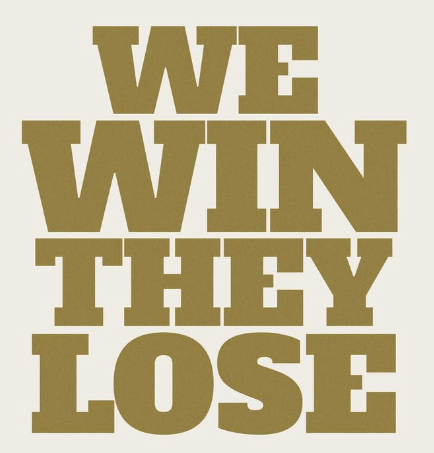
You know the giant Democrat tantrum over ICE funding? We won.
Democrats put everything they had in their effort to shut down President Donald Trump’s border control plans. And what exactly have they achieved for their often-infantile antics?
Well, let’s see. This week, the House passed a bill that funds ICE for three years. Deportations are near all-time highs. Oh, and it looks like Trump’s border wall will be completed next year.
On Tuesday, the House passed a “budget reconciliation” bill that provides enough money ($38 billion) to fund ICE for the rest of Trump’s term, plus $28 billion for the Border Patrol, and another $5 billion for border security technology and screening.
And what did Democrats get for shutting down all or part of the government for nearly four months?
Bupkus. Zilch. Nada. Nichts. Niente. 没有什么.This has to be one of the most embarrassing political defeats in history.
(Hat tip: Mark Tapscott.)
“Homan Warns Hochul: Thanks to Your New Law, You’re About to Get ‘More ICE Than You’ve Ever Seen.'”
If Border Czar Tom Homan is intimidated by the Left’s endless anti-ICE rhetoric and threats, he’s not showing it. In fact, on Monday, he announced he’s doubling down on illegal immigrant operations in New York City and plans a surge in the very near future. This is a direct “in your face” move to counter Gov. Kathy Hochul’s efforts to kneecap federal enforcement in the Empire State.
He spoke as ongoing violent anti-ICE protests continued throughout the weekend at Delaney Hall, a detention facility in nearby Newark, New Jersey.
It’s coming, he told Fox & Friends:
Trump border czar Tom Homan revealed Monday that the administration has already drawn up an operational plan and warned Hochul before she signed legislation late last month restricting ICE activities and banning masked immigration agents in New York.
“You’re going to see more ICE than you’ve ever seen in New York City, and it’s coming,” Homan said, according to Bloomberg. “I just reviewed an operational plan. I’m not going to tell you exactly when it’s going to happen, but it’s coming.”
(Hat tip: Director Blue.)
Maine Democrats obeyed The Will of The Party and lined up yo vote for the Nazi.”
Graham Platner, the scandal-plagued progressive veteran, will win the Democratic primary for the Maine Senate race, according to a projection by the Associated Press.
Maine Governor Janet Mills suspended her own Senate primary campaign on April 30, effectively handing the nomination to Platner.
Platner has painted himself as an outsider to the Democratic establishment since his fiery campaign launch last fall. In line with those of other progressive and populist candidates, Platner’s political bid has focused on working-class issues, including affordability, universal health care, and labor union relations.
He will advance to face Republican incumbent Senator Susan Collins in November. Collins is seen as a moderate Republican, often crossing party lines to vote with Democrats. However, because Collins appeals to a more moderate, centrist bloc of voters, she has received backlash from her supporters on several occasions for voting with her own party, including her vote to advance the nomination of Brett Kavanaugh to the Supreme Court in 2018.
The Senate campaign has been rocked by controversies since last year. In October, CNN and several other outlets uncovered Platner’s past Reddit posts and comments, which included offensive comments about police and sexual assault survivors. He’s since been ensnared in a number of other scandals, including those involving his Nazi tattoo, his marital infidelity, and his past treatment of women.
Remember all that self-serving “when they go low, we go high” blather Democrats mouthed to further the laughable illusion of their moral superiority? They never meant it.
“U.S. launches military strikes on Iran in response to downing of helicopter.” Yeah, should have covered this more, I just ran out of time this week.
“Ammo Depot Destroyed at St. Petersburg: BIG Ammo Cookoffs!”
“Another Ship Hit at Kronstadt Naval Base Near St. Petersburg? Big Fire After Drone Strike.”
“Ukraine Hits 50 Truck Convoy in Crimea and Multiple Bridges.”
“HUGE Explosion in Belgorod As Russian Ammo Depot Detonates!” This may not even have been a Ukrainian strike, just the usual russiuan incompetence.
“Flamingo Missiles Hit VNIIR Progress Electronics Plant in Cheboksary.” This seems to be a much more on-target hit than the previous strike on the same target.
“Grushovaya Oil Depot at Novorossiysk Hit By Drones.”
“Chongar Bridge Damaged by Drones & Attack Reported on Kerch Bridge By Neptune Missile.”
“Two Russian Ships Hit! Buyan Corvette Destroyed After Drone Strike! Svetlyak Patrol Boat Also Hit.”
Has Russia withdrawn from the Kinburn Spit?
“Trump ally Nikol Pashinyan wins Armenian election, paving way for US-backed peace deal.”
Armenian Prime Minister Nikol Pashinyan’s party won a majority in the country’s parliamentary elections, marking a victory for Donald Trump after the president endorsed him.
Pashinyan first took power in 2018 in the so-called Velvet Revolution, then won again in the 2021 snap elections triggered by his crushing loss of the Second Nagorno-Karabakh War against Azerbaijan. Armenia held its first regular election since he first took power in 2018 on Sunday, during which he won reelection with a vote total far above his closest rival.
The latest preliminary results on Monday gave Pashinyan’s Civil Contract party 49.82% of the vote, the Associated Press reported, with the pro-Russian Samvel Karapetyan’s Strong Armenia bloc coming in second with 23.28% of the vote. The Armenia Alliance bloc led by former President Robert Kocharyan is hovering around 10%, while the rest of the splintered opposition remained in the mid to low single digits.
He beat three pro-Russian parties, another black eye for Putin.
Thanks to Florida redistricting, Debbie Wasserman Schultz is having to go up against a field of black candidates in a heavily black congressional district.
Two “independent” Senate candidates aren’t.
Two independent candidates for U.S. Senate have fundraising profiles on ActBlue, the Democratic Party’s key fundraising platform, raising questions about the candidates’ true political independence as they look to capture two long-held Republican seats this fall.
ActBlue allows independent candidates to fundraise on its platforms on a “case-by-case basis,” based on whether a Democrat is in the race, the candidate has an endorsement from the Democratic Party, or the candidate has demonstrated alignment with the Democratic Party’s ideals and policy goals.
But both independent candidates — Seth Bodnar in Montana and Dan Osborn in Nebraska — are running against Democrats, as well as Republicans. While the Nebraska Democratic Party has endorsed Osborn, Bodnar has not received an official Democratic endorsement.
Speaking of ActBlue shenanigans: “Clinton-Appointed Federal Judge Bars Texas AG Paxton’s Lawsuit Against ActBlue.”
A federal judge has barred Texas Attorney General Ken Paxton from pursuing his state court lawsuit against ActBlue, a major Democratic online fundraising platform.
President Clinton-appointed U.S. District Judge Richard Stearns ruled Thursday that the case represented no more than a retaliation campaign for ActBlue’s political activities supporting Paxton’s opponent in the 2026 U.S. Senate race.
Stearns issued a preliminary injunction preventing Paxton from pursuing the Texas case. The judge found the lawsuit attempted to undermine protected political speech and therefore violated the First Amendment.
“The truth is plain and captured in Paxton’s own declarations: The lawsuit was filed in retaliation for (and in an attempt to suppress) ActBlue’s efforts to fund Talarico’s campaign,” Stearns wrote in the ruling.
Neither Paxton’s office nor ActBlue immediately returned a request for comment.
Paxton filed the initial lawsuit in April in Texas state court as he campaigned as the Republican nominee for the U.S. Senate seat.
The suit singled out ActBlue, a Massachusetts-based fundraising platform that claims to have raised billions for Democratic candidates and causes since its founding in 2004. It sought civil penalties and an order blocking ActBlue from accepting certain gift card donations.
The Texas attorney general alleged that ActBlue employed deceptive practices after the fundraising platform resumed gift card and foreign prepaid debit card donations after informing Congress that it had ceased conducting the transactions. Paxton alleged the practices could empower foreign nationals to hide their identities while making political contributions, potentially in violation of state law.
Under Sterns logic, no Republican could ever sue ActBlue for breaking the law because they ran against Democrats using the platform to raise money.
“Muslim Running For Mayor In Texas Says Military Vets Didn’t Sacrifice Anything For His Freedom.” More: “I want to make that clear. I do not support the U.S. military. No, I do not support the United States. I look down on both entities.” You may remember Zul Mohamed from such previous hits as “I just pled guilty to election fraud.”
Somalia President Hassan Sheikh Mohamud, whose term expired, declared that he would just stay in power. I bet you can guess how well that went over.

Helpful illustration of Somali politics via History Matters.
“Maryland ‘teens’ tried to rob this Marine vet at gunpoint and it did not go well for them.”
SpaceX IPO makes Elon Musk a trillionaire. Maybe he could give me a million to run an anti-Social justice Warrior center here in Austin…
“Basic Health Fixes Doctors Know Work But Can’t Make Money From.” I do own dogs and cook at home for all but one meal a week, but only do strength training once a week.
“How Japan Finally Made It Impossible to Make Babies.” Women in the workforce + culture of overwork + high Tokyo prices = shrinking population. And the rest of the west faces similar (if less currently less severe) demographic problems.
“Quentin Tarantino Slams Modern Hollywood as a ‘Flavorless Sausage Factory.'”
Pitch meeting for The Mandalorian and Grogu.
Red Lobster’s CEO Damola Adamolekun says he’s going to transform the chain into ‘the most AI-forward restaurant company that exists.’ Please don’t…
“After Mail-In Ballots Tallied, Joe Biden Wins L.A. Mayor Race With 81 Million Votes.”
“Playskool Introduces ‘My First Hobo Camp‘ For California Children.”
“California Officials Pleased With Voter Turnout Of 250 Percent.”
A compilations of happy dogs:
I hope none of those are AI. (Hat tip: Ace of Spades HQ.)
I’m still between jobs. Feel free to hit the tip jar if you’re so inclined.
Tags:2026 Election, 2026 Texas Senate Race, ActBlue, AI, Armenia, Austin Metcalf, Babylon Bee, Belgorod, black, Border Controls, Budget, California, Carrollton, Cheboksary, Chongar strait bridge, corrupt scumbags, Crime, Dan Osborn, Debbie Wasserman Schultz, Democrats, Department of Education, Department of Housing and Urban Development, dogs, Elections, Elon Musk, Florida, Foreign Policy, Graham Platner, Grushovaya oil depot, Hassan Sheikh Mohamud, Hollywood, homeless, Illegal Aliens, Immigration and Customs Enforcement, IPO, Iran, Japan, Jihad, Karmelo Anthony, Kathy Hochul, Keith Ellison, Ken Paxton, Kerch Strait Bridge, Kinburn Spit, Kronstadt, LinkSwarm, logistics, Los Angeles, Los Angeles Homeless Services Authority (LHSA), Maryland, Military, missile strike, Montana, movies, Nebraska, New York, New York City, Nikol Pashinyan, Novorossiysk, Quentin Tarantino, Red Lobster, Redistricting, Richard Stearns, Russia, Russo-Ukrainian War, SAVE Act, Scott Turner, Seth Bodnar, sex, sex scandal, Simon Whistler, Social Justice Warriors, Somalia, St. Petersburg (Russia), Star Wars, Suchomimus, Tim Walz, Timothy Mattson, Tom Homan, transexual, Ukraine, Vladimir Putin, voting fraud, Welfare State, Zero Hedge, Zul Mohamed
Posted in Border Control, Budget, Crime, Democrats, Elections, Foreign Policy, Jihad, Military, Social Justice Warriors, Technology, Texas, Waste and Fraud, Welfare State | 6 Comments »
Friday, April 17th, 2026
Trump’s Iran blockade twists Iran’s arm into opening the Strait of Hormuz, Ukraine blows up a bunch more Russian oil and gas infrastructure, leftists try to remove more rights from their political opponents, and this weekend in Austin you can get a dog for $5!
It’s the Friday LinkSwarm!
I got my taxes done and mailed off. (I owed nothing because I made so little money last year.)
Trump wins again. “Iran, U.S. Announce Strait of Hormuz ‘Completely Open’ for Commercial Ships.”
The Strait of Hormuz is “completely open” for all commercial ships, the U.S. and Iran said Friday, after the agreement of a cease-fire in Lebanon.
“IRAN HAS JUST ANNOUNCED THAT THE STRAIT OF IRAN IS FULLY OPEN AND READY FOR FULL PASSAGE. THANK YOU!” President Trump said in a post on Truth Social, appearing to refer to the Strait of Hormuz.
The president also said that Iran would begin working to remove all of the sea mines from the strait, with the help of the U.S.
He said in a second post that the U.S. naval blockade of Iranian ports “WILL REMAIN IN FULL FORCE AND EFFECT” until peace negotiations with Iranian leaders are “100% COMPLETE.”
The blockade was first put into effect on Monday, with U.S. forces looking to stop Iranian and Iran-linked ships. The blockade came after negotiations in Pakistan to end the Iran war collapsed.
The president said at the time that the blockade would be enforced in an effort to stop Iran from policing the strait to its economic benefit while other countries suffer.
Iran had imposed a toll on vessels passing through the strait and has limited oil exports. It had allowed only a handful of countries, including China and India, to pass through the strait.
“Iran promised to open the Strait of Hormuz, and they knowingly failed to do so…as they promised, they better begin the process of getting this INTERNATIONAL WATERWAY OPEN AND FAST!” Trump said earlier this week.
Days before Saturday’s failed negotiations in Pakistan, Trump announced a two-week cease-fire, contingent upon Iran agreeing to the “complete, immediate, and safe opening” of the Strait of Hormuz.
Meanwhile, Trump on Thursday announced that Israel has agreed to a ten-day cease-fire in Lebanon. Israeli Prime Minister Benjamin Netanyahu said that Israel had an “opportunity to forge a historic peace agreement with Lebanon” but said Israeli forces would remain inside Lebanese territory in a “reinforced security buffer zone.”
How is an open Strait but the U.S. keeps the blockade anything but a complete win for Trump?
The IRGC is claiming you need to grease their palms still before transiting the Strait, but it’s not clear that’s actually true, or that they have the means to stop it any more.
All ships can sail through the Strait of Hormuz but this needs to be coordinated with Iran’s Islamic Revolutionary Guard Corps (IRGC), a senior Iranian official told Reuters, adding that unfreezing Iranian funds was part of the deal.
Foreign Minister Abbas Araqchi wrote on X that the strait was open after a ceasefire accord was agreed in Lebanon, while U.S. President Donald Trump said he believed a deal to end the Iran war would come “soon”, although the timing remains unclear.
Hundreds of ships and 20,000 seafarers have remained stranded inside the Gulf waiting to pass through the key waterway, which handles about 20% of the world’s oil and liquefied natural gas flows.
It’s still unclear who is actually calling the shots in Tehran these days.
Now is no time to let the Iranian regime weasel out of their complete surrender.
It looks like Iran’s rulers have finally blinked — but that doesn’t mean they won’t try to weasel out of every promise they’re now making.
Tehran announced Friday that it’s opening the Strait of Hormuz, and supposedly even cooperating with US forces to sweep out all mines.
President Donald Trump says the regime has even agreed to end its quest for nuclear weapons and hand over its “nuclear dust” — nearly 1,000 pounds of highly-refined uranium now buried below various bunkers destroyed by American bombing last year.
But Trump knows Tehran has a long history of breaking its word — and it’s not even certain that the figures we’re negotiating with are the ultimate decision-makers.
Nor if Iran’s current leaders will be in charge next month: Regime factions will be a while realigning after US and Israel attacks slaughtered most of the top ranks — no one there or here knows how it’ll play out.
Snip.
Remember: Even the Islamic Republic’s so-called moderates are still Islamic fundamentalists who despise America and the West and believe that lying to non-Muslim leaders is entirely moral.
Meanwhile, a lasting peace deal that ensures Iran can’t go nuclear requires a reliable process for monitoring compliance, including “inspect anywhere, anytime” rules.
Also a must-monitor: Bans on acquisition of new missiles and missile tech, lest Tehran again threaten the entire region.
Plus financial controls to prevent the Revolutionary Guard’s Quds Force from again fostering and commanding terrorists far outside Iran.
If the regime doesn’t agree to these terms, and institutionalize enforcement, its oil exports must remain blocked as the bombing resumes.
“Seven Myths About the Iran War.”
Myth One: This was a “war of choice.”
For the past five weeks, opponents of the Trump administration have repeatedly called this “a war of choice,” a conflict the president launched without cause or coherent purpose. “[W]hen we ask, What is the administration doing? they can’t answer that question because they don’t know why they’re there in the first place,” Jake Sullivan told progressive talk-show host Jon Stewart. “They haven’t been able to give us an answer as to what this is all about.”
The administration has, in fact, made a clear and compelling case. It reduces to two interlocking imperatives. The first is Trump’s long-standing red line. As the president has stated repeatedly for years, “Iran cannot have a nuclear weapon. It’s very simple.” The second is the enabling condition that made this red line urgent: overmatch. Iran’s drones and ballistic missiles can overwhelm the air and missile defenses of Israel, the United States, and their Gulf allies.
In the June 2025 “12-Day War,” Iran absorbed heavy losses to its ballistic arsenal, which fell to roughly 1,500 missiles, and to key production sites. President Trump hoped that those losses would moderate Iranian behavior and bring Tehran to the negotiating table. That hope proved unfounded.
The IRGC moved immediately to rebuild. Work resumed at production plants, and stockpiles in hardened underground missile cities grew. IRGC Aerospace Force Commander Majid Mousavi stated in January 2026 that the arsenal had grown since the June war and that output across multiple sectors had already exceeded prewar levels. Israeli intelligence assessed that Iran was on track for a stockpile of roughly 8,000 ballistic missiles by 2027.
At the outset of the war, Secretary of State Marco Rubio described overmatch as the factor that drove America to act. “The United States is conducting an operation to eliminate the threat of Iran’s short-range ballistic missiles and the threat posed by their navy, particularly to naval assets,” he said at a March 2 press conference. He then quantified the threat. “They are producing, by some estimates, over 100 of these missiles a month. Compare that to the six or seven interceptors that can be built a month.”
The arithmetic spoke for itself and posed two interlocking threats. The first was conventional. Iran would soon have enough missiles and drones to overwhelm the defenses of Israel and every American base in the region. The second was nuclear. The huge conventional arsenal would serve as a shield behind which Iran could pursue a nuclear weapon without fear of retaliation—directly violating the president’s red line. If Iran were left unchecked, Rubio explained, it would soon “have so many conventional missiles, so many drones, and can inflict so much damage, that no one can do anything about their nuclear program.” Once Iran crossed that threshold, which Rubio called the “point of immunity,” the window for action would close permanently.
America therefore had three choices: to do nothing, in which case Iran would soon enter a zone of immunity guaranteed by overmatch; to let Israel attack alone, in which case Iran would attack American forces and cause significant casualties; or to work together with Israel to eliminate an intolerable threat to both countries.
Myth 2: The Joint Comprehensive Plan of Action had moderated Iran and stabilized the Middle East before Trump broke it.
While arguing about the war, former Obama and Biden staffers are attempting to justify Obama’s nuclear deal and the strategy that produced it. The JCPOA, Sullivan tells Stewart, worked. Iran was “complying with the deal. Even the Israeli intelligence were saying they were complying with the agreement.” Trump’s 2018 unilateral withdrawal, Sullivan suggests, discarded this successful state of affairs.
This story fails to comport with reality in three crucial ways. First, the timeline doesn’t work. Trump withdrew from the nuclear deal in May 2018. Tehran did not begin enriching its uranium to 60%, a major threshold that dramatically shortens the path to a nuclear weapon, until April 2021. In other words, Tehran made this crucial leap toward weaponization on Biden’s watch, not Trump’s.
And how did Biden respond? With conciliation. The administration stopped enforcing sanctions, especially against Chinese buyers. Iranian oil exports surged, and with them regime revenues. As Iran’s breakout time shrank to a matter of weeks, Biden and his team painted the increasing threat it had created as Trump’s fault. Every Iranian nuclear advance became, in their telling, not only a consequence of the 2018 withdrawal but also a justification for further conciliation. Then National Security Adviser Sullivan said so explicitly in April 2022, when Iran was racing forward under Biden’s presidency, that its progress “is a direct impact of [Trump’s] pulling out of the nuclear deal, making us less safe, giving us less visibility. And it’s one of the reasons we pursued a diplomatic path, again, when the president took office.”
Biden restored the core logic of the JCPOA unilaterally. Sanctions relief flowed while nuclear constraints collapsed. Tehran blew past the restrictions on the size of its uranium stockpiles and levels of enrichment while Washington relaxed pressure and pursued diplomacy on Iran’s terms. What Sullivan presents as the collapse of the deal was its continuation on asymmetric terms, slavish compliance in Washington without reciprocity in Tehran.
As sanctions enforcement weakened and oil revenue from China flowed, the regime did not moderate. Iran accelerated its missile and drone programs, deepened its support for proxies, and hardened the capabilities that now define the battlefield. Sanctions relief generated revenue. Revenue funded missiles, drones, and proxies. Those capabilities produced the overmatch that eroded deterrence.
The JCPOA and Biden’s de facto implementation of it financed and enabled the capabilities that drove the region toward large-scale conflict. Under Biden, Iran reached 60% enrichment and expanded its missile and drone programs. The Oct. 7 massacre in Israel was a direct result of Iran’s increasingly advantageous strategic posture.
The United States faced the same strategic choice at the end of the JCPOA process as it did at the beginning, but under worse conditions and against a stronger adversary. The policy, that is to say, ensured that the confrontation would come after Iran had advanced closer to immunity.
It’s a meaty list, so read the whole thing.
Stephen Green: “Trump’s Iran Blockade Just Got Bigger.”
If ever we had a president who believes that “bigger is better,” it’s Donald Trump, and his administration just embiggened the blockade against Iran to include sanctioned ships from anywhere.
“In addition to enforcing the blockade, all Iranian vessels, vessels with active OFAC sanctions, and vessels suspected of carrying contraband, are subject to belligerent right to visit and search,” U.S. Naval Forces Central Command (NAVCENT) announced on Thursday. But here’s where it gets really interesting: “These vessels, regardless of location, are subject to visit, board, search, and seizure.”
Emphasis added because that’s serious.
Regardless of location? If I’m reading that right, the “Persian Gulf blockade” just went global.
Joint Chiefs chair Gen. Dan Caine confirmed the expanded scope this morning during a presser with War Secretary Pete Hegseth. “Under the command of Adm. Paparo, we’ll actively pursue any Iranian-flagged vessel or any vessel attempting to provide material support to Iran,” Caine said. “This includes dark fleet vessels carrying Iranian oil. As most of you know, dark fleet vessels are those illicit or illegal ships evading international regulations, sanctions, or insurance requirements.”
Baltimore can’t decide who gets to ladle out the fraud. “Baltimore Reparations Fund Plagued by Infighting and Struggles for Control. ‘The City Hall says the mayor has final say, while commissioners maintain the body was created to independently manage the funds.'”
When the state of Maryland legalized marijuana for personal use a few years ago, it designated a percentage of sales to be put in a special fund, which would be used in part to pay reparations for slavery and to fund various social programs.
The fund now contains upwards of $35 million, but almost none of the money has been paid out because of an ongoing power struggle to control it between pretty much everyone involved in the program. Who could have predicted such a thing?
FOX News reports:
$35 million in reparations money remains unused as Baltimore officials battle over who gets control: report
Millions in reparations money remain unused as Baltimore officials battle over who gets control, according to a local report.
The Baltimore Beat reported that the $35 million in revenue from the recreational cannabis tax has not reached residents yet due to infighting between City Hall and the Community Reinvestment and Reparations Commission, a 17-member body established in November 2024 to oversee how the funds are distributed.
Since Maryland legalized recreational cannabis three years ago, “not a single dollar has reached the people it was meant to help, and the first round of funding may still be a year away,” the report said.
Why, it’s almost like that was the design…
“Huge Drone Strike on Tuapse Port! Oil Storage Hit,” an oil export terminal on the Black Sea Ukraine has hit before.
“Ukraine Attacks TWO Gas Platforms in the Caspian Sea.”
“Big Ukrainian Drone Strike on Chemical Plant in Cherepovets (800km from Ukraine).”
“Big Storm Shadow Strike on Shahed Drone Storage in Donetsk.” “Ukraine has hit this multiple times.” Most armies would change the storage location after the first strike…
Russia deploys the TEMU-14 Armata to Ukraine.
Muslims are trying to force Texas to claim that the Alamo is an Islamic structure.

They’re not even hiding it any more. “One of the questions on the citizenship test for Great Britain is about Ramadan.”
“German bill would ban home purchases for people with the wrong political views.” Germans banning rights for being an enemy of the ruling party? I think I’ve seen this movie before…

“DOJ report: The Biden admin teamed up with Planned Parenthood to track pro-lifers so it could “seek harsher” prison sentences.” The entire DOJ was weaponized under Biden to persecute Republicans.
“Admitted Vote Fraudster Is Back on the Ballot in Carrollton. Zul Mohamed is running again for Carrollton mayor after pleading guilty to mail-ballot fraud in his failed 2020 mayoral campaign.”
A Carrollton candidate who confessed to committing voter fraud in a past election is back on the mayoral ballot this May. While the situation is unusual, it’s not unlawful.
In 2024, Zul Mohamed pleaded guilty to more than 100 felony counts of voter fraud in his failed 2020 campaign for Carrollton mayor. A jury sentenced him to four years in state prison while agreeing with his attorney that Mohamed is mentally ill.
But Mohamed is appealing parts of his conviction and sentencing, arguing that the sting operation used to trace a mail-ballot fraud scheme back to him was constitutionally suspect, as is the court’s condition of probation that bars Mohamed from engaging in election-related activities.
Under Texas election law, a person is ineligible to be a candidate if they have been “finally convicted of a felony” or determined by a court to be “mentally incapacitated.”
(Previously.) Seems like the average 7-11 has more stringent vetting than Carrollton…
“Paxton Announces Investigation Into University of North Texas’ DEI Efforts.”
Attorney General Ken Paxton has announced an investigation into Diversity, Equity, and Inclusion policies at the University of North Texas.
“The DEI ideology has been a calamitous way that radical leftists have pushed a woke agenda in our educational institutions,” Paxton stated.
As part of the investigation, Paxton sent a letter to Nicole Dash, Dean of the College of Public Affairs and Human Sciences, asking UNT to detail their compliance with state law. While Dash’s academic writing primarily focuses on disaster recovery, she has also written about racial issues.
Paxton is also seeking information about “DEI policies and guidance from the University, details regarding DEI in accreditation standards, and all correspondence between UNT leadership and staff regarding DEI.”
Paxton’s investigation stems from an undercover video that was released earlier this week by Accuracy in Media.
In the video, Paige Falco, a field education coordinator in social work at UNT’s College of Public Affairs and Health Sciences, told an investigator with a hidden camera that DEI is “definitely still a focus” at the institution.
Falco told the investigator that she removed DEI keyphrases from course titles and descriptions, while continuing to teach the concepts.
Later in the video, Falco discussed how “antiracism, diversity, equity, and inclusion” is a competency for the Council on Social Work Education, which accredits the school. The Steve Hicks School of Social Work at UT-Austin also requires so-called “antiracism” training as part of its accreditation with this organization.
Senate Bill 17, a law state lawmakers passed in 2023, prohibits DEI in university human resource policies. SB 17 contains explicit exemptions for accreditation and course content.
“Paxton Announces FTC Settlement With Major Advertising Companies Over Antitrust Allegations.”
The Texas Office of the Attorney General (OAG), alongside the Federal Trade Commission (FTC), announced a settlement with three prominent advertising companies over alleged violations of antitrust laws.
The settlement comes after a multi-state complaint was filed to “combat unlawful media censorship.” The three companies involved are Dentsu US, Inc.; GroupM Worldwide LLC, now known as WPP Media; and Publicis, Inc.
The multi-state complaint also saw participation from Florida, Indiana, Iowa, Montana, Nebraska, Utah, and West Virginia. The complaint alleges the companies violated the 1890 Sherman Antitrust Act, and calls the companies’ conduct “anticompetitive.”
The complaint alleges that the ad agencies, working through the World Federation of Advertisers’ Global Alliance for Responsible Media and the American Association of Advertising Agencies’ Advertiser Protection Bureau, blocked certain websites from being eligible for advertising revenue because they were labeled “misinformation.” The companies allegedly created “brand-safety” rules that made these “misinformation” websites ineligible for business.
The OAG’s announcement stated that the increase in online media coverage has led to large corporations “conspiring ways to suppress certain viewpoints,” favoring particular perspectives and “suppressing disfavored opinions as ‘misinformation.’”
The FTC stated that the defendants’ unlawful collusion “to impose common ‘brand safety’” standards across the industry weakened competitive behavior.
According to the FTC, upon approval by a federal judge, the order will prevent “the biggest U.S. advertising agencies” from restricting advertising based on ideological or political differences.
Although the settlement is subject to court approval, the advertising companies have agreed to several arrangements. The companies reportedly agreed to not enforce limitations on advertising spending based on ideological positions or diversity, equity, and inclusion commitments. They also agreed to not restrict business with any company based on “its news and political or social commentary content.”
Reading between the lines, this was part of the Democrat Media Complex’s attempt to keep anyone from advertising with any conservative media.
“James Talarico raises record-breaking $27 million in first quarter for Senate bid.” I wonder how much of that came from Somali daycares…
“Another Chinese Politburo Member Falls.”
Ma Xingrui, a former high-flying technocrat and Xinjiang party secretary, is officially under investigation for corruption charges. That makes him the third member of the current Chinese Communist Party (CCP) Politburo to fall amid President Xi Jinping’s latest purge, as well as the first civilian member.
There are two likely reasons for Ma’s targeting. The first is that Ma was exceptionally capable. He handled politically sensitive assignments in Xinjiang and earlier in Guangdong and the city of Shenzhen with skill and ruthlessness. As I noted in last week’s China Brief, Xi tends to find that kind of talent and ambition threatening.
Second, it’s possible that Ma’s background leading China’s space agencies connected him to the corruption being probed within the People’s Liberation Army Rocket Force. However, Ma left the aerospace sector in 2013, before the Second Artillery Corps was reorganized into the Rocket Force and received the surge of funding and authority that enabled such corruption.
Ma’s time in Xinjiang certainly offered opportunities for large-scale graft, from the expropriation of Uyghur property and businesses to the notoriously corrupt paramilitary organization that runs much of the region’s industry, the Xinjiang Production and Construction Corps.
This purges are sort of an under-reported story, and Xi has purged at least two other Politburo members in the last year.
“Wisconsin sheriff sues Pakistani-American woman who said ICE detained her for two days when she was actually at hotel spa.”
US citizen Sundas ‘Sunny’ Naqvi, 28, gained national attention last month when she and a band of supporters – including Cook County, Ill., Commissioner Kevin Morrison — publicly insisted she was unlawfully detained by ICE officers for roughly 43 hours.
Keep Morrison in mind, because we’re going to get back to him in a sec.
Naqvi claimed that after landing back in the US from a work trip to Turkey on the morning of March 5, she was detained for nearly 30 hours at Chicago O’Hare International Airport, then transferred to another ICE facility in Broadview, Ill., before winding up at Dodge County Jail in Wisconsin.
Snip.
Now Naqvi and Morrison are the subjects of a federal defamation lawsuit filed by Dodge County Sheriff Dale Schmidt on Friday — as his office released new details of Naqvi’s actual actions during the alleged hoax period.
‘She checked into the Hampton Inn and Suites in Rosemont, Ill., for the entire duration of this alleged event,’ Schmidt said during a press conference, where he presented a hotel bill and text receipts to illustrate Naqvi’s time there.
The folio shows Naqvi checked in at the Hampton Inn — just a 10-minute drive from the airport — at 1:17 p.m. March 5, while text messages with an unidentified witness over the following days show she enjoyed free food, spa services, and trips to the gym.
Bonus: “Naqvi was previously convicted of making a false report in Cook County, Illinois, and was sentenced to probation.” Also, I’m sure you’ll be shocked to know that Kevin Morrison is a Democrat…
Apple store unionizes. Apple shuts the store and lays off the staff.
Is Disney killing off physical media? Because they just laid off their entire DVD/Blu Ray department. Plus a bunch of Marvel comics people.
“Former Virginia Lieutenant Governor Justin Fairfax Fatally Shoots Wife and Himself in Murder-Suicide.”
Former Virginia Lieutenant Governor Justin Fairfax shot and killed his wife before turning the gun on himself early Thursday in what the Fairfax County Police Department is calling a murder-suicide.
Police believe Fairfax shot his wife in the basement of their Annandale home, ran upstairs, and shot himself. The couple’s children were in the home at the time of the murders and called 911, according to Fairfax County Police Chief Kevin Davis.
“This has been an ongoing domestic dispute surrounding what seems to be a complicated or messy divorce,” Davis said. “I don’t think it’s a secret that there’s been a divorce proceedings that have been ongoing. From what I understand in this early stage, former Lieutenant Governor Fairfax was recently served some paperwork associated with an upcoming court proceeding that apparently led to this incident last night.”
The couple had been married 20 years, but was currently separated and still living together, according to authorities.
“Separated and still living together” seems like an oxymoron.
Cerina Fairfax filed for divorce in July, according to court records.
Fairfax served as the lieutenant governor under former Democratic Governor Ralph Northam from 2018 to 2022. While in office, the lieutenant governor was accused of sexually assaulting two women years earlier. He maintained the sexual encounters, one of which took place in 2000 and another in 2004, were consensual. He then launched an unsuccessful bid for Virginia governor in 2021, coming in fourth in the Democratic primary. Prior to his tenure as lieutenant governor, Justin Fairfax served as a federal prosecutor.
Funny how many Democrats hyped as “the next big thing” (Stacey Abrams, Andrew Gillum) turned out to have dark secrets, though none quite as dark as a murder-suicide.
Crazy home invader footage. The lunatic is lucky he wasn’t shot to death.
Pro-Tip: If you’re going to be speeding while carrying drugs, don’t do it in a Pikachu outfit.
Things that were supposed to be temporary that never went away. (Hat tip: Dwight.)
Phil Collins has been elected to the Rock and Roll Hall of Fame, along with Oasis, Billy Idol, Wu-Tang Clan, Luther Vandross, Sade, Joy Division/New Order and Iron Maiden. You can argue that Collins is more pop than rock in his solo career, but he’s certainly more rock than Vandross, Sade, and a lot of already-inducted artists.
Adam Savage on the crazy process of running IMAX film.
The Austin Animal Shelter is evidently bursting at the seems, so they’re offering $5 adoption this weekend.
“After Devastating Sexual Assault Allegations, Swalwell Now Leading Democratic Presidential Candidate.”
“Defiant Trump Nails Copy Of ‘The Art Of The Deal’ To Vatican Door.”
“Mamdani Says City-Run Supermarket Will Be Ready In 3 Years But Recommends Getting In Line For Bread Now.”
“Older Woman Gets Botox So She Can Look Like An Older Woman Who Got Botox.”
Enjoy this very spicy gift:
(Hat tip: Ace of Spades HQ.)
I’m still between jobs. Feel free to hit the tip jar if you’re so inclined. But I did have job interviews this week!
Tags:2028 Presidential Race, Abbas Araqchi, Adam Savage, advertising, Apple, Asmongold, Babylon Bee, Baltimore, Billy Idol, Black Sea, blockade, Carrollton, Caspian Sea, Catholics, Central Command (CENTCOM), Cerina Fairfax, Cherepovets, China, Clownfish TV, Communism, Crime, Dan “Razin” Caine, DEI, Democrats, Department of Justice, Disney, dogs, Donald Trump, Donetsk, drones, Eric Swalwell, Foreign Policy, Germany, Hezbollah, IMAX, Iran, Iranian Revolutionary Guards, Iron Maiden, Israel, Jihad, Joe Biden, Joy Division, Justin Fairfax, Ken Paxton, Kevin Morrison, Lebanon, LinkSwarm, Luther Vandross, Ma Xingrui, Marvel, Media Watch, Michael Doran, movies, Muslim, New Order, Nicole Dash, nuclear weapons, Oasis, Operation Epic Fury, Paige Falco, Phil Collins, Planned Parenthood, Pope Leo XIV, Quds Force, Ralph Northam, Rock and Roll, Russia, Russo-Ukrainian War, Sade, sanctions, sex offender, Shahed drone, Social Justice Warriors, Storm Shadow, Strait of Hormuz, Sundas 'Sunny' Naqvi, T-14 Armata, Tablet, The Alamo, Tuapse, UK, Ukraine, University of North Texas, voting fraud, Wu-Tang Clan, Xi Jinping, Zohran Mamdani, Zul Mohamed
Posted in Austin, Communism, Crime, Democrats, Foreign Policy, Jihad, Media Watch, Social Justice Warriors, Texas | 3 Comments »
Friday, December 20th, 2024
Because I had to get out my book catalog last week, I’ve been as busy as Kathleen Kennedy on Ruin Star Wars Day, so this is another two-weeks crammed into one LinkSwarm. It’s just been a packed two weeks, with so many major stories breaking up not going to tease them up here, so let’s jump right in.
“21 Soros-linked district attorneys replaced since 2022 by voters seeking ‘tough-on-crime’ policies.”
A new report has revealed that 21 George Soros-linked district attorneys across the United States have been replaced by “tough-on-crime” prosecutors. The report also noted that four have left office, either through recall efforts or other means.
Among those listed by the Law Enforcement Legal Defense Fund were former Portland District Attorney Mike Schmidt, who lost a May election to Democrat challenger Nathan Vasquez, Western Judicial Circuit District Attorney Deborah Gonzalez, who lost her reelection bid to Kalki Yalamanchili, and Kim Foxx, the former Cook County State’s Attorney who in 2023 announced that she would not seek reelection.
For those who were removed from office, there is Hinds County District Attorney Jody Owens, who in November was indicted on federal bribery charges, and Alameda County District Attorney Pamela Price, who was recalled last month after serving just 18 months in office, per The National News Desk.
Replacements also noted by the report were Los Angeles County District Attorney George Gascon, who lost to challenger Nathan Hochman in last month’s election, and former Baltimore City State’s Attorney Marilyn Mosby, who lost the 2022 Democratic primary election to Ivan Bates. Since her election loss, Mosby has been found guilty of one count of mortgage fraud.
All of them need to go.
Speaking of Soros tools: Subway Samaritan Daniel Penny found not guilty on all charges. Just like Kyle Rittenhouse, he never should have been charged in the first place. Soros tool Alvin Bragg needs to be impeached and removed from office.
Christopher Wray steps down as FBI head. This shouldn’t keep the Trump Administration from prosecuting for his manifest interference in the political process.
More Democratic Party fundraising fraud. “ActBlue, the massive online fund-raising platform for liberal causes, has informed Congress it did not automatically block donations made with foreign-bought gift cards until recently.” Almost like the entire party is a giant money laundering scam…
Busted. “Georgia Court Removes Fani Willis from Trump Case over Relationship with Special Prosecutor.”
An appellate court removed Fulton County district attorney Fani Willis (D) from the racketeering case against President-elect Donald Trump over her romantic relationship with special prosecutor Nathan Wade.
Georgia’s court of appeals ruled Thursday that Willis will be removed from the case because of the appearance of misconduct surrounding her relationship with Wade, but did not throw out the case all together.
“While we recognize that an appearance of impropriety is generally not enough to support disqualification, this is the rare case in which disqualification is mandated and no other remedy will suffice to restore public confidence in the integrity of these proceedings,” the three judge panel ruled.
Left unstated is that her lawfare attack on Trump was both illegal and unconstitutional.
“Law enforcement arrested and charged a suspect on Monday in connection with the murder of UnitedHealthcare CEO Brian Thompson, which occurred in New York City on Wednesday outside a Manhattan hotel. Luigi Mangione, 26, of Towson, Md., was stopped by auth0rities in Altoona, Pa., on Monday. The detained suspect had a handwritten manifesto that criticized the health care industry.
Biden’s Department of Education spent $1 billion to infect schools with DEI, because of course they did.
He also handed Iran access to $10 billion, because promoting terrorism, plotting to destroy Israel, and trying to build nuclear weapons are activities that Democrats seem eager to reward.
Winning. “ABC News and anchor George Stephanopoulos have reached a settlement in a defamation suit brought by President-elect Donald Trump, which requires the network to apologize, contribute $15 million to a ‘Presidential foundation and museum to be established by or for Plaintiff,’ and pay Trump’s legal team $1 million.”
Believe it or not, that wasn’t the biggest settlement ABC owner Disney agreed to pay out this month. They also agreed to pay $233 million to settle a minimum wage lawsuit.
How DeSantis and Abbott bussing illegal aliens to blue sanctuary cities changed the game.
As Saul Alinsky once said, make your enemies live up to their words.
Let the Democratic Party Civil War commence.
The battle lines are now drawn between West Coast liberals, Bernie Sanders-socialists and moderate technocrats in the Midwest, who insist the party has completely lost touch with the average American voter.
But first, there is one thing that all sides seemingly agree on: The current political establishment must be chased out of national politics for good. A reckoning is coming.
‘The people that are responsible for this s**tshow are the Obama people. They’re just grifters,’ a well-connected Democratic donor exclusively told Daily Mail. He singled out Jen O’Malley Dillon, who went from Biden 2024 campaign chair to serve in the same role for Harris’s camp, and David Plouffe, an ex-Obama 2008 campaign manager turned top Kamala adviser.
“Trump sues Des Moines Register, pollster for ‘brazen election interference’ over faulty polling in presidential race.” I think it’s very unlikely that Trump will win this lawsuit, thanks to First Amendment protections and the “absence of malice standard.” Plus pollster Ann Selzer can always just claim “I just sucked at my job.” She retired after the election.
After Assad fell, Israel pounded the snot out of his remaining military assets.
Israel pounded Syrian army bases on Tuesday in strikes it says aim to keep weapons from falling into hostile hands, but denied its forces had advanced into Syria, toward Damascus, beyond a buffer zone at the border.
Regional security sources and officers within the now-fallen Syrian army who spoke to Reuters described Tuesday morning’s airstrikes as the heaviest yet, hitting military installations and airbases across Syria, destroying dozens of helicopters and jets, as well as Republican Guard assets in and around Damascus.
The rough tally of 200 raids overnight had left nothing of the Syrian army’s assets, said the sources.
The Israeli Air Force has carried out over 300 airstrikes in Syria since the collapse of the regime, destroying advanced weapons and other capabilities.
Strikes reportedly carried out by Israel in Damascus’s Barzeh area completely destroyed a defense ministry research center, AFP correspondents reported on Tuesday. Western countries including the United States struck the facility in 2018, saying it was related to Syria’s “chemical weapons infrastructure.”
Plus they sunk the entire Syrian navy.
Speaking of pounding the snot out of things:
Videos of Russia buggering out of Syria.
Ukraine hit a solid rocket propellant plant in Russia.
“Palantir CEO Alex Karp Eviscerates Democrats: Voters ‘Do Not Want To Hear Your Woke Pagan Ideology.'”
Alex Karp, the co-founder and CEO of Palantir, said late last week that Democrats lost the 2024 election because they did not understand the fundamental human desire to feel safe.
Karp made the remarks during a panel discussion at the Reagan National Defense Forum while talking about what Americans expect out of the U.S. government.
“Americans are the most loving, God-fearing, fair, least discriminatory people on the planet,” he said. “They want to know that if you’re waking up and thinking about harming American citizens, or if American citizens are taken hostage and kept in dungeons, or if you’re a foreign power sending fentanyl to poison our people, something really bad is going to happen to you and your friends and your cousins, and your bank account and your mistress, and whoever was involved.”
He continued, “When Americans are spending a trillion dollars on ‘defense,’ what I want and what I think my peers want is: why are these people keeping our citizens as hostages, torturing our people, attacking our allies, maligning us in what was once called the United Nations — basically a discriminatory institution against anything good? We need to stand up and those people need to be scared.”
He said that it was critical for the U.S. to dominate because “we have the best products in the world, and we can not have parity.”
“Our adversaries do not have our moral compunction,” he said. “If it is even, they will take advantage of our niceness, our kindness, our desire to be at home in Nebraska and New Hampshire or wherever we live, in our peaceful environments.”
“They need to wake up scared, and go to bed scared, and if you give that to the American people, the American people will go back and say — and honestly, I probably shouldn’t say this, this is why I thought the Democrats were going to lose the election, and why they did, because people want to live in peace,” he continued. “They want to go home. They do not want to hear your woke pagan ideology. They want to know they’re safe. And safe means the other person is scared. That’s how you make someone safe.”
Democrats are now, finally, pissed at Obama. “There are people there are people who are now multi-millionaires as a result of the Harris campaign, and we know exactly who they are. And I just want to say that half a billion dollars in advertising went to just four well-heeled Democratic firms. This whole thing is deeply incestuous.”
China cracks down on economists telling the truth about how much their economy sucks rather than parroting Beijing’s approved lies.
“Ozy Media Founder Carlos Watson Sentenced To Hefty Prison Term For Defrauding Investors. [He] was sentenced to 116 months, or nearly ten years, in prison for conspiracy to commit securities fraud, conspiracy to commit wire fraud and aggravated identity theft in an unusual case that briefly captivated the media world.”
“Crystal Mangum admits to fabricating 2006 Duke lacrosse scandal accusations.” And by “scandal” they mean “false accusations of rape.” So when can we expect apologies from Nancy Grace and Amanda Marcotte? (Hat tip: Ed Driscoll at Instapundit.)
“Biden’s EPA just made the first-ever “climate change” related arrest.”
More of that voting fraud Democrats swear doesn’t exist. “2020 Carrollton Mayoral Candidate Admits to Mail Ballot Fraud. Zul Mohamed pleaded guilty Monday to 109 voter fraud felonies.”
“After Donald Trump flipped his county for the first time in a century, longtime Democratic Webb County Judge Tano Tijerina has announced he is switching parties to the Republicans saying that “the [Democratic] party left me, and the people of South Texas behind.”
Three soldiers arrested for smuggling illegal aliens into the country.
Three U.S. Army soldiers have been arrested in Texas on criminal charges relating to smuggling illegal aliens.
The three soldiers were based at Fort Cavazos, which is near Killeen in Central Texas.
Fort Cavazos is The Fort Formerly Known As Fort Hood. I might have been a little more worked up over the name change if Hood hadn’t been such a shitty general.
U.S. Border Patrol agents made an initial traffic stop of a suspicious vehicle in the city of Presidio, located in West Texas on the Rio Grande. As an agent approached the vehicle’s passenger side, the driver sped away—hitting a second Border Patrol vehicle and injuring the agent inside.
The vehicle was eventually stopped by local law enforcement officers who detained four individuals in the car. Three were illegal aliens, and one was identified as U.S. Army soldier Emilio Mendoza Lopez.
The driver of the vehicle was reported as being another soldier named Angel Palma, who fled on foot from the vehicle but was located in Odessa a day later.
Presidio is nearly 500 miles away from where the soldiers were stationed.
“Mendoza Lopez and Palma allegedly traveled from Fort Cavazos to Presidio for the purpose of picking up and transporting undocumented noncitizens,” announced the U.S. Attorney’s Office for the Western District of Texas. “A third individual, Enrique Jauregui, is alleged to be the recruiter and facilitator of the human smuggling conspiracy.”
“Tren De Aragua Gun Runner Released by Biden Admin Charged in Texas Capital Murder.” Democrats sure love murderous gang members… (Hat tip: Issues and Insights.)
“Laredo Educator Arrested for Production of Child Pornography. Carlos Jobany Castaneda Lechuga was a lecturer at Texas A&M International University, but has since been removed from the staff directory.”
“Three More Texas Teachers Nabbed for Child Porn.”
Three Texas teachers made news last week over charges of child pornography—also known as child sexual abuse material, as the images and videos depict sex crimes being committed against minors.
The educators worked in Dallas, Leander, and Wall Independent School Districts. Two of the three taught band.
On December 13, Dallas Police arrested Sean Turner, 34, and charged him with possession of pornography featuring a child younger than 10 years old—a first-degree felony.
Snip.
Retired principal Curtis John Locklear was arrested December 12 and charged with felony possession of child porn.
Locklear was arrested by the Montgomery County Precinct 3 Constable’s Office working with the Houston-area Internet Crimes Against Children (ICAC) task force.
Snip.
Also on December 12, a federal judge sentenced Joshua Carroll to 30 years in prison for possessing and producing child porn.
Carroll was an assistant band director in Wall ISD from January 2022 until his crimes were discovered earlier this year.
Texas Republican Congressman Dan Crenshaw got dinged by the Internet for insider trading. So then Crenshaw attacked the Internet. It didn’t go well for him.
Phllly man awarded $41 million for overturned murder conviction is back in jail for murder.
AOC loses an election to be the ranking member of the Oversight and Accountability Committee to 74-year-old Gerry Connolly. “Connolly is undergoing chemotherapy and immunotherapy for esophagus cancer.”
In addition to being a brutal dictator, Bashar Assad was also a drug pusher.
Google unveils a newer, more powerful quantum chip.
Google on Monday introduced a new chip called Willow, which solved in five minutes a computing problem that would take a classical computer more time than the history of the universe.
Tech companies are chasing quantum computing in hopes of developing systems that perform at speeds far faster than traditional silicon-based computers.
The building blocks of quantum computers, called “qubits”, while being fast, are error-prone, making it hard to ensure quantum computers are reliable and commercially viable.
The more qubits used in quantum computing, the more errors typically occur. But Google said on Monday it found a way to string together qubits in the Willow chip so that error rates decline as the number of qubits rise, adding that it can also correct errors in real time.
My understanding of how quantum computers work is limited to popular explanations, but D-Wave is evidently still in business, so maybe they work?
It’s been a long time since I found Louis Black funny, but this rant on the Democrats post-election reactions is pretty good.
MSNBC viewers haven’t returned.

City in Florida tries to fine man over $1 million for 10 year old code violation fines against the previous owner for a home the new owner bought on foreclosure.
Company YesMadam surveys employees to see how stressed they feel…then lays off employees feeling stressed. Then reveals the whole thing was a publicity stunt.

Assad had a really shitty survival bunker. Plus a garage of luxury cars.
“Jordan Peterson Flees “Totalitarian Hellhole” Canada For U.S. Due To Censorship, Taxes.” Welcome to the land of the free and the home of the brave.
“How Now, Woke Longhorn? An Open Letter to University of Texas President Jay Hartzell.”
“Trump announces $100 BILLION investment to create 100,000 US jobs from Japanese company Softbank.”
Add Big Lots to the list of retail chains that died thanks to the Biden Recession. (Hat tip: Stephen Green at Instapundit.)
Broadcom hit $1 trillion in market cap this week.
Jaguar is going all in on woke thanks to new CEO Adrian Mardell, and the infection is spreading to fellow Tata subsidiary Land Rover.
First reaction to Mufasa: The Lion King: “Profoundly awful.”
The trailer for James Gunn’s Superman dropped. I’ve never seen a Superman film in theaters, and this will not be getting me in. But you’ve got to give Gunn credit for thinking way outside the box and including Krypto the Superdog and Hawkman, two characters that absolutely no one in the greater viewing public was clamoring for.
Don McMillan has cracked the Hallmark Christmas movie code.
Heh:
“Now Now, Let’s Not Be So Hasty To Find And Assassinate Everyone Responsible For The Healthcare Crisis,’ Says Nervous Obama.”
“Assassin Luigi Mangione Takes Lead In 2028 Democratic Primary Polls.”
“Members Of Congress Explain They Need Pay Raises To Keep Up With The Inflation They Caused.”
“Biden Calls For New Gun Laws He Can Pardon His Son For Breaking.”
“Running Low On Ideas, God Makes Oklahoma.”
“Unclear If Pianist Total Beginner Or Professional Jazz Player.”
In you go:
(Hat tip: Ace of Spades HQ.)
Tags:ABC, ActBlue, Adrian Mardel, Alex Karp, Alexandria Ocasio Cortez, Alvin Bragg, B-52, Babylon Bee, bankruptcy, Bashar Assad, Biden Recession, Big Lots, Border Controls, Border Patrol, Brian Thompson, Broadcom, Budget, Canada, Carlos Jobany Castaneda Lechuga, Carlos Watson, Carrollton, China, Christmas, Christopher Wray, Communism, Cook County, Crime, Crystal Mangum, Curtis John Locklear, Dan Crenshaw, Daniel Penny, DC Comics, Deborah Gonzalez, DEI, Democrats, Department of Education, Disney, dogs, Don McMillan, drones, Duke lacrosse case, Emilio Mendoza, Emilio Mendoza Lopez, EPA, F-15, Fani Willis, FBI, Florida, Foreign Policy, Fort Cavazos, fraud, Ft. Hood, George Gascon, George Soros, George Stephanopoulos, Georgia, Gerry Connolly, Google, Greg Abbott, Guns, Hallmark, Hollywood, Illegal Aliens, Islamic State of Iraq and Syria, Israel, Jaguar, James Gunn, Japan, Jay Hartzell, Jen O’Malley Dillon, Jessica Tarlov, Jihad, Jody Owens, Jordan B. Peterson, Joshua Carroll, Kalki Yalamanchili, Katie Couric, Kim Foxx, layoffs, LinkSwarm, Louis Black, Luigi Mangione, Media Watch, Mike Schmidt, Military, MSNBC, Nathan Vasquez, Nathan Wade, Obama, ObamaCare, Oklahoma, Palantir, Pamela Price, pedophilia, Philadelphia, quantum computing, Regulation, Republicans, Rio Grande Valley, Ron DeSantis, Russia, Russo-Ukrainian War, Sean Turner, Secret Service, Semiconductors, sex offender, Softbank, superheroes, Superman, Syria, Tano Tijerina, Texas, Ukraine, UnitedHealthcare, University of Texas, voting fraud, Webb County, Zul Mohamed
Posted in Border Control, Communism, Crime, Democrats, Elections, Foreign Policy, Global Warming, Guns, Jihad, Media Watch, Military, Obama Scandals, ObamaCare, Regulation, Republicans, Social Justice Warriors, Texas, unions, Waste and Fraud, Welfare State | 7 Comments »