And those are just the ones with over 100 employees. There are much more with fewer (including Gordon Ramsay North America, which has a chain of restaurants, which has moved its headquarters to Irving, despite having no restaurants in Texas). (Hat tip: Ed Driscoll at Instapundit.)
For the past few years, Atlanta has been roiled by corruption scandals centering on the city’s decades-old program to favor minority-owned businesses in government contracting. The troubles started when Elvin “E. R.” Mitchell, Jr., a black contractor, began paying what became more than $1 million in bribes to city official and friend of the mayor Reverend Mitzi Bickers. Mitchell and his associates wanted to ensure that they could keep winning city-favored contracts and subcontracts for minorities, despite submitting bids higher than their competitors’. Mitchell also helped Bickers bribe officials in Jackson, Mississippi, so that she could secure minority-favored contracts on some of that city’s projects. Meantime, Larry Scott, head of Atlanta’s Office of Contract Compliance, which ensures that minority firms win contracts, started a side gig to help such businesses get favorable deals with the city—receiving over $220,000 in unreported income and partnering with the mayor’s brother and sister-in-law in the scheme. Mitchell, Bickers, Scott, and several other city officials have been sentenced on federal charges ranging from bribery to wire fraud.
Affirmative-action plans in schools or workplaces get the headlines, but the practice of favoring minorities in government contracts is almost as old, and even more far-reaching. Such favoritism—in the form of Disadvantaged Business Enterprises (DBE), or Minority and Women Owned Business Enterprises (MWBE) programs—exists across all levels of government and in states and cities of every political hue.
The subject of government contracting, or procurement, may not seem exciting, but its importance can’t be overstated. Nearly 10 percent of the U.S. economy goes through government contracts. The federal government spends over $600 billion yearly on contracts, making it the largest buyer of goods and services on the planet. State- and local-government spending on contracts totals about $1.3 trillion annually. Government contracts and purchases range from aircraft carriers and highway construction projects to office supplies and human-resources software. Favoritism to minority-owned companies pervades this vast universe.
Minority contracting was never a coherent way to make amends for the nation’s long, lamentable history of racism. Instead of righting historical wrongs, the policy has enriched a small subset of already-wealthy businesses, bred corruption and fraud, deepened racial divisions, and cost taxpayers countless billions of dollars—while doing nothing to help the truly disadvantaged. Indeed, minority residents of urban areas pay the highest price for lackluster and expensive services caused by such programs. One underappreciated reason for the unparalleled costs of American urban and infrastructure projects is that the government too often picks contractors based on their sex or race, not the quality or cost of their bids.
Snip.
Today, governments use several methods to favor minority contractors. At the federal level, Congress has stated that “not less than 5 percent” of all contracts should go to “disadvantaged” businesses. Regulations clarify a “presumption” that “Black Americans; Hispanic Americans; Native Americans,” and “Asian Americans” are disadvantaged. Government treats the goal as a floor, not a ceiling: in recent years, the true share of contracts going to disadvantaged firms has been around 10 percent, and politicians have urged the bureaucracy to push the total higher. The SBA then sets goals for individual agencies—recently demanding, for example, that the Department of Transportation offer 21 percent of all contracts to disadvantaged enterprises. It also requires that federal “prime contractors” (the lead contractor on a project) create subcontracting plans to maximize minority participation.
State and local governments set even higher goals for minority procurement but usually focus on encouraging large businesses to subcontract out to minorities. Chicago insists that 26 percent of all construction dollars go to minority companies and 6 percent to women-owned businesses. But a city-funded report noted that “almost all City funded construction projects require M/WBE” goals for subcontractors and that “project goals should exceed the ‘baseline’ goal.” Maryland has a target of 29 percent of contract dollars to minority firms. New York City and State have set a goal of 30 percent of all contracts going to MWBE, and the city itself goes into more detail, setting precise contracting goals for each race and business category (for instance, black-owned businesses should get 11.81 percent of all city professional-service contracts).
Agencies have various ways of meeting these benchmarks. Federal agencies can directly award contracts to minority firms, without a normal bidding process and through a no-bid deal, if they cost less than $5 million. This arrangement, of course, has caused abuse. After 9/11, the federal government, hoping to accelerate security purchases, expanded awards to “Alaska Native Corporations,” which had a special exemption that allowed them to get no-bid minority contracts of unlimited amounts. Federal contracts to these corporations increased 20-fold in the decade ending in 2009, when spending totaled almost $6 billion. The army’s infectious-disease center at Fort Detrick, in a no-bid deal, shifted the management of all its contracts to an Alaskan Native Corporation, whose most significant former venture was a failed cruise-ship line. Another such corporation won a port-scanning deal and then subcontracted it out to traditional defense companies; only 33 of the corporation’s 2,300 employees were Alaskan Natives. Though Native Americans are the smallest “disadvantaged” group assisted by the federal government, they get 2.7 percent of all federal contracts—more than twice the proportion of any other group.
Snip.
The City of Austin Disparity Study for 2022, conducted by Colette Holt & Associates, a large disparity-study firm started by a lawyer who had previously worked for Chicago’s city government, is typical. It approaches 300 pages and contains a recitation of every supposed ill that has befallen a minority business in the Texas capital. The report uses only anonymous quotes that make accusations against unnamed individuals about racism or sexism. “There is no requirement that anecdotal testimony be ‘verified’ or corroborated,” the report notes.
Try as they might, these studies have had little success proving racism or sexism in contracting. They typically use a “disparity ratio” to show the difference between the number of available minority firms and the number of government contracts going to these firms, though these ratios rarely account for the ability of different firms to perform government jobs. Yet studies conducted by Austin and Washington State found that MWBE firms were more likely to get contracts than were those owned by white men. A Missouri disparity study found that minority firms were more likely to get contracts than nonminority firms. A Chicago disparity study found that black and Hispanic firms were about twice as likely to get construction contracts, and Asian firms four times as likely, relative to their availability.
These reports’ surveys of minority firms find that most aren’t worried about discrimination. Of those MWBEs responding to a survey in Austin, 75 percent said that they had not experienced barriers to contracting based on race or gender. Over 85 percent agreed that they did not get different prices or terms because of their race or gender. Disparity studies ignore such data and argue that the minority of minorities who report unspecified discrimination need assistance.
When studies admit that there is no discrimination in contracting, politicians refuse to abide by them. Miami-Dade County made the mistake of employing a legitimate accounting firm, KPMG, for a disparity study, which determined that companies owned by blacks and Hispanics were not underused. The Miami mayor rejected the study. Los Angeles’s city council rejected a study that found that black firms did not suffer discrimination in contracting. The occasional lawsuit will surface, challenging these disparity studies when they provide no evidence of discrimination. But in such cases, governments will simply look for another minority contractor to conduct another study calling for more minority contracting.
Minority-contracting programs are a magnet for fraud. No-bid contracts represent an obvious avenue, but the most common kind of MWBE fraud is simple: contractors with subpar bids either lie about being run by minorities or lie about involving other minority businesses in the contract. The Wedtech scandal in the 1980s involved such fraud; though John Mariotta, a Puerto Rican immigrant, had started the company, it was partially run by Fred Neuberger, a Romanian Jew who escaped the Holocaust in Europe but did not count as “disadvantaged” for the purposes of the 8(a) program. Similar issues arose with the recent Atlanta scandals: while contractor Charles Richards was white and won many “prime” contracts, he promised to subcontract work to Mitchell’s minority firm, and then paid Mitchell without asking his firm to do any work. A 2016 Department of Transportation presentation stated that more than one-third of its contracting-fraud cases involved minority contracting and that, over the preceding five years, cases involving minority-contracting fraud had led to $245 million in financial penalties and 425 months of incarceration for offenders.
These cases tend to follow a certain playbook. A minority-owned front company wins the government contract, takes a small cut, and issues a pass-through contract to a white-owned firm. The largest such case in American history involved Schuylkill Products, a Pennsylvania firm that manufactured concrete bridge beams but had used a Filipino-owned front company for 15 years to win more than $130 million in contracts. The federal investigation led to several prison sentences in 2014. Front-company and pass-through fraud has dogged construction work at Chicago’s O’Hare airport and New York casinos. According to the New York State inspector general, the minority firms in the casino-fraud case did little more than submit invoices. A former Dallas councilman, meantime, went to prison for his role in setting up minority front companies for government contracts. Sometimes, the fraud is even more direct: in Seattle, the owner of a company that was paid to clean up homeless camps falsely identified as black on city forms. She also happened to be a city employee.
Target has repeatedly boasted about efforts to support the Gay, Lesbian, and Straight Education Network, also known as GLSEN, an entity which helps teachers place LGBTQ books in school libraries and hide their students’ so-called gender transitions from parents.
Conservatives have launched a boycott against Target after the retail behemoth marketed a female swimsuit as “tuck-friendly” and with “extra crotch coverage,” as well as hired an artist who creates Satanic items to make various designs for the company. Links between the company and GLSEN, which supports “affirming learning environments for LGBTQ youth” and activates “supportive educators,” resurfaced amid the backlash against Target.
The retail behemoth boasted last year about donating more than $2.1 million to GLSEN over the past decade, lauding the group’s mission to create “affirming, accessible, and antiracist spaces for LGBTQIA+ students.” Target also actively promotes GLSEN on its online store.
Strangely enough, having a DA who will prosecute criminal and not lawful citizens defending themselves makes a difference. “San Francisco District Attorney Brooke Jenkins follows the law and the evidence and does not make decisions based on what may be politically expedient.”
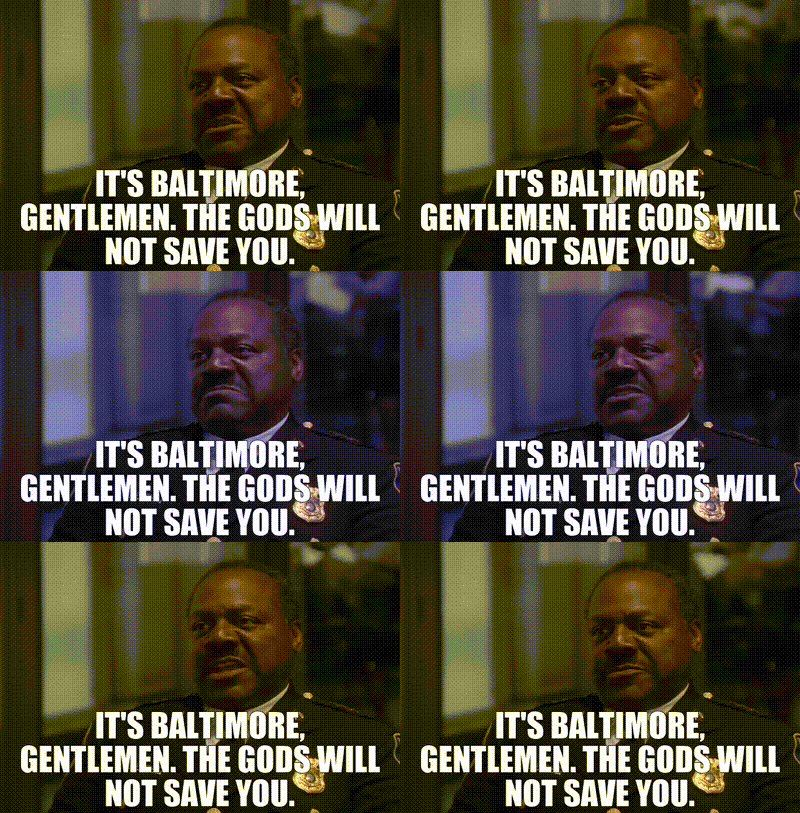
Speaking of Soros-plagued cities: “Citywide Youth Curfew Begins In Baltimore As Mayor Strives To Restore Law And Order.”I doubt Mayor Brandon Scott’s policy will make that much of a difference, though maybe with Soros-tool Marilyn Mosby out of office and awaiting trial on federal perjury charges, maybe there’s a chance of Baltimore improving. But remember:
Of course. “Just Stop Oil’s Hollywood Patron Has Holiday Home in Ireland That he Jets Off to ‘When the Going Gets Tough.'” “Oscar winner Adam McKay, whose films include The Big Short and Don’t Look Up, is one of a group of multi-millionaires behind the Climate Emergency Fund. The Beverly Hills-based fund raises cash from its mega rich supporters and distributes it to ‘disruptive’ activists, including handing almost £1million to help Just Stop Oil wreak havoc in the U.K.” Being a Democrat means never having to apologize for your hypocrisy.
The Georgia Bureau of Investigation (GBI) and the Atlanta Police Department (APD) arrested Marlon Scott Kautz, age 39, of Atlanta, Savannah D. Patterson, age 30, of Savannah, Ga., and Adele Maclean, age 42, of Atlanta, on Wednesday on charges of money laundering and charity fraud in association with fundraising efforts for the domestic terrorists who are currently in jail.
“The GBI, along with the Atlanta Police Department, have arrested three people on charges stemming from the ongoing investigation of individuals responsible for numerous criminal acts at the future site of the Atlanta Public Safety Training Center and other metro Atlanta locations,” reads the GBI’s press release.
The trio ran a non-profit called Network for Strong Communities, which worked with another group called the Atlanta Solidarity Fund, which, at least on paper, was a bail fund for the thugs who attacked the training center property and other areas in Atlanta.
Given that, it might be time to take a look at Worth It or Woke for honest movie reviews.
Dwight has a good look at the Battleship Texas, and (for Memorial Day) seaman Christen Christensen, who was killed in combat during the bombardment of a German shore battery off Cherbourg.
Don’t let JinJin eat poop off San Francisco’s street, or they may end up tripping balls.
This Memorial Day we honor the memory of Medal of Honor George D. Keathley, born in Lamesa, Dawson County, Texas, and died September 14, 1944 in Italy having fought for 15 minutes after receiving a mortal grenade wound.
For conspicuous gallantry and intrepidity at the risk of his life above and beyond the call of duty, in action on the western ridge of Mount Altuzzo, Italy. After bitter fighting his company had advanced to within 50 yards of the objective, where it was held up due to intense enemy sniper, automatic, small-arms, and mortar fire. The enemy launched three desperate counterattacks in an effort to regain their former positions, but all three were repulsed with heavy casualties on both sides. All officers and noncommissioned officers of the 2d and 3d platoons of Company B had become casualties, and S/Sgt. Keathley, guide of the 1st platoon, moved up and assumed command of both the 2d and 3d platoons, reduced to 20 men. The remnants of the two platoons were dangerously low on ammunition, so S/Sgt. Keathley, under deadly small-arms and mortar fire, crawled from one casualty to another, collecting their ammunition and administering first aid. He then visited each man of his two platoons, issuing the precious ammunition he had collected from the dead and wounded, and giving them words of encouragement. The enemy now delivered their fourth counterattack, which was approximately two companies in strength. In a furious charge they attacked from the front and both flanks, throwing hand grenades, firing automatic weapons, and assisted by a terrific mortar barrage. So strong was the enemy counterattack that the company was given up for lost. The remnants of the 2d and 3d platoons of Company B were now looking to S/Sgt. Keathley for leadership. He shouted his orders precisely and with determination and the men responded with all that was in them. Time after time the enemy tried to drive a wedge into S/Sgt. Keathley’s position and each time they were driven back, suffering huge casualties. Suddenly an enemy hand grenade hit and exploded near S/Sgt. Keathley, inflicting a mortal wound in his left side. However, hurling defiance at the enemy, he rose to his feet. Taking his left hand away from his wound and using it to steady his rifle, he fired and killed an attacking enemy soldier, and continued shouting orders to his men. His heroic and intrepid action so inspired his men that they fought with incomparable determination and viciousness. For 15 minutes S/Sgt. Keathley continued leading his men and effectively firing his rifle. He could have sought a sheltered spot and perhaps saved his life, but instead he elected to set an example for his men and make every possible effort to hold his position. Finally, friendly artillery fire helped to force the enemy to withdraw, leaving behind many of their number either dead or seriously wounded. S/Sgt. Keathley died a few moments later. Had it not been for his indomitable courage and incomparable heroism, the remnants of three rifle platoons of Company B might well have been annihilated by the overwhelming enemy attacking force. His actions were in keeping with the highest traditions of the military service.
Today we honor George D. Keathley and all America’s war dead for their service and sacrifice.
Californians continue to flee the no-longer golden state, and many of them end up in Texas. ABC7 News in the bay area interviewed eight who fled as to why California dreaming has become a nightmare.
Some takeaways:
“In the span of two years, California’s population has dropped by more than a half million people.”
“I was assaulted twice on the BART.”
“I’ve never had a house this large in my life.”
“It is definitely a lower cost of living in Texas.”
“The home that I once remembered and knew back in the 1980s and the 1990s, a lot of that’s gone now.”
“Home prices are lower [in Texas], and there’s plenty of job opportunities.”
The former mayor of Ventura, CA moved to Texas in 2014. “One of the things I greatly fear about Venture and elsewhere in coastal California is that it’s not a place for everybody anymore, and especially not a place for young families. It’s a place basically where older, affluent people now live. And I think something has really been lost there.”
“Home prices in Texas cost less than half of homes in California. U.S. Census Bureau numbers show that the middle and lower classes are leaving California at a higher rate than the wealthy.”
“Many who have left in recent years say they simply couldn’t afford to stay.”
A mother with six kids says it’s simply impossible to afford a house large enough in California. “I feel like the California Dream was the American Dream in my grandparents’ and parents’ era. That’s just not possible for our generation to live that American Dream in that state anymore. It’s so expensive that you’re struggling every month just to get by and pay your rent and your mortgage and put food on the table.”
Food truck owner: “The reason why I left California, honestly, is just the cost. The cost of living, the cost of running a business, regulations.”
Mention of the Move to Texas Facebook group for Californians looking to get the hell out of their failing state.
“Some people are moving to Texas because of their conservative values.”
” It seems that the environment, politically in California, has just been a one-party rule. Republicans have done absolutely nothing to change anything in any way, it seems to me. They’ve been cowardly about it.”
“It’s very sad in Contra Costa County. You can’t even be conservative. You kinda have to hide if you’re conservative almost.”
Man whose family moved to California from South Korea in the 1970s: “Unfortunately my parent’s grocery stores were burned down in the L.A. riots, two of them, near Koreatown. And so that was, you know, quite a traumatic experience for my family.”
“I definitely think [California] is mismanaged. We moved primarily because of the crime. And, for me, it was not only the crime but also, you know, the amount of homelessness, needles. I was assaulted twice on the BART. Those particular assaults I really do think it had to do with the same kind of violence that I saw in the Bay Area towards Asian Americans.”
“I miss the ocean but not enough to move back.”
What would it take to move back to California? “Number one, the whole state would have to clean up. Get some of those rotten politicians. Be tough on crime again, like you should. People’s attitudes would just have to change. But for the most part, I really am happy here.”
“My commute is seven minutes to work.”
“Yeah, we definitely have not even contemplated moving back. We are just really happy out here.”
One party Democratic rule has hollowed out the state of California, and the people Democrats used to claim to represent (the working poor and the middle class) are the ones most harmed by the graft, corruption, incompetence, and radical social justice-engendered spiraling crime rates.
Until that changes, expect people to continue to flee California.
Target loses $9 billion in market cap for trying to tranny dress toddlers. I would boycott them over that, but I was already boycotting them over the tranny bathrooms.
“‘There’s Poop Everywhere’: San Francisco’s Office District Not Only A Ghost Town, It’s Also Covered In Sh*t.”
Everyone knows that San Francisco is the nation’s largest public toilet – requiring the city to employ six-figure ‘poop patrol’ cleanup team, however a new report from the city Controller’s Office really puts things in poo-spective.
For starters, feces were found far more often in commercial sectors, covering “approximately 50% of street segments in Key Commercial Areas and 30% in the Citywide survey,” second only to broken glass as can be seen in the ‘illegal dumping’ section.
If you’re wondering about the city’s fecal methodology, look no further than a footnote on page 43;
Feces also includes bags filled with feces that are not inside trash receptacles. Feces that are spread or smeared on the street, sidewalk, or other objects along the evaluation route are counted. Stains that appear to be related to feces but have been cleaned are not counted. Bird droppings are excluded.
As far as where most of the poo is found, Nob Hill takes the top spot, followed by the Tenderloin and The Mission districts.
“After California health authorities in 2014 imposed a mandate requiring requiring churches to provide elective abortion coverage to its employees, four churches sued, and after a long court battle, have now won a $1.4 million settlement.” (Hat tip: Sarah Hoyt at Instapundit.)
In a classic case of bad timing, Tim Scott also announced that he’s running for president. I don’t see him making much headway against Trump or DeSantis, but he’s a serious veepstakes contender.
C. Boyden Gray, RIP. Among his most important tasks was spearheading the campaign for Clarence Thomas’ nomination to the Supreme Court.
It’s weird to be on the same side of an issue as Taco Bell. Namely that no one should be able to trademark “Taco Tuesday.”
Citing air-worthiness concerns, the FAA grounds the…B-17? Good to know they’re finally working through that 1946 backlog… (Hat tip: Dwight.)
The first rule of baggage claim fight club is you don’t talk about baggage claim fight club. The second rule of baggage claim fight club is that the blue zone is for loading and unloading only.
What is it like to cross the Darien Gap by car? A green hell.
This would be an entertaining slap fight if it weren’t for the fact it was distracting two of the highest profile Republican office-holders in the state from real work.
Texas’ top lawyer says House Speaker Dade Phelan needs to resign after being in a state of “apparent debilitating intoxication” while presiding over the House.
Attorney General Ken Paxton made the announcement in a statement released Tuesday afternoon.
“After much consideration, it is with profound disappointment that I call on Speaker Dade Phelan to resign at the end of this legislative session. Texans were dismayed to witness his performance presiding over the Texas House in a state of apparent debilitating intoxication,” said Paxton.
His comments are in reference to a viral video that circulated on social media over the weekend showing Phelan slurring words and acting in a manner that some allege is consistent with intoxication.
Here’s video of Phelan, and I’ve got to say: Point Paxton. Pretty positive Phelan’s pickled:
Is asking him to resign an overreaction? Probably. Back in the halcyon days of yore, back when Democrats controlled the chamber, legislating blotto was a regular occurrence, though I’m not sure any speakers were visibly soused.
A case of improprieties was laid out by a Texas House committee Wednesday morning against Attorney General Ken Paxton, detailing long-public allegations against the state official of securities fraud and abuse of office dealings with real estate mogul and donor Nate Paul.
The House General Investigating Committee heard three hours of testimony from its team of legal counselors, who since March have been looking into various cases against Paxton that have been playing out in court for years.
Chief Counsel Erin Epley announced formally that the investigation into “Matter A,” one of the anonymous titles the committee uses to conceal the identities of those being investigated and the topics therein, concerns the attorney general himself.
The handful of attorneys involved in the committee’s investigation each have a Harris County background, including working in the Harris County District Attorney’s Office or a U.S. Attorney’s Office. In an apparent attempt to underscore credibility, Chairman Andrew Murr (R-Junction) made a point to note that Epley worked under former U.S. Attorney for the Southern District of Texas Ryan Patrick, son of Lt. Gov. Dan Patrick.
Epley said the committee has interviewed 15 individuals with connections to Paxton and the allegations, including the four whistleblowers involved in the years-long lawsuit by multiple former employees of his: David Maxwell, Ryan Vassar, Mark Penley, and Blake Brickman.
“General Paxton refers to these men as ‘political appointees,’ but they are his political appointees,” Epley told the committee.
In November 2020, those former employees accused Paxton of abusing his office to assist Paul — who’s donated substantial sums of money to the attorney general — with an ongoing federal probe into his real estate business.
Paxton settled with the whistleblowers in February this year for $3.3 million to conclude the case out of court, but that settlement has since stalled out after the Legislature — specifically the House — denied the attorney general’s request that the state pay for the settlement.
In February, Speaker Dade Phelan (R-Beaumont) said he did not consider the settlement a “proper use of taxpayer dollars.”
The committee also laid out in detail the findings surrounding the eight-year-old securities fraud indictment against Paxton that has bounced around in court for years with no resolution.
The securities charges are bunk that’s already dismissed at the federal level. I’m not sure how much fire can be found in all the smoke of the more recent charges.
My rooting interest here would generally be with Paxton, since he’s doing an excellent job of suing the federal government over various far left lawbreaking, while Phelan is another in a line of squishy Republican speakers backed by business interests to thwart conservative legislation. But neither have exactly covered themselves in glory this week…
Turns out at least one city employee involved in the contract was all but handing the money to himself.
All the evidence indicates this is was almost certainly an inside job.
It certainly appears that at least one City of Austin employee colluded or communicated with friends and business associates to secure lucrative seven figure contracts.
Despite being grossly unqualified and totally inexperienced for the job.
It also seems like ICCS Academy is lying about a bunch of stuff on their bid submission.
Snip.
Believe it or not, the ICCS Academy bidding process raises even more red flags than P Squared Services.
There are two City of Austin employees listed as “authorized contacts” for Item 23.
Sandra Wirtanen
John Wesley Smith
This screenshot shows John Wesley Smith is the “Small Minority Business Resources” contact for this proposal.
Guess where John Wesley Smith used to work as the ‘Compliance Director’ before he started working for Austin city government?
ICCS Academy!
Can you imagine a bigger conflict of interest?
Maybe that’s why ICCS Academy yanked their website yesterday (link).
However, this snippet on DuckDuckGo still appears when you search for ‘John Wesley Smith ICCS Academy’
John Wesley Smith was the Compliance Director for ICCS Academy.
His bio states he also works as a “Small Business Counselor with the City of Austin”.
Snip.
QUESTION: Shouldn’t John Wesley Smith have immediately recused himself from the bidding and contract negotiation process for Item 23, due to his massive conflict of interest as the current / former Compliance Director for ICCS Academy?
Massive Conflict of Interest
Gee, I wonder how the other eight companies who submitted bid proposals for Item 23 feel about the former Compliance director of ICCS Academy overseeing the bidding process, and awarding a $7 million contract to his former colleagues?
John Wesley Smith was definitely the Compliance Director for ICCS Academy at one point in time.
Whether that was two weeks, two months or two years ago – it doesn’t matter.
John Wesley Smith should have removed himself from this project due to the awful optics and huge conflict of interest.
John Wesley Smith’s LinkedIn profile shows his current role with Austin city government is “Business Development Coordinator II”.
John Wesley Smith says he’s in charge of “negotiating contractual agreements for the City of Austin” and is “responsible for various minority/women procurements.”
Huh.
For the record, ICCS Academy is currently a registered vendor with the city of Austin.
However, all of their ‘certified commodities’ are in education, training and consulting.
So a training vendor gets picked to do homeless site cleanup despite no experience in the field because a (former?) employee works for the city and just happens to be able to throw business their way.
How convenient.
If you’ve been reading this blog for a while, you may remember that the entire reimagining police lunacy was all about social justice warriors saying time and time again “take money from the police and give it to us.” There’s an entire industry of social justice grifters (both in homelessness and every other social justice cause) whose entire existence is dedicated to making life for average citizens worse while sucking as much money as possible from taxpayers. You can bet that this is far from the first time such self-dealing has occurred, and I bet forensic audits of both city contracts and the “nonprofit” entities that receive them would reveal numerous example of quid pro quo kickbacks.
Again, kudos to Teddy Brosevelt (whoever he may be) for peeling back the lid of Austin’s social justice warrior corruption problem.
The Russian Collusion Hoax is now officially bunk, Budweiser’s self-inflicted freefall continues, blue city commercial real estate bites the moose, and a whole lot of shocked face to go around. It’s the Friday LinkSwarm!
The Department of Justice and the FBI did not have “any actual evidence of collusion” between Russian officials and Donald Trump’s 2016 presidential campaign, and began their Crossfire Hurricane probe of Trump’s campaign based on “raw, unanalyzed, and uncorroborated intelligence,” according to a report released on Monday by special prosecutor John Durham.
Durham scolded federal law enforcement and counter-intelligence officials for failing to “uphold their important mission of strict fidelity to the law” as part of their investigation.
He wrote that at least one FBI agent criminally fabricated language in an email that was used to obtain a FISA surveillance order. And he accused FBI leaders of displaying a “serious lack of analytical rigor” and relying significantly on “investigative leads provided or funded (directly or indirectly) by Trump’s political opponents,” referring to staffers and allies of Hillary Clinton, then the Democratic presidential nominee, whose campaign funded the Steele dossier through its law firm Perkins Coie.
Compiled by former British intelligence agent Christopher Steele, the dossier is an unverified collection of opposition research accusing then-candidate Trump and his campaign aides of collaborating with Kremlin officials. The FBI used the dossier to secure a FISA warrant to surveil Trump campaign aide Carter Page, though its central claims were subsequently disproven by Special Counsel Robert Mueller’s investigation.
The report notes that the FBI was quick to investigate Trump, while it proceeded cautiously with allegations against Clinton.
The 316-page report sent to Congress was nearly four years in the making. It concluded that neither federal law enforcement nor intelligence officials “appears to have possessed any actual evidence of collusion in their holdings at the commencement of the Crossfire Hurricane investigation,” which the FBI “swiftly opened.”
The report accuses federal officials of acting “without appropriate objectivity or restraint.” Peter Strzok, then the FBI’s deputy assistant director for counterintelligence, opened the investigation “immediately” at the direction of Andrew McCabe, then the FBI’s deputy director. “Strzok, at a minimum, had pronounced hostile feelings toward Trump,” the report states.
It states that former FBI attorney Kevin Clinesmith “committed a criminal offense by fabricating language in an email that was material to the FBI obtaining a FISA surveillance order.”
Durham wrote that FBI officials continued to seek FISA surveillance while acknowledging that “they did not genuinely believe there was probable cause to believe that the target was knowingly engaged in clandestine intelligence activities on behalf of foreign power, or knowingly helping another person in such activities. And certain personnel disregarded significant exculpatory information that should have prompted investigative restraint and re-examination.”
“Based on the review of Crossfire Hurricane and related intelligence activities, we conclude that the Department and the FBI failed to uphold their mission of strict fidelity to the law in connection with certain events and activities described in this report,” Durham wrote.
“Gov. Newsom Announces California Budget Deficit Bigger than Projected.” Legal Insurrection has already used the “unexpectedly” here, so I’ll just note that Newsom is the far lefty a whole lot of Democratic Party power players want to substitute for Biden at the top of the ticket in 2024.
“NIH Renews Funds for ‘Bat Coronavirus’ Research despite Energy Department, FBI’s Lab-Leak Conclusion.” That’s like catching Mrs. O’Leary’s cow after she’s burned down Chicago, strapping lit fireworks to her body and letting her loose in the dynamite factory.
“Things are so bad, in fact, that 26 Empire State Buildings could fit into New York City’s empty office space, as occupancy in the city is hovering around 50% of prepandemic levels.”
“In San Francisco, the downtown area is experiencing its worst office vacancy crisis on record – with 31% of space available for lease or sublease, the SF Chronicle reports.”
Bud Light finds out there’s no bottom to their tranny pander pit. “Sales volumes of Bud Light fell by 23.6 percent in the week ended on May 6, according to retail scanner numbers cited by Beer Business Daily that are based on Nielsen IQ data. That’s a drop from the 23.3 percent slide Bud Light suffered in the final week of April.”
Finnish nuclear plant coming online drops spot energy prices by 75%.
Republican governors released a joint statement on Tuesday pledging to assist Texas in securing its border with Mexico.
In response to Gov. Greg Abbott’s request for assistance, twenty-four Republican governors committed to helping secure the 1,254-mile-border and commended the Texas Republican for the recent actions he was forced to take due to the failures of the Biden administration’s open-border policies, according to the Washington Examiner.
“The federal government’s response handling the expiration of Title 42 has represented a complete failure of the Biden Administration,” the joint statement reads. “While the federal government has abdicated its duties, Republican governors stand ready to protect the U.S.-Mexico border and keep families safe.”
“All states have suffered from the effects of deadly illegal drugs coming across the border, and every state is a border state due to the devastating influx of drugs in our communities. Republican governors are leading the way to address the border crisis by increasing fentanyl sentencing and increasing support for law enforcement interdiction of drugs, among other measures,” they continued.
“Texas Governor Greg Abbott has exemplified leadership at a critical time, leading the way with Operation Lone Star, and deploying the Texas Tactical Border Force to prevent illegal crossings and keep the border secure. We support the efforts to secure the border led by Governor Abbott.”
On Tuesday afternoon, Abbott sent an urgent request to all of the nation’s governors asking them to band together to defeat the invasion at the US/Mexico border, something he said impacts every community in the United States.
“The flood of illegal border activity invited by the Biden Administration flows directly across the southern border into Texas communities, but this crisis does not stop in our state. Emboldened Mexican drug cartels and other transnational criminal enterprises profit off this chaos, smuggling people and dangerous drugs like fentanyl into communities nationwide,” Abbott wrote.
“In the federal government’s absence, we, as Governors, must band together to combat President Biden’s ongoing border crisis and ensure the safety and security that all Americans deserve,” he requested.
While no Democratic governors responded to the letter, twenty-four Republicans pledged to help from states which include: Alabama, Alaska, Arkansas, Georgia, Idaho, Indiana, Iowa, Missouri, Mississippi, Montana, Nebraska, North Dakota, New Hampshire, Nevada, Ohio, Oklahoma, South Carolina, South Dakota, Tennessee, Utah, Virginia, West Virginia, and Wyoming.
Jorge Mijares left Venezuela months ago — last November, he says. He’s been in Ciudad Juarez, across the Rio Grande River from El Paso, for four weeks. But he planned to cross over Thursday night, as Title 42 immigration restrictions ended.
“I have the app,” said Mijares, 54. “I’m just waiting for it to tell me when to go.”
He’s not concerned about the Biden administration’s warnings against migration. After all, he has many friends who have made it across — safely.
There’s an app that tells you how to break U.S. immigration laws. Of course there is. Silly of me to be even slightly surprised. “The street finds its own uses for things” as the now-elderly cyberpunks used to say…
Twisted Sisiter’s Dee Snider is not down with your tranny madness. You submitted this with a better “we’re not going to take it” pun.
Speaking of tranny madness: Cross-dressing serial thief Samuel Brinton arrested as a fugitive from justice.
Remember Austin’s scheme to hand millions to the homeless industrial complex to clean up the mess they created, and the shady, recently-created “P Squared Services, LLC” they picked to give $1.7 million to?
That attracted so much attention that that particular piece of graft is now off the table:
Kudos to blogger Teddy Brosevelt (I’m going to go out on a limb and guess that’s a pseudonym) and Austin City Council member Mackenzie Kelly for killing this giant bucket of graft.
As the 88th Texas legislature regular session races toward sine die on May 29, here’s a quick update on two bills that caught my attention:
The senate is debating a bill to prevent banks from tracking firearms purchases. Good. We should not be letting the government set up a gun confiscation list, or banks a list to start banning law-abiding gun owners based on the goal of goosing their ESG scores.
A landmark local government preemption bill cleared its second hurdle Tuesday as House Bill (HB) 2127 was passed by the Texas Senate, with a few amendments.
Dubbed the “Texas Regulatory Consistency Act,” the bill prohibits municipalities from approving regulations that exceed state law in nine different sections of code: Agriculture, Business & Commerce, Finance, Insurance, Labor, Local Government, Natural Resources, Occupations, and Property.
The bill states that any regulation specifically enumerated in state code is regulatable by municipalities, and anything else is not, a strategy called “field preemption.” Up until this session, the state had opted for “conflict preemption,” a strategy of addressing specific policies adopted by localities after the fact.
It’s the difference between blasting with a shotgun and firing with a rifle.
HB 2127 allows individuals or associations in the county of potentially offending regulation to sue the locality for abridging this prohibition.
The bill, authored by Rep. Dustin Burrows (R-Lubbock) and sponsored by Sen. Brandon Creighton (R-Conroe), was passed by the House about a month ago, where it received eight votes from Democrats in the lower chamber. From there, it moved to the Senate Business & Commerce Committee, where it passed six to two.
On Monday, the Senate passed its version with three amendments; Sen. Robert Nichols (R-Jacksonville) was the only GOP “nay” on the bill. The vote was the same on Tuesday’s final passage.
Those amendments include a “loser pays” provision, placing the burden of payment for a frivolous lawsuit with the person or group who brought the suit; a limitation that a suit may only be brought against the offending political subdivision, not individual elected officials of that locality who were liable to be sued under the House version; and the tacking on of a prohibition against local governments halting evictions.
Plaintiffs must provide three months’ notice to the locality of an impending suit, intended as a grace period within which the potential violation can be revoked.
That eviction language comes from Senate Bill (SB) 986, which appears to have stalled out in the lower chamber. That bill is aimed at what big cities in Texas tried to do — but were stopped by courts — in ordering eviction moratoriums during the COVID-19 pandemic.
Creighton said in a statement after the bill’s passage, “The Texas Regulatory Consistency Act, the most pro-business, pro-growth bill of the 88th session has passed the Senate.”
“HB 2127 gives Texas job creators the certainty they need to invest and expand by providing statewide consistency and ending the days of activist local officials creating a patchwork of regulation outside their jurisdiction. Local governments acting as lawmakers in a patchwork of varying anti-business ordinances result in job killing outcomes.”
Gov. Greg Abbott has backed the bill, shedding little doubt over whether he will sign it into law once it reaches his desk.
Snip.
With the bill passed in the upper chamber, it now moves back to the House, where the members must either accept the Senate version with its amendments or reject them and trigger a conference committee.
From there, it moves into the friendly embrace of Abbott, who’s been chomping at the bit to sign it into law.
The sooner this is signed into law, the sooner the madness consuming the local governments in Travis and Harris County can be reigned in.