Ukraine has been so successful at hitting Russian infrastructure with HIMARS that it’s no longer news when they hit something 100 kilometers behind Russia’s lines.
But when they hit something 600 kilometers away, that’s news.
Several people have been killed in explosions at two Russian military airfields, according to reports.
A fuel tanker exploded killing three and injuring six in an airfield near the city Ryazan, south-east of Moscow, Russian state media is reporting.
Another two people are reported to have been hurt in an explosion at an airfield in the Saratov region.
It is not known what caused the blasts. Both areas are hundreds of kilometres from the Ukrainian border.
Long-range Russian strategic bombers are believed to be based at the Engels airbase in the Saratov region.
Here’s a Suchomimus video on the Engels Airbase attack:
Ukraine’s ever-increasing range puts a whole lot of Russian infrastructure (military and otherwise) under potential threat. Perhaps Putin should take that into consideration before ordering the next round of attacks on Ukrainian power plants…
Early on, a lot of observers predicted that Russia, with it’s vast store of Soviet-era aircraft, would quickly achieve air-superiority over Ukraine. That hasn’t been the case.
This video from the British Imperial War Museum lists some reasons why.
Takeaways:
They failed to hit Ukrainian aircraft on the ground in the opening phases of the war.
A “great deal of mismanagement, kleptocracy, you know, favored projects over some kind of strategic effect.” Note how Putin is always announcing some sort of awesome wonderwaffen while neglecting basic needs like logistics.
“The level of corruption in Russia itself has had an impact on its ability to have a tactical or even strategic effect without support from the air. Russia’s ground forces have been largely unable to mount effective combined arms operations.”
“The key reason for Russia’s inability to effectively use its air force has been its failure to take out Ukraine’s mobile surface to air missile systems. They have been unable to suppress enemy air defenses.”
Ukraine made an early effort to obtain SAM systems from the west.
Both mobile tracked systems like S-300 and MANPADS have been used.
Failure to achieve air superiority has both sides investing in drones.
“What you do is you flood the airspace, almost like a denial of service attack, as we see on the Internet. As you attack a server, for instance, by having so many pings against it, it essentially shuts down the server. And what we see in the case of Russia is that it’s doing the same thing. It’s trying to flood the air defense systems.”
“The relatively low cost of these drones is one of the main reasons for Russia to deploy them, and in such numbers. Each drone reportedly costs around $20,000. And so losing an expensive advance guided missile to these drones is not an ideal strategy for Ukraine.”
One reason not covered: Russia seems to have used up a good portion of it’s high tech weapons in the opening phases of the war, and western sanctions mean that it can’t easily replace them. Sophisticated fighter bombers are a whole lot less effective when they’re reduced to dropping gravity bombs rather than guided munitions.
Howdy! Hope everybody had a great Thanksgiving! I spent six days up in the Dallas/Fort Worth Metroplex, visiting relatives and buying some 180 books, some for myself and some to deal. Enjoy a Friday LinkSwarm!
We keep hearing that it’s impossible rig government unemployment statistics, but something funny is going on.
A superficial take of today’s jobs report would note that both jobs and earnings “blew past expectations, flying in the face of Fed rate hikes”, and while that is accurate at the headline level, it couldn’t be further from the truth if one actually digs a little deeper in today’s jobs numbers.
Recall that back in August, September, and October we showed that a stark divergence had opened between the Household and Establishment surveys that comprise the monthly jobs report, and since March the former has been stagnant while the latter has been rising every single month. In addition to that, full-time jobs were plunging while part-time jobs were surging and the number of multiple-jobholders soared.
Fast forward to today when the inconsistencies not only continue to grow, but have become downright grotesque.
Consider the following: the closely followed Establishment survey came in above expectations at 263K, above the 200K expected – a record 7th consecutive beat vs expectations – and down modestly from last month’s upward revised 284K…
… numbers which confirm that at a time when virtually every major tech company is announcing mass layoffs…
… the BLS has a single, laser-focused political agenda – not to spoil the political climate at a time when Democrats just lost control of the House as somehow both construction (+20K) and manufacturing (+14K) added jobs according to the BLS, when even ADP now reports that these two sectors combined shed more than 100,000 workers in November.
Alas, there is only so much the Department of Labor can hide under the rug because when looking at the abovementioned gap between the Household and Establishment surveys which we have been pounding the table on since the summer, it just blew out by a whopping 401K as a result of the 263K increase in the number of nonfarm payrolls (tracked by the Household survey) offset by a perplexing plunge in the number of people actually employed which tumbled by 138K (tracked by Household survey). Furthermore, as shown in the next chart, since March the number of employed workers has declined on 4 of the past 8 months, while the much more gamed nonfarm payrolls (goalseeked by the Establishment survey) have been up every single month.
What is even more perplexing, is that despite the continued rise in nonfarm payrolls, the Household survey continues to telegraph growing weakness, and as of Nov 30, the gap that opened in March has since grown to a whopping 2.7 million “workers” which may or may not exist anywhere besides the spreadsheet model of some BLS (or is that BLM) political activist.”
A non-profit bankrolled by some of the nation’s largest corporations and left-wing billionaire George Soros is conducting a racial census of House and Senate staff as part of its effort to establish a “Bipartisan Diversity and Inclusion Office,” according to internal emails obtained by the Washington Free Beacon.
Senate and House staff received emails from a researcher at the Joint Center for Political and Economic Studies starting in July asking them to confirm their “racial and ethnic identity” as part of an alleged data collection effort. In at least two cases, senior congressional staffers who declined to provide their races were told by the researcher that the organization’s current data indicated they “may identify as white” and asked the staffers to update if the information was incorrect.
Information collected by the group will be used in its annual report that lobbies for “structural changes on Capitol Hill that would allow for more people of color to be hired in senior positions,” a previous report from the group states. That report is made possible in part by millions of dollars in donations to the Joint Center for Political and Economic Studies from Apple, Google, Meta, Pfizer, the Soros-backed Open Society Foundation, among dozens of other large corporations and nonprofits.
The Joint Center for Political and Economic Studies’ survey is part of a broader trend by left-wing organizations to pressure workplaces and governments to increase affirmative action policies. Often couched in promoting “diversity, equity, and inclusion,” those policies have received criticism for coming at the expense of competence and offering advantages based on race instead of merit.
Rush was charged with a second-degree felony, aggravated assault with a deadly weapon family violence. An emergency protection order was issued against him, and he was soon back on the streets after making a $40,000 bond, KVUE reported.
“For $4,000, you can get out, go home, watch Netflix after trying to murder your ex-girlfriend — are you kidding me?” one of the customers said.
So in addition to aggravated assault with a deadly weapon and possible attempted murder, our super-genius lawyer also violated section 46.03 of the Texas penal code by carrying a gun into a bar. And he bonded out. For all that Democrats blather about “gun violence,” they don’t seem top treat gun felonies with any seriousness when they actually occur. Thanks, Soros-backed DA Jose Garza!
But it turns out that Rush didn’t just go go home to watch Netflix, as he was found dead on Thursday.
In one meeting, Deon Jackson went from South Carolina’s Berkeley County school superintendent to unemployed.
His firing came at the hand of a newly-elected school board, which appears to have declared a judgment day for woke practices in its district.
In its first meeting after the Nov. 8 election, the board fired superintendent Jackson and school counsel Tiffany Richardson. Then it hired Anthony Dixon as superintendent and retained Brandon Gaskins as counsel. And before the day was over, the board banned teaching critical race theory and created a board to review library books for pornographic content.
Moms for Liberty, an activist group that supports parental rights in education, endorsed six of the board’s nine members. Many Moms for Liberty candidates won school board elections this November.
Speaking of disinformation, CNN carries out more mass layoffs, including Chris Cillizza. Let’s have a moment of silences for his careerOK that’s enough.
Legal Insurrection conducts a 2024 presidential preference poll. Not surprisingly, DeSantis comes in first and Trump second. Nikki Haley third over Ted Cruz is a mild surprise. Greg Abbott ranked dead last, tied with Liz Chaney, is a much bigger one.
At first, I was not at all enthused about the Air Force’s new Sky Warden platform, a step back to a single-seat, propeller-driven combat aircraft not used since the Douglas A-1 Skyraider was retired in 1973. Some background:
U.S. Special Operations Command on Monday announced it has selected the AT-802U Sky Warden, made by L3Harris Technologies and Air Tractor, for its Armed Overwatch program.
The indefinite delivery, indefinite quantity contract will be worth up to $3 billion, L3Harris said in a release Monday. The initial program contract award is for $170 million.
Air Tractor is an aircraft manufacturer from Olney, Texas, that typically makes firefighting aircraft and agricultural planes such as crop dusters.
Initial production of the Sky Warden will take place at Air Tractor’s facility in Olney. L3Harris will then modify those planes into the Armed Overwatch mission configuration at its Tulsa, Oklahoma modification center, beginning in 2023. L3Harris said work will also take place at its other sites in Greenville, Rockwall and Waco, Texas and Nashville, Tennessee.
Air Force Special Operations Command’s Armed Overwatch program aims to build a fleet of up to 75 flexible, fixed-wing aircraft suitable for deployment to austere locations, with little logistical tail needed to keep them operating.
SOCOM is planning for the single-engine Sky Warden, as AFSOC’s Armed Overwatch plane, to be able to provide close air support, precision strike and armed intelligence, surveillance and reconnaissance missions for counterterrorism operations and irregular warfare.
When I heard that the Air Force was considering going back to a prop plane for a ground attack aircraft, I thought that: A.) This was a sign of their continuing disdain for the A-10, and B.) This was a role better suited for drones that manned aircraft, and thus the Air Force wanted it only to keep their institutional budget up, since anyone can fly a drone.
However, if it’s specifically geared toward supporting special forces operations, then the move makes a lot more sense. In that case, you need the hyper-loiter capabilities, and larger drones can be of limited use if you’re out of line-of-radio-control (say, in mountainous terrain) and you don’t have them set up for satellite relay.
Here’s a YouTuber who’s quite enthusiastic about it:
“That is an up-armored crop duster with rocket launchers on it. It looks like somebody maxed out the starter item in a video game.”
“It’s got bulletproof windows, a heavily armored cabin engine compartment, self-healing fuel lines [and] reinforced landing gear allowing you to land virtually anywhere. And it absolutely packed with ISR [intelligence surveillance and reconnaissance] equipment, [basically] making this a spy plane.”
“The standard payload is currently set to be 14 APK WS laser-guided Hydra rockets.”
“It’s basically an acoustic version of an F-22.”
It can loiter about 6 hours, as opposed to 1.5 hours for the A-10.
It’s also cheaper: “For every hour the A10 is in the air, there’s $20,000 in maintenance to be done. Compare that to the Sky Warden, which is less than $1,000 per flight.”
“Nobody wants to be the guy getting murked by a plane with a propeller in 2022. If you wake up dead, and you got to explain to all your buddies in the afterlife you got taken out by an A-10 Warthog, that’s respectable. You tell them you got taken out by a crop duster, they’re gonna talk shit for the rest of Eternity. ‘Hey guys, you hear that Groot over here got taken out by the fucking Wright Brothers.'”
The Pentagon is spending $3 million for the program, which is a lot of cheddar by normal people standards, but nothing by Pentagon standards. Being the biggest and baddest on the bloc means you can buy niche role weapons like this.
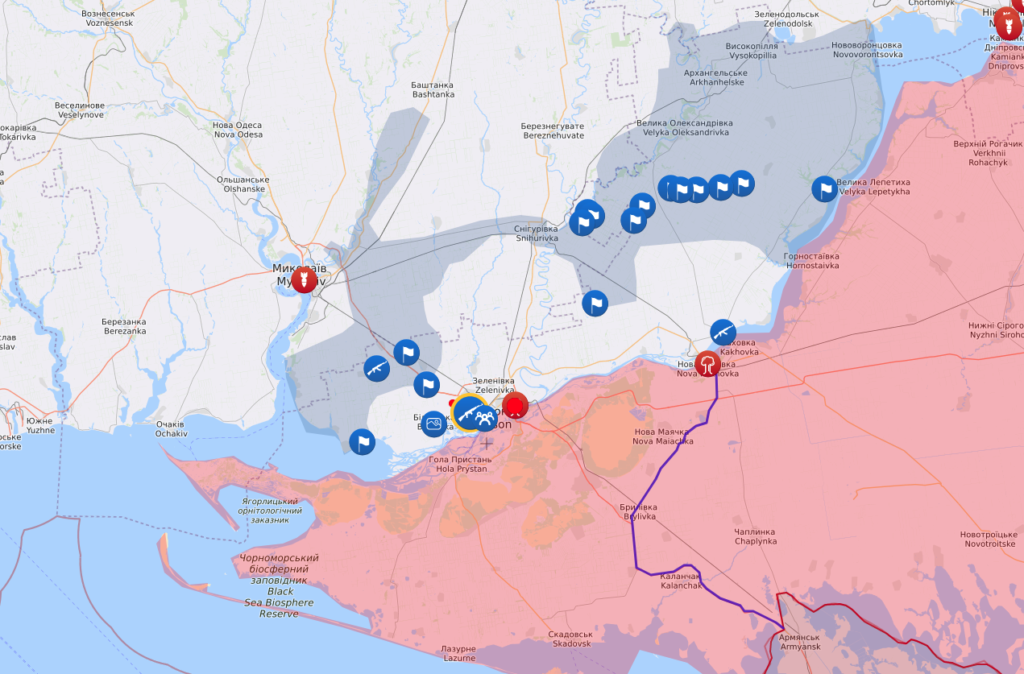
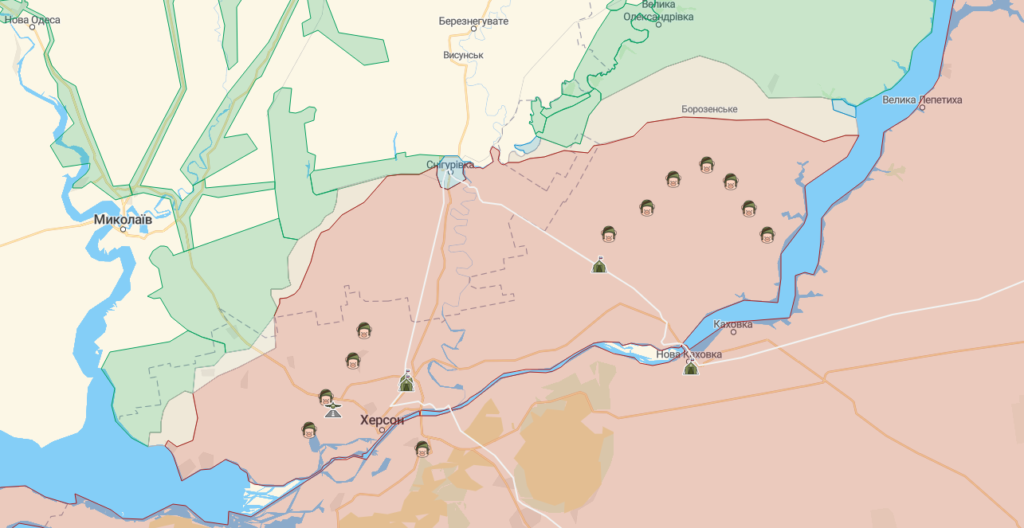
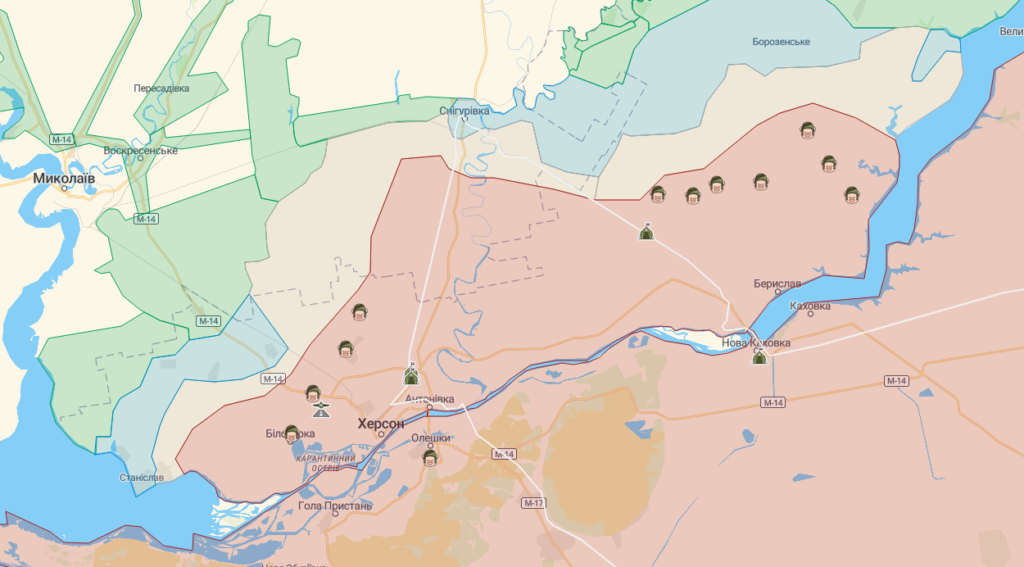
Right after Kherson city was liberated and spans on the Antonivsky and Nova Kakhkovka bridges blown, a whole lot of commenters went “Well, Ukraine obviously isn’t going to try to cross the Dnipro there, it’s too wide.”
The Kinburn Spit is a narrow finger of sand and scrub, barely three miles long, that juts from the wider Kinburn Peninsula into the Black Sea at the mouth of the Dnipro River south of Kherson. It and the adjacent peninsula also are the last parts of Ukraine’s Mykolaiv Oblast that remain under Russian occupation.
Don’t expect that to last. The Kremlin on Wednesday ordered its battered forces on the right bank of the Dnipro to retreat to the river’s opposite bank.
The order came six months after Ukrainian brigades, re-armed with European howitzers and American rocket-launchers, began bombarding Russian supply lines in the south—and two months after those same brigades launched a counteroffensive aimed at liberating Mykolaiv and Kherson Oblasts.
The Ukrainians have the Kinburn Spit in their sights. They’ve got the troops, the equipment … and a plan.
Russian troops seized the Kinburn Spit in mid-June as Russian advances in the south—having already overwhelmed Kherson city—ran into stiff resistance a few miles south of Mykolaiv city. Capturing the spit would turn out to be one of the Russian army’s last victories in the south. The four-month Ukrainian counterlogistics campaign that preceded Ukraine’s southern counteroffensive already was underway.
Kinburn matters. Russian control of the sandy strip “will allow them to exert further control of the Black Sea coast,” the Institute for the Study of War in Washington, D.C. explained in June. For the Ukrainians, Kinburn is a back door—a way to get forces onto the left bank of the Dnipro without crossing the river, likely while under fire.
As far back as April, U.K. intelligence agents were advising their government to support Ukrainian forces in any future attempt to “conduct beach reconnaissance” on the Kinburn Spit. The recon could “Identify good landing locations for a larger assault force for a future counterattack,” the agents explained in a presentation that later leaked to the press.
It’s possible Ukrainian special operations forces riding in rigid-hull inflatable boats began reconnoitering the spit as early as September. In October, video circulated online reportedly depicting the Ukrainian navy’s last remaining big ship, the 240-foot amphibious vessel Yuri Olefirenko, apparently firing rockets at Russian forces on or near the spit.
The Ukrainian military’s southern command on Saturday announced its intention to liberate Kinburn. Within a day, there were videos online possibly depicting Ukrainian commandos riding toward the spit in their small boats.
Here’s a video of Ukrainian forces doing just that:
Looks more like a commando raid or a reconnaissance in force. And here’s a video analyzing Russia defensive position on the Spit:
There are unconfirmed reports of other river crossing zones. I’d take those with several grains of salt. But it seems possible. Indeed, there are reports confirming that Russia has indeed bugged out from towns in Kherson south of the Dnipro, like this video of apparently abandoned posts in Oleshky, directly south of the Antonovsky Bridge:
The Ukrainian Defense Ministry has evidently confirmed Russia’s pullout from the banks of the Dnipro as well:
Russia is preparing defensive positions in Crimea:
Three areas they’ve prepared defensive lines are on the isthmus just south of Perekop, just south of the Chongar Strait, and even on the Arabat Spit, that tiny bit we talked about having a tiny dirt road here. Says Suchomimus: “It’s a bit of preparedness and foresight we haven’t seen from them so far.”
Peter Zeihan thinks that Crimea is so hard to supply that Russia would be better off abandoning it:
I suspect Putin would rather die that give up Crimea voluntarily.
Pooty Poot certainly knows how to make friends and influence people…
Update: Current thinking seems to be that the Polish missile strike was a Ukrainian ground to air missile that went astray trying to intercept a Russian missile.
Yesterday’s post about Russians starting to bug of Kherson Oblast north/west of the Dnipro Rover is already obsolete, as Russia appears to have completed its retreat.
Russia’s military said on Friday it had completed its withdrawal from Kherson, a lightning-fast retreat of tens of thousands of troops across the Dnipro river in the south of Ukraine.
Russian Defence Minister Sergei Shoigu, one of President Vladimir Putin’s closest allies, on Wednesday ordered troops to leave Kherson in a pullout that allows Ukrainian forces to move closer to Crimea, which Russia annexed in 2014.
Russia’s defence ministry said all Russian forces and equipment had been transferred to the eastern bank of the Dnipro. It said the withdrawal was completed by 5 a.m. Moscow time (0200 GMT) on Friday.
“The transfer of Russian troop units to the left bank of the Dnipro river has been completed,” the defence ministry said in a statement.
“Not a single unit of military equipment or weapons have been left on the right (western) bank. All Russian servicemen crossed to the left bank,” it added. Russia, it said, had not suffered any loss of personnel or equipment during the withdrawal.
I’m betting that last paragraph is a huge exaggeration, as we already have reports of wounded Russian soldiers being abandoned in the retreat. And there are already videos of captured equipment:
Lots of trophies today. The trophy Russian TOS-A1 "Solntsepek" pulls the trophy tank. The Russian army, as usual, leaves its heavy equipment in working condition. pic.twitter.com/cXBuZ3ehgN
And Russia blew a span out of the Antonovsky Bridge.
It appears that the Nova Kakhkovka Bridge has also been blown:
NOVA KAKHOVKA DAM+LOCK 🧵 /16 It looks like several spans of the bridge along the dam were blown up by Russians during the retreat pic.twitter.com/hmaK13SKNG
Right now the Kherson retreat looks like considerably less of a debacle than the rout in Kharkiv. We’ll see how many troops were captured and how much equipment captured after the dust settles.
Lets look at the news that Russia has announced a complete withdrawal from Kherson oblast north/west of the Dnipro River.
First up: A big picture overview from Peter Zeihan, that I have some minor to moderate quibbles with.
Takeaways:
Russia has announced withdrawing from the Kherson pocket, which is their only territory west of the Dnipro River.
“Reports at this point indicate that the Russians are withdrawing at full speed from all positions.”
Not a rout…yet.
“Based on whose statistics you’re looking at, they’re somewhere between 20,000 and 40,000 Russian forces in the area, but it’s generally accepted on both sides these are the best troops that the Russians have, with the best training and the best equipment.”
Those Russians haven’t been properly supplied for a month due to the Kerch Strait Bridge attack. “Which is the only heavy rail connection that can handle freight transport from Russia proper to the southern front.”
“Everything now has to come in by truck and the Russians have lost the vast majority of their tactical truck support fleet for the military and are now using civilian vehicles, making them very vulnerable.”
“Not enough shells and not enough fuel have been getting to the Kherson front.”
One result: For the last two weeks, Ukrainian artillery has received zero counter-battery fire. “So the Ukrainians have just been able to plug away with whatever ammo they have.”
“The Ukrainians are being presented with a golden opportunity even if it’s only 20,000 Russian troops that are here. They’re now all in a state of retreat and they all have to go to the same places.”
“There are only two bridges across the [Dnipro] river, and the Ukrainians have excellent intelligence on the entire zone, so if the Russians put up a pontoon bridge it usually only lasts for a few minutes before it gets taken out.” I rather strongly suspect that Zeihan is either exaggerating here, or the sources he’s depending on are. It’s a bit too far front the frontlines for easy Excalibur range, and I sincerely doubt Ukrainian observers can get approval for HIMARS strikes within minutes for targets of opportunity. They’re just too expensive, and it’s not like they have huge quantities on hand.
“All of the Russians need to go on the same roads and the same intersections, which are all going to be massive kill zones until they reach the bridgeheads, one of which is at Kherson city, and the other one which is at the dam at Nova Kakhkovka.”
“The Ukrainians have been hitting these bridges with rocket fire for weeks, and they can’t handle heavy equipment any more.” Here Zeihan’s information is out of date; Russia has successfully repaired the bridge at Nova Kakhkovka using aggregate fill, which means it probably can be used for Russian heavy equipment to escape. See the video below for more details.
“Which means the Russians are going to have to make a massive parking jam at the bridgehead, dismount, and then run across while under artillery fire the entire time. The casualties are going to be immense, and that’s the best case scenario.”
“Best guess is that not only are the Russians going to be leaving behind their best gear, but they’re leaving behind more gear than what Ukrainians captured from the Russians in the Izyum assault back in September.” In this I also think Zeihan is overly optimistic. Russia has fought this war very stupidly for the first six months, and the disordered flight from Izyum, leaving so much equipment behind, should never have happened with a competent plan for a fighting retreat. By contrast, all the evidence we have from Kherson (again, see the video below) suggests that Russia is planning a fairly competent and orderly retreat, especially with the ability to use the Nova Kakhkovka bridge. Will Russia leave a lot of good kit behind in Kherson? Probably. Will they leave more behind than Izyum? For that I’m very skeptical. Then again, the Russian military has constantly surprised me with the depths of their incompetence over the past eight months…
“The Ukrainians are likely to enter the war by May with a tank and artillery force that’s more than five times its strength on the first day of the war.” For tanks, I think this figure is greatly exaggerated. According to Oryx, Ukraine has captured 503 tanks total, and they had more than that in active service. For artillery, though still unlikely, it seems a bit more plausible, as Ukraine started with less and Russia has tons and tons of towed artillery, which is exactly the sort of thing that’s going to get left behind in a hasty retreat.
“The Russians have already used the majority of their missile and tank forces, which began this war as the world’s largest.” That, I think, is accurate. Russia has been expending smart ordinance at a furious rate, and with sanctions, it doesn’t have the technological base to easily replace them.
“The Kherson withdrawal, and the likely rout to come, does mark the end of any hope the Russians had of regaining any sort of strategic initiative, or any sort of meaningful offensive operations, until at least to May. It’ll take them at least that long to bring in fresh troops and fresh gear.”
“In that time, the Ukrainians are not going to sit on their hands. They don’t have to cross the river to strike at the Russians. Once they get to the river, the long-range rockets and artillery are going to be able to target the isthmus, which is only about three kilometers wide, that connects the Ukrainian mainland to the Crimean peninsula.” On the Deep State map, I get closer to 9km just south of Perekop. Plus the Chongar strait bridge, which will be in HIMARS range. Plus the rail bridge just south of Syvash. Plus the little road southwest of Vasylivka crossing, which looks too small and precarious to support heavy traffic. Ditto the long, skinny road that runs down the Arabat Spit that separates the Sea of Azov from the Syvash Lake (AKA Rotten Lake), which appears to be a literal dirt road more suitable for dirt biking that main battle tanks. (Actually, there appear to be several weird little dyke-top roads that separate different segments of the Syvash Lake, though none really look up to military duty.)
“Because the Kerch rail bridge is out, Russia cannot only not bring in ammo and troops and fuel, it can’t bring in food. Their only other option are some very light rail and road connections across that isthmus, coming from the rest of occupied Ukraine, all of which Ukraine will still be able to strike.”
“In capturing Kherson, the Ukrainians are going to be able to cut the water flows to the Crimea canal, and water from that canal is solely responsible for three-quarters of the food grown in Crimea. So no imported food, little grown food. Russia is either going to have to evacuate the entire peninsula by car across the Kerch bridge’s remaining road span, or suffer a 1980s Ethiopia style famine.” Here again I think Zeihan exaggerates, as Russia will still be able to bring in food via ship across the Black Sea or the Sea of Azov. Crimeans could well be looking at a very lean year, maybe even Siege of Saint Petersburg lean, but that’s not “Ethiopians dropping dead of famine” lean.
Next up: Suchomimus offers a detailed map update. Zeihan is a geopolitical generalist jack of all trades, but detailed video and geolocation analysis is all Suchomimus does.
Takeaways:
Russia has blown up most (probably all) of the bridges over the Inhulets River.
Russia has several ferries to run troops and equipment over the Dnipro, along with rallying point to stage units for withdrawal. Some of the staging areas have been hit by Ukrainian artillery, but satellite photos show Russian forces spread out in those areas to minimize damage.
No evidence of heavy vehicles using those ferries yet. “It’s unknown if these ferries and barges can actually support anything heavier or not, and if they can, it’s likely they can only carry one at a time.”
There are two ferry loading points in Kherson city itself.
The southern bank shows several unloading spots. “This shows the ferry unloading spots, as well as a number of defensive positions trenches and earth walls which have been constructed. This point is reported to be less used than it was because of numerous calls from Mr. HIMARS. But it’s still heavily defended with trenches.”
As mentioned above, Russia has repaired the Nova Kakhkovka bridge over the Dnipro River using fill materials. “The main bridge is fully repaired, and there are three smaller and lighter bridges, so this is the only real crossing point…there’s no way to move heavy vehicles other than the ferries, and we’ve only seen light trucks on those so far on the Eastern side. Nova Kakhkovka is the only real option, so they are in a bit of a pickle, at least when it comes to getting heavy vehicles back across.”
“I expect the priority will be holding Nova Kakhkovka for as long as possible.”
Russia has constructed no less than three successive prepared defensive lines on the south/east side of the Dnipro.
Finally, after a month of almost no significant Kherson updates, are we seeing frontline movement indicating a Russian withdrawal? Oh yeah. Here’s Kherson at 4:04 AM Ukrainian time today:
Commenter Greg The Class Traitor asked about this on another thread, so I thought I would throw this Anders Puck Nielsen video up with a bit of context.
Basically Ukraine managed to hit (but not sink) some Russian warships in Sevastopol harbor with some waterborne drones, and Putin threw a hissy fit, declaring the Ukrainian grain export deal was off. Turkey promptly went “No it isn’t” and said exports would continue with Turkish flags on the grain ships in question, causing Russia to back down and rejoin the deal pretty much immediately.
Historically, there’s no love lost between Turkey and Russia. (Honestly, you could swap out any other of either of those two country’s neighbors in that sentence, and it would still be true.) The fact that there were ten different Russo-Turkish wars (plus the Crimean War and World War I) should give you an inkling of how deep and bitter that enmity extends. That’s one of the factors that made NATO such a useful ally against the Soviet Union during the Cold War. Even today, Russia and Turkey are fighting a quasi-proxy war between Russian-backed Armenia and Turkish-backed Azerbaijan over Nagorno-Karabakh, and Russia is on the losing end there as well.
Let’s look at Russia’s backdown over the grain deal.
Takeaways:
“It looks like a diplomatic defeat in a stand-off with Turkey, and it shows that Russia is essentially unable to control the maritime domain in the Black Sea.”
“Russia was clearly very upset about the attack. It was a big deal in the Russian media, and they put a lot of effort into portraying it as a terrorist attack. And just to be clear, when there is a war going on, it is not terrorism to attack the opponent’s military.” This is clearly a “Duh!” point, but one worth spelling out given the vast swarms of pro-Russian bots who argue otherwise.
“The deal was made such that it had a duration of 120 days, so it was up for renewal in November…For quite a while is has seemed that Russia has been unhappy about the grain deal. I don’t think they had expected that it would be such a big success.”
“As I am recording this we are up to 477 shipments and more than 10 million tons of cargo. That’s a lot. I don’t think the Russians had expected Ukraine to be able to make a safe corridor that quickly.”
“If we remember how the war was going back in July, then Russia was still on the offensive. People were still talking about Russia closing the land corridor to Transnistria and maybe taking Odessa. So from a Russian perspective the idea might well have been that the deal would never work. Because it was going to take months for Ukraine to make a safe corridor, and before that time, Ukraine would have lost the access to the ports.”
“But what happened was that the grain deal did become a success. Ukraine has made a lot of money from exporting its agricultural products, and it has reduced the prices of food on the global markets.”
“What this grain does is that it reduces the prices on the global market, so that people in the third world can also afford to buy food. And then it helps the economy because it reduces inflation. But for Russia right now it is a point to have a big economic crisis in the West, and the Ukrainian economy is supposed to be terrible.”
“Turkey was not going to accept that the deal would fall on the ground. So they made it clear that the grain shipments were going to continue, and that they were going to provide the ships to do it, if necessary. And that gave Russia the challenge that if they withdrew from the deal, but it didn’t have any consequences, then it would be embarrassing. Because it would demonstrate that Russia is unable to control the events.”
“The Russian navy can’t actually operate with surface warships close to the Ukrainian coastline, because Ukraine has land based anti-ship missiles, so it would be really hard to interdict the grain traffic. And using long-distance air strikes or submarine attacks on UN cargo ships that are transporting grain to the world to avoid a food crisis…it would turn everybody against Russia. It’s just impossible to explain.”
“Maybe it could even lead to a military confrontation with Turkish warships that were protecting the shipments. So in other words, Erdogan called Putin’s bluff.”
“What this shows is basically two things. It shows that the relationship between Turkey and Russia, it now that Turkey that has the stronger position. It is now Erdogan that tells Putin how things will be. And then it shows that the Russian Black Sea Fleet can’t enforce a blockade on Ukrainian harbors. And if they can’t do that, then I will say that it is getting more and more difficult to see what the role of the Russian navy actually is in this war.”
Plus, if Russia had actually attacked Turkish ships, that would probably lead directly to a military conflict with NATO. And while I’m sure that before Russo-Ukrainian War, there were many Russian ultranationalists who loudly declared that Russia could win a war against NATO, Russian military performance has been so lousy that only the most hopelessly self-deluded could believe that now.
(By the way, my Internet was restored Friday. It turns out three people on my block were affected, so it was a narrowspread outage, evidently because the “traps” were too old to handle a recent network upgrade. I’ll try to do the LinkSwarm on Sunday, if I have time.)
Blue cities bleed, more Democrats violating election laws, another Democratic congressional staffer exposed for carrying water for Red China, Elon Musk takes over and immediately starts cleaning house at Twitter, and more transexual lunacy. It’s the Friday LinkSwarm!
As polling continues to show crime is a top issue for voters, the number of homicides has skyrocketed nationwide.
In fact, homicide rates rose by an average of nearly 10% in 50 of the most populated U.S. cities between the third quarter of last year and the third quarter of this year — and are still rising — according to a new study.
WalletHub compared 50 of America’s largest cities based on per capita homicides for the third quarter (July through September) of each year since 2020, using locally published crime data to compile its findings.
According to WalletHub, these were the ten cities with the highest homicide cases per 100,000 residents from July through September:
St. Louis, Mo. (19.69)
Kansas City, Mo. (14.86)
Detroit, Mich. (13.24)
Baltimore, Md. (12.45)
New Orleans, La. (10.99)
Milwaukee, Wisc. (10.46)
Memphis, Tenn. (9.99)
Philadelphia, Pa. (9.36)
Norfolk, Va. (7.78)
Chicago, Ill. (7.71)
The top prosecutors in most of these cities are backed by progressive megadonor George Soros, a billionaire who’s spent the last several years injecting tens of millions of dollars into local district attorney races nationwide, backing candidates who support policies such as abolishing bail, defunding the police, and decriminalizing or deprioritizing certain offenses.
In St. Louis, for example, Circuit Attorney Kimberly Gardner is one of the first prosecutors bankrolled by Soros’ financial network of organizations and affiliates, heavily funded by these sources in 2016 and again in 2020.
Amid high homicide figures, Gardner has declined more cases and issued fewer arrest warrants than her predecessor, charging fewer felonies and prosecuting thousands of fewer cases as a result. She has also deferred prison sentences for misdemeanors and nonviolent felonies as part of her reform initiatives.
Gardner has said this is part of her “platform to reduce the number of cases unnecessarily charged in order to focus on the more difficult cases for trial.”
Last year, Gardner came under fire after three murder cases under her purview were dismissed in one week due to prosecutors in her office not showing up for hearings or being unprepared.
Her campaign website boasts that she’s “made jail and prison a last resort, reserved for those who pose a true public safety risk,” while limiting “the arrest and detention of people accused of misdemeanors and low-level felonies.”
Philadelphia DA Larry Krasner is another Soros-funded prosecutor.
Soros spent almost $1.7 million through the Philadelphia Justice and Public Safety PAC to help Krasner in 2017, pouring more than five times as much money into the race as Krasner himself. Four years later, Krasner received a combined $1.259 million from Soros-funded groups for his reelection.
During his tenure, Krasner has cut the future years of incarceration by half and slashed the length of parole in probation supervision by nearly two-thirds compared to the previous DA. He has also made a priority of not prosecuting people who are illegally in possession of guns unless they hurt or kill people.
The top prosecutors in New Orleans, Milwaukee, Norfolk, and Chicago have also been backed by Soros-linked money. Many of the others are self-described progressive prosecutors.
According to some experts, progressive prosecutors pursuing soft-on-crime policies have contributed to the spike in homicides and other violent crime.
“Prosecutors in most major cities have failed the people they serve by refusing to prosecute criminals, including those charged with violent crimes,” Tristin Kilgallon, associate professor of pre-law and history at the University of Findlay, told WalletHub. “Countless violent crimes have been committed by those who have been released back into the streets due to recent ‘bail reform’ initiatives or by prosecutors who declined to pursue charges.”
“Texas Secretary of State Finds ‘Serious Breaches’ in Harris County 2020 Election Audit. Auditors found multiple chain of custody issues and violations of state and federal law requiring maintenance of records in the state’s largest county.”
Issues found by auditors relate primarily to the county’s extralegal “drive-thru” voting initiated by then-interim County Clerk Chris Hollins.
Auditors found that for at least 14 polling locations the county does not show chain of custody for the Mobile Ballot Boxes (MBB) and that there were multiple MBBs created for some voting locations. Auditors say the MBBs from the polling locations “were not the MBBs ultimately tabulated.” They also note that they have been able to locate some missing MBBs, but have not been given an explanation as to why the originals were not tabulated. Each MBB can hold 9,999 ballots.
Another issue found by auditors is that poll book and provisional voting data provided by the county do not match the number of cast vote records on some of the devices.
Ennis also noted that after upgrading voting systems the county does not appear to have retained “any equipment or computers that provide relevant reports or alternatively, can read the MBBs” from 2020 or recover the cast vote records stored in them as required by both state and federal election codes.
Why, it’s almost like the Democrats running Harris County wanted to commit election fraud…
Speaking of election fraud, Facebook has been fined $25 million for breaking Washington State election law.
According to court documents, King County Superior Court Judge Douglass North found Meta to be in violation of Washington’s political disclosure law 822 separate times between 2019 and 2021 and issued the maximum possible fine for each instance, which totaled up to $30,000 per violation.
Meta was also ordered to “come into full compliance” with the state’s election transparency laws within the next 30 days as well as pay the attorney’s fees for the case, which Ferguson has requested be tripled for a total of $10.5 million. The final total will be decided by North at a later date.
According to The Seattle Times, the state’s election transparency laws, which have been in place since 1972, require ad sellers to “disclose the names and addresses of political buys, the targets of such ads and, the total number of viewers of each ad.” The judge found that Meta had intentionally violated the standards.
Washington Democrat Attorney General Bob Ferguson said “that he had “one word for Facebook’s conduct in this case – arrogance.”
He told the Times, “It intentionally disregarded Washington’s election transparency laws,” Ferguson said. “But that wasn’t enough. Facebook argued in court that those laws should be declared unconstitutional. That’s breathtaking.”
When Pennsylvania Democrats insist that a candidate who suffered a life-threatening stroke in May is recovering well and “has no work restrictions and can work full duty in public office,” that candidate must look and sound fine to prove they’re telling the truth. Last night, in the lone debate in the Pennsylvania Senate race, John Fetterman looked and sounded very, very far from fine. But you can judge for yourself by watching the whole debate here.
I expected Fetterman’s debate performance to be a Rorschach test, with Democrats insisting that he was fine and hand-waving away any problems, and Republicans pointing to every verbal misstep, pause, or oddly worded answer. But by the end of the hour, there was little debate, no pun intended. John Fetterman’s ability to hear, understand, process information, and speak appears to still be severely impacted by his stroke. Perhaps the worst moment of the night came when one of the moderators asked him about a statement he made in 2018 opposing fracking, and how he could square that past stance with his current claim that he always supported fracking. After a long pause, presumably from reading the moderator’s question from the monitor, Fetterman said, “I, I, I do support fracking and . . .” and then for a moment, Fetterman’s head shook, and his mouth moved, but no words came out. Then he picked up again: “I don’t . . . I don’t. I support fracking, and I stand, and I do support fracking.” With everyone watching likely mortified and embarrassed to watch Fetterman struggle to finish the sentence, the moderator mercifully moved on to the next question.
Elon Musk took over Twitter late Thursday and fired company CEO Parag Agrawal, CFO Ned Segal, senior legal representative Vijaya Gadde, and general counsel Sean Edgett.
Musk, the world’s richest man, acquired the social media giant through a $44 billion purchase. He reportedly had until Friday to complete the deal.
In a video tweet that went viral, Musk appeared at Twitter’s corporate offices Wednesday carrying a sink, implying that employees would need to accept that he was now in charge.
This is a good start, but all the people on the Safety and Trust Council need to be fired, and all accounts suspended or banned need to be restored.
Rishi Sunak is the new UK Prime Minister, and Nigel Farage is not impressed:
A House Democratic staffer was fired after her outreach to other congressional aides allegedly on behalf of the Chinese embassy was revealed this week, National Review has learned. After an investigation found that the staffer had acted improperly, her boss, Representative Don Beyer, swiftly removed her.
“Congressman Beyer was totally unaware of these activities prior to being contacted by the House Sergeant At Arms,” Aaron Fritschner, his deputy chief of staff, told National Review in a statement this morning. “As soon as he learned of them, he followed every directive he was given by security officials. The staffer in question is no longer employed by the office of Congressman Beyer.”
Fritschner added that Beyer, who has a hawkish record on China, was “deeply upset” upon learning about the activities of the now-former staffer, Barbara Hamlett.
Cleveland Municipal Court Judge Pinkey Carr, a Democrat, was found to exhibit such misconduct that comprise more than 100 incidents over a period of about two years.
The misconduct “encompassed repeated acts of dishonesty; the blatant and systematic disregard of due process, the law, court orders, and local rules; the disrespectful treatment of court staff and litigants; and the abuse of capias warrants and the court’s contempt power,” stated the court’s per curium opinion. “That misconduct warrants an indefinite suspension from the practice of law.”
Here is a moderately in-depth look at China’s current generation of artillery, and how it stacks up to American artillery.
A lot of this is a fairly detailed order-of-battle breakdown of what and how many artillery pieces are assigned to each level of Chinese military organization, which I’m not going to try to summarize here. But here are some of the more interesting takeaways:
China’s artillery mix seems to be between Russia’s “more is more” giant units of towed artillery and America’s largely mobile, increasingly high tech approach.
There are different mixes of self-propelled artillery deployed to north Chinese units than south Chinese units. The north emphasizes larger systems, while the south features smaller, more mobile systems for more rugged terrain. (Remember, China got its ass kicked in the Sino-Vietnamese War in 1979.)
Like the U.S., China supports infantry companies and battalions with mortars.
Towed artillery is on its way out of the PLA. They’re even using self-propelled artillery in light units that look like six-wheeled technicals, so they can shoot-and-scoot. These look like they could be pretty cost-effective.
Like the Russians, China has also gone heavy into unguided rockets.
“The Chinese have also adopted a modular pod-based rocket artillery similar to a larger HIMARS, capable of taking different sizes of GPS guided missiles.”
U.S. artillery tends to be longer-ranged than equivalent Chinese, especially when it comes to guided shells.
Old, big Soviet 152mm and 130mm weapons are being replaced with self-propelled 155mm platforms (PLZ-05, PCL-181).
The PHL-03 is an MLRS firing unguided rockets up to 300km.
The newer PJL-16 fires unguided 300mm, guided 370mm, and 750mm guided missiles using a pod system. The accuracy range on the guided munitions are reportedly 30m, as opposed to the HIMARS 8m.
China has a loading crane system for their advanced MLSR which is better than the Russian system (still loading each tube manually), but not as good as HIMARS self-loading pod system.
The high tech Chinese system isn’t as good as the best U.S. systems yet, but they seem to be catching up. However, I wonder how well they can continue to build high tech weapons guidance system under the new semiconductor sanctions. GPS is an old technology, so presumably China build guidance systems in their older fabs guided missiles using their own GPS-like BeiDou system. But the question is whether they can keep even the older fabs running without U.S. support and inputs, and if they can, how high a priority such munitions will be under the new constraints. There are only so many wafer starts to go around…