Archive for the ‘Budget’ Category

Texas vs. California Update for April 5, 2021

Monday, April 5th, 2021

After a long hiatus, the Texas vs. California update is back!

The update, focusing on news about the two biggest states in the union, and contrasting the the red and blue state models of governance for each, was a regular staple of the blog a few years ago, but as I got busy I fell behind, and the links kept piling up. As a result, this update is extra huge and some of the news here is very old indeed, with some links dating back to 2017. Recently I’ve been updating and triaging so I can finally publish this. I’ve tried to put the newest and most important stories at the top, but there is stil some old news of note further down.

  • New Yorkers and Californians can’t stop moving to Texas:

    According to a new U.S. Census Bureau report, of the 15 fastest-growing cities larger than 50,000 people, seven are in Texas including the top three: Frisco, New Braunfels, and Pflugerville. Frisco’s growth rate was 8.2 percent, some 11 times faster than the national rate of 0.7 percent.

    Of the cities with the greatest population gain from July 1, 2016 to July 1, 2017, San Antonio, Texas, took the prize, adding some 66 people every day. Texas had the most cities in the top 15 of this category as well with five making the list and three of the top five overall in addition to San Antonio: Dallas, Fort Worth, Frisco, and Austin.

    San Antonio now has more than 1.5 million people and ranks as the nation’s seventh-largest city, just behind Philadelphia. Fort Worth, meanwhile, knocked Indianapolis, Ind., out of the top-15 with a population of 874,168. Houston is America’s fourth-largest city and is also the most diverse large city in the nation.
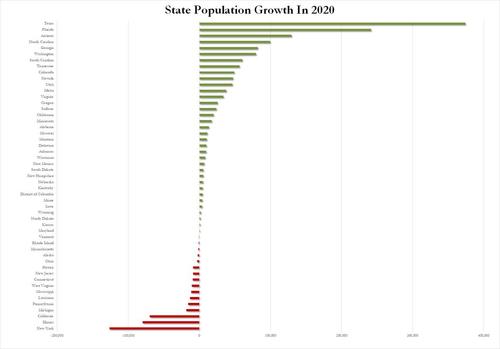
  • In fact, Texas was he number one state for net in-migration in 2020, while California lost the third most residents of any state.

  • Why high tech companies are leaving California:

    In a stunning procession in December, California lost the leadership of three iconic firms — Hewlett Packard Enterprise, Oracle and Tesla — all to Texas, which this year even took the Rose Bowl’s place in hosting the college football playoff. In addition, many California tech firms, including Uber and Lyft, as well as Apple, have been shifting jobs outside the state.

    This has been widely described as California’s “tech exodus.” Though it’s still less than a torrent and more a steady, long-term drip, it augurs some very bad trends. In recent years, California has been losing market share of innovative industries compared with 11 states with high concentrations of innovation-oriented firms, according to research by Ken Murphy, a professor at UC Irvine’s business school.

    Since 2005, California’s share of the number of firms in the innovation sector (composed of 13 of the nation’s highest-tech, highest R&D advanced industries) has shrunk while competitors like Florida, Oregon, Arizona and Utah have expanded their share slightly.

    The pandemic-induced push to move work online could hasten this shift. With 2 out of 3 tech workers willing to leave the Bay Area if they could work remotely, Big Tech could readily spread talent and wealth to other states.

    Increasingly, California’s cities must compete with metro areas in Texas, Tennessee and even parts of the Midwest. Housing prices are a particularly critical concern: California has all three of the most unaffordable metro regions for first-time home buyers, according to a recent AEI survey, and six of the top 10. The flow of tech workers during the pandemic has gone to places like Phoenix, Dallas-Fort Worth and Raleigh, N.C., and away from big coastal cities with higher living costs.

    Software-based tech companies can access knowledge workers outside California, and often at lower costs. At the same time, states like Texas and Arizona have been sought to replicate the California formula for tech industry growth — public university expansion, more suburban housing and public investment in downtowns, all meant to appeal to workers and their bosses.

    Snip.

    But more recently, as the tech industry becomes more virtual and services-based, the companies’ workforces have less of a need to all be in one place. While these companies create vast wealth for a relatively small group of people, this is not a formula for broad-based economic prosperity.

    In contrast to the old Silicon Valley, the Bay Area has become “a region of segregated innovation,” as described by CityLab, where the upper class waxes, the middle class wanes, and the poor live in poverty that is unshakable.

    The state leadership’s cavalier response when major employers depart is to assume that California will continue to create new businesses to replace the high-paying jobs lost.

    Yes, venture capital is piling into tech startups, driven by the low cost of money and pandemic disruption, and the state is expecting $26 billion more in revenue this year in part because of the roaring initial public offering market. But brushing off recent departures as part of a routine industrial cycle is naive and allows politicians to avoid making choices that would keep entrepreneurs, their businesses and good jobs in California.

    California already has the nation’s highest income tax, with the top marginal tax rate at 13.3%. A new proposal, Assembly Bill 1253, would add three new tiers of surcharges on people earning $1 million a year and above. Lawmakers also introduced Assembly Bill 2088, which would apply a 0.4% wealth tax on net worth above $30 million. Neither bill passed the Legislature last month, but both may come back in the new legislative session.

    Tech companies may be adept at avoiding taxes, but their top managers, investors and most skilled employees could see these measures as more reasons to leave — particularly when competing states like Texas, Tennessee, Nevada and Florida have zero state income taxes.

    Another law, Assembly Bill 5, which limits contract employees, could prove damaging to small startup business that cannot afford many full-time workers. And for some industries, particularly those involved in energy-intensive industries like cloud computing and advanced manufacturing, California’s energy prices — one of the highest in the continental U.S. and double the cost in places like Texas — are another incentive to move commercial activities elsewhere.

  • Indeed, California is so desperate for tax revenue that they want to tax residents even after they’ve left the state:

    As the catastrophic state of California’s finances finally begins to set in among politicians, anti-tech media personalities, and far left cultural influencers, the narrative on California’s techxodus — that is, the migration of California’s technology industry out of the state — has shifted from mockery, and “we’ll be better off without you,” to a far more sober, and increasingly-desperate “leaving California is immoral.”

    As it is simply too embarrassing for politicians to admit the state needs the technology industry after more than a decade of antagonizing the men and women who built it, and as it is political suicide for incumbent politicians in a one-party state to admit that every one of the problems we’re facing has been created by our elected leaders, a moral argument for tech’s responsibility to California, and specifically the Bay Area, has recently been produced. It goes something like this: young ambitious people moved to the state, and struck gold. But rather than “give back” to the land, they’re leaving with resources they “took” from the region. Like the milkshake guy from There Will Be Blood, sucking oil from the earth. Like the evil army people from Avatar, and their unquenchable thirst for unobtanium.

    Snip.

    “Extracted,” she says. Smh. A week or so later, in the psychotic San Francisco Board meeting where our local representatives voted 10 to 1 to officially condemn Mark Zuckerberg for donating 75 million dollars to a hospital (really, this happened), the word came up again. When the floor was opened to the public, an activist downplayed what was, as Teddy Schleifer reports, “the largest single private gift to a public hospital ever,” and accused Zuckerberg of “extraction.” Our local politicians did not think this strange.

    Snip.

    I take extreme issue with the notion that industry leaders have taken something from the “community,” defined here as the “talent,” the “incubators,” and the “mentors.” This is precisely the opposite of reality. The men and women leaving are the talent, they have started the incubators, they have built the companies, they have funded the startup ecosystem, and they have mentored countless young people. This is the “network.” They are the network. Technology workers do not “extract” value from the region, they are what makes the region valuable.

    California is beautiful — San Francisco is truly, I think, one of the most beautiful cities in the world — but the soil isn’t made of magic, there’s no such thing as digging for microcode, and the Bay Area’s nativist, anti-immigration political climate has certainly not created the tech community, which is populated largely by immigrants, be they from out of the state or out of the country.

    Among many things, including talent, opportunity, and soft power, the technology industry has brought tremendous tax revenue to the Bay Area. The budget of San Francisco literally doubled this decade, from around six billion to over twelve billion dollars. With our government’s incredible, historic abundance of wealth, the Board of Supervisors has presided over: a dramatic increase in homelessness, drug abuse, crime — now including home invasion — and a crippling cost of living that can be directly ascribed to the local landed gentry’s obsession with blocking new construction. This latter piece is important, as it appears to be the only thing our Board cares about. This is because significantly increasing the local housing supply would decrease the value of the multi-million dollar homes almost every single one of our Supervisors owns, and we could never have that.

    These past ten years I often wondered where the city’s money went. Could the leadership really be this stupid, or was there corruption? Turns out both. We’ve recently discovered our politicians are literally criminals, but they’re also bad at crime.

    Snip.

    The Bay Area housing, homeless, and drug crises are all exacerbated by the state government, which is as incapable of managing its finances as it is incapable of managing its public land; we are now teetering on the edge of true financial ruin in a state of endemic, constant wildfire. But let’s take a closer look at this issue of money. On one hand we have insane, nativist property tax codes, which punish new homeowners at the expense of longtime landlords, and on the other our income taxes have skyrocketed. Since income taxes are structured progressively, the state has backed itself into a position of extreme uncertainty, as the top one percent of earners pay half the state’s taxes — while politicians argue the state’s wealthiest men and women, who already pay more in taxes than the wealthiest men and women of any other state and most free countries in the world, are not paying their “fair share.” As if rudimentary economic threats were not enough, politicians have made cultural platforms of their anti-technology, anti-industry attitudes, and have done everything in their power to drive our top one percent of earners out of the state. In this, our politicians are succeeding.

    Such success in driving top earners from the state only further exacerbates the state’s political disasters, with our government of bloated, corrupt services now starving for income. This has in turn increased the political appetite for all manner of draconian, anti-business practices among politicians with no apparent ability to conceive of the second order effects of their legislation, a deficiency in basic intelligence that led, for example, to the unmitigated disaster that was AB5. In other words, everything is structured to further deteriorate.

  • “S.F. restaurant owners say rise in property crime is making dire situation worse.”

    Beleaguered San Francisco restaurants are struggling with a recent citywide rise in burglaries, including a slew of brazen break-ins at popular restaurants between the Thanksgiving and Christmas holidays. It’s a situation many restaurant owners say is exacerbating an already bleak outlook for the local food scene.

    San Francisco Police Department data shows burglaries in the city climbed from 4,918 reported incidents a year ago to 7,248 as of Dec. 27. The data does not specifically show how many restaurants have been affected, but the rise in burglaries is reflected in the stories being told by business owners in interviews and on social media. It’s a hard reality for local restaurants that have now gone almost 10 months with diminished revenue, forced hibernation periods, and only occasional approval for indoor and outdoor dining service.

    In mid-December alone, San Francisco’s nostalgic Toy Boat Dessert Cafe posted on Instagram about having had its door kicked in during an attempted burglary. Also in the Richmond District, Cassava took to social media to post about losing roughly $3,000 worth of equipment, including iPads, after a break-in. And Epic Steak and Waterbar on the Embarcadero each lost a similar amount when thieves stole alcohol and damaged property.

    Owners say the shelter-in-place order provides thieves with opportunities to break into businesses. Streets are empty because people are staying home. The ghost-town effect is increased as a growing number of restaurants and other businesses are either permanently or temporarily closed. The break-ins are all the more painful when restaurants aren’t even bringing in income to cover the cost to repair or replace stolen or damaged items.

    (Hat tip: Instapundit.)

  • Speaking of government officials being stupid crooks: “SF City Administrator Naomi Kelly Resigns Over Bribery Allegations. Husband Harlan Kelly, SF PUC Manager, had been arrested after accepting international trips, vacation to China, meals, jewelry, and personal car services.” As with the Biden clan, graft, corruption and shady links to China all seem to be part of the family trade for Democratic power families…
  • How California’s catch and release approach to crime kills.

    Jerry Lyons, 31, had spent his entire adult life committing crimes. He had dozens of arrests in California — attempted robbery, burglary, evading police, driving a stolen vehicle, weapons charges, drug charges, shoplifting, trespassing, etc. — but kept getting turned loose until Thursday, when he finally killed somebody. Sheria Musyoka, 26, was an immigrant from Kenya who had graduated from Dartmouth and moved to San Francisco with his wife and three-year-old son. Lyons was behind the wheel of a stolen car when he killed Musyoka.

  • 2018: Poverty in California:

    Despite improvements, the official poverty rate remains high.

    According to official poverty statistics, 14.3% of Californians lacked enough resources—about $24,300 per year for a family of four—to meet basic needs in 2016. The rate has declined significantly from 15.3% in 2015, but it is well above the most recent low of 12.4% in 2007. Moreover, the official poverty line does not account for California’s housing costs or other critical family expenses and resources.

    Poverty in California is even higher when factoring in key family needs and resources.
    The California Poverty Measure (CPM), a joint research effort by PPIC and the Stanford Center on Poverty and Inequality, is a more comprehensive approach to gauging poverty in California. It accounts for the cost of living and a range of family needs and resources, including social safety net benefits. According to the CPM, 19.4% of Californians (about 7.4 million) lacked enough resources to meet basic needs in 2016—about $31,000 per year for a family of four, nearly $7,000 higher than the official poverty line. Poverty was highest among children (21.3%) and lower among adults age 18–64 (18.8%) and those age 65 and older (18.7%). The overall poverty rate went unchanged between 2015 and 2016, following two years of decreases.

    About four in ten Californians are living in or near poverty.

    Nearly one in five (18.9%) Californians were not in poverty but lived fairly close to the poverty line (up to one and a half times above it). All told, two-fifths (38.2%) of state residents were poor or near poor in 2016. But the share of Californians in families with less than half the resources needed to meet basic needs was 5.6%, a deep poverty rate that is smaller than official poverty statistics indicate.

  • 2018: “LA Doubled Homeless Budget, Doubled Homeless Crime.” Bonus: Homeless people were behind many of the big California fires.
  • Los Angeles is seeking a $3.9 billion coronavirus bailout. “Last year, roughly 20,000 city employees’ average pay exceeded $147,000, costing taxpayers $3 billion, Open the Books auditors found. Nearly 2,000 employees out-earned California Gov. Gavin Newsom’s salary of $202,000.” (Hat tip: Pension Tsunami.)
  • “2 out of 3 tech workers would leave SF permanently if they could work remotely.”
  • “In California, Illegals Come First; Californians Don’t Matter.”

    The number of homeless Californians in the Los Angeles county has reached 58,936, New York Times reported this weekend.

    But Californians don’t seem to be the priority of democratic governor Gavin Newsom.

    Under an agreement between Gov. Newsom and Democrats in the state legislature, low-income adults between the ages of 19 and 25 living in California illegally would be eligible for California’s Medicaid program, known as Medi-Cal.

    State officials estimate that will be about 90,000 people at a cost of $98m a year.

    This decision will make California the first state in the US to pay for illegal immigrants to have full health benefits.

  • “Gavin Newsom’s Property Taxes Are Chronically Delinquent and There’s No Excuse.”

    For the 2018-2019 tax year, the bill was sent to the Newsoms on September 28, 2018. The two installments were due in December 2018 and April 2019, and the bill became delinquent on July 1, 2019. They finally paid their second installment, along with about $3,000 in penalties, on September 3, 2019. This is significant because the Newsoms’ Fair Oaks mansion was purchased for $3.7 million cash in November 2018. Newsom’s spokesman claims it was the Newsoms’ cash even though there is no documentation of that; the home was purchased in the name of Gavin Newsom’s cousin and longtime PlumpJack business partner, Jeremy Scherer.

    If the Newsoms had $3.7 million in cash lying around, why wait to pay $22,000 in property taxes until the next year and incur a $3,000 penalty? Wealthy people aren’t in the habit of paying thousands of dollars in penalties.

    In 2018 the Newsoms were sent a supplemental property tax bill on May 15, covering a revaluation and some school and health bonds. That bill was due in two installments; the installments became delinquent June 30 and October 31, respectively.

    He finally paid them on December 10, 2018, along with $750 in penalties.

    The last time their property tax bill was paid on time was when they received the “sweetheart” cashout refinancing deal in December 2017 ($3,225,000 cashout on a home worth $3,500,000) – presumably because the bank would only close the loan if the property taxes were paid at the same time.

  • “Many people are moving from California to Texas. The cost of living, as well as high taxes and red tape, are precipitating the push.”

    “EVERYONE IS FROM California. Are they kicking y’all out?” asks a curious bureaucrat at the Department of Public Safety in Plano, a city near Dallas. In the previous week she had helped 20 people from California apply for a Texas driving licence. Those keeping score in the contest between the two states do not have to look far to notch up points for Texas. On the way to the state Capitol building in Austin to interview Greg Abbott, the governor, your correspondent discovered that her driver had recently relocated from southern California to start a family in a more affordable city.

    Between 2007 and 2016 a net 1m American residents, or 2.5% of the state’s population, left California for another state. Texas was the most popular destination, attracting more than a quarter of them. More Americans have left California than moved there every year since 1990, though immigrants still arrive from abroad.

    Companies are also moving. Last year McKesson, a medical-supplies company, and Core-Mark, a supplier to convenience stores, shifted their headquarters from California to Texas, as did Jamba Juice, a smoothie company. Many Californian firms are also adding jobs outside the Golden State. Charles Schwab, a financial-brokerage firm based in San Francisco, received more than $6m in incentives from Texas, and by the end of this year will have more employees there than in California.

    What explains the one-way traffic? There are four reasons for California’s weaker position. First, it has become very expensive, especially for housing. “If there’s one risk factor in this state, it’s affordability,” says Gavin Newsom, California’s governor. “The thing we most pride ourselves on—the California dream, a notion of social mobility that we export around the world—is in peril.” A third of Californians are thinking of moving out of state because of the high cost of housing, according to a recent survey by the Public Policy Institute of California, a non-profit research firm. Most of those leaving California for Texas earn less than $50,000 a year and have only a high-school education…

    The middle class is also struggling. In California home-ownership rates are at their lowest level since the 1940s and among the lowest in America, with black and Hispanic families particularly hard hit. In the past ten years around 75,000 new housing units received permits annually, only 40% of the projected need. “From the perspective of a young, upwardly mobile family, California is nearly impossible, unless you have rich parents, rob a bank, or get money from your firm going public,” says Joel Kotkin, a professor at Chapman University, who believes that the state is experiencing a new kind of “feudalism”, where the ultra-rich thrive and others suffer.

    As a symbol of how out-of-reach the once accessible state has become, last year the small house that was the setting for “The Brady Bunch”, a television show in the 1970s about a middle-class Californian family, sold for a whopping $3.5m, nearly double its asking price. Companies expanding elsewhere find that many employees are happy to give it a go in a state where they can afford to buy a house and raise a family.

    The states also have wildly different tax regimes, which is a second reason for Texas gaining favour as a destination. With a top rate of 13.3%, California has the highest state income-tax rate for top earners. Texas does not charge residents a state income tax. Instead, they pay higher property taxes to local governments, and the state gets most of its money from a sales tax. Because of recent changes to the tax code, residents of California and other high-tax states will no longer be able to deduct all of their state and local taxes from federal payments, which could further dampen people’s willingness to remain in the state.

    Taxes on businesses are increasing, too. In the past six elections California voters have approved more than 800 local taxes on businesses and residents, according to Larry Kosmont of Kosmont Companies, an economic advisory firm. (This does not include voters’ decision to raise the income-tax rate on the state’s highest earners.) For example, last year voters in San Francisco approved the controversial Proposition C, which taxes businesses with more than $50m in gross revenues to fund services for the homeless. Companies with fat profit margins can afford higher taxes, but lower-margin businesses cannot, and these are the ones most likely to consider an alternative location.

    Third, Texas has pursued a concerted strategy of wooing and cultivating businesses, whereas California has not. This began with Rick Perry, who served as Texas’s governor from 2000 to 2015. He travelled to California and other states on “hunting trips” to poach businesses, ran ads on radio encouraging people and companies to move, and offered large incentives to create jobs in Texas. Mr Abbott has continued with these pro-business policies and still operates a “deal-closing fund” to incentivise businesses to come. He is a cheerleader for his state’s advantages, including low costs, a central location with good airports and a convenient time zone for doing business with both coasts. He describes Texas as “the quintessential free-enterprise state”.

  • Midland County, Texas was the fastest growing county in America in 2018.
  • “Meet the Dallas-area woman shepherding a ‘Move to Texas from California!’ migration.”

    Here’s what the “liberal Californians, go home” crowd misses: The vast majority of West Coast dwellers who make up Bailey’s more than 11,500 Facebook followers lean conservative.

    And after spending a few days perusing Bailey’s page, I’d say this comment best sums up its audience: “We fell in love with Texas immediately … we’re conservative Christians who love God, country, freedom, family, gun rights and barbeque.”

    Bailey said cost of living and taxes are hot buttons for commenters, but so are gridlocked roads, the homeless and illegal immigration.

    The Realtor welcomes people of all political stripes onto her page — after all, she’s in this to make money. And she and her husband, Scott, identify as libertarian.

  • 2019: Can California be saved?

    Our state debt is over $1.5t. We have the highest gasoline prices in the nation. Oh, and we are a sanctuary state that protects all manner of illegal immigrants, no matter how serious the crimes they’ve committed. Think Jose Garcia Zanate who killed Kate Steinle. He had been deported seven times but was out and about on the streets of San Francisco with the blessings of SF law enforcement; they aim to protect the criminals at the expense of the law-abiding. ICE is the enemy in sanctuary cities and states, the thugs are victims.

    State taxes in California are the highest in the nation, as are our sales taxes. We fall nearly last in education. We have the most homeless, the most illegal migrants. The state spends $30.b on illegal immigration per year. Like all cities run by progressives, our entire state is a disaster of Democratic making. San Francisco, Los Angeles, and San Diego have been overrun by homeless people, most of them drug addicted and/or mentally ill. Entire areas of these cities are befouled by used needles, feces, trash, garbage, rats and now diseases long-thought to be extinct in the West. Persons who work in downtown Los Angeles have contracted typhus! As true in other cites long run by Democrats (Chicago, Baltimore, Seattle, Detroit, Flint) it is the implementation of ridiculous utopian Marxist policies so beloved by progressives that has destroyed these once grand cities. Socialist strategies always fail. Democrats cheat, (ballot harvesting) are re-elected, and the state continues to decline. Venezuela is the current example of the massive failure of socialism on the world stage. What is happening there is beyond tragic; the people are starving in every sense of the word. But will our own Alexandria Ocasio-Cortez condemn socialism? Absolutely not. She, Bernie Sanders and their fellow travelers mean to take this country the way of Venezuela, the road California has already been on for too long; possibly too long to ever recover. This state is slowly becoming a third-world nation. But, as in Venezuela, the rich and politically powerful stay rich, keep their mansions and their private planes unperturbed by the devastation they generate.

  • How California could be saved:

    First, the problem of corruption must be addressed. It’s no secret that public unions rule the legislative process in this state. They’re even funding the redecorating of the Lieutenant Governor’s office, using money confiscated from the state’s lowest-paid workers. De-funding the unions through an “Uncheck the Box” campaign aimed informing union workers that they can opt out of union dues (opt-outs made possible by the Janus decision) should be a top priority for activist groups in the state. De-funding the unions will have a positive domino effect on everything in California.

    Corruption in the regulatory process, at the state and local levels, is rampant and an open secret. Lately the Los Angeles Times has done a great job of investigating the problems with homelessness and trash piles, but their investigations stop short of fully placing blame where it belongs. People who are truly fed up with the condition of our state need to put their money where their mouth is and fund true investigative reporting (because you know Silicon Valley won’t be capitalizing any non-socialist journalistic startups).

    Next, laws which prioritize criminals, homeless bums (as opposed to those who are homeless because of mental illness), and illegal immigrants over the state’s children and families must be revised or abolished. Did you know that a homeless bum’s shopping cart (which they stole from some business somewhere) is considered their “home” or “property” and cannot be taken away from them? Homeless people with true mental illness should be treated with the dignity they deserve (as Kurt Schlichter said on KABC today), and not left on the streets to fend for themselves.

    The true causes of the third-world conditions in Los Angeles and San Francisco must be addressed. Some well-meaning laws or programs relating to homelessness are causing negative unintended consequences. In Los Angeles, some of the blame for the massive trash piles can be placed directly on City Hall – their RecycLA program resulted in massive increases in sanitation costs for businesses and missed pickups.

    The state’s ballot harvesting law must be amended. Currently anyone – without ID or training – can pick up a ballot from any voter and turn it in to elections officials. The harvester has to sign their name to the outside of the ballot, but there is no process for elections officials to verify that the person turning in the ballot is the person who signed the outside, or that the name they used is actually their real name. The process is ripe for fraud.

    These are all from 2019, and we’re no closer to any of them being implemented…

  • Get paid to move your business out of California.
  • “Data company Harmonate announced it will relocate its corporate headquarters from San Jose, California, to Austin.”
  • Military eyeware provider Wiley X moving from livermore, California to Frisco in Texas.
  • In fact, a nunch of companies are moving to the Metroplex:

    Lion Real Estate Group LLC, which has about 150 employees and $1 billion in assets under management, is moving its headquarters into office space at 3811 Turtle Creek Blvd., the company’s co-founders said in an exclusive interview with the Dallas Business Journal in January. The fast-growing real estate firm focuses on multifamily investment and is relocating its corporate headquarters to Dallas from Los Angeles.

    The company will keep its Los Angeles office to support West Coast operations.

    Lion Real Estate Group’s decision to relocate its headquarters to Dallas aligns with Lion’s strategy of acquiring multifamily assets outside of the urban core, both in Texas and in other high-growth cities across the Sunbelt and Southeast, said Jeff Weller, co-founder and managing principal of the firm…

    The National Rifle Association, meanwhile, has retained Colliers International to help it scout space for a new corporate headquarters in DFW or elsewhere in Texas in the event it opts to pull the trigger on a prospective relocation from Northern Virginia.

    The nonprofit intends to restructure as a Texas-based organization and has formed a committee to explore the prospect, which could include a headquarters move.

    In court documents, the NRA asked the U.S. Bankruptcy Court in Dallas, the venue for its Chapter 11 reorganization, for permission to retain Colliers to help it find office space for rent or purchase. The search will mostly likely be focused on the “Dallas-Fort Worth region,” the court documents say.

    The first few months of 2021 has sustained the momentum the area saw in 2020 when several companies decided to relocate to North Texas. Last year, one of the biggest corporate relocations to DFW was CBRE Group Inc. (NYSE: CBRE), the world’s largest commercial real estate services and investment firm, which moved its headquarters from Los Angeles to Dallas.

    Financial services giant Charles Schwab moved its San Francisco headquarters to the North Texas community of Westlake at the start of this year, in a relocation announced in 2020.

    Hundreds of small and midsize firms like Lion Real Estate and Wiley X have relocated to DFW over the last few years.

    According to Dallas Regional Chamber, there are 102 major corporations considering headquarters relocation or expansion to North Texas currently.

  • “Texas is tops in the U.S. for commercial development impact,” contributing more than $65 billion to the Texas economy. (Usual DMN paywell disclaimer.)
  • “Jim Breyer, CEO of venture capital and private equity investor Breyer Capital, announced in August 2020 that Breyer Capital would be opening a second office in Austin. While Breyer Capital’s original office and interest in Silicon Valley remain, Breyer himself has also moved to Austin and is investing in what he sees as the city’s potential as an emerging tech hub.”
  • Speaking of which, here he is on why Austin will be the next Silicon Valley:

    after lots of planning and due diligence, I decided that Austin was the best place for the next era of my venture capital and venture philanthropy career. With early, but compelling, signals that Austin is emerging as the next great tech hub, I couldn’t be more excited to play a role in helping another part of the country reach its potential. I believe there is an opportunity to get in near the ground floor and build something truly enduring.

    Other friends from the Bay Area, like Palantir co-founder Joe Lonsdale, Dropbox CEO Drew Houston and Tesla’s Elon Musk, have made similar moves, along with many other tech industry leaders, so I’m not surprised that a so-called “Bay Area exodus” has become a widely reported trend.

    But instead of focusing on the positives of Austin, many exodus narratives have focused on problems with the Bay Area. While critics make some fair points about rising living costs and government overreach, I would argue that Silicon Valley and Austin both have bright futures ahead. The things that made Silicon Valley special are not going anywhere. The Bay Area will continue to be a global hub of innovation that attracts courageous entrepreneurs, benefits from world-class institutions and nurtures talent from leading tech companies — even as Austin offers a remarkable new frontier of opportunity.

    New Austinites all have different reasons for why they moved here, of course. My decision to start Breyer Capital Austin, for example, has more to do with Austin’s strengths than any of the Bay Area’s flaws.
    For starters, Austin, more than any other city in the country, encourages a culture of interdisciplinary collaboration. Because the city has catered to so many types of professionals, and not just technologists, the depth of talent here is unique. Artists, entrepreneurs, doctors and professors, all at the top of their trade, frequently choose to build things together. By breaking down silos and embracing novel approaches to company-building, Austin’s diverse entrepreneurs will usher in a new era of growth for the city, state and country. I couldn’t be more excited to be investing in health care AI companies and fin-tech companies that have a consumer media backbone. The best founding teams are multifaceted and versatile, and Austin has every type of entrepreneur that a great company needs. This kind of interdisciplinary entrepreneurship will help Austin companies flourish.

    Austin has attracted and will continue to attract young, brilliant talent because of its comparative affordability, outdoor culture and professional development opportunities. This vast pool of expertise is contributing to a remarkably robust climate of innovation. With Tesla, Facebook, Apple, Google, Oracle and other leading companies moving to or expanding in Austin, the entrepreneurial ecosystem will be bolstered when talent from these companies breaks away to start new ventures. Some of my best investments have been in entrepreneurs who gained valuable experience at an outstanding established company before starting their own. Five years from now, Austin will benefit from many tech company alums eager to leverage their expertise to tackle some of the world’s most pressing problems.

  • “Why some tech companies and billionaires are leaving California.”

    While it may be an overstatement to say California is hemorrhaging people, some of the state’s major companies and wealthiest residents are leaving for states like Texas, Arizona and Florida. In 2020, Oracle, Palantir and Hewlett-Packard Enterprise were among the companies that announced they’re relocating their headquarters out of the Golden State. Wealthy individuals from the tech industry moving recently include Larry Ellison, Drew Houston, Joe Lonsdale and Elon Musk, currently the world’s richest man.

    California’s population and job growth have both slowed to a trickle, with many citing concerns about high taxes, cost of living and heavy regulations. With the rise of remote work in 2020, over 135,000 more people left California than moved in — the third largest net migration loss ever recorded for the state. Although some big names have committed to stay, one recent survey found that two of every three Bay Area workers would leave the area permanently if they could continue to work from home indefinitely.

  • “As California Declines, Texas Is The Heir Apparent To Big-Tech Looking To Flee Progressive Laws.” (Hat tip: Color Me Red.)
  • Retireees are fleeing California as well:

    It’s not just businesses that are moving out of California. Retirees are leaving in growing numbers.

    For whatever reason they move, the retiree exodus is taking knowledge, wealth, patrons of the arts and potential philanthropy out of communities in the Golden State to the benefit of other places.

    The trend dovetails with larger concerns about California’s affordability, business climate and economic disparities.

    “It’s not just retirees moving. It’s companies. It’s rich people and poor people,” said Sanjay Varshney, professor of finance at California State University Sacramento and founder of Goldenstone Wealth Management LLC in El Dorado Hills.

    Poorer people are leaving the state because “they can’t make ends meet” with the high cost of living and housing, he said. “And extremely wealthy people are moving because they are fed up.”

    Varshney said a migration of wealthy people are leaving the Bay Area in particular, and “you are seeing that with people like Elon Musk and corporations like Oracle, Tesla and Hewlett Packard Enterprise.”

    Retirees can easily leave California, as they are no longer tied to jobs in the state. “Retirees are a very mobile part of the population,” Varshney said

    The trend appears to be growing. The California Public Employees’ Retirement System tracks where it sends benefits, and more of its members no longer call California home. Some 85% of CalPERS retirees lived in the state 2013. That dropped to 84% in 2018 and to 82.3% in 2020, according to the pension system.

    The Greater Sacramento Economic Council’s mission is to attract companies to relocate to the Sacramento area. By the time companies decide to move out of the Bay Area, they are often soured on California taxes and regulations, and they tend to move out of the state completely, said Barry Broome, Greater Sacramento’s CEO.

    The same can be said for individuals, he said.

    “A lot of this is tax,” Broome said. California has higher business taxes and higher individual tax rates than most other states.

  • What the radical left has done to San Francisco.

    To live in California at this time is to experience every day the cryptic phrase that George W. Bush once used to describe the invasion of Iraq: “Catastrophic success.” The economy here is booming, but no one feels especially good about it. When the cost of living is taken into account, billionaire-brimming California ranks as the most poverty-stricken state, with a fifth of the population struggling to get by. Since 2010, migration out of California has surged.

    The basic problem is the steady collapse of livability. Across my home state, traffic and transportation is a developing-world nightmare. Child care and education seem impossible for all but the wealthiest. The problems of affordable housing and homelessness have surpassed all superlatives — what was a crisis is now an emergency that feels like a dystopian showcase of American inequality.

    And yet, it’s not really American inequality. It’s the kind of inequality produced by failed leftist policies. Picture today’s San Francisco:

    Yet the streets there are a plague of garbage and needles and feces, and every morning brings fresh horror stories from a “Black Mirror” hellscape: Homeless veterans are surviving on an economy of trash from billionaires’ mansions. Wealthy homeowners are crowdfunding a legal effort arguing that a proposed homeless shelter is an environmental hazard. A public-school teacher suffering from cancer is forced to pay for her own substitute.

    Manjoo emphasizes that San Francisco is run entirely by Democrats. It has become difficult to blame it on Republicans when there are no Republicans.

  • “Two deaths a day: S.F. drug overdoses fueled by fentanyl are spiking.”
  • California to settle claims that it can’t even teach students to read.
  • “Rats at the police station, filth on L.A. streets — scenes from the collapse of a city that’s lost control.”

    The good news is that two trash-strewn downtown Los Angeles streets I wrote about last week were cleaned up by city work crews and have been kept that way, as of this writing.

    The bad news is that I didn’t have to travel far to find more streets just as badly fouled by filthy mounds of junk and stinking, rotting food.

    Then there was the news that the LAPD station on skid row was cited by the state for a rodent infestation and other unsanitary conditions, and that one employee there was infected with the strain of bacteria that causes typhoid fever.

    What century is this?

    Is it the 21st century in the largest city of a state that ranks among the world’s most robust economies, or did someone turn back the calendar a few hundred years?

    We’ve got thousands of people huddled on the streets, many of them withering away with physical and mental disease. Sidewalks have disappeared, hidden by tents and the kinds of makeshift shanties you see in Third World places. Typhoid and typhus are in the news and an army of rodents is on the move.

    On Thursday I saw a county health inspector on rat patrol between 7th and 8th streets on skid row. He was carrying a clipboard and said he had found droppings and other evidence of rodents, and I asked where:

    “Everywhere,” he said.

    Well, it’s nice to know somebody is doing something, but you don’t need a clipboard. I’ve seen so many rats the last two weeks in downtown Los Angeles, I have to suspect they’re plotting a takeover of City Hall, which vermin infiltrated last year.

    The city of Los Angeles has become a giant trash receptacle. It used to be that illegal dumpers were a little more discreet, tossing their refuse in fields and gullies and remote outposts.

    Now city streets are treated like dumpsters, or even toilets — on Thursday, the 1600 block of Santee Street was cordoned off after someone dumped a fat load of poop in the street. I’m not sure when any of this became the norm, but it must have something to do with the knowledge that you can get away with it. Every time sanitation crews knock down one mess, another dumpsite springs up nearby.

  • “Top California high-speed rail executive under investigation in ethics probe.”
  • Those having children are leaving California in droves:

    California is the great role model for America, particularly if you read the Eastern press. Yet few boosters have yet to confront the fact that the state is continuing to hemorrhage people at a higher rate, with particular losses among the family-formation age demographic critical to California’s future.

    Since the recovery began in 2010, California’s net domestic out-migration, according to the American community survey, has almost tripled to 140,000 annually. Over that time, the state has lost half a million net migrants with the bulk of that coming from the Los Angeles-Orange County area.

    In contrast, during the first years of the decade the Bay Area, particularly San Francisco, enjoyed a renaissance of in-migration, something not seen since before 2000. But that is changing. A recent Redfin report suggests that the Bay Area, the focal point of California’s boom, now leads the country in outbound home searches, which could suggest a further worsening of the trend.

    One of the perennial debates about migration, particularly in California, is the nature of the outmigration. The state’s boosters, and the administration itself, like to talk as if California is simply giving itself an enema — expelling its waste — while making itself an irresistible beacon to the “best and brightest.”

    The reality, however, is more complicated than that. An analysis of IRS data from 2015-16, the latest available, shows that while roughly half those leaving the state made under $50,000 annually, half made above that. Roughly one in four made over $100,000 and another quarter earned a middle-class paycheck between $50,000 and $100,000. We also lose among the wealthiest segment, the people best able to withstand California’s costs, but by much smaller percentages.

    The key issue for California, however, lies with the exodus of people around child-bearing years. The largest group leaving the state — some 28 percent — is 35 to 44, the prime ages for families. Another third come from those 26 to 34 and 45 to 54, also often the age of parents.

    (Hat tip: TPPF.)

  • Texas is among the most recession-proof states in the country:

    Every day, Texans are reminded why letting liberal democrats take over this state would be a terrible idea.

    In a new report released by S&P Global Ratings, Texas has been ranked among the most recession-proof states in the country, according to a variety of factors.

    Texas’ fiscal strength stems from conservative state legislators’ insistence against implementing a personal income tax or increasing other taxes. Also important has been the push by Gov. Abbott and Lt. Gov. Dan Patrick to slow the rate of spending growth and refusal to dip into the state’s “rainy day fund” for non-emergency spending.

  • Dispatches from San Francisco’s decline:

    Magnificent in the distance, San Francisco is now shockingly ugly up close. In the decade I have lived here, the city has achieved the seemingly impossible: It has combined the expensive and the bland and the appalling into a new form of decadence. To the untrained eye, it looks magical: a city of the future, a city of gasps. Then, slowly, it reveals itself to be a city of lies, one that dismisses the idea of city living.

    Snip.

    Running a venture-capital fund that invests as early as possible in startups, I now see fewer and fewer companies choosing to come launch here. When we opened our doors in 2015, maybe 80 percent of our investments were in Bay Area companies. Last year [2018], half of them were, and we expect to see that number decrease even more in the years ahead. Andreessen-Horowitz, the famed Silicon Valley VC firm, has announced that it’s becoming more or less a hedge fund, presumably to focus on later-stage opportunities. Peter Thiel, who had lived here since the mid 90s, has now decamped to Los Angeles, and says there is a less than 50 percent chance the next great tech company will arise in an increasingly expensive, conformist Silicon Valley.

    “Silicon Valley is now more fashion than opportunity,” Thiel told the Swiss newspaper Neue Zürcher Zeitung. “The heads are the same.”

    Lack of independent thought aside, the Economist has identified the source of the problem: You can’t build a successful startup from a garage if a garage costs a million bucks. The flow of new creations is being choked off first and foremost because there are fewer cheap places for new things to start.

    The median rent for a one-bedroom apartment in San Francisco recently hit $3690 per month, 30 percent greater than in New York City. Over the last decade, the Bay Area has added 722,000 jobs but built only 106,000 new homes. Proposition M, passed in the 1980s to avoid “Manhattanization,” limits the supply of office space. The city’s average Class A asking rent has risen 124 percent since 2010 to over $80 per square foot.

    The legendary urbanist Jane Jacobs once remarked that new ideas come from old buildings, the types of places you can alter without permission because no one cares about them. This is one reason why so many garage startups and garage bands and artists spilling paint in discarded warehouse lofts have left their mark on the world. The true creative class can’t afford to rent expensive new studios.

    But in San Francisco, the true creative class can’t afford to rent any space anymore.

    Snip.

    Up and down the city’s disorienting hills, you notice homeless men and women — junkies, winos, the dispossessed — passed out in the vestibules of empty storefronts on otherwise busy streets. Encampments of tents sprout in every shadowy corner: under highway overpasses, down alleys. Streets are peppered with used syringes. Strolling the sidewalks, you smell the faint malodorous traces of human excrement and soiled clothing. Crowded thoroughfares such as Market Street, even in the light of midday, stage a carnival of indecipherable outbursts and drug-induced thrashings about which the police seem to do nothing.

    The confused mumble, the incoherent finger-pointing tirade, the twitch, the cold daemonic stare, the drunken stumble and drool — these are the rhythms of a city on the edge of a schizophrenic explosion.

  • A list of rules for making it home in California:

    1) Assume that a state with among the highest income, sales and gas taxes has commensurately among the nation’s worst roads. Therefore, do not become depressed by blood alleys, potholes, bullet-holed and graffiti stained road signs, or roads unchanged from a half-century ago when the population was less than half of what it is today. You are an adventurer on the frontier, not a complacent commuter or traveler. Approach the next few hours as a challenge rather than a nightmare. Envision a California road trip like Odysseus did his on voyage on the Aegean.

    2) It is wiser not to use the restrooms on any California cross-country drive. Excrement can be many places other than in the toilet. Also, fill up before starting. Don’t count on finding gas stations that are not overcrowded or have all their pumps working—even the ones with national affiliations that look as inviting from the off-ramp as Circe’s smile.

    My favorite is one where all the tiny glass windows at the pumps where the electronic instructions guide you are either broken or scratched out. My second favorite one was where the pump had no hose and no sign saying it had no hose. In California, you often fill up by holding the pump handle down nonstop, given the automatic levers are broken or missing. A state law requires emergency free air and water services for all gas station customers; perhaps because it’s mandatory, the air and water dispensers usually do not work.

    3) Assume “Mad Max” conditions at any time. Contraptions can pose as vehicles in the most regulated vehicle state in the nation (there is a reason why the California DMV is dysfunctional). Cars can still tow each other, 1950s-style, with sagging rope. Expect a piece of lumber or a mattress to go Frisbee on every other trip. Anticipate that a quarter of the drivers have bad brakes, worse tires, and ignore or cannot read signs and posted warnings. The person who passes you at 90 miles per hour likely does not have a license, or registration, or insurance—or, perhaps, any of the three.

  • One reason companies are abandoning California in droves: “A Mountain View tech CEO is beyond frustrated after he says his vehicles have been broken into four times in the past 18 months while parked in the same city lot.” That was from 2019. I doubt it’s gotten any better.
  • 2018: California wants to run the world’s most expensive bullet train, but can’t even run a competent DMV.
  • Chuck DeVore does his own Texas vs. California comparison. “Texas: Less crime, lower taxes and cleaner air.” (HTPT)
  • More from Chuck DeVore on California’s minimum wage hike:

    In April 2016, California Gov. Jerry Brown signed the state’s $15-an-hour minimum wage law into effect.

    As a consequence, the minimum wage went from $10 an hour to $10.50 an hour for businesses with 26 or more employees on January 1, 2017. On January 1 of this year, the minimum wage was hiked again to $11.00 an hour for larger employers and $10.50 for businesses with 25 or fewer employees.

    Federal jobs data for 2018 suggests that California’s rural manufacturing base might be getting hammered by the higher mandated minimum wage.

    Unless a future governor waives the scheduled increases due to economic weakness, the government mandated hourly wage hikes will keep coming—$1 per hour every year—until they reach $15 an hour four years from now for large employers with smaller employers hitting $15 in 2023. After that, future increases are pegged to national consumer price index for urban wage earners and clerical workers.

    Many factors affect regional job creation and wage growth. Availability of suitable labor, energy and land costs, infrastructure, including access to clean water and well-maintained roads, as well as state and local taxes, the regulatory burden and the lawsuit environment. Measured against these factors, California has significant challenges.

    Snip.

    California’s 2017 retail electric prices were 89 percent higher than in its peer competitor, Texas. California’s gasoline prices remain the highest in the contiguous 48 states, at $3.619 per gallon of unleaded, some 26 percent higher than the national average of $2.865.

    California’s once-vaunted water storage and conveyance system has been essentially frozen in time for decades, as the state’s politicians spend billions on environmental programs and studies and precious little on expending and securing California’s water supply.

    California’s highway system, once the envy of the world, has similarly been put at the bottom of the priority list, regularly being ranked at the tail end of national surveys. Further, the state’s union labor agreements and environmental approval maze contribute to the state’s road maintenance costs being almost 40 percent higher than the national average.

    As for state and local taxes, Forbes ranked California as 45th-worst in 2016.

    The U.S. Chamber of Commerce meanwhile rated California as having the 47th-worst lawsuit climate in the nation last year.

    The regulatory burden on small business was studied in a report authorized by the California legislature 10 years ago which found that small businesses faced a complex puzzle of state and local rules that cost about $134,000 per year in compliance costs.

  • “From well-funded pensions to basket case, San Francisco’s voters are to blame.”

    Voters approved retroactive pension increases 10 times between 1996 and 2008, thus leaving the San Francisco Retirement System underfunded and a drain on the operating budget.

    The city and county of San Francisco owes the retirement system a massive $5.8 billion – more than half the city’s entire general-fund budget.

    (Hat Tip: Pension Tsunami.)

  • “Californians fed up with housing costs and taxes are fleeing state in big numbers.” “Census Bureau data show California lost just over 138,000 people to domestic migration in the 12 months ended in July 2017.”
  • 2017: “Thanks to the declaration of being a Sanctuary City, San Fran L.A. and other criminal cities have done what is not possible. ICE has announced it is sending hundreds of agents to these cities—that means illegal aliens are now in greater danger of being deported, thanks to the policies of the Democrats. Yup, now the illegal aliens in these cities have a reason to fear deportation—De Leon, Mayors Lee and Garcetti have put a target on their backs.”
  • What life is like on the dirtiest block in San Francisco:

    The heroin needles, the pile of excrement between parked cars, the yellow soup oozing out of a large plastic bag by the curb and the stained, faux Persian carpet dumped on the corner.

    It is a scene of detritus that might bring to mind any variety of developing-world squalor. But this is San Francisco, the capital of the nation’s technology industry, where a single span of Hyde Street hosts an open-air narcotics market by day and at night is occupied by the unsheltered and drug-addled slumped on the sidewalk.

    There are many other streets like it, but by one measure it is the dirtiest block in the city.

    Just a 15-minute walk away are the offices of Twitter and Uber, two companies that along with other nameplate technology giants have helped push the median price of a home in San Francisco well beyond a million dollars.

    Snip.

    According to city statisticians, the 300 block of Hyde Street, a span about the length of a football field in the heart of the Tenderloin neighborhood, received 2,227 complaints about street and sidewalk cleanliness over the past decade, more than any other. It is an imperfect measurement — some blocks might be dirtier but have fewer calls — but residents on the 300 block say that they are not surprised by their ranking. The San Francisco bureau photographer, Jim Wilson, and I set out to measure the depth of deprivation on a single block. We returned a number of times, including a 12-hour visit, from 2 p.m. to 2 a.m. on a recent weekday. Walking around the neighborhood we saw the desperation of the mentally ill, the drug dependent and homeless, and heard from embittered residents who say it will take much more than a broom to clean up the city, long considered one of the United States’ beacons of urban beauty.

  • San Francisco is now so filthy that “a major medical association is pulling its annual convention out of the city — saying its members no longer feel safe.” From 2018, back when people still had conventions. (Hat tip: Ann Althouse.)
  • “More residents are leaving San Francisco than any other US city. For as expensive as it is to live in San Francisco, it’s just as expensive to leave. The migration’s so intense that U-Hauls are scarce and people are paying thousands in rental fees.” (Hat tip: Chuck DeVore’s twitter feed.)
  • The latest “benefit” of California’s “high speed rail” boondoggle: Longer traffic delays for “blended” traffic that isn’t high speed at all. (Hat tip: Ace of Spades HQ.)
  • 2019: Amazon adds 600 jobs in Austin.
  • In 2019, the Texas Permian Basin became the world’s largest oil-producing region, pumping out more oil than Saudi oil fields. Who knows if that will change under Biden…

    “If everyone in the middle class is leaving, that’s actually a good thing. We need these spots opened up for the new wave of immigrants to come up. It’s what we do. We export our middle class to the United States. You guys should be thanking us for that,” Singam said to a stunned Carlson.

    Of course, he also says that “Soon enough Texas will be a blue state,” so there’s an unusually high degree of “talking out your ass” going on here… (Hat tip: Ed Driscoll at Instapundit.)

  • It’s not just Tesla: Elon Musk has shifted his SpaceX work from California to Texas as well.

    The SpaceX South Texas launch site, which first broke ground in September 2014, is a rocket production facility, test site, and spaceport located at Boca Chica approximately 20 miles east of Brownsville, Texas, on the Gulf Coast. The South Texas Launch Site is SpaceX’s fourth active suborbital launch facility, and first private facility.

    By March of last year, SpaceX had over 500 employees working at the Boca Chica site, Ars Technica reported. Four shifts work 24/7 — in 12-hour shifts with four days on and three days off followed by three days on and four off — enabling the continuous manufacturing of his Starship flight rocket with workers and equipment specialized to each task of serial Starship production.

    According to a 2014 Brownsville Economic Development Council report, the facility was projected to generate $85 million worth of economic activity in Brownsville and eventually generate roughly $51 million in annual salaries from new jobs created by 2024.

    Part of this money is coming directly from Musk. Musk tweeted that he is donating $20 million to schools in Cameron County and $10 million to the city of Brownsville for revitalization efforts, both of which are near SpaceX.

    “Please consider moving to Starbase or greater Brownsville/South Padre area in Texas & encourage friends to do so! SpaceX’s hiring needs for engineers, technicians, builders & essential support personnel of all kinds are growing rapidly,” Musk tweeted on Tuesday. “Starbase will grow by several thousand people over the next year or two.”

  • “Companies Are Fleeing California. Blame Bad Government.”

    Amid raging wildfires, rolling blackouts and a worsening coronavirus outbreak, it has not been a great year for California. Unfortunately, the state is also reeling from a manmade disaster: an exodus of thriving companies to other states. In just the past few months, Hewlett Packard Enterprise said it was leaving for Houston. Oracle said it would decamp for Austin. Palantir, Charles Schwab and McKesson are all bound for greener pastures. No less an information-age avatar than Elon Musk has had enough. He thinks regulators have grown “complacent” and “entitled” about the state’s world-class tech companies. No doubt, he has a point. Silicon Valley’s high-tech cluster has been the envy of the world for decades, but there’s nothing inevitable about its success. As many cities have found in recent years, building such agglomerations is exceedingly hard, as much art as science. Low taxes, modest regulation, sound infrastructure and good education systems all help, but aren’t always sufficient. Once squandered, moreover, such dynamism can’t easily be revived. With competition rising across the U.S., the area’s policy makers need to recognize the dangers ahead.

    In recent years, San Francisco has seemed to be begging for companies to leave. In addition to familiar failures of governance — widespread homelessness, inadequate transit, soaring property crime — it has also imposed more idiosyncratic hindrances. Far from welcoming experimentation, it has sought to undermine or stamp out home-rental services, food-delivery apps, ride-hailing firms, electric-scooter companies, facial-recognition technology, delivery robots and more, even as the pioneers in each of those fields attempted to set up shop in the city. It tried to ban corporate cafeterias — a major tech-industry perk — on the not-so-sound theory that this would protect local restaurants. It created an “Office of Emerging Technology” that will only grant permission to test new products if they’re deemed, in a city bureaucrat’s view, to provide a “net common good.” Whatever the merits of such meddling, it’s hardly a formula for unbounded inventiveness.

    These two traits — poor governance and animosity toward business — have collided calamitously with respect to the city’s housing market. Even as officials offered tax breaks for tech companies to headquarter themselves downtown, they mostly refused to lift residential height limits, modify zoning rules or allow significant new construction to accommodate the influx of new workers. They then expressed shock that rents and home prices were soaring — and blamed the tech companies. California’s legislature has only made matters worse. A bill it enacted in 2019, ostensibly intended to protect gig workers, threatened to undo the business models of some of the state’s biggest tech companies until voters granted them a reprieve in a November referendum. A new privacy law has imposed immense compliance burdens — amounting to as much as 1.8% of state output in 2018 — while conferring almost no consumer benefits. An 8.8% state corporate tax rate and 13.3% top income-tax rate (the nation’s highest) haven’t helped.

  • Haywood, California is very, very upset that ICE officials deported an accused illegal alien child molester.
  • Meet California’s working homeless. Thanks, Democrats!
  • This 2018 piece didn’t anticipate oiur winter storm problems: Texas vs. California on energy policy:

    The third and most ignored reason California doesn’t use much electricity is that their tax and regulatory policies and high costs of doing business have steadily driven out industries that use a lot of energy to manufacture things such as steel and cement.

    There’s irony in this, of course, and it’s this: California’s environmentally-minded leaders like to tout the virtue of their post-industrial policies, but in deindustrializing wide swaths of their economy, they have merely outsourced the energy use—and pollution—to other places and then, to add insult to injury, pay to have it shipped to California in carbon-emitting ships, planes, trains, and trucks.

    In terms of electric production, California is the nation’s biggest importer of electricity. In the past, this meant a lot of coal-fired power from places such as Arizona and Utah.

    But a law passed in 2006 alongside the state’s more famous AB 32, the Global Warming Solutions Act, effectively banned the renewal of power contracts from traditional out-of-state coal-powered generators.

    As a result, “electron laundering” has arisen to fill the gap. This occurs when Californians, in the quest for green electrons to power their grid, pay British Columbians for hydropower, which the Canadians are happy sell, as they backfill their own power needs with coal power from Washington State and Alberta. It works out for everyone: California gets higher-priced power that they can claim is green, while the Canadians get American greenbacks to fund their national health care system.

    To cover their tracks and keep the green mirage intact, California authorities invented a new category of imported power called “Unspecified Sources of Power” that magically provided 9.25% of California’s electric needs last year. Prior to becoming politically incorrect, these power imports were simply labeled “coal.”

    In the meantime, Californians paid an average of 18.41 cents per kilowatt hour for their electricity in July 2018, 67% higher than the national average and more than double the cost of electricity in Texas. In August, California’s rates jumped to 19.08 per kWh, 110% higher than Texas’ rates. In fact, Californians’ July and August electric rates were the highest in the contiguous 48 states.

    Snip.

    In contrast, Texas pursued a market-based electric policy through deregulation. While liberal consumer advocates were quick to claim failure in the first couple of years after the 2002 electric competition law passed as higher prices signaled more producers to enter the market, in the years since, Texans have seen their retail inflation-adjusted electricity prices decline by 32 percent from 2008 to 2017.

  • It’s not just Texas: “California secretly struggles with renewables“:

    California has hooked up a grid battery system that is almost ten times bigger than the previous world record holder, but when it comes to making renewables reliable it is so small it might as well not exist.

    The new battery array is rated at a storage capacity of 1,200 megawatt hours (MWh); easily eclipsing the record holding 129 MWh Australian system built by Tesla a few years ago. However, California peaks at a whopping 42,000 MW. If that happened on a hot, low wind night this supposedly big battery would keep the lights on for just 1.7 minutes (that’s 103 seconds). This is truly a trivial amount of storage.

    Mind you this system is being built to serve just Pacific Gas & Electric. But they by coincidence peak at about half of California, or 21,000 MWh, so they get a magnificent 206 seconds of peak juice. Barely time to find the flashlight, right?

    There is no word on what this trivial giant cost, since PG&E does not own it. That honor goes to an outfit called Vistra that does a lot of different things with electricity and gas. But these complex battery systems are not cheap.

    This one reportedly utilizes more than 4,500 stacked battery racks, each of which contains 22 individual battery modules. That is 99,000 separate modules that have to be made to work well together. Imagine hooking up 99,000 electric cars and you begin to get the picture.

    The US Energy Information Administration reports that grid scale battery systems have averaged around $1.5 million a MWh over100% renewable deception the last few years. At that price this trivial piece of storage cost just under TWO BILLION DOLLARS. At 103 seconds of peak storage that is about $18,000,000 a second. Money for nothing.

    Mind you the PG&E engineers are not that stupid. They know perfectly well that this billion dollar battery is not there to provide backup power when wind and solar do not produce. In fact the truth is just the opposite. The battery’s job is to prevent wind and solar power from crashing the grid when they do produce.

    It is called grid stabilization. Wind and solar are so erratic that it is very hard to maintain the constant 60 cycle AC frequency that all our wonderful electronic devices require. If the frequency gets more than just a tiny bit off the grid blacks out. Preventing these crashes requires active stabilization.

    Grid instability due to erratic wind and solar used to not be a problem, because the huge spinning metal rotors in the coal, gas and nuclear power plant generators simply absorbed the fluctuations. But most of those plants have been shut down, so we need billion dollar batteries to do what those plants did for free. Nor is this monster battery the only one being built in California to try to make wind and solar power work. Many more are in the pipeline and not just in California. Many states are struggling with instability as baseline generators are switched off.

    There is even an insane irony here, one that is perfect for Crazy California. This billion dollar battery occupies the old generator room of a shut down gas fired power plant. Those generators used to make the grid stable. Now we are struggling to do it.

  • “San Francisco: A string of drug stores close after shoplifters strip the shelves bare.”

    The drugstore, which serves many older people who live in the Opera Plaza area, is the seventh Walgreens to close in the city since 2019.

    “All of us knew it was coming. Whenever we go in there, they always have problems with shoplifters, ” said longtime customer Sebastian Luke, who lives a block away and is a frequent customer who has been posting photos of the thefts for months. The other day, Luke photographed a man casually clearing a couple of shelves and placing the goods into a backpack…

    Snip.

    he Walgreens clerks can’t do anything about the theft because the company has a policy preventing them from interfering in shoplifting. Allegedly this is for their safety but I suspect it’s really because if they didn’t have this policy and anyone got hurt, they would be sued.

    And trying to stop this wave of thieves would be like throwing a pebble in a stream. It wouldn’t make any real difference anyway. A theft of less than $950 is a misdemeanor in California and even if the shoplifters get arrested they would likely be back on the streets almost immediately.

  • “Nearly 200 women have signed a letter denouncing a culture of rampant sexual misconduct in and around the state government here in Sacramento.” Remind me again which party controls California’s legislature…
  • Cal State system to drop remedial English classes, even though “nearly 40 percent of freshmen arrive each fall unprepared to do college work in English, math, or both.” Maybe they plan to move to entirely Emoji-based classes…
  • California bill proposes jail time for using the “wrong” pronoun. (Hat tip: Ed Driscoll at Instapundit.)
  • Texas places six cities among the top 20 fastest growing in the U.S. between 2000 and 2016. But they’re probably not the ones you’d think: Odessa, Pearland, Brownville and Midland all make the top 10.
  • California employee suing GrubHub for wrongful termination and to be reclassified as an employee rather than an independent contractor, isn’t exactly the ideal plaintiff, admitting he didn’t read the entire employment contract and lied on his application.
  • California invents middle class homelessness, with people forced to live in their cars.
  • California teachers unions push a teacher shortage myth:

    The myth that America suffers a scarcity of teachers is promulgated by the teachers’ unions and their supporters in the education establishment. On the California Teachers Association website, we read that “California will need an additional 100,000 teachers over the next decade.” But this statistic simply means that CTA expects about a 2.8 percent yearly attrition rate, and will need to hire 10,000 teachers per annum over a ten-year period to maintain current staffing levels—more of an actuarial projection than an alarming call for action. (The union adds that California must hire even more teachers to “reduce class size so teachers can devote more time to each student.” The claim that small class size benefits all students—another union promulgated myth—means more teachers, which translates to more dues money for the union.) In reality, California is following the national trend in overstaffing. According to the Legislative Analyst’s Office, California had 332,640 teachers in 2010. By 2015, there were 352,000. But the student population has been virtually flat, moving from 6.22 million in 2010 to 6.23 million in 2016.

    True, legitimate general shortages exist in some school districts, while other districts may lack teachers in certain areas of expertise, like science and technology. Workers in these fields can earn higher salaries in the private sector; one solution would be to pay experts in these subjects more than other teachers as a way to lure them into teaching. Unfortunately, that’s not possible: throughout much of the country, and certainly in California, salaries are rigorously defined by a teacher union-orchestrated step-and-column pay regimen, which allows no room for flexibility in teacher salaries.

    What’s necessary is to break up the unaccountable Big Government-Big Union education duopoly. More school choice, from privatization to charter schools, could go a long way toward solving the teacher glut. The government-education complex will always try to squeeze more money from the taxpayers, irrespective of student enrollment. Its greed has nothing to do with teacher shortages, small class sizes, educational equity, or any other rationale it can come up with: paramount to the interest of the educational bureaucracy is more jobs for administrators, and more dues money for the unions, which they use to buy and hold sway over school boards and legislators. While there is a surfeit of teachers and administrative staff, clarity and transparency regarding the reality of union control of the schools are scarce indeed.

  • People are fleeing the bay area in droves:

    From Santa Rosa to San Jose, more and more residents are making the bittersweet decision to leave the Bay Area, abandoning its near-perfect weather, booming economy and thriving arts, culture and food scenes in favor of less-glamorous destinations like Austin, Boise and Knoxville.

    Some are fleeing the Bay Area’s sky-high housing and rent prices, both among the most expensive in the nation. Others are cashing out, selling their homes to get more for their money in a less expensive city. Nearly all of them are fed up with miserable, hours-long commutes on snarled freeways.

    More people are leaving the Bay Area than are moving in, according to a 2018 report by the Silicon Valley Leadership Group and Silicon Valley Community Foundation. An average of 42 people left San Francisco, San Mateo and Santa Clara counties each month in 2016, the most recent year for which data was available. That’s a sharp uptick from the year before, when the region gained an average of 1,962 residents per month.

    Snip.

    The couple will miss the church and community they’re leaving behind. But Pullen and Preuss, who describe themselves as politically moderate, won’t miss the Bay Area’s “super progressive politics.”

    (Hat tip: Ed Driscoll at Instapundit.)

  • “California Exit Interview: Fleeing $17 salads and ‘general lawlessness’:

    Kieran Blubaugh dreamed of living in California when he was growing up in Indiana. He played the Tony Hawk Pro Skater video game and envisioned himself skateboarding down San Francisco’s crazy hills.

    After paying off his student loans four years ago, he landed a job with a tech company and moved to San Francisco. At first, life was heavenly. He had a seven-minute commute on his motorcycle. He could pay $30 to see Incubus, one of his favorite bands, a short walk from his apartment.

    Soon, however, his California dream soured. Thieves broke into his locked garage and did $8,000 worth of damage to his motorcycle, doubling his insurance rates. His dog nearly died after eating human feces on the sidewalk. Seeing people either getting arrested or being treated for an overdose outside a nearby building was a regular occurrence.

    “And I live in a nice part of town,” said Blubaugh, 33.

    Not anymore. On Saturday, Blubaugh moved out of the $4,000-a-month two-bedroom apartment he shared on Russian Hill and moved to Dallas, where he will pay $1,300 a month for a place the same size.

    It’s not that he set out to ditch San Francisco for Dallas. “But it was the financially responsible thing to do,” he said.

    Also: “We need more police. There’s a general lawlessness that’s just scary.”

  • 2018: California’s Democratic Party goes hard left: “The rejection of Feinstein reveals the eclipse of the moderate, mainstream Democratic Party, and the rise of Green and identity-oriented politics, appealing to the coastal gentry . It offers little to traditional middle-class Democrats and even less to those further afield, in places like the industrial Midwest or the South.”
  • 2017: “San Diego is awash with ‘fecal matter’ due to lack of public toilets and surging rates of homeless people, health officials warn as they try to control the hepatitis A outbreak.”
  • 2017: Housing costs in San Francisco that “a law firm bought a $3 million plane to fly its people in from Texas” instead of having them live there.
  • 2017: Los Angeles would rather people camp under overpasses than let them live in tiny SRO apartments.
  • Everybody wants to leave California: “The taxes are higher here, the services are worse, educations worse, the roads are poor. You go to Texas – they have no personal income tax, they have great roads, they have a free government encouraging innovation.”
  • LA County spend billions on homelessness. Result? More homeless. (Hat tip: Ace of Spades HQ.)
  • It probably doesn’t help that they’ve made sleeping in your car illegal.
  • 2017: “Security robots are being used to ward off San Francisco’s homeless population.”
  • 2018: “Cost for California bullet train system rises to $77.3 billion.” Also this: “The rail authority also said the earliest trains could operate on a partial system between San Francisco and Bakersfield would be 2029 — four years later than the previous projection. The full system would not begin operating until 2033.”
  • At some point I stopped collecting links for the doomed high speed rail project, but guess what? It still clings to undead life:

    California’s bullet train has become a nearly forgotten source of trouble, eclipsed in the public eye by Covid-19, a gubernatorial recall, and out-migration from the Golden State. But it’s still out there, sucking up time and money, and as empty as it ever was.

    The California High Speed Rail, its formal name, was a hobby-ego project for former governor Jerry Brown that was supposed to move passengers between Los Angeles and San Francisco at 220 mph by 2020. Instead, the project is moving at the speed of the museum piece it sometimes appears destined to be. Not a single train has run, with train testing still six to seven years away, amid seemingly never-ending delays.

    The news regarding the project is, as usual, dismal. As the Los Angeles Times reported in January, Ghassan Ariqat, vice president of operations at bullet-train contractor Tutor Perini, sent a “scorching” letter to California officials criticizing persistent construction delays, “contradicting state claims that the line’s construction pace is on target,” and warning that the project could miss “a key 2022 federal deadline.” “It is beyond comprehension that as of this day, more than two thousand and six hundred calendar days after [official approval to start construction], the authority has not obtained all of the right of way,” Ariqat wrote. Because of the sluggish construction pace, he added, his company “will have to lay off a significant number of its field workers in the very near future” after already letting 73 walk.

    Ariqat has good reason to be agitated. If there’s been a more poorly run public works project in California history, nobody can remember it. Two years ago, a senior fellow at the Eno Center for Transportation, a nonpartisan think tank, called California’s high-speed rail an outright “failure” that has “suffered from at least seven identifiable ‘worst practices,’” causing it “to be indefinitely delayed.”

  • San Francisco wants to ban corporate cafeterias to force people to eat at local restaurants. Because who doesn’t want to be forced to walk San Francisco’s scenic, feces-festooned streets to eat lunch?
  • “California Rep. Tony Cardenas (D-San Fernando). The chair of the Congressional Hispanic Caucus’ Bold PAC since 2014, who took fundraising from $1 million to $6 million in just one year, is accused of drugging and molesting a 16-year-old girl in 2007.” (Hat tip: Director Blue.) Evidently the lawsuit was dropped in 2019.
  • The USC Medical School Dean who was also a drug addict.
  • “California DMV worker fell asleep at desk for nearly 4 years.” (Hat tip: Andy Wendt’s twitter feed.)
  • More California Flu Manchu craziness: “Los Angeles bans televisions in restaurants because that’s something they can do apparently.”
  • 2019: Mitsubishi moves North American headquarters from California to Tennessee.
  • “Maryland Firm Relocates Headquarters To Round Rock.”

    The Round Rock Chamber announced Friday that Ametrine, Inc. has selected Round Rock as the company’s new U.S. headquarters in a move that will create some 140 good-paying jobs.

    Founded in 2011, Ametrine is a manufacturer of unique, advanced multispectral camouflage systems with its current headquarters in Rockville, Maryland. Ametrine produces patented nano-technology materials and is consistently awarded research and development projects through the U.S. Department of Defense.

    “We started the search for our new U.S. headquarters almost a year ago,” Ametrine CEO Brandon Cates said in a prepared statement. “We compared thirteen cities in five states using twelve evaluation criteria and came to the conclusion that Round Rock would be the best fit for the future of our business. Round Rock has been very forward-thinking when it comes to supporting the defense industry, and we anticipate future collaboration with the city, the chamber, and the other innovative companies that Round Rock attracts.”

    (Hat tip: Rep. John Carter on Twitter.)

  • “NBA 2K maker planning Austin studio after acquisition. Visual Concepts said it will bring hundreds of jobs after acquiring Austin-based software design and gaming applications studio, HookBang.”
  • Three tweets on Californians moving away from their mess of a state:

  • A tour of senic Oakland:

  • Can even California officials learn from experience? “Los Angeles County ups police funding by $36 million after rise in crime.” (Hat tip: StillGray.)
  • Hopefully the next update will be a little more timely…
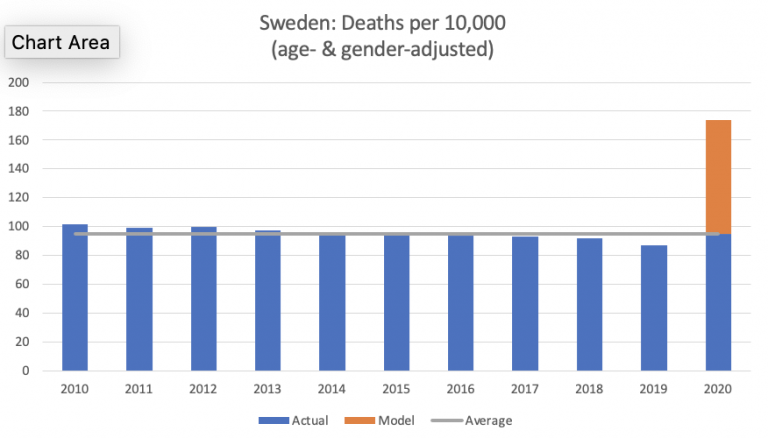
    LinkSwarm for April 2, 2021

    Friday, April 2nd, 2021

    Greetings, and welcome to a Good Friday LinkSwarm! I had the day off, so I slept ridiculously late, which is why you’re getting this in the late afternoon evening.

  • “9 Crazy Examples of Unrelated Waste and Partisan Spending in Biden’s $2 Trillion ‘Infrastructure’ Proposal.”

    1. $10 Billion to Create a ‘Civilian Climate Corp’

    The Biden administration proposes spending $10 billion to create a “Civilian Climate Corp.” The White House claims that “This $10 billion investment will put a new, diverse generation of Americans to work conserving our public lands and waters, bolstering community resilience, and advancing environmental justice through a new Civilian Climate Corps.”

    2. $20 Billion to ‘Advance Racial Equity and Environmental Justice’

    The proposal sets aside a whopping $20 billion—more than the latest COVID package spent on vaccines—for “a new program that will reconnect neighborhoods cut off by historic investments and ensure new projects increase opportunity, advance racial equity and environmental justice, and promote affordable access.”

    3. $175 Billion in Subsidies for Electric Vehicles

    Electric vehicles: A technological novelty so good it won’t catch on without hundreds of billions in subsidies. At least, that’s apparently what the Biden administration thinks, as its infrastructure proposal earmarks a “$174 billion investment to win the electric vehicle market.”

    The spending will take the form of manufacturing subsidies and consumer tax credits, which historically have benefitted wealthy families most. For comparison, the proposal carves out more for green energy goodies than it does on the total $115 billion to “modernize the bridges, highways, roads, and main streets that are in most critical need of repair.”

    It’s pork all the way down.

  • Who’s in charge of the Biden Administration?

    After Joe Biden’s performance last Thursday, every American should be demanding to talk to the manager. That’s because while President Joe Biden’s pathetic display during his “matinee” presser showed clearly that he is not in charge of our country, it also begged the obvious follow-up question not being asked by the 25 reporters in the room: If Joe Biden isn’t in charge of running our government, who is?

    If you didn’t actually watch the press conference—and every American should-especially those who voted against Trump by voting for Biden because they’d thought he was an improvement—by now, you have doubtless read the accounts of the President’s cliff notes that included scripted talking points and photos of the journalists upon whom he was directed to call. His staff treated him in much the same way as does the family of someone in the early stages of dementia, where they put pictures on doors and cabinets as a reminder of what goes where.

    If Joe Biden were my next-door neighbor, his condition could be described as sad, and he would be afforded every consideration and allowance possible for someone entering the final stage of the aging process. He is not, however, my next-door neighbor. He is supposed to be the President of the United States. His performance was mortifying. This is one of the most powerful men in the world. He controls our budget. He controls our military. He controls our nuclear weapons. What he clearly does not control is himself.

    And if he isn’t in control of himself, then who is? Who is in charge?

  • You know that Slow Joe has told a particularly egregious lie when even the Washington Post has to call him on it.
  • Matt Taibbi: “Master List Of Official Russia Claims That Proved To Be Bogus”:

    Update 3/21/21 “All 17 intelligence agencies,” October 19, 2016. Before the 2016 election, Hillary Clinton and others publicly stated that all 17 U.S. intelligence agencies backed an assessment that cyberattacks in 2016 came from the “highest levels of the Kremlin.” That was later corrected in congressional testimony to four agencies. It was actually a hand-picked team from three agencies, and the chief conclusion from that group came mainly from CIA chief John Brennan, who in his own book, “Undaunted,” published in 2020, revealed that he had overlooked dissenting analysis from two members of the working group. Brennan said he believed “the quality of the sources justified the high confidence,” but the Times and other outlets reported that Brennan was basing much of his confidence on a single human source in Russia whose information was allowed to bypass the normal vetting process….

    So a story that began as an assessment on Russian interference agreed upon by “all seventeen agencies,” became four agencies, then it was a hand-picked group from three agencies dominated by the CIA director, who overrode dissenting analysts within the group, likely because of confidence in one human source.

    There are twenty five entries on the list, and Taibbi admits he could have gone “on and on.”

  • Democrats finally give up on stealing an Iowa congressional seat.
  • Wisconsin Supreme Court strikes down Democratic Governor Tony Evers’ mask mandate. Good.
  • How cancel culture is like the East German Stasi.

  • Russia is building up forces on the Ukraine border again.
  • Just in case all my previous posts on this subject were unclear: “Free States Faring Far Better Than Lockdown States in One Huge Way, New Data Show”

    The results are in—and they overwhelmingly vindicate the free states over the authoritarian experiments. First, we saw that states with the harshest restrictions didn’t necessarily achieve the best COVID-19 death outcomes. Florida has fared far better than New York and New Jersey, for example, and multiple studies have found no correlation between lockdown stringency and death rates.

    Yet lockdowns have come at an enormous economic and human cost. We’ve seen mental health problems and child suicide spikes, an increase in domestic violence, an uptick in drug overdoses, and much, much more. And, of course, the economic toll of shutting down businesses and criminalizing “non-essential” livelihoods has been devastating.

    The national unemployment rate was a poor if not disastrous 6.2 percent in February. Yet the just-released state-level unemployment rates for last month show that the devastation hasn’t been equal across the board. New Labor Department data reveal that many free states have returned to nearly their pre-pandemic unemployment rates—while lockdown states dominate the wrong end of the list.

  • Why isn’t everyone in Texas dying? “The lockdowns have had no statistically observable effect on the virus trajectory and resulting severe outcomes. The open states have generally performed better, perhaps not because they are open but simply for reasons of demographics and seasonality. The closed states seem not to have achieved anything in terms of mitigation.”
  • Speaking of which: A timeline on the one year anniversary of 15 days to slow the spread.
  • Louis Farrakhan supporter Noah Green killed one capitol police officer and injured another. Now that the media knows it wasn’t a white trump supporter, expect the story to disappear. (Hat tip: Stephen Green at Instapundit.)
  • Delta hates Georgia’s policies. Communist China? Not so much.
  • The Democrats “increase election fraud so we can win” bill is unconstitutional. (Hat tip: Director Blue.)
  • “75% Of All U.S. Voters, 69% Of Black Voters Support Voter ID Laws.”
  • “Cuomo Ordered Aides To Conceal Nursing Home Death Numbers While He Negotiated $4M Book Deal.” Sounds like a corrupt, indictable offense to me…
  • The NCAA’s free athletics plantation is coming under increased scrutiny at the Supreme Court. Even famously taciturn Justice Clarence Thomas asked questions.
  • Try to contain your shock, but Cruz Noguez, the mano owned the SUV involved in the carash that killed 13 illegal aliens, was a coyote.
  • Related: “Austin Resident Faces Life in Prison for Alleged Smuggling That Killed 8 Illegal Aliens.”

    Prosecutors have also charged Austin resident Sebastian Tovar, age 24, with transporting illegal aliens resulting in death for an incident that killed eight people on March 15.

    The U.S. Department of Justice (DOJ) said in a press release that a Texas Department of Public Safety (DPS) officer tried to stop Tovar, who led police on a 50-mile car chase.

    “Traveling north into the southbound lane on Highway 277, Tovar collided with another vehicle head-on, resulting in the death of eight illegal aliens that had been in Tovar’s pickup truck,” the DOJ said. “The driver and passenger of the vehicle into which Tovar collided are hospitalized and in stable condition.”

    The DOJ said that, after the incident, border patrol agents apprehended 12 illegal aliens, two of whom confessed to being connected to Tovar’s alleged smuggling activities.

    The defendants in the March 4 incident are 28-year-old Isidro Rodriguez Jr. and 18-year-old Bianca Michelle Trujillo-Lopez. They face the possibility of life in federal prison if convicted.

    The indictment charges Rodriguez and Trujillo-Lopez with illegal alien transportation resulting in death, illegal alien transportation resulting in serious bodily injury and placing lives in jeopardy, and two counts of conspiracy.

    “Court records allege that on March 4, 2021, the defendants were traveling on FM 2523 near Del Rio when a Texas Department of Public Safety trooper attempted to stop them for speeding,” the DOJ said in a press release.

    “The driver, Trujillo-Lopez, tried to outrun the trooper, at times reaching speeds over 120 miles per hour. She ultimately lost control of her vehicle and rolled it multiple times after missing a curve on the road.”

  • Alas, state trooper Chad Walker died of his wounds. (Previously.)
  • Homeschooling triples during the pandemic
  • “Conservative Humorist Chad Prather Launches Campaign for Texas Governor.” He’s running against incumbent Governor Greg Abbott in the Republican primary. I can’t say that I’ve actually heard of Prather before (which would tend to bode ill for his chances), but he starts out with 196,000, which is more than a goodly number of Democratic Presidential candidates started out with. Of course, all of them lost too…
  • Dwight covers stopping the bleed, with a side order of Julia Child’s liver and a nice Chianti.
  • Review of Kong: Skull Island in advance of seeing Godzilla vs. Kong this weekend.
  • “Controversial Georgia Law Requires Poll Workers To Check Voters For A Pulse.”
  • “Actors Vow To Boycott Georgia And Only Film In The Xinjiang Region Of China.”
  • OK, I chuckled:

    And the incidental music is from Plants vs. Zombies…

  • LinkSwarm for February 26, 2021

    Friday, February 26th, 2021

    Last week was one of the worst winter storms ever. This week it hit 85°F. Welcome to Texas…

  • Everything The Media Told You About January 6 Is a Lie:

    “The only reported casualties on January 6 were people who voted for Donald Trump.” (Hat tip: The Other McCain.)

  • “Biden’s Expensive ‘Stimulus’ Plan Will Hurt Economy in the Long Term.”

    Scholars at the University of Pennsylvania’s Wharton School of Business analyzed the plan and found that the massive spending splurge—which costs roughly $13,260 per federal taxpayer—would only cause a “slight uptick” in economic growth in 2021. The analysts warned that this minor boost would just be “instant gratification,” and that the skyrocketing government debt caused by the blowout legislation would undermine any gains in the medium-to-long term.

    “The existence of the debt saps the rest of the economy,” Wharton analyst Efraim Berkovich said. “When the government is running budget deficits, the money that could have gone to productive investment is redirected.”

    “Effectively, what we’re doing is taking money from [some] people and giving it to other people for consumption purposes,” he continued. “That has value for social safety nets and redistributive benefits, but longer-term, you’re taking away from the capital that we need to grow our economy in the future.”

    Biden’s costly plan would explode the national debt. This, per Wharton, would lead to a “crowding out” effect over the coming years as more loan money is taken away from productive business/private sector investments and instead consumed by government debt.

  • Speaking of which:

  • So the Biden Administration hit an Iranian-backed militia stronghold in Syria in retaliation for attacks on Americans. I know we’re supposed to compare Warmonger Biden to Peacemaker Trump for the cognitive dissonance luls, but this is similar to President Trump’s missile strike on a Syrian chemical weapon faculty in April of his first year in office. I’m sure there’s plenty of Biden foreign policy stupidity ahead to rail against, but in this case it’s not significantly different from Trump policy.
  • Minimum wage hikes = more crime:

    A surprising body of research links increases in the minimum wage to increases in criminal offending by those most likely to lose jobs as a result of the wage hike. One analysis concluded that raising the federal minimum to $15 could create crime costs of up to $2.5 billion—a bill that would be borne disproportionately by the very people whom the wage hike is meant to help.

    The minimum wage’s economic trade-offs are well known. It raises the take-home pay of some, while causing others—particularly teens, young adults, and less-skilled workers—to lose their jobs. The Congressional Budget Office has estimated that a $15 minimum would boost 17 million workers’ earnings by 11.8 percent, on average, but would also cost from 1 million to 3 million jobs.

    Higher wages could make working more appealing than illegal activity for some. For others, put out of work by the hike, losing a job heightens the risk that they will go on to commit both property and violent crimes. After all, the people most likely to feel the economic downsides of a minimum-wage hike, in the form of lost jobs—the young—are also among those most likely to commit such crimes. Youths aged 16 to 24 make up just 12 percent of the population but were 23 percent of those arrested as of 2019; they account for a full third of those making less than $15 an hour. The CBO estimated that 16- to 19-year-olds alone would account for half of the job lost if the minimum wage reaches $15.

    In one paper from last year, researchers evaluated decades of data to consider the relationship between minimum-wage hikes and crime among 16- to 24-year-olds, finding that the wage hikes tend to correlate with increased property crimes, particularly larcenies—a sign that some unemployed people decide to earn their keep through theft rather than finding another job. Minimum-wage hikes also lead to increases in disorderly-conduct arrests, indicating an increase in loitering and other idleness among teens and young adults. Based on this data, the researchers estimate that hiking the minimum to $15 would lead to an additional 423,000 property crimes, creating the aforementioned $2.5 billion in damages.

  • A higher minimum wage brings other costs:

    Along with price increases, employers may reduce hours, and Belman and Wolfson note that “[i]t has long been suggested that employers may respond to minimum wage increases by reducing spending on training, fringe benefits and working conditions valued by employees.”

    Another important finding is that employers often respond to higher mandated wages by replacing low wage workers with those who have more education, skills and experience which make them more productive. This adjustment may have little effect on the observable employment numbers, but the effect is devastating for those who are replaced. Employers can be forced to pay higher wages, but they can’t be forced to hire or retain employees whose contributions don’t match the higher wage.

    Some studies (see Clemens 2019) suggest that the pace of job creation slows when mandated wages rise. The increases also accelerate automation, which reduces the number of entry-level jobs and further penalizes those whom the increases are meant to help. In coming years, the combined effect of substitution, slower job creation, and accelerated automation is likely to be a growing core of workers, many of whom are young and poorly educated, who are unemployed and unemployable.

    Social activists and progressive editorial boards now regard the minimum wage as another welfare program that can reduce the costs of programs like Medicaid and food stamps, and can reduce inequality. But the minimum wage is very poorly targeted for these purposes. The Congressional Budget Office estimates that “roughly 40 percent of workers directly affected by the $15 option in 2025 would be members of families with incomes more than three times the federal poverty level.” If the goal is to aid low-wage households, rather than teenagers and other part-time workers in middle-income and affluent families, expanding the Earned Income Tax Credit would be far more effective, because it is designed to aid the working poor.

  • Sweden proves lockdowns don’t save lives:

    History will record Covid-induced lockdowns as the product of pseudoscientific ideology, manifestations of an unprecedented mass hysteria and drummed-up fear.

    When Sweden strayed from the herd of nations hellbent on lockdown, it suffered intense vilification. The modellers who agitated for lockdown as a profoundly necessary step opined that veering from the mainstream playbook would see Sweden suffer some 100,000 excess deaths, double its normal annual death toll. Daily articles, notably in The Guardian, berated the country or the murder that would surely ensue if it didn’t rejoin the herd.

    A lot was riding on this. In taking up the lockdown baton from China, the world was conducting a dangerous experiment. That experiment involved tearing up the public health policy guidelines for respiratory virus epidemics of the World Health Organisation (WHO), the US’s Centres for Disease Control and Prevention (CDC) and many others.

    These guidelines were the results of a century of evidence and deliberation that was summarily ignored when the virus arrived. Detailed statements of principle governed the evidential processes required to revise them. These too were ignored.

    The basis for all of this was the assurance of the WHO’s Bruce Aylward that China’s lockdown had contained its epidemic. This in turn was based on speculation that everyone was susceptible to Covid-19 and that, without lockdown, exponential growth of disease and death was inevitable.

    Snip.

    But Sweden did not lock down, becoming the one of the most alluring control experiments the world has ever seen. And it did not suffer 100,000 excess deaths. Not even close. Instead, this is what happened:

    Whether you are a lockdown fan drawing trend lines that suggest Sweden had 8000 excess deaths or a skeptic concluding there were none because of a build-up of very susceptible people from an abnormally low death rate in 2019, this reality dealt a devastating blow to the lockdown theory and the models used to justify lockdown.

    Covid-19, it turned out, was not only far less deadly than modellers had predicted, but they couldn’t credit this to the lockdowns they’d promoted. Sweden clearly showed that failure to lock down did not constitute genocide.

  • Federal judge Drew Tipton bans Biden’s illegal alien deportation moratorium.
  • The favorite hobby of California Attorney General Xavier Becerra, Joe Biden’s pick for Health and Human Services secretary, is targeting Little Sisters of the Poor. He “chose to pursue this litigation even though it is completely meritless; even though it would, if successful, punish nuns who simply want to carry out their calling to care for the indigent elderly; and even though only ideological zealots intolerant of moral views different from their own can take any pleasure in its continuation.” Every knee must bend.
  • He also wants taxpayer-funded health care for illegal aliens. (Hat tip: Director Blue.)
  • Speaking of Biden appointees, his pick for assistant health secretary “Rachel” Levine supports chemical castration of children. (Hat tip: Stephen Green at Instapundit.)
  • Massive explosion rocks Cameron, Texas (about 75 miles northeast of Austin) after a train collided with 18-wheeler. Fortunately there were no injuries.
  • Biden’s energy plans are a nightmare for the American Dream:

    Biden’s energy plans are bad for our national security, economy, public health, and overall quality of life. But the American people’s ingenuity and creativity — and the very nature of how our planet and energy systems work — mean all is not lost.

    Under Biden’s attempts to “phase out” natural gas, petroleum, and coal, the prices we pay for energy will go up.

    This should be no surprise to Biden and his political allies, since costs have soared everywhere “going green” has been tried. Californians are paying 30% more for electricity than they did 10 years ago. In Denmark, where wind energy became a priority in the mid-1990s, prices have more than doubled.

    Because everything we do, from the moment our alarms go off every morning to when we turn off the lights at night, depends on energy, these higher prices will be a heavy burden for American families. Expensive energy means producing, marketing, transporting, and selling goods and services will also become more expensive, creating less a ripple effect than a tidal wave.

    The rising cost of living will hurt the poor the most. Low-income Americans already spend a higher percentage of their paychecks on electricity and gas, and they have less disposable income to afford higher prices for necessities.

    Coupled with the tax increases that would be needed to further subsidize unreliable wind and solar energy, Biden’s plans would cripple the poor and even put their health in jeopardy.

    An equally critical consequence of moving away from fossil fuels is the destabilization of our national security. Since becoming the world’s dominant energy producer and a net energy exporter, America has a stronger influence in global negotiations and advancing the cause of freedom.

    Thanks in large part to America’s growing influence over OPEC and Russia, multiple Middle Eastern nations have committed to normalizing relations with Israel, an unprecedented development National Review described as “something suspiciously resembling peace.” It’s the reason President Trump has been nominated for the Nobel Peace Prize four times.

    America used to go to war over energy, but now we’re actively loosening the grip of unstable, totalitarian countries not just on oil markets, but on the global balance of power. This is good news for Americans, who benefit from a safe and peaceful nation, and also for the entire world.

  • House Democrats gear up to steal Iowa Republican Marianette Miller-Meeks’ seat.
  • Fire everyone:

  • Buttergate rocks Canada.
  • If you wanted to get your hands on Gwyenth Paltrow’s $95 vibrator, you’re too late; it’s sold out. The way that woman creates ridiculous overpriced crap that gets everyone talking about what ridiculous overpriced crap it is, which then makes said ridiculous overpriced crap sell out almost immediately, makes me think she’s actually some sort of marketing genius…
  • “Party Of Love And Progress Rejoices Over Death Of Political Opponent.”
  • Adventures in poor life choices:

  • Moving house in San Francisco. I don’t mean moving from one house to another, I mean moving an entire house….
  • Spongebob Squarepants is running for President.
  • Speaking of Texas weather:

  • A video on potash that’s actually pretty interesting. (Hat tip: Ace of Spades HQ.)
  • “Disney Warns Viewers That The Muppet Show Is From A Different Era When Comedy Was Culturally Acceptable.”

    “We just wanted to give our viewers a heads-up that the show contains jokes, comedy, laughter, and free speech,” said a Disney spokesperson. “It feels very dated nowadays, since the show is packed full of problematic things like jokes, innovation, and quality. It’s like, come on, people, this is 2021, not the Dark Ages!”

  • If you or I can’t sleep at night, we might read a book or waste time on the Internet. When Colin Furze can’t sleep at night, he makes a hydraulic powered shark head.
  • Truth:

  • Cannot be unseen:

  • But I don WAAAANNA go! (Hat tip: Ace of Spades HQ.)
  • The Trump White House’s List Of Trump’s Accomplishments

    Sunday, January 24th, 2021

    I wanted to compile a list of the Trump Administration’s pluses and minuses (and, indeed, still might). One source I was going to draw from was the WhiteHouse.gov list of Trump Accomplishments. However, the Biden Administration took that down. As a service, and for the Historical Record, I’ve fished that list out of the Wayback Machine and am posting it below. (Plus you never know when the Biden Administration might ask the Wayback Machine to remove it from their records.) I’ve even tried to replicate the formatting.


    As of January 2021

    Trump Administration Accomplishments

    ━━━━━━━━ ★ ★ ★ ━━━━━━━━

    Unprecedented Economic Boom

    Before the China Virus invaded our shores, we built the world’s most prosperous economy.

    • America gained 7 million new jobs – more than three times government experts’ projections.
    • Middle-Class family income increased nearly $6,000 – more than five times the gains during the entire previous administration.
    • The unemployment rate reached 3.5 percent, the lowest in a half-century.
    • Achieved 40 months in a row with more job openings than job-hirings.
    • More Americans reported being employed than ever before – nearly 160 million.
    • Jobless claims hit a nearly 50-year low.
    • The number of people claiming unemployment insurance as a share of the population hit its lowest on record.
    • Incomes rose in every single metro area in the United States for the first time in nearly 3 decades.

    Delivered a future of greater promise and opportunity for citizens of all backgrounds.

    • Unemployment rates for African Americans, Hispanic Americans, Asian Americans, Native Americans, veterans, individuals with disabilities, and those without a high school diploma all reached record lows.
    • Unemployment for women hit its lowest rate in nearly 70 years.
    • Lifted nearly 7 million people off of food stamps.
    • Poverty rates for African Americans and Hispanic Americans reached record lows.
    • Income inequality fell for two straight years, and by the largest amount in over a decade.
    • The bottom 50 percent of American households saw a 40 percent increase in net worth.
    • Wages rose fastest for low-income and blue collar workers – a 16 percent pay increase.
    • African American homeownership increased from 41.7 percent to 46.4 percent.

    Brought jobs, factories, and industries back to the USA.

    • Created more than 1.2 million manufacturing and construction jobs.
    • Put in place policies to bring back supply chains from overseas.
    • Small business optimism broke a 35-year old record in 2018.

    Hit record stock market numbers and record 401ks.

    • The DOW closed above 20,000 for the first time in 2017 and topped 30,000 in 2020.
    • The S&P 500 and NASDAQ have repeatedly notched record highs.

    Rebuilding and investing in rural America.

    • Signed an Executive Order on Modernizing the Regulatory Framework for Agricultural Biotechnology Products, which is bringing innovative new technologies to market in American farming and agriculture.
    • Strengthened America’s rural economy by investing over $1.3 billion through the Agriculture Department’s ReConnect Program to bring high-speed broadband infrastructure to rural America.

    Achieved a record-setting economic comeback by rejecting blanket lockdowns.

    • An October 2020 Gallup survey found 56 percent of Americans said they were better off during a pandemic than four years prior.
    • During the third quarter of 2020, the economy grew at a rate of 33.1 percent – the most rapid GDP growth ever recorded.
    • Since coronavirus lockdowns ended, the economy has added back over 12 million jobs, more than half the jobs lost.
    • Jobs have been recovered 23 times faster than the previous administration’s recovery.
    • Unemployment fell to 6.7 percent in December, from a pandemic peak of 14.7 percent in April – beating expectations of well over 10 percent unemployment through the end of 2020.
    • Under the previous administration, it took 49 months for the unemployment rate to fall from 10 percent to under 7 percent compared to just 3 months for the Trump Administration.
    • Since April, the Hispanic unemployment rate has fallen by 9.6 percent, Asian-American unemployment by 8.6 percent, and Black American unemployment by 6.8 percent.
    • 80 percent of small businesses are now open, up from just 53 percent in April.
    • Small business confidence hit a new high.
    • Homebuilder confidence reached an all-time high, and home sales hit their highest reading since December 2006.
    • Manufacturing optimism nearly doubled.
    • Household net worth rose $7.4 trillion in Q2 2020 to $112 trillion, an all-time high.
    • Home prices hit an all-time record high.
    • The United States rejected crippling lockdowns that crush the economy and inflict countless public health harms and instead safely reopened its economy.
    • Business confidence is higher in America than in any other G7 or European Union country.
    • Stabilized America’s financial markets with the establishment of a number of Treasury Department supported facilities at the Federal Reserve.

    ━━━━━━━━ ★ ★ ★ ━━━━━━━━

    Tax Relief for the Middle Class

    Passed $3.2 trillion in historic tax relief and reformed the tax code.

    • Signed the Tax Cuts and Jobs Act – the largest tax reform package in history.
    • More than 6 million American workers received wage increases, bonuses, and increased benefits thanks to the tax cuts.
    • A typical family of four earning $75,000 received an income tax cut of more than $2,000 – slashing their tax bill in half.
    • Doubled the standard deduction – making the first $24,000 earned by a married couple completely tax-free.
    • Doubled the child tax credit.
    • Virtually eliminated the unfair Estate Tax, or Death Tax.
    • Cut the business tax rate from 35 percent – the highest in the developed world – all the way down to 21 percent.
    • Small businesses can now deduct 20 percent of their business income.
    • Businesses can now deduct 100 percent of the cost of their capital investments in the year the investment is made.
    • Since the passage of tax cuts, the share of total wealth held by the bottom half of households has increased, while the share held by the top 1 percent has decreased.
    • Over 400 companies have announced bonuses, wage increases, new hires, or new investments in the United States.
    • Over $1.5 trillion was repatriated into the United States from overseas.
    • Lower investment cost and higher capital returns led to faster growth in the middle class, real wages, and international competitiveness.

    Jobs and investments are pouring into Opportunity Zones.

    • Created nearly 9,000 Opportunity Zones where capital gains on long-term investments are taxed at zero.
    • Opportunity Zone designations have increased property values within them by 1.1 percent, creating an estimated $11 billion in wealth for the nearly half of Opportunity Zone residents who own their own home.
    • Opportunity Zones have attracted $75 billion in funds and driven $52 billion of new investment in economically distressed communities, creating at least 500,000 new jobs.
    • Approximately 1 million Americans will be lifted from poverty as a result of these new investments.
    • Private equity investments into businesses in Opportunity Zones were nearly 30 percent higher than investments into businesses in similar areas that were not designated Opportunity Zones.

    ━━━━━━━━ ★ ★ ★ ━━━━━━━━

    Massive Deregulation

    Ended the regulatory assault on American Businesses and Workers.

    • Instead of 2-for-1, we eliminated 8 old regulations for every 1 new regulation adopted.
    • Provided the average American household an extra $3,100 every year.
    • Reduced the direct cost of regulatory compliance by $50 billion, and will reduce costs by an additional $50 billion in FY 2020 alone.
    • Removed nearly 25,000 pages from the Federal Register – more than any other president. The previous administration added over 16,000 pages.
    • Established the Governors’ Initiative on Regulatory Innovation to reduce outdated regulations at the state, local, and tribal levels.
    • Signed an executive order to make it easier for businesses to offer retirement plans.
    • Signed two executive orders to increase transparency in Federal agencies and protect Americans and their small businesses from administrative abuse.
    • Modernized the National Environmental Policy Act (NEPA) for the first time in over 40 years.
    • Reduced approval times for major infrastructure projects from 10 or more years down to 2 years or less.
    • Helped community banks by signing legislation that rolled back costly provisions of Dodd-Frank.
    • Established the White House Council on Eliminating Regulatory Barriers to Affordable Housing to bring down housing costs.
    • Removed regulations that threatened the development of a strong and stable internet.
    • Eased and simplified restrictions on rocket launches, helping to spur commercial investment in space projects.
    • Published a whole-of-government strategy focused on ensuring American leadership in automated vehicle technology.
    • Streamlined energy efficiency regulations for American families and businesses, including preserving affordable lightbulbs, enhancing the utility of showerheads, and enabling greater time savings with dishwashers.
    • Removed unnecessary regulations that restrict the seafood industry and impede job creation.
    • Modernized the Department of Agriculture’s biotechnology regulations to put America in the lead to develop new technologies.
    • Took action to suspend regulations that would have slowed our response to COVID-19, including lifting restrictions on manufacturers to more quickly produce ventilators.

    Successfully rolled back burdensome regulatory overreach.

    • Rescinded the previous administration’s Affirmatively Furthering Fair Housing (AFFH) rule, which would have abolished zoning for single-family housing to build low-income, federally subsidized apartments.
    • Issued a final rule on the Fair Housing Act’s disparate impact standard.
    • Eliminated the Waters of the United States Rule and replaced it with the Navigable Waters Protection Rule, providing relief and certainty for farmers and property owners.
    • Repealed the previous administration’s costly fuel economy regulations by finalizing the Safer Affordable Fuel Efficient (SAFE) Vehicles rule, which will make cars more affordable, and lower the price of new vehicles by an estimated $2,200.

    Americans now have more money in their pockets.

    • Deregulation had an especially beneficial impact on low-income Americans who pay a much higher share of their incomes for overregulation.
    • Cut red tape in the healthcare industry, providing Americans with more affordable healthcare and saving Americans nearly 10 percent on prescription drugs.
    • Deregulatory efforts yielded savings to the medical community an estimated $6.6 billion – with a reduction of 42 million hours of regulatory compliance work through 2021.
    • Removed government barriers to personal freedom and consumer choice in healthcare.
    • Once fully in effect, 20 major deregulatory actions undertaken by the Trump Administration are expected to save American consumers and businesses over $220 billion per year.
    • Signed 16 pieces of deregulatory legislation that will result in a $40 billion increase in annual real incomes.

    ━━━━━━━━ ★ ★ ★ ━━━━━━━━

    Fair and Reciprocal Trade

    Secured historic trade deals to defend American workers.

    • Immediately withdrew from the job-killing Trans-Pacific Partnership (TPP).
    • Ended the North American Free Trade Agreement (NAFTA), and replaced it with the brand new United States-Mexico-Canada Agreement (USMCA).
    • The USMCA contains powerful new protections for American manufacturers, auto-makers, farmers, dairy producers, and workers.
    • The USMCA is expected to generate over $68 billion in economic activity and potentially create over 550,000 new jobs over ten years.
    • Signed an executive order making it government policy to Buy American and Hire American, and took action to stop the outsourcing of jobs overseas.
    • Negotiated with Japan to slash tariffs and open its market to $7 billion in American agricultural products and ended its ban on potatoes and lamb.
    • Over 90 percent of American agricultural exports to Japan now receive preferential treatment, and most are duty-free.
    • Negotiated another deal with Japan to boost $40 billion worth of digital trade.
    • Renegotiated the United States-Korea Free Trade Agreement, doubling the cap on imports of American vehicles and extending the American light truck tariff.
    • Reached a written, fully-enforceable Phase One trade agreement with China on confronting pirated and counterfeit goods, and the protection of American ideas, trade secrets, patents, and trademarks.
    • China agreed to purchase an additional $200 billion worth of United States exports and opened market access for over 4,000 American facilities to exports while all tariffs remained in effect.
    • Achieved a mutual agreement with the European Union (EU) that addresses unfair trade practices and increases duty-free exports by 180 percent to $420 million.
    • Secured a pledge from the EU to eliminate tariffs on American lobster – the first United States-European Union negotiated tariff reduction in over 20 years.
    • Scored a historic victory by overhauling the Universal Postal Union, whose outdated policies were undermining American workers and interests.
    • Engaged extensively with trade partners like the EU and Japan to advance reforms to the World Trade Organization (WTO).
    • Issued a first-ever comprehensive report on the WTO Appellate Body’s failures to comply with WTO rules and interpret WTO agreements as written.
    • Blocked nominees to the WTO’s Appellate Body until WTO Members recognize and address longstanding issues with Appellate Body activism.
    • Submitted 5 papers to the WTO Committee on Agriculture to improve Members’ understanding of how trade policies are implemented, highlight areas for improved transparency, and encourage members to maintain up-to-date notifications on market access and domestic support.

    Took strong actions to confront unfair trade practices and put America First.

    • Imposed tariffs on hundreds of billions worth of Chinese goods to protect American jobs and stop China’s abuses under Section 232 of the Trade Expansion Act of 1962 and Section 301 of the Trade Act of 1974.
    • Directed an all-of-government effort to halt and punish efforts by the Communist Party of China to steal and profit from American innovations and intellectual property.
    • Imposed tariffs on foreign aluminum and foreign steel to protect our vital industries and support our national security.
    • Approved tariffs on $1.8 billion in imports of washing machines and $8.5 billion in imports of solar panels.
    • Blocked illegal timber imports from Peru.
    • Took action against France for its digital services tax that unfairly targets American technology companies.
    • `Launched investigations into digital services taxes that have been proposed or adopted by 10 other countries.

    Historic support for American farmers.

    • Successfully negotiated more than 50 agreements with countries around the world to increase foreign market access and boost exports of American agriculture products, supporting more than 1 million American jobs.
    • Authorized $28 billion in aid for farmers who have been subjected to unfair trade practices – fully funded by the tariffs paid by China.
    • China lifted its ban on poultry, opened its market to beef, and agreed to purchase at least $80 billion of American agricultural products in the next two years.
    • The European Union agreed to increase beef imports by 180 percent and opened up its market to more imports of soybeans.
    • South Korea lifted its ban on American poultry and eggs, and agreed to provide market access for record exports of American rice.
    • Argentina lifted its ban on American pork.
    • Brazil agreed to increase wheat imports by $180 million a year and raised its quotas for purchases of United States ethanol.
    • Guatemala and Tunisia opened up their markets to American eggs.
    • Won tariff exemptions in Ecuador for wheat and soybeans.
    • Suspended $817 million in trade preferences for Thailand under the Generalized System of Preferences (GSP) program due to its failure to adequately provide reasonable market access for American pork products.
    • The amount of food stamps redeemed at farmers markets increased from $1.4 million in May 2020 to $1.75 million in September 2020 – a 50 percent increase over last year.
    • Rapidly deployed the Coronavirus Food Assistance Program, which provided $30 billion in support to farmers and ranchers facing decreased prices and market disruption when COVID-19 impacted the food supply chain.
    • Authorized more than $6 billion for the Farmers to Families Food Box program, which delivered over 128 million boxes of locally sourced, produce, meat, and dairy products to charity and faith-based organizations nationwide.
    • Delegated authorities via the Defense Production Act to protect breaks in the American food supply chain as a result of COVID-19.

    ━━━━━━━━ ★ ★ ★ ━━━━━━━━

    American Energy Independence

    Unleashed America’s oil and natural gas potential.

    • For the first time in nearly 70 years, the United States has become a net energy exporter.
    • The United States is now the number one producer of oil and natural gas in the world.
    • Natural gas production reached a record-high of 34.9 quads in 2019, following record high production in 2018 and in 2017.
    • The United States has been a net natural gas exporter for three consecutive years and has an export capacity of nearly 10 billion cubic feet per day.
    • Withdrew from the unfair, one-sided Paris Climate Agreement.
    • Canceled the previous administration’s Clean Power Plan, and replaced it with the new Affordable Clean Energy rule.
    • Approved the Keystone XL and Dakota Access pipelines.
    • Opened up the Arctic National Wildlife Refuge (ANWR) in Alaska to oil and gas leasing.
    • Repealed the last administration’s Federal Coal Leasing Moratorium, which prohibited coal leasing on Federal lands.
    • Reformed permitting rules to eliminate unnecessary bureaucracy and speed approval for mines.
    • Fixed the New Source Review permitting program, which punished companies for upgrading or repairing coal power plants.
    • Fixed the Environmental Protection Agency’s (EPA) steam electric and coal ash rules.
    • The average American family saved $2,500 a year in lower electric bills and lower prices at the gas pump.
    • Signed legislation repealing the harmful Stream Protection Rule.
    • Reduced the time to approve drilling permits on public lands by half, increasing permit applications to drill on public lands by 300 percent.
    • Expedited approval of the NuStar’s New Burgos pipeline to export American gasoline to Mexico.
    • Streamlined Liquefied natural gas (LNG) terminal permitting and allowed long-term LNG export authorizations to be extended through 2050.
    • The United States is now among the top three LNG exporters in the world.
    • Increased LNG exports five-fold since January 2017, reaching an all-time high in January 2020.
    • LNG exports are expected to reduce the American trade deficit by over $10 billion.
    • Granted more than 20 new long-term approvals for LNG exports to non-free trade agreement countries.
    • The development of natural gas and LNG infrastructure in the United States is providing tens of thousands of jobs, and has led to the investment of tens of billions of dollars in infrastructure.
    • There are now 6 LNG export facilities operating in the United States, with 2 additional export projects under construction.
    • The amount of nuclear energy production in 2019 was the highest on record, through a combination of increased capacity from power plant upgrades and shorter refueling and maintenance cycles.
    • Prevented Russian energy coercion across Europe through various lines of effort, including the Partnership for Transatlantic Energy Cooperation, civil nuclear deals with Romania and Poland, and opposition to Nord Stream 2 pipeline.
    • Issued the Presidential Permit for the A2A railroad between Canada and Alaska, providing energy resources to emerging markets.

    Increased access to our country’s abundant natural resources in order to achieve energy independence.

    • Renewable energy production and consumption both reached record highs in 2019.
    • Enacted policies that helped double the amount of electricity generated by solar and helped increase the amount of wind generation by 32 percent from 2016 through 2019.
    • Accelerated construction of energy infrastructure to ensure American energy producers can deliver their products to the market.
    • Cut red tape holding back the construction of new energy infrastructure.
    • Authorized ethanol producers to sell E15 year-round and allowed higher-ethanol gasoline to be distributed from existing pumps at filling stations.
    • Ensured greater transparency and certainty in the Renewable Fuel Standard (RFS) program.
    • Negotiated leasing capacity in the Strategic Petroleum Reserve to Australia, providing American taxpayers a return on this infrastructure investment.
    • Signed an executive order directing Federal agencies to work together to diminish the capability of foreign adversaries to target our critical electric infrastructure.
    • Reformed Section 401 of the Clean Water Act regulation to allow for the curation of interstate infrastructure.
    • Resolved the OPEC (Organization of the Petroleum Exporting Countries) oil crisis during COVID-19 by getting OPEC, Russia, and others to cut nearly 10 million barrels of production a day, stabilizing world oil prices.
    • Directed the Department of Energy to use the Strategic Petroleum Reserve to mitigate market volatility caused by COVID-19.

    ━━━━━━━━ ★ ★ ★ ━━━━━━━━

    Investing in America’s Workers and Families

    Affordable and high-quality Child Care for American workers and their families.

    • Doubled the Child Tax Credit from $1,000 to $2,000 per child and expanded the eligibility for receiving the credit.
    • Nearly 40 million families benefitted from the child tax credit (CTC), receiving an average benefit of $2,200 – totaling credits of approximately $88 billion.
    • Signed the largest-ever increase in Child Care and Development Block Grants – expanding access to quality, affordable child care for more than 800,000 low-income families.
    • Secured an additional $3.5 billion in the Coronavirus Aid, Relief, and Economic Security (CARES) Act to help families and first responders with child care needs.
    • Created the first-ever paid family leave tax credit for employees earning $72,000 or less.
    • Signed into law 12-weeks of paid parental leave for Federal workers.
    • Signed into law a provision that enables new parents to withdraw up to $5,000 from their retirement accounts without penalty when they give birth to or adopt a child.

    Advanced apprenticeship career pathways to good-paying jobs.

    • Expanded apprenticeships to more than 850,000 and established the new Industry-Recognized Apprenticeship programs in new and emerging fields.
    • Established the National Council for the American Worker and the American Workforce Policy Advisory Board.
    • Over 460 companies have signed the Pledge to America’s Workers, committing to provide more than 16 million job and training opportunities.
    • Signed an executive order that directs the Federal government to replace outdated degree-based hiring with skills-based hiring.

    Advanced women’s economic empowerment.

    • Included women’s empowerment for the first time in the President’s 2017 National Security Strategy.
    • Signed into law key pieces of legislation, including the Women, Peace, and Security Act and the Women Entrepreneurship and Economic Empowerment Act.
    • Launched the Women’s Global Development and Prosperity (W-GDP) Initiative – the first-ever whole-of-government approach to women’s economic empowerment that has reached 24 million women worldwide.
    • Established an innovative new W-GDP Fund at USAID.
    • Launched the Women Entrepreneurs Finance Initiative (We-Fi) with 13 other nations.
    • Announced a $50 million donation on behalf of the United States to We-Fi providing more capital to women-owned businesses around the world.
    • Released the first-ever Strategy on Women, Peace, and Security, which focused on increasing women’s participation to prevent and resolve conflicts.
    • Launched the W-GDP 2x Global Women’s Initiative with the Development Finance Corporation, which has mobilized more than $3 billion in private sector investments over three years.

    Ensured American leadership in technology and innovation.

    • First administration to name artificial intelligence, quantum information science, and 5G communications as national research and development priorities.
    • Launched the American Broadband Initiative to promote the rapid deployment of broadband internet across rural America.
    • Made 100 megahertz of crucial mid-band spectrum available for commercial operations, a key factor to driving widespread 5G access across rural America.
    • Launched the American AI Initiative to ensure American leadership in artificial intelligence (AI), and established the National AI Initiative Office at the White House.
    • Established the first-ever principles for Federal agency adoption of AI to improve services for the American people.
    • Signed the National Quantum Initiative Act establishing the National Quantum Coordination Office at the White House to drive breakthroughs in quantum information science.
    • Signed the Secure 5G and Beyond Act to ensure America leads the world in 5G.
    • Launched a groundbreaking program to test safe and innovative commercial drone operations nationwide.
    • Issued new rulemaking to accelerate the return of American civil supersonic aviation.
    • Committed to doubling investments in AI and quantum information science (QIS) research and development.
    • Announced the establishment of $1 billion AI and quantum research institutes across America.
    • Established the largest dual-use 5G test sites in the world to advance 5G commercial and military innovation.
    • Signed landmark Prague Principles with America’s allies to advance the deployment of secure 5G telecommunications networks.
    • Signed first-ever bilateral AI cooperation agreement with the United Kingdom.
    • Built collation among allies to ban Chinese Telecom Company Huawei from their 5G infrastructure.

    Preserved American jobs for American workers and rejected the importation of cheap foreign labor.

    • Pressured the Tennessee Valley Authority (TVA) to reverse their decision to lay off over 200 American workers and replace them with cheaper foreign workers.
    • Removed the TVA Chairman of the Board and a TVA Board Member.

    ━━━━━━━━ ★ ★ ★ ━━━━━━━━

    Life-Saving Response to the China Virus

    Restricted travel to the United States from infected regions of the world.

    • Suspended all travel from China, saving thousands of lives.
    • Required all American citizens returning home from designated outbreak countries to return through designated airports with enhanced screening measures, and to undergo a self-quarantine.
    • Announced further travel restrictions on Iran, the Schengen Area of Europe, the United Kingdom, Ireland, and Brazil.
    • Issued travel advisory warnings recommending that American citizens avoid all international travel.
    • Reached bilateral agreements with Mexico and Canada to suspend non-essential travel and expeditiously return illegal aliens.
    • Repatriated over 100,000 American citizens stranded abroad on more than 1,140 flights from 136 countries and territories.
    • Safely transported, evacuated, treated, and returned home trapped passengers on cruise ships.
    • Took action to authorize visa sanctions on foreign governments who impede our efforts to protect American citizens by refusing or unreasonably delaying the return of their own citizens, subjects, or residents from the United States.

    Acted early to combat the China Virus in the United States.

    • Established the White House Coronavirus Task Force, with leading experts on infectious diseases, to manage the Administration’s efforts to mitigate the spread of COVID-19 and to keep workplaces safe.
    • Pledged in the State of the Union address to “take all necessary steps to safeguard our citizens from the Virus,” while the Democrats’ response made not a single mention of COVID-19 or even the threat of China.
    • Declared COVID-19 a National Emergency under the Stafford Act.
    • Established the 24/7 FEMA National Response Coordination Center.
    • Released guidance recommending containment measures critical to slowing the spread of the Virus, decompressing peak burden on hospitals and infrastructure, and diminishing health impacts.
    • Implemented strong community mitigation strategies to sharply reduce the number of lives lost in the United States down from experts’ projection of up to 2.2 million deaths in the United States without mitigation.
    • Halted American funding to the World Health Organization to counter its egregious bias towards China that jeopardized the safety of Americans.
    • Announced plans for withdrawal from the World Health Organization and redirected contribution funds to help meet global public health needs.
    • Called on the United Nations to hold China accountable for their handling of the virus, including refusing to be transparent and failing to contain the virus before it spread.

    Re-purposed domestic manufacturing facilities to ensure frontline workers had critical supplies.

    • Distributed billions of pieces of Personal Protective Equipment, including gloves, masks, gowns, and face shields.
    • Invoked the Defense Production Act over 100 times to accelerate the development and manufacturing of essential material in the USA.
    • Made historic investments of more than $3 billion into the industrial base.
    • Contracted with companies such as Ford, General Motors, Philips, and General Electric to produce ventilators.
    • Contracted with Honeywell, 3M, O&M Halyard, Moldex, and Lydall to increase our Nation’s production of N-95 masks.
    • The Army Corps of Engineers built 11,000 beds, distributed 10,000 ventilators, and surged personnel to hospitals.
    • Converted the Javits Center in New York into a 3,000-bed hospital, and opened medical facilities in Seattle and New Orleans.
    • Dispatched the USNS Comfort to New York City, and the USNS Mercy to Los Angeles.
    • Deployed thousands of FEMA employees, National Guard members, and military forces to help in the response.
    • Provided support to states facing new emergences of the virus, including surging testing sites, deploying medical personnel, and advising on mitigation strategies.
    • Announced Federal support to governors for use of the National Guard with 100 percent cost-share.
    • Established the Supply Chain Task Force as a “control tower” to strategically allocate high-demand medical supplies and PPE to areas of greatest need.
    • Requested critical data elements from states about the status of hospital capacity, ventilators, and PPE.
    • Executed nearly 250 flights through Project Air Bridge to transport hundreds of millions of surgical masks, N95 respirators, gloves, and gowns from around the world to hospitals and facilities throughout the United States.
    • Signed an executive order invoking the Defense Production Act to ensure that Americans have a reliable supply of products like beef, pork, and poultry.
    • Stabilized the food supply chain restoring the Nation’s protein processing capacity through a collaborative approach with Federal, state, and local officials and industry partners.
    • The continued movement of food and other critical items of daily life distributed to stores and to American homes went unaffected.

    Replenished the depleted Strategic National Stockpile.

    • Increased the number of ventilators nearly ten-fold to more than 153,000.
    • Despite the grim projections from the media and governors, no American who has needed a ventilator has been denied a ventilator.
    • Increased the number of N95 masks fourteen-fold to more than 176 million.
    • Issued an executive order ensuring critical medical supplies are produced in the United States.

    Created the largest, most advanced, and most innovative testing system in the world.

    • Built the world’s leading testing system from scratch, conducting over 200 million tests – more than all of the European Union combined.
    • Engaged more than 400 test developers to increase testing capacity from less than 100 tests per day to more than 2 million tests per day.
    • Slashed red tape and approved Emergency Use Authorizations for more than 300 different tests, including 235 molecular tests, 63 antibody tests, and 11 antigen tests.
    • Delivered state-of-the-art testing devices and millions of tests to every certified nursing home in the country.
    • Announced more flexibility to Medicare Advantage and Part D plans to waive cost-sharing for tests.
    • Over 2,000 retail pharmacy stores, including CVS, Walmart, and Walgreens, are providing testing using new regulatory and reimbursement options.
    • Deployed tens of millions of tests to nursing homes, assisted living facilities, historically black colleges and universities (HBCUs), tribes, disaster relief operations, Home Health/Hospice organizations, and the Veterans Health Administration.
    • Began shipping 150 million BinaxNOW rapid tests to states, long-term care facilities, the IHS, HBCUs, and other key partners.

    Pioneered groundbreaking treatments and therapies that reduced the mortality rate by 85 percent, saving over 2 million lives.

    • The United States has among the lowest case fatality rates in the entire world.
    • The Food and Drug Administration (FDA) launched the Coronavirus Treatment Acceleration Program to expedite the regulatory review process for therapeutics in clinical trials, accelerate the development and publication of industry guidance on developing treatments, and utilize regulatory flexibility to help facilitate the scaling-up of manufacturing capacity.
    • More than 370 therapies are in clinical trials and another 560 are in the planning stages.
    • Announced $450 million in available funds to support the manufacturing of Regeneron’s antibody cocktail.
    • Shipped tens of thousands of doses of the Regeneron drug.
    • Authorized an Emergency Use Authorization (EUA) for convalescent plasma.
    • Treated around 100,000 patients with convalescent plasma, which may reduce mortality by 50 percent.
    • Provided $48 million to fund the Mayo Clinic study that tested the efficacy of convalescent plasma for patients with COVID-19.
    • Made an agreement to support the large-scale manufacturing of AstraZeneca’s cocktail of two monoclonal antibodies.
    • Approved Remdesivir as the first COVID-19 treatment, which could reduce hospitalization time by nearly a third.
    • Secured more than 90 percent of the world’s supply of Remdesivir, enough to treat over 850,000 high-risk patients.
    • Granted an EUA to Eli Lilly for its anti-body treatments.
    • Finalized an agreement with Eli Lilly to purchase the first doses of the company’s investigational antibody therapeutic.
    • Provided up to $270 million to the American Red Cross and America’s Blood Centers to support the collection of up to 360,000 units of plasma.
    • Launched a nationwide campaign to ask patients who have recovered from COVID-19 to donate plasma.
    • Announced Phase 3 clinical trials for varying types of blood thinners to treat adults diagnosed with COVID-19.
    • Issued an EUA for the monoclonal antibody therapy bamlanivimab.
    • FDA issued an EUA for casirivimab and imdevimab to be administered together.
    • Launched the COVID-19 High Performance Computing Consortium with private sector and academic leaders unleashing America’s supercomputers to accelerate coronavirus research.

    Brought the full power of American medicine and government to produce a safe and effective vaccine in record time.

    • Launched Operation Warp Speed to initiate an unprecedented drive to develop and make available an effective vaccine by January 2021.
    • Pfizer and Moderna developed two vaccines in just nine months, five times faster than the fastest prior vaccine development in American history.
    • Pfizer and Moderna’s vaccines are approximately 95 effective – far exceeding all expectations.
    • AstraZeneca and Johnson & Johnson also both have promising candidates in the final stage of clinical trials.
    • The vaccines will be administered within 24 hours of FDA-approval.
    • Made millions of vaccine doses available before the end of 2020, with hundreds of millions more to quickly follow.
    • FedEx and UPS will ship doses from warehouses directly to local pharmacies, hospitals, and healthcare providers.
    • Finalized a partnership with CVS and Walgreens to deliver vaccines directly to residents of nursing homes and long-term care facilities as soon as a state requests it, at no cost to America’s seniors.
    • Signed an executive order to ensure that the United States government prioritizes getting the vaccine to American citizens before sending it to other nations.
    • Provided approximately $13 billion to accelerate vaccine development and to manufacture all of the top candidates in advance.
    • Provided critical investments of $4.1 billion to Moderna to support the development, manufacturing, and distribution of their vaccines.
    • Moderna announced its vaccine is 95 percent effective and is pending FDA approval.
    • Provided Pfizer up to $1.95 billion to support the mass-manufacturing and nationwide distribution of their vaccine candidate.
    • Pfizer announced its vaccine is 95 percent effective and is pending FDA approval.
    • Provided approximately $1 billion to support the manufacturing and distribution of Johnson & Johnson’s vaccine candidate.
    • Johnson & Johnson’s vaccine candidate reached the final stage of clinical trials.
    • Made up to $1.2 billion available to support AstraZeneca’s vaccine candidate.
    • AstraZeneca’s vaccine candidate reached the final stage of clinical trials.
    • Made an agreement to support the large-scale manufacturing of Novavax’s vaccine candidate with 100 million doses expected.
    • Partnered with Sanofi and GSK to support large-scale manufacturing of a COVID-19 investigational vaccine.
    • Awarded $200 million in funding to support vaccine preparedness and plans for the immediate distribution and administration of vaccines.
    • Provided $31 million to Cytvia for vaccine-related consumable products.
    • Under the PREP Act, issued guidance authorizing qualified pharmacy technicians to administer vaccines.
    • Announced that McKesson Corporation will produce store, and distribute vaccine ancillary supply kits on behalf of the Strategic National Stockpile to help healthcare workers who will administer vaccines.
    • Announced partnership with large-chain, independent, and regional pharmacies to deliver vaccines.

    Prioritized resources for the most vulnerable Americans, including nursing home residents.

    • Quickly established guidelines for nursing homes and expanded telehealth opportunities to protect vulnerable seniors.
    • Increased surveillance, oversight, and transparency of all 15,417 Medicare and Medicaid nursing homes by requiring them to report cases of COVID-19 to all residents, their families, and the Centers for Disease Control and Prevention (CDC).
    • Required that all nursing homes test staff regularly.
    • Launched an unprecedented national nursing home training curriculum to equip nursing home staff with the knowledge they need to stop the spread of COVID-19.
    • Delivered $81 million for increased inspections and funded 35,000 members of the Nation Guard to deliver critical supplies to every Medicare-certified nursing homes.
    • Deployed Federal Task Force Strike Teams to provide onsite technical assistance and education to nursing homes experiencing outbreaks.
    • Distributed tens of billions of dollars in Provider Relief Funds to protect nursing homes, long-term care facilities, safety-net hospitals, rural hospitals, and communities hardest hit by the virus.
    • Released 1.5 million N95 respirators from the Strategic National Stockpile for distribution to over 3,000 nursing home facilities.
    • Directed the White House Opportunity and Revitalization Council to refocus on underserved communities impacted by the coronavirus.
    • Required that testing results reported include data on race, gender, ethnicity, and ZIP code, to ensure that resources were directed to communities disproportionately harmed by the virus.
    • Ensured testing was offered at 95 percent of Federally Qualified Health Centers (FQHC), which serve over 29 million patients in 12,000 communities across the Nation.
    • Invested an unprecedented $8 billion in tribal communities.
    • Maintained safe access for Veterans to VA healthcare throughout the COVID-19 Pandemic and supported non-VA hospital systems and private and state-run nursing homes with VA clinical teams.
    • Signed legislation ensuring no reduction of VA education benefits under the GI Bill for online distance learning.

    Supported Americans as they safely return to school and work.

    • Issued the Guidelines for Opening Up America Again, a detailed blueprint to help governors as they began reopening the country. Focused on protecting the most vulnerable and mitigating the risk of any resurgence, while restarting the economy and allowing Americans to safely return to their jobs.
    • Helped Americans return to work by providing extensive guidance on workplace-safety measures to protect against COVID-19, and investigating over 10,000 coronavirus-related complaints and referrals.
    • Provided over $31 billion to support elementary and secondary schools.
    • Distributed 125 million face masks to school districts.
    • Provided comprehensive guidelines to schools on how to protect and identify high-risk individuals, prevent the spread of COVID-19, and conduct safe in-person teaching.
    • Brought back the safe return of college athletics, including Big Ten and Pac-12 football.

    Rescued the American economy with nearly $3.4 trillion in relief, the largest financial aid package in history.

    • Secured an initial $8.3 billion Coronavirus Preparedness and Response Act, supporting the development of treatments and vaccines, and to procure critical medical supplies and equipment.
    • Signed the $100 billion Families First Coronavirus Relief Act, guaranteeing free coronavirus testing, emergency paid sick leave and family leave, Medicaid funding, and food assistance.
    • Signed the $2.3 trillion Coronavirus Aid, Relief, and Economic Security (CARES) Act, providing unprecedented and immediate relief to American families, workers, and businesses.
    • Signed additional legislation providing nearly $900 billion in support for coronavirus emergency response and relief, including critically needed funds to continue the Paycheck Protection Program.
    • Signed the Paycheck Protection Program and Healthcare Enhancement Act, adding an additional $310 billion to replenish the program.
    • Delivered approximately 160 million relief payments to hardworking Americans.
    • Through the Paycheck Protection Program, approved over $525 billion in forgivable loans to more than 5.2 million small businesses, supporting more than 51 million American jobs.
    • The Treasury Department approved the establishment of the Money Market Mutual Fund Liquidity Facility to provide liquidity to the financial system.
    • The Treasury Department, working with the Federal Reserve, was able to leverage approximately $4 trillion in emergency lending facilities.
    • Signed an executive order extending expanded unemployment benefits.
    • Signed an executive order to temporarily suspend student loan payments, evictions, and collection of payroll taxes.
    • Small Business Administration expanded access to emergency economic assistance for small businesses, faith-based, and religious entities.
    • Protected jobs for American workers impacted by COVID-19 by temporarily suspending several job-related nonimmigrant visas, including H-1B’s, H-2B’s without a nexus to the food-supply chain, certain H-4’s, as well as L’s and certain J’s.

    ━━━━━━━━ ★ ★ ★ ━━━━━━━━

    Great Healthcare for Americans

    Empowered American patients by greatly expanding healthcare choice, transparency, and affordability.

    • Eliminated the Obamacare individual mandate – a financial relief to low and middle-income households that made up nearly 80 percent of the families who paid the penalty for not wanting to purchase health insurance.
    • Increased choice for consumers by promoting competition in the individual health insurance market leading to lower premiums for three years in a row.
    • Under the Trump Administration, more than 90 percent of the counties have multiple options on the individual insurance market to choose from.
    • Offered Association Health Plans, which allow employers to pool together and offer more affordable, quality health coverage to their employees at up to 30 percent lower cost.
    • Increased availability of short-term, limited-duration health plans, which can cost up to 60 percent less than traditional plans, giving Americans more flexibility to choose plans that suit their needs.
    • Expanded Health Reimbursement Arrangements, allowing millions of Americans to be able to shop for a plan of their choice on the individual market, and then have their employer cover the cost.
    • Added 2,100 new Medicare Advantage plan options since 2017, a 76 percent increase.
    • Lowered Medicare Advantage premiums by 34 percent nationwide to the lowest level in 14 years. Medicare health plan premium savings for beneficiaries have totaled $nearly 1.5 billion since 2017.
    • Improved access to tax-free health savings accounts for individuals with chronic conditions.
    • Eliminated costly Obamacare taxes, including the health insurance tax, the medical device tax, and the “Cadillac tax.”
    • Worked with states to create more flexibility and relief from oppressive Obamacare regulations, including reinsurance waivers to help lower premiums.
    • Released legislative principles to end surprise medical billing.
    • Finalized requirements for unprecedented price transparency from hospitals and insurance companies so patients know what the cost is before they receive care.
    • Took action to require that hospitals make the prices they negotiate with insurers publicly available and easily accessible online.
    • Improved patients access to their health data by penalizing hospitals and causing clinicians to lose their incentive payments if they do not comply.
    • Expanded access to telehealth, especially in rural and underserved communities.
    • Increased Medicare payments to rural hospitals to stem a decade of rising closures and deliver enhanced access to care in rural areas.

    Issued unprecedented reforms that dramatically lowered the price of prescription drugs.

    • Lowered drug prices for the first time in 51 years.
    • Launched an initiative to stop global freeloading in the drug market.
    • Finalized a rule to allow the importation of prescription drugs from Canada.
    • Finalized the Most Favored Nation Rule to ensure that pharmaceutical companies offer the same discounts to the United States as they do to other nations, resulting in an estimated $85 billion in savings over seven years and $30 billion in out-of-pocket costs alone.
    • Proposed a rule requiring federally funded health centers to pass drug company discounts on insulin and Epi-Pens directly to patients.
    • Ended the gag clauses that prevented pharmacists from informing patients about the best prices for the medications they need.
    • Ended the costly kickbacks to middlemen and ensured that patients directly benefit from available discounts at the pharmacy counter, saving Americans up to 30 percent on brand name pharmaceuticals.
    • Enhanced Part D plans to provide many seniors with Medicare access to a broad set of insulins at a maximum $35 copay for a month’s supply of each type of insulin.
    • Reduced Medicare Part D prescription drug premiums, saving beneficiaries nearly $2 billion in premium costs since 2017.
    • Ended the Unapproved Drugs Initiative, which provided market exclusivity to generic drugs.

    Promoted research and innovation in healthcare to ensure that American patients have access to the best treatment in the world.

    • Signed first-ever executive order to affirm that it is the official policy of the United States Government to protect patients with pre-existing conditions.
    • Passed Right To Try to give terminally ill patients access to lifesaving cures.
    • Signed an executive order to fight kidney disease with more transplants and better treatment.
    • Signed into law a $1 billion increase in funding for critical Alzheimer’s research.
    • Accelerated medical breakthroughs in genetic treatments for Sickle Cell disease.
    • Finalized the interoperability rules that will give American patients access to their electronic health records on their phones.
    • Initiated an effort to provide $500 million over the next decade to improve pediatric cancer research.
    • Launched a campaign to end the HIV/AIDS epidemic in America in the next decade.
    • Started a program to provide the HIV prevention drug PrEP to uninsured patients for free.
    • Signed an executive order and awarded new development contracts to modernize the influenza vaccine.

    Protected our Nation’s seniors by safeguarding and strengthening Medicare.

    • Updated the way Medicare pays for innovative medical products to ensure beneficiaries have access to the latest innovation and treatment.
    • Reduced improper payments for Medicare an estimated $15 billion since 2016 protecting taxpayer dollars and leading to less fraud, waste, and abuse.
    • Took rapid action to combat antimicrobial resistance and secure access to life-saving new antibiotic drugs for American seniors, by removing several financial disincentives and setting policies to reduce inappropriate use.
    • Launched new online tools, including eMedicare, Blue Button 2.0, and Care Compare, to help seniors see what is covered, compare costs, streamline data, and compare tools available on Medicare.gov.
    • Provided new Medicare Advantage supplemental benefits, including modifications to help keep seniors safe in their homes, respite care for caregivers, non-opioid pain management alternatives like therapeutic massages, transportation, and more in-home support services and assistance.
    • Protected Medicare beneficiaries by removing Social Security numbers from all Medicare cards, a project completed ahead of schedule.
    • Unleashed unprecedented transparency in Medicare and Medicaid data to spur research and innovation.

    ━━━━━━━━ ★ ★ ★ ━━━━━━━━

    Remaking the Federal Judiciary

    Appointed a historic number of Federal judges who will interpret the Constitution as written.

    • Nominated and confirmed over 230 Federal judges.
    • Confirmed 54 judges to the United States Courts of Appeals, making up nearly a third of the entire appellate bench.
    • Filled all Court of Appeals vacancies for the first time in four decades.
    • Flipped the Second, Third, and Eleventh Circuits from Democrat-appointed majorities to Republican-appointed majorities. And dramatically reshaped the long-liberal Ninth Circuit.

    Appointed three Supreme Court justices, expanding its conservative-appointed majority to 6-3.

    • Appointed Justice Neil Gorsuch to replace Justice Antonin Scalia.
    • Appointed Justice Brett Kavanaugh to replace Justice Anthony Kennedy.
    • Appointed Justice Amy Coney Barrett to replace Justice Ruth Bader Ginsburg.

    ━━━━━━━━ ★ ★ ★ ━━━━━━━━

    Achieving a Secure Border

    Secured the Southern Border of the United States.

    • Built over 400 miles of the world’s most robust and advanced border wall.
    • Illegal crossings have plummeted over 87 percent where the wall has been constructed.
    • Deployed nearly 5,000 troops to the Southern border. In addition, Mexico deployed tens of thousands of their own soldiers and national guardsmen to secure their side of the US-Mexico border.
    • Ended the dangerous practice of Catch-and-Release, which means that instead of aliens getting released into the United States pending future hearings never to be seen again, they are detained pending removal, and then ultimately returned to their home countries.
    • Entered into three historic asylum cooperation agreements with Honduras, El Salvador, and Guatemala to stop asylum fraud and resettle illegal migrants in third-party nations pending their asylum applications.
    • Entered into a historic partnership with Mexico, referred to as the “Migrant Protection Protocols,” to safely return asylum-seekers to Mexico while awaiting hearings in the United States.

    Fully enforced the immigration laws of the United States.

    • Signed an executive order to strip discretionary Federal grant funding from deadly sanctuary cities.
    • Fully enforced and implemented statutorily authorized “expedited removal” of illegal aliens.
    • The Department of Justice prosecuted a record-breaking number of immigration-related crimes.
    • Used Section 243(d) of the Immigration and Nationality Act (INA) to reduce the number of aliens coming from countries whose governments refuse to accept their nationals who were ordered removed from the United States.

    Ended asylum fraud, shut down human smuggling traffickers, and solved the humanitarian crisis across the Western Hemisphere.

    • Suspended, via regulation, asylum for aliens who had skipped previous countries where they were eligible for asylum but opted to “forum shop” and continue to the United States.
    • Safeguarded migrant families, and protected migrant safety, by promulgating new regulations under the Flores Settlement Agreement.
    • Proposed regulations to end the practice of giving free work permits to illegal aliens lodging meritless asylum claims.
    • Issued “internal relocation” guidance.
    • Cross-trained United States Border Patrol agents to conduct credible fear screenings alongside USCIS (United States Citizenship and Immigration Services) adjudication personnel to reduce massive backlogs.
    • Streamlined and expedited the asylum hearing process through both the Prompt Asylum Claim Review (PACR) and the Humanitarian Asylum Review Process (HARP).
    • Launched the Family Fraud Initiative to identify hundreds of individuals who were fraudulently presenting themselves as family units at the border, oftentimes with trafficking children, in order to ensure child welfare.
    • Improved screening in countries with high overstay rates and reduced visa overstay rates in many of these countries.
    • Removed bureaucratic constraints on United States consular officers that reduced their ability to appropriately vet visa applicants.
    • Worked with Mexico and other regional partners to dismantle the human smuggling networks in our hemisphere that profit from human misery and fuel the border crisis by exploiting vulnerable populations.

    Secured our Nation’s immigration system against criminals and terrorists.

    • Instituted national security travel bans to keep out terrorists, jihadists, and violent extremists, and implemented a uniform security and information-sharing baseline all nations must meet in order for their nationals to be able to travel to, and emigrate to, the United States.
    • Suspended refugee resettlement from the world’s most dangerous and terror-afflicted regions.
    • Rebalanced refugee assistance to focus on overseas resettlement and burden-sharing.
    • 85 percent reduction in refugee resettlement.
    • Overhauled badly-broken refugee security screening process.
    • Required the Department of State to consult with states and localities as part of the Federal government’s refugee resettlement process.
    • Issued strict sanctions on countries that have failed to take back their own nationals.
    • Established the National Vetting Center, which is the most advanced and comprehensive visa screening system anywhere in the world.

    Protected American workers and taxpayers.

    • Issued a comprehensive “public charge” regulation to ensure newcomers to the United States are financially self-sufficient and not reliant on welfare.
    • Created an enforcement mechanism for sponsor repayment and deeming, to ensure that people who are presenting themselves as sponsors are actually responsible for sponsor obligations.
    • Issued regulations to combat the horrendous practice of “birth tourism.”
    • Issued a rule with the Department of Housing and Urban Development (HUD) to make illegal aliens ineligible for public housing.
    • Issued directives requiring Federal agencies to hire United States workers first and prioritizing the hiring of United States workers wherever possible.
    • Suspended the entry of low-wage workers that threaten American jobs.
    • Finalized new H-1B regulations to permanently end the displacement of United States workers and modify the administrative tools that are required for H-1B visa issuance.
    • Defended United States sovereignty by withdrawing from the United Nations’ Global Compact on Migration.
    • Suspended Employment Authorization Documents for aliens who arrive illegally between ports of entry and are ordered removed from the United States.
    • Restored integrity to the use of Temporary Protected Status (TPS) by strictly adhering to the statutory conditions required for TPS.

    ━━━━━━━━ ★ ★ ★ ━━━━━━━━

    Restoring American Leadership Abroad

    Restored America’s leadership in the world and successfully negotiated to ensure our allies pay their fair share for our military protection.

    • Secured a $400 billion increase in defense spending from NATO (North Atlantic Treaty Organization) allies by 2024, and the number of members meeting their minimum obligations more than doubled.
    • Credited by Secretary General Jens Stoltenberg for strengthening NATO.
    • Worked to reform and streamline the United Nations (UN) and reduced spending by $1.3 billion.
    • Allies, including Japan and the Republic of Korea, committed to increase burden-sharing.
    • Protected our Second Amendment rights by announcing the United States will never ratify the UN Arms Trade Treaty.
    • Returned 56 hostages and detainees from more than 24 countries.
    • Worked to advance a free and open Indo-Pacific region, promoting new investments and expanding American partnerships.

    Advanced peace through strength.

    • Withdrew from the horrible, one-sided Iran Nuclear Deal and imposed crippling sanctions on the Iranian Regime.
    • Conducted vigorous enforcement on all sanctions to bring Iran’s oil exports to zero and deny the regime its principal source of revenue.
    • First president to meet with a leader of North Korea and the first sitting president to cross the demilitarized zone into North Korea.
    • Maintained a maximum pressure campaign and enforced tough sanctions on North Korea while negotiating de-nuclearization, the release of American hostages, and the return of the remains of American heroes.
    • Brokered economic normalization between Serbia and Kosovo, bolstering peace in the Balkans.
    • Signed the Honk Kong Autonomy Act and ended the United States’ preferential treatment with Hong Kong to hold China accountable for its infringement on the autonomy of Hong Kong.
    • Led allied efforts to defeat the Chinese Communist Party’s efforts to control the international telecommunications system.

    Renewed our cherished friendship and alliance with Israel and took historic action to promote peace in the Middle East.

    • Recognized Jerusalem as the true capital of Israel and quickly moved the American Embassy in Israel to Jerusalem.
    • Acknowledged Israel’s sovereignty over the Golan Heights and declared that Israeli settlements in the West Bank are not inconsistent with international law.
    • Removed the United States from the United Nations Human Rights Council due to the group’s blatant anti-Israel bias.
    • Brokered historic peace agreements between Israel and Arab-Muslim countries, including the United Arab Emirates, the Kingdom of Bahrain, and Sudan.
    • In addition, the United States negotiated a normalization agreement between Israel and Morocco, and recognized Moroccan Sovereignty over the entire Western Sahara, a position with long standing bipartisan support.
    • Brokered a deal for Kosovo to normalize ties and establish diplomatic relations with Israel.
    • Announced that Serbia would move its embassy in Israel to Jerusalem.
    • First American president to address an assembly of leaders from more than 50 Muslim nations, and reach an agreement to fight terrorism in all its forms.
    • Established the Etidal Center to combat terrorism in the Middle East in conjunction with the Saudi Arabian Government.
    • Announced the Vision for Peace Political Plan – a two-state solution that resolves the risks of Palestinian statehood to Israel’s security, and the first time Israel has agreed to a map and a Palestinian state.
    • Released an economic plan to empower the Palestinian people and enhance Palestinian governance through historic private investment.

    Stood up against Communism and Socialism in the Western Hemisphere.

    • Reversed the previous Administration’s disastrous Cuba policy, canceling the sellout deal with the Communist Castro dictatorship.
    • Pledged not to lift sanctions until all political prisoners are freed; freedoms of assembly and expression are respected; all political parties are legalized; and free elections are scheduled.
    • Enacted a new policy aimed at preventing American dollars from funding the Cuban regime, including stricter travel restrictions and restrictions on the importation of Cuban alcohol and tobacco.
    • Implemented a cap on remittances to Cuba.
    • Enabled Americans to file lawsuits against persons and entities that traffic in property confiscated by the Cuban regime.
    • First world leader to recognize Juan Guaido as the Interim President of Venezuela and led a diplomatic coalition against the Socialist Dictator of Venezuela, Nicolas Maduro.
    • Blocked all property of the Venezuelan Government in the jurisdiction of the United States.
    • Cut off the financial resources of the Maduro regime and sanctioned key sectors of the Venezuelan economy exploited by the regime.
    • Brought criminal charges against Nicolas Maduro for his narco-terrorism.
    • Imposed stiff sanctions on the Ortega regime in Nicaragua.
    • Joined together with Mexico and Canada in a successful bid to host the 2026 FIFA World Cup, with 60 matches to be held in the United States.
    • Won bid to host the 2028 Summer Olympics in Los Angeles, California.

    ━━━━━━━━ ★ ★ ★ ━━━━━━━━

    Colossal Rebuilding of the Military

    Rebuilt the military and created the Sixth Branch, the United States Space Force.

    • Completely rebuilt the United States military with over $2.2 trillion in defense spending, including $738 billion for 2020.
    • Secured three pay raises for our service members and their families, including the largest raise in a decade.
    • Established the Space Force, the first new branch of the United States Armed Forces since 1947.
    • Modernized and recapitalized our nuclear forces and missile defenses to ensure they continue to serve as a strong deterrent.
    • Upgraded our cyber defenses by elevating the Cyber Command into a major warfighting command and by reducing burdensome procedural restrictions on cyber operations.
    • Vetoed the FY21 National Defense Authorization Act, which failed to protect our national security, disrespected the history of our veterans and military, and contradicted our efforts to put America first.

    Defeated terrorists, held leaders accountable for malign actions, and bolstered peace around the world.

    • Defeated 100 percent of ISIS’ territorial caliphate in Iraq and Syria.
    • Freed nearly 8 million civilians from ISIS’ bloodthirsty control, and liberated Mosul, Raqqa, and the final ISIS foothold of Baghuz.
    • Killed the leader of ISIS, Abu Bakr al-Baghdadi, and eliminated the world’s top terrorist, Qasem Soleimani.
    • Created the Terrorist Financing Targeting Center (TFTC) in partnership between the United States and its Gulf partners to combat extremist ideology and threats, and target terrorist financial networks, including over 60 terrorist individuals and entities spanning the globe.
    • Twice took decisive military action against the Assad regime in Syria for the barbaric use of chemical weapons against innocent civilians, including a successful 59 Tomahawk cruise missiles strike.
    • Authorized sanctions against bad actors tied to Syria’s chemical weapons program.
    • Negotiated an extended ceasefire with Turkey in northeast Syria.

    Addressed gaps in American’s defense-industrial base, providing much-needed updates to improve the safety of our country.

    • Protected America’s defense-industrial base, directing the first whole-of-government assessment of our manufacturing and defense supply chains since the 1950s.
    • Took decisive steps to secure our information and communications technology and services supply chain, including unsafe mobile applications.
    • Completed several multi-year nuclear material removal campaigns, securing over 1,000 kilograms of highly enriched uranium and significantly reducing global nuclear threats.
    • Signed an executive order directing Federal agencies to work together to diminish the capability of foreign adversaries to target our critical electric infrastructure.
    • Established a whole-of-government strategy addressing the threat posed by China’s malign efforts targeting the United States taxpayer-funded research and development ecosystem.
    • Advanced missile defense capabilities and regional alliances.
    • Bolstered the ability of our allies and partners to defend themselves through the sale of aid and military equipment.
    • Signed the largest arms deal ever, worth nearly $110 billion, with Saudi Arabia.

    ━━━━━━━━ ★ ★ ★ ━━━━━━━━

    Serving and Protecting Our Veterans

    Reformed the Department of Veterans Affairs (VA) to improve care, choice, and employee accountability.

    • Signed and implemented the VA Mission Act, which made permanent Veterans CHOICE, revolutionized the VA community care system, and delivered quality care closer to home for Veterans.
    • The number of Veterans who say they trust VA services has increased 19 percent to a record 91 percent, an all-time high.
    • Offered same-day emergency mental health care at every VA medical facility, and secured $9.5 billion for mental health services in 2020.
    • Signed the VA Choice and Quality Employment Act of 2017, which ensured that veterans could continue to see the doctor of their choice and wouldn’t have to wait for care.
    • During the Trump Administration, millions of veterans have been able to choose a private doctor in their communities.
    • Expanded Veterans’ ability to access telehealth services, including through the “Anywhere to Anywhere” VA healthcare initiative leading to a 1000 percent increase in usage during COVID-19.
    • Signed the Veterans Affairs Accountability and Whistleblower Protection Act and removed thousands of VA workers who failed to give our Vets the care they have so richly deserve.
    • Signed the Veterans Appeals Improvement and Modernization Act of 2017 and improved the efficiency of the VA, setting record numbers of appeals decisions.
    • Modernized medical records to begin a seamless transition from the Department of Defense to the VA.
    • Launched a new tool that provides Veterans with online access to average wait times and quality-of-care data.
    • The promised White House VA Hotline has fielded hundreds of thousands of calls.
    • Formed the PREVENTS Task Force to fight the tragedy of Veteran suicide.

    Decreased veteran homelessness, improved education benefits, and achieved record-low veteran unemployment.

    • Signed and implemented the Forever GI Bill, allowing Veterans to use their benefits to get an education at any point in their lives.
    • Eliminated every penny of Federal student loan debt owed by American veterans who are completely and permanently disabled.
    • Compared to 2009, 49 percent fewer veterans experienced homelessness nationwide during 2019.
    • Signed and implemented the HAVEN Act to ensure that Veterans who’ve declared bankruptcy don’t lose their disability payments.
    • Helped hundreds of thousands of military service members make the transition from the military to the civilian workforce, and developed programs to support the employment of military spouses.
    • Placed nearly 40,000 homeless veterans into employment through the Homeless Veterans Reintegration Program.
    • Placed over 600,000 veterans into employment through American Job Center services.
    • Enrolled over 500,000 transitioning service members in over 20,000 Department of Labor employment workshops.
    • Signed an executive order to help Veterans transition seamlessly into the United States Merchant Marine.

    ━━━━━━━━ ★ ★ ★ ━━━━━━━━

    Making Communities Safer

    Signed into law landmark criminal justice reform.

    • Signed the bipartisan First Step Act into law, the first landmark criminal justice reform legislation ever passed to reduce recidivism and help former inmates successfully rejoin society.
    • Promoted second chance hiring to give former inmates the opportunity to live crime-free lives and find meaningful employment.
    • Launched a new “Ready to Work” initiative to help connect employers directly with former prisoners.
    • Awarded $2.2 million to states to expand the use of fidelity bonds, which underwrite companies that hire former prisoners.
    • Reversed decades-old ban on Second Chance Pell programs to provide postsecondary education to individuals who are incarcerated expand their skills and better succeed in the workforce upon re-entry.
    • Awarded over $333 million in Department of Labor grants to nonprofits and local and state governments for reentry projects focused on career development services for justice-involved youth and adults who were formerly incarcerated.

    Unprecedented support for law-enforcement.

    • In 2019, violent crime fell for the third consecutive year.
    • Since 2016, the violent crime rate has declined over 5 percent and the murder rate has decreased by over 7 percent.
    • Launched Operation Legend to combat a surge of violent crime in cities, resulting in more than 5,500 arrests.
    • Deployed the National Guard and Federal law enforcement to Kenosha to stop violence and restore public safety.
    • Provided $1 million to Kenosha law enforcement, nearly $4 million to support small businesses in Kenosha, and provided over $41 million to support law enforcement to the state of Wisconsin.
    • Deployed Federal agents to save the courthouse in Portland from rioters.
    • Signed an executive order outlining ten-year prison sentences for destroying Federal property and monuments.
    • Directed the Department of Justice (DOJ) to investigate and prosecute Federal offenses related to ongoing violence.
    • DOJ provided nearly $400 million for new law enforcement hiring.
    • Endorsed by the 355,000 members of the Fraternal Order of Police.
    • Revitalized Project Safe Neighborhoods, which brings together Federal, state, local, and tribal law enforcement officials to develop solutions to violent crime.
    • Improved first-responder communications by deploying the FirstNet National Public Safety Broadband Network, which serves more than 12,000 public safety agencies across the Nation.
    • Established a new commission to evaluate best practices for recruiting, training, and supporting law enforcement officers.
    • Signed the Safe Policing for Safe Communities executive order to incentive local police department reforms in line with law and order.
    • Made hundreds of millions of dollars’ worth of surplus military equipment available to local law enforcement.
    • Signed an executive order to help prevent violence against law enforcement officers.
    • Secured permanent funding for the 9/11 Victim Compensation Fund for first responders.

    Implemented strong measures to stem hate crimes, gun violence, and human trafficking.

    • Signed an executive order making clear that Title VI of the Civil Rights Act of 1964 applies to discrimination rooted in anti-Semitism.
    • Launched a centralized website to educate the public about hate crimes and encourage reporting.
    • Signed the Fix NICS Act to keep guns out of the hands of dangerous criminals.
    • Signed the STOP School Violence Act and created a Commission on School Safety to examine ways to make our schools safer.
    • Launched the Foster Youth to Independence initiative to prevent and end homelessness among young adults under the age of 25 who are in, or have recently left, the foster care system.
    • Signed the Trafficking Victims Protection Reauthorization Act, which tightened criteria for whether countries are meeting standards for eliminating trafficking.
    • Established a task force to help combat the tragedy of missing or murdered Native American women and girls.
    • Prioritized fighting for the voiceless and ending the scourge of human trafficking across the Nation, through a whole of government back by legislation, executive action, and engagement with key industries.
    • Created the first-ever White House position focused solely on combating human trafficking.

    ━━━━━━━━ ★ ★ ★ ━━━━━━━━

    Cherishing Life and Religious Liberty

    Steadfastly supported the sanctity of every human life and worked tirelessly to prevent government funding of abortion.

    • Reinstated and expanded the Mexico City Policy, ensuring that taxpayer money is not used to fund abortion globally.
    • Issued a rule preventing Title X taxpayer funding from subsiding the abortion industry.
    • Supported legislation to end late-term abortions.
    • Cut all funding to the United Nations population fund due to the fund’s support for coercive abortion and forced sterilization.
    • Signed legislation overturning the previous administration’s regulation that prohibited states from defunding abortion facilities as part of their family planning programs.
    • Fully enforced the requirement that taxpayer dollars do not support abortion coverage in Obamacare exchange plans.
    • Stopped the Federal funding of fetal tissue research.
    • Worked to protect healthcare entities and individuals’ conscience rights – ensuring that no medical professional is forced to participate in an abortion in violation of their beliefs.
    • Issued an executive order reinforcing requirement that all hospitals in the United States provide medical treatment or an emergency transfer for infants who are in need of emergency medical care—regardless of prematurity or disability.
    • Led a coalition of countries to sign the Geneva Consensus Declaration, declaring that there is no international right to abortion and committing to protecting women’s health.
    • First president in history to attend the March for Life.

    Stood up for religious liberty in the United States and around the world.

    • Protected the conscience rights of doctors, nurses, teachers, and groups like the Little Sisters of the Poor.
    • First president to convene a meeting at the United Nations to end religious persecution.
    • Established the White House Faith and Opportunity Initiative.
    • Stopped the Johnson Amendment from interfering with pastors’ right to speak their minds.
    • Reversed the previous administration’s policy that prevented the government from providing disaster relief to religious organizations.
    • Protected faith-based adoption and foster care providers, ensuring they can continue to serve their communities while following the teachings of their faith.
    • Reduced burdensome barriers to ensure Native Americans are free to keep spiritually and culturally significant eagle feathers found on their tribal lands.
    • Took action to ensure Federal employees can take paid time off work to observe religious holy days.
    • Signed legislation to assist religious and ethnic groups targeted by ISIS for mass murder and genocide in Syria and Iraq.
    • Directed American assistance toward persecuted communities, including through faith-based programs.
    • Launched the International Religious Freedom Alliance – the first-ever alliance devoted to confronting religious persecution around the world.
    • Appointed a Special Envoy to monitor and combat anti-Semitism.
    • Imposed restrictions on certain Chinese officials, internal security units, and companies for their complicity in the persecution of Uighur Muslims in Xinjiang.
    • Issued an executive order to protect and promote religious freedom around the world.

    ━━━━━━━━ ★ ★ ★ ━━━━━━━━

    Safeguarding the Environment

    Took strong action to protect the environment and ensure clean air and clean water.

    • Took action to protect vulnerable Americans from being exposed to lead and copper in drinking water and finalized a rule protecting children from lead-based paint hazards.
    • Invested over $38 billion in clean water infrastructure.
    • In 2019, America achieved the largest decline in carbon emissions of any country on earth. Since withdrawing from the Paris Climate Accord, the United States has reduced carbon emissions more than any nation.
    • American levels of particulate matter – one of the main measures of air pollution – are approximately five times lower than the global average.
    • Between 2017 and 2019, the air became 7 percent cleaner – indicated by a steep drop in the combined emissions of criteria pollutants.
    • Led the world in greenhouse gas emissions reductions, having cut energy-related CO2 emissions by 12 percent from 2005 to 2018 while the rest of the world increased emissions by 24 percent.
    • In FY 2019 the Environmental Protection Agency (EPA) cleaned up more major pollution sites than any year in nearly two decades.
    • The EPA delivered $300 million in Brownfields grants directly to communities most in need including investment in 118 Opportunity Zones.
    • Placed a moratorium on offshore drilling off the coasts of Georgia, North Carolina, South Carolina, and Florida.
    • Restored public access to Federal land at Bears Ears National Monument and Grand Staircase-Escalante National Monument.
    • Recovered more endangered or threatened species than any other administration in its first term.

    Secured agreements and signed legislation to protect the environment and preserve our Nation’s abundant national resources.

    • The USMCA guarantees the strongest environmental protections of any trade agreement in history.
    • Signed the Save Our Seas Act to protect our environment from foreign nations that litter our oceans with debris and developed the first-ever Federal strategic plan to address marine litter.
    • Signed the Great American Outdoors Act, securing the single largest investment in America’s National Parks and public lands in history.
    • Signed the largest public lands legislation in a decade, designating 1.3 million new acres of wilderness.
    • Signed a historic executive order promoting much more active forest management to prevent catastrophic wildfires.
    • Opened and expanded access to over 4 million acres of public lands for hunting and fishing.
    • Joined the One Trillion Trees Initiative to plant, conserve, and restore trees in America and around the world.
    • Delivered infrastructure upgrades and investments for numerous projects, including over half a billion dollars to fix the Herbert Hoover Dike and expanding funding for Everglades restoration by 55 percent.

    ━━━━━━━━ ★ ★ ★ ━━━━━━━━

    Expanding Educational Opportunity

    Fought tirelessly to give every American access to the best possible education.

    • The Tax Cuts and Jobs Act expanded School Choice, allowing parents to use up to $10,000 from a 529 education savings account to cover K-12 tuition costs at the public, private, or religious school of their choice.
    • Launched a new pro-American lesson plan for students called the 1776 Commission to promote patriotic education.
    • Prohibited the teaching of Critical Race Theory in the Federal government.
    • Established the National Garden of American Heroes, a vast outdoor park that will feature the statues of the greatest Americans to ever live.
    • Called on Congress to pass the Education Freedom Scholarships and Opportunity Act to expand education options for 1 million students of all economic backgrounds.
    • Signed legislation reauthorizing the D.C. Opportunity Scholarship program.
    • Issued updated guidance making clear that the First Amendment right to Free Exercise of Religion does not end at the door to a public school.

    Took action to promote technical education.

    • Signed into law the Strengthening Career and Technical Education for the 21st Century Act, which provides over 13 million students with high-quality vocational education and extends more than $1.3 billion each year to states for critical workforce development programs.
    • Signed the INSPIRE Act which encouraged NASA to have more women and girls participate in STEM and seek careers in aerospace.
    • Allocated no less than $200 million each year in grants to prioritize women and minorities in STEM and computer science education.

    Drastically reformed and modernized our educational system to restore local control and promote fairness.

    • Restored state and local control of education by faithfully implementing the Every Student Succeeds Act.
    • Signed an executive order that ensures public universities protect First Amendment rights or they will risk losing funding, addresses student debt by requiring colleges to share a portion of the financial risk, and increases transparency by requiring universities to disclose information about the value of potential educational programs.
    • Issued a rule strengthening Title IX protections for survivors of sexual misconduct in schools, and that – for the first time in history – codifies that sexual harassment is prohibited under Title IX.
    • Negotiated historic bipartisan agreement on new higher education rules to increase innovation and lower costs by reforming accreditation, state authorization, distance education, competency-based education, credit hour, religious liberty, and TEACH Grants.

    Prioritized support for Historically Black Colleges and Universities.

    • Moved the Federal Historically Black Colleges and Universities (HBCU) Initiative back to the White House.
    • Signed into law the FUTURE Act, making permanent $255 million in annual funding for HBCUs and increasing funding for the Federal Pell Grant program.
    • Signed legislation that included more than $100 million for scholarships, research, and centers of excellence at HBCU land-grant institutions.
    • Fully forgave $322 million in disaster loans to four HBCUs in 2018, so they could fully focus on educating their students.
    • Enabled faith-based HBCUs to enjoy equal access to Federal support.

    ━━━━━━━━ ★ ★ ★ ━━━━━━━━

    Combatting the Opioid Crisis

    Brought unprecedented attention and support to combat the opioid crisis.

    • Declared the opioid crisis a nationwide public health emergency.
    • Secured a record $6 billion in new funding to combat the opioid epidemic.
    • Signed the SUPPORT for Patients and Communities Act, the largest-ever legislative effort to address a drug crisis in our Nation’s history.
    • Launched the Initiative to Stop Opioid Abuse and Reduce Drug Supply and Demand in order to confront the many causes fueling the drug crisis.
    • The Department of Health and Human Services (HHS) awarded a record $9 billion in grants to expand access to prevention, treatment, and recovery services to States and local communities.
    • Passed the CRIB Act, allowing Medicaid to help mothers and their babies who are born physically dependent on opioids by covering their care in residential pediatric recovery facilities.
    • Distributed $1 billion in grants for addiction prevention and treatment.
    • Announced a Safer Prescriber Plan that seeks to decrease the amount of opioids prescriptions filled in America by one third within three years.
    • Reduced the total amount of opioids prescriptions filled in America.
    • Expanded access to medication-assisted treatment and life-saving Naloxone.
    • Launched FindTreatment.gov, a tool to find help for substance abuse.
    • Drug overdose deaths fell nationwide in 2018 for the first time in nearly three decades.
    • Launched the Drug-Impaired Driving Initiative to work with local law enforcement and the driving public at large to increase awareness.
    • Launched a nationwide public ad campaign on youth opioid abuse that reached 58 percent of young adults in America.
    • Since 2016, there has been a nearly 40 percent increase in the number of Americans receiving medication-assisted treatment.
    • Approved 29 state Medicaid demonstrations to improve access to opioid use disorder treatment, including new flexibility to cover inpatient and residential treatment.
    • Approved nearly $200 million in grants to address the opioid crisis in severely affected communities and to reintegrate workers in recovery back into the workforce.

    Took action to seize illegal drugs and punish those preying on innocent Americans.

    • In FY 2019, ICE HSI seized 12,466 pounds of opioids including 3,688 pounds of fentanyl, an increase of 35 percent from FY 2018.
    • Seized tens of thousands of kilograms of heroin and thousands of kilograms of fentanyl since 2017.
    • The Department of Justice (DOJ) prosecuted more fentanyl traffickers than ever before, dismantled 3,000 drug trafficking organizations, and seized enough fentanyl to kill 105,000 Americans.
    • DOJ charged more than 65 defendants collectively responsible for distributing over 45 million opioid pills.
    • Brought kingpin designations against traffickers operating in China, India, Mexico, and more who have played a role in the epidemic in America.
    • Indicted major Chinese drug traffickers for distributing fentanyl in the U.S for the first time ever, and convinced China to enact strict regulations to control the production and sale of fentanyl.

    If I have time, I’d like to go through this list to touch on the highlights of what the Trump Administration got right or wrong, what he accomplished that a Democratic Administration wou8ldn’t have, and what he accomplished that another Republican presidential admistration would or wouldn’t have.

    LinkSwarm for December 25, 2020

    Friday, December 25th, 2020

    Welcome to a special Christmas day LinkSwarm! And by “special,” I mean “because Christmas falls on Friday.”

  • Explosion rocks downtown Nashville. “Around 6:30 a.m., police received a call for a suspicious RV with no tags parked across from the Davidson County courthouse. As officers arrived, the RV exploded, blowing out the windows of nearby buildings and leaving extensive damage.” They’re calling it an “intentional act.” Maybe, especially across the street from a courthouse. But it could still be a meth lab cooking off. As always, remember that much of the early reporting around such events are usually wrong.

    Update: Assuming the message in this video is real, it does appear to be a premeditated act of which authorities were warned:

  • The UK and the EU have reached a Brexit deal:

    The deal comes in just eight days short of the hard-Brexit deadline. Rather than erecting trade barriers to which some had resigned themselves, the two sides are looking toward a more cooperative than contentious relationship, reports the Wall Street Journal:

    Under the terms of the accord, both sides will continue to trade free of tariffs but there will be significant new bureaucracy for importers and exporters. The free flow of workers between the two economies will end and trade in services will be much reduced. London’s vast financial center will no longer have guaranteed access to European markets.

    The deal gives Britain significant freedom to depart from EU regulations and sign free-trade deals with countries like the U.S. But as the price for securing a deal without tariffs, the U.K. agreed that it wouldn’t seriously undercut EU standards on issues such as labor and the environment and would maintain similar constraints on the subsidizing of private industry.

    The agreement must formally be ratified by the European and U.K. parliaments and signed off by EU leaders before the end of the year. Capitals have insisted they need proper time to comb through the text before approving it. Though their approval is likely, France has warned it could veto a deal if some of its key concerns, including access to British waters for its fishing fleet, aren’t met.

    (Hat tip: Ed Driscoll at Instapundit.)

  • President Donald Trump is right to call the $900 billion stimulus package a disgrace.

    Here’s the short version: One main problem is that the 5,500-plus page legislative package was drafted behind closed doors by party leaders, then quickly unveiled hours before a vote.

    As voices as disparate as Democratic Rep. Alexandria Ocasio-Cortez and Libertarian Rep. Justin Amash have pointed out, this meant that most members of Congress had to vote for or against the package before actually getting to read the legislation.

    That’s right: Trillions of taxpayer dollars were doled out, and the members of Congress who voted for it don’t even know where much of it is going.

    This bill pours hundreds of billions of dollars into preexisting stimulus programs that were rife with waste, fraud, and abuse, without meaningfully addressing any of the problems. You can expect more stimulus checks sent to dead people and more runaway fraud to plague the expanded unemployment benefits.

    (Hat tip: Director Blue.)

  • “Tables Turned: Detroit Sues Black Lives Matter Group for ‘Civil Conspiracy’ to Riot and Attack Police.” The group in question is Black Lives Matter umbrella group Detroit Will Breathe. Discovery should be extremely interesting… (Hat tip: Stephen Green at Instapundit.)
  • Andrew Cuomo hates ordinary people and non-bankrupt restaurants so much that he’s barred patrons of outdoor dining from using a restaurants restroom. Who does he think he is, Werner Erhard?
  • Andrew Yang is running for mayor of New York City. It would be very difficult indeed for Yang not to be a vast improvement over the burning Porta-Potty stuffed with dead clowns that is the De Blasio administration. As a moderate Democrat, I would expect Yang to be a better mayor than de Blasio or David Dinkins, but not as good as Rudy Giuliani or Ed Koch. I would expect a Yang mayoralty to be about on par with Bloomberg’s, with maybe more upside if he’s willing to shake up the corrupt status quo and not push his disasterous pet guaranteed income idea.
  • Another thing President Trump disrupted: stale, self-serving conventional wisdom about peace in the Middle East:

    In an address to the UN Security Council on Monday during a monthly session on the Middle East, US Ambassador Kelly Craft asserted that President Donald Trump’s policies had “overturned” long-held views about diplomacy in the region.

    “For decades, the prevailing assumption was that the world would only see normalized international relations with Israel following a resolution of the Israeli-Palestinian dispute,” Craft told the virtual meeting. “But we have proven this assumption wrong.”

    She touted the Trump administration’s pursuit of “economic and cultural ties” between Israel and its Arab neighbors, which has led to normalization agreements with the United Arab Emirates, Bahrain, Sudan and Morocco. Similar deals with countries such as Saudi Arabia and Oman, among others, could also be in the offing.

    “All of us here should think long and hard about what else we may have missed or misinterpreted over the years.”

  • “UK: Muslim rape gang ringleader released back onto the streets 8 years into his 26-year term.”
  • “Demanding Silicon Valley Suppress ‘Hyper-Partisan Sites’ in Favor of ‘Mainstream News’ (The NYT) is a Fraud:

    The most prolific activism demanding more Silicon Valley censorship is found in the nation’s largest news outlets: the media reporters of CNN, the “disinformation” unit of NBC News, and especially the tech reporters of The New York Times. That is where the most aggressive and sustained pro-internet-censorship campaigns are waged.

    Due in part to a self-interested desire to re-establish their monopoly on discourse by crushing any independent or dissenting voices, and in part by a censorious and arrogant mindset which convinces them that only those of their worldview and pedigree have a right to be heard, they largely devote themselves to complaining that Facebook, Google and Twitter are not suppressing enough speech. It is hall-monitor tattletale whining masquerading as journalism: petulantly complaining that tech platforms are permitting speech that, in their view, ought instead be silenced.

    Snip.

    The conceit that outlets like The New York Times, CNN and NPR are the alternatives to “hyper-partisan pages” is one you would be eager to believe, or at least want to induce others to believe, if you were a tech reporter at The New York Times, furious and hurt that millions upon millions of people would rather hear other voices than your own, and simply do not trust what you tell them. Inducing Facebook to manipulate the algorithmic underbelly of social media to artificially force your content down the throats of citizens who prefer to avoid it, while rendering your critics’ speech invisible — all in the name of reducing “hyper-partisanship,” “divisiveness,” and “misinformation” — is of course a highly desirable outcome for mainstream outlets like the NYT.

    The problem with this claim is that it’s a complete and utter fraud, one that is easily demonstrated as such. There are few sites more “hyper-partisan” than the three outlets which the NYT applauded Facebook for promoting. In the 2020 election, over 70 million Americans — close to half of the voting population — voted for Donald Trump, yet not one of them is employed by the op-ed page of the “non-partisan” New York Times and are almost never heard on NPR or CNN. That’s because those news outlets, by design, are pro-Democratic-Party organs, who speak overwhelmingly to Democratic readers and viewers.

    It is hard to get more partisan than the news outlets which the NYT tech reporters, and apparently Facebook, consider to be the alternatives to “hyper-partisan” discourse. In April, Pew Research asked Americans which outlet is their primary source of news, and the polling firm found that the audiences of NPR, CNN and especially The New York Times are overwhelmingly Democrats, in some cases almost entirely so.

    As Pew put it: “about nine-in-ten of those who name The New York Times (91%) and NPR (87%) as their main political news source identify as Democrats, with CNN at about eight-in-ten (79%).” These outlets speak to Democrats, are built for Democrats, and produce news content designed to be pleasing and affirming to Democrats — so they keep watching and buying. One can say many things about these news outlets, but the idea that they are the alternatives to “hyper-partisan pages” is the exact opposite of the truth: it is difficult to find more hyper-partisan organs than these.

  • Kurt Schlichter on our stupid establishment:

    The Establishment decided that instead of having a vigorous debate and discussion over the safety and efficacy of these prophylactic potions, they would just short circuit the whole messy truth determination process that Western civilization has relied upon for a millennium – argument, debate, and eventually consensus after everything is fully and freely hashed-out – and move right to the Official Truth. All the smart set decided that the Official Truth would be that these vaccines were all perfect and necessary and that we needed to stamp out any hint of dissent lest people pause and think for themselves and thereby disrupt the plan by raising unapproved notions. And the tech overlords would do their part by ensuring that any info, ideas, or interplay that was not inline with the narrative would be suppressed.

    It’s so much more efficient, you know, to tell people what they think than to take the time to convince them and refute counter-arguments.

    Not everyone was foolish. It was very smart and good leadership for Mike Pence to take the shot in public in front of cameras. That a couple of tentacles didn’t sprout out of his clavicles was reassuring. That’s leadership, and that’s what our leaders should be doing. But most of our ruling class instead thinks that if they lie to us and suppress our debates and call us stupid enough, we’ll fall into line.

    When has that worked for long?

  • A roundup of climate predictions for 2020 that were horribly wrong. Remember how snowfall would be a thing of the past?
  • Israel hits Syria again.
  • “US Army Hits Target 43 Miles Away With Long-Range Cannon.”
  • Rush Limbaugh signs off, possibly for the last time.
  • Austin restaurants and bars under Stage 5 Wuhan coronavirus restrictions again. Thanks a lot, China. And Mayor Adler.
  • Rand Paul presents the airing of the Festivus grievances:

    Among Paul’s instances of waste were several health studies, including more than $36 million spent on studying why stress makes hair turn gray, more than $1 million spent studying whether people will eat ground-up bugs, and more than $3 million spent interviewing San Franciscans about their edible cannabis use.

    As far as taxpayer dollars spent aiding other countries, $8.62 billion was spent in Afghanistan on counternarcotics efforts, more than $37 million was spent helping deal with truant Filipino youth, and more than $3 million was spent on sending Russians to American community colleges for a “gap year.”

    Among funds spent on the environment, energy, and scientific research, more than $1 million was spent walking lizards on a treadmill, nearly $200,000 was spent studying how people cooperate while playing e-sport video games, and more than $2 million on developing a wearable headset to track eating behaviors.

    The military had several particularly high expenditures this year that Paul listed as waste, including repurposing $1 billion in coronavirus response funds for unrelated acquisitions, more than $ 715 million in lost equipment designated for Syrians fighting ISIS, and $174 million on drones that were lost over Afghanistan.

    Other eyebrow-raising expenses included more than $4 million spent on spraying alcoholic rats with bobcat urine, more than $10 million spent on would-be coronavirus test tubes that turned up as used soda bottles, and nearly $6 million spent building three bicycle storage facilities at Washington, D.C. Metro stations.

  • Titania McGrath, prophet of our times.
  • Man of the year: Jeffrey Toobin. “Toobin’s grip on the media was relentless. In 2002 he joined CNN and became the network’s chief legal analyst, a cocksure critic of Republicans…” (Hat tip: HashtagGriswold.)
  • Good idea:

  • Heh:

  • “Can I interest you in some propane? Or some propane explosions?”
  • How badly do you want a drink?
  • Oh the weather outside is frightful:

  • Christmas with the Sex Pistols.
  • Merry Christmas, everyone!

    What Rough Porkulus Shambles Out of Washington?

    Wednesday, December 23rd, 2020

    People asked why Nancy Pelosi delayed passing a Wuhan coronavirus relief bill until now. One obvious reason was to avoid helping President Donald Trump’s reelection chances. Now that both houses of congress have passed this 5,593 page monster of a bill, another reason is evident: To cram as much special interest pork into it as possible.

    How serious is this bill? Not very, but it spends serious money on unserious things. Tom Elliott of Grabien points out a few of the ridiculously beside-the-point items in this bill. They’re gobsmacking.

    Snip.

    Don’t worry. The Kennedy Center is getting yet another bailout. Why, exactly? Are they putting on shows right now? How many bailouts does it take to keep the lights on and the development department still working the phones calling on all those rich lobbyists living in the DMV?

    And — thank God! — the government COVID stimulus package is there to keep teenagers from hooking up — as if there aren’t dozens if not hundreds of other programs doing the same thing. And let us take a moment to say thanks to all the HIV workers in other countries by giving them new cars. Funding for this is in the COVID bill. You? Buy used.

    Other pork in the bill:

    A minimum of $3.3 billion in grants to Israel.

    Also included is $453 million to Ukraine, on top of the $400 million Trump eventually released. No word on how much of that goes to the ‘big guy.’

    $10 million for “gender programs” in Pakistan.

    $1.3 billion to Egypt, and $700 million to Sudan.

    $135 million to Burma, $85.5 million to Cambodia, $1.4 billion for an “Asia Reassurance Initiative Act,” and $130 million to Nepal.

    If we have to pay money to Sudan for it’s peace deal with Israel, then the price is too high.

    There’s so much pork in the bill that President Trump has threatened to veto it:

    He notes that the bill provides stimulus checks for the families of illegal aliens, “far more than the Americans are getting.”

    Alas, President Trump is a late convert to fiscal sanity. The budget deficit was just shy of $1 trillion in FY2019, before coronavirus shutdowns wrecked the economy. Alas, since the Senate passed the bill 92-6 (Ted Cruz, Marsha Blackburn, Ron Johnson, Mike Lee, Rand Paul and Rick Scott were the only senators to vote against it), a veto override seems likely.

    As Stephen Kruiser notes:

    All of the media chatter about this has been referring to it as a COVID relief bill. Yes, we’re all aware that this is how these spending bills get done. That’s the problem, though, isn’t it? This little pork dance just gets worse with each new spending bill. Ninety-nine percent of the people who get elected to the House or Senate immediately become afflicted with brain damage that renders them incapable of understanding the meaning of “fiscal responsibility.”

    (Hat tip: Stephen Green at Instapundit.)

    Alas, I would not expect any fiscal process reform from a Biden-Harris Administration…

    Austin Police Defunding/Homeless Update

    Thursday, August 20th, 2020

    In a follow-up to last week’s police defunding story, here are a few tidbits of Austin news related to police defunding, Adler’s bumsvilles, etc.

  • Texas Governor Greg Abbott says he will freeze property taxes for cities that defund the police.

    “[T]hey will lose the lifeblood of the revenues they receive from property taxes in Texas,” Abbott explained. “What this does, in English, is it is going to defund cities and cities’ ability to operate at all if they try to defund law enforcement.

    “We believe in law enforcement in Texas and we are not going to allow a replication of the types of policies we’ve seen destroying cities like Seattle and Portland and others.”

    Abbott accused such liberal precincts of “caving to the forces of socialism” even as crime increases, and added that some are allowing their municipalities to be “hijacked.”

    “So Texas is laying down a marker and that is, whether it be the city of Austin or another city, such actions are not going to be tolerated. In Texas, we embrace law enforcement, we will not accept turning power over to these socialistic forces that seek to abandon the rule of law and abandon the law enforcement officers who put their lives on the line to keep our communities safe.”

    However, unlike Abbott’s various Wuhan Coronavirus mandates, this will require the Texas legislature to enact, which won’t happen until next year. And Socialist Austin city councilman Greg Casar says it won’t deter his anti-police agenda.

  • Meanwhile, Williamson County Judge Bill Gravell blasted Austin’s defunding vote and asked Gov. Abbott to send more law enforcement. “In the correspondence, Gravell blasts Austin City Council members for cuts to the Austin Police Department valued at $150 million — including some $20 million in immediate budget cuts and a transfer of several departments away from police oversight to civilian functions, such as interacting with the homeless and dealing with mental health-related cuts.”

    It always seems to go back to the decision to make Austin bumsville, doesn’t it?

  • Brad Johnson of The Texan brings us news of what a trash heap Adler’s bums have made of the Windsor Park area of east Austin:

    “There were thousands of pounds of trash, human waste, and needles washing through our backyards and the creek bed.”

    Kevin Ludlow struck a nerve after posting his time-lapse video of the Windsor Park creek, which runs from Cameron Rd., into the neighborhood behind Ludlow’s house, and continues east. It even runs past a new community pool and water park.

    The video in question:

    The portion of creek bed which runs the length of the Heritage at Hillcrest apartment complex, behind his back yard, and down a couple of blocks further is prime real estate for the city’s growing homeless population because of its shade and relative seclusion.

    Since the beginning of 2020, Ludlow noted the population of homeless individuals living in the creek bed grew to a few hundred people until its apex a couple of weeks ago. A storm came on July 31, causing the creek to flood and wash the piles of debris further down the area.

    The issues that have arisen downtown and in the city’s business-heavy districts have been well-documented, but it has extended beyond these areas.

    Snip.

    In his video, Ludlow was able to record footage of campers smoking crack and shooting up heroin. Multiple times, campers became confrontational over his documentation.

    He added that because regular syringes can be hard to come by, campers turn to insulin needles — which are much smaller both in length and tip — of which he’s found numerous on the ground.

    He underscored, “I’m a pretty progressive-left guy, but [allowing homeless camping] has helped nobody, especially the homeless.”

    Snip.

    Back in October, Austin Police Department Chief Brian Manley reported statistics showing a 15 percent increase in violent crimes wherein both the victim and the suspect were homeless from July through September of 2019 compared with the same time frame the previous year.

    Austin’s homeless problem has been growing for decades, but a watershed moment occurred last year.

    In June of 2019, the Austin City Council approved the rescission of its public camping and lying ban. It went into effect in July and has led to a massive uptick in the unsheltered homeless population ever since, as more transients made camp on public property ranging anywhere from parks, sidewalks, underpasses, and more.

    The city’s stated intention was that the policy change would bring the homeless population into sheltered facilities wherein they could receive whatever aid they needed.

    In this year’s homeless population survey, the city recorded a 45 percent increase in its unsheltered population and an 11 percent decrease in those sheltered. There was an unmistakable incentive to leave shelters or the woods and live on the streets.

    The city eventually reinstated some of the restrictions in place before July 2019 but stopped well short of fully reinstating the ban. The issue has grown substantially and fractured the community and its elected council considerably.

    Read the whole thing.

  • Speaking of crime and the homeless:

  • Things that make you go “hmmmm”: “Austin council member Jimmy Flannigan has received more than $17,000 in contributions from members of a real estate development company that has worked on several city projects, as well as a lobbying firm that has many real estate, business and events clients, according to his latest campaign finance report.”
  • Speaking of Jimmy Flannigan:

    “Funding that upholds our dignity.” What bilious, gaseous nonsense. What he probably meant to say is “the graft that lines our pockets.”

  • Cahnman floats a radical solution: revoke the City of Austin’s charter, abolish the city council and have functions carried out by the county and state.
  • Joe Rogan Leaving California for Austin

    Sunday, August 9th, 2020

    As he previously threatened, top-rated podcaster Joe Rogan is leaving California for Texas at the end of August.

    This place is crazy. The lockdown still exists, right? The homelessness is completely out of control. The overpopulation is out of control, the way they’re handling this is so bad…there’s so many people that are, just, financially they’re so fucked right now, and i think people should be…I don’t, I don’t want to say people should be held accountable, but I think people should make decisions based on the way the place that they live is handling this really difficult problem. And the solution they’ve come up with in California is to jack up taxes, to jack up taxes to 54%. I’m like you guys are out of your fucking mind. Retroactively, back to January.

    Here’s the proposal Rogan is talking about, which would “result in a top tax rate of nearly 54% for federal and state taxes.”

    This state is bankrupt because they’re incompetent. They’re not going to become competent if you give them more money. They’ve they’ve managed the money that they got very poorly. They already have high taxes. There’s a 13.5 state income tax here in California, and the place is still fucked up.

    Also, as I noted back in May when he first floated the idea of moving to Texas, Rogan will save more than $3 million a year by moving to Texas. (More, counting California’s new tax hike proposal.)

    And just this morning, news broke where Rogan is moving. As suspected, it’s to Austin:

    Multiple sources confirm that LA-based podcast host Joe Rogan has purchased an Austin, Texas home overlooking Lake Austin, after working with a prominent local realtor for several weeks and touring multiple high-end homes under a non-disclosure agreement.

    The home is said to be the future office and broadcast headquarters for The Joe Rogan Experience podcast, which Spotify recently licensed, reportedly for more than $100-million, sources say.

    Rogan should totally have me as a guest on his podcast. In addition to my being hilarious, we can talk about the decline of California, stand up comedy (I was very briefly a professional stand-up comedian in Houston Back In The Day), Golden Retrievers, and the best places in central Texas to eat barbecue.

    LinkSwarm for May 8, 2020

    Friday, May 8th, 2020

    The lockdowns are finally ending for Americans (at least in states without Democratic governors), and the lockdown also ended for Michael Flynn, who was finally freed from his Kafkaesque prosecution:

  • Finally! Justice prevails for Michael Flynn:

    The Justice Department has moved to withdraw its case against former Trump national security adviser Michael Flynn, citing “newly discovered and disclosed information,” according to a new court filing.

    The move, first reported by The Associated Press, comes less than an hour after the top prosecutor on the case, Brandon Van Grack, submitted his withdrawal from the case. The decision said that the White House interview Flynn gave to the FBI, which ultimately led to his guilty plea, was “conducted without any legitimate investigative basis.”

    “The Government is not persuaded that the January 24, 2017 interview was conducted with a legitimate investigative basis and therefore does not believe that Mr. Flynn’s statements were material even if untrue,” the decision states, citing Flynn’s 2017 guilty plea of lying to federal investigators. “Moreover, we do not believe that the Government can prove either the relevant false statements or their materiality beyond a reasonable doubt.”

    Jeff Jensen, the U.S. attorney tasked by Attorney General Bill Barr in February to reviewing the case, recommended that it be dropped. Flynn moved to withdraw his guilty plea in January, saying he “never lied” to FBI agents over his contacts with Russian ambassador Sergey Kislyak.

    “Through the course of my review of General Flynn’s case, I concluded the proper and just course was to dismiss the case,” Jensen said in a statement. “I briefed Attorney General Barr on my findings, advised him on these conclusions, and he agreed.” The DOJ’s filing states that Flynn’s contacts with Kislyak “were entirely appropriate on their face.”

    In recent weeks, additional information released in the case has shed scrutiny on the way the case was conducted. Flynn’s lawyer Sidney Powell claimed last month in a court filing that Van Grack had made a “side deal” with Flynn’s former defense team that was withheld from the retired Army general, citing heavily-redacted emails that show Flynn’s former lawyers discussing why the deal needed to be “kept secret,” implying that Flynn would be used to testify in further criminal cases.

    Further documents released last week showed handwritten notes from an FBI official questioning the goal of Flynn’s White House interview with FBI agents Peter Strzok and Joe Pientka, suggesting the intent was “to get him to lie, so we can prosecute him or get him fired.”

    Another release revealed that Flynn had been the subject of a spinoff surveillance operation under the FBI’s “Crossfire Hurricane” probe of the 2016 Trump campaign.

    Given all the dirt that has come out about Crossfire Hurricane, AKA the Russian Collusion Hoax, AKA The Plot Against the President, this is not the last we’re going to hear about that conspiracy…

  • The Wuhan coronavirus is the disaster that bankrupt blue cities and states have been waiting for:

    The people running states like New Jersey and cities like Chicago know they’re broke. Ridiculously generous public employee pensions – concocted by elected officials and union leaders who had to have understood that they were writing checks their taxpayers couldn’t cover – are bleeding them dry, with no political solution in sight.

    They also know that they have only two possible outs: bankruptcy, or some form of federal bailout. Since the former means a disgraceful end to local political careers while the latter requires some kind of massive crisis to push Washington into a place where a multi-trillion dollar state/city bailout is the least bad option, it’s safe to assume that mayors and governors – along with public sector union leaders – have been hoping for such a crisis to save their bacon.

    And this year they got their wish. The country is on lockdown, unemployment is skyrocketing and mayors and governors now have a plausible way to rebrand their criminal mismanagement as a “natural disaster” deserving of outside help.

  • Hate the continuing lockdowns? Blame Democrats:

    Early estimates of the COVID-19 death rate, cited to justify the lockdowns, have proven far too pessimistic. In March, the World Health Organization (WHO) estimated a 3.4 percent fatality rate and Dr. Anthony Fauci estimated that the fatality rate of the coronavirus was about 2 percent. As PJ Media’s Matt Margolis reported, at least five studies have placed the death rate below 1 percent, confirming President Donald Trump’s hunch.

    Recent studies have found that far more people than expected have COVID-19 antibodies — meaning the virus has spread faster than previously thought, but also proving that it is far less deadly than previously thought.

    Furthermore, a recent study showed that Democratic governors were three times more likely than Republican governors to impose a lockdown. This would make sense, given the Democratic control over many population centers experiencing large outbreaks: New York City, Chicago, Los Angeles, and Washington, D.C., for example. However, the study found that “counterintuitively, the percentage of the state’s population infected with COVID-19 had the weakest effect on the governors’ decisions of all the four variables.”

    The study found that the three most significant variables were political affiliation (a heavy slant toward Democrats), “social learning” (governors of states afflicted by COVID-19 later acted much faster than governors of states who were afflicted early on), and “mini-cascades” (the actions of some governors sparked multiple other governors to order lockdowns in the next three days).

    Both social learning and mini-cascades shine a light on how news of the coronavirus’ danger spread. As states with coronavirus hot spots reacted, other states followed suit, preparing for outbreaks of their own.

    Yet the political slant is also extremely significant, especially considering the different ways state and local officials have carried out their lockdowns. Greenville, Miss. Mayor Errick Simmons notoriously defended his ban on drive-in church services that led to parishioners facing $500 fines. New York City Mayor Bill de Blasio threatened to “permanently” close churches and synagogues unless they comply with his orders — and he issued a disgusting threat to the Jewish community in particular. Andy Berke, mayor of Chattanooga, Tenn., banned drive-in church services even though Tennessee’s governor permitted them. Kentucky Gov. Andy Beshear dispatched the State Police against a church hosting a drive-in service. Police in Virginia threatened a pastor with a year in jail for hosting a socially-distanced church service, enacting Gov. Ralph Northam’s order.

    All these political leaders belong to the same party: the Democratic Party. Not all of the onerous coronavirus restrictions that violate religious freedom have been issued by Democrats, but there is a disturbing correlation between the left-wing party and crisis orders that single out churches, synagogues, and mosques. It seems one party is more likely than the other to think of religion as less than “essential,” and much of that animus traces back to the mistaken idea that religion (Christianity in particular) and science are in conflict.

  • We’re finally getting better Kung-Flu data and weekly peak deaths are falling.
  • Michigan’s Democratic Obergrupenfuhrer Gretchen Whitmer extended the state of emergency (and the lockdown) through May 28, despite lacking authority from the legislature to do so.
  • “Maine Yanks Licenses From Restaurateur Who Defied Lockdown, Went On Tucker To Castigate Governor.”

    The outrageous tyranny of Michigan governor Gretchen Whitmer and her heavy-handed, illogical, and irresponsible Wuhan coronavirus edicts have finally been outdone by another Democrat governor, this time on the east coast.

    Maine governor Janet Mills jumped on the one-size-fits all Wuhan coronavirus bandwagon, and forced a state-wide shutdown order, including in counties that have tiny numbers of infections and zero deaths.

  • “[Of] the five Upper Midwestern states…Minnesota has both the highest unemployment rate and the worst COVID-19 death rate in the region. Heckuva job, Timmy!” That would be Minnesota’s Democratic governor Tim Walz.
  • Science 1, Social Justice 0:

    As I write this, I am surrounded by silence: not only the silence of a small university town on lockdown but, also, the silence of the feminists and postmodernists as the COVID-19 pandemic has taken over.

    Where are the usual attacks on white male-dominated science? Where’s the “standpoint epistemology” to tell us how different is the knowledge intersectionally-appropriate feminist scientists would bring to this crucial problem? How many of those labs fiercely trying to find a treatment, a vaccine, a path forward, have a demographically appropriate number of women researchers? Not to mention racially and sexually “diverse” ones? What can possibly explain the lack of attention to this terrible problem of marginalization of the already oppressed?

    On a women’s studies listserve I subscribe to, activity has been almost at a standstill for weeks. You’d think with the endless attention paid to the virus there would be vigorous debate about the need to bring feminist, queer, trans, and other such perspectives to bear, and heated discussions of how to convey this to students via distance learning. Or, at the very least, that criticisms would be voiced of the data showing that men are more vulnerable to the virus than women. If one is “assigned” the category of male or female at birth—by now a routine formulation aped even by medical organizations– how could an uncaring virus ever make such a distinction?

    Can anything positive come out of the current crisis? Or, is it strictly a negative to be reminded that reality – the actual physical world, in all its threatening materiality – is not a social construction, and that solutions to a virus must engage with that material world, and not merely attack the rhetoric of disease and the identity of those researching it.

    (Hat tip: Instapundit.)

  • Hydroxychloroquine helps some but not all:

    Part of the frustration in dealing with a really bad situation is a ravenous hunger for magic bullet solutions. One reader wrote in, contending that hydroxychloroquine is effective 100 percent of the time if it’s administered early enough, so why not reopen society and give everyone a prescription for hydroxychloroquine at the first sign of the virus?

    Chloroquine and hydroxychloroquine actually slow down parts of a patient’s immune system by “interfere with lysosomal activity and autophagy, interact with membrane stability and alter signalling pathways and transcriptional activity, which can result in inhibition of cytokine production and modulation of certain co-stimulatory molecules” — which is a jargon-heavy way of saying it makes your immune system’s cells not work as well together.

    People might wonder why anyone would want to take a drug that weakens their immune system. Hydroxychloroquine can be an effective drug for lupus, because with lupus, the body’s immune system becomes overactive and starts attacking healthy, normal cells. It is also used to treat arthritis, because in patients with rheumatoid arthritis, their immune system attacks the lining of their joints. With patients suffering from malaria, the parasite actually can send out “messages” that distract the body’s immune system, causing it to attack healthy red blood cells and ignore the real threat: “While the immune system is busy defending the organism against fake danger, the real infection proceeds inside red blood cells, allowing the parasite to multiply unhindered at dizzying speed. By the time the immune system discovers its mistake, precious time has been lost, and the infection is much more difficult to contain.” Hydroxychloroquine effectively calms down the immune system and along the way binds to the malaria parasite, breaking it apart.

    The coronavirus identified as SARS-CoV-2 can generate a “cytokine storm” — when the body’s immune system kicks into overdrive and starts attacking healthy cells in important organs. Dr. Randy Cron, an expert on cytokine storms at the University of Alabama at Birmingham, told the New York Times last month that in about 15 percent of coronavirus patients, the body’s defense mechanism of cytokines fight off the invading virus, but then attack multiple organs including the lungs and liver, and may eventually lead to death. As the patient’s body fights its own lungs, fluid gets into the lungs, and the patient dies of acute respiratory distress syndrome.

    From this, you can get a sense of how and why hydroxychloroquine might be effective in some circumstances and not others. If the patient’s immune system is strong enough to fight off the coronavirus, but is at risk of going into overdrive and setting off a cytotkine storm, administering the right amount of hydroxychloroquine might put their immune system back in the Goldilocks zone — strong enough to fight off and defeat the virus, but not so strong that it starts attacking vital organs by mistake. It’s also easy to see why we would only want people taking this drug under a doctor’s recommendation and possibly supervision — take the drug too early, and you suppress the body’s immune system just when it needs that system functioning well to fight off the invading virus. Take the drug too late, and the damage to the vital organs can’t be overcome.

  • “FDA Pulls Approval for Dozens of Mask Makers in China.” They’re garbage that doesn’t meet spec. (Hat tip: Stephen Green at Instapundit.)
  • Hey media: Do you think you could stop publishing the same #NeverTrump piece over and over again?

    Media outlets treat conservative Americans as second-class citizens whose arguments don’t need to be listened to or engaged with. Instead, they take the vanishingly small number of column inches or pundit panel seats they have and give the “conservative” slots to people who repeatedly disparage conservative elected officials, their voters, and their policies.

    In some cases, the supposed “conservatives” have long ago renounced their conservatism. The Washington Post’s Max Boot, the Washington Post’s Jennifer Rubin, and Twitter’s Bill Kristol receive a great deal of mockery for their boring obsession with Orange Man Bad, an obsession that has led them to renounce every one of the policy positions they once held.

    Even as their positions change in response to whatever Trump has said, NeverTrump is known for writing the same column over and over again. It’s usually headlined something like “Why Trump And His Voters Are So Awful That They Forced Me To Leave the GOP But Also Remember To Please Continue Calling Me A Republican To Preserve The TV/Column Gigs That Depend On Me Claiming I’m On The Right Even Though I Am Now Aligned With Democrats, Write Columns About How I Vote For Them, And Generally Work To Help Them Gain More Political Power.”

  • “Democrat On Committee To Oversee Coronavirus Stimulus Payouts Broke Federal Law By Failing To Report Stock Sales.” That would be Florida Representative (and former Clinton Administration official) Donna Shalala.
  • “Illinois governor says churches may not fully reopen for a year or more because of coronavirus.” I don’t think the constitution is going to agree with you there, sport… (Hat tip: Director Blue.)
  • Good Samaritan health care workers: I will go to New York to help out with the crush of Wuhan coronavirus cases! Andrew Cuomo: Fark you, have some more taxes.
  • Twitter decides to Big Brother harder.
  • The Supreme Court unanimously bitch-slapped the Ninth Circuit for ruling that a federal statue that makes it illegal to encourage illegal aliens to come to the U.S. was unconstitutional. Justice Ruth Bader Ginsberg delivered the opinion.
  • “I’m going to eat at these places even harder now. Thanks a lot, #Karen.”
  • Friend-of-the-blog Karl Rehn offers up Ammo 101.
  • As if we didn’t have enough deadly Asian intruders this year, say hello to Murder Hornets.

  • Tengujo, the thinnest paper in the world. (Hat tip: Ann Althouse.)
  • Florida South Carolina woman grabs gator. It turns out exactly how you would expect. (Hat tip: The Other McCain.)
  • Surprise!

  • I’m going to try to get to the Shelly Luther and Project Veritas stories this weekend.

    LinkSwarm for March 27, 2020

    Friday, March 27th, 2020

    Greetings from Lockedowned Austin, Texas! China and the Wuhan Coronavirus dominate all the news this time around:

  • “Senate Passes Coronavirus Bill, Proving Pelosi Gambled With Americans’ Lives and Lost.”

    In the wee hours of Wednesday evening, the U.S. Senate finally passed the $2 trillion coronavirus stimulus bill after a great deal of Democrat stalling and a futile effort by House Speaker Nancy Pelosi to put forward a separate bill jam-packed with liberal Christmas wish-list items. The bill provides crucial relief to businesses struggling with the social distancing strategy of stopping the spread of the coronavirus. It now heads to the House.

    The stimulus bill is far from perfect, but its passage unmasked Pelosi’s tactics as a disgraceful waste of time during this crisis. House Minority Leader Kevin McCarthy (R-Calif.) slammed the speaker for her attempt to jam her liberal pipe dreams down Americans’ throats in the midst of a crisis.

    “Democrats wanted to use the coronavirus response package to change election law & implement parts of their Green New Deal. The Senate just passed strong bipartisan legislation that scraps those items, & it’s clear. ⇨ Their delay achieved nothing but more pain for Americans,” McCarthy tweeted.

  • And far from perfect means it was stuffed with egregious special interest pork. Pelosi, of course, tried to block it because it just didn’t have nearly as much special interest pork as she would like.
  • Could the pandemic be over sooner than we think? (Hat tip: Ace of Spades HQ.)
  • To that end, President Donald Trump appears to be getting reading to offer guidelines on easing conditions in counties where little coronavirus is detected. (Hat tip: Ed Driscoll at Instapundit.)
  • More chloroquine production.
  • But: What the hell, dude?

    Nevada’s governor has signed an emergency order barring the use of anti-malaria drugs for someone who has the coronavirus.

    Democratic Gov. Steve Sisolak’s order Tuesday restricting chloroquine and hydroxychloroquine comes after President Donald Trump touted the medication as a treatment for the virus.

    I guess because Orange Man Bad.

  • But don’t worry: Arizona’s Republican Governor Doug Ducey can also make stupid decisions. (Hat tip: Director Blue.) But Ducey thinks golf courses are essential businesses.
  • The comprehensive timeline of China’s Wuhan Coronavirus lies.

    December 6: According to a study in The Lancet, the symptom onset date of the first patient identified was “Dec 1, 2019 . . . 5 days after illness onset, his wife, a 53-year-old woman who had no known history of exposure to the market, also presented with pneumonia and was hospitalized in the isolation ward.” In other words, as early as the second week of December, Wuhan doctors were finding cases that indicated the virus was spreading from one human to another.

    December 21: Wuhan doctors begin to notice a “cluster of pneumonia cases with an unknown cause.”

    Snip.

    January 15: The Wuhan Municipal Health Commission begins to change its statements, now declaring, “Existing survey results show that clear human-to-human evidence has not been found, and the possibility of limited human-to-human transmission cannot be ruled out, but the risk of continued human-to-human transmission is low.” Recall Wuhan hospitals concluded human-to-human transmission was occurring three weeks earlier. A statement the next day backtracks on the possibility of human transmission, saying only, “Among the close contacts, no related cases were found.”

  • China’s Post-Virus Plan to Destroy America’s Economy:

    The Chinese Communist Party is using the pandemic to achieve its goal of supplanting the United States as the world’s leading economic, diplomatic, and military power.

    Sounds unbelievable?

    A new report from Horizon Advisory consultants details Beijing’s post-virus strategy—already operational—to leverage the pandemic to seize global market share in key industries, further global dependence on Chinese manufacturing, and reverse efforts in the United States and elsewhere to decouple from the People’s Republic.

    “Beijing intends to use the global dislocation and downturn to attract foreign investment, to seize strategic market share and resources—especially those that force dependence, and to proliferate global information systems; to as Chinese sources put it, ‘leap-frog’ industrially, ‘overtake around the corner’ strategically, capture the ‘commanding heights’ globally. Beijing intends to reverse recent U.S. efforts to counteract China’s subversive international presence; at the same time to chip away at U.S.-Europe relations. In other words, Beijing will use COVID-19 to accelerate its long-standing, strategic offensive,” the Horizon report states.

    We’re witnessing Beijing’s attempt to scrub its culpability for the pandemic from the world’s memory. Chinese Communist propagandists declare, “China is owed a thank you for buying the world time” and the New York Times dutifully repeats it.

    After covering up the novel infection and unleashing it on the world, Beijing’s rulers bought up the world’s supply of protective gear and respirators.

    Then they sell these critical goods to Italy while portraying themselves as the heroic humanitarian savior of the world, not unlike a pyromaniac who takes credit for calling the fire department.

  • China’s lies will will weaken its hand on the world stage:

    To the degree that we are suffering death and economic hurt from COVID-19, we can also attribute the toll to the Chinese Communist Party. Had it just called in the international medical community in late November, instituted early quarantines, and allowed its own citizens to use email and social media to apprise and warn others of the new disease, then the world and the U.S. would probably not have found themselves in the current panic. The reasons China did not act more responsibly may be inherent in communist governments, or they may involve more Byzantine causes left to be disclosed.

    Add in the proximity of a Level 4 virology lab nearby Ground Zero of COVID-19, which fueled Internet conspiracy theories; the weird rumors about quite strange animals such as snakes and pangolins birthing the infection in primeval open meat markets stocked with live animals in filthy conditions in cages; and pirated videos of supposed patients dropping comatose in crowded hospital hallways. With all of that, we had the ingredients of a Hollywood zombie movie, adding to the frenzy.

    Plus, 2020 is an election year — echoing how the 1976 swine flu was politicized. The Left and its media appendages saw COVID-19 as able to do what John Brennan, James Clapper, James Comey, and Andrew McCabe, the Mueller team, and impeachment could not: destroy the hated Trump presidency.

    China will rue what it begat.

    That is, it will come to appreciate fully that the supposed efficiency, ruthlessness, and autocracy of the Communist Party — what had so impressed foolish American journalists who once marveled at Beijing’s ability to enact by fiat liberal pet projects such as high-speed rail and solar industries — were China’s worst enemies, ensuring that the virus would spread and that China’s international reputation would be ruined.

  • More on the same theme:

    It is only since the outbreak of the pandemic that Americans have come to learn that China is the major supplier for U.S. medicines. The first drug shortages, due to dependence on China, have already occurred. Eighty percent of America’s “active pharmaceutical ingredients” comes from abroad, primarily from China (and India); 45% of the penicillin used in the country is Chinese-made; as is nearly 100% of the ibuprofen. Rosemary Gibson, author of “China Rx,” testified last year to the U.S.-China Economic and Security Review Commission about this critical dependence, but nothing has changed in this most vital of supply chains.

    The medicine story is repeated throughout the U.S. economy and the world. The unparalleled economic growth of China over the past generation has hollowed out domestic industries around the globe and also prevented other nations, such as Vietnam, from moving up the value-added chain. Many industries are quite frankly stuck with Chinese companies as their only or primary suppliers. Thus, the costs of finding producers other than China, what is known as “decoupling,” are exorbitant, and few countries currently can replicate China’s infrastructure and workforce.

    The world never should have been put at risk by the coronavirus. Equally, it never should have let itself become so economically dependent on China. The uniqueness of the coronavirus epidemic is to bring the two seemingly separate issues together. That is why Beijing is desperate to evade blame, not merely for its initial incompetence, but because the costs of the system it has built since 1980 are now coming into long-delayed focus. Coronavirus is a diabolus ex machina that threatens the bases of China’s modern interaction with foreign nations, from tourism to trade, and from cultural exchange to scientific collaboration.

    Xi can best avoid this fate by adopting the very transparency that he and the party have assiduously avoided. Yet openness is a mortal threat to the continued rule of the CCP. The virus thus exposes the CCP’s mortal paradox, one which shows the paralysis at the heart of modern China. For this reason alone, the world’s dependence on China should be responsibly reduced.

  • Unemployment numbers are horrible thanks to the shutdown, just like we all knew they would be. (Hat tip: Stephen Green at Instapundit.)
  • “The People Our Loser Elite Look Down Upon Are Saving Our Bacon.”

    ere are some people who are useless, especially now: Performance artists, diversity consultants, magic crystal healers, sociology TAs, members of the mainstream media, and gender-unspecified entities who brew kale kombucha.

    Here are some people who matter, especially now: Soldiers, nurses, truckers, cops, the guy who stocks the shelves at Ralphs, farmers, and that dude rebuilding your roof.

    The Chinese Bat Soup Flu has certainly clarified some of the blurred lines between what is important and what is frivolous garbage. Yet, in a time when millions of Americans are at risk of dying as a direct result of ChiCom conspiracies and the bizarre need of its serfs to eat any weird thing that crawls or slithers within reach of their chopsticks, our useless elite is fixated on making sure we don’t hurt the feelz of the very people who stuck us in this predicament.

    Our elite is full of self-important morons who contribute nothing but more dumb in a time when the only thing we have a surplus of is dumb. The real hero is the guy who trucks in a load of whole wheat bread, ribeyes, and low-priced cabernet to the Trader Joe’s, not the Prius-piloting sissy with a Maddow fetish who shops there. The people our elite laughed at, scoffed at, poked at, are the very people who are going to rescue us from the mess that same elite helped make.

  • Over in the UK, Boris has the bug.
  • This is my shocked face: “China Just Sent 150,000 Test Kits To Prague And 80% Of Them Didn’t Work.”
  • China helicopters continue to suck thanks to blocked U.S. and French engine sales.
  • “Top WHO Official Tedros Adhanom Ghebreyesus Won Election With China’s Help. Now He’s Running Interference For China On Coronavirus.”
  • Hmm: “Fun facts about Covid Act Now, the org that is mobilizing press, politicians, & citizens to rally behind mass quarantine/lockdown: 1) They were founded by Dem activists. 1 of them, Igor Kofman, works full time to defeat Trump in 2020. Another is a Dem legislator.”
  • More hmmm: “Epidemiologist Behind Highly-Cited Coronavirus Model Drastically Downgrades Projection.”

    Ferguson’s model projected 2.2 million dead people in the United States and 500,000 in the U.K. from COVID-19 if no action were taken to slow the virus and blunt its curve. The model predicted far fewer deaths if lockdown measures — measures such as those taken by the British and American governments — were undertaken.

    After just one day of ordered lockdowns in the U.K., Ferguson is presenting drastically downgraded estimates, crediting lockdown measures, but also revealing that far more people likely have the virus than his team figured.

  • Did Iran’s rulers steal all the medical aid for themselves? (Hat tip: Ace of Spades HQ.)
  • “COVID-19 border shutdown: Illegal crossers will get immediately deported to home countries.” Good. (Hat tip: Instapundit.)
  • Why is there a shortage of N-95 masks? It’s Obama’s fault:

    “After the H1N1 influenza outbreak in 2009, which triggered a nationwide shortage of masks and caused a 2- to 3-year backlog orders for the N95 variety, the stockpile distributed about three-quarters of its inventory and didn’t build back the supply.”

    That’s right, the shortage of N95 masks can be traced back to the H1N1 (swine flu) pandemic of 2009… when Barack Obama was president.

    A different story from the Los Angeles Times published last week goes into more detail about what happened after the swine flu pandemic depleted the supply. According to their story, “After the swine flu epidemic in 2009, a safety-equipment industry association and a federally sponsored task force both recommended that depleted supplies of N95 respirator masks […] be replenished by the stockpile.” The problem is that didn’t happen. According to Charles Johnson, president of the International Safety Equipment Association, about 100 million N95 respirator masks were used up during the swine flu pandemic of 2009-2010, but, he said was unaware of any “major effort to restore the stockpile to cover that drawdown.”

  • Democrats opposition to mining is driving former Democrats to Trump.

    A place that once gave Democratic native sons Hubert Humphrey and Walter Mondale 4-1 voting wins and considers the late Sen. Paul Wellstone a local hero has begun to embrace a president who bears little resemblance to them, except that he reversed the “injustice” of an Obama-era order that would have brought the nickel-copper project to a 20-year standstill. On top of that were the 25 percent tariffs Trump imposed on most foreign steel, which provided an initial boost to the 5,000 miners still employed in the region’s numerous iron-ore mines that have served as the backbone to the region’s economy.

    All of that put Ely in the middle of a political transformation that makes Minnesota the president’s top target among states he lost in 2016 — and potentially a pivot point in the 2020 presidential race. Trump lost the state by 45,000 votes in 2016, a remarkable feat considering how entrenched Democrats have been in the state.

  • “Anti-Gun People Now Want Guns, And They’re Surprised They Can’t Buy Them Online And Have Them Shipped To Their Homes.”
  • Our crappy media:

  • “Quarantined Journalist Really Starting To Annoy Family By Calling Them Racists All Day.”
  • Remember Hershel “Woody” Williams, the Medal of Honor winner I highlighted last Veterans Day? The Navy just commissioned a ship named after him. “The Medal of Honor presented to Williams by President Harry S. Truman two months after the end of World War II is now enshrined in the galley of the ship named in his honor…The Williams, built at a cost of about $500 million, is the second of three Expeditionary Sea Base ships.” ESB ships are interesting multi-use ships built on oil tanker hulls:

    The ESD and ESB ships were originally called the Mobile Landing Platform (MLP) and the MLP Afloat Forward Staging Base (AFSB), respectively. In September 2015, the Secretary of the Navy re-designated these hulls to conform to traditional three-letter ship designations.

    The design of these ships is based on the Alaska class crude oil carrier, which was built by General Dynamics National Steel and Shipbuilding Company (NASSCO). Leveraging commercial designs ensures design stability and lower development costs

    The USNS Montford Point (T-ESD 1) and USNS John Glenn (T-ESD 2) are configured with the Core Capability Set (CCS), which consists of a vehicle staging area, vehicle transfer ramp, large mooring fenders and up to three Landing Craft Air Cushion (LCAC) vessel lanes to support its core equipment transfer requirements. With a 9,500 nautical mile range at a sustained speed of 15 knots, these approximately 80,000 tons, 785-foot ships leverage float-on/float-off technology and a reconfigurable mission deck to maximize capability. Additionally, the ships’ size allows for 25,000 square feet of vehicle and equipment stowage space and 380,000 gallons of JP-5 fuel storage.

    USS Lewis B. Puller (ESB 3), the first ESB delivered, along with follow ships Hershel “Woody” Williams (ESB 4) and Miguel Keith (ESB 5), are being optimized to support a variety of maritime based missions including Special Operations Force (SOF) and Airborne Mine Counter Measures (AMCM). The ESBs include a four spot flight deck, mission deck and hangar, are designed around four core capabilities: aviation facilities, berthing, equipment staging support, and command and control assets.

  • I would think this little tidbit would get more play, since the media repeatedly assured us that Wokescold Moppet was The Most Important Person In The World.
  • “Something Strange Is Going On With the North Star.” Signs and portents every damn place… (Hat tip: Instapundit.)
  • “PR Disaster: President Xi Forgets To Remove ‘Made In China‘ Tags From Coronavirus.”
  • “No Ultimate Frisbee for you!”
  • Upside:

  • Ooops! (Hat tip: Dwight.)
  • Nine Inch Nails drops two free albums.
  • Still more efficient and straightforward than ObamaCare:

  • Did you know that the destruction of the One Ring took place March 25? On a Sunday, no less. Bonus: Every March 25 is always a Sunday.
  • This is silly, and I don’t generally eat waffles (because carbs), but I do sort of want to construct Wafflehenge…
  • The Babylon Bee: Democrats Demand Stimulus Bill Include Reparations For Transgender Native Americans Affected By Climate Change. Also:
  • Funding for Cats 2
  • Research into green, environmentally friendly moon power
  • $50 million earmarked for research into USB cables that you can plug in correctly the first time
  • Saving the endangered striped desert moose ant
  • $100 million to bring back popular soda Tab
  • A large supply of rainbow flags to have on hand just in case
  • More butlers in the Capitol Building
  • Funding for ten more seasons of RuPaul’s Drag Race
  • Free housing for undocumented Mexican spider monkeys
  • Funding for Cats 2? YOU MONSTERS!!!!!

  • Busted: