Posts Tagged ‘trade’

Coming Food Shortages? Doubt It.

Monday, March 21st, 2022

There are a lot of posts on Twitter postulating a food shortage due to the Russo-Ukranian War. The reasoning goes that, on top of existing supply chain disruptions, Russia and Ukraine were big wheat exporters, and Russia is the world’s biggest fertilizer exporter.

Those are concerns, and I think there’s a real good chance of food shortages…in Russia. That’s the sort of thing that happens when you unplug yourself from the world economy. And Europe might have some disruption, given that they’re net food importers.

But I doubt we’re going to have that problem in the U.S. of A. First, our supply chain problems were started easing when vaccine mandates started getting lifted due to the dread midterm variant. Second, America makes lot of fertilizer ourselves, and Russia isn’t the exclusive source of nitrogen, phosphorus or potassium. (Though a Canadian rail strike might impact the last.) Third, capitalism has a great way of supplying substitute goods if left to its own devices.

More analysis along those lines.

On February 14, the average price of the four commodities was 15.1c per 1000 calories. By March 8, it had risen to 17.4c, an increase of 15.2%. Using the Roberts and Schlenker factor of 7, this implies a 2.2% decrease in available supply of calories. Removing 55 million metric tons of wheat and 30 million metric tons of corn entails a 2.7% reduction in available supply of calories from the big four commodities. (Here’s an Excel file containing these computations.)

So, it seems the markets are banking the world losing about three quarters of Ukrainian and Russian grain exports (2.2/2.7). Given the large increase in winter wheat prices relative to the other commodities, most of the loss is from wheat.

Traders expect this shock to last only a year. Winter wheat futures prices for delivery after July 2023 barely increased after the invasion. The same is true for corn. The spring wheat market was already tight because of last year’s drought and traders expect it to remain tight beyond 2023.

How common are market shocks of this magnitude? Russian and Ukrainian wheat exports were 7.3% of global production in 2020. Wheat production declined 6.3% in 2010, in part due to a drought that reduce Russian production by 20 million metric tons. Similarly large declines also occurred in 1991, 1994, 2003, and 2018.

From the analysis above, the observed price increases are consistent with a 2.2% decrease in available supply of calories from corn, rice, soybeans, and wheat. Similar declines occurred in 2018, in part due to drought in Argentina and lower wheat acreage in Russia, and in 2012, in part due to drought in the US.

The increase in wheat prices will not cause massive increases in the price of American bread. Most of the price of food is determined by the cost of processing, packaging and marketing. The USDA estimates that farm gate sales of food commodities made up 14% of the retail value of food in 2019. If farm prices increase by 50%, then we would expect food in the grocery store to increase by 7%.

(Hat tip: Scott Adams.)

As long as the Biden Administration doesn’t do something criminally stupid (like imposing wage and price controls to fight inflation, or a mandate that 50% of truck drivers be women), the American economy should adapt to prevent any significant food shortages due to the Russo-Ukrainian War.

Of course, government has no shortage of other ways to wreck the economy and make food scarce, and hyperinflation is one of the best…

Supply Chain Update for November 10, 2021

Wednesday, November 10th, 2021

Thanks to California regulations and vaccine mandates, supply chain problems continue to plague America. Here’s an update on those disruptions and other topics related to the wondrous Biden Economy.

  • Inflation hits a 31 year high.
  • Not only is inflation bad, it’s about to get much worse. Unprocessed goods are up 56% from a year ago. “At the current rate of increase, regular unleaded gasoline will hit $6/gal (National Average) by Easter.”
  • It’s not just us: China’s prices are soaring as well.

    China’s trade balance may have just hit a record on the back of resurgent exports and slowing inflation, but the favorable impact to China’s mercantlist economy was more than wiped out by the just released record PPI and resurgent CPI.

    China’s National Bureau of Statistics reported that in October, CPI rose 1.5% Y/Y, higher than the 1.4% expected, and a 0.7% sequential increase from the September print; the CPI increase was evenly split between base effect and sequential growth.

    At the same time factory gate, or PPI, inflation hit a fresh all time high of 13.5%, steamrolling the 12.4% consensus estimate, and rising at the fastest pace since records began in November 1995.

    While the gradual increase in CPI is alarming, and the NBS said that it was affected by weather, commodities demand and costs – it was the producer price inflation that was far more alarming, soaring as a result of a tight supply of energy and resources. In reality, however, there was just one key variable – thermal coal, which as we said last month indicates that PPI will continue rising far higher, although judging by the recent sharp reversal in the price of Chinese thermal coal (if only for the time being), this may be as high as PPI gets.

    Or so Beijing should hope because with the spread between PPI and CPI hitting a new all time record, virtually no Chinese companies that use commodity inputs – which in China is a vast majority – are making any profits.

  • The situation at LA and Long beach ports is not getting better:

    DHL releases service announcements every week so shippers in their network know what to expect at ports all around the world. The most recent announcement came out today, and it shows that the situation at America’s top West Coast port complex is not improving. Here’s DHL’s summary of the port conditions at Los Angeles/Long Beach:

    Ships are waiting 13-22 days to catch a berth. Currently there are 72 vessels waiting for a berthing spot. Both ports are seeing record volumes month after month and the ships at anchor are delayed an average of 4 days. Delays forcing the ships to wait at anchor are expected to continue for the remainder of the year. All terminals remain extremely congested and evaluating a reduction on their window for export cargo acceptance from four to three days. The expected spike on imports generated by the peak season and cargo pre-shipped is already here making the operation more complex. Local trucking delays have been reduced and are being closely monitored. The LAX/LGB rail operations from all terminals and the off dock ramps continues to deteriorate as demand exceeds capacity, therefore inland moves by rail can suffer considerable delays.

    That’s not an encouraging description, and there has not been movement in the right direction. The waiting time and number of ships waiting have been steady for over a month now, according to DHL. If anything, they are getting slightly worse. Here’s how those estimates have changed over time:

    “Port congestion has been a problem for months now, and we’ve yet to see signs of improvement.”

  • “You Know Those Cargo Ships And Trains Waiting To Be Unloaded In California? Yeah, Now Homeless People Are Breaking In And Stealing Things From The Stopped Trains.”

    So, not only will you have to wait literal months for products you’ve ordered to finally make it to their destination, now it looks like you’ll be lucky if any of these things make it to your house because homeless people are stealing from unprotected parked trains.

  • Truckers should be making money hand-over-fist to solve the supply chain crisis. Port constraints mean They’re not:

    We have covered the ocean-carrier side of this crisis (‘In Deep Ship’), and the new fee equivalent to $1m a day, and rising $1m each following day, for a 10,000 TEU vessel whose cargo is stuck in LA/LB port. However, we stressed in that report that the supply chain issue is more systematic. So, allow me to share quotes from an article exposing there is ‘No Trucking Way’ we are about to return to normal:

    “Think of going to the port as going to WalMart on Black Friday, but imagine only ONE cashier for thousands of customers…Most port drivers are ‘independent contractors’, leased onto a carrier who is paying them by the load. Whether their load takes two hours, fourteen hours, or three days to complete, they get paid the same, and they have to pay 90% of their truck operating expenses…I honestly don’t understand how many of them can even afford to show up for work…In some cases they work 70 hour weeks and still end up owing money to their carrier.

    So when the coastal ports started getting clogged up last spring due to the impacts of COVID on business everywhere, drivers started refusing to show up. Congestion got so bad that instead of being able to do three loads a day, they could only do one. They took a 2/3 pay cut and most of these drivers were working 12 hours a day or more…Many drivers simply quit. However, while the pickup rate for containers severely decreased, they were still being offloaded from the boats. And it’s only gotten worse…The ‘experts’ want to say we can do things like open the ports 24/7, and this problem will be over in a couple weeks. They are blowing smoke, and they know it.”

    The author also points out a crippling shortage of truck chassis; warehouse workers, again due to low-pay and Covid, so unloading takes longer; and warns soon there will be less, not more truck drivers. Crucially, he bewails that ocean carriers, ports, trucking companies, warehouses, and retailers are all making great money – so won’t invest before the system collapses further. If so, this book-ends the 1980 deregulation of the US trucking industry under President Carter.

    Meanwhile, Senator Manchin just said ‘No Trucking Way’ to the White House’s fiscal plans, again, which already fail to address the above logistical problems. Perhaps it’s time for US economists to study what weak, share-cropper logistics and on-off fiscal and central-bank liquidity largesse do for emerging markets’ macroeconomic and financial stability?

    Indeed, Bloomberg reports: “Chinese households are encouraged to stock up on a certain amount of daily necessities, such as vegetables and meat, in preparation for the winter months, according to a notice from Ministry of Commerce aimed at ensuring supply and stabilizing prices of such items for the next few months. Major agricultural distributors are encouraged to sign long-term contracts with producers. Reserves of meat and vegetables will be released on a timely basis to replenish market supply.”

  • Another problem: Some 73,000 truck drivers taken off the roads due to newly implemented drug tests.

    The biggest number of clearinghouse violations by far — 56 percent — are for marijuana use, according to federal data. (Amphetamine and methamphetamine violations account for 18 percent, while cocaine and various opioids account for 15 percent and 4 percent, respectively.) Some argue that because marijuana can stay in the body for up to 30 days, testing does not accurately reflect whether a person is driving while under the influence.

    (Hat tip: Director Blue.)

  • Whoever is in charge of Slow Joe’s administration is making everything worse:
    • As Mario Loyola laid out, “The World Economic Forum rates America’s shipping-industry regulations as the most restrictive in the world, chiefly because of the Jones Act. Stifling regulations have left America with the most inefficient ports in the world. A recent review of container-port efficiency ranked the ports of Los Angeles and Long Beach below ports in Tanzania and Kenya, near the bottom of the list of 351 top ports. America’s ports are effectively third-world. The 50 most efficient ports in the world are mostly in Asia and the Middle East; none are in America.”
    • Loyola continues, “Above all, it is the shortage of truck drivers that’s causing the current crisis. And why do we have that shortage? One reason, according to truck drivers, is that the restrictions on their access to ports are too onerous. The Jones Act has made that problem worse, too. The Jones Act ‘has made coast-wise shipping prohibitively costly and therefore put additional pressure on alternative inland transit such as trucks and trains,’ Lincicome writes. “In practice, this means badly needed rigs that could be servicing U.S. ports currently are instead stuck on I-95 ferrying oranges from Florida to New York.”
    • Earlier this year, Heavy Duty Trucking reported that the Biden administration had imposed a tariff on truck chassis (the framework that provides the truck base that includes the wheels and axles) made in China; “chassis or sub-assemblies imported from China for the next five years will be subject to tariffs/duties that would add up to more than twice the value of the actual chassis itself.”
    • Weston LaBar, executive director of the Harbor Trucking Association in California, told Heavy Duty Trucking that that, “The [U.S. International Trade Commission] really botched their decision, at a time when our industry is needing to inject more equipment, both for capacity and for folks trying to retire older equipment. Now people have to stretch out the useful life of existing equipment, which isn’t an ideal thing from a safety standpoint. And now we’ve created scarcity and increased the cost.”
    • California imposed regulations requiring trucks built before a certain date to replace their engines or not operate in the state.
    • Our Dominic Pino observes that the Biden administration wants to make two-man crews for freight-train engines standard, forever — no matter what technological advances occur. The unions for the train crews argue that trains are like planes and require two engineers — unlike a freight truck, which can be safely driven by one person. “As the Association of American Railroads says, plenty of other trains operate just fine with only one person at the controls. In the European Union, Australia, and New Zealand, one-person crews are the norm, and even in the U.S., passenger trains are commonly driven by one person.”
  • A view from the trenches by (of all people) Dukakis campaign manager Susan Estrich:

    I’m exactly the sort of person who should be up-to-the-minute on what the senators from Arizona and West Virginia are doing and whether the progressives will go along and whatever else it is that has caused Congress to accomplish absolutely nothing under supposed Democratic control. But I’m not.

    I’m up-to-the-minute on the price of eggs. And the cost of cans for cranberry. And the likelihood of empty shelves when I shop for all the children in my life come December.

    I’m up-to-the-minute on all the big ships you can see lined up just waiting to unload at San Pedro, which is pretty far south of where we’re sitting.

    Twelve dollars for a dozen eggs. At the farmers market on Sunday, I did my own survey. Three stands were $11. The rest were $12. Ten minutes ago, they cost $6.

    One hundred dollars. That’s how much it cost my handyman to fuel up his truck.

    They’re warning that the price of canned cranberries is going to be 50% higher this year because of the scarcity of aluminum for the cans.

    Remember overnight deliveries from Amazon? Notice that all those overnight specials now take three days, and certain products are already being slated for January delivery.

  • The supply chain problems hits ordinary Texans:

    everyday items have started disappearing, leaving the stores with nothing to replace them with.

    Belton resident Laura Zarate said it started slowly.

    She’d go to her local store to buy groceries and the store didn’t have something she needed.

    Now her shopping list is getting lighter as more items move to her can’t get list.

    “When I walk in, on the shelves I see they don’t have a lot of things anymore that we used to buy. They’re kind of empty sometimes. It worries me,” Zarate said.

    And it should worry all of us. In a global economy that lives or dies by its dependence on consumer spending, transportation becomes a vital link in getting products to consumers through something called “the supply chain”.

    The supply chain is a network of transportation that takes goods from factories to airplanes and eventually to warehouses and eventually us.

    And what’s the weak link here?

    “The breakdown is in the supply chain in general,” a Port of Los Angeles longshoreman said.

    However, this supply chain didn’t just have weak links, it looked like a roving gang with bolt cutters tore into it.

    Take Christmas for instance, those decorations that didn’t show up in August could be the only thing we get.

    “The cut-off was probably about a month ago,” said a L.A. warehouse manager, talking about when most of Decembers merchandise should have been here.

    But that supply chain, that network, now has holes in it and empty store shelves prove it.

    What are stores doing about the supply chain problem?

    Frankly, everything they can and everything they can think of because if they aren’t selling, they aren’t making any money.

    Stores blame shipping companies and shipping companies blame overseas companies, who blame the shipping companies and it goes round and round until it just becomes background noise, leaving Laura Zarate, paying more for much less to buy.

    People started noticing it when ships mysteriously started dropping anchor off the coast of California.

    A backup caused by only so many parking spots and so many employees unloading the ships.

    “Everything. Everything on paper, your shirts, your shoes, your bike, computers, air conditioner, everything. Everybody’s waiting for,” said dock workers when asked about the growing problem.

    The world shutdown is the cause but experts say we added to the problem by believing stories shipping companies spun of how their super-efficient delivery system meant you didn’t need a stockpile of stuff.

    “We’ve had a lot of shortages, truck drivers and high utilization of our supply chains since the pandemic started. When you put all that together plus the shift of consumer spending from more services more towards goods, which has created more demand so it’s kind of like a perfect storm really says everything that could go wrong did go wrong and all at the same time,” said Michael Bomba, Ph.D., of the G. Brint Ryan College of Business, at the University of North Texas.

    He says we will soon have to address the issue of better pay for truck drivers, another by-product of shifting spending and COVID.

    (Hat tip: Vance Ginn.)

  • Among the items hit by supply chain shortages: Thanksgiving staples. (Hat tip: Stephen Green at Instapundit.)
  • “Now More Than 100 Container Ships Are Waiting outside the Ports of Los Angeles and Long Beach.” That’s back on November 1.
  • Today: 111 container ships at dock.
  • Supply Chain Dive has a Port of LA and Long Beach tracker, though right now it seems heavier on policy announcements than actual action to relive congestion. One positive change: “The City of Long Beach is waiving container stacking rules for 90 days to help with port congestion. Previously, stacks could only be two containers high. Now, the city is allowing stacks of up to four containers, or up to five with a special permit.”
  • Some tweets:

  • Locally, the luncheon meat shortage at HEB seems mostly over, but Sam’s doesn’t appear to be stocking 12 oz cans of Diet Dr Pepper, only 20 oz bottles and cans of Dr Pepper Zero Sugar, which has a different formula. So far I don’t like it as much…

    Supply Chain Update for October 28, 2021

    Thursday, October 28th, 2021

    Another week, another roundup on the supply chain issues plaguing America and the world.

  • The supply chain problem is one of the big reasons economic growth dropped to an anemic 2% in Q3. The Trump boom/post-Flu Manchu recovery has ended, and the Biden economy has kicked in.
  • Here’s a pretty revealing thread about the Los Angeles/Long Beach Port problems:

    All this, of course, is on top of the previous banning of older trucks and non-union owner operators.

  • But remember: There’s no problem a government “solution” can’t make worse: “Biden hopes fines on lingering cargo containers ease congestion at major U.S. ports.” “The twin ports of Los Angeles and Long Beach will charge carriers $100 per day for each container lingering past a given timeline starting Nov. 1.” Yeah, that’s going to magically conjure trucks and drivers out of thin air.
  • Another problem is the change in containers, and the requirements for matching truck chassis types, has added still another point of failure (from 2015):

    Ten years ago, the largest container vessels that entered the ports carried 8,500 twenty-foot containers, or TEUs. Each shipping company operated their own cargo ships. The containers inside were generally all the same, and they were loaded systematically for efficient unloading at each dock.

    Now, the ships are much larger, carrying 14,000 TEUs, said Philip Sanfield, a spokesman for the Port of Los Angeles, adding that the ships are only getting bigger, and soon ships carrying 16,000 TEUs will enter the seas. The companies have begun forming alliances with one another to share these larger ships. Each company’s cargo containers are different – so it takes longer for dock workers to sort and unload them. It saves the shipping companies money, but makes for longer hours for dock workers and truckers.

    “That’s an inefficiency in the system that is driven by an efficiency: the move toward larger vessels,” says Thomas O’Brien of the Center for International Trade and Transportation at Cal State Long Beach. “But the impact is felt on the dock side.”

    One example of how this plays out: a truck driver spends hours waiting at the docks for the container he or she has been assigned to haul, which has to be moved from the bottom of a tall stack of other containers.

    But even before waiting for a cargo container, the driver must be matched with a chassis – the trailer that the container sits on top of. That process also involves a lot of waiting, and often some hunting. Drivers have to find one that will match the cargo container that he or she has been assigned to haul.

    In the past, this matching process was relatively simple because the shipping companies also owned their own chassis fleets and managed them from their shipyards.

    But during the recession, the shippers got out of the chassis business, turning them over to third-party companies to lease and maintain. The transition has created scattered mix of chassis on various terminals, and ultimately, a chassis shortage at a time when bigger ships are showing up with more cargo. Truckers told KPCC it’s difficult for them to know where they can find a chassis that will match the container they are assigned to haul, and often find themselves on what amounts to a wild goose chase.

    “There were times, when we would have 10 to 15 guys looking for one particular chassis, and we just had to wait,” said Danny Lima, the employee truck driver. “I heard stories that there are no chassis at one certain terminal because they were all at another terminal. “

    “I’m praying that there is going to be a chassis,” says Rafael, the independent trucker. “Because I can spend an hour driving around the terminal looking for chassis.”

  • Another problem: California’s Flu Manchu restrictions.

    California had some of the most stringent COVID-19 limitations of any state in 2020 when the horrendous backlog began. There was a need for more workers as demand for imported goods was skyrocketing, but California had far fewer available due to drastic government restrictions.

    In addition, overly generous government unemployment payouts reduced the need or incentive for people to work, reducing the available supply of willing truckers or longshoremen.

    When the supply chain is pinched like this, inflation rears its ugly head.

    Federal Reserve Chairman Jerome Powell has blamed recent inflation on supply chain bottlenecks. When these bottlenecks occur, consumers and businesses soon experience shortages of basic commodities and goods like new and used cars, washing machines, or medical supplies. Inflation soon follows.

    Unfortunately, many bottlenecks in supply chains occur because of government meddling.

    Politicians’ recent alarm over the Port of Los Angeles should be focused on how government officials forced docks and logistics companies, and everyone else, to follow everchanging, arbitrary COVID-19 restrictions, which worsened repeated green and labor mandates that have gummed up supply chains for years.

  • A trade group for air cargo companies like UPS and FedEx is urging the Biden Administration to push out the vaccine mandate:

    A trade group for air cargo giants like UPS and FedEx is sounding the alarm over an impending Dec. 8 vaccine deadline imposed by President Joe Biden, complaining it threatens to wreak havoc at the busiest time of the year — and add yet another kink to the supply chain.

    “We have significant concerns with the employer mandates announced on Sept. 9, 2021, and the ability of industry members to implement the required employee vaccinations by Dec. 8, 2021,” Stephen Alterman, president of the Cargo Airline Association, wrote in a letter sent to the Biden administration and obtained by POLITICO.

    The letter, sent to the Office of Management and Budget , asks the administration to postpone the deadline until “the first half of 2022.” At issue is the requirement by the Biden administration that federal workers be fully vaccinated by Dec. 8. Unlike private businesses, companies that act as federal contractors cannot opt out by instead submitting their workforces to frequent Covid testing.

    (Hat tip: Not the Bee.)

  • Our supply chain problems are a culmination of years of bad policy decisions by America’s elites:

    Our vulnerability to supply chain disruption clearly predates the Biden Administration, forged by the abandonment of the production economy over the past 50 years by American business and government, encouraged and applauded by the clerisy of business consultants. The result has been massive trade deficits that now extend to high-tech products, and even components for military goods, many of which are now produced in China. When companies move production abroad, they often follow up by shifting research and development as well. All we are left with is advertising the products, and ringing up the sales, assuming they arrive.

    Unable to stock shelves, procure parts, power your home, or even protect your own country without waiting for your ship to come in, Americans are now unusually vulnerable to shipping rates shooting up to ten times higher than before the pandemic. Not surprisingly, pessimism about America’s direction, after a brief improvement Biden’s election, has risen by 20 points. The shipping crisis is now projected to last through 2023.

    Not everyone loses here. For years the American establishment saw China as more of an opportunity than a danger. High-tech firms, entertainment companies, and investment banks profit, or hope to, from our dependency, becoming in essence the new “China lobby.” Behind the scenes these representatives of enlightened capital often work to prevent condemnation for the Middle Kingdom’s mercantilist policy, and its joint repression of democracy and ethnic minorities.

    After all, the pain is not felt in elite coastal enclaves, but in Youngstown, south Los Angeles, and myriad other decaying locales. Meanwhile, by enabling China’s focus on production, and the conquest of technologies related to making goods, we have devastated large parts of our country. This shift has cost us 3.7 million jobs since 2000. Throughout the period between 2004 and 2017, the U.S. share of world manufacturing shrank from 15 to 10 percent, while our reliance on Chinese inputs doubled, even as our dependence on Japan and Germany shrank.

    Snip.

    Some businesses are catching the drift. McKinsey and Company surveyed supply chain executives last year and found that nearly all respondents agree that their supply chains are too vulnerable. According to March 2020’s Thomas Industrial Survey, COVID-19 supply chain disruptions accelerated the search for locally-sourced materials and services. Up to 70 percent of firms surveyed said they were “likely” or “extremely likely” to re-shore in the coming years.

    The exodus from China also includes Asian and other foreign firms. UBS projects 20 to 30 percent of all Chinese capacity moving, which on $2.5 trillion of Chinese exports would imply $500 billion to $750 billion shifting elsewhere, notably to the big market of North America. Last year, Taiwan Semiconductor Manufacturing, the world’s leading chip foundry, decided to build a $12 billion new plant in Arizona, and Samsung, a huge Korean chipmaker, is also shopping in the United States for a $17 billion plant. This would remove one of the most devastating causes of supply chain problems, which has dramatically slowed auto production.

    Some major American companies, including Black and Decker, Whirlpool, General Electric, Apple, Caterpillar, Goodyear, General Motors, Little Tykes, and Polaris have begun to reshore some production. They are not alone. In 2019, for the first time in a decade, the percentage of United States manufacturing goods that were imported dropped, notes a recent Kearny study, with much of the shift coming from east Asia.

  • “After years of ‘Made in China,’ supply chains consider alternatives.”

    The “Made in China” label is ubiquitous in the United States, stamped on everything from industrial machinery to a pair of flip flops. But risks — from rising costs, to a trade war, to a pandemic — have prompted companies to rethink their relationships with suppliers and China.

    “We’ve realized that we put too much power in a single country,” said Dawn Tiura, CEO of Sourcing Industry Group.

    Snip.

    The same risk factors that drove supply chains to diversify also drove them to think about reshoring to the U.S. Proximity allows shorter transit times, lower emissions and the ability to tout a “Made in USA” label. Import duties are no longer a concern. Total cost of ownership is often lower.

    A Thomas study that polled respondents in March found 83% of manufacturers are likely, very likely or extremely likely to reshore, up from 54% in March 2020. But reestablishing manufacturing bases in the U.S. could prove challenging, after decades of standing them up in Asia and Latin America.

    “It is extremely difficult to reverse the 30+ year trend of outsourcing and offshoring manufacturing to emerging market countries,” a chemical manufacturer in the Thomas survey said. “We no longer have the talent and expertise nor capital equipment to effectively manufacture key critical components of major products and assemblies.”

  • Ace Hardware Shelves Go Bare While Supply Chain Crisis Rages.” “We order twice a week. Normally it just takes two or three days to get back in stock on something…But during the pandemic and then with a certain category being out of stock, we’ve been out of certain products for three or four months.”
  • More on part supply shortages:

  • Health supplies:

  • Heh:

    As far as local conditions in Texas, I can say that I’m only seeing small disruptions in the grocery store supply chain at my local HEB. Luncheon meat was very short there on a recent visit, but I didn’t notice any other particular absence. A few weeks ago, the big Member’s Mark store brand toilet paper at Sam’s was completely out, but it had been completely refilled a week later.

  • Reminder:

  • Here’s a piece that says lazy crane operators are to blame, according to some truck drivers. “The crane operators take their time, like three to four hours to get just one container.” Eh, something about this doesn’t ring true. Maybe they had to wait three or four hours for the operator to get their container off the stack.
  • Is the supply chain problem being deliberately inflicted on the American people to force them to swallow the vaccine mandate?

    Deputy Treasury Secretary Wally Adeyemo may have accidentally leaked the cause of America’s supply chain issues.

    “The reality is the only way we’re going to get to a place where we work through this transition is if everyone in America and everyone around the world gets vaccinated,” Adeyemo admitted in an interview with ABC News.

    Starve them out, let the dissenters suffer, and those who bought into this agenda will turn against them.

    Adeyemo said that the Biden Administration has already provided “the resources the American people need to make it to the other side.”

    Basically, everyone should give into the vaccine mandate or face the consequences. They are masking authoritarianism as utilitarianism. The vaccine has not been mandated at the federal level in the US, yet, but it is apparent that the government plans to make life as difficult as possible for those who do not obey.

    Echoing the Fed, Adeyemo said that inflation is “transitory,” and “as part of the transition we are seeing higher pieces for some of the things people have to buy… That’s exactly why the president was focused in the American Rescue Plan in ensuring on getting stimulus into the hands of the American people, so they’d be able to buy the products they need.”

    Yes, the government expects us, the Great Unwashed, to be thankful for their measly handouts to purchase unavailable products at an all-time high. There is a reason people have recently nicknamed the president “bare shelves Biden,” with the hashtags #BareShelvesBiden and #EmptyShelvesJoe becoming a viral sensation.

    Although the Biden Administration met with the Ports of Long Beach and Los Angeles, which handles 40% of the nation’s goods, the promise of a 24/7 operation has not yet occurred. There is no ETA for when the ports will begin 24/7 operations either. Some ships are allegedly waiting 12 days at anchor before reaching the dock, and over 60 vessels are idled in the San Pedro Bay at the moment. With one of the nation’s busiest shopping holidays approaching (Black Friday) followed by ongoing seasonal shopping, this matter is likely to turn ugly.

  • Other voices of the same opinion

  • Relevant to LA and Long beach’s problems: “Port of Houston Awards Contract to Begin Houston Ship Channel Dredging.”
  • Supply Chain Disruption Update for October 11, 2021

    Monday, October 11th, 2021

    Supply chain problems have gotten so bad that Derek Thompson at The Atlantic deigns to notice them:

    The coronavirus pandemic has snarled global supply chains in several ways. Pandemic checks sent hundreds of billions of dollars to cabin-fevered Americans during a fallow period in the service sector. A lot of that cash has flowed to hard goods, especially home goods such as furniture and home-improvement materials. Many of these materials have to be imported from or travel through East Asia. But that region is dealing with the Delta variant, which has been considerably more deadly than previous iterations of the virus. Delta has caused several shutdowns at semiconductor factories across Asia just as demand for cars and electronics has started to pick up. As a result, these stops along the supply chain are slowing down at the very moment when Americans are demanding that they work in overdrive.

    The most dramatic expression of this snarl is the purgatory of loaded cargo containers stacked on ships bobbing off the coast of Los Angeles and Long Beach. Just as a normal traffic jam consists of too many drivers trying to use too few lanes, the traffic jam at California ports has been exacerbated by extravagant consumer demand slamming into a shortage of trucks, truckers, and port workers. Because ships can’t be unloaded, not enough empty containers are in transit to carry all of the stuff that consumers are trying to buy. So the world is getting a lesson in Econ 101: High demand plus limited supply equals prices spiraling to the moon. Before the pandemic, reserving a container that holds roughly 35,000 books cost $2,500. Now it costs $25,000.

    The container situation is even weirder than it looks. With demand surging in the United States, shipping a parcel from Shanghai to Los Angeles is currently six times more expensive than shipping one from L.A. to Shanghai. J.P. Morgan’s Michael Cembalest wrote that this has created strong incentives for container owners to ship containers to China—even if they are mostly empty—to expedite the packing and shipping of freights in Shanghai to travel east. But when containers leave Los Angeles and Long Beach empty, American-made goods that were supposed to be sent across the Pacific Ocean end up sitting around in railcars parked at West Coast ports. Since the packed railcars can’t unload their goods, they can’t go back and collect more stuff from filled warehouses in the American interior.

    And what about the truckers who are needed to drive materials between warehouses, ports, stores, and houses? They’re dealing with a multidimensional shortage too. Supply-chain woes have backed up orders for parts, such as resin for roof caps and vinyl for seats. But there’s also a crucial lack of people to actually drive the rigs. The Minnesota Trucking Association estimates that the country has a shortage of about 60,000 drivers, due to longtime recruitment issues, early retirements, and COVID-canceled driving-school classes.

    In short, supply chains depend on containers, ports, railroads, warehouses, and trucks. Every stage of this international assembly line is breaking down in its own unique way. When the global supply chain works, it’s like a beautifully invisible system of dominoes clicking forward. Today’s omnishambles is a reminder that dominoes can fall backwards too.

    However, there are two important words missing from Thompson’s analysis: “vaccine” and “mandate.”
    

  • The latest industry to suffer shortages: paints and plastics.

    Like other manufacturers, petrochemical companies have been shaken by the pandemic and by how consumers and businesses responded to it. Yet petrochemicals, which are made from oil, have also run into problems all their own, one after another: A freak winter freeze in Texas. A lightning strike in Louisiana. Hurricanes along the Gulf Coast.

    All have conspired to disrupt production and raise prices.

    “There isn’t one thing wrong,” said Jeremy Pafford, managing editor for the Americas at Independent Commodity Intelligence Services (ICIS), which analyzes energy and chemical markets. “It’s kind of whack-a-mole — something goes wrong, it gets sorted out, then something else happens. And it’s been that way since the pandemic began.’’

    The price of polyvinyl chloride or PVC, used for pipes, medical devices, credit cards, vinyl records and more, has rocketed 70%. The price of epoxy resins, used for coatings, adhesives and paints, has soared 170%. Ethylene — arguably the world’s most important chemical, used in everything from food packaging to antifreeze to polyester — has surged 43%, according to ICIS figures.

    The root of the problem has become a familiar one in the 18 months since the pandemic ignited a brief but brutal recession: As the economy sank into near-paralysis, petrochemical producers, like manufacturers of all types, slashed production. So they were caught flat-footed when the unexpected happened: The economy swiftly bounced back, and consumers, flush with cash from government relief aid and stockpiles of savings, resumed spending with astonishing speed and vigor.

    Suddenly, companies were scrambling to acquire raw materials and parts to meet surging orders. Panic buying worsened the shortages as companies rushed to stock up while they could.

  • Expecting these problems to be transitory? Dubai’s largest port operator says to expect supply chain problems to extend in 2023.
  • Adding to shipping woes: Marine fuel is at a seven year high.
  • India institutes rolling blackouts over a coal shortage.
  • Brazil is also having to import more natural gas.
  • Energy problems are only expected to get worse:

    A global energy crunch caused by weather and a resurgence in demand is getting worse, stirring alarm ahead of the winter, when more energy is needed to light and heat homes. Governments around the world are trying to limit the impact on consumers, but acknowledge they may not be able to prevent bills spiking.

    Further complicating the picture is mounting pressure on governments to accelerate the transition to cleaner energy as world leaders prepare for a critical climate summit in November.

    Translation: Green energy mandates = blackouts.

    In China, rolling blackouts for residents have already begun, while in India power stations are scrambling for coal. Consumer advocates in Europe are calling for a ban on disconnections if customers can’t promptly settle what they owe.

    “This price shock is an unexpected crisis at a critical juncture,” EU energy chief Kadri Simson said Wednesday, confirming the bloc will outline its longer-term policy response next week. “The immediate priority should be to mitigate social impacts and protect vulnerable households.”

    In Europe, natural gas is now trading at the equivalent of $230 per barrel, in oil terms — up more than 130% since the beginning of September and more than eight times higher than the same point last year, according to data from Independent Commodity Intelligence Services.

    In East Asia, the cost of natural gas is up 85% since the start of September, hitting roughly $204 per barrel in oil terms. Prices remain much lower in the United States, a net exporter of natural gas, but still have shot up to their highest levels in 13 years.

    Wait, you mean relying on Russian benevolence wasn’t an optimal strategy? Do tell.

  • There’s also panic buying to secure winter supplies, especially in China, where “the central government there has given state-owned energy companies a directive to secure winter energy supplies at any and all costs.”
  • Steel and roofing supplies are also facing shortages.

    Steel, roofing and insulation materials are some of the most difficult products to get right now, said Ken Simonson, chief economist at the Associated General Contractors of America. Bar joists, which are used to frame roofs, can have lead times of anywhere from 10 months to 14 months.

    Costs have also soared, with the index for steel mill products rising 123% YoY in August, according to the Bureau of Labor Statistics’ Producer Price Index. Copper and brass mill shapes jumped 45.3% YoY, while plastic construction products saw increases of just under 30% YoY.

  • Also in short supply: HVAC parts:

    A few weeks ago I spoke with several people intimately involved with large companies in my industry and they all agree that we have probably another year of supply chain disruptions and problems. That wasn’t exactly music to my ears as the last year and a half has been an intense marathon trying to keep my buildings full of product that my dealers need. The reasons are everything that you have heard before here and on other media outlets – labor shortages, raw material issues and now, chip problems.

    The chip problem could be a really big issue as those chips go into printed circuit boards that control furnaces – and we need furnaces now for Fall.

    My one large exception mentioned above is that my inventory levels are absolutely enormous and we are setting new records daily. This is killing my turns and as a result cash, but this is the new model. We simply can’t predict when things will come in so we have to pile in sometimes a full years worth of a widget. We are absolutely bursting at the seams and it is extremely stressful trying to keep everyone happy. We don’t dare cancel any orders as we would go to the back of the line, so it is what it is.

    Freight is a major issue right now. We get damage all the time and the LTL lines are all extremely slow and sloppy. Hardly a day goes by where we don’t have a freight problem.

    Parts don’t really seem to be an issue. Sure, there are certain things that we have problems with, but in general the parts world is OK so there is that silver lining.

  • Even oats, the lowly horse and breakfast food, is hitting all-time highs.

    This year, a devastating drought in North American oat fields has resulted in the lowest harvest for the cereal grain in years, pushing prices to record highs, a warning sign that breakfast inflation is imminent.

    Scorching heat waves in Candian oat fields slashed production to an 11-year low. Canada, the world’s biggest exporter, ships most of its oats to the US, its largest consumer.

    The result so far has been a new record high in oats futures trading on the CME. The sudden spike in prices has yet to ripple through supply chains to affect consumers, though that will be coming.

    According to Bloomberg, “the situation for North American farmers was so dire in the summer that many cut their losses and harvested damaged plants to be sold as feed for animals.”

    What this means for consumers is that dwindling supplies and record-high prices will soon affect foods like cereals, oatmeal, and granola bars, all popular breakfast items.

    Randy Strychar, president of Ag Commodity Research and Oatinformation.com, said Cheerios, the US’ most popular cereal, is made entirely of oats. He said there’s no substitute for the ingredient: “You can’t make a Cheerio out of barley.”

    General Mills, the maker of Cheerios and Nature Valley granola bars, nor Quaker Oats Company, the maker of oatmeal, among others, have yet to announce price increase of their oat products, but that could be imminent or at least create an illusion of stable prices through shrinkflation.

  • Retailers say they’re getting ready for a lot of bare shelves.

    Before retailers can make their sales, they need stuff to sell. That’s where the trouble is this year. Container ships are packed, ports are clogged, contracts with carriers are falling to the wayside. And the rush to ship goods for the holidays is only adding traffic to what was already intense congestion.

    “There aren’t enough containers. There aren’t enough ships. There aren’t enough trucks or trains. There is more volume now than any part of the supply chain pipe can adequately handle,” Burlington Stores Chief Financial Officer John Crimmins told analysts in late August. Trying to accelerate and pull forward orders “even further increased the pressure on the supply chain, helping to drive even higher rates,” the executive added.

    So not only are retailers competing with each other for sales, they are competing just to get cargo space to ship goods into the country. Freight has skyrocketed as a result, and shipments still lag or even fail to materialize. Many of the bottlenecks are tied to the unexpectedly swift surge in consumer demand in the U.S. this year, combined with capacity shortfalls at numerous points along the supply chain.

  • That’s one reason big retailers like Walmart are chartering their own vessels. (Hat tip: Director Blue.)
  • There’s even a backup for ships to unload at the Port of Houston:

  • Why does UK have a truck driver shortage? Evidently they get treated like garbage compared to European drivers.
  • Suez Canal Update: Ship Partially Refloated UPDATE: Freed and Moving

    Monday, March 29th, 2021

    Our short international trade nightmare may be coming to a middle:

    The stern of a huge container ship that has been wedged across the Suez Canal for almost a week has been freed from the shoreline, officials say.

    The course of the 400m-long (1,300ft) Ever Given has been corrected by 80%, according to the Suez Canal Authority.

    It added that further efforts to move the boat would resume later on Monday.

    But the head of a company involved in the rescue efforts urged caution, warning that completing the operation would not be “a piece of cake”.

    The Ever Given has been blocking one of the world’s busiest trade routes, forcing companies to reroute ships and causing long tailbacks of hundreds of vessels.

    The reports that the ship had been partially freed raised hopes that traffic along the canal could resume within hours, clearing the way for an estimated $9.6bn (£7bn) of goods being held up each day.

    But the bow is evidently still stuck:

    You would think there would be good video somewhere of it being refloated, but I’m really not seeing any. Here’s some footage of the ongoing operations, and you can see the stern back in the channel:

    Here’s a tweet with time-lapse partial animation:

    They’re now planning to use remove sand and clay from underneath the bow. If that fails to free the ship, they may need to start offloading containers.

    Update: News agencies are reporting that the Ever Given has been freed and is moving:

    LinkSwarm for March 26, 2021

    Friday, March 26th, 2021

    Greetings, and welcome to another Friday LinkSwarm! Slow Joe slows the economy and holds a press conference, global trade founders on a single choke-point, and Democrats behave badly (a LinkSwarm evergreen). Plus a load of Archer memes.

  • “Slow” evidently applies not only to Slow Joe Biden’s mental speed, but also to the effect he’s having on the economy. “Americans’ Income Collapsed By Most On Record In February,” falling 7.1%.

  • Slow Joe finally held a press conference. It didn’t go well. “President Joe Biden struggled through his first official press conference on Thursday, pausing frequently to check his notes on the podium and occasionally losing his train of thought as if distracted by the voices echoing madly in his geriatric brain.”
  • Tucker Carlson also reviewed Biden’s “slow and painful” performance:

    (Hat tip: Director Blue.)

  • Only five months too late, Georgia finally passes bill to fight election fraud.
  • Lockdowns kill:

    Now that the 2020 figures have been properly tallied, there’s still no convincing evidence that strict lockdowns reduced the death toll from Covid-19. But one effect is clear: more deaths from other causes, especially among the young and middle-aged, minorities, and the less affluent.

    The best gauge of the pandemic’s impact is what statisticians call “excess mortality,” which compares the overall number of deaths with the total in previous years. That measure rose among older Americans because of Covid-19, but it rose at an even sharper rate among people aged 15 to 54, and most of those excess deaths were not attributed to the virus.

    Some of those deaths could be undetected Covid-19 cases, and some could be unrelated to the pandemic or the lockdowns. But preliminary reports point to some obvious lockdown-related factors. There was a sharp decline in visits to emergency rooms and an increase in fatal heart attacks due to failure to receive prompt treatment. Many fewer people were screened for cancer. Social isolation contributed to excess deaths from dementia and Alzheimer’s.

    Researchers predicted that the social and economic upheaval would lead to tens of thousands of “deaths of despair” from drug overdoses, alcoholism, and suicide. As unemployment surged and mental-health and substance-abuse treatment programs were interrupted, the reported levels of anxiety, depression, and suicidal thoughts increased dramatically, as did alcohol sales and fatal drug overdoses. The number of people killed last year in motor-vehicle accidents in the United States rose to the highest level in more than a decade, even though Americans did significantly less driving than in 2019. It was the steepest annual increase in the fatality rate per mile traveled in nearly a century, apparently due to more substance abuse and more high-speed driving on empty roads.

    The number of excess deaths not involving Covid-19 has been especially high in U.S. counties with more low-income households and minority residents, who were disproportionately affected by lockdowns. Nearly 40 percent of workers in low-income households lost their jobs during the spring, triple the rate in high-income households. Minority-owned small businesses suffered more, too. During the spring, when it was estimated that 22 percent of all small businesses closed, 32 percent of Hispanic owners and 41 percent of black owners shut down. Martin Kulldorff, a professor at Harvard Medical School, summarized the impact: “Lockdowns have protected the laptop class of young low-risk journalists, scientists, teachers, politicians and lawyers, while throwing children, the working class and high-risk older people under the bus.”

    The deadly impact of lockdowns will grow in future years, due to the lasting economic and educational consequences. The United States will experience more than 1 million excess deaths in the United States during the next two decades as a result of the massive “unemployment shock” last year, according to a team of researchers from Johns Hopkins and Duke, who analyzed the effects of past recessions on mortality. Other researchers, noting how educational levels affect income and life expectancy, have projected that the “learning loss” from school closures will ultimately cost this generation of students more years of life than have been lost by all the victims of the coronavirus.

    After the pandemic began in March, the number of excess deaths in the United States rose for all American adults. During the summer, as the pandemic eased, the rate of excess mortality declined among older Americans but remained unusually high among young adults. When statisticians at the Centers for Disease Control totaled the excess deaths for age groups through the end of September, they reported that the sharpest change—an increase of 26.5 percent—occurred among Americans aged 25 to 44.

    That trend persisted through fall, and most of the excess deaths among younger people were not linked to the coronavirus, as researchers from the University of Illinois found by analyzing excess deaths from March through the end of November. Among Americans aged 15 to 54, there were roughly 56,000 excess deaths, of which about 22,000 involved Covid-19, leaving 34,000 from other causes. The Canadian government also reported especially high mortality among Canadians under 45: nearly 1,700 excess deaths from May through November, with only 50 of those deaths attributed to Covid-19.

  • The Suez Canal is completely blocked due to a giant container ship having run aground. “Each day the canal is blocked, it halts about $9.6 billion of traffic through the world’s most important shipping lane.”
  • Kurt Schlichter on Noem’s tranny pander:

    Noem has – perhaps had – a future as a conservative conservative, and her utterly insane unforced error last week has hugely damaged her prospects. There are lessons here, people.

    What did she do? She vetoed a bill defending women athletes from the insanity of letting men dominate them, a “style and form” veto, and then offered the most weaksauce weasel word explanation imaginable. Here tweet thread trying to explain it was lame; her appearance on Tucker was condescending gibberish. Watching it, woke cons started out disappointed with her and ended up infuriated at her. Here’s the irony – Kristi Noem stepped on her Ted Lieu in the context for a transexual policy issue.

    It was really quite remarkable how amateurish and totally unnecessary it all was, but we’ve been seeing a lot of this lately. Recently, Greg Abbot decided to label all of Gab’s users “anti-Semites” because…well, who knows? It’s one of those things that you do that ticks off the base while the liberals continue to hate you. Good plan.

    On the plus side, it lets us disqualify the weakhearts now.

    It’s unclear who told Noem this was a great idea, but that person ought to be exiled to one of those other Dakotas. It’s 2021 and there are Republican consultants who still think the base is dumb. SMDH. The base is not dumb. The base is based. And we’re not going to be fooled with painful tweet threads and interviews about how 2 + 2 = 5 and how we need to not fight because it might make our enemies angry with us or – horrors! – cost us something to make a stand. Noem decided that instead of holding strong on an issue that conservatives care about, she would not merely rollover to the tech/Chamber of Commerce lib axis but also attempt to talk us into thinking this was just a routine administrative decision and that she is totally behind us 100 percent.

    Except she isn’t.

    We’re not stupid. Is she? Because if she thinks that conservatives, the cheated-on spouses of American politics, are not hyper-vigilant to any sign of betrayal then she’s too dumb to be our prezzy. We’ve been shafted too many times, and she is hallucinating if she thinks anyone will get a pass – including her. One of the most basic things we expect GOP politicians to do is protect our girls from getting clobbered by boys pretending to be girls. This is not one of those fringe issues where we’re, “Yeah, okay, sometimes you gotta compromise.” This is foundational.

  • Bristol is Britain’s Portland:

    Some of the rioters in Bristol last night were dressed in black bloc as they set dumpsters on fire to block streets and used barricades as battering rams to attack police. They also came armed with explosive mortar fireworks, a favorite projectile weapon among antifa to disorientate, deafen, blind and injure cops.

    Though the protest-turned-riot was ostensibly organized to oppose the Police, Crime, Sentencing and Courts Bill, which would allow police to impose more conditions on protests and increase penalties for those convicted of vandalizing statues, among other things, the demonstration had all the hallmarks of a far-left gathering.

    The ‘Kill the Bill’ protest was promoted by the Bristol chapters of a Black Lives Matter-style group, Extinction Rebellion and Momentum, the hard-left wing within the Labour party. Unsurprisingly, British antifa groups also encouraged their comrades to support the violence.

    ‘Be careful about sharing footage with people’s faces who aren’t wearing masks,’ warned one antifa group. ‘Solidarity with all the comrades out there in Bristol fighting the bill and facing hard repression,’ tweeted Brighton Antifascists. ‘Spread the fire,’ they urged. And the fire spread.

    Hundreds of protesters had gathered earlier in the city center carrying hammer and sickle flags, symbols of anarchist-communism, and signs against racism and fascism. The most frequent message spray-painted on vehicles and buildings at the riot? Antifa’s adopted slogan of ‘ACAB’ — all cops are bastards.

    I recently visited Bristol. I noticed immediately that the leftist student politics of the University of Bristol and other colleges seemed to define the city’s wider political culture. That is, Bristol is a left-wing political monoculture, much like Portland.

  • Speaking of which: “The Dream of the ’90s Died in Portland“:

    Around the turn of the century, Portland was the new belle on the block, not despoiled like San Francisco or in bed with high tech like Seattle. Oregon was not known nationally for much more than Nike and pinot noir and former Republican Sen. Bob Packwood, but maybe (with the exception of Packwood) that was OK. Maybe the city could debut as a fresh canvas, eco-friendly and affordable, a place to achieve your achievable dreams.

    A lot of people were willing to take the chance, including my family. We moved from Los Angeles to Portland in 2004, and for a while, everything seemed on the up. The city in 2009 was, according to The Wall Street Journal, attracting “college-educated, single people between the ages of 25 and 39 at a higher rate than most other cities in the country.” New residents built the city they wanted to live in: farm-to-table restaurants and 40 million brewpubs and too many bike paths and aggressively progressive politics. When then–Illinois Sen. Barack Obama swung through on the campaign trail in 2008, more than 75,000 people lined Portland’s waterfront to see him.

    Portland had entered the national stage. Was it a little bit goofy, a little bit twee? Sure, but also energetic in the way a young city can be, with people cutting what seemed to be genuinely new paths. Would the dudes slinging Korean barbecue out of an old R.V. take it brick-and-mortar? Who knew? Who cared? The dynamism of what-could-be hung in the very air.

    Snip.

    Portland’s leadership seemed likewise unserious. Democratic Mayor Sam Adams had to fly home from Obama’s first inauguration to face charges of having had a sexual liaison with an underage legislative intern with the readymade name of Beau Breedlove, and in 2019 he was accused by his former executive assistant of sexual harassment. In 2015, Democratic Gov. John Kitzhaber resigned amid allegations of influence peddling by his fiancé.

    “It’s not a well-governed city. It’s not a well-governed state. Portland has basically had three failed mayors in a row,” says T.B., who previously held a high-ranking position in state government and who asked not to be identified by name. “Tom Potter was a former police chief who became mayor. He was totally hapless. Sam Adams was hyperkinetic, one thing after another and scandalous and so totally ineffective. And then Charlie Hales—I don’t know exactly what happened to him, but he also served one term; they all did. And now you have Ted [Wheeler], who I think has had three police chiefs since taking office. There’s certainly political instability at the municipal level, to say the least.”

    Out of instability, good things nevertheless grew—including Portlandia. The comedy series debuted in 2010 and served up the city at its most parodic, with real-life Mayor Sam Adams playing a bumbling mayoral assistant and restaurant diners demanding the life story of the chicken they were about to eat.

    The show riffed on slacktivism and five-hour yoga classes and men whose only “safe space” was Reddit. It was often genuinely funny. Who didn’t like to laugh at themselves?

    Snip.

    Young people had come here to achieve those achievable dreams. What was taking so long? Why did they have to live three, four people to a house, when just a few years ago rent was affordable? When my husband told baristas at the cafés he owned that, no, he couldn’t raise the starting wage to $12 an hour—this was in 2014—seeing as they also received tips and health insurance, the response was a general chilling, an “us against them” ethos that seemed to seep into the city. Activists became more vocal, denouncing businesses they saw as anti-LGBTQ. The city’s most active queer center was called out in 2015 for being too “white-centric.” And in 2016, students at Reed College formed RAR (Reedies Against Racism) and staged a protest against the 1978 Saturday Night Live skit “King Tut,” claiming Steve Martin’s portrayal of the Egyptian pharaoh was racist. “The gold face of the saxophone dancer leaving its tomb is an exhibition of blackface,” a student told the student newspaper.

    The anger seemed free-floating; it was gathering momentum, was becoming an identity in itself.

    When Donald Trump won the presidency, Portlanders’ anger catalyzed into a manic animus that took the form of compulsive marching and letter writing and CNN watching and the schadenfreude-tinged hope that Mike Flynn/Stormy Daniels/the Russia scandal would sweep the president out of office any day now. In this way, Portland was not different from other heavily Democratic U.S. cities.

    Snip.

    But there was a problem: Trump was both far away and a master of eliding responsibility. Without the satisfaction of seeing their enemy downed, people grew antsy. Someone needed to take the blame for stagnant wages, and rising rents, and what some saw as the misallocation of social and emotional resources. And so, in a preview of the protests that would come to roil Portland following the death of George Floyd, those who considered themselves more finely calibrated toward injustice than the rest of us took matters into their own hands.

    “You probably remember there was massive rioting in the Pearl District the day after Donald Trump was elected. Millions of dollars of damage were inflicted,” says journalist Michael Totten. “How many people in the Pearl District voted for Donald Trump? It’s probably not even 1 percent. Who on earth are these people who declare war on a place where nobody voted for Donald Trump? That’s not how people in a democratic society are supposed to behave. You don’t go trash neighborhoods with the opposing political party in a healthy democracy, but they didn’t even do that. They declared war on the city as a whole.”

    If there was zeal in using one’s power thus, crude as it was, there was also a mandate: If good citizens needed to fight racism, why not start at home? The food world, which arguably more than any industry had put Portland on the cultural map, was the first target. Andy Ricker, whose restaurant Pok Pok was the only place the late Pulitzer Prize–winning food writer Jonathan Gold wanted me to take him when he visited Portland in the early 2010s, was called out for making Thai food while not being Thai. Two young women closed their burrito cart within days of opening it after they received multiple death threats for making homemade tortillas despite not being Latinas. The local press, which had once lauded such people and places, now published lists of business owners “wantonly cooking the food of other countries, arguably at the expense of people from those very cultures.”

    So much for ALL being welcome. People instead seemed to be asking: Are you with us or against us?

    Then details of the riots and assaults. If anything, author Nancy Rommelmann is far too even-handed with antifa’s crimes, and fails to note that their antics preceded Donald Trump’s election by quite a while.

  • Another week, another investigation of Baltimore Democratic politicians. “Federal prosecutors have opened a criminal investigation into Baltimore City Council President Nick Mosby and State’s Attorney Marilyn Mosby, subpoenaing her campaign and the couple’s business records.” You may remember Marilyn Mosby from such hits as “How Soros-Backed Leftwing DAs Refuse To Enforce The Law.” The family that grifts together… (Hat tip: 357 Magnum.)
  • Displacement. “Blue checkmarks are mourning bad careers in a broken industry”:

    Displacement is a psychological defense mechanism in which a person redirects a negative emotion from its original source to a less threatening recipient. A classic example of the defense is displaced aggression. If a person is angry but cannot direct their anger toward the source without consequences, they might “take out” their anger on a person or thing that poses less of a risk.

    Media Twitter does not hate Substack because it’s pretending to be a platform when it’s a publisher; they don’t hate it because it’s filled with anti-woke white guys; they don’t hate it because of harassment or any such thing. I don’t think they really hate it at all. Substack is a small and ultimately not-very-relevant outpost in a vastly larger industry; they may not like it but it’s not important enough for them to hate it. What do they hate? They hate where their industry is and they hate where they are within their industry. But that’s a big problem that they don’t feel like they can solve. If you feel you can’t get mad at the industry that’s impoverishing you, it’s much easier to get mad at the people who you feel are unjustly succeeding in that industry. Trying to cancel Glenn Greenwald (again) because he criticizes the media harshly? Trying to tarnish Substack’s reputation so that cool, paid-up writer types leave it and the bad types like me get kicked off? That they can maybe do. Confronting their industry’s future with open eyes? Too scary, especially for people who were raised to see success as their birthright and have suddenly found that their degrees and their witheringly dry one-liners do not help them when the rent comes due.

    Things are bad, folks:

    (Hat tip: Ann Althouse.)

  • “Secret Service Investigated Bizarre Gun Incident Involving Hunter Biden in 2018.”

    The U.S. Secret Service reportedly got involved in a bizarre incident back in 2018 involving Hunter Biden, the son of Joe Biden, and Hallie Biden, who was married to the late Beau Biden.

    According to the report, on October 23, 2018, Hallie Biden, who became romantically involved with Hunter sometime after Beau’s death, found Hunter’s .38 revolver in his pickup truck, which was parked at her house, then took the gun to a nearby grocery store and threw it away in a trash can behind the building. Upon returning to retrieve the gun from the trash, the Bidens discovered it was no longer there, reports Politico.

    Delaware police investigated, concerned that the grocery store’s proximity to the local high school might mean the missing gun could be used in a crime. But then, Politico notes, a “curious thing happened.”

    Two sources, one with direct knowledge of the incident, say Secret Service agents allegedly approached Ron Palmieri, the owner of the gun store where Hunter bought the firearm, in order to retrieve the paperwork involving the sale.

    The owner of the store refused, suspecting the Secret Service officers intended to get rid of any evidence of Hunter’s ownership of the gun in the event the gun would be involved in a crime.

    Honestly, it’s probably not even the tenth weirdest and/or most corrupt thing Hunter Biden has been involved in… (Hat tip: Stephen Green at Instapundit.)
    

  • Meet Eric Feigl-Ding, Democratic Party operative and coronavirus expert impersonator.
  • “GOP senators blast filibuster racism charge, ask why Dems used it to block Tim Scott’s police reform bill.” (Hat tip: Ed Driscoll at Instapundit.)
  • Someone is trying to torpedo the historic Abraham Peace Accords between Israel and various Arab states. Namely the Biden Administration:

    Media reports on March 18 revealed that the United Arab Emirates has suspended its plans for an Abraham Accords summit in Abu Dhabi with Israel, the United States, and other Arab signatories to the historic peace agreements brokered by the Donald Trump administration. Supposedly, the Emiratis are angry with Israeli Prime Minister Benjamin Netanyahu for using the UAE’s de facto leader Mohammed bin Zayed as a “prop in his election campaign.”

    In fact, as the theme of “election interference” should make clear (the UAE doesn’t have elections), and as has been substantiated by Israeli reporting, the source of the upset isn’t in Abu Dhabi but in Washington. In other words, the Biden administration is interfering in Israel’s upcoming election by strong-arming the Emiratis into publicly distancing themselves from Bibi.

    Next week Israel will hold its fourth election in a little more than two years, so in effect Netanyahu has been campaigning for more than 24 months—including in August when he and MBZ signed the agreement. Should the Emiratis have shunned the deal since Netanyahu, like any Israeli prime minister, would invariably present his accomplishment to voters? What about sending an ambassador to Israel, as it did at the beginning of March? What about investing $10 billion, as MBZ told Netanyahu he would? So how does a photo op with the prime minister glad-handing the crown prince of Abu Dhabi on his home turf cross the line?

    Plainly, the Obama-Biden team doesn’t care about interfering in Israeli elections or else Barack Obama’s State Department wouldn’t have funneled money to an NGO that campaigned against Netanyahu in 2015. Nor do Arab royals sitting atop petro-kingdoms have much theoretical or practical reason to worry about appearing to back one candidate against another. Smaller powers like the UAE make alliances not with factions but with states—and all parties in Israel support the Abraham Accords. Israel’s strategic class, its political, military, and intelligence echelons, as well as Israeli voters consider relations with Gulf Cooperation Council members a strategic boon. It is difficult to imagine any circumstances short of war under which an Israeli prime minister would think it politically wise to abandon a normalization agreement with any Arab state, never mind a major oil producer.

    No, “election interference” is a staple of American political discourse. More particularly it is the rhetoric through which the Democratic Party now pushes information operations, like the Russiagate conspiracy theory holding that Russia interfered with the 2016 vote to put Trump in the White House. News of the canceled visit by the Israeli prime minister was eagerly pushed in the press and on social media by Obama’s Israel point man Dan Shapiro through his proprietary Israel wing of the echo chamber.

    But there’s a bigger play here than interfering in Israeli politics by denying Bibi a preelection photo op with Israel’s peace partners in the Gulf. Their larger goal is to weaken or dismantle the Abraham Accords, which by assembling a treaty structure that binds Israel together with the Gulf states structurally interferes with the administration’s stated goal of realigning the United States with Iran—and therefore against Israel and the Gulf—by reentering Obama’s nuclear deal.

    But isn’t peace in the Middle East the collective dream of the Beltway policy establishment, left and right? Trump, love or hate him, got Bahrain, Morocco, and Sudan as well as the UAE to normalize relations with Israel, the first peace agreements with the Jewish state since Jordan signed in 1994—and Biden said he wanted to build on the Abraham Accords. But as it turns out, “peace” has a very particular meaning for American policymakers. For the Middle East hands in the Biden administration, what matters most is completing the project many of these Obama alumni helped initiate while serving under Biden’s former boss—realignment with Iran.

    Trump didn’t just withdraw from the Iran nuclear deal, which undergirded Obama’s realignment strategy, he also designed a strategic architecture to counter Iranian influence—the Abraham Accords. To bind Israel and the Arab Gulf states, the Trump White House had to bracket the issue that previously kept these traditional American allies apart—the Palestinians. That alone earned Trump the wrath of Washington’s wise men.

  • Speaking of Israel, they had yet another inconclusive election, the fourth since 2019.
  • “Yale Psychiatrist Who Declared Trump Mentally Unfit Has Been Fired, and She’s Suing.” Funny how that happened when Bandy Lee broke the Goldwater Rule. I would break out an appropriately tiny violin, but I’m afraid my atomic force microscope is being recalibrated…
  • Texas State Rep. James Talarico (D-Round Rock) wants to force every school system to hire social justice warrior “diversity, equity, and inclusion officers.”
  • Down at the state level, some black Democratic office holders oppose the radical transsexual agenda as well:

    South Carolina State Rep. Cezar McKnight (D) has represented his district for six years. It’s heavily Democratic, and two-thirds African American — two demographics that people don’t typically associate with social conservative causes. But the threat of transgenderism to our kids isn’t just a conservative concern, McKnight insists. “Black Democrats tend to be more conservative than white progressives,” McKnight told an AP reporter. They’re very much on board with the idea that children should not be pressed to permanently mutilate their bodies over gender confusion that is almost always temporary.

    That’s why McKnight felt comfortable introducing a bill that would ban minors from pursuing transgender treatments or transitioning until they’re old enough to vote. “I would not have ever put this bill forward if I didn’t think the people in my district wouldn’t be receptive, and they are. Pastors, young parents, older parents, they all tell me the same thing: if you want to do this, wait until you’re 18.” A member of the Legislative Black Caucus, he says he’s received “an outpouring of support from his constituents, “who have told him that, while they don’t necessarily oppose this type of procedure on its face, they think that it’s one that should only be made when a person has reached adulthood.”

  • Andrew “Granny Killer” Cuomo’s book on how he bravely spread the Wuhan coronavirus in New York nursing homes has reportedly garnered a seven figure advance from the Crown Publishing Group. (Hat tip: Dwight.)
  • Target: Since you keep burning and looting our stores, I guess Minneapolis doesn’t really need a Target.
  • 55 people explain their woke breaking point.
  • I previously missed Benjamin Chen’s New York City hit and run rampage in a $700,000 Gemballa Mirage GT supercar:

    Open and shut case? Well, evidently not for the Manhattan District Attorney’s office. They just dropped all charges against Chen. (Hat tip: Dwight.)

  • Warner Brothers to abandon HBO Max experiment, and will stick to theatrical release for major films starting in 2022.
  • Spanish porn star charged with murder in photographer’s toad-venom death.” The sort of headline that makes a New York Post headline writer say “God, I love my work!” (Hat tip: Dwight.)
  • Heh:

  • Jessica Walter, RIP. She was one of the all-time best crazy female stalkers in Play Misty for Me and was legendary as Mallory Archer:

    (Hat tip: Dwight.)

  • “Media Now Claims Shooter Was Factually Arab, But Morally White.”
    

  • I Cooked a Chicken by Slapping It.”
  • Feel-good dog story:

    (Hat tip: PolitiBunny.)

  • Old song, new video:

  • The Trump White House’s List Of Trump’s Accomplishments

    Sunday, January 24th, 2021

    I wanted to compile a list of the Trump Administration’s pluses and minuses (and, indeed, still might). One source I was going to draw from was the WhiteHouse.gov list of Trump Accomplishments. However, the Biden Administration took that down. As a service, and for the Historical Record, I’ve fished that list out of the Wayback Machine and am posting it below. (Plus you never know when the Biden Administration might ask the Wayback Machine to remove it from their records.) I’ve even tried to replicate the formatting.


    As of January 2021

    Trump Administration Accomplishments

    ━━━━━━━━ ★ ★ ★ ━━━━━━━━

    Unprecedented Economic Boom

    Before the China Virus invaded our shores, we built the world’s most prosperous economy.

    • America gained 7 million new jobs – more than three times government experts’ projections.
    • Middle-Class family income increased nearly $6,000 – more than five times the gains during the entire previous administration.
    • The unemployment rate reached 3.5 percent, the lowest in a half-century.
    • Achieved 40 months in a row with more job openings than job-hirings.
    • More Americans reported being employed than ever before – nearly 160 million.
    • Jobless claims hit a nearly 50-year low.
    • The number of people claiming unemployment insurance as a share of the population hit its lowest on record.
    • Incomes rose in every single metro area in the United States for the first time in nearly 3 decades.

    Delivered a future of greater promise and opportunity for citizens of all backgrounds.

    • Unemployment rates for African Americans, Hispanic Americans, Asian Americans, Native Americans, veterans, individuals with disabilities, and those without a high school diploma all reached record lows.
    • Unemployment for women hit its lowest rate in nearly 70 years.
    • Lifted nearly 7 million people off of food stamps.
    • Poverty rates for African Americans and Hispanic Americans reached record lows.
    • Income inequality fell for two straight years, and by the largest amount in over a decade.
    • The bottom 50 percent of American households saw a 40 percent increase in net worth.
    • Wages rose fastest for low-income and blue collar workers – a 16 percent pay increase.
    • African American homeownership increased from 41.7 percent to 46.4 percent.

    Brought jobs, factories, and industries back to the USA.

    • Created more than 1.2 million manufacturing and construction jobs.
    • Put in place policies to bring back supply chains from overseas.
    • Small business optimism broke a 35-year old record in 2018.

    Hit record stock market numbers and record 401ks.

    • The DOW closed above 20,000 for the first time in 2017 and topped 30,000 in 2020.
    • The S&P 500 and NASDAQ have repeatedly notched record highs.

    Rebuilding and investing in rural America.

    • Signed an Executive Order on Modernizing the Regulatory Framework for Agricultural Biotechnology Products, which is bringing innovative new technologies to market in American farming and agriculture.
    • Strengthened America’s rural economy by investing over $1.3 billion through the Agriculture Department’s ReConnect Program to bring high-speed broadband infrastructure to rural America.

    Achieved a record-setting economic comeback by rejecting blanket lockdowns.

    • An October 2020 Gallup survey found 56 percent of Americans said they were better off during a pandemic than four years prior.
    • During the third quarter of 2020, the economy grew at a rate of 33.1 percent – the most rapid GDP growth ever recorded.
    • Since coronavirus lockdowns ended, the economy has added back over 12 million jobs, more than half the jobs lost.
    • Jobs have been recovered 23 times faster than the previous administration’s recovery.
    • Unemployment fell to 6.7 percent in December, from a pandemic peak of 14.7 percent in April – beating expectations of well over 10 percent unemployment through the end of 2020.
    • Under the previous administration, it took 49 months for the unemployment rate to fall from 10 percent to under 7 percent compared to just 3 months for the Trump Administration.
    • Since April, the Hispanic unemployment rate has fallen by 9.6 percent, Asian-American unemployment by 8.6 percent, and Black American unemployment by 6.8 percent.
    • 80 percent of small businesses are now open, up from just 53 percent in April.
    • Small business confidence hit a new high.
    • Homebuilder confidence reached an all-time high, and home sales hit their highest reading since December 2006.
    • Manufacturing optimism nearly doubled.
    • Household net worth rose $7.4 trillion in Q2 2020 to $112 trillion, an all-time high.
    • Home prices hit an all-time record high.
    • The United States rejected crippling lockdowns that crush the economy and inflict countless public health harms and instead safely reopened its economy.
    • Business confidence is higher in America than in any other G7 or European Union country.
    • Stabilized America’s financial markets with the establishment of a number of Treasury Department supported facilities at the Federal Reserve.

    ━━━━━━━━ ★ ★ ★ ━━━━━━━━

    Tax Relief for the Middle Class

    Passed $3.2 trillion in historic tax relief and reformed the tax code.

    • Signed the Tax Cuts and Jobs Act – the largest tax reform package in history.
    • More than 6 million American workers received wage increases, bonuses, and increased benefits thanks to the tax cuts.
    • A typical family of four earning $75,000 received an income tax cut of more than $2,000 – slashing their tax bill in half.
    • Doubled the standard deduction – making the first $24,000 earned by a married couple completely tax-free.
    • Doubled the child tax credit.
    • Virtually eliminated the unfair Estate Tax, or Death Tax.
    • Cut the business tax rate from 35 percent – the highest in the developed world – all the way down to 21 percent.
    • Small businesses can now deduct 20 percent of their business income.
    • Businesses can now deduct 100 percent of the cost of their capital investments in the year the investment is made.
    • Since the passage of tax cuts, the share of total wealth held by the bottom half of households has increased, while the share held by the top 1 percent has decreased.
    • Over 400 companies have announced bonuses, wage increases, new hires, or new investments in the United States.
    • Over $1.5 trillion was repatriated into the United States from overseas.
    • Lower investment cost and higher capital returns led to faster growth in the middle class, real wages, and international competitiveness.

    Jobs and investments are pouring into Opportunity Zones.

    • Created nearly 9,000 Opportunity Zones where capital gains on long-term investments are taxed at zero.
    • Opportunity Zone designations have increased property values within them by 1.1 percent, creating an estimated $11 billion in wealth for the nearly half of Opportunity Zone residents who own their own home.
    • Opportunity Zones have attracted $75 billion in funds and driven $52 billion of new investment in economically distressed communities, creating at least 500,000 new jobs.
    • Approximately 1 million Americans will be lifted from poverty as a result of these new investments.
    • Private equity investments into businesses in Opportunity Zones were nearly 30 percent higher than investments into businesses in similar areas that were not designated Opportunity Zones.

    ━━━━━━━━ ★ ★ ★ ━━━━━━━━

    Massive Deregulation

    Ended the regulatory assault on American Businesses and Workers.

    • Instead of 2-for-1, we eliminated 8 old regulations for every 1 new regulation adopted.
    • Provided the average American household an extra $3,100 every year.
    • Reduced the direct cost of regulatory compliance by $50 billion, and will reduce costs by an additional $50 billion in FY 2020 alone.
    • Removed nearly 25,000 pages from the Federal Register – more than any other president. The previous administration added over 16,000 pages.
    • Established the Governors’ Initiative on Regulatory Innovation to reduce outdated regulations at the state, local, and tribal levels.
    • Signed an executive order to make it easier for businesses to offer retirement plans.
    • Signed two executive orders to increase transparency in Federal agencies and protect Americans and their small businesses from administrative abuse.
    • Modernized the National Environmental Policy Act (NEPA) for the first time in over 40 years.
    • Reduced approval times for major infrastructure projects from 10 or more years down to 2 years or less.
    • Helped community banks by signing legislation that rolled back costly provisions of Dodd-Frank.
    • Established the White House Council on Eliminating Regulatory Barriers to Affordable Housing to bring down housing costs.
    • Removed regulations that threatened the development of a strong and stable internet.
    • Eased and simplified restrictions on rocket launches, helping to spur commercial investment in space projects.
    • Published a whole-of-government strategy focused on ensuring American leadership in automated vehicle technology.
    • Streamlined energy efficiency regulations for American families and businesses, including preserving affordable lightbulbs, enhancing the utility of showerheads, and enabling greater time savings with dishwashers.
    • Removed unnecessary regulations that restrict the seafood industry and impede job creation.
    • Modernized the Department of Agriculture’s biotechnology regulations to put America in the lead to develop new technologies.
    • Took action to suspend regulations that would have slowed our response to COVID-19, including lifting restrictions on manufacturers to more quickly produce ventilators.

    Successfully rolled back burdensome regulatory overreach.

    • Rescinded the previous administration’s Affirmatively Furthering Fair Housing (AFFH) rule, which would have abolished zoning for single-family housing to build low-income, federally subsidized apartments.
    • Issued a final rule on the Fair Housing Act’s disparate impact standard.
    • Eliminated the Waters of the United States Rule and replaced it with the Navigable Waters Protection Rule, providing relief and certainty for farmers and property owners.
    • Repealed the previous administration’s costly fuel economy regulations by finalizing the Safer Affordable Fuel Efficient (SAFE) Vehicles rule, which will make cars more affordable, and lower the price of new vehicles by an estimated $2,200.

    Americans now have more money in their pockets.

    • Deregulation had an especially beneficial impact on low-income Americans who pay a much higher share of their incomes for overregulation.
    • Cut red tape in the healthcare industry, providing Americans with more affordable healthcare and saving Americans nearly 10 percent on prescription drugs.
    • Deregulatory efforts yielded savings to the medical community an estimated $6.6 billion – with a reduction of 42 million hours of regulatory compliance work through 2021.
    • Removed government barriers to personal freedom and consumer choice in healthcare.
    • Once fully in effect, 20 major deregulatory actions undertaken by the Trump Administration are expected to save American consumers and businesses over $220 billion per year.
    • Signed 16 pieces of deregulatory legislation that will result in a $40 billion increase in annual real incomes.

    ━━━━━━━━ ★ ★ ★ ━━━━━━━━

    Fair and Reciprocal Trade

    Secured historic trade deals to defend American workers.

    • Immediately withdrew from the job-killing Trans-Pacific Partnership (TPP).
    • Ended the North American Free Trade Agreement (NAFTA), and replaced it with the brand new United States-Mexico-Canada Agreement (USMCA).
    • The USMCA contains powerful new protections for American manufacturers, auto-makers, farmers, dairy producers, and workers.
    • The USMCA is expected to generate over $68 billion in economic activity and potentially create over 550,000 new jobs over ten years.
    • Signed an executive order making it government policy to Buy American and Hire American, and took action to stop the outsourcing of jobs overseas.
    • Negotiated with Japan to slash tariffs and open its market to $7 billion in American agricultural products and ended its ban on potatoes and lamb.
    • Over 90 percent of American agricultural exports to Japan now receive preferential treatment, and most are duty-free.
    • Negotiated another deal with Japan to boost $40 billion worth of digital trade.
    • Renegotiated the United States-Korea Free Trade Agreement, doubling the cap on imports of American vehicles and extending the American light truck tariff.
    • Reached a written, fully-enforceable Phase One trade agreement with China on confronting pirated and counterfeit goods, and the protection of American ideas, trade secrets, patents, and trademarks.
    • China agreed to purchase an additional $200 billion worth of United States exports and opened market access for over 4,000 American facilities to exports while all tariffs remained in effect.
    • Achieved a mutual agreement with the European Union (EU) that addresses unfair trade practices and increases duty-free exports by 180 percent to $420 million.
    • Secured a pledge from the EU to eliminate tariffs on American lobster – the first United States-European Union negotiated tariff reduction in over 20 years.
    • Scored a historic victory by overhauling the Universal Postal Union, whose outdated policies were undermining American workers and interests.
    • Engaged extensively with trade partners like the EU and Japan to advance reforms to the World Trade Organization (WTO).
    • Issued a first-ever comprehensive report on the WTO Appellate Body’s failures to comply with WTO rules and interpret WTO agreements as written.
    • Blocked nominees to the WTO’s Appellate Body until WTO Members recognize and address longstanding issues with Appellate Body activism.
    • Submitted 5 papers to the WTO Committee on Agriculture to improve Members’ understanding of how trade policies are implemented, highlight areas for improved transparency, and encourage members to maintain up-to-date notifications on market access and domestic support.

    Took strong actions to confront unfair trade practices and put America First.

    • Imposed tariffs on hundreds of billions worth of Chinese goods to protect American jobs and stop China’s abuses under Section 232 of the Trade Expansion Act of 1962 and Section 301 of the Trade Act of 1974.
    • Directed an all-of-government effort to halt and punish efforts by the Communist Party of China to steal and profit from American innovations and intellectual property.
    • Imposed tariffs on foreign aluminum and foreign steel to protect our vital industries and support our national security.
    • Approved tariffs on $1.8 billion in imports of washing machines and $8.5 billion in imports of solar panels.
    • Blocked illegal timber imports from Peru.
    • Took action against France for its digital services tax that unfairly targets American technology companies.
    • `Launched investigations into digital services taxes that have been proposed or adopted by 10 other countries.

    Historic support for American farmers.

    • Successfully negotiated more than 50 agreements with countries around the world to increase foreign market access and boost exports of American agriculture products, supporting more than 1 million American jobs.
    • Authorized $28 billion in aid for farmers who have been subjected to unfair trade practices – fully funded by the tariffs paid by China.
    • China lifted its ban on poultry, opened its market to beef, and agreed to purchase at least $80 billion of American agricultural products in the next two years.
    • The European Union agreed to increase beef imports by 180 percent and opened up its market to more imports of soybeans.
    • South Korea lifted its ban on American poultry and eggs, and agreed to provide market access for record exports of American rice.
    • Argentina lifted its ban on American pork.
    • Brazil agreed to increase wheat imports by $180 million a year and raised its quotas for purchases of United States ethanol.
    • Guatemala and Tunisia opened up their markets to American eggs.
    • Won tariff exemptions in Ecuador for wheat and soybeans.
    • Suspended $817 million in trade preferences for Thailand under the Generalized System of Preferences (GSP) program due to its failure to adequately provide reasonable market access for American pork products.
    • The amount of food stamps redeemed at farmers markets increased from $1.4 million in May 2020 to $1.75 million in September 2020 – a 50 percent increase over last year.
    • Rapidly deployed the Coronavirus Food Assistance Program, which provided $30 billion in support to farmers and ranchers facing decreased prices and market disruption when COVID-19 impacted the food supply chain.
    • Authorized more than $6 billion for the Farmers to Families Food Box program, which delivered over 128 million boxes of locally sourced, produce, meat, and dairy products to charity and faith-based organizations nationwide.
    • Delegated authorities via the Defense Production Act to protect breaks in the American food supply chain as a result of COVID-19.

    ━━━━━━━━ ★ ★ ★ ━━━━━━━━

    American Energy Independence

    Unleashed America’s oil and natural gas potential.

    • For the first time in nearly 70 years, the United States has become a net energy exporter.
    • The United States is now the number one producer of oil and natural gas in the world.
    • Natural gas production reached a record-high of 34.9 quads in 2019, following record high production in 2018 and in 2017.
    • The United States has been a net natural gas exporter for three consecutive years and has an export capacity of nearly 10 billion cubic feet per day.
    • Withdrew from the unfair, one-sided Paris Climate Agreement.
    • Canceled the previous administration’s Clean Power Plan, and replaced it with the new Affordable Clean Energy rule.
    • Approved the Keystone XL and Dakota Access pipelines.
    • Opened up the Arctic National Wildlife Refuge (ANWR) in Alaska to oil and gas leasing.
    • Repealed the last administration’s Federal Coal Leasing Moratorium, which prohibited coal leasing on Federal lands.
    • Reformed permitting rules to eliminate unnecessary bureaucracy and speed approval for mines.
    • Fixed the New Source Review permitting program, which punished companies for upgrading or repairing coal power plants.
    • Fixed the Environmental Protection Agency’s (EPA) steam electric and coal ash rules.
    • The average American family saved $2,500 a year in lower electric bills and lower prices at the gas pump.
    • Signed legislation repealing the harmful Stream Protection Rule.
    • Reduced the time to approve drilling permits on public lands by half, increasing permit applications to drill on public lands by 300 percent.
    • Expedited approval of the NuStar’s New Burgos pipeline to export American gasoline to Mexico.
    • Streamlined Liquefied natural gas (LNG) terminal permitting and allowed long-term LNG export authorizations to be extended through 2050.
    • The United States is now among the top three LNG exporters in the world.
    • Increased LNG exports five-fold since January 2017, reaching an all-time high in January 2020.
    • LNG exports are expected to reduce the American trade deficit by over $10 billion.
    • Granted more than 20 new long-term approvals for LNG exports to non-free trade agreement countries.
    • The development of natural gas and LNG infrastructure in the United States is providing tens of thousands of jobs, and has led to the investment of tens of billions of dollars in infrastructure.
    • There are now 6 LNG export facilities operating in the United States, with 2 additional export projects under construction.
    • The amount of nuclear energy production in 2019 was the highest on record, through a combination of increased capacity from power plant upgrades and shorter refueling and maintenance cycles.
    • Prevented Russian energy coercion across Europe through various lines of effort, including the Partnership for Transatlantic Energy Cooperation, civil nuclear deals with Romania and Poland, and opposition to Nord Stream 2 pipeline.
    • Issued the Presidential Permit for the A2A railroad between Canada and Alaska, providing energy resources to emerging markets.

    Increased access to our country’s abundant natural resources in order to achieve energy independence.

    • Renewable energy production and consumption both reached record highs in 2019.
    • Enacted policies that helped double the amount of electricity generated by solar and helped increase the amount of wind generation by 32 percent from 2016 through 2019.
    • Accelerated construction of energy infrastructure to ensure American energy producers can deliver their products to the market.
    • Cut red tape holding back the construction of new energy infrastructure.
    • Authorized ethanol producers to sell E15 year-round and allowed higher-ethanol gasoline to be distributed from existing pumps at filling stations.
    • Ensured greater transparency and certainty in the Renewable Fuel Standard (RFS) program.
    • Negotiated leasing capacity in the Strategic Petroleum Reserve to Australia, providing American taxpayers a return on this infrastructure investment.
    • Signed an executive order directing Federal agencies to work together to diminish the capability of foreign adversaries to target our critical electric infrastructure.
    • Reformed Section 401 of the Clean Water Act regulation to allow for the curation of interstate infrastructure.
    • Resolved the OPEC (Organization of the Petroleum Exporting Countries) oil crisis during COVID-19 by getting OPEC, Russia, and others to cut nearly 10 million barrels of production a day, stabilizing world oil prices.
    • Directed the Department of Energy to use the Strategic Petroleum Reserve to mitigate market volatility caused by COVID-19.

    ━━━━━━━━ ★ ★ ★ ━━━━━━━━

    Investing in America’s Workers and Families

    Affordable and high-quality Child Care for American workers and their families.

    • Doubled the Child Tax Credit from $1,000 to $2,000 per child and expanded the eligibility for receiving the credit.
    • Nearly 40 million families benefitted from the child tax credit (CTC), receiving an average benefit of $2,200 – totaling credits of approximately $88 billion.
    • Signed the largest-ever increase in Child Care and Development Block Grants – expanding access to quality, affordable child care for more than 800,000 low-income families.
    • Secured an additional $3.5 billion in the Coronavirus Aid, Relief, and Economic Security (CARES) Act to help families and first responders with child care needs.
    • Created the first-ever paid family leave tax credit for employees earning $72,000 or less.
    • Signed into law 12-weeks of paid parental leave for Federal workers.
    • Signed into law a provision that enables new parents to withdraw up to $5,000 from their retirement accounts without penalty when they give birth to or adopt a child.

    Advanced apprenticeship career pathways to good-paying jobs.

    • Expanded apprenticeships to more than 850,000 and established the new Industry-Recognized Apprenticeship programs in new and emerging fields.
    • Established the National Council for the American Worker and the American Workforce Policy Advisory Board.
    • Over 460 companies have signed the Pledge to America’s Workers, committing to provide more than 16 million job and training opportunities.
    • Signed an executive order that directs the Federal government to replace outdated degree-based hiring with skills-based hiring.

    Advanced women’s economic empowerment.

    • Included women’s empowerment for the first time in the President’s 2017 National Security Strategy.
    • Signed into law key pieces of legislation, including the Women, Peace, and Security Act and the Women Entrepreneurship and Economic Empowerment Act.
    • Launched the Women’s Global Development and Prosperity (W-GDP) Initiative – the first-ever whole-of-government approach to women’s economic empowerment that has reached 24 million women worldwide.
    • Established an innovative new W-GDP Fund at USAID.
    • Launched the Women Entrepreneurs Finance Initiative (We-Fi) with 13 other nations.
    • Announced a $50 million donation on behalf of the United States to We-Fi providing more capital to women-owned businesses around the world.
    • Released the first-ever Strategy on Women, Peace, and Security, which focused on increasing women’s participation to prevent and resolve conflicts.
    • Launched the W-GDP 2x Global Women’s Initiative with the Development Finance Corporation, which has mobilized more than $3 billion in private sector investments over three years.

    Ensured American leadership in technology and innovation.

    • First administration to name artificial intelligence, quantum information science, and 5G communications as national research and development priorities.
    • Launched the American Broadband Initiative to promote the rapid deployment of broadband internet across rural America.
    • Made 100 megahertz of crucial mid-band spectrum available for commercial operations, a key factor to driving widespread 5G access across rural America.
    • Launched the American AI Initiative to ensure American leadership in artificial intelligence (AI), and established the National AI Initiative Office at the White House.
    • Established the first-ever principles for Federal agency adoption of AI to improve services for the American people.
    • Signed the National Quantum Initiative Act establishing the National Quantum Coordination Office at the White House to drive breakthroughs in quantum information science.
    • Signed the Secure 5G and Beyond Act to ensure America leads the world in 5G.
    • Launched a groundbreaking program to test safe and innovative commercial drone operations nationwide.
    • Issued new rulemaking to accelerate the return of American civil supersonic aviation.
    • Committed to doubling investments in AI and quantum information science (QIS) research and development.
    • Announced the establishment of $1 billion AI and quantum research institutes across America.
    • Established the largest dual-use 5G test sites in the world to advance 5G commercial and military innovation.
    • Signed landmark Prague Principles with America’s allies to advance the deployment of secure 5G telecommunications networks.
    • Signed first-ever bilateral AI cooperation agreement with the United Kingdom.
    • Built collation among allies to ban Chinese Telecom Company Huawei from their 5G infrastructure.

    Preserved American jobs for American workers and rejected the importation of cheap foreign labor.

    • Pressured the Tennessee Valley Authority (TVA) to reverse their decision to lay off over 200 American workers and replace them with cheaper foreign workers.
    • Removed the TVA Chairman of the Board and a TVA Board Member.

    ━━━━━━━━ ★ ★ ★ ━━━━━━━━

    Life-Saving Response to the China Virus

    Restricted travel to the United States from infected regions of the world.

    • Suspended all travel from China, saving thousands of lives.
    • Required all American citizens returning home from designated outbreak countries to return through designated airports with enhanced screening measures, and to undergo a self-quarantine.
    • Announced further travel restrictions on Iran, the Schengen Area of Europe, the United Kingdom, Ireland, and Brazil.
    • Issued travel advisory warnings recommending that American citizens avoid all international travel.
    • Reached bilateral agreements with Mexico and Canada to suspend non-essential travel and expeditiously return illegal aliens.
    • Repatriated over 100,000 American citizens stranded abroad on more than 1,140 flights from 136 countries and territories.
    • Safely transported, evacuated, treated, and returned home trapped passengers on cruise ships.
    • Took action to authorize visa sanctions on foreign governments who impede our efforts to protect American citizens by refusing or unreasonably delaying the return of their own citizens, subjects, or residents from the United States.

    Acted early to combat the China Virus in the United States.

    • Established the White House Coronavirus Task Force, with leading experts on infectious diseases, to manage the Administration’s efforts to mitigate the spread of COVID-19 and to keep workplaces safe.
    • Pledged in the State of the Union address to “take all necessary steps to safeguard our citizens from the Virus,” while the Democrats’ response made not a single mention of COVID-19 or even the threat of China.
    • Declared COVID-19 a National Emergency under the Stafford Act.
    • Established the 24/7 FEMA National Response Coordination Center.
    • Released guidance recommending containment measures critical to slowing the spread of the Virus, decompressing peak burden on hospitals and infrastructure, and diminishing health impacts.
    • Implemented strong community mitigation strategies to sharply reduce the number of lives lost in the United States down from experts’ projection of up to 2.2 million deaths in the United States without mitigation.
    • Halted American funding to the World Health Organization to counter its egregious bias towards China that jeopardized the safety of Americans.
    • Announced plans for withdrawal from the World Health Organization and redirected contribution funds to help meet global public health needs.
    • Called on the United Nations to hold China accountable for their handling of the virus, including refusing to be transparent and failing to contain the virus before it spread.

    Re-purposed domestic manufacturing facilities to ensure frontline workers had critical supplies.

    • Distributed billions of pieces of Personal Protective Equipment, including gloves, masks, gowns, and face shields.
    • Invoked the Defense Production Act over 100 times to accelerate the development and manufacturing of essential material in the USA.
    • Made historic investments of more than $3 billion into the industrial base.
    • Contracted with companies such as Ford, General Motors, Philips, and General Electric to produce ventilators.
    • Contracted with Honeywell, 3M, O&M Halyard, Moldex, and Lydall to increase our Nation’s production of N-95 masks.
    • The Army Corps of Engineers built 11,000 beds, distributed 10,000 ventilators, and surged personnel to hospitals.
    • Converted the Javits Center in New York into a 3,000-bed hospital, and opened medical facilities in Seattle and New Orleans.
    • Dispatched the USNS Comfort to New York City, and the USNS Mercy to Los Angeles.
    • Deployed thousands of FEMA employees, National Guard members, and military forces to help in the response.
    • Provided support to states facing new emergences of the virus, including surging testing sites, deploying medical personnel, and advising on mitigation strategies.
    • Announced Federal support to governors for use of the National Guard with 100 percent cost-share.
    • Established the Supply Chain Task Force as a “control tower” to strategically allocate high-demand medical supplies and PPE to areas of greatest need.
    • Requested critical data elements from states about the status of hospital capacity, ventilators, and PPE.
    • Executed nearly 250 flights through Project Air Bridge to transport hundreds of millions of surgical masks, N95 respirators, gloves, and gowns from around the world to hospitals and facilities throughout the United States.
    • Signed an executive order invoking the Defense Production Act to ensure that Americans have a reliable supply of products like beef, pork, and poultry.
    • Stabilized the food supply chain restoring the Nation’s protein processing capacity through a collaborative approach with Federal, state, and local officials and industry partners.
    • The continued movement of food and other critical items of daily life distributed to stores and to American homes went unaffected.

    Replenished the depleted Strategic National Stockpile.

    • Increased the number of ventilators nearly ten-fold to more than 153,000.
    • Despite the grim projections from the media and governors, no American who has needed a ventilator has been denied a ventilator.
    • Increased the number of N95 masks fourteen-fold to more than 176 million.
    • Issued an executive order ensuring critical medical supplies are produced in the United States.

    Created the largest, most advanced, and most innovative testing system in the world.

    • Built the world’s leading testing system from scratch, conducting over 200 million tests – more than all of the European Union combined.
    • Engaged more than 400 test developers to increase testing capacity from less than 100 tests per day to more than 2 million tests per day.
    • Slashed red tape and approved Emergency Use Authorizations for more than 300 different tests, including 235 molecular tests, 63 antibody tests, and 11 antigen tests.
    • Delivered state-of-the-art testing devices and millions of tests to every certified nursing home in the country.
    • Announced more flexibility to Medicare Advantage and Part D plans to waive cost-sharing for tests.
    • Over 2,000 retail pharmacy stores, including CVS, Walmart, and Walgreens, are providing testing using new regulatory and reimbursement options.
    • Deployed tens of millions of tests to nursing homes, assisted living facilities, historically black colleges and universities (HBCUs), tribes, disaster relief operations, Home Health/Hospice organizations, and the Veterans Health Administration.
    • Began shipping 150 million BinaxNOW rapid tests to states, long-term care facilities, the IHS, HBCUs, and other key partners.

    Pioneered groundbreaking treatments and therapies that reduced the mortality rate by 85 percent, saving over 2 million lives.

    • The United States has among the lowest case fatality rates in the entire world.
    • The Food and Drug Administration (FDA) launched the Coronavirus Treatment Acceleration Program to expedite the regulatory review process for therapeutics in clinical trials, accelerate the development and publication of industry guidance on developing treatments, and utilize regulatory flexibility to help facilitate the scaling-up of manufacturing capacity.
    • More than 370 therapies are in clinical trials and another 560 are in the planning stages.
    • Announced $450 million in available funds to support the manufacturing of Regeneron’s antibody cocktail.
    • Shipped tens of thousands of doses of the Regeneron drug.
    • Authorized an Emergency Use Authorization (EUA) for convalescent plasma.
    • Treated around 100,000 patients with convalescent plasma, which may reduce mortality by 50 percent.
    • Provided $48 million to fund the Mayo Clinic study that tested the efficacy of convalescent plasma for patients with COVID-19.
    • Made an agreement to support the large-scale manufacturing of AstraZeneca’s cocktail of two monoclonal antibodies.
    • Approved Remdesivir as the first COVID-19 treatment, which could reduce hospitalization time by nearly a third.
    • Secured more than 90 percent of the world’s supply of Remdesivir, enough to treat over 850,000 high-risk patients.
    • Granted an EUA to Eli Lilly for its anti-body treatments.
    • Finalized an agreement with Eli Lilly to purchase the first doses of the company’s investigational antibody therapeutic.
    • Provided up to $270 million to the American Red Cross and America’s Blood Centers to support the collection of up to 360,000 units of plasma.
    • Launched a nationwide campaign to ask patients who have recovered from COVID-19 to donate plasma.
    • Announced Phase 3 clinical trials for varying types of blood thinners to treat adults diagnosed with COVID-19.
    • Issued an EUA for the monoclonal antibody therapy bamlanivimab.
    • FDA issued an EUA for casirivimab and imdevimab to be administered together.
    • Launched the COVID-19 High Performance Computing Consortium with private sector and academic leaders unleashing America’s supercomputers to accelerate coronavirus research.

    Brought the full power of American medicine and government to produce a safe and effective vaccine in record time.

    • Launched Operation Warp Speed to initiate an unprecedented drive to develop and make available an effective vaccine by January 2021.
    • Pfizer and Moderna developed two vaccines in just nine months, five times faster than the fastest prior vaccine development in American history.
    • Pfizer and Moderna’s vaccines are approximately 95 effective – far exceeding all expectations.
    • AstraZeneca and Johnson & Johnson also both have promising candidates in the final stage of clinical trials.
    • The vaccines will be administered within 24 hours of FDA-approval.
    • Made millions of vaccine doses available before the end of 2020, with hundreds of millions more to quickly follow.
    • FedEx and UPS will ship doses from warehouses directly to local pharmacies, hospitals, and healthcare providers.
    • Finalized a partnership with CVS and Walgreens to deliver vaccines directly to residents of nursing homes and long-term care facilities as soon as a state requests it, at no cost to America’s seniors.
    • Signed an executive order to ensure that the United States government prioritizes getting the vaccine to American citizens before sending it to other nations.
    • Provided approximately $13 billion to accelerate vaccine development and to manufacture all of the top candidates in advance.
    • Provided critical investments of $4.1 billion to Moderna to support the development, manufacturing, and distribution of their vaccines.
    • Moderna announced its vaccine is 95 percent effective and is pending FDA approval.
    • Provided Pfizer up to $1.95 billion to support the mass-manufacturing and nationwide distribution of their vaccine candidate.
    • Pfizer announced its vaccine is 95 percent effective and is pending FDA approval.
    • Provided approximately $1 billion to support the manufacturing and distribution of Johnson & Johnson’s vaccine candidate.
    • Johnson & Johnson’s vaccine candidate reached the final stage of clinical trials.
    • Made up to $1.2 billion available to support AstraZeneca’s vaccine candidate.
    • AstraZeneca’s vaccine candidate reached the final stage of clinical trials.
    • Made an agreement to support the large-scale manufacturing of Novavax’s vaccine candidate with 100 million doses expected.
    • Partnered with Sanofi and GSK to support large-scale manufacturing of a COVID-19 investigational vaccine.
    • Awarded $200 million in funding to support vaccine preparedness and plans for the immediate distribution and administration of vaccines.
    • Provided $31 million to Cytvia for vaccine-related consumable products.
    • Under the PREP Act, issued guidance authorizing qualified pharmacy technicians to administer vaccines.
    • Announced that McKesson Corporation will produce store, and distribute vaccine ancillary supply kits on behalf of the Strategic National Stockpile to help healthcare workers who will administer vaccines.
    • Announced partnership with large-chain, independent, and regional pharmacies to deliver vaccines.

    Prioritized resources for the most vulnerable Americans, including nursing home residents.

    • Quickly established guidelines for nursing homes and expanded telehealth opportunities to protect vulnerable seniors.
    • Increased surveillance, oversight, and transparency of all 15,417 Medicare and Medicaid nursing homes by requiring them to report cases of COVID-19 to all residents, their families, and the Centers for Disease Control and Prevention (CDC).
    • Required that all nursing homes test staff regularly.
    • Launched an unprecedented national nursing home training curriculum to equip nursing home staff with the knowledge they need to stop the spread of COVID-19.
    • Delivered $81 million for increased inspections and funded 35,000 members of the Nation Guard to deliver critical supplies to every Medicare-certified nursing homes.
    • Deployed Federal Task Force Strike Teams to provide onsite technical assistance and education to nursing homes experiencing outbreaks.
    • Distributed tens of billions of dollars in Provider Relief Funds to protect nursing homes, long-term care facilities, safety-net hospitals, rural hospitals, and communities hardest hit by the virus.
    • Released 1.5 million N95 respirators from the Strategic National Stockpile for distribution to over 3,000 nursing home facilities.
    • Directed the White House Opportunity and Revitalization Council to refocus on underserved communities impacted by the coronavirus.
    • Required that testing results reported include data on race, gender, ethnicity, and ZIP code, to ensure that resources were directed to communities disproportionately harmed by the virus.
    • Ensured testing was offered at 95 percent of Federally Qualified Health Centers (FQHC), which serve over 29 million patients in 12,000 communities across the Nation.
    • Invested an unprecedented $8 billion in tribal communities.
    • Maintained safe access for Veterans to VA healthcare throughout the COVID-19 Pandemic and supported non-VA hospital systems and private and state-run nursing homes with VA clinical teams.
    • Signed legislation ensuring no reduction of VA education benefits under the GI Bill for online distance learning.

    Supported Americans as they safely return to school and work.

    • Issued the Guidelines for Opening Up America Again, a detailed blueprint to help governors as they began reopening the country. Focused on protecting the most vulnerable and mitigating the risk of any resurgence, while restarting the economy and allowing Americans to safely return to their jobs.
    • Helped Americans return to work by providing extensive guidance on workplace-safety measures to protect against COVID-19, and investigating over 10,000 coronavirus-related complaints and referrals.
    • Provided over $31 billion to support elementary and secondary schools.
    • Distributed 125 million face masks to school districts.
    • Provided comprehensive guidelines to schools on how to protect and identify high-risk individuals, prevent the spread of COVID-19, and conduct safe in-person teaching.
    • Brought back the safe return of college athletics, including Big Ten and Pac-12 football.

    Rescued the American economy with nearly $3.4 trillion in relief, the largest financial aid package in history.

    • Secured an initial $8.3 billion Coronavirus Preparedness and Response Act, supporting the development of treatments and vaccines, and to procure critical medical supplies and equipment.
    • Signed the $100 billion Families First Coronavirus Relief Act, guaranteeing free coronavirus testing, emergency paid sick leave and family leave, Medicaid funding, and food assistance.
    • Signed the $2.3 trillion Coronavirus Aid, Relief, and Economic Security (CARES) Act, providing unprecedented and immediate relief to American families, workers, and businesses.
    • Signed additional legislation providing nearly $900 billion in support for coronavirus emergency response and relief, including critically needed funds to continue the Paycheck Protection Program.
    • Signed the Paycheck Protection Program and Healthcare Enhancement Act, adding an additional $310 billion to replenish the program.
    • Delivered approximately 160 million relief payments to hardworking Americans.
    • Through the Paycheck Protection Program, approved over $525 billion in forgivable loans to more than 5.2 million small businesses, supporting more than 51 million American jobs.
    • The Treasury Department approved the establishment of the Money Market Mutual Fund Liquidity Facility to provide liquidity to the financial system.
    • The Treasury Department, working with the Federal Reserve, was able to leverage approximately $4 trillion in emergency lending facilities.
    • Signed an executive order extending expanded unemployment benefits.
    • Signed an executive order to temporarily suspend student loan payments, evictions, and collection of payroll taxes.
    • Small Business Administration expanded access to emergency economic assistance for small businesses, faith-based, and religious entities.
    • Protected jobs for American workers impacted by COVID-19 by temporarily suspending several job-related nonimmigrant visas, including H-1B’s, H-2B’s without a nexus to the food-supply chain, certain H-4’s, as well as L’s and certain J’s.

    ━━━━━━━━ ★ ★ ★ ━━━━━━━━

    Great Healthcare for Americans

    Empowered American patients by greatly expanding healthcare choice, transparency, and affordability.

    • Eliminated the Obamacare individual mandate – a financial relief to low and middle-income households that made up nearly 80 percent of the families who paid the penalty for not wanting to purchase health insurance.
    • Increased choice for consumers by promoting competition in the individual health insurance market leading to lower premiums for three years in a row.
    • Under the Trump Administration, more than 90 percent of the counties have multiple options on the individual insurance market to choose from.
    • Offered Association Health Plans, which allow employers to pool together and offer more affordable, quality health coverage to their employees at up to 30 percent lower cost.
    • Increased availability of short-term, limited-duration health plans, which can cost up to 60 percent less than traditional plans, giving Americans more flexibility to choose plans that suit their needs.
    • Expanded Health Reimbursement Arrangements, allowing millions of Americans to be able to shop for a plan of their choice on the individual market, and then have their employer cover the cost.
    • Added 2,100 new Medicare Advantage plan options since 2017, a 76 percent increase.
    • Lowered Medicare Advantage premiums by 34 percent nationwide to the lowest level in 14 years. Medicare health plan premium savings for beneficiaries have totaled $nearly 1.5 billion since 2017.
    • Improved access to tax-free health savings accounts for individuals with chronic conditions.
    • Eliminated costly Obamacare taxes, including the health insurance tax, the medical device tax, and the “Cadillac tax.”
    • Worked with states to create more flexibility and relief from oppressive Obamacare regulations, including reinsurance waivers to help lower premiums.
    • Released legislative principles to end surprise medical billing.
    • Finalized requirements for unprecedented price transparency from hospitals and insurance companies so patients know what the cost is before they receive care.
    • Took action to require that hospitals make the prices they negotiate with insurers publicly available and easily accessible online.
    • Improved patients access to their health data by penalizing hospitals and causing clinicians to lose their incentive payments if they do not comply.
    • Expanded access to telehealth, especially in rural and underserved communities.
    • Increased Medicare payments to rural hospitals to stem a decade of rising closures and deliver enhanced access to care in rural areas.

    Issued unprecedented reforms that dramatically lowered the price of prescription drugs.

    • Lowered drug prices for the first time in 51 years.
    • Launched an initiative to stop global freeloading in the drug market.
    • Finalized a rule to allow the importation of prescription drugs from Canada.
    • Finalized the Most Favored Nation Rule to ensure that pharmaceutical companies offer the same discounts to the United States as they do to other nations, resulting in an estimated $85 billion in savings over seven years and $30 billion in out-of-pocket costs alone.
    • Proposed a rule requiring federally funded health centers to pass drug company discounts on insulin and Epi-Pens directly to patients.
    • Ended the gag clauses that prevented pharmacists from informing patients about the best prices for the medications they need.
    • Ended the costly kickbacks to middlemen and ensured that patients directly benefit from available discounts at the pharmacy counter, saving Americans up to 30 percent on brand name pharmaceuticals.
    • Enhanced Part D plans to provide many seniors with Medicare access to a broad set of insulins at a maximum $35 copay for a month’s supply of each type of insulin.
    • Reduced Medicare Part D prescription drug premiums, saving beneficiaries nearly $2 billion in premium costs since 2017.
    • Ended the Unapproved Drugs Initiative, which provided market exclusivity to generic drugs.

    Promoted research and innovation in healthcare to ensure that American patients have access to the best treatment in the world.

    • Signed first-ever executive order to affirm that it is the official policy of the United States Government to protect patients with pre-existing conditions.
    • Passed Right To Try to give terminally ill patients access to lifesaving cures.
    • Signed an executive order to fight kidney disease with more transplants and better treatment.
    • Signed into law a $1 billion increase in funding for critical Alzheimer’s research.
    • Accelerated medical breakthroughs in genetic treatments for Sickle Cell disease.
    • Finalized the interoperability rules that will give American patients access to their electronic health records on their phones.
    • Initiated an effort to provide $500 million over the next decade to improve pediatric cancer research.
    • Launched a campaign to end the HIV/AIDS epidemic in America in the next decade.
    • Started a program to provide the HIV prevention drug PrEP to uninsured patients for free.
    • Signed an executive order and awarded new development contracts to modernize the influenza vaccine.

    Protected our Nation’s seniors by safeguarding and strengthening Medicare.

    • Updated the way Medicare pays for innovative medical products to ensure beneficiaries have access to the latest innovation and treatment.
    • Reduced improper payments for Medicare an estimated $15 billion since 2016 protecting taxpayer dollars and leading to less fraud, waste, and abuse.
    • Took rapid action to combat antimicrobial resistance and secure access to life-saving new antibiotic drugs for American seniors, by removing several financial disincentives and setting policies to reduce inappropriate use.
    • Launched new online tools, including eMedicare, Blue Button 2.0, and Care Compare, to help seniors see what is covered, compare costs, streamline data, and compare tools available on Medicare.gov.
    • Provided new Medicare Advantage supplemental benefits, including modifications to help keep seniors safe in their homes, respite care for caregivers, non-opioid pain management alternatives like therapeutic massages, transportation, and more in-home support services and assistance.
    • Protected Medicare beneficiaries by removing Social Security numbers from all Medicare cards, a project completed ahead of schedule.
    • Unleashed unprecedented transparency in Medicare and Medicaid data to spur research and innovation.

    ━━━━━━━━ ★ ★ ★ ━━━━━━━━

    Remaking the Federal Judiciary

    Appointed a historic number of Federal judges who will interpret the Constitution as written.

    • Nominated and confirmed over 230 Federal judges.
    • Confirmed 54 judges to the United States Courts of Appeals, making up nearly a third of the entire appellate bench.
    • Filled all Court of Appeals vacancies for the first time in four decades.
    • Flipped the Second, Third, and Eleventh Circuits from Democrat-appointed majorities to Republican-appointed majorities. And dramatically reshaped the long-liberal Ninth Circuit.

    Appointed three Supreme Court justices, expanding its conservative-appointed majority to 6-3.

    • Appointed Justice Neil Gorsuch to replace Justice Antonin Scalia.
    • Appointed Justice Brett Kavanaugh to replace Justice Anthony Kennedy.
    • Appointed Justice Amy Coney Barrett to replace Justice Ruth Bader Ginsburg.

    ━━━━━━━━ ★ ★ ★ ━━━━━━━━

    Achieving a Secure Border

    Secured the Southern Border of the United States.

    • Built over 400 miles of the world’s most robust and advanced border wall.
    • Illegal crossings have plummeted over 87 percent where the wall has been constructed.
    • Deployed nearly 5,000 troops to the Southern border. In addition, Mexico deployed tens of thousands of their own soldiers and national guardsmen to secure their side of the US-Mexico border.
    • Ended the dangerous practice of Catch-and-Release, which means that instead of aliens getting released into the United States pending future hearings never to be seen again, they are detained pending removal, and then ultimately returned to their home countries.
    • Entered into three historic asylum cooperation agreements with Honduras, El Salvador, and Guatemala to stop asylum fraud and resettle illegal migrants in third-party nations pending their asylum applications.
    • Entered into a historic partnership with Mexico, referred to as the “Migrant Protection Protocols,” to safely return asylum-seekers to Mexico while awaiting hearings in the United States.

    Fully enforced the immigration laws of the United States.

    • Signed an executive order to strip discretionary Federal grant funding from deadly sanctuary cities.
    • Fully enforced and implemented statutorily authorized “expedited removal” of illegal aliens.
    • The Department of Justice prosecuted a record-breaking number of immigration-related crimes.
    • Used Section 243(d) of the Immigration and Nationality Act (INA) to reduce the number of aliens coming from countries whose governments refuse to accept their nationals who were ordered removed from the United States.

    Ended asylum fraud, shut down human smuggling traffickers, and solved the humanitarian crisis across the Western Hemisphere.

    • Suspended, via regulation, asylum for aliens who had skipped previous countries where they were eligible for asylum but opted to “forum shop” and continue to the United States.
    • Safeguarded migrant families, and protected migrant safety, by promulgating new regulations under the Flores Settlement Agreement.
    • Proposed regulations to end the practice of giving free work permits to illegal aliens lodging meritless asylum claims.
    • Issued “internal relocation” guidance.
    • Cross-trained United States Border Patrol agents to conduct credible fear screenings alongside USCIS (United States Citizenship and Immigration Services) adjudication personnel to reduce massive backlogs.
    • Streamlined and expedited the asylum hearing process through both the Prompt Asylum Claim Review (PACR) and the Humanitarian Asylum Review Process (HARP).
    • Launched the Family Fraud Initiative to identify hundreds of individuals who were fraudulently presenting themselves as family units at the border, oftentimes with trafficking children, in order to ensure child welfare.
    • Improved screening in countries with high overstay rates and reduced visa overstay rates in many of these countries.
    • Removed bureaucratic constraints on United States consular officers that reduced their ability to appropriately vet visa applicants.
    • Worked with Mexico and other regional partners to dismantle the human smuggling networks in our hemisphere that profit from human misery and fuel the border crisis by exploiting vulnerable populations.

    Secured our Nation’s immigration system against criminals and terrorists.

    • Instituted national security travel bans to keep out terrorists, jihadists, and violent extremists, and implemented a uniform security and information-sharing baseline all nations must meet in order for their nationals to be able to travel to, and emigrate to, the United States.
    • Suspended refugee resettlement from the world’s most dangerous and terror-afflicted regions.
    • Rebalanced refugee assistance to focus on overseas resettlement and burden-sharing.
    • 85 percent reduction in refugee resettlement.
    • Overhauled badly-broken refugee security screening process.
    • Required the Department of State to consult with states and localities as part of the Federal government’s refugee resettlement process.
    • Issued strict sanctions on countries that have failed to take back their own nationals.
    • Established the National Vetting Center, which is the most advanced and comprehensive visa screening system anywhere in the world.

    Protected American workers and taxpayers.

    • Issued a comprehensive “public charge” regulation to ensure newcomers to the United States are financially self-sufficient and not reliant on welfare.
    • Created an enforcement mechanism for sponsor repayment and deeming, to ensure that people who are presenting themselves as sponsors are actually responsible for sponsor obligations.
    • Issued regulations to combat the horrendous practice of “birth tourism.”
    • Issued a rule with the Department of Housing and Urban Development (HUD) to make illegal aliens ineligible for public housing.
    • Issued directives requiring Federal agencies to hire United States workers first and prioritizing the hiring of United States workers wherever possible.
    • Suspended the entry of low-wage workers that threaten American jobs.
    • Finalized new H-1B regulations to permanently end the displacement of United States workers and modify the administrative tools that are required for H-1B visa issuance.
    • Defended United States sovereignty by withdrawing from the United Nations’ Global Compact on Migration.
    • Suspended Employment Authorization Documents for aliens who arrive illegally between ports of entry and are ordered removed from the United States.
    • Restored integrity to the use of Temporary Protected Status (TPS) by strictly adhering to the statutory conditions required for TPS.

    ━━━━━━━━ ★ ★ ★ ━━━━━━━━

    Restoring American Leadership Abroad

    Restored America’s leadership in the world and successfully negotiated to ensure our allies pay their fair share for our military protection.

    • Secured a $400 billion increase in defense spending from NATO (North Atlantic Treaty Organization) allies by 2024, and the number of members meeting their minimum obligations more than doubled.
    • Credited by Secretary General Jens Stoltenberg for strengthening NATO.
    • Worked to reform and streamline the United Nations (UN) and reduced spending by $1.3 billion.
    • Allies, including Japan and the Republic of Korea, committed to increase burden-sharing.
    • Protected our Second Amendment rights by announcing the United States will never ratify the UN Arms Trade Treaty.
    • Returned 56 hostages and detainees from more than 24 countries.
    • Worked to advance a free and open Indo-Pacific region, promoting new investments and expanding American partnerships.

    Advanced peace through strength.

    • Withdrew from the horrible, one-sided Iran Nuclear Deal and imposed crippling sanctions on the Iranian Regime.
    • Conducted vigorous enforcement on all sanctions to bring Iran’s oil exports to zero and deny the regime its principal source of revenue.
    • First president to meet with a leader of North Korea and the first sitting president to cross the demilitarized zone into North Korea.
    • Maintained a maximum pressure campaign and enforced tough sanctions on North Korea while negotiating de-nuclearization, the release of American hostages, and the return of the remains of American heroes.
    • Brokered economic normalization between Serbia and Kosovo, bolstering peace in the Balkans.
    • Signed the Honk Kong Autonomy Act and ended the United States’ preferential treatment with Hong Kong to hold China accountable for its infringement on the autonomy of Hong Kong.
    • Led allied efforts to defeat the Chinese Communist Party’s efforts to control the international telecommunications system.

    Renewed our cherished friendship and alliance with Israel and took historic action to promote peace in the Middle East.

    • Recognized Jerusalem as the true capital of Israel and quickly moved the American Embassy in Israel to Jerusalem.
    • Acknowledged Israel’s sovereignty over the Golan Heights and declared that Israeli settlements in the West Bank are not inconsistent with international law.
    • Removed the United States from the United Nations Human Rights Council due to the group’s blatant anti-Israel bias.
    • Brokered historic peace agreements between Israel and Arab-Muslim countries, including the United Arab Emirates, the Kingdom of Bahrain, and Sudan.
    • In addition, the United States negotiated a normalization agreement between Israel and Morocco, and recognized Moroccan Sovereignty over the entire Western Sahara, a position with long standing bipartisan support.
    • Brokered a deal for Kosovo to normalize ties and establish diplomatic relations with Israel.
    • Announced that Serbia would move its embassy in Israel to Jerusalem.
    • First American president to address an assembly of leaders from more than 50 Muslim nations, and reach an agreement to fight terrorism in all its forms.
    • Established the Etidal Center to combat terrorism in the Middle East in conjunction with the Saudi Arabian Government.
    • Announced the Vision for Peace Political Plan – a two-state solution that resolves the risks of Palestinian statehood to Israel’s security, and the first time Israel has agreed to a map and a Palestinian state.
    • Released an economic plan to empower the Palestinian people and enhance Palestinian governance through historic private investment.

    Stood up against Communism and Socialism in the Western Hemisphere.

    • Reversed the previous Administration’s disastrous Cuba policy, canceling the sellout deal with the Communist Castro dictatorship.
    • Pledged not to lift sanctions until all political prisoners are freed; freedoms of assembly and expression are respected; all political parties are legalized; and free elections are scheduled.
    • Enacted a new policy aimed at preventing American dollars from funding the Cuban regime, including stricter travel restrictions and restrictions on the importation of Cuban alcohol and tobacco.
    • Implemented a cap on remittances to Cuba.
    • Enabled Americans to file lawsuits against persons and entities that traffic in property confiscated by the Cuban regime.
    • First world leader to recognize Juan Guaido as the Interim President of Venezuela and led a diplomatic coalition against the Socialist Dictator of Venezuela, Nicolas Maduro.
    • Blocked all property of the Venezuelan Government in the jurisdiction of the United States.
    • Cut off the financial resources of the Maduro regime and sanctioned key sectors of the Venezuelan economy exploited by the regime.
    • Brought criminal charges against Nicolas Maduro for his narco-terrorism.
    • Imposed stiff sanctions on the Ortega regime in Nicaragua.
    • Joined together with Mexico and Canada in a successful bid to host the 2026 FIFA World Cup, with 60 matches to be held in the United States.
    • Won bid to host the 2028 Summer Olympics in Los Angeles, California.

    ━━━━━━━━ ★ ★ ★ ━━━━━━━━

    Colossal Rebuilding of the Military

    Rebuilt the military and created the Sixth Branch, the United States Space Force.

    • Completely rebuilt the United States military with over $2.2 trillion in defense spending, including $738 billion for 2020.
    • Secured three pay raises for our service members and their families, including the largest raise in a decade.
    • Established the Space Force, the first new branch of the United States Armed Forces since 1947.
    • Modernized and recapitalized our nuclear forces and missile defenses to ensure they continue to serve as a strong deterrent.
    • Upgraded our cyber defenses by elevating the Cyber Command into a major warfighting command and by reducing burdensome procedural restrictions on cyber operations.
    • Vetoed the FY21 National Defense Authorization Act, which failed to protect our national security, disrespected the history of our veterans and military, and contradicted our efforts to put America first.

    Defeated terrorists, held leaders accountable for malign actions, and bolstered peace around the world.

    • Defeated 100 percent of ISIS’ territorial caliphate in Iraq and Syria.
    • Freed nearly 8 million civilians from ISIS’ bloodthirsty control, and liberated Mosul, Raqqa, and the final ISIS foothold of Baghuz.
    • Killed the leader of ISIS, Abu Bakr al-Baghdadi, and eliminated the world’s top terrorist, Qasem Soleimani.
    • Created the Terrorist Financing Targeting Center (TFTC) in partnership between the United States and its Gulf partners to combat extremist ideology and threats, and target terrorist financial networks, including over 60 terrorist individuals and entities spanning the globe.
    • Twice took decisive military action against the Assad regime in Syria for the barbaric use of chemical weapons against innocent civilians, including a successful 59 Tomahawk cruise missiles strike.
    • Authorized sanctions against bad actors tied to Syria’s chemical weapons program.
    • Negotiated an extended ceasefire with Turkey in northeast Syria.

    Addressed gaps in American’s defense-industrial base, providing much-needed updates to improve the safety of our country.

    • Protected America’s defense-industrial base, directing the first whole-of-government assessment of our manufacturing and defense supply chains since the 1950s.
    • Took decisive steps to secure our information and communications technology and services supply chain, including unsafe mobile applications.
    • Completed several multi-year nuclear material removal campaigns, securing over 1,000 kilograms of highly enriched uranium and significantly reducing global nuclear threats.
    • Signed an executive order directing Federal agencies to work together to diminish the capability of foreign adversaries to target our critical electric infrastructure.
    • Established a whole-of-government strategy addressing the threat posed by China’s malign efforts targeting the United States taxpayer-funded research and development ecosystem.
    • Advanced missile defense capabilities and regional alliances.
    • Bolstered the ability of our allies and partners to defend themselves through the sale of aid and military equipment.
    • Signed the largest arms deal ever, worth nearly $110 billion, with Saudi Arabia.

    ━━━━━━━━ ★ ★ ★ ━━━━━━━━

    Serving and Protecting Our Veterans

    Reformed the Department of Veterans Affairs (VA) to improve care, choice, and employee accountability.

    • Signed and implemented the VA Mission Act, which made permanent Veterans CHOICE, revolutionized the VA community care system, and delivered quality care closer to home for Veterans.
    • The number of Veterans who say they trust VA services has increased 19 percent to a record 91 percent, an all-time high.
    • Offered same-day emergency mental health care at every VA medical facility, and secured $9.5 billion for mental health services in 2020.
    • Signed the VA Choice and Quality Employment Act of 2017, which ensured that veterans could continue to see the doctor of their choice and wouldn’t have to wait for care.
    • During the Trump Administration, millions of veterans have been able to choose a private doctor in their communities.
    • Expanded Veterans’ ability to access telehealth services, including through the “Anywhere to Anywhere” VA healthcare initiative leading to a 1000 percent increase in usage during COVID-19.
    • Signed the Veterans Affairs Accountability and Whistleblower Protection Act and removed thousands of VA workers who failed to give our Vets the care they have so richly deserve.
    • Signed the Veterans Appeals Improvement and Modernization Act of 2017 and improved the efficiency of the VA, setting record numbers of appeals decisions.
    • Modernized medical records to begin a seamless transition from the Department of Defense to the VA.
    • Launched a new tool that provides Veterans with online access to average wait times and quality-of-care data.
    • The promised White House VA Hotline has fielded hundreds of thousands of calls.
    • Formed the PREVENTS Task Force to fight the tragedy of Veteran suicide.

    Decreased veteran homelessness, improved education benefits, and achieved record-low veteran unemployment.

    • Signed and implemented the Forever GI Bill, allowing Veterans to use their benefits to get an education at any point in their lives.
    • Eliminated every penny of Federal student loan debt owed by American veterans who are completely and permanently disabled.
    • Compared to 2009, 49 percent fewer veterans experienced homelessness nationwide during 2019.
    • Signed and implemented the HAVEN Act to ensure that Veterans who’ve declared bankruptcy don’t lose their disability payments.
    • Helped hundreds of thousands of military service members make the transition from the military to the civilian workforce, and developed programs to support the employment of military spouses.
    • Placed nearly 40,000 homeless veterans into employment through the Homeless Veterans Reintegration Program.
    • Placed over 600,000 veterans into employment through American Job Center services.
    • Enrolled over 500,000 transitioning service members in over 20,000 Department of Labor employment workshops.
    • Signed an executive order to help Veterans transition seamlessly into the United States Merchant Marine.

    ━━━━━━━━ ★ ★ ★ ━━━━━━━━

    Making Communities Safer

    Signed into law landmark criminal justice reform.

    • Signed the bipartisan First Step Act into law, the first landmark criminal justice reform legislation ever passed to reduce recidivism and help former inmates successfully rejoin society.
    • Promoted second chance hiring to give former inmates the opportunity to live crime-free lives and find meaningful employment.
    • Launched a new “Ready to Work” initiative to help connect employers directly with former prisoners.
    • Awarded $2.2 million to states to expand the use of fidelity bonds, which underwrite companies that hire former prisoners.
    • Reversed decades-old ban on Second Chance Pell programs to provide postsecondary education to individuals who are incarcerated expand their skills and better succeed in the workforce upon re-entry.
    • Awarded over $333 million in Department of Labor grants to nonprofits and local and state governments for reentry projects focused on career development services for justice-involved youth and adults who were formerly incarcerated.

    Unprecedented support for law-enforcement.

    • In 2019, violent crime fell for the third consecutive year.
    • Since 2016, the violent crime rate has declined over 5 percent and the murder rate has decreased by over 7 percent.
    • Launched Operation Legend to combat a surge of violent crime in cities, resulting in more than 5,500 arrests.
    • Deployed the National Guard and Federal law enforcement to Kenosha to stop violence and restore public safety.
    • Provided $1 million to Kenosha law enforcement, nearly $4 million to support small businesses in Kenosha, and provided over $41 million to support law enforcement to the state of Wisconsin.
    • Deployed Federal agents to save the courthouse in Portland from rioters.
    • Signed an executive order outlining ten-year prison sentences for destroying Federal property and monuments.
    • Directed the Department of Justice (DOJ) to investigate and prosecute Federal offenses related to ongoing violence.
    • DOJ provided nearly $400 million for new law enforcement hiring.
    • Endorsed by the 355,000 members of the Fraternal Order of Police.
    • Revitalized Project Safe Neighborhoods, which brings together Federal, state, local, and tribal law enforcement officials to develop solutions to violent crime.
    • Improved first-responder communications by deploying the FirstNet National Public Safety Broadband Network, which serves more than 12,000 public safety agencies across the Nation.
    • Established a new commission to evaluate best practices for recruiting, training, and supporting law enforcement officers.
    • Signed the Safe Policing for Safe Communities executive order to incentive local police department reforms in line with law and order.
    • Made hundreds of millions of dollars’ worth of surplus military equipment available to local law enforcement.
    • Signed an executive order to help prevent violence against law enforcement officers.
    • Secured permanent funding for the 9/11 Victim Compensation Fund for first responders.

    Implemented strong measures to stem hate crimes, gun violence, and human trafficking.

    • Signed an executive order making clear that Title VI of the Civil Rights Act of 1964 applies to discrimination rooted in anti-Semitism.
    • Launched a centralized website to educate the public about hate crimes and encourage reporting.
    • Signed the Fix NICS Act to keep guns out of the hands of dangerous criminals.
    • Signed the STOP School Violence Act and created a Commission on School Safety to examine ways to make our schools safer.
    • Launched the Foster Youth to Independence initiative to prevent and end homelessness among young adults under the age of 25 who are in, or have recently left, the foster care system.
    • Signed the Trafficking Victims Protection Reauthorization Act, which tightened criteria for whether countries are meeting standards for eliminating trafficking.
    • Established a task force to help combat the tragedy of missing or murdered Native American women and girls.
    • Prioritized fighting for the voiceless and ending the scourge of human trafficking across the Nation, through a whole of government back by legislation, executive action, and engagement with key industries.
    • Created the first-ever White House position focused solely on combating human trafficking.

    ━━━━━━━━ ★ ★ ★ ━━━━━━━━

    Cherishing Life and Religious Liberty

    Steadfastly supported the sanctity of every human life and worked tirelessly to prevent government funding of abortion.

    • Reinstated and expanded the Mexico City Policy, ensuring that taxpayer money is not used to fund abortion globally.
    • Issued a rule preventing Title X taxpayer funding from subsiding the abortion industry.
    • Supported legislation to end late-term abortions.
    • Cut all funding to the United Nations population fund due to the fund’s support for coercive abortion and forced sterilization.
    • Signed legislation overturning the previous administration’s regulation that prohibited states from defunding abortion facilities as part of their family planning programs.
    • Fully enforced the requirement that taxpayer dollars do not support abortion coverage in Obamacare exchange plans.
    • Stopped the Federal funding of fetal tissue research.
    • Worked to protect healthcare entities and individuals’ conscience rights – ensuring that no medical professional is forced to participate in an abortion in violation of their beliefs.
    • Issued an executive order reinforcing requirement that all hospitals in the United States provide medical treatment or an emergency transfer for infants who are in need of emergency medical care—regardless of prematurity or disability.
    • Led a coalition of countries to sign the Geneva Consensus Declaration, declaring that there is no international right to abortion and committing to protecting women’s health.
    • First president in history to attend the March for Life.

    Stood up for religious liberty in the United States and around the world.

    • Protected the conscience rights of doctors, nurses, teachers, and groups like the Little Sisters of the Poor.
    • First president to convene a meeting at the United Nations to end religious persecution.
    • Established the White House Faith and Opportunity Initiative.
    • Stopped the Johnson Amendment from interfering with pastors’ right to speak their minds.
    • Reversed the previous administration’s policy that prevented the government from providing disaster relief to religious organizations.
    • Protected faith-based adoption and foster care providers, ensuring they can continue to serve their communities while following the teachings of their faith.
    • Reduced burdensome barriers to ensure Native Americans are free to keep spiritually and culturally significant eagle feathers found on their tribal lands.
    • Took action to ensure Federal employees can take paid time off work to observe religious holy days.
    • Signed legislation to assist religious and ethnic groups targeted by ISIS for mass murder and genocide in Syria and Iraq.
    • Directed American assistance toward persecuted communities, including through faith-based programs.
    • Launched the International Religious Freedom Alliance – the first-ever alliance devoted to confronting religious persecution around the world.
    • Appointed a Special Envoy to monitor and combat anti-Semitism.
    • Imposed restrictions on certain Chinese officials, internal security units, and companies for their complicity in the persecution of Uighur Muslims in Xinjiang.
    • Issued an executive order to protect and promote religious freedom around the world.

    ━━━━━━━━ ★ ★ ★ ━━━━━━━━

    Safeguarding the Environment

    Took strong action to protect the environment and ensure clean air and clean water.

    • Took action to protect vulnerable Americans from being exposed to lead and copper in drinking water and finalized a rule protecting children from lead-based paint hazards.
    • Invested over $38 billion in clean water infrastructure.
    • In 2019, America achieved the largest decline in carbon emissions of any country on earth. Since withdrawing from the Paris Climate Accord, the United States has reduced carbon emissions more than any nation.
    • American levels of particulate matter – one of the main measures of air pollution – are approximately five times lower than the global average.
    • Between 2017 and 2019, the air became 7 percent cleaner – indicated by a steep drop in the combined emissions of criteria pollutants.
    • Led the world in greenhouse gas emissions reductions, having cut energy-related CO2 emissions by 12 percent from 2005 to 2018 while the rest of the world increased emissions by 24 percent.
    • In FY 2019 the Environmental Protection Agency (EPA) cleaned up more major pollution sites than any year in nearly two decades.
    • The EPA delivered $300 million in Brownfields grants directly to communities most in need including investment in 118 Opportunity Zones.
    • Placed a moratorium on offshore drilling off the coasts of Georgia, North Carolina, South Carolina, and Florida.
    • Restored public access to Federal land at Bears Ears National Monument and Grand Staircase-Escalante National Monument.
    • Recovered more endangered or threatened species than any other administration in its first term.

    Secured agreements and signed legislation to protect the environment and preserve our Nation’s abundant national resources.

    • The USMCA guarantees the strongest environmental protections of any trade agreement in history.
    • Signed the Save Our Seas Act to protect our environment from foreign nations that litter our oceans with debris and developed the first-ever Federal strategic plan to address marine litter.
    • Signed the Great American Outdoors Act, securing the single largest investment in America’s National Parks and public lands in history.
    • Signed the largest public lands legislation in a decade, designating 1.3 million new acres of wilderness.
    • Signed a historic executive order promoting much more active forest management to prevent catastrophic wildfires.
    • Opened and expanded access to over 4 million acres of public lands for hunting and fishing.
    • Joined the One Trillion Trees Initiative to plant, conserve, and restore trees in America and around the world.
    • Delivered infrastructure upgrades and investments for numerous projects, including over half a billion dollars to fix the Herbert Hoover Dike and expanding funding for Everglades restoration by 55 percent.

    ━━━━━━━━ ★ ★ ★ ━━━━━━━━

    Expanding Educational Opportunity

    Fought tirelessly to give every American access to the best possible education.

    • The Tax Cuts and Jobs Act expanded School Choice, allowing parents to use up to $10,000 from a 529 education savings account to cover K-12 tuition costs at the public, private, or religious school of their choice.
    • Launched a new pro-American lesson plan for students called the 1776 Commission to promote patriotic education.
    • Prohibited the teaching of Critical Race Theory in the Federal government.
    • Established the National Garden of American Heroes, a vast outdoor park that will feature the statues of the greatest Americans to ever live.
    • Called on Congress to pass the Education Freedom Scholarships and Opportunity Act to expand education options for 1 million students of all economic backgrounds.
    • Signed legislation reauthorizing the D.C. Opportunity Scholarship program.
    • Issued updated guidance making clear that the First Amendment right to Free Exercise of Religion does not end at the door to a public school.

    Took action to promote technical education.

    • Signed into law the Strengthening Career and Technical Education for the 21st Century Act, which provides over 13 million students with high-quality vocational education and extends more than $1.3 billion each year to states for critical workforce development programs.
    • Signed the INSPIRE Act which encouraged NASA to have more women and girls participate in STEM and seek careers in aerospace.
    • Allocated no less than $200 million each year in grants to prioritize women and minorities in STEM and computer science education.

    Drastically reformed and modernized our educational system to restore local control and promote fairness.

    • Restored state and local control of education by faithfully implementing the Every Student Succeeds Act.
    • Signed an executive order that ensures public universities protect First Amendment rights or they will risk losing funding, addresses student debt by requiring colleges to share a portion of the financial risk, and increases transparency by requiring universities to disclose information about the value of potential educational programs.
    • Issued a rule strengthening Title IX protections for survivors of sexual misconduct in schools, and that – for the first time in history – codifies that sexual harassment is prohibited under Title IX.
    • Negotiated historic bipartisan agreement on new higher education rules to increase innovation and lower costs by reforming accreditation, state authorization, distance education, competency-based education, credit hour, religious liberty, and TEACH Grants.

    Prioritized support for Historically Black Colleges and Universities.

    • Moved the Federal Historically Black Colleges and Universities (HBCU) Initiative back to the White House.
    • Signed into law the FUTURE Act, making permanent $255 million in annual funding for HBCUs and increasing funding for the Federal Pell Grant program.
    • Signed legislation that included more than $100 million for scholarships, research, and centers of excellence at HBCU land-grant institutions.
    • Fully forgave $322 million in disaster loans to four HBCUs in 2018, so they could fully focus on educating their students.
    • Enabled faith-based HBCUs to enjoy equal access to Federal support.

    ━━━━━━━━ ★ ★ ★ ━━━━━━━━

    Combatting the Opioid Crisis

    Brought unprecedented attention and support to combat the opioid crisis.

    • Declared the opioid crisis a nationwide public health emergency.
    • Secured a record $6 billion in new funding to combat the opioid epidemic.
    • Signed the SUPPORT for Patients and Communities Act, the largest-ever legislative effort to address a drug crisis in our Nation’s history.
    • Launched the Initiative to Stop Opioid Abuse and Reduce Drug Supply and Demand in order to confront the many causes fueling the drug crisis.
    • The Department of Health and Human Services (HHS) awarded a record $9 billion in grants to expand access to prevention, treatment, and recovery services to States and local communities.
    • Passed the CRIB Act, allowing Medicaid to help mothers and their babies who are born physically dependent on opioids by covering their care in residential pediatric recovery facilities.
    • Distributed $1 billion in grants for addiction prevention and treatment.
    • Announced a Safer Prescriber Plan that seeks to decrease the amount of opioids prescriptions filled in America by one third within three years.
    • Reduced the total amount of opioids prescriptions filled in America.
    • Expanded access to medication-assisted treatment and life-saving Naloxone.
    • Launched FindTreatment.gov, a tool to find help for substance abuse.
    • Drug overdose deaths fell nationwide in 2018 for the first time in nearly three decades.
    • Launched the Drug-Impaired Driving Initiative to work with local law enforcement and the driving public at large to increase awareness.
    • Launched a nationwide public ad campaign on youth opioid abuse that reached 58 percent of young adults in America.
    • Since 2016, there has been a nearly 40 percent increase in the number of Americans receiving medication-assisted treatment.
    • Approved 29 state Medicaid demonstrations to improve access to opioid use disorder treatment, including new flexibility to cover inpatient and residential treatment.
    • Approved nearly $200 million in grants to address the opioid crisis in severely affected communities and to reintegrate workers in recovery back into the workforce.

    Took action to seize illegal drugs and punish those preying on innocent Americans.

    • In FY 2019, ICE HSI seized 12,466 pounds of opioids including 3,688 pounds of fentanyl, an increase of 35 percent from FY 2018.
    • Seized tens of thousands of kilograms of heroin and thousands of kilograms of fentanyl since 2017.
    • The Department of Justice (DOJ) prosecuted more fentanyl traffickers than ever before, dismantled 3,000 drug trafficking organizations, and seized enough fentanyl to kill 105,000 Americans.
    • DOJ charged more than 65 defendants collectively responsible for distributing over 45 million opioid pills.
    • Brought kingpin designations against traffickers operating in China, India, Mexico, and more who have played a role in the epidemic in America.
    • Indicted major Chinese drug traffickers for distributing fentanyl in the U.S for the first time ever, and convinced China to enact strict regulations to control the production and sale of fentanyl.

    If I have time, I’d like to go through this list to touch on the highlights of what the Trump Administration got right or wrong, what he accomplished that a Democratic Administration wou8ldn’t have, and what he accomplished that another Republican presidential admistration would or wouldn’t have.
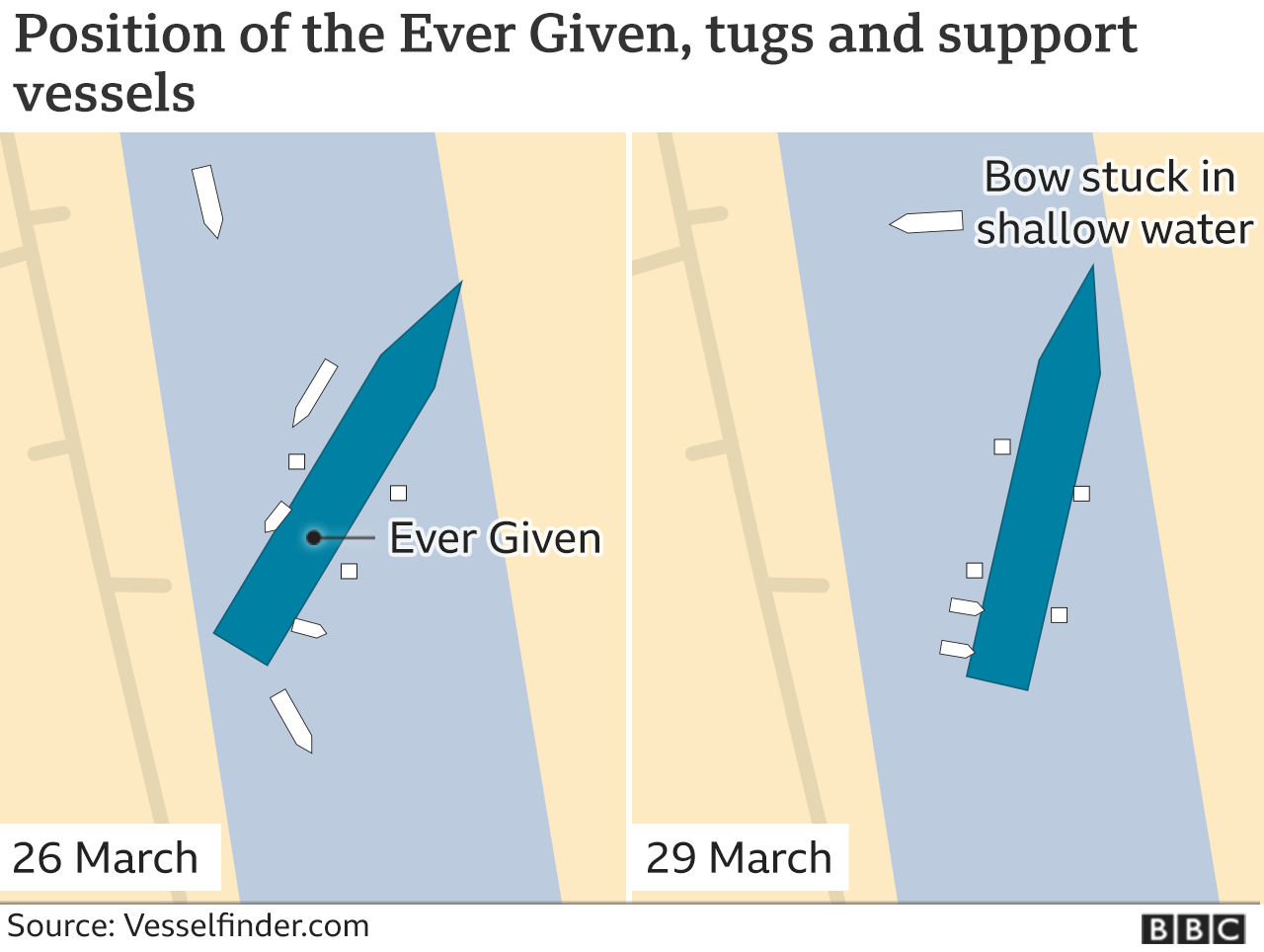
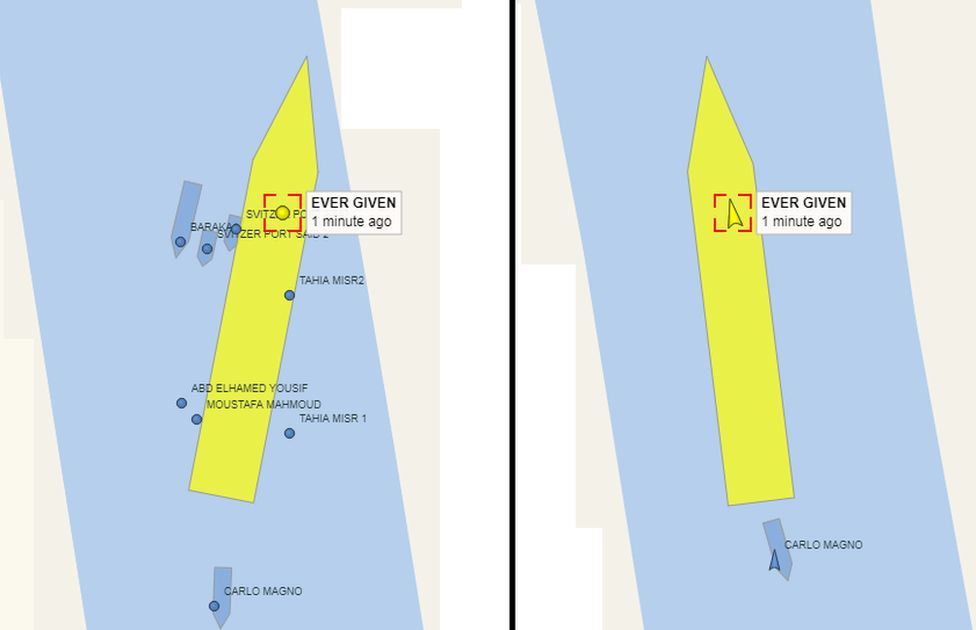
    How Democrats Abandoned the Working Class To Embrace The Technocratic Elite

    Wednesday, August 19th, 2020

    Thought about saving this Thomas Greene piece for the next BidenWatch, but I think it’s strong enough to be worth linking to on its own:

    The Bronx of my childhood was a paradise. My street ran parallel to a section of the old Croton Aqueduct, by then long disused, which we kids called the Ackey. Along its banks grew trees and bushes and wild flowers forming a ribbon of thicket in which we played, and through which we “hiked.”

    We were always in the street. We learned our games and rhymes by word of mouth, from older to younger. We chose our adventures and settled disputes among ourselves. We played stick ball and ringolevio and skully, red rover and stoop ball, and a deliciously sadistic variety of Johnny on a pony. We raced about on noisy cheap skates with metal wheels.

    In this urban sanctuary I grew up safe, loved, happy, and unmistakably working class, yet somehow I slipped away. I was reared to become an ironworker or electrician, but I managed to pass through a posh New England liberal arts college and end up a tech journalist and author. I’ve worked unsupervised, chiefly from home, since the 1990s.

    Most of my relatives and old neighborhood friends hate people like me. And I don’t blame them. Most are lifelong Democrats, yet they voted for Donald Trump, and will again, and I can’t blame them for that, either. Let me explain.

    My career is the product of an economic revival engineered by the center-right New Democrats of the Clinton era and subsequent administrations. I’ve observed the tech industry for two decades; it’s a job, but it’s hardly work: I’m a nerd; I like science, technology, and medicine. Right now, I couldn’t be more comfortable in lockdown. Amazon supplies my dry goods while a friendly driver brings my groceries. My family and I are safe. No one comes near us without a mask. I control my environment; I choose the people in whose presence I’ll work, if any. I can smoke and drink on the job if I please. So long as I honor my deadlines and file clean copy, no one has anything to say about it. Tech’s been good to me.

    But the guy I was expected to become walks beside me like an imaginary friend I never outgrew. I think about him often — daily, if I’m honest. He commutes by bus, encountering irresponsible louts who refuse to mask up. He worries about it, too. His wife, who had earned a second income, is at home supervising their kids. He lives by the lunch buzzer and the punch clock. If there’s music where he works, it’s amplified by cheap, overdriven speakers and the genre will suit him only by chance. The temperature and ambient noise and lighting were calibrated by industrial psychologists. He can’t evade disagreeable co-workers. He’s paid far less than a family wage, but he’s got no health coverage or pension. He endures daily uncertainty about his family’s needs. Why should he not hate me? I would hate me if I were him.

    He and millions of others failed to thrive in the tech economy, but that was a feature, not a bug. Blue-collar Americans were never going to adapt, despite the assurances of New Economy cheerleaders, many of whom were in government. Factories closed and data centers opened. Dotcom outfits traded on nothing more than an online presence, which somehow made sense to us. The New Democrats exalted capital both tangible and intellectual, and devalued labor, as if they’d been old-school Establishment Republicans. They fawned over Bill Gates and Eric Schmidt, Steve Jobs and Larry Ellison, Michael Dell and Andy Grove the way one imagines Calvin Coolidge gushing about Rockefellers and Morgans, Vanderbilts and Astors.

    A high-tech meritocracy would lead America in a better direction, and the need was urgent. The Old Economy was failing, undeniably. It was time to re-formulate it with a progressive veneer: no more dirty factories or pollution; NAFTA would ship that mess abroad. America would subsist on green energy, outsourcing, financial services, the sacrament of e-commerce, and high-tech gadgets: a middle-class Valhalla governed by upper-middle-class trustees from the best schools. There would be no need for troublesome relics like labor unions; the virtuous nature of technological progress would itself ensure quality jobs and dignity for workers. Plentiful consumer credit would replace the family wage and health-care benefits. Blue-collar America would suffer collateral damage, but too much was at stake; it would be a necessary sacrifice. And of course we’d be gentle; we were Democrats and nerds, after all.

    Big Tech was hardly the sole disruptor, but the New Democrats fell for, and amplified, Silicon Valley’s specific flavor of empty promises wrapped in technobabble. “Delivering the ____ of the future,” they said. We got e-this and i-that and smart everything else. It had a wholesome ring and implied that Richard Feynman and Carl Sagan were finally in charge. The progressive, sciency veneer gave cover to other mega-rackets with less compelling legends, enabling them to fleece their workers and consumers too. Soon everyone was delivering the ____ of the future.

    The Democratic Party divorced its industrial, unionized base and married its Silicon Valley mistress. It had once believed in collective bargaining. It had once believed that workers were an essential part of a healthy economy and worthy of respect. There was a time when a US president, like Harry Truman, might entertain a labor activist, like Walter Reuther, amiably in the Oval Office. But the Party had fallen hard for its tech darlings and began to dream of a meritocracy based on steadily-increasing knowledge, intelligence, and creativity that would lift us all toward self-realization as we bathed in the restorative glow of our screens. In other words, Democrats put their faith in social vaporware. Old-Economy workers would be “rehabilitated,” language implying that they might be more intellectually challenged than unlucky. “Euthanized” would be a more honest word. The former lower-middle and working classes would listen to two decades of meritocratic cant while their standards of living would fall steadily with no ground floor in sight. They were never a priority.

    Snip.

    No one bears greater responsibility for the lack of empathy toward Old-Economy workers that led to Donald Trump’s victory than big-name Tech darlings and the New Democrats who coddled them, then openly ridiculed their own voter base: the people Hillary foolishly nicknamed “Deplorables;” that is, the millions of disappointed Obama voters who would happily have voted blue if they’d had confidence that the party would respect them, welcome them, and acknowledge their needs. But the New Economy is a gated community, shut firmly to them, whose most strenuous boosters have been the Clinton, Bush, and Obama Administrations. Old-school, working-class Democrats are unwelcome in the party they built. No one wants them tracking mud through the salon.

    Donald Trump defeated Hillary Clinton in the swing states the same way Barack Obama had: by characterizing her as disdainful toward blue-collar Americans. It was a potent message among those who once had seen decent wages in return for honest work, lately reduced to Walmart greeters and Uber drivers. Humiliated by a labor market in which they had nothing to trade, the former working class understood that they also had nothing to lose. Liberal democracy and its supporting institutions shed their veneer of sanctity when dead-end employees can aspire only to dead-end management gigs. Call them “associates” and “technicians” all you want; they know who they’ve become and what others think of them. They are why Trump won in the swing states; he was propelled to victory by disillusioned Obama voters. They gleefully chanted “lock her up” not because they thought Hillary was an actual criminal, but because they knew what her election would bring them: four or eight more years of economic and social stagnation to top off the twenty they’d already been through.

    They elected Donald once and they will try to again. He is scornful and vicious. He despises openly. He snarls and barks. He will make a pig’s breakfast of everything he touches, but here’s the thing everyone misses: educated elites will feel the hardship he causes more acutely than the millions of workers who have already adapted to pittance wages, dead-end careers, and chronic disrespect. They’ve endured two decades of it; they can cope. They’re betting that liberal snowflakes like me can’t.

    Trump will not be defeated by educating voters, by exposing his many foibles and inadequacies. Highlighting what’s wrong with him is futile; his supporters didn’t elect him because they mistook him for a competent administrator or a decent man. They’re angry, not stupid. Trump is an agent of disruption — indeed, of revenge. Unfortunately, the coronavirus pandemic has positioned him as a tragic force-multiplier on a scale that few could have predicted.

    A few observations:

  • Moore’s Law was always going to change the shape of the world, but there was no reason it had to involve outsourcing so much of America’s manufacturing to China.
  • Outrageous union contracts that turned companies into giant pension and medical-providers that incidentally made crappy cars and which made American products noncompetitive on the international market were always going to have to be renegotiated. Tariffs were not going to change the fact that Detroit was making garbage in the 1970s while Honda, Toyota and Volkswagen were turning out high quality affordable cars.
  • No mention of coal, oil and gas, and fracking save a passing mention of “green” energy. All high paying blue collar jobs that Democrats want to destroy.
  • Also missing from the piece: Any mention of an unchecked stream of illegal aliens undermining the wages for blue collar jobs. Roofing and landscaping used to be respectable jobs Americans took that are now filled overwhelmingly by illegal aliens. That was not inevitable either, but the result of government, big business and Democrats refusing to enforce border controls.
  • All that said, he’s right about the overwhelming contempt the Democratic establishment has shown toward the very people who used to make up their base. In the 1950s, Democrats aimed their political pitch at blue collar guys who brought a lunch pail to work every day. In 2020, they seem to be aiming their political pitch at woke liberal arts majors screaming obscenities into cops’ faces.

    Much the same open contempt was on display in the UK’s Labour Party over Brexit, which helps explain how they were wiped out in last year’s election.

    Eric Weinstein and Bret Easton Ellis Discuss Why Trump Keeps Beating The Left

    Saturday, August 1st, 2020

    Here’s an interesting talk between two Trump-hostile liberals (director of Thiel Capital Eric Weinstein and novelist Bret Easton Ellis) who nonetheless have figured out how badly Trump Derangement Syndrome and Social Justice has screwed their side.

    A few interesting points, most from Weinstein:

  • A mention of Weinstein’s essay on Kayfabe, professional wrestling’s shared fake reality. From that essay:

    Because professional wrestling is a simulated sport, all competitors who face each other in the ring are actually close collaborators who must form a closed system (called “a promotion”) sealed against outsiders. With external competitors generally excluded, antagonists are chosen from within the promotion and their ritualized battles are largely negotiated, choreographed, and rehearsed at a significantly decreased risk of injury or death. With outcomes predetermined under Kayfabe, betrayal in wrestling comes not from engaging in unsportsmanlike conduct, but by the surprise appearance of actual sporting behavior. Such unwelcome sportsmanship which “breaks Kayfabe” is called “shooting” to distinguish it from the expected scripted deception called “working”.

    Were Kayfabe to become part of our toolkit for the twenty-first century, we would undoubtedly have an easier time understanding a world in which investigative journalism seems to have vanished and bitter corporate rivals cooperate on everything from joint ventures to lobbying efforts. Perhaps confusing battles between “freshwater” Chicago macro economists and Ivy league “Saltwater” theorists could be best understood as happening within a single “orthodox promotion” given that both groups suffered no injury from failing (equally) to predict the recent financial crisis. The decades old battle in theoretical physics over bragging rights between the “string” and “loop” camps would seem to be an even more significant example within the hard sciences of a collaborative intra-promotion rivalry given the apparent failure of both groups to produce a quantum theory of gravity.

    What makes Kayfabe remarkable is that it gives us potentially the most complete example of the general process by which a wide class of important endeavors transition from failed reality to successful fakery.

  • Mention of preference falsification. “You needed to say how horrible [Trump] was if you were part of the institutional milieu, or if you needed to keep a job or weren’t on the wrong side or your clients.”
  • Here’s a long money quote:

    The dominant idealism of a time is usually a false narrative about how people can make money during that time. ‘We Are The World'” as a portrayal of concern about Africa, the poor in Asia, what can we do to uplift people. But really it was a story about if we don’t break our bonds to our fellow countrymen, if we don’t make sure that we can not have to take care of Appalachia and the poor in the South and the downtrodden in our inner cities, we’re not going to be able to make money. The way to make money is to move operations overseas, to keep [your] headquarters wherever it’s tax advantaged. There was some process by which globalization was the betrayal of your countrymen. And that thing was portrayed as the Davos idealism. And the Davos idealism is cratering. Because it was a wealth transfer program posing as a philanthropic effort. And so the reason that nobody wants the Clintons, nobody wants the Democratic Party. Nobody wants the sanctimonious nonsense about, you know, our thirst for justice in our hatred of oppression is, is that this is a search for a constituency. That’s large enough to get people elected who can continue to keep people making money.

  • “He knows what the inference patterns of the left are.”
  • “The institutional left [forcibly] transfuse one group to supply blood to another.”
  • Reservoir Dogs: “Mr. Blonde is the psychopath who has shot up the jewelry store. They can’t figure out who they can trust. The only person you can trust is the psychopath, because the psychopath isn’t under control. Well, Trump came through as Mr. Blonde. The one person we know isn’t under institutional control is Donald Trump because he would never say those things. So now we’ve got a new paradigm where the only trustworthy person is the least trustworthy person.”
  • “You can’t wake people up because they’re dying to get back to the process of making money by betraying their fellow countrymen. The globalization thing came to an end. There’s no new idea about how to make money, right. And the pyramid schemes are collapsing.”
  • Ellis talks about how freedom of speech has become so constrained by leftists shibboleths. “I can’t say this, I can’t express myself…this is maddening. I can’t live!” And how many people confided to him secretly that they were going to vote for Trump, even though they could never say it in public.
  • “So Trump is going to hit this thing over and over again, the left is programmed to say certain things, to defend certain things. If you have to make the point that there is absolutely zero connection whatsoever between Islam and terror, there is no connection whatsoever, zero, it’s an illusion, somebody can hit that all day long, every day.”
  • “There is, there was once upon a time, a heuristic that said the best way to have a multicultural society is that you have to have some load bearing fictions. Like all religions are equally problematic in all ways. There’s no way that’s true…As a result, those heuristics hardened into dogmas.”
  • “‘Why are those everybody complaining about the trade deals we inked since they helped people in Mexico?’ As if American voters are gonna vote to help Mexican peasants. I mean, it’s great if Mexican peasants are helped, but I just don’t see the lowest echelons of American society having as their top priority, helping Mexicans with their vote. I mean, none of this makes any sense.”
  • Ellis: “Trump presented something extremely new into the conversation and the left couldn’t deal with it. The media couldn’t deal with it. I always felt that they had kind of dealt with them in a neutral way and just reported what he did without all his hyperbole. I don’t know if he would have won necessarily.”
  • Weinstein (in response): “All just, smart, honest people had to be rejected from the institutional layer. Universal expulsion of people who will not go along with the gated institution. My theory about this [is] that we grew very quickly in a very stable way. That was totally anomalous post world war II to about 1972, and every single institution that you see has an expectation of that kind of growth continuing. And so what happened is, is that all of those institutions, when they went pathological, they became Ponzi schemes and you needed to have a group of people in that institution who would not reveal the Ponzi scheme. And so effectively our expert class has been selected for as the people who will not blow the whistle on the fact that they’re lying.”
  • “It’s easy to be Trump. It is. But the only problem is is that if you beat Trump in the way that’s easy to beat Trump, you will not service the people with second and third homes in the Hamptons. And so those people are saying, well, I wasn’t thinking of spending that much to beat Trump.”
  • “Do you, do you really want nine conservative Supreme court justices? If you do, if that’s what excites you, I highly recommend talking about reparations for slavery.”
  • I have significant ideological disagreements with Weinstein on various issues, but his analysis of how Democratic dogma, institutional hypocrisy and Trump Derangement Syndrome have driven the left insane is insightful.

    (Hat tip: Ace of Spades HQ.)

    LinkSwarm for January 24, 2020

    Friday, January 24th, 2020

    Burisma, Chinese plagues and falling iguanas all feature in this Friday’s LinkSwarm!

  • Emails tie “whistleblower” Eric Ciaramella to Obama White House meeting on Bursima.

    Fox News host Laura Ingraham reported Wednesday evening that she obtained a chain of State Department emails stemming from a standard request for comment from New York Times journalist Ken Vogel, whose reporting helped generate scrutiny of Hunter Biden’s ties to Ukrainian gas company Burisma. Hunter Biden, 49, is the son of Democratic presidential front-runner Joe Biden, and Republicans have called for him to testify during the Ukraine-related Senate impeachment trial against President Trump.

    On May 1, 2019, Vogel contacted State Department official Kate Schilling about a story he was working on regarding an Obama administration meeting in January 2016 with Ukrainian prosecutors and mentioned the name of the CIA analyst believed to be the whistleblower whose complaint sparked impeachment proceedings that led to two articles of impeachment: abuse of power and obstruction of Congress.

  • Would you believe that the New York Times had and killed the story of the meeting? Of course you would. It reflected badly on Democrats. (Hat tip: Stephen Green at Instapundit.)

  • Top seven lies Adam Schiff has told to booster impeachment. Pretty much all of these should be familiar…
  • “Democrats Warn That American People May Tamper With Next Election.” “‘When the Founders wrote that founding document thing, they never imagined there would be electoral outcomes that Democrats did not agree with.’ Democrats also said they even have hard evidence that the 2016 election was compromised by Republicans voting for Trump.”
  • Final Brexit bill passes. The EU is reportedly quite eager to hurt its largest trading partner to spite its face…
  • John Bercow is so very, very upset that Tories are blocking his peerage, in much the same way he blocked Brexit…
  • Giant warehouse explosion in Houston. No reports of injuries, but the explosion was said to be heard 20 miles away… Update: Now hearing it was a manufacturing facility, with a propylene tank as the suspected cause, with two dead and one missing.
  • China’s birthrate hits historic low. Mark Steyn always said that China would get old before it got rich.
  • China is also trying to control the Wuhan coronavirus pandemic:

    The Chinese government has placed the city of Wuhan under quarantine in an attempt to stop the spread of the deadly, pneumonia-like virus called 2019-nCoV.

    According to a Chinese news bulletin, all passenger transportation out of the city has been temporarily suspended. That means that the city’s 11 million residents, hundreds of whom have fallen ill and at least nine of whom have died from the viral outbreak, are trapped unless they receive special permission to leave.

    The virus quickly spread to nearby Japan, Thailand, and South Korea, and a traveler from Wuhan also carried it to the U.S.

    In the face of a global outbreak, the Chinese government has been trying to maintain control of the narrative, censoring media and deleting social media posts that don’t align with its official statements.

    (Hat tip: Director Blue.)

  • Last coronavirus death count is 26 people, with more than 30 million people under quarantine. By contrast, the 2014-2016 west African Ebola outbreak killed more than 11,000 people.
  • But wait! Wuhan is also home to a lab studying the world’s most dangerous pathogens.
  • Coronavirus case in Brazos County, Texas? That’s home to College Station and Texas A&M University.
  • For its new White House correspondent, CNN hired the guy who got caught asking the DNC what he should ask.
  • First! Rule! You! Fucking! Idiot!
  • Smear someone as a “white nationalist” on the says so of the SPLC, just because they want to enforce border control laws? Enjoy your $5 million lawsuit.
  • Hungary to abolish Gender Studies. Good.

    Hungary’s Deputy Prime Minister Zsolt Semjen has stated that such programs “ha[ve] no business in universities” as they represent “an ideology, not a science,” with a market profile “close to zero.” Similarly, Orban’s Chief of staff Gergely Gulyas said, “The Hungarian government is of the clear view that people are born either men or women. They lead their lives the way they think best [and] the Hungarian state does not wish to spend public funds on education in this area.”

  • Media estimates of 22,000 for the Second Amendment rally are probably too low. “I think when all is said and done, the crowd of gun rights supporters attending Lobby Day on Monday probably was double the official figure and approached 50,000.”
  • Speaking of Virginia Democrats trying to override inconvenient passages in that pesky Bill of Rights: “Virginia Democrats File Bill To Make Online Criticism of Elected Officials a Crime.
  • Norway’s government falls over Islamic State bride.
  • “Austin’s Homeless Policy May Be Implicated in the City’s First Murder of 2020.”
  • In addition to Steve Adler all but personally inviting every transient drug addict in the state to take up residence in Austin, the killer was out on personnel recognizance bond after committing a burglary, thanks to yet another Austin City Council decision.
  • Fun things from the SHOT Show. (Hat tip: CutJibNews on Ace of Spades HQ.)
  • Amazon sues to stop to stop Microsoft $10 billion “war cloud” project for the Pentagon, evidently because President Trump is a big meanie who didn’t let them get the contract. Eh, Pentagon procurement bidding is pretty opaque under the best of circumstances, much less under the zillions of possible variations on setting up a cloud infrastructure. There’s no way whether to determine this is a real grievance or just sour grapes over losing a big contract.
  • Denver Post writer fired for insisting there are two sexes.
  • Journalist Glenn Greenwald charged with hacking in Brazil. Though in this case, “hacking” seems to amount to “publishing embarrassing information about members of the Brazilian government.”
  • In praise of Christopher Tolkien. It’s probably only a matter of time until Disney buys the Tolkien estate now…or someone far worse.
  • Terry Jones has eaten his last mint.
  • Lost Klimpt recovered. (Hat tip: Stephen Green at Instapundit. )
  • Tradwife. (Hat tip: Ann Althouse.)
  • Icy with a chance of falling iguanas.
  • Again?
  • Enjoy your weekly funny dog tweet: