Posts Tagged ‘Foreign Policy’

Grappling With Modi’s India

Wednesday, June 5th, 2019

A few bits of news about India have crossed my path this week, enough to do a little mini-roundup. India is a vast topic, and a vastly important one for the 21st Century, but the news we get about it light on insight and heavy on disasters and politics.

So naturally this post is about disaster and politics.

  • Disaster: India is suffering from an epic heat wave, hitting 123°F.
  • Politics: How the media missed Narendra Modi’s landslide victory:

    We didn’t see it coming. The tsunami of support that propelled Prime Minister Narendra Modi and his Hindu nationalist Bharatiya Janata Party (BJP) into a second five-year term was a surprise to many of us reporting on the mammoth Indian general election.

    Getting an accurate reading on how 900 million people will vote is extremely difficult and almost impossible to gauge from big cities like Delhi or Mumbai. Far in advance of the April-May voting, Reuters made a series of sorties into the farms and small towns where most of India’s people live to get a sense of what was being talked about, what was at stake.

    Snip.

    Despite the rural anger, at no time did we get a feeling that Modi was going to lose the general election. The assessment by Reuters’ correspondents was that he was going to win with reduced support from voters and might need partners to stay in power.

    But instead, the BJP increased its seats tally to 303 against 282 in the 2014 election. And including its partners, Modi’s National Democratic Alliance has more than 350 MPs in the lower house, close to the two-thirds majority it would require to make transformative changes to the Indian constitution.

    Snip.

    But after a suicide bomber killed 40 Indian paramilitary policemen in Kashmir in February, and a Pakistan-based Islamist militant group claimed responsibility, the election focus immediately swung to national security from economic issues.

    We decided to check back in the rural core of the country – and found that the attack and a strong response from Modi – including sending warplanes into Pakistan – had changed some minds and Modi was benefiting.

  • Is Modi an economic reformer, streamlining India’s economy? This piece argues yes, but in a way that distinctly tempers my enthusiasm:

    First, he’s ensured that the government has more revenue to spend. Thanks to the Goods and Services Tax enacted in 2017, Modi has streamlined an enormously complex system of state and federal tax collection, broadening the tax base and sharply reducing the amount of money lost to fraud. That’s a historic accomplishment in a country with so many development needs.

    Modi has directed unprecedented amounts of money toward the country’s seemingly endless need for new infrastructure. Construction of roads, highways, public transport and airports have sharply increased the country’s long-term economic potential. Although the process remains unfinished, the government has also brought electricity to remote villages that have never had it, a boon for economic potential, public safety and basic quality of life.

    The BJP-led government has also expanded a biometric identification system, begun under the previous Congress Party–led government, that has already taken iris scans and fingerprints from well over a billion people to help citizens prove who they are so they can receive services. It has provided bank accounts for 300 million people who have never had them, creating new opportunities for these people to access credit and state subsidies. It also brings them into the formal economy to potentially make the government more responsive to their needs. The government says these measures have cut sharply into waste and fraud within India’s welfare system, allowing the state to provide more and better services at a much lower cost.

    Health care reform could help half a billion poor people afford treatment for cancer and heart disease. A program known as Ujjwala Yojana has helped women in the countryside gain access to cooking gas for the first time. The Swachh Bharat program has built tens of millions of toilets for hundreds of millions of people. Modi’s commitment to renewable energy is part of his plan to make India a leader on climate change. None of these projects are complete, but all of them will help the vast majority of India’s people lead safer, healthier, more productive and more prosperous lives.

    Some of that is good. Some of the infrastructure spending is probably necessary, on the order of the rural electrification and infrastructure projects the U.S. undertook in the 1930s. I would not want to live in a country that makes biometric ID mandatory for free citizens (also, it’s hardly immune to errors, fraud or hacking). And the “climate change” rathole just increases living costs for ordinary people to no demonstrable benefit.

  • And here’s an Indian businessman who says he’s not a real reformer:

    When I was an idealistic 20-something in the late 1990s, my hope was that India would one day elect a free-market reformer like Ronald Reagan, who would begin to shrink the dysfunctional bureaucracy and free the economy to grow faster. Looking back, I see how clueless I was.

    In Delhi every politician is wedded to big government, and there is no constituency for free-market reform. I kept hoping for Reagan, and India kept electing Bernie Sanders.

    Prime Minister Narendra Modi is no exception. Five years ago he led the Hindu nationalist Bharatiya Janata Party, known as B.J.P., to power on a Reaganesque promise of “minimum government,” and now he seeks a second term in the general election that ends on Thursday. But in office, Modi has wielded the tools of state control at least as aggressively as his predecessors. In this campaign, he went toe to toe with rivals, vying to see who could offer the most generous welfare programs, and it appears to have worked.

    Snip.

    Hopes for a big-bang Indian reformer revived years later with the rise of Mr. Modi, who in 2002 had been elected as chief minister in the western state of Gujarat. By courting multinational companies, building roads and streamlining the state bureaucracy, Mr. Modi oversaw a stunning boom. The state economy grew at a pace close to 12 percent annually in his first term. In 2014, Mr. Modi’s record in Gujarat helped lift him into the prime minister’s office.

    Like many India watchers, I heard in Mr. Modi’s call for “minimum government, maximum governance” the voice of a red-tape and regulation-busting reformer in the Reagan mold. In retrospect this reading ignored how Mr. Modi had delivered “maximum governance” in Gujarat: by force of personality, cutting foreign investment deals himself and intimidating bureaucrats into building roads on time without demanding bribes.

    This was economic development by executive order, not economic reform by systematically expanding freedom. Mr. Modi has tried to govern India the same way, but the top-down commands that rallied tens of millions of his fellow Gujaratis haven’t worked nearly as well on the sprawling Indian population of 1.4 billion. He centralized power in the prime minister’s office, and many private business people now say he treats them much as his socialist predecessors did, often suspicious of their motives and contribution to society.

    One November evening in 2016, he ordered the withdrawal of large rupee bills — 86 percent of the currency in circulation — at midnight. The aim was to flush cash out from under the mattresses of rich tax dodgers. One of his cabinet ministers said Mr. Modi was delivering on a “Marxist agenda” to reduce inequality. Today, however, the aftershocks are still rippling through the economy, and have been especially painful for the poor.

    In some ways Mr. Modi has proved more statist than the Gandhis. Before he took power he criticized Congress welfare programs as insulting to the poor, who “do not want things for free” and really want “to work and earn a living.” As prime minister, Mr. Modi doubled down on the same programs, expanding the landmark 2006 act that guaranteed 100 days of pay to all rural workers, whether they worked or not.

    On the economic front, then, every Indian party is on the left, by Western standards. The Congress traces its economic ideology to socialist thinkers, but the B.J.P.’s thinking is grounded in Swadeshi, a left-wing economic nationalism.

    The consensus from all this seems to be that Modi has indeed run a cleaner government than his Congress Party predecessors, has some real economic reforms under his belt, but isn’t what anyone in America would consider a real free market reformer.

  • EU Election Results

    Wednesday, May 29th, 2019

    From this side of the pond, the EU election results may seem somewhat baffling. Populist parties gained ground at the expense of centrist and traditional parties, but so did the Greens. This doesn’t fit our traditional left-right political schemas.

    In the UK, Nigel Farage’s new Brexit Party captured the most EU parliamentary seats. “Mr Farage’s party won 29 seats, the Lib Dems 16, Labour 10, the Greens seven, the Tories four, the SNP three, and Plaid Cymru and the DUP one each.” Those are disasterous results for Labour and the Tories. UKIP was wiped out and entirely replaced by the Brexit Party. The Liberal Democrats coming in second was a result I do not think was foreseen by anyone, nor the Greens doing better than the Tories. The colossal stink of the inability to deliver Brexit that clings to the Tories and Labour helped both Liberal Democrats and Greens, both being so far from power and out of the spotlight the last few years. Faced with parties run by Theresa May and Jeremy Corbyn, “Vote them all out!” must have seemed like a coldly rational choice.

    Some interesting results in Scotland:

    In Scotland, the pro-Remain SNP won the biggest share of the vote, with just under 38%, giving it three MEPs.

    The Brexit Party came in second place with a significantly lower percentage – 14.8% – followed by the Lib Dems with 13.9% and the Tories with 11.6% – meaning each party has one seat.

    But Labour only received 9.3% of the vote – a loss in vote share of 16.6% – leaving it with no MEPs in Scotland for the first time.

    It’s hard to say what these results indicate for UK domestic politics going forward, as traditionally MEP elections have been very poor indicators of the next general election. But the giant Brexit cockup is hugely hurting both Tories and Labour.

    On the results from Europe as a whole:

    1) The mainstream parties of the center-Left and center-Right (or so-called legacy parties) continue a decline that has now been going on, at different speeds in different countries, for several decades. Italy’s Christian Democrats fell apart in the 1990s; its post-Communist socialists more recently; Berlusconi’s once-dominant Forza Italia fell into single figures this time; and the socialists are still struggling, at 22 percent. In this election, Italy’s insurgent populist partners — the League and the Five Star Movement — got 51 percent of the total vote between them, and they’re not getting a divorce. It was a less happy story in Germany where the two main parties in the “Grand Coalition” — Angela Merkel’s CDU-CSU and the Social Democrats — both lost ground compared with their performance in 2014, scoring only 45 percent jointly when they would once have been in the high seventies. France’s traditional parties of government almost disappeared from the results, all scoring in single figures. And so on. The most dramatic collapse of the centrist parties was in Britain, where the governing Tories fell to below 10 percent. But that story will get fuller treatment elsewhere.

    2) Where the center retreated, however, the populist Right did not always occupy the abandoned position. National populists (which is the approved non-hostile term for describing them) advanced moderately and consolidated their previous gains substantially in the elections. Victor Orban’s Fidesz won 52 percent of the votes in Hungary. Poland’s Law and Justice party held off a multi-party attack from an organized left-wing coalition and won a majority that suggests it will win the forthcoming national elections. France’s National Rally — the latest name for the populist Right party led by Marine Le Pen — narrowly defeated the populist-centrist party of President Macron in France. (Populist-centrism may be a novel concept, and it may prove to be an unsuccessful one, but it’s the best description yet coined of Macron’s ambiguous politics.) The political success of Italy’s populism we outlined above. And in the United Kingdom, the populist Euroskeptic party, titled with stunning simplicity the Brexit party, went from its foundation five weeks ago to become the largest U.K. party in the European Parliament, with 32 percent of the national vote and 29 MEPs. But it hopes to be leaving Parliament soon.

    Populism suffered no major defeats anywhere — unless you count (and you shouldn’t) Denmark, where the People’s Party share of the vote was halved because the more respectable social democrats adopted their tough migration policy. On the other hand, populism didn’t win as many votes as the populists had hoped and as the Left and the media had feared. In particular, populists fell well short of taking control of the European Parliament or, as we shall see, even weakening the control of it exercised by the reigning centrist duopoly of Christian and Social Democrats.

    3) If the center retreated and the Right advanced only so far, European Liberals (the ALDE parliamentary group) and Greens occupied the vacant ground. Greens became the second party in Germany and the third party in France; Liberal Democrats became the surprise second-place winners, after Nigel Farage’s Brexit party in Britain; and both parties did well throughout the western half of Europe. Their success is not a mystery. Progressive middle-class voters wanted more idealistic commitments to policies such as combatting climate change and opening borders than the cautious center always provided. In addition, such voters were alarmed by what they saw as the national-populist threat to the European Union — a greatly exaggerated one in reality since none of the populists outside the U.K. want to leave the EU, merely to restrain it. All the same, these voters turned out to support the EU, too, which in the U.K. explains the rise of the Lib Dems as a response to the Brexit party.

    As Australian elections proved, green policies are popular right up to the point that someone tries to implement them.

    Cutting to the chase:

    The moderately conservative EPP will struggle to keep its preeminence within the centrist coalition because the ALDE and the Greens are ideologically closer to the socialists than to themselves; Greens within the European Parliament and Germany itself will want to use their newfound power to phase out fossil fuels, which will be resisted by coal-producing Poland and Eastern Germany; the more progressive Euro-parliamentary majority may want to press sanctions on Viktor Orban for violating “European values,” but the success of populists in half of Europe means that he now has more allies in that conflict; and, above all, President Macron has enthusiastic supporters among the ALDE liberals in the European Parliament for his ambitious integrationist projects that the Germans and other Northern European governments fear they will be asked to finance.

    And these projects are indeed formidable: to centralize the power and sovereignty of 27 nation-states in European institutions without solving their existing democracy deficit; to replace their independent budgetary arrangements with a single European fiscal policy without the power of tax collection; to create a common European defense structure separate from NATO without increasing anyone’s defense expenditure; to replace fossil fuels with renewables to solve climate change without massive regulation, and a realistic plan to prevent a huge rise in energy costs for industry and consumers. This is the hubris of government, but its costs always fall on others. It is sometimes said that the error of socialists is not that they have no faith in capitalism but that they have almost boundless faith in it. They think it can bear any burden they place on it and still stagger on delivering the goods. Modern European statesmen feel the same way about their citizens. The populists remind them they’re wrong. And they haven’t gone away.

    One moderating effect on an “radical center” is the fact that the structure of the EU leaves very little actual power in the hands of the EU Parliament. My suspicion is that if the EU Parliament wanted to phase out fossil fuels faster than the real rulers of the EU think wise, those policies would just magically not get implemented.

    As I’ve stated before, the future of EU politics probably looks a lot like the Northern League-Five Star alliance in Italy: Moderately populist, in favor of both low taxes and a large welfare state, guaranteed to remain popular right up until the inevitable economic crash.

    Theresa May’s Colossal Failure

    Saturday, May 25th, 2019

    Theresa May was hired to do one job and she couldn’t do it, and she managed to screw up a lot of other things along the way. Now that she’s stepping down, the political obituaries are rolling in and they’re not kind.

    Madeleine Kearns’ “Theresa May: A Political Obituary”:

    Theresa May became the second female prime minister after the Brexit referendum result and David Cameron’s resignation in July 2016. In March 2017, she decided to trigger Article 50 of the Lisbon Treaty, setting the Brexit process into motion and giving the United Kingdom exactly two years to exit the bloc.

    In 2017, May then called a snap election, which threw away her party’s majority and propelled Jeremy Corbyn within striking distance of power. Needing support in facing this threat, May was forced into a coalition with the Northern Irish Democratic Unionist Party.

    Given the needless and catastrophic damage inflicted by the general election, this was the obvious moment for her to resign. But she didn’t. After insincerely promising a commitment to Brexit (“no deal is better than a bad deal”), May then came up with an unbelievably bad deal: the withdrawal agreement, which was crushed by historic margins in parliament. Again, here she should have resigned. But again, she didn’t. Her deal was then rejected two further times and each time May clung on, only narrowly surviving a vote of no-confidence in December of last year.

    So, what to make of this? In her resignation speech May extolled the virtues of compromise. But her mishandling of the Brexit negotiations was never about strategic diplomacy in pursuit of Britain’s best interests, it was about political incompetence in a damage-control exercise gone badly wrong.

    By signaling to the European Union that she would not entertain no deal, May allowed the Brussels and the two-thirds Remain majority in Westminster to use secondary issues as bully tactics. After 2017, May began to make concessions that were unthinkable to most Leave voters. The Irish backstop, the regulatory annexation of Northern Ireland, and finally — with her fourth attempt at a deal this month — cross-party talks with the Labour party, which entertained the idea of a second referendum (the precise opposite of Brexit).

    Politico: “Inside Theresa May’s Great British Failure”:

    It was May 16, 2019 — and no-one in the room could see a way forward. Their only option was to make one last offer to MPs: a chance to vote for a second referendum.

    “Are you telling me it’s not going to work?” May asked the assembled aides sitting around her table or on sofas nearby, according one senior official familiar with the discussion that day. Her aides did not sugarcoat it: None thought it would work.

    It was the moment May and her team had tried for so long to avoid — the end of the road. From that point it was only a matter of time. But the prime minister was determined to roll the dice anyway.

    The scene reveals a prime minister whose commitment, duty and determination crashed up against an almost unprecedented evaporation of authority, power and influence after a series of catastrophic miscalculations. None was more damaging than her decision to call a snap general election in 2017, robbing her of the majority she needed to take Britain out of the EU with a deal acceptable to her Conservative Party.

    Snip.

    Theresa May had inherited the biggest political challenge for any U.K. prime minister since 1945 — and proved unequal to the task. Personal and political shortcomings met the inescapable reality of parliamentary arithmetic, EU power and the Irish border.

    Instead of delivering Brexit and making the country work for provincial Britain, as she promised, she departs leaving an even bigger crisis than the one she inherited, with little — if anything — by way of domestic achievements to show by way of mitigation.

    Iain Murray: “Theresa May’s Calamitous Premiership Comes to an End”:

    Much of the commentary surrounding her departure will focus on her inept handling of the Brexit negotiations, or her misjudgment in squandering the safe majority bequeathed to her by David Cameron, but I’d like to draw attention to an equally calamitous mistake: her disdain for free-market economics.

    At a very early point in her leadership, Mrs. May announced that she rejected the policies of the “libertarian right” and vowed to “repair free markets.” This speech heralded the return of an industrial strategy to Britain, which was watered down somewhat but still displayed a worrying amount of fatal conceit. This conceit was in full display with the manifesto her advisers produced as the platform for the disastrous 2017 election. As Ryan Bourne of the Cato Institute pointed out, it contained proposals to reregulate the labor market, cap energy prices, and bash successful CEOs. Unsurprisingly, as the Conservative Party shifted leftwards, so did the electorate, resulting in the loss of David Cameron’s majority.

    Yet despite the rebuke, May’s government continued in the paternalist fashion laid out in the manifesto. Perhaps most striking has been the complete capitulation to extreme environmentalist fads — most recently manifesting in bans for plastic straws, cotton buds, and stirrers from 2020. Whenever her government saw a problem, it moved to “clamp down,” legislate, and often exercise a ban.

    And if all that’s not enough, The Guardian has a roundup of UK newspaper reactions to May’s resignation.

    Theresa May had one job, and she wasted three years not doing it.

    LinkSwarm for May 24, 2019

    Friday, May 24th, 2019

    Welcome to another Friday LinkSwarm! This week: Texas legislative news, foreign elections, and a surprising amount on analog synthesizers…

  • Theresa May is out as British Prime Minister effective June 7. The only reason she’s not the worst prime minister of the last century is that she didn’t give Czechoslovakia to Hitler…
  • May’s refusal to offer the UK a real Brexit may result in the Tories being crushed by Nigel Farage’s Brexit Party:

    Even before [EU Parliamentary] election results are known on Sunday, therefore, there’s a growing sense that the Brexit party may be a permanent factor in British politics. Opinion polls on how people would vote in a general election show that the party would do less well than in European elections but still run about level with the Tories and Labour. There are deep divisions on policy apart from Brexit that have allowed critics to argue that the party would fall apart once its main goal had been achieved. But the divisions don’t seem deeper than those of other parties, and power or its prospect is itself a unifying social glue. Farage’s rallies around the country are hugely successful — packed, good-humored, more diverse socially and politically than those of the other parties, full of confidence and optimism, and notably without rancor. As with Trump’s election rallies, people seem to find them enjoyable as well as genuinely serious. A kind of Brexit party spirit already exists with many different types of people happy to be together on the bandwagon. It seems less class-bound than any of the existing parties.

    And if the Brexit party wins one-third or more of Britain’s votes this week from a standing start, it will change British politics. Such a result would have the effect of a second referendum victory for Leave. It simply would not be possible for Parliament and the mainstream parties to push through a Brexit that doesn’t get the effective consent of Farage and his party. If such a thing is attempted, it will be seen to be anti-democratic and will have to be abandoned quite quickly. It would force the EU to confront the fact that there is little chance of getting a deal like May’s withdrawal deal accepted, and that even if one were to make it into the statute book, it could never be effectively implemented. In those circumstances the EU might simply throw up its collective hands and declare that the U.K. has left without a deal.

    The third effect of a Farage success in the European elections would be to realign political parties and, in particular, to place the Conservative party in mortal peril. Voting for a political party is a matter of both loyalty and habit. For lifelong Tories, the idea of voting for another party is anathema. Most people who think about it never actually get around to doing it. But the Tories have certainly given their traditional supporters and those new supporters who voted for them in order to achieve Brexit good reason to leave them on this occasion. Many will do so this week. And as with adultery, betraying your party for another is much easier the second time around.

  • Well:

  • You know who doesn’t want to impeach President Donald Trump? House Democratic Speaker Nancy Pelosi. (Hat tip: Jim Geraghty.)
  • But she may not be able to hold off her lunatic party much longer.
  • And all that despite ample evidence that voters are opposed to the whole charade. (Hat tip: Director Blue.)
  • Democrats lying about preexisting conditions again:

  • “A charity run by the wife of Rep. Elijah Cummings received millions from special interest groups and corporations that had business before her husband’s committee and could have been used illegally.”
  • Democratic Louisiana Governor John Bel Edwards is a rarity: an actual pro-life Democrat. When Edwards’ wife was “20 weeks pregnant with their first child, a doctor discovered their daughter had spina bifida and encouraged an abortion. The Edwardses refused. Now, daughter Samantha is married and working as a school counselor, and Edwards finds himself an outlier in polarized abortion politics.”
  • A succinct summary from across the pond:

  • If you look at what China is targeting in retaliatory tariffs, it’s obvious their hand is incredibly weak:

    But based on what we know, what’s even more revealing about China’s choices are the U.S.-made products that haven’t made any tariff list. They include civilian aircraft and their engines and parts, which had a 2018 export total of $17.73 billion. They include semiconductors and their components, which last year had China shipments that totaled several billion additional dollars. They include the equipment needed to manufacture and inspect semiconductors and their parts, which racked up at least $850 million in 2018 exports to China; devices for conducting chemical and physical analyses (with $912 million in China exports last year); laser equipment ($304 million), motor vehicles, auto parts, and plastics resins and polymers (which each produced billions in exports to China); and billions of dollars’ worth of other products that the Chinese either can’t (yet) make or can’t make in the amounts that they need—or that consist of goods preferred by Chinese consumers over their Made in China counterparts.

    As I’ve said before, semiconductor equipment is an area where it’s all but impossible for the Chinese to do without American technology.

  • Narendra Modi wins reelection in India. Forcing Pakistan to stand down over Kashmir probably clinched the victory for him. Modi’s Hindu ethononationalism is not good for India in the long-run, but he’s probably someone President Trump can trust to be a staunch ally against Islamic terrorism. (Hat tip: Stephen Green at Instapundit.)
  • The election was an outright disaster for Rahul Gandhi, “the scion of the Nehru-Gandhi dynasty and leader of India’s Congress party,” which is down to 52 seats as opposed to 303 for Modi’s Bharatiya Janata Party. (Remember that Indira Gandhi was the daughter on India’s first prime Minister, Jawaharlal Nehru, and is not related to Mahatma Gandhi.)
  • The Morganza Spillway on the Mississippi to be opened for only the third time in history. The Morganza Spillway is located downstream of the Old River Control Structure.
  • “60% of male managers are ‘uncomfortable‘ working around women,” a 32% increase over last year. You mean they don’t want false accusations of sexual harassment to derail their careers? Way to go feminists! Once again you’ve made things worse for women living in the real world!
  • People have known that Chinese manufacturer Huawei has been stealing American intellectual property for at least seven years. Former congressman Mike Rogers: “If I were an American company today, and I’ll tell you this as the chairman of the House Permanent Select Committee on Intelligence, and you are looking at Huawei, I would find another vendor if you care about your intellectual property, if you care about your consumers’ privacy, and you care about the national security of the United States of America.”
  • Social Justice Warriors are ruining Young Adult publishing.
  • How computer security is actually handled in the wild:

  • UK foreign minister to Iran: “Bitch, you try to throw down on T-Dog, he gonna go HAM upside yo dome!” Of course I’m paraphrasing a bit…
  • Good news! It looks like Texas taxpayers will finally be getting some meaningful property tax relief, to the tune of $5 billion, or half the projected surplus. (Kids, if you have any friends in California or Illinois, try to explain to them what a “budget surplus” is.) This follows months of waffling.
  • Good news! Texas passes constitutional amendment banning a state income tax, which will go before voters in November.
  • Bad news! Texas House kills election integrity bill.
  • Bad news! Texas House refuses to pass a taxpayer-funded lobbying ban.
  • Laredo passes Los Angeles as America’s largest port. (Hat tip: Matt Mackowiak.)
  • Coordinated Instagram troll farm attack on Trump. So the next time you see a Trump-Putin meme, be sure to post that link and ask “How the trolling, Trolly McTrollFace?”
  • Speaking of trolls: Twitter Permanently Bans Anti-Trump Krassenstein Brothers” for “operating multiple fake accounts and purchasing account interactions.” The overwhelming majority of conservatives I follow think Twitter should lift the ban so these idiots can keep talking, but it will be nice to no longer see these morons as the top reply on every Trump tweet.
  • Antifa activist ordered to pay Judicial Watch’s legal fees.
  • Speaking of legal fees, Harvey Weinstein will reportedly pay $44 million to settle various sexual harassment/etc. lawsuits, the money evidently coming from insurance, but will still face criminal prosecution over at least two sexual assault allegations.
  • “Florida man hid legless fugitive girlfriend in plastic tote.” She sounds like a real winner: “Anderson was wanted for failing to appear in court on charges including false imprisonment related to a 2015 incident when she allegedly held people hostage at a Burger King with a BB gun. It ended in a shooting with police and she lost both legs.”
  • Speaking of lunatics: “Trump is the devil!” Genuine loon, or suicide by cop? You make the call. (Hat tip: Ann Althouse.)
  • All teaching “white privilege” does is make leftists more contemptuous of poor white people. Which pretty much explains the Democratic Party’s decline in a nutshell…
  • Austin Mayor Steve Adler rolls out the welcome mat for antisemetic Democratic Representative Ilhan Omar.
  • Followup: “Medieval Sex Cult at Center of German Crossbow Murder Mystery. Police now say a German sex guru specializing in medieval bondage directed lesbian sex slaves in bizarre murder-suicide.”
  • Alexandria Ocasio Cortez frets over colonial cauliflower in her own garden. She really is an idiot. (Hat tip: Ann Althouse.)
  • Moogseum.
  • And speaking of analog synthesizers, they had features you don’t find on modern digital versions, like secret caches of LSD. (Hat tip: Dwight.)
  • “Facebook Claims Party Celebrating Candace Owens’s Suspension Was ‘An Honest Mistake.'”
  • A Song of Vanilla Ice and Fire.
  • Conservatives Win in Australia (“Unexpectedly!”)

    Saturday, May 18th, 2019

    Another national election where polls favored the left-wing party but the right-wing party won, this time in Australia.

    No-one predicted it, but the Liberal-National Coalition has won. PM Scott Morrison calls it “a miracle”.

    We don’t yet know if they have the 76 seats required for a majority, but they will certainly be in government.

    Labor’s Bill Shorten has conceded and said he will step down as leader.

    The coalition has swept through Queensland, a state full of marginal seats.

    Former PM Tony Abbott has lost his seat.

    How badly were the polls off? “The polls – 56 consecutive weeks of them – pointed to a win for Labor and Bill Shorten.”

    “Labor’s failure to pick up any marginal seats in Queensland has sealed its likely fate in opposition for the next three years, as the party reels from Saturday’s election result.”

    I did not intimately track every step of the Australian election, but it seems that Labor campaigned in large measure on that holy shibboleth of transnational leftism, climate change. By contrast, in 2017, “Morrison addressed the House of Representatives while holding a lump of coal, stating ‘This is coal. Don’t be afraid. Don’t be scared. It won’t hurt you,’ and accusing those concerned about the environmental impact of the coal industry of having ‘an ideological, pathological fear of coal.'”

    Labor’s policies mirror those of the America’s Democrats in another way, in that they’ve made a huge stink about the “rights” of illegal aliens entering Australia. In 2009, with Labor in power and the Liberals out, Morrison became shadow minister for immigration and citizenship, urging a policy of strict immigration enforcement, which he continued to follow as actual minister when the Tony Abbott’s Liberal Party kicked out Labor in 2013, before becoming Prime Minister in 2018 following a “leadership spill” which resulted in Liberal Party Prime Minister Malcolm Turnbull (who had replaced Abbott in another “spill” in 2015) stepping down. So it’s rather like the director of ICE becoming President.

    And once again a left-leaning party has lost an “unloseable” election that polls said was in the bag. Why, it’s almost as though modern “scientific” polling has a built in bias against conservative parties!

    Keep that in mind (yet again) the next time someone confidently predicts victory for a left-wing party or candidate based on polls…

    Blogroll Updates

    Wednesday, May 15th, 2019

    I’ve gotten behind in cultivating my blogroll, so here’s some much-needed planting and pruning:

    Additions

  • No Lawyers, Only Guns And Money: Gun blog. Karl Rehn recommended them, and they’ve had a lot of good information on the NRA issues I’ve been covering.
  • Quillette: Meaty pieces of interest from academics opposed to the Social Justice Warrior agenda.
  • Tablet: News from a Jewish perspective. In Foreign Policy because it offers a lot of good information on Arab-Israeli topics.
  • Subtractions

  • Creeping Sahria: Gone.
  • Michael Totten: World Affairs Journal shut down after their sponsor died.
  • PushJunction: Gone.
  • Sipsy Street Irregulars: Stopped updating in 2016.
  • Message To Tories: Brexit or Exit

    Sunday, May 12th, 2019

    New polls have a message for UK’s Conservative Party: carry through with Brexit, or expect to be replaced with Nigel Farage’s Brexit Party:

    Nigel Farage’s Brexit Party, already polling in first place for the upcoming European Parliament elections, has now pulled ahead of the governing Conservative Party in polls for general elections to the House of Commons.

    The latest major poll of Westminster voting intentions, conducted on the 9th of May by ComRes, shows the Brexit Party up five points at 20 per cent, while the Tories under embattled prime minister Theresa May have sunk four points to 19 per cent.

    The opposition Labour Party, under hard-left leader Jeremy Corbyn, is in the lead on 27 per cent, but down six points compared to its previous rating.

    Remain’s answer to the Brexit Party, Change UK (CUK), also appears unable to progress beyond a small niche, and is down two point to 7 per cent.

    Change UK were founded by the seven renegades from the Labour Party who resigned over it’s creeping antisemitism, but are staunchly Remain.

    The caveat is that, after Theresa May’s 2017 snap election, a new House of Commons election may not occur until 2022. However, May’s startling unpopularity means that a no confidence vote could well force an early election.

    If the Tory wets don’t want to be swept from power, then they better get cracking on carrying out a real Brexit (not May’s sham dog’s Brexit) as they promised voters. And if that means a hard, no-deal Brexit, then so be it.

    European Parliament elections occur on May 19.

    The War Against Jihad in Africa in 2019

    Saturday, May 11th, 2019

    Here’s an interesting look at Jihad in the Sahel, the transition zone between Saharan and Sub-Saharan Africa, originally from The Economist:

    Nigerian troops huddle around their captain for a briefing. Several rest their rifle muzzles in the sandy ground, which could block and damage them. During the assault on a terrorist training camp, many forget their training, firing wildly and running off their line of advance. After capturing it, they mill about and ignore the booms of incoming artillery. Finally they are brought up short by an angry Scotsman, who shouts: “Ibrahim, you’re dead!”

    This less-than-successful mock attack took place near the town of Bobo-Dioulasso, in the west of Burkina Faso. It was part of an American-led training exercise earlier this year involving some 2,000 elite troops from more than 30 countries. These two-week war games are the most visible part of a big Western push to turn the tide in a bloody, forgotten war. Jihadists are sweeping across the Sahel, an arid swathe of scrubland on the southern edge of the Sahara that stretches most of the way across Africa. They are also causing mayhem in Somalia. America, Britain, France and other Western powers are trying to help local forces in at least 16 countries beat them back. It is not going well.

    Since the collapse of the “caliphate” in Syria and Iraq, Islamic State (is) has been looking for other places to raise its black flag. Africa, and especially the Sahel, is vulnerable. Governments are weak, unpopular and often have only a tenuous grip over remote parts of their territory. Abu Bakr al-Baghdadi, the leader of is, sees an opportunity. In a video released on April 29th, to prove that he is not dead (his first such appearance in five years), the bearded zealot waxed enthusiastic about Africa. “Your brothers in Burkina Faso and Mali…we congratulate them for their joining the convoy of the caliphate,” he said, according to the site Intelligence Group, which monitors jihadist communications.

    Major General Mark Hicks, who commands America’s special forces in Africa (and was in Burkina Faso for the war games) fears that is is not the only terrorist group extending its franchise into his patch. “Al-Qaeda has taken a very serious long-term view of expanding here in the Sahel, and they’re seeing real success,” he says. His intelligence officers reckon that the groups they track contain about 10,500 jihadist fighters.

    Most jihadists in Africa are fighting their own governments. But some attack Western targets. “If we don’t fight them here we will have to fight them on the streets of Madrid or Paris,” says a European intelligence officer.

    One cannot generalise easily about African jihadist groups. Some are strictly local, having taken up arms to fight over farmland or against corrupt local government. Some adopt the “jihadist” label only because they happen to be Muslim. Many young men who join such groups do so because they have been robbed by officials or beaten up by police, or seen their friends humiliated in this way.

    Other groups, such as al-Shabab in Somalia, are steeped in the teachings of al-Qaeda, the group behind the attacks on America on September 11th 2001. They tend to focus on spectacular atrocities, such as a truck bomb in 2017 in the Somali capital, Mogadishu, that killed almost 600 people. The most worrying groups are adherents of is that seek to hold territory. An offshoot of Boko Haram, for example, is building a proto-caliphate in northern Nigeria.

    Don’t forget that Boko Haram pledged allegiance to the Islamic State in 2015, but has since splintered at least once.

    Jihadist groups of all varieties are expanding their reach in the Sahel and around Lake Chad. Last year conflicts with jihadists in Africa claimed more than 9,300 lives, mostly civilian. This is almost as many as were killed in conflict with jihadists in Syria and Iraq combined. About two-fifths of those deaths were in Somalia, where al-Shabab frequently detonates car bombs in crowded streets. Many of the rest were in Nigeria, where the schoolgirl-kidnappers of Boko Haram and its odious offshoot, Islamic State West Africa Province, shoot villagers and behead nurses.

    However, the area that aid workers and Western spooks worry about most is the Sahel. In Niger, Mali and Burkina Faso the number of people killed in jihad-related violence has doubled for each of the past two years, to more than 1,100 in 2018. And the violence is spreading, spilling across borders and threatening to tear apart poor, fragile states with bad rulers and swelling populations.

    Snip.

    Fear of refugees is one of the main reasons why European military powers are trying to stabilise the region. France has 4,500 troops fighting jihadists there. Germany and Italy each have about 1,000 soldiers in Africa. Britain has set up two specialised infantry units dedicated to training African soldiers in Nigeria and Somalia. America, which is more concerned about terrorism than refugee flows in this part of the world, has more than 7,000 military personnel in Africa.

    The majority of Western troops do not fight jihadists directly—except in Somalia, where drone-fired missiles have killed many of al-Shabab’s fighters. Most are training local forces. They often have to start with the basics. In Nigeria, for instance, jihadists often sneak up and overrun army bases because the bush around them has not been cleared. Or they start shooting at them with a small force to goad the defenders into using up their ammunition firing back, leaving them helpless when the main attack begins.

    Efforts to contain the spread of jihadism by training local armies or killing insurgent leaders are not obviously working. Take Mali, where in 2012 Tuareg separatists and jihadists allied to al-Qaeda swept out of the desert and conquered the north of the country using weapons looted from the arsenals of Libya’s dead dictator, Muammar Qaddafi. The rebels seemed ready to march on the capital, Bamako, and the south, which contains 90% of the population and sustains most of the economy.

    French troops pushed them back from the main cities. But not even their expertise and firepower could defeat the rebels, who simply melted back into the desert. There they have survived a seven-year-long counterinsurgency campaign. Pundits in Paris are calling Mali “France’s Afghanistan”. And with good reason. The UN now has more than 16,000 peacekeepers in Mali, of whom 195 have been killed, making it the blue helmets’ most dangerous mission since its start in 2013. Nonetheless, the jihadists have continued to spread south into Niger and Burkina Faso.

    The French are doing a lot of heavy lifting in Africa as part of Operation Barkhane, operating out of Chad and focused on five Ex-French colonies in Africa: Burkina Faso, Chad, Mali, Mauritania and Niger. (As colonial rulers, the French were worse than the British, but much better than the Belgians.) Four hostages were rescued from Jihadists in Burkina Faso in a raid that resulted in two dead French Special Forces troops, Cédric de Pierrepont and Alain Bertoncello. The hostages were originally seized in Benin, which is in political turmoil following a rigged election. (Hat tip: Charlie Martin.)

    But U.S. forces are actively engaged across Africa, mostly in the Sahel and mostly in support missions, with at least 36 different code-named U.S. operations in Africa:

    Between 2013 and 2017, U.S. special operations forces saw combat in at least 13 African countries, according to retired Army Brig. Gen. Don Bolduc, who served at U.S. Africa Command from 2013 to 2015 and then headed Special Operations Command Africa until 2017. Those countries, according to Bolduc, are Burkina Faso, Cameroon, Central African Republic, Chad, Democratic Republic of Congo, Kenya, Libya, Mali, Mauritania, Niger, Somalia, South Sudan and Tunisia. He added that U.S. troops have been killed or wounded in action in at least six of them: Kenya, Libya, Niger, Somalia, South Sudan and Tunisia….

    The code-named operations cover a variety of different military missions, ranging from psychological operations to counterterrorism. Eight of the named activities, including Obsidian Nomad, are so-called 127e programs, named for the budgetary authority that allows U.S. special operations forces to use certain host-nation military units as surrogates in counterterrorism missions.

    Used extensively across Africa, 127e programs can be run either by Joint Special Operations Command (JSOC), the secretive organization that controls the Navy’s SEAL Team 6, the Army’s Delta Force and other special mission units, or by “theater special operations forces.” These programs are “specifically designed for us to work with our host nation partners to develop small — anywhere between 80 and 120 personnel— counterterrorism forces that we’re partnered with,” said Bolduc. “They are specially selected partner-nation forces that go through extensive training, with the same equipment we have, to specifically go after counterterrorism targets, especially high-value targets.”

    Some of the more important include Juniper Micron (logistics support of French forces), Juniper Nimbus (supporting the Nigerian military against Boko Haram), and Juniper Shield, the umbrella operation for counterterrorism efforts in northwest Africa, aimed at Boko Haram, the Islamic State in West Africa, and al Qaeda.

    See also: Islamic State Affiliated Groups And Their Current Status.

    Democratic Presidential Clown Car Update for May 6, 2019

    Monday, May 6th, 2019

    Biden is up big, Bennet is In, Beto is down and de Blasio is about to unite all of America together in ridicule against him. Plus the raw sex appeal of Walter Mondale. It’s your Democratic Presidential Clown Car Update!

    Polls

  • In a Harvard-Harris poll, Biden leads his Democratic opponents by a whopping 30 points. Biden 44, Sanders 14, Harris 9, Warren 5, Buttigieg 4, O’Rourke 3, Booker 3. (Hat tip: Ann Althouse.)
  • CNN–SRSS: Biden 39, Sanders 24, Warren 8, Buttigieg 7.
  • Morning Consult: Biden 36, Sanders 22, Warren 9, Buttigieg 8, Harris 7, O’Rourke 5, Booker 4, Klobucher 2, Yang 2.
  • Quinnipiac: Biden 38, Warren 12, Sanders 11, Buttigieg 10, Harris 8, O’Rourke 5. First poll I’ve seen Warren edge Sanders. Maybe all that “free everything for everybody” pandering is paying off for her…
  • Real Clear Politics
  • 538 polls.
  • Election betting markets. Warren (5.7%) is now up over Yang (5.3%) who is now up over O’Rourke (5.1%).
  • The Eight Tiers In This Race

    People usually sort candidates into “First Tier, Second Tier, Third Tier,” but that’s not applicable to a race this crowded:

    1. Right now Biden is alone in the first tier, and…
    2. Sanders is alone in the second.
    3. The third tier is Warren, Buttigieg and Harris all bunched up together (Warren is enjoying a little bounce, Buttigieg’s bounce faded as soon as Biden joined, and Harris is just barely hanging on as the media-boosted SJW darling).
    4. O’Rouke has probably free-fallen alone into the fourth tier, his telegenic hype long over and people scratching their heads as to why people ever thought he was exciting when not running against Ted Cruz.
    5. The fifth tier consists of Booker and Klobucher, who seem to be running competent, unexciting campaigns awaiting their turn to catch fire in a hype cycle.
    6. The sixth tier is Interesting Weirdos, lead by a rising Yang and a hasn’t-showed-us-anything-yet Williamson. Let’s also stick Gabbard here, since she generates tons of buzz only because the Democratic base seems to actively hate her, and she seems to have more followers than the lower tiers.
    7. The seventh tier is Dead in the Water, people who have resumes that suggest they should be credible Presidential candidates (mostly senators and governors), but somehow aren’t: Castro, Gillibrand, Hickenlooper, Inslee, and probably the newly-joined Bennet.
    8. The eighth and lowest tier (sorry Dante) is Wasting Our Time, including all the representatives other than Gabbard: Moulton, Ryan, Swalwell, Delany, Messam. Maybe one could break out, but I rather doubt it.

    Pundits, etc.

  • How much a candidate’s announcement coverage boosts them in polls. Caveat: They relied on cable news coverage, which leaves out a lot of things, like legacy MSM outlets slathering fawning coverage on Harris like ketchup on french fries.
  • “If you have an appetite for schadenfreude, one of the pleasures of the ongoing 2020 Democratic primary will be watching once-highly-touted politicians realize just how limited their appeal is, as they struggle to reach 5 percent in a crowded field.” Special mention of Castro, Gabbard and Gillibrand.
  • Stephen Green on electability. “If the economy is still booming in November 2020, maybe none of this year’s massive crop of Dems is electable. Maybe they’re all Mondales, albeit with far less of Walt’s raw sexual magnetism.”
  • Democrats desperately need their dark money sugar daddies.
  • 538 on what the candidates are saying and doing.
  • Now on to the clown car itself:

  • Losing Georgia gubernatorial candidate Stacey Abrams: Maybe? She’s not running for the senate. Maybe she’s regretting turning down that Biden VP trial balloon. She also got a voter suppression pander from O’Rourke.
  • Creepy Porn Lawyer Michael Avenatti: Out.
  • Actor Alec Baldwin: Probably not. Still nothing since that now four-week old tweet. But his estimated net worth is $85 million, and he was “a political science major at George Washington University (where he ran for student body president and lost).” Baldwin could probably talk himself into a run if he really wanted to…
  • Update: Colorado Senator Michael Bennet: In. “Sen. Michael Bennet, D-Colo., announced he will run in the Democratic primary to seek his party’s nomination to go up against President Trump in the 2020 election.” More: “Bennet has built a reputation as a bipartisan, policy-focused senator on Capitol Hill, trending toward the center of the Democratic spectrum. He opposes a single-payer health care system, instead hoping to expand Obamacare.” Oh yeah, that’s just what the Democratic base in crying out for: bipartisanship. Data point: The guy’s a U.S. senator, and I have exactly one entry for him before I started doing the Clown Car update, and that was just a mention in the 2016 election. If you stuck guns to the heads of Democratic voters and said “Pick Michael Bennet out of these photos of all 21 declared Democratic Presidential candidates or die,” then you just killed a greater percentage of Democratic voters than Thanos.
  • Former Vice President Joe Biden: In. Twitter. Facebook. “A $1.5 billion sweetheart deal Hunter Biden’s private equity firm secured from the state-owned Bank of China is ‘looming on the horizon’ as a potential line of attack against his father’s 2020 presidential campaign, according to Vanity Fair’s Tina Nguyen.” It’s going to be fun hearing Democrats claim that random contacts by low-level staffers constituted collusion with Russia for Trump, but that $1.5 billion from China to the Vice President’s son was just no big deal. Why Biden is not Jeb Bush. Four of these points I agree with, but the fifth (“unlike Jeb, who was weakened by the presence of his one-time protege Marco Rubio in the field, Biden has no immediate competitor in his primary ‘lane'”) is probably untrue, as Buttigieg, Moulton, Hickenlooper, Ryan and Bennet could all plausibly fill the “white moderate” lane. He appeared on ABC’s The View, where he promised to be less creepy. Biden picked up a very early endorsement from the International Association of Fire Fighters, another example of his strong play for union support. He appeals to forgotten blue collar Democrats. Flashback: In 1998, Joe Biden said Anita Hill was lying. (Right the first time.) Biden the liar. Speaking of which, the Washington Post gave him four Pinocchios for stating that the Trump tax cuts applied only to the rich. Biden’s campaign may be a well-oiled machine. Biden himself? Not so much:

    How far will the left wing of the Democratic Party go to drag Biden? Here’s a Newsweek piece dinging him for opposing forced busing in 1974. Here’s a hint: everyone hated forced busing. “We’re going to take your daughter and ship her across town to a school in the ghetto because that’s a whole hell of a lot easier than spending more money to improve ghetto schools or take on teachers unions.” Democrats gave up on forced busing because it was a horrible idea that didn’t actually address the problem and they didn’t want be wiped out in elections.

  • Former New York Mayor Michael Bloomberg: Maybe? I didn’t think he was going to run if Biden got in, but what the hell is this? It came up as an ad when I Googled “Michael Bloomberg President.” That sure as hell looks like the website of someone who is thinking of running for President. Upgraded from “Probably not” after I stumbled across it.
  • New Jersey Senator Cory Booker: In. Twitter. Facebook. He’s trying to split the difference on the full socialized “Medicare for all” pipe dream. Talks to Jake Tapper. He also refused to say whether he would jail American gun owners who refused to comply with his unconstitutional gun confiscation plan.
  • Former California Governor Jerry Brown: Doesn’t sound like it.
  • Ohio Senator Sherrod Brown: Out.
  • Update: Montana Governor Steve Bullock: All But In. “Montana Gov. Steve Bullock will announce his bid for the presidency in two weeks, MTN News has learned — adding to the 20 Democrats already running for the 2020 nomination to challenge President Trump.” Upgrade over Leaning Toward In.
  • South Bend, Indiana Mayor Pete Buttigieg: In. Twitter. Facebook. NBC profile brings “fawning” to entirely new levels. Speaking of “fawning,” he also gets a Time profile, sure to boost him among the coveted “stuck alone at a dentist’s office without a smart phone” demographic. (Hat tip: Stephen Green at Instapundit.) He attends sunday school with Jimmy Carter (AKA history’s greatest monster).
  • Pennsylvania Senator Bob Casey, Jr.: Out.
  • Former San Antonio Mayor and Obama HUD Secretary Julian Castro: In. Twitter. Facebook. “Julian Castro hits 65,000-donor threshold to secure spot in first presidential debate.” That’s probably a great relief to him. He’s making a play for Nevada, which falls right after New Hampshire and has a large Hispanic population. That’s a strategically sound decision, and even if it fails, it can’t fail worse than anything else he’s tried…
  • Former First Lady, New York Senator, Secretary of State and losing 2016 presidential candidate Hillary Clinton: Out. But she says the 2016 election was “stolen” from her.

  • Update: New York City Mayor Bill De Blasio: All But In. “It’s Now A Clown Bus: NYC Mayor Bill de Blasio Expected To Announce 2020 Run Next Week.” De Blasio unites all of America in contempt against him. “76 percent of New Yorkers say he shouldn’t run. Politico New York surveyed 30-odd members of Team de Blasio, and all but two said it was a bad idea, with one calling it ‘fucking insane.'” Also this: “He may have a shot if every Democratic candidate is caught sending racy selfies to minors.” Upgrade from Leaning Toward In.
  • Maryland Representative John Delaney: In. Twitter. Facebook. Interviewed on WBUR radio. He says Democrats need to talk more about mental health. Obviously true, but who is going to tell most of his fellow presidential candidates they’re crazy to keep running?
  • Hawaii Representative Tulsi Gabbard: In. Twitter. Facebook. She got an interview on Fox News, where she got a case of the vapors over Venezuela. A Counterpunch writer suggests that Gabbard will be arbitrarily excluded from the Democratic debates:

    According to the DNC, the max number of candidates participating will be a total of twenty even if all 21 announced candidates qualify as it threatens to eliminate candidates who had already made the cut – so much for “transparent, fair and inclusive.” Ten will appear on June 26 with the next ten on June 27th and selection will be determined by drawing lots. Conceivably, the Main Show of Bernie and Biden may occur on June 26th, or they may be split, appearing on two different nights. In any case, it may be difficult for the public to determine a clear ‘winner’ by virtue of candidate separation from the total field.

    Snip.

    Given her almost totally hostile reception by every MSM outlet who deigned to interview her, Rep. Tulsi Gabbard has experienced, as an opponent of regime change wars, more bad manners and outright personal antagonism than any other candidate. While Gabbard easily qualified for the debates via the $65,000 requirement and continues to attract SRO audiences in NH, Iowa, California and elsewhere, yet until the newest CNN poll, she failed to register any % of public support. Something here does not compute given the ‘favored’ polls past history of favoritism. If the Dems continue to put a brick wall around her, Jill Stein has already opened the Green Party door as a more welcoming venue for a Tulsi candidacy. The Dems, who tend to be unprincipled and vindictive, better be careful what they wish for.

    Caveat: Counterpunch, so grains of salt time. On the other hand, the author can smell the stench of the Russiagate corpse, so maybe actual clues are involved here…

  • Los Angeles Mayor Eric Garcetti: Out.
  • New York Senator Kirsten Gillibrand: In. Twitter. Facebook. She’s getting a Fox town hall June 2. She wants the government to give people money so they can give it to politicians. Hmm, sounds just like the sort of lame-brained scheme someone lagging badly in the donation race would dream up…
  • Former Tallahassee Mayor and failed Florida Senate candidate Andrew Gillum: Probably not. Don’t think he’s running, but it’s interesting that he’s disagreeing with Biden about China. “I don’t think it’s smart to underestimate the role China plays on the global stage.”
  • California Senator Kamala Harris: In. Twitter. Facebook. Biden is eating Harris’ lunch, and probably her dinner:

    Senator Kamala Harris was supposed to be a frontrunner. According to the rules of “the invisible primary,” in which donors and party activists coalesce around their chosen nominees, sending signals about candidate quality that primary voters, more often that not, eventually validate, Harris seemed to check all the boxes of a frontrunner. Her campaign team is full of veterans of the campaign of the last Democratic presidential nominee, Hillary Clinton. She led the large donor fundraising race, with most of her big donors also being former donors to Clinton. Seth Masket, a political scientist and expert on the party system, conducted an informal poll last December of precisely the sort of party activists who are said to decide these things, and a healthy majority leaned toward supporting Harris. And in FiveThirtyEight’s weighted listing of endorsements, Harris ranked second among the declared candidates, losing out only to Senator Cory Booker (before Joe Biden formally entered the race last week).

    Judging by all available polling, though, Harris is not even close to the frontrunner. (And Cory Booker’s campaign seems to be utterly foundering, suggesting that counting up endorsements may not be the best way to measure the viability of a candidate from a state, like New Jersey, with a powerful, old-fashioned party machine.) Most national polls put her in a distant third or fourth place, frequently trailing South Bend, Indiana Mayor Pete Buttigieg, a relative neophyte who was polling at basically zero a month ago.

    This doesn’t render “the invisible primary” obsolete as an explanatory factor. The seemingly overnight rise of Buttigieg is in fact evidence of the concept’s durability: People have heard of him, and tell pollsters they support him, because his press is managed by Lis Smith, a well-connected Democratic operative who formerly worked for Barack Obama’s reelection campaign, and Politico’s big donor analysis shows he is extremely popular among former Obama and Clinton bundlers. The energy around Mayor Pete is partly a reflection of the political press translating its knowledge of his advisers’ records and his popularity with the donor class into stories about his candidacy that create a sort of aura of “viability.” The new frontrunner, the former vice president, has, as you’d expect, even more institutional support behind him, especially among Democratic mega-donors and longtime elected officials.

    So, what has, thus far (there is a lot of election left to go), prevented Harris’s campaign from breaking out? And for that matter, how is Elizabeth Warren receiving so much glowing press for her transformative policy agenda, but still polling just as poorly as Harris?

    As the horserace quants at FiveThirtyEight explained, both are victims of the Democratic electorate’s fixation on “electability.” Polling broadly shows Democratic voters thinking Joe Biden has the best chance at winning the general election. That is exactly what Biden would like everyone to think, and that belief practically constitutes the sole argument for his candidacy.

    Wait, primary voters focus on electability? Do tell. The New Republic writer is pouting because he wanted Harris. That’s why he says “‘Electability’ is a crock of shit,” because he wants hard-left candidates and the majority of Democratic primary voters aren’t having any. (Hat tip: Ann Althouse.) There’s a ton of “Oh yeah, she went after AG Barr! She’s my hero!” schoolgirl crush media pieces I’m omitting here, since the default setting on Harris coverage is “Fawning.”

  • Former Colorado Governor John Hickenlooper: In. Twitter. Facebook. Gets a “can he make another underdog comeback” WaPo thumbsucker that makes him sound about as appealing as lukewarm water. Also unveiled a trade plan that includes adding (wait for it) “climate change goals into trade agreements.” Because there’s no trade problem that can’t be made worse by adding more job-killing government regulation…
  • Former Attorney General Eric Holder: Out.
  • Washington Governor Jay Inslee: In. Twitter. Climate Change Guy offers a pie-in-the-sky “carbon neutral by 2030” that also promises to destroy the coal industry. I guess he figures “Hey, everyone else is offering impossible bullshit! Why not me?”
  • Virginia Senator and Hillary Clinton’s 2016 Vice Presidential running mate Tim Kaine: Out.
  • Former Obama Secretary of State and Massachusetts Senator John Kerry: Not seeing any sign.
  • Minnesota Senator Amy Klobuchar: In. Facebook. Twitter. She too unveiled a mental health plan. Funny how people who hang out with Democrats all the time naturally assume that large numbers of Americans are crazy…
  • New Orleans Mayor Mitch Landrieu: Probably Out.
  • Former Virginia Governor Terry McAuliffe: Out.
  • Oregon senator Jeff Merkley: Out. Filing for reelection to the senate instead.
  • Miramar, Florida Mayor Wayne Messam: In. Twitter. Facebook. Made his first appearance in Iowa…in front of 20 people.
  • Massachusetts Representative Seth Moulton: In. Twitter. Facebook. He visited all four early primary states (Iowa, New Hampshire, Nevada, South Carolina) and got a WGBH profile. “Moulton is a centrist among more aggressively liberal candidates. The progressive base fawns over Bernie Sanders’s calls for economic revolution, and Elizabeth Warren’s lengthening list of plans, but it’s unclear that the majority of primary voters, let alone general-election voters, will opt for radically upending an economy that seems to be humming along pretty well.”
  • Former First Lady Michelle Obama: Out.
  • Former West Virginia State Senator Richard Ojeda: Out.
  • Former Texas Representative and failed Senatorial candidate Robert Francis “Beto” O’Rourke: In. Twitter. Facebook. O’Roruke’s staff is still in flux. (Hat tip: Jonathon McClellan.) The media notices that (surprise, surprise) O’Rourke has huge flaws as a candidate. “Where Was All of This Skepticism about Beto Last Year?” He’s paying for Facebook ads…in Mexico. (Hat tip: Ace of Spades HQ.) He visited flood-struck communities in Iowa, which of course required him to natter on about climate change.
  • New York Representative Alexandria Ocasio-Cortez: Constitutionally ineligible to run in 2020.
  • Former Massachusetts Governor Deval Patrick: Out.
  • Ohio Representative Tim Ryan: In. Twitter. Facebook. Ryan also criticized Biden’s comments on China as “stunningly out of touch.” “They’re putting billions of dollars behind these projects, and they have a 100-year plan. We’re in a 24-hour news cycle.”
  • Vermont Socialist Senator Bernie Sanders: In. Twitter. Facebook. Team Sanders is throwing a lot more sharp elbows at his Democratic rivals this time around. “Donations to Sanders cut in half after Biden entry.” He sat down ABC’s This Week for an interview, where he said he approved of President Trump’s approach on North Korea. “Inside Bernie Sanders’s 1988 10-day ‘honeymoon’ in the Soviet Union.” (“Throughout the trip, local officials took aside members of Sanders’s entourage, telling them that the Soviet system was near collapse…’Yes, they may have had low-cost apartments, but things were very out of whack, there were food shortages, no political freedom.'”)(Hat tip: Ann Althouse.)
  • Democratic billionaire Tom Steyer: Out.
  • California Representative Eric Swalwell: In. Twitter. Facebook. He appeared on Face the Nation, and spent his time nattering about the Russian Collusion Fantasy, which is far too precious for liberals to give up on despite being complete bunk.
  • Massachusetts Senator Elizabeth Warren: In. Twitter. Facebook. She seems to have a plan for everything. “Warren nerds out and the crowds go crazy.” She blasted Biden over the 2005 bankruptcy bill.

    The bill made it harder for individuals to file for bankruptcy and get out of debt, a legal change that credit card companies and many major retailers had championed for years. The bill passed Congress with large majorities, but most Democratic senators, including Barack Obama, voted no. Biden voted yes and was widely seen at the time as one of the bill’s major Democratic champions.

    As Hillary Clinton did in 2016, Warren greatly benefits from having an actor much younger than her play her on Saturday Night Live. At 35, Kate McKinnon is half Warren’s age of 70.

  • Author and spiritual advisor Marianne Williamson: In. Twitter. Facebook. 538’s “How Marianne Williamson Could Win The 2020 Democratic Primary” is one of those pieces where the headline is at war with the conclusion:

    So far, her efforts haven’t yet translated into much success. Despite her Hollywood connections, she managed to raise just $1.5 million as of the end of the first quarter — not chump change, but it does put her toward the bottom of the list of serious contenders. Nor has she yet managed to clear the 65,000-donor threshold that would qualify her to participate in the first two Democratic primary debates, although according to her campaign website, she’s about 90 percent of the way there.

    And although her books have sold 3 million copies, her name recognition is among the lowest in the field. In a national poll conducted by Change Research in mid-April, 66 percent of likely Democratic voters had never heard of her; the same was true of 53 percent of likely Democratic caucusgoers in an early-April Monmouth poll of Iowa. Candidates with low name recognition can still have a shot at the nomination if they’re backed by a decent percentage of the people who have heard of them, but Williamson gets almost no support in horse-race surveys: She has gotten 0 percent support in 27 of the 35 polls in our database that have asked about her. And she is unlikely to become better known as long as cable news networks and newspapers continue to cover her far less often than the candidates with more traditional credentials.

    She visited Iowa, where she spoke to about 60 people, and Nevada, where she got interviewed by Politics Now, where it looks like they’re using cameras and a set from 1979.

  • Talk show host Oprah Winfrey: Out.
  • Venture capitalist Andrew Yang: In. Twitter. Facebook. He visited Michigan to flog his $1,000 a month basic income pipe dream some more.
  • Venezuela: Scenes From A Revolution

    Wednesday, May 1st, 2019

    What better celebration of Victims of Communism Day than open revolt against an oppressive socialist government?

    Interim President Juan Guaido has called for a military revolt against socialist dictator Nicolas Maduro, supported by the United States and numerous other non-scumbag nations. Naturally, the scumbag nations are supporting Maduro. “According to Secretary Pompeo, Maduro was preparing to flee to Cuba until the Russians persuaded him to stay put.”

    Showing the usual restraint of socialist dictators, Venezuelan troops loyal to Maduro have been running over protestors with armored vehicles:

    Unfortunately, the military does not seem to have joined Guaido in mass. But Manuel Figuera, the head of the secret police (and extremely powerful position in dictatorships) has joined the rebellion, and many Venezuelans who fled are looking to join.

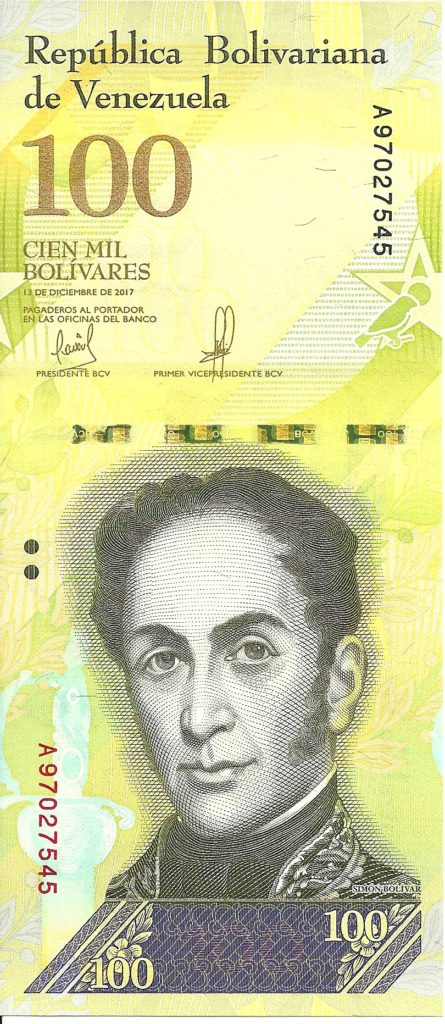
    But there’s good economic news for Venezuela! Their inflation rate fell to a mere 1.62 million percent in March, down from 2.30 million percent!

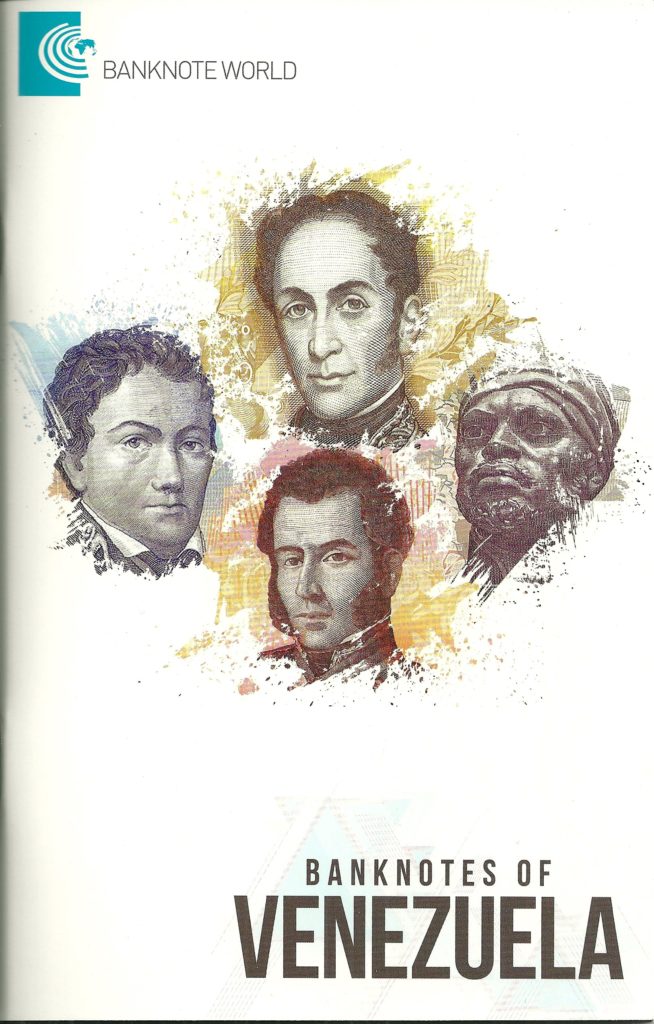
    Related: Dwight just gave this to me as a birthday gift:

    All the better to tell just when that hyperinflated 1 Billion Bolivar note was printed…