Iran is beyond broke, more Trump assassination repercussions, FBI finally raids some fraudsters, racial carve-out congressional districts are unconstitutional, Russia loses more ships and planes, Cornyn amnesty pander unearthed, an oil theft ring busted, DEI earns some college pink slips, and a brand spanking new Microsoft Zero Day exploit.
The Wall Street Journal offers a deep dive into the state of Iran’s wartime economy. And it turns out that the mullahs are, effectively, broke:
Government revenue has dried up just as the needs of its population are rising.
The war has thrown around one million people out of work directly and another million indirectly, according to early estimates cited by Gholamhossein Mohammadi, an official at Iran’s Labor and Social-Affairs ministry. That is a significant portion of the roughly 25 million people who are normally employed in Iran.
The cost of living has soared, with the annual inflation rate reaching 67 percent in the month through mid-April from the same period a year earlier, according to Iran’s central bank. The subsidized price of red meat, which was mostly imported through sea routes, has gone up to the equivalent of around $3.60 a pound, beyond the reach of most in a country where the minimum wage is around $130 a month.
“Living is not affordable anymore,” said Mahdi Ghodsi of the Vienna Institute for International Economic Studies. “Iran is at its weakest point.”
Businesses across the country — from manufacturers to retailers — are closing, residents said. The lack of steel and other raw materials is hampering production in various industries. Electronic goods, which are mostly imported, are in short supply and expensive.
A 67 percent inflation rate? The worst we’ve experienced in recent memory was 9.1 percent in June 2022.
Snip.
“Iran’s rial weakened on Wednesday, with the dollar trading at around 1.8 million rials, according to market trackers. The rate reflects continued pressure on the local currency amid economic strains.” Back at the start of January, this newsletter informed you, “When Ruhollah Khomeini swept to power in 1979, one US dollar traded for 70 rials. Today, that same dollar commands a staggering 1,130,000 rials, more than 16,000-fold its price in 1979. In the last year alone, the rial has lost 50 percent of its value.” The Iran rial was the weakest currency in the world . . . back when one dollar could buy you 1.3 million rials.
Plus the specter of hunger riots.
Our ridiculous media referred to the attempted Trump assassination as a “security incident” or “loud noise.”
The security establishment has promised and made better security arrangements after the two prior attempts on Trump’s life in 2024 in Butler, Pa., and West Palm Beach, Fla., the assassination of Charlie Kirk at an open-air Utah college campus in 2025, or the wounding of congressman practicing baseball at a suburban Washington field all the way back 2017.
Those events – along with the BLM riots in summer 2020, the Antifa attacks on immigration agents, the execution of the United Health Care CEO and the attempted assassination of Justice Brett Kavanaugh near his personal home – have something more in common than just the exploitation of current security postures.
They all, according to publicly released evidence, involved perpetrators influenced by a vast left-wing machinery that bombards social media, community protests and even establishment television with an unrelenting message of hatred and intolerance that can dehumanize the targets of violence and motivate armed actors to action, experts said.
That machinery ranges from nonprofits like the Southern Poverty Law Center, which actually paid racist actors in the name of fighting extremism, to the organizers of the No Kings protests who unleashed hundreds of thousands of old and young protesters onto the streets on the false notion that America has somehow become a monarchy under Trump.
In between, elitists and teachers have infused the nation with claims that America’s history is racist and unrighteous and that young Americans are predestined to fates determined as oppressors or the oppressed based on their skin color. And well-funded nonprofits consorting with America’s enemies in China and Cuba are openly fomenting a color revolution in hopes of securing a Marxist future on U.S. soil.
Allen appears to have been influenced by some of that ideology, as well as Democrats’ incessant but unfounded claims that Trump was involved in the late Jeffrey Epstein’s sex trafficking.
The manifesto police said Allen wrote suggested he was “no longer willing to permit a pedophile, rapist, and traitor to coat my hands with his crimes,” and that he subscribed to the Marxist paradigm of critical race theory that divides people into oppressors and the oppressed.
Who funded American Nazis and the KKK? You did, through USAID.
The NGO funding machine is getting harder to ignore.
USAID funneled $27 million through the Tides Center, with some of it going directly into the Southern Poverty Law Center.
Finally: “FBI and DHS Raid Dozens of Minnesota Fraudsters, Including ‘Quality Learing Center.'”
Federal officers are conducting raids of suspected fraudsters in Minneapolis on Tuesday, including the most infamous Somali-linked false front, the “Quality Learing Center.”
The FBI and the Department of Homeland Security’s Homeland Security Investigations (HSI) are targeting more than 20 locations in their latest operation against the massive Minnesota fraud network, according to Fox News correspondent Bill Melugin, who said that he spoke with the Department of Justice (DOJ), the FBI’s parent agency. The size and scope of the Minnesota fraud scandal, which is heavily linked to the Somali community there, but also implicates multiple Democrat politicians, including Gov. Tim Walz, Attorney General Keith Ellison, and Rep. Ilhan Omar, continues to astound patriotic Americans.
Melugin posted on X April 28, “Sources tell FOX the locations are largely Somali linked businesses, including the infamous ‘Quality Learning Center’. I’m told these are court approved search warrants being served and they are tied to fraud, not immigration enforcement. Fox is told 22 search warrants were executed in Minnesota this morning.”
He also shared a statement from a DOJ spokesperson: “Today the FBI with federal, state and local law enforcement is involved in court-authorized law enforcement activity as part of an ongoing fraud investigation.”
While investigating apparent false fronts for taxpayer-funded daycares in Minnesota, journalist Nick Shirley found one that had even misspelled “learning” in its own name on its sign, calling the place a “Quality Learing Center.” Tikki Brown, the commissioner of Minnesota’s Department of Children, Youth, and Families, then asserted that the childcare facility in question closed down the previous week, explaining why Shirley didn’t see any children there. But on Dec. 29, the same location was “packed with kids.” Apparently, some fraudster panicked and summoned children to provide a veneer of legitimacy. It’s The Truman Show in real life.
A new pair of reports is shedding fresh light on how teachers unions across the country have quietly poured more than $1 billion into political causes over the past decade, with a top education watchdog warning the spending reflects a growing focus on activism rather than classroom priorities.
According to research from Defending Education, national teachers unions alone have directed roughly $669 million toward left-wing political groups, advocacy organizations and campaigns since 2015. When state and local affiliates are included, that figure balloons to more than $1 billion in total political spending.
The reports track spending from the two largest unions, the National Education Association (NEA) and the American Federation of Teachers (AFT), as well as their state-level affiliates, using federal filings and campaign finance records.
The Supreme Court just handed down one of the most consequential redistricting decisions in a generation — and Democrats are not going to like it one bit.
In a 6-3 ruling in Louisiana v. Callais, the majority held that Louisiana’s congressional map — redrawn to include a second majority-black district — constitutes an unconstitutional racial gerrymander under the Fifteenth Amendment. The Court stopped short of striking down Section 2 of the Voting Rights Act entirely, but it dramatically narrowed the ways in which states may use race when drawing congressional maps.
For Republicans eyeing the House in 2026, this is the kind of ruling that changes the math.
I’m sure I don’t have to tell you which justices dissented.
The ruling’s immediate implications are huge. As we’ve previously reported, Republicans could potentially pick up anywhere from 12 to 19 new House seats across the South, as states seize the opportunity to redraw maps that were previously constrained by Section 2 requirements.
Democrats in South face wipeout if Supreme Court guts Voting Rights Act — NYT pic.twitter.com/goHof93AS3
The Southern Poverty Law Center (SPLC) has been funded by big name businesses and philanthropists including George Soros, JPMorgan, ex-Apple CEO Tim Cook and George Clooney.
The group — indicted Tuesday for allegedly funneling millions to the hate groups it says it is ideologically against — also holds over $786 million in assets, yet still solicits donations.
In fact, it took in $106 million in donated cash 2024, according to its latest available financial disclosures, yet still ran “urgent” appeals for “emergency” cash.
Over the years, donations have been made by big name donors, many of whom pledged to the organization after clashes at a 2017 by “Unite the Right” white supremacist rally in Virginia, which resulted in the death of one protester.
“Ukraine Hits Shadow Fleet Tanker Marquise with Marine Drones.” “The vessel was hit about 210 kilometers southeast of Tuapse, Russia” in the Black Sea.”
“After Al-Qaeda in Mali (JNIM) [Jama’at Nasr al-Islam wal Muslimin] & FLA [Azawad Liberation Front] took the city yesterday, the Russian Africa Corps & Malian soldiers fled to a military base outside town where they got surrounded…The Russians negotiated an exit from the [base] and fled. But the agreement didn’t include the Marian soldiers who were left behind. So, Russia once again abandoning its supposed allies as soon as the going gets tough.” Mali rebels also shot down a Russian helicopter.
Speaking of Mali: “Defense minister killed in united al-Qaeda and ISIS jihad attack, country on verge of collapse.”
Mali was on the brink of collapse last year as al-Qaeda affiliate Jama’at Nusrat al-Islam wal-Muslimin (JNIM) unleashed attacks on the country. Then came a report that Jihad Watch covered yesterday about renewed attacks that injured 16 people, as efforts to create an Islamic state in Mali escalated. The new siege rapidly spiraled into much worse, with JNIM, ISIS and Northern rebels coordinating attacks. Mali’s defense minister was killed.
I’m guessing the ISIS here is the Islamic State in the Greater Sahara.
Mali’s military government, which Gen. Assimi Goïta leads, broke ties with France in 2021-2022 and hired the Russian Wagner Group (known as the Africa Corps) to fight the rebels.
Technically, Wagner Group and Africa Corps are different Russian mercenary groups, though I’m sure a lot of soldiers for the former ended up in the latter.
The siege also served as “a major blow to Russia as the mercenaries had no intelligence about the attacks and were unable to protect major cities.”
Mali now faces an existential threat, which Kurdistan24 News characterized as “a profound failure for Mali’s Russian-backed military junta, signalling severe regional instability.”
Governments in the Sahel have never been the most stable, but the Russian-backed coups there have made things measurably worse.
A resurfaced 2020 campaign ad shows U.S. Sen. John Cornyn promoting his support for the “legalization of Dreamers”—a message that has since been removed from his YouTube channel.
In the Spanish-language ad, a narrator proclaims that, while Cornyn supports secure borders, he “firmly supports legalization of Dreamers.”
The video, which was previously available on his official YouTube channel, was quickly removed after circulation on social media.
Created by executive action under President Barack Obama in 2012, the Deferred Action for Childhood Arrivals (DACA) program allows certain individuals brought to the United States illegally as children, known as “Dreamers,” to remain in the country and shields them from deportation.
The program was challenged by President Donald Trump and Attorney General Ken Paxton, who argued it was unconstitutional. The U.S. Supreme Court ultimately blocked the Trump administration’s attempt to end the program in a 5–4 ruling.
The messaging aligns with comments Cornyn made on the Senate floor in 2020 regarding recipients of the Deferred Action for Childhood Arrivals program following that Supreme Court ruling.
“DACA recipients must have a permanent legislative solution. They deserve nothing less,” Cornyn said at the time. “We need to take action and pass legislation that will unequivocally allow these young men and women to stay in the only home, in the only country, they’ve known.”
Cornyn also described the uncertainty surrounding their status as “terrifying” and said many recipients have built careers and families in the United States.
“These young people deserve better,” he added.
The senator further noted he had been working with advocacy groups and stakeholders—including the Texas Hispanic Chambers of Commerce, LULAC, and Catholic bishops—to find a long-term solution.
Cornyn has long been known as a squish on amnesty, but no Republican should be seeking the approval of the hard-left LULAC.
David Morens, 78, worked under Fauci while he served as director of the National Institute of Allergy and Infectious Diseases. The DOJ charged Morens with conspiracy against the United States; destruction, alteration, or falsification of records in federal investigations; concealment, removal, or mutilation of records; and aiding and abetting. The case is being prosecuted by the U.S. Attorney’s Office for the District of Maryland.
Morens, along with two unnamed co-conspirators, “concealed, removed, destroyed and caused the concealment, and removal of federal records to evade FOIA [Freedom of Information Act] and FRA [Federal Records Act],” according to the indictment.
During his time at NIH, which ran from 2006 to 2022, Morens used his personal email account to conduct government business, specifically discussing the origins of Covid-19 with Manhattan-based nonprofit EcoHealth Alliance president Peter Daszak. Morens deleted said emails after sending them.
He also spoke with NIH’s FOIA liaison, asking for tips on how to evade FOIA requests.
Sure acts like he’s guilty, doesn’t he?
“Despite state law, we’re secretly keeping DEI.” College: “All right, then, enjoy this pink slip.”
Fourteen defendants from Texas and New Mexico were federally indicted for large-scale oil theft in the Permian Basin.
The United States Attorney’s Office for the Northern District of Texas announced on April 22 that the 14 conspirators were indicted for the alleged transport and theft of crude oil across the Texas-New Mexico border.
The criminal activity allegedly took place in the Permian Basin, which is responsible for nearly 40 percent of all oil production in the U.S.
Snip.
The Texas defendants are Randell Wayne Reid, age 41, of Electra; his father, James Darrell Reid, 65, also of Electra; and Christopher Frederick Harris, 22, of Seminole. Randell Reid and James Reid are both owners of Reidco Enterprises, a Texas-based company.
The defendants allegedly conspired to steal crude oil from the Permian Basin, “some of which was then stored on land that one of the conspirators leased from the United States government,” according to the U.S. Attorney’s Office. Stolen crude oil was then sold to the other conspirators well below the market value set by West Texas Intermediate (WTI) pricing. WTI is used as a benchmark to set crude oil prices in the region.
The indictment of Randell and James Reid restates these claims, adding that the men conspired to trade oil across the state borders.
Spirit Airlines to cease operations tomorrow, thanks in part to Elizabeth Warren blocking a merger with JetBlue.
The zero-day flaw combines a time-of-check to time-of-use (TOCTOU) race condition and path confusion in Windows Defender’s signature update system, according to an advisory from the Retail & Hospitality-Information Sharing and Analysis Center (RH-ISAC). If exploited successfully, a local user can access the Security Account Manager (SAM) database, obtain password hashes, and eventually gain administrator rights using the pass-the-hash technique, which would give the attacker full system control.
Local user rather than remote, so that mitigates the potential attacker pool. (Hat tip: Borepatch.)
Louis Rossmann, call your office. “Conroe residents say city is stonewalling their requests for information on Flock Safety cameras.”
People in Conroe are asking city officials for answers about how Flock cameras are being used and where the collected information ends up.
Residents say they feel like they are not getting straight answers.
Residents are working to learn how these cameras operate and, on Thursday, spoke to ABC13 about their demands for city officials to be more transparent, as they feel their questions are being ignored.
“Everybody in the community wants to feel safe. Everyone agrees this could help with kidnappings and hit-and-runs. To me, I just haven’t seen the data that proves that,” said concerned citizen, James Fletes.
Officials have said in the past that Flock cameras read license plates and alert police if the plates are linked to any crimes.
This technology has been used in the greater Houston area for years. In Conroe, some people say they are worried about the number of cameras and the lack of information about them.
Fletes says this concern led him to file a public records request with the city of Conroe. He asked questions such as how many cameras there are, how they work, where the data goes, and who can access it.
He says the city told him it would cost $1,200 to release the information, so he and others in the community joined forces to cover the cost.
“This is no longer just my request. It’s the people of Conroe’s request. They funded it, and we’re tired of being stonewalled,” said Fletes.
The original request was sent in March. Now, it’s almost May, and he says no information has been released yet.
“They were quick to take the money and very slow to provide the documents,” said Fletes.
There seems to be a whole lot suspicious about the ways cities have surreptitiously rolled out AI-enabled cameras and hoped people wouldn’t notice. (Hat tip: TPPF.)
The Iran war continues, with attacks on energy grids and refineries across the Persian Gulf, (maybe) another bunker buster strike, serious regime confusion, countries reporting impending shortages, and part of the 82nd Airborne moving into the theater.
ZeroHedge has piece up that starts with a nice state-of-play summary.
WSJ, Fox reporting 3,000 elite Army [82nd] Airborne soldiers to be ordered to Middle East. Axios says US awaits Iran response to proposed Thursday peace talks.
Backchannel diplomacy vs skepticism: Abbas Araghchi reportedly signaled openness to negotiations with the US via envoy Steve Witkoff, but Israel has appeared cool on deal prospects or offramp.
Heavy exchange of fire and testing red lines: Iran continues missile and drone waves targeting Israel and US bases, amid reports of overnight airstrikes on military and gas infrastructure near Isfahan.
Iran reshuffles its security leadership, appointing Mohammad Bagher Zolghadr: he’s a former IRGC commander and replaces the assassinated Ali Larijani.
Iran halts natural gas exports to Turkey: follows last week’s Israeli strike on the massive South Pars gas field; QatarEnergy declares force majeure on some LNG contracts due war.
“The Israeli Air Force recently struck an Iranian nuclear research and development site in Tehran, the military announces. According to the Israeli army, the “strategic” site at the Malek Ashtar University was used by Iran’s military industries to develop components for nuclear weapons. Malek Ashtar University, subordinate to Iran’s defense ministry, is under Western sanctions over its activities relating to Iran’s nuclear and ballistic missile programs.”
This falls into the “Big if true” category: “Three heavy bombers of the U.S. Air Force are currently conducting heavy strikes on the underground missile base of the IRGC Aerospace Force in Yazd, central Iran (Al-Qadir missile base). A total of six bunker-buster bombs have been dropped on the site by either B-1B heavy bombers flown from RAF Fairford in the United Kingdom or B-2A Spirit stealth bombers flown directly from Whiteman AFB in the United States.” I haven’t seen enough of Babak Taghvaee’s work to gauge the accuracy of this. (The few bits of his I’ve read have seemed accurate.) It seems like the sort target we would hit, but not knowing which bomber hit these targets suggests a source lacking firsthand knowledge. If anyone has a better bead on Taghvaee’s accuracy, feel free to share it in the comments below.
Not just over the Strait: The Warthog is also engaging Iranian back militias in Iraq.
USAF A-10 Warthogs spent most of the day strafing Iranian-backed militia positions around Mosul, Iraq. pic.twitter.com/5GLcm1XVnN
Victor Davis Hanson has spent fifty years studying how wars end. When he says the tide is turning, it’s worth listening to why.
His argument isn’t based on what the Pentagon is saying. It’s based on how everyone else is behaving.
𝗧𝗵𝗲 𝗘𝘂𝗿𝗼𝗽𝗲𝗮𝗻𝘀. VDH’s rule: Europeans never agree to go anywhere near a conflict unless they think the winning side has already been determined. They didn’t help in the early days. Now they’re starting to move. That movement is not idealism. It’s a calculation. They’ve looked at the battlefield and decided which way this ends.
𝗧𝗵𝗲 𝗚𝘂𝗹𝗳 𝗽𝗲𝘁𝗿𝗼-𝗻𝗮𝘁𝗶𝗼𝗻𝘀. The Saudis, the Emiratis, the Qataris — these governments have survived for generations by reading the regional climate with precision. When they expel Iranian military attachés, when they intercept Iranian missiles over their own capitals and say nothing about American strikes, when the UAE reaffirms its $1.4 trillion investment commitment to the United States mid-war — they are not making ideological statements. They are placing bets. And they are betting on the United States.
𝗔𝗹 𝗝𝗮𝘇𝗲𝗲𝗿𝗮. This is the one that should stop you cold. Al Jazeera — the Qatari state media network, historically critical of American military action, the network Tucker Carlson and the anti-war right love to cite against Israel — is now calling the U.S. bombing campaign brilliant and effective, and saying it has been underestimated. When the media outlet of a nation that hosts both the largest American air base in the Middle East and a Hamas political office starts praising American military effectiveness, the message is unmistakable: 𝘵𝘩𝘦𝘺 𝘵𝘩𝘪𝘯𝘬 𝘸𝘦’𝘳𝘦 𝘨𝘰𝘪𝘯𝘨 𝘵𝘰 𝘸𝘪𝘯.
𝗧𝗵𝗲 𝗺𝗶𝗹𝗶𝘁𝗮𝗿𝘆 𝘀𝗶𝗴𝗻𝗮𝗹. A-10 Warthogs and Apache helicopter gunships are now flying strike missions in Iranian airspace at will. VDH’s point: you only deploy those aircraft when there is effectively no air defense left to threaten them. They are slow, low-flying, close-support platforms. Their presence confirms what the Pentagon has been claiming — Iran has no meaningful air defense remaining.
Iran’s strategy now is rope-a-dope. Run out the clock. Wait for American public opinion to shift. Hope the midterms create political pressure on Trump to stop. It is the only play they have left.
VDH’s conclusion: if Trump sees it through — and he believes he will — the regime falls. Not in years. 𝗣𝗿𝗲𝘁𝘁𝘆 𝘀𝗼𝗼𝗻.
Since President Trump revealed contacts with the Islamic Republic, we’re seeing something very telling inside Iran: chaos at the top.
Regime officials are either turning on each other, pointing fingers, accusing one another of negotiating with the United States or in their own media and social platforms, they’re warning against character assassination of figures like Ghalibaf or Rouhani, because suspicion is spreading inside the regime itself.
Some are even calling for arrests or worse. Others are publicly shaming officials, accusing them of secret talks.
This is the atmosphere on the Islamic Republic’s side of social media. Total panic.
Jim Geraghty wonders “Why Are We Lifting Sanctions on Iranian Oil During a War with the Mullahs?” It’s a good question, though Trump seems to have a more intuitive grasp of alternating between carrots and sticks in negotiations than anyone I’ve ever seen. Also: “We have seen oil tankers carrying Russian oil divert from China to India in the aftermath of the Treasury Department’s lifting of sanctions on their cargo: ‘At least seven tankers carrying Russian oil have switched their destinations mid-voyage from China to India, according to Vortexa Ltd., with all of India’s major refiners now in the market for the country’s crude.'”
“Three explosions in Bushehr following attacks on the airbase and airport in Iran.” Bushehr is reasonably close to Kharg Island.
“Iran launches 10 million rial note.” Hyperinflation is rarely a sign of military strength. Also: The 5 million rial note was introduced “just weeks earlier.”
The Guardian (usual caveats apply) is saying that “Hundreds of petrol stations across Australia run out of fuel,” but Australian Energy Minister Chris Bowen states “Australia’s fuel supply remains strong and there are no immediate plans to ration fuel,” though the article admits “localized shortages.”
In Japan, gasoline prices have evidently hit record highs and the government is tapping national reserves, but tankers from UAE and Saudi Arabia bypassing the Strait of Hormuz are on the way.”
“Taiwan has about 11 days of liquefied natural gas reserves—a limited buffer that has become critical after Iran disrupted shipping through the Strait of Hormuz, cutting off key supplies from Qatar. Because Taiwan relies heavily on LNG to power its grid and semiconductor industry, any prolonged disruption could force energy rationing and threaten chip production.”
“Philippine president declares ‘national energy emergency‘, citing risks to fuel supply created by Middle East war.”
I have an in-process post titled “League of the Boned” in embryonic form, which was going to be about how each country in the League has been screwed by deficit spending, high interest rates and endemic corruption. But there so much boning to write about, and so many members of the League, that I thought it best to split it up into individual posts.
First up is Turkey, not because it’s the most boned, but the one whose immediate boning is made more acute by recent events, namely Recep Tayyip Erdogan’s reelection.
Recep Tayyip Erdogan’s supporters are celebrating after Turkey’s long-time president won Sunday’s vote, securing another five years in power.
“The entire nation of 85 million won,” he told cheering crowds outside his enormous palace on the edge of Ankara.
But his call for unity sounded hollow as he ridiculed his opponent Kemal Kilicdaroglu – and took aim at a jailed Kurdish leader and the LGBT community.
The opposition leader denounced “the most unfair election in recent years”.
Mr Kilicdaroglu said the president’s political party had mobilised all the means of the state against him and he did not explicitly admit defeat.
International observers said on Monday that, as with the first round on 14 May, media bias and limits to freedom of expression had “created an unlevel playing field, and contributed to an unjustified advantage” for Mr Erdogan.
President Erdogan ended with just over 52% of the vote, based on near-complete unofficial results. Almost half the electorate in this deeply polarised country did not back his authoritarian vision of Turkey.
Ultimately, Mr Kilicdaroglu was no match for the well-drilled Erdogan campaign, even if he took the president to a run-off second round for the first time since the post was made directly elected in 2014.
But he barely dented his rival’s first-round lead, falling more than two million votes behind.
Snip.
The president admitted that tackling inflation was Turkey’s most urgent issue.
The question is whether he is prepared to take the necessary measures to do so. At an annual rate of almost 44%, inflation seeps into everyone’s lives.
The cost of food, rent and other everyday goods has soared, exacerbated by Mr Erdogan’s refusal to observe orthodox economic policy and raise interest rates.
The Turkish lira has hit record lows against the dollar and the central bank has struggled to meet surging demand for foreign currency.
“If they continue with low interest rates, as Erdogan has signalled, the only other option is stricter capital controls,” warns Selva Demiralp, professor of economics at Koc university in Istanbul.
Tiny problem: Strict capital controls tend not to work. By the standards of the Middle East, Turkey is fairly open and fairly modern, and getting around currency controls is one of the use cases that cryptocurrencies are ideal for.
Indeed, the currency problem is so severe that Turkey’s foreign currency reserves just turned negative.
The Turkish central bank’s net forex reserves dropped into negative territory for the first time since 2002, standing at $-151.3 million on May 19, as the bank – following Erdogan’s strict orders – scrambled to counter demand for hard currencies (USD, gold, crypto) ahead of Sunday’s runoff vote.
Forex demand in Turkey surged to record levels ahead of May 14 on companies’ and individuals’ expectations that the lira, which lost 44% in 2021 and 30% in 2022, will plunge after the vote (spoiler alert: those fears have been justified).
As we discussed last week, the central bank’s forex reserves have sagged in recent years due to costly market interventions and other efforts to cool forex demand. The bank’s net reserves dropped by $2.48 billion in the week to May 19, to their lowest level since February 2002. They have dropped $27.7 billion since the end of 2022, and were at negative $3 billion as of May 19. The net forex reserves would be even more negative if outstanding swaps, courtesy of foreign central banks and which stood at $33.50 billion on Wednesday, are deducted (as they should be since the CBRT will have to repay these at some point).
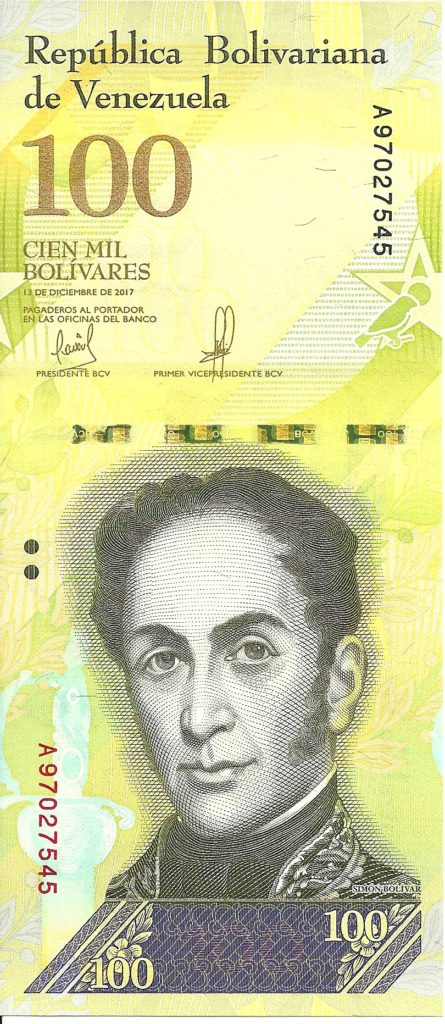
And while the endgame here is clear to all, few are willing to say it out loud for fear of retaliation by the Erdogan regime (no really, he has been known to throw people in jail for recommending a Turkish lira short); yet one bank which decided to double down on Goldman’s dire view of how it all plays out is Morgan Stanley, which in a note last week (available to pro subscribers in the usual place), wrote that the turkish lira plummeting to 28 by the end of the year, is likely in the cards (in our view, that’s a rather optimistic take since the lira is about to become the new Bolivar where soon new zeroes are added daily if not hourly).
This is, I think, a bit of an exaggeration, since Turkey is a much bigger and more important country (and economy) than Venezuela, and while they’ve done several terribly stupid things with their economy, they haven’t gone full socialist starvation scenario on it.
The biggest concern when Erdogan came to party was his Islamist roots, and how he dismantled Turkey’s own peculiar systems of checks and balances, namely that anytime the government would move too far in an Islamist direction, the military would step in, depose the current government, rule for a while, and then step down once things had calmed down again. That doesn’t look very much like classic western democracy, but it served well enough for Turkey, partially insulating it from the wild swings between different despots common in the rest of the Islamic world.
The bad news is that Erdogan demolished those checks and balances in his drive to centralize power in his own hands, purging the military of anyone he thought might possibly oppose him. The good news is that, after all that, he turned out to mostly be a typical Middle Eastern strongman rather than a fervent jihadi. The bad news is that he’s also a complete economic ignoramus, and his stupidity is making Turkey’s economic problems much worse.
Here Patrick Boyle explains just how stupid:
On Erdogan’s idea that low-interest rates can cure inflation: “The official annual inflation rate in Turkey was 43.7% as of April. This is actually down from the 80% inflation rate that Turkey saw the prior year. There is no guarantee that this slowdown will persist. There is in fact widespread suspicion that the official numbers understate an inflation rate that according to independent experts is actually closer to 100%.”
The February earthquakes didn’t help.
“Another term for President Erdoğan would likely imply a continuation of the current policies with a heightened risk of persistent very high inflation and severe currency pressures.”
“The high inflation, along with government largess and efforts to prop up the currency are threatening economic growth and could push the country into a deep recession.”
The Lira is trading near record lows against the dollar.
“Net foreign assets, a proxy for the size of Turkey’s foreign currency holdings, have declined to minus $13 billion dollars from $1.4 billion dollars a year ago, according to central bank data.”
“Those figures include billions of dollars in funds borrowed from the domestic banking system through swaps. Pressure on international reserves has been ‘significant in recent weeks’ as the government made efforts to prop up the economy ahead of Sunday’s elections.”
“Turkey’s foreign currency and gold reserves tumbled $17 billion dollars in the six weeks leading up to the first round of the election according to the FT, a decline of 15 percent.”
“Turkey had a painful experience of high and chronic inflation from 1975 through to 2004 caused by political instability, poor institutions, high public sector budget deficits and depreciation of the Turkish Lira which culminated in a severe financial crisis in 2000-2001.”
“The establishment of an independent central bank in 2001, which focused mainly on fighting inflation along with tight fiscal policies implemented at the same time brought inflation under control.”
“During his election campaign, Erdogan showed no intention of changing his policies, doubling down on his claims that low interest rates would help the economy grow by providing cheap credit to increase Turkish manufacturing and exports. ‘You will see as the interest rates go down, so will inflation’ he told supporters in Istanbul in April.”
With the cost-of-living crisis on many voters’ minds, Erdogan launched a range of expensive policies in the lead up to the election aimed at reducing the immediate impact of inflation on voters. He raised the minimum wage repeatedly, announced a free month of natural gas for consumers, reduced electricity prices increased civil servant salaries and changed government policies to allow millions of Turks to receive early government pensions. Just days before the first round of the election He gave a 45% pay rise to 700,000 Turkish public sector workers, saying he would “not let anyone be crushed by inflation”.
So he combated inflation by guaranteeing there would be more inflation, just like Joe Biden.
Boyle thinks Turkeys problems can be solved by adopting sane economic policies. “For a country in crisis, Turkey’s problems are not that difficult to solve – it is not a total basket case economy like some other emerging markets. The country mostly just needs a sensible interest rate policy and an independent central bank. Turkey has a lot of positives, it has a diversified economy, growth is good, it has good demographics and an educated workforce.”
This is true, but it was also true before Erdogan got into power and screwed things up. Peter Zeihan thinks that Turkey has the right mix of geography and demographics to be a future regional power. But there’s an awful difficult present to get through before that happens…
Peru’s Congress on Wednesday voted to remove President Pedro Castillo after he attempted to dissolve the legislative body following their third attempt to remove him from office.
Lawmakers voted 101-6 with 10 abstentions to remove Castillo from office for reasons of “permanent moral incapacity.”
I love the phrase permanent moral incapacity. If it caught on here, half of our political class would be forcibly retired.
Vice President Dina Boluarte was quickly sworn in to replace Castillo. The 60-year-old lawyer took the oath of office and became the first female leader in Peru’s history.
Her swearing-in capped hours of uncertainty as both the president and Congress appeared to exercise their constitutional powers to do away with each other. She said her first order of business would be to address government corruption.
Peru President Pedro Castillo announced the dissolution of congress and called for legislative elections to draft a new constitution hours before an impeachment debate, greatly escalating a political crisis and putting the Latin American nation’s democracy under threat.
“We took the decision of establishing a government of exception toward reestablishing the rule of law and democracy,” Castillo said in a televised speech Wednesday, adding that the incoming congress will draft a new constitution within nine months. “From today and until the new congress is established, we will govern through decrees.”
“Government of exception” is an awful fancy way of saying “dictatorship.”
Castillo’s move was met with nationwide protests and outrage by the Peruvian constitutional court which called the dissolution of Congress a coup, and said that Castillo is no longer president. Meanwhile, the Congress – which apparently did not get the memo that it has been dissolved – started the Castillo impeachment session early, and will most likely vote to remove the president.
Castillo’s move was hardly unprecedented, as previous Peruvian President Alberto Fujimori famously conducted his own successful autogolpe (auto coup) to purge the Peruvian government (and judiciary) of corruption. He would then defeat the Maoist Shining Path insurgency, be elected to two more terms as President, and then flee the country and resign by fax before being indicted on his own corruption charges. (He would eventually return to serve his prison term and receive a pardon that was later annulled by a court.)
This offers us an opportunity to look at the history of Peru’s governments from the sort of deep, informed vantage point that only 15 minutes of browsing Wikipedia can provide. Even if you limit it to Post-WWII presidents, that history is not a happy one.
Manuel Prado Ugarteche: Served without much upheaval throughout pretty much the entirety of World War II and passed the office to democratically elected successor Jose Luis Bustamante y Rivero. But his second term (July 28, 1956 to July 18, 1962) ended in a coup d’état and he died in exile. Speaking of which:
After troops loyal to the government crushed the revolt, President Bustamante suspended all civil rights.
The insurrection, he declared, had been the work of the APRA Party. Under the President’s orders, government troops occupied the APRA headquarters, seized the plant of its newspaper, La Tribuna, and arrested several prominent Apristas. But for the Military Cabinet, those moves were not enough. Postwar economic problems and strife caused by strong labor unions led to a military coup on October 29, 1948, which led Gen. Manuel A. Odria to become the new President.
Bustamante went into exile, then returned. Despite that whole “suspended civil rights and crushed rival political parties” thing, “In 1960 he was elected a member of the International Court of Justice in The Hague and served as its President from 1967 to 1969.” Died in Lima.
After two years, he resigned and had one of his colleagues, Zenon Noriega, take office as a puppet president so he could run for president as a civilian. He was duly elected a month later as the only candidate.
So much democracy!
Odriua came down hard on APRA, momentarily pleasing the oligarchy and all others on the right. Like Juan Peron, he followed a populist course that won him great favor with the poor and lower classes. A thriving economy allowed him to indulge in expensive but crowd-pleasing social policies. At the same time, however, civil rights in the nation were severely restricted and corruption was rampant throughout his regime. People feared that his dictatorship would run indefinitely; they were surprised when Odria legalized opposition parties in 1956 and called fresh elections. He did not run for office. He was succeeded by a former president, Manuel Prado.
Three main candidates participated in the Peruvian presidential elections of 10 June 1962: Victor Raul Haya de la Torre, founder and leader of the APRA, future president Fernando Belaunde, and former dictator Manuel A. Odria. Haya de la Torre gained most of the votes according to the official results, one percentage point ahead of Belaúnde.
However, none of the candidates reached the margin of one-third of the votes needed to become president.[citation needed] Therefore, the final decision lay with the Peruvian Congress. Haya de la Torre and Odría formed an alliance in order to install Odria as the new president.
At 3:20 in the morning of 18 July 1962 at the Presidential Palace, one of the thirty tanks stationed outside gunned its engine and rammed through the black wrought-iron gates. Manuel Prado, the constitutional President of Peru, was thrown out of office in a coup, just ten days short of completing his six-year term.
Perez Godoy, as Chairman of the Joint Chiefs of Staff, headed the military junta formed by high-ranked members of the Peruvian Military Force: General Nicolas Lindley, commander of Peru’s army; Vice Admiral Juan Francisco Torres Matos, Admiral of the Navy; and General Pedro Vargas Prada, chief of the air force. Once in the Palace, the four-man junta administered its own swearing-into office. The soldiers then suspended all constitutional guarantees, dissolved Parliament, arrested Electoral Tribunal officials “for trial” and promised “clean and pure elections” scheduled for June 9, 1963.
Snip.
Promising a “New Peru”, Pérez Godoy pushed through a 24% increase in the budget and decreed new taxes to pay for it, including a one dollar-a-ton levy on anchovies that provoked a strike and threatened to close down the thriving fishmeal industry.
And when he refused to approve the construction of a new hospital for Vargas Prada’s Air Force and six new ships for Torres Matos’ national steamship line, the other junta members turned on him.
What a tragedy it is when there’s no honor among coup leaders! If only Shakespeare had warned us…
He was deposed by the junta’s next man in line, Army General Nicolas Lindley, who swiftly moved into the presidency on March 3. Lindley restored the schedule for democratic elections and turned over the office of president to election winner Fernando Belaúnde.
Nicolas Lindley Lopez: Served a year as dictator then stepped down for a civilian government. Served as ambassador to Spain and died in Peru.
Fernando Belaunde: Served two non-continuous terms, the first of which involved a controversial settlement with Standard Oil. Want to guess how that term ended? “Belaunde himself was removed from office by a military coup led by general Juan Velasco Alvarado.”
Juan Velasco Alvarado: Served as dictator of Peru for seven years. “He pursued a partnership with the Soviet bloc, tightening relations with Cuba and Fidel Castro and undertaking major purchases of Soviet military hardware.” Followed by nationalizing American assets, etc. “Economic difficulties such as inflation, unemployment, food shortages.” Try to contain your shock. If you’ve been reading along so far, want to guess how Alvarado left office? “On August 29, 1975, a number of prominent military commanders initiated a coup…Prime Minister Francisco Morales Bermudez was then appointed president, by unanimous decision of the new military junta.” Live by the coup, die by the coup. Already in ill health, he died in 1977. Inspired Venezuelan commie scumbag Hugo Chavez.
Politically pressured from all sides, [he] failed in enacting successful political and economic reform.
A Constituent Assembly convened by the Morales Bermudez administration was created in 1978, which replaced the 1933 Constitution enacted during Oscar R. Benavides’s presidency. After elections were held in 1980, he returned power over to the first democratically elected government after 12 years of military rule, headed by President Fernando Belaunde.
Belaunde 2:
One of his first actions as President was the return of several newspapers to their respective owners. In this way, freedom of speech once again played an important part in Peruvian politics. Gradually, he attempted to undo some of the most radical effects of the Agrarian Reform initiated by Velasco, and reversed the independent stance that the Military Government of Velasco had with the United States.
Snip. “During the next years, the economic problems left over from the military government persisted.” Followed by:
Alan Garcia, another “two non-consecutive terms” president. Was his first term a success? Not so much.
His economic policy was based on APRA’s initial anti-imperialist values with García distancing Peru from international markets, resulting in lower investment in the country. Despite his initial popularity among voters, Garcia’s term in office was marked by bouts of hyperinflation, which reached 7,649% in 1990 and had a cumulative total of 2,200,200% over the five years, which destabilized the Peruvian economy. Foreign debt under Garcia’s administration increased to $19 billion by 1989. Owing to this chronic inflation, the Peruvian currency, the sol, was replaced by the inti in February 1985 (before his presidency began), which itself was replaced by the nuevo sol (“new sun”) in July 1991, at which time the new sol had a cumulative value of one billion (1,000,000,000) old soles.
According to studies by the National Institute of Statistics and Informatics and the United Nations Development Programme, around the start of his presidency, 41.6% of Peruvians lived in poverty. During his presidency, this percentage increased by 13% (to 55%) in 1991. Garcia also made an attempt to nationalise the banking and insurance industries. The International Monetary Fund and the financial community recoiled after Garcia’s administration unilaterally declared a limit on debt repayment equal to 10% of the Gross National Product, thereby isolating Peru from international financial markets.
His presidency was marked by world-record hyperinflation with the annual rate exceeding 13,000 percent per year. The administration devastated the local economy as well as all governmental institutions. Hunger, corruption, injustice, abuse of power, partisan elitism, and social unrest raised to dramatic levels spreading throughout the whole nation due to Garcia’s misdeeds and incompetence, spurring terrorism. The economic turbulence exacerbated social tensions and contributed in great part to the rise of the violent Maoist rebel movement known as the Shining Path, which launched the internal conflict in Peru and began attacking electrical towers, causing a number of blackouts in Lima. The period also saw the emergence of the Tupac Amaru Revolutionary Movement (MRTA).
He was so unpopular he didn’t even run in 1990, so he was succeeded by Alberto Fujimori, a surprise winner in a runoff against the free-market oriented novelist (and later Nobel Prize laureate) Mario Vargas Llosa.
Alberto Fujimori: We’ve already covered him. Disgraced and imprisoned, he’s still a strong candidate for the most effective postwar Peruvian President. After his resignation, the Presidency passed to:
Valentin Paniagua, despite being third in line for succession, because one guy had resigned and the other was too much of a Fujimori loyalest. Served for a year, formed a national unity government and pulled back on a lot of the “secret judge and jury” tribunals Fujimori had instituted, and was able to do so mainly because Fujimori was so successful at crushing Shining Path. Followed by:
His administration was characterized by the beginning of the country’s macroeconomic boom, promoting foreign investment, the signing of free trade agreements, and the implementation of various investment projects in infrastructure and human development. At the same time, Toledo suffered a governance crisis, scandals in his personal life, and allegations of corruption against his inner circle, signs that hit his popularity until he fell to 8% of popular approval.
Snip.
On 16 July 2019, Toledo was arrested in the United States for an extradition order to Peru, as reported by the Peruvian Public Ministry. On 8 August, attorney Graham Archer, requested a request for release on bail before judge Thomas Hixson. On 12 September, the judge ruled his request for reconsideration inadmissible. On 19 March 2020, he was released on bail.On 28 September 2021, a U.S. District Court approved the extradition of Toledo, ruling that evidence presented in the case against Toledo were “sufficient to sustain the charges of collusion and money laundering” under the U.S. Peru Extradition Treaty.
Followed by:
Alan Garcia 2. Did it work out better than the last time? Not really, but it started off better:
Throughout Garcia’s second term, Peru experienced a steady economy, becoming the fastest growing country in Latin America in 2008, surpassing China in terms of rising GDP. The economic success of his presidency would be acclaimed as a triumph by world leaders, and poverty was reduced from 48% to 28% nationally. In addition, Peru signed free trade agreements with the United States and China during García’s presidency, but accusations of corruption would persist throughout his term and beyond.
After leaving office: “Died from a self-inflicted gunshot to the head as police officers under a prosecutor’s orders were preparing to arrest him” on corruption charges as part of the Odebrecht scandal. Next up:
Ollanta Humala: “Originally a socialist and left-wing nationalist, he is considered to have shifted towards neoliberalism and the political centre during his presidency.” How did it end? “In 2017, Humala was arrested by Peruvian authorities on corruption charges.” Next:
First impeachment
Main article: First impeachment process against Pedro Pablo Kuczynski
On 15 December 2017, the Congress of the Republic initiated impeachment proceedings against Kuczynski, with the congressional opposition stating that he had lost the ″moral capacity″ to lead the country after he admitted receiving advisory fees from scandal-hit Brazilian construction company Odebrecht while he was Peru’s Minister of Economy and Finance between 2004 and 2005. Kuczynski had previously denied receiving any payments from Odebrecht, but later confessed that his company, Westfield Capital Ltd, had been receiving money from Odebrecht for advisory services, while still denying that irregularities existed in the payments.
Fujimori pardon snipped.
Second impeachment, Kenjivideos and resignation
After further scandals broke out surrounding Kuczynski, a second impeachment vote was to be held on 22 March 2018. Two days before the vote, Kuczynski stated that he would not resign and decided to face the impeachment process for a second time. The next day on 21 March 2018, a video was released of Kuczynski allies, including his lawyer and Kenji Fujimori, attempting to buy a vote against impeachment from one official.
Followed by:
Martin Vizcarra. Who was also impeached twice, and also tried to dissolve congress.
On 9 November 2020, the Peruvian Congress impeached Vizcarra a second time, after declaring him “morally incompetent”; he was removed from office.[9] The President of Congress and opposition leader, Manuel Merino, succeeded him as President of Peru the following day. Vizcarra’s impeachment incited the 2020 Peruvian protests, as many Peruvians and political analysts believed the impeachment was unsubstantiated, with several Peruvian media outlets labeling the impeachment a “coup”. Vizcarra was banned from holding public office for 10 years after allegedly jumping the line to get a COVID-19 vaccine, with an 86–0 vote in congress.
Manuel Merino. He only served six days before resigning. Followed by:
Francisco Sagasti: Managed to run a caretaker government from November 7, 2020 to July 28 2021, and carried out successful elections without being indicted, deposed or killing himself, which has to count as a success.
Castillo was noted for appointing four different governments in six months, something which had no precedent within Peruvian political history. He faced two impeachment proceedings in the Peruvian Congress, although both failed to reach the necessary votes to remove him from office.
Following the second failed impeachment vote, a series of protests across the country took place due to the rising fuel prices and instability allegedly generated by Castillo’s administration, which largely affected transportation workers. His administration was not able to find a solution to the political crisis, as it escalated in addition to mining protests as the country’s economy plummeted. Castillo ultimately left the Free Peru party in June 2022 to govern as an independent. In July 2022, a fifth inquest was launched into Castillo’s alleged corruption involvements.
Bringing us to the third impeachment and his removal from office.
It’s a rich tapestry of political dysfunction.
Well, that’s more like three hours of Wikipedia reading, but it does drive home the point that the very moment anyone takes office as President in Peru, the deck is stacked against them…
Greetings, and welcome to a Friday LinkSwarm…on Friday! What are the odds?
More dispatches from the Biden Recession: “Homebuyers are GONE.” Home sales are cratering nationally, companies that bought up lots of properties are slashing prices, and the number of homes being built is also cratering.
From the same guy: The 10 locations housing prices will crash the most. #5? Austin. “This is a market in absolute free-fall.” I know prices in my neighborhood have probably lopped off a good $100,000 or so, forcing me to rely on my vast book holdings to remain a millionaire…
The other day, I saw on Twitter someone saying that they are a good liberal and all that, but they are really worried about what they’re seeing regarding the emerging culture of the medical and teaching professions encouraging children to transition to the opposite sex. “But,” said this person, “I don’t want to surrender to a moral panic.”
I submit to you that a moral panic is precisely the correct response to this egregious phenomenon. That is, what is happening is so hideous, and so widespread, and the reaction by most people to this point has been so muted to non-existent, that if you are not panicking, you are not paying attention.
Most people are not on Twitter, and if you’re one of these people, you may not be aware of the extent of the insanity. The media are not covering it, of course. It falls to badasses like Matt Walsh, Chaya Raichik (who runs the Libs Of Tik Tok account), Christina Buttons, and Chris Elston, the guy who runs the Billboard Chris website and Twitter account, to sound the alarm.
The things they document are not nut-picking (the practice of finding extreme weirdos, and falsely using them as an example of the whole). They are completely mainstream. These are things that, if we had a functional media instead of a Narrative-massaging industry, would be widely reported, and discussed intensely.
The Left’s agenda to groom your children has taken another turn. Various states across America have begun implementing laws and policies to allow children to make healthcare decisions without a parent or guardian’s consent — and the medical industry is promoting it. Many of these states are using these new laws to allow for drastic medical decisions to be made without parental consent including hormone therapy, gender reassignment surgery, and medicated mental health treatment.
In Washington, children as young as 13 are now allowed to undergo gender reassignment surgery and other questionable medical treatments without parental consent.
One Washington dad alleged in a viral TikTok video that a school gave his 15-year-old child antidepressants without informing him. Sounds completely insane and illegal, right? Well . . . it sounds that way, but it isn’t. Under Washington law, this is 100% legal and is allegedly being carried out by schools.
New York has hopped on the bandwagon of removing parents from the treatment room as well. New York-Presbyterian recently sent out emails to their patients explaining that accounts for 12-17-year-olds must be updated to reflect the adolescent’s personal email address as the primary contact as New York State law allows children “to keep their sensitive medical information private and to consent to some of their own medical treatment.”
Twelve-year-old children will now have the ability to be the primary decision-maker for many of their medical treatments and procedures. Children will also have the ability to completely revoke medical record access for their parents or guardians. 12-year-old children who can barely do their own laundry now have authority over their healthcare.
Snip.
One concerned parent in Kennebunk, Maine shared photos with us of a medical questionnaire for patients 12 years of age and older which read “To be filled out by patient only.” The questionnaire included questions about sexuality, asking children what gender they’re attracted to, and if the child has ever been in a romantic relationship or had sex. Separate questions ask the children if they’ve ever had questions about their gender identity and what their preferred pronouns are.
The parent spoke to me regarding the questionnaire and stated her child was given the forms right after he turned 13. Naturally, her son was uncomfortable and confused by the questions and asked his mom for help. However, the mom claims the doctor made her leave the room and refused to allow her to be present while her son was answering the questionnaire.
Why would a doctor need to secretly know the sexual preference and gender identity that a 13-year-old child claims without his mom present? Why would any child be required to share answers to all these invasive questions and bar any parental involvement?
It’s not just Maine, Arizona, New York, and Washington — the removal of parents from important decisions in their children’s lives is becoming a nationwide policy trend aggressively pushed by the Left.
Given how much Libs of TikTok has uncovered of the groomer agenda, it’s no wonder that Facebook has banned her:
JUST IN: Facebook permanently banned Libs of TikTok on Wednesday evening and gave absolutely no reason why https://t.co/m6F3wIdzlZ
“Austin Fire Department Chaplain Fired over Blog Post Objecting to Males in Women’s Sports.” No surprise to followers of Austin politics, given the way their union has been taken over by the radical left.
To the great consternation of liberal Democratic mayors in the northeast, the governors of Texas and Arizona continue to send busloads of illegal migrants to New York and Washington to lessen the burdens on their states and draw more attention to the Biden border crisis. This has put the municipal governments of these self-defined sanctuary cities in a bit of a tough position politically. They are supposed to represent bastions of hope for the migrants and freedom from the “oppression” of ICE and the Border Patrol. But now that the migrants are arriving in larger numbers and doing so in a very public way, it’s becoming clear that this is a problem that the mayors were not prepared to handle. As Charles Lipson explains in Newsweek today, these so-called sanctuary city claims were clearly more of a case of virtue signaling than anything else, but when the cost of invoking such policies began to rise, the backlash came quickly.
I still don’t understand Obama’s deep infatuation with Iran’s mullahs, or why he sent them pallets-full of currency, or why he desperately wanted to get nuclear technology to Iran. But I suspect his enthusiasm for providing nuclear technology to Iran was in equal proportion to his enmity toward Israel.
So how was the American left supposed to keep championing Mr. Rushdie when Barack Obama, their Lightbringer, was such a fan of the mullahs who wanted Rushdie dead? Barack Obama had taken American tax dollars and sent it to the mullahs so that they could then turn around and use that money to pay the bounty to whomever successfully pulled off the fatwa against Rushdie. To stay true to Obama, America’s liberal elites had to now ally themselves with the men trying to murder Rushdie.
Conservatives, of course, always supported Rushdie’s right to free speech and always decried the fatwa on him. But for those who matter most in elite society, the fatwa now reflected poorly on Rushdie, not those who imposed the fatwa.
Rushdie was abandoned by the left, because they were now aligned with the mullahs who wanted him dead.
Over in London, unions are working on their Winter of Discontent cosplay by launching a Tube strike.
Families are getting the hell out of north Portland due to the huge increase in drug-addicted transients ts infecting their neighborhood. This is your city on social justice.
Turkey’s wild and crazy president Recep Tayyip Erdogan continues his innovative “lower interest rates during hyperinflation” gambit. Result? The Lira has crashed to an all time low.
Remember San Angelo police chief Tim Vasquez, who accepted bribes via gigs for his Earth, Wind & Fire cover band Funky Munky? Well he just got sentenced to 15 years in the slammer. I guess he’s no longer a shining star…
Also on the crime beat: Charges filed in Whitey Bulger whacking. “Fotios Geas, Paul J. DeCologero and Sean McKinnon have been charged with crimes related to the murder of Whitey Bulger.”
More New York Times editorial judgment on display: “NYT Cuts Ties With Reporter Who Called For ‘Killing,’ ‘Burning’ Jews ‘Like What Hitler Did.’” The surprise is that they actually fired her. How do you think that conversation went? “Sure, lots of us have called for death to the Jews, but the ‘burning’ part just crosses the line…”
Smaller than a LinkSwarm, here’s a list of foreign hot spots that we might want to pay more attention to than we are right now. And by “we,” I mean “The U.S. Department of State,” which seems to be run by feckless, corrupt Obama Administration retreads. So I doubt they’re up to the task.
Here goes nothing:
Cartel gunmen stormed as prison in Tula, Hidalgo, central Mexico and broke out Pueblos Unidos cartel leader Jose Artemio “El Michoacano” and “La Rabia” Maldonado Mejia, plus his brother and a whole bunch of gunmen. Cartel violence in Mexico is nothing new, but the brazenness of the jailbreak suggests continued weakness on the part of the criminal justice system.
Remember how our chattering classes got their knickers in a knot over Marine La Pen? Well, Eric Zemmour, reportedly a self-styled Gaullist and (get this) Bonapartist just declared he’s running for President of France.
PARIS — Éric Zemmour, a polarizing far-right writer and television star, announced on Tuesday that he was running for French president in elections next year, ending months of speculation over a bid that upended the race before he had even made it official.
Mr. Zemmour, 63, is a longtime conservative journalist who rose to prominence over the past decade, using prime-time television and best-selling books to expound on his view that France was in steep decline because of Islam, immigration and leftist identity politics, themes he returned to in his announcement.
“It is no longer time to reform France but to save it,” Mr. Zemmour said in a video with dramatic overtones that was published on social media, conjuring images of an idealized France and then warning about outside forces that threatened to destroy it.
He has fashioned himself as a Donald J. Trump-style provocateur lobbing politically incorrect bombs at the French elite establishment — saying, for instance, that the law should require parents to give their children “traditional” French names — and rewriting some of the worst episodes from France’s past. He has been charged with inciting racial or religious hatred several times over his comments, and twice convicted and fined.
Mr. Zemmour spoke over 1950s footage full of men in hats and vintage Citroën cars, contrasted with recent clips of crowded subways, crumbling churches, burning cars and violent clashes with the police.
“You feel like a foreigner in your own country,” Mr. Zemmour said, reading from notes at a desk in front of old bookshelves in a way that seemed intent on replicating Charles de Gaulle’s posture when he issued a call to arms against Nazi Germany from London in June 1940.
Mr. Zemmour said he was running “to prevent our children and our grandchildren from experiencing barbarity, to prevent our daughters from being veiled and our sons from being subdued.”
He accused elites — journalists, politicians, judges, European technocrats — of failing France, which he said was represented by a long list of illustrious men and women, including Joan of Arc, Louis XIV and Napoleon.
“We will not be replaced,” added Mr. Zemmour, who has espoused the theory of a “great replacement” of white people in France by Muslim immigrants.
Oh, he’s also bigger on Russians than Americans. Which seems strange for a Bonapartist, given that whole “invasion of Russia” thing.
Given the notorious unreliability of our media in reporting on any figure considered even mildly right of center, it’s hard to tell whether Zemmour is indeed a radical extremist, a conservative populist, or something in-between. We’ll find out if he’s a real Bonapartist if he invades Germany and crowns himself Emperor. As a pre-TDS National Review once said about Jean Le Pen, “we have no frog in this fight.”
Minutes before President Tayyip Erdogan delivered a speech renouncing high interest rates once again, the Turkish central bank said it was selling dollars to support the lira. The bank has $25 billion of net reserves as of November, down from $28 billion the month before. But that includes another $48 billion of swaps from local banks, without which reserves are firmly in negative territory.
It’s a flawed bid to support Erdogan’s ultra-loose monetary policy, which has caused the lira to fall more than 40% versus the dollar this year. Propping up the currency might slow Turkey’s descent into hyperinflation, but the country’s pot of dollars risks running out. The bank sold some $128 billion to steady the lira in 2019-2020 and still had to hike rates. When net reserves were at $28 billion in August 2020, it took just five months to run them down to $11 billion – the lowest since at least 2003. The lower reserves fall, the more likely another depreciation becomes.
I’m not an international economic expert, but usually you raise interest rates to stem inflation. The timeless meme protocols call for posting this:
Iranian border guards clashed with Taliban forces along the Iran-Afghanistan border on Wednesday after the Taliban opened fire on Iranian farmers, according to reports.
Local journalist Reza Khaasteh shared unverified video of the scene on Twitter, which appeared to show Iranian soldiers using heavy artillery to push back against the Taliban militants.
Khaasteh tweeted that the Taliban managed to capture several Iranian border posts; however, other reports citing unnamed sources claimed that was false.
OK, the Mullahs and the Taliban is maybe less of a “worry” story and more of a “sit back and watch the fireworks” one…
Soldiers told us there have been cartel gunfights in Ciudad Miguel Aleman, the Mexican city across from Roma, TX, frequently in recent days and weeks. The soldiers heard gunfire and explosions two days ago and showed us this video of smoke billowing after the gunfight. pic.twitter.com/yow1pPvJS8
Indeed, Biden’s poll numbers are so low that even CNN has noticed. “Just 32% of independents approved of how Biden is handling his job while 60% disapprove in a new Quinnipiac University national poll… In 2010, the Republicans picked up 63 seat, with being up 19 points among independents.”
Short-term debt limit extension bill passes. Tastes like chicken…
The reconciliation bill is deeply hostile to marriage. Well, it’s no surprise, since happily married couples with children are increasingly an obstacle to Democratic Party control…
U.S. Attorney General Merrick Garland recently instructed the FBI to begin investigating parents who confront school board administrators over Critical Race Theory indoctrination material. The U.S. Department of Justice issued a memorandum to the FBI instructing them to initiate investigations of any parent attending a local school board meeting who might be viewed as confrontational, intimidating or harassing.
Attorney General Merrick Garland’s daughter is Rebecca Garland. In 2018 Rebecca Garland married Xan Tanner. Mr. Xan Tanner is the current co-founder of a controversial education service company called Panorama Education. Panorama Education is the ‘social learning’ resource material provider to school districts and teachers that teach Critical Race Theory.
So far, all we have is his press conference and other such made-for-media huff-puffing. No such rule even claiming to be legally binding has been issued yet.
That’s why nearly two dozen Republican attorneys general who have publicly voiced their opposition to the clearly unconstitutional and illegal mandate haven’t yet filed suit against it, the Office of the Indiana Attorney General confirmed for me. There is no mandate to haul into court. And that may be part of the plan.
According to several sources, so far it appears no such mandate has been sent to the White House’s Office of Information and Regulatory Affairs yet for approval. The White House, the Occupational Safety and Health Administration (OSHA), and the Department of Labor haven’t released any official guidance for the alleged mandate. There is no executive order. There’s nothing but press statements.
Let the lawsuits against private companies firing people for refusing the vaccine for which no mandate exists begin!
Scientists from Wuhan and the US were planning to create new coronaviruses that did not exist in nature by combining the genetic codes of other viruses, proposals show.
Documents of a grant application submitted to the US Defense Advanced Research Projects Agency (Darpa), leaked last month, reveal that the international team of scientists planned to mix genetic data of closely related strains and grow completely new viruses.
A genetics expert working with the World Health Organisation (WHO), who uncovered the plan after studying the proposals in detail, said that if Sars-CoV-2 had been produced in this way, it would explain why a close match has never been found in nature.
Here’s a novel thought: How about you not do that?
Did I mention that Wuhan scientists also wanted to genetically engineer coronaviruses that were more infectious to humans and release aerosols containing “novel chimeric spike proteins” among cave bats in Yunnan, China? And they also applied DARPA grant! Who the hell was asleep at the grant proposal switch while Chinese biological warfare scientists were going full Frankenstein?
Masks are not mandatory now in classrooms in: UK, Iceland, Denmark, Sweden, Finland, Norway, Switzerland, Austria, Netherlands, Belgium (12 & under), Russia, Poland, Hungary, Bulgaria (up to 5th grade), most of South America, etc. Masking children in the U.S. isn't science.
Facebook’s fake “Whistleblower” Frances Haugen was part of the election meddling team that suppressed the Hunter Biden laptop story. Also: “She’s receiving ‘strategic communication guidance’ from former Obama aide Bill Burton’s public relations firm Bryson Gillette, which is run by Democratic operatives. White House Press Secretary Jen Psaki was a senior adviser there until September 2020.” Basically she’s a pawn to let Facebook suppress even more conservative stories.
WOW! This is the moment Acting Senior Sergeant Krystle Mitchell QUITS Victoria Police.
"I can't remedy in my soul anymore how the organisation I love is being used [to enforce health tyranny]… and the damage it's causing to the community."
“Tesla is moving its headquarters from Palo Alto, California, to Austin, Texas, CEO Elon Musk announced at the company’s shareholder meeting on Thursday.” Given how crappy California’s business climate has become, this was pretty much a forgone conclusion. Come on down, Elon.
Amazon is looking at leaving Seattle. “After years of deteriorating relations with their home city of Seattle and its ultra-progressive city council, Amazon’s CEO [Andy Jassy] made it known that the online giant may look for greener pastures. Citing the city’s hostility toward their presence, Jassy suggested that the suburbs are looking better and better for a new home to its 50,000-employee home base.”
Speaking of Seattle, over 400 police officers may be facing termination over refusal to get vaccinated. Good thing Seattle is a peaceful utopia where there are never any antifa riots…
The China/India border is getting frisky again. “Sources mentioned that patrol parties of both the countries came face-to-face in Arunachal Pradesh, which led to some jostling before they disengaged. The incident took place last week near Yangtse in the Tawang sector.” Arunachal Pradesh is basically the complete opposite end of northern India from where most of last year’s clashes occurred.
Did China lose coal shipments waiting for docks to open up to India? Source is a little “rah-rah India,” so grains of salt are probably in order.
Are you using the wrong plunger? This plumber seems to think that this one is the new hotness for clearing toilets.
Silver Bullion Market is one of the most manipulated on earth. Any short squeeze in silver paper shorts would be EPIC. We know billion banks are manipulating gold and silver to cover real inflation. Both the industrial case and monetary case, debt printing has never been more favorable for the No. 1 inflation hedge Silver.
Inflation adjusted Silver should be at 1000$ instead of 25$.
Signs that the silver market was about to get hit by a GameStop-style short squeeze emerged Wednesday.
That’s when comments began appearing on the Reddit forum r/wallstreetbets — the investor board now famous for tripling the video game company’s shares this week. People started egging each other on to pile into silver’s largest exchange-traded product. Banks have been keeping silver prices artificially low, they said, masking an actual shortfall of supplies. Help put an end to “THE BIGGEST SHORT SQUEEZE IN THE WORLD,” one poster said.
To say there was a strategy would be overstating things. At about 8:30 a.m. New York time on Thursday, day traders bent on teaching some banks a lesson began flooding iShares Silver Trust. Their buying drove up prices of the underlying metal by as much as 6.8%, the most since August. And just like that, an ETF became the Trojan horse that helped the Reddit hoards break through the gates of the commodities world for the first time since they began upending equities.
It rippled across the entire silver complex. Miners of the metal rallied. Futures gained. A record 3.1 million iShares Silver Trust options contracts traded. The volatility was unlike anything James Gavilan, a commodities market consultant with over two decades of experience in precious metals, had ever seen.
It was “mind-boggling, breath-taking, it’s shocking really,” he said as prices continued to rise further.
Another sign that they’re having a real effect is yesterday’s email missive from gold and silver dealer APMEX:
In the last week, we have seen a dramatic shift in Silver demand from our customers. For example, the ratio of ounces sold per day was running about two times earlier in the week and closer to four times the average demand by the end of the week. Once markets closed on Friday, we saw demand hit as much as six times a typical business day and more than 12 times a normal weekend day. Combined with the extremely high demand levels, we are also seeing a surge in new customers. On Saturday alone, we added as many new customers as we usually add in a week.
This morning spot silver is up over $30 an ounce, various stock brokers are evidently breaking down on the volume, and physical silver rounds are sold out at various silver dealers, even at $6 over spot (which is nuts).
Another sign that the effect is real is that silver is rising but gold remains flat, an unusual circumstance that never seems to hold long for precious metals whose prices have historically risen and fallen together.
Silver has always been populism’s precious metal of choice, with the bimetallist “Free Silver” movement of the late 19th century culminating the William Jennings Bryant’s famous “Cross of Gold” speech in 1896.
Unlike GameStop stock, I actually own physical silver as an emergency hedge against hyperinflation, so the Reddit raiders already made me a little money. And there’s more than a grain of truth to inflation being higher than government indexes are letting on, largely thanks to the huge liquidity the Federal Reserve and other central banks have pumped into the world economy. I do think it is prudent for anyone with sufficient capital (i.e., you’ve paid off your car and credit card debts and have, at an absolutely bare minimum, three months of living expenses in the bank) to keep a certain amount of physical gold and silver in a secure location (and I suspect at least half of you are immediately going to think “gun safe”) you can easily access, just in case.
But color me skeptical that not only can they get silver up to $1,000 an ounce (barring a runaway hyperinflation takeoff), but that they can have any long-term effect on the market. Tangible commodities are fundamentally different than shorted stocks. A big rise in the price of silver would trigger the reopening of dozens of currently shuttered silver minds around the world to meet demand.
Silver is a truly global commodity in a way that GameStop stock is not. I am skeptical that the WallStreetBets crowd has an adequate grasp of the size of the global silver options picture. Traders in Tashkent and Singapore probably never heard about GameStop until this year, but they’ve watched the rise and fall of silver prices for a long, long time.
I’m old enough to remember that there have been several rounds of apocalyptic bullion hype over the years. My father lost quite a bit of money betting on gold futures in the early 1980s, sure than inflation would continue to rise, but instead Paul Volker and Ronald Reagan managed to kill it dead.
This was about the same time the Hunt brothers tried to corner the silver market. Silver started 1979 around $6 an ounce, and briefly peaked above $49 in January of 1980. By June of 1981 Silver was back to trading in single digits, and the Hunt brothers lost their shirts. (There are some parallels with the GameStop squeeze, namely that the Hunt brothers were doing a lot of their buying using options and credits, like some (but not all) of the WallStreetBets crowd.)
The bullion market also has a way of defying your expectations. I was sure that the subprime meltdown in 2008 would send gold and silver soaring. Gold jumped in September, then settled back down below it’s September rates before ending up modestly up for the year. Silver actually ended the year down.
The world economy is an enormously complex organism. You can temporarily jolt some parts of it, but then other parts compensate. Rising and falling prices are timing signals that constantly shift money around to make sure supply meets demand. Investing in silver means opportunity cost in not investing in index funds, Apple stock, or even Dogecoin (way up for the year, but down off last week’s peaks).
By all means, hold gold and silver as a hedge against inflation. But don’t bet the farm on silver hitting that moonshot target of $1000 an ounce anytime soon.
Edited to add: Read the comments. A lot of people are saying this is jamming from the hedge fund backers to take the pressure off GameStop and AMC, and not an organic push for silver from the WallStreetBets core crowd.
What better celebration of Victims of Communism Day than open revolt against an oppressive socialist government?
Interim President Juan Guaido has called for a military revolt against socialist dictator Nicolas Maduro, supported by the United States and numerous other non-scumbag nations. Naturally, the scumbag nations are supporting Maduro. “According to Secretary Pompeo, Maduro was preparing to flee to Cuba until the Russians persuaded him to stay put.”
Showing the usual restraint of socialist dictators, Venezuelan troops loyal to Maduro have been running over protestors with armored vehicles:
The ongoing failure of socialism in Venezuela is one of those continuing stories that always threaten to turn post-worthy. This week’s Christmas season hook: the government’s Grinch-like seizure of toys:
Caracas, Venezuela (CNN)Venezuelan officials have confiscated nearly 4 million toys from a toy distributor, accusing the company of planning to sell them at inflated prices during the Christmas season.
On Saturday, the government initially said it had confiscated 4.8 million toys. It revised the figure Sunday, putting it at 3.821 million.
Critics say the consumer protection agency, which targeted the toy warehouse this week, has become “the Grinch that stole Christmas” because many families won’t be able to buy the confiscated toys for the holiday.
Agency head William Contreras disputed that, saying executives at toy distributor Kreisel-Venezuela, the largest of its kind in the country, “don’t care about our children’s right to have a merry Christmas.”
Lack of toys are not the biggest problem for children in Venezuela. Thanks to the Magic Power of Socialism™, a child’s scrapped knee can mean death. (Hat tip: Stephen Green at Instapundit.)
Except for Nicaragua in the 1980s, Venezuela has more wholly adopted Castro’s economic and ideological model than any other Latin American nation. The late Hugo Chávez took his cues from Castro on everything from his fondness for army fatigues to his 10-hour speeches. Chávez also adopted the Castro model of seizing private property, suppressing the independent media, hounding political opponents and making cause with rogues in Damascus and Tehran.
For a while Venezuela escaped some of the inevitable consequences thanks to a flood of petrodollars. That’s over. Inflation is forecast to reach 1,640% next year. Caracas is the world’s most violent city. Hospitals have run out of basic medicines, including antibiotics, leading to skyrocketing infant mortality. There are chronic and severe shortages of electricity, food and water, as well as ordinary consumer goods like diapers or beer. Nicolás Maduro, Chávez’s handpicked successor, has put his leading political opponents in jail.
And there’s hunger. An estimated 120,000 Venezuelans flooded into neighboring Colombia to buy food when Mr. Maduro briefly opened the border in July. Desperate Venezuelans are trekking through the Amazon hinterlands to make it to Brazil. And, like Cubans, they are taking to boats, risking their lives to make it to the nearby Dutch colony of Curaçao. Where there’s socialism there are boat people.
Zero Hedge has been keeping track of the twists and turns of Venezuela’s ongoing hyperinflation:
Then, following the moronic lead of Narendra Modi’s India, Venezuela announced that they were pulling 100 boliver notes from circulation, ahead of larger bills being available.