So why is Russian miltech performing so badly in Ukraine? In addition to some of the reasons we’ve already covered, this video provides additional answers (skip to 1:35 in to avoid the sponsor blather).
Russia has 2.5 to 3 million people in arms manufacturing, “20% of the country’s industrial jobs.”
“We all thought Russia had the military muscle to be able to take over Ukraine in a matter of days. However, the real way to test a country’s military power is not in a parade but a war. And with the invasion of Ukraine we are seeing something that has become the norm in the Russian economy. Something like an Expectation vs Reality meme.”
60% failure rate for some Russian missiles?
“After a month of the Ukraine invasion, we can say it clearly: Russian armament falls far behind the expectations and hype they had created.”
Modernization of the armed forces was supposedly a priority for Putin, with up to 5% of GDP spent on defense.
Russia should theoretically have military equipment better than anyone but the U.S.
One reason they don’t: Attempted capitalism without privately owned arms companies.
“The Soviet military industry was full of unprofitable State enterprises, obsolete factories and, above all, a great deal of corruption.”
The U.S. bids out contracts. The Soviets depended on state monopolies.
“Russia has never embraced free market capitalism.”
According to Vladimir Putin, the problem with communism was not the centralized economy but an economy based on ideological principles. In other words, if you want to improve the efficiency of the system, it is enough to change the managers and put technocrats in charge. Technocrats who have been forged in the bosom of the KGB and who have a pragmatic mentality, totally free of the romanticism of communism or any other ideology. This type of person has a name: “SILOVIKI”. And so, just what was Putin’s formula for bringing his military industry into the 21st century? Very simple: To put Silovikis in all managerial positions. This is how Rostec was conceived in 2007, a conglomerate of companies designed to be the great umbrella of Russian defense. Under this umbrella are more than 700 armaments companies: all of them State-owned. By grouping companies together, a lot of duplication can be eliminated. All following purely technocratic criteria. And who is the CEO of Rostec? None other than Sergey Chemezov, who was a colleague of Vladimir Putin himself when they were both in the KGB offices in East Germany. In other words, a textbook SILOVIKI.
Yes, in this, as in many other areas, Putin is a complete dumbass.
“By acquiring more and more companies, Rostec has ended up consolidating even more monopolies. For example: fighter jets. The United States works with four major manufacturers: Boeing, Lockheed Martin, Raytheon and Airbus (Yes, Airbus is European but it also has contracts with Washington). In the case of Russia, practically all fighter jets are manufactured by the same company: UAC which, of course, is under the umbrella of Rostec.”
“Another major Russian defense company is Almaz-Antey. This company does not depend on Rostec but is directly owned by the Russian Ministry of Finance. The CEO of this company is another textbook Siloviki. In this case we are talking about Viktor Ivanov, another former KGB agent. Almaz-Antey is the giant where NPO Novator, the manufacturer of almost all Russian precision missiles, is located. Yes, those very missiles that are proving to be so flawed in the invasion of Ukraine.” Try to contain your shock.
“In 2017, NPO Novator could only produce 60 Kalibr missiles in six months. As you can imagine, these figures are ridiculous if we take into account that, in just one month of war, Russia has launched more than 1,200 missiles.”
I know you’ll also be shocked to learn that Yevgeny Prigoshin, another friend of Putin’s, was in charged of the company responsible for providing expired food to Russian troops. “As Alexei Navalny reported, Prigozhin dodged all public tender systems to become the army’s caterer. Today, Navalny is in jail and Russian soldiers are receiving expired cans of food.”
Russia hasn’t achieved air supremacy because Russia doesn’t have enough precision munitions for its planes to use, which is why they do stupid things like hit hospitals with dumb bombs and fly low enough to be shot down. “Russia’s best planes are dropping like flies because they don’t have adequate ammunition.”
“Are you really saying that the Russians are stupid and have gone to war without ammunition? Well, no: the problem is not that the Russians are stupid. The problem is that a political system with bad incentives generates nothing but failure.”
In closing, he wonders just how well-maintained those nuclear weapons and ICBMs are.
All this accords with what we have observed in Russia’s operation failures, and with what we know about the basic incompetence and economic misallocation of command economies.
(Sorry about the delay in getting this up. BlueHost was down earlier today.)
There more you start poking around online, the more you turn up reasons why China is screwed.
The first installment in this series was popular. Well, there’s a lot more reasons why China is screwed.
It’s screwed all the way down.
First up: Demographics:
Takeaways:
Remember all that talk of an “Asian Century?” Yeah, not so much.
“China will soon run out of people.”
China’s population pyramid is about to shift from a huge bulge of people in their prime earning years to one where that bulge is disproportionately elderly.
“Everything that made China what it is today has relied on a large, young, and productive workforce. Now, that workforce is about to succumb to biology just as every other generation has in every other country, ever.” Their demographic dividend is running out.
“China’s working-age cohort grew from 58% of the country in 1978 to 74% in 2010. But in less than twenty years, the UN predicts that number will be roughly back where it was in ‘78. By then, China will have twice as many seniors as children under 15.”
“Per capita wealth remains low, on the level of Mexico, the Maldives, and Kazakhstan. That means this mass of retirees won’t just contribute less to the economy, but will also require immense financial support — the kind China’s fractured pension and healthcare system isn’t remotely prepared for.”
“Unfortunately for China, the One-Child Policy has set the cultural expectation firmly at one.”
Replacement fertility: 2.1 children per woman. China’s official fertility rate: 1.6. “Yi Fuxian, a scientist at the University of Wisconsin-Madison [estimates] the true number at 1.18.”
“China’s preference for male babies means that between 2020 and 2060, there will be roughly 3 single men for every 2 single women.”
“China’s 2020 Census, [tallied] 14.65 million births the previous year — the lowest level since 1961.”
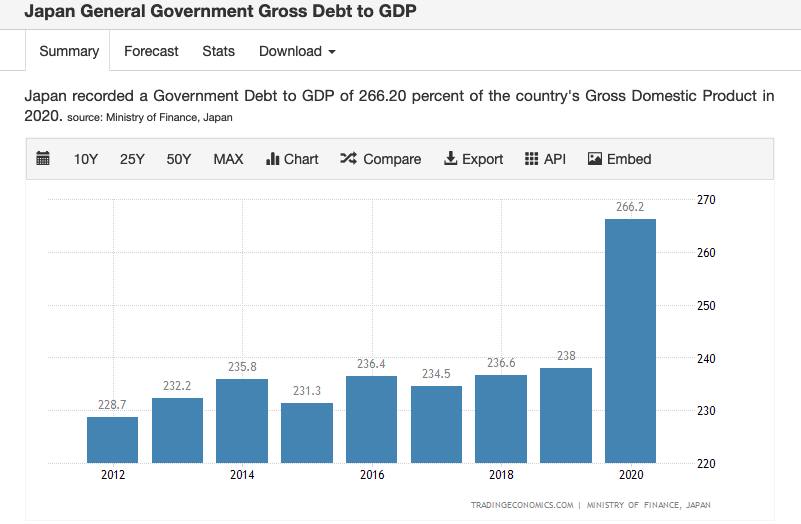
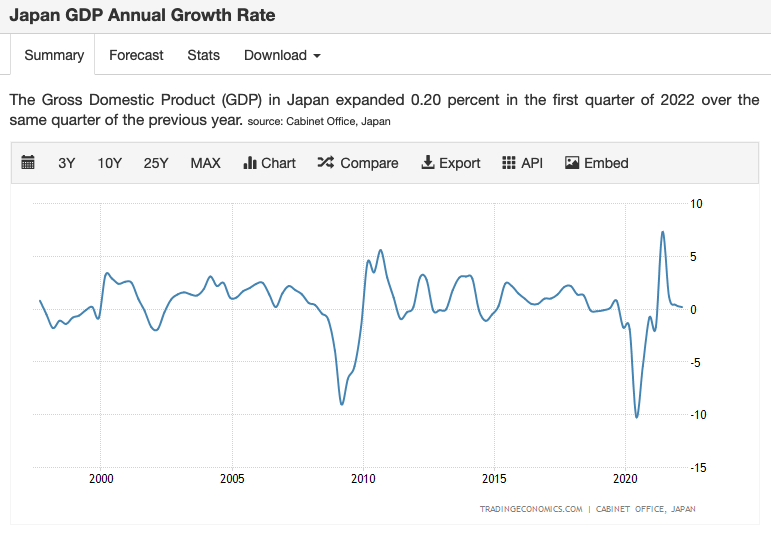
Japan, which is also aging, provides a best case scenario. “With a median age of 48.6, Japan is the 2nd oldest place on earth. Today, its share of the world’s manufacturing exports has fallen from 12.5% to just 5.2. Japan did not fade into global irrelevance. It’s still a great power. But it never fulfilled what once seemed certain: its rise to rival the U.S. as a superpower. And it never will.”
That’s part 1. Part 2 focuses on China’s out of control property market:
It starts off talking about the ghost cities, especially Ordos.
“Ordos does have an interesting story to tell. Just, not the one you might expect. The missing context, at the time, was far stranger than what the unimaginative pessimists concocted: Nearly all of these half-finished homes have owners — the vast majority of which have no intention of ever moving in.”
“All over China are millions of empty, some unfinished, but almost universally sold homes — not just in far-flung corners but also in Beijing, Shanghai, and Shenzhen. Over one-fifth of all urban homes — 65 million in all — sit vacant.”
China relied on “a surplus of cheap labor, which means, by definition, wages are low. You can only compete with the entire rest of the world for so long — and neither do you want to. Low-value manufacturing has long since moved South, to places like Vietnam, Laos, and Bangladesh.”
All the long-hanging fruits of infrastructure spending have already been built.
“Individually, Chinese consumers really don’t spend very much — just 32% of GDP — less than half that of the US, and far below countries like Japan and Germany. Worse, this number has actually been decreasing over time.”
“Chinese consumers are spending, but only on one thing, something not considered ‘consumption’: houses!”
China’s home ownership rate “is among the highest in the world — 90% — to much of the developed world’s mid-60s. It gets much weirder, still. If you can believe it, the majority of recent purchases have been 2nd and 3rd homes. In 2018, for instance, 87% of new home buyers already owned at least one.”
“Because the government tightly controls how much cash is allowed to leave the country, Chinese people simply don’t have a lot of options, and of them, housing is seen as the only sure thing.”
Also, given the sex imbalance mentioned above, for men, home ownership = marriage.
“For all of these reasons, prices have risen to extreme levels. In Shenzhen, Beijing, and Shanghai, it takes 40 years of the average income to afford a home.”
Most are bought before construction even begins.
And here’s where the demographics above provide a double whammy. “The majority of homebuyers, meanwhile, are aged between 20-50 — precisely the segment China will soon lose.”
One huge reason for the bubble: Local governments using their control of land to balance their budgets:
They created what are basically state-owned shell companies called “Local Government Financing Vehicles”. They gave these LGFVs free valuable land, which they then used to take out loans that local governments themselves couldn’t. The trick is that because their debt is hidden, local governments appear far healthier than they really are, while at the same time, meeting the quotas set by Beijing. Following the 2008 crisis, LGFVs transformed from a little quirk of its financial system to the backbone of local economies. If these ‘financing vehicles’ default on their loans, or if housing prices fall too steeply, local governments now have just as much to lose as homeowners. If a local government stops taking out loans, it instantly loses over a third of its revenue, causing a different kind of doomsday. So while the central government may direct local officials to control their debt, the best they can really do is feign cooperation.
Flu Manchu only temporarily halted home price rises, and they’re still soaring.
“Solutions are far too costly to assume their implementation.”
There are a lot more videos of China suckage, but I’ll have to split this up and get to those another time.
Here are two videos where Peter Zeihan argues that China is screwed for many reasons, not least of which is demographics.
Takeaways:
One child per couple means that China is “the fastest aging society in human history, with the largest sex imbalance in human history.”
“They’ve run out of people of childbearing age.”
They were going shrink in half by 2100. “Then they realized that they had been overcounting people for some time.” Then new data moved the date moved up to 2070. And now they’re saying it will be 2050. “For that to be true, the Chinese would have overcounted the population by 100 million.” And all of those missing people are of childbearing age.
Their population actually peaked 15 years ago.
“We’ve seen a 12-fold increase in Chinese labor costs since 1991.”
“China isn’t getting rich, it’s getting old.” They’re facing demographic collapse within a decade.
Xi’s instituted a cult of personality, and silenced anyone capable of independent thought. “He knows that the country’s current economic model has failed. And he knows he can’t guarantee economic growth, and he knows he can’t keep the lights on, and he knows he can’t win a war with the Americans.”
Xi’s solution? “Naked, blatant, ultra nationalism. Ethnocentric ultranationalism of the Nazi style.”
At the top, they don’t care about keeping the lights on. “A third of the country is facing power rationing.”
“These are the sorts of things that you do if you know that the bottom’s falling out and there’s nothing you can do about it, and you have to shift the conversation to remain in power.”
“In China, money is a political good. It exists to serve the needs of the CCP.”
“All of the economic growth we have seen in China since 2006 is because of debt.”
Corporate debt is 350% of GDP, “making China the most indebted country in human history in both absolute and relative terms.” Every country that’s come within half of this has collapsed under the debt load.
I’m omitting discussion of how China is screwed on semiconductors (covered enough here), and also the possibility of invading Taiwan (this video was released late last year, before Russia invaded Ukraine).
“The Biden administration in bits and pieces is redefining strategic ambiguity, and it’s not clear to me what the endgame is here.” Well, there’s a whole lot that isn’t clear about the Biden Administration…
Zeihan thinks Biden might recognize Taiwan for a foreign policy win. Zeihan also thinks that both China and Russia are so weak we can wait them out. (Remember: Pre-Ukraine invasion.)
Zeihan dismissive of both Obama and Trump foreign policy.
“Joe Biden has been on the wrong side and the right side of every foreign policy decision the U.S. has made in the last 45 years, because he doesn’t have any core beliefs he tacks with the wind.”
Now let’s forward to March 24, where Russia’s colossal failure in Ukraine has actually made China even more screwed.
Takeaways:
The biggest damage that we are seeing from the Ukraine war (outside of Ukraine, obviously) is in China. Because in one month the Russians have pulled back the blinders on what has been a 50-year strategic program, the idea that China can come to global power with American sponsorship, with American indifference, that it can take Taiwan, that it can intimidate Japan, that they can dominate all of east Asia and yet not suffer economically at all. It was always ridiculous, but now it’s been shown to just be absolutely stupid.
No one can escape the power of global markets because of trade.
“The yuan is only traded internally because it’s the most manipulated currency in history. The euro confiscates bank deposits to pay for bailouts.”
Russia is the world’s second largest oil exporter, and it can’t export more to China because the pipes that go east don’t interconnect with the ones that go west. “The rail lines are already beyond capacity.”
In the west: “One way or another, those pipes aren’t surviving this year.” (Not sure that’s correct, but I’ve long thought that we should be seeing more structure hits inside Russia than we’ve seen thus far.)
“The stuff that goes to the Black Sea is in a war zone, so insurance companies will not give the indemnification that is necessary for vessels to operate in that area. So the only way a ship can go and dock it overseas right now is if a country gives its sovereign indemnification and takes all the risk.”
Primorsk, on the Baltic, is open. However: “Ship captains for the most part are refusing to go, and European dock workers are refusing to unload the cargo when it arrives. So that is still in use but not nearly as much, maybe a quarter of what it used to be before the war started.”
To get more oil to China: “You would have to build a fundamentally new infrastructure from the fields in northwest Siberia to Chinese population centers that is greater than the distance from Miami to Anchorage, most of which is through virgin territory that is very rugged. That’s a 10-year program minimum even with the Chinese building it.”
“We’re looking at the single largest removal of crude from the market ever, and in proportional terms it’s going to have a shock somewhat similar to World War II.”
We have insurance companies not doing it, shipping companies not doing it, dock workers not doing it and now Halliburton, Baker Hughes and Schlumberger have pulled out, and they do the technical work that makes a lot of this possible. All the super majors are gone, and we even have a couple of major projects out in Sakhalin that are probably just going to die because the Russians can’t make those projects work by themselves. Most of the oil and gas out of that goes to China, so we’re actually looking at an environment where the Chinese see reduced flows rather than increased, as Russia is just melon-scooped out of the market.
When the Russians fell under sanctions, everything that the Chinese thought was true about their future was laid bare as, at best, wishful thinking and bad analysis. So they are now looking east to the United States and west to the Russians in a little bit of a panic, because they are being tied indirectly to what’s going on in Ukraine. And they have now found out not only does the west’s and specifically the United States’ financial tools work very well, they now know they would work much better against China than against Russia, because at its core Russia is a commodities exporter, most notably oil, natural gas and food. China imports all those things, so if an equivalent sanctions regime was done against the Chinese, you’d have 500 million dead Chinese in less than a year from starvation.
Here I think he overstates the case, as there are a lot of emergency avenues a communist government could pursue to stave off starvation. Like invading Mongolia and turning it into emergency farmland. Which is not to so they wouldn’t have some starvation, especially in worse-case scenarios…
“The Chinese have always seen themselves as anti-American [well, the commies, anyway -LP], they’ve always seen themselves as anti-Western, anti-democracy and now they’re realizing that the mood of the man in the White House determines whether their country exists.”
As tight as the sanctions are, as big as they’re getting, they’re nothing compared to the corporate boycotts. Almost every single company that left Russia was under no legal requirement to do so, they just didn’t want to be associated with the war. And we’re talking about those ESG, social goody two-shoes mammoth companies like Exxon and Halliburton, who are now gone, and everyone else followed. So if that happened to China, you know that’s all of their investment that matters. That’s all of their technology transfers, that’s all of their end markets. This system, if it turned against China, would be far more damning than anything we’ve seen out of Russia so far.
I think Zeihan overstates the case a bit, and probably immanizes the timeline of crisis more than warranted, but the demographic and economic challenges China faces are very real.
Also keep in mind that no one in 1988 expected the Soviet Union to collapse as quickly as it did, either…
A goodly part of the world is pleased about the manifest failure of Vlad’s Big Ukraine Adventure, some are indifferent to it, but only Russia, client-state Syria, and puppet-state Belarus really seem upset about it.
Operation Desert Storm was a turning point in modern Chinese military history. As military planners with the People’s Liberation Army watched U.S. and allied forces make short work of the world’s fourth-largest military (on paper), equipped with many of the same systems as the PLA, it became obvious that China’s quantitatively superior but qualitatively lacking massed infantry would stand no chance against the combination of modern weaponry, C4ISR, and joint operations seen in Iraq. The result was new military concepts and over two decades of often-difficult reforms, which produced the modern, far more capable, “informationized” PLA of today.
Today, the PLA is no doubt closely observing its Russian contemporaries in Ukraine as they under-perform in multiple areas, from failing to take key targets or claim air supremacy to running low on fuel and supplies and possibly experiencing morale collapse, and surely taking away lessons that will shape its own future. Of note, Russia’s experience appears to have confirmed many of China’s recent assumptions behind its investments, such as the utility of unmanned aerial systems in high-intensity conflict, as well as the necessity for the PLA’s 2015 reforms, which aim to fix many of the issues driving Russian failure that the PLA recognizes in itself.
Of the many issues that have contributed to Russia’s physical battlefield woes in Ukraine, one of the most important has been the lack of effective joint or combined arms operations, widely considered essential to any effective modern fighting force. Russia’s poor level of coordination between its various services and branches can only be generously described as incompetent. For example, it has repeatedly failed to provide effective air support to its ground forces or deconflict its air and air-defense forces to avoid friendly fire.
The PLA has long had its own serious issues with joint operations. Traditionally dominated by the Army, the PLA had little success developing a truly joint force until a series of sweeping reforms in 2015 that replaced the former Army-dominated system with a series of joint theater commands. The PLA is thus aware of its own shortcomings and taking steps to fix it, but likely remains far off from being able to conduct truly effective, seamless joint operations. Efforts to conduct joint exercises are becoming more common, but most senior PLA leaders are still relatively inexperienced with joint operations, and even new officers typically do not receive joint education below the corps level. Further, it remains to be seen how far these reforms will go or to what extent they will “stick;” indeed, one reason the PLA did not attempt these reforms until 2015 was because of strong institutional pushback from the Army, whose leaders wished to retain their dominant status.
To China, the Ukraine invasion will reinforce the importance of joint and combined arms operations, while also making clear that such operations are highly difficult to conduct in practice. Russia’s stumbles may give the PLA pause as to whether it is truly ready for all the joint elements that a successful Taiwan seizure would require, including close coordination between sea, air, and land forces.
As well they should be. Russia shares a giant land border with Ukraine, was able to through something like 150,000 troops into the fight, and still got mauled while failing to meet their initial objectives. A giant land border is world’s away from having to conduct fiercely contested landing operations against the heavily defended island of a sophisticated, technological peer foe who’s had over half a century to prepare.
Also, it can’t be encouraging that Russia was unable to hold control of Hostemel Airport during the early stages of the war, since airport seizures for an airbridge into Taiwan has played a large role in many wargamed invasion scenarios.
Some paragraphs on conscript armies and information warfare skipped.
China has also taken note of Russia’s disasterous logistics:
Another ongoing issue has been Russia’s serious problems with poor logistics. The sight of broken-down or abandoned vehicles has become common as Russian forces run out of fuel and other vital supplies. To its credit, the PLA has also been rapidly reforming and modernizing its logistical system as part of the same broad set of 2015 reforms. As part of these reforms, the PLA has emphasized its logistics organizations and created the Joint Logistics Support Force. This force’s training has focused on cooperation with other branches of the PLA, and it has cut its teeth training to establish supply lines during natural disasters. In 2018, the JLSF launched its first major exercise, dubbed “Joint Logistics Support Mission 2018,” featuring medical drones, helicopter-dropped refueling depots, and operations in harsh and remote terrain.
Hey, remember all that stuff I said about long land borders vs. amphibious and airborne invasion? It applies double (if not quadruple) for logistics. China can’t assume it will have complete air and sea control of the Taiwan strait, and it’s really hard to run an invasion if you’ve run out of ammo, food and fuel.
However, while the outward manifestation of many of the issues faced by the Russian military appear to be logistical in nature, the true heart of the issue may be corruption. There are reports that before the invasion Russian military officers sold off their fuel and food supplies, and that these corrupt practices may be responsible for the stalling of a Russian tank column outside Kyiv. In this regard, the PLA has much to fear. Corruption has plagued the PLA for decades, with some PLA officers bluntly stating in 2015 that it could undermine China’s ability to wage war. Reportedly, more than 13,000 PLA officers have been punished in some capacity for corruption since Xi Jinping took power, including more than a hundred generals. This was a particular problem in the logistics sector, where there are more opportunities for corruption and links to the civilian economy.
Yet, despite the reorganization of the PLA and widespread prosecution of corruption cases, it still appears to be a major issue. Anti-corruption efforts are ongoing, with Chinese Gen. Zhang Youxia recently calling for innovative measures to keep up the fight. But the fact that Fu Zhenghua, the man brought in to take down the corrupt former security chief Zhou Yongkang, is himself now under investigation for corruption does not bode well for the long-term effectiveness of China’s efforts. The troubled invasion of Ukraine provides a stark real-world example to Xi, the CCP, and PLA about the impact corruption can have on military effectiveness, and will no doubt cause them to redouble their anti-corruption efforts with a newfound urgency. However given its similar authoritarian system and emphasis on career advancement through patronage, systemic corruption may be baked into the system.
China without corruption is like Norway without snow.
But not everything is that’s made life difficult for Russia will apply to China.
While China will benefit from Russia’s increasing reliance on its goods and services, Beijing can be expected to retool its geo-economic strategy to reduce its vulnerability to a similar nightmare scenario. For example, it will likely redouble its efforts to promote its Cross-Border Interbank Payment System—an alternative to the SWIFT international banking system—among its strategic partners and foreign aid recipients in the developing world.
Likewise, China’s recent “Dual Circulation” economic strategy appears to be aimed at countering a decoupling from China’s trade partners. Further, Beijing has surely observed how easy it was for corporations to withdraw from Moscow. If China is to be exposed to the risk of global sanctions and corporate withdrawal, so too are countries and corporations exposed to dependence on the world’s second-largest economy, and thus the government will likely take efforts to make any sanctions or corporate turn against China as painful a prospect as possible. Either way, policymakers in Washington need to understand that the sanctions being used today against Russia are unlikely be as effective the next time around, as China is not just a different economy, but also will learn from the current conflict and adjust accordingly.
This is undoubtedly true, and China has a much broader and more modern economic and industrial base with which to wage war. All the more reason for America to bring critical manufacturing and other economic business outsourced to China back home.
For all these valuable lessons, there is little doubt that China has been watching the ongoing conflict with no small amount of chagrin. Chinese leaders are reportedly surprised and unsettled by the poor military performance of its Russian partners, Ukraine’s resistance, and the level of solidarity from the international community. The image of a much smaller state, against all odds, successfully resisting a larger neighbor surely sits uneasily in the psyches of CCP apparatchiks and PLA officials. It also counters the narrative of overwhelming force and grim inevitability Beijing has sought to instill in the psyches of the Taiwanese people. It is notable that early attempts by Chinese state media to capitalize on the Ukraine invasion in precisely this fashion, illustrating how the United States will surely abandon Taiwan when the chips are down, quietly ceased after the initial days of the war, when it became apparent that the U.S. was not, in fact, abandoning Ukraine. Beyond purely psychological factors, Ukraine also offers a blueprint for successful resistance via asymmetric warfare very similar to Taiwan’s proposed Overall Defense Concept, perhaps giving a jolt to a plan that most analysts agree offers Taiwan its best chance of success against the PLA but has stalled out in the face of bureaucratic resistance.
While China and the PLA will surely watch Ukraine closely and try to take away the correct lessons, there is one uncomfortable parallel which China may be unable to avoid by the very nature of its authoritarian system. The runup to the Ukraine invasion featured multiple strategic miscalculations by Putin, driven at least in part by him surrounding himself with the yes-men who inevitably cling to authoritarian leaders, eager to please and afraid to speak truth to power. This was obvious in the visibly uncomfortable reaction of Russia’s SVR (foreign intelligence) chief as he was publicly pressured to agree with Putin in the days leading up to the war, as well as in the sackings and arrests of multiple military and intelligence officials after the war turned poorly. Authoritarian leaders have systemic problems in gaining reliable intelligence, oftentimes magnified by their overconfidence in their own singular understanding of a situation. As China continues its slide away from a system of intra-Party consensus toward a one-man cult of personality in which dissenting views are increasingly unwelcome, Xi is bound to encounter the same problem. It is unclear whether Xi will learn this lesson from Putin, or make his own similar miscalculations in the future towards China’s own neighbors.
Dictatorships (especially communist dictatorships) greatly increase the possibility of a “Thermocline of Truth” building up between bad news and fawning yes-men fearful of making the dictator angry. There’s very little reason to believe that Xi Jinping’s chain of command suffers from the problem any less than Putin’s.
Russian forces have retreated from a Ukrainian airfield that was key to their original plan of overthrowing Volodymyr Zelensky’s government.
Hostomel airport, just oustide Kyiv, was the scene of some of the fiercest fighting of the Ukraine war, as Vladimir Putin, the Russian president, sought to establish an air bridge to the capital.
Control of the airport, 20km from Kyiv, changed hands several times, as Ukrainians at first defended fiercely and then attacked the Russian occupiers.
Five weeks on, the Russians have moved out having failed in their mission, according to a senior US defence official, as it abandons plans to take the capital and shift forces to the east.
This is a huge win for Ukraine, but it also means that surviving Russian forces can shift over to east Ukraine where the war is still hot.
Also: “Ukraine forces pulled off a rare attack on Russian soil Friday when two military helicopters destroyed a fuel depot in the city of Belgorod, situated roughly 40 miles north of the border with Ukraine.”
A key inflation metric monitored by the Federal Reserve soared 6.4 percent in February compared to a a [sic] year ago, reaching a new 40-year high.
The latest price surge, which affected the price of fuel, groceries and other consumer essentials, represents the largest year-over-year increase since January 1982, according to data released by the Commerce Department on Thursday.
Not taking into account food and energy fluctuations, which tend to be more erratic and can overemphasize inflation, the personal consumption expenditures price index, the preferred inflation gauge of the Federal Reserve, jumped 5.4 percent in February from a year prior. Including gas and groceries, PCE surged 6.4 percent.
It’s gonna get worse…
The Biden Administration is evidently all-in on tranny madness and grooming your children:
The Biden Administration has now determined that "gender affirming care" – including puberty blockers, hormones and surgeries – is a right of trans youth and "appropriate" and "necessary" for their health.
The Biden Justice Department will come after states that disagree.
Speaking of DeSantis, he has some pretty sweet talent lined up for this:
Johnny & Ronnie Van Zant, brother of original Lynyrd Skynyrd lead singer Ronnie Van Zant, made DeSantis’s new campaign video, “Sweet Florida,” replete with shots at the press, a dig at Fauci and loads of beach and flag-waving b-roll pic.twitter.com/Wd3F7u466Q
Through brand names like “comprehensive sex education” and one of its parent programs, “Social-Emotional Learning (SEL),” our government schools have been turned into Groomer Schools, and parents are beginning to notice. What many will not understand, however, is that this isn’t just a fluke of our weird and increasingly degenerate times. It is, in fact, a long-purposed Marxist project reaching back into the early 20th century. In this episode of the New Discourses Podcast, join James Lindsay as he explains the long history of the sexual grooming that has come into our schools through Critical Gender Theory and Queer Theory as they have crept into educational programs.
There’s an hour long video there I haven’t watched all of yet…
Speaking of groomers:
An Oregon elementary school teacher has been arrested near Seattle for two charges of attempted child rape & more. Andrew Bert Hammond, a fourth-grade teacher at Newby Elementary School, allegedly proposed to meet at a hotel & had handcuffs & duct tape. https://t.co/o2aJnzmZpX
Just how bad is the graft, waste and fraud in that $1.5 trillion porkulus bill? This bad. Look over that vast list of special subsidies and ask yourself “How many of these programs are designed to channel taxpayer money into the pockets of Democratic activists.” The answer seems to be “Most of them.”
“8 Joe Biden Scandals Inside Hunter Biden’s MacBook That Corporate Media Just Admitted Is Legit.” China, Ukraine, Russia, etc.
White House Press Secretary Jen Psaki is leaving for MSNBC. So many angles: A.) Rats, sinking ship. B.) That revolving door between Democratic staffers and the MSM continues apace. C.) I hear she has an offer to star in Chairman of the Board 2.
Just when you thought it was safe to go back in the supply chain: “22,000 Union Workers At 29 West Coast Ports May Strike…West Coast union dockworkers may strike if they don’t come to an agreement to replace their existing contract with marine terminals. The contract is set to expire at the end of June.” Labor strikes are yet another part of the classic winter of discontent formula the Biden Administration is using to bring back the worst of the 1970s.
Philadelphia district attorney Larry Krasner has presided over a surge in violent crime, and his new policy promises more of it. Krasner recently announced plans to de-prosecute crimes for offenders aged 18 to 25, ignoring how this age group tends to contain the most violent of criminal defendants.
Krasner’s office has established a new unit that will move some 18-to-25-year-old defendants into “rehabilitative programming” instead of seeking criminal punishments. As Krasner’s data dashboard demonstrates, “rehabilitative programming” is just a euphemism for dismissing charges. Krasner promises that the program will be limited to nonviolent offenses, including drug trafficking and other offenses. (The Philadelphia Inquirer reports that gun crimes will not be included, but Krasner has previously stated that prosecutions for illegal gun possession are “not only ineffective but unjust and racially discriminatory.” The link in the district attorney’s office data dashboard about Philadelphia’s Gun Violence Task Force takes the reader to a page that states “Article Not Found.”)
This new program reflects Krasner’s determination not to think like a prosecutor, but instead to think like the criminal defense lawyer he was. The program was developed by Sangeeta Prasad, a fellow with the district attorney’s office who previously served as a public defender in New York, New Mexico, and Philadelphia. Before assuming her current post, she had no prior experience as a prosecutor, just like Krasner. The chief public defender for Philadelphia has called the new unit “an incredible initiative,” but Philadelphia courts were not invited to the press conference announcing the plan and stated that they were not aware of the experiment.
The new initiative comes at an awkward time. In 2021, Philadelphia experienced the highest number of homicides in its history, and the violence is continuing in 2022. Indeed, Philadelphia homicides have risen every year that Krasner has been in office, as carjackings, shootings, and drug overdoses soar. What makes the policy more bizarre is that it runs counter to decades of criminological research. One of the iron laws of criminal conduct is the so-called age-crime curve, which demonstrates that the majority of serious crimes are committed by defendants between the ages of 15 and 25. This finding obtains around the world and has been replicated time and again.
Speaking of repeat offenders, Millen, Georgia police Officer Larry “Ben” Thompson quit after being caught on tape having public sex while on-duty. Fair enough, but his lengthy record of misdeeds makes you wonder why he wasn’t fired long ago, since he managed to shoot another officer in the arm (“negligent discharge”) and killed a guy in a traffic accident in route to a call. (Hat tip: Dwight.)
Nevada/Utah Ponzi scheme leads to FBI shootout. “The alleged $300 million scheme, run by a lawyer named Matthew Beasley, came to a head when FBI agents went to his home earlier this month and Beasley drew a gun on himself, before pointing it at agents, prompting them to shoot him.”
“[Fort Worth Superintendent] Kent Scribner will leave the district this August instead of in 2024, when his contract ends. In response to recent outcry from parents regarding Superintendent Kent Scribner’s support of CRT-based policies, Fort Worth ISD’s school board voted 7-0 to move up Scribner’s last day as superintendent to August 31, 2022.”
Ouch! Texas “Taxpayers’ Property Appraisals Rising 20% to 50% as Supply Chain Disruptions Meet Population Growth.” Austin-Round Rock is slated for the biggest increase, some 35.4%.
Don’t look now, but there’s another big Zero Day Internet infrastructure exploit out in the wild. “Spring4Shell is a remote code execution vulnerability in Spring Framework that can be exploited for remote code execution without authentication.” Spring is a Java framework that’s almost 20 years old, so the issue could potential be lurking in a lot of places…
Speaking of false accusations of racism, Gibson’s Bakery win over Oberlin in court yet again. “A three-judge panel on the Ninth District Court of Appeals issued a unanimous decision to uphold a 2019 ruling by Lorain County Judge John Miraldi, who initially awarded the bakery more than $40 million in punitive and compensatory damages, Cleveland.com reported. However, the sum was later reduced to $25 million, though the bakery was awarded more than $6 million for lawyers’ fees.”
We were driving on the PA Turnpike when a warning came across about sudden snow squalls and possible dangerous highway conditions. We got snow but nothing like THIS! Prayers for all involved. 🙏🏻 pic.twitter.com/IrNX6inRQi
Here’s a snippet on the Russo-Ukrainian War from an interview Joe Rogan did with former CIA officer Mike Baker last week.
Some takeaways:
Putin has been “pretty damn consistent over the years.”
If you look at what he did in Chechnya, if you look at what he did helping Assad in Syria, if you look at what he did annexing Crimea, if you look at Georgia, Abkhazia, South Ossetia. Every step of the way he’s been following in his mind this stated desire, that he’s made very public over the years, to rebuild his sphere of influence.
We were too optimistic, thinking that he was thinking like we do in a rational process.
Intelligence on what Putin actually wants is hard because his inner circle keeps getting smaller and smaller.
Human intelligence is hard, and despite movies, blackmail or a honeytrap are rarely the most effective methods.
Putin was a KGB officer for 15 years, and he served in East Germany rather than the west. “He doesn’t really understand how we think.”
The collapse of communism 1989-1991 was a great opportunity for recruiting spies behind the iron curtain.
Putin thinks “You guys have disrespected me, fuck you all. I told you I want my spirit a sphere of influence, and I don’t care whether I have to break it.”
“He called the collapse of the Soviet Union the greatest tragedy of the 20th century, and he’s he’s serious about that, he means that.”
He’s cut loose some of his own inner circle over the past couple of weeks.
“Was he given bad intel? Or was he given intel and choose to ignore it?” Like many dictators, Putin has a “thermocline of truth” (though Baker doesn’t use that phrase) between him and any possible bad news.
“They were gonna get in there, maybe within 48 hours, they were going to have control of Kiev, they would be welcomed by the population in Ukraine, and they would be able to establish a puppet regime.”
Ukraine fights back, Biden isn’t going to do jack about it, Kyle Rittenhouse is going to sue everyone, inflation soars, the Canadian “emergency” is ended, disaster looms for Democrats, and Ilhan Omar gets an unusual challenger. It’s the Friday LinkSwarm!
While reports of the battle are confused and preliminary, it appears that Ukrainian forces counterattacked, shot down some Russian helicopters, and have so far been able to prevent the Russians from landing reinforcements. Initial claims that the Russian force at the airfield had been “destroyed” were later clarified; it now seems that the battle at Gostomel is continuing. It’s easy to understand how crucial this battle is, simply by looking at a map. If the Russians could gain control of the Gostomel airfield, they could score a quick knock-out of the Ukrainian capital as part of what is being called their “decapitation” strategy.
Russian news services are claiming they’ve taken the airfield, but that may be stale news or propaganda.
Ukrainian forces take up positions in Kiev. Also: “Reports that the Ukrainian military has delivered a strike on a Russian airfield in Millerovo, Rostov Oblast have now been confirmed.”
The invasion of Ukraine by the armed forces of Russia at Russian President Vladimir Putin’s orders marks the first time since 1945 that Russia has engaged in a conventional war with a near-peer nation.
Ukraine isn’t restive Warsaw Pact nations, it isn’t Afghanistan, it isn’t Chechnya, it isn’t Georgia, and it isn’t Crimea.
The conflict launched by Putin is on a far grander scale than the invasion of Crimea in 2014, launched as Ukraine’s last pro-Russia president, Viktor Yanukovych, was driven from office in a popular uprising.
Putin, by choosing to reach beyond the ethnic-Russian majority separatist provinces of Donetsk and Luhansk in the Donbas Basin, has decided to end the independent, Western-looking Ukrainian government of President Volodymyr Zelenskyy and install a pro-Putin quisling.
And while the fog of war, some deliberate mis-and disinformation operations by the combatants, and the far-from-perfect filter of Western media leaves much unknown at this time, what is known is that Zelenskyy is still in power a day after the Russian offensive. Further, the Ukrainian military appears to be taking a toll on the Russians invading from three sides: south across the Pripyat Marshes from Russian satellite Belarus; west from Russia, including Donbas; and north from the Black Sea in the region of Odessa and Transnistria, a Russian client breakaway state in Moldavia.
Modern conventional war is extremely difficult to do well. Imagine being a conductor of an orchestra, all while the audience was lobbing soccer balls at you and your musicians as you perform J.S. Bach’s Chaconne in D — that’s modern warfare. Putin is attempting a highly complicated operation over large distances in the face of a determined foe. Further, he’s doing so with an army largely composed of conscripts serving for only one year.
Since Putin has decided to oust the Ukrainian government, this means that every day Zelenskyy remains in office is another day that adds to Ukrainian national confidence to resist — and another day that Putin looks to have miscalculated.
A Russian Military Ship telling 13 Ukrainian troops on Snake Island to surrender. They were met with a response of " Russian military Ship, go fuck yourself."
Both the EU and the Biden Administration offer sanctions they admit will not do Jack Squat.
FULL DOCUMENT: This is the general license that US Treasury has issued exempting any "energy" related dealings from the sanctions imposed on some of the biggest Russian banks. It's so wide ranging that even includes "wood" as a form of energy exempted | #Ukraine#OOTTpic.twitter.com/3X5t0LFi3W
WATCH: AP reporter roasts Biden's State Department spokesman over the "frankly huge" list of exemptions in Biden's sanctions on Russia.pic.twitter.com/gzAWB4LwMg
Taiwan joins sanctions against Russia, including their semiconductor industry. I don’t know if any fabless Russian chip design company gets their chips fabbed at TSMC, so I’m not sure how badly this hurts their economy in the long run.
It is the West’s wacko environmentalists who handed Russian President Vladimir Putin the leverage and money to invade Crimea in 2014 and Ukraine this week.
Without these wackos, Putin would be just another gangster in charge of a crumbling country, and maybe one on the verge of a revolution to depose him.
But the facts are the facts are the facts, and the facts are these… Thanks to the West’s environmentalists, those smug greenies who are more concerned with carbon output than world peace, this gangster controls much of the energy going to the European Union (E.U.).
Thanks a lot, Greta…
A great mystery:
Under Carter, Russia invaded Afghanistan. Under Obama, Russia took over Crimea. Under Biden, Russia is invading the rest of Ukraine. Russians do land grabs when Democrats control the White House. Democrats get pissed when you point it out. But it is still true.
Biden is demonstrably more hostile to American oil and gas companies than he is to Russian companies, having frozen oil and gas leasesdespite a court order otherwise.
Thanks to Biden’s inflation, the cost of everything is going up. “70 percent of Americans are living paycheck to paycheck.”
Fellow former finance reporter Chrystia Freeland — someone I’ve known since we were both expat journalists in Russia in the nineties — announced last week that her native Canada would be making Sorkin’s vision a reality. Freeland arouses strong feelings among old Russia hands. Before the Yeltsin era collapsed, she had consistent, remarkable access to gangster-oligarchs like Boris Berezovsky, who appeared in her Financial Times articles described as aw-shucks humans just doing their best to make sure “big capital” maintained its “necessary role” in Russia’s political life. “Berezovsky was one of several financiers who came together in a last-ditch attempt to keep the Communists out of the Kremlin” was typical Freeland fare in, say, 1998.
Then the Yeltsin era collapsed in corrupt ignominy and Freeland immediately wrote a book called Sale of the Century that identified Yeltsin’s embrace of her former top sources as the “original sin” of Russian capitalism, a “Faustian bargain” that crippled Russia’s chance at true progress. This is Freeland on Yeltsin’s successor in 2000. Note the “Yes, Putin has a reputation for beating the press, but his economic rep is solid!” passage at the end:
It looks as if we’re about to fall in love with Russia all over again…
Compared to the ailing, drink-addled figure Boris Yeltsin cut in his later years, his successor, Vladimir Putin, in the eyes of many western observers, seems refreshingly direct, decisive and energetic… Tony Blair, who has already paid Putin the compliment of a visit to Russia and received the newly installed president in Downing Street in return, has praised him as a strong leader with a reformist vision. Bill Clinton, who recently hot-footed it to Russia, offered the equally sunny appraisal that “when we look at Russia today . . . we see an economy that is growing . . . we see a Russia that has just completed a democratic transfer of power for the first time in a thousand years.”
To be sure, some critics have lamented Putin’s support for the bloody second war in Chechnya, accused him of eroding freedom of the press…and worried aloud that his KGB background and unrepenting loyalty to the honor of that institution could jeopardize Russia’s fragile democratic institutions. But many of even Putin’s fiercest prosecutors seem inclined to give him the benefit of the doubt when it comes to the economy…
Years later, she is somehow Canada’s Finance Minister, and what another friend from our Russia days laughingly describes as “the Nurse Ratched of the New World Order.” At the end of last week, Minister Freeland explained that in expanding its Financial Transactions and Reports Analysis Centre of Canada (FINTRAC) program, her government was “directing Canadian financial institutions to review their relationships with anyone involved in the illegal blockades.”
The Emergencies Act contains language beyond the inventive powers of the best sci-fi writers. It defines a “designated person” — a person eligible for cutoff of financial services — as someone “directly or indirectly” participating in a “public assembly that may reasonably be expected to lead to a breach of the peace.” Directly or indirectly?
She went on to describe the invocation of Canada’s Emergencies Act in the dripping-fake tones of someone trying to put a smile on an insurance claim rejection, with even phrases packed with bad news steered upward in the form of cheery hypotheticals. As in, The names of both individuals and entities as well as crypto wallets? Have been shared? By the RCMP with financial institutions? And accounts have been frozen? As she confirmed this monstrous news about freezing bank accounts, Freeland burst into nervous laughter, looking like Tony Perkins sharing a cheery memory with “mother.”
Angeleno’s tax dollars at work:
A city audit found LA spends $837,000 to house one homeless person. Perhaps this is why Newsom has done everything he can to block my statewide audit.
China is getting a good return on its investment in the Biden clan: “DOJ shuts down China-focused anti-espionage program. The China Initiative is being cast aside largely because of perceptions that it unfairly painted Chinese Americans and U.S. residents of Chinese origin as disloyal.” We can’t let national security stand in the way of political correctness…
In what may be remembered as one of the greatest miracles of all time, it seems that an upcoming American election cycle is set to put an end to the great COVID pandemic in regions that have been clinging to “mitigation” tactics despite them being proven ineffective long ago. What science couldn’t do for blue state governors, politics is about to. Meanwhile, much of the rest of the country has already adopted an “endemic” approach to COVID. In my Indiana community, for instance, school systems have been in-person and maskless for well over a year.
A combination of experience and common sense led local officials to recognize that while COVID was a serious virus, and an often-times unpleasant condition to endure, we just weren’t experiencing the kind of mortality rates or critical hospitalizations that would require the suspension of normal life. If I was guessing, I would say that there are more counties, cities, and communities in the United States like mine than not.
While mainstream media may be drawn like a moth to the bright lights of urban areas with all the restrictions, mandates, and panic-fueled policies enacted there, most Americans have been “living with” the virus for a long time now.
In fact, if my community is any bellwether for the nation, most Americans are already wondering why anyone is still attempting to take a non-endemic approach at this point. The virus has proven itself to be, like all other viruses, prone to seasonal surges that are largely unaltered by our theatrical mitigation techniques. Not that anyone with their head screwed on straight ever thought there was value in wearing a porous cloth mask while standing up at a restaurant, then taking it off while sitting down, but the comical nonsense of mask histrionics is now widely appreciated as a goofy spectator sport. Behold:
So silly. And so as opinion polls continue showing that an ever-increasing number of Americans are infuriated by this nonsense, and that they are done with all the aggressive pandemic restrictions that proved unnecessary a long time ago, a public pivot of massive proportions is underway amongst the political class.
Whether it’s big blue state governors like California’s Gavin Newsom hilariously announcing that he will be transitioning his state to the country’s first “endemic” virus policy – meaning they’re going to start doing some things that Texas, Florida, South Dakota, Indiana, and so many others have been doing for over a year – or whether it’s blue city school boards like San Francisco’s being recalled by angry voters for their abusive and needless shutdown and masking policies, it’s clear where we’re headed.
Despite that, the midterm news for Democrats is not good.
Democrats know that they should be preparing for a brutal showing in this November’s midterm elections. Glenn Youngkin’s victory in the Virginia gubernatorial race last year — and, more to the point, the substance and style of his successful campaign — were the first sign of it.
But the hits have kept on coming. In San Francisco last week, two progressive parents succeeded in their campaign to oust three school-board members for being . . . too progressive. Irked initially at how long it was taking for area schools to reopen for in-person learning during the pandemic, these two single parents did some digging and discovered even more to be upset about: an enormous budget shortfall, an intensive campaign to rename dozens of school buildings, and the replacement of a merit-based admissions program with a diversity-minded lottery, among other issues.
Suggesting just how central education has become to politics, San Francisco’s intensely progressive mayor, London Breed — who last fall violated her own mask mandate at a concert and defended herself by saying she was “feeling the spirit” — endorsed the school-board recall effort.
“My take is that it was really about the frustration of the board of education doing their fundamental job,” Breed said after the results were in. “And that is to make sure that our children are getting educated, that they get back into the classroom. And that did not occur. . . . We failed our children. Parents were upset. The city as a whole was upset, and the decision to recall school-board members was a result of that.”
San Francisco–based writer Gary Kamiya suggests in a piece for the Atlantic that the results of the recall seem to confirm the conservative narrative. Kamiya writes that conservatives have argued “that the Democratic Party is out of step not just with Republicans, but with its own constituents. . . . Progressives rejected such conclusions, insisting that the recall was simply about competence and was driven by an only-in-San-Francisco set of circumstances.” Kamiya concludes that the best way to read the outcome is “closer to the conservative view.” “At a minimum,” Kamiya writes, “the recall demonstrates that ‘woke’ racial politics have their limits, even in one of the wokest cities in the country.”
Over in Texas, meanwhile, failed Senate candidate and failed presidential hopeful Beto O’Rourke is gearing up to become a failed gubernatorial candidate, too. Running against incumbent Republican governor Greg Abbott, O’Rourke was most recently seen trying to pretend that he isn’t a fan of radical gun-control measures.
Asked about the promise he made during his run for president that he would “take away AR-15s and AK-47s,” O’Rourke attempted a hard about-face.
“I’m not interested in taking anything from anyone,” he said. “What I want to make sure that we do is defend the Second Amendment. I want to make sure that we protect our fellow Texans far better than we’re doing right now. And that we listen to law enforcement, which Greg Abbott refused to do. He turned his back on them when he signed that permitless-carry bill that endangers the lives of law enforcement in a state that’s seen more cops and sheriff’s deputies gunned down than in any other.”
As Charlie Cooke has noted, this is utter tripe. It also isn’t working. The latest poll of the race from the Dallas Moring News has Abbott up by seven points, 45 percent to 38 percent. O’Rourke himself remains underwater with voters: Only 40 percent view him favorably, while 46 percent say they have an unfavorable view of the candidate.
Republicans win a Jacksonville City Council race:
It's a citywide race, and this result will more or less match the average partisanship of the city for the past decade or so. But this was a Dem-held seat, and losing it in this fashion has to hurt the local party. And doesn't portend well in other races.
Kyle Rittenhouse is finally ready to sue, including lawsuits against Whoopi Goldberg and Cenk Uygur. I hope he bankrupts anyone who called him a white supremacist.
Former Houston Rockets draft bust Royce White is running for Congress as a Republican against “Squad” member Ilhan Omar. Hopefully he can be on the campaign trail more than he was on the floor for the Rockets…
Though quite jaundiced and cynical about the “good intentions” of our national and international elites (political and otherwise), I’ve tried to avoid buying into conspiracy theories about a “great reset” being planned for us by Klaus Schwab of the World Economic Forum. But now come news that Justin Trudeau wants to make all the “temporary” expanded financial surveillance powers permanent.
As all eyes were trained on the aggressive police sweep of the Ottawa trucker convoy this week, Canadian prime minister Justin Trudeau’s administration was quietly moving to implement a sweeping expansion of surveillance power at the federal level.
The Trudeau government’s financial war against the truckers has been covered at length. But one underreported aspect of this broader assault on Canadian civil liberties is the effort to bring crowdfunding and payment service providers — two of the most prominent routes for financial transactions on the Internet — under the permanent control of a centralized government authority.
In a February 14 news conference, Canadian finance minister Chrystia Freeland said that the government was using the Emergencies Act to broaden “the scope of Canada’s anti-money-laundering and terrorist financing rules so that they cover crowdfunding platforms and the payment service providers they use.” That broadened power requires all forms of digital transactions, including cryptocurrencies, to be reported to the Financial Transactions and Reports Analysis Center of Canada. (I.e., “Fintrac”). “As of today, all crowdfunding platforms and the payment service providers they use must register with Fintrac, and they must report large and suspicious transactions to Fintrac,” Freeland said. She justified the move as a way to “mitigate the risk” of “illicit funds” and “increase the quality and quantity of intelligence received by Fintrac and make more information available to support investigations by law enforcement.” Trudeau, standing behind Freeland at the press conference, nodded his head in agreement.
Freeland said the trucker convoy, which had assembled to protest coronavirus restrictions, had “highlighted the fact” that digital assets and funding mechanisms “weren’t captured” by the Canadian government’s pre-existing surveillance powers. As a result, she said, “the government will also bring forward legislation to provide these authorities to FinTrac on a permanent basis.”
That seems an awful lot less like an emergency measure to deal with honking truckers and more like a naked power grab to further the building of a sinister, ubiquitous surveillance state, doesn’t it? It’s the sort of thing that makes accusations of trying to impose a Chinese-style social credit system on western democracies a lot more credible, doesn’t it?
It doesn’t help that Schwab dresses and talks like a supervillain.
Why do they dress like sci-fi supervillains? Klaus Schwab looks like he could be on the set of Babylon 5 or The Expanse. pic.twitter.com/qgQVUDALDt
James Lindsay has a long thread on Schwab’s book The Fourth Industrial Revolution, his sweeping vision of “a technological fusion of the ‘physical, digital, and biological worlds,’ which is creepy transhumanism under their direction.”
Read this however you want, but this is Schwab's stated objective: to take the Fourth Industrial Revolution, which is already naturally underway, and shape it according to his vision. That vision is elsewhere seen to be fascistic, Communist, transhumanist, and under WEF control. pic.twitter.com/6wUigHDpNB
— James Lindsay, useful degenerate (@ConceptualJames) February 21, 2022
Is all this just paranoid pattern-matching confirmation bias? Possibly. Let’s hope so. It probably is crazy to ascribe every baleful trend of recent memory (social justice, creeping authoritarianism, tranny madness, rising crime, pedophilia among left-wing elites, media insistence that ordinary people need to start eating bugs, etc.) to one grand conspiracy. It’s paranoid to ascribe every problem to a single malevolent actor. There are always going to be competing agendas by competing power players. It’s a mistake to assume that all the bad guys, from Schwab to George Soros to Bill Gates to Xi Jinping, are on the same team, working with each other. That way lies madness.
But there sure seems to be a whole lot of something going on.
The Carter-era “misery index” (inflation + unemployment) is rising, Canada’s truckers are still honking, more Democratic sleazebag activity, the far left is coming for your kids, China continues to misbehave, and a tragic cheese display collapse shocks onlookers. It’s the Friday LinkSwarm!
Biden continues to work his magic on the economy. Expected job numbers: +200,000. Actual job numbers: -300,000.
Why the BLS is applying such a grotesque seasonal adjustment to it, is unclear (actually, if one assumes that the Biden admin tapped the BLS secretary on the shoulder, then it is very clear).
It’s not just outside analysts who reach this conclusion: in Table C to its report, the BLS showed “December 2021-January 2022 changes in selected labor force measures, with adjustments for population control effects” and confirmed that if one had used an apples-to-apples basis for the January numbers, the number of Employed workers (from the Household Survey) would be down -272K. Instead, thanks to the population control effect adjustment of 1.471 million, the final number was 1.199 million!
In summary, while the markets had been trading for months on fake data when the BLS failed to catch up to covid reality, and was applying stale seasonal adjustments, they are doing so again today, only in the opposite direction with the BLS now overextending itself in the opposite direction, with a January seasonal adjustment that has never been greater!
Inflation hit 5.8% in 2021, the most in 39 years. Pretty sure this year is going to be a lot worse.
How bad is inflation? Dwight sent over this link on an Austin restaurant shutting down that includes an eye-opening inflation tidbit. “He pointed out that a container of fryer oil that a year ago cost about $17 had risen to about $50.”
Canada’s freedom truckers seem to be making headway with regional governments, some of whom have promised to lift vaccine mandates, but asshole authoritarian Justin Trudeau is refusing to budge.
There are two naturally occurring viruses that are particularly similar to SARS-CoV-2. The first is RaTG13, which shares 96.2 percent of its genome with SARS-CoV-2, according to a paper released by the Wuhan Institute of Virology’s Shi Zhengli. This virus was collected from bat feces in a copper-mine shaft in Tongguan, Mojiang, Yunnan Province, China, that was the site of a small-scale deadly viral infection with some curious similarities to Covid.
In April 2012, six miners were assigned to clean bat guano from the mine shaft. Four miners had been working at the site for two weeks, and two had been working there for four days when they all grew ill with a cough and fever and experienced difficulty breathing, aching limbs, heavy and bloody mucus and saliva, and headaches — symptoms of a viral respiratory infection that are similar to the effects of Covid. All six miners were admitted to a Kunming hospital in late April and early May, and three died — one after two weeks, one after a month and a half, and one after three months. The other three survived.
Dr. Zhong Nanshan, a prominent Chinese pulmonologist whose high-profile role has been compared to that of Dr. Anthony Fauci in the United States, consulted on the cases of the miners. Recognizing that the virus afflicting the miners could be comparable to SARS, researchers sent blood samples to the Wuhan Institute of Virology for antibody testing.
In 2012 and 2013, teams of researchers from the Wuhan Institute of Virology conducted a study of coronaviruses in bats in that abandoned mine shaft — and one of the samples they collected was RaTG13.
The second virus that is particularly similar to SARS-CoV-2 is really a cluster of three similar viruses discovered in Laos in autumn 2021. A team led by Marc Eliot, a virologist at the Pasteur Institute in Paris, collected saliva, feces, and urine samples from 645 bats in caves in northern Laos and found three new viruses that were each more than 95 percent identical to SARS-CoV-2, which they named BANAL-52, BANAL-103, and BANAL-236.
Some skeptics of the lab-leak theory contend that the BANAL viruses proved that SARS-CoV-2 is likely a naturally occurring virus, and because Laos was roughly 1,000 miles from Wuhan, this pointed away from the notion that the Covid pandemic could be traced back to a leak from Wuhan Institute of Virology or any other labs in the city. But there is ample reason to believe that viruses from Laos — perhaps not the BANAL trio, but similar ones — were also shipped from Laos to the Wuhan Institute of Virology.
In 2010, Wildlife Trust, a nonprofit international conservation organization dedicated to protecting wildlife, announced it was rebranding itself under the name EcoHealth Alliance. The organization’s president, Peter Daszak, declared that his group had become “the central organization defining the intersection of local conservation and global health” and touted itself as being “on the forefront of informing the public, businesses, and the scientific community about emerging diseases, including potential pandemics.” It is safe to say that EcoHealth Alliance is one of the largest, best funded, and best connected nonprofits, focusing upon “field research and develop[ing] tools to save ecosystems and predict and prevent pandemics.”
EcoHealth Alliance/illegal gain of function section snipped.
We know for a fact that the people collecting samples do not always follow the necessary safety procedures. And the risk of accidental infection does not disappear once the viruses and bats are brought back to the laboratories.
Lab accidents happen. The first argument against the lab-leak theory that can be safely dismissed is the notion that Chinese scientists were simply too careful or too diligent to ever let a virus escape their lab. Accidents occur even in the most well-trained and highly regarded research facilities in the world. In June 2014, the U.S. Centers for Disease Control and Prevention determined that they had unintentionally exposed personnel to potentially viable anthrax. A month later, the U.S. Food and Drug Administration found samples of smallpox, dengue, and spotted fever just sitting in a storage room. A decade earlier, the Chinese CDC’s National Institute of Virology in southern Beijing had accidentally released SARS. Twice.
In February 2019, Lynn Klotz, a senior science fellow at the Center for Arms Control and Non-Proliferation, laid out a report in Bulletin of the Atomic Scientists detailing that from 2009 to 2015, a federal program “received a total of 749 incident reports from select-agent research facilities,” including “1) needle sticks and other through the skin exposures from sharp objects, 2) dropped containers or spills/splashes of liquids containing pathogens, and 3) bites or scratches from infected animals.”
China obviously places the same importance on lab safety as it puts into quality control. Lets pick it up where more CCP perfidy kicks in:
Finally, there is the undeniably suspicious behavior of the Chinese government since the first cases were reported in Wuhan in December 2019. Until January 21, 2020, the Wuhan Regional Health Commission insisted that “no clear evidence of human-to-human transmission has been found.” On January 4, 2020, former CDC director Dr. Robert Redfield was incredulous during a phone call with his Chinese counterpart, George Gao. Redfield described asking his old friend Gao, “George, you don’t really believe that mother and father and daughter all got it from an animal at the same time, do ya?” Gao insisted there was no evidence of human-to-human transmission. But Redfield recounted that two days later, Gao broke down during a call, “audibly and tearfully distraught after finding ‘a lot of cases’ in the community who had never visited the wet market.”
In late January and early February, the Chinese government ordered all labs processing samples of the strange new virus to destroy them. On January 3, China’s National Health Commission ordered institutions not to publish any information related to the unknown disease and ordered labs to transfer any samples they had to designated testing institutions, or to destroy them. The justification for this order was public safety, although it is hard to see the public-safety benefit in suppressing information about the disease.
It took a year to get a World Health Organization investigative team into Wuhan, and when that team arrived, it encountered angry refusals to turn over raw data about the earliest cases. According to the New York Times, “disagreements over patient records and other issues were so tense that they sometimes erupted into shouts among the typically mild-mannered scientists on both sides.” The Chinese government has refused to allow another team of investigators to enter Wuhan or the labs in the city. The Chinese government does not care if it looks guilty.
A much-hyped U.S. intelligence-community investigation completed in August offered almost nothing useful, declaring, “All agencies assess that two hypotheses are plausible: natural exposure to an infected animal and a laboratory-associated incident.” Ninety days of effort, with all the resources of the U.S. government, generated nothing new.
To paraphrase Ebright, in the autumn of 2019, there were three institutions in the entire world that were doing gain-of-function research on novel coronaviruses found in bats. One was in Galveston, Texas, one was in Chapel Hill, N.C., and the third was in Wuhan, China.
In theory, the pandemic could have started with some random Chinese person who didn’t have any connection to the bat coronavirus research conducted at the Wuhan Institute of Virology or the Wuhan CDC. This person would have a spectacularly unlucky run-in with a bat or other animal, and that random Chinese person caught the exceptionally rare naturally occurring animal virus that infects, sickens, and spreads among human beings like wildfire. This same hyper-contagious bat virus would have the exceptionally unusual trait of being extremely difficult to find in bats.
This extraordinarily unlucky person would then travel to the metaphorical doorstep of one of the three labs in the world doing gain-of-function research on novel coronaviruses found in bats and start infecting other people in the city of Wuhan. Under the natural-origin theory, the Wuhan laboratories just happen to be mind-bogglingly unlucky that events played out in a way that so closely mimics the consequences of a lab accident.
That would be a remarkable series of coincidences.
Read the whole thing.
Data point. “Younger, working-age people began dying in greater numbers as vaccine mandates hit.”
More data:
Been seeing a lot of governors crediting their mask mandates for "defeating" the Omicron wave. Thought I'd plot COVID cases in states with mask mandates vs. states without them, and, well… pic.twitter.com/WdhsyCINjp
Glenn Youngkin is governing Virginia according to the implicit campaign slogan that powered his victory: stop messing with our kids, you freaks! That’s the polite version, anyway. Other Republican officials should follow his lead and solidify the GOP as the party of parents.
Youngkin ran as a conservative champion of normalcy, especially in schools. His campaign was assisted when his opponent declared parents should not have a say in what their children are taught, thereby confirming everything Youngkin was running on.
Since being sworn in, Youngkin has banned school mask mandates, banned teaching racist ideas from sources such as critical race theory, and requested the new state attorney general, Jason Miyares, to investigate the apparent coverup by Loudoun County officials of a rape committed by a skirt-wearing boy in a girls’ bathroom. He has also started cleaning house in the bureaucracy.
These measures have provoked pushback from the usual suspects. Left-wing teachers are now worried they’ll get in trouble for teaching the race essentialism derived from critical race theory. Some counties have defied the governor over school mask mandates, and are punishing students who choose not to wear them. But Youngkin is holding firm, knowing this is what he was elected to do.
Across the nation, parents are in revolt against the Democrat-led educational establishment, and Republicans should eagerly join the fray. After all, it was the Democrat-loving teachers unions that fought to keep schools shut down long after we knew that children were at almost no risk from Covid-19. Likewise, it has mostly been Democrats and their allies forcing children to wear masks when school is open, even though (as a few on the left are finally admitting) masks are particularly harmful for children, while offering no real benefits.
There are other indignities and cruelties, of course, from shutting down outdoor playgrounds to forcing schoolchildren to study or eat lunch outdoors in freezing temperatures. And these miseries have been inflicted long after any plausible ability to defend them as emergency measures, or to plead ignorance of the consequences. Under pressure from the teachers unions and education bureaucracy, Democrats have chosen to sacrifice the well-being of children. Even many liberals now want an alternative to the endless school shutdowns, masks, and other pandemic security theater.
Students across the country as young as kindergarten-age are learning that “everybody gets to choose their own gender” and are receiving kid-friendly lessons on disrupting “Western nuclear family dynamics” as part of this week’s national Black Lives Matter at School Week of Action.
The activist-driven curriculum for the Week of Action, which kicked off Monday, is based off the 13 “Black Lives Matter Guiding Principles.” Those principles include a commitment to restorative justice, being transgender affirming and queer affirming, creating space for black families that is “free from patriarchal practices,” and “the disruption of Western nuclear family dynamics and a return to the ‘collective village’ that takes care of each other.”
Black Lives Matter at School offers kid-friendly versions of the 13 principles designed for elementary and middle-school students.
The Week of Action also includes a list of four national demands: end zero-tolerance discipline policies; mandate black history and ethnic studies; hire more black teachers; and fund counselors, not cops, according to a “starter kit” on the Black Lives Matter at School website.
In the starter kit, New York City kindergarten teacher Laleña Garcia, author of a children’s book about BLM principles, writes that while “discussing big ideas with little people” it is necessary to “consider age-appropriate language so that our students or children can grasp the concepts.” For example, she suggests not talking about police violence with “our youngest children.”
When discussing BLM’s principle of being transgender affirming, Garcia offers the following kid-friendly language: “Everybody has the right to choose their own gender by listening to their own heart and mind. Everyone gets to choose if they are a girl or a boy or both or neither or something else, and no one else gets to choose for them.”
When discussing the BLM principle of a “Black Village,” which includes the goal of disrupting the Western nuclear family structure, Garcia suggests teaching kids that “there are lots of different kinds of families; what makes a family is that it’s people who take care of each other; those people might be related, or maybe they choose to be a family together and to take care of each other. Sometimes, when it’s a lot of families together, it can be called a village.”
Speaking of Democratic policies endangering kids: Repeat child sex offender illegal alien arrested at the border.
Even in San Francisco, the backlash against the Soros-backed-Democrat-DA crime wave has begun: “S.F. police will no longer cooperate with DA Boudin over police shooting investigations.”
San Francisco Police Chief Bill Scott said he intends to sever an agreement with the San Francisco District Attorney’s Office spelling out the D.A.’s lead role in investigating police use-of-force incidents, in-custody deaths and police shootings.
The agreement was originally struck in 2019 following intense debate in San Francisco over the role the city’s police department should play in investigating its own officers following a rash of police shootings. Police and the District Attorney’s Office renewed the agreement last year.
The more we learn about the Jenny Thornley affair, the more it appears that senior members of the Pritzker administration, including potentially the governor and his wife, may have facilitated a fraud on the state by a now-indicted former campaign aide to enrich her and then obstructed efforts to bring her to justice.
This is a tangled web, so stay with me as I set forth a timeline of events and characters, according to the Chicago Tribune.
The former executive director of the Illinois State Police Merit Board, Jack Garcia, discovered evidence that one of the employees under his direction, Jenny Thornley, was stealing money from the people of the state
Garcia is a well-known, skilled investigator who previously supervised the divisions of internal investigations and forensic services, before becoming the first deputy director of the Illinois State Police. Thornley was a campaign aide for Gov. J.B. Pritzker (her husband, Jared, was also a senior political appointee at the Illinois comptroller’s office) and close enough to Pritzker and his wife, M.K., that she had their personal telephone numbers.
After assembling the evidence and building the case, Garcia scheduled meetings to fire Thornley and refer her for prosecution on the morning of Feb. 3, 2020. However, on the eve of that day, Thornley contacted (at least) the governor’s wife (pictured, at left) and asked her to intervene, alleging that Garcia had assaulted her sexually a week or so earlier.
The governor’s chief counsel promptly called the merit board (which is an independent agency created “to remove political influence” from State Police hiring, promotion and discipline) to “advise” it to: (a) cancel her firing and the referral for prosecution, (b) suspend Garcia (the experienced investigator who uncovered the Thornley fraud) and (c) retain an outside counsel proposed by the governor’s office. The merit board went along, but also suspended Thornley, and Garcia voluntarily took and passed a lie detector test.
Then Thornley sued to stop the investigation of her own claim of sexual harassment.
The outside counsel, Christina Egan, nonetheless completed an investigation by July 2020 (at the cost of $500,000 paid by the people of Illinois), confirming the evidence Garcia assembled that Thornley had stolen money and committed forgery, and finding no evidence of Thornley’s sexual assault allegation. The State Police Merit Board then reinstated Garcia, fired Thornley, referred her for prosecution. She has now been indicted for theft and forgery.
However, after Thornley was fired, someone with clout in the Pritzker administration somehow granted her disability payments reserved for people that are actually state employees. These payments (amounting to some $71,000) went on for more than a year, ending days before she was indicted for theft and fraud. These extensive payments were for “injuries” sustained from an “assault” that Egan determined had not occurred.
Speaking of Democratic family corruption: “Smoking gun documents tie Nancy Pelosi’s son to fraud and bribery scheme to remove permit violations against squalid San Francisco flop house owned by his ex-girlfriend and probed by the FBI.”
The criminal justice system in Harris County is broken,” said Aimee Castillo, sister of murder victim Josh Sandoval.
Suspect Devan Kristopher Jordon was out on three felony bonds when he allegedly shot Sandoval during a home invasion robbery last May. Jordon had also missed a court date the week prior to the murder, but authorities did not issue an arrest warrant.
“I think the criminal justice system is just a revolving door. They murder, they go in, and they come out, and they go in,” said Glenda Martin, Sandoval’s mother. “I think it’s a horrible thing.”
Commissioner Tom Ramsey (R-Pct. 3) presented a resolution honoring Sandoval’s life and noted that the suspect was also affiliated with the same crime ring allegedly responsible for the murder in Houston of an off-duty New Orleans police officer last August.
“There are people who are hurting people who are being allowed to walk around and they should not be period. That is the point,” intoned Commissioner Jack Cagle (R-Pct. 4).
The fieriest moments of the meeting, however, came later from Steve Radack, former constable and former commissioner who said Democrats on the commissioners court had “blood on their hands.”
“I never dreamed that after serving 32 years on this court that there would be three members of this court — Hidalgo, Garcia, and Ellis — who would kiss the rears of hardened criminals, who victimize law-abiding citizens, including law enforcement officers,” said Radack. “I’m calling on you three to resign from office so the healing can begin.”
This is the worst cheese display collapse since Cheeses of Nazareth suffered a collapse of their famed "A Whey In A Manger" display the day before Christmas in 2019.
Larger cities will be limited to 250 metres — less than half the height of China’s tallest buildings.
Now, special exemptions may still be given if a small city really needs a new skyscraper, but they absolutely, definitely cannot go above 250-metres.
Likewise, a bigger city could go higher than that if it has a convincing case, but if it wants to go over 500-metres then forget it. No more Shanghai Towers or Ping An Finance Centers — and that’s final.
There are even new rules to follow past the 100-metre mark. To go higher than that a building will need to meet certain seismic performance and fire safety requirements.
Which sort of suggests that they didn’t have seismic performance and fire safety requirements before. Or maybe not adequate requirements. (Previously.)
Here’s the article in video form:
The usual subjects are touched on: The real estate market collapse, buildings so large there was no way all the space in them would ever be rented, Ghost Cities, etc. But the fact that the skyscraper boom got so far out of whack with economic reality is just another indication of how much of China’s “economic miracle” is a complete mirage.