Archive for the ‘Military’ Category

All Is Not Joy In F-35 Land

Sunday, June 16th, 2019

Given that we’re selling them to Poland but not to Turkey, the F-35 has been much in the news as of late, but frequently for the wrong reasons, mainly a long list of problems:

  • The F-35’s logistics system currently has no way for foreign F-35 operators to keep their secret data from being sent to the United States.
  • The spare parts inventory shown by the F-35’s logistics system does not always reflect reality, causing occasional mission cancellations.
  • Cabin pressure spikes in the cockpit of the F-35 have been known to cause barotrauma, the word given to extreme ear and sinus pain.
  • In very cold conditions — defined as at or near minus 30 degrees Fahrenheit — the F-35 will erroneously report that one of its batteries have failed, sometimes prompting missions to be aborted.
  • Supersonic flight in excess of Mach 1.2 can cause structural damage and blistering to the stealth coating of the F-35B and F-35C.
  • After doing certain maneuvers, F-35B and F-35C pilots are not always able to completely control the aircraft’s pitch, roll and yaw.
  • If the F-35A and F-35B blows a tire upon landing, the impact could also take out both hydraulic lines and pose a loss-of-aircraft risk.
  • A “green glow” sometimes appears on the helmet-mounted display, washing out the imagery in the helmet and making it difficult to land the F-35C on an aircraft carrier.
  • On nights with little starlight, the night vision camera sometimes displays green striations that make it difficult for all variants to see the horizon or to land on ships.
  • The sea search mode of the F-35’s radar only illuminates a small slice of the sea’s surface.
  • When the F-35B vertically lands on very hot days, older engines may be unable to produce the required thrust to keep the jet airborne, resulting in a hard landing.
  • Let’s look at a couple of these in more detail:

  • The F-35 becomes difficult to handle in extreme situations:

    The U.S. Navy’s and Marine Corps’ F-35s become unpredictable to handle when executing the kind of extreme maneuvers a pilot would use in a dogfight or while avoiding a missile, according to documents exclusively obtained by Defense News.

    Specifically, the Marine short-takeoff-and-vertical-landing variant and the Navy’s carrier-launched version become difficult to control when the aircraft is operating above a 20-degree angle of attack, which is the angle created by the oncoming air and the leading edge of the wing.

    Pilots reported the aircraft experiencing unpredictable changes in pitch, as well as erratic yaw and rolling motions. The documents identify the issue as a category 1 deficiency and define it as something that limits the aircraft’s performance in such a way that it can’t accomplish its “primary or alternate mission(s).” In this scale, category 1 represents the most serious type of deficiency.

    A Lockheed Martin executive told Defense News in a statement that he expects the issue to be resolved or downgraded soon as a result of software fixes.

    “We’ve implemented an update to the flight control system that is planned for integration in the third quarter of this year — and we expect this item to be resolved or downgraded,” said Greg Ulmer, Lockheed Martin vice president and general manager of the company’s F-35 program.

    Like almost all modern fly-by-wire fighter jets, flight control and trim surfaces are automatically changed by advanced avionics software to maintain flight stability. The Marine VTOL (F-35B) and Naval carrier (F-35C) variants have always had more problems than the base Air Force model, a fairly predictable consequence of building plane for disparate mission roles on a single platform.

  • Flying at supersonic speeds can burn off the stealth coating:

    At extremely high altitudes, the U.S. Navy and Marine Corps’ versions of the F-35 jet can only fly at supersonic speeds for short bursts of time before there is a risk of structural damage and loss of stealth capability, a problem that may make it impossible for the Navy’s F-35C to conduct supersonic intercepts.

    The Defense Department does not intend to field a fix for the problem, which influences not only the F-35’s airframe and the low-observable coating that keeps it stealthy, but also the myriad antennas located on the back of the plane that are currently vulnerable to damage, according to documents exclusively obtained by Defense News.

    The F-35 Joint Program Office has classified the issues for the “B” and “C” models as separate category 1 deficiencies, indicating in one document that the problem presents a challenge to accomplishing one of the key missions of the fighter jet. In this scale, category 1 represents the most serious type of deficiency.

    Both deficiencies were first observed in late 2011 following flutter tests where the F-35B and F-35C both flew at speeds of Mach 1.3 and Mach 1.4. During a post-flight inspection in November 2011, it was discovered the F-35B sustained “bubbling [and] blistering” of the stealth coating on both the right and left sides of the horizontal tail and the tail boom.

    During similar tests of the F-35C in December 2011, “thermal damage” that compromised the structural integrity of the inboard horizontal tail and tail boom were apparent.

    Vice Adm. Mat Winter, who leads the F-35 program on behalf of the Pentagon, told Defense News that the department has taken steps to mitigate the problem with an improved spray-on coating, but added that the government will not completely fix it — instead accepting additional risk.

    As justification for the decision, Winter noted that the issue was documented while the jet was flying at the very edge of its flight envelope. He also said the phenomenon only occurred once for both the B and C models, despite numerous attempts to replicate the conditions that caused the problem.

    Race conditions and intermittent bugs are frustratingly difficult to track down in ordinary code, so it must be several orders of magnitude more frustrating when they appear on a $100 million piece of hardware. But the fact this issued showed up in 2011 and not since suggests that the issues may have been fixed along the way.

    Everyone agrees that the F-35 is a marvel of engineering that contains amazing technical advances, but the $1.5 trillion program was almost cancelled in 2011 due being “bloated, over-budget and behind-schedule program.” But thing to remember is that pretty much all U.S. fighter aircraft programs are bloated, over-budget and behind schedule. (Well, at least since World War II; the first P-51 prototypes rolled off the assembly line 102 days after the order had been placed…)

    None of which kept House Democrats from demanding an extra dozen planes more than the Pentagon asked for in the 20/21 defense budget.

    A bigger long-term issue is how long before drones make the F-35 obsolete.

    Already, commercial firms are creating drones that use a variety of sensors to autonomously execute tasks ranging from agricultural spraying to ocean surveillance to air freight. With minor modifications, these drones can become improvised explosive devices (IEDs) that actively hunt U.S. forces. Because the systems are commercial, they are available to almost anyone.

    Even small numbers of intelligent, mobile IEDs would be a major problem for U.S. forces — yet tech trends indicate we could face tens of thousands of such drones on the battlefield.

    We’re several years past the ability to 3D-print a drone in a single day; researchers are now refining prototype systems that can print 25 to 100 times faster than that. A single small facility with only 10 such printers will soon be able to produce 1,000 drones a day. These will be autonomous weapons that can attack with precision to destroy vehicles, parked aircraft, fuel, and ammunition stores.

    Snip.

    When fully operational, the F-35 will bring a leap in capability. However, a creative enemy might choose not to fight the F-35 in the air but instead send cheap drones to hunt them at their air bases. These relatively inexpensive drones will rely on sheer numbers. If an enemy prints 1,000 a day, he doesn’t care if 500 suffer in-flight failures. Nor does he care you shoot down another 300 near your airfield. He still has 200 hunting a couple of dozen F-35 revetments. If those are not available, the drones can autonomously switch their aim points to radar antennae, fuel points, or ammunition sites.

    The United States cannot overcome swarms of autonomous weapons by increasing our production of old weapons.

    The author vastly overstates how easily combat-ready drones can be produced. You can 3D print drone parts, but right now you still need humans to assemble them. Factories still need to be set up and supplied, and are themselves subject to attack. The “1000 drones a day” factory is a fantasy unless we’re already three years into a total war economy, and the sort of drones that could theoretically be produced that way aren’t going to have the range to reach air bases in the rear. Cheap drone swarms will be more effective taking out ground troops near the front line or soft targets in the rear for the immediate future. But the time is coming when aerial combat drones will simply be more cost effective than an F-35. If ten $1 million drones, each non-stealthy but capable of high speed maneuvering that would kill a human pilot, can take out one $100 million F-35, or even just force it to expended all it’s air-to-air ordnance before retreating in critical battles, a lot of the advantage of having an F-35 is going to be nullified.

    Jerry Pournelle once said that “USAF will always retire hundreds of Warthog to buy another F-35. Always, so long as it exists. And it will never give up a mission.” But the days of high performance manned jet fighters may be coming to an end. Probably not in the next 10-20 years, but long before the projected end-of-life date of 2070. 51 years is a longer span of time than that between the attack on Pearl Harbor and the Gulf War. And there were no World War II planes flying combat missions in the Gulf War.


  • LinkSwarm for June 14, 2019

    Friday, June 14th, 2019

    Welcome to another Friday LinkSwarm! Border control, Social Justice Warriors, Iran and Geto Boys all feature in today’s roundup…

  • The idea that we can go back to a “Pre-Trump Normal” is an illusion.

    Washington sophisticates, and the DC press corps in particular, are deeply parochial. Trump didn’t create worldwide skepticism about globalism, resentment of sinecured elites, or frustration with an out-of-touch cultural vanguard. He merely rode them to power.

    Politicians and pundits can disagree with this populist trend, but it’s electorally suicidal to ignore it. As I note in USA Today, one look around the globe shows that, in many ways, Trump is the new normal.

  • Iran evidently limpet-mined two tankers in the Gulf of Oman.
  • One reason Iran is desperate: The Trump Administration’s sanctions are working:

    These actions on the part of Iran follow a series of sanctions from the US Treasury Department, which on Wednesday (June 12) imposed sanctions on a financial conduit of the Islamic Revolutionary Guard Corps-Qods Force, and last week (June 7) sanctioned Iran’s largest petrochemical holding group.

    US officials are also considering sanctions against the Iranian financial body that was established as a trade channel with Europe – a move that would underscore US intolerance to any international workarounds to the Iran sanctions campaign.

    You don’t need to read the tea leaves closely to know the administration’s plan for its “maximum pressure” campaign. But one thing the tea leaves don’t show are plans for war. And the reason is simple: the sanctions are working to help achieve President Donald Trump’s priority goal, which is to undermine Iran’s influence and support for terrorism in the Middle East.

    The Treasury’s latest steps follow a State Department press briefing, during which its spokesperson, Morgan Ortagus, listed the negative effects Iran sanctions were having on that country’s terrorist proxies and on its other actions in the region. She pointed to the Lebanese group Hezbollah’s “pleas for public donations via billboards, posters and collection cans” and stressed that “Iran is withdrawing Hezbollah fighters from Syria and cutting or canceling their salaries.” This is a big deal.

    She also pointed to Hamas’s austerity plan in Gaza and to the IRGC’s budget cuts for Iraq Shia militia groups. She highlighted fuel shortages in Syria due to the cut in Iranian oil supply and noted the IRGC cyber command “is short on cash.”

    Others have also picked up on this emerging trend: that Iran sanctions are starving Iran’s proxies of critical funds. The Washington Post reported that US sanctions against Iran have “curtailed” Iran’s finances to Hezbollah, which “has seen a sharp fall in its revenue and is being forced to make draconian cuts to its spending.” A fighter with an Iranian-backed militia in Syria told The New York Times that he lost a third of his salary and other benefits, lamenting, “Iran doesn’t have enough money to give us.”

    When he withdrew the United States from the Joint Comprehensive Plan of Action, or what is often called the Iran nuclear deal, last year, President Trump made his top goal clear. Before even addressing Iran’s nuclear capabilities or speaking about working toward a new agreement, he emphasised Iran’s support for terrorism and plans for regional influence as among his key concerns and reasons for withdrawing from the deal. Working to undermine that behavior has been the administration’s top priority in its Iran policy.

    Sanctions are particularly taking a bite out of Hezbollah. One wonders, yet again, what the Obama Administration thought it was achieving with the insane and costly Iran deal…

  • Venezuelans reduced to barter.
  • This essay suggests that defeating Social Justice Warrior madness will be more difficult than we think, because it’s essentially a religious phenomena:

    The shock presidential election of 2016 might have prompted partisans on both sides to ask whether the vocabulary on which they relied had become a lifeless hindrance. On the Left, the Clinton political machine suffocated every dissenting voice within the Democratic Party, which denied its members the opportunity to rethink the identity politics death-grip that was strangling them. Then as now, Sanders, more smitten by Marx than the halfway-Nietzscheanism of identity politics, invited his fellow Democrats to step back from the brink. Alas, itself guilty of class privilege, the donor class of the Democratic Party living in Hollywood, Silicon Valley, and in the wealthy enclaves surrounding New York City needed a fig leaf to cover its class sins—and, so did not, and will not, allow Sanders to win the Democratic nomination and thereby reveal their unrighteousness.

    The Democratic Party will again double down on the rhetoric of identity politics, lose the 2020 presidential election, and conclude—as it did with Russiagate—that some demonic force temporarily bent the arc of history in the wrong direction. The demonic force responsible this next time around? “Hate speech” from the lips of those in the center and on the Right who refuse to rehearse the Red Letter political liturgy identity politics tirelessly repeats—or bow before the false gods that identity politics worships.

    Partisans on the Right were given a gift: President Trump. He came into the Republican Party, and the Republican Party understood him not. Many did not want to receive this gift. Having read their Aristotle and Burke, and wishing to remain gentlemen, they withdrew from the political fray—preferring the decorous tyranny of candidate Clinton, the very paragon of identity politics, to the incivility of candidate Trump who, alone among Republican candidates, had the temerity to combat it. “Our tastes, not our ideas, define us”—that is what the 2016 election apparently taught the GOP.

    Now forming a Conservative Book Club of sorts, these gentlemen ponder great ideas, entice donors to fund their conferences and think tanks, and all the while enjoin us to believe the vocabulary of the pre-2016 Republican Party continues to be adequate to the troubles we face. It is not.

    Today, whether at conservative conferences or in conservative think tanks, the listener even moderately attentive to the conversation will hear of the perils of progressivism and of cultural Marxism, of the need to defend family values, of the importance of being pro-life, of the importance of free markets, and of the threat of multiculturalism. These terms—indeed the constellation these terms form—emerged during the Reagan Presidency, more than three decades ago. If the 2016 Presidential election tells us anything, it is that this verbiage has hardened into nearly lifeless political rhetoric, sustained on life support through institutional buy-in and the assurances of political philosophers sympathetic to conservatism who tirelessly promote the link between the veritable ideas they study and the political vocabulary that has been in place for decades is timeless.

    Times have changed, however. Philosophy must gently persuade; that is its privilege and its weakness. Philosophers are concerned with eternal truth. Partisans, by contrast, are concerned with timely rhetoric, opinion, and persuasion. They must engage in comparatively immediate combat. So long as conservatives inattentively conflate philosophizing and partisanship, they will continue to produce partisan vocabularies that masquerade as eternal truth—and partisans unable to respond in a timely manner to shifting times. To win, partisans must know when the weapons of their enemies have changed. Wars—and this is a crucial point to understand—are not won using weapons from earlier engagements. Only armchair soldiers and Conservative Book Club members have the luxury of replaying those battles.

    Neither liberals nor conservatives understand the weapon of identity politics, and the immense destruction it can cause. Identity politics does not simply parse different kinds of people. Identity politics is concerned with the relationship of transgression and innocence between different, purportedly monovalent, kinds of people. Identity politics is not just about who we are, it is about a moral stain or purity that defines who we are.

    The language of stain and purity, of transgression and innocence, is Christian language. Other religions are concerned with these categories as well, but our long familiarity with Christianity in America means that the invocation of these categories by the practitioners of identity politics derives from Christianity, and from Protestantism in particular. Surveys may indicate that America has lost or is losing its religion; the fever of identity politics that now sweeps the nation suggests these surveys are looking in the wrong place and asking the wrong questions. America has not lost its religion. America has relocated its religion to the realm of politics.

    Identity politics transforms politics. It turns politics into a religious venue of sacrificial offering. Ponder for a moment, Christianity. Without the sacrifice of the innocent Lamb of God, there would be no Christianity. Christ, the scapegoat, renders the impure pure—by taking upon Himself “the sins of the world.” By the purging of the scapegoat, those for whom He is the sacrificial offering purify themselves. Identity politics is a political version of this cleansing for groups rather than for individuals. The scapegoat in the case of identity politics is the white heterosexual male who, if purged, supposedly will restore and confirm the cleanliness of all other groups of communities. He is the transgressor; all others—women, blacks, Hispanics, LGBTQs—have their sins covered over by the scapegoat, just as the scapegoated Christ covered over the sins of all the descendants of Adam.

    The theological perversity of replacing the Divine Scapegoat of Christianity with the all-too-mortal white heterosexual male scapegoat does not imply that he is innocent. Rather, in identity politics, the white heterosexual male becomes more than who he really is—a member of a scapegoated group who takes away the sins of the world, rather than a mortal, like everyone else, involved in transgression, and searching for redemption. The mystery of transgression and innocence, however, cannot be resolved at the level of groups, because in reality not one of them is univocally pure or stained. But identity politics stands or falls on the claim that groups are such unities of transgressors or innocents. Therein lies its weakness, at which all the armament allied against it must be aimed.

  • Charles Murray changes his mind. “I want to shut down low-skill immigration for a while.”
  • “Open borders advocates are panicking after the arrest of Irieno Mujihca, the leader of Pueblo Sin Fronteras, a pro-open borders group funded by globalist financier George Soros that has worked to undermine United States immigration policy and sponsor Central American caravans.”
  • Hispanics stick with Trump despite tough border stance.” Despite, or because? (Hat tip: Director Blue.)
  • “Tech reporter Peter Bright has been arrested for soliciting sex with children online. He was employed by Ars Technica until recently. A federal complaint alleges that Bright sought to molest a 7- and 9-year-old and met with an undercover agent for this purpose, at which point he was arrested. It also states that Bright claimed to be in a sexual relationship with an 11-year-old.” Was he a “male feminist” and “anti-#GamerGater”? Of course he was.
  • Twitter suspends Project Veritas for revealing Pintrest block pro-life website Live Action as porn.
  • University of Alabama returns donor’s $21.5 million and takes name off law building, partially over Alabama’s abortion law, but partially just because he was kind of a dick.
  • “Agriculture Dept. Employees Are Really Upset They Might Have to Live Among the Rubes in Flyover Country.”
  • “The folks running The Bulwark must decide which they value more, being conservative or being anti-Trump. They have, I’d argue, already picked the latter.”
  • Texas Senator Ted Cruz and New York Representative Alexandria Ocasio Cortez team up again on a bill to make birth control available over the counter.
  • “Ocasio-Cortez: ‘Everyone’s Pay Should Be Equal, But My Pay Should Be More Equal Than Others.‘”
  • New York Times leftist: “Hey Rep. Dan Crenshaw! If you really cared about 9/11 victims, you would have co-sponsored the 9/11 Victims Compensation fund!” Rep. Dan Crenshaw: “I did.” New York Times leftist: “Uhhhhh….” DELETE DELETE DELETE. (Hat tip: The Other McCain.)
  • Edinburg Mayor Richard Molina indicted on 12 felony counts of voter fraud.
  • “President Donald Trump will award the Medal of Honor to former Army Staff Sgt. David Bellavia later this month, the White House announced Monday, making him the first living Iraq War veteran to receive the nation’s highest military decoration.” (Hat tip: Stephen Green at Instapundit.)
  • We could be heroes, just for one day… (Hat tip: @evangie.)
  • Woman kills boyfriend over alien reptile cult. “Shriner told NJ.com she believed Rogers was a ‘Vampire Witch Reptilian Super Soldier.'” Plus: liquor and firearms! Going to use the “David Icke” tag even though he’s nowhere mentioned, as that’s how I keep track of all the reptoid news…
  • Bad Idea Theater: Netflix Roast of Anne Frank. You’re probably thinking to yourself “Must be The Onion or The Babylon Bee.” No, this is an actual thing that people actually did. (Indeed, Jewish comics seemed to be the driving force behind it.) I suspect it’s only the second unfunniest spoof on the Holocaust, behind Heil Honey, I’m Home, which was also a real thing.
  • I’ve managed not to have any news about Houston rap group Geto Boys in a LinkSwarm ever, and now two pieces drop this week. First, dwarf frontman Bushwack Bill (legal name Richard Shaw) has died at age 52 from pancreatic cancer. Now Scarface, AKA Brad Jordan, is running for Houston City Council. (Hat tip for both: Dwight.)
  • High School Valedictorian’s speech slams teachers and administrators for their utter incompetence and failure. Oh, did I mention it was in California?
  • How to assemble a P-47 on the ground with hand tools.
  • ThinkGeek, RIP.
  • “House Democrats Draft Legislation That Would Make It A Hate Crime To Eat At Chick-Fil-A.”
  • “Did Leonard Nimoy Fake His Own Death So He Could Seize Control of the Illuminati?” I’m gonna go with “No” here…
  • UNMAKE.
  • “England Forced To Crown Donald Trump As King After Strange Woman Lying In Pond Lobs A Sword At Him.”
  • A funny, heartwarming story that doesn’t start out that way at all.
  • I was sad because I had no shoes, but then I met a puppy who had no feet:

  • USA to Turkey: “No F-35s For You!”

    Wednesday, June 12th, 2019

    Turkey was going to be an export market for the F-35 fighter. Now? Not so much.

    The United States on Friday raised the stakes in its standoff with Turkey over Ankara’s deal to acquire a Russian air defense system, laying out a plan to remove the NATO ally from the F-35 fighter jet program that includes immediately halting any new training for Turkish pilots on the advanced aircraft.

    Acting U.S. Defense Secretary Patrick Shanahan sent a letter to his Turkish counterpart, seen by Reuters on Friday, that outlined how Turkey would be pulled out the program — unless Ankara changes course.

    Reuters on Thursday first reported the decision to stop accepting more Turkish pilots for training in the United States, in one of the most concrete signs that the dispute between Washington and Ankara is reaching a breaking point.

    The United States says Turkey’s acquisition of Russia’s S-400 air defense system poses a threat to the Lockheed Martin Corp F-35 stealthy fighters, which Turkey also plans to buy. The United States says Turkey cannot have both.

    Shanahan’s letter explicitly states there will be “no new F-35 training.” It says there were 34 students scheduled for F-35 training later this year.

    “This training will not occur because we are suspending Turkey from the F-35 program; there are no longer requirements to gain proficiencies on the systems,” according to an attachment to the letter that is titled, “Unwinding Turkey’s Participation in the F-35 Program.”

    Letting Turkey buy both the F-35 and the S-400 would allow them to determine the best ways to for the S-400 to defeat our stealth technology, and then turn around and hand that information to the Russians. Given Recep Tayyip Erdogan’s repressive Islamist regime, a reappraisal of Turkey’s status as a U.S. ally and member of NATO is long overdue.

    Pentagon China Expert Gen. Robert Spalding on China’s Strategy Against Trump and America

    Tuesday, June 11th, 2019

    Here’s an interesting interview with Gen. Robert Spalding, chief China analyst for the Joint Chiefs of Staff, who analyzes the pressures the trade war puts on China, and how they respond to Trump’s challenge.

    “When you look at the full scope of everything China does, it mixes in its own brand of expansive influence into its economics.”

    Also a bit on Huawei and 5G, and how China intends to use technological leadership to extend its own censorship regime.

    President Trump’s D-Day Address

    Sunday, June 9th, 2019

    Here’s the entirety of President Donald Trump’s remarks on the 75th anniversary of D-Day:

    To the men who sit behind me, and to the boys who rest in the field before me, your example will never, ever grow old. Your legend will never tire. Your spirit—brave, unyielding, and true—will never die. The blood that they spilled, the tears that they shed, the lives that they gave, the sacrifice that they made, did not just win a battle. It did not just win a war. Those who fought here won a future for our nation. They won the survival of our civilization. And they showed us the way to love, cherish, and defend our way of life for many centuries to come. Today, as we stand together upon this sacred Earth, we pledge that our nations will forever be strong and united.

    The Logistics of D-Day

    Thursday, June 6th, 2019

    Today makes the 75th anniversary of D-Day, perhaps the most epic undertaking of the greatest conflagration ever to engulf the world, and one that is now passing from living memory.

    It’s hard for people to grasp just what a massive logistical undertaking D-Day was:

    The buildup to D-Day was undertaken by Operation Bolero, a logistical effort of unprecedented magnitude. Sailing on now-secure sea routes, the U.S. Navy and merchant marine took 1,200,000 troops to Britain, where hundreds of camps and bases were established and supplied with everything from chewing gum to bombers. Britain’s existing infrastructure was inadequate to support the massive effort, so a thousand locomotives and twenty thousand freight cars were shipped from the United States, plus material for hundreds of miles of additional rail lines. Transatlantic shipments increased to the point that some 1,900,000 tons of supplies reached Britain in May 1944 alone, showing the scale of D-Day logistics.

    In command of the U.S. Army’s Service of Supply was Lt. Gen. John C. H. Lee, an engineer officer of long experience. In the two years between 1942 and 1944, Eisenhower said that Lee turned the United Kingdom into ‘‘one gigantic air base, workshop, storage depot, and mobilization camp.’’

    The manpower required to meet the needs for D-Day logistics was enormous. Less than one-fourth of the Allied troops in France were in combat units, and only about 20 percent served as infantrymen. A four- or five-to-one ‘‘tail to tooth’’ ratio was not unusual in other theaters of war, either. In mechanized warfare, fuel and oil were essential to success, and Allied logisticians solved the problem of adequate petroleum supply. They designed and built the Pipeline under the Ocean (PLUTO) to pump the lifeblood of tanks, trucks, and all other motor vehicles directly to Normandy. Other innovative projects involved prefabricated piers called Mulberries and block ships. The latter were twenty-eight merchant vessels intentionally sunk to provide breakwaters for artificial piers. Most were old, worn-out vessels dating from as early as 1919, though a few were 1943 Liberty ships. In all, 326 cargo ships were involved in D-Day, including two hundred American vessels.

    Indeed, the sheer number of ships involved was staggering:

    They set sail in 6,939 vessels — an impressive armada for a single naval operation.

    They had 4,126 boats and barges, landing ships and landing craft in military terms, participating in the assault phase entitled “Operation Neptune” in 47 convoys.

    The operation notably included:

  • 7 battleships
  • 20 cruisers
  • 221 destroyers, frigates and corvettes
  • 495 patrol boats
  • 287 minesweepers
  • 58 submarine chasers
  • 2 submarines
  • Meanwhile, 864 boats were used for purely logistical reasons, serving as floating hospitals or transportation for food and ammunition.

    Artificial “Mulberry harbors” had to be developed, manufactured, deployed and used until French ports could be seized and German damage repaired. Over 60 ships were scuttled to provide the “gooseberry” breakwaters to shield the beaches so the mulberries could be constructed and operated. The built two, one at Gold beach, the other at Omaha, though the one at Omaha was promptly wrecked on June 19 by the worst storm to hit the Normandy coast in 40 years. They used the mulberry at Gold for another ten months. “In that time this harbour landed 2.5 million men, 500,000 vehicles and 4 million tons of goods.” Though American forces also transported a great deal of material directly to the beaches using LSTs (Landing Ship, Tank).

    Here’s Ronald Reagan’s speech to mark the 40th anniversary of D-Day:

    LinkSwarm for May 31, 2019

    Friday, May 31st, 2019

    Important traffic notice for Austin residents: Half of I-35 is going to be closed between 290 and Rundberg starting at 9 PM tonight and lasting through 5 AM Monday, June 3, while they take down the St. John’s bridge and route southbound traffic down two northbound lanes, squeezing traffic in both directions. If I had to guess, I’d say it’s going to screw up traffic everywhere between Georgetown and Slaughter Lane. Avoid if at all possible…

  • Robert Mueller closes up shop.
  • Alan Dershowitz thinks that Mueller acted shamefully in going beyond his prosecutor’s mandate:

    Virtually everybody agrees that, in the normal case, a prosecutor should never go beyond publicly disclosing that there is insufficient evidence to indict. No responsible prosecutor should ever suggest that the subject of his investigation might indeed be guilty even if there was insufficient evidence or other reasons not to indict. Supporters of Mueller will argue that this is not an ordinary case, that he is not an ordinary prosecutor and that President Trump is not an ordinary subject of an investigation. They are wrong. The rules should not be any different.

    Remember that federal investigations by prosecutors, including special counsels, are by their very nature one-sided. They hear only evidence of guilt and not exculpatory evidence. Their witnesses are not subject to the adversarial process. There is no cross examination. The evidence is taken in secret behind the closed doors of a grand jury. For that very reason, prosecutors can only conclude whether there is sufficient evidence to commence a prosecution. They are not in a position to decide whether the subject of the investigation is guilty or is innocent of any crimes.

    That determination of guilt or innocence requires a full adversarial trial with a zealous defense attorney, vigorous cross examination, exclusionary rules of evidence and other due process safeguards. Such safeguards were not present in this investigation, and so the suggestion by Mueller that Trump might well be guilty deserves no credence. His statement, so inconsistent with his long history, will be used to partisan advantage by Democrats, especially all those radicals who are seeking impeachment.

  • Texas Rep. Dan Crenshaw on the issue:

  • President Donald Trump has given Attorney General William Barr authority to declassify to declassify Scandularity documents (like FISA warrents aimed at the Trump campaign), and Democrats are freaking out.
  • Study shows that America is less racist under Donald Trump’s presidency.
  • Mexico’s senate should pass the USMCA free trade treaty soon. Now it just needs to get past Canada and Nancy Pelosi.
  • Trump also threatens to slap a 5% tariff on Mexican goods until they do more to control the border.
  • Continuing plunge of CNN, MSNBC ratings reveals that fake news is a bad business strategy.” (Hat tip: Stephen Green at Instapundit.)
  • More on the same subject from Vodkapundit.
  • Related: “It’s Not Your Imagination: The Journalists Writing About Antifa Are Often Their Cheerleaders.”

    Of all 15 verified national-level journalists in our subset, we couldn’t find a single article, by any of them, that was markedly critical of Antifa in any way. In all cases, their work in this area consisted primarily of downplaying Antifa violence while advancing Antifa talking points, and in some cases quoting Antifa extremists as if they were impartial experts.

    Update: For revealing those links, Twitter has banned author Eoin Lenihan.

  • Democrats yet again sue Little Sisters of the Poor for contraception coverage.” Every knee must bend…
  • “Scientists discover China has been secretly emitting banned ozone-depleting gas.” I’m shocked, shocked that China is evading agreed-upon environmental regulations…
  • “Why Are Top Obama Officials Working Cushy Jobs for Chinese Company We Now Consider a Threat?” (I think we all know the an$wer to that que$tion.) “Samir Jain — a former senior director for cybersecurity policy under Obama’s National Security Council and now a partner with the international law firm Jones Day — was recently hired by the Chinese telecommunications giant Huawei as a lobbyist. Jain works alongside James Cole, who was Obama’s deputy attorney general from 2011 to 2015. Huawei hired Cole for legal representation in 2017, the Examiner reported.” (Hat tip: Director Blue.)
  • Gulf Cartel Kidnapping Crew Caught Operating in Texas.” It operated in various locales in Hidalgo County.
  • This is interesting: Texas Republican Senator Ted Cruz and New York Democratic Representative Alexandria Ocasio Cortez are talking about teaming up to impose a lifetime ban on former members of congress becoming paid lobbyists. It’s a good idea that I expect to go nowhere, as it takes potential graft money out of too many congressional pockets. But this is not the only idea the hard left and the hard right could propose to fight the swampy center.
  • Mizrahi Jews are not “Palestinian Jews“:

    When my grandparents arrived in Israel, together with 850,000 other Jews who lived in the Middle East and North Africa, they understood three things.

    First, they understood that they were being forced to leave their Arab homelands. My Iraqi grandparents, for example, had very clear memories of the Farhud, the 1941 pogrom that left more than 180 Jews dead at the hands of their neighbors. They finally fled their native country in 1951, pushed out by an Iraqi government determined to rid itself of all of its Jews.

    When they arrived in Israel, my grandparents did not see themselves as Palestinian Jews—they had never before lived in Mandatory Palestine. They saw themselves as Jews of Iraqi descent returning to the ancient homeland they and their ancestors had dreamed of and prayed of for thousands of years, the land from which they were once expelled and to which they were overjoyed to return. And they also understood themselves to be distinct from their Ashkenazi brothers and sisters: They were all Jews, but my grandparents were proud of their Mizrahi heritage just as the 200,000 Israelis of Ethiopian descent are proud of theirs.

  • Five dead as explosions rock Kirkuk, Iraq.
  • Instagram removes pro-life cartoon as “hate speech.”
  • Texas Rep. Dan Crenshaw puts up a Twitter thread for his fallen comrades in arms for Memorial Day.
  • What it’s like to fight with Americans. “They are coming for you and very little will save you.”

  • And now a rather pungently expressed conflicting view:

    They’re hordes of freaks and geeks, socially promoted like the retards in Common Core to grease the retirement skids of a pack of careerist Courtney Massengales not fit nor capable to pour piss out of their own boots even with the instructions stamped on the heel.

    Else we wouldn’t have Rangerettes who can’t climb a short wall, Navy officers who can’t conn a ship without hitting everything afloat, as they dredge up parts from museum pieces to keep their current aircraft flying, Air Force generals pimping for a white elephant plane that cannot fly, missile officers cheating on their proficiency tests, Marine recruits in combat arms who can’t throw a grenade without killing themselves, or “combat leaders” who couldn’t pass a ruck march, West Point “leaders” who condone open communism from faculty and students, and promote a pack of Affirmative Action cadets who couldn’t pass a PRT or meet basic weight and appearance standards, while flashing Black Power signs in uniform. We wouldn’t be doing gender reassignment surgeries instead of physical therapy for combat wounded, we wouldn’t be spending more money on gender sensitivity counseling than on marksmanship training, and we wouldn’t be wavering the insane and drug-addicted into the military in record numbers, just to appease a pack of blue- and pink-haired SJWs.

    The US military is broken.

    Hugely so. Nearly hopelessly so.

    Nostalgia for a time long past when it was otherwise won’t paper over the reality that right now we’re as weak as kittens, with a military that’s going to have its own ass handed to it on a platter, and body bags filled by the gross, because it’s so hamstrung with PC that it cannot accomplish the most fundamental missions assigned to it, eight days out of seven.

    Overstated? Probably. Almost certainly. And don’t underestimate “freaks and geeks.” Or both viewpoints are true: Our armed forces aren’t what they’re shaped up to be, but are still miles beyond other country’s armed forces. Or it could be a case of inter-service differences: The army, honed by two decades at the point of the knife in the global war on terror, is the best in the world but the Navy and Air Force have problems. Or anywhere in-between those extremes. (Hat tip: Borepatch.)

  • African Swine Fever and stagflation in China.
  • Ackerman McQueen moves to terminate their contract with the NRA. (Previously. I still have an incomplete follow-up to that piece I need to finish.)
  • CrossFit leaves Facebook over suspensions of popular groups promoting a Keto lifestyle. (Hat tip: Ace of Spades HQ.)
  • Spreadsheeting your marriage. It actually makes a surprising amount of sense… (Hat tip: Ann Althouse.)
  • Former Mississippi Republican Senator Thad Cochran has died at the age of 81. Cochran was Mississippi’s first Republican senator since Reconstruction, was a stalwart advocate of the Reagan revolution, and then slowly drifted into a more moderate direction as he stayed in the senate 45 years.
  • Leon Redbone, RIP.
  • John Cleese tells critics to piss off:

    (Hat tip: Ann Althouse.)

  • Texas repeals ban on tomahawks and brass knuckles.
  • Texas Scorecard approves of the work of Austin police chief Slab Bulkhead* Brian Manley.
  • Last Mohawk code-talker dies.
  • Jeopardy host Alex Trebek almost in remission from his cancer.
  • Important safety tip: Trying to imitate The Dukes of Hazzard in real life will not bring the desired results. (Hat tip: Dwight.)
  • Austin-area SH 45 SW Toll road to open June 1st.
  • What Rice University looked like a hundred years ago, when it was surrounded by a whole lot of nothing.
  • Follow-up: You know that story about a researcher cracking the Voynich Manuscript? Yeah, maybe not. (Hat tip: Reader Dave Rainwater.)
  • “Sociologists Believe Shrieking Left-Winger Who Is Throwing Things May Be Expressing Disagreement.”
  • “Punk Choose-Your-Own-Adventure Novel Somehow Always Ends in 9-to-5 Office Job.”
  • *Running joke. Source here.

    Memorial Day: Remembering Two Badasses

    Sunday, May 26th, 2019

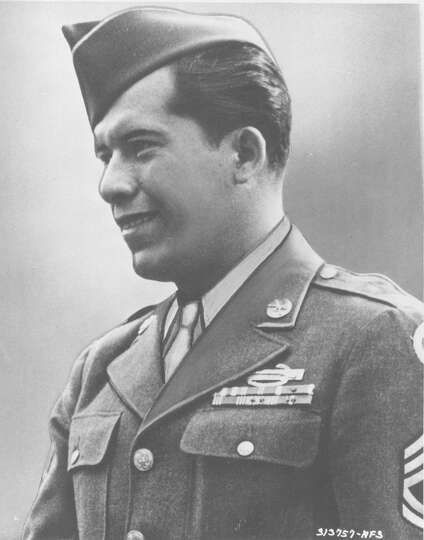
    This Memorial Day I’m honoring two Medal of Honor winners that have left us, John N. Reese, Jr. and Cleto Rodriguez, who between them killed 87 Imperial Japanese soldiers in Manila during the Philippines campaign in February of 1945. Rodriguez was a Texan who passed away in 1990, while Reese was an Oklahoma boy killed at age 21 during the action cited.

    Their two citations:

    REESE, JOHN N., JR.

    Rank and organization: Private First Class, U.S. Army, Company B, 148th Infantry, 37th Infantry Division
    Place and date: Paco Railroad Station, Manila, Philippine Islands. 9 February 1945
    Entered service at: Pryor, Okla.
    G.O. No.: 89, 19 October 1945

    Citation: He was engaged in the attack on the Paco Railroad Station, which was strongly defended by 300 determined enemy soldiers with machineguns and rifles, supported by several pillboxes, 3 20mm. guns, 1 37-mm. gun and heavy mortars. While making a frontal assault across an open field, his platoon was halted 100 yards from the station by intense enemy fire. On his own initiative he left the platoon. accompanied by a comrade, and continued forward to a house 60 yards from the objective. Although under constant enemy observation. the 2 men remained in this position for an hour, firing at targets of opportunity, killing more than 35 Japanese and wounding many more. Moving closer to the station and discovering a group of Japanese replacements attempting to reach pillboxes, they opened heavy fire, killed more than 40 and stopped all subsequent attempts to man the emplacements. Enemy fire became more intense as they advanced to within 20 yards of the station. From that point Pfc. Reese provided effective covering fire and courageously drew enemy fire to himself while his companion killed 7 Japanese and destroyed a 20-mm. gun and heavy machinegun with handgrenades. With their ammunition running low, the 2 men started to return to the American lines, alternately providing covering fire for each other as they withdrew. During this movement, Pfc. Reese was killed by enemy fire as he reloaded his rifle. The intrepid team, in 21/2 hours of fierce fighting, killed more than 82 Japanese, completely disorganized their defense and paved the way for subsequent complete defeat of the enemy at this strong point. By his gallant determination in the face of tremendous odds, aggressive fighting spirit, and extreme heroism at the cost of his life, Pfc. Reese materially aided the advance of our troops in Manila and providing a lasting inspiration to all those with whom he served.


    RODRIGUEZ, CLETO

    Rank and organization: Technical Sergeant (then Private), U.S. Army, Company B, 148th Infantry, 37th Infantry Division
    Place and date: Paco Railroad Station, Manila, Philippine Islands, 9 February 1945
    Entered service at: San Antonio, Tex.
    G.O. No.: 97, 1 November 1945

    Citation: He was an automatic rifleman when his unit attacked the strongly defended Paco Railroad Station during the battle for Manila, Philippine Islands. While making a frontal assault across an open field, his platoon was halted 100 yards from the station by intense enemy fire. On his own initiative, he left the platoon, accompanied by a comrade, and continued forward to a house 60 yards from the objective. Although under constant enemy observation, the 2 men remained in this position for an hour, firing at targets of opportunity, killing more than 35 hostile soldiers and wounding many more. Moving closer to the station and discovering a group of Japanese replacements attempting to reach pillboxes, they opened heavy fire, killed more than 40 and stopped all subsequent attempts to man the emplacements. Enemy fire became more intense as they advanced to within 20 yards of the station. Then, covered by his companion, Pvt. Rodriguez boldly moved up to the building and threw 5 grenades through a doorway killing 7 Japanese, destroying a 20-mm. gun and wrecking a heavy machinegun. With their ammunition running low, the 2 men started to return to the American lines, alternately providing covering fire for each other’s withdrawal. During this movement, Pvt. Rodriguez’ companion was killed. In 2 l/2 hours of fierce fighting the intrepid team killed more than 82 Japanese, completely disorganized their defense, and paved the way for the subsequent overwhelming defeat of the enemy at this strongpoint. Two days later, Pvt. Rodriguez again enabled his comrades to advance when he single-handedly killed 6 Japanese and destroyed a well-placed 20-mm. gun by his outstanding skill with his weapons, gallant determination to destroy the enemy, and heroic courage in the face of tremendous odds, Pvt. Rodriguez, on 2 occasions, materially aided the advance of our troops in Manila.


    Images via findagrave.com.

    The War Against Jihad in Africa in 2019

    Saturday, May 11th, 2019

    Here’s an interesting look at Jihad in the Sahel, the transition zone between Saharan and Sub-Saharan Africa, originally from The Economist:

    Nigerian troops huddle around their captain for a briefing. Several rest their rifle muzzles in the sandy ground, which could block and damage them. During the assault on a terrorist training camp, many forget their training, firing wildly and running off their line of advance. After capturing it, they mill about and ignore the booms of incoming artillery. Finally they are brought up short by an angry Scotsman, who shouts: “Ibrahim, you’re dead!”

    This less-than-successful mock attack took place near the town of Bobo-Dioulasso, in the west of Burkina Faso. It was part of an American-led training exercise earlier this year involving some 2,000 elite troops from more than 30 countries. These two-week war games are the most visible part of a big Western push to turn the tide in a bloody, forgotten war. Jihadists are sweeping across the Sahel, an arid swathe of scrubland on the southern edge of the Sahara that stretches most of the way across Africa. They are also causing mayhem in Somalia. America, Britain, France and other Western powers are trying to help local forces in at least 16 countries beat them back. It is not going well.

    Since the collapse of the “caliphate” in Syria and Iraq, Islamic State (is) has been looking for other places to raise its black flag. Africa, and especially the Sahel, is vulnerable. Governments are weak, unpopular and often have only a tenuous grip over remote parts of their territory. Abu Bakr al-Baghdadi, the leader of is, sees an opportunity. In a video released on April 29th, to prove that he is not dead (his first such appearance in five years), the bearded zealot waxed enthusiastic about Africa. “Your brothers in Burkina Faso and Mali…we congratulate them for their joining the convoy of the caliphate,” he said, according to the site Intelligence Group, which monitors jihadist communications.

    Major General Mark Hicks, who commands America’s special forces in Africa (and was in Burkina Faso for the war games) fears that is is not the only terrorist group extending its franchise into his patch. “Al-Qaeda has taken a very serious long-term view of expanding here in the Sahel, and they’re seeing real success,” he says. His intelligence officers reckon that the groups they track contain about 10,500 jihadist fighters.

    Most jihadists in Africa are fighting their own governments. But some attack Western targets. “If we don’t fight them here we will have to fight them on the streets of Madrid or Paris,” says a European intelligence officer.

    One cannot generalise easily about African jihadist groups. Some are strictly local, having taken up arms to fight over farmland or against corrupt local government. Some adopt the “jihadist” label only because they happen to be Muslim. Many young men who join such groups do so because they have been robbed by officials or beaten up by police, or seen their friends humiliated in this way.

    Other groups, such as al-Shabab in Somalia, are steeped in the teachings of al-Qaeda, the group behind the attacks on America on September 11th 2001. They tend to focus on spectacular atrocities, such as a truck bomb in 2017 in the Somali capital, Mogadishu, that killed almost 600 people. The most worrying groups are adherents of is that seek to hold territory. An offshoot of Boko Haram, for example, is building a proto-caliphate in northern Nigeria.

    Don’t forget that Boko Haram pledged allegiance to the Islamic State in 2015, but has since splintered at least once.

    Jihadist groups of all varieties are expanding their reach in the Sahel and around Lake Chad. Last year conflicts with jihadists in Africa claimed more than 9,300 lives, mostly civilian. This is almost as many as were killed in conflict with jihadists in Syria and Iraq combined. About two-fifths of those deaths were in Somalia, where al-Shabab frequently detonates car bombs in crowded streets. Many of the rest were in Nigeria, where the schoolgirl-kidnappers of Boko Haram and its odious offshoot, Islamic State West Africa Province, shoot villagers and behead nurses.

    However, the area that aid workers and Western spooks worry about most is the Sahel. In Niger, Mali and Burkina Faso the number of people killed in jihad-related violence has doubled for each of the past two years, to more than 1,100 in 2018. And the violence is spreading, spilling across borders and threatening to tear apart poor, fragile states with bad rulers and swelling populations.

    Snip.

    Fear of refugees is one of the main reasons why European military powers are trying to stabilise the region. France has 4,500 troops fighting jihadists there. Germany and Italy each have about 1,000 soldiers in Africa. Britain has set up two specialised infantry units dedicated to training African soldiers in Nigeria and Somalia. America, which is more concerned about terrorism than refugee flows in this part of the world, has more than 7,000 military personnel in Africa.

    The majority of Western troops do not fight jihadists directly—except in Somalia, where drone-fired missiles have killed many of al-Shabab’s fighters. Most are training local forces. They often have to start with the basics. In Nigeria, for instance, jihadists often sneak up and overrun army bases because the bush around them has not been cleared. Or they start shooting at them with a small force to goad the defenders into using up their ammunition firing back, leaving them helpless when the main attack begins.

    Efforts to contain the spread of jihadism by training local armies or killing insurgent leaders are not obviously working. Take Mali, where in 2012 Tuareg separatists and jihadists allied to al-Qaeda swept out of the desert and conquered the north of the country using weapons looted from the arsenals of Libya’s dead dictator, Muammar Qaddafi. The rebels seemed ready to march on the capital, Bamako, and the south, which contains 90% of the population and sustains most of the economy.

    French troops pushed them back from the main cities. But not even their expertise and firepower could defeat the rebels, who simply melted back into the desert. There they have survived a seven-year-long counterinsurgency campaign. Pundits in Paris are calling Mali “France’s Afghanistan”. And with good reason. The UN now has more than 16,000 peacekeepers in Mali, of whom 195 have been killed, making it the blue helmets’ most dangerous mission since its start in 2013. Nonetheless, the jihadists have continued to spread south into Niger and Burkina Faso.

    The French are doing a lot of heavy lifting in Africa as part of Operation Barkhane, operating out of Chad and focused on five Ex-French colonies in Africa: Burkina Faso, Chad, Mali, Mauritania and Niger. (As colonial rulers, the French were worse than the British, but much better than the Belgians.) Four hostages were rescued from Jihadists in Burkina Faso in a raid that resulted in two dead French Special Forces troops, Cédric de Pierrepont and Alain Bertoncello. The hostages were originally seized in Benin, which is in political turmoil following a rigged election. (Hat tip: Charlie Martin.)

    But U.S. forces are actively engaged across Africa, mostly in the Sahel and mostly in support missions, with at least 36 different code-named U.S. operations in Africa:

    Between 2013 and 2017, U.S. special operations forces saw combat in at least 13 African countries, according to retired Army Brig. Gen. Don Bolduc, who served at U.S. Africa Command from 2013 to 2015 and then headed Special Operations Command Africa until 2017. Those countries, according to Bolduc, are Burkina Faso, Cameroon, Central African Republic, Chad, Democratic Republic of Congo, Kenya, Libya, Mali, Mauritania, Niger, Somalia, South Sudan and Tunisia. He added that U.S. troops have been killed or wounded in action in at least six of them: Kenya, Libya, Niger, Somalia, South Sudan and Tunisia….

    The code-named operations cover a variety of different military missions, ranging from psychological operations to counterterrorism. Eight of the named activities, including Obsidian Nomad, are so-called 127e programs, named for the budgetary authority that allows U.S. special operations forces to use certain host-nation military units as surrogates in counterterrorism missions.

    Used extensively across Africa, 127e programs can be run either by Joint Special Operations Command (JSOC), the secretive organization that controls the Navy’s SEAL Team 6, the Army’s Delta Force and other special mission units, or by “theater special operations forces.” These programs are “specifically designed for us to work with our host nation partners to develop small — anywhere between 80 and 120 personnel— counterterrorism forces that we’re partnered with,” said Bolduc. “They are specially selected partner-nation forces that go through extensive training, with the same equipment we have, to specifically go after counterterrorism targets, especially high-value targets.”

    Some of the more important include Juniper Micron (logistics support of French forces), Juniper Nimbus (supporting the Nigerian military against Boko Haram), and Juniper Shield, the umbrella operation for counterterrorism efforts in northwest Africa, aimed at Boko Haram, the Islamic State in West Africa, and al Qaeda.

    See also: Islamic State Affiliated Groups And Their Current Status.

    LinkSwarm for May 10, 2019

    Friday, May 10th, 2019

    Greetings, and welcome to another Friday LinkSwarm! Here in Texas we’re enjoying intermittant torrential rains, which means that walking your dog after one is like breathing warm soup.

  • Obama took Hillary’s loss as a personal insult:

    Former President Barack Obama was unhappy with Hillary Clinton and her failed “soulless campaign” in 2016, saying he saw her loss as a “personal insult.”

    The new details come from a recently released update to New York Times Chief White House Correspondent Peter Baker’s book Obama: The Call of History.

    The new edition, which includes Obama’s reaction to the 2016 election, said Obama compared himself to Michael Corleone, the titular character of “The Godfather.” Obama thought he “almost got out” of office untouched, like a mob boss avoiding a hit job.

    Obama found himself shocked by the election results, thinking before Nov. 8 there was “no way Americans would turn on him” and “[h]is legacy, he felt, was in safe hands.”

  • The Midwest’s broken blue wall:

    The president’s standing in the Midwest now is arguably stronger than when he nearly swept the region in 2016. Polling shows Trump’s job approval rating in the Midwest is in the mid-forties, and his overall favorability rating is highest in the Midwest. Trump’s approval rating in the region is roughly the same as Obama’s was during the same point in his presidency, according to Gallup tracking polls.

    The working class, the nearly 70 percent of Americans without a college degree who have been ignored and even ridiculed by both political parties, is flourishing. Five of the top ten cities enjoying the greatest job opportunities for lower-wage workers are in the Midwest. “A majority of the metro areas with the highest shares of opportunity employment are located in the Midwest . . . after adjusting for cost-of-living differences, median annual earnings tend to be relatively high in that region,” according to an April 2019 study by the Federal Reserve Bank of Cleveland.

    Finding enough workers “is a problem playing out in many parts of the Midwest, a region with lower unemployment and higher job-opening rates than the rest of the country,” according to an April 2018 Wall Street Journal report, citing hiring challenges by employers in Iowa, Indiana, and Wisconsin. Southwestern Ohio, solid Trump country, is in the midst of a warehousing boom. The construction industry is thriving nationwide, but the Midwest is leading the pack.

    The administration’s attempts to secure the southern border are gaining popularity in the Midwest. According to a recent Washington Postpoll, 40 percent of Midwesterners say Trump’s approach to illegal immigration will make them more likely to support him in 2020, compared to 36 percent who say they are less likely. Further, 83 percent of Midwesterners called the situation at the Mexican border a crisis or a serious problem. It will take some smooth convincing by the Democratic presidential candidate to not only disabuse Midwesterners of their views, but to assure them that open borders are best for families in Racine and Grand Rapids.

  • After the Mueller report, former FBI Director James Comey knows he’s in trouble:

    Comey will claim that everything he did in the FBI was by the book. But after the investigations by Department of Justice Inspector General Michael Horowitz and U.S. Attorney John Huber, along with Barr’s promised examination, are completed, Comey’s mishandling of the FBI and legal processes likely will be fully exposed.

    Ideally, Barr’s examination will aggregate information that addresses three primary streams.

    The first will be whether the investigations into both presidential nominees and the Trump campaign were adequately, in Barr’s words, “predicated.” This means he will examine whether there was sufficient justification under existing guidelines for the FBI to have started an investigation in the first place.

    The Mueller report’s conclusions make this a fair question for the counterintelligence investigation of the Trump campaign. Comey’s own pronouncement, that the Clinton email case was unprosecutable, makes it a fair question for that investigation.

    The second will be whether Comey’s team obeyed long-established investigative guidelines while conducting the investigations and, specifically, if there was sufficient, truthful justification to lawfully conduct electronic surveillance of an American citizen.

    The third will be an examination of whether Comey was unduly influenced by political agendas emanating from the previous White House and its director of national intelligence, CIA director and attorney general. This, above all, is what’s causing the 360-degree head spins.

    Oh, should we use the word “bombshell” or the phrase “the walls are closing on?”

  • Luke Rosiak is on the case of corruption in Flint, Michigan:

    The company Flint, Michigan, hired to replace lead water pipes had no experience with the work, according to a councilwoman and a contractor, despite that the city has received more than $600 million in state and federal aid for its water crisis.

    And the city ignored a model showing where lead pipes are and paid to dig up every yard, the vast majority of which had copper pipes, according to meeting minutes.

    The city also prohibited contractors from using an efficient method of digging holes known as hydrovac excavation, Flint Councilwoman Eva Worthing told The Daily Caller News Foundation. That leveled the playing field for a contractor, WT Stevens, with no experience or the appropriate equipment — and let it bill far more to taxpayers, she says. All of these factors, she adds, needlessly led to more waiting for anyone who actually has lead pipes.

    Huge amounts of aid dollars — including $100 million from the Environmental Protection Agency — have flowed to the small city of 90,000 residents to address lead in its water supply, even though it doesn’t have a chief financial officer and, until recently, its finance chair was a gun felon.

    The federal money “should be a good thing for the city,” Worthing told TheDCNF, “but given the mismanagement of the pipe replacement program, I am concerned that it’s not going to get used properly.”

    The city “chose to dig up yards that they knew were copper, and they decided to hand dig instead of hydrovac,” Worthing told TheDCNF. “That was because WT Stevens didn’t have the ability, and you get more money [digging by hand]. It costs $250 [to hydrovac] versus thousands” to dig a large hole without the equipment.

  • What part of No Collusion is hard to understand?” (Hat tip: Director Blue.)
  • Democrat slips up, admits that “I’m concerned that if we don’t impeach this President, he will be reelected.”
  • Hey, remember when journalists reported on all the scandals among Virginia’s state leaders, until they noticed the (D)s after their names? “Northam, who largely won on anti-Trump anger, is now less popular than the president in the state.”
  • Alabama Democratic state representative John Rogers last week: “Some kids are unwanted, so you kill them now or you kill them later. You bring them in the world unwanted, unloved, you send them to the electric chair. So, you kill them now or you kill them later.” Rodgers this week: “I am now a candidate for United States Senate.” He’s primarying incumbent Democratic Senator Doug Jones, who only got in because of the Roy Moore fiasco.
  • Remember how sure all those economic “experts” were that Trump would tank the economy if he got elected? Good times, good times…
  • A lot of what you think you know about gun control in Australia, New Zealand and the UK is probably wrong.

    Recent data show that the U.K.’s gun control experiments are actually causing more harm than good. Like its Australian counterpart, which also implemented draconian gun control in the 1990s, negative criminal trends have started to surface since new gun control laws were enacted.

    Sexual assaults have seen an alarming rise from 1995 to 2006, specifically increasing by 76.5 percent according to Howard Nemerov’s book 400 Years of Gun Control. All the gun control in the world has not been able to save the U.K. from steadily increasing rates of violent crime.

  • The FBI’s New York office forms a squad dedicated to MS-13.
  • “The century-long relationship between American Jews and the nation’s elite universities has rotted away. Now is the time for all of the good people involved—students, parents, donors—to get out, and fast.”
  • Believe women…unless they’re raped by a homeless person. “Seattle’s activist class seems, then, to have more compassion for transient criminals than for the victims of their crimes.”
  • New Jersey Democratic Governor Phil Murphy raids fund for fallen firefighters.
  • Followup:

  • New York: No new pipelines. Gas company: OK, that means no more gas hookups for new buildings because we’re at capacity.
  • Leaked Trump Peace Plan? I’d sort of like President Trump to stay away from all peace plans, as they all seem to be asking for trouble. This one is interesting. It calls for a two state solution, some Egyptian facilities for Gaza, incorporating settlements into Israel, a lot of non-U.S. countries picking up the bill, and penalties for rejecting the deal. It make so much sense that Palestinians will surely reject it out of hand…
  • U.S. Seizes North Korean Freighter Violating U.N. Sanctions.”
  • More on China’s play for technological dominance: “Huawei Technologies, the spearhead of China’s trillion-dollar Belt and Road Initiative (BRI), isn’t a Chinese company, but an imperial juggernaut that crushes its competition and employs their intellectual resources. By 2013 it employed 40,000 foreigners–mostly in R&D– out of a workforce of 150,000.” (Hat tip: Stephen Green at Instapundit.)
  • The New York Times had a story in which they breathlessly told us that Trump lost a billion dollars in the late 1980s and early 1990s. You know, just like Trump himself told us in his book The Art of the Comeback. (Hat tip: The Other McCain.)
  • “Facebook co-founder says Zuckerberg ‘not accountable,’ calls for government break up.” Better idea: Make all social media companies publish clear, defined reasons for suspending or banning users, and make the processes by which those decisions are made transparent. Nah, they’d never go for that, as that would keep them from arbitrarily banning conservatives… (Hat tip: Stephen Green at Instapundit.)
  • “Facebook Allows Terrorist Who Beheaded Canadian Tourist To Keep Account & Actively Post.” That would be Bhen Tatuh of the Abu Sayyaf Group in the Philippines. (Hat tip: Charlie Martin.)
  • Jim Goad says Facebook should leave Louis Farrakhan alone…because he’s hilarious. “This cat is one of the most accomplished mind-fuckers in American history, and I’m glad to call him a fellow citizen.”
  • “Facebook SWAT Team Arrests Man For Illegal Possession Of Conservative Views.”
  • “Man Whose Headless Body Was Found Floating in Fish Tank Was Murdered.” That’s some mighty fine forensic analysis there, Lou… (Hat tip: Mickey Kaus.)
  • “Nation’s Politicians Mock Trump For Only Wasting A Mere Billion Dollars.”
  • “That’s not a knife!” (Unleashes Hellfire missile with 100 pounds worth of blades.) “Now that, that’s a knife!”
  • Entire New Orleans Times-Picayune staff laid off after paper sold to competitor. Among other things, they did that fine story on the homeless Super Bowl player.
  • Speaking of football: “XFL Reaches Deal With Fox, Disney To Broadcast Games.”
  • How a World War II field kitchen worked.
  • The return of the giant knotweed.
  • The 106 greatest crime films of all time, as ranked by Otto Penzler (still in progress).
  • “Is that an alligator in your pants, or are you just happy to see me.” Bonus: Florida Woman.
  • “Ilhan Omar Blasts Israel For Refusing Palestine’s Generous Gift Of Rockets.”
  • Moving The Extending Arms of Christ: This probably won’t mean anything to you unless you grew up in Houston, but there was a large, striking mosaic above the emergency room entrance on Houston Methodist Hospital that had to be moved to an interior atrium under construction due to the hospital’s expansion.