Archive for the ‘Foreign Policy’ Category

Russia Reorients

Friday, April 8th, 2022

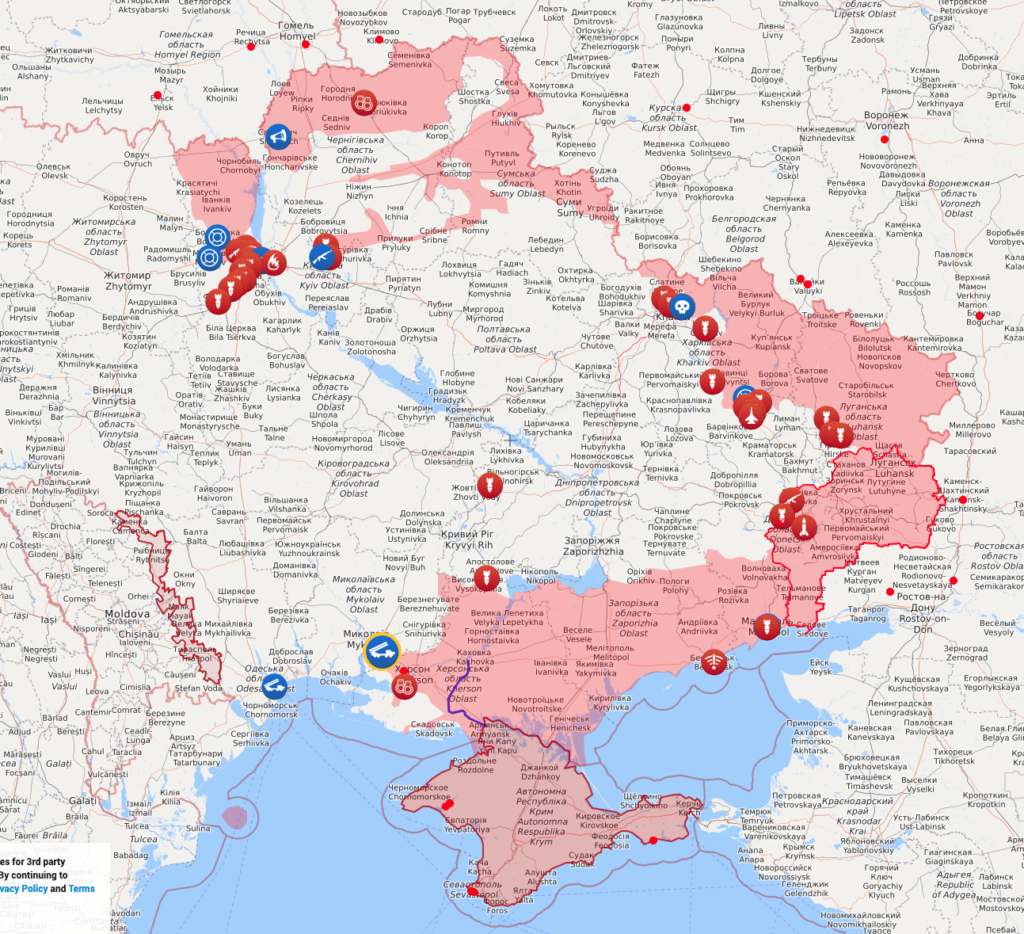
Just because Russia is obviously retreating from Kiev due to getting mauled doesn’t mean there isn’t some truth in the argument that their biggest aims lie in eastern Ukraine. This video suggest three main remaining goals for Russian forces:

  • Restore and control the flow of water to Crimea (Ukraine dammed up the Dinappa river following the seizure of Crimea, which has put them in a world of hurt).
  • Gain control of “the Yokosuka Gas Field, which was discovered in 2010 and it has about 42 trillion cubic feet of natural gas, that could threaten Russia’s oil dominance in the region.”
  • Controlling all Ukraine’s Black Sea ports.
  • More details on each in the video.

    If they can achieve those goals, if Russia can achieve capturing those three goals they will have landlocked and absolutely wrecked Ukraine’s entire economy. So when they say that the main war is in the east, they’re actually, on some level, telling the truth. The problem for Russia, though, is that without having captured Kiev their chances of holding on to those objectives is greatly reduced.

    (Between getting my house cleaned, relatives visiting (Yes, those two are related), and tax season, no time to put up a LinkSwarm today. Tomorrow is not looking good either…)

    Know Who’s Bummed About Russia’s Military Failure In Ukraine? China

    Wednesday, April 6th, 2022

    A goodly part of the world is pleased about the manifest failure of Vlad’s Big Ukraine Adventure, some are indifferent to it, but only Russia, client-state Syria, and puppet-state Belarus really seem upset about it.

    Know who else is bummed? China.

    Operation Desert Storm was a turning point in modern Chinese military history. As military planners with the People’s Liberation Army watched U.S. and allied forces make short work of the world’s fourth-largest military (on paper), equipped with many of the same systems as the PLA, it became obvious that China’s quantitatively superior but qualitatively lacking massed infantry would stand no chance against the combination of modern weaponry, C4ISR, and joint operations seen in Iraq. The result was new military concepts and over two decades of often-difficult reforms, which produced the modern, far more capable, “informationized” PLA of today.

    Today, the PLA is no doubt closely observing its Russian contemporaries in Ukraine as they under-perform in multiple areas, from failing to take key targets or claim air supremacy to running low on fuel and supplies and possibly experiencing morale collapse, and surely taking away lessons that will shape its own future. Of note, Russia’s experience appears to have confirmed many of China’s recent assumptions behind its investments, such as the utility of unmanned aerial systems in high-intensity conflict, as well as the necessity for the PLA’s 2015 reforms, which aim to fix many of the issues driving Russian failure that the PLA recognizes in itself.

    Of the many issues that have contributed to Russia’s physical battlefield woes in Ukraine, one of the most important has been the lack of effective joint or combined arms operations, widely considered essential to any effective modern fighting force. Russia’s poor level of coordination between its various services and branches can only be generously described as incompetent. For example, it has repeatedly failed to provide effective air support to its ground forces or deconflict its air and air-defense forces to avoid friendly fire.

    The PLA has long had its own serious issues with joint operations. Traditionally dominated by the Army, the PLA had little success developing a truly joint force until a series of sweeping reforms in 2015 that replaced the former Army-dominated system with a series of joint theater commands. The PLA is thus aware of its own shortcomings and taking steps to fix it, but likely remains far off from being able to conduct truly effective, seamless joint operations. Efforts to conduct joint exercises are becoming more common, but most senior PLA leaders are still relatively inexperienced with joint operations, and even new officers typically do not receive joint education below the corps level. Further, it remains to be seen how far these reforms will go or to what extent they will “stick;” indeed, one reason the PLA did not attempt these reforms until 2015 was because of strong institutional pushback from the Army, whose leaders wished to retain their dominant status.

    To China, the Ukraine invasion will reinforce the importance of joint and combined arms operations, while also making clear that such operations are highly difficult to conduct in practice. Russia’s stumbles may give the PLA pause as to whether it is truly ready for all the joint elements that a successful Taiwan seizure would require, including close coordination between sea, air, and land forces.

    As well they should be. Russia shares a giant land border with Ukraine, was able to through something like 150,000 troops into the fight, and still got mauled while failing to meet their initial objectives. A giant land border is world’s away from having to conduct fiercely contested landing operations against the heavily defended island of a sophisticated, technological peer foe who’s had over half a century to prepare.

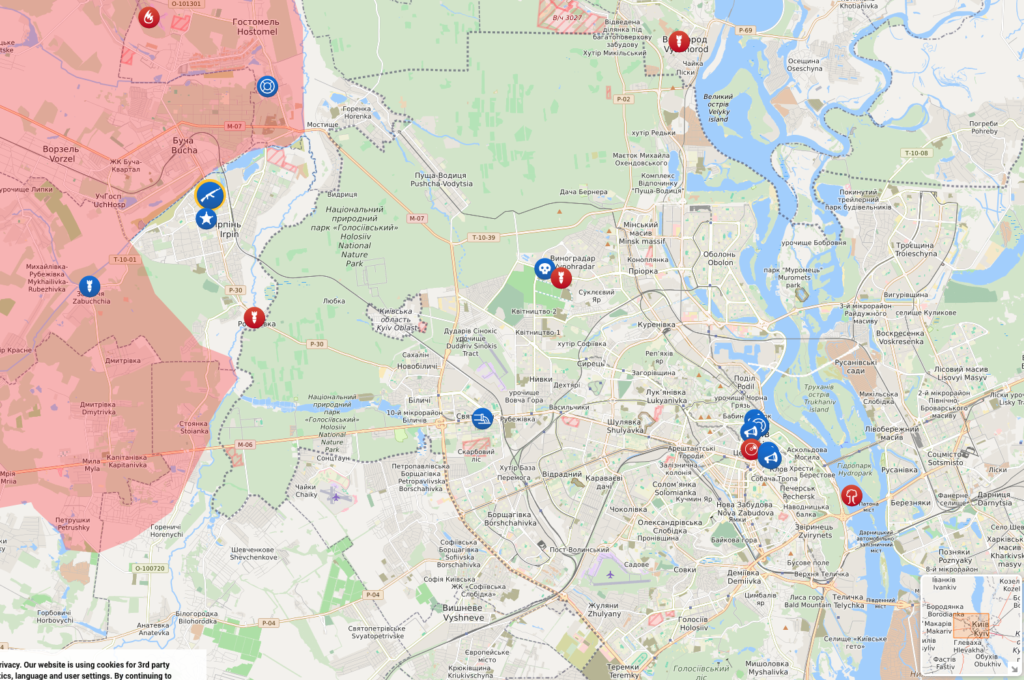
    Also, it can’t be encouraging that Russia was unable to hold control of Hostemel Airport during the early stages of the war, since airport seizures for an airbridge into Taiwan has played a large role in many wargamed invasion scenarios.

    Some paragraphs on conscript armies and information warfare skipped.

    China has also taken note of Russia’s disasterous logistics:

    Another ongoing issue has been Russia’s serious problems with poor logistics. The sight of broken-down or abandoned vehicles has become common as Russian forces run out of fuel and other vital supplies. To its credit, the PLA has also been rapidly reforming and modernizing its logistical system as part of the same broad set of 2015 reforms. As part of these reforms, the PLA has emphasized its logistics organizations and created the Joint Logistics Support Force. This force’s training has focused on cooperation with other branches of the PLA, and it has cut its teeth training to establish supply lines during natural disasters. In 2018, the JLSF launched its first major exercise, dubbed “Joint Logistics Support Mission 2018,” featuring medical drones, helicopter-dropped refueling depots, and operations in harsh and remote terrain.

    Hey, remember all that stuff I said about long land borders vs. amphibious and airborne invasion? It applies double (if not quadruple) for logistics. China can’t assume it will have complete air and sea control of the Taiwan strait, and it’s really hard to run an invasion if you’ve run out of ammo, food and fuel.

    However, while the outward manifestation of many of the issues faced by the Russian military appear to be logistical in nature, the true heart of the issue may be corruption. There are reports that before the invasion Russian military officers sold off their fuel and food supplies, and that these corrupt practices may be responsible for the stalling of a Russian tank column outside Kyiv. In this regard, the PLA has much to fear. Corruption has plagued the PLA for decades, with some PLA officers bluntly stating in 2015 that it could undermine China’s ability to wage war. Reportedly, more than 13,000 PLA officers have been punished in some capacity for corruption since Xi Jinping took power, including more than a hundred generals. This was a particular problem in the logistics sector, where there are more opportunities for corruption and links to the civilian economy.

    Yet, despite the reorganization of the PLA and widespread prosecution of corruption cases, it still appears to be a major issue. Anti-corruption efforts are ongoing, with Chinese Gen. Zhang Youxia recently calling for innovative measures to keep up the fight. But the fact that Fu Zhenghua, the man brought in to take down the corrupt former security chief Zhou Yongkang, is himself now under investigation for corruption does not bode well for the long-term effectiveness of China’s efforts. The troubled invasion of Ukraine provides a stark real-world example to Xi, the CCP, and PLA about the impact corruption can have on military effectiveness, and will no doubt cause them to redouble their anti-corruption efforts with a newfound urgency. However given its similar authoritarian system and emphasis on career advancement through patronage, systemic corruption may be baked into the system.

    China without corruption is like Norway without snow.

    But not everything is that’s made life difficult for Russia will apply to China.

    While China will benefit from Russia’s increasing reliance on its goods and services, Beijing can be expected to retool its geo-economic strategy to reduce its vulnerability to a similar nightmare scenario. For example, it will likely redouble its efforts to promote its Cross-Border Interbank Payment System—an alternative to the SWIFT international banking system—among its strategic partners and foreign aid recipients in the developing world.

    Likewise, China’s recent “Dual Circulation” economic strategy appears to be aimed at countering a decoupling from China’s trade partners. Further, Beijing has surely observed how easy it was for corporations to withdraw from Moscow. If China is to be exposed to the risk of global sanctions and corporate withdrawal, so too are countries and corporations exposed to dependence on the world’s second-largest economy, and thus the government will likely take efforts to make any sanctions or corporate turn against China as painful a prospect as possible. Either way, policymakers in Washington need to understand that the sanctions being used today against Russia are unlikely be as effective the next time around, as China is not just a different economy, but also will learn from the current conflict and adjust accordingly.

    This is undoubtedly true, and China has a much broader and more modern economic and industrial base with which to wage war. All the more reason for America to bring critical manufacturing and other economic business outsourced to China back home.

    For all these valuable lessons, there is little doubt that China has been watching the ongoing conflict with no small amount of chagrin. Chinese leaders are reportedly surprised and unsettled by the poor military performance of its Russian partners, Ukraine’s resistance, and the level of solidarity from the international community. The image of a much smaller state, against all odds, successfully resisting a larger neighbor surely sits uneasily in the psyches of CCP apparatchiks and PLA officials. It also counters the narrative of overwhelming force and grim inevitability Beijing has sought to instill in the psyches of the Taiwanese people. It is notable that early attempts by Chinese state media to capitalize on the Ukraine invasion in precisely this fashion, illustrating how the United States will surely abandon Taiwan when the chips are down, quietly ceased after the initial days of the war, when it became apparent that the U.S. was not, in fact, abandoning Ukraine. Beyond purely psychological factors, Ukraine also offers a blueprint for successful resistance via asymmetric warfare very similar to Taiwan’s proposed Overall Defense Concept, perhaps giving a jolt to a plan that most analysts agree offers Taiwan its best chance of success against the PLA but has stalled out in the face of bureaucratic resistance.

    While China and the PLA will surely watch Ukraine closely and try to take away the correct lessons, there is one uncomfortable parallel which China may be unable to avoid by the very nature of its authoritarian system. The runup to the Ukraine invasion featured multiple strategic miscalculations by Putin, driven at least in part by him surrounding himself with the yes-men who inevitably cling to authoritarian leaders, eager to please and afraid to speak truth to power. This was obvious in the visibly uncomfortable reaction of Russia’s SVR (foreign intelligence) chief as he was publicly pressured to agree with Putin in the days leading up to the war, as well as in the sackings and arrests of multiple military and intelligence officials after the war turned poorly. Authoritarian leaders have systemic problems in gaining reliable intelligence, oftentimes magnified by their overconfidence in their own singular understanding of a situation. As China continues its slide away from a system of intra-Party consensus toward a one-man cult of personality in which dissenting views are increasingly unwelcome, Xi is bound to encounter the same problem. It is unclear whether Xi will learn this lesson from Putin, or make his own similar miscalculations in the future towards China’s own neighbors.

    Dictatorships (especially communist dictatorships) greatly increase the possibility of a “Thermocline of Truth” building up between bad news and fawning yes-men fearful of making the dictator angry. There’s very little reason to believe that Xi Jinping’s chain of command suffers from the problem any less than Putin’s.

    In war, comforting lies will get your ass kicked.

    Is Russia Running Out Of Troops?

    Monday, April 4th, 2022

    Ukraine is often depicted as David up against Russia’ Goliath, but this analyst argues the situation is closer to the reverse when it comes to in-theater manpower:

    Some takeaways:

  • Russia didn’t anticipate Ukraine undertaking mass mobilization, and now finds itself outnumbered. “There’s a fair chance the number will get even more lopsided.”
  • Estimates for losses on each side are hard. Guestimate: 11,000 Russians dead, 9,000 Ukrainians.

  • Add in captured troops and those wounded enough to be out of combat yields about 39,000 Russians out of action. “That’s a lot. It’s about 21% of the Russian starting force.”
  • Not referenced in the video, but: “Pentagon officials say a 10 percent casualty rate, including dead and wounded, for a single unit renders it unable to carry out combat-related tasks.” Though I’ve seen higher numbers (20-30%) elsewhere.
  • Ukrainian losses are probably around 6%.
  • “Russian losses have a higher percentage of professional soldiers.”
  • Offensive operations produce higher casualties than defense.
  • “Ukraine is vast. It’s bigger than France. [It] had more than 40 million people before the war.”
  • By March 15, Ukraine had hit its planned reserve call-up troop level of 130,000. Add in volunteers, foreign fighters, National Guard, etc., Ukraine may have as many as 400,000 troops (with various levels of training) under arms.
  • Ukraine could potentially have 750,000 troops under arms by July.
  • “Russia is unable to seriously increase the number of its troops in Ukraine. That is because Russia is evidently fearful of sending its conscripts into battle.”
  • After a small number of conscript units got mauled, Putin promised that no more conscripts would be sent.
  • The “Russia has a million man army” figure is misleading. Ground troops only total some 360,000 troops across the entire country, many of which are conscripts.
  • Russia can’t afford to pull every single competent ground troop from every corner of its country and send them to Ukraine. He could maybe get another 10-20,000 professional troops, but those would only be compensating for existing losses.
  • Russia has 35,000 local fighters in Donbas, but they’re not equipped to go on big offensives.
  • Belarus is unlikely to get involved, and may be more trouble than it’s worth, because their army is heavily made up of conscripts. “Fewer than 10,000 troops.” And the political repercussions could be costly.
  • But for Russia to have some chance of continuing to push inside Ukraine under the present conditions – where arms aid is flowing into Ukraine, and where morale issues are widespread within the Russian army – many more soldiers are an absolute must. If Russia does decide to send in conscripts or even the national guard, those would likely be kept back, to keep securing the taken areas. But for that the frontline needs to fully consolidate, without so many Ukrainian pockets of resistance. And still, the domestic political fallout of such a move might be deeply destabilizing.

  • Russia currently seems to be unwilling to increase its numbers in Ukraine above 200,000.
  • “For Ukraine, this war IS what the great patriotic war was for the Soviet Union in 1941.”
  • “With time, further troops and more weapons, Ukraine’s army may try to pressure even those consolidated Russian positions in the east and south.”
  • If there’s a flaw in this analysis, it’s that Putin could change his mind about using conscripts in a heartbeat. But Russia has had huge problems feeding and resupplying it’s existing army. Until that problem is fixed. more conscripts would mean throwing more badly-trained and ill-equipped troops into the meat grinder.

    Is Russia’s Military Running Out Of Equipment And Spare Parts?

    Sunday, April 3rd, 2022

    Is Russia’s military running out of the equipment, spare parts and supplies necessary to maintain their war in Ukraine? Some reports say so, suggesting it’s because the parts are made in Ukrainian factories.

    Vladimir Putin is said to be running out of missiles, tanks and aircraft, because the parts they rely on are made in Ukraine.

    The engines of Russian military helicopters and key components for warships, cruise missiles and the majority of the nation’s fighter jets are all made in Ukrainian factories, the Telegraph reports.

    The factories, which also produce parts for tanks and ground to air missiles, no longer supply Mr Putin’s army.

    I’ve got to take this report with several grains of salt, because I assume those same factories must have stopped supplying Russia with spare parts after the seizure of Crimea and invasion of Donbas back in March of 2014. Are we to believe that Russia has failed to find alternate manufacturing sources for key military equipment for eight years? Russia’s invasion has displayed multiple levels of manifest incompetence, but it’s hard to believe they would be that incompetent for that long. (Now, could spare parts not exist due to massive corruption? That seems plausible, but it’s not the kind of thing you can count on your opponent suffering from.)

    The army is also understood to be running low on arms following five weeks of sustained bombardment of Ukrainian cities.

    This, on the other hand, seems quite plausible, given the well-documented logistical difficulties, and the furious rate at which Russian forces expended munitions during the initial assault.

    The T-72 battle tank is one of the Russian army’s main armoured vehicles but, parts for it are understood to be manufactured in Izyum, an eastern Ukrainian city that Mr Putin’s forces have failed to capture.

    The T-72 has been around since 1969. I can believe some of the high tech components for the most modern variants are in short supply, but surely they’ve have multiple source for the vast majority of mechanical parts for a long time now. And even if not, they built some 25,000 of the things, so I can’t imagine they don’t have enough mothballed tanks to provide spares, though it’s going to take time to get cannibalized parts out to field repair centers. (I’m assuming Russia has some sort of field repair capabilities, and I know Russian tank recovery vehicles were spotted on trains en-route to the theater before the war began.)

    Open-source intelligence estimates suggest that Russia has lost at least 2,000 tanks and armoured vehicles, although true figures are suspected to be higher.

    This I just flat out don’t believe. And indeed, when you go to what appears to be their primary source, they’re including a whole lot of trucks in that list, which aren’t counted as “armored vehicles.” The lesson here is “don’t believe anything that sounds too good to be true” and “always check the primary sources.”

    Speaking of primary sources, that Oryx blog list does look pretty useful, though the nature of the methodology (adding up all pictures of destroyed equipment) is certainly suspect to manipulation.

    Their summary line for Russian equipment losses as of this post “Russia – 2360, of which: destroyed: 1190, damaged: 41, abandoned: 232, captured: 897.”

    Here are the individual type breakdown lines:

    Tanks (405, of which destroyed: 190, damaged: 6, abandoned: 42, captured: 167)
    Armoured Fighting Vehicles (274, of which destroyed: 129, abandoned: 32, captured: 113)
    Infantry Fighting Vehicles (392, of which destroyed: 216, damaged: 2, abandoned: 31, captured: 142)
    Armoured Personnel Carriers (81, of which destroyed: 21, damaged: 1, abandoned: 17, captured: 42)
    Mine-Resistant Ambush Protected (MRAP) Vehicles (17, of which destroyed: 9, abandoned: 3, captured: 5)
    Infantry Mobility Vehicles (76, of which destroyed: 43, damaged: 2, abandoned: 5, captured: 24)
    Communications Stations (15, of which destroyed: 4, abandoned: 5, captured: 6)
    Engineering Vehicles And Equipment (78, of which destroyed: 23, abandoned: 13, captured: 37)
    Heavy Mortars (11, of which destroyed: 3, captured: 8)
    Towed Artillery (47, of which destroyed: 9, damaged: 4, abandoned: 5, captured: 29)
    Self-Propelled Artillery (72, of which destroyed: 25, damaged: 3, abandoned: 14, captured: 29)
    Multiple Rocket Launchers (45, of which destroyed: 18, abandoned: 5, captured: 23)
    Anti-Aircraft Guns (3, of which captured: 3)
    Self-Propelled Anti-Aircraft Guns (11, of which destroyed: 5, abandoned: 3, captured: 3)
    Surface-To-Air Missile Systems (42, of which destroyed: 22, damaged: 1, abandoned: 7, captured: 12)
    Radars (4, of which destroyed: 1, captured: 3)
    Jammers And Deception Systems (6, of which destroyed: 2, damaged: 2, captured: 2)
    Aircraft (19, of which destroyed: 18, damaged: 1)
    Helicopters (38, of which destroyed: 33, damaged: 3, abandoned: 1, captured: 1)
    Unmanned Aerial Vehicles (21, of which destroyed: 14, captured: 7)
    Naval Ships (3, of which destroyed: 1, damaged: 2)
    Logistics Trains (2, of which destroyed: 2)
    Trucks, Vehicles and Jeeps (698, of which destroyed: 401, damaged: 16, abandoned: 59, captured: 210)

    (An aside: You’ve got to hand it to those Russian miltech geeks who look at this:

    And confidently declare “Oh, those are two destroyed 120mm 2B11/2S12 heavy mortars!” That’s some #DavesCarIDService level obsession there…)

    Keep in mind that Russia only had some 2,500 tanks assigned to active units at the start of the war (though other estimates are considerably higher). But given well-documented Russian maintenance problems, I can well believe several units have sustained losses in excess of that necessary to impair combat effectiveness.

    Keep in mind that the Soviet Union lost 83,500 tanks between 1941 and 1945 in World War II. Of course, that was a much broader theater, using much more widely-produced, low-tech tanks. Hell, two-way radios didn’t become standard Soviet equipment until 1944.

    For high tech munitions like smart bombs and guided missiles, I can well believe that Russia is running low on stock that can’t easily be replenished under the current sanctions regime. And we see ample evidence that field resupply has been negatively impacted by severe logistical difficulties. But “T-72s lack spare parts because the original factory was in Ukraine” doesn’t pass the smell test.
    LinkSwarm for April 1, 2022

    Friday, April 1st, 2022

    Russia pulls back, inflation soars, and the Biden Administration is all in on grooming your kids. It’s the Friday LinkSwarm!

    Don’t forget it’s April Fools Day, so don’t take any wooden NFTs.

  • Russia has reportedly withdrawn its forces from Hostemel Airport outside Kiev.

    Russian forces have retreated from a Ukrainian airfield that was key to their original plan of overthrowing Volodymyr Zelensky’s government.

    Hostomel airport, just oustide Kyiv, was the scene of some of the fiercest fighting of the Ukraine war, as Vladimir Putin, the Russian president, sought to establish an air bridge to the capital.

    Control of the airport, 20km from Kyiv, changed hands several times, as Ukrainians at first defended fiercely and then attacked the Russian occupiers.

    Five weeks on, the Russians have moved out having failed in their mission, according to a senior US defence official, as it abandons plans to take the capital and shift forces to the east.

    This is a huge win for Ukraine, but it also means that surviving Russian forces can shift over to east Ukraine where the war is still hot.

  • Also: “Ukraine forces pulled off a rare attack on Russian soil Friday when two military helicopters destroyed a fuel depot in the city of Belgorod, situated roughly 40 miles north of the border with Ukraine.”
  • “Key Inflation Gauge Reaches 40-Year High.”

    A key inflation metric monitored by the Federal Reserve soared 6.4 percent in February compared to a a [sic] year ago, reaching a new 40-year high.

    The latest price surge, which affected the price of fuel, groceries and other consumer essentials, represents the largest year-over-year increase since January 1982, according to data released by the Commerce Department on Thursday.

    Not taking into account food and energy fluctuations, which tend to be more erratic and can overemphasize inflation, the personal consumption expenditures price index, the preferred inflation gauge of the Federal Reserve, jumped 5.4 percent in February from a year prior. Including gas and groceries, PCE surged 6.4 percent.

    It’s gonna get worse…

  • The Biden Administration is evidently all-in on tranny madness and grooming your children:


  • As is Disney.
  • DeSantis to Disney: You want to complain about teachers no longer being allowed to talk to kindergartners about anal sex? Fine. How about we just remove your special self-governing status? (Hat tip: Stephen Green at Instapundit.)
  • Speaking of DeSantis, he has some pretty sweet talent lined up for this:

  • What’s behind this creepy push for foisting transexualism on pre-teens? A long, creepy history of Marxist indoctrination.

    Through brand names like “comprehensive sex education” and one of its parent programs, “Social-Emotional Learning (SEL),” our government schools have been turned into Groomer Schools, and parents are beginning to notice. What many will not understand, however, is that this isn’t just a fluke of our weird and increasingly degenerate times. It is, in fact, a long-purposed Marxist project reaching back into the early 20th century. In this episode of the New Discourses Podcast, join James Lindsay as he explains the long history of the sexual grooming that has come into our schools through Critical Gender Theory and Queer Theory as they have crept into educational programs.

    There’s an hour long video there I haven’t watched all of yet…

  • Speaking of groomers:

  • Just how bad is the graft, waste and fraud in that $1.5 trillion porkulus bill? This bad. Look over that vast list of special subsidies and ask yourself “How many of these programs are designed to channel taxpayer money into the pockets of Democratic activists.” The answer seems to be “Most of them.”
  • 8 Joe Biden Scandals Inside Hunter Biden’s MacBook That Corporate Media Just Admitted Is Legit.” China, Ukraine, Russia, etc.
  • Republican lawmakers would like to see emails between Hunter Biden and the Obama White House.
  • White House Press Secretary Jen Psaki is leaving for MSNBC. So many angles: A.) Rats, sinking ship. B.) That revolving door between Democratic staffers and the MSM continues apace. C.) I hear she has an offer to star in Chairman of the Board 2.
  • Flu Manchu update: Asymptomatic spread is bunk.
  • BuzzFeed News union votes to strike as job cuts loom.” I suppose that would be Amalgamated Listicle Crafters Local 106…
  • Just when you thought it was safe to go back in the supply chain: “22,000 Union Workers At 29 West Coast Ports May Strike…West Coast union dockworkers may strike if they don’t come to an agreement to replace their existing contract with marine terminals. The contract is set to expire at the end of June.” Labor strikes are yet another part of the classic winter of discontent formula the Biden Administration is using to bring back the worst of the 1970s.
  • Another part of that classic 1970s discontent record is soft on crime polices, just like those pursued by George Soros-backed DA’s like Larry Krasner.

    Philadelphia district attorney Larry Krasner has presided over a surge in violent crime, and his new policy promises more of it. Krasner recently announced plans to de-prosecute crimes for offenders aged 18 to 25, ignoring how this age group tends to contain the most violent of criminal defendants.

    Krasner’s office has established a new unit that will move some 18-to-25-year-old defendants into “rehabilitative programming” instead of seeking criminal punishments. As Krasner’s data dashboard demonstrates, “rehabilitative programming” is just a euphemism for dismissing charges. Krasner promises that the program will be limited to nonviolent offenses, including drug trafficking and other offenses. (The Philadelphia Inquirer reports that gun crimes will not be included, but Krasner has previously stated that prosecutions for illegal gun possession are “not only ineffective but unjust and racially discriminatory.” The link in the district attorney’s office data dashboard about Philadelphia’s Gun Violence Task Force takes the reader to a page that states “Article Not Found.”)

    This new program reflects Krasner’s determination not to think like a prosecutor, but instead to think like the criminal defense lawyer he was. The program was developed by Sangeeta Prasad, a fellow with the district attorney’s office who previously served as a public defender in New York, New Mexico, and Philadelphia. Before assuming her current post, she had no prior experience as a prosecutor, just like Krasner. The chief public defender for Philadelphia has called the new unit “an incredible initiative,” but Philadelphia courts were not invited to the press conference announcing the plan and stated that they were not aware of the experiment.

    The new initiative comes at an awkward time. In 2021, Philadelphia experienced the highest number of homicides in its history, and the violence is continuing in 2022. Indeed, Philadelphia homicides have risen every year that Krasner has been in office, as carjackings, shootings, and drug overdoses soar. What makes the policy more bizarre is that it runs counter to decades of criminological research. One of the iron laws of criminal conduct is the so-called age-crime curve, which demonstrates that the majority of serious crimes are committed by defendants between the ages of 15 and 25. This finding obtains around the world and has been replicated time and again.

  • Speaking of repeat offenders, Millen, Georgia police Officer Larry “Ben” Thompson quit after being caught on tape having public sex while on-duty. Fair enough, but his lengthy record of misdeeds makes you wonder why he wasn’t fired long ago, since he managed to shoot another officer in the arm (“negligent discharge”) and killed a guy in a traffic accident in route to a call. (Hat tip: Dwight.)
  • Nevada/Utah Ponzi scheme leads to FBI shootout. “The alleged $300 million scheme, run by a lawyer named Matthew Beasley, came to a head when FBI agents went to his home earlier this month and Beasley drew a gun on himself, before pointing it at agents, prompting them to shoot him.”
  • “[Fort Worth Superintendent] Kent Scribner will leave the district this August instead of in 2024, when his contract ends. In response to recent outcry from parents regarding Superintendent Kent Scribner’s support of CRT-based policies, Fort Worth ISD’s school board voted 7-0 to move up Scribner’s last day as superintendent to August 31, 2022.”
  • Ouch! Texas “Taxpayers’ Property Appraisals Rising 20% to 50% as Supply Chain Disruptions Meet Population Growth.” Austin-Round Rock is slated for the biggest increase, some 35.4%.
  • Don’t look now, but there’s another big Zero Day Internet infrastructure exploit out in the wild. “Spring4Shell is a remote code execution vulnerability in Spring Framework that can be exploited for remote code execution without authentication.” Spring is a Java framework that’s almost 20 years old, so the issue could potential be lurking in a lot of places…
  • Another week, another hate crime hoax. (Hat tip: Instapundit.)
  • Speaking of false accusations of racism, Gibson’s Bakery win over Oberlin in court yet again. “A three-judge panel on the Ninth District Court of Appeals issued a unanimous decision to uphold a 2019 ruling by Lorain County Judge John Miraldi, who initially awarded the bakery more than $40 million in punitive and compensatory damages, Cleveland.com reported. However, the sum was later reduced to $25 million, though the bakery was awarded more than $6 million for lawyers’ fees.”
  • Bullet vs Newton’s Cradle at 100,000 FPS.
  • Final Destination: Schuylkill County edition:

  • The Lock-picking Lawyer fills his wife’s Beaver.
  • Huskeys be crazy:

  • Why Russian Technology Is Screwed

    Tuesday, March 29th, 2022

    Welcome to another in the continuing “Why Russia’s X Is Screwed” series! It seems that Russia’s technological infrastructure is even more screwed than their airline industry.

    Some takeaways:

  • If the sanctions are maintained, they will “almost certainly cause the collapse of Russia’s economy on short notice, and will set the country’s technological progress back by decades.”
  • Russian state entities and miltech was put in “a complete black box.”
  • “Even non-military end users were still barred from key technologies, such as semiconductors, telecommunication, encryption security, lasers, sensors, navigation, avionics and maritime technologies. Other countries from the EU to Japan and South Korea all imposed similar sanctions of their own.”
  • Even many private companies that lobbied for special carve-outs from sanctions changed their mind and suspended all business with Russia.
  • Just about every car and truck manufacturer. “95% of car parts in Russia are imported.”
  • Apple, Samsung, Dell, HP, Oracle, SAP, and Microsoft have all halted sales.
  • “Overnight, many industries in Russia are just gone.”
  • Every high tech company in Russia relies heavily on foreign inputs and expertise.
  • He talks about the embargo on semiconductors (more on this in the video below), but says that it applies even to chips made with embargoed tech. So if SMIC used an Applied Materials PVD machine, those chips couldn’t legally be shipped to Russia. I am skeptical this is actually the case (and it would be very hard to enforce on Chinese companies).
  • “The Russian economy did not prepare itself for sanctions anywhere near this severe.”
  • Two-thirds of Russia’s foreign reserves of $643 billion were parked abroad, which was all frozen when sanctions came down.
  • “Every part of the Russian economy has just received major damage, and there’s no way they can pivot everything all at once.”
  • “They’re simply not survivable in the long-term.”
  • Russia has increased interest rates to 20% to keep the ruble from collapsing further.
  • Even China has slowed-down or halted loans to Russian entities.
  • Russia is going to run out of cash “in a few weeks to a few months.”
  • Russia is heavily reliant on foreign tech, but for most tech companies, Russia is a minor market.
  • Expect a brain drain as wealthy and skilled Russians lose their jobs, then move abroad.
  • Many national industries simply cannot exist without foreign inputs. Substitutes would take years, if not decades.
  • Conclusion:

    If these sanctions continue, there will be no economy left to support the Russian military. Russian technological progress will be thrown back by years, if not decades, across the board. And in just a couple of weeks, or maybe months, the vultures will start circling, and they will start picking off every interesting
    Russian asset, every interesting Russian employee, oil fields, anything that they can get their hands on. And they’ll start transporting that out of the country as well. I cannot believe that Putin started a war expecting any sanctions anywhere near this scale.

  • Now on to semiconductors:

  • TSMC halted all shipments to Russia, as has AMD and Intel.
  • The Soviet Union had a massive technology gap between it and the United States, which only got worse as time went on.
  • All the computing power in every computer in the Soviet Union in 1991 combined would fall two generations short of a single Cray.
  • “The most advanced semiconductor production facilities were in East Germany, Belarus, Ukraine, and so on.”
  • JSC Mikron is Russia’s largest semiconductor manufacturer. “Today it fabs RFID tickets, SIM cards, and other smart card products.” They did about $260 million in business in 2020 (including government subsidies). They bought IP from STMicroelectronics.
  • In 2014, Mikron announced “the successful achievement of the 65 nanometer node at a volume of 500 200mm wafers a month.” [record scratch] 500 wafer starts a month??? That’s nothing. TSMC’s top of the line fabs generally do 120,000 wafer starts a month. It’s maybe OK if you’re running weird, demanding, high profit, low-volume processes (say, Gallium-Arsenide chips for use in satellites), but not for Mikron’s main business line (RFIDs).
  • But all that is beside the point, since they didn’t have a stepper capable of doing 65 nanometer. “Fujitsu, Toshiba, and TSMC started shipping their commercial 65 nanometer nodes in 2005. So this means that Russia’s gap with the leading edge has grown from 9 years to 15+.”
  • Russia’s Angstrem offers a wafer foundry doing “130 nanometer and 90 nanometer process nodes on 200mm wafers. Their capacity is about 180,000 wafers a year.” They declared bankruptcy around 2019. They were also hit by U.S. sanctions after the Crimean invasion. Successor company NM-Tech has a pie-in-the-sky plan to do 10nm in 10 years. Don’t hold your breath.
  • (I notice he makes no mention of “Crocus Nano Electronics,” which supposedly runs Russia’s only 300mm wafer fab (“Established in 2011, Crocus Nano Electronics is the world’s first and only 300mm fabrication facility, located in Russia”), but when you get down into their press releases, it says “The development and production of Crocus Nano Electronics ReRAM memory chips were manufactured on 55 ULP CMOS by Shanghai Huali Microelectronics Corporation (HLMC).” So either they’re a fabless design house, or they only do the metal interconnects fabrication and nothing else in the process, which is so weird a model I can’t really wrap my head around it.)
  • I’m omitting the coverage of various fabless design houses, since they’re dead-in-the-water without access to decent foundry technology or foreign markets.
  • They can probably get stuff fabbed at China’s SMIC.
  • If Russia had turned into a regular country after 1991, there’s no reason they couldn’t have launched a competitive domestic tech industry. The Soviet Union had large number of frequently bloody flaws, but they didn’t stint on STIM education, and maintained very competitive space capabilities despite numerous handicaps. But instead, they turned into a corrupt oligarchy-turned-dictatorship, and all that human capital either emigrated or withered on the vine.

    And now, thanks to Vlad’s Big Ukraine Adventure, they’re even more screwed than they were before.

    Russo-Ukrainian War Roundup for March 28, 2022

    Monday, March 28th, 2022

    Despite last week’s announcement that Russia was going to confine operations to the eastern part of Ukraine, there seems to be a lot of activity around Kiev, possibly of “one last push” variety, though Ukrainian forces have retaken Irpin, and Russian forces have reportedly finally taken Mariupol.

  • Is Putin going to declare victory May 9 no matter what?

    Vladimir Putin has already declared the ‘end’ of the war in Ukraine, officials in Kyiv have claimed, matching the same date Russia celebrates defeating the Nazis in World War Two.

    The general staff of the Armed Forces of Ukraine said Russian propaganda ‘imposes the idea that the war must be completed before the 9th of May 2022’.

    Russia holds an extravagant victory day parade in Moscow’s Red Square on that date every year to mark Nazi Germany’s surrender and the end of the Second World War.

    In a Facebook post, the general staff of the Armed Forces of Ukraine said: ‘According to the available information, among the personnel of the armed forces of the Russian Federation, propaganda work is constantly being carried out, which imposes the idea that the war must be completed before the 9th of May 2022.’

  • Ukrainian forces retake control of irpin, which is northwest of Kiev right at the edge of Hostemel Airport.
  • Russia is hitting Ukrainian fuel storage facilities. Also, a bit about Russia’s scaled-down goals:

    Ukrainian intelligence is warning that Russia may attempt to bifurcate the country. This is could very well be part of a pivot to a less ambitious strategy that Moscow is framing as their original intent, which is a lie.

    Still, this makes sense as trying to secure a large part of Donbas, or more realistically from the Dnipro River to the south to somewhere east of the Vorskla River to the north, is a far more attainable goal than taking the entire country or even half of it. This would be sold by Putin as a measure to provide security to the newly-recognized (by Russia) ‘republics’ of Donetsk and Lugansk in Ukraine’s far east, but it could possibly allow Russia to maintain a land bridge to Crimea and control every port on the Sea of Azov. These separatist republics may soon ‘vote’ to actually join the Russian Federation, which would give further pretext to such an operation.

    Above all that, it would give Russia a major foothold to degrade, undermine, and outright attack Ukraine over the long haul. It would also be better situated than ever to launch a new invasion of more territory to the west in the future under such a setup.

  • Some realism from Zelensky:

  • Russian morale is poor. “Professor Michael Clarke, former director of the Royal United Services Institute think tank, said: ‘The Russians are making almost every tactical mistake it is possible to make.'”
  • Are Russian troops fragging their own officers? It’s certainly possible, given how unpopular the war is and how ill-prepared Russian troops were for the invasion, but I’d treat this report with several grains of salt. Speaking of things that need to be taken with grains of salt…
    
  • I simply don’t buy this report that Ukraine has captured more tanks from Russia than its lost.

    Ukraine has lost at least 74 tanks—destroyed or captured—since Russia widened its war on the country starting the night of Feb. 23.

    But Ukraine has captured at least 117 Russian tanks, according to open-source-intelligence analysts who scrutinize photos and videos on social media.

    In other words, the Ukrainian army might actually have more tanks now than a month ago—all without building a single brand-new tank or pulling some older vehicle out of storage.

    The Russians meanwhile have captured at least 37 Ukrainian tanks—a sum inadequate to compensate for the roughly 274 tanks it is believed to have lost to all causes.

    1. If something sounds too good to be true, it probably is. 2. I believe the Russia loss numbers are probably a good floor, given their poor preparation and numerous reports of lack of fuel. But I suspect the Ukrainian loss numbers are probably low. 3. A captured tank is not necessarily a usable, fieldable tank. That said, it is easier for Ukraine and Russia to field each other’s captured armor that most belligerents, given both have the same Soviet roots.

  • Why Putin is bombing Russian speaking parts of Ukraine.

    Putin claims he’s come to save the Russian world and the Russians from Nazism — but he’s mostly bombing Russian-speaking cities. Kherson, Mariupol, Odessa, Kharkiv, these are all cities where the majority of the population speaks Russian.

    The fact that a big portion of the current Ukrainian leadership is of Jewish descent is no accident — they are fighting for a new, contemporary Ukraine. We want to live like normal people, not like animals: not to be poor, not to be under someone’s thumb, or someone’s boot. We don’t want to be dominated.

    Putin doesn’t believe that Ukrainians exist. And he can’t let the new Ukraine state stay alive — he can’t let it slip away from him. So he has to derail the project. He has tried everything. The fact that he had to go to war is already proof that he wasn’t successful, that he couldn’t achieve his goal in any other way.

    Another Russia is possible, but for that to happen, Russians have to repudiate today’s Russia — a complex and probably bloody process. They have to repudiate Putinism, the gulag, their nostalgia for the Soviet Union and for the Russian Empire. And if they don’t, then they can’t have a free and democratic Ukraine on their border, since it’s a bad example for Putin’s Russia. Ultimately, this is as much about them as it is about Ukraine.

  • Fifth Russian general reported dead. “Lieutenant General Yakov Rezantsev, 48, commander of the army’s 49th combined arms division, became the fifth general to be killed after being taken out in a strike by the Ukrainian armed forces, sources in Kyiv said.”

    Yakov?

  • Is Russia suffering from a higher than usual percentage of dud munitions? It’s entirely possible, given the substandard maintenance we’ve seen for the rest of their armed forces over the past month.
  • R. S. McCain has reports of Ukrainian forces pushing back at Makariv, Borodyanka, and other villages as yet unnamed.
  • Food for thought:

  • “Ukrainian forces have seized part of one of Russia’s most advanced electronic warfare systems, which could reveal its military secrets, reports say. The Krasukha-4 command module was found abandoned on the outskirts of Kyiv partly damaged but otherwise intact, The Times of London reported.” (Hat tip: Stephen Green at Instapundit.)
  • Speaking of captured interesting captured Russian tech:

  • Russian warship destroyed in occupied port of Berdyansk, says Ukraine.” There’s also video:

  • Reports of cut rail lines in Belarus. Source is Ukraine, so grains of salt apply.
  • Who are the Russian oligarchs?

    The richest person in Russia, Vladimir Potanin, has a 35% stake in Moscow-listed Nornickel.

    The company is the world’s biggest producer of palladium, a metal used in vehicle catalytic converters, and also the world’s largest producer of nickel, an essential metal for EV batteries and renewable energy.

    Former First Deputy Prime Minister of Russia and a close associate to President Vladimir Putin, Potanin is a major benefactor of the arts. He recently stepped down from the board of the Guggenheim Museum, after 20 years as a trustee.

    Arts and luxury are common among the Russian oligarchs.

    The Russian ultra-rich are also among the biggest owners of private jets and superyachts⁠—some of which are getting snagged by law enforcement as part of the sanctions designed to crack down on Russia.

    The fifth-richest man in Russia, Alisher Usmanov, owns Dilbar, the largest motor yacht in the world by gross tonnage. The boat is 512-feet long and reportedly cost $800 million, employing 84 full-time crew members.

    Named after Usmanov’s mother, the yacht was seized by German authorities who later discovered that it’s really owned by a Malta-based firm and registered in the Cayman Islands.

    Besides art and luxury, the Russian oligarchs are also deeply involved with sports.

    Roman Abramovich, once Russia’s richest man, is the departing owner of Chelsea Football Club, a London-based soccer team. He was sanctioned by the UK while trying to sell the club for $3.9B.

    Besides Abramovich, Mikhail Prokhorov—founder of Onexim Group, a Moscow-based company with interests in banking, insurance, and real estate—owned the Brooklyn Nets basketball team and its home arena from 2009 to 2019.

    The list also includes Vladimir Lisin, chairman of the steel group NLMK. A shooting sports enthusiast, he is the president of the European Shooting Confederation.

  • UK sanctions Alfa, Gazprombank and Lavrov’s step daughter.”
  • Dear Joe Biden: Do You Think You Could Avoid Saying The Quiet Part Out Loud?

    Sunday, March 27th, 2022

    The world would be a better place if Vladimir Putin were out of power, even if that meant a him getting bumped off.

    I have no problem saying this. (And I strongly suspect most people in the free world believe the same thing.) You know why?

    I’m not President of the United States.

    Yeah, Sundown Joe went there. Instead of saying that Putin “cannot remain in Ukraine” he said “This man cannot remain in power.”

    Nothing like calling for regime change against an paranoid dictator of a country that possesses over 4,000 nuclear warheads.

    No wonder Biden Administration officials are frantically walking-back their ostensible boss’s bellicose sabre-rattling.

    Poor Joe. His cognitive decline is such that he can’t avoid saying the quiet part out loud.

    At least he isn’t sending out mean tweets…

    Former CIA Officer Mike Baker On Bad Intelligence And Putin

    Saturday, March 26th, 2022

    Here’s a snippet on the Russo-Ukrainian War from an interview Joe Rogan did with former CIA officer Mike Baker last week.

    Some takeaways:

  • Putin has been “pretty damn consistent over the years.”

    If you look at what he did in Chechnya, if you look at what he did helping Assad in Syria, if you look at what he did annexing Crimea, if you look at Georgia, Abkhazia, South Ossetia. Every step of the way he’s been following in his mind this stated desire, that he’s made very public over the years, to rebuild his sphere of influence.

  • We were too optimistic, thinking that he was thinking like we do in a rational process.
  • Intelligence on what Putin actually wants is hard because his inner circle keeps getting smaller and smaller.
  • Human intelligence is hard, and despite movies, blackmail or a honeytrap are rarely the most effective methods.
  • Putin was a KGB officer for 15 years, and he served in East Germany rather than the west. “He doesn’t really understand how we think.”
  • The collapse of communism 1989-1991 was a great opportunity for recruiting spies behind the iron curtain.
  • Putin thinks “You guys have disrespected me, fuck you all. I told you I want my spirit a sphere of influence, and I don’t care whether I have to break it.”
  • “He called the collapse of the Soviet Union the greatest tragedy of the 20th century, and he’s he’s serious about that, he means that.”
  • He’s cut loose some of his own inner circle over the past couple of weeks.
  • “Was he given bad intel? Or was he given intel and choose to ignore it?” Like many dictators, Putin has a “thermocline of truth” (though Baker doesn’t use that phrase) between him and any possible bad news.
  • “They were gonna get in there, maybe within 48 hours, they were going to have control of Kiev, they would be welcomed by the population in Ukraine, and they would be able to establish a puppet regime.”
  • LinkSwarm for March 25, 2022

    Friday, March 25th, 2022

    It’s been a month since Russia invaded Ukraine, and Russian forces seem to have been pushed out of Irpin on the outskirts of Kiev.

    No wonder Russia is reported to be downsizing its war aims to the complete takeover of Donbas. Look for another Russo-Ukraine War roundup on Sunday or Monday. (Also, correction to a previous post: Despite complete encirclement, Mariupol still hasn’t fallen.)

    No on to the Friday LinkSwarm!

  • The big scandal in the Hunter Biden Laptop story isn’t Hunter’s deplorable actions, it’s Joe Biden’s corruption.

    Investigative reporter Peter Schweizer reiterated what he’s said about Hunter being close to criminal indictment. He said The New York Times “got a lot of cooperation from Team Biden” before they ran the story on Hunter that included their admission that the laptop was, indeed, real. He says Biden’s team was “trying to position themselves.” Of course, this case isn’t really about Hunter but the President of the United States, and a criminal indictment would open up “that whole can of worms” concerning dad’s connections to dirty money and the associated tax issues and huge national security concerns.

    Snip.

    George Soros, probably the most influential man in Ukraine, is a big part of this story, too. He gave $1 million to the humorously named Democratic Integrity Project, headed by Daniel J. Jones, a former FBI analyst and staffer for California Sen. Dianne Feinstein. Jones had started the nonprofit (seems pretty profitable to me) after Glenn Simpson of Fusion GPS approached him with the idea of forming the organization. Then, after filling its coffers to the tune of $7 million, Jones turned around and wrote a check to Fusion GPS for $3.3 million. I am not making this up. The same players keep turning up again and again.

    Fusion GPS’s task: to research how Russian intelligence operations were affecting elections around the world. And they brought in Hillary’s campaign chairman John Podesta to help. Still not making it up, my friends. This was after Podesta’s and the DNC’s emails had been purloined (the narrative became that they were hacked by Russia) and published by WikiLeaks, to the DNC’s embarrassment.

    (Incidentally, John’s lobbyist brother Tony was under investigation at that time for “cashing in” in Ukraine. He was paid $1.2 million to promote a plan conceived, ironically, by Manfort and Gates.)

    Then there’s the story you know, the investigation of Burisma by prosecutor Viktor Shokin until then-Vice President Biden got him fired by threatening to withhold a $1 billion loan guarantee. By now everyone has seen the video of Biden bragging about it before a live audience — without mentioning Hunter was on the Burisma board.

    There’s much more, involving Soros and an investigation by Shokin’s replacement into a Soros-funded organization, the ironically named Anti-Corruption Action Center (AntAC). This was when the new U.S. Ambassador to Ukraine Marie Yovanovitch (remember her from Trump’s impeachment?) gave the prosecutor a list of people not to prosecute, including a founder of AntAC. Second-in-command George Kent had already tried to discourage the prosecutor from investigating. According to reporter John Solomon, their message to Ukrainian officials was this: “Don’t target AntAC in the middle of an American presidential election in which Soros was backing Hillary Clinton to succeed another Soros favorite, Barack Obama.”

    There are others in Ukraine tied to both the Russia hoax and Trump’s impeachment. California Rep. Adam Schiff, running the impeachment, trotted out our diplomatic “experts” from Ukraine to talk about Trump and his “impeachable” phone call to President Zelenskyy. Those were Americans, our diplomatic corps, who’d been telling Ukrainian prosecutors who they could and could not prosecute and treating a Soros-funded organization like some sort of sacred cow. Soros supported Hillary and was Trump’s political enemy. He funded an organization conceived by Glenn Simpson. Something smells like bad borscht.

  • Questions asked: “Did The New York Times Admit Joe Biden Is Corrupt So Democrats Can Get Rid Of Him?” (Hat tip: Director Blue.)
  • The coming bloodbath for Democrats.

    Will Rogers once famously said he did not belong to an organised political party because he was a Democrat. Yet today the traditional factiousness of the Democratic coalition has been engulfed by an almost Stalinist attitude that brooks no dissent on its most treasured policies – even though these do not resonate well with the bulk of the electorate.

    To recover, Democrats need to find a way back to their historic base of working-class and minority voters, who now seem to be heading to the GOP. Franklin D Roosevelt’s alliance between big cities, small towns, labour unions and farmers was often awkward, but it still achieved remarkable success in restoring US confidence and winning the war. In contrast, President Biden’s boneheaded embrace of a progressive agenda that is widely detested across most of the population may prove to be one of the greatest political blunders of recent American history.

    Given the probability of a significant loss in this November’s Midterms, we should expect – and hope for – a full-scale brawl over the party’s trajectory. There needs to be something equivalent to the New Democrats who, under Bill Clinton, revived the party after the devastating defeats of George McGovern and Michael Dukakis in the 1970s and 80s by moving the party to the centre and connecting it to the country’s diverse regions. ‘Too many Americans’, wrote New Democrats Bill Galston and Elaine Kamarck in 1989, ‘have come to see the party as inattentive to their economic interests, indifferent if not hostile to their moral sentiments, and ineffective in defence of their national security’.

    Snip.

    The economic metrics are awful. Despite nominal GDP gains and higher wages, inflation, largely driven by energy prices, has been particularly cruel to minority and working-class voters. Overall, when asked if they are better off now than a year ago, twice as many Americans said ‘worse’ than better in a recent poll.

    The cave-in to the greens has increased the Democrats’ economic vulnerability, particularly in the wake of Russian aggression and the continued role of China as the world’s dominant greenhouse-gas emitter. The well-funded American environmental elite lack the grudging sense of realism of their German counterparts, who have been forced to reconsider some of their energy policies in light of the invasion. But in resource-rich America, the green grandees still oppose boosting fossil-fuel energy supplies, despite 80 per cent of voters, and an equal percentage of Democrats, favouring the use of both fossil fuels and renewables. Public support for Net Zero / the Green New Deal hovers around 20 per cent.

    Essentially the Democrats’ Net Zero obsession could result in a political disaster. In February, according to Gallup, only two per cent of voters named climate or the environment as their biggest concern, one-fifth the number who named inflation and barely one-tenth the number who cited poor government leadership. Relentless climate scaremongering has not moved the needle among voters. ‘Climate catastrophism’, notes political strategist Ruy Teixeira, is a political ‘loser’, particularly among working-class voters of all races.

    Cultural issues represent another fault line between the bulk of the electorate and the tin-eared elites of the party. Democrats’ have embraced what former Bill Clinton strategist James Carville scathingly labels ‘the politics of the faculty lounge’, such as support for the increasingly discredited Black Lives Matter movement and its calls to ‘defund the police’. This idea may be beloved at places like Harvard, but among the less elevated mortals it is widely unpopular, even among minorities, including two of the nation’s Democratic African-American mayors, Houston mayor Sylvester Turner and New York City’s Eric Adams.

    Voters view crime as the second-most pressing issue, after the economy and inflation. Here again the survey results are equally distressing for the progressive agenda. Voters, according to one recent survey, blame the Democrats for the current crime wave by a margin of two to one. Moderate Democrats, like retiring Florida congresswoman Stephanie Murphy, herself a refugee from Vietnam, found her support for legislation that would penalise undocumented criminals got her labeled as ‘anti-immigrant’ by the party’s dominant progressive mob.

  • “Hispanic Texans Overwhelmingly Believe There Is a Border Crisis and Support Security Measures.” “Almost three-quarters of respondents agreed that there is a crisis at the U.S. border with Mexico with only 23 percent disagreeing with that characterization.”
  • Turns out even Democratic primary voters don’t think you should be talking to kindergartners about sex:

  • “DeSantis signs bill to make school curriculums more transparent for parents.”
  • Donald Trump is suing Hillary and her Russia Collusion Hoax Co-Conspirators. Good. The discovery alone should be epic…
  • Speaking of Trump lawsuits, Manhattan DA Alvin Bragg is suspending his investigation into Trump indefinitely. Time to pull this timeless montage out of the closet again:

  • The Biden Administration really wants to increase the price of oil, even if it means illegally roping in the SEC to enforce green “climate justice.”
  • Biden also said that food shortages are coming. That’s some mighty fine leadership you’ve got going on there, Lou…
  • No wonder Biden’s approval rating now matches Trump’s lowest. (Hat tip: Stephen Green at Instapundit. )
  • U.S. Rep. Filemon Vela will resign early from Congress. The South Texas Democrat announced last year that he wouldn’t seek reelection. He’s leaving early to take a job at a law firm.” Yeah, people don’t leave the United States Congress early for a law firm job. There’s something else going on there. (Hat tip: Push Junction, who noted Republicans have a good chance to flip the seat.)
  • Hidalgo Staff Allegedly Plotted to Steer $11 Million Contract, ‘Slam the Door’ on Competing Bid, per Warrants. A grand jury investigation found probable cause of tampering with governmental documents and misuse of official information related to a contract awarded to a woman with ties to local and national Democrats.” My working theory is that whenever you see something like this going on, kickbacks, graft and illegal donations to hard left groups and individuals are all but a certainty.
  • Also: “Hidalgo Says Communications About $11 Million Vaccine Outreach Contract Were Private, Taken Out of Context.” When you’re talking about a public official discussing a public contract using taxpayer money with her public staff, also paid using taxpayer money, there is no such thing as “private.”
  • Nicholas Moran cautions to avoid drawing too many conclusions from the limited video information coming out of the Russo-Ukranian War. “That tanks unsupported by the other arms are easy prey is tanking 101, and what we are seeing in Ukraine isn’t revolutionary, it’s exactly what you would expect to happen if you send vehicles in unsupported into areas infested with infantry and not denied to enemy air.” Also: We’re only seeing the Ukrainian side because they’re the ones uploading cell phone footage, and an important reminder that an anti-tank hit is not an anti-tank kill. (Previously.)
  • Borepatch is not impressed with the level of security in the latest online voting scheme.
  • Heh:


  • This seems disturbing: “Seven hospitalized ‘including four juveniles’ in mass fentanyl poisoning after deadly drug is released through air vents.” This was in Ohio. So add “aerosolized Fentanyl” to the list of things to worry about…
  • “United Airlines Rolls Back Vaccine Requirements for Employees. United Airlines announced that it would be changing its policy and that unvaccinated workers would be allowed to return to their normal positions by March 28.” Personally, I’d try to get them to pay through the nose for my return…
  • Utah’s legislature overrides the Republicans governor’s veto of a bill banning men from women’s sports.
  • Another week, another high-profile staffer quitting Kamala Harris’ office. “On Monday, in the wake of Vice President Kamala Harris’ disastrous visit to Poland, it was reported that her National Security Adviser Nancy McEldowney, will become the latest staffer to leave Harris’ office.”
  • Not just Texas: A tornado ripped through New Orleans this week.
  • Interesting thread on how fake science on dietary fat causing heart disease led to the sugar-and-carb engendered obesity epidemic in today’s America.
  • There’s a construction labor shortage in Houston.
  • “Investors at BuzzFeed are reportedly pressuring CEO Jonah Peretti to close down its entire money-losing news operation as senior journalists announced their resignations on Tuesday.” See, the problem here is that they used “Buzzfeed,” “journalists” and “news” all in the same sentence…
  • Speaking of failing leftwing outlets, the Texas Observer is circling the drain.

    In September, the Observer’s editorial staff comprised 13 journalists. As of this month, after a rash of resignations — and one firing — only four of them remain. The five-person business team dwindled to zero in February. This mass exodus, former staffers said, can be traced to a series of board decisions — from the handling of a complaint by former Editor-in-Chief Tristan Ahtone, which led to his resignation; to promising Executive Editor Megan Kimble the top job in the interim, only to pass her over for an outside hire; to unilaterally halting publication of the magazine just days before it went to print.

    Read on for the blow-by-blow, but evidently the staff got too uppity for the board of directors and we’re shown the door, with some side orders of “diversity” and “a web-first publication.” I would say this was all good schadenfreude, but I doubt I’ve even thought of the Observer since George W. Bush was governor…

  • Babylon Bee banned from Twitter for naming “Dr. Rachel Levine” Man of the Year.
  • Louis Rossmann finds the same problems plaguing New York City also plague D.C., namely high retail vacancies and general disorder. “It’s literally like somebody just picked up all the problems of New York City, control-C, and control-V them somewhere else.”
  • Speaking of New York City, Democratic Mayor Eric Adams wants you to know that athletes and actors are simply better than you common peasants, so vaccine mandates don’t apply to them. “The exemption for athletes and entertainers comes ahead of the upcoming baseball season, opening the field for unvaccinated Mets and Yankees to play home games too. Roughly two-thirds of Yankees players and at least ten Mets remain unvaccinated and will now be able to participate, Jon Heyman of the MLB Network noted.” Plus Kyrie Irving on the Brooklyn Nets.
  • I LOLed:

  • “Taliban Spokesman Finally Banned From Twitter After Sharing Babylon Bee Headline.”