The rail bridge has two tracks going each way, and they ran a test 15-car train on the other span. I have a civil engineer/bridge inspector friend who thinks it’s probably unwise to use the rail bridge at all, as the fire has almost certainly weakened the structure through spalling. But Russia doesn’t have a lot of options.
The destroyed train hasn’t been cleared yet.
They’ve opened up the surviving lane for traffic. “It’s been said that the road span can handle 20 cars an hour and has a weight capacity of 3.5 tons.” That’s rural mail route capacity, not “support a major front in a war” capacity.
Russia is trying to repair the bridge.
They’re using passenger-only ferries to cross, but the run rate is so low they may only have one ferry in service.
Peter Zeihan says it’s potentially a turning point in the war:
“By far the most significant development of the war to date.” I would say that the failure to take Hostomel Airport in the opening phases of the war was bigger, as that meant Russia’s high risk/high reward decapitation strike had failed.
“The Kerch bridge is the only large-scale rail connection between mainland Russia and the Crimean peninsula, which is home to about two and a half million people.”
All other rail lines are under threat of Ukrainian artillery.
He reiterates that everything in Russia runs on rail, as they never built a modern road network in most of the country.
“With Kerch being the only real connection, it is the primary primary way that the Russians Supply Crimea in the southwestern front with not just troops and equipment, but with food and fuel.”
He estimates the bridge spans couldn’t be repaired without several months of work.
“Now that the Ukrainians know it can be done, you can bet they’re going to try to hit other parts of it to make sure the thing stays offline.”
“For the first time we have a path forward for the Ukrainians here to win that is not long and windy.”
Russia finally has a problem it can’t just shove bodies at. “You don’t throw a half a million people at logistics. This is something where either you have the connections or you don’t.”
Russian troops in Zaporizhzhia, Kherson and Crimea are “suddenly on their own.”
They can now only supply those regions in two ways. “One is by truck, and we know that because of all the Javelins that have been put into Ukraine, and all the RPGs, that the Russians are almost out of their entire military tactical truck fleet, and they’ve started using city buses and Scooby-Doo vans, and those just can’t take the volume of stuff that an active frontline needs.”
The second way is by ship, and if they can’t supply anti-ship missiles, then Ukrainians can Muscova “every single cargo ship that the Russians try to bring in.”
“Losing cargo ships in that volume, losing trucks and buses in that volume, is hollowing out the entirety of the Russian internal transport system. This is the sort of thing that if you bleed this fast, it takes a decade to recover from, and in a war zone that is not going to happen.”
And sanctions make everything harder.
There still seems to be some confusion over just what blew up the bridge. While truck bomb is still the most widely accepted theory, supposedly Russia scans all trucks before the enter the bridge. And Suchomimus has a video up showing something in the water just before the blast (what isn’t clear).
Finally, there are persistent reports of arrests of military personnel in Moscow. But the primary source for these reports seems to be Ukrainian, so several grains of salt are probably in order.
A massive fire is burning on the Kirch Strait Bridge that connects Russia to Crimea Saturday morning, with images showing multiple train cars fully engulfed and two spans of the road bridge in the water.
Traffic on the bridge, a critical strategic artery for Russian forces in Crimea amid its war in Ukraine, has reportedly been halted as heavy flames and black smoke spew from a train carrying unknown cargo. Photos also show spans of both east and westbound lanes have collapsed into the water near the burning train.
Those collapsed spans are potentially a huge blow to Russia’s entire war effort, as they were already having difficulties keeping all of their field units adequately supplied. With the Kerch Strait Bridge out of commission, the job of resupplying the southern front goes from being difficult to being an absolute nightmare, and makes Melitopol even more vital to keeping troops on the southern flank supplied.
The bridge cost billions to build after Russia seized Crimea in 2014 and has been one of Ukraine’s top targets, although it lacked traditional weaponry capable of striking it from far away. Even the Pentagon has openly stated that it sees the bridge as a viable target for Ukrainian forces. Russia has deployed air defenses and decoy barges in an attempt to protect it from some kind of attack in recent months.
It’s hard for even a competent military to have effective air defense all along possible logistics routes, and Russia has been far from a competent military in this war.
Suchomimus is on it:
He maps it as too far for HIMARS, and thinks it was likely a drone attack.
Russia has a 30,000 man strong rail organization. If it hasn’t suffered the same rot as the rest of the Russian armed forces (a big if), and if they can scrounge up the proper equipment (such as a crane barge; another big if), it could conceivably have the bridge repaired and usable again, possibly in as little as two to four weeks. It’s not easy, but it’s doable, and I imagine this is going to automatically jump to the top priority on the Russian logistics list. And, unlike the Antonovsky Bridge, it’s not currently in HIMARS range.
But given the gross incompetence Russia’s military has shown in so many areas, it’s no sure bet that it can be repaired that quickly (or even at all) with assets in or near the theater.
The clock is ticking…
Update: Now reading that it was a truck bomb that took it out, timed to hit a passing fuel train, and that certainly seems plausible from fiercely the train was burning.
I hope all BattleSwarm readers are safe from the Joe Biden Armageddon thus far. Today’s LinkSwarm features Democrats disdaining the rules followed by the little people, the UN is delusional enough to think they can run the world and defy the laws of economics, and petting dogs is good for you.
UNCTAD, the UN agency dealing with global trade, demanding *all* central banks stop rate hikes and instead switch to price controls. They argue, “policymakers appear to be hoping that a short sharp monetary shock – along the lines, if not of the same magnitude, as that pursued… under Paul Volker – will be sufficient to anchor inflationary expectations without triggering recession. Sifting through the economic entrails of a bygone era is unlikely, however, to provide the forward guidance needed for a softer landing given the deep structural and behavioural changes that have taken place in many economies, particularly those related to financialization, market concentration and labour’s bargaining power.”
I am not playing tennis with them either, but note the radicalism. Indeed, their latest report also argues, “supply-chain disruptions and labour shortages require appropriate industrial policies to increase the supply of key items in the medium term; this must be accompanied by sustained global policy coordination and (liquidity) support to help countries fund and manage these changes.” So, industrial policy. And Fed swap-lines. Expect both ahead.
They also ask why we haven’t regulated shadow-banking, and why we allow speculators in global commodity markets who have nothing to do with underlying trade. On the latter they note, “Market surveillance authorities could be mandated to intervene directly in exchange trading on an occasional basis by buying or selling derivatives contracts with a view to averting price collapses or deflating price bubbles.” I expect nothing but that ahead – and geopolitically driven to boot.
This boils down to: “Hey, we need to institute economic policies proven to fail, because otherwise lots of rich people will lose money!” Wage and price controls were tried in the 1970s and they failed miserably. The longer governments try to defy the market, the more terrible the snapback when those efforts fail.
On Tuesday, the New York Times framed a story circulating on the right over a software company’s connection with the Chinese Communist Party as a “right-wing conspiracy theory.”
“At an invitation-only conference in August at a secret location southeast of Phoenix, a group of election deniers unspooled a new conspiracy theory about the 2020 presidential outcome,” was the Times’ original lede (via the Daily Caller).
In it, the Times wrote that “right-wing” election deniers in Arizona had fabricated a conspiracy theory that election software company Konnech had secret ties to the CCP, and was passing them information on around two million US poll workers.
“In the two years since former President Donald J. Trump lost his re-election bid, conspiracy theorists have subjected election officials and private companies that play a major role in elections to a barrage of outlandish voter fraud claims,” reads the article. “But the attacks on Konnech demonstrate how far-right election deniers are also giving more attention to new and more secondary companies and groups. Their claims often find a receptive online audience, which then uses the assertions to raise doubts about the integrity of American elections.”
The next morning, Konnech executive Eugene Yu was arrested for the alleged theft of poll workers’ personal information.
New Orleans Mayor LaToya Cantrell is facing the threat of a recall election and it’s not just the city’s rising crime that has petition signers enraged.
The two people behind the petition are both Democrats demanding the Democrat mayor leave office for her “failure to put New Orleans first and execute the responsibilities of the position,” according to Fox News.
In 2021, more than 150 officers left the New Orleans Police Department, despite a surge in murders and carjackings. Carjackings so far this year stand at 217, an increase of over 200 percent since 2019, according to the Metropolitan Crime Commission weekly bulletin.
But it’s the mayor’s exorbitant travel spending that has people up in arms.
She traveled to sister cities Ascona, Switzerland, and Juan Antibes-les-Pins on the French Riviera this summer, costing the City of New Orleans close to $45,000, including first-class international airfare with lie-flat seating.
The city’s travel policy requires employees to pay the difference in cost for work-related airfare upgrades, stating “employees are required to purchase the lowest airfare available … employees who choose an upgrade from coach, economy, or business class flights are solely responsible for the difference in cost,” Fox News reported.
But Cantrell hasn’t paid the near $30,000 bill from her first-class international flight upgrades over the summer.
She has claimed the visits are an investment in the city and necessary for her safety.
“My travel accommodations are a matter of safety, not of luxury,” The Times-Picayune/The New Orleans Advocate reported. “As all women know, our health and safety are often disregarded and we are left to navigate alone. As the mother of a young child whom I live for, I am going to protect myself by any reasonable means in order to ensure I am there to see her grow into the strong woman I am raising her to be. Anyone who wants to question how I protect myself just doesn’t understand the world Black women walk in.”
Yes, I’m sure the men and women who walk the streets of New Orleans at night have never know unthinkable fear of having to fly coach to Switzerland.
“Federal Law Does Not Exempt LGBT Employees From Bathroom, Dress Code, Policies, Judge Rules…A U.S. Equal Employment Opportunity Commission (EEOC) policy document from June 2021 overreached in its interpretation of the Supreme Court’s ruling forbidding employment discrimination based on sexual preference and gender identity, Judge Matthew Kacsmaryk of the U.S. District Court for the Northern District of Texas found. Texas sued over the guidance.”
Well, fellas, if you don’t want OPEC+ to be in a position where it can influence U.S. gasoline prices a month before the election, you need policies that minimize the U.S. market’s dependence upon the global oil market. This means maximizing U.S. oil production and expanding U.S. refinery capacity.
It would be a mild exaggeration to declare that the Biden administration hascompletely stopped issuing leases for oil and gas drilling on federal lands and in federal waters, but only a mild one. As the Wall Street Journal reported last month, “President Biden’s Interior Department leased 126,228 acres for drilling through Aug. 20, his first 19 months in office, the analysis found. No other president since Richard Nixon in 1969-70 leased out fewer than 4.4 million acres at this stage in his first term.” It’s not a complete halt, but it’s very close to one. This means that the U.S. is almost entirely dependent upon oil production from private lands.
The good news is that there’s still a lot of oil beneath private lands. As of July, the U.S. was producing 11.8 million barrels per day, an increase from the 11.1 million barrels per day produced in January 2021, the month President Biden took office. But before the pandemic hit in early 2020, the U.S. was producing 12.8 million barrels per day, and it even hit 13 million barrels per day in November 2019. We have the proven ability to produce about 1.2 million more barrels per day than we are, if we want to do so and our public policies encourage it. But right now, they do not.
The Biden administration keeps insisting that it’s doing everything it can to bring gas prices down, including releasing oil from the Strategic Petroleum Reserve — which is now at its lowest level in 40 years. But what’s in the SPR is oil, not gasoline, and oil must still be refined. You can’t just pump the stuff out of the ground and put it in your car.
U.S. refineries are running at full capacity, or just short of full capacity. This is why oil from the Strategic Petroleum Reserve releases got sent to Europe and Asia, because they had the room and equipment to turn it into actual usable fuel. The U.S. currently has no more spare ability to turn the oil from the reserve into stuff that will actually make your car move; yelling at the oil companies isn’t going to change what is fundamentally an engineering problem.
And Democrats absolutely refuse to let anyone build new oil refineries.
Multiple sources have confirmed that Nord 2 was full of natural gas; that it was full for at least months; and that said natural gas had never moved.
It. Just. Sat. There. For — allegedly — months.
During normal operations of a pipeline, you run a pig through fairly regularly. A “pig” is a bit of equipment pushed by the gas flow, and as it moves along it shoves water and hydrate slurry down to where it can be removed; and it scrapes compounds off the inside walls (hydrogen sulphide, I’m looking at you) that might be are probably eating your pipe.
Note the part above where the pigs are pushed by the gas. The gas in Nordstream 2 never moved. That means no pig ever went down the line to shove water out, move hydrate slurry, or stop H2S from corroding the steel of the pipeline.
As I said in the previous post — and I will continue to say — none of this rules out intentional Acts of War. There are idiots enough in that region that sabotage can’t be discounted.
“A lot of folks are running the White House. Joe Biden just isn’t one of them.” “Biden is surrounded with longtime D.C. power players, such as Ron Klain, Susan Rice, Anita Dunn, John Podesta, Gene Sperling – a veritable “who’s who” of Beltway knife fights and insider skullduggery. Throughout their long careers, they’ve never sought credit or voter approval. Just power.”
“NYC Mayor Declares State of Emergency over Influx of Illegal Immigrants. [New York City mayor Eric Adams] said at least 17,000 asylum seekers have arrived in the city by bus from other parts of the country since April.” Oh, a million illegal aliens come over the border into Texas and it’s no big deal, but 17,000 show up in your “sanctuary city” and suddenly it’s a problem!
“NYU Fires Chemistry Professor After Students Launch Petition Claiming His Course is Too Hard.” The lesson here seems to be that businesses shouldn’t hire NYU grads…
British blogger eats on £1 for a single day and has a very tough time of of it, even with foraging and scavenged condiments. Despite the dollar-pound exchange rate being so favorable, I don’t think I could do that on $1 a day shopping at HEB, and even if you made it $1.25, it would have to be three meals of ramen. Also, I don’t think I can even buy a single carrot at HEB (if I had wanted to), spaghetti is considerably more than 23¢ for 500 grams. $5 for $5, that I could do, and $30 for 30 days would be grim but very doable (price, pasta, and beans).
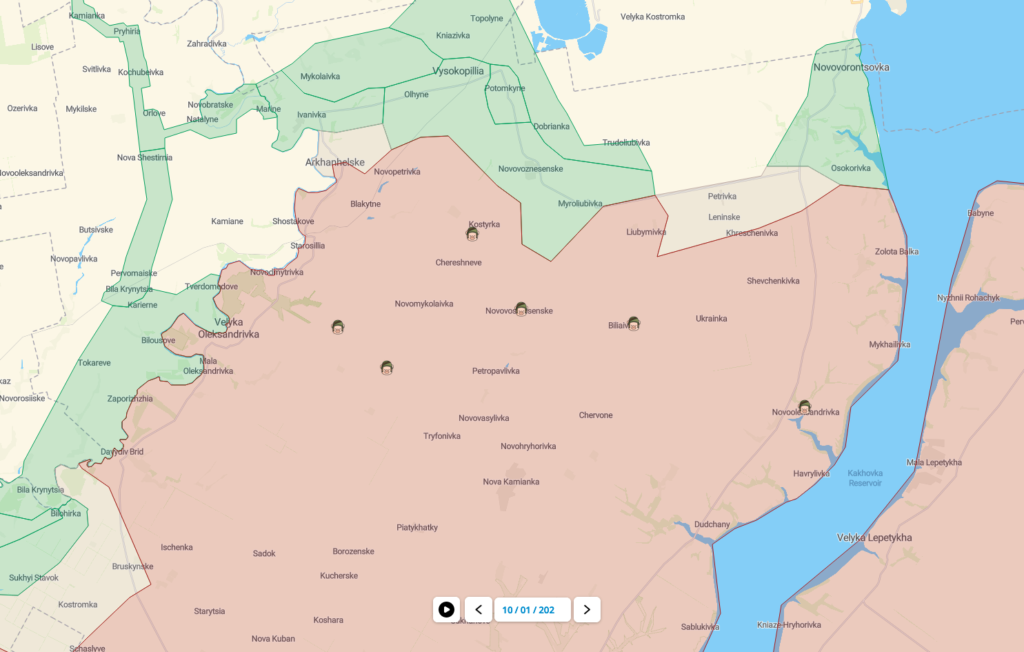
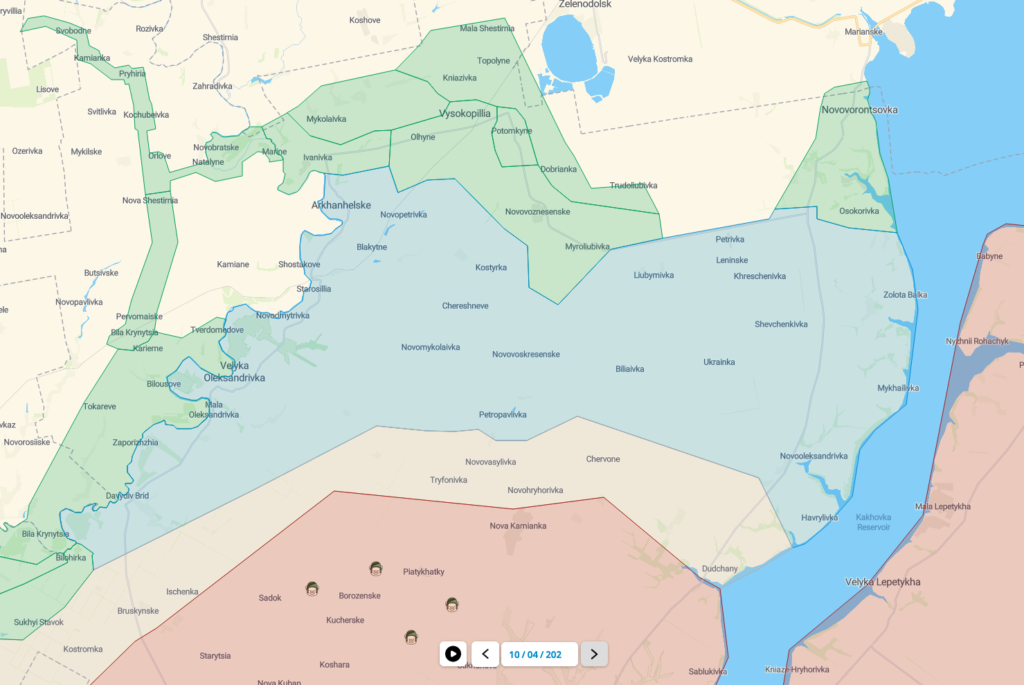
Ukraine continues to liberate territory from its Russian occupiers, not only in the Kharkiv/northeast front, but also on the Kherson/southwest front, where the last few days have seen a rapid collapse in Russian lines.
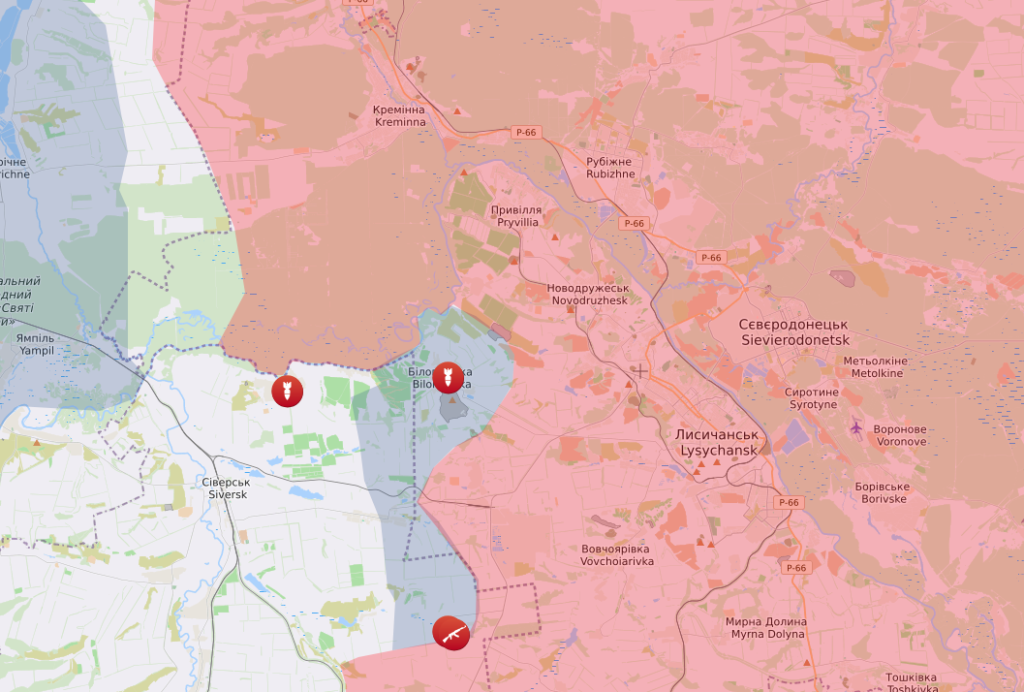
Ukrainian forces continued to make significant gains in Kherson Oblast while simultaneously continuing advances in Kharkiv and Luhansk oblasts on October 4. Ukrainian forces liberated several settlements on the eastern bank of the Inhulets River along the T2207 highway, forcing Russian forces to retreat to the south toward Kherson City. Ukrainian forces also continued to push south along the Dnipro River and the T0403 highway, severing two Russian ground lines of communication (GLOCs) in northern Kherson Oblast and forcing Russians south of the Kherson-Dnipropetrovsk Oblast border toward the Beryslav area. Ukrainian military officials noted that the Ukrainian interdiction campaign is crippling Russian attempts to transfer additional ammunition, reserves, mobilized men, and means of defense to frontline positions. Ukrainian forces also continued to advance east of the Oskil River in Kharkiv Oblast, and Russian sources claimed that battles are ongoing near the R66 Svatove-Kreminna highway.
Kreminna seems to be the next big target for Ukrainian forces to take in Luhansk, allowing them to cut a major supply line and directly threaten Severodonetsk and Lysychansk.
Here’s a detailed description of the collapse of the northern portion of the Kherson front.
For another idea how rapid that advance have been, here are snapshots of the Deep State war map on 10/1 and 10/4.
Since most of the bridges over both the Inhulets and Dnipro rivers have been blown up, Russian forces are at significant risk of being cutoff and unable to retreat.
And just as I was working on this, a Peter Zeihan video on the topic dropped:
Takeaways:
Kherson: “The entire Russian line has crumbled.”
“Kherson is the only major city Russia has captured in seven months.”
“This is the greatest concentration of Russian forces, and it is the best troops Russia has.”
They also have the best equipment. If the Ukrainians capture it, it would be even better than Kharkiv.
“I still believe this is Russia’s war to lose. The first year of all Russia’s wars look a lot like this. Bad training, bad coordination, poorly maintained equipment.” Modern warfare seldom gives you an entire year to sort your problems out.
“Watch Kherson closely. This could be where the war is decided.”
Russia seems to be retreating everywhere save the central front in Donetsk, where they seem to be eking out tiny, meaningless gains of a square kilometer or two a day. That’s not a recipe for success.
This is an interesting video of Ukrainian tanks taking out a Russian strongpoint dubbed “Moscow.”
Takeaways:
They had to break off the attack and return to base for more ammunition. “A tank has 22 shells, which isn’t enough for attack.” By contrast the M1A2 holds 42 rounds. The rapid depletion of ammo in the Yom Kippur War was one reason the Israelis designed the Merkava with a rear access door to allow quick ammo resupply.
“They didn’t expect our tanks. They thought it would be just infantry.”
“We used all our ammo up in two minutes.”
Instead of the squadron commander participating in the attack (as per Soviet doctrine), “he used quadracopter drones and could see the combat scenes and command the tanks in real time.”
“Our personnel worked with infantry and special forces. We cleared the way through the forest for them.” That involved clearing lots of mines and booby traps.
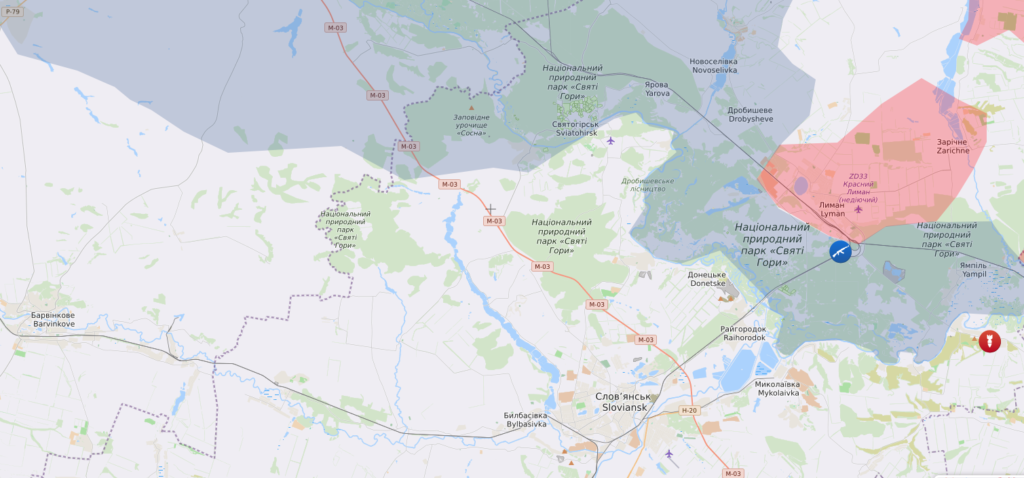
They said they cleared the way from Husarivka to Bayrak. Which means they were probably involved in the push on Lyman. Husarivka is just east of Barvinkova in the bottom left of this map.
As has become the norm, retreating Russian soldiers left behind buttloads of ammo. The Russians may have depleted their smart munitions, but they don’t appear to have any shortage of the dumb variety. “A 15 kilometer forest was full of empty ammo boxes.”
Troops breaking and retreating despite plenty of ammo suggests continuing low morale among the invading Russians (or their local conscript cannon fodder).
“There was good coordination between our infantry, tanks and artillery.” Classic western combined arms doctrine, something the Russians have seemed mostly incapable of pulling off.
Also, the Ukrainian military have reported entering Lyman:
More Democrats convicted for committing voting fraud, Russian forces are driven out of Lyman, and the Eurocrats freak out of Italy’s voters daring to disobey their wishes. Plus advice on what not to invest in.
In February, 2021, the Biden administration-run Centers for Disease Control (CDC) awarded a Soros-backed pro-migrant nonprofit $7.5 million under the guise of pandemic-related support for “LATINX ESSENTIAL WORKERS AS HEALTH PROMOTERS,” and aimed “to reduce the spread of COVID-19 and mitigate impacts among Latinx and Latin American immigrants,” according to an analysis by the Daily Caller.
The group, Alianza Americas, is currently suing Florida Gov. Ron DeSantis (R) and other Florida officials over migrant flights to Martha’s Vineyard earlier this month.
The group has also received nearly $1.4 million from George Soros’ Open Society Network.
Alianza Americas is “focused on improving the quality of life of all people in the U.S.-Mexico-Central America migration corridor.” The membership-based group, which Soros’ Open Society Foundations network (OSF) sent almost $1.4 million to between 2016 and 2020, was awarded a $7.5 million CDC grant in February 2021, according to a grant listing reviewed by the Daily Caller News Foundation. -Daily Caller
The CDC funds were distributed under a program called “Protecting and Improving Health Globally: Building and Strengthening Public Health Impact, Systems, Capacity and Security.”
Add this to the many, many things Republicans should investigate if they gain a congressional majority.
Former U.S. Rep. Michael “Ozzie” Myers, a Pennsylvania Democrat, pleaded guilty to conspiracy to deprive voters of civil rights, bribery, obstruction of justice, falsification of voting records, conspiring to illegally vote in a federal election, and orchestrating schemes to fraudulently stuff ballot boxes for specific Democrat candidates in Pennsylvania elections held from 2014 to 2018. Myers was sentenced Tuesday by U.S. District Judge Paul S. Diamond to 30 months in prison, three years supervised release, and ordered to pay $100,000 in fines, with $10,000 of that due immediately, according to a statement from U.S. Attorney Jacqueline C. Romero.
“A right-wing alliance led by Giorgia Meloni’s Brothers of Italy party” won Italy’s election and will form a new majority government.
Naturally, the Eurocratic elite are far from thrilled that Italians exercised unapproved voting preferences. “EU Commission President Threatens Italy On Eve Of Election, Says Brussels Has ‘Tools’ If Wrong Parties Win.”
Funny how they mention that some fascists were involved in founding Meloni’s party, but never mention how the Partito Democratico, the leftist and second largest party in Italy, were formerly commies.
“This Ohio School District Is Promoting an ‘LGBTQ+ Resource Guide’ With Instructions on Sex Work, Abortions. Hilliard City School District guide also encourages students to transition gender without parental consent.” All this encouraged by the National Education Association, which evidently thinks it is perfectly fine to literally instruct your children on how to be whores. (Hat tip: Sarah Hoyt at Instapundit.)
A double-dose of Glenn Greenwald:
I can't stress this enough: at its core, Democratic politics is about criminalizing opposition to their party and ideology.
Dissenting ideas are "disinformation" and must be censored by Big Tech. Trump voters are inherently criminal ("insurrectionists") and should be imprisoned.
This is the face of authoritarianism – even though it looks different than you were taught to expect. And it's the mindset of tyrants everywhere:
This is someone so inebriated by her sense of righteousness and superiority that she views dissent as an evil too dangerous to allow: https://t.co/kmG4zTgPwh
Important investing tip: A single deli in rural New Jersey is not, in fact, worth $100 million. Which explains the fraud charges.
Speaking of bad investments, remember how growing hemp was going to make farmers rich? Yeah, not so much.
Since I post a lot of Peter Zeihan videos, I thought it only fair that I post this critique of Zeihan by Yaron Brook. He opines that, while Zeihan has important things to say about geography and demographics, he ignores the central role of ideas in shaping the world.
This video, covering a scaled down prototype of the Ultra Heavy-Lift Amphibious Connector (UHAC) craft, caught my attention:
The UHAC drives across the water on treads that double as paddlewheel-style water propulsion.
That video dropped this week, but most of the UHAC testing seemed to have happened back in 2014. (Another sign that the video is old is the mention of the USS Bonhomme Richard as though it were still in service, when it infamously burned up in 2020. In fact, the arson trial of Ryan Sawyer Mays, the disgruntled SEAL washout accused of setting the fire, is going on this week.)
If the program is dead, I can understand why. The UHAC seen in the video is only one-fifth of the projected size of the final vehicle, which was supposed to be 84 ft long and 34 ft high. That’s roughly 75% as big as Nazi Germany’s contemplated but never-even-attempted Landkreuzer P. 1000 Ratte tank, a project remembered for being long on imagination and short on practicality. Things that large tend to be a big magnet for air and artillery targeting.
Another thing probably dooming it: the Marine Corp decision to move away from tanks. An amphibious assault vehicle that (as per the video) can carry three M1A1 Abrams tanks probably won’t be a priority if you don’t have any in inventory.
Faced with the continued erosion of Russia’s military position in Ukraine, Vladimir Putin has chosen to double-down on failure.
Russian President Vladimir Putin on Wednesday announced the partial mobilization of military reservists, a significant escalation of his war in Ukraine after battlefield setbacks have the Kremlin facing growing pressure to act.
In a rare national address, he also backed plans for Russia to annex occupied areas of southern and eastern Ukraine, and appeared to threaten nuclear retaliation if Kyiv continues its efforts to reclaim that land.
It came just a day after four Russian-controlled areas announced they would stage votes this week on breaking away from Ukraine and joining Russia, in a plan Kyiv and its Western allies dismissed as a desperate “sham” aimed at deterring a successful counteroffensive by Ukrainian troops.
Before this announcement it was apparent that Russia basically had no reserves, so a mobilization isn’t a surprise. Why admit failure when you can simply get more of your countrymen slaughtered for doubling-down on your own mistake?
It won’t be easy or fast to call up that many reservists, according to military experts, because Russia basically doesn’t have a reserve.
A 2019 RAND study noted that “Russia has paid little attention to developing an effective and sizable active reserve system that might be immediately required in the event of a major war.” RAND estimates that Russia has an effective reserve of only 4,000-5,000 men.
The country’s former army reserve units had been disbanded from 2008-2010 as part of the military’s modernization program, with their equipment — all of it older — going into storage or scrapped.
That doesn’t mean that Russia can’t conscript, train, organize, and arm 300,000 new soldiers, but it won’t be quick or easy.
One problem, as Foreign Affairs analyst Oliver Alexander put it, is “effectively readying and equipping these reservists. Russia already has problems equipping its professional armed forces.”
Then there’s the speed problem. Dara Massicot wrote back in August — weeks before Kyiv’s stunning counteroffensive in Kharkiv — that “Even if the Kremlin pulls all levers available, declaring a general mobilization to call up sufficient armored equipment and trained personnel, that process would still take time.”
That’s because with something like 80% of Russia’s combat power already fighting in Ukraine, plus wartime losses to their NCO and officer corps, the Russian army will need to train more trainers before anything like 300,000 men can be mobilized.
Just last month, Putin ordered an increase in the size of the Russian military of 137,000 troops. But as I reported to you then, Putin’s order only meant that “Starting next year, the Russian military will be authorized to find another 137,000 troops.” The country has long had a problem with draft dodgers, one that Putin’s “special military operation” won’t help.
He also notes the problem of obtaining new equipment. Even the first wave of Russian invasion included troops who were armed with ancient rifles. With the sanctions in place, none of that is going to get any better. Plus the fact that Russia essentially used up all their smart ordinance during the first stage of the war and that sanctions ensure they can’t easily make more.
Is there a Peter Zeihan video on the topic? Of course there is.
Some takeaways:
Reiterates why everything in the Russia army travels by rail. “The Ukrainians were able to take a couple of re-up depots in eastern Ukraine and Kharkiv a couple weeks ago and the front just collapsed.”
“We might be seeing a repeat of that in the Donbas.”
“The Russians are now discovering that they’re actually outnumbered locally, and that with all the captured equipment, the Ukrainians actually now have more artillery and more ammo.”
“This is the sort of war the the Russians know how to fight: Just throw bodies after it.”
The influx of new troops “doesn’t mean that the nature of the war is
fundamentally changed,” but now they’ll be able to rotate fresher troops in, “and continue fighting the war more or less the way that they have been now, which is to say poorly.”
Russia is already crashing demographically, and the main cohort of this war is coming from the men who should be fathering children. “This is a potentially a country killer. Before I thought that this was Russia’s last war. Now I’m certain of it.”
Says Ukraine can still win, but they need to do the Kharkiv counteroffensive twenty times over.
Says they need to continue hitting Russian logistics nodes. “The one I am most interested in, of course, is Miriapol. Because if the Ukrainians can reach Mariupol, they basically isolate Russian forces throughout southern Ukraine, and then you’re talking about a hundred thousand Russian troops that are just stranded with no hope of resupply at all.” (Assuming his later mention of taking out the Kerch Strait Bridge.)
Nor are the sham referendums likely to make any difference either.
Russian-appointed occupation officials in Luhansk, Donetsk, Kherson, and Zaporizhia oblasts announced on September 20 that they will hold a “referendum” on acceding to Russia, with a vote taking place from September 23-27. The Kremlin will use the falsified results of these sham referenda to illegally annex all Russian-occupied parts of Ukraine and is likely to declare unoccupied parts of Donetsk, Kherson, and Zaporizhia oblasts to be part of Russia as well.
The Kremlin’s annexation plans are primarily targeting a domestic audience; Putin likely hopes to improve Russian force generation capabilities by calling on the Russian people to volunteer for a war to “defend” newly claimed Russian territory. Putin and his advisors have apparently realized that current Russian forces are insufficient to conquer Ukraine and that efforts to build large forces quickly through voluntary mobilization are culminating short of the Russian military’s force requirements. Putin is therefore likely setting legal and informational conditions to improve Russian force generation without resorting to expanded conscription by changing the balance of carrots and sticks the Kremlin has been using to spur voluntary recruitment.
Putin may believe that he can appeal to Russian ethnonationalism and the defense of purportedly “Russian peoples” and claimed Russian land to generate additional volunteer forces. He may seek to rely on enhanced rhetoric in part because the Kremlin cannot afford the service incentives, like bonuses and employment benefits, that it has already promised Russian recruits. But Putin is also adding new and harsher punishments in an effort to contain the risk of the collapse of Russian military units fighting in Ukraine and draft-dodging within Russia. The Kremlin rushed the passage of a new law through the State Duma on September 20, circumventing normal parliamentary procedures. This law codifies dramatically increased penalties for desertion, refusing conscription orders, and insubordination. It also criminalizes voluntary surrender and makes surrender a crime punishable by ten years in prison. The law notably does not order full-scale mobilization or broader conscription or make any preparations for such activities.
ISW has observed no evidence that the Kremlin is imminently intending to change its conscription practices. The Kremlin’s new law is about strengthening the Kremlin’s coercive volunteerism, or what Chechen leader Ramzan Kadyrov called “self-mobilization.”
The Kremlin is taking steps to directly increase force generation through continued voluntary self-mobilization and an expansion of its legal authority to deploy Russian conscripts already with the force to fight in Ukraine.
Putin’s illegal annexation of occupied Ukrainian territory will broaden the domestic legal definition of “Russian” territory under Russian law, enabling the Russian military to legally and openly deploy conscripts already in the Russian military to fight in eastern and southern Ukraine. Russian leadership has already deployed undertrained conscripts to Ukraine in direct violation of Russian law and faced domestic backlash. Russia’s semi-annual conscription cycle usually generates around 130,000 conscripts twice per year. The next cycle runs from October 1 to December 31. Russian law generally requires that conscripts receive at least four months of training prior to deployment overseas, and Russian President Vladimir Putin has repeatedly denied that conscripts will be deployed to Ukraine. Annexation could provide him a legal loophole allowing for the overt deployment of conscripts to fight.
Russian-appointed occupation officials in Kherson and Zaporizhia oblasts announced the formation of “volunteer” units to fight with the Russian military against Ukraine. Russian forces will likely coerce or physically force at least some Ukrainian men in occupied areas to fight in these units, as they have done in the territories of the Russian proxy Donetsk and Luhansk People’s Republics (DNR and LNR).
The Russian State Duma separately passed new incentives for foreign nationals to fight in Russia’s military to obtain Russian citizenship and will likely increase overseas recruitment accordingly. That new law, which deputies also rushed through normal procedures on September 20, allows foreign nationals to gain Russian citizenship by signing a contract and serving in the Russian military for one year. Russian law previously required three years of service to apply for citizenship.
Putin’s appeals to nationalism may generate small increases in volunteer recruitment from within Russia and parts of occupied Donetsk and Luhansk. However, forces generated from such volunteers, if they manifest, will be small and poorly trained. Most eager and able-bodied Russian men and Ukrainian collaborators have likely already volunteered in one of the earlier recruitment phases.
Local Russian administrators will continue to attempt to form volunteer units, with decreasing effect, as ISW has previously reported and mapped.
Russian forces and the Wagner Private Military Company are also directly recruiting from Russian prisons, as ISW has previously reported. These troops will be undisciplined and unlikely to meaningfully increase Russian combat power.
Putin likely hopes that increasing self-mobilization, and cracking down on unwilling Russian forces, will enable him to take the rest of Donetsk and defend Russian-occupied parts of Luhansk, Kherson, and Zaporizhia oblasts. He is mistaken. Putin has neither the time nor the resources needed to generate effective combat power. But Putin will likely wait to see if these efforts are successful before either escalating further or blaming his loss on a scapegoat. His most likely scapegoat is Defense Minister Sergei Shoigu and the Russian Ministry of Defense. Reports that Shoigu would accompany Putin while Putin gave a speech announced and then postponed on September 20 suggest that Putin intended to make Shoigu the face of the current effort.
That decree is every bit as popular as you would expect.
Takeaways:
“Today, people went to the streets from Moscow to the Far East to protest. Even though it only concerned those in reserve, everyone sees where this is going.”
“Former Security Minister of the Donetsk People’s Republic called on Russia’s military command to better supply existing units on the ground. He also added that lack of equipment is the main reason why the Ukrainians keep advancing in Kherson.”
He thinks the conscripts will work logistics jobs, free up contractors to do the fighting. I remain doubtful that the effective military contractor pool for this war is terribly deep.
Neither the mobilization nor the sham referendums change any immediate facts on the ground in Ukraine. It will take many months to take new “recruits” up to even the most basic soldiering standards. Or maybe they’ll just give them three days training and send them into battle with old rifles and old ammunition like they did before, with the same results.
Either way, it doesn’t solve any of Putin’s immediate problems…
Like a Marvel crossover comic that features two characters you’re interested in, having both Ian McCollum of Forgotten Weapons and tank expert Nicholas Moran talk about the .50cal machine gun (and why the Germans never adopted it) did indeed peak my interest.
A few takeaways:
“That the M2 I think is so well known today, it’s so recognized and … is ubiquitous. During World War Two, the U.S. kind of did a like a massive industrial flex on the rest of the world with the M2. It’s a bit memey, but you could think of this as like the classic Uncle Sam painting with like glowing red eyes of fire. Because the US manufactured about 2 million Browning .50 caliber machine guns.”
“We’re going to put them on trucks, we’re going to put them on tanks, we’ll put them on some Jeeps, we’ll put them on half-tracks. We’ll put four of them together in a big mount and put that on a half-track or on a trailer. It’s like Oprah just handing out .50 cal machine guns.”
Because McCollum didn’t know, he asked Moran, leading to the special Gun Jesus/Chieftain Crossover Issue.
Moran’s first cut: “Dunno! Let me ask around.”
For starters, the Germans used small canons instead of big machine guns.
It was a hell of a lot safer to be buttoned up in the tank with aircraft shooting at you than outside it trying to score an unlikely machine gun kill.
“The reality was that aircraft generally were horrible at killing tanks.” (Caveat: I hear the Stuka version with the 37mm cannon was actually pretty good at it, but German tankers obviously didn’t have to worry about that.)
Also, since they thought taking out aircraft with machine guns was unlikely, one light machine gun with tracers was just as good as four heavy machine guns at “giving pilots something to think about” on their strafing runs.
The Germans did have “the MG 131, a 13mm weapon, and thus as close to a caliber .50 as possible. Though primarily an electrically primed aircraft gun, it could be converted to a ground mount and percussion fired. It could thus be mounted on a tank much like an American caliber .50, yet it never was.”
Germans had a doctrinal preference for saving ammo wherever possible if the possibility for effective fire was too low. Americans had a doctrinal preference for turning out giant piles of ammo.
“If you want something which provides a lot of coverage, and has a good chance of actually shooting down a target, especially an armoured one like an IL-2, you’re better off with a heavier gun on a dedicated platform with a trained, dedicated anti-aircraft crew.”
Peter Zeihan says the abysmal performance of the Russian Army is going to have a whole lot of ramifications around the world, many in Russia’s own near abroad. “It means that the image of the Russians as a regional power, much less a global one, is gone, and it’s not coming back.”
Some takeaways:
“The countries that had signed on to kind of a Russian Alliance, if you will, [they’re] on their own completely, and that provides opportunities for their rivals to take matters into their own hands.”
Belarus: “Here’s a country of 10 million people that has basically hitched itself to Putin’s star. And the Poles, the Latvians, the Lithuanians, the Estonians, the Finns, and the Swedes they have been chomping at the bit for years to try to take Alexander Lukashenko of Belarus down to size and basically peel Belarus out of the Russian orbit. They will now have the opportunity, and it’s unlikely that anyone in Europe or the United States is going to try to stand in the way.”
“Unless Lukashenko sues for peace with the Balts and the Nordics, very quickly we should count on seeing him being brought up on war crimes before very long. Because after all he did provide the access that was necessary for the assault on Kiev early in the war.”
Georgia: “Here I do expect things to be a little bit more circumspect. The Georgians tried to call Russia’s bluff and invade their former secessionist Republics of North Ossetia and Abkhazia several years ago in 2004, and it was a trap and the Russians were able to destroy the Georgian Army. So the Georgians are not going to do this until a couple of other countries in the region have already pulled this off successfully.”
Moldova:
There’s a small secessionist republic there called Transnistra. It’s only 10 percent of the population of a country of like three and a half million people. There’s not much going on there, but the Russians intervened decisively right at the end of the Soviet collapse to basically make sure that Transnistra could be functionally independent under Russian sponsorship, but unlike the Georgian secessionist territories, which share a land border with Russia proper, Transnistra is on its own. The only way to supply it is through Ukraine, and that has obviously stopped. So the Moldovans and their sponsors in Romania have now a vested interest in ending this historical aberration, and I would expect to see that being wrapped up within a year or two.
Israel: Without big brother Russia providing help, Syria may be screwed.
The Russians have very publicly, unfortunately for them, relocated a lot of hardware from Syria to Ukraine, specifically air defense equipment to help them with their assaults. Which means that if you are Israel, the only thing that is standing in your way of going after the Syrian regime is someone from the Biden Administration saying “You know what? We really don’t want a nuclear event to erupt because there are Russian troops involved.” Well, the tone of the Biden Administration in the last 72 hours has kind of changed. Now it’s more of “You kids go have fun” sort of vibe, so I expect us to see some very interesting pyrotechnics between the Israelis and the Syrians in a very short period of time, followed by the Syrians suing for peace. Which means that we get to revisit the entire Syrian Civil War now without the Russians being players.
Two caveats from my viewpoint: 1. Given the history of Israeli striking Syria with impunity several times over the past decade, with possibly one Israeli plane hit during that period, I don’t think Russian anti-aircraft equipment have provided any significant deterrent to Israel doing whatever it wanted in Syria. I view it more likely that Israel views a weakened Assad continually beset by a grinding civil war against numerous enemies a preferable option to taking him out entirely. 2. Not sure where Zeihan is getting his information on a change in the Biden Administration’s messaging to Israeli, but I readily concede that he likely does have better sources than I do. It may also be that the most recent failure of the asinine Iran deal has changed the collective mind of whatever passes for a Biden brain trust.
Speaking of Iran: “Tehran has lost its primary weapons sponsor, and its primary Security Council sponsor, and that is going to force the Iranians to think differently and act differently in every theater.”
Plus possible policy changes in (or toward) Cuba and Venezuela.