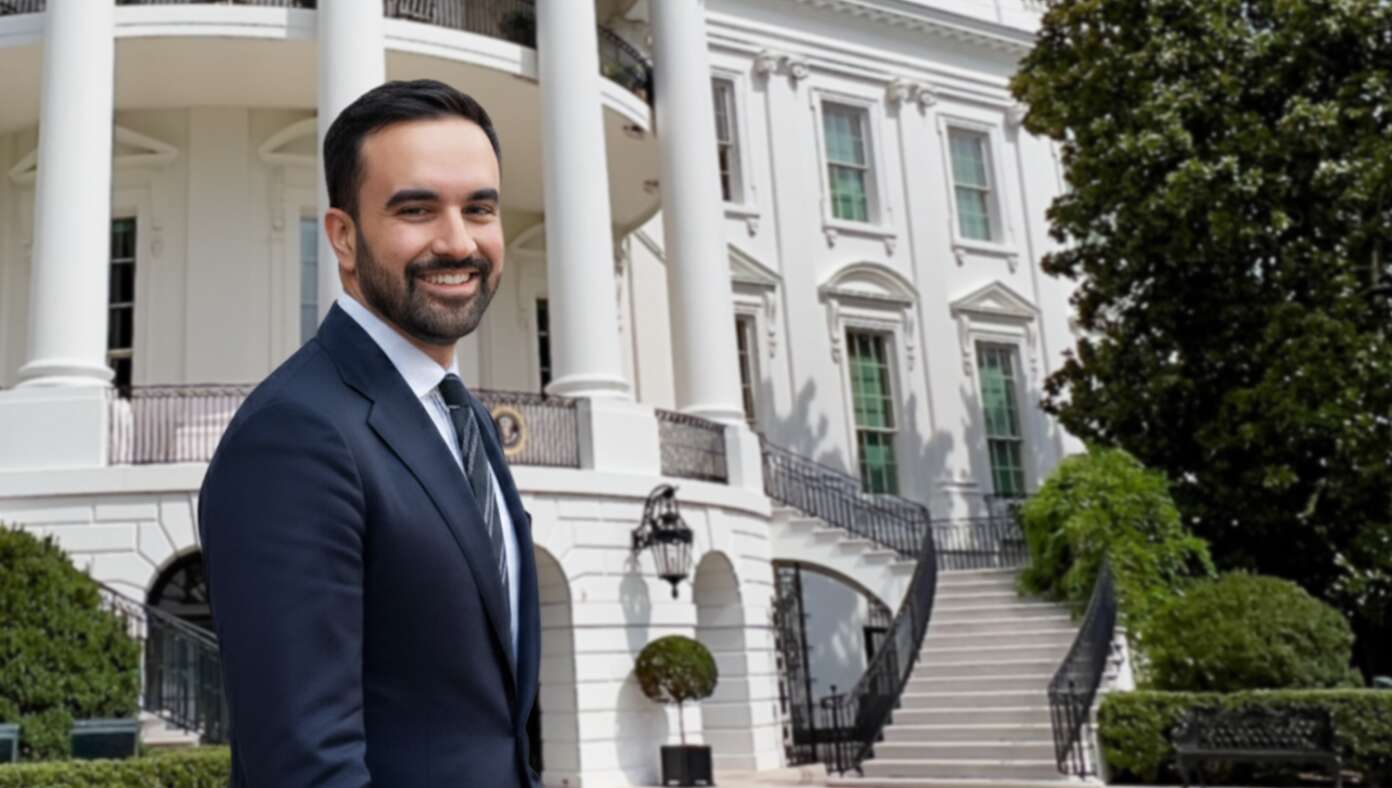
The difference between having a real DA who prosecutes criminals, and a Soros-backed DA who doesn’t is stark. While most of America was seeing a drop in murder rates, Austin under Soros-backed DA Jose Garza has seen murder rates rise by 74% since 2019.
Amid a likely decrease in homicide rates across the nation, both Dallas and Austin have experienced an increase in homicides compared to last year, with Austin’s homicide rate for the first half of 2026 apparently 74 percent higher than in 2019, according to a new study released Thursday.
Commissioned by the nonpartisan Council on Criminal Justice (CCJ), the study examined patterns for 13 types of crime in 36 U.S. cities. It found that reported homicides appear to have dropped by 18 percent from the same period in 2025, and by 51 percent since the 2022 peak.
“Murder and other crime rates are falling across the map, in cities with different political leadership, housing and economic conditions, policing and prosecution strategies, violence reduction models, and levels of federal enforcement activity,” said CCJ President and CEO Adam Gelb in a statement.
Of the 30 cities reporting homicide rates, Arlington saw a decrease of 60 percent and Dallas saw an increase of 30 percent compared to the first half of 2025.
What does Dallas have in common with Austin? A Soros-backed DA, in this case John Creuzot.
CCJ also looked at longer trends and found that compared to 2019, there were 31 percent fewer reported homicides in the study cities in the first half of 2026, with some — such as Arlington — seeing drops of at least 50 percent or more, but Austin was among four cities that reported a higher rate.
According to the study, four cities had homicide rates from January to June higher than in 2019: Austin at 74 percent; Norfolk, Virginia at 36 percent; Minneapolis, Minnesota at 26 percent; and Pittsburgh, Pennsylvania at 4 percent.
In addition to reduced policing after the #BlackLivesMatter riots, Minneapolis has a Soros-backed DA in Mary Moriarty. Norfolk is another city with a Soros-backed DA, Ramin Fatehi.
Although Dallas’ homicide rate is trending higher over last year, compared to 2019, that city’s rate has dropped by 22 percent. Of the other Texas cities analyzed, since 2019, San Antonio dropped by 8 percent, Fort Worth by 26 percent, and Arlington by 60 percent.
Snip.
Austin and Travis County have drawn controversy over the past few years due to Travis County District Attorney Jose Garza’s allegedly lenient approach to the prosecution of crime. First elected in 2020, Garza has been accused of dropping or reducing charges in hundreds of criminal cases, and last year, Garza’s office reportedly failed to bring timely indictments for crimes that included violent felonies, leading to the dismissals of hundreds of cases.
Earlier this year, Gov. Greg Abbott cited Garza in his call for new legislation to create a statewide prosecutor and a mechanism for removing “rogue” local prosecutors. A ,a href=”https://rightoncrime.com/going-rogue-how-radical-reformist-prosecutors-are-endangering-public-safety/”>study from the Texas Public Policy Foundation published in July also listed concerns over practices in Travis County.
It matters a great deal whether your county has a DA who’s actually dedicated to fighting crime, or a soft-on-crime, Soros-backed DA who loves putting criminals back on the streets. And American citizens are paying for that difference with their lives.
Chinese commie money is helping fund American commie wins, Rapey McNazi drops out, Ukrainian drones feast on Russian ships and hit Russia’s largest oil refinery (among others), Labour wants to install Big Brother into YouTube, and a victory for right to repair. Plus: Trebuchet!
It’s the Friday LinkSwarm!
Non-link summary of the state of Iran war: Bombing currently paused, but the ceasefire is over and, oh yeah, supposedly Iran is plotting to assassinate
President Trump.
One of the most consequential groups behind the surge of radical leftist candidates in New York’s and Colorado’s congressional primaries was a super PAC formed earlier this year, calling itself American Priorities. After filing with the Federal Election Commission (FEC) in February of this year, the group pledged to spend more than $10 million during the 2026 midterms and declared that its goal, according to founder Hannah Fertig, was “to make sure that someone’s there to protect candidates who question these [pro-Israel] policies,” countering the influence of the American Israel Public Affairs Committee (AIPAC).
The group invested about $2 million in supporting Adam Hamawy, an Egyptian-born physician who has testified on behalf of Omar Abdel-Rahman, the blind sheikh convicted of seditious conspiracy for his part in the 1993 World Trade Center bombing. Thanks in part to the group’s generous contributions, Hamawy handily won the Democratic primary in New Jersey’s 12th District.
American Priorities then spent an additional $2 million across the river in New York, contributing to the successful campaigns of Brad Lander, who unseated the incumbent, Congressman Dan Goldman, in a campaign focused largely on vilifying Israel, and Darializa Avila Chevalier, who unseated Adriano Espaillat in New York’s 13th District while doubling down on a host of controversial statements, from using the American flag as a napkin to supporting Hamas in the immediate aftermath of Oct. 7, 2023. The super PAC also spent $150,000 on TV ads to help democratic socialist Melat Kiros win Colorado’s 1st District primary.
Who, then, is behind American Priorities?
Public reports reveal that the group’s two largest donors, by far, are Omer Hasan and Mohammad Waqas Javed, who were described in the press as former Silicon Valley executives who recently became involved in politics and about whom “little is publicly known.”
But Hasan and Javed, as a simple web search reveals, are both alums of the same company, the mobile advertising and data company AppLovin, founded in 2012.
The company’s path to becoming one of the world’s most highly valued ad tech companies is highly unorthodox. According to The Economist, for example, the company’s share price has climbed more than 30-fold between 2022 and 2025, an astonishing feat for any company but particularly for one that, for years, wallowed in obscurity in the murky waters of app-monetization solutions.
In 2018, six years after it was launched, the company introduced a mobile-gaming publishing arm. “The result,” explained ad tech analyst Rio Longacre, “was a self-reinforcing flywheel: more games meant more first-party data, which fueled better optimization, which in turn strengthened both the AdTech stack and the company’s foothold in the gaming ecosystem.” Which, naturally, also raised considerable concerns: AppLovin was now both running the advertising platform and selling inventory, which inspired many critics to strongly doubt the validity of the numbers it was reporting.
But the company’s growth—and the vehemence of its critics—grew far more exponentially in 2022, when it pivoted away from being primarily a gaming company to “an AdTech company powered by AI-driven performance optimization,” a giant de facto machine learning operation. The company’s many detractors, Longacre noted, now charged it with “money flowing between entities the public can’t fully scrutinize, creating the illusion of third-party demand when some of it may simply be internal recycling. They also highlight the quality of traffic inside the system, pointing to patterns that resemble click-farm-adjacent behavior—bursts of installs from low-value regions, strange retention curves, and activity that seems optimized more for algorithmic signaling than real user engagement.”
To assess the validity of these claims, it helps to know who AppLovin partners with. In 2016, the company agreed to be bought by Orient Hontai Capital, a state-backed Chinese private equity firm. The Committee on Foreign Investment in the United States, an interagency government body dedicated to monitoring the national security implications of large-scale business transactions, objected, and the deal was subsequently amended.
The Chinese connection, however, was far from over: One of the company’s largest investors is one Hao Tang, who, according to regulatory filings in 2025, owned 3.2% of AppLovin, valued at roughly $4.6 billion. Other reports claim that Tang controls, through shell companies, at least 9.8% of Class A shares, making him the company’s largest individual shareholder beside AppLovin’s CEO, Adam Foroughi, who told Fox News in April, when AppLovin was trying to acquire TikTok’s non-Chinese assets, that he remains the largest shareholder.
Snip.
At the moment, $2 million of American Priorities’ war chest comes from Hasan and Javed (an additional $500,000 came from another former AppLovin team member, Tariq Afaq Ahmed, according to FEC filings). As attention on both the left and the right continues to focus on AIPAC and its alleged impact on American politics, it’s worth noticing that the most prominent PAC on the scene right now is funded primarily by two veterans of a shady tech colossus with strong links to China and repeated allegations of ties to the Communist Party in Beijing.
A new analysis from a Texas think tank found a correlation between district attorneys’ non-prosecution policies and increases in crime, but with few state options for addressing so-called “rogue” prosecutors, the group suggests that Texas lawmakers should consider reforms next year.
Ross Jackson, a senior policy analyst for Right on Crime at the Texas Public Policy Foundation, said he has been researching the issue since last fall.
“There are correlations that are particularly evident in Austin and Minneapolis and some other cities around the country and it’s more evident in cities and counties where there hasn’t historically been a huge crime rate like in Austin,” Jackson told The Texan.
According to Jackson’s report, Austin experienced one of the most dramatic surges in violent and property crimes in recent years, which saw the city’s homicide rate climb by over 60 percent between 2016 and 2024.
Travis County District Attorney Jose Garza, who was first elected in 2020, has been accused of dropping or reducing charges in hundreds of criminal cases, including one in which an appeals court had called for a new trial. Last year, Garza’s office reportedly failed to bring timely indictments for crimes that included violent felonies, leading to the dismissals of hundreds of cases.
Attempts to remove Garza through House Bill (HB) 17, a state law enacted in 2023, have failed, and he has ignored calls for his resignation over mishandled cases. Jackson noted that HB 17 is limited to removing district attorneys who officially adopt non-prosecution policies in conflict with state law, and does not apply to those who adopt informal policies or internal guidance.
Jackson noted that some proposed legislative remedies face high hurdles.
The policy solutions examined by Jackson include mechanisms to discipline or remove district attorneys, as well as avenues for prosecuting serious crimes when the local district attorney or a county prosecuting attorney fails to do so.
One possibility suggested by Jackson is creation of a new state commission to provide oversight and administer discipline. The model he suggested is based on the state’s former Prosecuting Attorneys Coordinating Council that operated between 1977 and 1983. While state lawmakers could create such a council through statute, Jackson noted that an amendment to the Texas Constitution would be needed to allow the council to remove district attorneys.
Constitutional amendments require the support of two thirds of both chambers of the Legislature, which usually requires bipartisan support, as well as approval by voters in a statewide election.
Jackson also noted that state lawmakers could give authority to the State Commission on Judicial Conduct to discipline rogue prosecutors, but giving it a removal mechanism would also likely require a constitutional amendment.
One possibility for prosecuting cases dropped by prosecutors would be to give that power to the Texas Office of the Attorney General (OAG). Under a 2021 Texas Criminal Court of Appeals opinion, the OAG may only prosecute cases referred by a local district attorney or county attorney.
“Unless the Court reverses their decision, giving the OAG that authority would definitely require a constitutional amendment,” said Jackson. “I think that would be the most difficult option legislatively, just given the partisan nature of that position. I don’t see many crossover voters on something like that.”
Other options include creating a state prosecutor or creating five new regional district attorneys, each anchored in one of Texas’ urban areas.
Jackson says that lawmakers appear to have the authority to create a state prosecutor or regional district attorneys through statute, but the regional approach may also require a constitutional amendment and may necessitate the creation of new courts — a more costly option for taxpayers.
Earlier this year, Gov. Greg Abbott cited Garza’s history as Travis County’s district attorney in his call for new legislation to create a statewide prosecutor and a mechanism for removing rogue prosecutors. Texas Sen. Mayes Middleton (R-Galveston), now the GOP nominee for state attorney general, has also voiced support for a statewide prosecutor.
In addition to Garza, Jackson’s report identified concerns over district attorney policies in both Bexar and Dallas counties. In Bexar County, District Attorney Joe Gonzales gave local law enforcement officers the option to issue tickets for certain “drug, theft, and traffic misdemeanors in lieu of jail time,” and Dallas County District Attorney John Creuzot announced that he would no longer pursue charges against “low-level, first-time drug offenders.” Cruezot rescinded a previous policy in 2022 of declining to prosecute low-level theft.
The FBI has arrested 113 active spies from foreign nations, agency director Kash Patel said on Wednesday.
The arrests of foreign spies “means our tech stays home and our defense secrets stay locked down,” a video shared by Patel on X said. “But the FBI didn’t stop there. They forced 62 removals of Chinese spies in 2026 alone.”
The video added that this has shattered the Chinese Communist Party’s (CCP’s) deep cover operations against the United States.
The House Committee on Homeland Security released a report in February 2025 detailing multiple cases of espionage conducted by the CCP in the United States since 2021.
The cases, spread across 20 U.S. states, involved the transmission of sensitive military information to Beijing, stealing trade secrets to benefit the regime, transnational repression schemes targeting Chinese dissidents, and obstruction of justice. Every 12 hours, the FBI opened new cases to counter Beijing’s intelligence operations, according to the report.
The report noted that the CCP’s theft of U.S. intellectual property amounts to roughly $4,000 to $6,000 annually per American family of four after paying taxes.
In one prominent case, a senior adviser to the State Department was arrested in October 2025, accused of taking thousands of top-secret documents and meeting with Chinese officials. The individual allegedly downloaded and saved documents related to U.S. fighter jets and weapons capabilities.
On Jan. 12 this year, the Department of Justice (DOJ) announced that a former U.S. Navy sailor was sentenced to 200 months in prison for spying for Beijing.
The person had access to sensitive national defense information about the amphibious assault ship U.S.S. Essex, such as its weapons, propulsion, and desalination systems. These ships are a “cornerstone of the U.S. Navy’s amphibious readiness and expeditionary strike capabilities,” according to the DOJ statement. The sailor sold critical information to a Chinese intelligence officer for $12,000.
More recently, on June 4, the DOJ announced that a U.S. citizen pleaded guilty to acting as an agent for China. The man, who lived in China, would travel to the United States to meet with individuals who could provide him, and ultimately the Chinese Ministry of State Security, with important information.
Finally: “Vance announces investigation into alleged H-1B visa fraud.”
Vice President JD Vance announced Wednesday that the Trump administration has opened an investigation into allegations of fraud within the H-1B visa program, which allows foreign workers to legally work in the United States on a temporary basis.
The visas allow U.S. companies to hire high-skilled foreign workers to serve in occupations such as healthcare, technology and education, while critics argued big businesses use the program to import cheap labor to replace Americans.
“Big corporations and fraudsters overseas are using this program to undercut the wages of American workers,” Vance said in a speech in Milwaukee. “If you are trying to take advantage of that visa program, you are not allowed into the United States.”
President Donald Trump tapped Vance as his “fraud czar” in early April. Since his appointment, he has overseen major fraud busts across the nation, including against allegedly fraudulent hospices in Los Angeles and other operations in Minneapolis and Maine.
Labor Department Inspector General Anthony D’Esposito said the administration is also investigating alleged fraud in the Permanent Labor Certification visa process, and that investigators have already begun to issue dozens of subpoenas in relation to the probe.
“This is another example where fraud is fueling violent crime,” D’Esposito told Fox Business. “Much of the visa and the human trafficking that we see when it comes to this foreign labor is tied to cartels, is tied to transnational gangs, and this is the work that we should be doing, not only to make America safe again, but to make America more affordable again.”
“Ukrainian Drones Hit Omsk Refinery! Russia’s Largest! Su-57’s Deployed in Defence!” As I’ve said before, if they can hit Omsk, they should target the Transiberian railway bridge over the Irtysh river.
Hours after USA Today published an interview between one of its journalists and Cuban President Castro’s grandson, Raúl Guillermo Rodríguez Castro, the communist-run island experienced an island-wide power grid collapse.
The electrical workers’ union said the entire power grid went offline and that officials were investigating the cause. Cuba’s energy ministry confirmed the blackout and said crews were working to restore service.
“A total disconnection of the National Electric Power System is occurring. The causes are being investigated,” the electrical workers’ union wrote on X.
And that was the first blackout. It just blacked out again today…
According to Transparency USA, Soros has already funneled over $1 million into the Texas Majority PAC. The federal American Bridge PAC, long aligned with Soros, has contributed $7.57 million to the Texas Majority PAC.
The Soros family has poured a staggering $103 million nationwide into the 2026 election cycle so far.
The Texas Majority PAC exists to turn Texas into a blue state by electing Democrats to statewide offices.
Snip.
Texas Gun Rights is warning that Texas Majority PAC-backed candidates, including James Talarico, Gina Hinojosa, Vikki Goodwin, Nathan Johnson, Sarah Eckhardt, Jon Rosenthal, and Clayton Tucker, support radical anti-gun policies such as red flag laws, raising the age to purchase guns, gun-registration schemes, and the outright banning and seizure of common semi-automatic firearms.
“Soros and his allies are not investing millions in Texas because they think this is a lost cause. They are doing it because they believe Texas can be flipped,” warned Texas Gun Rights President Chris McNutt.
“Abbott Appoints Comptroller Candidate Don Huffines to Fill Outgoing Hancock’s Unexpired Term.” Huffines ran against Abbott for the 2022 Republican gubernatorial nomination.
A federal appellate court has upheld an agreement between Texas and the Trump administration ending in-state tuition for illegal aliens in compliance with federal law.
The Texas Dream Act, enacted in 2001, formerly allowed qualifying illegal alien students to pay in-state tuition rates at public colleges and universities.
In June 2025, the U.S. Department of Justice sued the State of Texas, arguing that federal law preempted the Texas Dream Act.
According to the suit, federal law preempts any state rules that grant illegal aliens benefits not afforded to all U.S. citizens. The Texas Dream Act did this because U.S. citizens from outside the state were forced to pay higher rates than the qualifying aliens.
Texas Attorney General Ken Paxton ultimately agreed with the DOJ, settling the case.
Webb County Sheriff Martin Cuellar, the brother of Democrat U.S. Rep. Henry Cuellar, faces a state court hearing Thursday as proceedings move forward in an effort to remove him from office while he awaits trial on federal fraud and money laundering charges.
A docket control conference is set for 9 a.m. in the 49th District Court in the case seeking Cuellar’s removal under Chapter 87 of the Texas Local Government Code.
The removal petition was filed in May by former Laredo City Councilman Alfonso “Poncho” Casso, who alleges Cuellar committed official misconduct based on the conduct underlying a federal criminal indictment returned last year.
According to the U.S. Department of Justice, Cuellar conspired with former Webb County Sheriff’s Office Assistant Chief Ricardo Rodriguez and others to operate a private disinfecting business during the COVID-19 pandemic using sheriff’s office employees, equipment, and other county resources.
Federal prosecutors allege the business, Disinfect Pro Master, secured a $500,000 contract to disinfect schools in the United Independent School District while relying almost entirely on sheriff’s office personnel and supplies to perform the work.
Lt. Gov. Dan Patrick and Texas House Speaker Dustin Burrows sent a letter this week to the University of Texas Health Science Center in Houston (UTHealth Houston), University of Texas Medical Branch (UTMB), and Texas Health and Human Services Commission (HHSC).
The letter refers to Senate Bill (SB) 2308, passed in the 89th Legislature, which created a state-sponsored consortium for the purpose of conducting research and clinical trials into ibogaine, a naturally occurring psychoactive compound. The drug is being studied for its potential benefit for those suffering from traumatic brain injury, post-traumatic stress disorder, addiction, and other mental health conditions.
However, as the letter affirms, no proposals set forth by pharmaceutical companies met the standards required for the state to move forward with clinical trials.
Patrick and Burrows commented on the lack of readiness to proceed: “This should not preclude the State of Texas from independently proceeding with this vital work through our university research partners as spelled out in the March 31 press release from both the House and Senate.”
The press release in reference announced Texas’ allocation of $50 million toward research into the drug.
American video-sharing platform YouTube told users in Britain that, under pressure from the left-wing Labour Party government, independent creators will likely see their content suppressed.
The British government has been accused of attempting to silence political opposition, with YouTube telling UK creators that proposed new rules would include a “prominence regime” that would force sites like YouTube to give a “privileged position” to the BBC, ITV, Channel 4, and other legacy media.
The notice said that artificially propping up establishment media would naturally result in independent media being downranked and obscured from view, as “pushing this group forward means pushing everyone else downward. Mandatory prioritisation of broadcasters would affect how your content reaches your audience, regardless of what your audience actually wants to see.”
“Mandating prominence for established media networks would push the UK’s diverse mix of independent journalists, educators, and digital-first businesses down the line,” YouTube added.
Snip.
The government is said to have told the site that legacy broadcasters had the “trust” of the state to provide accurate reporting, which YouTube noted implies that “digital-first voices are less credible, damaging the foundational trust that sustains the creator economy.”
Translation: Labour to suppress coverage of Muslim rape gangs and anything else that makes it look bad.
This comes despite the BBC recently facing significant scandals involving the accuracy of its reporting, including last year when it was forced to apologise to U.S. President Trump after a documentary produced by the public broadcaster deceptively spliced together different sections of his speech on January 6th 2021, to falsely give the impression that he had encouraged supporters to riot, when he did the exact opposite.
Just last month, the BBC was also forced to issue an apology to Brexit leader Nigel Farage after one of its presenters fabricated fictitious quotes from the Reform UK leader in the wake of the killing of handcuffed teen Henry Nowak.
Commenting on the notice from YouTube, Mr Farage said: “Look at this appalling state censorship. Labour now want to seize control of YouTube’s algorithm. They want YouTube to artificially boost the BBC and Channel 4’s content, and suffocate independent journalists and producers.
“The BBC has been biased to pro-mass migration, open borders, and Net Zero views these past few decades. It’s part of the reason we’re in a mess. The BBC’s own internal reports admit and document some of this bias.
“People have moved to X and YouTube in part as a response to it. And now, Labour want to control what they see there? Reform will scrap this heavy handed lunacy.”
Listen to this extraordinary exchange between [GB News Broadcaster] Camilla Tominey and Labour’s Health Secretary James Murray. It is genuinely jaw-dropping.
Camilla: “You’re quite pro-trans, aren’t you? Do you think a woman can have a penis? Because you did previously?”
Murray: “No, I don’t.”
Camilla: “So you’ve changed your mind?”
Murray: “Yes.”
Camilla: “Why?”
Murray stumbles. He says he’s been thinking about the issue over recent years and would not now say trans women are women.
The Labour Party is in many ways more loony than the Democrats. If tranny madness has broken there, maybe it’s finally receding globally.
Speaking of the UK, former Tory and current Reform MP Ann Widdecombe was murdered in her home. Police have a 26 year old man in custody.
“ICE Agent Fatally Shot Man During Houston Operation in Self-Defense. Federal officials say a Mexican national used his truck as a weapon during a Magnolia Park enforcement operation before an ICE agent shot him.” Magnolia Park is an old Houston neighborhood southeast of downtown along Buffalo Bayou.
The man has been identified as Lorenzo Salgado Araujo.
According to the Department of Homeland Security, ICE agents attempted to stop Salgado Araujo’s vehicle around 6:50 a.m. in the 6800 block of Canal Street. DHS said Salgado Araujo rammed an ICE vehicle, ignored multiple verbal commands and used his vehicle in an attempt to run over an agent, who then fired his weapon in self-defense. Three other people were detained during the stop.
Salgado Araujo suffered a gunshot wound to his abdomen, according to the Houston Fire Department, and was taken to Ben Taub Hospital, where he was pronounced dead.
Two separate federal investigations are now underway. The FBI’s Houston field office is investigating a possible assault on a federal officer, while the Department of Homeland Security’s Office of Inspector General is reviewing the shooting itself.
Houston police said they have no role in the case and referred questions to federal authorities.
“Texas Stock Exchange Has Officially Begun Trading. TXSE officially opened its doors to begin trading on Monday.”
Based in Dallas, TXSE began its phased rollout in July. The firm’s launch comes as major financial institutions, including BlackRock and Citadel Securities, have invested over $120 million in the new exchange since 2024. The exchange gained federal approval last year and attracted investment from several other firms, bringing total investment to more than $275 million.
TXSE opened its doors at 8:30 a.m. on Monday morning to approved brokers, banks, and trading firms. For now, brokers are trading only test stocks. Thousands of symbols, such as TSLA (Tesla), will come online in July, with an announcement to precede it. That rollout will officially allow the public to trade stocks on the exchange.
TXSE officials also hope to have exchange-traded products, or ETPs, trading by the end of the third quarter. ETPs allow investors to gain exposure to a wide variety of investment products, such as oil or the S&P 500.
While all trading is primarily done through electronic mediums, exchange locations still matter because brokers predominantly invest in local businesses. TXSE has the ingredients for success, including a large number of Fortune 500 companies that have recently relocated to Texas and a rapidly growing financial district in Dallas.
Stockbrokers tend to make a fair bit of money, and Dallas will enjoy some second order economic benefits from having the exchange there.
At just 16 years old, Calla Walsh was celebrated by the New York Times as part of an “influential new force in Democratic politics” for her work on the campaigns of Senator Ed Markey (D., Mass) and Senator Elizabeth Warren (D., Mass.)
But six years on, Walsh is making headlines again for a much different reason: She recently appeared in an Iranian state-media interview calling the late Ayatollah Ali Khamenei the “greatest anti-imperialist leader” of her lifetime.
Walsh, now a 22-year-old full-time resident of Lebanon, has descended from a progressive wunderkind to a radical who has been placed on a suspicious persons watch list by the U.S. government for her “expansive dealings with the governments of Cuba and Iran … as well as a spiderweb of U.S.-designated terrorist groups,” according to the Free Press.
“He was a leader to all people of the world who struggle against imperialism, arrogance, against Zionism, against genocide,” Walsh said of Khamenei while speaking with Iran’s PressTV about her attendance at his funeral Saturday.
Snip.
At just 14, she knocked on doors in Cambridge to encourage residents to support a bill that would prohibit “gender-identity-based discrimination” in public places. One year later, she helped coordinate thousands of young protesters for an international “climate strike” at Boston’s City Hall. At 17, she served as one of the youngest delegates at the Democratic Socialist of America’s National Convention. That same year, the Boston Globe called her a “force in the world of climate activism.”
She volunteered for Warren’s 2020 presidential campaign and also helped Boston Mayor Michelle Wu’s campaign.
She received significant notoriety for her efforts in the “Markeyverse” in 2020, an online Gen Z–led movement credited with helping the incumbent senator secure a 2020 primary win over then–Representative Joe Kennedy III. “The Markeyverse carried out a devastating political maneuver, firmly fixing the idea of Senator Markey as a left-wing icon,” the Times reported.
She went on to hold several other roles in Democratic politics: She served as communications director for Massachusetts state house candidate Jordan Meehan, and she did digital-media work for Boston City Councilor Julia Mejia’s reelection campaign in 2021. She also worked as a regional organizer and strategist for Act on Mass, a progressive nonprofit.
But the candidates she was working to elect were falling short of her increasingly radical politics. Just two months after she helped to secure Markey’s reelection, she was already protesting outside his office, according to the Free Press. She partnered with CodePink and The People’s Forum to protest the senator’s support for a bill to increase U.S. defense spending in East Asia.
The makings of her radicalization were beginning to fall in place as early as 2021, when she was invited to Cuba at just 17 years old. She then visited the country four times between 2022 and 2024.
By the end of 2021, Walsh announced her exit from the Democratic Party and electoral politics. She explained that she’d been disappointed by Markey in the aftermath of his reelection win and that she’d learned that no party or candidate could spur the revolutionary change she wanted — it might be achieved only by “direct action, protest, and internationalist solidarity.”
Soon after, she posted a Me Too account of an inappropriate relationship she had with a 27-year-old campaign field director in Massachusetts when she was just 16. She and the older man had sexually explicit conversations during a yearlong relationship that included in-person meetings but did not involve sex.
“Most of the interactions I have with men and adults I work with in politics are tainted by my trauma and fears of being sexually exploited again,” she wrote.
In addition to her trips to Cuba, Walsh also notably appeared in Chinese state-media propaganda videos in 2022 to criticize then–House Speaker Nancy Pelosi for leading a congressional delegation to Taiwan. Walsh was involved, at least for a time, with CodePink and The People’s Forum which are led by Neville Roy Singham and his wife, Jodie Evans, who are both under investigation for their suspected ties to Chinese intelligence services.
Her trips to Cuba ultimately led to her introduction to Fergie Chambers, a Marxist organizer and millionaire heir to the Cox Communications empire. Walsh met Chambers, who is 20 years her senior, at a 2022 conference in Cuba. That meeting seemed to supercharge her extremism.
Democrat, liberal, progressive, social justice warrior, radical, extremist, socialist, communist, terrorist. It’s funny how, say, 40 years ago, these were distinct categories, but now it’s an ever tightening Venn diagram of extremism. What’s the line between a “progressive” and an “extremist”? The first time they assault a Jew?
We previously covered Walsh’s pro-Ayatollah policies here.
Important safety note for Windows users: Microsoft’s GDID can track you even if you use a VPN.
A victory for right to repair: “FTC chairman announces settlement with John Deere to let farmers fix their own equipment again.”
The Federal Trade Commission, along with five states, secured an important settlement in an antitrust lawsuit against farm equipment manufacturer Deere & Company that will ensure farmers can enjoy the right to repair their own John Deere tractors and farm equipment.
For the next decade, Deere will be required to give farmers and independent repair shops “the same equipment repair resources, including applicable software capabilities” as its stealerships – err, dealerships.
‘Today’s settlement enables farmers to do what they’ve done for generations — fix their own tractors and other farm equipment — without having to pay an authorized John Deere dealer to do it for them,’ said FTC Bureau of Competition Director Daniel Guarnera. ‘The settlement with Deere will help lower costs for American farmers. The FTC will continue fighting against anticompetitive restrictions on American consumers’ right to repair.’
Greetings, and welcome to a rare Saturday LinkSwarm! This week: The Supreme Court stays the injunction against the Texas redistricting map, a bunch of Twitter fakes exposed, Trump drops the boom on Somali illegal alien scumbags,
U.S. Supreme Court Justice Samuel Alito issued an administrative stay of Tuesday’s ruling by an El Paso panel of federal judges that rendered the new congressional map passed by Texas Republicans this summer unusable for the 2026 midterm election.
The order restored the new map, pending consideration of the appeal by the State of Texas, and directed the Democratic-aligned parties to submit their response by Monday.
Snip.
The ruling drew a particularly pointed dissent from Judge Jerry Smith, the lone dissenter on the panel, who asserted that the motivation behind the redraw was clearly partisan gain — a position that sits outside the jurisdiction of the court.
Following that ruling, Attorney General Ken Paxton appealed the ruling to the U.S. Supreme Court on Friday, asking for an administrative stay — which Alito granted.
“Compounding the harm, the district court entered its sweeping injunction far too late in the day — ten days after Texas’s candidate filing period had already opened. The injunction changes the boundaries of all but one of the State’s 38 congressional districts, enjoining Texas from using its duly enacted 2025 map and resurrecting the repealed 2021 map,” Texas wrote in its appeal.
“The chaos caused by such an injunction is obvious: campaigning had already begun, candidates had already gathered signatures and filed applications to appear on the ballot under the 2025 map, and early voting for the March 3, 2026, primary was only 91 days away. The lateness of the district court’s injunction (issued 38 days after the hearing) alone warrants a stay.”
As things stand, Texas Republicans’ map is back in effect while the U.S. Supreme Court considers the case in expedited fashion.
Texas’ candidate filing deadline is December 8, 2025.
Twitter/X turns on locations and it turns out a lot of “American” account pushing that “GOP civil war”` nonsense were foreign psyops.
There are thousands of accounts like this. Many of them explicitly claim to be American or Western, but are run by random people in Asia and Africa to sow chaos and get clicks.
BREAKING – Waves of Democrat influencers are being exposed as foreigners under X’s new location update, including leftist X agitator Alex Cole, who claimed he voted for Kamala but has now been revealed to be Canadian. pic.twitter.com/3LrAsYCiMw
Temporary Protected Status (TPS) is supposed to be used in extreme cases of humanitarian need for short terms (usually for 6, 12, or 18 months), allowing foreign refugees a safe haven in America.
As deportation efforts have ramped up, however, the American public has learned that some foreigners have remained in the country on TPS for decades. Some politicians and businesses have purposely imported large numbers of foreigners into small American towns, such as Haitians in Ohio and Pennsylvania, as cheap labor to replace Americans.
President Donald Trump’s initiative to eliminate government waste and fraud through a Department of Government Efficiency (DOGE) has quietly disbanded with a full 8 months still left on its charter.
Earlier this month when Reuters asked Office of Personnel Management Director Scott Kupor about the status of DOGE, Kupor replied, “That doesn’t exist.”
Representative Tim Burchett (R-TN) said that Elon Musk, who headed up the DOGE effort, was pushed out Washington D.C. because he was getting too close to exposing corrupt officials who are enriching themselves through dark money non-governmental organizations (NGOs).
Burchett told Benny Johnson, “NGO money pours into Washington and ends up in politicians’ pockets as dark money.”
DOGE had made dramatic impact on the federal government during the early months of Trump’s second term, shrinking the size of federal agencies and cutting their budgets or revealing astonishing amounts of questionable money flowing through NGO coffers.
Sound like a good reason to continue the work, not abandon it…
All that “don’t obey illegal orders” nonsense Democrats are regurgitating? Yeah, it’s Soros-funded, “Sponsored by Win Without War, a progressive advocacy group,” which in turn is funded by Soros’ Open Society Foundations.
Marjorie Taylor Greene resigned from congress. As in the NFL, there’s always someone that has to “set the edge,” and MTG was the person who did that in the Trump era.
What the hell? Is China committing war crimes in Philippines coastal waters?
The Philippine Navy recently caught Chinese Fishing Militia putting Cyanide in the water near the BRP Sierra Madre at the Second Thomas Shoal.
The incident that was recorded on camera demonstrates the brutality & destruction meted out by the Chinese Fishing Militia inside… pic.twitter.com/L7NCI0UIik
The apparent reason Armata failed is this: sanctions.
But there’s more to the story, too. In fact, several interlocking factors account for the T-14’s failure to materialize as intended.
Let’s first look at costs and priorities: the unit cost of the T-14 was estimated at several million dollars – far higher than Russia had budgeted for.
The increase in cost meant that it couldn’t actually be sustained at scale. And, faced with heavy losses in Ukraine and urgent demands to ramp up numbers, Moscow opted to modernize its legacy platforms, such as the T-90, rather than invest in an expensive and unproven system. A tough choice, but a logical one.
The domestic production line for the T-14 never actually achieved accurate serial output, in large part thanks to sanctions and industrial bottlenecks.
There was no assembly line. Yes, really: every vehicle was hand-built like a luxury car. Sanctions and supply-chain constraints further hindered the manufacture of key components and high-end electronics required for the platform.
But even if Russia had been able to assemble more of the tanks before the sanctions really kicked in, it might not have changed the reality on the battlefield. Even when the war in Ukraine created a burning need for armored vehicles, Russia hesitated to commit T-14 units to the frontline for one worrying reason: they were vulnerable.
With the rise of automated systems, drone warfare, and long-range combat, those tanks may have proven as vulnerable as older units – and losing tanks built pre-sanctions would mean replacing them with older tanks.
That wouldn’t have made sense.
For more than a decade, the T-14 Armata has embodied Russia’s ambition to leap ahead of the West in tank design and warfare.
But it failed.
The usual lefty sorts are trying to raise Maryland’s minimum wage to $25. Virginia’s minimum wage will be $12.77 in 2026. Which state will businesses choose?
Brown County Judge Shane Britton was suspended from office without pay on Tuesday, one day after he was arrested on multiple charges that included allegations he assaulted a female prosecutor and interfered with the prosecution of a family violence case.
According to indictments handed down by a grand jury last week, Britton has been charged with three felonies: tampering with a witness in a family violence case, assault of a public servant, and tampering with a government document.
To understand the difference, it helps to look at what each chip was originally built to do. A GPU is a “general-purpose” parallel processor, while a TPU is a “domain-specific” architecture.
The GPUs were designed for graphics. They excel at parallel processing (doing many things at once), which is great for AI. However, because they are designed to handle everything from video game textures to scientific simulations, they carry “architectural baggage.” They spend significant energy and chip area on complex tasks like caching, branch prediction, and managing independent threads.
A TPU, on the other hand, strips away all that baggage. It has no hardware for rasterization or texture mapping. Instead, it uses a unique architecture called a Systolic Array.
The “Systolic Array” is the key differentiator. In a standard CPU or GPU, the chip moves data back and forth between the memory and the computing units for every calculation. This constant shuffling creates a bottleneck (the Von Neumann bottleneck).
In a TPU’s systolic array, data flows through the chip like blood through a heart (hence “systolic”).
It loads data (weights) once.
It passes inputs through a massive grid of multipliers.
The data is passed directly to the next unit in the array without writing back to memory.
What this means, in essence, is that a TPU, because of its systolic array, drastically reduces the number of memory reads and writes required from HBM. As a result, the TPU can spend its cycles computing rather than waiting for data.
Google’s new TPU design, also called Ironwood also addressed some of the key areas where a TPU was lacking:
They enhanced the SparseCore for efficiently handling large embeddings (good for recommendation systems and LLMs)
It increased HBM capacity and bandwidth (up to 192 GB per chip). For a better understanding, Nvidia’s Blackwell B200 has 192GB per chip, while Blackwell Ultra, also known as the B300, has 288 GB per chip.
Improved the Inter-Chip Interconnect (ICI) for linking thousands of chips into massive clusters, also called TPU Pods (needed for AI training as well as some time test compute inference workloads). When it comes to ICI, it is important to note that it is very performant with a Peak Bandwidth of 1.2 TB/s vs Blackwell NVLink 5 at 1.8 TB/s. But Google’s ICI, together with its specialized compiler and software stack, still delivers superior performance on some specific AI tasks.
The key thing to understand is that because the TPU doesn’t need to decode complex instructions or constantly access memory, it can deliver significantly higher Operations Per Joule.
“TPU v6 is 60-65% more efficient than GPUs.”
Austin’s APL bookstore Recycled Reads will be closing in January and the stock distributed to individual library sales shelves. I doubt I’ll be visiting various library branches to book scout. Maybe they should go back to the book sale events they used to hold.
George Soros has set his sights on Texas yet again.
Newly released campaign finance reports show George Soros in the top ten political donors in Texas.
Texas’ latest campaign finance reports show liberal billionaire George Soros has been pouring money into political action committees rather than funding candidates directly.
Soros contributed a total of $2,562,000 across several PACs between August and December 2023, making him one of the top 10 contributors in Texas.
Receiving over a million dollars from Soros, the Texas Majority PAC boasts the motto “let’s turn Texas blue.” The organization seeks to elect statewide Democrat officials by researching the most effective strategies to accomplish this goal.
Texas Organizing Project PAC received a quarter of a million dollars from Soros. Placing their mission’s emphasis on black and Latino voters, TOP focuses on reaching the minority communities in Texas to shift the state’s political leaning. However, TOP has also been linked in recent years to bailing out hundreds of inmates with severe criminal records.
After TOP was linked to Soros in the past, former candidate for Harris County Judge Alexandra Mealer posted on social media, saying “TOP works year around to elect candidates in favor of dismantling the criminal justice system so no surprise on [Soros donation].”
Soros also contributed to the Hidalgo County Democrat Party, which aims to emphasize elections at all levels rather than only those on a larger scale.
CTX Votes, Dallas County Democratic PAC, Cameron County Democratic Party Executive Committee, and Planned Parenthood Texas Votes PAC all listed Soros as a top contributor, with CTX Votes and Cameron County receiving over 94 percent of their total contributions from Soros.
In addition, Soros was in the top 10 contributors for both First Tuesday and the Texas Justice & Public Safety PAC.
One particularly interesting race is that for Harris County DA, where’s backing a primary challenger to incumbent Kim Ogg, whom he had previously supported.
Vying for her third term as Harris County district attorney, Kim Ogg faces a challenge in the Democratic primary from a former prosecutor who is backed by Harris County Judge Lina Hidalgo and groups funded by billionaire criminal justice reform donor George Soros.
Ogg’s challenger, Sean Teare, worked for the Harris County District Attorney’s Office (HCDAO) until February of last year, most recently as head of the Vehicular Crimes Division. After announcing his candidacy, his campaign raised $785,000 in the first six months of 2023, while Ogg trailed behind at $56,000. According to the most recent campaign finance reports, Ogg took in $282,000 compared to Teare’s $279,000 in the second half of the year.
Official campaign finance reports also show that Teare is receiving assistance from the Texas Justice and Public Safety PAC, a political action committee that has received most of its funding directly from Soros. The PAC, which previously supported the campaigns of Travis County District Attorney Jose Garza and Dallas County District Attorney John Creuzot, provided polling services to Teare.
Teare’s reports also show coordination with the Texas Organizing Project, a criminal justice reform group that often posts bail for suspects and supports candidates who will work to end the cash bail system.
On the campaign trail, Teare has criticized Ogg for “weaponizing the DA’s office” against political opponents.
After an investigation into an alleged bid-rigging scheme for a COVID-19 vaccine outreach contract in 2021, a Harris County grand jury issued felony indictments for three of Hidalgo’s staffers, which Teare and Hidalgo have blamed on Ogg.
A day after news broke in November 2023 that the Texas Rangers had issued new search warrants related to the case, at a press conference Hidalgo accused Ogg of leaking the warrants to the media. She also used the press conference, which took place on county property and was live-streamed on the Office of the County Judge’s official social media accounts, to announce her support for Teare, which drew a new criminal complaint and an ethics complaint against Hidalgo.
For more on ethics complaints against Hidalgo, see here. And here. And here. And here. And here.
In an interview with FOX 26 Houston this week, Ogg lambasted Teare for not revealing that after leaving his post at the HCDAO he went to work for the Cogdell Law Firm, which represents Hidalgo’s indicted former staffer Alex Triantaphyllis. According to Ogg, Teare was still a senior staffer at the HCDAO at the time prosecutors were building the cases against Hidalgo’s staff.
“The notion that I should turn a blind eye simply because it was committed by a Democrat is not just offensive. It’s dangerous,” said Ogg.
That is, in fact, exactly what Soros-backed social justice tools expect
Teare’s campaign website features Hidalgo’s endorsement along with those of state Rep. Gene Wu (D-Houston) and a group of Harris County Democratic Party (HCDP) precinct chairs.
On the Republican side, Dan Simons seems to be running for DA, but his campaign doesn’t have a website up yet. An odd decision, since he filed fr the race over a month ago and primary day is less than two months out.
Having seen the devastating toll letting a Soros-backed DA run your county has taken on Harris County thanks to high levels of violence from criminals put back on the street, you would think the Harris County GOP would be doing more to make sure it doesn’t happen again…
It isn’t just petty criminals and the psychotic that soft-on-crime, Soros-backed DAs have opened the door for. It’s also made blue cities paradise for sex traffickers.
While politicians call attention to January as Human Trafficking Awareness Month, a Texas mom wants to make lawmakers aware of how the state’s justice system is failing victims like her daughter.
Her daughter’s sex trafficking case made international headlines in April 2022 when the teenager was sexually assaulted and forced into prostitution after disappearing from a Dallas Mavericks game.
She’s now safe, but her parents remain frustrated that Dallas County District Attorney John Creuzot failed to prosecute a suspect linked to the trafficking who was charged with sexually assaulting the 15-year-old girl.
“As a mom and as a woman, this is a hill I’m willing to die on,” the victim’s mother told Texas Scorecard.
She called the months since her daughter’s traumatic experience a “rollercoaster” and blames missteps by Dallas police and Creuzot’s office as well as “loopholes” in state law for allowing the man, who her daughter says raped her, to go free.
The victim, who lives in North Richland Hills, went missing from the American Airlines Center while attending a basketball game with her father. He raised the alarm after she went to the bathroom and didn’t return.
Surveillance video showed the victim leaving with Emanuel Jose Cartagena.
Ten days later, she was recovered in Oklahoma City after a private investigator, recommended to the girl’s parents by friends, found online photos advertising her for sex.
Local police immediately arrested three suspects and charged them with human trafficking, conspiracy, and computer crimes. Multiple people involved in the sex trafficking ring were eventually charged and sentenced in Oklahoma, but neither Cartagena nor other men seen on the Dallas surveillance video were found at the Oklahoma crime scene.
Nine months later, in January 2023, Cartagena was arrested and charged in Dallas with sexual assault of a child.
The victim told police Cartagena had sexually assaulted her in Dallas before she was taken to Oklahoma.
On October 30, 2023, a Dallas County grand jury no-billed Cartagena, meaning jurors did not see sufficient evidence to prosecute him for the crime.
“I was astounded,” said the mom.
The trafficking victim’s mom recounted multiple missteps by Dallas police and prosecutors.
First, she said the Dallas Police Department refused to let her husband file a missing persons report. Police classify older missing teens as “runaways,” she said, even though they are under the age of consent. They told the family to file a report with their local police, 40 miles away from where their daughter disappeared.
“That’s an enormous problem,” she said.
While Dallas PD idled, the private investigator tracked down her daughter “within a matter of hours” by searching online ads.
She said once her daughter was recovered, Dallas officials declined an invitation from authorities in Oklahoma to come up and gather information that could help with their investigation.
Ahead of the grand jury hearing the case, the victim’s mom said her lawyer offered the Dallas prosecutor more documentation about her daughter’s case, but the prosecutor refused, saying, “If I need it, I’ll subpoena it.”
She also said her daughter, who was too young to consent to sex, picked Cartagena out of a lineup as the man who raped her. Yet the grand jury still sided with Cartagena, and he went free.
“At the end of the day, take out all the trafficking stuff, how does that happen?” she asked.
After the grand jury no-billed Cartagena, she said Creuzot told her that prosecutors had followed “office policy” by not recommending an indictment and he would not re-present the case with the additional evidence.
It sounds like Creuzot’s office didn’t get an indictment because they didn’t want to get an indictment.
A Dallas Morning News opinion piece published this month says Cartagena has a history of promoting and compelling prostitution of minors and cites two Harris County cases in 2015 and 2016.
Prior bad acts are generally inadmissible as evidence, but the victim’s mom says Creuzot knew, or should have known, that Cartagena has a history of sexually exploiting children and recommended an indictment.
“The guy who did this had done it before and will probably do it again,” she said.
“I’m not done fighting,” she added. “I can’t let this go.”
The victim’s mom said, “Aside from the goodness of God, we wouldn’t have my daughter. We are lucky. My daughter is safe,” she added. “But we are not the norm. What about all the other victims?”
She noted that Texas is second in the nation for sex trafficking, behind New York, with Dallas and Houston as hot spots.
“It’s not just due to the state’s size,” she said. “It’s our laws and loopholes that go in the criminals’ favor.”
A 2016 study found that 79,000 minors were victims of sex trafficking in Texas. Child sex trafficking has continued to grow as traffickers use the internet to exploit children for money.
It probably doesn’t help that the Texas Department of Licensing and Regulation Anti-Trafficking Unit (ATU) was so badly run that it was disbanded earlier this year.
But it sounds like Emanuel Jose Cartagena would be behind bars right now were Creuzot and his fellow Soros-backed prosecutors not so intent on keeping him on the street.
Time for a roundup of criminals who had critical failures in their Victim Selection Process rolls.
Out in El Monte, California, a would be thief armed with bear spray and a hammer got a righteous beatdown trying to rob a family jewelry store.
In Texas news, a convicted murderer who preyed on the elderly got his ticket to Hell punched by his cellmate, who also happened to be a convicted murderer.
Convicted North Texas killer Billy Chemirmir, who was suspected in over 20 murders, was killed in a state prison Tuesday morning, officials confirmed to WFAA.
Chemirmir, 50, was serving life in prison without parole after he was twice found guilty of capital murder by Dallas County juries. He was accused of killing 20 other women in Dallas and Collin counties and still faced charges in those cases.
The Dallas County District Attorney’s office confirmed they were notified by Texas prison officials that Chemirmir was killed Tuesday morning. State prison officials confirmed that Chemirmir was found dead in his cell early Tuesday and his cellmate, who was serving on a murder charge out of Harris County, was “identified as the assailant.”
What caused Mr. Chemirmir’s cellmate to extinguish him?
Dallas County District Attorney John Creuzot told WFAA that Chemirmir was killed after apparently making inappropriate comments sexual in nature towards his cellmate’s children. According to Creuzot, the cellmate allegedly beat Chemirmir, dragged him out of his cell and killed him while other inmates watched. No one intervened and Chemirmir may have been stabbed with a pen, Creuzot said.
It does indeed sound like the “He needed killin'” defense applies here, though the prison guards have some splain’ to do. (Hat tip: Dwight.)
Pro-tip: If you go around breaking down doors and beating people in a Chicago high rise, don’t be surprised if you get shot.
A resident who fatally shot Abnerd Joseph during a disturbance in their Loop high-rise building was released without being charged following the shooting, according to Chicago police.
Family of the assistant school principal said Friday they are “left with questions and looking for closure.”
“We can’t make sense of it,” said his sister Jeanna Joseph, who last spoke to her brother Wednesday, the day before the shooting. “We don’t really know what’s going on. … We have questions and we don’t have answers to those questions.”
The shooting happened about 7:30 p.m. Thursday on the 48th floor of the building at 60 E. Monroe St. as Abnerd Joseph was “wildly” knocking on residents’ doors, attempting to enter apartments and “yelling incoherently,” according to a police report.
When the doorman and four tenants went to check, he allegedly struck the doorman several times. A tenant then tried to calm him down and was also hit and fell down, the report said.
Sounds like he was as high as an SR-71.
Another tenant warned Joseph that he was armed and told him to stop hitting people. The police report said Joseph “turned and charged” at the tenant, who opened fire, hitting him several times.
Joseph, 32, was shot in the chest, abdomen, flank, an armpit and a ring finger, according to the report. He was taken to Northwestern Memorial Hospital, where he was pronounced dead at 8:11 p.m., according to the Cook County medical examiner’s office. An autopsy Friday determined he died of multiple gunshot wounds and his death was ruled a homicide, the office said.
Happy Good Friday! Yesterday was a very good Thursday for President Donald Trump, and a very bad one for the media outlets that lied about the Russian Collusion fantasy for two years.
For approximately 3 million people, nothing in the Mueller report could exonerate President Trump of “Russian collusion,” obstruction of justice, and various other high crimes and misdemeanors of which they are certain he is guilty. For those 3 million people (a number reflecting the combined average weekday primetime audience of CNN and MSNBC) Trump’s guilt is an indisputable fact, his presidency an ongoing crime against humanity, his 2016 election a fraud. In a nation of 325 million people, of course, 3 million is less than a single percentage point. However, that hard-core audience of obsessive Trump-haters includes every Democrat in Washington and the vast majority of our nation’s journalists, university faculty, and other such members of the intelligentsia. Therefore, their deranged idée fixehas enormous influence, calling into existence a sort of anti-Trump industry that manufactures a constant output of rage-inducing propaganda. The CNN/MSNBC bubble is the cable-TV equivalent of a cult compound, where dissent from their political religion is forbidden. For the past two years, the fanatics have been told every night by Rachel Maddow, Don Lemon, et al. that the final destruction of Trump was at hand — “the walls are closing in!” — and the left-wing faithful awaited their deliverance from the evil man in the White House.
“Orange Man Bad” — that’s a shorthand label for the anti-Trump mentality, coined by an anonymous contributor on a Reddit forum in 2017, mocking the robotic mindlessness of the president’s enemies. No fact that might contradict their Trump-hating beliefs has any validity to them, because Orange Man Bad. By obverse principle, anything done to harm Trump or his supporters, including libel and violent assault, is considered legitimate, because Orange Man Bad. Living inside a media-generated echo chamber where everyone shares their simplistic worldview, the Trump-haters tune in nightly to their MSNBC/CNN religious revival and are catechized, so to speak, with the latest reiteration of the Orange Man Bad gospel.
What else can explain what happened Thursday, after Mueller finally delivered his 448-page “Report on the Investigation into Russian Interference in the 2016 Presidential Election.” The delivery of the special counsel’s report was preceded by a press conference at which Attorney General William Barr summarized the result of the investigation. Barr “made clear that, after two years of investigation, thousands of subpoenas, and endless media speculation, the ‘Russian collusion’ story was, as some of us had noted all along, a story about nothing,” as Professor Glenn Reynolds observed. “No member of Trump’s campaign — and in fact, no American anywhere — colluded with the Russians to influence the campaign.” Contrary to what MSNBC and CNN viewers had been told night after night for month after month, Trump is not a Kremlin stooge and yet: “Orange Man Bad!”
Proven wrong on the matter of “Russian collusion,” the anti-Trump media sifted through the Mueller report in search of evidence of other wrongdoing by the president, who of course must be guilty of something. The Twitter feeds of media types filled up with excerpts of the report proving… what? Well, Trump was very angry about being falsely accused of “collusion,” and he didn’t enjoy watching his former associates being investigated and prosecuted as part of what he considered a partisan witch hunt, inspired in large measure by the phony Steele dossier paid for by the Clinton campaign. But we already knew that. Trump’s animus toward the Mueller investigation was certainly no secret, but being angry is not a crime and, however angry he was, nothing Trump did amounted to obstruction of justice. Because there was no “collusion,” and thus no crime to conceal, it would be hard to figure out how or why justice could be obstructed in such a case. The innocent don’t fear justice, and if Trump was innocent of “collusion” (as Mueller concluded) why should he engage in obstruction? Never mind basic logic, cried the Trump-haters, because Orange Man Bad!
“Their minds are made up, and mere facts cannot penetrate their ironclad certainty about Trump’s maliciousness.”
The American political and media elites that spent the first two years of the Trump administration promoting the Russian collusion hoax have some explaining to do. And not merely explaining: They owe the president an apology.
As Attorney General William Barr said on Thursday before releasing the Mueller report, “After nearly two years of investigation, thousands of subpoenas, and hundreds of warrants and witness interviews, the special counsel confirmed that the Russian government sponsored efforts to illegally interfere with the 2016 presidential election but did not find that the Trump campaign or other Americans colluded in those schemes.”
And yet nearly the entire complex of elite media was actively complicit in promoting the biggest political conspiracy theory in American history: that Hillary Clinton lost the election because Donald Trump conspired with Vladimir Putin to — well, that was always a moving target — but to somehow deprive Mrs. Clinton of victory. What we now know definitively is that Robert Mueller, the special counsel, and a team of very accomplished, mostly Clinton-supporting, prosecutors were unable to find evidence of a conspiracy that had been taken as an article of faith by Trump haters.
Journalists don’t like being called “fake news,” but too many of them uncritically accepted the Trump-Russia narrative, probably because of their strong distaste for Mr. Trump himself. But that lack of objectivity represents a major professional failure, and it’s Exhibit A in why Mr. Trump’s taunt resonates with so many Americans. Gallup polling shows that for 69 percent of Americans, trust in the media has fallen over the last decade. Among Republicans, it’s 94 percent; for independents, it’s 75 percent and for moderates it’s 66. Only among self-identified liberals and progressives does a majority continue to trust the media. They like what they hear.
Leftists express respectful disagreement with Texas Rep. Dan Crenshaw over his criticism of Ilhan Omar. Ha, just kidding! They mocked him as “captain shithead, “Nazi,” and “eyeless fuck.”
What happens when the government turns your apartment building into public housing. “The SWAT team, the overdose, the complaints of pot smoke in the air and feces in the stairwell — it would be hard to pinpoint a moment when things took a turn for the worse at Sedgwick Gardens, a stately apartment building in Northwest Washington.” Bonus: they’re handing out vouchers for up to $2,648 a month, which is more than my mortgage payment. (Hat tip: Ann Althouse.)
“The Trump administration on Wednesday imposed new sanctions and other punitive measures on Cuba and Venezuela, seeking to ratchet up U.S. pressure on Havana to end its support for Venezuela’s socialist president, Nicolas Maduro.” Good.
.WHY do people do people leave a poorly run, overtaxed state & then vote for liberals in Texas? Let Texas be Texas! Welcome to Texas. Don't vote for what you fled! Vote Republican this November. pic.twitter.com/O1lDuzOG5I