
Well, how on earth did I miss this?
Oh, Japan, don’t ever change…
Well, how on earth did I miss this?
Oh, Japan, don’t ever change…
Sean Spicer Resigns Over Trump’s Appointment of Tony Scaramucci As Director of Communications.
Many White House observers thank that you know what, I’m not going to finish that thought because I don’t care.
Don’t. Care.
The media loves to report rumors and gossip of whose in or out among White House staff as a means of undermining Trump. Ivanka is up! Reince is down! Bannon is out!
95+% of it is crap, and the 5% that’s true is utterly useless. Why? Because it’s not actionable.
Let’s say that Ivanka Trump is, as some commentators on the right breathlessly tell us, ascendant and trying to influence Trump policy in a more leftward direction. What good is such knowledge suppose to do me? Am I suppose to speak up so Trump will, what, take my advice over his daughter’s?
Trump is gonna Trump. For good or ill.
I can discuss policy decisions, make the case for those I support and against those I oppose. I have jack all influence over President Trump’s White House staffing decisions, and pretty much the overwhelming majority of the talking heads chattering endlessly about them are in the same boat. It’s elevating empty gossip over discussions of substantive policy in the hopes of damaging Trump’s ability to govern. (See also: Scott Adams noting how “the word chaos is engineered persuasion from someone on the left.”)
I ignore it, and suggest others do the same.
I just hope this doesn’t mean the end of Sean Spicier’s twitter account.
Man, forcing a guy out of his job just to silence a parody is harsh
— Sean Spicier (@sean_spicier) July 21, 2017
I’m getting to the point where my eyes automatically skip over stories with the words “Russia” or “Mueller” in the same way they skip over stories with the word “Kardashian.” So be advised the smattering of Russia news here is of the non-imaginary variety:
No item in your life is too big or too small for this variety of liberal busybodying. On the one hand, the viral video you found amusing was actually a manifestation of the patriarchy. On the other hand, you actually have an irresponsibly large number of carbon-emitting children.
All this scolding – this messaging that you should feel guilty about aspects of your life that you didn’t think were anyone else’s business – leads to a weird outcome when you go to vote in November.” The central premise is probably valid, but the piece itself is larded with lies and half-truths.
True, but this piece comes with a very large caveat: In this course of describing why Social Justice Warriors annoy the living shit out of ordinary Americans, author Josh Berro (a registered Democrat) makes several sweeping assertions about the supposed popularity of tranny bathrooms, gay marriage and gun control that are simply false.
It’s clear that Natalia Veselnitskaya pulled a bait-and-switch on Donald Trump, Jr. She induced him to a meeting with the promise of information that could be used against Hillary Clinton, but delivered no such information. Instead, she used the meeting to lobby the son of the presumptive Republican nominee for president on the supposed evils of the Magnitsky Act.
And this:
Second, the pro-Russia element in Washington, D.C. is substantial and cuts across party and ideological lines. Dana Rohrabacher, dubbed Putin’s favorite congressman, is a conservative. Ron Dellums was among the most liberal members of Congress.
Shame to hear that about Rohrabacher, who I did an interview with a long, long time ago.
A commitment to constitutional due process is a bedrock of American civil society, and President Trump and Attorney General Jeff Sessions’ efforts to increase federal use of civil asset forfeiture is deeply ill-considered.
“[W]e hope to issue this week a new directive on asset forfeiture—especially for drug traffickers,” Sessions said. “With care and professionalism, we plan to develop policies to increase forfeitures. No criminal should be allowed to keep the proceeds of their crime. Adoptive forfeitures are appropriate as is sharing with our partners.”
The Justice Department did not immediately respond to a request for comment and for more information about the directive.
Asset forfeiture became a prized hammer in law enforcement’s tool chest in the 1980s, when the government was struggling to combat organized drug cartels. Law enforcement groups say the laws allow them to disrupt drug trafficking operations by targeting their proceeds—cars, cash, and guns.
However, the practice has exploded since then, and civil liberties groups and political advocacy organizations, both liberal and conservative, say the perverse profit incentives and lack of due process for property owners lead to far more average citizens having their property seized than cartel bosses.
The Justice Department plays a huge role in asset forfeiture through its Equitable Sharing Program, which allows state and local police to have their forfeiture cases “adopted” by the federal government. The feds take over the case, and the seized money is put into the equitable sharing pool. In return, the department gets up to 80 percent of those funds back. The equitable sharing program distributes hundreds of millions of dollars a year to police departments around the country.
The Fifth Amendment to the Constitution states that citizens shall not “be deprived of life, liberty, or property without due process of law,” while the Fourteenth Amendment states that “No State shall make or enforce any law which shall abridge the privileges or immunities of citizens of the United States; nor shall any State deprive any person of life, liberty, or property, without due process of law; nor deny to any person within its jurisdiction the equal protection of the laws,” making official the incorporation of federal due process rights at the state level. (These rights were already largely observed for free citizens under common law, with the Fourteenth Amendment explicitly extending them for freed slaves.)
There have been numerous documented abuses of civil asset forfeiture laws, with people having money and property seized despite having committed no crime. The Supreme Court has recently started limiting the scope of civil asset forfeiture, with Justice Clarence Thomas being especially critical:
This system — where police can seize property with limited judicial oversight and retain it for their own use — has led to egregious and well-chronicled abuses. According to one nationally publicized report, for example, police in the town of Tenaha, Texas, regularly seized the property of out-of-town drivers passing through and collaborated with the district attorney to coerce them into signing waivers of their property rights.
In one case, local officials threatened to file unsubstantiated felony charges against a Latino driver and his girlfriend and to place their children in foster care unless they signed a waiver. In another, they seized a black plant worker’s car and all his property (including cash he planned to use for dental work), jailed him for a night, forced him to sign away his property, and then released him on the side of the road without a phone or money. He was forced to walk to a Wal-Mart, where he borrowed a stranger’s phone to call his mother, who had to rent a car to pick him up.
These forfeiture operations frequently target the poor and other groups least able to defend their interests in forfeiture proceedings. Perversely, these same groups are often the most burdened by forfeiture. They are more likely to use cash than alternative forms of payment, like credit cards, which may be less susceptible to forfeiture. And they are more likely to suffer in their daily lives while they litigate for the return of a critical item of property, such as a car or a home.
And Connecticut just passed a law making it clear that civil asset forfeiture can only occur after conviction of a crime.
Texas state senator Konni Burton (R-Colleyville), who has been critical of previous Trump statements on civil forfeiture, had this to say:
I am extremely disappointed in the decision by Attorney General Jeff Sessions to rescind certain policies implemented by his predecessors which limited the federal scope and use of civil asset forfeiture. While the A.G. has added some new safeguards against abuse, he is once again allowing law enforcement to potentially circumvent stricter state forfeiture laws and utilize weaker federal laws at the expense of the rights of the individual. Sessions’ announcement only underscores the dire necessity of making real change at the state and federal level by passing meaningful protections for the people into law, and not simply relying on prosecutorial discretion and rule-making, which changes from one administration to the next. Let me be clear: there is no bigger private property rights issue in America today than our current, egregious system of civil asset forfeiture. We must pass real reforms through the legislative process here in Texas and at the federal level as well. As we’ve seen today, the peoples’ property is not truly secure until we do.
If President Trump and Attorney General Sessions were planning to increase civil asset forfeiture only for convicted felons and only for the proceeds from their crimes, I’d have no problem. Alas, nothing in their statements indicates adherence to such constraints.
Like free speech and civilian firearms ownership, private property rights and substantive due process are both fundamental American constitutional rights, and “But drug lords!” is a pretty lousy argument for suspending those rights.
The Texas Special Session opened Tuesday, ushering in a 30 day flurry of legislative activity. Naturally the media is focusing on the bathroom bill, because liberals are incensed that an unpopular culture war victory imposed by Obama fiat could possibly be overturned. But a lot of other important items are on the agenda, most of which liberals will hate just as much.
The uncontroversial portion of the session is sailing right through:
Waiving rules and blocking Democrats, Republicans in the Texas Senate opened the special legislative session Tuesday by taking rapid action on two key bills, potentially allowing Gov. Greg Abbott to open the overtime session to a longer list of conservative priorities as early as Wednesday afternoon.
Abbott said he will expand the special session’s agenda after the Senate approves two “sunset” bills allowing five state agencies, including the Texas Medical Board, to continue operating.
To hasten action on the bills, Republicans voted along party lines to waive a rule requiring 24-hour notice of meetings so the Business and Commerce Committee could consider the sunset measures while the Senate was in a late-morning recess.
For the first time in more than 30 years, senators also voted — again along party lines — to suspend a rule allowing one senator to “tag” legislation, requiring a 48-hour wait before a bill can be heard in committee.
Here again are the 19 items after the must-pass Sunset legislation that Gov. Abbot has put on the agenda:
Here is the Texas Public Policy Foundation’s issue guide for the special session.
Time to do another Clinton Corruption update, which references such far-flung locales as Haiti, East Timor and Libya, as well as the inevitable mention of Russia:
In July 2009, in reference to the US-China Strategic and Economic Dialogue, Clinton Global Initiative head Doug Band told Abedin that she “Need[s] to show love” to Andrew Liveris, the CEO of Dow Chemical. Band also asked for Liveris to be introduced to Hillary, “and have her mention both me and wjc”. Dow gave between $1 million and $5 million to the Clinton Foundation and Clinton Global Initiative. Band also pushes for Clinton to do a favor for Karlheinz Koegel, a major Clinton Foundation contributor, who wanted Hillary Clinton to give the “honor speech” for his media prize to “Merkel.”
The emails reveal that on June 19, 2009, Clinton’s brother, Tony Rodham, passed a long a letter for Hillary Clinton for Clinton donor Richard Park. Park donated $100,000 to Bill Clinton as far back as 1993 and is listed by the Clinton Foundation as a $100,000 to $250,000 donor.
The Washington Examiner reported:
In March 2012, Bill Clinton received an invitation to speak at the Kaesong Industrial Complex in North Korea. Richard Park’s friendship with Tony Rodham earned him a direct line to Hillary Clinton while she served as secretary of state. In January 2013, the Korean businessman sent Rodham an email and asked him to “forward this to your sister.”
On November 14, 2009, Clinton donor Ben Ringel, who has appeared in numerous prior emails asking for favors, emailed Abedin to get help in getting an Iranian woman a visa to come to the United States. He writes: “We need to get her clearance even only temporary to be with her granddaughter.” Abedin forwarded the request to Lauren Jiloty, asking her “Can U help Monday with consular affairs?” Jiloty replies, “Sure. Will look into it.” Ringel donated between $10,000 and $25,000 to the Clinton Foundation. In May, Band, working through Abedin, attempts to help Canadian concert promoter and Foundation donor Michael Cohl with the processing of a visa. Abedin passes the request to Monica Hanley, Clinton’s “confidential assistant.”
The emails show that the Clinton Foundation operative Band was involved in personnel matters at the Clinton State Department. In a May 2009 email exchange between Band and Abedin, a “career post” to East Timor for someone is discussed. Abedin explains to Band that Cheryl Mills, Hillary Clinton’s then-chief of staff, was working on the situation “under the radar.”
In August 2009, Band tells Abedin of someone who wants to be the ambassador to Barbados. Abedin replies: “I know, he’s emailed a few times. But she wants to give to someone else.”
The emails also show that Abedin received advice from her mother, Saleha Abedin (a controversial Islamist activist), on whom the Obama administration should appoint as the US Envoy to the Organization of Islamic Cooperation. She notes that she has obtained a recommendation from “Hassan” (NFI), and that she’d reached out to “Ishanoglu”. This is presumably Ekmeleddin Ihsanoglu, a Turkish academic and the former Secretary-General of the OIC. Ihsanoglu famously called on the West to enact anti-Islamic blasphemy laws.
On Monday, June 8, Clinton emails her aide Lona Valmoro and Abedin asking to attend a cabinet meeting: “I heard on the radio that there is a Cabinet mtg this am. Is there? Can I go? If not, who are you sending?” Valmoro answers: “It is actually not a full cabinet meeting today – those agencies that received recovery money were invited to attend/participate. We were welcome to send a representative though, not sure if we have anyone going.”
it’s not just pay-for-play. Once again, Judicial Watch requests have turned up instances of Hillary Clinton being super loosey-goosey with classified information:
On July 4, 2009, U.S. Ambassador to Kenya Jonathan “Scott” Gration sent Abedin an email that the State Department has classified in part and redacted because the information deals with “foreign governments” and “national defense or foreign policy.” Abedin forwarded Gration’s email to her personal, unsecure email account. In his email, Gration related his meeting with Libyan president Muammar Qadafi, saying: “I conveyed our appreciation for Libya’s role to improve relations between Chad and Sudan … Leader al-Qadafi promised to continue his nation’s close collaboration with the United States … and is eager to meet you and President Obama.…” Gration would later be fired for, among other things, using personal email accounts to send government information.
A document titled “HRC PRIVATE LINE BLOCK” gives the planned whereabouts for President Obama for Thursday, June 4, 2009: “Attend POTUS Foreign Policy Speech at Cairo University.” In another example of lax concern for security, Valmoro forwarded Clinton’s detailed daily schedule for July 15, 2009, to officers of the Clinton Foundation, including Doug Band and Justin Cooper. Again, on July 26 Valmoro forwarded Hillary’s detailed, sensitive daily schedule to numerous Clinton Foundation officials.
In other examples of lax concern for security, on June 11, there is a reference to testing the “Federal preparedness and response for an international terrorist threat to the United States. [Principal-Level Exercise] will be a scenario-driven discussion for Cabinet Secretaries, agency Directors and Administrators, senior officials in the Executive Office of the President, or their approved representatives.” A document in Abedin’s unsecure email account dated May 2009 is titled “The Secretary’s Phone Call with Chinese Foreign Minister Yang” is marked sensitive but unclassified and fully redacted, as is a document titled “The Secretary’s Phone Call with Russian Foreign Minister Lavrov.”
The main responsibility falls on NATO, which interfered in Libya in 2011 to end the Gaddafi regime and destroyed all Libyan army weapons and infrastructure, only to then leave Libya alone to fight the terrorists. They took none of the necessary measures to help rebuild the Libyan Army or even help to reactivate other security facilities.
The U.S. administration led by Obama and Hilary Clinton was not up to the challenge in Libya and didn’t give much attention to the Libyan situation.
We don’t have any doubts that the Obama administration and his ambassador to Libya, Deborah Jones, had considerable contact with militias and terrorist groups in Libya.
Also this:
Col. al-Mesmari also claims that the February 17th Martyrs Brigade — hired by Hillary Clinton’s State Department to protect the U.S. consulate in Benghazi — cooperated with Ansar al-Sharia in attacking the consulate compound on September 12, 2012.
That attack led to the deaths of four Americans, including U.S. Ambassador Christopher Stevens.
Libyans celebrated last week when, after three years of battle, the LNA finally liberated Benghazi from all terrorist groups in the city.
The piece is also worth reading for Qatar’s involvement backing Libyan jihadists.
According to Mrs. Clinton’s ethics disclosure form filed while she was secretary of State, Bill Clinton was paid $500,000 by the Russia-based finance company Renaissance Capital for his June 29, 2010, speech in Moscow to its employees and guests attending the company’s annual conference.
The speech is now coming back to haunt the Clintons, considering the company that cut the check was allegedly tied to the scandal that spurred the Global Magnitsky Act, a bill that imposed sanctions on Russians designated as human-rights abusers and eventually would become law in 2012.
This was the same law Russian attorney Natalia Veselnitskaya was lobbying against during her sit-down with Trump Jr. last year. And back in 2010, it would have put the Clintons on her side.
Shortly before Bill Clinton’s speech in 2010, when members of Congress pushing the sanctions bill had asked Hillary Clinton to refuse visas to Russian officials implicated under the policy, the State Department denied the request. The Obama administration initially was opposed to the Magnitsky Act because then-President Barack Obama was seeking a “reset” with Russia and did not want to deepen the divide between the two countries.
Former President Bill Clinton’s speech to Renaissance just weeks later was all the more curious, considering Renaissance’s Russian investment bank executives would have been banned from the U.S. under the law.
[Klaus] Eberwein was a former Haitian government official who was expected to expose the extent of Clinton Foundation corruption and malpractice next week.
He has been found dead in Miami at the age of 50.
The circumstances surrounding Eberwein’s death are also nothing less than unpalatable. According to Miami-Dade’s medical examiner records supervisor, the official cause of death is “gunshot to the head.“ Eberwein’s death has been registered as “suicide” by the government. But not long before his death, he acknowledged that his life was in danger because he was outspoken on the criminal activities of the Clinton Foundation.
Eberwein was a fierce critic of the Clinton Foundation’s activities in the Caribbean island, where he served as director general of the government’s economic development agency, Fonds d’assistance économique et social, for three years. “The Clinton Foundation, they are criminals, they are thieves, they are liars, they are a disgrace,” Eberwein said at a protest outside the Clinton Foundation headquarters in Manhattan last year. Eberwein was due to appear on Tuesday before the Haitian Senate Ethics and Anti-Corruption Commission where he was widely expected to testify that the Clinton Foundation misappropriated Haiti earthquake donations from international donors. But this “suicide” gets even more disturbing…
Eberwein was only 50-years-old and reportedly told acquaintances he feared for his life because of his fierce criticism of the Clinton Foundation. His close friends and business partners were taken aback by the idea he may have committed suicide. “It’s really shocking,” said friend Gilbert Bailly. “We grew up together; he was like family.”
During and after his government tenure, Eberwein faced allegations of fraud and corruption on how the agency he headed administered funds. Among the issues was FAES’ oversight of the shoddy construction of several schools built after Haiti’s devastating Jan. 12, 2010, earthquake. But, according to Eberwein, it was the Clinton Foundation who was deeply in the wrong – and he intended to testify and prove it on Tuesday.
(Hat tip: Stephen Green at Instapundit.)
Hillary and her campaign aides have long been involved with Russia for reasons of personal gain. Clinton herself got $145 million in donations to the Clinton Foundation for allowing Russia to take over twenty percent of all uranium production in the U.S. Her campaign chairman, John Podesta, is reaping the financial benefits of being on the board of a Russian company, Joule, which he did not disclose. Besides, the Left has historically loved Russia and wanted to emulate its authoritarian governments. They laughed when Mitt Romney, in 2012, named Russia as our most serious foreign policy problem. And Obama, even when he knew/believed that Russia was attempting to meddle in the election, he did nothing. They’ve done it for decades and so what? Hillary was going to win.
Had Hillary been elected, the Clinton Foundation would be raking in even more millions than it did before. She would be happily selling access, favors and our remaining freedoms out from under us. She would be further eviscerating our military and she would be raising taxes to fund Obamacare even though it is a clear and present disaster. Anyone who doubts that should look up Hillarycare, the monstrosity she designed behind closed doors when her husband was in the White House. Her plan would dictate who could go to medical school, what specialty they would “choose,” and where they would be compelled to practice. Her plan was the U.K.’s NHS on steroids. Her plan was rationed care and death panels from hell.
Had HRC won, she would be implementing thousands of new regulations on businesses to further hamstring the economy. She would let the fascist freaks at the Environmental Protection Agency have their way with every aspect of our daily lives: Our cars, our showerheads, our toilets, our rainwater in our yards, etc. She would, like the EPA under Obama, privilege any species, no matter how insignificant, over humans. Central California has been devastated by the environmentalists’ reverence for the delta smelt! Thousands of farm workers lost their jobs thanks to this lefty decision, turning a lush agricultural valley into a brown wasteland in the name of “going green.” This is the American left today.
(Hat tip: Director Blue.)
Russia Today confirms to me that these ads in the Moscow Airport trolling Hillary Clinton & Democrats are very realhttps://t.co/2qFDgPAdlN pic.twitter.com/CbkdrE8xGS
— Benny (@bennyjohnson) July 17, 2017
Here’s a piece on raising speed limits to make roads safer that will sound counterintuitive, at least to those who have never actually driven on an freeway:
“We all speed, yet months and months usually pass between us seeing a crash,” Lt. Megge tells us when we call to discuss speed limits. “That tells me that most of us are adequate, safe, reasonable drivers. Speeding and traffic safety have a small correlation.”
Over the past 12 years, Lt. Megge has increased the speed limit on nearly 400 of Michigan’s roadways. Each time, he or one of his officers hears from community groups who complain that people already drive too fast. But as Megge and his colleagues explain, their intent is not to reduce congestion, bow to the reality that everyone drives too fast, or even strike a balance between safety concerns and drivers’ desire to arrive at their destinations faster. Quite the opposite, Lt. Megge advocates for raising speed limits because he believes it makes roads safer.
Every year, traffic engineers review the speed limit on thousands of stretches of road and highway. Most are reviewed by a member of the state’s Department of Transportation, often along with a member of the state police, as is the case in Michigan. In each case, the “survey team” has a clear approach: they want to set the speed limit so that 15% of drivers exceed it and 85% of drivers drive at or below the speed limit.
This “nationally recognized method” of setting the speed limit as the 85th percentile speed is essentially traffic engineering 101. It’s also a bit perplexing to those unfamiliar with the concept. Shouldn’t everyone drive at or below the speed limit? And if a driver’s speed is dictated by the speed limit, how can you decide whether or not to change that limit based on the speed of traffic?
The answer lies in realizing that the speed limit really is just a number on a sign, and it has very little influence on how fast people drive. “Over the years, I’ve done many follow up studies after we raise or lower a speed limit,” Megge tells us. “Almost every time, the 85th percentile speed doesn’t change, or if it does, it’s by about 2 or 3 mph.”
As most honest drivers would probably concede, this means that if the speed limit on a highway decreases from 65 mph to 55 mph, most drivers will not drive 10 mph slower. But for the majority of drivers, the opposite is also true. If a survey team increases the speed limit by 10 mph, the speed of traffic will not shoot up 10 mph. It will stay around the same. Years of observing traffic has shown engineers that as long as a cop car is not in sight, most people simply drive at whatever speed they like.
Luckily, there is some logic to the speed people choose other than the need for speed. The speed drivers choose is not based on laws or street signs, but the weather, number of intersections, presence of pedestrians and curves, and all the other information that factors into the principle, as Lt. Megge puts it, that “no one I know who gets into their car wants to crash.”
So if drivers disregard speed limits, why bother trying to set the “right” speed limit at all?
One reason is that a minority of drivers do follow the speed limit. “I’ve found that about 10% of drivers truly identify the speed limit sign and drive at or near that limit,” says Megge. Since these are the slowest share of drivers, they don’t affect the 85th percentile speed. But they do impact the average speed — by about 2 or 3 mph when a speed limit is changed, in Lt. Megge’s experience — and, more importantly, the variance in driving speeds.
This is important because, as noted in a U.S. Department of Transportation report, “the potential for being involved in an accident is highest when traveling at speed much lower or much higher than the majority of motorists.” If every car sets its cruise control at the same speed, the odds of a fender bender happening is low. But when some cars drive 55 mph and others drive 85 mph, the odds of cars colliding increases dramatically. This is why getting slow drivers to stick to the right lane is so important to roadway safety; we generally focus on joyriders’ ability to cause accidents — and rightly so — but a car driving under the speed limit in the left (passing) lane of a highway is almost as dangerous.
Speed traps and the Arab oil embargo also get mentioned.
(Hat tip: The Corner.)
The NRA’s Colion Noir brings the wood on #BlackLivesMatter, George Soros, dysfunctional Democrat-run cities, and the liberal media complex, among other topics:
“When you start calling everything that attacks the white liberal agenda ‘white supremacy,’ the term means nothing.”
It’s a wide-ranging discussion that touches on a lot of topics before focusing on black firearms ownership at the end, and I don’t think Noir is 100% accurate on some topics. (For example, the Violent Crime Control and Law Enforcement Act of 1994 probably did not “lock up millions of black fathers for [petty} drug offenses,” as incarceration rates after it was passed merely continued the same upward trend that had been evident since the launch of the War on Drugs in the early 1980s.) But he’s more correct than not.
This will be no surprise to anyone who’s been getting his fundraising solicitation emails over the last few months, but Texas Governor Greg Abbott has officially declared he’s running for reelection in 2018.
Abbott’s grip on the Governor’s office is, if anything, even firmer than Rick Perry’s was. If he hasn’t backed conservatives as fully as they would like on some issues (such as the tranny bathrooms bill), he did oversee a scandal-free administration, a generally booming economy (oil downturns notwithstanding), saw campus carry and anti-sanctuary city bills signed into law, and has an ambitious conservative agenda in the forthcoming special session.
Abbott entered the year with $34.4 million on hand for his reelection efforts, and I’m sure that pile will be substantially larger when semiannual reports (for which the latest reporting period ends today) are announced.
So far Gov. Abbott has no declared primary or general election opponents, as the Castro brothers, not being complete idiots, declined to run. (Julian Castro even scored four points behind Wendy Davis in that mostly-bogus PPP poll.) Abbott’s two biggest potential Republican rivals, Lt. Governor Dan Patrick and Land Commissioner George P. Bush, have already announced their respective reelection bids.
Baring some radical, unforeseen circumstance, Greg Abbott should easily be reelected Governor of Texas on November 6, 2018.
Since I just topped up my Strategic Dog Reserve, blogging may get light at some point. But in the meantime, enjoy another Friday LinkSwarm:
Radical left-wing icon former California Democratic Rep. Ron Dellums was a hired lobbyist for Natalia Veselnitskaya, the Russian lawyer who met with Donald Trump Jr. June 9, 2016, the Daily Caller News Foundation Investigative Group has learned.
Dellums, who represented liberal San Francisco and Oakland, Calif., is a long-time darling of left-wing political activists. He served 13 terms in Congress as an African-American firebrand and proudly called himself a socialist. He retired in 1996.
The former congressman is one of several high-profile Democratic partisans who was on Veselnitskaya’s payroll, working to defeat a law that is the hated object of a personal vendetta waged by Russian President Vladimir Putin.
A national outcry has erupted in the establishment media about Trump Jr.’s meeting with Veselnitskaya. But there has been little focus on the Democrats who willingly served for years on her payroll helping to wage a Russian-led lobby campaign against the law. Congress passed the legislation, the Magnitsky Act, in response to the murder of Sergei Magnistky, a Russian lawyer who alleged corruption and human rights violations against numerous Russian officials.
According to a complaint filed to the Department of Justice Foreign Agents Registration Act division last July, Dellums failed to register as a foreign agent representing a Russian-driven effort led by Veselnitskaya to repeal the Magnitsky Act.
Add Dellums to a list that includes Bill and Hillary Clinton and the Podesta brothers of high profile Democrats who have documented financial and lobbying ties to Putin’s government.
In Shulkin’s five months on the job, the VA has been a whirlwind of activity:
- The department announced last week that between President Trump’s inauguration and July 3, it had fired 526 employees, demoted another 27, and temporarily suspended another 194 for longer than two weeks.
- In April, the department launched a new website that lets veterans compare the wait times at its facilities and view Yelp-style reviews of each facility written by previous patients.
- Veterans Health Administration’s Veterans Crisis Line — designed for those struggling with PTSD, thoughts of suicide, and other forms of mental stress — is now answering “more than 90 percent of calls within 8 seconds, and only about one percent of calls are being rerouted to a backup call center.” A year ago, an inspector general report noted that “more than a third of calls were being shunted to backup call centers, some calls were taking more than a half hour to be answered and other callers were being given only an option to leave messages on voicemail.”
- At the end of June, Shulkin unveiled the world’s most advanced commercial prosthetic limb — the Life Under Kinetic Evolution (LUKE) arm — during a visit to a VA facility in New York. Veteran amputees demonstrated the technology, a collaboration among the VA, the Defense Advanced Research Projects Agency, and the private sector. (The name alludes to the lifelike robotic hand that Luke Skywalker is fitted with in The Empire Strikes Back.)
- In May, Shulkin said the department had identified more than 430 vacant buildings and 735 underutilized ones that cost the federal government $25 million a year. He said that most of the buildings are not treatment facilities and could profitably be closed or consolidated. Of course, if he actually attempted to close or consolidate some of the buildings, he might face a controversy along the lines of those touched off by military-base-closing announcements in recent decades.
Shulkin has also gotten some help from Congress during his short time on the job. At a time when Republican legislators have had enormous difficulty passing big pieces of legislation, they’ve made great progress on VA reform.
One particular law designed to make the VA more accountable is arguably the most consequential legislation President Trump has signed so far. It establishes speedier procedures for firing employees, gives the department the authority to recoup bonuses and pensions from employees convicted of crimes, adds greater protections for whistleblowers who report errors and scandals, and expands employee training.
What we are actually witnessing — in Hungary, in the United States and in many other countries in recent years — is a populist reaction against the elite “progressive” consensus of which Soros is a prominent symbol. There is an international clique of influential people and organizations who share certain ideas about the future direction of political, social and economic policies, and who don’t want to be bothered with debating the merits of these policies. The ordinary people whose lives would be affected by the agenda of the elite aren’t being asked for their approval, and popular opposition to the elite agenda (e.g., the Brexit vote, Trump’s election, Hungary’s anti-“refugee” referendum) is treated by the elite media as evidence of incipient fascism. Never does it seem to have occurred to George Soros, or to anyone else in the international elite, that perhaps their policy ideas are wrong, that they have gone too far in their utopian “social justice” schemes. Unable to admit error, the progressive elite therefore resort to cheap insults and sloppy accusations of “fascism” to stigmatize opposition to the Left’s agenda.

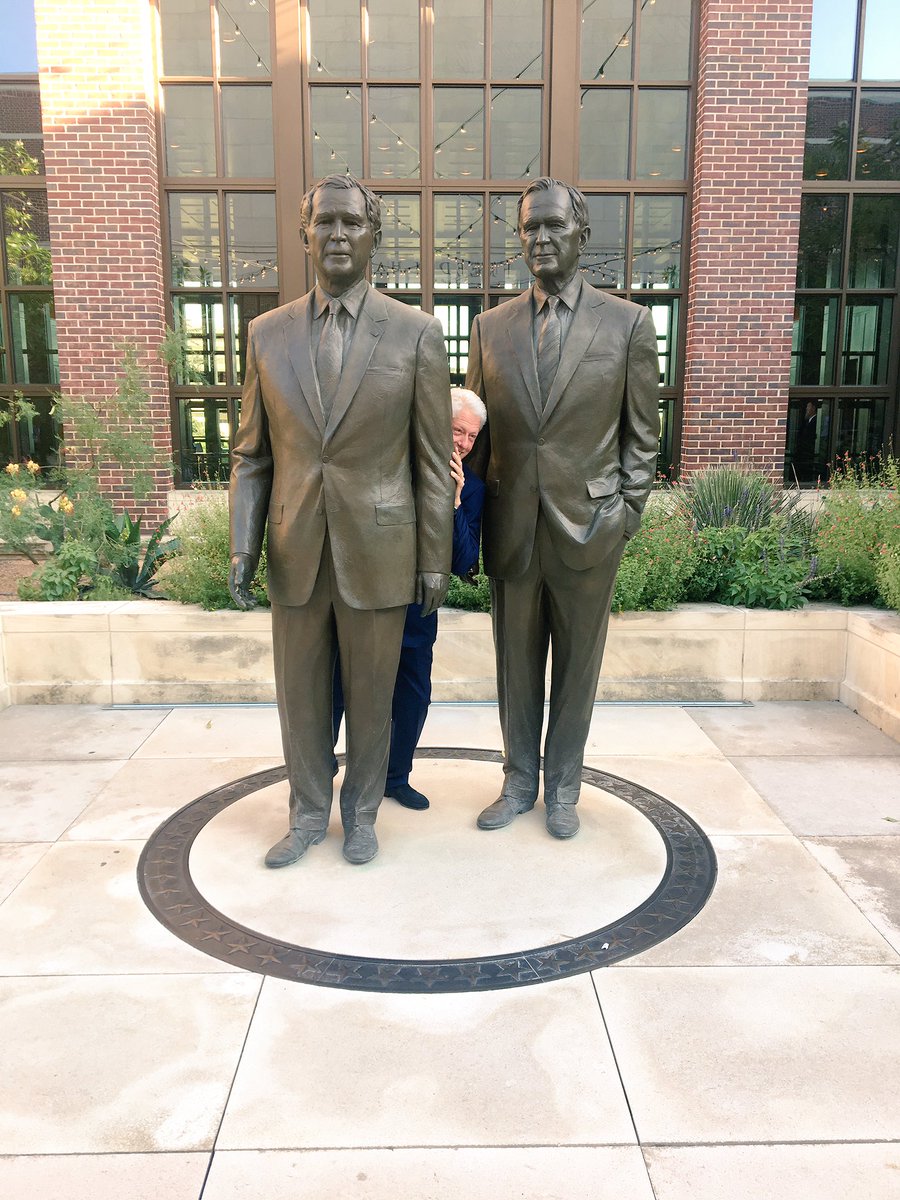
CNN has chosen the form of its Destructor. A million @4chan guys.
— Instapundit.com (@instapundit) July 5, 2017