More regime honchos dead, America and Irseal are (try to contain your shock) winning, a bad weekend for the KC-135, a Dem uber-lawyer backs Trump on Iran, and Israel is hunting Basij in the streets of Tehran. It’s your Iraq war update, incorporating news from late Friday until now.
Also, I keep getting the occasional 429 errors that require Bluehost support to snip long-running processes that they won’t give me access fix without handing them more money (which isn’t happening). An optimization scan brought up suggestions for improving performance, some highly impractical (no, I’m going to hand-optimize WordPress generated JavaScript), but one of the things spinning up long threads is Twitter embeds, so I’m going to try to do less of that and just link and summarize rather than embed. I’ve also updated and turned the caching plugin back on (turned off in a previous Bluehost troubleshooting session), so I’m hoping that will speed things up as well.
Now on to the update!
Israeli forces killed the Iranian regime’s security chief and de facto leader, Ali Larijani, in a Tuesday morning airstrike that has the potential to foment greater chaos within the Islamic Republic’s remaining leadership.
The IDF announced that Larijani was killed through “a precise strike” on his location near Tehran.
“His elimination adds to the elimination of dozens of senior commanders and leaders of the Iranian terror regime, who were eliminated by the IDF during Operation Roaring Lion, and constitutes a further blow to the Iranian regime’s abilities to manage and coordinate hostile activity against the State of Israel,” the IDF wrote in its statement.
After Ali Khamenei’s death, Larijani emerged as the country’s de facto leader, consolidating his power and overseeing combat operations against Israel and other Arab nations in the region. Along with his brother, Sadeq, Larijani waged outsized influence in the Iranian leadership and positioned himself as a successor after Khamenei’s death. He also served as secretary of the Iranian Supreme National Security Council, the body that orchestrated attacks on Israel and led efforts to violently suppress the Iranian people.
“During the most recent wave of protests against the Iranian terror regime, Larijani advanced violent enforcement measures and repression operations, and personally oversaw the massacre that was carried out against Iranian protestors,” the IDF said. “Larijani led the regime’s national-security coordination and directed its international activity, including engagement with members of the axis.”
(Hat tip: Ed Driscoll at Instapundit.)
A missile strike hit the digital security center of Sepah Bank in Tehran early on Wednesday, according to information received by Iran International.
The building, located on Haghani Street, was destroyed in the attack while the bank was processing salary payments for military personnel.
The services at Sepah Bank and Melli Bank Iran remained widely disrupted for a second day, with online banking unavailable and only card-based services operating.
(Hat tip: Regular commenter Malthus.)
FACT 1: Iran’s missile capability has been functionally destroyed.
As of Day 6, Adm. Brad Cooper (CENTCOM) confirmed Iranian missile attacks declined roughly 90 percent since strikes began [ISW, March 5, 2026]. Per joint intelligence assessment (IDF/CENTCOM briefing), approximately 75% of all launchers destroyed; 100–200 remain. The IRGC Aerospace Force — Iran’s primary instrument of long-range conventional power projection — has been catastrophically degraded in nine days. “Hundreds” of warheads destroyed (conventional missile warheads — Iran has no deployed nuclear warheads). Defense industrial base under systematic attack. This is not a setback. This is the functional end of Iran’s power projection capability.
Fact 2 has been edited back from Iran’s nuclear program being 8-15 years to reconstitute, to being substantially destroyed for the the immediate future.
FACT 3: The Strait of Hormuz is closed — not by mines, but by insurance actuaries.
Seven of twelve International Group P&I Clubs cancelled war risk coverage on March 1–2, 2026. These seven clubs insure approximately 90% of the world’s ocean-going commercial tonnage. War risk premiums surged over 1,000%. The result: tanker traffic through Hormuz collapsed from a pre-conflict baseline of approximately 138–153+ vessels per day (figures vary by data provider: Lloyd’s List/Kpler cite ~138; CSIS/Starboard cite 153+) to as few as 3 commercial transits recorded by Windward.ai AIS tracking on March 7; a near-total shutdown. Iran achieved a de facto blockade by making the risk-reward calculation of commercial transit economically irrational, without firing a single mine.
FACT 4: The US is the primary economic beneficiary of this crisis.
Brent crude has risen from $72/barrel (pre-conflict) to $106.81/barrel on March 8, 2026 (Day 9), with an intraday spike to $110 when Asian markets opened Sunday evening — the first time Brent has exceeded $100 in nearly four years, and up 50%+ from the $60/barrel that started 2026. WTI (US crude futures) hit $106.57 (+17.2% on the day). A new cascade has begun: Gulf producers are being forced to cut output as storage fills — Iraq’s production has collapsed 60%, UAE and Kuwait have begun cuts. Goldman Sachs warned Friday night that the Hormuz shock is now “17 times larger” than the peak Russia disruption of April 2022 and projects Brent could reach $150/barrel by end of March if Hormuz flows remain depressed. The US is a net petroleum exporter. Every $10/barrel increase in oil costs China and Japan hundreds of millions per day while benefiting US shale producers and LNG exporters (Cheniere, Shell, ExxonMobil). Qatar suspended LNG production. CSIS senior fellow Clayton Seigle: “A deficit of 20 million barrels per day is hitting global oil market balances with no sign of relief.” The Washington Post confirmed explicitly: “The conflict has hit Europe and Asia harder than the United States.”
FACT 5: Ali Khamenei is dead. His son is not a legitimate successor.
Supreme Leader Ali Khamenei was assassinated February 28, 2026, in a joint US-Israeli airstrike on his Tehran compound — Israeli jets dropped 30 bombs in daylight with zero effective Iranian air defense response. Mojtaba Khamenei, his son, was named Supreme Leader by the Assembly of Experts on March 8. Mojtaba is a Hojjatoleslam (mid-ranking cleric), not an Ayatollah — his theological credentials are below what the constitution’s spirit requires. He has never held a formal government position. The regime has chosen dynastic succession in a self-described revolutionary republic. This legitimacy deficit is the long-term vulnerability. [CONFIRMED — NYT, Reuters, P1B]
DataRepublican assume there will be no land war. But she’s working from the assumption that such a land war will require occupying all of Iran, rather than, say, Tehran and various oil exporting ports.
FACT 7: China is losing 1.7 million barrels per day of discounted Iranian oil and faces secondary sanctions.
China bought approximately 90% of Iran’s oil exports at sanction-discount prices. That supply is gone. Higher global oil prices hit China’s economy directly. The February 2026 Executive Order imposes tariffs on any country purchasing Iranian oil — aimed directly at Chinese “teapot” refineries in Shandong Province. The US simultaneously disrupted both of China’s discounted petro-state suppliers (Iran and Venezuela). China is watching US military capabilities through its satellites and reading the Taiwan signal.
FACT 8: The Mosaic Defense kept Iran fighting but cannot project offensive power.
Iran’s 31 autonomous provincial IRGC commands, each with pre-delegated launch authority, are firing pre-authorized strike packages without central coordination. This means the regime cannot be decapitated; missiles keep flying. But the same decentralization that enables survival prevents the complex multi-axis offensive operations that would actually threaten US interests at scale. The 90% launch decline is the empirical proof: what remains is dispersed residue, not a coherent military campaign. [ASSESSED — CEPA, P1B, P2A mosaic paradox]
FACT 9: The Iranian economy was already at collapse threshold before the war began.
Pre-war data: rial at 1.45 million per US dollar (December 2025 peak); 49% inflation; negative GDP growth; government budget deficit at 6%+ of GDP. The January 2026 protests — the largest in Iranian history, with 3,000–30,000 killed by the regime — were triggered directly by rial collapse. The war adds destroyed infrastructure, disrupted trade, severed oil revenue, and accelerating secondary sanctions. The economic collapse is not a future risk; it is an ongoing reality that predates Operation Epic Fury.
FACT 10: The Axis of Resistance has been substantially degraded.
Syria land bridge severed (Assad fell December 8, 2024). Hezbollah “dramatically weakened” by 2024 Israeli offensive; Nasrallah killed September 2024; Iran-Hezbollah land corridor gone. Hamas catastrophically degraded after 18+ months of Israeli ground operations; IRGC’s Hamas portfolio manager Saeed Izadi killed June 2025. Houthis’ stockpiles reduced by Operation Rough Rider (2025); Houthis “staying out of the Iran-US fight for now” (Al Jazeera, March 7, 2026). Iraqi PMF taking active US strikes. Iran’s 40-year investment in regional proxy power has been substantially degraded — not dismantled. Hezbollah retains organizational structure, partial rocket inventory, and political control of southern Lebanon. Hamas retains organizational elements outside Gaza.
I feel that most of this is probably correct. And that’s just the topline analysis; there’s a lot more in-depth data and analysis at the link. (Hat tip: Borepatch.)
When you look at what has actually happened to Iran’s principal instruments of power – its ballistic missile arsenal, its nuclear infrastructure, its air defences, its navy and its proxy command architecture – the picture is not one of US failure. It is one of systematic, phased degradation of a threat that previous administrations allowed to grow for four decades….
The campaign has moved through two distinct phases. The first suppressed Iran’s air defences, decapitated its command and control, and degraded its missile and drone launch infrastructure. By March 2, US Central Command announced local air superiority over western Iran and Tehran, achieved without the confirmed loss of a single American or Israeli combat aircraft.
The second phase, now under way, targets Iran’s defence industrial base: missile production facilities, dual-use research centres and the underground complexes where remaining stockpiles are stored. This is not aimless bombing. It is a methodical campaign to ensure that what has been destroyed cannot be rebuilt.
Iran now faces a strategic dilemma that tightens every day. If it fires its remaining missiles, it exposes launchers that are promptly destroyed. If it conserves them, it forfeits the ability to impose costs of the war. Missile and drone launch data suggest Iran is rationing its remaining capacity for politically timed salvoes rather than sustaining operational tempo.
This is a force managing decline, not projecting strength.
The closure of the Strait of Hormuz is dominating the critical commentary. US Senator Chris Murphy has called it evidence that President Donald Trump misjudged Iran’s capacity to retaliate. CNN has described it as proof that the administration has lost control of the war’s escalation.
The economic pain is real: Oil prices have surged, a record 400 million barrels of oil will be released from global reserves, and Gulf states are facing drone and missile strikes on their energy infrastructure.
But this framing inverts the strategic logic. Closing the strait was always Iran’s most visible retaliatory card, and always a wasting asset. About 90 percent of Iran’s own oil exports pass through Kharg Island and then the strait.
China, Tehran’s largest remaining economic partner, cannot receive Iranian crude while the strait is shut. Every day the blockade continues, Iran severs its own economic lifeline and alienates the one major power that has consistently shielded it at the United Nations. The closure does not just hurt the global economy; it accelerates Iran’s isolation.
Meanwhile, the naval assets Iran needs to sustain the blockade – fast-attack boats, drones, mines, shore-based antiship missiles – are being degraded daily. Its naval bases at Bandar Abbas and Chahbahar have been severely damaged.
The question is not whether the strait reopens but when and whether Iran retains any naval capacity to contest it. Critics compare the challenge of escorting a hundred tankers daily to an impossible logistical burden. But you do not need to escort tankers through a strait if the adversary no longer has the means to threaten them. That is the operational trajectory.
(Hat tip: Instapundit.)
Suchomimus notes that there’s simply not a lot of space to park at that base, so there’s going to be risk parking so many tankers (or other large aircraft) there. None of the planes were destroyed, and all are being repaired.
I don’t get to use the “Hovercraft” tag nearly enough…

Boies, a Democrat, argues passionately in favor of the war, and scolds people—mainly other Democrats—for, in his mind, letting their dislike of President Trump affect their opinion of attacking Iran. As he writes, “If we believe that Iran presents a serious threat, we need to support the president on this issue. There’s plenty to disagree with him about, and we don’t need to like or admire him. But on Iran we should be on common ground.”
Chances of Democrats heeding this advice:
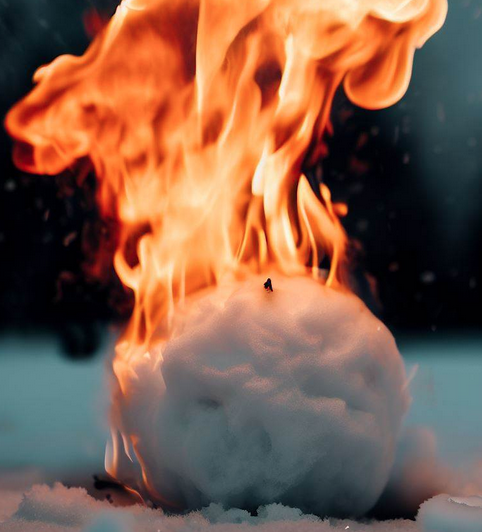
(Hat tip: Ann Althouse.)
BIG: A drone strike hit the U.S. Embassy compound in Baghdad’s Green Zone, damaging or disabling the embassy’s C-RAM air defense system (C-RAM's radar) and striking a helipad.
The attack is believed to be carried out by Iran-linked militias. pic.twitter.com/qEQzSGb9V8
— Clash Report (@clashreport) March 14, 2026
Not being tied into Air Force slang, I was previously unaware that the F-35 was nicknamed “Fat Amy”…
Always remember that Democrats hate America and want us defeated. Every single time they will side against you.
Oh, there’s always an excuse. There’s always a reason. But every single time they will decide against America. https://t.co/XN4qu6uwm7
— Kurt Schlichter (@KurtSchlichter) March 17, 2026
(Hat tip: Stephen Green at Instapundit.)
Once again, this was just what I was able to gather from the news. If you think I’ve missed something, feel free to share it in the comments below.
Tags: Administrative, Admiral Brad Cooper, Al Jazeera, Ali Larijani, Bandar Abbas, Basij, BlueHost, Central Command (CENTCOM), China, Democrats, drones, F-35, Foreign Policy, Gholam Reza Soleimani, Hezbollah, Houthi, Hovercraft, IDF, Iran, Iranian Revolutionary Guards, Israel, Jennica Pounds AKA DataRepublican, Jihad, KC-135, Kurt Schlichter, Military, Mojtaba Khamenei, MQ-9A Reaper drone, Operation Epic Fury, Operation Rising Lion, Persian Gulf, Prince Sultan Air Base, Strait of Hormuz, Suchomimus, Tehran, Yak-130
Ben Aris at bneIntellinews posted an article worth reading today:
‘What has Iran hit so far?’
By Ben Aris in Berlin – March 17, 2026
He notes that Iran has implemented their Decentralized Mosaic Defence doctrine (DMD), which has scattered its forces and weapons into 31 autonomous cells.
Aris believes the Iranian have implemented a four pronged strategy:
“sensor blindness: striking U.S. radars and air defense nodes;
operational logistics: targeting refueling aircraft, ports, and staging bases;
command networks: damaging communications infrastructure and radars; and
economic pressure: threatening shipping and energy transport in the Persian Gulf.”
The worst hit we have taken so far is the $ 1.4 billion (2013 dollars) AN/FPS-132 early-warning radar at Al Udeid Air Base in Qatar. One of 7 (now 6) in the world. It simply cannot be replaced because it will require 75 kg of gallium whose supply has been exhausted in the West since the December 2024 Chinese embargo. We are now stripping RADARs and interceptors from Asian bases to replace our losses.
Admittedly, the Iranians poked a few holes in the US-supplied air defense systems.
By way of contrast, not a single IAF or USAF jet was lost to Russian-made S-400s. With 90% degradation of their missile capabilities, Iran will not be scoring many more hits on US radars.
Have you thought about moving to Substack? Not that I know a lot about that vs Bluehost but it’s free, isn’t it?
Have the Iranian strikes hit anything that moves? I am not aware of any but perhaps someone else is. Things that don’t move can be seen on Google Earth with no Russians involved.
Thanks for another comprehensive article.
“Have the Iranian strikes hit anything that moves? I am not aware of any but perhaps someone else is. Things that don’t move can be seen on Google Earth with no Russians involved.”
13 MQ-9 Reapers, maybe several Israeli aircraft.
The assurances that Iran is running out of missiles may have been a bit premature. Someone attacked Iran’s giant South Pars offshore oil and gas field last night. The Iranians unleashed a torrent of missiles on targets in Bahrain, Qatar, and Saudi this afternoon. Lots of oil refineries and gas pumping stations burning across the Gulf. This kind of damage will prolong high fossil fuel prices, long after the fighting stops.
Several additional commodities are seeing explosive price increases. Tungsten, the preferred KE warhead material for AT rounds and SAMs is up 557% this month. Aluminum spiked today as Aluminum Bahrain closed 20% of the world’s largest smelter. The rest of the AlBa smelter is expected to close in the coming week. Wheat prices increased across the world as diesel and fertilizer price increases ravaged farmers.
The fire damage to the USS Ford was much worse than first acknowledged. It is being withdrawn from theater for repairs, probably in Crete. So much for its new and improved damage control systems. Not much better than its electromagnetic catapults.
Ya want some Gallium? Go here:
https://www.rotometals.com/gallium/
If Uncle Sam wants some, my stash is available at a very modest upcharge ;)
“Ya want some Gallium? Go here:
https://www.rotometals.com/gallium/
If Uncle Sam wants some, my stash is available at a very modest upcharge ;)”
This is the low grade gallium used to make low temperature melting point alloys, not the GaN used in advanced RADARs. There are a few kilos still in inventory from before the Chinese embargo. Not worth rerefining as the only American refinery shut down last year due to lack of feed stock.
Scientific supply houses have a couple hundred grams of suitable high grade gallium, also in inventory from before the Chinese embargo. They are selling it for $ 25 per gram.
NIST has no more GaN or GaAs SRMs, so processing can’t resume until new SRMs are made and certified. Chemical analysis is no longer possible.
Lockheed may have some in inventory, but they also need it for the F-35’s new AN/APG-85 AESA RADAR. F-35s have been shipped with a counterweight in place of the AN/APG-85 RADAR for the last three months. No official explanation, but a GaN shortage is believed responsible. Lockheed will probably revert to the prior AN/APG-81 RADAR.
There is a 300 ppm deposit in Montana undergoing fast track permitting. Will probably come on line sometime after 2030, assuming the environmental wackos don’t delay it. Same situation for a deposit in Greece being developed by NATO.
Comrade said “…gallium whose supply has been exhausted in the West.”
Well, the supply appears not to be exhausted. What else do you claim that is not so? Just some of it, or all of it?
“Comrade said “…gallium whose supply has been exhausted in the West.”
Well, the supply appears not to be exhausted. What else do you claim that is not so? Just some of it, or all of it?”
Please read this portion of my comment more slowly:
“Lockheed may have some in inventory, but they also need it for the F-35’s new AN/APG-85 AESA RADAR. F-35s have been shipped with a counterweight in place of the AN/APG-85 RADAR for the last three months. No official explanation, but a GaN shortage is believed responsible. Lockheed will probably revert to the prior AN/APG-81 RADAR.”
It has actually been 9 months since we have been able to complete a GaN RADAR due to the dearth of gallium. You can Google this story because all the defense publications are all over it, but here is the story on the 1945 web site:
‘Why the U.S. Air Force Is Delivering F-35 Stealth Fighters with “Weight Plates” Instead of Radars’
By Steve Balestrieri – February 12, 2026
“The F-35 program has entered a high-stakes “radar gap” as Lot 17 aircraft are delivered to the U.S. military without their primary sensors.
Due to technical delays with the next-generation AN/APG-85 GaN radar and physical incompatibility with the older APG-81 mounts, these jets are currently flying with ballast plates to maintain balance.”
F-35s have been delivered with barbell plates in the place of their AESA radars since June because there is no gallium. There is also no gallium for any of the other Lockheed RADARs such as those lost in the Gulf.
If you seriously believe that you have discovered an untapped source of gallium suitable for GaN RADARs, why don’t you hop on a plane to Orlando and tell the folks at Lockheed Martin’s radar production operation? I am quite certain that they will welcome your expertise.
RT News apparently never heard of Australia.
“RT News apparently never heard of Australia.”
That is because Australia now produces no gallium. ZERO. Lots of sales puffery and maybe an investment decision later this year in Alcoa Wagerup. Alcoa’s problem is that the Mount Ridley deposit grades 29.3 ppm gallium. 50 ppm is usually considered the minimum grade which can be refined.
When will Australia produce real gallium metal? You tell me.
From the USGS 2025 MCS on gallium:
“China accounted for 99% of worldwide primary low-purity gallium production….”
This feed stock is no longer available to anyone in the West as China retaliated for the AMSL embargo. I am so old I can remember being told the Chinese were up a creek without a paddle after they got cut off from AMSL. Couldn’t retaliate. Oh, well.
We’re winning?
Regime change? Nope.
Seize Iranian enriched uranium? Nope.
Straits of Hormuz open? Nope.
We’re 0-3. Worse still, the last strategic objective wasn’t even on our radar. We were totally unprepared, and have been reduced to begging Beijing for help. We’re also taking a break from insulting our allies to beg for their help, too.
When you’re opponent forces a new, unanticipated strategic objective on you (opening the Straits) that ain’t winning. That’s treading water, at best.
When will Australia produce real gallium metal?
To paraphrase, why don’t you hop a plane to Canberra and tell Lockheed Martin Australia what you know that they don’t.
“To paraphrase, why don’t you hop a plane to Canberra and tell Lockheed Martin Australia what you know that they don’t.”
Not necessary. Unlike you, they can read and comprehend the latest Geosciences Australia report:
Australia’s Identified Mineral Resources
2025 Preliminary Tables
10 December 2026
without any help from me. Unlike you, English is certainly their first language.
Geosciences Australia is the Australian federal government version of USGS. If you can find someone to read this report to you, you will discover that Australia has no identified gallium resource as of 10 December. Australian gallium exists only in your delusions.
[…] Followup: Iranian hovercraft base destroyed. (Previously.) […]