Posts Tagged ‘Redistricting’

Who Says You Can Redistrict Mid-Decade? The Supreme Court

Sunday, August 17th, 2025

Since the Constitution talks about having a census every ten years, some have interpreted this to mean redistricting can only occur every ten years, making Texas Governor Greg Abbott’s mid-decade redistricting plan unconstitutional. You know who says that idea is bunk? The United States Supreme Court.

Texas finds itself once again embroiled in a familiar political storm. Republicans control both chambers of the legislature and the governor’s office and are considering revising the state’s congressional map before the next census.

Democrats and their allies in the press are portraying the move as a threat to democracy. “Mid-decade redistricting!” they cry. “Republican partisans drawing Republican seats is an outrage!”

But Republicans are simply engaging in the same political hardball Democrats themselves played for decades when they were in charge, and the courts have repeatedly stated that the practice is perfectly legal.

In 2003, the Republicans gained the majority in the Texas Legislature after 150 years of Democrat rule and Democrat favored district lines. Texas Democrats had redrawn district lines in 2001 to send as many Democrats to Congress as they could. When the legislature flipped in 2003, the Republican majority wanted to draw a new congressional map that would send more Republicans.

To thwart the will of the legislature, more than 50 Democratic House members fled across state lines to Oklahoma to prevent a quorum and stop the redistricting bill from advancing. Their absence stalled the process for weeks and forced Gov. Rick Perry to call multiple special sessions.

The spectacle drew national media attention but ultimately failed. The Democrats returned, the map passed, and, of course, they sued.

When that case, LULAC v. Perry, reached the Supreme Court in 2006, the justices addressed the core question directly: Is there anything in the Constitution that limits redistricting to once per decade? The answer was a resounding no.

The Court concluded that “nothing in the Constitution prevents a state from redrawing its congressional districts more than once during a census cycle,” so long as it complies with equal population and federal voting rights requirements.

The ruling didn’t just settle the Texas dispute but confirmed that mid-decade redistricting is a legitimate tool available to any legislature with the votes to pass a new plan.

Snip.

“Redistricting is an inescapably political enterprise,” the Justices wrote, “which federal courts should make every effort not to pre-empt.” In Abbott v. Perez (2018), the Court went further to say that redistricting is a “local function” and “federal-court review of districting legislation represents a serious intrusion on the most vital of local functions.”

And to reinforce the right of legislatures to complete their constitutional duties, the Supreme Court in 2024 declared the obvious: the good faith of state legislatures “must be presumed” in matters of redistricting.

In Alexander v. S.C. State Conference of the NAACP, the Court ruled that state legislators have taken the same oath of office to uphold the Constitution as judges and every other office holder and have a “strong presumption” of acting on good faith. If the redistricting plans do not involve a constitutional or statutory defect, the lower courts must let the plan stand unaltered.

If that’s not enough for anxious Democrats, the Court in Rucho v. Common Cause (2019) held that state legislatures may redistrict on the basis of partisanship. Partisanship does not involve constitutional issues for the courts to review.

So that’s that.

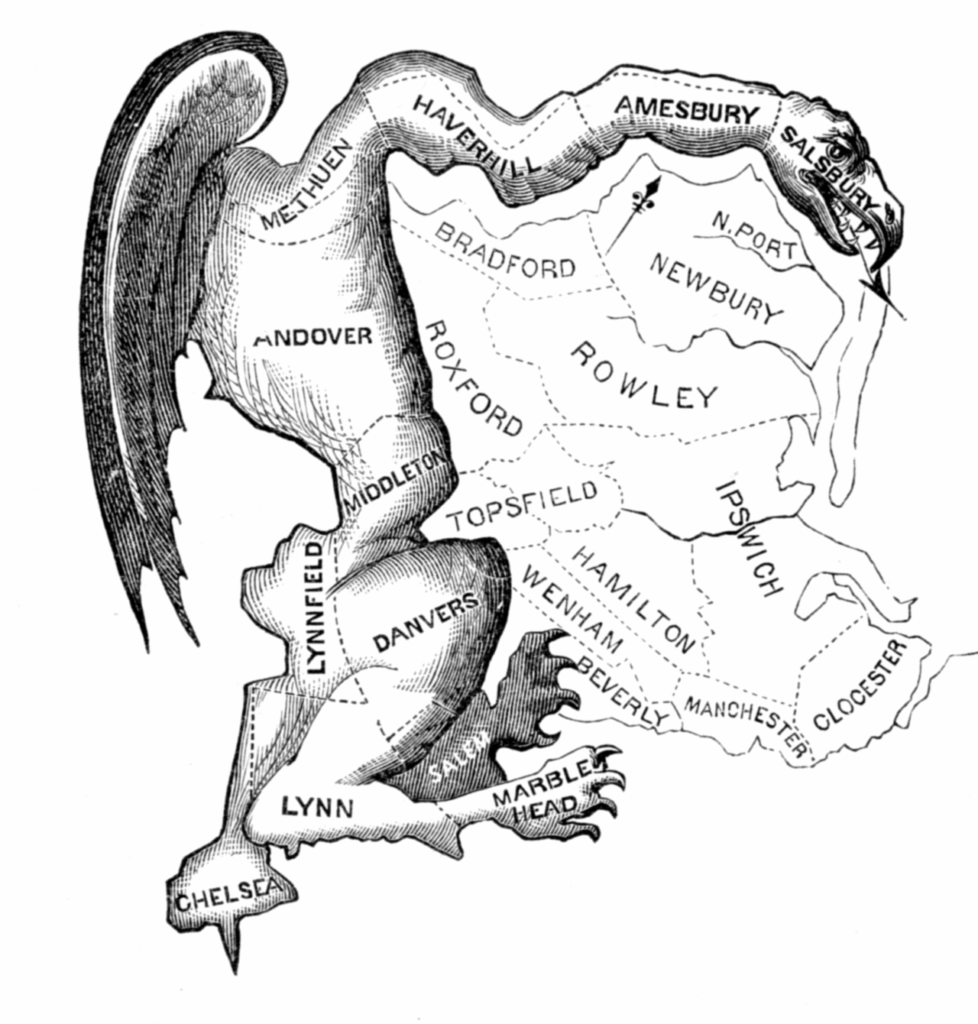
For over two centuries, legislatures have gerrymandered congressional districts for partisan advantage. Indeed, the word “Gerrymander” dates all the way back to 1812, named after a district created under the leadership of Massachusetts Governor Elbridge Gerry.

For the overwhelming majority of that two century history, Democrats have been the ones wielding the gerrymander pen, reaping the partisan advantage of lopsided representation. Now that Republicans are finally in a position to do the same, they want to cry foul.

Democrats made their bed, now they can lie in it.

The deserve everything that’s coming to them.

LinkSwarm For August 8, 2025

Friday, August 8th, 2025

The redistricting wars escalate to previously unseen heights, Paxton launches investigation of Democratic orgs backing the quorum busters, Ukraine hits a lot more Russian infrastructure, another spite prosecution from Travis County’s Soros-baked DA, and Saturday Night Live is just as profitable as NBC’s other late night shows.

It’s the Friday LinkSwarm!

  • How it started: Texas Democrats sue in an effort to save one Commissioner Court’s seat in Galveston County. How it’s going: “Trump Orders New U.S. Census That Excludes Illegal Immigrants.”

    President Donald Trump has directed the Commerce Department to conduct a new census that excludes illegal immigrants from its population count.

    “I have instructed our Department of Commerce to immediately begin work on a new and highly accurate CENSUS based on modern day facts and figures and, importantly, using the results and information gained from the Presidential Election of 2024,” Trump said in a Truth Social post Tuesday morning. “People who are in our Country illegally WILL NOT BE COUNTED IN THE CENSUS.”

    The Constitution mandates a census be conducted every ten years to apportion congressional districts. Since the first census was conducted in 1790, the count has reflected each state’s total population, including noncitizens.

    It’s unclear whether Trump can instruct that illegal aliens be excluded from the census without the approval of Congress, as Article I Section 2 of the Constitution empowers the legislature to determine when and how censuses are conducted.

    When Trump tried to end the practice of counting illegal aliens in the census in his first term, he argued that the executive branch has discretionary power to determine who qualifies as a U.S. resident for apportionment purposes. The move faced legal challenges and was ultimately overturned by Joe Biden before it could take effect.

    Because House districts are apportioned “according to [states’] respective Numbers,” high-immigration states could lose congressional seats and electoral votes if illegal immigrants are not counted in the census. If noncitizens had been left out of the 2020 census, California, Florida, and Texas would have each lost a congressional seat, and Alabama, Minnesota, and Ohio would have retained one seat each they otherwise would have lost, according to a Pew Research Center analysis.

    Maybe this is a cunning ploy to force Democrats to argue before the Supreme Court that illegal aliens count as 3/5ths of a person…

  • Meanwhile, in Texas, the redistricting battle is white-hot following the latest Democratic State Representative’s quorum break. “AG Paxton Launches Investigation Into Soros-Funded Texas Majority PAC. This is the second investigation launched by Paxton in as many days seeking information from groups alleged to be supporting the Texas House Democrat quorum break.”

    Texas Attorney General Ken Paxton has announced the launch of a formal investigation into Texas Majority PAC—funded by leftist billionaire George Soros—for its “role in potentially unlawful financial coordination and bribery of Democratic legislators who fled Texas to break quorum.”

    The Texas Majority PAC was founded by former staffers from Robert “Beto” O’Rourke’s unsuccessful campaign for governor and has since gained national attention. The PAC is largely funded by leftist billionaire George Soros. Latest reports indicate it has around $600,000 cash-on-hand.

    Paxton described the PAC as “radical,” with a mission aligned with other left-leaning organizations aiming to influence Texas politics.

    Paxton alleges that the PAC played a “coordinating role” in assisting with illegal fundraising operations and possibly bribing Texas House members. These actions, Paxton maintains, may have incentivized lawmakers to abandon their legislative responsibilities, an act that—if financially rewarded—could constitute bribery under state law.

    “If Texas lawmakers are bowing to the Soros Slush Fund rather than the will of the voters, Texans deserve to know. Getting financial payouts under the table to abandon your legislative duties is bribery,” Paxton stated. “Texas Majority PAC’s actions seem to indicate that it may be using its Soros-funded resources to break the law and fund the illegal abandonment of public office. If that’s the case as determined by this investigation, there will be a heavy price to pay.”

    As part of the ongoing investigation, Paxton’s office has issued a formal Request to Examine to Texas Majority PAC seeking documents and records related to the alleged activities.

    You know discovery for this is going to be lit…

  • That was the second investigation. The first? “Paxton Launches Investigation Into Beto O’Rourke Organization for Alleged Bribery of ‘Runaway’ Democratic Lawmakers. Powered by People may have violated bribery laws, Paxton alleged.”

    Texas Attorney General Ken Paxton is launching an investigation into Beto O’Rourke’s organization Powered by People for allegedly “bankrolling” the Texas House Democrats’ ongoing quorum break.

    The Office of the Attorney General (OAG) asserts that according to “public reports,” Powered by People is potentially one the top funders of the recent quorum bust by Texas Democrats, who left the state in protest to House Republicans’ proposed redistricting map — alleging racist motivations and unconstitutional actions.

    Paxton said in a press release on Wednesday afternoon, “Any Democrat coward breaking the law by taking a Beto Bribe will be held accountable. Texas cannot be bought.”

    “I look forward to thoroughly reviewing all of the documents and communications obtained throughout this investigation,” he said.

    The OAG ordered on Tuesday that all quorum-breaking House Democrats must return by Friday morning when the House gavels in, per House Speaker Dustin Burrows’ (R-Lubbock) declaration, or else face removal from the membership.

    Did they return? They did not. Hence:

  • “Paxton Files Texas Supreme Court Petition to Declare 13 Democratic House Seats Vacant.”

    The Texas House again failed to meet a quorum on Friday afternoon, and now Attorney General Ken Paxton is taking additional legal action against 13 Democratic members that fled to other states.

    Paxton has targeted state Reps. Ron Reynolds (D-Missouri City), Vikki Goodwin (D-Austin), Gina Hinojosa (D-Austin), James Talarico (D-Austin), Gene Wu (D-Houston), Lulu Flores (D-Austin), Mihaela Plesa (D-Dallas), Suleman Lalani (D-Sugar Land), Chris Turner (D-Grand Prairie), Ana-Maria Rodriguez Ramos (D-Richardson), Jessica Gonzalez (D-Dallas), John Bucy (D-Austin), and Christina Morales (D-Houston).

    This follows Abbott petitioning the Texas Supreme Court to vacate Wu’s seat.

    I’m in Bucy’s district (TX-136), so I could theoretically run for his seat, assuming I was a glutton for punishment…

    The petition was filed with the Supreme Court of Texas (SCOTX), with the intention to have their seats declared vacant.

    “Because Respondents have abandoned their offices as State Representatives, the Attorney General, on behalf of the State, seeks a declaration that those positions are vacant.”

    The petition goes on to state that because the Democratic members named in the suit “have announced that they refuse to perform the duties of their offices, they have abandoned them, and this Court should declare their offices vacant.”

    It adds, “These actions aim to prevent the Legislature from exercising the legislative power conferred on it by the Texas Constitution, Tex. Const. art. III, § 1, depriving the people of Texas of a functioning government and, if allowed to continue, would create ‘an absolute supermajoritarian check on the legislature’s ability to pass legislation opposed by a minority faction.’”

  • Bret Weinstein offers pretty powerful testimony.

    “Ladies and gentlemen, I believe we must zoom out if we are to understand the pattern that we are gathered here to explore, because the pattern is larger than federal health agencies and the COVID cartel. If we do zoom out and ask, what are they hiding?”

    “The answer becomes as obvious as it is disturbing. They are hiding everything. It will be jarring for many to hear a scientist speak with such certainty. It should be jarring. We are trained to present ideas with caution as hypotheses in need of a test. But in this case, I have tested the idea, and I am as certain of it as I am of anything. We are being systematically blinded.”

    “It is the only explanation I have encountered that will not only describe the present, but also, in my experience, predicts the future with all but perfect accuracy. The pattern is a simple one. You can see it clearly and test it yourself. Every single institution dedicated to public truth-seeking is under simultaneous attack.”

    “They are all in a state of collapse. Every body of experts fails utterly. Individual experts who resist or worse in an attempt to return their institutions to sanity, they find themselves coerced into submission. If they won’t buckle, they are marginalized or forced out.”

    “Those outside of the institutions who either seek truth alone or who build new institutions with a truth seeking mission face merciless attacks on both their integrity and expertise. often by the very institutions whose mission they refuse to abandon. There is a saying in military circles, once is a mistake, twice is a coincidence, three times is enemy action.”

  • “HHS to Announce Proposed Rule Cutting Off Medicare, Medicaid Funding to Hospitals Offering Trans Procedures to Minors.”

    The Centers for Medicare and Medicaid Services (CMS) will publicly announce on Thursday its new proposed rule banning Medicare and Medicaid reimbursements to hospitals that provide sex-trait modifications to minors, National Review has learned.

    If finalized, the rule — “Medicare and Medicaid Programs; Hospital Condition of Participation: Prohibiting Sex Trait Modifications for Children” — will “effectively end sex-trait modifications for minors nationally,” a senior administration official told NR.

    Thursday’s announcement marks the beginning of the process of convening meetings with Health and Human Services officials to flesh out the language and formalize the rule. CMS sits under HHS.

    So no longer will our tax dollars be spent mutilating children. Progress!

  • The Austin-American Statesman does some actual investigation of Austin city government, and actually finds a bit of improper waste and fraud.

    Austin’s top administrator, City Manager T.C. Broadnax, continued what had become a costly habit: charging lunches to his city credit card on a near-daily basis.

    Broadnax, one of the highest-paid city managers in the country with an annual salary of $488,800, expensed about 150 lunches during his first year on the job at a cost of about $3,300, according to an American-Statesman review of city discretionary spending. His go-to spot was Sweetgreen, a pricey salad chain where he averaged $20 per order.

    Broadnax is not the only city leader who regularly dined on taxpayer dollars in what appears to be a violation of city policy, the Statesman review found. And the spending went beyond food.

    The review covered food and travel spending records from the City Manager’s Office and City Council offices from May 2024 to May 2025 — the first year of Broadnax’s tenure — and found charges for business-class flights, high-end dinners and retirement parties costing thousands of dollars.

    The Statesman also tallied thousands of dollars spent on snacks and beverages, protein shakes and even chewing gum.

    Overall, the review painted a picture of a widespread culture of lavish spending at City Hall among both the city’s top appointed executives and elected leaders who approve the budget.

    Experts who reviewed the newspaper’s findings and city spending policies said many charges likely violated internal rules or common ethics guidelines.

    “Bring a sandwich for Christ’s sake,” said Cal Jillson, a political science professor at Southern Methodist University.

    If that’s the worst they found, I’d suggest they never scrutinized Austin’s homeless services…

  • Ukraine hit two Russian oil refineries, including Novokuibyshevsk oil refinery in Samara and one in Ryazan.
  • And two more , one in Kstovo as well as the Adler oil depot in Sochi.
  • And another, this one the Afipsky oil refinery, where they evidently hit the cracking/fractional distillation tower, the most essential part of an oil refinery.
  • And another railyard, namely Tatsinskaya railroad yard in Rostov.
  • Hackers attacked Russia’s Aeroflot, cancelling lots of flights. All transportation options in Russia seem chancy these days…
  • Trump puts additional pressure on Russia by slapping 50% secondary sanctions on India over its purchases of Russian oil. (Hat tip: Stephen Green at Instapundit.)
  • “Sacramento charter school got $180 million it wasn’t eligible for, audit finds.”

    A state audit found that a Sacramento area charter school received more than $180 million in funding it was not eligible for, engaged in wasteful spending, and assigned teachers to classes they did not have the credentials to teach.

    The report from the California State Auditor found that Highlands Community Charter and Technical Schools did not meet the conditions set for its funding and also did not comply with state law in calculating daily attendance.

    The auditor also claims that Twin Rivers Unified School District failed to provide sufficient oversight of the charter school.

    According to the audit, Highlands receives K-12 funding despite serving adult students under the Workforce Innovation and Opportunity Act. According to the school’s website, it serves adults ages 22 and up at no cost, providing a high school diploma program, English language classes and career technical education.

    “By not offering the required amount of instruction at the schoolsite, requiring students to attend class at the schoolsite for the minimum amount of time required by law, or meeting requirements for nonclassroom-based instruction, HCCS was not eligible to receive the $177 million in K–12 funding it received in fiscal years 2022–23 and 2023–24. Further, Highlands received more than an estimated $5 million in overpayments, of which $3.5 million is in addition to the $177 million in disallowed funding, by not complying with state law in calculating its average daily attendance,” the audit states.

    The audit also alleges that Highlands engaged in “questionable transactions,” including violating prohibitions against gifts of public funds, not seeking board approval for some contracts and purchases, lacked clear hiring and compensation policies, hired and promoted unqualified individuals and in one instance, entered a contract for mentor services with the spouse of a Highlands director.

    The auditor’s report also indicates poor student performance under Highlands.

    “HCCS had a graduation rate of 2.8 percent in fiscal year 2023–24,” the audit noted. “CDE determined that Highlands’ schools’ graduation rates were so low that they dropped the overall statewide graduation rate for the 2023–24 school year by more than half of a percentage point, from 87 percent to 86.4 percent.”

    One possible reason for the poor student performance, the audit posits, is the student-to-teacher ratio, which was about 51 students for every one teacher.

  • Euroweenies: Lift the seige of Gaza or we’ll recognize a Palestinian state. Israel: I guess we’ll just have to occupy all of Gaza.
  • “Majority of Senate Dems Vote to Block Arms Sales to Israel.” Hatred of Israel (and, indeed, all Jews) is a central belief for the Democrat Party’s ideological core.
  • “US Imposes Sanctions on Both PA and PLO Members.” Good.
  • “Texas Roadhouse hit with civil rights complaint alleging DEI discrimination in hiring practices.”
  • J.D. Vance to the Dems: Just keep doing what you’re doing.

    Vice President JD Vance has weighed in on the left’s demented response to American Eagle’s Sydney Sweeney ads and their unhinged claims that the “good jeans” pun is really Nazi eugenics propaganda.

    “My political advice to the Democrats is continue to tell everybody who thinks Sydney Sweeney is attractive is a Nazi,” Vance joked in an appearance on the “Ruthless” podcast Friday.

    “That appears to be their actual strategy,” Vance further highlighted, adding “It actually reveals something pretty interesting about the Dems, though.”

    Which is that you have like a normal, all-American beautiful girl doing like a normal jeans ad, right?” The Vice President continued, “To try to sell, you know, sell jeans to kids in America, and they have managed to so unhinge themselves over this thing.”

    “You guys, did you learn nothing from the November 2024 election?” An exasperated Vance asked.

    “Like, I actually thought that one of the lessons they might take is we’re going to be less crazy,” he continued.

    “The lesson they have apparently taken is we’re going to attack people as Nazis for thinking Sydney Sweeney is beautiful,” Vance urged.

    “Great strategy, guys. That’s how you’re going to win the midterms. Especially young American men,” he further emphasised.

    “Their course correction lasted about 30 seconds,” Ruthless co-host Josh Holmes chimed in.

    “That’s right, [it] lasted 30 seconds, somehow has gotten even crazier,” Vance responded, adding “it’s just so much of the Democrats is oriented around hostility to basic American life.”

  • Travis County is retrying former Army Sergeant Daniel Perry on another charge even after a gubernatorial pardon, because of course they they are.

    Judge Carlos Barrera has refused to move former Army Sergeant Daniel Perry’s “deadly conduct” case from Travis County’s criminal court despite concerns that he cannot be guaranteed a fair jury trial.

    A Travis County jury had previously sentenced Perry to 25 years in prison for murder after District Attorney Jose Garza prosecuted Perry for shooting and killing an armed Black Lives Matter protester. The event occurred in July 2020 during a protest in downtown Austin. Gov. Greg Abbott pardoned Perry in May 2024.

    However, even if a person is pardoned for a felony, they can still be prosecuted by the county attorney for additional misdemeanors stemming from the same incident.

    Thus, Perry is still being prosecuted for his actions, this time for “deadly conduct,” a misdemeanor punishable by up to a year in jail. Travis County Attorney Delia Garza’s Office—which is prosecuting Perry for this lesser charge—claims that the use of his vehicle leading up to the 2020 altercation endangered bystanders. Perry was driving for Uber at the time of the event.

    Soros-backed DA Jose Garza evidently finds it intolerable that an armed citizen was allowed to exercise their right to self-defense against a leftist member of a “protected class,” double-jeopardy be damned…

  • SNL loses money? “CNBC revealed SNL, Fallon and Meyers lose a combined $100 million a year, Thompson said, ‘(Lorne Michaels) cant keep doing that forever.” (Hat tip: Ed Driscoll at Instapundit.)
  • “Gina Carano has received a settlement in the wake of her 2021 firing from Disney’s The Mandalorian.”

  • Old and busted: Hubcap thieves. The new hotness: Tire thieves.
  • What are you options if your new car turns out to be a lemon?
  • “5 years after iconic photo from BLM riots, St. Louis’s Mark McCloskey finally has his AR-15 back.”
  • Loni Anderson, RIP. Whatever her personal life (she was married four times, divorced three, and Burt Reynolds complained that she almost sucked his bank account dry), she was great on WKRP in Cincinnati.
  • Bad math and physics from movies.
  • Speaking of bad math and physics, here’s the pitch meeting for the new World of the Worlds movie, which was enjoying an impressive 0% Rotten Tomatoes score, but is now all the way up to a sizzling 4%.
  • “Awkward: Obama, Hillary Hire Same Hitman To Kill Each Other.”

    In the end, Black said he was able to settle the conflict and postpone any bloodshed without any deaths by simply explaining the situation to Obama and Clinton.

    At publishing time, the body of Vinny Black had reportedly been found dumped in a ditch on the outskirts of Washington, D.C., with authorities quickly ruling his death a suicide.

  • “Texas Gerrymanders Districts Into Giant Whataburger Logo.”

  • “Study Finds Possible Connection Between Current Heatwave And Giant Flaming Orb In The Sky.”
  • “Gina Carano Settles With Disney, Will Replace Pedro Pascal In All Movies.”
  • “Taco Yet To Meet Emotional Problem It Couldn’t Solve.”
  • Pomeranian 1, bear 0:

    (Hat tip: Ace of Spades HQ.)

  • I’m still between jobs. Feel free to hit the tip jar if you’re so inclined.


    Special Session Agenda: Flood, THC, Redistricting

    Thursday, July 10th, 2025

    People were wondering what agenda items Texas Governor Greg Abbott would lay out for the forthcoming special session, and now we know.

    Gov. Greg Abbott has officially released the agenda for the upcoming special legislative session, identifying 18 items for lawmakers to tackle when they return to Austin on Monday, July 21.

    The announcement ends weeks of speculation about what issues would be included on the call and contains a mix of responses to both recent events and long-standing conservative priorities.

    “We delivered on historic legislation in the 89th Regular Legislative Session that will benefit Texans for generations to come,” said Abbott. “There is more work to be done, particularly in the aftermath of the devastating floods in the Texas Hill Country. We must ensure better preparation for such events in the future.”

    Included in the call are several flood-related items aimed at improving early warning systems, emergency communications, and local relief funding. The agenda also includes a sweeping review of rules related to disaster preparation and recovery.

    Abbott is also calling for legislation to eliminate the STAAR test, cut property taxes, and overhaul regulations on THC products—an issue that has divided state leadership since Abbott vetoed a proposed ban last month. Instead of an outright ban, the governor is asking for new restrictions on potency and synthetic compounds without “banning a lawful agricultural commodity.”

    We covered the issues surrounding marijuana and THC regulation here. The law that was vetoed would likely have clashed with federal legislation on the issue.

    Several conservative priorities also made the list, including a ban on taxpayer-funded lobbying, a constitutional amendment granting the Attorney General the power to prosecute election crimes, and protections for women’s privacy in sex-segregated spaces. Legislation to further protect unborn children by strengthening the state’s ban on abortion-inducing drugs also made the cut.

    Other agenda items include measures to protect victims of human trafficking from criminal liability, protections for law enforcement personnel files, and action on title theft and deed fraud. Abbott also called for legislation addressing judicial department operations and incentives for water conservation in building projects.

    As expected, redistricting is officially on the agenda, following pressure from President Donald Trump’s team to secure additional Republican seats in Congress. The item calls for revisions to Texas’ congressional maps “in light of constitutional concerns raised by the U.S. Department of Justice.”

    I have mixed feelings about redistricting. On the one hand, it would be nice to give House republicans a little more breathing room. On the other, Article I, Section 2 of the Constitution of the United States of America states that “The actual Enumeration shall be made within three Years after the first Meeting of the Congress of the United States, and within every subsequent Term of ten Years, in such Manner as they shall by Law direct,” and it has not been ten years since the last census and redistricting. Still, plenty of states have had to perform redistricting based on court orders, and for decades Democrats used them for partisan advantage, so this is a case of what’s good for the goose in good for the gander.

    My understanding is that the Fifth Circuit Court ruling in Petteway v. Galveston County opens the door for redistricting to be performed in light of an altered reading of Voting Rights Act remedies (no longer need black and Hispanics be combined into the same district for “coalition” majority districts, much to the annoyance of the Democrat Party). Indeed, that is the precise outcome we discussed the last time we covered Petteway v. Galveston County. And Democrats were the ones who filed the lawsuit to try to save save one commissioners court seat in Galveston County.

    We told them over and over again that they weren’t going to like living under the “New Rules” they instituted, and now they get to find out why, good and hard…

    Blue State Exodus = Doom For Democrats

    Monday, May 26th, 2025

    Of the many self-inflicted dooms besetting the Democratic Party, the blue state exodus gets talked about far less than Trump Derangement Syndrome or the radical wokeness destroying the party (along with everything else it touches). But for a party that once crowed about “demographic destiny” making them the “permanent majority party,” the shifting demographics of people fleeing blue states due to lousy governance, and the resulting shift in electoral votes, is going make Democrats winning the presidency much more difficult in 2032.

  • “There is a year that should absolutely terrify Democrats. It’s not 2024 or 2026 or even 2028. It’s 2032.”
  • “The population movement right now is a flashing red warning sign for Democrats. The reason is the 2030 reapportionment. Every ten years, the US conducts the census. One big thing done with that data is the recalculation of how many seats each state gets in the House of Representatives, and how many votes it gets in the Electoral College. And those numbers move in tandem. You gain two House seats. You gain two electoral votes. If you lose a House seat, you lose an electoral vote.”
  • “Democratic states are losing population and Republican states are gaining.”
  • “Here’s one way to think about it. In 2020, Joe Biden won* a 306 to 232 victory in the Electoral College. Then, after 2020, the census was finished and representation was reallocated for the 2022 midterms and 2024 presidential election. Under the new map, winning those same states would have shrunk Biden’s victory margin by six electoral votes to 303 to 235.”
  • “The next census will happen in 2030, and the map will again change for the 2032 presidential election. And right now, the outlook for that map is a disaster for Democrats.”
  • “Blue states like California and New York shedding House seats and electoral votes, and red states like Texas and Florida gaining four new electoral votes and House seats each.”
  • “In 2024, Donald Trump won a 312 to 226 victory in the Electoral College. Under this projection, the exact same state and vote breakdown would swell that margin by 20 electoral votes to 322 to 216.”
  • “Right now the wind is absolutely blowing away from Democratic controlled states and towards Republican controlled ones. And it’s worth asking why.”
  • “The red areas of the country are becoming a bigger and bigger share of the pie, and it gets to a flashing red problem for Democrats, both for their political survival and brand identity.”
  • “For the most part, it is expensive as hell to live in a blue area governed by Democrats. The data is clear eight of the ten states with the highest rent prices are solid blue states, and eight of the ten states with the highest cost of living index are also solid blue states.”
  • “Having a high GDP or on-paper prosperity doesn’t mean much when most people can’t afford their lives.”
  • “So why are blue cities and states in such an affordability crisis right now? Well, to start, obviously we’re all thinking it 1, 2, 3: taxes. It’s just the fact that Democratic controlled states tend to impose higher tax rates. Sometimes that means taxes that some GOP states don’t even have, like the income tax.”
  • “Culture is another part. By now it’s clear that Covid in 2020 presented a particular challenge for blue states and cities. Many of which, took a much softer approach to urban disorder and unrest and are still trying to reverse the damage.”
  • “On a lot of stuff, Democrats also just tend to be more lax or more compassionate, depending on your point of view.”
  • “The upside might be that a homeless person is treated with more dignity, or you won’t get thrown in jail just for having a bag of marijuana. But the downside might be that now a public park is inaccessible to families wanting to use it, or people are doing hard drugs on the street without the law intervening, which isn’t actually compassionate to anyone.”
  • “But more than taxes or culture or anything else. The overwhelming majority of this issue stems from one big fact: housing. It has just become really expensive for people to buy or rent a place to live in many blue states. By any conceivable metric, the US overall is in an affordable housing crisis right now. The average renting American now spends over 30% of their income on rent. The ratio of income to housing prices is at a record high right now, and at its highest in blue states.”
  • “And we have clear data showing us that this has now become a direct drag on Democrats. An NBC analysis of the 2024 presidential race found that Trump made his biggest gains in the counties that have the worst housing markets. Remember those top ten most expensive states and how eight of them were blue states? Five of those eight were also in the ten states that swung the most towards Trump in 2024.”
  • “And even when people don’t move out of a blue city or state, the people that stay are increasingly reacting to the high cost of living. By losing faith in the Democratic Party. Again, especially middle and working class people. It’s not a coincidence that Trump’s biggest gains in 2024 were in diverse, working class congressional districts in California and the New York City area, places where the Democratic Party has full control and has failed to address the cost of living.”
  • “But we also know that there is a way to address this in cities, mainly because many blue cities in red states have done it. Take Austin, which is the seat of a county that voted for Kamala Harris by almost 40 points. It’s seen explosive growth over the past 15 years, partly because the city and state have been very successful in making housing more affordable. That’s not because every landlord there suddenly became a socialist or because they banned Blackrock, but because they fundamentally just built more housing, making more space and lowering the prices.” The City of Austin government proper had very little to do with that, though I’m sure it’s several orders of magnitude easier to build apartment buildings here than in San Francisco, and you see them going up all the time. But Austin is surrounding by bedroom communities in far more growth-friendly counties, and Texas beats the hell out of California for pro-growth policies.
  • “That’s the kind of thing that makes families move there, companies open there, students stay there. And remember, each one of those people is a tiny little piece of building another electoral vote every ten years. By contrast, cities like New York and LA and San Francisco and Boston are in an absolutely different spot. It is simply incredibly expensive to live there.”
  • “The Democratic Party sees its political power decrease when fewer people live in the states that it controls, but it is the policies of its own politicians which are preventing more people from living in them.”
  • The only “growth” that blue state politicians seem to embrace is that of their own bank accounts and the ranks of illegal aliens—the same illegal aliens that drive up the cost of housing for ordinary, non-subsidized citizens. The bluer the city or state, the more likely they are to pursue actively anti-growth policies on the assumption that more people equal more destruction of the environment. And how can Democrats create safe cities when the Soros-backed Democrats they elect are determined to keep violent felons on the street as long as they hail from designated victim groups?

    How can Democrats pursue pro-growth policies when so many core ideological constituents are anti-growth?

    Texas Gains 2 Congressional Seats, California, New York Lose 1 Each (With Some Thoughts On Texas Redistricting)

    Tuesday, April 27th, 2021

    The 2020 Census results are out:

    Florida and Texas gained House seats while California and New York lost one seat each as a result of population shifts, according to the 2020 census results announced on Monday.

    Texas gained two House seats in the census apportionment for a new total of 38 congressional districts, while Florida gained one House seat, bringing its total number of districts to 28. California lost one House seat and will decline to 52 congressional districts, while New York also lost one House seat and will now have 26 congressional districts. Those four states are the nation’s most populous and together provide one-third of the House’s total seats.

    A census official noted that if New York had counted 89 more people, the state would not have lost a House seat.

    Too bad Andrew Cuomo killed off all those old people before they could be counted.

    The population of California stopped growing several years before the coronavirus pandemic, and in 2020 the state lost more residents to outmigration than it gained. Residents have migrated to Texas as well as to neighboring states such as Arizona, Nevada, and Oregon.

    Once again, blue states lost population and red states gained population. People flee Democratic governance and its symptomatic poverty, high taxes, crime and disorder. It’s also the first time California has lost a congressional seat ever.

    With two new congressional seats to play with, how will Texas Republicans approach redistricting? I am very far indeed from a redistricting guru, but I have a few educated guesses about how they’ll approach things:

  • Obviously, they’ll try to carve out two more Republican districts, but that may prove difficult. Expect a new Metroplex-area suburban/exurban Republican majority district, but don’t be surprised if they have to create another Hispanic majority district for Democrats somewhere.
  • The next-highest priority has to be taking back the two seats lost in 2018, AKA The Year of Beto. Both the 7th (John Culberson losing to Lizzie Fletcher) and the 32nd (Pete Sessions losing to Collin Allred) were typical sleepwalking incumbents caught by end of election cycle demographic shifts, but there’s no reason those districts can’t be redrawn to make them Republican majority districts again. Republican challenger Wesley Hunt only lost by 3% in the 7th in 2020. (Sessions carpetbagged his way into the Waco-based 17th.)
  • Next up would be protecting Republican incumbents whose current districts are starting to get purple. To that end, I would guess that the 2nd District, with Dan Crenshaw, a rising national star regarded as a solid team player (as newly minted congressmen Beth Van Duyne and August Pfluger can attest) in a district that’s only R+5, would be the top candidate for shoring up. Van Duyne’s 24th (R+2) and Chip Roy’s 21st (R+5) would be next. John Carter’s 31st (R+6) is starting to get purple as well, but since he’s 79, he may not get as much consideration as other incumbents. Michael McCaul’s 10th (R+5) would be another candidate, but as one of the richest incumbents, there might be sentiment that he can stand fast without much additional help. Van Taylor’s 3rd (R+6) looks like a candidate on paper, but neither he nor previous Republican incumbent Sam Johnson ever won by less than 10 points.
  • A separate issue than the above, due to different dynamics, is what to do about the 23rd. The only true swing district in Texas over the last decade is currently held by Republican Tony Gonzalez, who defeated Democrat Gina Ortiz Jones by 4% in 2020. Despite having a giant target on his back every time, Republican Will Hurd held the seat for three cycles before retiring despite never breaking 50%. The fate of the 23rd is highly dependent on whether they decide to carve out another majority Hispanic Democratic district for San Antonio, or whether they want to…
  • Make a play for the Rio Grande Valley? One of the more surprising results of 2020 was that Republicans made significant inroads into the Valley, including President Donald Trump winning Democrat Henry Cueller’s 28th outright. Part of this is due to Trump’s increasing popularity among Hispanics, but the Texas Republican Party has been pouring significant resources into the Valley. Combined with Biden’s border crisis, all this adds up to an opportunity to pick up one or more seats through redistricting. Michael Cloud’s adjacent 27th is looking pretty safe, so the temptation will be to turn one or more of the 28th, Vicente Gonzalez’s 15th (D+3) and/or Filemon Vela Jr.’s 34th (D+5) into competitive swing districts.
  • Another issue will be what the hell to do with Austin, the blue tumor in the heart of red Texas. One driving rationale for the shape of the 35th district (running from Austin down I-35 to San Antonio) was trying to knock off Democratic incumbent Lloyd Doggett by forcing him to face off against a San Antonio-based Hispanic Democrat. That failed, and Doggett won handily. It’s going to be mighty tempting for Republicans to throw in the towel and fashion a liberal urban core district for Austin to free up redder suburban areas to shore up Republican incumbents.
  • I can see one approach solution that solves a lot of those problems: an urban Austin district, a new majority Hispanic district near San Antonio, and a new majority Hispanic district huddling the Rio Grande Valley, reinforcing the 23rd and turning two of the 15th, 28th and 34th into majority Republican districts. But the fact it is obvious means that it probably won’t come to pass, with the likely result a more sophisticated (i.e., gerrymandered) solution.

    A Look At The State-Level Democratic Crash

    Thursday, November 19th, 2020

    With the final results of the presidential race still up in the air, let’s look at the horrible job the Democratic Party did in down-ballot races.

    Let’s start with Florida:

    After suffering crushing losses from the top of the ballot down, the state party now is mired in a civil war that could have profound consequences for future elections.

    High hopes for gains in the state Legislature have given way to recriminations and finger-pointing. Florida Democratic Party Chair Terrie Rizzo is almost certain to lose her job, but no one has stepped up to claim her mantle. Prospective 2022 gubernatorial candidates, including state Rep. Anna Eskamani and state Sen. Jason Pizzo, are slinging blame. And redistricting, which could deliver Democrats into another decade of insignificance, is around the corner.

    Even as Joe Biden heads to the White House [Disputed -LP], state Democrats know that President Donald Trump did more than just win in Florida. He tripled his 2016 margin and all but stripped Florida of its once-vaunted status as a swing state. His win, a landslide by state presidential standards, was built on record turnout and a Democratic implosion in Miami-Dade County, one of the bluest parts of the state.

    “We have turnout problems, messaging problems, coalitions problems, it’s up and down the board,” said Democrat Sean Shaw, a former state representative who lost a bid for attorney general in 2018. “It’s not one thing that went wrong. Everything went wrong.”

    While Democratic losses were particularly devastating in Florida, the party fared poorly across the country at the state level. The timing couldn’t be worse. Political redistricting begins next year and Republicans in control of statehouses across the country will have a chance to draw favorable maps that will help their state and federal candidates for the next decade.

    What happens next in Florida could be an early signal of how the Democratic Party’s current progressive-centrist divide plays out in Washington and elsewhere. In interviews, more than 20 Democratic officials, organizers and party leaders throughout the state said the party schism has grown only deeper since Election Day. Would-be gubernatorial candidates have already begun trading fire as they begin to lay the ground to try and defeat Republican Gov. Ron DeSantis.

    This year, Florida Democrats had one of the worst performances of any state party in the country. They lost five seats in the state House after expecting to make gains. Three state Senate hopefuls were defeated, and incumbent U.S. Reps. Donna Shalala and Debbie Mucarsel-Powell, who represented districts in Miami, were unseated.

    Many of the party’s failures over the years can be traced to unforced errors. When Democrat Andrew Gillum lost the governor’s race in 2018, he had $3.5 million still sitting in the bank. He then pledged to register and reengage 1 million Florida voters this cycle, but that evaporated after he left public life amid scandal.

    That would be the whole gay meth orgy thing.

    Florida Democrats haven’t held the governor’s office for more than two decades, and they’ve been out of power in the Legislature for nearly a quarter-century. Since their last big win, when President Barack Obama won Florida in 2012, Democrats have won just a single statewide race — out of 12.

    This year, the party continued to make mistakes.

    As Trump made the state his official residence and his top political priority for four years, lavishing resources and attention on it, the Democrats again neglected to build an infrastructure for talking to voters outside of campaign season. The Biden campaign chose to forgo voter canvassing in the state because of the coronavirus pandemic. And outside money that the party apparatus couldn’t control sometimes worked against its own candidates.

    Democrats also failed to counter GOP messaging that branded them as anti-cop and pro-socialism, an expected and effective — albeit misleading — message aimed largely at South Florida Hispanic voters.

    “Misleading” here is used as a synonym for “a truth that hurts Democrats.”

    The day after the election, nine state lawmakers who had survived the GOP rout met by phone to air grievances, according to Sen. Jazon Pizzo.

    Among those on the call were Pizzo, who also is considering a run for governor, Annette Taddeo and Rep. Joe Geller — a mix of centrists and liberals.

    The group fumed over pollsters who failed to capture what was happening on the ground, complained about the party’s use of out-of-state consultants and questioned whether they hit back hard enough against Republican falsehoods.

    “I’m not a f—ing socialist,” Pizzo later said in an interview. “My life is a manifestation of the American dream. I believe in free markets.”

    That brings up the question of what he’s doing in the Democratic Party.

    The meeting, which was not previously reported, amplified the fact the politicians can’t answer a simple question: Who is the leader of the Florida Democratic Party?

    Progressives say the Election Day drubbing is proof that centrism and party pandering to corporate donors doesn’t work.

    “Systematic change is what we need,” said Eskamani, an Orlando Democrat and a leading voice on the left who is considering a run for governor. “We can’t win more seats unless we lead with values and fight back and challenge corporate interests. Money was not a real problem this cycle, and we still lost.”

    Centrists, who traditionally have made up the party’s base of power in Florida, say a lurch to the left will decisively doom the party’s chances of taking the governor’s mansion in 2022.

    “We are a center-right state,” said Gwen Graham, another potential contender for governor who once represented a conservative congressional seat.

    Sounds like Texas before the hard left decided they wanted to throw conservatives out of the party.

    Republicans also cleaned up in key states for redistricting:

    Republicans are set to control the redistricting of 188 congressional seats — or 43 percent of the entire House of Representatives. By contrast, Democrats will control the redistricting of, at most, 73 seats, or 17 percent.

    How did Republicans pull that off? By winning almost every 2020 election in which control of redistricting was at stake:

    • The GOP kept control of the redistricting process in Texas by holding the state House. Given that Election Data Services estimates Texas will have 39 congressional seats for the next decade, this was arguably Republicans’ single biggest win of the 2020 election.
    • Republicans successfully defended the Pennsylvania legislature from a Democratic takeover, although they’ll still need to share redistricting power over its projected 17 congressional districts, as Democratic Gov. Tom Wolf has veto power.
    • Republicans held the majority in both chambers of the North Carolina legislature, which will enable them to draw an expected 14 congressional districts all by themselves.
    • Amendment 1 passed in Virginia, taking the power to draw the state’s 11 congressional districts out of the hands of the all-Democratic state government and investing it in a bipartisan commission made up of a mix of citizens and legislators.
    • In Missouri (home to eight congressional districts), Gov. Mike Parson was elected to a second term, keeping redistricting control in Republican hands.
    • In an upset, Republicans managed to keep their majority in the Minnesota state Senate, thus ensuring Democrats wouldn’t have the unfettered ability to draw the state’s projected seven congressional districts. The parties will share redistricting responsibilities there.
    • The GOP kept control of the state House in Iowa, with its four congressional districts.
    • Republicans maintained their supermajorities in the Kansas Legislature, enabling them to pass a new congressional map (worth four districts) over Democratic Gov. Laura Kelly’s veto.
    • Finally, Republicans surprisingly flipped both the state Senate and state House in New Hampshire (worth two congressional districts), seizing full control of both the state government and the redistricting process.

    Let’s take a closer look at Democrats’ failure to turn Texas blue:

    In a big blow for the party, Texas Democrats were unable to flip nine state House seats they had hoped would give their party the majority this election season.

    It was the biggest shot they’ve had in two decades to gain control of any lever of government in the state. For the past two decades, Republicans have had control of everything – the governorship, the state Senate and the state House.

    Democrats thought things might change this year, mostly because they made serious inroads in Republican-held House districts in suburban counties in 2018. That year, Democrats flipped 12 seats in the Texas House, mostly in districts with changing demographics in the suburbs.

    Democrats set their sights on nine more seats they thought could also go their way.

    But Victoria DeFrancesco Soto with the Center for Politics and Governance at UT’s LBJ School said 2018 was a high-water mark for the party.

    “I think that there was just a ceiling that was reached,” she said.

    More on that theme:

    [Texas Governor Greg] Abbott’s top political strategist, Dave Carney, was blunter in an interview late Tuesday night. He said Democrats were massively underperforming expectations because “they buy their own bullshit.”

    “Here’s the best standard operating procedure for any campaign: Stop bragging, do your work and then you can gloat afterward,” Carney said, contrasting that approach with “bragging about what’s gonna happen in the future and being embarrassed.”

    “Why anybody would believe what these liars would say to them again is beyond belief,” Carney added. “How many cycles in a row” do they claim Texas will turn blue? “It’s crazy.”

    Other evidence of Democratic Party weakness: “‘Experts’ Listed 27 House Races As Toss-Ups. Republicans Won All 27.”

    Republicans also won all 26 races deemed “leaning or likely Republican,” and even picked up 7 of the 36 seats listed as “leaning or likely Democrat.”

    Despite nearly unanimous predictions that Democrats would further cement control of the House, they now hold just a 218-204 advantage, with Republicans poised to pick up more seats, as they lead in 8 of the remaining 13 races.

    Those are some mighty fine anti-coattails Biden has…

    Republican dominance in supposedly 50-50 districts is yet another reminder of just how wrong polls were in 2020, and how wrong they have been for some time. What should embarrass pollsters most, though, is not the fact that they were wrong, but how one-sided they were in the process.

    Across the board, pollsters routinely underrepresented support for Republicans while falsely painting a picture of impending Democrat dominance. Are the American people supposed to think that it’s a coincidence that nearly every time a poll missed the mark in 2020 — which was often — it was in favor of Democrats?

    Everything about this election looks like a Republican wave election, not the “Blue Wave” election so many in breathlessly predicted. Everywhere but for President. I wonder why?

    It seems like Democrats never get tired of getting high on their own supply…
    Supreme Court Validates (Most) Texas Redistricting

    Monday, June 25th, 2018

    “Most” in this case means that the Supreme Court sided with Texas in Abbot v. Perez for 10 out of 11 disputed districts:

    Extinguishing the possibility that Texas could be placed back under federal electoral supervision, the U.S. Supreme Court on Monday pushed aside claims that lawmakers intentionally discriminated against voters of color when they enacted the state’s congressional and state House maps.

    In a 5-4 vote, the high court threw out a lower court ruling that had found that lawmakers intentionally undercut the voting power of Hispanic and black voters, oftentimes to keep white incumbents in office. The Supreme Court found that the evidence was “plainly insufficient” to prove that the 2013 Legislature acted in “bad faith.”

    The Supreme Court also ruled that all but one of the 11 congressional and state House districts that had been flagged as problematic could remain intact. The one exception was Fort Worth-based House District 90, which is occupied by Democratic Rep. Ramon Romero and was deemed an impermissible racial gerrymander because lawmakers illegally used race as the predominant factor in deciding its boundaries.

    The decision also means that “preclearance” (i.e., Texas having to have all redistricting cleared by the federal government) is finally well and truly dead.

    Justice Samuel Alito wrote the majority opinion, with concurrences from justices Roberts, Kennedy, Thomas and Gorsuch.

    Here’s the text of the decision.

    As for House District 90, the text of the decision states that “On remand, the District Court will have to consider what if any remedy is appropriate at this time.” Since it’s already held by a democrat, expect the lower court’s enthusiasm for an immediate remedy to the issue to be tempered, and this late in the game, they might merely order that the issue be addressed following the 2020 census, which would fall to the 87th Texas legislature in 2021.

    Supreme Court Voting Rights Act Decision Texas Fallout

    Wednesday, June 26th, 2013

    We’re already seeing some fallout from the Supreme Court’s Shelby County vs. Holder decision (the complete text of which is now online).

    According to Texas Attorney General Greg Abbott, the Voter ID law will take effect immediately.

    “With today’s decision, the State’s voter ID law will take effect immediately. Redistricting maps passed by the Legislature may also take effect without approval from the federal government.”

    What remains unclear is whether the State of Texas can declare the 2011 redistricting maps valid without further court challenge. There’s currently a bill before Gov. Perry to confirm the 2012 interim maps as the official maps. However, that passed the Texas House and Senate before the Supreme Court ruling. Perry may well decide to veto the measure in order to go with the 2011 maps, which would be more favorable to Republicans.

    Supreme Court Limits Preclearance Provision of Voting Rights Act

    Tuesday, June 25th, 2013

    The Supreme Court today limited use of the “preclearence” requirements of the Voting Rights Act of 1965.

    Hopefully I’ll have more details when the actual text of the decision is up later today.

    I also wonder if Texas might re-institute the 2011 redistricting map, which was struck down by the San Antonio district court largely on the ground the Supreme Court just invalidated.

    SCOTUSblog has more.

    You Can’t Beat Something With Nothing

    Wednesday, March 14th, 2012

    Now that all the post-redistricting filings have been finalized, I thought I would take a look at Texas U.S. congressional races to see where either the Republican or the Democratic party has failed to field a candidate. While districts are usually drawn to protect incumbents and minimize the chances of the out-of-power party, it’s usually best to contest all possible races, for a variety of reasons:

  • You can’t beat something with nothing.
  • It helps tie down time, money and effort that could otherwise be shifted to other races.
  • It helps down-ballot races by drawing voters to the polls.
  • It offers a chance for Republicans to get their message of limited government, lower taxes and greater freedom out to people who might not otherwise hear it, and possibly make some converts in the process (the parable of the sower).
  • Stuff happens. Sudden, unexpected twists of fate can play out at any moment. Incumbents get caught stuffing bribe money into their freezer or consorting with prostitutes. Planes crash. And there’s always the possibility of someone being caught in bed with a dead woman or a live goat.
  • Unexpected opportunities arise, but you can’t take advantage of them if you don’t have a candidate in place.

    With that in mind, let’s see how well Republicans and Democrats have done in finding candidates for all 36 Texas congressional races:

    U.S. Congressional Races Where Democrats Failed to Field a Candidate

  • U.S. Representative District 2: Republican Incumbent Ted Poe
  • U.S. Representative District 3: Republican Incumbent Sam Johnson
  • U.S. Representative District 4: Republican Incumbent Ralph Hall
  • U.S. Representative District 13: Republican Incumbent Mac Thornberry
  • U.S. Representative District 17: Republican Incumbent Bill Flores (in a seat that was held by Democrat Chet Edwards until 2010!)
  • U.S. Representative District 19: Republican Incumbent Randy Neugebauer
  • U.S. Representative District 25: Open seat, formerly Lloyd Dogget’s until he moved to the newly created 35th District following redistricting. No less than 12 Republicans have filed for this seat (including former Senate candidates Michael Williams, Roger Williams, and Charles Holcomb). 56% of the newly reformulated 25th District’s residents voted for McCain in 2008; that’s solidly, but not overwhelmingly, Republican. But not one Democrat bothered to run…
  • So that’s seven U.S. Congressional races where Democratic National Committee Chair Debbie Wasserman Schultz, Democratic Congressional Campaign Committee National Chair for Recruiting and Candidate Services Allyson Schwartz, and, well, whoever the hell it is at The Texas Democratic Party in charge of recruiting candidates, were unable to find a single person out of approximately 688,488 citizens in each of those districts to run for the United States House of Representatives. Say what you want about Alvin Greene running for Senator in South Carolina, but at least he showed up, which Texas Democrats couldn’t even manage to do in almost one-fifth of U.S. Congressional races this year.

    By contrast, Republicans only fell down on the job in one congressional district:

    U.S. Congressional Race Where Republicans Failed to Field a Candidate

    U.S. Representative District 29: Democratic incumbent Gene Green gets a pass. In a district that went 62% for Obama, any Republican was going to have an uphill race. But given that there are five districts even more heavily Democratic (the 9th, 16th, 18th, 33rd, and 35th) where Republicans fielded a candidate, this seems like a lost opportunity, especially for a Republican Hispanic candidate in a Hispanic district headed by an old white guy. (Granted, this didn’t work for Roy Morales in 2010, but I would have preferred that Morales file again and run a token campaign over no one running at all.)

    All in all this is good news for Republicans. If I were a Democrat, I’d be mad at how thoroughly the state and national party fell down on the job of recruiting candidates.

    A suggestion: All six Republican incumbents who haven’t drawn an opponent should each hold a fundraiser for Republican Incumbent Francisco “Quico” Canseco, who figures to have the toughest race of any incumbent this time around.

    References

  • The Texas Congressional Delegation
  • List of 2012 Texas Republican Congressional Candidates
  • List of 2012 Texas Democratic Congressional Candidates
  • Daily Kos redistricting breakdown that includes numbers on how each District voted in the 2008 Presidential race.