It looks like we finally have an answer to just what the “cope cages” seen on some Russian tanks were meant to accomplish:
The Red Effect guy went back and looked at the original specs for the original factor-manufactured slat armor purpose-built for advanced Russian tanks like the rear of the Armata, and found it was spaced to capture incoming RPG-7 round and prevent effective formation of the penetration jet based on extensive studies of which gap sizes worked best. However, the cope cages added at the last minute before the invasion didn’t follow any of the meticulous research that went into the real slat armor. The result is armor that provides some minimal protection to drone-dropped munitions, but probably won’t do squat against a Javelin, and brings with it some new drawbacks (like a high profile that makes them easier to spot, and impeding easy crew escape.
The economy is contracting (thanks Biden), attacks and counterattacks in eastern Ukraine, regulation madness, and something from the 1875 crime blotter in 2022. It’s the Friday LinkSwarm!
Note: Today’s LinkSwarm will be a bit shorter than usual because: A.) I’m off Twitter for the time being, so I’m not grabbing links there, and B.) I took the day off from work and I’m just feeling lazy.
Sure, the Biden Administration sucks on basic competence when it comes to the American economy, but to balance that, they also suck on regulation.
The Biden Administration capped off its first full year in office with more than $201 billion in regulatory costs and 131 million hours in new annual paperwork, putting it far ahead of the two immediately preceding administrations’ respective first years by a wide margin.
Actions related to vehicle emissions and COVID-19 safety measures provided the vast majority of these administrative burdens.
Additionally, in terms of executive orders issued during the first year of an administration, the 77 put forth by President Biden represent the highest number since the Ford Administration.
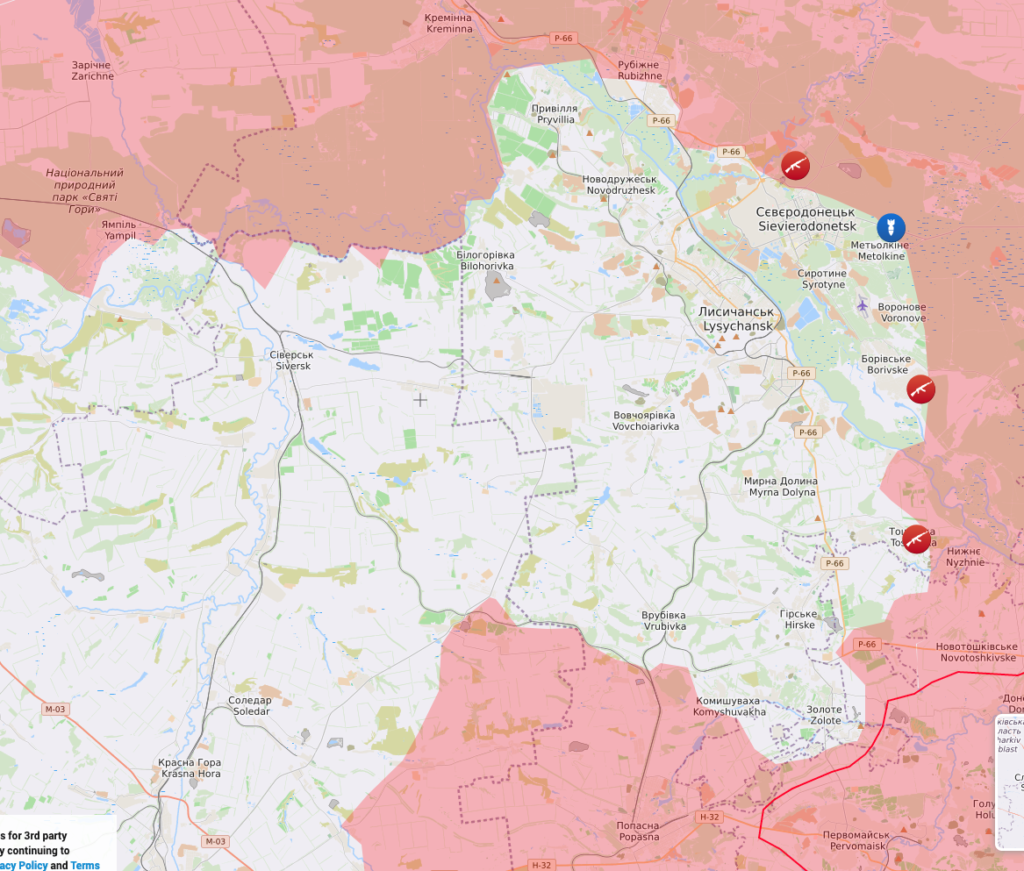
Russia’s invasion of Ukraine continues, and Russian forces seem to be making a slow, grinding advance on the strategic city of Severodonetsk in eastern Ukraine. “Moscow has poured thousands of troops into its assault on Severodonetsk and its sister city of Lysychansk. The twin cities, straddling the Siverskyi Donets river, have been in Russian sights for months. They currently comprise the lone Ukrainian redoubt in the Luhansk oblast.” Taking Lysychansk will require Russians to cross the Donets, previous attempts at which have been disasterous for them.
Russia has succeeded in taking Lyman, but Ukraine has launched counterattacks against the Russian forces encircling Severodonetsk.
The Texas Association of School Boards is set to leave Its parent organization, the National School Board Association, according to records obtained by Texas Scorecard.
The National School Boards Association made headlines last year following their letter to President Joe Biden and U.S. Attorney General Merrick Garland requesting federal intervention in local school board meetings and referring to concerned parents as “domestic terrorists.”
It has since been revealed that the NSBA leadership urged the Biden Administration to deploy military forces in an effort to prevent parents from attending school board meetings.
Since then, parents have been calling on the state organization—the Texas Association of School Boards—to leave the organization, as more than 20 states already have.
“Professor Fired Over Tweets Questioning BLM Movement Gets Reinstated, Awarded Back Pay After Arbitrator Finds In His Favor.” “An arbitrator has ruled that a University of Central Florida professor, Charles Negy, has to be reinstated.”
Who’s been funding the attacks on Elon Musk following his Twitter bid? Would you believe Bill Gates? Of course you would. “Would you believe what perfidy Ernst Stavro Blofeld is up to this week?” Why yes, I would. The biggest difference is that Blofeld has better fashion sense and never tried to inflict Microsoft Bob on the world…
I’ll take headlines from 1875 for $400: “Loving County judge arrested for cattle theft….Loving County Judge Skeet Jones is accused of livestock theft and organized criminal activity.”
It’s been three months since Russia invaded Ukraine, and there’s more tank news coming out as the main theater has shifted to eastern Ukraine. Here’s a (mostly) video roundup of the news:
We hear a lot about Russia has 20,000 tanks (or some other crazy high number) in reserve. This guy went through satellite photos of all Russian tank storage yards and came up with an estimate of 6,000, only 3,000 of which appear as if they could be made battle ready. (A lot of the photos show hulks with their turrets off).
Did Russia’s First Tank Army lose 130 tanks in the Battle of Kharkiv alone?
Ukraine appears to have knocked out a Russian T-90M tank, the most modern Russian tank that’s actually been fielded:
(There’s still no sign of Russia’s T-14 Armata in-theater.)
Update: As of this writing, Russia has lost 729 tanks in Ukraine, and a total of 4,134 “vehicles” (including helicopters, UAVs, and even towed artillery pieces) in theater.
Is Russia demothballing T-62s to send to Ukraine?
Remember, the Soviets stopped manufacturing the T-62 in 1975, the same year that the Captain & Tennille and “Rhinestone Cowboy” topped the charts and The Rocky Horror Picture Show debuted in theaters…
Ukraine has also taken delivery of the Brimstone anti-tank missile from the UK:
Not a tank, but built on a T-72 chassis, is the Russian T-2 “Terminator,” which sports duel 30mm auto-cannons for close support of tanks in urban warfare.
That does look like it would but a world of hurt on urban defensive positions, but won’t be any more immune to NATO-sourced Ukrainian antitank weapons, and they reportedly only have a handful in-theater.
Also not a tank: Ukrainian forces take out a thermobaric (AKA “vacuum bomb”) missile launcher:
Turns out that the Russian military’s catastrophic performance in Ukraine is not a great advertisement for its weapon systems, and India is canceling some big deals.
Peter Zeihan is back with another provocative video (filmed at the Eisenhower Naval School) that suggests that China faces such massive problems that collapse may be imminent. “I see China with not just a demographic failure, but a failure of leadership, a failure of policy, an agricultural failure, and an energy failure, all at the same time. It is
entirely possible that this is the last year of the People’s Republic.”
Some of this (especially the demographic collapse) we’ve covered here before. Takeaways:
“China was already the fastest aging society in human history with the biggest sex imbalance. We already knew that their economic model would not match up with this demography this decade, we always knew that the economic collapse of China was coming.” And that was before we found China had over-counted their prime working age population by 100 million.
“I don’t see how China survives as a single political entity, much less a globally significant one. I don’t see how it survives this decade with these numbers, because this suggests that the Chinese population peaked back in 2003, and that Chinese economic efficiency probably peaked around the same time.”
Chinese labor is no longer cost-competitive with other Asian countries like Thailand or The Philippines, or Mexico. “This is the fastest labor [wage] appreciation in human history, including during the black death, including during all wars. So we’re looking at a 15-fold increase since 1999, [while] their labor effectiveness productivity is probably only increased by a factor of two, maybe three.”
“There is not an industrial process that is done in China that can’t be done in North America at a lower cost, because our labor is so much more productive, our energy is so much cheaper, our supply lines are so much shorter and you can produce stuff where people actually live.”
“The only reason we think of China as a major industrial player is because of the sunk cost of the preexisting industrial plant.”
“You don’t rebuild that somewhere else overnight. But it is happening. The United States is already in the process as its fastest industrialization, even faster than what we did during World War II.” That’s some mighty bold talk, but the U.S. population is roughly 2.5X larger than at the start of World War II.
“We probably need to double the size of our industrial plant in the next 5-10 years. That’ll be awkward, expensive, inflationary, but on the other side of it, we will have a far more insulated and secure supply chain system. The problem is just getting from here to there, and that is not a straight line.”
The Chinese plan has always been to let the Russians go first, just as a proof of concept. So their thinking was a fast war that conquers Taiwan in a matter of days, that imposes a done deal upon the world, and everyone just sucks it up and takes it, because China is too economically powerful to be challenged. And once you hold the territory, there’s no point in going to a broad scale war against the Chinese when it’s already happened. That’s always been their plan.
Oh my.
With the Russians, they have had every aspect of all of their planning for the last 40 years set on fire and burned to ash in less than a month. So number one it will not be a quick war, because Ukraine was one of the world’s less militarily competent countries in the first place…
I think this statement may have been true in 2014, but I don’t think it was true by the time Russia invaded. Ukraine professionalized and modernized their military with considerable help and guidance from western militaries, and developed a competent officer and NCO core (partially thanks to experience with the low-intensity conflict in Donbas).
…and they’re still holding out against the Russians. Taiwan has been preparing for this war since 1955. Taiwan has a moat. Taiwan has a nuclear program that started in 1974, so if we have a two-month accumulation of Chinese forces getting ready to push, the Taiwanese will see it because this is the only national security question that they pay any attention to, and they will make a nuclear device. And so the only way that the Chinese can even make an attempt on Taiwan is to text all of their soldiers at the same time and just say everyone get to the coast take a fishing boat with your buddies and start moving on Taiwan. They know it is going to cost them a million troops just to get there.
I find this scenario unlikely, and even less likely to succeed.
“Now they know from Ukraine that it’s not going to be a pushover. [Taiwan] is mountainous, it’s forested as opposed to Ukraine, which is flat and open.”
Then there are the sanctions:
Russia has many flaws, but they’re a massive producer of food and energy products. If you put the sanctions that we have put against Russia onto China, oh my. China imports 85% of their energy, 85% of that from the Persian Gulf, and they import 85% of inputs that are necessary to grow their food. So you would have an industrial collapse, a civilizational breakdown, and mass famine within six months, and then you would probably lose a half a billion Chinese over the course of the next year to famine.
Again, I think this is overstated, as there would be enough countries willing to break sanctions, and enough radical actions China could take (conquer Mongolia and parts of Siberia for farming, throw off all Pacific fishing limits, etc.) to avoid the worst case famine scenario. Not that they wouldn’t be in a world of hurt…
The one that has scared the Chinese the most are the boycotts. BP and Halliburton didn’t have to leave, they weren’t doing anything that was sanctioned, but the super majors and the oil services firms and countless other firms left on a moral imperative prompted by individual shareholders and consumers. And in China, the idea that the average Joe or Jane can influence policy is so antithetical to their mindset that they had no idea this was even possible, much less it was going to happen. So everything that the Chinese have based their system and their strategic policy on for the last 30 years has been proven in the last two months to be utterly wrong.”
My judgement of Zeihan’s analysis is that he’s more right than wrong, but has a tendency to overstate his case. Still, a worldwide inflationary spiral and energy shortage is the sort of thing that’s likely to destabilize a lot of governments worldwide, and China’s economy is built on more smoke and mirrors than most.
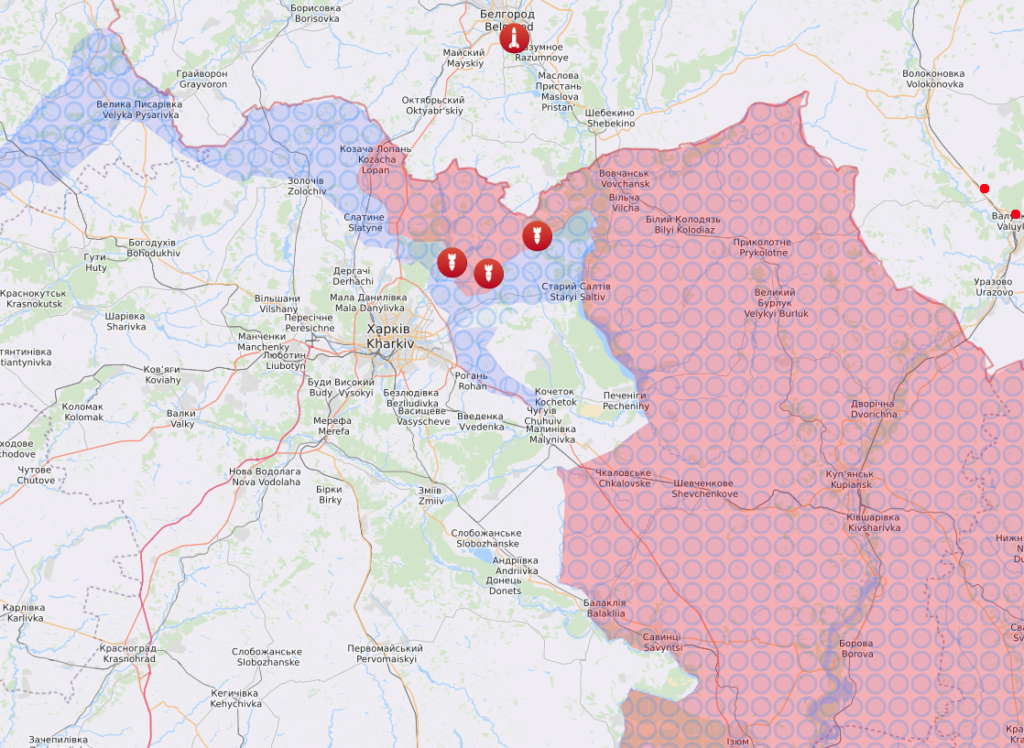
Ukraine appears to have won a decisive victory by driving Russian forces from the second largest city of Kharkiv and is now pushing them all the way back to the Russian border.
The Russian military has likely decided to withdraw fully from its positions around Kharkiv City in the face of Ukrainian counteroffensives and the limited availability of reinforcements. Russian units have generally not attempted to hold ground against counterattacking Ukrainian forces over the past several days, with a few exceptions. Reports from Western officials and a video from an officer of the Donetsk People’s Republic (DNR) indicate that Moscow is focused on conducting an orderly withdrawal and prioritizing getting Russians back home before allowing proxy forces to enter Russia rather than trying to hold its positions near the city.
Ukraine thus appears to have won the Battle of Kharkiv. Ukrainian forces prevented Russian troops from encircling, let alone seizing Kharkiv, and then expelled them from around the city, as they did to Russian forces attempting to seize Kyiv. Ukrainian forces will likely attempt to disrupt at least the westernmost of the ground lines of communication (GLOCs) between Belgorod and Russian forces concentrated around Izyum, although Russia is using several GLOCs, including some further away from current Ukrainian positions than any Ukrainian counteroffensive is likely to reach soon. The terrain east of current Ukrainian positions may also favor the Russians attempting to defend their GLOCs, as large water features canalize movement and create chokepoints that the Ukrainians would have to breakthrough.
Russian troops continued efforts to advance all along the periphery of the Izyum-Donetsk city salient but made little progress. Russian forces attempted a ground offensive from Izyum that made no progress. We had previously hypothesized that Russia might give up on attempts to advance from Izyum, but the Russians have either not made such a decision or have not fully committed to it yet. Small-scale and unsuccessful attacks on the southern end of the salient near Donetsk City continued but made no real progress.
The main Russian effort continues to be the attempt to encircle Severodonetsk and Lysychansk from the north and from the south. Russian troops attacking from Popasna to the north made no significant progress in the last 24 hours. Russian forces coming north-to-south have failed to cross the Siverskyi Donets River and taken devastating losses in their attempts. The Russians may not have enough additional fresh combat power to offset those losses and continue the offensive on a large enough scale to complete the encirclement, although they will likely continue to try to do so.
Yeah, about that river crossing. There’s an awful lot of post-battle evidence that was an absolute disaster.
Attempting to cross a river near Bilohorivka, east of Lyman, a Russian mechanized battalion got blasted out of existence by Ukrainian artillery:
The better part of a Russian army battalion — 50 or so vehicles and up to a thousand troops — in recent days tried to cross a pontoon bridge spanning the Siverskyi Donets River, running west to east between the separatist provinces of Donetsk and Luhansk in eastern Ukraine.
Ukrainian artillery caught them at the river bank — and destroyed them. The rapid destruction of around three dozen tanks and other armored vehicles, along with the bridge itself, underscores Russia’s deepening woes as its troops try, and fail, to make meaningful gains in eastern Ukraine’s Donbas region.
“We still assess Russian ground force in the Donbas to be slow and uneven,” an unnamed U.S. Defense Department official told reporters on Tuesday. The Russians’ inability to cross rivers might explain their sloth.
The Siverskyi Donets, which threads from southern Russia into eastern Ukraine then back into Russia, is just one of several water barriers Russian battalions must cross in order to advance west into Ukrainian-held territory. According to the Ukrainian armed forces’ general staff, the battalion that got caught at the pontoon bridge apparently was trying to strike at Lyman, a city of 20,000 that lies 17 miles west of the doomed crossing.
The Ukrainian army’s 17th Tank Brigade spotted the bridge, perhaps using one of the many small drones that function as the army’s eyes over the battlefield. The 17th is one of the army’s four active tank brigades. Its line battalions operate T-64 tanks and BMP fighting vehicles. But it was the brigade’s artillery battalion with its 2S1 122-millimeter howitzers that apparently got first crack at the Russian bridge.
The 17th’s shelling destroyed at least seven T-72 and T-80 tanks, 17 BMPs, seven MT-LB armored tractors, five other vehicles and much of the bridging unit itself, including a tugboat and the pontoon span.
It’s unclear how many Russians died or were wounded, but it’s worth noting that no battalion can lose three-quarters of its vehicles and remain capable of operations. In one strike, the Ukrainians removed from the battlefield one of the roughly 99 Russian battalion tactical groups in Ukraine.
Proving that some people (or institutions) don’t learn from their mistakes, Russia compounded their disasterous stupidity by trying the exact same thing again, with the same results.
Russia has made another failed attempt to cross a Donbas river where an entire battalion was wiped out by Ukrainian artillery – losing more men in the process with survivors forced to swim to safety.
Putin’s troops were trying to rescue men and vehicles that had got stranded on the wrong side of the Donets River, near Biolhorivka, after the first attempt on May 8 ended with their pontoon bridges being sunk by an artillery barrage that destroyed dozens of armoured vehicles and may have killed more than 1,000 troops.
But their rescue mission was found out and subjected to the same fate. Fresh satellite images taken near Biolhorivka show yet another sunken pontoon bridge along with half a dozen destroyed or abandoned vehicles.
Russia has lost more than 70 vehicles and seen two infantry battalions mangled in four days of attempts to bridge the river.
Here’s some decent drone footage of the aftermath:
Conducting a river crossing under enemy fire has always been a difficult undertaking, which is why Clausewitz devoted two chapters to the topic. Even the most basic combined-arms operations are difficult to carry out under the best of circumstances. Difficult operations become impossible ones if you’re stupid.
American M777 howitzers could prove a major factor in turning the tide against Russian forces in the ongoing invasion of Ukraine thanks to their precision and power.
The howitzers are field artillery pieces that Ukrainian forces are already using to shell the Russians and represent an improvement on the equipment that the country’s military previously had.
The U.S. has begun sending 90 M777 Howitzers, while Australia is sending six and Canada is providing four. The M777s are the towed howitzers currently used by the U.S. Army and Marine Corps. They have a maximum range of 15 miles and require a crew of eight to 10 people.
Illia Ponomarenko, a defense reporter with The Kyiv Independent, tweeted on Tuesday: “M777s are already in Donbas, engaging Russian lines – confirmed!”
Snip.
The M777 Howitzers generally fire precision-guided Excalibur rounds that use the Global Positioning System (GPS) to home in on targets and it is expected that Ukraine will have been provided with these rounds. Canada was reportedly providing Excalibur shells, according to an AFP report on April 25.
Here’s more background on the M777:
A few brief takeaways:
Using aluminum and titanium, they weigh half what the M198 they’re replacing weighed. This means they’re fare more air-portable (at least for the U.S., slung from an Osprey).
Each costs about $4 million.
Contrary to the article above, the video asserts they only need a crew of five.
Fires seven rounds a minute.
Excalibur shells cost about $70,000 each. Pricey, but way cheaper than a Tomahawk cruise missile.
Here’s a “heavy on dramatic music but light on details” video of an Excalibur round hitting a target 65 klicks away.
Did Ukraine use their new American-gifted, GPS-guided howitzer shell to take out a Russian general? Peter Zeihan (yep, him again) makes this case in this short video:
Some of Zeihan’s analysis seems a little bit out there, but this one seems right on the cutting edge of plausibility, as we’re now able to do with artillery shells what once took guided missiles or smart bombs. But I don’t think Americans necessarily had to be involved in the targeting. It’s entirely possible that good signals intelligence pinpointed his location, or even just honed in a promising Russian communication cluster and hit General Valery Gerasimov as a stroke of good luck. Also, I should point out that Gerasimov’s death has not yet been confirmed.
But yes, it’s quite plausible that we and/or Ukraine can pinpoint the locations of Russian generals in theater and drop precision munitions on their heads from 25 miles away…
“One hundred and forty-six million [people] for such a vast territory is insufficient,” said Vladimir Putin at the end of last year. Russians haven’t been having enough children to replace themselves since the early Sixties. Birth rates are also stagnant in the West, but in Russia the problem is compounded by excess deaths: Russians die almost a decade earlier than Brits. Their President is clearly worried that he’s running out of subjects.
It’s a humiliating state of affairs because Russian power has always been built on the foundation of demography. Back in the 1830s, Alexis de Tocqueville foresaw that Russia would become a world power, because “Russia is of all the nations of the Old World the one whose population is increasing most rapidly”. The only other country with its population potential was the United States. De Tocqueville prophesised that, “Each one of them seems called by a secret design of Providence to hold in its hands one day the destinies of half the world.” A century later, they were the world’s two uncontested superpowers.
At the beginning of the 20th century, Russia’s population was 136 million, and was still booming, just as those of other European powers started to slow. Germany’s population was 56 million, excluding its colonies, and the threat of ever-larger cohorts of Russian recruits into the Tsar’s ranks haunted Germany’s leadership; historian and public intellectual Friedrich Meinecke fretted over the “almost inexhaustible fertility” of the Slavs while Chancellor Theobald von Bethmann Hollweg complained that “Russia grows and grows and lies on us like an ever-heavier nightmare”. This pressure was probably the decisive factor in Germany’s 1914 leap in the dark. German Secretary of State Gottlieb von Jagow wrote to the German ambassador in London as the storm was gathering that “in a few years, Russia will be ready … Then she will crush us on land by weight of numbers.”
In the First World War, it turned out, numbers were not enough to compensate for Russian industrial and organisational inferiority. But by the Second World War, Russia’s numeric superiority had exploded. Despite the horrors of Civil War and Bolshevism, the nation’s population grew at about three times the speed of Germany’s in the opening decades of the century. The army had an endless supply of soldiers, the military infrastructure an endless supply of workers, giving the country a decisive edge in the Forties. Vast spaces and appalling weather helped, but ultimately it was the endlessness of Russian manpower which ground down the Wehrmacht in what was perhaps the most epic military struggle of all time. Field Marshall Erich von Manstein complained as he faced Russia’s armies: “We confronted a hydra: for every head cut off, two new ones appeared to grow.”
But if demographic prowess buttressed Russian power then, population decline has undermined it in the years since. Most nations have developed out of the high birth and death rates seen throughout most of human history: as mortality and then fertility falls, first the population expands, then it flattens; eventually, it may contract. But in Russia this process has taken place with a vengeance.
At the time of its dissolution, the Soviet Union was the home of 290 million people, 50 million more than the USA. Today, the Russian Federation has less than half that number — and less than half of the USA’s current total. In large part, this is the result of the loss of non-Russian republics, including Ukraine (which at the outbreak of the current conflict had a population of 43 million). But in the late Soviet and early post-Soviet period, the country also collapsed into an orgy of suicide and alcoholism, particularly affecting the country’s men.
One journalist in Russia at the time wrote about how “the deaths kept piling up. People … were falling or perhaps jumping, off trains and out of windows; asphyxiating in country houses with faulty wood stoves or in apartment with jammed front door locks … drowning as a result of driving drunk into a lake … poisoning themselves with too much alcohol … dropping dead at absurdly early ages from heart attacks and strokes”. By the early years of this century, life expectancy for Russian men was on par with countries such as Madagascar and Sudan.
It’s hard to fight for the future when you’re unwilling to show up for it.
Peter Zeihan (yeah, that guy again) argues that, despite their numerous setbacks, the Russians aren’t going to give up.
A few takeaways:
Russia has always suffered from inferior technology, which is why they were humiliated in the Crimean War.
“But they will never stop until they have to, or they are forced to.”
“The Russians see this as an existential crisis. They will fight until they can’t.”
“This is going to last months, probably years.”
Russia’s current goal: “The complete obliteration of all civilian infrastructure” in Ukraine.
Russians consider anyone that doesn’t flee a fighter to be shot on sight.
They’ve killed at least 50,000, probably closer to 100,000.
Zeihan asserts that Russians are trying to plug traditional invasion corridors into Russia. “There are two of those corridors on the other side of Ukraine, one that goes SW into Romania, and one that goes NW into Poland.”
Since we know that the Russians intention is not to stop in Ukraine and is to go into multiple NATO countries, we know that that fight between American and Russian forces is destined to happen, and we now know how it will end: The Russians will be obliterated and they’ll be faced with a simple choice: A strategic retreat across the entire line of contact all the way back to Russia, maybe even further, or escalate to involve nukes, since the Russians see this as an existential crisis, that’s a fight we have to prevent. And so the United States specifically, and NATO in general is sending any weapon system that we possibly can that can be carried or put in a truck.
“If we can’t kill Russia in Ukraine, nukes come into play.”
“If you’re Poland and you’re Romania, you know ultimately the Russians are coming for you that changes your math and that changes the risks you’re willing to take, and if you border Poland or Romania, same general thing.”
“If we can get Predators and Reapers into the Ukrainians hands, they can blow up the Kirch Strait bridge, and then all of a sudden the Crimea is completely cut off. And from a war point of view, that would be fantastic because most of the gains the Russians have made have been out of Crimea.”
Russia has to win in Ukraine because “This is their last chance.”
I have significant doubts that Zeihan’s “plugging historical invasion gaps” is the driver for this conflict, mainly because such terrain gaps can be overcome in a more modern, dynamic geospatial war envelope by use of air, land, heliborn and remote-piloted combatants. Tactically still very significant, strategically less so. I think Russian chauvinism despises the very idea of a free and independent Ukraine, and lot of Putin decisions seem to be driven by ego. Pro-natalist policies like tax and welfare incentives seem a much better way to deal with their looming population crash than a risky invasion. But Putin makes all sorts of stupid calculations. And seeing his army’s performance in Ukraine would cause a sane man to back away from open conflict with NATO.
But Zeihan’s theory that the U.S. and NATO see this as a once-in-a-lifetime chance to defang Russia short of a direct conflict with NATO countries strikes me as correct.
In a previous post, I made the assumption that the army’s decision to go with 6.8 x 51mm for its Next Generation Squad Weapons (NGSW) program meant they had selected the True Velocity 6.8 x 51mm TVCM round.
That appears not to be the case:
About 3:40 in, he says the army choose not to go with the bullpup and it’s polymer ammo, so presumably TVCM is out of the picture for now. Instead the new round will use bimetallic steel-brass hybrid ammunition manufactured Remington. On the other hand, he says the “Lake City Ammo Plant” is in Utah, when it’s actually in Independence, Missouri, so some grains of salt are in order.
If you have any additional information, leave it in the comments below.
Tucker Carlson digs into traffic death statistics and discovers that a huge jump in deaths occurred in 2020, despite the lockdowns. Turns out the deaths were among black Americans, because police stopped making traffic stops on black Americans in the wake of the Antifa/BLM riots.
There was also a jump in black deaths from crime, for the same reasons (as well as pushes to defund the police). “Same reason, same effect…Less law enforcement means more crime.”
He covers how Chicago under Lori Lightfoot has stopped enforcing the law. The same people who scream about “gun violence” refuse to prosecute convicted felons despite repeated gun law violations. Recidivism in Illinois is twice the rate it is in sane states like Texas.
He also covers how Soros-back LA DA George Gason has done “so much in so little time to destroy the city,” and how a mother of six was gagged and murdered by a repeat offender who had been let out after committing two other murders.
“George Soros has paid people just like George Gason, and Chicago, Alvin Bragg now in Manhattan, and others.” Thousands of Americans have died as a result.
“Who is benefiting from this slaughter?”
Black Americans cite crime as their top issue, but racism and “equity” is near the bottom.
“In San Francisco, the lunatic, equity-mongering DA there Chesa Boudin is facing a recall, which could succeed.” Thanks to the open-air drug markets, drug overdoses in San Francisco are twice as numerous as Flu Manchu deaths.
The U.S. attorney’s office is even to refuse to charge criminals in D.C. who stole a puppy at gunpoint.
“Most of the dead come from the very group political leaders say they’re protecting.”