Posts Tagged ‘Germany’

LinkSwarm for September 9, 2022

Friday, September 9th, 2022

Ukraine is carving out big gains in Kharkiv, Texas is in the money, Biden taps Clinton’s bagman to divy up the graft manage climate change funds, more groomers unmasked, and some big changes in the UK. Plus a bit about tanks. It’s the Friday LinkSwarm!


  • Ukraine’s counteroffensive in Kharkiv has been extremely successful.
    • Ukrainian successes on the Kharkiv City-Izyum line are creating fissures within the Russian information space and eroding confidence in Russian command to a degree not seen since a failed Russian river crossing in mid-May.
    • Ukrainian forces in the Kharkiv Oblast counteroffensives advanced to within 20 kilometers of Russia’s key logistical node in Kupyansk on September 8.
    • Ukrainian forces will likely capture Kupyansk in the next 72 hours, severely degrading but not completely severing Russian ground lines of communication (GLOCs) to Izyum.
    • Ukrainian forces are continuing to target Russian GLOCs, command-and-control points, and ammunition depots in Kherson Oblast.


  • “Texas Tax Haul Soars By Record 26% in 2022 Fiscal Year.”

    On Thursday, the state comptroller reported that the Lone Star State’s tax revenue rocketed by 25.6% to a total of $75.21 billion.

    It’s only the fifth time since 1988 that revenue grew by a double-digit percentage — and it’s double the next largest increase over that 34-year span.

    “Revenues continue to outpace even our most recent forecast as All Funds tax collections closed the fiscal year $841 million above the projection in our Certification Revenue Estimate,” said state Comptroller Glenn Hegar in an official release.

    That’s a stark contrast to California, which saw July revenue come in 12% below forecast.

    Texas has been a major beneficiary of migration from California: Over the last census cycle, 34% of new Texans arrived from California alone. Meanwhile, New York saw personal income tax collection fall 3.2% from April 1 through July.

  • “Biden Brings in Professional Bagman John Podesta to Divvy Up the $316 Billion in Climate Change Money to DNC Donors Ahead of Midterm Election.”

    Joe Biden has hired John Podesta to be the new Clean Energy Czar, citing his experience in progressive causes….

    Bottom line, John Podesta is being now being hired to divvy up the $316 billion in Green New Deal money recently authorized by congress. That is what Podesta specializes in, the distribution of taxpayer money to DNC allied groups and networks in advance of the 2022 midterms. Podesta, Hillary’s fixer, is a bagman, nothing more.

  • Worse, one of the many bag clients he’s adept at channeling money into Democratic pockets for is China.

    President Joe Biden on Friday tapped John Podesta to oversee $370 billion in climate spending, a move that has China hawks on Capitol Hill concerned over Podesta’s encouragement of Chinese investment in American infrastructure and praise for the top U.S. adversary on climate change.

    Podesta has called for Chinese investment in American infrastructure, arguing in 2013 that there are “great opportunities for Chinese firms to directly invest in this nation, to build American infrastructure, to create American jobs, and generate steady and handsome returns.” He added, “There’s also the ability for Chinese firms to invest here and learn best practices, and take those home to the tremendous and growing middle class market in China.”

    Instead, in the intervening decade, the Chinese government has committed widespread economic espionage—one 2017 estimate found that China steals up to $600 billion in trade secrets a year. Engineers in China, meanwhile, use popular social media platform TikTok to access nonpublic data from U.S. users.

    Podesta has also praised China’s efforts to combat climate change, arguing in 2015 that the Chinese “are beginning to do a fair amount.” China, which is the world’s top carbon emitter, went on to dramatically accelerate its coal consumption, which reached a record high in 2020.

    That record has China hawks on the Hill concerned that America’s top adversary has a new—and powerful—ally in the White House. Podesta’s role will see the liberal consultant implement $370 billion in spending toward alternative energy, a sector that China dominates when it comes to raw materials. As such, alternative energy companies receiving the Podesta-steered funding could turn to China to secure supplies. The new Biden aide will likely take no issue with that dynamic, given that he has argued the United States and China should “align” on a green economy. Sens. Marsha Blackburn (R., Tenn.) and Ted Cruz (R., Texas) argued that the move reflects the White House’s soft-on-China stance.

    (Hat tip: Mark Tapscott at Instapundit.)

  • Russia halts natural gas to EU, saying it won’t resume until sanctions are lifted.
  • Related: “European energy trading risks collapse over $1.5 trillion in margin calls.” Seems like there’s a lot of news about margin calls this week…
  • More European fun: Greece and Turkey are slouching toward war with each other.
  • “Teachers’ Union Boss Admits Teachers Have Become ‘Social Justice Warriors.'” Randi Weingarten is the gift that keeps giving. (Hat tip: Stephen Green at Instapundit.)
  • “California Gov. Newsom Reaped $10.6 Million In Campaign Cash From 979 State Vendors Who Pocketed $6.2 Billion.”
  • Democratic County Administrator Robert Telles charged in the death of journalist Jeff German, “an investigative reporter with the Las Vegas Review-Journal who had spent the last few months exposing misdeeds and turmoil in the official’s office.” For all Sundown Joe’s dark mutterings about “UltraMAGA,” it seems like Democrats are the ones doing all the killing…
  • “Special Master Order Reveals Biden’s Direct Involvement In Trump Raid.”
  • “More North Texas Teachers Charged with Sexual Assault of Students.”

    A now-former elementary school teacher previously charged with sexual abuse of a 7-year-old student was arrested again and charged with sexually assaulting a second victim.

    Victor Moreno, 28, was charged in July with continuous sexual abuse of a child, a first-degree felony, and an improper relationship between a student and educator, a second-degree felony.

    The accused pedophile’s victim was a second-grade girl in Irving Independent School District, where Moreno was a teacher at the time of the alleged assaults during the 2020-2021 school year.

    Snip.

    Meanwhile, a teacher’s aide in Mesquite Independent School District was arrested Tuesday after being accused of engaging in inappropriate relationships with students.

    Bryan Garcia, 22, was charged with two counts of sexual assault of a child and one count of indecency with a child.

  • “American Library Association Removes Webpage Promoting ‘Secret’ LGBT Messaging In Libraries.”
  • Chechen leader Ramzan Kadyrov says he might call it quits.
  • Chilean voters reject Social Justice constitution. Good.
  • “Germany: Green Politician Resigns After Inventing Nazi Death-Threats Against Himself.”
  • Queen Elizabeth II dead at age 96. As an American, I hold no truck with royalty, but she always struck me as a classy broad. (Hat tip: Stephen Green at Instapundit.)
  • “Stacey Abrams Announces That With A Heavy Heart She Will Succeed Elizabeth II As Queen.”
  • “Clinton nonprofit funneled $75,000 to ‘defund the police’ group.” This is my shocked face. (Hat tip: Ace of Spades HQ.)
  • “Higher Ed’s New Woke Loyalty Oaths: A ballooning number of hiring and tenure decisions require candidates to express written fealty to political doctrines.” And you can bet those doctrines have nothing to do with constitutionally limited government based on universal rights…
  • Russia seems a lot more interested in selling T-14 Armata tanks abroad than in sending them to Ukraine.

  • Indeed, they’re talking about restarting old production lines to start manufacturing older BMP-2s. “The costs and challenges of bringing more modern designs into production are now surely aggravated by Western sanctions cutting access to many basic electrical components, requiring pricey and time-consuming workarounds.”
  • This is like a scene from a porn movie, only a lot creepier. “Las Vegas landlord requires tenant to sign sex contract in order to lease home.”
  • “Libs of TikTok returns to Twitter, threatens lawsuit if removed permanently.
  • The Supreme Court is going to bitchslap Eric Adams halfway to Albany: “Mayor Adams vows door-to-door checks on gun permits.”
  • Fat Leonard is on the lam.
  • “Employees Shocked as Lesbian Vegan Doughnut Shop Goes Out of Business.” The landlord hadn’t been paid for months, and the owners bounced paychecks to employees.
  • Take this, low prices! (Hat tip: Dwight.)
  • “No turkey, however bloated and stupid, could ever be big enough to convey the mesmerising awfulness of Amazon’s billion dollar Tolkien epic.” (Hat tip: Ed Driscoll at Instapundit.)
  • Amazon is so confident that actual viewers will hate it that they put a three day waiting period on reviews. In any case, here the one-star reviews they allowed to slip through. Makes you wonder what other reviews they’re manipulating… (Hat tip: Stephen Green at Instapundit.
  • “Kim Kardashian Is Starting Her Own Private Equity Company.” Why not? But I’m betting being a genius at self-promotion doesn’t equate to being a genius at investing, especially since she’s starting in the middle of a fierce, widespread downturn…
  • Easiest way to win Dad of the Year? Pick your son up from school in a tank. Looks like a Scorpion light tank, most likely the FV107 Scimitar reconnaissance variant.
  • “FBI Drops Investigation After Discovering Trump’s Top Secret Nuclear Documents Were Just Print-Outs Of Hillary Clinton Emails.”
  • Kherson Counteroffensive: Day Two

    Tuesday, August 30th, 2022

    Ukraine’s Kherson counteroffensive appears to be making significant headway. The Institute for the Study of War has some summary goodness.

    Ukrainian military officials announced the start of the Ukrainian counteroffensive in Kherson Oblast on August 29. Ukrainian officials reported that Ukrainian forces have broken through the first line of defenses in unspecified areas of Kherson Oblast and are seeking to take advantage of the disruption of Russian ground lines of communication caused by Ukrainian HIMARS strikes over many weeks. Ukrainian officials did not confirm liberating any settlements, but some Russian milbloggers and unnamed sources speaking with Western outlets stated that Ukrainian forces liberated several settlements west and northwest of Kherson City, near the Ukrainian bridgehead over the Inhulets River, and south of the Kherson-Dnipropetrovsk Oblast border. The Russian Defense Ministry (MoD), Russian proxies, and some Russian milbloggers denounced the Ukrainian announcement of the counteroffensive as “propaganda.”

    Many Russian milbloggers nevertheless reported a wide variety of Ukrainian attacks along the entire line of contact, and the information space will likely become confused for a time due to panic among Russian sources. Russian outlets have also vaguely mentioned evacuations of civilians from Kherson Oblast, but then noted that occupation authorities in Kherson Oblast are calling on residents to seek shelter rather than flee. ISW will report on the Ukrainian counteroffensive in a new section below.

    Let’s snip to that.

    Ukrainian military officials announced that Ukrainian forces began a counteroffensive operation in Kherson Oblast on August 29 after severely disrupting Russian ground lines of communication (GLOCs) for weeks. Southern Operational Command Spokesperson Nataliya Gumenyuk stated that Ukrainian forces “began counteroffensive actions in many directions” and have broken through the first line of defense in an unspecified area. The Ukrainian operational group “Kakhovka” stated that Ukrainian forces have cut Russian GLOCs across the Dnipro River in Kherson Oblast and called the situation a “brilliant chance to return [Ukrainian] territories.” The “Kakhovka” group also reported that the Donetsk People’s Republic (DNR) 109th Regiment and Russian airborne troops have left their positions in an unspecified area of Kherson Oblast, and Ukrainian wires claimed that these elements withdrew from their positions around Kherson City. The DNR 109th Regiment had previously published an appeal to Russian President Vladimir Putin in late June identifying itself as a forcibly mobilized unit, complaining that it had not been rotated away from the front line for rest, and decrying poor conditions on the frontlines. Ukrainian military officials also released a DNR document dated July 24 that ordered the redeployment of the 109th, 113th, and 125th DNR regiments to Arkhanhelske, Vysokopillya, Zolota Balka, and Davydiv Brid in northwestern Kherson Oblast. “Kakhovka” also shared footage reportedly of a Russian serviceman seeking shelter on the ground amidst heavy artillery shelling while saying that Ukrainian forces have broken the first line of defense on August 29. Ukrainian officials did not discuss the directionality of Ukrainian counteroffensives.

    Ukrainian and Russian officials called for civilians to evacuate or seek shelter in western Kherson Oblast on August 28-29. Ukrainian Kherson Oblast officials called on civilians to leave Kherson Oblast to get out of the way of Ukrainian forces and directed those choosing to stay in Kherson Oblast to seek shelter away from Russian military equipment. Occupation authorities of Nova Kakhkovka, where Ukrainian forces have frequently targeted Russian military infrastructure and GLOCS, called on civilians to seek shelter due to extensive Ukrainian strikes on August 28-29. Russian sources reported that Nova Kakhova occupation authorities do not plan to issue evacuation orders. Ukrainian Melitopol Mayor Ivan Fedorov stated that Russian forces evacuated their military hospital in Melitopol on August 29, indicating further fear of intensified Ukrainian activity even in rear occupied areas.

    Paragraph of Russian “counteroffensive failed, everything is fine, nothing to see here, return to your homes” blather snipped.

    Russian and Western sources claimed that Ukrainian forces liberated five settlements during the first day of the counteroffensive, but Ukrainian sources have not announced the liberation of any settlements at the time of this publication. An unnamed military official of an unspecified country told CNN that Ukrainian forces liberated Pravdyne (approximately 34km northwest of Kherson City), Novodmytrivka, and Tomyna Balka (both about 23km due west of Kherson City). The official also stated that Ukrainian forces liberated Arkhanhelske on the eastern bank of Inhulets River and south of the Kherson-Dnipropetrovsk Oblast border. ISW cannot independently verify CNN’s report and will update its maps if and when more sources confirm the report. The Ukrainian official report about the withdrawal of the 109th regiment that operates in northwestern Kherson Oblast may suggest that Ukrainians have crossed the Inhulets River into Arkhanhelske. Several Russian milbloggers amplified a report from the Telegram-based milblogger Grey Zone (about 276,000 followers) that Ukrainian forces advanced 6km from their bridgehead over the Inhulets River and seized the Sukhyi Stavok settlement (approximately 7km west of Russian GLOCs along the T2207 highway). Ukrainian Former Head of Foreign Intelligence Service Mykola Malomuzh made similar remarks about the liberation of Sukhyi Stavok.

    Ukrainian forces also continued to conduct missile strikes on Russian ammunition depots, GLOCs, and strongholds on August 28 and August 29. Beryslav Raion Military Administration Head Volodymyr Litvinov reported that Ukrainian forces struck Russian manpower and equipment concentration point at the Beryslav Machine-Building Plant, resulting in a large fire at the plant. Odesa Oblast Military Administration Spokesperson Serhiy Bratchuk also reported that Ukrainian forces struck a Russian command post near the North Crimean Canal just east of Nova Kakhovka, a Russian river crossing in Lvove (west of Nova Kakhovka along the Dnipro River), and an ammunition depot in Havrylivka (approximately 33km south of the Kherson-Dnipropetrovsk Oblast border). Ukrainian Telegram channels also published footage reportedly showing a strike on the Antonivsky Bridge and a nearby barge. Social media users published footage of reportedly Ukrainian strikes on a Russian ammunition depot in Nova Kakhovka. The Ukrainian Southern Operational Command noted that Ukrainian forces launched eight airstrikes at Russian strongholds and manpower and equipment concentration points along the line of contact on August 28.

    Russian forces are continuing efforts to restore their damaged GLOCs over the Dnipro River. Satellite imagery shows that Russian forces are attempting to build a pontoon crossing near the Antonivsky Bridge, which appeared to be halfway finished as of August 27. Geolocated satellite imagery also showed that the Kakhovka Bridge is still out of service with strike holes on the critical junctures of the bridge. Satellite imagery indicated that Russian forces are continuing to move military equipment mostly north toward Kherson City via the pontoon ferry. Satellite imagery showed the movement of 100 Russian military vehicles as of August 25, with few moving south. Such transfer of equipment via ferries is inefficient and vulnerable to further Ukrainian strikes. Russian forces reportedly continue to experience difficulties maintaining other GLOCs to southern Ukraine. Mariupol Mayoral Advisor Petro Andryushchenko stated that Russian logistics efforts relying on Mariupol rail transit will likely falter in the following days due to lack of electricity, damage to station cranes, and flooding that hinders rail operation in Mariupol.

    Deutches Welle has a meaty segment on the conflict:

    Some takeaways:

  • Ukraine seem to have three main prongs for their counterattack:
    • West of Kherson
    • The land bridge that collects it to Mykolaiv
    • “Further north, near the Kakhovka dam.” (For certain values of “near.”)
  • Still shelling near the Zaporizhzhia nuclear power plant. (Lots of time spent on this.)
  • Germany is sending Ukraine Vulcano (though the DW announcers pronounce it “volcano”) high precision artillery shells.
  • Ukrainian commander Yurii Bereza says that HIMARS and precision howitzer munitions have been a great equalizer.
  • More than 90 billion Euros pledged to Ukraine. Biggest donors are 1. U.S. (far and away the biggest), 2. UK, 3. EU, 4. Poland, 5. Germany. (Yeah, I know the last two are in the EU.)
  • There’s a lot of talk over Germany going soft due to gas shortages, but German Chancellor Olaf Scholz sounds pretty hardline here, talking about “Russia’s brutal war of aggression.”
  • Private foreign donors have also allowed Ukraine to buy millions in drones.
  • Concerns over rapid depletion of EU weapons supplies. (Also a concern in the US.)
  • Ben Hedges, former commander of U.S. forces in Europe, thinks Ukraine has done a good job of shaping the battlespace and building up forces for the counteroffensive.
  • “The Russians have not yet fixed the many problems [that] were on display back in February and March. Especially their command and control framework …It’s still a mess.”
  • “The logistical system is fragile, it’s exhausted, it’s gotten weaker by the week.”
  • On Putin announcing a 10% increase in troop levels: “I’d bet a large sum of money that there’s not 137,000 Russians willing to step up and join the military.”
  • “There’s a history in Russia of serious inflation in numbers. They’ve never had what they said they had. This is a classic means of corruption, to claim a certain number to draw salaries, when in fact you’re only paying half to three-quarters of that.”
  • “It’s an unhealthy population decreasing in size.”
  • Even if Putin gets the additional troops he wants, it will be months before they show up with equipment.
  • Not only was the Antonivsky Bridge hit again, but the in-progress pontoon bridge was also hit, as was a ferry.

    Ukraine says that all the bridges across the Dnipro River near Kherson are “unusable.” They do appear to have been badly damaged, but I’d take “unusable” with a grain of salt.

    Ukraine also reportedly hit the Russian military headquarters in Kherson. Given Russia’s rigid top-down command structure, that’s potentially a huge blow.

    In-cockpit combat aircraft footage from a Ukrainian Mig-29 in Kherson theater:

    Some tweets:

    As always, the fog of war/grains of salt caveats apply…

    Edited To Update: Here’s a Ukrainian map guy covering the various thrusts of Ukrainian attacks in more detail.

    LinkSwarm for August 15, 2022

    Monday, August 15th, 2022

    Greetings, and welcome to a special Monday LinkSwarm! Still getting over a bad cold, but both the wet cough and fatigue have improved thanks to lets of bed rest.


  • Also on the mend: Salman Rushdie, who is reportedly off the ventilator and able to talk and joke.
    

  • Inflation is ever-so-slightly-down at 8.5%, mainly due to lower energy prices, but still near four-decade highs.
    

  • For example, eggs are up 47% over the last year.
    

  • Stories of unparalleled depravity: “Metro Atlanta couple charged with using adopted kids to make child porn.” I see they left out the word “gay” before couple.

    Walton County couple has been arrested and are facing child sex crime charges for acts deputies say they committed against their adopted children.

    Last month, the Walton County Sheriff’s Office raided a home in unincorporated Loganville where they believed a man was downloading child pornography. When interviewing him, the suspect admitted to collecting child porn and identified a second suspect in Oxford.

    The suspect told deputies that the other suspect was making the child porn with at least one child who lived in his home. The first suspect’s identity has not been released.

    Deputies were able to get arrest warrants for both adult men living in the home, William Dale Zulock, 32, and Zachary Jacoby Zulock, 35.

    Walton County’s Division of Family and Child Services joined deputies in responding to the home to help protect the two children in the home.

    After making sure the children were safe, investigators found evidence that the couple, who were the adoptive fathers of the pair of brothers living there, were recording themselves committing sexually abusive acts against the children.

    (Hat tip: Ed Driscoll at Instapundit.)

  • Speaking of the Democratic Media Complex doing it’s best to try to avoid the existence of pedophiles among its ranks, they really don’t like you using the word groomer. (Hat tip: Stephen Green at Instapundit.)
  • Florida isn’t taking tranny madness and child genital mutilation lying down: “Florida Board Of Medicine Moves To Ban Transgender Treatments For Minors.”
  • But teachers unions are still all in on the groomer agenda, the law be damned.
  • Has the war against tranny madness turned the tide in the UK?

    At the end of July, the Tavistock gender clinic in the United Kingdom was closed down by the National Health Service after a review of the clinic’s practices found that its “clinical approach and overall service design has not been subject to some of the normal quality controls that are typically applied when new or innovative treatments are introduced.”

    In a letter addressed to the NHS, Dr. Hillary Cass, who conducted the review, wrote that other providers had “not developed the skills and competencies” necessary to provide the right amount of support to children “with lesser degrees of gender incongruence who may not wish to pursue specialist medical intervention.” Cass acknowledged that there are unanswered questions about the use of puberty blockers as a treatment for children questioning their own gender identity and suggested that much more evidence will need to be collected before she draws a conclusion on their value in these contexts.

    Puberty blockers were initially developed as a treatment for precocious puberty in young children, but have since been repurposed and advertised by transgender activists as a way to hit the “pause” button and buy time for kids who think they may have been born in the “wrong body.” A sizable-but-marginalized group of doctors has long warned that the consequences of puberty-blocker use as a part of the transition process are unclear, and amount to an affirmative and significant step toward transitioning, rather than a “pause.”

    The closure of Tavistock in July came as welcome news to those of us worried about the skyrocketing number of children suffering from gender dysphoria and being treated as though it were a physical malady. Then, yesterday, it was reported that a group of families in the U.K. is suing the NHS arm affiliated with Tavistock for the effects that its dogmatic approach to the treatment of youth — described by Cass as “an unquestioning affirmative approach” — had on their own lives.

    A lawyer for the plaintiffs told Sky News that he believes that misdiagnoses have affected “potentially hundreds of young adults who have been affected by failings in care over the past decade at the Tavistock Centre.” It is, first and foremost, a tragedy that this has happened, but it is undoubtedly encouraging to see the mistreated join together not just to collect damages, but to tell their stories.

    Moreover, the politicians in the country’s Conservative Party are showing signs that they may be willing to push back on the madness. Attorney General Suella Braverman said earlier this week that transgender theory should not be taught in schools. Penny Mordaunt, a near-finalist in the Tory leadership contest, was sunk in part because of her lack of spine on the issue.

    Across the U.K., then, politicians, doctors, and activists are all beginning to recognize that the unquestioningly affirmative model of care for gender-dysphoric children is scientifically unsound, morally dangerous, and the result of, more than anything else, social and political dogma.

    And the U.K. is not the first European country to begin to recognize its past mistakes. In Sweden, the use of puberty blockers and cross-sex hormones have been almost entirely ruled out for minors as of this year. Finland, meanwhile, has determined that “the initiation of hormonal interventions that alter sex characteristics may be considered before the person is 18 years of age only if it can be ascertained that their identity as the other sex is of a permanent nature and causes severe dysphoria” and “the young person is able to understand the significance of irreversible treatments and the benefits and disadvantages associated with lifelong hormone therapy, and that no contraindications are present.”

  • “Nancy Pelosi’s Son a Major Investor in Chinese Telecoms Company.” Try to contain your shock. Although that headline needs a corrections: He’s an equity holder in the company, but I don’t think he invested jack in the company. Or squat.

    House Speaker Nancy Pelosi’s son has apparently joined the list of political offspring who magically keep landing jobs as “consultants” overseas. The Daily Mail reports:

    Nancy Pelosi’s son is the second largest investor in a $22 million Chinese company whose senior executive was arrested in a fraud investigation, DailyMail.com can reveal, raising questions about his secretive visit to Taiwan with his mother.

    As well as investing, Paul Pelosi Jr, 53, also worked for the telecoms company, Borqs Technologies, in a board or consultancy role, Securities and Exchange Commission documents show.

    Wow, this feels like déjà vu all over again. Just substitute the name “Hunter Biden” for “Paul Pelosi Jr.” and the story would still sound credible.

    For his “consultancy,” Pelosi was given 700,000 shares of stock in the company. At one time he was the second-largest shareholder in the Beijing-based firm, although it’s unclear if that’s still the case today. Either way, it must be nice. Borqs is a telecoms company specializing in the “Internet of Things” products and is “listed on the Nasdaq stock exchange with a current market capitalization of $22 million,” according to the Mail.

    Hunter Biden seems to have a better nose for profitable graft corridors than Pelosi’s get, since a $22 market cap is essentially nothing in the IoT space…

  • “Progressive Pollster Finds That People Oppose Progressive Policies.”

    The poll from the Democratic-aligned Winning Jobs Narrative Project, which surveyed 60,000 voters across 17 states, found that “making villains of corporations” and embracing “culture war topics like abortion” are ineffective strategies for Democrats. Liberals would attract more voters, in fact, if they sounded like conservatives—talking about “respect for work” and placing “government in a supporting rather than primary role.”

    Voters prefer Republicans’ handling of the economy, which remains “the top issue of the coming election,” the poll found. Americans don’t believe President Joe Biden’s claims that “this has been the fastest recovery in 40 years,” instead “looking at the worst inflation in the same period and record gas prices.”

    (Hat tip: Instapundit.)

  • “Despite Strict Gun Control, California Had The Most Active Shooter Incidents In 2021.”
  • Drought has the Rhine river so low that barge transport is impossible in some places.
  • Another day, another Democratic politician refusing to pay his tax bill. “Pennsylvania Democratic Congressman Matthew Cartwright is once again in trouble for being delinquent on his property taxes. Cartwright and his wife share a condo in Washington and tax records indicate that they owed penalties and interest from 2021 due to being late in paying their taxes.”(Hat tip: Instapundit.)
  • “Top Physicist Admits ‘Distant Star’ Photo Was Actually Chorizo.”
  • Wear a kimono in China? That’s an arresting.
  • Home Run Inn recalls frozen pizza over metal pieces.
  • Nvidia announces terrible results. Of course, terrible for them was still $6.7 billion of revenue…
  • Tiny Boat House.
  • “‘The FBI Raid On Melania’s Closet Was Justified,’ Says Merrick Garland Wearing Gorgeous New Evening Gown And Sun Hat.”
  • 

    Is Russia’s Economy Collapsing?

    Tuesday, August 2nd, 2022

    Given the cutoff from SWIFT, the widespread economic sanctions, and the huge pullout of Western firms from Russia in the wake of their invasion of Ukraine, I would have expected more signs of the widely predicted economic decline on the part of Russia than we’ve been seeing.

    However, this report from the Yale Chief Executive Leadership Institute (CELI) says that the sanctions are indeed crippling Russia’s economy.

    Some skepticism is probably in order, as CELI’s head, Jeffrey A. Sonnenfeld, for all his talk of advising both Trump and Biden, is a Biden donor, and we all know the great lengths our political elites to lie in order to cover up the Biden Administration’s many manifest failures. But reading through the report there seems to be a substantial amount of evidence to support the thesis.

    The summary:

    As the Russian invasion of Ukraine enters into its fifth month, a common narrative has emerged that the unity of the world in standing up to Russia has somehow devolved into a “war of economic attrition which is taking its toll on the west”, given the supposed “resilience” and even “prosperity” of the Russian economy. This is simply untrue – and a reflection of widely held but factually incorrect misunderstandings over how the Russian economy is actually holding up amidst the exodus of over 1,000 global companies and international sanctions.

    That these misunderstandings persist is not surprising. Since the invasion, the Kremlin’s economic releases have become increasingly cherry-picked, selectively tossing out unfavorable metrics while releasing only those that are more favorable. These Putin-selected statistics are then carelessly trumpeted across media and used by reams of well-meaning but careless experts in building out forecasts which are excessively, unrealistically favorable to the Kremlin…

    Our team of experts, using Russian language and unconventional data sources including high frequency consumer data, cross-channel checks, releases from Russia’s international trade partners, and data mining of complex shipping data, have released one of the first comprehensive economic analyses measuring Russian current economic activity five months into the invasion, and assessing Russia’s economic outlook.

    From our analysis, it becomes clear: business retreats and sanctions are crippling the Russian economy, in the short-term, and the long-term. We tackle a wide range of common misperceptions – and shed light on what is actually going on inside Russia.

    Here are their main points (generic paper reference verbiage elided):

  • Russia’s strategic positioning as a commodities exporter has irrevocably deteriorated, as it now deals from a position of weakness with the loss of its erstwhile main markets, and faces steep challenges executing a “pivot to Asia” with non-fungible exports such as piped gas…
  • Despite some lingering supply chain leakiness, Russian imports have largely collapsed, and the country faces stark challenges securing crucial inputs, parts, and technology from hesitant trade partners, leading to widespread supply shortages within its domestic economy…
  • Despite Putin’s delusions of self-sufficiency and import substitution, Russian domestic production has come to a complete standstill with no capacity to replace lost businesses, products and talent; the hollowing out of Russia’s domestic innovation and production base has led to soaring prices and consumer angst…
  • As a result of the business retreat, Russia has lost companies representing ~40% of its GDP, reversing nearly all of three decades’ worth of foreign investment and buttressing unprecedented simultaneous capital and population flight in a mass exodus of Russia’s economic base…
  • Putin is resorting to patently unsustainable, dramatic fiscal and monetary intervention to smooth over these structural economic weaknesses, which has already sent his government budget into deficit for the first time in years and drained his foreign reserves even with high energy prices – and Kremlin finances are in much, much more dire straits than conventionally understood…
  • Russian domestic financial markets, as an indicator of both present conditions and future outlook, are the worst performing markets in the entire world this year despite strict capital controls, and have priced in sustained, persistent weakness within the economy with liquidity and credit contracting – in addition to Russia being substantively cut off from international financial markets, limiting its ability to tap into pools of capital needed for the revitalization of its crippled economy…
  • Looking ahead, there is no path out of economic oblivion for Russia as long as the allied countries remain unified in maintaining and increasing sanctions pressure against Russia…
  • I believe the first part of the first point is too speculative (“Rising Prices Mask Irreversible Deterioration in Long-Term Strategic Positioning”) and forward-looking to be worth examining. Russia isn’t worried about long-term positioning if it can use its gas pipeline leverage to crack the sanctions regime against it this year. The second “pivot to Asia difficulties” part is something I’ve covered here.

    First they cover why you can’t trust Russian statistics (duh):

    The Kremlin’s economic releases are becoming increasingly cherry-picked; partial, and incomplete, selectively tossing out unfavorable statistics while keeping favorable statistics. The Russian government is no longer disclosing certain economic indicators which prior to the war were updated on a monthly basis, including all foreign trade data, including those relating to exports and imports, particularly with Europe; oil and gas monthly output data; commodity export quantities; capital inflows and outflows; financial statements of major companies, which used to be released on a mandatory basis by companies themselves; central bank monetary base data; foreign direct investment data; and lending and loan origination data, and other data related to the availability of credit.

    The fact the data is so bad they’re not even trying to alter or spin it suggests things are pretty bad.

    Even Rosaviatsiya, the federal air transport agency, abruptly ceased publishing data on airline and airport passenger volumes. As a measure of comparison, prior to the war, the only economic data which have historically been classified and quarantined by the Russian government are sensitive metrics related to the trade of military goods, aircraft, and nuclear materials.

    Although the Kremlin explains away its newfound desperate obfuscation of its revenue and spending data and other macroeconomic indicators of overall economic health under the guise of “minimizing the risk of the imposition of additional sanctions”, what little data has trickled out from the Kremlin suggests the real reason may lie in the fact these statistics are unlikely to be positive for the Kremlin, and getting worse by the day. For example, total oil and gas revenues dropped by more than half in May from the month before, by the Kremlin’s own numbers. As one economist wrote, “it’s likely that the Kremlin is afraid of publishing data that reveal the full scale of the economy’s collapse”.

    Second, even those favorable statistics which are released are questionable if not downright dubious when measured against cross-channel checks, verification against alternative benchmarks and given the political pressure the Kremlin has exerted to corrupt statistical integrity. Indeed, the Kremlin has a long history of fudging official economic statistics, even prior to the invasion. Putin has on several occasions shunted aside heads of Rosstat who produced economic statistics which were not to his liking, and he personally transferred control of the agency to political appointees at the Economic Ministry, depriving the agency of its prior status as an independent branch of government free from political influence. Outside observers ranging from international organizations to foreign investors regularly sound alarm bells over “concerns about the reliability and consistency” of the Kremlin’s economic releases, especially given the propensity of Kremlin economists for “switching to new methodologies” with alarming frequency – many instances of which are not even disclosed. Concerns over meddlesome political interference must be given even more weight now that Putin appointed Sergei Galkin, the former Deputy Economic Minister and the most blatantly political pick in recent history as head of Rosstat in May.

    Third, and as mentioned briefly previously, almost all rosy projections and forecasts are irrationally extrapolating economic releases from the early days of the post-invasion period, when sanctions and the business retreat had not taken full effect, rather than the most recent, up-to-date numbers from recent weeks and months – partially due to the fact the Kremlin stopped releasing updated numbers, constraining the availability of datasets for economic researchers to draw upon. For example, many alarming forecasts projecting strong revenue from energy exports were based on the last available official export data from March, even though many business withdrawals and sanctions on energy had not yet taken effect, with orders placed prior to the invasion still being delivered.

    Take, as one instance of many, one widely cited study by Bloomberg decrying Russia’s surge in revenue from energy exports. The authors wrote: “even with some countries halting or phasing out energy purchases, Russia’s oil-and-gas revenue will be about $285 billion this year, according to estimates from Bloomberg Economics based on Economy Ministry projections. That would exceed the 2021 figure by more than one-fifth”. No doubt, Russia has continued to draw significant revenue from energy exports – a complex topic which we analyze in-depth in the sections below.

    But this specific Bloomberg analysis projected Russia’s 2022 energy export revenues based on its revenue through March of 2022 as disclosed by the Kremlin, even though the Kremlin has belatedly acknowledged that energy export revenues in May and June have diminished significantly. In fact, only after a long and unexplained delay did the Kremlin finally disclose that total oil and gas revenues dropped by more than half in May from prior months, by the Kremlin’s own numbers – along with the declaration that the Kremlin would cease releasing any new oil and gas revenues from that point on. Nevertheless, the misleading Bloomberg forecast carelessly extrapolating out initial energy export volumes into the rest of the year was then repeated by leading voices including Fareed Zakaria and others in proving the supposed “resilience” and even “prosperity” of the Russian economy.

    On the collapse of Russian imports:

    Imports consist of ~20% of Russian GDP, and the domestic economy is largely reliant on imports across industries and across the value chain with few exceptions, despite Putin’s bellicose delusions of total self-sufficiency.

    Snip.

    By far and large, the flow of imports into Russia has drastically slowed in the months since the invasion. A review of trade data from Russia’s top trade partners – since, again, the Kremlin is no longer releasing its own import data – suggests that Russian imports fell by upwards of ~50% in the initial months following the invasion.

    And China isn’t replacing western countries as a source of imports.

    In the initial days of the Russian Business Retreat, when hundreds of western businesses rushed to exit Russia, the authors – who were deluged with media inquiries given the prominence of the Yale CELI List of Companies curtailing operations in Russia – were frequently asked whether Chinese companies would rush to fill the spots vacated by western businesses. Many naïve observers cynically remarked that the Business Retreat would be futile, as Chinese companies would relish the opportunity to do more business in Russia, and the Russian economy would barely miss a beat. This is not at all what has played out – and quite to the contrary.

    In fact, according to recent monthly releases from the Customs General Administration of China, which maintains detailed Chinese trade data with detailed breakdowns of exports to individual trade partners, Chinese exports to Russia plummeted by 50% from the start of the year to April, falling from over $8 billion monthly at the end of 2021 to under $4 billion in April. This aligns with our anecdotal observations of several Chinese banks withdrawing all credit and financing from Russia following the start of the invasion, including ICBC, the New Development Bank, and the Asian Infrastructure Investment Bank, in addition to energy giants such as Sinochem suspending all Russian investments and joint ventures.

    The explanation for China’s reticence, once again, lies in the asymmetric nature of Russia’s relationships with its trading partners. Even on imports, it is clear that Russia needs its trade partners far more than its trade partners need Russia – and the power dynamic is not even close to being balanced.

    This imbalance is put into stark relief when the proportion of imports Russia draws from China is compared to the proportion of exports China sends to Russia. Russia is not even in the top ten destinations for Chinese exports; in 2021 alone, China exported over $500 billion in goods and services to its largest trade partner, the United States, representing ten times the amount of goods it sent to Russia ($72 billion). On the other hand, China represents Russia’s largest source of imports by far; in fact, the $72 billion in imports Russia draws from China is nearly three times the amount of imports Russia draws from its second largest partner, Germany ($27 billion), and five times the amount of imports Russia draws from its third largest partner, the United States.

    Given the extremely minor proportion of Chinese exports going to Russia vis-à-vis China’s trading relationship with the United States and Europe, clearly most Chinese companies are much more wary of losing access to US and European markets by running afoul of US sanctions and crossing US companies than they are of losing whatever erstwhile market share they had in Russia. The dangers of losing access to US technology are already readily apparent from China’s point of view. When the US imposed export restrictions on Chinese telecom companies Huawei and ZTE in 2020, they were unable to source advanced microchips and saw a massive reduction in their chip-dependent smartphone businesses – a fate which no Chinese company wants to suffer by running afoul of US sanctions related to Russia.

    China is the most prominent example, but other trade partners have been just as reticent to export to Russia. In fact, it appears that exports to Russia from sanctioning and non-sanctioning countries have collapsed at a roughly comparable rate in the months following the invasion. One analysis found that non-sanctioning countries saw exports to Russia fall by an average of 40%, while sanctioning countries saw exports fall an average of 60%, reflecting the disadvantaged economic position Russia finds itself vis-à-vis practically all its trade partners regardless of political rhetoric

    Snip.

    One survey done by the Central Bank of Russia found that well over two-thirds of surveyed companies experienced import problems, and manufacturers, in particular, reported a shortage of raw materials, parts, and components. Unsurprisingly, the focus has shifted towards import substitution – a topic analyzed in closer detail in Section IV. But in short, this has not been fruitful. Despite Russian companies’ desperate efforts to find alternative production and re-orient supply chains towards domestic substitutes, according to a survey by Russia’s Gaidar Institute for Economic Policy, a whopping 81% of manufacturers said they could not find any Russian versions of imported products they need, and more than half were “highly dissatisfied” with the quality of homegrown production even when domestic substitutes could be sourced.

    On to the failure to find adequate domestic substitutes. I’m going to skip over a lot of the stuff I don’t really give a rat’s ass about (radical declines in new car sales) as it’s not particularly important except as evidence of aggregate demand destruction. Others are much more surprising: Fruits and vegetables and fish production are down as well, despite Russia supposedly being the country that can supply all its own fertilizer needs. (And pesticides and fertilizers are also down.)

    When domestic industrial production is measured by volume rather than value added, cross- filtered against a more granular breakdown by sub-industry, the picture becomes even bleaker suggesting large-scale shutdowns of the Russian industrial base, which is evidently operating at a fraction of its usual capacity. Industrial production volume in crucial industries such as appliances, railways, steel, textiles, batteries, apparel, and rubber fell by well over 20%, while other sub-industries such as electronics, sports, furniture, jewelry, fertilizers, and fishing fell in excess of 10%.

    And despite Putin’s rallying cries of self-sufficiency, all of these industries share a crucial similarity: they simply cannot replace imported parts and components that Russia lacks the technological prowess to make, and illicit, shadowy parallel imports can only go so far. For example, the Russian tank producer Uralvagonzavod has furloughed workers based on input shortages.

    So much for the Russian trolls that claim Uralvagonzavod’s is still cranking out tanks unimpeded!

    Russian production of tanks, missiles and other equipment relies on imported microchips and precision components that simply cannot be sourced right now. Likewise, Russia’s Caspian pipeline has had challenges finding spare parts related to the US and EU’s ban on exports related to gas liquefaction. Each of these supply disruptions – which cannot be replaced by import substitution or parallel imports – leads to production shutdowns which then ripple across the entire supply chain, bringing various ancillary products and services into a simultaneous standstill.

    The breadth of this industrial production slowdown across the Russian economy is further worsened by a rapidly deteriorating outlook for new purchases and orders. A reading of the Russian Purchasing Managers’ Index (PMI) – which captures how purchasing managers are viewing the economy – shows that new orders have plunged across the board, both in terms of domestic Russian orders as well as Russian orders for foreign products and foreign orders of Russian products. Clearly, purchasing managers want nothing to do with placing new orders until the geopolitical environment stabilizes. Likewise, PMIs highlight that inventories have dropped and delivery times have increased in the context of widespread supply-chain problems, so even if new orders were to be placed, the fulfillment of those orders would continue to pose steep challenges to Russian domestic production.

    Also hurting Russia is the fact that over 1,000 global companies have curtailed operations there. (Though some still remain; why the hell is Cloudflare, Carl’s Jr. and Sbarro still doing business there?)

    When the list was first published the week of February 28, only several dozen companies had announced their departure from Russia. In the two months since, this list of companies staying/leaving Russia has already garnered significant attention for its role in helping catalyze the mass corporate exodus from Russia, with widespread media coverage and circulation across company boardrooms, policymaker circles, and other communities of concerned citizens across the world.

    Based on the authors’ proprietary database tracking the retreats of over 1,000 companies, our researchers found that across all these 1,000 companies aggregated together, the value of the Russian revenue represented by these companies and the value of these companies’ investments in Russia together exceed $600 billion – a startling figure representing approximately 40% of Russia’s GDP. We further found that these companies, in total, employ Russian local staff of well over 1 million individuals. The value of these companies’ investment in Russia represents the lion’s share of all accumulated, active foreign investment in Russia since the fall of the Soviet Union – meaning the retreat of well over 1,000 companies in the span of three months has almost single-handedly reversed three decades’ worth of Russian economic integration with the rest of the world, while undoing years of progress made by Russian business and political leaders in attracting greater foreign investment into Russia.

    To be sure, this is not to say that the GDP of Russia will contract 40% overnight. Many of the 1,000+ businesses who have curtailed operations in Russia are still in the process of winding down their operation, meaning it will take months if not even years to feel the full impact of their withdrawal. Other companies from this list of 1,000+ have already divested or sold their Russian businesses to local Russian operators, which means that even though these businesses will lack western technical and financial support and know-how and deteriorate in the long-run, in the short-term, they will still continue to operate to some extent and thus cannot be written off from Russian GDP immediately. There are also some companies which continue some operations in Russia while pulling out of other operations, so any hit to Russian GDP from these companies would be partial rather than total. It is impossible to capture the full economic impact of the Russian business retreat as many of the most devastating consequences will be felt years from now -with long-term structural losses to the Russian economy beyond any single dollar figure of lost revenue or lost investment. Nevertheless, the fact that the 1,000+ companies that have curtailed operations represent such a high proportion of Russia’s GDP – 40% – signifies the importance of these economies to the Russian economy prior to the war, and how the Russian economy must now undergo dramatic, forced transformations with these companies pulling out, as amplified throughout this paper.

    Some might argue that the companies that curtailed operations in Russia were forced to incur a short-term loss in Russian revenue and investment – despite the fact the impact on Russia is more painful in both the short-term and the long-term – but it is not even true to say that the companies leaving Russia incurred any losses. In fact, rather than penalizing companies for leaving Russia, in a separate study, we found that foreign investors by far and large rewarded companies for removing the risk overhang associated with exposure to Russia – that the value of aggregate stock market gained since the start of the invasion for companies that have left Russia far outweigh the value of Russian asset divestitures and lost Russian revenue, which for most multinational corporations, represented a small fraction of total revenue to start with – no more than 1-2% in most cases. Thus, clearly the loss of 1,000+ companies has been borne solely by Russia – in both the short-term and the long-term – while leaving Russia actually benefited companies.

    Not to mention the brain drain and capital flight:

    Unsurprisingly, the Russian business retreat has coincided with rapid “brain-drain” as talented, educated Russians flee the country in droves. It is impossible to assess the exact number of Russians who have left Russia permanently since the outset of the invasion, but most estimates peg the number as no less than five hundred thousand – with the vast majority being highly-educated and highly-skilled workers in competitive industries such as technology. The mass exodus of skilled Russian natives is further amplified by the forcible expulsion of a not-insignificant population of western expatriates working in Russia. These workers – who understand the structural challenges facing the Russian economy and technical hurdles obstructing Putin’s vows of self-sufficiency and import substitution – are joined by many of Russia’s few remaining high-net-worth and ultra-high-net-worth individuals, who understand that capital controls, taxes, the business and investment climate, and government restrictions are only likely to become worse in the years ahead, particularly for those holding financial capital. By one measure, 15,000 ultra-high-net-worth individuals have fled Russia since the invasion began, which would represent 20% of the population of Russia’s ultra-high-net-worth individuals at the outset of the war. These Russians, as the holders of significant capital, seek the safety, security, and stability of western financial markets, especially as Russia’s access to those markets shrinks.

    These high net worth individuals are bringing their wealth with them when they flee, contributing to soaring private capital outflows, even by the Central Bank of Russia’s own admission. The official level of capital outflows indicated by the Bank of Russia in Q1, nearly $70 billion USD, is likely to be a gross underestimate of the actual level of capital outflows, given strict capital controls implemented by the Kremlin restricting the amount of wealth Russian citizens can transfer out of the country, particularly foreign-currency denominated wealth. Any additional capital outflows which have skirted these capital controls are unlikely to have been captured by the Central Bank of Russia’s gauge, and indeed, by all anecdotal reports, wealthy Russians are flocking for safe havens in droves.

    Next up, just why we haven’t yet seen an actual collapse: unsustainable fiscal stimulus and capital controls.

    As global businesses swarmed for the exits and after the implementation of devastating sanctions by the US and EU in the early weeks following the invasion, many western economists and policymakers had unrealistic expectations that the Russian economy may collapse or that a financial crisis might take hold. Sanction regimes very rarely cause instantaneous financial crises or economic collapses; rather, they tend to be longer-duration tools designed to structurally weaken a nation’s economy while isolating it from global markets. Indeed, as this paper has shown, the impact of business retreats and sanctions on the Russian economy has been nothing short of catastrophic, eroding the Russian economy’s competitiveness while exacerbating internal structural weaknesses.

    But for those who expected a more rapid collapse in the Russian economy, and who were shocked this did not occur – much of the reason the Russian economy proved marginally more resilient than initially expected has to do with the unprecedented and unsustainable fiscal and monetary response initiated by the Kremlin. A little-understood but critically important component of Russia’s economic journey since the outset of the invasion, the Kremlin’s fiscal and monetary response has largely averted a credit/liquidity squeeze, which could have induced a financial panic, while propping up the economic livelihoods of many core constituencies of the Putin regime, ranging from state owned enterprises to pensioners and retirees – rescuing them from sudden economic catastrophe.

    One of the best case studies for how, through massive and unsustainable government intervention, the Kremlin has been able to temporarily prop up the Russian economy also happens to be one of Putin’s favorite propaganda talking points: the appreciation of the ruble, which is now the strongest-performing currency this year by some measures. Overnight, as soon as the invasion commenced, the exchange rate for the ruble relative to the dollar jumped from ~75 to ~110 – but the Kremlin immediately announced a rigorous set of capital controls on the ruble including a blanket ban on citizens sending money to bank accounts abroad and foreign money transfers; a suspension on cash withdrawals from dollar banking accounts beyond $10,000 per person; a mandate for all exporters to exchange 80% of foreign currency earnings for rubles; a suspension of direct dollar conversions for individuals with ruble-denominated banking accounts; a suspension of domestic lending in foreign currencies; a suspension of dollar sales across domestic banks; a mandate that companies pay foreign-denominated debt in rubles; and encouragement of individuals to redeem dollars for rubles out of patriotic duty. These restrictive capital controls – which rank amongst the most restrictive of any government in the world – immediately made it effectively impossible for domestic Russians to purchase dollars legally or even access a majority of their dollar deposits, while artificially inflating demand for rubles through forced purchases by major exporters. These capital controls, which have only weakened slightly in the four months since the outset of the invasion, continue to prop up the ruble’s official exchange rate with artificial strength across onshore and offshore markets.

    However, the official exchange rate given the presence of such draconian capital controls can be misleading – as the ruble is, unsurprisingly, trading at dramatically diminished volumes compared to pre-invasion on low liquidity. By many reports, much of this erstwhile trading has migrated to unofficial ruble black markets, where the spread between the official exchange rate and the actual exchange rate is equally dramatic – upwards of 20% to 100% higher than the official exchange rate, in some cases, given a shortage of obtainable, liquid dollars within Russia. Even the Bank of Russia has admitted that the exchange rate is a reflection more of government policies and a blunt expression of the country’s trade balance rather than freely tradeable liquid FX markets.

    The Kremlin’s implementation of capital controls pales in comparison to the unsustainable full-scale fiscal and monetary stimulus launched over the last few months, stretching to every corner of the Russian economy. That the Kremlin would flood the Russian economy with such a deluge of Kremlin-initiated spending was far from certain in the initial days of the war. Initial attempts by the Kremlin to intervene in the economy when the invasion started were marked by relative restraint, defined by measures such as shutting down trading on the Moscow Stock Exchange and suspending measures intended to be largely transitory in nature. But when it became apparent that western sanctions were not being lifted and that the Russian economy would not go back to “normal” anytime soon, Putin announced escalating waves of fiscal and monetary stimulus targeted at easing the economic pain faced by individuals and companies. These measures included subsidized loans and loan payment assistance to companies; transfer payments to affected industries; subsidized mortgages and mortgage payment assistance; increases in direct payments to individuals including families, pregnant women, government employees, pensioners, military, low-income; recapitalization of companies by the National Wealth Fund, the sovereign wealth fund of Russia; nationalization and recapitalization of certain companies and assets; subsidized credit forgiveness approaching a debt jubilee; subsidized protection from bankruptcy and foreclosure; drawdowns from the National Wealth Fund for state expenditures; and subsidized infrastructure development – to name only a few.

    The ultimate scale of these relief expenditures is still unclear as they are currently ongoing, but initial signs point towards a massive, unprecedented magnitude of spending. By the Central Bank of Russia’s own data releases, the Russian money supply – M2, which includes cash, checking deposits, and cash-convertible proxies of store-holders of value – ballooned by nearly two times from the start of the year through June.

    A good thing that doubling your money supply almost overnight can’t possibly have any negative repercussions!

    Putin’s remaining FX reserves are decreasing at an alarming pace, as Russian FX reserves have declined by $75 billion since the start of the war – a rate which, if annualized, suggests these reserves may be spent down within a few years’ time. Critics point out that official FX reserves of the central bank technically can only decrease, not increase, due to international sanctions placed on the central bank, and suggest that non-sanctioned financial institutions such as Gazprombank can still accumulate FX reserves in place of the central bank. While this may be true technically, there is simultaneously no evidence to suggest that Gazprombank is actually accumulating any sizable reserves, considering the distress facing its own loan book, pressure to fund increasing amounts of infrastructure loans and the fact that Gazprombank has been accused of being the conduit through which the Kremlin indirectly transfers the regular military pay and combat bonuses of Russian soldiers fighting in Ukraine. These signs point toward Gazprombank simply channeling massive government expenditures outward with the government spending down immediately rather than stashing away government revenues for later.

    Snip.

    The challenges facing Russia’s sovereign financing are exacerbated by Russia’s newfound lack of access to international capital markets. With Russia’s first default since 1917 on its sovereign debt, Russia is now frozen out of international debt issuances for years to come and unable to tap into traditional sovereign financing across international capital pools. Russia can continue to issue its version of domestic bonds, known as OFZs, but the total capital pool available within Russia domestically is a fraction of the financing needed to sustain these levels of spending by the Russian government over an entire economic cycle. And indeed, the Finance Minister has confirmed that Russia is not raising debt to pay for its fiscal program and has no plans to do so in the near-term.

    “Financial Markets Pricing In Sustained Weakness In Real Economy with Liquidity and Credit Contracting.” Yeah, I’m just going to skip over all that. Just note that not even Russians want to buy Russian real estate or stock.

    Let’s jump to the conclusion. After reiterating the main points:

    Looking ahead, there is no path out of economic oblivion for Russia as long as the allied countries remain unified in maintaining and increasing sanctions pressure against Russia.

    Is Russia’s economy collapsing? Not quite yet. Actual economic collapse is what we’re seeing in Sri Lanka: You can’t buy food, you can’t buy fuel, and you can’t keep the lights on. Russia isn’t there yet. However, the authors do present compelling evidence that Russia’s economy is contracting quite dramatically, and will continue to get worse as long as the war and sanctions continue.

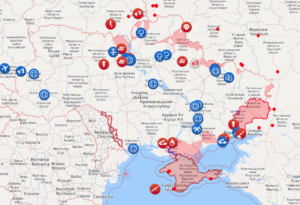
    An End To The German Economic Engine?

    Monday, July 11th, 2022

    With Russia shutting down the NordStream gas pipeline for maintenance, Peter Zeihan wonders if the end of Germany’s vaunted economic engine is nigh.

    Some takeaways:

  • NordStream has made Germany “horrendously” dependent on Russia for energy.
  • Russia is blackmailing Germany to stop supporting Ukraine.
  • “Four things that the Germans rely upon to be the economic powerhouse that they are:”
    1. That cheap natural gas.

      Their economic model it is based on access to large volumes of cheap Russian energy, both in terms of for electricity, and as industrial inputs to power the entire German manufacturing model. So that all by itself could kill the German system almost overnight. Well, not overnight, but within a year.

    2. “The Germans rely on a large, robust, highly skilled workforce, but Germany has one of the fastest aging societies in the world…Germany will hit mass retirement this decade, and so the model was always in danger on demographic grounds.”
    3. Third: “Access to central European labor all the way from Poland to Romania and even further east…but that’s going away too. Because just as the Germans are rapidly aging, the central Europeans are aging even more rapidly…the birth rate in all of these countries is actually lower than it is in Germany, so it’s every bit as terminal.”
    4. Fourth, you need the global economic trading system that is now breaking down and America is backing away from.

    His conclusion:

    All of this put together suggests that the manufacturing model that has sustained Germany, that has provided the tax base, that has provided economic growth, that has made the population relatively happy with their situation, it’s gone. And it’s going to vanish within the next year. And a Europe that does not have a German motor at its heart is a Europe that all of a sudden needs to find a very very different way to function.

    As with a lot of Zeihan’s observations, he has a lot of fundamentals right but his conclusions seem overstated. Germany has the resources to abandon their green delusions and restart coal and nuclear plants, assuming they have the political will. And the degree to which globalization is breaking down is the significant subtraction of China and Russia from it. There’s still a lot of U.S./EU trade to be had, even if it does get a bit more expensive. And Germany, so high up on the value-added foodchain, is well-position to survive.

    The labor shortage is a trickier problem to solve, and probably was one of the main reasons Angela Merkel was so intent on raking in Islamic “refugees.” But maybe real refugees from the Russo-Ukrainian War might provide an opportunity. It would be pretty ironic if Ukrainians were to find their lebensraum in the bosom of Germany…

  • Tank News Roundup: America Gets A New Light Tank

    Wednesday, July 6th, 2022

    Enough new tank news has popped up recently to justify a roundup.

  • First up: The U.S. army selects a new light tank.

    The U.S. Army on Tuesday selected General Dynamics Land Systems to build a light tank meant to improve mobility, protection and direct-fire capabilities for Infantry Brigade Combat Teams.

    The production deal is a key step forward for Army Futures Command, which has promised faster and more successful modernization programs through a competitive prototyping approach.

    GDLS will deliver 26 vehicles initially, but the contract allows the Army to buy 70 more over the course of low-rate initial production for a total of $1.14 billion, according to the Army.

    At least eight of the 12 prototypes used during competitive evaluation will be retrofitted to be fielded to the force, service officials in charge of the competition said.

    The first production vehicles are expected to be delivered in just under 19 months. The first unit will receive a battalion’s worth of MPF systems — 42 vehicles — by the fourth quarter of fiscal 2025. The Army plans to enter full-rate production in calendar year 2025, according to GDLS.

    It uses 105mm main gun (the same caliber used in the first iteration of the M1 Abrams) and weighs 35 tons.

  • The U.S. isn’t the only country unveiling a new tank recently as Germany’s Rheinmetall unveiled the KF51 Panther, sporting a 130mm main gun.

    The German company said the Panther KF51 (KF is short for Kettenfahrzeug, or tracked vehicle; the number indicates it falls into the 50-ton plus class) “is destined to be a game changer on the battlefields of the future.” It sets “new standards” in “lethality, protection, reconnaissance, networking and mobility,” the company boasted in a statement.

    Jan-Phillipp Weisswange, Rheinmetall’s assistant head of public relations, told Breaking Defense that the vehicle was designed on the company’s own funds and not in response to a client’s request. Weisswange said the tank was not designed as a candidate for the Franco-German Main Ground Combat System (MGCS) project, launched in 2012 to replace the Leopard 2 and Leclerc main battle tanks, but rather for an export market.

    Still, those two systems could provide a sense of where Rheinmetall could target potential sales. Users of the Leopard 2 are Austria, Canada, Chile, Denmark, Finland, Greece, Hungary, Indonesia, Netherlands, Norway, Poland, Portugal, Qatar, Singapore, Spain, Sweden, Switzerland, Turkey, while the Leclerc is used by Jordan and the UAE.

    The Panther’s chassis uses components of the Leopard 2 hull, but the turret is entirely new. According to the company, the 59-ton vehicle has a maximum operating range of about 500 kms (310 miles).

    The main armament is the Rheinmetall 130mm cannon, designed for the MGCS project’s Future Gun System (FGS). The FGS is automatically loaded from two revolver-type magazines which each hold 10 rounds of insensitive munition-compliant ammunition. According to the company, the FGS “enables a 50% longer kill range to be achieved [than 120mm] with an unrivalled rate of fire due to the autoloader performance.” It can fire kinetic energy rounds as well as programable airburst ammunition and practice rounds.

    There’s also a integrated drone launcher option. Here’s a short video on the tank, showing the location of the autoloader in the rear turret bustle:

  • Speaking of Germany, they’re evidently blocked Spain’s sale of used Leopard 2 tanks to Ukraine. (I have a skeleton post full of videos (some from this guy) about Germany announcing that it was thinking of sending heavy weapons to Ukraine, then dragging its feet with bureaucratic paperwork to actually do anything. It’s a strange, frustrating topic someone with more experience than myself in the arcane practice of Germany bureaucracy should research…)
  • Pop goes the weasel.
  • The Economist published a thumbsucker on the future of the tank. It covers some familiar ground, including covering Russian failures during the opening phases of the Russo-Ukrainian War. Also includes a scrolling web-graphic thingee covering parts of modern tanks.
  • The Oryx Russo-Ukrainian War heavy equipment loss tracker. Just in case, like me, you find yourself looking for that once a month or so…
  • By the way, the story that Dutch farmers bought a Sherman tank for their protest:

    Is actually a hoax.

  • Russo-Ukrainian War Update for February 27, 2022

    Sunday, February 27th, 2022

    The Russian offensive in Ukraine continues to bog down against stiff resistance, Putin puts his nukes on alert, a rumor of peace talks, momentum to suspend some Russian banks from SWIFT builds, and a whole lot of aid from the rest of the world is pouring into Ukraine.

  • Russia evidently didn’t expect the fierce resistance they received in Ukraine:

    Russia invaded Ukraine from three sides on Wednesday night Eastern time, and as of now, early afternoon Saturday, the Russian army has yet to seize any Ukrainian cities.

    This morning, a senior defense official at the Pentagon briefed reporters and declared, “We continue to believe, based on what we have observed that this resistance is greater than what the Russians expected and we have indications that the Russians are increasingly frustrated by their lack of momentum over the last 24 hours particularly in the north parts of Ukraine… As of this morning we have no indication still that the Russian military has taken control over any cities. As of this morning we still believe that Russia has yet to achieve air superiority. Ukrainian air defenses including aircraft do continue to be operable and continue to engage and deny access to Russian aircraft in places over the country.”

    There is an intriguing but unverified claim from Ukrainian intelligence that Putin is furious, that he expected a quick surrender from Kiev, and that the invading Russian forces weren’t equipped for a long war – and that after ten days, the Russian forces will face serious problems with supply lines, fuel, equipment, ammunition, etc. Maybe this is just Ukrainian propaganda, meant to keep up morale for the next week or so. But there are some intriguing anecdotes of Ukrainians hitting Russian supply columns and videos of Russian tanks running out of fuel. (It turns out supply chain problems are just everywhere these days!)

    Sending in armored columns without dedicated infantry, artillery and air support is a big risk, big reward move. Patton did it successfully in the race across France in 1944, but he had air superiority, a friendly population, and the greatest war machine ever assembled in the history of mankind up to that time backing him, and even he had to halt when he outran his supply lines.

    Putin’s initial goal, the Russian reabsorption of Ukraine or the transformation of it into a lackey state of a renewed Russian empire, is now probably impossible. Any Russian-backed Ukrainian puppet government is likely to be vehemently rejected by the Ukrainian people. Russian forces will find it difficult to go out on patrol when every citizen’s got a rifle and every grandma on every street corner is handing them sunflower seeds, telling them they are going to be fertilizer soon.

    Russia may take large chunks of Ukraine, but they will have an exceptionally difficult time keeping it.

  • Why the Russians are struggling:

    The last three days of combat should put a serious dent in the reputation of this new Russian army. We should, however, try to understand why the Russians are struggling. First, the Russian army’s recent structural reforms do not appear to have been sufficient to the task at hand. Second, at the tactical and operational level, the Russians are failing to get the most out of their manpower and materiel advantage.

    There has been much talk over the last ten years about the Russian army’s modernization and professionalization. After suffering severe neglect in the ’90s, during Russia’s post-Soviet financial crisis, the army began to reorganize and modernize with the strengthening of the Russian economy under Putin. First the army got smaller, at least compared to the Soviet Red Army, which allowed a higher per-soldier funding ratio than in previous eras. The Russians spent vast sums of money to modernize and improve their equipment and kit — everything from new models of main battle tanks to, in 2013, ordering Russian troopers to finally retire the traditional portyanki foot wraps and switch to socks.

    But the Russians have also gone the wrong direction in some areas. In 2008, the Russian government cut the conscription term from 24 to twelve months. As Gil Barndollar, a former U.S. Marine infantry officer, wrote in 2020:

    Russia currently fields an active-duty military of just under 1 million men. Of this force, approximately 260,000 are conscripts and 410,000 are contract soldiers (kontraktniki). The shortened 12-month conscript term provides at most five months of utilization time for these servicemen. Conscripts remain about a quarter of the force even in elite commando (spetsnaz) units.

    As anyone who has served in the military will tell you, twelve months is barely enough time to become proficient at simply being a rifleman. It’s nowhere near enough time for the average soldier to learn the skills required to be an effective small-unit leader.

    Yes, the Russians have indeed made efforts to professionalize the officer and the NCO corps. Of course, non-commissioned officers (NCOs) have historically been a weakness of the Russian system. In the West, NCOs are the professional, experienced backbone of an army. They are expected to be experts in their military speciality (armor, mortars, infantry, logistics, etc.) and can thus be effective small-unit commanders at the squad and section level, as well as advisers to the commanders at the platoon and company level. In short, a Western army pairs a young infantry lieutenant with a grizzled staff sergeant; a U.S. Marine Corps company commander, usually a captain, will be paired with a gunnery sergeant and a first sergeant. The officer still holds the moral and legal authority and responsibility for his command — but he would be foolish to not listen to the advice and opinion of the unit’s senior NCOs.

    The Russian army, in practice, does not operate like this. A high proportion of the soldiers wearing NCO stripes in the modern Russian army are little more than senior conscripts near the end of their term of service. In recent years, the Russians have established a dedicated NCO academy and cut the number of officers in the army in an effort to put more resources into improving the NCO corps, but the changes have not been enough to solve the army’s leadership deficit.

    Now, let’s talk about the Russian failures at the operational and tactical level.

    It should be emphasized again that the Russian army, through sheer weight of men and materiel, is still likely to win this war. But it’s becoming more and more apparent that the Russians’ operational and tactical choices have not made that task easy on themselves.

    First, to many observers, it’s simply shocking that the Russians have not been able to establish complete air superiority over Ukrainian air space. After three days of hostilities, Ukrainian pilots are still taking to the skies and Ukrainian anti-air batteries are still exacting a toll on Russian aircraft. The fact that the Russians have not been able to mount a dominant Suppression of Enemy Air Defenses (SEAD) campaign and yet are insistent on attempting contested air-assault operations is, simply put, astounding. It’s also been extremely costly for the Russians.

    To compound that problem, the Russians have undertaken operations on multiple avenues of advance, which, at least in the early stages of this campaign, are not able to mutually support each other. Until they get much closer to the capital, the Russian units moving north out of Crimea are not able to help the Russian armored columns advancing on Kyiv. The troops pushing towards Kyiv from Belarus aren’t able to affect the Ukrainians defending the Donbas in the east. As the Russians move deeper into Ukraine, this can and will change, but it unquestionably made the opening stages of their operations more difficult.

    Third, the Russians — possibly out of hubris — do not appear to have prepared the logistical train necessary to keep some of their units in action for an extended period of time. Multiple videos have emerged of Russian columns out of gas and stuck on Ukrainian roads.

    The classic saying is “Amateurs talk about tactics, but professionals study logistics” (attributed to Marines Corps commander Gen. Robert H. Barrow, but I suspect the general sentiment is much older). An army runs on its stomach, and a modern mechanized army runs on its gas tank, and something has clearly gone wrong in with Russian logistical support for this war.

  • Russia seemed to have expected Ukrainian President Volodymyr Zelenskyy to fold. He hasn’t.

    America offered to evacuate Ukrainian President Volodymyr Zelenskyy. Zelenskyy replied, “The fight is here; I need ammunition, not a ride.”

    Zelenskyy’s reply was reminiscent of past heroes in times of war: Gen. Anthony McAuliffe who replied in “NUTS” in response to the German demand for surrender at Bastogne during the Battle of the Bulge in 1944; and the Texans striving for independence from dictator Santa Anna’s Mexico with their “Come and Take it Flag,” which was itself appropriated from Spartan King Leonidas and his response the Persian surrender demand at the Battle of Thermopylae.

    This bravery, in a day when modern communications allow all Ukrainians and the world to see it, has rallied Ukrainians to defend their nation. And now that the fighting has gone on for three days, what might that mean?

    Russian President Putin is said to have assembled 200,000 troops for the invasion. It is estimated that half of them have been committed so far. Further, Putin has called on 10,000 battle-hardened Chechen mercenaries. More than half of Russian forces are likely committed to the battle of Kyiv.

    Ukraine has 245,000 active-duty members, but most are in the east, facing the Russian-led and equipped militia in the separatist regions of Donetsk and Luhansk. Ukraine also has another 220,000 reservists. Many of these are spread across the nation slightly larger than the state of Texas.

    The strategic target is Kyiv and its independent government. To move the reservists to the fight, they must contend with Russian air superiority, slowing their march. More importantly, given this struggle for national survival, 7,000,000 men of military age and fit for military service are taking up arms. Every day, many more older men — and many Ukrainian women — are also being issued weapons, making Molotov cocktails, and joining the fight.

    The ongoing Ukrainian mobilization means that the Russian military will soon be outnumbered most everywhere on the battlefield. The Ukrainians may not have the same level of modern equipment — missiles, jets, helicopter — but they have numbers and will power. And, the Russians need to eat, they need fuel, and ammunition — their resupply trucks must get through. They won’t, not in large enough numbers; everyday Ukrainians will see to that.

  • General update from late yesterday:

    Russian forces’ main axes of advance in the last 24 hours focused on Kyiv, northeastern Ukraine, and southern Ukraine. Russian airborne and special forces troops are engaged in urban warfare in northwestern Kyiv, but Russian mechanized forces are not yet in the capital. Russian forces from Crimea have changed their primary axes of advance from a presumed drive toward Odesa to focus on pushing north toward Zaporizhie and the southeastern bend of the Dnipro River and east along the Azov Sea coast toward Mariupol. These advances risk cutting off the large concentrations of Ukrainian forces still defending the former line of contact between unoccupied Ukraine and occupied Donbas. Ukrainian leaders may soon face the painful decision of ordering the withdrawal of those forces and the ceding of more of eastern Ukraine or allowing much of Ukraine’s uncommitted conventional combat power to be encircled and destroyed. There are no indications as yet of whether the Ukrainian government is considering this decision point.

    Ukrainian resistance remains remarkably effective and Russian operations especially on the Kyiv axis have been poorly coordinated and executed, leading to significant Russian failures on that axis and at Kharkiv. Russian forces remain much larger and more capable than Ukraine’s conventional military, however, and Russian advances in southern Ukraine may threaten to unhinge the defense of Kyiv and northeastern Ukraine if they continue unchecked.

    Key Takeaways

    • Russia has failed to encircle and isolate Kyiv with the combination of mechanized and airborne attacks as it had clearly planned to do. Russian forces are now engaging in more straightforward mechanized drives into the capital along a narrow front along the west bank of the Dnipro River and toward Kyiv from a broad front to the northeast.
    • Russian forces have temporarily abandoned failed efforts to seize Chernihiv and Kharkiv to the northeast and east of Kyiv and are bypassing those cities to continue their drive on Kyiv. Russian attacks against both cities appear to have been poorly designed and executed and to have encountered more determined and effective Ukrainian resistance than they expected.
    • Russian movements in eastern Ukraine remain primarily focused on pinning the large concentration of Ukrainian conventional forces arrayed along the former line of contact in the east, likely to prevent them from interfering with Russian drives on Kyiv and to facilitate their encirclement and destruction.
    • Russian forces coming north from Crimea halted their drive westward toward Odesa, and Ukrainian forces have retaken the critical city of Kherson. Some Russian troops remain west of the Dnipro River and are advancing on Mikolayiv, but the main axes of advance have shifted to the north and east toward Zaporizhie and Mariupol respectively.
    • Russian forces have taken the critical city of Berdyansk from the west, threatening to encircle Mariupol even as Russian forces based in occupied Donbas attack Mariupol from the east, likely to pin defenders in the city as they are encircled.
    • Russian successes in southern Ukraine are the most dangerous and threaten to unhinge Ukraine’s successful defenses and rearguard actions to the north and northeast.
    • Russian troops are facing growing morale and logistics issues, predictable consequences of the poor planning, coordination, and execution of attacks along Ukraine’s northern border.

    Here’s a Livemap snapshot of the conflict:

    It appears that the various armored column incursions were secondary to or distractions from the attempted paratroop-powered decapitation strike to be launched from Antonov International Airport. When that went awry (as airborne assaults often do; see the SNAFU that was Operation Market Garden in World War II), there appeared to be no coherent backup plan.

    Indeed, the entire operation seems to have been hastily planned and executed, which is odd, since Ukraine has obviously been much on Putin’s mind since 2014.

  • Here’s a Twitter thread showing destroyed Russian (and occasionally Ukrainian) vehicles and equipment.
  • Here’s another one reportedly from Bucha, just north of Kiev:

  • From the same thread:

    This is not the way competent troops act in hostile urban environments. It’s like the Russian army forgot all they learned from getting their asses kicked in the First Battle of Grozny, where driving ill-supported mechanized columns filled with untrained conscripts into the city resulted in horrible losses for the Russians.

    The Kiev assault seems even less thought out, and their opponents appear much better equipped and trained than the Chechens were.

  • On the other hand, here’s a report that Kiev is surrounded. I’d take that with several grains of salt.
  • Putin puts Russian nuclear forces on alert. The idea that Putin would actually contemplate nuclear war with the west because his own ill-conceived and badly-executed invasion of Ukraine has gone off the rails is hardly credible. Russia would be annihilated.

    “As you can see, not only do Western countries take unfriendly measures against our country in the economic dimension – I mean the illegal sanctions that everyone knows about very well – but also the top officials of leading NATO countries allow themselves to make aggressive statements with regards to our country,” Putin said on state television.

    “Mommy, they’re saying bad things about me!” Those unfriendly measures would, of course, stop instantly if Putin were to withdraw his forces from the territory of other sovereign nations.

  • Here’s a video of Putin explaining himself:

    Does that look or sound like an all-powerful conqueror at the top of his game? No, that’s the tone and the body language of a guy trying to explain why he just fucked up. “We had no other choice!” Yeah, except, you know, not invading another country.

  • There are evidently plans for talks between Ukrainian and Russian delegations on the Ukraine border with Belarus. Don’t expect much. Zelenskyy: “I do not really believe in the result of this meeting, but let them try, so that no citizen of Ukraine would have any doubt that I, as president, did not try to stop the war when there was even a small chance.”
  • Ukraine says its been resupplied with air-to-air missiles.
  • The U.S. is sending $350 million in military aid. “The defense aid will include anti-armor, small arms and various munitions, and body armor and related equipment.” Let’s hope none of it disappears into the pockets of people connected to members of the Senate Foreign Relations Committee…
  • In a reversal of official policy, Germany is sending 1,000 anti-tank weapons and 500 Stinger missiles to Ukraine, and also allowing countries that have bought German military equipment to reexport to Ukraine.
  • They’re also sending RPGS.
  • Speaking of reversing course, Germany has also done an about-face and is now in favor of removing some Russian banks from SWIFT. “The sanctions, agreed with the United States, France, Canada, Italy, Great Britain and the European Commission also include limiting the ability of Russia’s central bank to support the ruble.” I get the impression that the Eurocrats were hesitant to cut Russia off from SWIFT because they thought it would be a useless gesture. Now that Russia’s invasion has gone off the rails, they’re rethinking. The quick reverse also indicates how pissed they are at Russia right now.
  • “Sweden will send military aid to Ukraine, including anti-tank weapons, helmets and body armour.”
  • Australia is sending money for lethal aid.
  • Even broke Greece is sending aid.
  • Europe has effectively closed its airspace to Russia:

  • “Viral tweet about Republican senators voting to deny Ukraine military aid is thoroughly debunked.”
  • We could be heroes, just for one day.

  • A final word: There are a few Twitter pundits suggesting that some sort of “wag the dog” scenario of a fake war might be unfolding in Ukraine. I don’t buy it. There’s too much real reporting from too many points in Ukraine for such an elaborate, two-part deception to be unfolding. Lots of weird things happen in warfare.

    I will say one thing: The manifest incompetence with which Russia has tried to carry out this assault suggests that Putin felt he had to launch it then due to some sort of time pressure or deadline, but I don’t know what it is. Maybe Putin has late stage cancer, or he felt Ukraine was about to join NATO, or a major Russian oilfield is about to run dry. Whatever it is, this war appears to be a panic move that’s gone very badly for Putin.

    The Silence of the PIIGS

    Sunday, February 6th, 2022

    Let’s talk about the European Debt Crisis.

    [The sound you hear is the countless multitudes clicking off to another blog.]

    Way back last decade, dispatches on the ongoing crisis were a regular staple of the blog. To summarize the crisis for those who weren’t paying attention back then:

  • A bunch of countries joined the Eurozone without following the requirements outlined for membership, including limiting budget deficits to 3% of less of their GDP, and overall debt-to-GDP ratio of 60% or less. How were they able to join? Simple: They lied and the Eurocrats turned a blind eye, because EU.
  • Foremost among those running into trouble were the PIIGS (Portugal, Italy, Ireland, Greece and Spain). (Cyprus and Malta also had serious issues, but their tiny size meant they presented no systematic risk for other nations, and Cyprus relieved its problems by becoming the dirty Russian money laundering capital of Europe.)
  • Ireland was probably the most incongruous of the five, since their debt only spiked when the Irish government nationalized Anglo Irish Bank to prevent it from collapsing.
  • In all other cases, the cause of of the problem was obvious: Each ran huge budget deficits to underwrite generous welfare state programs for countries with below replacement birth rates, and they were allowed to get away with it for a while because they used Germany’s credit rating in lieu of their own thanks to the Euro.
  • The problem finally came to a head after the SubPrime Meltdown in 2008 made various banks and regulatory agencies actually scrutinize balance sheets and realize just how broke the PIIGS were.
  • Greece was the worst, being the most dysfunctional, and absolutely refusing to slow down spending on their own. There followed a reoccurring farce where various Euro regulatory agencies (including the International Monetary Fund, the European Commission, and the European Central Bank, collectively known as “the Troika”) demanded Greece end their ridiculous high levels of deficit spending, Greece refused, the Troika threatened to cut off the tap entirely, Greece promised to be better, the Troika reluctantly extended them another loan, and then Greece continued to spend recklessly, setting up the next round of the farce.
  • A bunch of Eurozone countries then implemented “austerity,” which involved not cutting spending to balance their budgets, but merely reducing the deficits slightly.

    None of these “austerity” measures eliminated deficit spending, and none addressed the issue that’s driving all of Europe (and us) bankrupt, namely unwillingness to carry out structural reforms of the welfare state. The few tiny reforms that have been undertaken have been, as NRO’s Michael Tanner notes, ridiculously timid, and even those have been heavily weighted in future years. “So far, European governments haven’t even been willing to take a penknife to the welfare state, let alone an axe.” Plus a huge round of tax hikes…

    Actual austerity would mean (at a minimum) reducing spending to the amount of money actually taken in. As best I can tell, none of the PIIGS, or France, or the UK has undertaken such real austerity. That “severe” Greek austerity that just caused a change in government? It reduced Greece’s official deficit spending from 9.0% of GDP to 7.5% of GDP. They didn’t even want Greece to stop digging a hole, they just wanted them to dig more slowly.

    Austerity did not fail, it was declared difficult and left untried.

  • Eventually growth in the Eurozone picked up just enough, and the Troika managed to install enough of their own functionaries in various PIIGS positions to ensure that their half-assed, anemic austerity programs were actually followed that, along with Brexit and the Rise of Trump, it got Eurozone debt crisis off the front page and back under the rug.
  • So fast forward to today. Has the European debt crisis been solved?

    Hah! Of course not. Does the EU ever really solve anything? European debt grew during the pandemic, but this time they get to blame Flu Manchu rather than slow growth, high taxes, declining births and a bloated welfare state.

    Spain, Italy and Greece have all continued their PIIGS-ish ways. The UK, under ostensibly conservative Tory governments for the entire pandemic and constant attack for “austerity,” and they’re still piling up debt like one of the PIIGS, though the double-whammy of Brexit dislocations and idiotic lockdowns are more to blame than increased spending per se.

    Ireland, with the lowest deficit for the period, seems to have proved that their membership among the PIIGS was transitory.

    What then of Portugal? Have they improved? It turns out only slightly and relatively. Their debt increased by 13.9% for the period, making them better not only than Spain, Italy, Greece and the UK, but also France, Cyprus, Malta, Hungary and Slovenia. They evidently managed a balanced budget in 2019 (at least on paper). Their Flu Manchu deficit spending is still unsustainable, just slightly less unsustainable than many of their fellow Eurozone grave-diggers.

    Ireland seems to have escaped PIIGSdom, but the others as are still very much in trouble, with debt-to-GDP rations at or above 100%:

  • Greece: 174.15%
  • Italy: 133.43%
  • Portugal: 119.46%
  • Spain: 95.96%
  • Ireland is down at 62.42%.

    We don’t have much standing to condemn others, as the United States ratio stands at 106.70%. Donald Trump had numerous virtues as President, but he was no deficit hawk, and Biden would crank up deficits even higher if the Senate let him.

    We can see the fruits of this orgy of deficit spending in the worldwide inflation we’re seeing. (Feel free to argue whether government budget deficits or central bank quantitative easing is more at fault.) Inflation may ruin nations, but it’s the deficit-spender’s friend, letting him pay off debt on the cheap with now devalued currency. And it’s the working poor whose lives are most impoverished by it.

    Robbing Peter to pay Paul has always been a popular proposition to get Paul’s vote, but we’re now robbing Peter and Paul’s unborn grandchildren to delay financial reckonings until after the next election cycle.

    It will not end well.

    LinkSwarm for November 19, 2021

    Friday, November 19th, 2021

    Kyle Rittenhouse found innocent, vaccine mandates are halted, Kamala is sinking, and the media continues stinking. Plus two scoops of Joe Rogan. It’s the Friday #LinkSwarm!
    

  • Kyle Rittenhouse found not guilty on all counts. Self defense is still legal in the United States. Now let the lawsuits against everyone who called Rittenhouse a “murderer” and/or “white supremacist” begin.
  • If you got your facts about the Rittenhouse case from the mainstream media, then just about everything you know is a lie.

    Here is what I thought was true about Kyle Rittenhouse during the last days of August 2020 based on mainstream media accounts: The 17-year-old was a racist vigilante. I thought he drove across state lines, to Kenosha, Wisc., with an illegally acquired semi-automatic rifle to a town to which he had no connection. I thought he went there because he knew there were Black Lives Matter protests and he wanted to start a fight. And I thought that by the end of the evening of August 25, 2020, he had done just that, killing two peaceful protestors and injuring a third.

    It turns out that account was mostly wrong.

    Unless you’re a regular reader of independent reporting — Jacob Siegel of Tablet Magazine and Jesse Singal stand out for being ahead of the pack (and pilloried, like clockwork, for not going along with the herd) — you would have been served a pack of lies about what happened during those terrible days in Kenosha. And you would have been shocked over the past two weeks as the trial unfolded in Wisconsin as every core claim was undermined by the evidence of what actually happened that night.

    This wasn’t a disinformation campaign waged by Reddit trolls or anonymous Twitter accounts. It was one pushed by the mainstream media and sitting members of Congress for the sake of an expedient political narrative—a narrative that asked people to believe, among other unrealities, that blocks of burning buildings somehow constituted peaceful protests.

    CNN and Rep. Ayanna Pressley examples snipped.

    But just as in the cases of Covington Catholic’s Nick Sandmann or Jussie Smollet or the “Russia-collusion” narrative, almost none of the details holding up that politically convenient position (boys in MAGA hats are bigoted; racism is as much a blight as it has always been; Trump conspired with Putin) were true.

    Take each in turn:

    First, the idea that Kyle Rittenhouse was a white supremacist.

    There was zero evidence that Rittenhouse was connected to white supremacist groups at the time of the shooting. He was a Trump supporter, yes, though he wasn’t old enough to vote. He was an admirer of police and firefighters, also true. He was a lifeguard. He’d been part of a “police explorer” program, and was also a firefighter/EMT cadet with the fire department in Antioch, Illinois, where he lived with his mom and two sisters.

    That Rittenhouse had no connection to Kenosha.

    In addition to having a job in Kenosha, Rittenhouse testified that much of his family lived there: his father, his grandma, his aunt and uncle, and his cousins. He also testified that on the morning of the shootings, he went downtown with his sister and friends to see the damage done by rioting the night before, and spent about two hours cleaning graffiti off of the local high school.

    That Rittenhouse drove across state lines with a gun that night to oppose the protests.

    This was a line that we heard constantly—never mind that Antioch, Illinois, is about 20 miles from Kenosha, Wisconsin. As the trial has shown, Kyle Rittenhouse did not travel to Kenosha to oppose protesters. He testified under oath that he had traveled to Kenosha for his job the night before the shootings, and was staying at a friend’s house.

    So what about the gun?

    Rittenhouse didn’t bring the gun to Kenosha. The gun was purchased for Rittenhouse months earlier by a friend and stored in Kenosha at the home of that friend’s stepfather, as then-17-year-old Rittenhouse was too young to purchase it.

    But it was illegal for him to even have the gun given that he wasn’t yet 18 years old, right?

    That is not true. Under Wisconsin law, 17-year-olds are prohibited from carrying rifles only if they are short-barreled. The weapon Rittenhouse was carrying was not short-barreled. Which is why, during closing arguments, the court threw out the charge.

    He was out there looking for a fight, and he got one: He killed two people and severely wounded a third.

    Unless there’s evidence we haven’t seen, there’s no clear indication that Rittenhouse sought to kill anyone. What we know is that he showed up with a first aid kit and an AR-15-style rifle. Video evidence, and Rittenhouse’s own testimony, indicates that he offered medical assistance to protestors and ran with a fire extinguisher to try to put out fires—and that later, after being pursued, he killed two people, Joseph Rosenbaum and Anthony Huber, and severely wounded a third. Both video evidence and the only living person that Rittenhouse shot that night, Gaige Grosskreutz, undermined the idea that Rittenhouse was simply an aggressor looking for a fight. During cross examination Grosskreutz acknowledged that Rittenhouse shot him only after Grosskreutz had pointed his own gun at Rittenhouse. Here’s how it went down:

    Defense attorney: When you were standing three to five feet from him with your arms up in the air, he never fired, right?

    Grosskreutz: Correct.

    Defense attorney: It wasn’t until you pointed your gun at him, advanced on him with your gun—now your hand’s down pointed at him—that he fired, right?

    Grosskreutz: Correct.

  • The left is taking the Rittenhouse acquittal with their usual grace and restraint.
  • “Media Found Guilty On All Counts.”
  • “Antifa Forced To Postpone Riot As Brick Supply Still Stuck On Cargo Ship.”
  • “Rittenhouse, Sandmann Agree To Share Joint Custody Of CNN.”
  • The Fifth Circuit Court of Appeals enjoined OSHA from carrying out Joe Biden’s unconstitutional vaccine mandate.

    The Court ordered that “Enforcement of the Occupational Safety and Health Administration’s ‘COVID-19 Vaccination and Testing; Emergency Temporary Standard’ remain[] stayed pending adequate judicial review of the petitioners’ underlying motions for a permanent injunction.” It further ordered that “OSHA take no steps to implement or enforce the Mandate until further court order.”

    Behind this language lies a forceful critique of the Biden mandate. The opinion is here.

    One of the factors a court considers in deciding whether to issue a stay is the likelihood that the party seeking it will prevail on the merits. The petitioner must make a strong showing of likelihood of success.

    The Fifth Circuit found that the petitioners in this case made that showing. This finding means that the Biden administration almost surely will lose in the Fifth Circuit when the court makes its definitive ruling on the merits.

    The court cited a “multitude of reasons” why those challenging the mandate will likely succeed on the merits. The first one, which it described as “obvious,” is this:

    The Occupational Safety and Health Act, which created OSHA, was enacted by Congress to assure Americans “safe and healthful working conditions and to preserve our human resources.” See 29 U.S.C. § 651 (statement of findings and declaration of purpose and policy). It was not—and likely could not be, under the Commerce Clause and nondelegation doctrine—intended to authorize a workplace safety administration in the deep recesses of the federal bureaucracy to make sweeping pronouncements on matters of public health affecting every member of society in the profoundest of ways.

    Furthermore, the “sweeping pronouncements” implicit in OSHA’s order are badly flawed. For example, the court noted that the mandate is both over-inclusive and under-inclusive. On one hand, it covers employees in nearly every industry regardless of their risk of exposure (there is “little attempt to account for the obvious differences between the risks facing, say, a security guard on a lonely night
    shift, and a meatpacker working shoulder to shoulder in a cramped warehouse”) and “doesn’t exempt those with natural immunity.” On the other hand, it arbitrarily excludes employers with fewer than 100 workers.

    Fatally to the mandate, the court found that its promulgation “grossly exceeds OSHA’s authority.” It noted that OSHA’s statutory authority to establish emergency temporary standards “is an ‘extraordinary power’ that is to be ‘delicately exercised’ in only certain ‘limited situations.’”

  • And, miracle of miracles, OSHA announced that they will actually heed the court’s opinion and suspend vaccine mandate enforcement. A federal agency heeding a rational federal court decision shouldn’t be a surprise, yet here we are.
  • How unpopular is Kamala Harris? Democratic Media Complex house organ CNN published a scathing hit piece on her.

    Worn out by what they see as entrenched dysfunction and lack of focus, key West Wing aides have largely thrown up their hands at Vice President Kamala Harris and her staff — deciding there simply isn’t time to deal with them right now, especially at a moment when President Joe Biden faces quickly multiplying legislative and political concerns.

    The exasperation runs both ways. Interviews with nearly three dozen former and current Harris aides, administration officials, Democratic operatives, donors and outside advisers — who spoke extensively to CNN — reveal a complex reality inside the White House. Many in the vice president’s circle fume that she’s not being adequately prepared or positioned, and instead is being sidelined. The vice president herself has told several confidants she feels constrained in what she’s able to do politically.

    Wait, the warm bucket of spit feels “constrained”? Do tell…

    And those around her remain wary of even hinting at future political ambitions, with Biden’s team highly attuned to signs of disloyalty, particularly from the vice president.

    Worn out by what they see as entrenched dysfunction and lack of focus, key West Wing aides have largely thrown up their hands at Vice President Kamala Harris and her staff — deciding there simply isn’t time to deal with them right now, especially at a moment when President Joe Biden faces quickly multiplying legislative and political concerns.

    The exasperation runs both ways. Interviews with nearly three dozen former and current Harris aides, administration officials, Democratic operatives, donors and outside advisers — who spoke extensively to CNN — reveal a complex reality inside the White House. Many in the vice president’s circle fume that she’s not being adequately prepared or positioned, and instead is being sidelined. The vice president herself has told several confidants she feels constrained in what she’s able to do politically. And those around her remain wary of even hinting at future political ambitions, with Biden’s team highly attuned to signs of disloyalty, particularly from the vice president.

    Social justice “first woman of color” blather snipped. But lets skip down to where Team Harris gets all snippy over a potential rival:

    Last month, White House aides leapt to the defense of Transportation Secretary Pete Buttigieg, who was being hammered with outrage by Fox News host Tucker Carlson and like-minded online pundits for taking paternity leave after the adoption of his twins in September. Harris loyalists tell CNN they see in that yet another example of an unfair standard at play, wondering why she didn’t get similar cover any of the times she’s been attacked by the right.

    “It’s hard to miss the specific energy that the White House brings to defend a White man, knowing that Kamala Harris has spent almost a year taking a lot of the hits that the West Wing didn’t want to take themselves,” said a former Harris aide, reflecting conversations last month among several former aides and current allies.

    (Imagine there’s an animated hissing cat gif here.)

    Anyway, it’s worth reading the whole thing to read how incompetent she and her staff seem at just about everything, and to tote up all the petty slights to Harris, who was only there to bring in black votes in (and didn’t do a great job of that), and now she’s completely disposable.

  • Alexandra DeSanctis is even less charitable:

    Despite ending her lackluster campaign for president with a mere 3 percent support among the Democratic electorate, Harris was nevertheless the most obvious pick within the narrow bucket to which Biden had been confined. (Never mind that the apex of her support during the primary campaign came when she savagely attacked Biden on the debate stage, essentially calling him a racist for opposing busing during his time in the Senate, and that she repeatedly said she believed women who had accused Biden of sexual misconduct.)

    The simple fact is that Harris is not a good national politician. She is ineffective and unlikeable at best, and, at worst, so unpopular that she’s actively damaging to the administration, likely why Psaki has had to turn to absurdities in an effort to defend her. (Democrats have developed a nasty habit of responding to voters who don’t like them by accusing said voters of racism.)

    In Harris’s case, these excuses are because the truth hurts. She has little to no sway with key votes in Congress. She has next to no relevant policy or diplomatic expertise. These facts shouldn’t come as a surprise, seeing that she holds her office not because of her popularity or any relevant skillset but primarily because of her identity.

    Had she not been picked as Biden’s running mate, she would’ve remained in a far more advantageous position, keeping a comfortable position in the Senate that would be nearly impossible for her to lose. She was already a media darling, popular among progressives for her supposed ability to “own” conservative nominees during hearings. Rather than winding up in a position with little chance to showboat or collect media accolades, she might’ve remained right there, where her lack of popularity with the national electorate was essentially irrelevant.

    In a backwards way, Harris finds herself holding a position in which she’s ill-equipped to succeed precisely because of identity politics, which motivated Biden to pick a running mate so ill-suited to the job.

  • How unpopular? 28% approval. Usual poll caveats apply. So her numbers might not even be that high!
  • More from Charles Cooke:

    That America’s voters disdain Harris as much as they obviously do gives me an extraordinary amount of hope for our future. In December of 2019, I celebrated Harris’s departure from the presidential primary with a “good riddance” that turned out to be woefully premature: “May Harris’s failed attempt,” I hoped, serve to “destroy her career and sully her reputation for all time.” Alas, the first part did not happen; on the contrary, Harris was springboarded up to within a heartbeat of the most potent office in the land. But the second part? Well, I got that in abundance. We are now ten months into this baleful presidency, and already Harris is the most unpopular vice president in history. And they say Christmas doesn’t come early!

    Harris’s apologists like to insist that she is as unpopular as she is because she’s a non-white woman. But this explanation gets the cause of the disapproval backwards. Kamala Harris isn’t disliked because she’s a non-white woman; Kamala Harris was chosen as vice president because she’s a non-white woman, and she’s disliked because she has nothing to recommend her beyond those facts. In the highest of high dudgeon, her defenders will propose that this is Joe Biden’s fault, for not “using” Harris correctly in her role. But this too is unjust. In truth, there is no good way to “use” Kamala Harris, because Kamala Harris is a talentless mediocrity whose only political flair is for making things worse than they were before she arrived.

  • And her staff knows it. “Kamala Harris’s communications director Ashley Etienne is leaving the vice president’s office after reports staff are in-fighting and her boss is being sidelined.”
  • Kurt Schlichter celebrates the fact that Democrats want to restore tax deductions for rich swells like himself.

    want to thank the Democrats for giving me, a trial lawyer living in Los Angeles, exactly what I need – a big, heaping tax cut. In their reconciliation bill, there are plenty of giveaways for lay-abouts, losers, and grifters, but also for us living by the beach getting hit with huge state taxes rendered un-deductible by that evil Donald Trump, notorious friend to the rich who he…shafted. Anyway, the Dems are going to wrong this right and fix this manifest justice, though – they are going to make essentially all the money I hand over to the socialist clique that runs the formerly Golden State (and it is a lot) deductible once again.

    Cool. Well, for me and other lawyers and similar blue state swells.

    People often ask me why I stay in California, to which I reply, “I don’t explain myself to people – buzz off.” But if I were to explain myself to people, I would point out that despite being awash with Californians, California has beautiful weather, my family is nearby, and here I get to be part of the feudal aristocracy sucking the life from working people to fuel my extravagant lifestyle.

    See, California was designed for lawyers and similar high-status low-lifes, and the beachside communities where the petty royals dwell do not experience a fraction of the hellish nightmare you see on TV. Oh, what you see is real, just not for those in the Birkenstock nobility. You see videos of hordes of hobos leaving their junkie spoor on the sidewalks and that happens, just not to the people that Prince Gavin of Newsom cares about. I don’t think he cares about me personally mind you, but he cares a lot about my ZIP code.

    You can drive ten minutes from my castle and be worried about someone stealing your hubcaps. Once you start heading east over the 405 (That’s I-405 to people who don’t live in LA) real life comes and bites you hard, and the farther east you go, the harder it bites. The roads are trash – gee, I sure expect the infrastructure bill will totally make them nice again – and the schools are cesspits of violence and commie indoctrination, but the peasants just need to accept their lot in life and not complain. Their bitching would ruin our wine tasting.

    Of course, I might have more sympathy for these poor devils if they had not lobbied so hard for the role of “Serf #3” in California’s production of “Game of Bums.” They voted for this. They got this. It’s all theirs.


  • “It’s Not Just White People: Democrats Are Losing Normal Voters of All Races.” Results from a focus group of Virginia voters “who voted Democrat, Democrat, Republican in the last three elections.”

    When asked which party had better policy proposals, the group members overwhelmingly said Democrats. But when asked which party had cultural values closer to theirs, they cited Republicans.

    The biggest disconnect came on education. Barefoot found that school closures were likely a big part of their votes for Youngkin and that frustration at school leadership over those closures bled into the controversy, pushed by Republicans, around the injection of “critical race theory” into the public school setting, along with the question of what say parents should have in schools. One Latina woman talked about how remote school foisted so much work on parents, yet later Terry McAuliffe, the Democratic nominee and former governor, would insist that parents should have no input in their children’s education. (That’s not exactly what he said, but that’s how it played.) As she put it: “They asked us to do all this work for months and then he says it’s none of our business now.”

    The anger they felt at Democrats for the commonwealth’s Covid-19 school closure policy became further evidence of a cultural gap between these working people and Democratic elites, who broadly supported prolonged school closures while enjoying the opportunity to work remotely. Those with means decamped: Enrollment in Fairfax County schools dropped 5 percent, and fell by 3.9 percent and 3.4 percent in Arlington and Loudoun counties, respectively. Those who were left behind organized parent groups to pressure the schools to reopen. Though the groups tended to be nonpartisan or bipartisan at the start, Republican donors and conservative groups poured money and manpower into them, converting them into potent political weapons that blended anger at the closures with complaints about Democratic board members prioritizing trendy social justice issues — all of it aimed at the November elections.

    “They keep saying ‘a strong return to school,’ but there’s no details,” said Saundra Davis on Fox News over the summer, co-founder of one large group, called the Open Fairfax Public Schools Coalition. “Their attention is on other things, like their pet projects and social justice issues, and the kids have been left to flounder and there’s still no plan for fall.”

    “You’ll be surprised to know I’m a Democrat,” she said. “I’ve tried to warn them that there’s a bipartisan tidal wave coming their way. They don’t look us in the eye, they don’t write us back. If we can’t recall them one by one, there’s an election in November.”

    Ignore the parts where the writer regurgitates Democratic Party talking points (“for the portion of the Republican base heavily predisposed to racial prejudice,” “Few people read the full 1619 Project put out by the New York Times in 2019, which is a rich tapestry of thoughtful essays and reporting about the role of slavery in the development of the United States.”) and pay attention to what the focus group members of all races are saying. “The Democratic problem with working-class voters goes far beyond white people.”

  • Evidently one American sport is willing to stand up to China: Women’s tennis.

    The head of the Women’s Tennis Association Steve Simon has said he is willing to lose hundreds of millions of dollars worth of business in China if tennis player Peng Shuai’s safety is not fully accounted for and her allegations are not properly investigated.

    “We’re definitely willing to pull our business and deal with all the complications that come with it,” Simon said in an interview Thursday with CNN. “Because this is certainly, this is bigger than the business,” added Simon.

    “Women need to be respected and not censored,” said Simon.

    Peng, who is one of China’s most recognizable sports stars, has not been seen in public since she accused former Vice Premier Zhang Gaoli of coercing her into sex at his home, according to screenshots of a since-deleted social media post dated November 2.

    Her post on Weibo, China’s Twitter-like platform, was deleted within 30 minutes of publication, with Chinese censors moving swiftly to wipe out any mention of the accusation online. Her Weibo account, which has more than half a million followers, is still blocked from searchers on the platform.

  • Speaking of victims being pressured not to speak of rape, “Mom of Loudon County rape victim says family was told to keep quiet.”

    The mother of a Virginia girl who was raped by a classmate inside a school bathroom reportedly said that she and her husband had been pressured to keep quiet about the incident — and had no clue the 15-year-old boy was then transferred to another school until last month.

    “We were silenced for many months,” Jessica Smith told the Daily Mail in her first interview since her daughter was raped at Stone Bridge High School in Loudoun County in May. “We were told not to say a word that could jeopardize our daughter’s case.”

    The boy was found guilty last month of the sexual attack, which sparked a heated confrontation between the victim’s father and school board members.

    There seem to be no crimes the left wing won’t condone in their quest to impose “Social Justice” on resisting Americans.

  • “Missouri Mom Banned From School Board Meeting For Showing Board Members ‘Porn’ Allegedly Available To Students.”
  • Now that Flu Manchu is striking blue northern states much harder than red southern ones, the media seems suddenly disinterested in accusing governors of being merchants of death.
    

  • “Joe Rogan savages critics calling black Republicans ‘black white supremacists’: ‘They’re out of their f***ing mind.”
  • Unbelievable:

  • “House Speaker Nancy Pelosi confirmed Thursday that Democrats’ $2 trillion reconciliation bill will force American taxpayers to fund abortions.”
  • Heh: “DeSantis Signs Anti-Vaccine Mandate Package in Brandon, Fla.” “The new law will require employers to allow vaccine exemptions over health, religion, pregnancy, and expected pregnancies in the future, as well as recovery from a previous case of the China flu.” (Hat tip: Stephen Green at Instapundit.)
  • “A Virginia university has placed an assistant professor on administrative leave after the educator sparked heated backlash for saying it isn’t necessarily immoral for adults to be sexually attracted to children.” Allyn Walker, step right up, you’re the next contestant on The Perv is Wrong!
  • St. Paul passes rent control legislation. Result: Developers start pulling the plug on projects.
  • This week marked the 50th anniversary of the world’s first microprocessor, the Intel 4004. There have been a lot of milestones on the road to the high tech world we live in today, but that was one of the biggest.
  • The rare good kind of irony: A team of firefighters was practicing water rescue when a car drove into the water and they had to perform a real water rescue.
  • Bill introduced to designate the Muslim Brotherhood a terrorist organization.
  • Elke Kahr, an actual communist elected mayor of Graz, Austria. That country really does seem to be going to hell lately…
  • After exposure from Texas gubernatorial candidate Don Huffines, Department of Family and Protective Services backs down on requiring employees to take a Critical Race Theory class.
  • The red-pilling of Bill Maher continues apace:

    “I get it! Your ideas are stupid!” Though his “I’m going to pause here for the applause” delivery here is still annoying.

  • You may be macho, but you’ll never be swim out to pull a 400 pound drowning bear back to shore macho. (Hat tip: Instapundit.)
  • The German islands linked by tiny railroads.
  • “Oh No! 85,000 Trump Ballots Found Inside Biden’s Colon.”
  • Boom! “USNS Harvey Milk To Be Manned Entirely By Crew Of Underage Boys.”
  • Cute dog video:

  • I had another dozen or two links I didn’t get to because the Rittenhouse news dropped. Maybe I’ll do another mini-swarm Thanksgiving week…

    LinkSwarm for August 28, 2021

    Friday, August 27th, 2021

    Greetings, and welcome to another Friday LinkSwarm! Biden’s Afghan debacle continues to top the news:

  • At least 90 people, including 13 American soldiers, were killed in in a bombing at an entrance to the Kabul airport.
  • Un-Fucking believable: “U.S. officials provided Taliban with names of Americans, Afghan allies to evacuate.”

    U.S. officials in Kabul gave the Taliban a list of names of American citizens, green card holders and Afghan allies to grant entry into the militant-controlled outer perimeter of the city’s airport, a choice that’s prompted outrage behind the scenes from lawmakers and military officials.

    The move, detailed to POLITICO by three U.S. and congressional officials, was designed to expedite the evacuation of tens of thousands of people from Afghanistan as chaos erupted in Afghanistan’s capital city last week after the Taliban seized control of the country. It also came as the Biden administration has been relying on the Taliban for security outside the airport.

    But the decision to provide specific names to the Taliban, which has a history of brutally murdering Afghans who collaborated with the U.S. and other coalition forces during the conflict, has angered lawmakers and military officials.

    “Basically, they just put all those Afghans on a kill list,” said one defense official, who like others spoke on condition of anonymity to discuss a sensitive topic. “It’s just appalling and shocking and makes you feel unclean.”

    “French officials gave the Nazi occupiers a list of Parisian Jews they wanted to remain safe…”

  • What is behind Biden’s inexplicable trust for the Taliban?

    It is becoming increasingly difficult to draw any conclusion other than that President Biden knowingly and willfully surrendered Afghanistan to the Taliban.

    To be clear, this is different from concluding that Biden committed to a recklessly premature date for withdrawing all U.S. forces (which, practically speaking, would necessitate NATO’s departure, too) while being aware that the Taliban were capturing territory and that the Afghan security forces might be unable to hold them off over the ensuing months.

    That would be bad, but not as damning as what I am deducing.

    I now believe Biden long ago reasoned that the Taliban were going to take over the country inevitably and decided to treat them as the de facto government. Consistent with this — and with the progressive Democratic orientation that American military power is needlessly provocative, and that concessions are the preferred way to inspire rogues into good behavior — Biden determined back in the spring that he would set a firm deadline to pull our forces out, and then demonstrate to the Taliban that the deadline was real.

    Snip.

    Biden saw the Taliban as the regime in waiting, with whom his administration was energetically negotiating. If he proved to the Taliban that the U.S. really was leaving no matter what, then he figured the Taliban would allow — even facilitate — the evacuation of thousands of American civilian workers, contractors, and diplomatic personnel. Biden would pull out American troops and trust the Taliban, thus appeased, with the fate of the remaining Americans.

    This is mind-boggling, but not the half of it. Biden was also effectively administering the coup de grace to the Afghan government, and not only by elevating the Taliban to the sole Afghan party with which his administration would negotiate the terms of the U.S. departure. Biden would also pull out in a manner that undermined the Afghan security forces’ capacity to fight the Taliban. After all, if U.S. troops and contractors continued providing technical and logistical support to the Afghan ground and air forces, the Taliban might interpret that as an American commitment to continue the war. Biden would make sure the jihadists had no cause for doubt.

    In this, Biden had to know he would be leaving to the Taliban the fate of tens of thousands of Afghans who supported American combat, intelligence, training, and nation-building efforts over the last 20 years. Though many government officials, members of Congress, and influential commentators pleaded with the Biden administration to fast-track the visa process and evacuate the Afghans while American forces were still in control, Biden plainly rationalized that this could provoke the Taliban into retaliatory measures — potentially against Americans — that would put public pressure on him to maintain U.S. forces in the country. Biden’s priority was to withdraw them. Ergo, the Taliban — yes, that Taliban — would be trusted to deal benignly with America’s Afghan allies.

    Read the piece for Andrew McCarthy’s reasoning behind this conclusion, including the Bowe Bergdahl swap, and evacuating Bagram in the dead of night. My only quibble with his analysis is that his working assumption that Biden is making the decisions of the Biden Administration. I rather doubt it…

  • On the ground in Afghanistan: things are bad:

    “My phone is melting, and my inbox is jammed, from grown Afghan men pleading, crying to get out with their wives and children,” my reader begins:

    All of them used to work for our company. They are engineers, electricians, lab technicians, urban planners, CAD drafters, surveyors, concrete masons, welders — all skilled technical and professional people who enjoyed what we would consider a solid middle-class life. Some went on to become lecturers at university. These aren’t herders and farmers — they are civilized, educated, middle class tradesman and professionals who trusted their government to maintain the safety and security of the nation. Their average age of the parents is late thirties. Their average family size is seven. The youngest child among them is 10 days old. Inside of a month, their lives are uprooted by bloodthirsty barbarians. They are hunted because they helped the Americans.

    One of our families has been waiting in the Entry Control Point for four days straight – living in trash and filth, with no shelter, jammed among thousands of others. The parents know full well what awaits if they are fortunate to get out. They are willing to live the life of a refugee in a camp near a military installation. Essentially a one room United Nations Refugee Center shack, or group expeditionary tents, no indoor plumbing, no kitchen. They share public toilets and showers and live in a fenced compound in a sea of other shacks or tents surrounded by gravel — for at least 12-18 months while they wait for the State Department to process their visas. They are willing to walk away from their middle-class comforts and live in refugee camps for well over a year, possibly two, for the freedom and liberty of the United States. Amanullah asked me yesterday if I could get him to Mexico so he could walk to Texas so he wouldn’t have to live in a refugee camp. They know.

    Don’t let anyone claim that Afghans who worked for America or international organizations will be fine.

    “Here’s a kick in the gut,” my reader continues. “Fawad — not his real name — called me crying last night after midnight. His brother-in-law was killed by the Taliban earlier that day. He had worked for an American contractor in Zabul [a southern province considered part of the Taliban’s heartland]. He was beaten in the street and then shot in the head so the villagers could see.”

  • More of that California ballot fraud that doesn’t exist. “300 recall ballots, drugs, multiple driver’s licenses found in vehicle of passed out felon: Torrance police.” I’m going to go out on a limb and guess that Random X. Felon wasn’t working for Larry Elder…
  • Speaking of which: Democrats have the State of California investigating Larry Elder’s campaign.
  • Speaking of voting fraud, polls show growing support for voter ID.
  • Supreme Court upholds reinstatement of President Trump’s “stay in Mexico” policy for illegal aliens. Texas and Missouri were the lead plaintiffs.
  • The Supreme Court also struck down Biden’s eviction moratorium.

    “It would be one thing if Congress had specifically authorized the action that the CDC has taken. But that has not happened,” the Court majority wrote in an unsigned opinion.

    “Instead, the CDC has imposed a nationwide moratorium on evictions in reliance on a decades-old statute that authorizes it to implement measures like fumigation and pest extermination,” the opinion continued. “It strains credulity to believe that this statute grants the CDC the sweeping authority that it asserts.”

  • On his way out the door, disgraced New York Governor Andrew Cuomo granted clemency to Weather Underground cop-killer David Gilbert.

    David Gilbert is the father of San Francisco District Attorney Chesa Boudin. He had Chesa with his then-partner Kathy Boudin.

    David Gilbert was also a member of the Weather Underground, the domestic terrorist group responsible for the 1981 Brink’s armored car robbery in New York.

    Gilbert and Boudin dropped off infant Chesa with a babysitter before driving to the robbery.

    The terrorists, with members of the Revolutionary Armed Task Force and Black Liberation Army, robbed the truck and wounded guard Joe Trombino and killed his co-worker Peter Paige. Police officers Waverly Brown and Edward O’Grady died in the shootout.

    A jury convicted Gilbert of three counts of second-degree murder and four counts of first-degree robbery.

  • Oh: They also took his Emmy away. The one they gave to him after we all knew he was a Granny-murderer…
  • Politico sells to German publishing giant Axel Springer for about $1 billion. Hopefully this will result in Axel Springer CEO Mathias Dopfner firing some snowflakes when he insists they do actual reporting rather than waging social justice… (Hat tip: Director Blue.) (Previously.)
  • Emerald Robinson: “How I Murdered The Weekly Standard“:

    My modest proposal was that the 3% of Republicans who never approved of President Trump should stop pretending that they were spokesmen for the 97% of Republicans who did. In the corporate media, where 97% of that 3% were keeping a high profile on cable news, the distortions became preposterous. This seemed to me elementary logic. But for the tiny group of delusional Never Trumpers, my modest proposal fell on them like a ton of bricks.

    In the end, my essay ignited a kind of public war among conservative intellectuals that helped to bring down the neocons and the Never Trumpers in the media. Not only did the Weekly Standard shut down, but the National Review kicked out Jonah Goldberg, and the neocon’s peewee prince Bill Kristol went to work for Democrats – all in six months. How did that happen? They had no base of support outside of the Beltway, and they were in willful denial about their own unpopularity. This dynamic was obvious at all levels of media, but let’s take a high visibility example: the old panel at Fox New’s Special Report with Bret Baier. Now, Bret Baier is obviously a very quiet Never Trumper but if you stacked your daily panel with Stephen Hayes, A. B. Stoddard, and Jonah Goldberg and these were the “conservative” pundits you picked to defend President Trump’s policies then it’s obvious what Bret was doing.

    A week or so after my essay appeared, I got a very short and shrill phone call from one of Bret’s staffers – who was a rabid Hillary Clinton supporter, no less. When I picked up the call, she was angry and breathless and did not want to do small talk. She said: “You don’t know what you’ve done, you don’t understand the damage you’ve caused to this show.” I asked her to calm down, and be specific. She hung up instead.

    This bizarre exchange piqued my interest enough to watch Bret Baier’s show that night, which was an emotion I rarely felt for Special Report. Sure enough, Bret Baier ended the episode with an odd little “farewell” segment to Stephen Hayes. The gist of it was that Hayes was suddenly taking “a one year vacation to Spain” with the family. My first thought was: who does a video farewell when they take a vacation? The whole thing was pure baloney. It was now perfectly clear why Bret’s hysterical staffer had called. Apparently my essay had been a crucial factor in getting Stephen Hayes kicked off TV. Someone over at corporate had finally looked at the piss poor ratings Bret was getting and the light bulb went off: no one wants to listen to Hayes anymore. That was certainly true. (A few months later, the sour puss A. B. Stoddard also disappeared from the Special Report show – this time without a video farewell.)

    Hayes getting axed left me surprised. How was I to know that Fox executives could read? How was I to know that Baier and Hayes were roommates in college? Did Hayes sail to Spain on one of those idiotic cruises that he was always pushing on his subscribers? Jonah Goldberg had been taunting me from the pages of the National Review that the Never Trumpers were all doing fine – and then suddenly none of them were doing fine. In his video farewell, Hayes wanted everyone to know that he’d be back in a year, and that he was still the chief editor of the Weekly Standard magazine. Both of these statements actually turned out to be false.

    Five months later, I got a call from an insider that all the employees at the Weekly Standard were being asked to prepare for the worst. Had anyone run with this story yet? No they hadn’t. Had it somehow fallen to me to be the first to announce the end of the celebrated neocon magazine where Bill Kristol and Stephen Hayes had regularly taunted the American working class? Yes it had. The Lord had delivered them into my hands

    Honestly, it was less of a murder than documenting a suicide…

  • “Snopes co-founder and owner caught plagiarizing dozens of articles and Snopes went ahead and fact-checked it for us.”
  • Communist purges communists:

    Like the Soviet Union under Stalin, Current Affairs is the private kingdom of one man, in this case the dandy communist Nathan Robinson. For five years, Robinson has been all over Current Affairs like a cheap suit, while a small team of deluded volunteers has labored in his salt mine, generating content for the greater glory of the revolution, and their leader, the Potemkin page-turner. But even five-year plans go awry.

    Lyta Gold, who was hired to generate ‘Amusements’, is not amused. Gold claims that when the staff attempted to form a workers’ co-operative, Robinson fired them all.

    It would take a heart of stone not to laugh… (Hat tip: Ed Driscoll at Instapundit.)

  • “Israeli Study Shows Natural Immunity 13x More Effective Than Vaccines At Stopping Delta.”
  • “Large CDC Study Doesn’t Support Mask Mandates in Schools.” This is the sort of science Democrats don’t want settled. (Hat tip: Stephen Green at Instapundit.)
  • In an administration that sucks, Jen Psaki stands out for really sucking hard.
  • Speaking of sucking, here’s Spanish-language media omitting embarrassing information in their translation:

  • “Texas Wins Preliminary Victory Against Biden Administration in Medicaid Lawsuit. The district court’s order temporarily suspends the Biden administration’s revocation of Texas Section 1115 Medicaid waiver.” The Biden Administration retroactively denied a waiver issued by the Trump Administration in an attempt to force ObamaCare down the state’s throat.
  • Texas election integrity law finally passes the Texas House, meaning Democrat’s quorum-busting stunts got them Jack and Squat.
  • Herschel Walker is running for the U.S. Senate.
  • “Germany Schnitzels Itself After Ditching Nuclear, Coal Power For Green Pipe Dreams.” Keep enjoying the highest energy costs in Europe, Deutschland…
  • Samsung tops Intel as world’s largest semiconductor manufacturer.
  • Not news: Vultures eating dead cows. News: vultures eating live cows.
  • The Shat at 90.
  • Who should you back with your Go Fund Me money, Brett Butler or Spinal Tap’s Viv Savage? (I did toss a little money Brett’s way, as I knew her a little back in my standup comedy days…)
  • “Americans At Mercy Of Taliban Just Glad We Don’t Have A President Who Posts Mean Tweets Anymore.”