It’s easy for the uninformed to get black pilled about America’s comparative advantage in technology. “China’s AI efforts are eating our lunch!” Etc. Victor Davis Hanson is always good for a grounded take, and when it comes to technology, he says America is still far and away the country to beat.
Posts Tagged ‘Copilot’
VDH: America Dominates Tech
Saturday, August 22nd, 2026LinkSwarm For July 17, 2026
Friday, July 17th, 2026Two important speeches (from President Trump and Secretary of State Rubio) on leftwing threats to America, more welfare state fraud uncovered by Nick Shirley, Ukraine continues to hit Russian ships at will, multiple marine drone attacks, TSMC has a good week (and pledges to invest more money in America), Apple sues OpenAI, and Bruce Sterling compares AI to jazz.
It’s the Friday LinkSwarm!
Trump announced a massive declassification of documents showing how exposed our election system is to hacking and foreign interference. Top White House aides and intelligence agency chiefs have all reviewed and authenticated the documents.
The documents highlight major areas of concern. Starting in 2020, Beijing carried out the largest-ever compromise of election data. Some 220 million American voters’ files were meddled with by Chinese intelligence services. China signed a data exploitation unit for this project.
Members of the Deep State within the IC worked to suppress and downplay the scope and impact of China’s election interference. U.S. spy agencies discovered that the voter data breach in 18 states was bought, stolen, or hacked by China. That breach was kept hidden; Trump, who was still president at the time, was not informed, nor was Congress. The line was that the 2020 election was the most secure in history.
CIA reported in mid-2018 that the Chinese Communist Party’s strategy was to leverage all domestic and foreign elements opposed to Trump. In mid-2019, China’s approach was to undermine domestic confidence during the first Trump presidency. The Chinese government aimed to identify anti-Trump reporters and pay them large sums of money to produce stories that cast Trump in a negative light.
The FBI obtained raw intelligence indicating that China’s activities included efforts to produce illegal ballots for Joe Biden. These were kept out of the presidential briefing. One analyst admitted to intentionally downplaying Chinese election activities. Another official stated she was running a shadow government to keep intelligence on China’s election interference away from the media and the White House. Numerous burn bags have been found.
Americans were lied to about the security of our election systems, including voting machines. They’re highly susceptible to attack. Russia, China, Iran, North Korea, and non-state actors have the ability to compromise our election infrastructure.
Michigan police raided a Democrat GOTV organization and were so concerned they contacted the FBI in Detroit. The documents state that canvassers signed voter registration forms in other people’s names, registered nonexistent individuals, and got paid based on the number of applications they produced. The FBI believed crimes were committed, but the Biden DOJ slow-walked and suppressed the case.
Of course they did.
Today at 9:40 p.m. ET, U.S. Central Command (CENTCOM) completed its latest major wave of strikes against Iran.
U.S. forces, including fighter jets, aerial drones, and warships, launched precision munitions that hit dozens of Iranian military targets such as coastal surveillance and air defense sites, military logistics infrastructure, and maritime capabilities. This was the sixth consecutive night of U.S. strikes against Iran.
At the Commander in Chief’s direction, CENTCOM is further degrading Iranian military capabilities and holding Iran accountable for recent attacks on commercial shipping.
More than 50,000 U.S. service members are operating across the Middle East and remain vigilant, lethal, and ready.
“U.S. forces resumed the naval blockade against vessels transiting to and from Iranian ports and coastal areas today [July 14] at 4 p.m. ET,” the command posted to social media on Tuesday.
“There are currently more than 20 U.S. Navy warships and hundreds of military aircraft operating across the Middle East. American forces remain vigilant, lethal, and ready,” the statement continued.
Secretary of State Marco Rubio has requested that senior officials from more than 60 countries convene in Washington next Thursday to discuss the alarming rise of transnational far-left terrorism, according to a Washington Post report.
Snip.
The initiative is intended to expand intelligence sharing, law-enforcement cooperation and potential terrorist designations targeting militant groups with alleged ties to Antifa.
Administration officials have discussed whether foreign-terrorism links could unlock broader investigative and surveillance powers against US-based far-left revolutionaries that are a part of subversion networks.
The problem is that countries have been addressing far-left revolutionaries as a domestic threat, but in fact it’s transnational.
State Department spokesman Tommy Pigott said the upcoming event is in response to the rise of the radical left. He said far-left terrorism is “an old threat re-emerging with strong transnational links and new convergences.”
“Because this threat has not been adequately addressed in the past, each engagement, designation, or security assistance program creates a compounding effect supporting countermeasures at home and abroad,” Pigott said in a statement.
In November, the State Department designated four European far-left groups as foreign terrorist organizations and directed agencies to investigate networks accused of fomenting political violence. One of the militant groups in Germany is called Antifa Ost. Two more were in Greece and one in Italy.
During the Antifa roundtable at the White House last October, Seamus Bruner, Director of Research at the Government Accountability Institute, briefed the president and his cabinet on a complex network of dark-money NGOs and activist groups fueling unrest nationwide via the permanent protest-industrial complex.
“We have identified dozens of radical organizations, not just the decentralized Antifa organizations, but dozens of radical organizations that have received more than $100 million from the Riot Inc investors,” Bruner told Trump.
Jihadists attacks and plots in the United States are down by two-thirds since ISIS’s peak. The number of people killed by jihadist terrorism in Europe dropped by roughly 97 percent from the year 2015 to the year 2024. In other words, to a very great extent, our counterterrorism strategy has worked. The threat has not disappeared, of course. It will continue to exist, particularly so long as we tolerate immigration systems that imports these threats directly into our respective homelands. But this threat has been severely diminished. The world looks very different today because of it.
For far too long, however, our counterterrorism doctrine has had a blind spot – a blind spot when it comes to extremist violence from the political left. Even today, the very idea that far-left terrorism could be a serious threat is treated as a right-wing fever dream, or worse, as a dangerous fascist conspiracy. It’s treated this way by many in the press, by many in academia and our universities, and by many of our legacy institutions. You will no doubt see the dogma rear its head in the coverage of this very conference. In spite of the clear and the undeniable reality, in spite of the objective numbers and statistics, in spite of the fact that in this room today there are representatives from across the political spectrum, we will hear this organized – that this kind of organized violence and terror will be dismissed. It will be dismissed as a partisan fiction.
A whole industry grew up in our countries around the study of extremism. We have think tanks and fellowships and journals and consultancies, with the unspoken understanding among them that the only kind of political violence that was a true threat to our system – I’m sorry – that only one kind of political violence was a true threat to the system. A bomb planted by a neo-Nazi group was a nefarious and murderous act of evil. It is. But a bomb planted by a Marxist revolutionary – well, that’s just merely a tragic excess of idealism. Perhaps its means were misplaced or overzealous, but its ends were virtuous and just. That’s the implication of how they treat it.
For years, this extraordinary ideological prejudice was embedded in the way we talked about political violence and extremism. It was repeated again and again, until it was accepted as the neutral and objective baseline, so entrenched – so entrenched in the mainstream conventional wisdom that it came to be regarded as an apolitical fact. It is the reason why, here in my country, so many people in positions of power have repeatedly dismissed acts of violence and even terrorism as legitimate forms of political expression so long as they served a left-wing cause.
It is why during those George Floyd – so-called George Floyd – riots in the summer of 2020, as criminals and extremists burned and looted their way through American great – America’s great cities and nearly brought the country to its knees, city governments all across the country simply refused to prosecute the people conducting these acts of violence and terror. It is the reason for the now infamous image – and you all recall this – of a news anchor from a very prominent agency – a news anchor standing in a neighborhood consumed in flames; meanwhile the chyron on the bottom read that the protests were mostly peaceful. This was something worse than a double standard. Left-wing violence was not just excused; it was treated as sacrosanct, a protected class unto itself. That era has to end.
How worried should Democrats be about the Democratic Socialists of America? In the wake of a series of DSA victories in New York City, Jonathan Chait raised the alarm in The Atlantic, writing that as the group has risen in power, it has also grown “more hostile to the [Democratic] party, more illiberal, and more dogmatic.” Long-time DSA members, including former staff member and thought leader David Duhalde and socialist magazine publisher Nathan J. Robinson, pushed back, dismissing Chait as someone who doesn’t know or understand the DSA.
Well, I know the DSA, and as someone who was a member and served in local leadership, I can say that Chait has it right: today’s DSA is not a harmless organization. It includes disciplined, radicalized networks that have methodically expanded their power over the last decade in pursuit of extremist goals.
As the Democratic Party grapples with the DSA’s growing influence and extremism, it would do well to recognize that the same dynamic underway now—first accommodation, then capture, then surrender to insurgent radicals—already played out on a smaller scale within the DSA itself. The only defense is to out-organize it.
For decades, the DSA was mostly composed of a cohort of aging Boomers left over from its founding in 1982. It prioritized open debate and political tolerance. Following in the tradition of founder Michael Harrington, members viewed the DSA not as a revolutionary vanguard but as a reformist bridge to mainstream labor-liberalism, and they prioritized parliamentary process and pluralism.
But in the mid-2010s, the character of the organization began to change. I was in Boston at the time and witnessed the last days of the “old” DSA. New, younger members began to enter the organization, while Senator Bernie Sanders and the socialist magazine Jacobin grew their followings.
As the DSA’s cultural power expanded and it began to amass electoral victories, more leftists of varying extremist commitments were drawn in. This was an explicit strategy called “the big tent,” advanced by the then-DSA Jacobin Left. In August 2025, DSA delegates voted to remove a constitutional provision barring Leninists from entry. The provision was already a dead letter.
The old DSA’s high-mindedness became its fatal weakness. Veteran members assumed the younger generation played by the same rules of persuasion, but the newcomers’ goal was not to win arguments—it was to transform the institution and its politics.
As the organization grew, it began to profess more extreme ideas—and demand that its members do the same. First there were the purity tests of Black Lives Matter and BDS, then apologia for Putin’s invasion of Ukraine and support for Hamas and its atrocities.
The new DSA—with the help of hype-man Hasan Piker—advanced these agendas with what American labor leader Walter Reuther called “the Communists’ highly developed technique of name-calling and character assassination.” The Harringtonites fought back, but their efforts came far too late, and many prominent members of the older generation eventually left.
In a sense Jake Altman is wrong. The Democrat Party has largely already been captured by allied forces under the guise of “social justice” at the same time the commies were taking over the DSA, and were able to do it for much the same reasons: “no enemies on the left”, along with a heaping bowlful of white guilt.
A coalition of state financial officers said it uncovered roughly $225 million in alleged fraud across America’s schools over the past six years, identifying nearly 90 cases involving embezzlement, fake invoices, inflated enrollment, bid-rigging and kickbacks.
In a new report obtained exclusively by Fox News Digital, the State Financial Officers Foundation (SFOF) and Open the Books analyzed every Education Department Office of Inspector General (OIG) Semiannual Report to Congress issued between Oct. 1, 2019, and March 31, 2026, revealing alleged fraud across 24 states and Puerto Rico.
Some other examples snipped.
In Texas, former Houston Independent School District Chief Operating Officer Brian Busby and contractor Anthony Hutchison allegedly orchestrated a fraud scheme of more than $6 million, involving school construction and grounds maintenance contracts in exchange for cash bribes and hundreds of thousands of dollars in home renovations.
A federal jury found Busby and Hutchison guilty of conspiracy, bribery, filing false tax returns, and witness tampering, with Hutchison also convicted on seven wire fraud counts, according to the U.S. Attorney’s Office for the Southern District of Texas.
“Bureaucratic bloat, insider dealing, and poor oversight prompted Governor Abbott and the Texas Education Agency to intervene in HISD and appoint new leadership,” HISD Superintendent Mike Miles told Fox News Digital. “School funding was being squandered, the quality of schools had deteriorated, and the majority of students’ education was being neglected. That is no longer the case. Since June 2023, we have made it a priority to eliminate waste and most importantly, now every decision we make is focused on closing student achievement gaps, preparing students for the future, and supporting teachers.”
(Previously.) (Hat tip: Sarah Hoyt at Instapundit.)
Arizona Democratic Sen. Ruben Gallego, a potential 2028 presidential candidate, engaged in sexual relationships with at least two House staffers and his “very flirtatious” habits with others may come back to haunt him, The Post has learned.
The 46-year-old lawmaker admitted to the two relationships — both with aides to Texas Democrats — to one source while a second person said they had recently learned of the romantic entanglements.
A third source confirmed one of the dalliances, both of which are said to have been consensual and occurred during Gallego’s decade representing Phoenix in the House.
So he’s just an adulterer, not a rapist (as far as we know). Does this put him in the top half of senate Democrats for morality? (Hat tip: Instapundit.)
Austin-based defense technology company Saronic, known for building autonomous watercraft, announced plans to invest more than $3.2 billion in a new shipyard at the Port of Brownsville that is expected to create 10,000 jobs.
Gov. Greg Abbott joined Saronic CEO Dino Mavrookas Thursday at the company’s Austin headquarters to announce the project, known as Port Alpha.
The shipyard’s initial phase will occupy more than 800 acres, with the potential to expand to more than 4,000 acres. Saronic plans to break ground this year and begin producing ships in 2028.
“The initial phase of Port Alpha will more than double America’s shipbuilding capacity today and will make it the largest shipyard in the country,” said Mavrookas.
Port Alpha will be designed for advanced manufacturing, software-based production, and autonomous vessels.
Mavrookas framed the project as a response to the decline of American shipbuilding and the increasing maritime capabilities of China.
“Today, China is now outbuilding the United States in shipbuilding capacity 230 to one,” he said.
“A nation that cannot build ships cannot project power, cannot protect its supply chains, and cannot defend its interests,” Mavrookas added. “We are at that moment right now. Port Alpha is our answer.”
Saronic designs and manufactures autonomous vessels for the U.S. military, including the Corsair, Mirage, and Marauder.
This is good news for American drone manufacturing (and shipbuilding). However, on a personal level, I note that Saronic has had the same technical writing position open for most of this year. Indeed, I’ve applied for it multiple times when listed, but gotten no contacts save form replies. Maybe with all their new activity they’ll finally be hiring…
Former Obama staffer accused of stealing from colleagues to fund drug habit.
Adam Fetcher, 42, was let go from his role as Chief Communications Officer for the City of Minneapolis last week amid a police probe, The Minnesota Star Tribune reported.
According to the outlet, Fetcher, who earned $186,495 a year in his role, is accused of stealing cash and credit cards from three of his colleagues and racking up fraudulent charges in smoke shops.
Fetcher’s drug of choice was Kratom, “a substance which is used to manage opioid withdrawal.”
U.S. Rep. Chip Roy wants the Trump administration to crack down on legal immigration after last week’s U.S. Supreme Court decision thwarting a presidential executive order to address birthright citizenship.
In a letter to the Trump administration, Roy (R–Austin) said that while the administration works to secure the nation from illegal immigration, the current level of legal immigration should be reassessed to ensure that the “economic opportunities, cultural and social cohesion, or security” of American citizens is not negatively impacted.
Expressing concern about increasing pressure on housing, schools, and healthcare services, Roy wrote that the “American people deserve transparency so we can ensure our immigration system puts American workers, taxpayers, and communities first.”
According to the congressman, the U.S. takes in approximately one million legal immigrants each year because of the Immigration Act of 1990. This accounts for roughly 34 million immigrants over the last 35 years. He also explained that more than 10 million nonimmigrant visas are issued to visitors such as guest workers, foreign students, and tourists.
Roy went on to cite an analysis of last year’s Current Population Survey (CPS) by the Center for Immigration Studies, which highlighted legal and illegal immigrant totals of “53.3 million and 15.8 percent of the total U.S. population in January 2025.”
Ashrafuzzaman Khan, a former top official of the Islamic Circle of North America in Queens, New York, personally slaughtered seven university professors as the chief executioner of Jamaat-e-Islami’s Al Badr death squads during the 1971 Bangladesh massacre. Despite being convicted in absentia of war crimes, he helped build one of America’s largest Muslim organizations and continues to live freely in the United States.
You may previously remember Jamaat-e-Islami from them stabbing a science fiction writer in the head back in 2018. (Hat tip: Director Blue.)
A Lavaca County justice of the peace who was arrested earlier this month on felony charges committed suicide on Thursday as law enforcement agents attempted to arrest him a second time.
Precinct 2 Justice of the Peace Travis Mitchell Hill was arrested July 11 on first- degree felony charges of compelling prostitution, second-degree sexual assault, and solicitation of prostitution, but reportedly had been released on bond.
Usually, compelling prostitution is upgraded to a first-degree felony when the victim is a minor.
The Lavaca County Sheriff’s Office was made aware of allegations against Hill six weeks ago, but since Hill was an elected official and a practicing criminal defense attorney, Lavaca County Attorney James Reeves recused himself and referred the case to the Texas Office of the Attorney General (OAG). The Texas Rangers were leading the investigation.
Hill did not appear for a pre-trial appointment Monday, when he was supposed to receive an ankle monitor. The U.S. Marshal’s Office was assisting local law enforcement with locating him on Thursday.
According to a statement issued by Reeves, Hill was located Thursday evening “at a remote location in Gonzales County, Texas. During law enforcement’s encounter with Mr. Hill, he committed suicide.” No other details were provided.
“Hill was appointed as justice of the peace in 2011 by the Lavaca County Commissioners Court. He had reportedly previously run as a Democrat for Lavaca County district clerk in the March 2011 primary, but switched to the Republican Party sometime later.” There are no more details about the charges against him online that I can find.
As Flock cameras are installed across the nation, citizens are growing more concerned about the potential privacy violations posed by automatic license plate readers.
On Friday, U.S. Rep. Keith Self wrote on X that “[i]f transparency is now considered a threat, we’ve already drifted too far from the principles of a free Republic,” responding to an article about Flock’s CEO, who said that it is “terroristic” for the public to want to know where the company’s automatic license plate readers are being installed.
Flock cameras do not act like traditional license plate readers. Powered by AI, they capture details such as the make and model of a passing vehicle, as well as any unique or identifying features such as dents, scratches, stickers, and aftermarket parts.
The ALPRs also capture data on vehicles, regardless of whether they have been implicated in a crime. Police departments do not need a search warrant to access Flock data, heightening concerns about Fourth Amendment violations.
We’re living in an Age of AI. Why was there a “Jazz Age”? Why did jazz create an “Age”? Why was there this period between the Great War and the Great Depression, where a new form of music was very important, and people around the world cared about it?
You can theorize about jazz. You can say that there were social reasons: that jazz was fun and new and sexy, and women wanted to wear short skirts and dance the Charleston.
Or you could say that jazz was infrastructural — that music from the town of New Orleans could be recorded, and exported, and transmitted on the radio. There were new forms of mass media, so it was easier to spread a viral fad, around the world. So, that somehow explains jazz.
Or you could say that jazz was political — that there was an oppressed class of black people living under apartheid, and jazz musicians and composers were making their voices heard.
Or you could say that the Great War had just ended, and it was followed by a plague of flu that killed even more people than the worst war in history. You might say that jazz was a method for musicians to rescue mankind by changing the subject. Jazz was strange and extreme, because it was denying and avoiding the trauma of a lost generation. With more trauma — depression and war — well on the way.
It’s pretty clear to me that the generation of AI — and it’s been going on for ten years, it’s a generation — has a lot of that unspoken Jazz Age anguish. It’s a vivid displacement activity for a lost and troubled era.
I’m a novelist, so I notice the peculiar emotional expressions here. I notice things like AI burnout, AI psychosis, unhealthy relations with imaginary boyfriends and girlfriends, AI fakes, stock market bubbles, and the fear of missing out. That stark fear. So much fear. The fear of missing that golden chance. Also, the fear that AI is real this time, and is really happening. The apocalyptic terror that AI will lead to the destruction of the world.
This is not the cyberpunk dystopian dark side of AI. This is the propulsive force of AI. It’s the restless and itchy drive that forces you to leave your apartment and rush downtown to the jazz club.
Why do you go? The jazz club is not a place for the angels. You might drink bootleg liquor there and become an alcoholic. Or you might get in a fight, or catch a venereal disease. There’s cocaine and marijuana there. Someone might mug you and take your purse or wallet. But also, in New York, Duke Ellington is playing! In Paris, Django Reinhart is playing! It may be a wild scene, but you’re crazy not to go!
This is the high summer of AI. The scene is red hot. I’ve been aware of AI for my entire, extensive lifetime, and it’s never been this technically intense and this deeply felt. Rational people, with education and money and power and experience, are cracking up in public. They’re losing their heads over it. Billionaires, captains of industry, politicians, military, spies. Worldwide. Old and young, men and women.
It’s a craze.
I’m very interested in it. I follow its every little up and down. It is so far out and science fictional that it might have been built just to entertain elderly cyberpunk writers. I do not invest in it. I’m not selling any of it to you. I don’t use it much personally. It isn’t changing my life — not much as yet. I’m not afraid of it. I don’t even think it will last. It’s defining an era, an era which is ten years old and counting, but something else will show up. AI is not a fraud, or pretense, or a fake. It’s a real and powerful technology and we’re never going back to the way things were. I recognize all that, but also, I take consolation in continuity.

The dog has his own motorcycle.. 😎 pic.twitter.com/XQxWms259r
— Buitengebieden (@buitengebieden) July 16, 2026
(Hat tip: Ace of Spades HQ.)
I’m still between jobs. Feel free to hit the tip jar if you’re so inclined.
Microsoft Devs Hate Eating Own AI Slop Dog Food
Tuesday, June 2nd, 2026There’s a phrase in enterprise software: “Eat your own dog food.” It means you should be using the software you’re developing internally, because you find bugs more quickly that way.
Evidently Microsoft developers prefer the taste of Anthropic’s Claude over their own Copilot AI slop.
Last year, Microsoft CEO Satya Nadella revealed that the company writes up to 30% of its code using generative AI. As it now happens, Microsoft is reportedly planning to reduce the use of Anthropic’s Claude Code — a move designed to push its employees toward GitHub Copilot CLI.
For context, The Verge’s Tom Warren reported that Microsoft started opening access to Claude Code for its employees in December, including developers, project managers, and designers, allowing them to interact and experiment with the AI-coding assistant directly in their workflows.
Warren reports that Claude Code gained vast popularity among Microsoft employees over the past six months, which has seemingly led to a pullback on its Claude Code push in favor of its own GitHub Copilot CLI. “While Claude Code has been a popular addition, it has also undermined Microsoft’s new GitHub Copilot CLI coding tool,” Warren explained.
According to Warren’s sources, Microsoft’s Experiences + Devices division, which includes teams working on Windows, Microsoft 365, Outlook, Teams, and Surface, is supposed to stop using Claude Code by the end of June. These teams are expected to transition their workflows to GitHub Copilot CLI over the next few weeks.
The report reveals that the decision isn’t centered on Microsoft pushing its staffers towards its own offering — there are some financial implications at play, too. Microsoft’s financial year is expected to end on June 30, which means canceling Claude Code licenses for its employees could cut its operational costs as it transitions into a new financial year.
While speaking to The Verge, Microsoft’s VP of experiences and devices group, Rajesh Jha, indicated:
“When we began offering both Copilot CLI and Claude Code, our goal was to learn quickly, benchmark the tools in real engineering workflows, and understand what best supported our teams. Claude Code was an important part of that learning… at the same time, Copilot CLI has given us something especially important: a product we can help shape directly with GitHub for Microsoft’s repos, workflows, security expectations, and engineering needs.”
It’ll be interesting to see how the transition from Claude Code to GitHub Copilot CLI is received, especially since the vast majority seems to favor the former. The company’s initial plan was to have its engineers use both offerings concurrently, to compare their capabilities, and to provide feedback.
Interestingly, Microsoft staffers have seemingly preferred Claude Cove over GitHub Copilot over the past few months, primarily because of the feature disparity between the two products.
I wondered if “Claude Cove” was a typo, but no, it’s apparently a real thing.

An opportunity for a really obscure meme.
These sorts of stories pop up again and again: Everyone who is forced to use Copilot seems to hate it. Claude doesn’t seem to generate the same level of loathing, maybe because Anthropic doesn’t have the same opportunities Microsoft does to shove it down the throats of its existing users.
Now we know that Microsoft’s Devs, just like its users, seem to prefer the taste of other people’s dog food over Microsoft’s…
(Hat tip: Clownfish TV.)
Chrome Secretly Installing AI On Your PC
Tuesday, May 12th, 2026Clownfish TV has a video up covering how Google’s Chrome browser secretly installs a four gigabyte AI on your PC without asking you:
weights.bin in a directory called OptGuideOnDeviceModel. The file contains weights, the learned numerical parameters of an AI model that teach it how to weigh the importance of various data points of Google’s Gemini Nano, which is designed to live on computers, devices, not in the cloud.”
Here are instructions for disabling it on Mac.
Going to Hanff’s original post revealed another browser exploit from another AI company: “Two weeks ago I wrote about Anthropic silently registering a Native Messaging bridge in seven Chromium-based browsers on every machine where Claude Desktop was installed [1]. The pattern was: install on user launch of product A, write configuration into the user’s installs of products B, C, D, E, F, G, H without asking. Reach across vendor trust boundaries. No consent dialog. No opt-out UI. Re-installs itself if the user removes it manually, every time Claude Desktop is launched.” Here’s the piece on how Claude does that, and it sounds like an even scarier piece of malware. “Claude Desktop reached into Brave, a browser from a completely separate vendor, and registered a back door for a browser extension I do not have.”
AI companies are spending billions of dollars to build-out vast AI data centers while invading your privacy at the same time, yet studies show these investments aren’t seeing returns on their investments. “Companies reporting high ROI were not the same ones reporting AI-related workforce reductions. In fact, workforce reduction rates were nearly equal for those reporting higher ROI and those with smaller returns or even worsened outcomes from autonomous operations.”
Then there’s the tiny little problem that everyone but billionaires seem so absolutely hate AI.
Gloria: The rise of Artificial Intelligence is the next industrial revolution.
[Boos]
Gloria: A- whoa!
[Boos rise louder]
Some guy in the crowd: AI sucks!
Gloria: What happened? Okay. I struck a chord. May I finish? Only a few years ago, AI was not a factor in our lives.
[Thunderous applause]
Gloria: Okay. Alright. Okay.
Her pitch didn’t seem to go over well with Humanities majors.
There are certainly ways AI can help people do certain jobs better. But it runs into big trouble when it tries to replace people entirely, and people hate when you try to secretly install it without their permission.
Expect lawsuits.
Has Microsoft Finally Gotten The MicroSlop Message?
Saturday, March 21st, 2026When last we checked, Microsoft CEO Satya Nadella was busy trying to shove Copilot, their AI tool, into every crevice of every Microsoft product. Finally, enough users seem to have complained loudly enough to get them to rethink the strategy.
Microsoft is vowing to focus on quality with future Windows 11 releases, which includes better performance and reeling in the company’s Copilot footprint over the OS.
“Quality” and “performance” go together with Windows like vanilla ice cream and used motor oil.
On Friday, Microsoft President for Windows and Devices, Pavan Davuluri, announced the “commitment to quality” in both a blog post and an email to users.
Davuluri previously graduated from the Indian Institute of Technology in Madras. Try to contain your shock.
The plan calls for bolstering the “performance, reliability and well-crafted experiences” over the OS for this year.
That sort of suggests that “performance, reliability and well-crafted experiences” were not priorities for Windows in previous years, doesn’t it?
“These areas have meaningful impact on how you experience Windows: how fast it starts and responds, how stable it is under real workloads, and how consistent and thoughtful the experience feels,” Davuluri wrote.
PC users will be happy to know that one goal is reducing Windows 11’s resource usage to free up more capacity.
This would be great news if anyone trusted them to do that. Countless times in the past, Microsoft has pledged to reduce resource usage in Windows, but the bloat always returns.
Another priority is “less noise, less distraction and more control across the OS.”
Surprisingly, the blog post makes little mention of AI. Instead, Davuluri merely says the company wants “to be thoughtful about how and where we bring AI into Windows.”
“You will see us be more intentional about how and where Copilot integrates across Windows, focusing on experiences that are genuinely useful and well‑crafted. As part of this, we are reducing unnecessary Copilot entry points, starting with apps like Snipping Tool, Photos, Widgets and Notepad,” he said. Users can expect the change to roll out this month and in the next for Windows 11 preview releases.
Finally, the backslash against MicroSlop has gotten so loud that it’s even penetrated Redmond’s C-Ring. This is indeed progress, given that earlier this month Microsoft was literally banning users from its Discord for using the term. So give them credit for at least realizing that they have a problem.
Davuluri made the announcement months after he faced backlash for tweeting that “Windows is evolving into an agentic OS,” which caused some users to retort the company was obsessing about AI over basic Windows 11 performance. A January Windows 11 release that prevented PCs from booting up or going to sleep sparked more complaints about the OS’s stability.
There’s that vaunted Microsoft quality again.
Last month, Davuluri indicated he was taking the criticism seriously. Microsoft is also facing increased competition from Apple, which released its most affordable MacBook so far, the Neo, which has been a hit among consumers and reviewers.
Yeah, let’s talk about the state of Windows-based PCs and the competition. This was supposed to be a big year for PCs, but then reality hit.
There was supposed to be a massive tailwind for the PC market this year. Windows 10 reached end-of-life in late 2025, meaning that somewhere around 1 billion PCs worldwide stopped receiving security updates. This is less of an issue in the consumer PC market, but it’s a big deal in the business PC market.
PC OEMs like HP were set up for success in 2026, but the AI boom has complicated the situation. Enormous demand for DRAM and NAND chips from the AI infrastructure build-out, coupled with memory chip manufacturers shifting production to server products, has left the PC market with scraps. Memory chip prices have surged, pushing up the bill of materials and forcing price increases.
Gartner expects PC prices to surge by 17% this year, prompting consumers and businesses to hold onto their current PCs for longer. Budget PCs as a category could essentially disappear, leaving a large swath of consumers in a bind. Gartner expects PC shipments to tumble by 10.4% in 2026.
In one of life’s little ironies, the same AI bubble that Microsoft was trying to shove down user’s throats is what’s making buying a new PC less affordable and crushing sales. But it’s not stopping Apple.
HP is an obvious loser in this scenario, but there’s a surprising winner as well: Apple….
Apple is also exposed to rising memory chip prices across its entire device business. However, the company is seizing an opportunity to bring Windows PC users into its ecosystem.
Apple announced the MacBook Neo last week. The 13-inch entry-level MacBook starts at $599, a price that PC OEMs like HP will have trouble hitting as memory prices spiral higher. The Neo is powered by the A18 Pro chip, the same SoC used in the iPhone 16 Pro family. Higher-end MacBooks use Apple’s M-series chips, but the underlying technology is essentially the same.
Apple has equipped the Neo with 8GB of unified RAM, shared between the CPU and GPU, as well as a 256GB solid-state drive. These are really the bare minimums for a usable PC, but it’s enough for a solid entry-level experience. Early reviews have been positive, although full third-party reviews haven’t yet arrived ahead of launch.
Apple is playing the long game here. If there was ever a time to launch a budget MacBook, it’s right now. With memory prices driving up the cost of Windows PCs, a $599 MacBook should be appealing to budget-conscious consumers. Apple also offers the Neo to the education market for a discounted price of $499.
If Apple can grow its Mac install base and steal away market share from Windows-based PCs, the company will be setting up its Mac business for stronger growth down the road. Once the memory situation normalizes and the macroeconomic environment improves, Apple will have a larger base of Mac users eager to upgrade when the time comes.
This is probably correct. $599 is getting down around the price range for what used to be called netbooks, though that market segment seems to have largely died, at least among Windows users. (There still seems to be a market there for Linux users.)
Remember: Apple is the company that saw other companies dumping dump-trucks full of cash into AI build-outs and went “Nah, bro, I’m good.”
Google will spend approximately $90 billion on AI infrastructure this year. Meta has committed $65 billion. Microsoft, Amazon, and Alphabet are collectively spending over $300 billion. Apple, meanwhile, is spending just $12.7 billion on capital expenditure for the entire fiscal year.
As a hardware manufacturer, Apple can just wait for the AI wars to shake out and partner with the winner (if any).
And here’s a mildly amusing video on the whole situation.
Honestly, I sort of forgot Chromebooks were a thing. And at 1.86% of the global desktop market, it looks like consumers have as well.
I’m pretty sure Microsoft users wouldn’t object to Copilot if it was something optional you could turn off, and if the granularity of control allowed users to keep it entirely out of products they don’t want it in. But no, letting users decide isn’t the Microsoft Way, and they had to try shoving it into everything to justify the huge sums of money they were throwing into AI.
So far, it seems to be a lose/lose proposition.
Microsoft Considered Harmful
Monday, February 23rd, 2026Microsoft has long had a reputation of an abusive company, all the way back to its origins, when Gary Kildall accused Bill Gates of stealing parts of CP/M for DOS. The list of lawsuits against Microsoft for anti-competitive or shady business business practices is so extensive it has its own Wikipedia article. But it’s latest moves to force both subscription models and AI into every nook and crevice of its software may be the final straws that break the Borg’s back, as longtime Windows users finally seem to be abandoning ship.
First up, this David Linthicum piece.
Last month, I met with a mid-sized law firm facing a common dilemma. Their Windows 10 laptops were nearing the end of support and needed to be replaced. Typically, this meant buying new hardware and software—predictable and straightforward. But this time, Microsoft suggested a different approach: move to Windows 365 Cloud PCs, a PC that operates with a monthly subscription and is accessible from any device, scalable, secure, and AI-enhanced. The catch? The shift from ownership to a subscription model and reduced local control led their IT team to question how “personal” these computers truly were.
Cloud subscriptions replace personal computing
The experience of this law firm encapsulates a major industry shift: Today, you don’t buy Windows, you rent access to it. Windows 365 Cloud PCs began as a business-only experiment at Microsoft but have grown into its central product and are now the primary road map, with local Windows installations becoming a mere stepping stone to cloud-based desktops. With tools like Windows 365 Boot, users can bypass the traditional local operating system altogether, landing directly into a personalized, cloud-streamed environment, even on third-party or bring-your-own devices.
Hardware no longer anchors the user’s experience; the familiar PC is now a portal into a metered utility controlled, updated, and managed by Microsoft. Windows 365 Switch blurs the line even further, allowing seamless migration between cloud and local environments. With each step, more user agency is surrendered in exchange for the convenience of a cloud-managed world.
The AI revolution and hardware
As if the cloud weren’t enough, artificial intelligence is muddying the waters. Microsoft is loud about a future built on AI PCs, touting Copilot integration, neural processing units (NPUs), and specialized hardware. But as Dell’s own product head recently admitted, customers aren’t flocking to buy these new devices for AI alone; the proposition is too abstract, and the day-to-day benefits too unclear. In reality, most significant leaps in AI are happening in the cloud, not on the desktop. Even Jeff Bezos framed the future simplistically: AI will appear everywhere, but it will live in the cloud.
Meanwhile, Microsoft is aggressively pushing its users to rely on its AI-powered tools and ecosystem, with access controlled through subscriptions. Gone is the idea of installing and running your own AI applications locally; instead, users are nudged to rent access to AI services, hosted and updated in Microsoft’s cloud. The notion of the self-managed PC is fast giving way to a persistent, subscription-based rental of power and capability, with AI primarily serving as another tool for vendor lock-in.
Hidden costs and loss of control
Businesses and individuals face new economic realities. The traditional model—investing in hardware for five years—is replaced by an ever-escalating treadmill. A basic Windows 365 Cloud PC costs about $41 a month for 8GB, excluding Office or AI add-ons. Vendors pitch this as a trade-off against the hidden costs and complexity of managing local computers in hybrid work. Before long, subscription fees will become just another line item in ballooning IT expenses.
Perhaps more concerning is the core loss of control. The local PC gave users the keys. They owned, updated, installed, and protected their own digital spaces. The new cloud-and-AI reality puts Microsoft in charge of software, identity, AI tools, and even privacy decisions. The old personal computer offered freedom; the new model is managed, metered, and routinely adjusted to fit Microsoft’s evolving business interests. Yes, security can benefit. Yes, patching and remote management are simplified for companies. But every user now sits one step further removed from the heart of their own computing experience.
That was linked by this piece, which was linked from Borepatch, who has further thoughts.
What this means is that you don’t own any Microsoft software. Sure, you may think that because you paid them money (most often when you bought your computer – some of that purchase price went to Microsoft in the form of a license fee for Windows). But you actually don’t own “your” copy of software. At all.
Rather, you have the right to run the software on your computer. That may not seem like a big difference, but it is. The license agreement (you know, the one you didn’t read before you clicked “I Agree”) allows Microsoft to change the terms of the agreement at any time, at their pleasure.
Microsoft has just done this in a big, big way. Key new stuff in Windows 11 is:
AI integrated with your operating system Online presence is critical for lots of Windows now (e.g. AI) Windows will nag you until you put all your data online (OneDrive) whether you want to or not. The proper technical term for that first bullet point is that your Windows operating system is essentially now an “AI Agent” which if you are a regular reader you know is very, very bad security juju.
Combine this enormous security hole with the requirement to essentially be online 100% of the time (bad security) and the liklihood that OneDrive will slurp all your data to some Internet black hole in a Microsoft data center, Windows is simply unsecurable.
Yes, I know that is inflammatory, but there is simply no way that you can get assurance that your security is sane. I say that as someone who has spent decades inn Internet Security (and particularly in security assurance). Not to put too fine a point on it, but I don’t think that I could get decent assurance that things aren’t going “bump in the Net”. For most of the readers here, it’s not even worth trying.
And that AI, Copilot, is not only widely loathed by users, but is creating brand spanking new security holes.
Microsoft CEO Satya Nadella is facing some accusations of “Indian nepotism” for putting Sharma in charge of Xbox, especially since she has no background in gaming development. Of course, Microsoft has long been accused of abusing the H1-B visa system to bring over cheap workers. Indeed, this MSN India piece crows about it.
According to official H-1B filings submitted to the US Department of Labor between 2012 and 2023, Microsoft filed over 50,000 H-1B visa applications, and approximately 70 to 80 percent of these applications were for Indian nationals. This makes Indians the largest group in Microsoft’s US-based technical talent pipeline. The data shows a consistent year-on-year trend where Indian engineers make up the majority of Microsoft’s skilled immigrant workforce.
Snip.
Multiple research estimates and workforce studies indicate that 26 to 30 percent of Microsoft’s global technical workforce is Indian or Indian-origin.
Snip.
Microsoft operates one of its biggest global R&D centres in Hyderabad, which works on products including Azure, Office, Windows, LinkedIn integration, AI/ML systems and cybersecurity. The India Development Center (IDC), established in 1998, is one of Microsoft’s oldest and largest development facilities outside Redmond. This drives significant recruitment of Indian engineers for advanced research and product development roles.
Snip.
A review of Microsoft’s global leadership roster shows notable Indian-origin executives including Satya Nadella (CEO), Rajesh Jha (EVP), Suresh Kumar (EVP), Anil Bhansali (VP Engineering), and dozens of corporate vice presidents and product heads. This demonstrates the substantial representation of Indian-origin professionals in high-level technical and management roles within the company.
But Microsoft also has a Jeffrey Epstein problem. Do a search on founder and former CEO Bill Gates in the Epstein files and you get 2,616 results. Nor is he the only Epstein-connected person of interest high in the ranks of Microsoft. Financier and Democrat megadonor Reid Hoffman is still listed on the Microsoft board, despite being notoriously close to Epstein and showing up in the Epstein files 2,667 times. (Also on the board: Former Obama Commerce Department head Penny Pritzker, sister of Illinois Governor J.B. Pritzker and aunt to Epstein friend Tom Pritzker, whose name shows up 2,524 times in the Epstein files.)
Even before Microsoft jumped on the AI bus (or, if you prefer, off the AI cliff), it was notorious for security holes in its software, and there’s precious little evidence that the AI age has made anything better. The latest “Patch Tuesday” featured fixes for no less than six Zero Day exploits.
What all this amounts to: Anyone still on Windows should look to move to Linux if they have the technical chops to do so, or Apple if they don’t. Though Apple has dabbled with subscription services as well, they’re still overwhelmingly a hardware company that wants to sell you the latest shiny. And Apple has been dinged for its “lazy” approach to AI, which may turn put to be the smartest move after all. “Amazon, Microsoft, Meta Platforms, and Alphabet are projected to spend around $700 billion combined on capital expenditures in 2026, much of it on AI data centers and hardware — Apple plans just $14 billion.” That means they’re less likely to try and shove it into every damn thing. And I know my now-relatively-ancient MacBook Pro keeps working even when the Internet is down.
If you’re still on Windows, now might be the time to get out while the getting is good…
Hat tip to the title.
AI News Roundup For February 5, 2026
Thursday, February 5th, 2026A bunch of AI-related news has popped up this week, so let’s do a roundup.
Asianometry notes that TSMC’s caution at expanding is amply justified by the boom-and-bust nature of the semiconductor industry:
- “I’m hearing many similar views in the Silicon Valley Borg that TSMC is the break or limiter on the AI boom, as if they’re the reason why we don’t have AGI yet. Because they didn’t and still don’t believe.”

- “If we can ever say that a company that spent $41 billion on capital expenditure in 2025, with another $53 to $56 billion in 2026 planned, is sitting on its hands, doing nothing.”
- “TSMC having 90% share of the AI chip market looks pretty unhealthy. That should go down and it will. Samsung seems to be doing well so far.”
- “The cold, hard reality is that shortages are a fact of life in semiconductors, as are horrific gluts.”
- “What we are flippantly labeling as TSMC we really mean is the AI supply chain. And that supply chain is as complicated as you can possibly imagine. Like an iceberg, it looks big enough on the surface of the water, but goes way far deeper underneath. TSMC has thousands of suppliers in two categories: Equipment like the famed ASML lithography tools and materials like photoresist, silicon wafers, acid etch gases and so on. These are not generalized tools and materials. They are not fungeible like AWS compute units.”
- “And then there are the memory guys. You cannot ship an AI system without memory. DRAM and NAND. Nvidia’s AI chips use a special form of DRAM called high bandwidth memory, and they use quite a lot of it. The memory industry is just as consolidated as the logic industry, with the major players being Samsung, SK Hynix and Micron.”
- “The chip guys are last to know when the party is getting started, but first they get batoned in the face when the police shut things down.”
- He points out that semiconductor manufacturers have log supply chains. He uses a different metaphor (the beer distribution game, or a bullwhip), but back when I was working at Applied Materials, it was described as trains linked together with slinkys. First software takes off, then hardware gets yanked along, then the chip manufacturers get yanked, and then, finally, semiconductor equipment manufacturers get yanked into motion, and shortly after that happens, the bust hits the front of the train, and the trailing cars all crash into each other. It’s a regular boom/bust cycle.
- “From 1961 to 2006, electronics consumption in the United States grew positively but with wild volatility swings between 0 to 20%. But for the semiconductor makers, that translates to swings anywhere from 20% to 40%. And for the equipment makers, it is amplified even more, plus or minus 60%. The whip hits particularly hard in the semiconductor industry because of the industry’s long lead times. It takes 4.5 months to fabricate and package a chip. It takes 18 months to 2 years to build a fab. Meaning from shovels down to producing chips, and it takes 12 to 18 months to produce and install something like an EUV machine into the fab. Another 6 months before that machine actually starts patterning wafers.”
- “Long lead times mean having to make very long demand forecasts, which leads to extreme volatility swings during up and downturns even if those up or downturns are relatively small.” People forget that in 1998, during the time we now think of as the DotCom Boom, there was a small semiconductor downturn that had Applied Materials forcing employees to take unpaid leave.
- “ASML just reported 2025 earnings, and we see the bullwhip in full effect. TSMC raised capital expenditure 35% but ASML announced €13.2 billion of net new bookings. Analysts had expected just €6.32 billion. This is because ASML collected orders not just from TSMC, but also Samsung, Intel and the memory guys. When it rains it pours, right? Again, this is why I fear that another AI foundry would not mean our compute shortage is solved, because ultimately, when those foundries start scaling their capacity, they all go to the same suppliers.”
- He goes over how car manufacturers cancelled orders during Flu Manchu, and then scrambled when the economy took off afterwards. “TSMC was trying to discern between double booked orders and real demand, which is not an uncommon experience for them. Customers lie about their own demand all the time, or at least we can say that they are eternally optimistic. TSMC tried to respond in 2022. The Taiwanese giant poured $36 billion into capital expenditure. They went to their suppliers and pushed like no tomorrow.”
- “It turned out those customers really were double booking orders and artificially inflating demand. When the macro environment turned in 2022, the automotive, smartphone, and PC chips that were so hot during the COVID era fell out of vogue and customers started cutting orders.”
- “Meanwhile, deeper down in the supply chain, TSMC and the rest of the semiconductor industry were getting bullwhipped by COVID hangover. Utilization at TSMC’s multi-billion dollar N7 fabs crashed, Semi analysis wrote in April 2023. Now, Semi analysis data indicates that the 7nm utilization rates were below 70% in Q1. Furthermore, Q2 gets even worse with 7nm utilization rates falling to below 60%. This is primarily due to weakness in both smartphones and PCs, but there is a broader weakness in most segments. A fab’s break even utilization rates are about 60% to 70%. So those N7 Taichung fabs were taking financial losses potentially on the order of hundreds of millions, maybe even billions. The financial burdens of low utilization are another reason why I’m skeptical another AI foundry could have rushed into the AI chip fray to save the day.”
- He says that Intel incurred losses during this period due to an unnecessary fab expansion, which is probably true, but that was a secondary factor next to their longer running problem of getting their process wrong.
- “ChatGPT was released in November 2022, and that kicked off a massive increase in capex amongst the hyperscalers in particular, but it sure seems like TSMC didn’t buy the hype. That lack of increased investment earlier this decade is why there is a shortage today and is why TSMC has been a de facto break on the AI buildout/bubble.”
- “I recall news in mid 2024 of TSMC struggling with CoWoS capacity bottlenecks and yield problems, including one design issue that caused cracks in the Nvidia chips packaging.” CoWoS is Chip on Wafer on Substrate, which involves fabbing an interposer as a substrate for faster connections between your processing chips and memory.
- “I also recall news in late 2024 noting how the vendors in charge of making the server racks for Nvidia’s Blackwell servers struggled with overheating, liquid cooling leaks, software bugs, and connectivity issues. Such technical difficulties delayed server deployment until early to mid 2025, creating a weird situation for several months where TSMC was pumping out chips that just went into storage. So that gated things, because you don’t scale until you first fix the technical problems.”
- Then there’s the power-scaling issue, which is a whole ‘nuther can of worms.

The software sector was jolted overnight with what analysts are calling a “SaaSpocalypse” — a sudden and severe selloff triggered by new artificial intelligence tools unveiled by US AI startup Anthropic. The episode has sharpened investor fears that AI is no longer merely helping software companies but may now begin replacing them.
Anthropic has expanded its enterprise AI platform, Claude Cowork, by launching 11 new plugins aimed at automating a wide range of professional tasks. Claude Cowork is an agentic, no-code AI assistant built for corporate users, allowing companies to automate workflows without writing software. The new plugins are designed to handle tasks across legal, sales, marketing and data analysis functions. The most recent addition is Anthropic’s Claude Legal agent, which can perform routine legal work such as document and contract review, and compliance checks.
Anthropic has said that the tool does not provide legal advice and that all AI-generated outputs must be reviewed by licensed attorneys. Even so, the breadth of automation signals a step change in how much white-collar work AI systems can now perform.
Here are the current plugins for Claude Cowork:
- Productivity — Manage tasks, calendars, daily workflows, and personal context
- Enterprise search — Find information across your company’s tools and docs
- Plugin Create/Customize — Create and customize new plugins from scratch
- Sales — Research prospects, prep deals, and follow your sales process
- Finance — Analyze financials, build models, and track key metrics
- Data — Query, visualize, and interpret datasets
- Legal — Review documents, flag risks, and track compliance
- Marketing — Draft content, plan campaigns, and manage launches
- Customer support — Triage issues, draft responses, and surface solutions
- Product management — Write specs, prioritize roadmaps, and track progress
- Biology research — Search literature, analyze results, and plan experiments
A lot of those are already automated elsewhere, but I suspect a lot accountants and paralegals just felt a goose strut across their grave. On the other hand, who is really going to turn over, say, Accounts Payable to an AI? One glitch, and your entire bank account is drained…
If it works (a big if, give so many AIs are prone to hallucinations), this is potentially good news for Anthropic and the companies using their tools, and bad for SaaS companies and the employees currently doing those jobs.
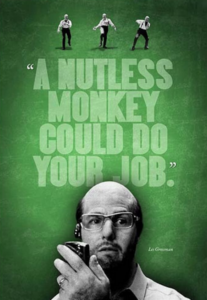
I note there’s no plugin for technical writing…yet.
And Google Cloud ended 2025 at an annual run rate of over $70 billion, representing a wide breadth of customers, driven by demand for AI products.
We’re seeing our AI investments and infrastructure drive revenue and growth across the board. To meet customer demand and capitalize on the growing opportunities we have ahead of us, our 2026 CapEx investments are anticipated to be in the range of $175 to $185 billion.”
In September 2025, Nvidia and OpenAI announced a letter of intent for Nvidia to invest up to $100 billion in OpenAI’s AI infrastructure. At the time, the companies said they expected to finalize details “in the coming weeks.” Five months later, no deal has closed, Nvidia’s CEO now says the $100 billion figure was “never a commitment,” and Reuters reports that OpenAI has been quietly seeking alternatives to Nvidia chips since last year.
Reuters also wrote that OpenAI is unsatisfied with the speed of some Nvidia chips for inference tasks, citing eight sources familiar with the matter. Inference is the process by which a trained AI model generates responses to user queries. According to the report, the issue became apparent in OpenAI’s Codex, an AI code-generation tool. OpenAI staff reportedly attributed some of Codex’s performance limitations to Nvidia’s GPU-based hardware.
After the Reuters story published and Nvidia’s stock price took a dive, Nvidia and OpenAI have tried to smooth things over publicly. OpenAI CEO Sam Altman posted on X: “We love working with NVIDIA and they make the best AI chips in the world. We hope to be a gigantic customer for a very long time. I don’t get where all this insanity is coming from.”
Microsoft’s Copilot chatbot has become central to its artificial-intelligence strategy as the company’s close partnership with OpenAI diminishes. But the effort to build it up as a ChatGPT alternative has been tough going.
Remember, Copilot is the AI that wants to take pictures of your desktop every few seconds. Golly, can’t imagine why it’s unpopular..
Confusing brand positioning and interoperability problems have frustrated users, current and former employees who have worked on Microsoft’s AI products said.
Interoperability problems? With a Microsoft product?

Only a small proportion of subscribers to Microsoft’s enterprise suite use Copilot, and the percentage who favor it over Google’s Gemini or other tools has decreased in recent months, according to data reviewed by the Journal.
The stakes are high for Microsoft because Copilot is core to a push by Chief Executive Satya Nadella to transform Microsoft into an AI-first company, much as he transformed it into a cloud-first company around a decade ago. Copilot is one of Nadella’s top priorities, current and former executives said.
Microsoft shares tumbled after its earnings report last week sparked investor concern that growth in its most important unit, the Azure cloud-computing business, is slowing, and that its AI business is reliant on OpenAI while Copilot remains unproven. Shares fell nearly 3% Tuesday amid a slide in software stocks prompted by fresh concerns that AI tools will make enterprise subscriptions less necessary.
For other AI companies, we merely suspect they’re evil. For Microsoft (and Google), we already know they’re evil…
LinkSwarm for May 31, 2024
Friday, May 31st, 2024A kangaroo trial reaches its kangaroo conclusion, Biden’s ludicrous Gaza pier floats away and sinks, ESG lawsuits get the green light, the Libertarians nominate a hard left social justice warrior, and the NRA picks up a Supreme Court win. It’s the Friday LinkSwarm!
While the CIA is strictly prohibited from spying on or running clandestine operations against American citizens on US soil, a bombshell new “Twitter Files” report reveals that a member of the Board of Trustees of InQtel – the CIA’s mission-driving venture capital firm, along with “former” intelligence community (IC) and CIA analysts, were involved in a massive effort in 2021-2022 to take over Twitter’s content management system, as Michael Shellenberger, Matt Taibbi and Alex Gutentag report over at Shellenberger’s Public (subscribers can check out the extensive 6,800 word report here).
According to “thousands of pages of Twitter Files and documents,” these efforts were part of a broader strategy to manage how information is disseminated and consumed on social media under the guise of combating ‘misinformation’ and foreign propaganda efforts – as this complex of government-linked individuals and organizations has gone to great lengths to suggest that narrative control is a national security issue.
According to the report, the effort also involved;
- a long-time IC contractor and senior Department of Defense R&D official who spent years developing technologies to detect whistleblowers (“insider threats”) like Edward Snowden and Wikileaks’ leakers;
- the proposed head of the DHS’ aborted Disinformation Governance Board, Nina Jankowicz, who aided US military and NATO “hybrid war” operations in Europe;
- Jim Baker, who, as FBI General Counsel, helped start the Russiagate hoax, and, as Twitter’s Deputy General Counsel, urged Twitter executives to censor The New York Post story about Hunter Biden.
Jankowicz (aka ‘Scary Poppins’), previously tipped to lead the DHS’s now-aborted Disinformation Governance Board, has been a vocal advocate for more stringent regulation of online speech to counteract ‘rampant disinformation.’ Jim Baker, in his capacity as FBI General Counsel and later as Twitter’s Deputy General Counsel, advocated for and implemented policies that would restrict certain types of speech on the platform, including decisions that affected the visibility of politically sensitive content.
Furthermore, companies like PayPal, Amazon Web Services, and GoDaddy were mentioned as part of a concerted effort to de-platform and financially de-incentivize individuals and organizations deemed threats by the IC. This approach represents a significant escalation in the use of corporate cooperation to achieve what might essentially be considered censorship under the guise of national security.
Nina Jankowicz And The Alethea GroupRemember Nina? A huge fan of Christopher Steele – architect of the infamous Clinton-funded Dossier which underpinned the Trump-Russia hoax, and who joined the chorus of disinformation agents that downplayed the Hunter Biden laptop bombshell, Jankowicz previously served as a disinformation fellow at the Wilson Center, and advised the Ukrainian Foreign Ministry as part of the Fulbright-Clinton Public Policy Fellowship. She also oversaw the Russia and Belarus programs at the National Democratic Institute.
- Jankowicz compares the lack of regulation of speech on social media to the lack of government regulation of automobiles in the 1960s. She calls for a “cross-platform” and public-private approach, so whatever actions are taken are taken by Google, Facebook, and Twitter, simultaneously.
- Jankowicz points to Europe as the model for regulating speech. “Germany’s NetzDG law requires social media companies and other content hosts to remove ‘obviously illegal’ speech within twenty-four hours,” she says, “or face a fine of up to $50 million.”
- By contrast, in the US, she laments, “Congress has yet to pass a bill imposing even the most basic of regulations related to social media and election advertising.” -Public
In a 2020 book, How to Lose the Information War: Russia, Fake News, and the Future of Conflict, Jankowicz praises a NATO cyber security expert for having created a “Center of Excellence,” a concept promoted by Renée Diresta of the Stanford Internet Observatory, in which she made the case for the (now failed) Disinformation Governance Board that Jankowicz would briefly head up.
One year later, Jankowicz began working with ‘anti-disinformation’ consulting firm, Althea Group, staffed by “former” IC analysts.
Lots more at the link.
The Supreme Court unanimously handed the National Rifle Association a win Thursday in the gun rights group’s effort to revive a 2018 First Amendment lawsuit accusing a New York official of causing damage to the NRA’s relationships with banks and insurers.
Justice Sonia Sotomayor wrote a unanimous opinion that found the NRA “plausibly alleged” that Maria Vullo, a former superintendent of New York‘s Department of Financial Services, illegally retaliated against the pro-Second Amendment group after the Parkland, Florida, high school mass shooting that left 17 people dead.
The question before the justices was whether Vullo used her regulatory power to force state financial institutions to cut off ties with the NRA in violation of constitutional First Amendment protections.
Vullo, who worked in former Democratic Gov. Andrew Cuomo’s administration, said her regulations targeted an insurance product that is illegal in New York, which is dubbed by critics as “murder insurance.” In essence, such insurances are third-party policies sold via the NRA that cover personal injury and criminal defense costs after the use of a firearm.
“Here, the NRA plausibly alleged that Vullo violated the First Amendment by coercing DFS-regulated entities into disassociating with the NRA in order to punish or suppress gun-promotion advocacy,” Sotomayor, an appointee of former President Barack Obama, wrote in her decision.
(Hat tip: Instapundit.)
A mysterious shooting in North Carolina north of Fort Liberty, formerly Fort Bragg, not far from where some of America’s most elite U.S. Special Operations forces live and train is under investigation by the Army Criminal Investigation Division as well as local police. The shooting in Carthage, North Carolina occurred May 3 at 8:15 p.m. following a phone call about a suspected trespasser near a Special Forces soldier’s property.
Two Chechen men who spoke broken English were found near the soldier’s home. The family alleges the suspected intruder, 35-year-old Ramzan Daraev of Chicago was taking photos of their children. When confronted near a power line in a wooded part of the property, an altercation ensued and Daraev was shot several times at close range. A second man, Dzhankutov Adsalan, was in a vehicle some distance from the incident and was questioned by authorities and then released. The Moore County Sheriff’s office is leading the investigation.
The FBI told Fox News, “Our law enforcement partners at the Moore County Sheriff’s Office contacted the FBI after a shooting death in Carthage. A special agent met with investigators and provided a linguist to assist with a language barrier for interviews.”
(Hat tip: Commenter 10x25mm.)
A district judge has granted a pilot’s request for a class-action lawsuit against American Airlines for allegedly investing pension funds into environmental, social, and governance (ESG) funds.
The case revolves around the allegation that American Airlines—headquartered in Fort Worth, Texas—violated its fiduciary obligation to the Employee Retirement Income Security Act (ERISA) “by investing millions of dollars of American Airlines employees’ retirement savings with investment managers and investment funds that pursue political agendas” through ESG initiatives.
“By pursuing ESG goals, Defendants gave Plan assets to fund managers, such as BlackRock, who allegedly ignored financial returns as the exclusive purpose and lowered the value of Plan participants’ investments,” the order states.
In addition to being disloyal to the employees, the plaintiff, Bryan Spence, argues that American Airlines’ investments were “imprudent because it is well known that ESG funds are associated with poor performance given the detrimental effects of such activism on stock prices.”
“To remedy these alleged ERISA violations, Plaintiff filed this lawsuit individually and on behalf of a proposed class of Plan participants and beneficiaries,” the order says. “ERISA authorized participants in a qualifying plan to bring an action on behalf of other participants to enforce the statute’s fiduciary obligations and remedial provisions, as well as recover all losses to a plan caused by a breach of a fiduciary duty.”
Two weeks before Russia invaded Ukraine in February 2022, a large, mysterious new Internet hosting firm called Stark Industries Solutions materialized and quickly became the epicenter of massive distributed denial-of-service (DDoS) attacks on government and commercial targets in Ukraine and Europe. An investigation into Stark Industries reveals it is being used as a global proxy network that conceals the true source of cyberattacks and disinformation campaigns against enemies of Russia.
At least a dozen patriotic Russian hacking groups have been launching DDoS attacks since the start of the war at a variety of targets seen as opposed to Moscow. But by all accounts, few attacks from those gangs have come close to the amount of firepower wielded by a pro-Russia group calling itself “NoName057(16).”
As detailed by researchers at Radware, NoName has effectively gamified DDoS attacks, recruiting hacktivists via its Telegram channel and offering to pay people who agree to install a piece of software called DDoSia. That program allows NoName to commandeer the host computers and their Internet connections in coordinated DDoS campaigns, and DDoSia users with the most attacks can win cash prizes.
Microsoft’s announcement of the new AI-powered Windows 11 Recall feature has sparked a lot of concern, with many thinking that it has created massive privacy risks and a new attack vector that threat actors can exploit to steal data.
Revealed during a Monday AI event, the feature is designed to help “recall” information you have looked at in the past, making it easily accessible via a simple search.
While it’s currently only available on Copilot+ PCs running Snapdragon X ARM processors, Microsoft says they are working with Intel and AMD to create compatible CPUs.
Recall works by taking a screenshot of your active window every few seconds, recording everything you do in Windows for up to three months by default.
These snapshots will be analyzed by the on-device Neural Processing Unit (NPU) and an AI model to extract data from the screenshot. The data will be saved in a semantic index, allowing Windows users to browse through the snapshot history or search using human language queries.
Who wouldn’t want AI recording and monitoring their every move? Yet another reason never to turn on Windows Copilot+…or use a Windows machine at all.

Time for an update to this old classic
A majority of the 2025 Republican House caucus opposes Democratic committee chairs, and effectively will not support another term for Speaker Dade Phelan (R-Beaumont), the group said in a letter released on Friday.
“In a collective effort to respond to Republican voters and reform the Texas House, we will only vote for a candidate for speaker pursuant to the Platform and the Caucus By-Laws who will only appoint Republicans as committee chairs,” the brief letter and joint statement reads.
It adds, “The absence of a member’s or nominee’s name from this statement does not necessarily mean the individual is opposed to this statement. All members and nominees are invited to sign on to this statement.”
Forty six current or presumptive members signed the letter, including 23 members who voted for Phelan’s speakership last year.
One of those signatories, GOP nominee in House District 70 Steve Kinard, has a difficult general election fight against state Rep. Mihaela Plesa (D-Dallas) in a D-52% district.
The letter includes signatures from each of the 21 “Contract with Texas” signatories, most of whom campaigned specifically against Phelan’s speakership. That contract also includes a ban on Democratic committee chairs, though has 11 other planks to its demands as well.
Last session, a parliamentary maneuver precluded a vote on the question of banning Democratic chair appointments, though the idea had gained steam among GOP House members and was included in the party’s list of legislative priorities. It is likely to be featured again.
In a March interview after being pushed to a runoff and state Rep. Tom Oliverson (R-Cypress) announcing his challenge for the gavel, Phelan said he would not back down on the appointment of Democrats as committee chairs.
Snip.
This release makes Phelan’s path toward a third term as speaker much more difficult. Should this group hold, ostensibly opposed to Phelan, it will be impossible for him to win the Texas House Republican Caucus endorsement. However, the speaker could give in on some concessions, such as Democratic chair appointments, and win back this group’s support.
GOP caucus rules require members to vote for the body’s nominee, presumably enforced by the bylaws, though no section exists in that portion of the document laying out penalties for voting differently than the caucus has chosen. It’s happened before, for example last year when three members — state Reps. Tony Tinderholt (R-Arlington) and Nate Schatzline (R-Fort Worth), and now-former member Bryan Slaton (R-Royse City) — voted against the caucus nominee, Phelan, and for Tinderholt.
Article IX of the Texas Republican House Caucus bylaws lays out the procedure for selecting a speaker candidate. It requires the selection process to be conducted by secret ballot until a member receives two-thirds support from the body, currently 58 votes; if no candidate reaches that line, the last-placed candidate will be eliminated from the contest and that will be repeated until one candidate reaches 58.
Should the vote reach a third round, the threshold needed will drop to three-fifths support — currently at 52 votes. Should nobody reach that line, after a fourth round of voting, all nominations will be withdrawn and the floor reopened.
Depending on what happens in November with potential flips, those 58- and 52-lines may shift.
This intra-caucus vote will occur in early December, per the rules.
“I believe this is one of the most important elections of my lifetime, and I’m supporting Trump. I know that I’ll lose friends for this. Some will refuse to do business with me. The media will probably demonize me, as they have so many others before me. But despite this, I still believe it’s the right thing to do.”
The physics PhD said that he refuses to live in a society where people are afraid to speak their minds.
Impressive.. 👌 pic.twitter.com/CiGwNkZna0
— Buitengebieden (@buitengebieden) May 28, 2024
(Hat tip: Ace of Spades HQ.)
Still between jobs, so hit the tip jar if you’re so inclined.