Posts Tagged ‘Tokyo Electron’

AI News Roundup For February 5, 2026

Thursday, February 5th, 2026

A bunch of AI-related news has popped up this week, so let’s do a roundup.

  • Some AI companies are complaining that TSMC is killing the AI boom by not expanding rapidly enough:

    Asianometry notes that TSMC’s caution at expanding is amply justified by the boom-and-bust nature of the semiconductor industry:

    • “I’m hearing many similar views in the Silicon Valley Borg that TSMC is the break or limiter on the AI boom, as if they’re the reason why we don’t have AGI yet. Because they didn’t and still don’t believe.”

    • “If we can ever say that a company that spent $41 billion on capital expenditure in 2025, with another $53 to $56 billion in 2026 planned, is sitting on its hands, doing nothing.”
    • “TSMC having 90% share of the AI chip market looks pretty unhealthy. That should go down and it will. Samsung seems to be doing well so far.”
    • “The cold, hard reality is that shortages are a fact of life in semiconductors, as are horrific gluts.”
    • “What we are flippantly labeling as TSMC we really mean is the AI supply chain. And that supply chain is as complicated as you can possibly imagine. Like an iceberg, it looks big enough on the surface of the water, but goes way far deeper underneath. TSMC has thousands of suppliers in two categories: Equipment like the famed ASML lithography tools and materials like photoresist, silicon wafers, acid etch gases and so on. These are not generalized tools and materials. They are not fungeible like AWS compute units.”
    • “And then there are the memory guys. You cannot ship an AI system without memory. DRAM and NAND. Nvidia’s AI chips use a special form of DRAM called high bandwidth memory, and they use quite a lot of it. The memory industry is just as consolidated as the logic industry, with the major players being Samsung, SK Hynix and Micron.”
    • “The chip guys are last to know when the party is getting started, but first they get batoned in the face when the police shut things down.”
    • He points out that semiconductor manufacturers have log supply chains. He uses a different metaphor (the beer distribution game, or a bullwhip), but back when I was working at Applied Materials, it was described as trains linked together with slinkys. First software takes off, then hardware gets yanked along, then the chip manufacturers get yanked, and then, finally, semiconductor equipment manufacturers get yanked into motion, and shortly after that happens, the bust hits the front of the train, and the trailing cars all crash into each other. It’s a regular boom/bust cycle.
    • “From 1961 to 2006, electronics consumption in the United States grew positively but with wild volatility swings between 0 to 20%. But for the semiconductor makers, that translates to swings anywhere from 20% to 40%. And for the equipment makers, it is amplified even more, plus or minus 60%. The whip hits particularly hard in the semiconductor industry because of the industry’s long lead times. It takes 4.5 months to fabricate and package a chip. It takes 18 months to 2 years to build a fab. Meaning from shovels down to producing chips, and it takes 12 to 18 months to produce and install something like an EUV machine into the fab. Another 6 months before that machine actually starts patterning wafers.”
    • “Long lead times mean having to make very long demand forecasts, which leads to extreme volatility swings during up and downturns even if those up or downturns are relatively small.” People forget that in 1998, during the time we now think of as the DotCom Boom, there was a small semiconductor downturn that had Applied Materials forcing employees to take unpaid leave.
    • “ASML just reported 2025 earnings, and we see the bullwhip in full effect. TSMC raised capital expenditure 35% but ASML announced €13.2 billion of net new bookings. Analysts had expected just €6.32 billion. This is because ASML collected orders not just from TSMC, but also Samsung, Intel and the memory guys. When it rains it pours, right? Again, this is why I fear that another AI foundry would not mean our compute shortage is solved, because ultimately, when those foundries start scaling their capacity, they all go to the same suppliers.”
    • He goes over how car manufacturers cancelled orders during Flu Manchu, and then scrambled when the economy took off afterwards. “TSMC was trying to discern between double booked orders and real demand, which is not an uncommon experience for them. Customers lie about their own demand all the time, or at least we can say that they are eternally optimistic. TSMC tried to respond in 2022. The Taiwanese giant poured $36 billion into capital expenditure. They went to their suppliers and pushed like no tomorrow.”
    • “It turned out those customers really were double booking orders and artificially inflating demand. When the macro environment turned in 2022, the automotive, smartphone, and PC chips that were so hot during the COVID era fell out of vogue and customers started cutting orders.”
    • “Meanwhile, deeper down in the supply chain, TSMC and the rest of the semiconductor industry were getting bullwhipped by COVID hangover. Utilization at TSMC’s multi-billion dollar N7 fabs crashed, Semi analysis wrote in April 2023. Now, Semi analysis data indicates that the 7nm utilization rates were below 70% in Q1. Furthermore, Q2 gets even worse with 7nm utilization rates falling to below 60%. This is primarily due to weakness in both smartphones and PCs, but there is a broader weakness in most segments. A fab’s break even utilization rates are about 60% to 70%. So those N7 Taichung fabs were taking financial losses potentially on the order of hundreds of millions, maybe even billions. The financial burdens of low utilization are another reason why I’m skeptical another AI foundry could have rushed into the AI chip fray to save the day.”
    • He says that Intel incurred losses during this period due to an unnecessary fab expansion, which is probably true, but that was a secondary factor next to their longer running problem of getting their process wrong.
    • “ChatGPT was released in November 2022, and that kicked off a massive increase in capex amongst the hyperscalers in particular, but it sure seems like TSMC didn’t buy the hype. That lack of increased investment earlier this decade is why there is a shortage today and is why TSMC has been a de facto break on the AI buildout/bubble.”
    • “I recall news in mid 2024 of TSMC struggling with CoWoS capacity bottlenecks and yield problems, including one design issue that caused cracks in the Nvidia chips packaging.” CoWoS is Chip on Wafer on Substrate, which involves fabbing an interposer as a substrate for faster connections between your processing chips and memory.
    • “I also recall news in late 2024 noting how the vendors in charge of making the server racks for Nvidia’s Blackwell servers struggled with overheating, liquid cooling leaks, software bugs, and connectivity issues. Such technical difficulties delayed server deployment until early to mid 2025, creating a weird situation for several months where TSMC was pumping out chips that just went into storage. So that gated things, because you don’t scale until you first fix the technical problems.”
    • Then there’s the power-scaling issue, which is a whole ‘nuther can of worms.

  • There’s a lot of talk about a SaaSpocalypse going on thanks to a new AI tool. (SaaS is “Software as a Service.” Instead of hosting your own payroll or sales-tracking or whatever servers, you hire a company that already has cloud software setup to do it and you just tie into that, which can considerably reduce startup costs. A whole lot of successful new tech companies over the last decade plus have been SaaS companies.)

    The software sector was jolted overnight with what analysts are calling a “SaaSpocalypse” — a sudden and severe selloff triggered by new artificial intelligence tools unveiled by US AI startup Anthropic. The episode has sharpened investor fears that AI is no longer merely helping software companies but may now begin replacing them.

    Anthropic has expanded its enterprise AI platform, Claude Cowork, by launching 11 new plugins aimed at automating a wide range of professional tasks. Claude Cowork is an agentic, no-code AI assistant built for corporate users, allowing companies to automate workflows without writing software. The new plugins are designed to handle tasks across legal, sales, marketing and data analysis functions. The most recent addition is Anthropic’s Claude Legal agent, which can perform routine legal work such as document and contract review, and compliance checks.

    Anthropic has said that the tool does not provide legal advice and that all AI-generated outputs must be reviewed by licensed attorneys. Even so, the breadth of automation signals a step change in how much white-collar work AI systems can now perform.

    Here are the current plugins for Claude Cowork:

    • Productivity — Manage tasks, calendars, daily workflows, and personal context
    • Enterprise search — Find information across your company’s tools and docs
    • Plugin Create/Customize — Create and customize new plugins from scratch
    • Sales — Research prospects, prep deals, and follow your sales process
    • Finance — Analyze financials, build models, and track key metrics
    • Data — Query, visualize, and interpret datasets
    • Legal — Review documents, flag risks, and track compliance
    • Marketing — Draft content, plan campaigns, and manage launches
    • Customer support — Triage issues, draft responses, and surface solutions
    • Product management — Write specs, prioritize roadmaps, and track progress
    • Biology research — Search literature, analyze results, and plan experiments

    A lot of those are already automated elsewhere, but I suspect a lot accountants and paralegals just felt a goose strut across their grave. On the other hand, who is really going to turn over, say, Accounts Payable to an AI? One glitch, and your entire bank account is drained…

    If it works (a big if, give so many AIs are prone to hallucinations), this is potentially good news for Anthropic and the companies using their tools, and bad for SaaS companies and the employees currently doing those jobs.
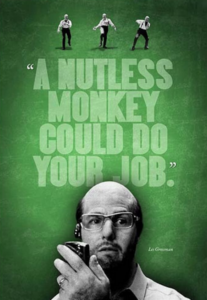
    I note there’s no plugin for technical writing…yet.

  • Google/Alphabet just reported $400 billion in earnings in 2025. CEO Sundar Pichai:

    And Google Cloud ended 2025 at an annual run rate of over $70 billion, representing a wide breadth of customers, driven by demand for AI products.

    We’re seeing our AI investments and infrastructure drive revenue and growth across the board. To meet customer demand and capitalize on the growing opportunities we have ahead of us, our 2026 CapEx investments are anticipated to be in the range of $175 to $185 billion.”

  • Remember how Nvidia was going to invest $100 billion in OpenAI? Yeah, not so much.

    In September 2025, Nvidia and OpenAI announced a letter of intent for Nvidia to invest up to $100 billion in OpenAI’s AI infrastructure. At the time, the companies said they expected to finalize details “in the coming weeks.” Five months later, no deal has closed, Nvidia’s CEO now says the $100 billion figure was “never a commitment,” and Reuters reports that OpenAI has been quietly seeking alternatives to Nvidia chips since last year.

    Reuters also wrote that OpenAI is unsatisfied with the speed of some Nvidia chips for inference tasks, citing eight sources familiar with the matter. Inference is the process by which a trained AI model generates responses to user queries. According to the report, the issue became apparent in OpenAI’s Codex, an AI code-generation tool. OpenAI staff reportedly attributed some of Codex’s performance limitations to Nvidia’s GPU-based hardware.

    After the Reuters story published and Nvidia’s stock price took a dive, Nvidia and OpenAI have tried to smooth things over publicly. OpenAI CEO Sam Altman posted on X: “We love working with NVIDIA and they make the best AI chips in the world. We hope to be a gigantic customer for a very long time. I don’t get where all this insanity is coming from.”

  • You know who’s not winning the AI war? Microsoft.

    Microsoft’s Copilot chatbot has become central to its artificial-intelligence strategy as the company’s close partnership with OpenAI diminishes. But the effort to build it up as a ChatGPT alternative has been tough going.

    Remember, Copilot is the AI that wants to take pictures of your desktop every few seconds. Golly, can’t imagine why it’s unpopular..

    Confusing brand positioning and interoperability problems have frustrated users, current and former employees who have worked on Microsoft’s AI products said.

    Interoperability problems? With a Microsoft product?

    Only a small proportion of subscribers to Microsoft’s enterprise suite use Copilot, and the percentage who favor it over Google’s Gemini or other tools has decreased in recent months, according to data reviewed by the Journal.

    The stakes are high for Microsoft because Copilot is core to a push by Chief Executive Satya Nadella to transform Microsoft into an AI-first company, much as he transformed it into a cloud-first company around a decade ago. Copilot is one of Nadella’s top priorities, current and former executives said.

    Microsoft shares tumbled after its earnings report last week sparked investor concern that growth in its most important unit, the Azure cloud-computing business, is slowing, and that its AI business is reliant on OpenAI while Copilot remains unproven. Shares fell nearly 3% Tuesday amid a slide in software stocks prompted by fresh concerns that AI tools will make enterprise subscriptions less necessary.

    For other AI companies, we merely suspect they’re evil. For Microsoft (and Google), we already know they’re evil…

  • Instant Analysis: Trump Tariff Effects On Semiconductors

    Wednesday, April 2nd, 2025

    President Trump announced his tariffs on countries, especially those that tariff goods from the United States.

    President Donald Trump on Wednesday imposed sweeping new tariffs on all imported goods and unveiled a detailed list of reciprocal duties targeting more than 60 countries, asserting that the move is necessary to combat trade imbalances and restore U.S. manufacturing.

    “This is Liberation Day,” Trump said during a Rose Garden ceremony, holding up a printed chart of countries and their new tariff rates. “For decades, our country has been looted, pillaged, raped and plundered by nations near and far, both friend and foe alike.”

    The tariffs, which he described as “reciprocal,” fulfill a key campaign pledge and are aimed at pressuring trade partners to lower their own barriers. The administration expects the new rates to remain in place until the U.S. narrows a $1.2 trillion trade imbalance recorded last year.

    But the extensive list of tariffs also threatens to upend the U.S. economy, as many — but not all — economists say they amount to taxes on American companies that will be passed down to consumers.

    Trump held up a chart while speaking at the White House, showing the United States would charge a 34 percent tax on imports from China, a 20 percent tax on imports from the European Union, 25 percent on South Korea, 24 percent on Japan and 32 percent on Taiwan.

    The centerpiece of the announcement is a 10 percent universal baseline tariff on all imports, effective immediately. For instance, Chinese imports are now subject to cascading tariffs of 10, 20 and 34 percent, for a total of 54 percent.

    In addition, Trump’s administration imposed country-specific reciprocal tariffs on nations it accuses of unfair trade practices — including India, Vietnam, and the European Union, in adding to China. The rates are calibrated at approximately half the rate those countries impose on U.S. goods.

    For example, China, which Trump said charges 67 percent in tariffs on U.S. goods when factoring in non-tariff barriers, will now face a 34 percent reciprocal tariff under the new system, in addition to the 10 percent baseline tariff and the 20 percent tariffs already in effect. Vietnam, assessed at 90 percent, will face a 46 percent tariff; India at 52 percent will now see 26 percent duties; and the EU, which imposes 39 percent, will be met with a 20 percent response, according to the White House chart.

    This is a “devil in the details” issue that has a lot of ramifications depending on how the directives are written. But several of those countries are big players in semiconductors, so here’s a quick and dirty look at winners and losers if those tariffs stay in place a significant amount of time.

    The main countries here, along with the reciprocal tariffs being applied to them:

  • Taiwan (32%)
  • South Korea (25%)
  • China (34%)
  • European Union (not a country, but they play one on TV) (20%)
  • Japan (24%)
  • Singapore (10%)
  • Israel (17%)
  • Save a few smaller, older fabs here and there, that’s pretty much 99% of semiconductor manufacturing, though Vietnam (46%) and the Philippines (17%) do a lot of semiconductor package assembly work, and the tariffs may apply to them, depending on wording.

    So let’s look at the business Losers and Winners in the space. (Note: You might find this post useful, as it defines some of the semiconductor industry terms used here.)

    Losers

  • TSMC: As the world’s biggest and most important chip foundry, the Taiwanese tariffs will hit TSMC hard. Their U.S. fab in Arizona isn’t ready for production yet, so all their chips will (theoretically) get hit with tariffs, assuming Trump doesn’t grant them a waiver because they’re already constructing a plant. But if they do go into effect, possibly even more heavily impacted will be:
  • TSMC customers, including Apple, Nvidia and AMD. All three get their very highest-end, cutting edge, sub-10nm chips fabbed there. For Apple, the M-series and A-series chips made there form the heart of all their Macs and iPhones. Likewise, Nvidia gets its highest end GPU/AI/etc. chips fabbed by TSMC. AMD’s most powerful CPU’s are also fabbed by TSMC, though some lower end chips are made elsewhere (like GlobalFoundries).
  • Tokyo Electron: Japan’s biggest semiconductor equipment manufacturer assembles pretty much all their equipment in their home country. 24% tariffs may make their equipment uneconomical compared to rivals Applied Materials and LAM Research.
  • South Korean DRAM manufacturers Samsung and SK Hynix: 25% tariffs will definitely impact sales in a market segment whose overall margins (robust in booms, and barely breaking even during busts) are thinner than others.
  • Every American electronics company that uses DRAM. Which is pretty much every American electronics company.
  • Every American AI boom company. Their data center costs are going up, while those of their foreign competitors are not.
  • Korean flat panel display manufacturers Samsung and LG Semicon, who between them control over 50% of the market.
  • Every American TV and monitor manufacturer, the vast majority of which have their devices manufactured overseas.
  • UMC: They’d fallen woefully behind TSMC for foundry work, and they won’t be winning much additional American business now.
  • Every company trying to build a sub-10nm fab in the U.S., as steppers from Netherlands-based ASML just got more expensive and the competition to obtain them might have increased.
  • Pretty much every fab in China just got more screwed…but they were pretty screwed (and trailing badly) before.
  • American fabless chip startups: Their costs for getting chips to market probably increased.
  • Winners

  • Applied Materials, LAM Research and KLA Tencor. Buying competing Tokyo Electron equipment just got more expensive, and a bunch of companies now have incentives to build fabs in America.
  • Intel: Assuming they’ve finally got their process technology sorted out (a big if), they’re well-positioned to take CPU market share from AMD and to grow their under-performing foundry business.
  • Micron (sort of): As the only American DRAM manufacturer, they can probably earn more per each chip produced domestically. But Micron has a lot of overseas fabs these days, and building new domestic DRAM fabs will take years.
  • GlobalFoundries: The costs of their global competitors just increased, so they can probably win more business for their domestic foundries…if they have the available wafer starts. But they have a lot of foreign fabs as well.
  • Samsung‘s US foundry business. Presumably the wafer starts for their Austin and Taylor fabs will see increased demand.
  • Maybe Texas Instruments, but I’m not sure how much mixed-signal and analog competition they have, and that’s their bread and butter.
  • Neutral

  • ASML: Being in the Netherlands and having TSMC as their biggest customer, you figure they’d be hurt, but no. You can’t get EUV steppers from anyone else, and I get the impression they’re building EUV steppers as fast as they possibly can already. Anyone building a cutting-edge fab will just have to pay more to get them.
  • Tower Semiconductor: Half their foundries are in Israel and half in the U.S., so I figure it’s a wash.
  • That’s my quick and dirty analysis. Of course, Trump is using tariffs like a battering ram to smash foreign tariffs, and if he’s immediately successful, there probably will only be minor hiccups in the global supply chain. But if not, a whole lot of disruption might lie ahead, and it usually takes a minimum of 3-5 years to bring a new fab online.

    TSMC Bids To Take Over Intel Fabs

    Wednesday, March 12th, 2025

    I know that any time I talk about semiconductors, a significant percentage of my readership’s eyes glaze over, but this is Big Freaking News.

    Intel shares rose 6% in premarket trading after Reuters reported that Taiwan Semiconductor Manufacturing, or TSMC, had approached US chip designers Nvidia, Advanced Micro Devices, and Broadcom about taking stakes in a joint venture that would operate the struggling chipmaker’s factories.

    Four sources told Reuters that the Taiwanese chipmaking giant would run Intel’s foundry division under the new proposal, producing chips tailored to customer requirements but not owning more than 50%. The sources added that Qualcomm has also been approached about the venture.

    For those unfamiliar with the semiconductor space, that’s a Murderers Row of heavyweights, including the top three semiconductor companies by market cap:

  • TSMC is far and away the largest chip foundry (a company that builds chips for other companies, but doesn’t design its own chips) in the world, and the one with a clear technological lead over everyone else. TSMC has the third largest market cap of any semiconductor company.
  • Broadcom is the second-largest semiconductor company in the world by market cap, and they have their fingers in a lot of different pies: networking, wireless, storage, you name it. They’re generally considered a fabless chip designer, but the company is such a weird amalgamation of other companies (what we call Broadcom used to be Avago until they acquired Broadcom in 2016) that they might still have a lower end fab or two lurking somewhere in the company. They also use TSMC as a foundry, though I’m not sure how extensively. They’ve also recently made a big move into software, acquiring CA Associates and VMWare, among others.
  • Nvidia is a fabless chip designer (the sort of company that contracts with foundries to fab their chips) that went heavily into high end GPUs (the chips that render video for your PC, in Nvidia’s case geared toward high end games and other highly demanding tasks), then crypto-mining chips, and more recently into chips geared for AI applications, all very lucrative market segments, which has made Nvidia not only first among semiconductor market cap, but among the largest companies by market cap in the world (along with Apple and Microsoft). Nvidia has their chips fabricated by TSMC, as well as some by Samsung and GlobalFoundries, which was spun off from…
  • Advanced Micro Devices, which used to be an Integrated Device Manufacturer (or IDM, a company designs their own chips and builds them in their own fabs) creating Intel-compatible CPUs, but eventually spun off their fabrication plants as GlobalFoundries because they couldn’t keep up with Intel’s capital spending. AMD also has some of their highest end chips fabricated by TSMC. If AMD were to help take over Intel, it would be an extremely ironic ending to a longtime rivalry.
  • Qualcomm is a lot like Broadcom: A mostly fabless design house with its fingers in lots of different pies, and they’re about the sixth largest semiconductor company by market cap. Broadcom tried to acquire Qualcomm in 2017-18 and was blocked by the Trump45 administration.
  • Intel is an IDM, and for decades was the undisputed “chipzilla” of the semiconductor world. Intel’s CPUs were the dominant processor for the vast majority of the last 40 years and a huge ingredient for helping create the PC revolution. Intel used to be the technology process leader as well, but somewhere along the way they screwed up their sub-10nm process nodes, allowing TSMC to take the process technology crown. Indeed, they screwed up so badly that they’ve been forced to have TSMC fab some of its highest end chips. Despite having a vast number of fabs, Intel’s market cap has slipped down to 16th among semiconductor companies.
  • Back to the piece:

    The sources noted that the Trump administration is exploring ways to revive Intel and strengthen US manufacturing under the ‘America First’ agenda. They added that TSMC’s joint venture pitch to chip designers took place before the company, alongside President Trump, announced plans last month to invest $100 billion in semiconductor manufacturing in the US, building on its existing $65 billion investment in its Phoenix, Arizona, factories.

    Any deal between TSMC and Intel would be subjected to approval from the Trump administration.

    If the Trump Administration’s goal is to increase available sub-10nm wafer starts (and it should be) and maintain American control of Intel’s fabs, then this proposal is a win-win. Intel’s fabs plus TSMC’s tech would create a foundry powerhouse. It wouldn’t happen overnight (nothing in semiconductors happens overnight), but probably in 12-24 months, depending on how quickly the new entity can acquire the necessary pieces of equipment to upgrade Intel’s fabs to thee new tech (I’m guessing that the availability of ASML steppers will, as usual, be the gating factor). And all this without the tens of billions in taxpayer subsidies for the CHIPS Act.

    If this goes through, it would have mostly winners, with a few losers:

    Winners

  • Every company that’s part of the deal. TSMC gets to radically expand production capacity without spending $20 billion+ to build a new fab. Nvidia, AMD, Broadcom and Qualcomm gain a lot more capacity for expanding production of their high end chips. Ditto for Apple (who’s not part of the deal, but who is TSMC’s biggest customer and a big demand driver for cutting edge fab capacity) and every other consumer of sub-10nm chips.
  • AMD additionally gets the egoboo of partially taking over its longtime hated rival and confirming it’s crown as the x86/x64 chip manufacturer of choice. Plus their then-risky decision to spin off GlobalFoundries looks like a genius move in hindsight.
  • The Trump Administration, which gets to take credit for vastly increasing American Foundry capacity at zero additional taxpayer expense and keeps Intel under American control.
  • Semiconductor equipment manufacturers like ASML, Applied Materials, LAM Research, Tokyo Electron and KLA (short term). It’s likely most or all of those companies (along with smaller players like Axcelis and Teradyne) will receive a bump in extra sales from leveling up Intel’s fabs to run TSMC’s process.
  • American chip startups: With so much high end capacity becoming available, existing and potential chip startups are going to look like more attractive investment capital opportunities.
  • ARM Holdings: ARM doesn’t make chips, they’re an IP design house that licenses their functional chip blocks to other chip designers. Just about every foundry and IDM is a licensee (yes, including Intel and TSMC), so unleashing more chip designs will almost certainly result in more royalties for ARM. (Nvidia tried to buy ARM in 2020, and regulators quashed that idea good and hard.)
  • Intel investors, who will either get a big lump-sum payment or shares in the new, probably far more profitable company (depending on how the buyout is structured).
  • Even Intel wins long-term by unleashing existing fab capacity to take on new business not tied to its faltering CPU manufacturing model. And actually, with TSMC’s process, Intel has a chance to recover in the CPU space as well.
  • Losers

  • Samsung: Along with TSMC and Intel, Samsung (which has both IDM and foundry components) has some of the best sub-10nm process tech in the world. They gain a whole lot of unleashed competition and stand on the outside looking in.
  • Intel‘s dreams of reclaiming their spot at the top of the heap, and suffering the indignity of being partially owned by AMD. How the mighty have fallen.
  • Every Chinese fab, which goes from “very far behind” to “even further behind.”
  • Semiconductor equipment manufacturers (long term): They better enjoy the out-of-band upgrade money from retrofitting Intel’s fabs, as it will likely mean a significant delay in anyone building a new cutting edge wafer fab for quite a while. And having two of their biggest customers team up is probably going to put them under a lot of downward pricing pressure.
  • GlobalFoundries (and other trailing edge foundries) might lose some business, but there’s very little overlap between Intel/TSMC cutting edge processes and GlobalFoundries trailing-edge fabs. Ditto UMC.
  • Are there anti-trust concerns with such a heavy accumulation of cutting edge process technology? Oh yeah. Big time. But almost all of those concerns were already there in some form or another thanks to the interconnected “cooperation” nature of the industry. All those companies going in with TSMC were already getting chips fabbed by TSMC. Samsung could try to claim that the deal would result in TSMC having a de-facto monopoly on sub-10nm foundry business, but it wouldn’t start with one, and that business isn’t the whole of foundry business (though it is the most profitable part), much less semiconductors as a whole.

    Given that this would go a long way toward achieving Trump’s goal of increasing cutting edge fab capacity in America, I would imagine that the Trump47 administration could very well be persuaded to let this deal go through.

    China’s Chip Industry Is Doomed

    Monday, September 19th, 2022

    This is a story that’s been bubbling on for a while, but it looks like the U.S. government is about to slam down export restrictions on chipmaking equipment.

    The administration of US President Joe Biden next month is to broaden curbs on US exports to China of semiconductors used for artificial intelligence and chipmaking tools, several people familiar with the matter said.

    The US Department of Commerce intends to publish new regulations based on restrictions communicated in letters earlier this year to three US companies — KLA Corp, Lam Research Corp and Applied Materials Inc, the people said, speaking on the condition of anonymity.

    Every wafer fabrication plant in the world uses equipment from one of those three companies. Applied Materials and LAM Research (along with Tokyo Electron) have their fingers in almost all areas of chipmaking equipment (PVD, CVD, Etch, etc.), while KLA (formerly KLA-Tencor) dominates the wafer inspection equipment segment. Add ASML in the Netherlands, and those five absolutely dominate the semiconductor equipment market.

    The letters, which the companies publicly acknowledged, forbade them from exporting chipmaking equipment to Chinese factories that produce advanced semiconductors with sub-14 nanometer processes unless the sellers obtain commerce department licenses.

    This is where things get tricky. SMIC claims they can do 7nm, but everyone outside China doubts they can do it reliably, repeatably and profitably. SMIC announced they’re about to start manufacturing 14nm, and that they can probably do. Practically, they’re the only semiconductor manufacturer in China that can do sub-14nm, as just about everyone at the top of the next biggest semiconductor manufacturer, Tsinghua Unigroup, just got arrested in July.

    There’s even talk that they’re actually zeroing in on FinFET technology specifically, though they may also ban sales of older chipmaking equipment as well.

    Without a continued stream of machines, spare parts and technical know-how from those five semiconductor giants, China’s semiconductor industry is doomed. China’s domestic semiconductor equipment industry is essentially garbage, and they’re so far behind in so many areas that they can’t even steal their way to parity. The knowledge gulf is just too vast.

    Min-Hua Chiang at the Heritage Foundation notes just how badly China’s domestic semiconductor industry is screwed.

    According to World Trade Organization statistics, China’s trade deficit in integrated circuits and electronic components (including Hong Kong’s trade deficit) has almost doubled from the equivalent of $135 billion in 2010 to $240 billion in 2020.

    The growing trade deficit in integrated circuits reveals one crucial fact: Achieving technological self-reliance is still a faraway Chinese dream. To keep its exports growing, China has no other way but to keep importing advanced chips to assemble into consumer goods with high-tech intensity (e.g., smartphones, tablets, and the like).

    Although China (including Hong Kong) is also the largest exporter of semiconductor chips in the world, less than 7% of chips produced in China were made by Chinese semiconductor companies in 2021.

    More than 90% of chips produced in China are made by foreign firms. In other words, China’s exports of semiconductor chips are overwhelmingly dominated by foreign companies.

    Its inferior level of technology is the main reason for China’s chip reliance on foreign firms. While Chinese firms are stuck with advancing toward 7nm chips, the Taiwan Semiconductor Manufacturing Co. and Samsung are progressing towards mass production of 3nm chips this year. Intel plans to take over TSMC’s leading role in semiconductor technology by 2025.

    The competition among a few tech giants in the U.S., Taiwan, and South Korea is clear, and the Chinese firms are not likely to jump into the global technology competition in the semiconductor industry anytime soon.

    The U.S. restrictions on exporting chipmaking equipment to China’s largest semiconductor firm, Semiconductor Manufacturing International Corp., have not only deterred China’s technological advancement, but also exposed the fundamental mismanagement problems inside China’s semiconductor industry.

    Xi might not have noticed his industry’s poor performance had China been able to continue to produce chips with foreign equipment.

    Some parts about the Tsinghua scandal snipped.

    Several Taiwanese executives leaving China’s semiconductor industry last year is another major setback in the development of China’s semiconductor industry.

    China not only spent tremendously on building chip plants and purchasing expansive equipment, but also on recruiting talent from overseas. Over the past few years, China recruited more than 3,000 skilled workers from Taiwan to work in China’s semiconductor industry.

    China amassed enormous capital, talent, and foreign equipment, but the problem is with governance. Xi’s absolute authority encouraged a rush into China’s semiconductor industry. Moreover, the extraordinary integration of the public and private sectors in China has twisted industrial development toward short-term profit-making, instead of long-term accumulation of manufacturing strength and technological improvement.

    Xi’s “wolf warrior” diplomacy has further overshadowed the outlook of its semiconductor industry. China’s success relies on close partnerships with various suppliers and customers in different countries across the globe. Alienating them on the geopolitical front only undermines those relationships.

    The U.S. ban on exporting chipmaking machines to China was the straw that broke the Chinese semiconductor industry’s back.

    On top of that, the CHIPS and Science Act just signed into law bans semiconductor companies receiving U.S. government subsidies from investing in China for the next 10 years. There are major loopholes in that prohibition, but if Congress can manage to keep the administration’s feet to the fire—including by tightening the legal restrictions—it could have a major impact on China’s tech development.

    In addition, the U.S. has extended the export restriction to 14 nm chipmaking machines to the Semiconductor Manufacturing International Corp. and other foreign chipmakers in China. A specific electronics design automation software for making advanced chips is also banned from exportation to China.

    Without foreign investment and inputs, China is only likely to deepen its reliance on importing advanced chips from overseas.

    Peter Zeihan notes (correctly) that China’s semiconductor industry has been singularly unable to fab advanced chips on their own.

    Not to mention that fraud still abounds. Chinese CPU semiconductor startup Quillion Technology closed up shop three months after raising $89 million.

    $89 million is probably enough to get you to tape-out for a fabless semiconductor house designing a smaller chip (or maybe even a low-power ARM-based CPUs for embedded markets), but it’s a woefully small sum for a real cutting-edge CPU company, and laughable if they intended to be an integrated design manufacturer fabbing their own chips, where building even a trailing edge fab starts in the billions.

    More on that topic:

    Takeaways:

  • “Money seems to have a strong corruptive power over CCP officials that they can’t resist. Like China’s real estate industry, China’s semiconductor industry is also plagued with corruption, over-construction, and highly leveraged capital maneuvers.”
  • She goes over the history of the Chinese “Big Fund” for semiconductors I covered here, and later talks about the indictments.
  • “The state-run Semiconductor Investment Fund was used more as an instrument to speculate in stocks than an institution for conducting basic R&D. The government-backed fund, aka the “Big Fund,” has investments in 2,793 entities within three layers of ownership.” Very few of them have the word “semiconductor” in their names. (Like I said before, shell games all the way down.)
  • From 1984 to 1990, the Ministry of Electronics Industry delegated the management of the vast majority of state-owned electronics enterprises to local provincial and municipal governments. While these state-owned enterprises (SOEs) obtained more autonomy, something strange happened. These companies imported outdated integrated circuit production lines that had no commercial value. The wasteful projects cost money, but people used the opportunities to take foreign trips, receive kickbacks, and send their children abroad. And this happened on a large scale.

    Pretty much classic ChiCom behavior.

  • China’s high-tech industry, like its financial industry, is dominated by powerful CCP families, and the Jiang Zemin family is one of them. In 1999, Jiang Zemin gave his oldest son, Jiang Mianheng, the reins of China’s “autonomous chip development.” As vice president of the Chinese Academy of Sciences (CAS) and president of the Shanghai branch for many years, the junior Jiang has long held the turf of China’s science and technology sector. He is also personally involved in the semiconductor business. His Shanghai Lianhe investment has holdings of Shanghai Zhaoxin Semiconductor Company.

  • Classic story:

    Chen Jin, a former junior test engineer at Motorola, joined Shanghai Jiaotong University in 2001 after returning to China.
    He was given the responsibility to develop the “Hanxin” chip, an important part of the state-run high-tech development program known as the “863 Program.” In just three years, Chen obtained 100 million in R&D funding and applied for 12 national patents. On Feb. 26, 2003, Chen’s team officially released the “Hanxin 1” chip. The Shanghai Municipal Government, the Ministry of Information Industry, and the Chinese Academy of Sciences all backed his work. The expert panel declared the “Hanxin 1” and its related design and application development platform as being the first of its kind in China and achieving an important milestone in the history of China’s chip development. Subsequently, Hanxin 2, 3, 4 and 5 chips were launched, all of which were claimed to have reached an advanced level globally. The Hanxin series of chips even entered the General Equipment Procurement Department of the Chinese military. However, 3 years later, on Jan. 17, 2006, “Hanxin 1” was revealed to be completely fake. Chen downloaded a Motorola chip source code through a former Motorola colleague. Then he secretly bought a batch of Motorola dsp56800 series chips, paid a peasant to scrape the original Motorola logo with sandpaper, and asked a local Shanghai print shop to print the “Hanxin” logo on it.

  • China correctly identified semiconductors and semiconductor equipment as key technologies for truly becoming the world’s preeminent technological manufacturing giant. Unfortunately for them (and fortunately for us), the CCP’s endemic culture of corruption and their top-down command economy are antithetical to the onrush of capitalist technological innovation that powers Moore’s Law.