Posts Tagged ‘naval mines’

Iran Strikes: Day 31

Monday, March 30th, 2026

The Iran war is one months old and the usual Negative Nellies in the Democrat Media Complex are whinging that the war’s not won yet, or suggesting that the Trump Administration is looking for an “off ramp.” Funny how it takes time to defeat a nation of 92 million, even one where the regime is hated by its citizens and whose prewar air force looked like a museum. Everything we hear from CENTCOM is that the air campaign is on schedule.

And the “off ramp” for the war is regime change in Tehran.

  • “The USS Tripoli and USS New Orleans arrived in the Middle East, carrying with them 2,200 Marines — with more on the way — hours after an Iranian strike left dozens of U.S. service members hurt at a Saudi air base. The Tripoli and New Orleans are two of several additional vessels and personnel the Pentagon has deployed to the region as the U.S.-Israeli war in Iran enters it’s second month. The Tripoli Amphibious Group brings with it F-35B Strike Fighters, as well as transport aircraft, amphibious assault vessels and other tactical assets.”
  • “Israel struck secret facility for production of Iran’s naval weapons and storage of boats and ships.”

    • “The facility located in the city of Yazd served as a key production center for advanced missiles and sea mines intended for Iran’s naval forces.”
    • “The site that was hit was reportedly involved in designing, assembling, and testing advanced missiles that could be launched from ships, submarines, and helicopters, targeting both moving and stationary vessels at sea.”
    • “The Israeli Defense Forces described the location as the central hub of Iran’s naval strike capabilities, noting that weapons produced there had been used in operations that posed a threat to navigation in the Strait of Hormuz.”
    • “Following the strike, the facility’s production infrastructure and stores of ready-to-use missiles were said to have been completely destroyed.”
  • Israeli also obliterated the Space Propulsion Engines Research Institute in Tabriz.
  • “An airstrike hit a petrochemical plant in Tabriz.”
  • “A reported Israeli airstrike on Tehran has killed Hassan Hassanzadeh, a senior commander of the Islamic Revolutionary Guard Corps’ Mohammad Rasul‑Allah Corps, which oversees security in Greater Tehran and counter‑ unrest operations.” I’ve also seen his name rendered “Hassan Hassan Zadeh,” for those playing IRGC Dirtnap Bingo at home…
  • “Majid Zakriyai, commander of the Iranian Army’s Natural Resources Organization protection unit, was killed.”
  • “IRGC General Abbas Karami killed in Tehran.”
  • President Trump promised some absolute scorched earth on Iran if they don’t fall in line, promising to blow up their electric grid, their oil wells and Kharg Island…but then deleted the tweet. 🤷
  • E-3 Sentry and KC-135 destroyed at Prince Sultan Air Base in Saudi Arabia.

    The anti-air capabilities of Prince Sultan Air Base still leave much to be desired.
  • Iran also hit the Bazan oil refinery in Haifa, Israel.
  • “One killed, severe damage caused following Iranian attack on a service building at a Kuwaiti power & water desalination station.” Nothing says “respect for life” like attacking a desalination plant…
  • The Houthis had been unusually quiet during the open stages of the war. Well, that’s ended, and they’re now tossing missiles at Israeli. Not sure how many they have, given that Iran has been both broke and busy…
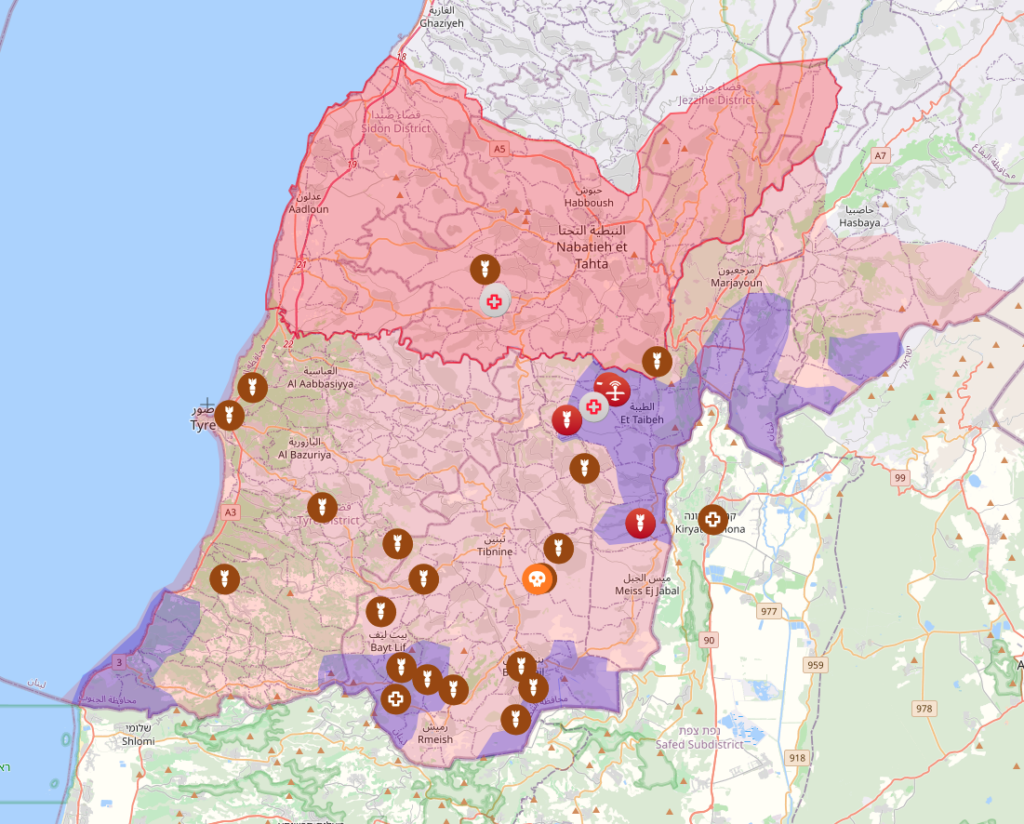
  • It’s always hard to tell what the state of the war in Lebanon is, but to my casual observation, it looks like the intensity of strike has lessened on both sides, but Hezbollah attacks seem to have fallen sharply. On the other hand, today’s status map show that Israeli forces are already at the Litani River in the eastern part of Lebanon:

  • “US military has been working on Iran ground raid plans for years.” One would hope.

    Retired Gen. Frank McKenzie, the former commander of U.S. Central Command (Centcom), said Sunday that the U.S. military has been working on plans for a ground raid in Iran for years, as President Trump is reportedly considering sending troops into the war.

    “Margaret, for many years we’ve considered options along the southern coast of Iran, seizing islands, seizing small bases. Typically raids. And a raid is an operation with a planned withdrawal. You’re not going to stay. But some of those islands you could seize and hold. That would have a couple effects,” McKenzie told CBS News’s Margaret Brennan on “Face the Nation.”

    “First of all, it would be profoundly humiliating for Iran and would give us great weight in negotiations. The second, the example of Kharg Island, which everyone talks about, if you seize Kharg Island, you really can shut down the Iranian oil economy completely. And the beauty of seizing it is, you’re not destroying it,” he said.

  • Is China pushing Iran for a ceasefire?

    • “The risks to global trade through the Strait of Hormuz have surged and the dynamics of Iran’s relationships with Russia and China are constantly in the spotlight. Recently, both countries have pressured Iran, urging diplomatic solutions to the crisis. On March 24th, China’s foreign ministry reported that Foreign Minister Wang Yi held a phone call with Iran, calling for seizing the opportunity for peace and negotiating as soon as possible.” So did Russian Foreign Minister Sergei Lavrov.
    • “Analysts believe Russia has explicitly urged Iran to back down, signaling that Moscow views Iran as unable to continue fighting. Shortly afterward, China followed suit, aligning with Russia in terms of diplomatic timing. This indicates coordination between the two countries. Their shared goal is to maintain the stability of the Iranian regime, ensuring it continues to act as a strategic counterbalance to the United States.”
    • “From Beijing’s perspective, Iran is not only a major energy supplier, but also a key node in the Belt and Road Initiative. Chinese investments in the country amount to at least hundreds of billions of dollars, covering oil and gas field development, port construction, and transportation networks. If the Iranian regime were completely overthrown, it would directly threaten China’s energy and geopolitical interests. Therefore, Beijing must intervene diplomatically and urge Iran to turn to negotiations.” A lot of observers believe that Belt and Road is already moribund.
    • “A source close to China’s Foreign Minister, Wang Yi, revealed to the Epoch Times that Iran has refused any purely diplomatic arrangements and instead pressured Beijing with selective security, linking substantial aid to the safe passage of Chinese commercial ships through the Strait of Hormuz. This is soft extortion. Without military assistance, China cannot ensure the smooth passage of its trade routes. Beijing’s multiple secret negotiations have ended in failure and its efforts to profit from the geopolitical game are now facing the dual impact of diplomatic imbalance and economic stagnation.”
    • China also thought it could be a negotiating mediator between Washington and Tehran. Yeah, fat chance.
    • “This crisis is essentially the inevitable backlash of China’s ‘wolf warrior diplomacy” and camp confrontation mentality.”
    • “China’s leaders have fallen into a self-entangling dilemma. The forces they’ve supported are now cutting off their own economic lifelines. The disruption in the Straight of Hormuz is not only a rupture in global logistics, but also a microcosm of the complete collapse of China’s geopolitical strategy.”
    • “You’re starting to see the Iranian regime looking for an exit ramp.”
  • “USAF A-10s are arriving in the UK tonight as the U.S. surges more Warthogs to the Middle East.”
  • Your guide to Iranian naval mines:

    Caveat: Not the best voiceover quality.

  • “Pope Leo Explains God Does Not Listen To People Who Wage War So Long As You Don’t Count Moses, David, Joshua, Elijah, Saul, Gideon, Samson, Or Anyone Else In Bible.”
  • As usual, this is just the Iran news I felt significant enough to include in the roundup. If you think I’ve missed anything, feel free to share in the comments below.
    Iran Strikes: Day 12

    Wednesday, March 11th, 2026

    Iranian ships reportedly laying mines go boom, as does another suspected Iranian nuclear site, Iran hits Jordan and Iraq, the Israelis dirtnap more Basij, VDH weighs in, the Saudis are buying Ukrainian MilTech, and a quick guide to drones.

    Another day, another 429 error. This one cleared up while I was out riding my bicycle (which broke).

  • US destroys Iranian navy vessels — including 16 minelayers — near Strait of Hormuz.”

    US forces obliterated several Iranian navy vessels — including 16 minelayers — near the Strait of Hormuz on Tuesday as President Trump warned the Islamic Republic against planting explosives along the critical global trade route.

    The strikes came amid reports that Iran had already begun laying mines along the vital shipping lane — which carries about 20% of the world’s oil supply — despite Trump’s demands that it remain open and unaffected as tensions with the US and Israel escalate.

    Trump himself doesn’t sound sure mines were actually laid: “If Iran has put any mines in the Hormuz Strait, and we have no reports of them doing so, we want them removed, IMMEDIATELY!”

  • And the video compilation of those same boats going boom:

  • It’s more fun to sink them.”
  • Last month: Sat photos shows suspected Iranian nuclear site Taleghan 2 being buried under dirt. This month: “Taleghan 2 has been attacked, likely destroyed internally. Three holes can be seen in the soil covering its roof.”
  • Media outlets are reporting that three cargo ships have been hit by projectiles in the Strait of Hormuz.

    Among the three cargo vessels that were hit in the strait was a Thai-flagged vessel, which was 11 nautical miles north of Oman. A fire broke out on board and the Royal Thai Navy said the 23 crew members were rescued.

    Iran has claimed responsibility, saying the ship’s crew ignored warnings.

    The second vessel was a Japanese-flagged container ship that was struck 25 nautical miles off the coast of the United Arab Emirates, sustaining minor damage.

    A third cargo vessel was hit about 50 nautical miles north-west of Dubai, according to UK Maritime Trade Operations (UKMTO).

    Also: “32 countries voted unanimously to the release of 400 million barrels of oil due to the “unprecedented” situation, the International Energy Agency (IEA) announced.” Including the U.S. (See below.)

    Iran also threatened $200 a barrel oil, which will make them super popular with any country that isn’t Russia.

  • The Israelis are also yeeting a lot of the hated Basij religious police into the afterlife.

    The Israel Defense Forces on Tuesday declared it had dismantled most key assets of Iran’s internal security forces in Ilam province, a western region that became a flashpoint during the anti-regime protests that swept the Islamic Republic earlier this year.

    Security forces and members of the Basij—the Islamic Revolutionary Guard Corps’ volunteer militia—”carried out many terror attacks and brutally repressed internal protests during demonstrations that took place across Iran in the December–January period,” the IDF stated.

    Since the start of “Operation Roaring Lion” on Feb. 28, Israeli Air Force jets struck the local headquarters of Tehran’s internal security forces, including barracks of a special forces unit; an office of the regime’s Intelligence Ministry; an IRGC command center responsible for battalions that suppress protests; and several Basij and IRGC infrastructures used to reinforce the regime’s control, it said.

    The IDF noted that the damage to repression and control mechanisms in the Ilam province, which borders Iraq and has a significant Kurdish population, was just “one example of many” of its recent operations.

    The security forces “form part of the Iranian regime’s security apparatus and have for years been responsible for executing terror activities,” said the army, noting that they also lead Tehran’s main “repression efforts against internal protests, particularly in recent periods, using severe violence, mass arrests, and force against civilian demonstrators.”

  • Powerful explosions at Muwaffaq Salti Air Base in Jordan targeted US forces and assets. Multiple attacks struck US Camp Victoria near Baghdad International Airport in Iraq, causing fires.”
  • Israel reportedly hit an Iranian bank. I certainly hope not. We need to seize the records of all Iranian banks to find out what bribes were paid out to Obama and Biden Administration officials…
  • Victor Davis Hanson on the long road to war with Iran.

    Until last year, for some 46 years, Iran enjoyed a North Korea-like reputation in the heart of the Middle East: always unpredictable, reckless, dangerous, inevitably to be nuclear, self-destructive, and nihilistic.

    All that said, was it really ever all that formidable?

    The mullahs came into power after the removal of the Shah and, subsequently, the interim secular socialists. They did so by taking American hostages, murdering opponents, executing former supporters, and transforming the most secular and modern of the Middle East Muslim nations into the most medieval that routinely hung homosexuals, adulterers, and almost anyone who questioned the authority of the ayatollahs. In other words, these were gruesome people, but they didn’t necessarily have a competent military.

    The theocracy’s only constant with the prior monarchical Iran was that it inherited near limitless oil and natural gas reserves, sophisticated arms, and the Shah’s modernized cities. It controlled the key strategic chokepoint at the Strait of Hormuz and enjoyed a geostrategically critical location between Asia and the Middle East. It fueled Iran’s historical chauvinism and pique that the millennia-long historical preeminence of Middle Eastern Persia was not fully appreciated by its Arab neighbors. So there were lots of natural advantages—and all for the most part squandered.

    Under the camouflage of Shiite puritanism and otherworldliness, the ayatollahs proved even more corrupt (and far more incompetent) than the Shah’s entourage. They fought a destructive eight-year war with Saddam Hussein’s overrated Iraqi dictatorship and showed they were mostly just as militarily incompetent.

    Over decades, they killed and wounded thousands of Americans by bombing U.S. embassies, barracks, and bases in the Middle East—without directly confronting the American military. For years, they sent lethal shaped charge IEDs to the Shiite insurgents to slaughter and maim thousands of Americans in Iraq and to the Taliban to do the same in Afghanistan.

    At the first sign of popular protests, the regime never hesitated to gun down thousands of unarmed protesters. And, of course, they were abject hypocrites—hating the West, damning the Great Satan—and sending their pampered children to universities in America. The apparat proved quite earthly in its desire for money, estates, foreign travel, and the good life.

    Their general strategies were never hard to follow.

    One, the theocrats’ prior familiarity with Americans under the Shah and in exile in Europe bred an irrational fixation with and hatred of the West in general that made them useful proxies for the grand designs of communist and then later oligarchic Russia, and later ascendant communist China.

    Iranian realpolitik alliances with secular communists were based on the quid pro quo of granting Russia and China access to the Gulf, selling oil to China, and buying arms from both.

    Two, they were endlessly chagrined that the Persian Shiites had been overshadowed by more populous Sunni Arab neighbors that supposedly lacked their own historical sophistication and more legitimate claims of embodying and speaking for global Islam.

    So they would correct that historical travesty by doing their best to mobilize their clients and proxies to bully, isolate, and weaken Arab autocracies, especially those that are pro-Western.

    Three, their planned eventual destruction of Israel would ensure that theocratic and Shiite Iran regained its lost prestige and honor by finally accomplishing what the Sunni world had failed to do. By arming murderous clients in Lebanon, Gaza, Syria, the West Bank, and Yemen, they fashioned a global network of death that compromised European foreign policy toward the Middle East and terrified Western leaders and many of their Arab neighbors.

    Fourth and finally, they sought to diminish the role of the United States in the Muslim world, drive it from the Middle East, and wage a virtual 47-year opportunistic war against American citizens and soldiers, with help from their terrorist surrogates.

    Iran’s zenith in power and prestige came during Obama’s presidency (2009–17), and the so-called “Iran Deal” that they believed would guarantee them eventual nuclear power status.

    But far more importantly, their massive acquisitions of air, land, and sea weapons and the empowering of terrorists, coupled with their passive-aggressive claims to victimhood, both scared and enticed President Obama into dropping sanctions. Soon, he was apologizing for supposed past sins and nocturnally sending them millions of dollars in Danegeld.

    But worse by far, Obama thought he had squared the circle of neutralizing the supposed Middle Eastern Iranian juggernaut by envisioning it as an empathetic victim—and eventual friend if not ally.

    Iran was to be rebooted as the Persian and Shiite righteously aggrieved underdog—bullied unfairly by Western imperialists and their surrogate corrupt Arab petro-kingdom clients for its asceticism and courage in fighting the West since its own birth in 1979.

    Obama would remedy this “injustice” by bolstering Iran as a counterweight to not just the Sunni Arab world but to Israel itself. The reset would include an American détente with the murderous pro-Iranian Assad regime in Syria, the supposedly benign neglect of Hezbollah’s takeover of Lebanon, and the championing of the “Palestinians,” which de facto had insidiously become indistinct from Hamas terrorists.

    Such creative tension between the Iranian Shiite crescent and a diminished Arab world would be adjudicated from time to time by Obama himself, whose America would go from oppressor to ally of the oppressed.

    Snip.

    In sum, no one apparently realized—with the exception of Donald Trump and Benjamin Netanyahu—that beneath its rough, ugly shell, theocratic Iran was rotten and decayed inside. Its corruption and the hatred of its own people ensured that even its huge revenues and sophisticated Chinese and Russian weapons could never translate into a modern, lethal military.

    And in summer 2025, the Israelis and Americans first proved that Iran was indeed hollow.

    Read the whole thing.

  • “President Trump has authorized the United States to release 172 million barrels of oil from the Strategic Petroleum Reserve.”
  • “Iran has sent at least 11.7 million barrels of crude oil through the Strait of Hormuz since the war began on Feb. 28, all of which were headed to China, Samir Madani, co-founder of TankerTrackers said. – CNBC
  • The Saudis are also buying Ukrainian MilTech

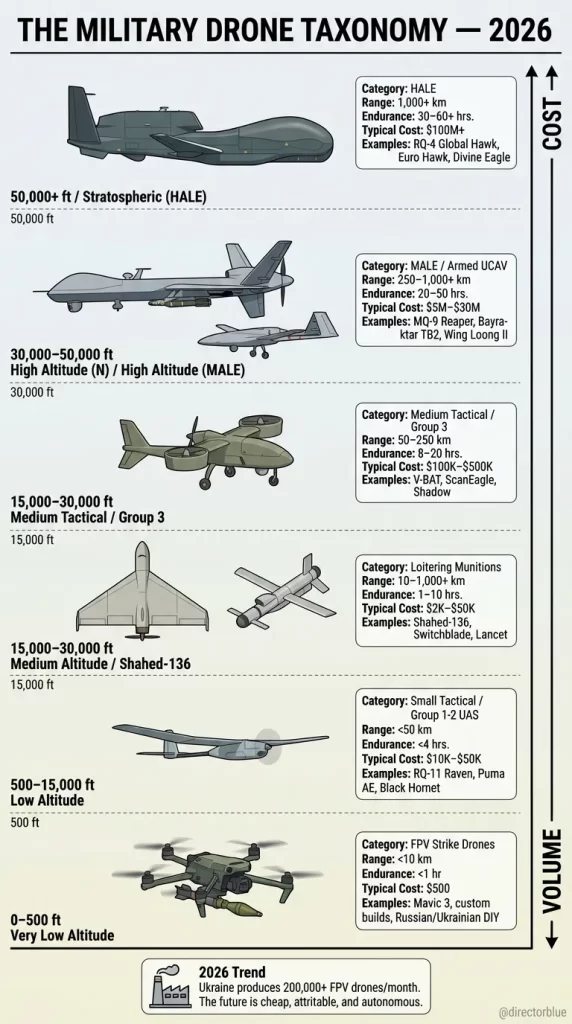
  • Director Blue offers up a handy guide to military drones.

  • Again, if I’ve missed anything notable in the conflict, feel free to note it in the comments below.

    Iran Strikes: Day 11

    Tuesday, March 10th, 2026

    Another day of airstrikes against the Islamic Republic of Iran, another roundup of news.

    Note that earlier in the day the blog went down with a 429 (too many requests) error. I rattled Bluehost’s cage and they fixed it. Hopefully it doesn’t happen again…

  • Strikes will intensify until regime improves.

    Secretary of War Pete Hegseth and Joint Chiefs of Staff Gen. Dan Caine held a press conference this morning with a few updates on Operation Epic Fury.

    “On day ten of Operation Epic Fury, we are winning with an overwhelming and unrelenting focus on our objectives, which are the same as the day I gave my first briefing here on Operation Epic Fury,” said Hegseth. “They’re straightforward, and we are executing them with ruthless precision.”

    Hegseth also reiterated the objectives: “One, destroy their missile stockpiles, their missile launchers, and their defense industrial base missiles and their ability to make them. Two, destroy their Navy, and three, permanently deny Iran nuclear weapons forever.”

    Tuesday will be another bad day for Iran:

    It’s a laser-focused, maximum authority mission, delivered with overwhelming and unrelenting precision. No hesitation, no half measures. As President Trump declared yesterday, we’re crushing the enemy in an overwhelming display of technical skill and military force. We will not relent until the enemy is totally and decisively defeated. But we do so — we do so on our timeline and at our choosing. For example, today will be yet again our most intense day of strikes inside Iran.

    The most fighters, the most bombers, the most strikes, intelligence more refined and better than ever, so that’s on one hand. On the other hand, the last 24 hours have seen Iran fire the lowest number of missiles they’ve been capable of firing. Yet just the bifurcation, just the trend lines that we talked about on our first briefing. You see, this is not 2003. This is not endless nation-building under those types of quagmires we saw under Bush or Obama. It’s not even close. Our generation of soldier[ [sic] will not let that happen again. And nor will this President, who very clearly ran against those kinds of never-ending, nebulously-scoped missions. Those days are dead. Instead, we’re winning decisively with brutal efficiency, total air dominance, and an unbreakable will to accomplish the President’s objectives on our timeline. We stay locked on the target because here at the Department of War, that’s our job.

  • Stephen Green: “Iran’s Richest Oil Region Demands Freedom, Democracy.”

    Khuzestan is Iran’s most oil-rich and ethnically diverse province — and the Arabs there have finally had it up to here with the theocrats who run things in Tehran. Whoever they are today, that is.

    In a daring new statement, the Khuzestan Arab Tribes Assembly this week calling for “a free, democratic, and federal Iran,” and that they “firmly believe that the Islamic Republic’s system has violated the rights of the people of Iran.”

    While Khuzestan borders Iraq and is roughly one-third Arab, the assembly called the province the “beating heart of Iran” and emphasized “the protection of Iran’s territorial integrity and reject any separatist or divisive project that harms the homeland of Iran.”

    “We see ourselves in the transitional phase from the current repressive regime toward a free, democratic, and federal Iran. We can play a constructive role alongside other compatriots in building a prosperous and united Iran.”

    “We, along with all Iranians—Persians, Kurds, Baluchis, Azeris, Lors, Turks, and others—stand hand in hand for freedom, prosperity, and the bright future of Iran.”

    You don’t put out a statement like that one unless you enjoy at least some confidence that “security” troops won’t soon make a visit to explain to you the error of you ways. You know, in a dark cell somewhere from which you will only ever emerge feet-first. So whatever the real-world political efficacy of the assembly may or may not prove to be, the people behind it seem to believe that the IRGC’s reach no longer extends there.

    And — this is kind of a big deal — Khuzestan holds about 80% of Iran’s onshore oil reserves, and also accounts for about the same percentage of Iran’s onshore production. That’s nearly 60% of all of Iran’s oil production.

  • Also Stephen Green: Schrodinger’s Ayatollah.

    But he also owes his position to the IRGC, unofficially making the ayatollah subordinate to the military for the first time in the Islamic state’s 47-year history.

    And yet… Mojtaba’s figurehead status might be even less than it appears because there’s also the question of whether Mojtaba remains upright and breathing. Also on Monday, Iran state television confirmed that Mojtaba was wounded, presumably during an airstrike. AP reported: “The anchors read reports describing him as ‘janbaz’ or wounded by the enemy,” even as they parade him around — virtually only! — as the new boss.

    Mojtaba has yet to be seen in public since his promotion. Strange way to reassure the public about the succession, yes?

    In addition to Ali Khamenei, also believed dead in the compound airstrike is the elder Khamenei’s wife, a daughter, a grandchild, a son-in-law, and Mojtaba’s wife.

    Maybe it’s a bit of a stretch to believe that coalition airpower took out so much of the Khamenei family, except for the one guy the IRGC needed as a well-known figurehead to consolidate its power during a chaotic time when one military and theocratic leader after another gets chalked up as KIA.

    I also note that the IRGC will need to maintain the fiction of him alive if they want to access those untold billions the Khamenei clan withdrew from government funds to stash in international bank accounts…

  • IRGC Qods Force Colonel Majid Kashefi killed in Israeli drone strike:

  • Is Iran getting ready to mine the Strait of Hormuz?

    US intelligence has begun detecting indications that Iran may be preparing to deploy naval mines in the Strait of Hormuz, one of the world’s most critical energy chokepoints. Officials cited by CBS News say Tehran is believed to be using small boats capable of carrying two to three naval mines each. Estimates suggest Iran could possess between 2,000 and 6,000 naval mines, including Iranian-made systems as well as variants designed in China and Russia.

    More recent intelligence reporting indicates that Iran has already begun laying a limited number of mines, with a few dozen reportedly placed in the waterway in recent days. However, the deployment remains limited for now. Officials say Iran still retains around 80% to 90% of its small boats and mine-laying vessels, meaning it could potentially place hundreds more mines if tensions escalate.

    US intelligence has begun detecting indications that Iran may be preparing to deploy naval mines in the Strait of Hormuz, one of the world’s most critical energy chokepoints. Officials cited by CBS News say Tehran is believed to be using small boats capable of carrying two to three naval mines each. Estimates suggest Iran could possess between 2,000 and 6,000 naval mines, including Iranian-made systems as well as variants designed in China and Russia.

    More recent intelligence reporting indicates that Iran has already begun laying a limited number of mines, with a few dozen reportedly placed in the waterway in recent days. However, the deployment remains limited for now. Officials say Iran still retains around 80% to 90% of its small boats and mine-laying vessels, meaning it could potentially place hundreds more mines if tensions escalate.

    Given the indiscriminate nature of naval mines, I can’t imagine that China would be pleased if one of their cargo or tanker ships were hit.

  • Coalition air strikes continue to hit regime police stations.
  • Ukraine sends experts to Qatar, Saudi Arabia, UAE amid Iranian drone strikes.”

    Kyiv has dispatched three teams of military experts to the Middle East, President Volodymyr Zelensky said on March 10 amid Iran’s ongoing drone strikes in the region.

    “This week, all three (teams) will be in three different countries… Qatar, the United Arab Emirates (UAE), and Saudi Arabia,” Zelensky said in a briefing with journalists.

    Countries across the Middle East have come under fire from Iranian Shahed drones and missiles in the wake of Israeli-U.S. strikes against Iran on Feb. 28.

    Ukraine has signalled readiness to share its extensive experience with countering the low-cost kamikaze drones, which Russia launches in daily attacks against Ukrainian cities and infrastructure.

  • MSM reporting on Iran sucks.

    I suspect anyone reading this roundup already knew that…

  • Saudi Aramco is using their East-West pipeline to reroute oil exports away from the Strait of Hormuz to terminals on the Red Sea.
  • Iranian “numbers” station under attack. Numbers stations are mysterious radio stations that feature numbers spoken over the air, presumably to send coded messages to spies and other agents. But Iran seems to be jamming the station, suggesting someone other than the regime put it up.
  • Once again, if there are any bits of news you think I missed, feel free to share them in the comments below.